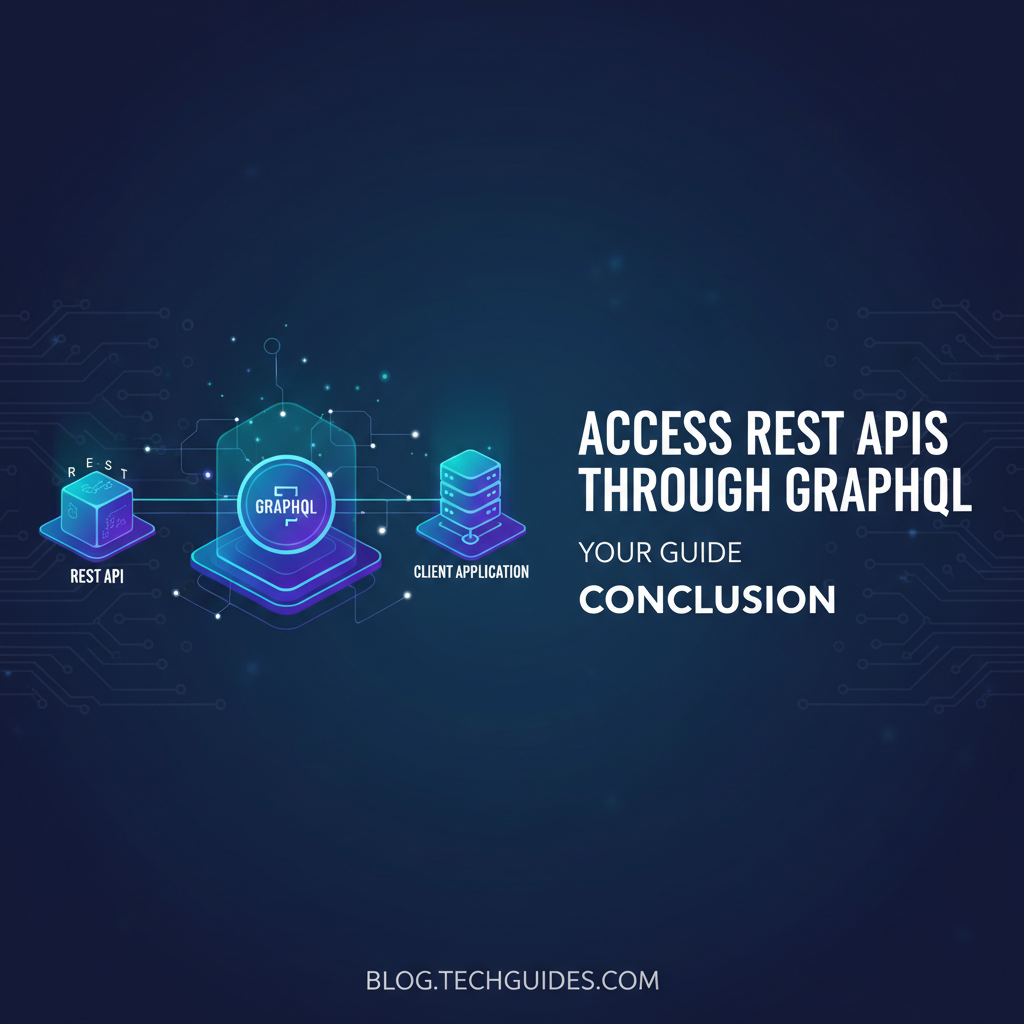
Access REST APIs Through GraphQL: Your Guide
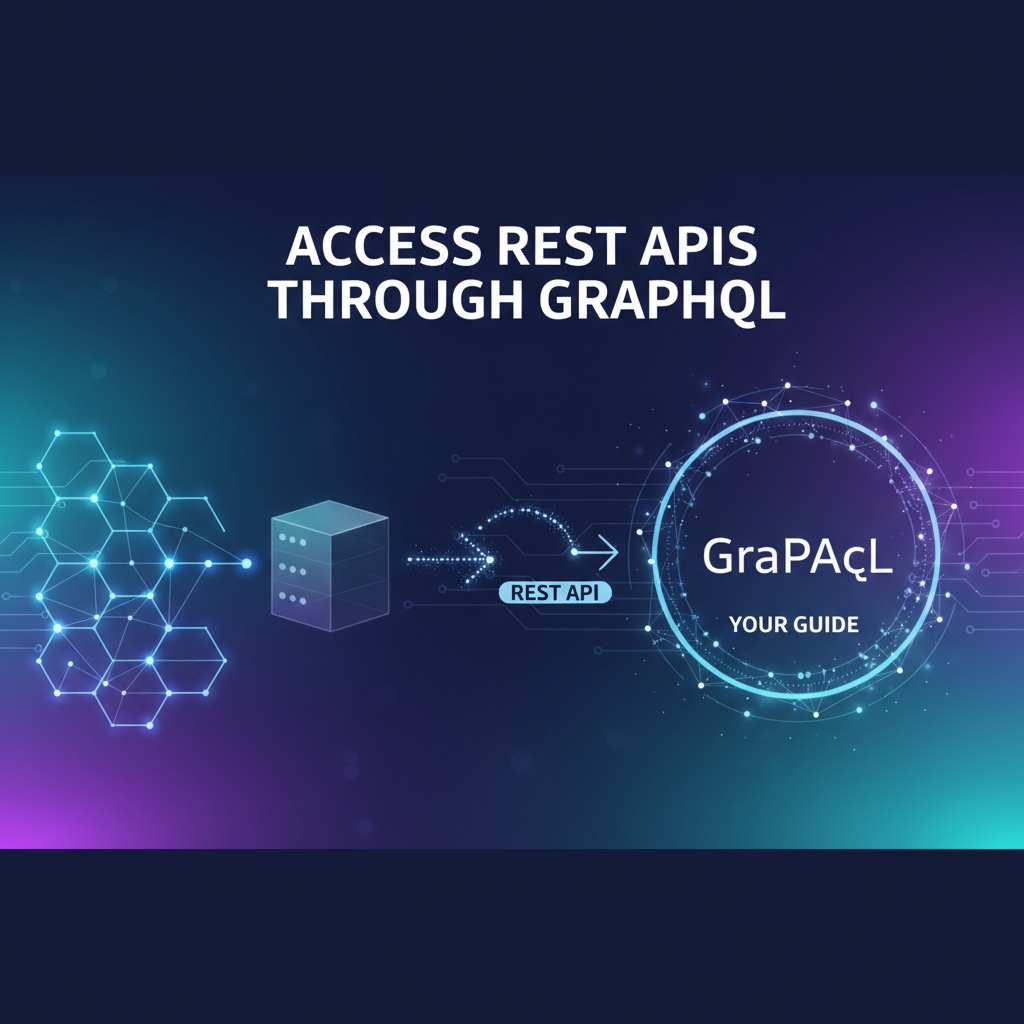


In the ever-evolving landscape of web development, the way applications communicate with their backend services has undergone significant transformations. For decades, REST (Representational State Transfer) has reigned supreme as the de facto standard for building web APIs, celebrated for its simplicity, statelessness, and adherence to HTTP principles. Its widespread adoption has led to a robust ecosystem of tools, libraries, and best practices that underpin a vast majority of the internet's interconnected services. However, as applications grew more complex, and client-side demands for data became increasingly nuanced, the limitations of REST began to surface, prompting developers to seek more flexible and efficient alternatives.
Enter GraphQL, a powerful query language for APIs and a runtime for fulfilling those queries with your existing data. Born out of Facebook's need to efficiently fetch data for its mobile applications, GraphQL offers a fundamentally different paradigm. Instead of fetching data from multiple fixed-structure endpoints, clients can specify precisely what data they need, receiving it in a single, predictable response. This shift dramatically improves development velocity, reduces network overhead, and empowers client-side developers with unprecedented control over data retrieval.
The challenge, and indeed the opportunity, lies in reconciling these two powerful paradigms. Most enterprises and startups have significant investments in existing RESTful APIs, representing years of development effort, business logic encapsulation, and critical infrastructure. Rewriting these APIs to a native GraphQL interface is often impractical, costly, and disruptive. This guide will explore a pragmatic and highly effective solution: accessing existing REST APIs through a GraphQL layer. This approach allows organizations to leverage their established REST infrastructure while simultaneously offering the flexibility, efficiency, and developer experience benefits of GraphQL to their client applications. It’s a strategy that provides a bridge between the legacy and the future, enabling gradual migration, improved client interactions, and a more robust, agile data fetching strategy. By understanding the intricacies of both REST and GraphQL, and the architectural patterns required to integrate them, developers can unlock new levels of efficiency and innovation, ensuring their applications remain competitive and performant in today's demanding digital environment.
Part 1: Understanding the Landscape - REST vs. GraphQL
Before delving into the how-to of bridging these two paradigms, it's crucial to have a solid understanding of each, appreciating their strengths and acknowledging their limitations. This foundational knowledge will illuminate why integrating them offers such a compelling solution.
1.1 RESTful APIs: The Industry Standard
REST, conceptualized by Roy Fielding in his 2000 dissertation, is an architectural style that defines a set of constraints for designing networked applications. It's not a protocol or a standard itself, but rather a set of guidelines that, when followed, promote scalability, simplicity, and maintainability. Its ubiquity means that virtually every modern application interacts with numerous RESTful services, whether for user authentication, data storage, or third-party integrations.
Principles of REST:
- Client-Server Architecture: A clear separation between the client and the server, allowing them to evolve independently. The client handles the user interface and user experience, while the server manages data, business logic, and security. This separation enhances portability and scalability.
- Statelessness: Each request from client to server must contain all the information necessary to understand the request. The server should not store any client context between requests. This constraint improves visibility, reliability, and scalability, as servers can easily handle requests without needing to remember past interactions.
- Cacheable: Responses from the server should explicitly or implicitly define themselves as cacheable or non-cacheable. If a response is cacheable, the client is allowed to reuse that response data for later, equivalent requests, thus improving efficiency and reducing server load.
- Layered System: A client cannot ordinarily tell whether it is connected directly to the end server or to an intermediary. This allows for intermediate servers (like proxy servers, load balancers, or
api gateways) to be introduced to improve system scalability, security, or performance without affecting the client or the end server. This architectural flexibility is a cornerstone of many distributed systems. - Uniform Interface: This is the most crucial constraint, simplifying the overall system architecture. It mandates four sub-constraints:
- Resource Identification in Requests: Individual resources are identified in requests, for example, using URIs (Uniform Resource Identifiers).
- Resource Manipulation Through Representations: Clients manipulate resources using representations, such as JSON or XML. When a client holds a representation of a resource, including any metadata, it has enough information to modify or delete the resource.
- Self-Descriptive Messages: Each message includes enough information to describe how to process the message. This often includes metadata about the resource.
- Hypermedia as the Engine of Application State (HATEOAS): The concept that clients interact with a REST server purely through hypermedia controls provided dynamically by the server. This means that a client needs to know only the initial URI; all further actions are discovered from the server's responses. While powerful, HATEOAS is often the least implemented REST principle in practice.
Pros of RESTful APIs:
- Simplicity and Readability: RESTful URIs are typically human-readable, and the use of standard HTTP methods (GET, POST, PUT, DELETE) makes them intuitive to understand and interact with.
- Wide Adoption and Mature Ecosystem: REST has been around for a long time, leading to a vast array of tools, libraries, frameworks, and a huge community ready to provide support. Almost every programming language has robust HTTP client libraries, making integration straightforward.
- Caching Support: Leveraging standard HTTP caching mechanisms can significantly improve performance and reduce server load for frequently accessed, immutable resources.
- Statelessness: Simplifies server design, makes it easier to scale horizontally, and improves fault tolerance. Any server can handle any request, which is ideal for load balancing and distributed systems.
- Separation of Concerns: The clear client-server separation promotes independent development and deployment, which accelerates development cycles.
Cons of RESTful APIs:
- Over-fetching: Clients often receive more data than they actually need. For instance, fetching a user profile might return dozens of fields, but the UI only requires the name and profile picture. This wastes bandwidth and processing power.
- Under-fetching and Multiple Requests: Conversely, a client might need data from several related resources to render a single view (e.g., a user's profile and their last five posts). This typically requires multiple HTTP requests to different endpoints, leading to increased latency and network chatter.
- Lack of Flexibility: The server defines the resource structure, leaving clients with little control over the data they receive. Changes to the client's data requirements often necessitate changes to the
apiitself, or creating new, specialized endpoints (e.g.,/users/{id}/summary). - Versioning Challenges: As APIs evolve, managing different versions (e.g.,
v1,v2) can become complex, leading to maintenance overhead and potential breaking changes for older clients. - Difficulty in Aggregating Data: When data is spread across many microservices, aggregating it on the client-side can be inefficient, while doing it on the server-side often requires a dedicated aggregation layer, which might itself expose a new REST
api.
1.2 GraphQL: A Query Language for Your API
GraphQL, developed by Facebook in 2012 and open-sourced in 2015, addresses many of the limitations inherent in traditional RESTful API designs. It's not a replacement for REST in all scenarios, nor is it a database technology. Instead, it's a powerful query language for your api and a server-side runtime for executing queries using a type system you define for your data.
Core Concepts of GraphQL:
- Schema Definition Language (SDL): At the heart of GraphQL is its strongly typed schema. The SDL is used to define the types of data that can be queried, the relationships between them, and the operations that can be performed (queries, mutations, subscriptions). This provides a contract between the client and the server, enabling powerful introspection capabilities.
- Types: GraphQL schemas are composed of types. These can be object types (e.g.,
User,Product), scalar types (e.g.,ID,String,Int,Boolean,Float), enum types, interface types, and union types. Each object type defines fields, and each field has a specific type. - Queries: These are used to read or fetch data. Clients send a query document (a string conforming to the GraphQL syntax) to the server, specifying precisely which fields and nested relationships they need. The server then responds with a JSON object that exactly mirrors the shape of the query.
graphql query GetUserProfile { user(id: "123") { id name email posts { id title } } } - Mutations: While queries are for reading data, mutations are for writing, updating, or deleting data. They are structured similarly to queries but are executed sequentially by the server to prevent race conditions.
graphql mutation UpdateUserName { updateUser(id: "123", name: "New Name") { id name } } - Subscriptions: For real-time data needs, GraphQL offers subscriptions. These are long-lived operations that allow clients to receive updates from the server whenever specific events occur. This is typically implemented using WebSockets.
- Resolvers: On the server-side, a resolver is a function responsible for fetching the data for a specific field in the schema. When a query comes in, the GraphQL engine traverses the schema, calling the appropriate resolvers to gather the requested data. Resolvers can fetch data from any source: a database, another REST
api, a microservice, or even a local file system.
Pros of GraphQL:
- Precise Data Fetching (No Over/Under-fetching): Clients request exactly what they need and nothing more. This optimizes network usage, especially critical for mobile applications or clients with limited bandwidth.
- Single Endpoint: Typically, a GraphQL server exposes a single endpoint (e.g.,
/graphql), simplifying API management and eliminating the need for complex routing on the client side. - Strong Typing and Introspection: The schema acts as a contract, providing strong type guarantees and enabling powerful introspection. Tools like GraphiQL or Apollo Studio can explore the schema, generate documentation, and validate queries in real-time.
- Improved Developer Experience: Front-end developers gain significant autonomy. They can adapt data requirements without waiting for backend modifications, leading to faster iteration cycles.
- API Aggregation: GraphQL naturally serves as an aggregation layer, allowing clients to query data from multiple disparate backend services (databases, microservices, REST APIs) through a single, unified interface. This is a powerful feature for complex distributed architectures.
- Real-time Capabilities: Subscriptions provide a first-class mechanism for real-time data updates, essential for chat applications, live dashboards, or notifications.
- Version Evolution: GraphQL schemas can evolve gracefully. Fields can be deprecated without breaking existing clients, as clients only ask for what they need. New fields can be added without impacting older clients.
Cons of GraphQL:
- Learning Curve: Adopting GraphQL requires understanding new concepts (SDL, resolvers, types, queries vs. mutations) and a different way of thinking about data fetching, which can be a hurdle for teams accustomed to REST.
- Complexity for Simple APIs: For very simple applications or APIs with straightforward data requirements, GraphQL might introduce unnecessary overhead and complexity compared to a simple RESTful
api. - Caching Challenges: While HTTP caching works well for REST (GET requests), caching GraphQL responses is more complex because all queries are typically POST requests to a single endpoint. Client-side caching often relies on normalizing the data store (e.g., Apollo Client's normalized cache).
- File Uploads: Handling file uploads natively in GraphQL can be less straightforward than in REST, often requiring multipart form data specifications or separate dedicated REST endpoints.
- N+1 Problem: Without careful implementation (e.g., using DataLoaders), fetching nested data can lead to the N+1 problem, where a query for a list of items and their related details results in N+1 database or
apicalls. This is a common performance pitfall. - Operational Overhead: Running a GraphQL server, especially one that aggregates data from many sources, requires careful monitoring, performance tuning, and error handling.
Part 2: Why Bridge the Gap? The Rationale for Accessing REST via GraphQL
The preceding comparison highlights the distinct advantages and disadvantages of REST and GraphQL. For many organizations, the question isn't whether to choose one over the other, but rather how to harness the strengths of both. The strategy of using GraphQL as a façade or wrapper around existing REST APIs offers a compelling solution, providing a bridge that connects the robust, proven backend infrastructure with the agile, client-centric demands of modern applications.
2.1 Leveraging Existing Investments
One of the most significant motivators for wrapping REST APIs with GraphQL is the pragmatic reality of existing infrastructure. Enterprises and development teams have invested years in building, maintaining, and refining their RESTful services. These APIs often encapsulate complex business logic, integrate with various backend systems (databases, message queues, third-party services), and are critical to the operation of the business. Completely abandoning these services to rewrite them as native GraphQL APIs is a monumental undertaking. It demands significant time, resources, and introduces substantial risk of bugs and disruption to existing consumers. By introducing a GraphQL layer that sits in front of these REST APIs, organizations can avoid a costly and disruptive "rip and replace" strategy. Instead, they can gradually introduce GraphQL capabilities, allowing their existing REST services to continue operating undisturbed while new clients benefit from the GraphQL interface. This approach maximizes the return on previous investments, extending the lifespan and utility of well-established backend systems, and ensures that the core business logic remains stable and proven. It provides a non-invasive path to modernization, where the core apis continue to function reliably, and new consumption patterns are enabled without internal architectural upheaval.
2.2 Client-Side Benefits: Front-End Developers Gain Flexibility
The impact of GraphQL on client-side development cannot be overstated. With a GraphQL wrapper, front-end developers gain unprecedented flexibility and autonomy. Instead of being constrained by the fixed data structures and endpoints dictated by REST, they can precisely specify their data requirements. This means they no longer have to: * Perform client-side data filtering and shaping: They get exactly the data they need, reducing the amount of data transferred and processed on the client. * Make multiple requests for a single view: A single GraphQL query can fetch data from several underlying REST endpoints, combining disparate pieces of information into a unified response. This dramatically reduces the "N+1 problem" at the client layer, minimizing network round-trips and improving application responsiveness. * Wait for backend changes: If a new feature requires a slightly different data shape or an additional field, front-end developers can often modify their GraphQL query without needing any changes to the underlying REST api or a redeployment of the backend services. This accelerates development cycles, fosters rapid prototyping, and allows client teams to move at a much faster pace, significantly improving overall developer experience. This shift also empowers UI/UX designers, as the flexibility in data fetching allows for more dynamic and rich user interfaces without being bottlenecked by backend api rigidity.
2.3 API Aggregation and Orchestration
In modern microservices architectures, data often resides across numerous independent services. For example, user profiles might be in one service, order history in another, and product details in yet another. A GraphQL layer excels as an aggregation and orchestration point. It can effectively act as a unified api gateway, providing a single, consistent entry point for clients to access data that originates from multiple backend services, regardless of whether those services are RESTful, database-driven, or even other GraphQL services. This aggregation significantly simplifies client-side logic, as clients don't need to know about the complex internal structure of the microservices or make multiple calls to different apis. The GraphQL layer handles the complexity of fanning out requests to the appropriate underlying REST services, combining their responses, and presenting a coherent, single data graph to the client. This architectural pattern is immensely powerful for managing distributed systems, reducing the cognitive load on client developers, and enabling a clean separation of concerns between client applications and backend services. Furthermore, a sophisticated api gateway or API management platform, such as ApiPark, can be deployed in front of this GraphQL layer, adding another level of control for managing traffic, implementing security policies, rate limiting, and providing detailed analytics for all api requests, both external and internal. This comprehensive gateway solution ensures robust governance over the entire api landscape, enhancing security and observability.
2.4 Performance Optimization
While GraphQL itself introduces a processing layer, its ability to precisely fetch data often leads to significant performance improvements, especially for applications with complex data requirements. * Reduced Network Payload: By eliminating over-fetching, the amount of data transferred over the network is minimized. This is particularly beneficial for mobile users on constrained networks or for large data sets where every byte counts. * Fewer Network Round-Trips: Aggregating multiple REST calls into a single GraphQL query drastically reduces the number of HTTP requests a client needs to make. Each HTTP request incurs network latency, so reducing these round-trips can lead to noticeable improvements in perceived application speed and responsiveness. The GraphQL server performs the internal REST calls, potentially in parallel, and then composes the single response, shielding the client from this orchestration latency. * Client-Side Efficiency: Less data to parse and process on the client side means faster rendering and a smoother user experience. This can extend battery life on mobile devices and improve performance on lower-powered hardware.
2.5 Evolving Legacy Systems
For organizations with aging or "legacy" backend systems, migrating to modern architectural patterns can be daunting. These systems often expose data through older apis, perhaps not even fully RESTful, or through direct database access. A GraphQL wrapper provides an elegant and non-disruptive way to modernize the data access layer without touching the core legacy system. By sitting atop these older services, the GraphQL layer can abstract away their complexities, inconsistencies, or outdated interfaces. It can transform data, normalize responses, and present a clean, consistent, and type-safe api to modern client applications. This allows legacy systems to continue serving their critical functions while empowering new development with a flexible and efficient data access mechanism. It's a strategy for graceful evolution, allowing organizations to slowly refactor or replace underlying services over time, without interrupting the flow of new feature development on the client side. This also applies to external third-party api integrations where you might not have control over the api design but need to present a unified view to your internal applications.
Part 3: Practical Approaches to Accessing REST APIs Through GraphQL
Having established the compelling rationale for integrating REST and GraphQL, the next step is to understand the practical methodologies for achieving this bridge. The core idea is to build a GraphQL service that, when a query is received, internally translates parts of that query into calls to one or more underlying REST APIs, processes the responses, and then composes the final GraphQL response. This section explores the architectural patterns and tools involved.
3.1 Schema Stitching and Federation (Conceptual)
While primarily designed for combining multiple GraphQL services, the concepts of Schema Stitching and Federation are relevant because they address the challenge of unifying disparate data sources under a single GraphQL api. * Schema Stitching: This approach involves taking multiple independent GraphQL schemas and combining them into a single, cohesive "stitched" schema. This is useful when you have distinct GraphQL services for different domains (e.g., UsersService, ProductsService) and you want to expose a unified api to your clients. The stitching process essentially merges types and fields from different schemas. While it can also be used to wrap REST APIs by defining a GraphQL schema for each REST api and then stitching them, it's more commonly applied when the underlying services are already GraphQL. * GraphQL Federation (e.g., Apollo Federation): This is a more advanced, opinionated architecture for building a unified graph from multiple independent GraphQL services, known as "subgraphs." Each subgraph owns a part of the overall graph. A "gateway" (distinct from an api gateway in the general sense, though it performs a similar routing function for GraphQL) then queries these subgraphs to fulfill client requests. Federation is particularly powerful for large organizations with many teams developing their own domain-specific GraphQL services. While directly designed for GraphQL subgraphs, the concepts are relevant when considering how a GraphQL gateway might orchestrate calls to various backend services, some of which could be wrappers around REST.
For the purpose of wrapping REST APIs, a simpler "wrapper" or "proxy" layer is often sufficient and more direct, as it focuses on translating REST calls into GraphQL responses within a single GraphQL service instance.
3.2 GraphQL "Wrapper" or Proxy Layer
This is the most common and direct approach for accessing REST APIs through GraphQL. You build a new GraphQL server whose resolvers are responsible for making HTTP requests to your existing REST endpoints. This GraphQL server acts as an intelligent proxy, mediating between your client applications and your backend REST services.
The Process Explained:
- Define Your GraphQL Schema: This is the foundational step. You design a GraphQL schema that represents the data you want to expose to your clients, tailored to their consumption needs. This schema will define your queries (for fetching data), mutations (for modifying data), and any types (e.g.,
User,Order,Product) that clients can request. Crucially, this schema is client-centric, meaning it's optimized for how your front-end applications want to consume the data, rather than strictly mirroring the underlying RESTapistructures.- Example: If your REST
apihas/users/:idand/orders?userId=:id, your GraphQL schema might define aUsertype withid,name,emailfields, and a nestedordersfield that returns a list ofOrdertypes.
- Example: If your REST
- Implement Resolvers: For each field in your GraphQL schema, you write a resolver function. When a client sends a GraphQL query, the GraphQL execution engine traverses the schema and calls the appropriate resolver functions to fetch the data for each requested field.
- Within these resolvers, you will place the logic to interact with your REST APIs. This typically involves:
- Making HTTP requests: Using an HTTP client library (e.g.,
axios,node-fetch,requestsin Python) to call the relevant REST endpoint(s). - Extracting and transforming data: The REST API response might contain more data than needed or data in a different structure. The resolver is responsible for parsing the JSON response, selecting the necessary fields, and transforming them into the shape defined by your GraphQL schema.
- Handling arguments: GraphQL queries can include arguments (e.g.,
user(id: "123")). The resolver receives these arguments and passes them to the REST API call (e.g., as part of the URL path or query parameters). - Error handling: Robust resolvers should catch errors from the REST API calls and translate them into appropriate GraphQL errors.
- Making HTTP requests: Using an HTTP client library (e.g.,
- Within these resolvers, you will place the logic to interact with your REST APIs. This typically involves:
- Deploy the GraphQL Server: This server acts as your new
api gatewayfor GraphQL clients. It sits between your front-end applications and your existing REST APIs.
Example Scenario: Fetching User and Order Data
Imagine you have two REST APIs: * GET /api/users/{id}: Returns user details (id, name, email). * GET /api/orders?userId={id}: Returns a list of orders for a specific user (id, item, amount).
GraphQL Schema Definition (simplified):
type User {
  id: ID!
  name: String!
  email: String
  orders: [Order!]
}

type Order {
  id: ID!
  item: String!
  amount: Float!
}

type Query {
  user(id: ID!): User
}
Resolver Implementation (conceptual):
Query.userresolver:- Receives
idargument. - Makes an HTTP GET request to
GET /api/users/{id}. - Parses the JSON response.
- Returns the user object.
- Receives
User.ordersresolver:- This resolver is called when a client requests
user.orders. - It receives the parent
userobject (which was fetched by theQuery.userresolver). - Extracts the
user.id. - Makes an HTTP GET request to
GET /api/orders?userId={user.id}. - Parses the JSON response (a list of orders).
- Returns the list of order objects, mapping them to the
Ordertype.
- This resolver is called when a client requests
This nested resolution is where GraphQL truly shines, allowing clients to fetch related data with a single query, while the GraphQL server orchestrates the necessary underlying REST calls.
3.3 Tools and Libraries
The choice of tools and libraries for building your GraphQL wrapper depends largely on your preferred programming language and ecosystem. Here’s a brief overview:
- Node.js:
- Apollo Server: A robust, production-ready GraphQL server library that can be integrated with various HTTP frameworks (Express, Koa, Hapi, Fastify). It provides excellent tooling, caching features, and plays well with Apollo Client on the front-end. It's highly recommended for building GraphQL APIs that wrap REST.
- Express-GraphQL: A simpler middleware for Express.js, providing a quick way to set up a GraphQL
api. Good for smaller projects or learning. - GraphQL.js: The reference implementation of GraphQL in JavaScript. While you can build a server directly with it, higher-level libraries like Apollo Server abstract much of the complexity.
- Python:
- Graphene: A powerful and flexible library for building GraphQL APIs in Python. It supports various web frameworks (Django, Flask, SQLAlchemy) and makes it easy to map Python objects to GraphQL types.
- Java:
- GraphQL-Java: The official Java implementation of GraphQL. It's a comprehensive library that allows you to define your schema and implement resolvers for your Java applications. It integrates well with Spring Boot.
- Go:
- gqlgen: A schema-first GraphQL server library for Go. It generates Go code from your GraphQL schema, making development faster and more type-safe.
- graphql-go/graphql: A GraphQL implementation in Go, allowing programmatic schema definition.
- Ruby:
- GraphQL-Ruby: A well-established and feature-rich library for building GraphQL APIs in Ruby, often used with Ruby on Rails.
Choosing the right framework often comes down to your team's existing expertise and the specifics of your project. For most enterprise applications looking to build a robust GraphQL layer, Apollo Server (Node.js), Graphene (Python), or GraphQL-Java (Java) offer comprehensive features and community support.
Here's a comparison of some popular options:
| Feature/Tool | Language/Platform | Key Strengths | Use Cases |
|---|---|---|---|
| Apollo Server | Node.js | Production-ready, rich ecosystem, powerful tooling, caching | Large-scale applications, microservices, enterprise solutions |
| Graphene | Python | Flexible, integrates with Django/Flask/SQLAlchemy, ORM-friendly | Python-centric backends, data science applications, rapid prototyping |
| GraphQL-Java | Java | Robust, enterprise-grade, integrates with Spring Boot | Large-scale Java applications, existing Java ecosystems |
| gqlgen | Go | Schema-first, code generation, high performance | High-performance services, microservices in Go |
| GraphQL-Ruby | Ruby | Mature, integrates well with Ruby on Rails, good documentation | Ruby-on-Rails applications, established Ruby backends |
| Hasura | Any (SaaS/Self-hosted) | Instant GraphQL APIs over databases, real-time subscriptions, auth | Rapid prototyping, data-heavy apps, real-time dashboards (DB-centric) |
| PostGraphile | Node.js | Instant GraphQL APIs over PostgreSQL, powerful customization | PostgreSQL-centric applications, internal tools, data exploration |
Note: Hasura and PostGraphile are slightly different in that they primarily generate GraphQL APIs directly from databases. While they can integrate with existing REST APIs through custom resolvers or actions, their core strength lies in database-to-GraphQL translation. For a pure REST-to-GraphQL wrapper, Apollo Server, Graphene, or GraphQL-Java are more direct choices.
APIPark is a high-performance AI gateway that allows you to securely access the most comprehensive LLM APIs globally on the APIPark platform, including OpenAI, Anthropic, Mistral, Llama2, Google Gemini, and more.Try APIPark now! 👇👇👇
Part 4: Deep Dive into Implementation Details (Using Node.js/Apollo as an example)
To illustrate the practicalities of accessing REST APIs through GraphQL, let's delve into a more detailed implementation using Node.js with Apollo Server, a popular and robust choice for this kind of setup. This section will walk through the core components and considerations.
4.1 Setting up a GraphQL Server
First, you'll need to set up a basic Node.js project and install Apollo Server.
mkdir graphql-rest-wrapper
cd graphql-rest-wrapper
npm init -y
npm install apollo-server graphql axios # axios for making HTTP requests to REST APIs
Now, create an index.js file:
// index.js
const { ApolloServer, gql } = require('apollo-server');
const axios = require('axios'); // For making HTTP requests to REST APIs

// Define your GraphQL schema (Type Definitions)
const typeDefs = gql`
  type User {
    id: ID!
    name: String!
    email: String
    posts: [Post!] # A user can have many posts
  }

  type Post {
    id: ID!
    title: String!
    content: String
    userId: ID!
  }

  type Query {
    user(id: ID!): User # Query to get a single user
    users: [User!] # Query to get all users
    posts: [Post!] # Query to get all posts
  }
`;

// Define your resolvers
const resolvers = {
  Query: {
    users: async () => {
      try {
        const response = await axios.get('https://jsonplaceholder.typicode.com/users');
        return response.data;
      } catch (error) {
        console.error("Error fetching users from REST API:", error.message);
        throw new Error("Failed to fetch users.");
      }
    },
    user: async (parent, { id }) => {
      try {
        const response = await axios.get(`https://jsonplaceholder.typicode.com/users/${id}`);
        return response.data;
      } catch (error) {
        console.error(`Error fetching user ${id} from REST API:`, error.message);
        throw new Error(`Failed to fetch user with ID ${id}.`);
      }
    },
    posts: async () => {
      try {
        const response = await axios.get('https://jsonplaceholder.typicode.com/posts');
        return response.data;
      } catch (error) {
        console.error("Error fetching posts from REST API:", error.message);
        throw new Error("Failed to fetch posts.");
      }
    },
  },
  User: {
    posts: async (parent, args, context, info) => {
      // 'parent' here is the User object fetched by the 'user' or 'users' resolver
      try {
        const response = await axios.get(`https://jsonplaceholder.typicode.com/posts?userId=${parent.id}`);
        return response.data;
      } catch (error) {
        console.error(`Error fetching posts for user ${parent.id} from REST API:`, error.message);
        throw new Error(`Failed to fetch posts for user ${parent.id}.`);
      }
    },
  },
};

// Create an Apollo Server instance
const server = new ApolloServer({ typeDefs, resolvers });

// Start the server
server.listen().then(({ url }) => {
  console.log(`🚀 Server ready at ${url}`);
});
To run this, save it as index.js and execute node index.js. You can then access the GraphQL Playground (a powerful IDE for GraphQL) at the printed URL (e.g., http://localhost:4000/).
4.2 Defining GraphQL Schema
The typeDefs in the example above represent your GraphQL Schema Definition Language (SDL). This is the contract between your client and your GraphQL server.
- Type Definitions:
type User { ... }: Defines anUserobject type with specific fields (id,name,email,posts).type Post { ... }: Defines aPostobject type.[Post!]: Denotes an array ofPostobjects that cannot contain null values. The!means the field itself cannot be null.
- Query Type:
type Query { ... }: This is the entry point for all read operations.user(id: ID!): User: Defines a query nameduserthat takes anidargument (which is required,!) and returns aUserobject.users: [User!]: Defines a query namedusersthat returns an array ofUserobjects.
When designing your schema, consider the data requirements of your client applications. Unlike REST, where the API structure is often dictated by backend resources, GraphQL schemas are typically designed from a client-first perspective, providing exactly what clients need in a single, coherent graph.
4.3 Implementing Resolvers
Resolvers are functions that tell the GraphQL server how to fetch the data for a specific field in the schema. Each field in your schema (e.g., Query.user, User.posts) needs a corresponding resolver function.
- Resolver Signature: A resolver function typically accepts four arguments:
(parent, args, context, info).parent(orroot): The result from the parent field. For top-levelQueryfields, this is often an empty object or the root value. For nested fields (likeUser.posts),parentwill be theUserobject that was just resolved.args: An object containing all the arguments provided to the field (e.g.,idforuser(id: "123")).context: An object shared across all resolvers for a particular operation. This is useful for passing authentication information, database connections, or other shared resources.info: An object containing information about the execution state of the query, including the schema, operation name, and requested fields.
- Making HTTP Requests:
- In the example,
axios.get()is used within the resolvers to callhttps://jsonplaceholder.typicode.com/(a public fake RESTapifor testing). - The
Query.userresolver directly calls the/users/:idendpoint. - The
User.postsresolver demonstrates how nested fields work. When a client requests auserand theirposts, theQuery.userresolver runs first. The returnedUserobject is then passed as theparentto theUser.postsresolver, which usesparent.idto fetch the related posts from the/posts?userId=endpoint. This chaining is fundamental to GraphQL's ability to aggregate data.
- In the example,
- Data Transformation and Error Handling:
- Resolvers should be robust. They need to handle cases where the REST
apimight return an error (e.g., 404 Not Found, 500 Server Error) or data in an unexpected format. - The
try...catchblocks in the example demonstrate basic error handling, throwing a GraphQLErrorif the RESTapicall fails. More sophisticated error handling might involve custom error types or logging to a centralized system. - While
jsonplaceholderreturns data in a format close to our GraphQL schema, in real-world scenarios, you'd often need to map or transform field names and data types to match your GraphQL schema.
- Resolvers should be robust. They need to handle cases where the REST
4.4 Handling Authentication and Authorization
Integrating authentication and authorization into a GraphQL wrapper requires careful consideration, as the GraphQL layer acts as an intermediary.
- Passing Headers from GraphQL Request to REST API:
- Client applications often send an authorization token (e.g., JWT) in the
Authorizationheader of their GraphQL request. - The GraphQL server needs to extract this token from its incoming request
contextand then forward it to the underlying REST APIs in theAuthorizationheader of the HTTP requests made by the resolvers. - Example of
contextin Apollo Server:javascript const server = new ApolloServer({ typeDefs, resolvers, context: ({ req }) => { // Get the authorization token from the request headers const token = req.headers.authorization || ''; return { token }; // Make the token available to all resolvers }, }); // Inside a resolver: const response = await axios.get(`...`, { headers: { Authorization: context.token } });
- Client applications often send an authorization token (e.g., JWT) in the
- Centralized Auth in the GraphQL Layer:
- You can implement authorization checks directly within your GraphQL resolvers or use higher-order functions/directives to protect fields. For instance, a
isLoggedIndirective could check if a user is authenticated before allowing access to certain fields. - This allows for a unified authorization policy across all data sources, regardless of whether they are REST, databases, or other services.
- The GraphQL layer can decide, based on the user's role and permissions, which underlying REST APIs to call and which data to expose, effectively acting as an authorization
gateway.
- You can implement authorization checks directly within your GraphQL resolvers or use higher-order functions/directives to protect fields. For instance, a
4.5 Error Handling and Best Practices
Robust error handling is paramount for any production-grade api.
- Consistent Error Formats: GraphQL provides a structured way to return errors to the client. Instead of just throwing generic errors, you can provide more context, error codes, and even links to documentation. Apollo Server handles this by default, but you can customize error formatting.
- Logging: Implement comprehensive logging within your resolvers to track requests, responses, and any failures when interacting with REST APIs. This is crucial for debugging and monitoring.
- Rate Limiting: Protect your GraphQL layer and the underlying REST APIs from abuse. You can implement rate limiting at the GraphQL
api gatewaylevel (e.g., based on IP address, user ID) or pass rate-limiting tokens/keys to the REST APIs if they require it. This is a common feature provided by dedicatedapi gatewaysolutions. - Circuit Breakers: For critical REST API dependencies, consider implementing circuit breaker patterns in your resolvers. If an underlying REST
apiis consistently failing, a circuit breaker can temporarily prevent further calls to it, preventing cascading failures and allowing the service to recover. - Timeouts: Configure appropriate timeouts for your HTTP requests to REST APIs. This prevents resolvers from hanging indefinitely if an upstream service is unresponsive.
Part 5: Advanced Considerations and Best Practices
Building a basic GraphQL wrapper is a good start, but for production systems, especially those handling significant traffic or complex data, several advanced considerations come into play. These ensure performance, scalability, security, and maintainability.
5.1 Performance Tuning
One of the initial criticisms of GraphQL wrappers around REST is the potential for increased latency due to the additional layer and the possibility of the "N+1 problem." However, with careful implementation and optimization, a GraphQL layer can significantly improve overall application performance.
- N+1 Problem Mitigation (DataLoaders): The N+1 problem occurs when fetching a list of items, and then for each item, making a separate call to fetch related data. For example, getting 10 users and then making 10 separate REST calls to get their posts. This results in 1 (for users) + N (for posts) HTTP requests.
- DataLoaders: This is the canonical solution for the N+1 problem in GraphQL. A DataLoader batches and caches requests to a backend service. When multiple resolvers request the same data within a single GraphQL query, DataLoader will collect all these individual requests and make a single, batched call to the underlying REST
api, greatly reducing the number of round trips. It also caches results, so if the same data is requested multiple times within the same query, it's fetched only once. - Implementing a DataLoader for our
User.postsexample would involve aPostDataLoaderthat receives an array of user IDs, makes a single call toGET /posts?userIds=1,2,3(if the REST API supports batching), and then resolves the posts for each user.
- DataLoaders: This is the canonical solution for the N+1 problem in GraphQL. A DataLoader batches and caches requests to a backend service. When multiple resolvers request the same data within a single GraphQL query, DataLoader will collect all these individual requests and make a single, batched call to the underlying REST
- Batching Requests: Beyond DataLoaders, look for opportunities to explicitly batch requests to your REST APIs. If an
apiallows fetching multiple items by a list of IDs (e.g.,/users?ids=1,2,3), leverage this. If not, the GraphQL layer can itself fan out requests in parallel usingPromise.allor similar constructs. - Caching Strategies (Client-side, Server-side):
- Client-side Caching: GraphQL clients like Apollo Client provide sophisticated normalized caches. When data is fetched, it's stored in a structured way, allowing subsequent queries for the same data (even in different shapes) to be resolved from the cache, bypassing network requests.
- Server-side Caching (GraphQL Layer): You can implement caching at the GraphQL server level for frequently accessed, relatively static data. This might involve caching the results of expensive REST API calls in an in-memory cache (like Redis) before they are returned by resolvers. However, careful invalidation strategies are crucial to prevent stale data.
- HTTP Caching (REST APIs): Don't forget that your underlying REST APIs can still leverage standard HTTP caching mechanisms (e.g.,
Cache-Control,ETag). The GraphQL wrapper doesn't negate this; it simply means the HTTP caching happens between the GraphQL server and the RESTapi, rather than directly between the client and the RESTapi.
5.2 Versioning and Evolution
API versioning is a perpetual challenge. GraphQL offers a more elegant approach compared to REST's common practice of path-based (/v1/users) or header-based versioning.
- GraphQL's Approach to Evolution: GraphQL schemas are designed to evolve gracefully.
- Adding new fields/types: New fields and types can be added without affecting existing clients, as clients only request what they need.
- Deprecating fields: Fields can be marked as
@deprecatedin the schema. This signals to clients that a field should no longer be used, often with areason, allowing clients to gradually migrate without immediate breaking changes. The field continues to function, but development tools will highlight its deprecated status. This allows for a much smoother transition compared to removing an entire REST endpoint.
- Managing Underlying REST API Versions: When your GraphQL layer wraps multiple versions of a REST
api, you'll need a strategy. The GraphQL layer can abstract this complexity. For example, if a client requests a field that's only available inv2of a RESTapi, the resolver can intelligently call thev2endpoint, while other resolvers might still callv1endpoints. This allows for fine-grained control and a gradual deprecation of older REST versions from the GraphQL side.
5.3 Monitoring and Observability
Understanding how your GraphQL wrapper and its underlying REST APIs are performing is critical for maintaining a reliable system. Effective monitoring helps identify bottlenecks, troubleshoot issues, and predict potential problems.
- Logging GraphQL Requests and Resolver Performance:
- Instrument your GraphQL server to log incoming queries, query variables, and the execution time of each resolver. This provides valuable insights into query performance and helps pinpoint slow data sources.
- Apollo Server, for instance, has plugins that can log resolver timings and even query depths.
- Detailed logs of
apicalls made by your resolvers to the underlying REST services are also essential. This helps correlate GraphQL request performance with RESTapiresponse times.
- Integration with APM Tools:
- Integrate your GraphQL server with Application Performance Monitoring (APM) tools (e.g., Datadog, New Relic, Prometheus, Grafana). These tools can track request rates, error rates, latency, and resource utilization for your GraphQL service.
- They can also often trace requests across service boundaries, showing the full journey from the client's GraphQL query, through your GraphQL server, to the underlying REST API calls, and back.
- Health Checks and Alerts: Implement health checks for your GraphQL service and its dependencies (including the REST APIs it consumes). Set up alerts for high error rates, increased latency, or downtime.
For organizations managing a multitude of APIs – both REST and GraphQL – the role of a robust api gateway becomes indispensable. Tools like ApiPark offer comprehensive API management solutions, providing unified control over authentication, traffic management, detailed logging, and performance monitoring. By centralizing these critical functions, an advanced gateway like this ensures optimal performance and security across your entire api landscape, whether you're dealing with individual REST endpoints or a consolidated GraphQL layer. This sophisticated gateway can capture every detail of each api call, providing invaluable data for troubleshooting and long-term trend analysis, thus ensuring system stability and data security.
5.4 Security Considerations
Adding a GraphQL layer introduces a new attack surface, and while GraphQL itself has security features, the wrapper adds complexity due to its interaction with underlying REST APIs.
- Input Validation: Always validate incoming GraphQL query arguments and mutation inputs. Don't trust client input. Ensure data types, formats, and ranges are correct before forwarding them to REST APIs or processing them.
- Query Depth Limiting and Complexity Analysis:
- A malicious or poorly written GraphQL query could request deeply nested data, leading to a "denial of service" (DoS) attack by overwhelming your server and underlying REST APIs with excessive data fetching.
- Implement query depth limiting to restrict how deeply clients can nest their queries.
- Implement query complexity analysis to calculate a "cost" for each query based on its fields and potential data fetches. You can then reject queries that exceed a predefined complexity threshold. Apollo Server provides features for this.
- DDoS Protection: While a
gatewaylike ApiPark can offer general DDoS protection for yourapiendpoints, specific GraphQL attacks (like deeply nested queries) require application-level defenses. - Rate Limiting: As mentioned earlier, rate limit GraphQL requests to prevent clients from making an excessive number of queries within a given time frame.
- Authentication and Authorization: Ensure robust authentication mechanisms (e.g., JWT validation) and fine-grained authorization rules are applied at the GraphQL layer, before any calls are made to backend REST APIs. Never expose sensitive data or operations without proper access checks.
- Data Masking/Redaction: If underlying REST APIs return sensitive data that shouldn't be exposed to certain GraphQL clients, ensure your resolvers perform appropriate data masking or redaction before forming the GraphQL response.
5.5 When Not to Use GraphQL as a Wrapper
While powerful, wrapping REST APIs with GraphQL is not a universal panacea. There are scenarios where it might introduce unnecessary complexity or limited benefits:
- Very Simple APIs where REST Suffices: If your application only needs to fetch simple, flat data structures from one or two REST endpoints, and those endpoints already provide exactly what the client needs without over-fetching, adding a GraphQL layer might be overkill. The overhead of setting up and maintaining a GraphQL server, schema, and resolvers might outweigh the benefits.
- Extremely High-Throughput, Low-Latency Scenarios where the Overhead is Critical: For very specific, performance-critical microservices where every millisecond counts and the
apidesign is already highly optimized for direct consumption, the added processing layer of GraphQL might introduce unacceptable latency. Think of real-time trading platforms or specific IOT data ingestion points. In such cases, direct RESTapiconsumption or even more specialized protocols might be preferable. - When You Have Full Control and Are Building Green-Field: If you're starting a brand-new project and have full control over all backend services, it might be more efficient to build native GraphQL services from the ground up, rather than building REST APIs first and then wrapping them. This allows for a truly GraphQL-native architecture from the database up. However, even in green-field projects, a hybrid approach often emerges due to external integrations.
- Lack of GraphQL Expertise: If your team lacks the necessary GraphQL expertise and is unwilling to invest in learning it, forcing the adoption of a GraphQL wrapper might lead to poorly implemented solutions, maintenance nightmares, and frustration. It's crucial to weigh the technological benefits against team capabilities and willingness to adapt.
In summary, the decision to wrap REST APIs with GraphQL should be a strategic one, driven by clear requirements for client-side flexibility, data aggregation, performance optimization, and the desire to leverage existing investments. It's a powerful pattern, but like any architectural choice, it comes with trade-offs that need to be carefully evaluated.
Conclusion
The journey of accessing REST APIs through GraphQL is a testament to the dynamic evolution of API design and consumption. REST has long served as the workhorse of the internet, providing a robust and widely understood framework for inter-application communication. Its principles of simplicity and statelessness have underpinned countless successful projects, forming the backbone of distributed systems globally. However, as client-side applications grew in complexity and user expectations soared, the inherent limitations of fixed-resource apis—namely over-fetching, under-fetching, and the need for multiple network requests—became increasingly apparent.
GraphQL emerged as a powerful response to these challenges, offering a paradigm shift where clients dictate precisely the data they need, receiving it in a single, efficient request. Its strongly typed schema, powerful introspection capabilities, and client-centric approach have revolutionized front-end development, empowering teams to build more agile and responsive user experiences.
The true genius, however, lies not in choosing one over the other, but in harnessing the strengths of both. By strategically introducing a GraphQL layer as a sophisticated api gateway or wrapper around existing REST APIs, organizations can achieve a graceful modernization strategy. This approach allows them to protect their substantial investments in established REST infrastructure, preserving critical business logic and proven functionalities, while simultaneously unlocking the myriad benefits of GraphQL for their modern client applications.
This guide has detailed the practicalities of this integration, from defining GraphQL schemas and implementing resolvers that orchestrate calls to underlying REST services, to addressing critical concerns like authentication, performance tuning with DataLoaders, robust error handling, and comprehensive monitoring. We explored how an intelligent gateway like ApiPark can further enhance this ecosystem by providing centralized API management, security, and observability across all api calls.
Ultimately, wrapping REST APIs with GraphQL offers a compelling path forward for many enterprises. It provides: * Enhanced Developer Experience: Front-end developers gain unparalleled flexibility in data fetching, accelerating development cycles. * Optimized Performance: Reduced network payload and fewer round-trips lead to faster and more responsive applications. * Seamless Data Aggregation: A single GraphQL endpoint can unify data from disparate backend services, simplifying client-side logic. * Future-Proofing: A modular GraphQL layer enables gradual evolution of the backend without disrupting client applications. * Leveraging Existing Assets: Maximize the value of your established RESTful apis without a costly rewrite.
In an increasingly interconnected world, where data is king and user experience is paramount, the ability to flexibly and efficiently access information is no longer a luxury but a necessity. By embracing a hybrid api strategy—where GraphQL acts as the intelligent facade to your foundational REST apis—you empower your development teams, optimize your application's performance, and position your organization for continued innovation and growth in the digital landscape. This guide serves as your blueprint for navigating this powerful integration, ensuring that your applications remain at the forefront of technological capability.
5 FAQs
Q1: Why would I wrap REST APIs with GraphQL instead of just using GraphQL natively or sticking with REST? A1: Wrapping REST APIs with GraphQL allows organizations to leverage their significant existing investments in RESTful services while simultaneously gaining the benefits of GraphQL, such as precise data fetching, reduced over/under-fetching, and a single endpoint for clients. It avoids a costly and time-consuming "rip and replace" of mature backend systems, enabling a gradual migration and improved client developer experience without disrupting existing operations.
Q2: What are the main challenges when implementing a GraphQL wrapper for REST APIs? A2: Key challenges include: 1. N+1 Problem: Ensuring efficient data fetching from REST APIs to avoid making too many individual requests for related data (often mitigated with DataLoaders). 2. Data Transformation: Mapping and shaping data from various REST API response formats into the unified GraphQL schema. 3. Error Handling: Consistently translating errors from multiple REST APIs into a coherent GraphQL error format. 4. Authentication/Authorization: Correctly forwarding security credentials and applying access controls across both layers. 5. Performance Tuning: Managing caching, rate limiting, and monitoring the performance of the GraphQL layer itself and its interactions with the underlying REST services.
Q3: How does authentication and authorization work in a GraphQL wrapper setup? A3: Typically, the client sends an authorization token (e.g., JWT) with its GraphQL request. The GraphQL server extracts this token from the incoming request context. Then, within the GraphQL resolvers, this token is forwarded in the Authorization header when making HTTP requests to the underlying REST APIs. Additionally, the GraphQL layer can implement its own authorization logic, checking user roles and permissions before allowing access to specific fields or executing certain mutations, acting as a central authorization gateway.
Q4: Can a GraphQL wrapper improve my API's performance? A4: Yes, potentially significantly. By allowing clients to request only the data they need (eliminating over-fetching) and consolidating multiple REST API calls into a single GraphQL query (reducing network round-trips), the overall network payload and client-side processing can be drastically reduced. Server-side, techniques like DataLoaders batch requests to underlying REST APIs, further optimizing performance. An efficient api gateway or API management platform like ApiPark can also add caching and load balancing capabilities, enhancing the overall performance of the entire API ecosystem.
Q5: When should I reconsider using a GraphQL wrapper for my REST APIs? A5: A GraphQL wrapper might be reconsidered if: 1. Your existing REST APIs are very simple, already provide exactly what clients need, and don't suffer from over/under-fetching. 2. You are building a brand-new green-field project and can develop native GraphQL APIs from the ground up, potentially offering a more streamlined architecture. 3. Your team lacks GraphQL expertise, and the learning curve might introduce more overhead than benefits. 4. You have extreme low-latency requirements for specific API calls where the overhead of an additional processing layer is strictly prohibitive.
🚀You can securely and efficiently call the OpenAI API on APIPark in just two steps:
Step 1: Deploy the APIPark AI gateway in 5 minutes.
APIPark is developed based on Golang, offering strong product performance and low development and maintenance costs. You can deploy APIPark with a single command line.
curl -sSO https://download.apipark.com/install/quick-start.sh; bash quick-start.sh

In my experience, you can see the successful deployment interface within 5 to 10 minutes. Then, you can log in to APIPark using your account.

Step 2: Call the OpenAI API.