AI API Gateway: Streamline & Scale Your AI Services
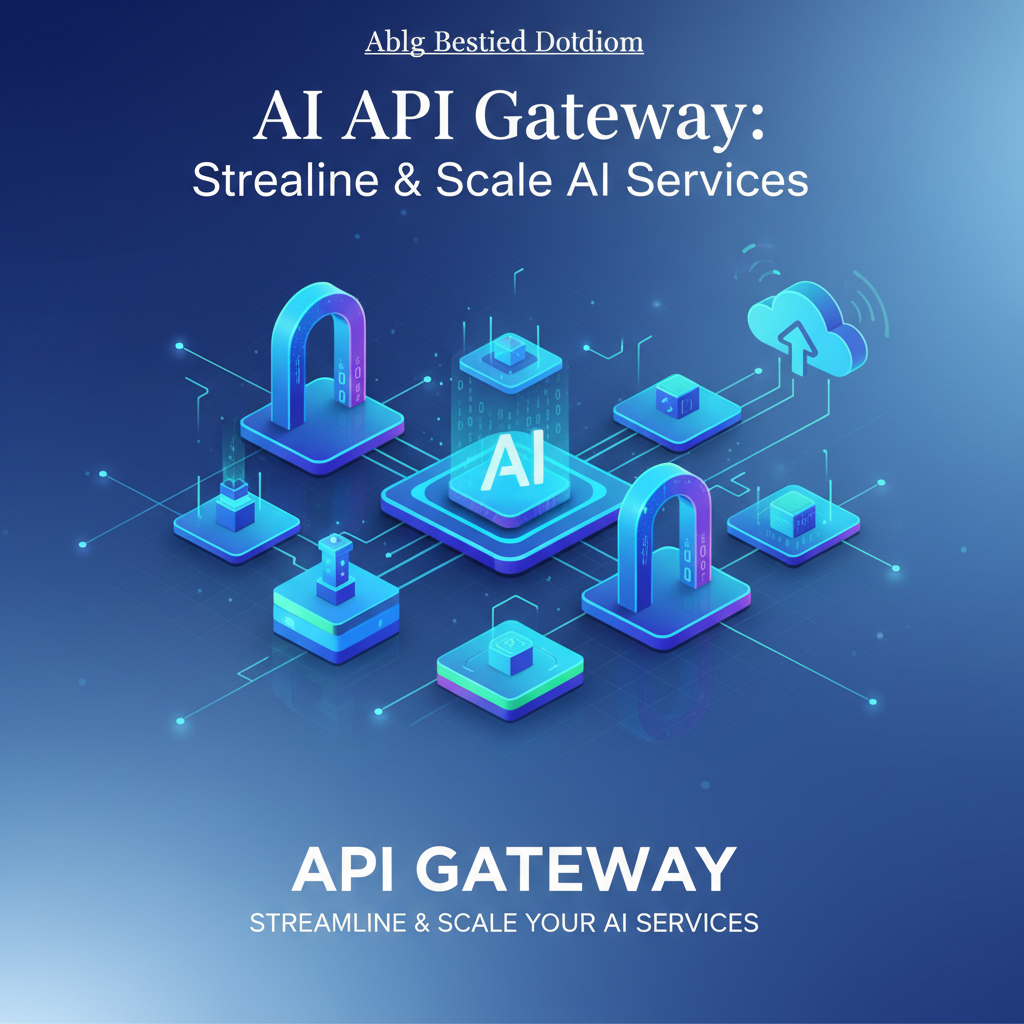


The landscape of modern technology is being irrevocably reshaped by the relentless march of Artificial Intelligence. From powering the personalized recommendations on our streaming services to driving complex diagnostic tools in healthcare and orchestrating autonomous vehicles, AI is no longer a futuristic concept but a ubiquitous and indispensable force. As organizations increasingly integrate sophisticated AI models, including Large Language Models (LLMs), into their core operations and customer-facing applications, they encounter a new frontier of challenges. These challenges extend far beyond the mere development of potent algorithms; they delve deep into the realms of deployment, management, security, and scalability of these intelligent services. This monumental shift necessitates a specialized and robust infrastructure layer capable of handling the unique demands of AI workloads. Enter the AI Gateway – a pivotal architectural component designed to streamline, secure, and scale the consumption and orchestration of AI capabilities across an enterprise.
This comprehensive exploration will delve into the critical role of the AI Gateway, examining its fundamental architecture, key features, and profound benefits. We will differentiate it from traditional api gateway solutions, highlight its specialized function as an LLM Gateway, and discuss how it acts as the linchpin for efficient and secure AI adoption. Through a detailed analysis, readers will gain a profound understanding of how this indispensable technology empowers businesses to unlock the full potential of their AI investments, ensuring agility, resilience, and operational excellence in the rapidly evolving AI-driven world.
The AI Revolution and Its API Demands: A New Paradigm for Infrastructure
The genesis of modern Artificial Intelligence can be traced back decades, yet its explosive growth and mainstream adoption are relatively recent phenomena, propelled by advancements in computational power, vast datasets, and innovative algorithms like deep learning. What began as specialized, often academic, endeavors has rapidly permeated every conceivable industry, transforming how businesses operate, interact with customers, and innovate. Machine learning models now optimize supply chains, predict market trends, personalize user experiences, and automate complex decision-making processes. More recently, the advent of Large Language Models (LLMs) has ushered in an even more transformative era, demonstrating unprecedented capabilities in natural language understanding, generation, summarization, and translation, creating a demand for tools that can effectively manage these powerful, yet complex, computational engines.
However, integrating these sophisticated AI capabilities into production environments is far from a trivial undertaking. Unlike traditional data processing or business logic applications, AI services present a unique set of demands on infrastructure. Firstly, the computational intensity of AI inference, especially for deep learning models and LLMs, often requires specialized hardware (GPUs, TPUs) and significant resources, leading to concerns about latency, cost, and efficiency. Secondly, the sheer diversity of AI models—ranging from custom-trained proprietary models to open-source variants, and a myriad of commercial APIs from cloud providers—creates a fragmented landscape that is difficult to unify and manage. Each model might have its own API interface, authentication mechanism, data format, and versioning scheme, leading to significant integration overhead and technical debt.
Furthermore, the data handled by AI models is frequently sensitive, encompassing personal identifiable information (PII), proprietary business data, or critical operational metrics. This necessitates stringent security protocols, robust access controls, and adherence to complex regulatory compliance frameworks (such as GDPR, HIPAA, CCPA). Traditional security measures, while foundational, often fall short of addressing the unique vulnerabilities associated with AI, such as adversarial attacks or prompt injection risks specific to LLMs. Lastly, the dynamic nature of AI models, which are constantly being updated, retrained, and fine-tuned, introduces challenges in version control, lifecycle management, and ensuring backward compatibility for dependent applications. These combined factors highlight a critical gap: traditional API management tools, while excellent for standard RESTful services, lack the specialized functionalities required to truly harness and govern the power of modern AI. This is precisely where the specialized architecture and capabilities of an AI Gateway become not just beneficial, but absolutely essential.
What is an AI API Gateway? Bridging the Gap Between AI Models and Applications
At its core, an AI API Gateway is a specialized server that acts as a single entry point for all API requests related to artificial intelligence services. It stands between the consuming applications (front-end, microservices, mobile apps, etc.) and the diverse ecosystem of AI models and inference engines residing behind it. While it shares foundational principles with a traditional api gateway, its design and functionalities are specifically tailored to address the unique complexities and requirements of AI workloads.
A traditional api gateway primarily focuses on routing, load balancing, authentication, authorization, rate limiting, and caching for generic HTTP/RESTful APIs. It centralizes common API management tasks, simplifying microservice architectures and enhancing security for distributed systems. However, as AI models became more prevalent, developers and operations teams realized that the generic capabilities of these gateways were insufficient. AI models often require:
- Specialized Routing: Routing requests based on model performance, cost, availability, or specific data characteristics, rather than just service endpoints.
- Model-Specific Transformations: Adapting request/response formats to match different AI model interfaces, especially crucial for varying input schemas.
- Prompt Engineering Management: For LLMs, this involves managing, versioning, and applying prompts consistently across different models.
- Inference Optimization: Techniques like batching, connection pooling, and dynamic scaling for compute-intensive inference tasks.
- Enhanced Security: Protecting against AI-specific threats like prompt injection, data poisoning, and model inversion attacks, in addition to standard API security.
- Cost Management for AI: Tracking and optimizing expenditures across multiple AI service providers or internally hosted models.
An AI Gateway is engineered to natively understand and manage these AI-specific nuances. It extends the functionalities of a traditional gateway by incorporating AI-aware logic and optimizations. For instance, it can intelligently route a text classification request to either a fine-tuned BERT model, a commercial API like OpenAI's GPT, or a local open-source model like Llama, based on predefined policies concerning accuracy, latency, cost, or regulatory compliance. This abstraction layer shields consuming applications from the underlying complexity and heterogeneity of the AI backend, fostering agility and reducing the tightly coupled dependencies that often hinder innovation.
A critical evolution within the AI Gateway landscape is the emergence of the LLM Gateway. With the explosive growth and diverse offerings of Large Language Models, managing their invocation has become a significant challenge. Different LLMs (e.g., OpenAI's GPT series, Anthropic's Claude, Google's Gemini, various open-source models like Llama 2) often have distinct API signatures, rate limits, pricing structures, and unique prompt engineering requirements. An LLM Gateway specializes in unifying access to these diverse language models. It provides a standardized API interface to applications, allowing developers to switch between LLM providers or models with minimal code changes. This is invaluable for prompt experimentation, A/B testing different models, ensuring vendor lock-in avoidance, and implementing safety guardrails specific to generative AI. Essentially, it acts as a smart proxy for all things LLM, simplifying their integration and maximizing their utility in production environments. In summary, an AI Gateway is not merely an extension but a re-imagimagined api gateway built for the intelligence age, ensuring AI services are not just consumable, but governable, secure, and scalable.
Core Features and Benefits of an AI API Gateway: Unlocking AI's Full Potential
The strategic deployment of an AI Gateway delivers a multifaceted array of benefits, fundamentally transforming how organizations interact with and manage their artificial intelligence capabilities. These advantages span across operational efficiency, enhanced security, optimized performance, and robust cost management, creating a resilient and agile AI infrastructure.
3.1 Unified Access & Orchestration: Simplifying Complexity
One of the most immediate and profound benefits of an AI Gateway is its ability to provide a single, unified access point for an organization's entire portfolio of AI models. In typical enterprise environments, AI services might be scattered across various cloud providers (AWS SageMaker, Azure AI, Google AI Platform), internally hosted on Kubernetes clusters, or consumed through third-party APIs (e.g., OpenAI, Hugging Face). Each of these might have distinct authentication mechanisms, API endpoints, input/output data formats, and versioning protocols. Without an AI Gateway, applications would need to integrate with each of these disparate systems individually, leading to significant development overhead, maintenance complexity, and a fragile architecture.
An AI Gateway abstracts away this complexity. It acts as a universal adapter, presenting a consistent API interface to consuming applications, regardless of the underlying AI model's location or technology. This capability significantly reduces the cognitive load on developers, allowing them to focus on building features rather than wrestling with integration nuances. The gateway intelligently routes incoming requests to the most appropriate AI model based on predefined policies. This intelligent routing can consider various factors: * Performance: Directing requests to models with lower latency or higher throughput. * Cost: Prioritizing less expensive models for certain types of queries, especially for high-volume, lower-priority tasks. * Availability: Automatically failing over to a backup model or provider if the primary one is unavailable, ensuring high reliability. * Specificity: Routing specialized requests (e.g., medical image analysis) to highly specialized models, while general requests (e.g., text summarization) go to more generic, cost-effective models. * Data Locality: Ensuring sensitive data is processed by models hosted in specific geographic regions to comply with data residency regulations.
This orchestrated routing is crucial for dynamic environments where models are frequently updated or swapped out. The application remains blissfully unaware of these backend changes, as it continues to interact with the stable API presented by the gateway. This level of abstraction fosters agility, enabling organizations to experiment with new models, conduct A/B testing on different AI implementations, and seamlessly upgrade their AI infrastructure without impacting upstream applications. For example, a sentiment analysis application can be configured to use a lightweight, fast model for routine social media monitoring but switch to a more sophisticated, accurate model for critical customer feedback, all managed and routed transparently by the AI Gateway. It serves as the intelligent switchboard, directing the flow of intelligent computation with precision and efficiency.
In this context, powerful platforms like ApiPark emerge as indispensable tools. APIPark, an open-source AI gateway and API management platform, specifically addresses this fragmentation by offering the capability to quickly integrate 100+ AI models under a unified management system. This feature dramatically simplifies the initial setup and ongoing maintenance for organizations dealing with a diverse AI landscape, ensuring that all AI assets, regardless of origin, are discoverable and manageable through a single pane of glass. This unification extends beyond mere integration, encompassing authentication and robust cost tracking mechanisms for all integrated models, providing a holistic view of AI consumption and expenditure.
3.2 Security & Access Control: Fortifying the AI Perimeter
Security is paramount in any IT infrastructure, and AI services, particularly those handling sensitive data or making critical decisions, introduce unique vulnerabilities. An AI Gateway significantly strengthens the security posture of AI deployments by centralizing and enforcing robust security policies at the edge of the AI infrastructure.
Traditional security measures like strong authentication and authorization are foundational. The AI Gateway can integrate with various identity providers (IDPs) and authentication schemes (OAuth 2.0, API Keys, JWT, SAML) to verify the identity of every application or user attempting to access an AI service. This ensures that only authorized entities can invoke AI models. Beyond mere authentication, fine-grained authorization policies can be applied, dictating which specific models an application can access, what operations it can perform (e.g., inference, training data submission), and under what conditions. Role-Based Access Control (RBAC) allows administrators to define roles with specific permissions, simplifying the management of complex access matrices for teams and tenants.
However, AI security extends beyond conventional API security. The gateway acts as a critical defense line against AI-specific threats. For instance, in the realm of Large Language Models, prompt injection attacks are a significant concern, where malicious users manipulate prompts to elicit unintended or harmful responses from the model. An LLM Gateway can implement filters and validation rules to detect and mitigate such attacks, ensuring that prompts adhere to predefined safety guidelines before being passed to the underlying LLM. Similarly, the gateway can perform input validation to prevent malformed data from being fed to models, which could lead to errors, performance degradation, or even model exploitation.
Data privacy and regulatory compliance (e.g., GDPR, HIPAA, CCPA) are also meticulously managed by the AI Gateway. It can enforce data masking or anonymization policies for sensitive data before it reaches an AI model, especially if the model is hosted by a third-party vendor or in a less secure environment. The gateway's ability to log every API call with detailed metadata provides an immutable audit trail, crucial for demonstrating compliance during regulatory audits and for forensic analysis in case of a security incident. This comprehensive logging ensures transparency and accountability for every interaction with an AI service.
Furthermore, an AI Gateway can act as a shield against common web vulnerabilities and threats such as Distributed Denial-of-Service (DDoS) attacks, SQL injection attempts (though less common for pure AI inference, still relevant for API interactions), and cross-site scripting (XSS). By inspecting incoming traffic and applying threat intelligence, it can block suspicious requests before they even reach the AI backend, preserving the integrity and availability of the AI services. In scenarios where multiple teams or tenants share AI infrastructure, the gateway is instrumental in enforcing strict isolation, ensuring that one team's access or security compromise does not affect others. This multi-layered approach to security, with the AI Gateway at its forefront, is indispensable for building trust and ensuring the responsible deployment of AI technologies.
In bolstering security, platforms like APIPark offer crucial features. APIPark allows for the activation of subscription approval features, ensuring that callers must subscribe to an API and await administrator approval before they can invoke it. This mechanism serves as a robust gatekeeper, preventing unauthorized API calls and significantly mitigating the risk of potential data breaches by enforcing a controlled access paradigm to valuable AI resources. This proactive approval workflow adds an essential layer of human oversight and policy enforcement, strengthening the overall security posture of an organization's AI services.
3.3 Performance Optimization & Scalability: Maximizing AI Throughput
The computational demands of AI inference can be substantial, and ensuring that AI services remain responsive and performant, even under heavy load, is a critical challenge. An AI Gateway is specifically engineered to optimize the performance and enhance the scalability of AI workloads, making intelligent use of underlying resources and minimizing latency.
One of the primary mechanisms for performance optimization is caching. For frequently requested AI inferences that produce consistent results (e.g., a common entity extraction query, a predefined image classification result), the gateway can cache the response. Subsequent identical requests can then be served directly from the cache, bypassing the computationally expensive AI model inference entirely. This dramatically reduces latency, frees up valuable GPU/CPU resources, and lowers operational costs, especially for high-volume, repetitive queries. The cache can be configured with time-to-live (TTL) policies to ensure data freshness.
Rate limiting and throttling are indispensable features for maintaining system stability and preventing resource exhaustion. The gateway can enforce limits on the number of requests an individual user, application, or tenant can make within a specified timeframe. This prevents abuse, ensures fair usage across all consumers, and protects the AI backend from being overwhelmed by sudden spikes in traffic. Throttling can also be implemented to prioritize critical applications during peak load, gracefully degrading service for less critical ones to maintain overall system health.
For highly concurrent environments, connection pooling is vital. Instead of establishing a new connection to the AI backend for every incoming request, the gateway maintains a pool of open, persistent connections. This reduces the overhead of connection establishment and teardown, leading to faster response times and more efficient resource utilization on the backend AI servers.
Dynamic scaling of AI inference endpoints is another significant advantage. An AI Gateway can be configured to monitor the load on various AI models and dynamically spin up or scale down inference instances based on real-time demand. This elastic scaling ensures that adequate computational resources are always available to meet fluctuating request volumes, preventing bottlenecks and guaranteeing consistent performance without over-provisioning resources during periods of low activity. This not only optimizes performance but also contributes significantly to cost efficiency by aligning resource consumption with actual demand.
Furthermore, some AI Gateway implementations can perform batching of requests. When multiple individual requests arrive for the same AI model within a short time window, the gateway can aggregate these requests into a single batch and send them to the model for inference. Processing requests in batches can be significantly more efficient for many AI models, especially deep learning models, as it better utilizes underlying hardware accelerators (like GPUs). The gateway then disaggregates the batch response and sends individual results back to the respective clients. This technique can drastically improve throughput and resource utilization.
The cumulative effect of these optimizations is a highly performant and scalable AI infrastructure. Applications experience faster response times, AI models are utilized more efficiently, and the overall system can gracefully handle fluctuating loads, which is characteristic of real-world AI deployments. This robust performance infrastructure is a cornerstone for delivering reliable and compelling AI-powered experiences to end-users.
Demonstrating exceptional capability in this domain, ApiPark is engineered for high performance, with its official documentation highlighting that it can achieve over 20,000 TPS (transactions per second) with just an 8-core CPU and 8GB of memory. This impressive benchmark rivals the performance of established solutions like Nginx, underscoring its capability to handle large-scale traffic. Furthermore, APIPark supports cluster deployment, ensuring that organizations can scale their AI Gateway infrastructure horizontally to meet even the most demanding traffic requirements, thereby guaranteeing both robust performance and limitless scalability for their AI services.
3.4 Cost Management & Observability: Gaining Control and Insight
As AI adoption scales, the associated operational costs can quickly spiral out of control if not diligently managed. This is particularly true when leveraging commercial AI services charged on a per-token, per-call, or per-compute-hour basis. An AI Gateway provides the indispensable tools for comprehensive cost management and deep observability into AI service consumption.
Detailed logging and monitoring capabilities are fundamental. The gateway records every single API call to an AI service, capturing an extensive array of metadata. This includes the timestamp of the request, the consuming application, the specific AI model invoked, the request and response payload sizes, the latency of the inference, the status code, and any error messages. This granular data forms the basis for understanding AI service usage patterns, identifying potential bottlenecks, and diagnosing issues. Real-time dashboards can visualize key metrics like requests per second, error rates, average latency, and resource utilization, providing operations teams with immediate insights into the health and performance of their AI infrastructure.
Beyond operational monitoring, the AI Gateway is critical for cost tracking and optimization. By attributing each request to a specific model, application, and even end-user, the gateway can generate detailed reports on AI resource consumption. This allows organizations to understand exactly where their AI spending is going, identify expensive models or high-volume consumers, and make data-driven decisions to optimize costs. For instance, if a specific application is frequently invoking an expensive LLM for trivial tasks, the gateway's data can reveal this, prompting a policy adjustment to route such requests to a more cost-effective model or a cached response. This granular cost visibility is essential for chargeback mechanisms within large enterprises, enabling departments to be billed accurately for their AI consumption.
Powerful data analysis features often complement the logging capabilities. By analyzing historical call data, the AI Gateway can identify long-term trends in usage, performance changes over time, and predict future demand. This predictive insight is invaluable for proactive maintenance and capacity planning. For example, if a model's latency is gradually increasing, or its error rate is trending upwards, the data analysis can flag these issues before they manifest as critical service disruptions. This allows operations teams to intervene proactively, perhaps by optimizing the model, scaling up resources, or switching to an alternative. The ability to perform root cause analysis with detailed logs means that troubleshooting complex issues in AI inference pipelines becomes significantly faster and more efficient, reducing downtime and operational friction.
The comprehensive observability provided by an AI Gateway extends to auditing and compliance. The immutable record of all AI interactions is crucial for demonstrating adherence to regulatory requirements and internal governance policies. It provides the transparency needed to answer questions about which AI models were used, when, by whom, and with what data, fostering accountability and trust in AI systems. In essence, the gateway transforms AI consumption from a black box into a transparent, measurable, and governable process, empowering organizations with the insights needed for strategic decision-making and continuous improvement.
In this vein, ApiPark offers exceptionally robust features for observability. It provides detailed API call logging, meticulously recording every single detail of each API invocation. This comprehensive logging is a goldmine for businesses, enabling them to quickly trace and troubleshoot issues in API calls, thereby ensuring system stability and bolstering data security. Complementing this, APIPark also features powerful data analysis capabilities. By analyzing the wealth of historical call data, the platform can display long-term trends and reveal performance changes, empowering businesses with the foresight for preventive maintenance and proactive issue resolution before problems escalate, turning raw data into actionable intelligence.
3.5 Prompt Engineering & Model Abstraction: Mastering LLMs with an LLM Gateway
The rise of Large Language Models (LLMs) has introduced a new dimension of complexity, particularly in how these models are interacted with. "Prompt engineering" – the art and science of crafting effective inputs to guide LLMs to desired outputs – has become a critical skill. However, managing diverse LLMs, each with its own preferred prompt structure, output formats, and capabilities, can quickly become unwieldy. This is where the specialized capabilities of an LLM Gateway, a specific type of AI Gateway, become indispensable.
An LLM Gateway centralizes the management of prompts and interactions with various LLM providers. Instead of each application embedding specific prompts and directly calling different LLM APIs, they interact with the LLM Gateway through a unified API. The gateway then handles the transformation of the generic application request into the specific prompt format required by the chosen underlying LLM. This provides a powerful abstraction layer, shielding applications from the nuances of individual LLM APIs and prompt engineering specifics.
Key functionalities of an LLM Gateway in this context include: * Unified API Format for AI Invocation: This is a cornerstone feature. Applications send requests in a standardized format to the gateway. The gateway then translates this into the specific API call and prompt structure for the target LLM. This means that if an organization decides to switch from, say, GPT-4 to Claude 3, or to a self-hosted Llama model, the consuming applications require minimal to no code changes. The change is managed entirely within the gateway's configuration. This significantly reduces vendor lock-in and facilitates rapid experimentation with different models to find the optimal balance of performance, accuracy, and cost. * Prompt Templating and Versioning: Prompts are often complex, involving system instructions, user roles, few-shot examples, and specific output formatting requirements (e.g., JSON). An LLM Gateway allows for the creation, management, and versioning of prompt templates. This ensures consistency across applications, enables A/B testing of different prompt strategies, and allows for quick rollbacks if a new prompt version yields undesirable results. Developers can define templates like "Summarize this article," and the gateway will inject the article content into the template before sending it to the LLM. * Prompt Encapsulation into REST API: A highly valuable feature is the ability to combine an LLM with a custom prompt and expose this combination as a new, higher-level REST API. For example, instead of an application having to construct a prompt for sentiment analysis every time, the gateway can expose an API endpoint /sentiment-analysis. When an application calls this API with a piece of text, the gateway automatically takes that text, injects it into a predefined "Analyze the sentiment of the following text: [text]" prompt template, sends it to the chosen LLM, and returns the parsed sentiment result. This simplifies development even further, turning complex AI tasks into simple API calls. * Input/Output Transformation and Guardrails: The gateway can preprocess inputs (e.g., sanitizing text, checking for PII) and post-process outputs (e.g., parsing JSON responses, filtering out inappropriate content, ensuring output adheres to a specific schema). For LLMs, this is crucial for implementing safety guardrails. The gateway can act as a content moderation layer, preventing the LLM from generating harmful, biased, or off-topic responses by filtering outputs before they reach the user. It can also enrich responses, for instance, by appending disclaimers or integrating data from other systems. * Fallbacks and Chain-of-Thought Orchestration: In complex AI workflows, an LLM Gateway can orchestrate multiple LLM calls or even integrate with other AI models. For example, if a primary LLM fails to provide a satisfactory answer, the gateway can automatically route the request to a fallback LLM. It can also manage "chain-of-thought" prompting, where an initial LLM call generates an intermediate thought process, which is then fed back into the same or a different LLM for a final answer, all seamlessly managed by the gateway.
By providing these sophisticated capabilities, an LLM Gateway transforms the interaction with Large Language Models from a complex, provider-specific integration challenge into a standardized, manageable, and highly flexible process. It empowers developers to leverage the full power of generative AI while maintaining control, consistency, and the ability to adapt to the rapidly changing LLM ecosystem.
ApiPark is designed with these advanced LLM-specific needs in mind. It offers a unified API format for AI invocation, ensuring that changes in underlying AI models or prompts do not disrupt consuming applications or microservices. This standardization drastically simplifies AI usage and reduces maintenance costs. Furthermore, APIPark empowers users to leverage prompt encapsulation into REST API. This innovative feature allows users to quickly combine AI models with custom prompts to create new, specialized APIs—such as sentiment analysis, translation, or data analysis APIs—making complex AI functionalities readily accessible and easily consumable through standard RESTful interfaces.
3.6 API Lifecycle Management for AI Services: Governance from Inception to Deprecation
The successful and sustainable deployment of AI services requires more than just technical integration; it demands robust governance throughout their entire lifecycle. Just like any other critical software component, AI APIs evolve, are updated, deprecated, and eventually retired. An AI Gateway plays a central role in managing this end-to-end API lifecycle for AI services, ensuring order, consistency, and discoverability.
The lifecycle begins with design and publication. The gateway provides tools and frameworks for defining AI APIs, specifying their interfaces, parameters, and expected behaviors. Once designed, these APIs can be published through the gateway, making them available to authorized consumers. This publication process often involves associating policies for security, rate limiting, and routing. The gateway ensures that all published AI APIs adhere to organizational standards and best practices, promoting consistency across the enterprise.
Versioning is a critical aspect of API lifecycle management, particularly for AI services that are continuously evolving. As models are retrained, fine-tuned, or replaced with newer versions, the underlying AI API might change. The AI Gateway enables seamless versioning of AI APIs, allowing multiple versions of the same API to coexist. This is crucial for backward compatibility, ensuring that older applications continue to function while newer applications can adopt the latest AI capabilities. The gateway can intelligently route requests to the correct API version based on the request header or URL path, providing a stable interface for consumers even as the backend AI models undergo significant transformations. This prevents breaking changes and allows for a smooth transition plan for deprecating older versions.
Deprecation and decommission are the final stages. When an AI model or API version is no longer needed or is replaced, the gateway facilitates its graceful deprecation. It can provide clear communication to developers about upcoming changes, perhaps by returning warning headers or slowly redirecting traffic to newer versions. Eventually, when an API is fully decommissioned, the gateway ensures that all traffic to that endpoint is stopped, and resources are properly de-allocated, preventing dead links or security vulnerabilities.
A vital component of this lifecycle management is the developer portal functionality. The AI Gateway often includes or integrates with a developer portal where internal and external developers can discover available AI APIs, view comprehensive documentation, subscribe to APIs, test endpoints, and access SDKs. This self-service capability significantly improves developer experience, accelerates AI adoption, and reduces the support burden on internal teams. A well-maintained developer portal, powered by the gateway's lifecycle management, acts as a centralized catalog of all available AI services, making it easy for teams to find and reuse existing AI capabilities rather than reinventing the wheel.
By centralizing these lifecycle management functions, an AI Gateway brings order to the potentially chaotic world of evolving AI services. It ensures that AI capabilities are not just developed but are also consumable, maintainable, and governed effectively throughout their entire lifespan, maximizing their value to the organization. This holistic approach prevents "API sprawl" and ensures that AI initiatives are sustainable and scalable in the long term.
ApiPark excels in this comprehensive governance, assisting with end-to-end API lifecycle management, from design and publication to invocation and decommissioning. It helps organizations regulate API management processes, offering robust control over traffic forwarding, load balancing, and versioning of published APIs, ensuring a streamlined and orderly evolution of AI services. Furthermore, APIPark facilitates API service sharing within teams. By centralizing the display of all API services, it creates a transparent and accessible catalog, making it effortless for different departments and teams to discover, understand, and readily utilize the required API services, fostering collaboration and maximizing the reuse of valuable AI assets across the enterprise.
3.7 Multi-Tenancy and Resource Isolation: Secure and Efficient Collaboration
In larger organizations or those providing AI services to multiple clients, the ability to support multi-tenancy is crucial. Multi-tenancy allows a single instance of an AI Gateway infrastructure to serve multiple independent groups, departments, or external customers (tenants) while providing each with a logically separate and secure environment. This capability is essential for maximizing resource utilization, reducing operational costs, and ensuring administrative ease.
An AI Gateway designed for multi-tenancy ensures that each tenant operates within its own isolated domain. This means that each team or client can have its own: * Independent Applications: Each tenant can integrate their unique applications with the AI services without interference from other tenants. * Data Configurations: Tenants can have their specific data policies, data sources, and data processing rules for AI models, ensuring data isolation and privacy. * User Configurations: User roles, permissions, and authentication settings are managed independently for each tenant, providing granular access control tailored to their specific needs. * Security Policies: Each tenant can enforce their own security protocols, API key management, and threat detection rules, even while sharing the underlying AI infrastructure. * API Usage Quotas: Rate limits, throttling policies, and cost allocations can be configured per tenant, ensuring fair usage and preventing one tenant from monopolizing resources or incurring excessive costs for others.
Despite this logical separation, the underlying infrastructure – the physical servers, network components, and AI model deployments – can be shared across tenants. This architectural approach significantly improves resource utilization compared to deploying dedicated infrastructure for each tenant. For example, a shared pool of GPU inference servers can dynamically allocate resources to different tenants based on their real-time demand, leading to substantial cost savings and operational efficiencies.
The AI Gateway acts as the enforcement point for this multi-tenancy. It inspects incoming requests, identifies the tenant based on API keys, authentication tokens, or specific headers, and then applies the policies and configurations relevant to that tenant. This includes routing requests to tenant-specific AI model instances (if they exist), applying tenant-specific rate limits, and logging usage data for that particular tenant. This ensures that a breach or misconfiguration within one tenant's environment does not compromise the data or operations of another.
This robust isolation is not just about security; it's also about empowering different teams or business units within an enterprise to leverage AI independently, with their own governance structures, while still benefiting from a centralized, optimized, and cost-effective AI infrastructure. It facilitates departmental autonomy in AI adoption while maintaining overall organizational control and visibility. For service providers offering AI capabilities to external clients, multi-tenancy is a non-negotiable feature, enabling them to onboard new clients rapidly and securely scale their offerings.
ApiPark is specifically engineered to cater to these multi-tenancy requirements. It enables the creation of multiple teams (tenants), each endowed with independent applications, data, user configurations, and security policies. Crucially, these tenants can share underlying applications and infrastructure. This architectural design significantly improves resource utilization and effectively reduces operational costs, offering a highly efficient and scalable solution for organizations needing to support diverse groups or client bases with their AI services.
Implementing an AI API Gateway: Key Considerations for Success
The decision to implement an AI API Gateway is a strategic one that requires careful planning and consideration of various factors to ensure successful integration and maximum return on investment. The choice of gateway, deployment model, and integration strategy will significantly impact an organization's AI journey.
4.1 On-premise vs. Cloud vs. Hybrid Deployment: Tailoring to Infrastructure
The first major decision revolves around the deployment model for the AI Gateway. Each option presents distinct advantages and challenges:
- On-premise Deployment: This model involves hosting the AI Gateway and often the AI models themselves within the organization's own data centers.
- Pros: Offers maximum control over data security, compliance (especially for highly regulated industries), and customization. It can also provide lower latency if AI models are also hosted on-premise, bypassing external network hops. For organizations with existing significant hardware investments or strict data residency requirements, this is often the preferred choice.
- Cons: Requires significant upfront capital investment in hardware and infrastructure, and ongoing operational overhead for maintenance, patching, and scaling. Scaling capacity up or down can be slower and more complex compared to cloud-based solutions.
- Cloud Deployment: Leveraging public cloud providers (AWS, Azure, Google Cloud) to host the AI Gateway and AI services.
- Pros: Offers unparalleled scalability, flexibility, and reduced operational burden. Organizations can provision resources on demand, paying only for what they use. Cloud providers offer a wealth of managed services that can simplify the deployment and management of gateways and AI models. Global presence of cloud providers can also reduce latency for geographically dispersed users.
- Cons: Potential vendor lock-in, concerns about data sovereignty and privacy (though cloud providers offer region-specific deployments and compliance certifications), and potentially higher long-term operational costs if not properly optimized.
- Hybrid Deployment: A combination of on-premise and cloud resources. This model typically involves hosting sensitive data and mission-critical AI models on-premise, while leveraging the cloud for burst capacity, less sensitive workloads, or specific AI services offered by cloud providers.
- Pros: Offers a balance of control, security, and scalability. It provides flexibility to optimize for cost and performance based on the specific workload. For instance, an LLM Gateway could be deployed on-premise for highly sensitive internal communications, while less sensitive public-facing chatbots leverage cloud-hosted LLMs through the same gateway.
- Cons: Increased complexity in network configuration, security management, and operational oversight across disparate environments. Requires robust integration tools and expertise.
The ideal deployment model often depends on an organization's existing infrastructure, budget, regulatory constraints, and strategic vision for AI adoption. Many organizations start with a cloud-first approach for agility and then transition to hybrid models as their AI maturity grows and specific needs emerge.
4.2 Vendor Selection Criteria: Choosing the Right Partner
Selecting the right AI Gateway solution, whether open-source or commercial, is a critical decision. Key criteria for evaluation include:
- Feature Set: Does the gateway offer the core functionalities required (routing, security, rate limiting, caching, logging)? Does it have specialized features for AI, such as model abstraction, prompt management (for LLM Gateway functionality), and AI-specific security policies?
- Scalability and Performance: Can the gateway handle projected traffic volumes and latency requirements? Does it support horizontal scaling and efficient resource utilization? Performance benchmarks and real-world testimonials are valuable here.
- Security Capabilities: Does it provide robust authentication, authorization, data encryption, and protection against AI-specific threats? How does it handle compliance requirements?
- Ease of Deployment and Management: Is the gateway easy to install, configure, and operate? Does it offer intuitive UI/CLI tools, comprehensive documentation, and good integration with existing DevOps pipelines?
- Integration Ecosystem: How well does it integrate with existing AI frameworks, cloud services, identity providers, monitoring tools, and CI/CD systems? Does it support a wide range of AI models and formats?
- Support and Community: For commercial products, what level of technical support is offered (SLAs, response times)? For open-source solutions, how active and vibrant is the community? Are there clear pathways for bug fixes and feature enhancements?
- Cost Model: Understand the licensing costs, operational costs (infrastructure, maintenance), and potential hidden fees. For open-source projects, consider the cost of internal expertise and potential commercial support options.
- Vendor Reputation and Roadmap: Assess the vendor's track record, commitment to the product, and future development roadmap, especially given the rapid pace of AI innovation.
Organizations should conduct thorough proof-of-concept evaluations to test potential solutions against their specific use cases and technical requirements.
An excellent example of a platform that simplifies deployment and offers robust support is ApiPark. APIPark can be deployed incredibly quickly, often in just 5 minutes with a single command line:
curl -sSO https://download.apipark.com/install/quick-start.sh; bash quick-start.sh
This ease of deployment significantly reduces the barrier to entry for organizations looking to quickly set up a powerful AI Gateway. While the open-source version of APIPark is tailored to meet the basic API resource needs of startups, providing a flexible and cost-effective solution, it also offers a commercial version with advanced features and professional technical support for leading enterprises. This dual offering ensures that organizations of all sizes can benefit from APIPark's capabilities, scaling from initial proof-of-concept to enterprise-grade production deployments with comprehensive backing.
4.3 Integration with Existing Infrastructure: A Seamless Fit
The AI Gateway should not operate in a vacuum; it needs to integrate seamlessly with an organization's existing IT infrastructure. This typically involves:
- Network Integration: Ensuring proper routing, firewall rules, and load balancing setup to allow traffic to flow securely through the gateway to AI backends.
- Identity and Access Management (IAM): Connecting to corporate identity providers (e.g., Active Directory, Okta, Auth0) for centralized authentication and authorization.
- Monitoring and Logging Systems: Exporting logs and metrics from the gateway to existing SIEM (Security Information and Event Management), APM (Application Performance Monitoring), and observability platforms (e.g., Prometheus, Grafana, Splunk, ELK stack). This ensures a unified view of system health.
- CI/CD Pipelines: Automating the deployment, configuration, and testing of the AI Gateway as part of the software development lifecycle, ensuring consistency and reducing manual errors.
- Data Governance Tools: Integrating with data catalogs, data masking solutions, and compliance frameworks to ensure AI data handling adheres to corporate policies.
A well-integrated AI Gateway becomes an organic part of the IT ecosystem, rather than an isolated component, maximizing its effectiveness and simplifying management overhead.
4.4 Security Best Practices: Beyond the Basics
While the AI Gateway itself provides significant security enhancements, implementing it with best practices is crucial:
- Least Privilege: Grant the gateway only the minimum necessary permissions to access AI models and resources.
- Regular Patching and Updates: Keep the gateway software and its underlying operating system regularly updated to protect against known vulnerabilities.
- Secure Configuration: Disable unnecessary features, use strong encryption protocols (TLS 1.2+), and implement robust credential management.
- Network Segmentation: Deploy the gateway in a demilitarized zone (DMZ) or a dedicated subnet, isolating it from sensitive internal networks.
- API Key Management: Implement secure storage and rotation policies for API keys used by the gateway to access backend AI services.
- Continuous Monitoring: Actively monitor the gateway for suspicious activity, unusual traffic patterns, or configuration drift.
- AI-Specific Security Audits: Regularly audit the gateway's policies for prompt injection, data leakage, and other AI-specific risks, especially for LLM Gateway functionalities.
4.5 Performance Tuning: Squeezing Every Ounce of Efficiency
Even with an inherently performant gateway, specific tuning can yield significant improvements:
- Caching Strategy: Optimize caching policies (what to cache, how long) based on AI model volatility and request patterns.
- Resource Allocation: Ensure the gateway has adequate CPU, memory, and network resources to handle peak loads.
- Load Balancer Configuration: Properly configure external load balancers that distribute traffic to gateway instances.
- Connection Limits: Tune connection pool sizes and timeout settings to match backend AI model capabilities.
- Batching Parameters: Experiment with different batch sizes for AI inference to find the optimal point between latency and throughput.
By meticulously planning and thoughtfully executing the implementation of an AI API Gateway, organizations can build a resilient, secure, and highly efficient AI infrastructure that serves as a cornerstone for their intelligent applications, driving innovation and competitive advantage.
APIPark is a high-performance AI gateway that allows you to securely access the most comprehensive LLM APIs globally on the APIPark platform, including OpenAI, Anthropic, Mistral, Llama2, Google Gemini, and more.Try APIPark now! 👇👇👇
Case Studies and Real-World Applications: AI Gateway in Action
The theoretical benefits of an AI Gateway truly come to life when observed in practical, real-world scenarios across diverse industries. These examples underscore how this specialized infrastructure component addresses specific operational challenges and enables scalable AI adoption.
5.1 Customer Service Chatbots: Orchestrating Conversational AI
Consider a large e-commerce company aiming to enhance its customer service capabilities with an intelligent chatbot. This chatbot needs to perform a multitude of tasks: * Initial Query Routing: Directing simple queries (e.g., "What's my order status?") to a basic knowledge base AI. * Sentiment Analysis: Detecting customer frustration to escalate to a human agent. * Product Recommendations: Leveraging a recommendation engine AI based on browsing history. * Complex Issue Resolution: Interacting with a sophisticated LLM Gateway to answer nuanced questions about product features or return policies. * Language Translation: Offering multi-language support through a translation AI.
Without an AI Gateway, the chatbot application would need to directly integrate with 5-10 different AI models, each with its own API, authentication, and data format. This would make the chatbot brittle, difficult to maintain, and slow to evolve.
With an AI Gateway, the chatbot application only communicates with a single endpoint. The gateway then intelligently routes each part of the conversation to the appropriate AI service: 1. An initial natural language understanding (NLU) model processes the user's input. 2. Based on the NLU output, the gateway routes the query: * If simple, to a fast, cached FAQ model. * If complex, to an LLM Gateway which selects the best LLM (e.g., GPT-4 for nuanced understanding, or a cheaper open-source model for common phrases) and applies appropriate prompt templates. * If sentiment is negative, it triggers an escalation workflow. * If a product query, it calls a recommendation engine. 3. The gateway also manages rate limits to ensure fair usage of expensive LLMs and provides detailed logs for cost attribution and performance monitoring across all these disparate AI services.
This centralized orchestration makes the chatbot more robust, allows for easy swapping of underlying AI models (e.g., upgrading the NLU engine), and ensures consistent security and performance across all conversational AI components.
5.2 Financial Fraud Detection: Dynamic Model Routing
A major financial institution needs a robust system to detect fraudulent transactions in real-time. This involves integrating several specialized Machine Learning models: * Rule-Based Engine: For instantly flagging obvious, high-risk transactions. * Deep Learning Model: For identifying complex, subtle patterns in transaction data indicative of sophisticated fraud. * Graph Neural Network (GNN): For analyzing relationships between accounts and transactions to detect organized fraud rings. * Behavioral Biometrics AI: For authenticating user behavior patterns during login.
Each of these models is computationally intensive, developed by different teams, and may run on distinct infrastructure (e.g., one on GPUs in a private cloud, another using a third-party service).
An AI Gateway is deployed to manage this complex pipeline: 1. All transaction data flows into the gateway. 2. The gateway first routes the transaction through the fast, rule-based engine. If a clear flag is raised, the transaction is immediately blocked. 3. If not, the gateway then routes the transaction data to the deep learning model and the GNN concurrently or sequentially, depending on the required latency and interdependencies. 4. It ensures data privacy by anonymizing sensitive financial data before sending it to certain models, especially if they are external. 5. If a transaction needs further human review, the gateway can integrate with a case management system, providing all relevant AI model scores and explanations. 6. The gateway manages the load balancing across multiple instances of these ML models, ensures failover if one model service goes down, and rigorously logs all inferences for audit trails and regulatory compliance.
This dynamic routing and orchestration by the AI Gateway ensure that the most appropriate and efficient fraud detection model is applied to each transaction, maximizing accuracy while maintaining real-time performance and adhering to strict security and compliance standards inherent in financial services.
5.3 Content Generation Platforms: Managing Diverse Generative AIs
A modern digital marketing agency uses AI to generate vast amounts of content, from blog posts and ad copy to social media updates and image assets. This involves a suite of generative AI models: * Text-to-Text LLMs: For drafting articles, summaries, and varying tones (e.g., a formal tone for corporate blogs, a casual tone for social media). * Text-to-Image AIs: For creating accompanying visuals (e.g., Stable Diffusion, Midjourney, DALL-E). * Text-to-Video AIs: For generating short promotional clips. * Code Generation LLMs: For automating script generation for websites.
Each of these AIs comes from different providers, has varying pricing models (per token, per image, per minute of video), and requires specific input formats.
An AI Gateway here serves as the central hub for all content generation: 1. Marketing specialists use an internal platform that calls a single AI Gateway endpoint, specifying the type of content needed (e.g., "blog post," "social media image," "ad copy"). 2. The gateway, acting as an LLM Gateway for text-based tasks, applies predefined prompt templates (e.g., "Write a 500-word blog post about [topic] in an engaging, informative tone") before sending it to the chosen LLM (e.g., GPT-3.5 for drafts, GPT-4 for refinement based on cost/quality policies). 3. For image generation, the gateway translates the text prompt into the specific parameters required by the image AI and handles the secure transfer of images. 4. It tracks the token usage, image generation counts, and video minutes across all generative AIs, providing a consolidated view of content creation costs. 5. Security policies ensure that generated content adheres to brand guidelines and filters out any potentially inappropriate or biased outputs before they reach the marketing team. 6. The gateway also manages different versions of AI models, allowing the agency to experiment with new generative models without disrupting existing workflows.
This setup enables the marketing agency to efficiently leverage a diverse range of generative AI capabilities, fostering creativity and productivity while maintaining control over quality, costs, and compliance.
5.4 Healthcare Diagnostics: Securely Accessing Sensitive Data and AI Models
A healthcare provider integrates AI into its diagnostic pipeline, requiring access to various specialized medical AI models for image analysis (e.g., X-ray anomaly detection, MRI tumor identification) and predictive analytics (e.g., patient risk stratification). These models often deal with highly sensitive patient health information (PHI) and are subject to stringent regulations like HIPAA.
An AI Gateway is critical for this environment: 1. All diagnostic requests containing PHI are routed through the AI Gateway. 2. The gateway enforces strict authentication and authorization, ensuring that only authorized medical professionals or systems can submit requests. 3. It performs data anonymization or pseudonymization on PHI before sending it to AI models, especially if the models are third-party cloud services or research-oriented. This ensures maximum data privacy. 4. The gateway routes imaging data to specialized medical image analysis AIs (e.g., a specific model for mammography analysis vs. another for neurological scans). 5. It logs every single API call, including the patient ID (pseudonymized), the model invoked, the input data, and the AI's inference result, creating a complete audit trail for regulatory compliance. 6. Rate limiting protects the AI models from overload, ensuring timely diagnostics, which is critical in healthcare. 7. The gateway can also enforce data residency, ensuring that PHI and AI inference happen within specific geographic boundaries. 8. For complex cases, the gateway might orchestrate a request to a predictive analytics AI that combines image findings with patient EHR (Electronic Health Record) data to assess risk, with all data transformations and security handled by the gateway.
In healthcare, the AI Gateway is not just an efficiency tool; it's a vital component for ensuring the secure, compliant, and reliable application of AI, directly impacting patient care and trust. These diverse examples clearly illustrate the transformative power of the AI Gateway in making AI services manageable, secure, and scalable across a spectrum of enterprise applications.
The Future of AI API Gateways: Evolving with Intelligence
The rapid evolution of Artificial Intelligence, particularly in areas like large language models, multimodal AI, and edge computing, ensures that the AI Gateway will continue to evolve, adopting new capabilities and deepening its intelligence. The future landscape of AI Gateway technology promises even more sophisticated orchestration, proactive security, and seamless integration across an increasingly complex AI ecosystem.
6.1 Integration with MLOps Platforms: Bridging Development and Operations
The future will see a much tighter coupling between AI Gateway solutions and MLOps (Machine Learning Operations) platforms. MLOps aims to streamline the entire lifecycle of machine learning models, from experimentation and development to deployment and monitoring. An AI Gateway will become an even more integral part of this pipeline, automatically consuming new model versions from MLOps platforms, applying defined traffic routing strategies (e.g., canary deployments, A/B testing), and feeding back real-time performance and usage metrics directly into the MLOps monitoring dashboards. This deeper integration will automate model deployment workflows, ensure model consistency across environments, and provide a unified operational view of both the model's performance and its consumption through the gateway. Developers will define model deployment strategies within their MLOps tooling, and the AI Gateway will execute these strategies intelligently at the API layer, managing traffic shifts and ensuring stable service delivery.
6.2 Enhanced Intelligence in Routing and Optimization: Beyond Static Rules
Current AI Gateway routing often relies on predefined rules based on cost, latency, or availability. Future iterations will incorporate significantly more intelligence. This could include: * Dynamic, Context-Aware Routing: The gateway could learn from past performance data, real-time model load, and even the semantics of the input request to dynamically choose the optimal AI model or provider. For example, a request with high-stakes financial data might be routed to a premium, high-accuracy, low-latency model, while a routine summarization request goes to a cheaper, slightly slower alternative. * Predictive Scaling: Leveraging machine learning itself, the gateway could predict future demand for specific AI models based on historical patterns, time of day, or external events, proactively scaling up or down inference resources before demand peaks or troughs. * Adaptive Caching: Caching strategies could become adaptive, dynamically adjusting cache expiration times or invalidation policies based on the observed volatility of AI model outputs or the frequency of upstream data changes. * Multi-Model Composition & Chaining: The gateway will become even more sophisticated in orchestrating complex AI workflows, seamlessly chaining multiple AI models (e.g., an NLU model followed by an LLM, then an image generation model) and handling inter-model data transformations with greater flexibility and intelligence.
6.3 Edge AI Integration: Extending Intelligence to the Periphery
The proliferation of edge devices (IoT sensors, smart cameras, mobile devices) and the demand for real-time inference with minimal latency will drive the evolution of AI Gateway capabilities towards the edge. Future gateways might operate in a distributed fashion, with lightweight gateway components deployed closer to the data source. This edge AI Gateway would handle initial inference, data pre-processing, and local model caching, only routing complex or high-uncertainty requests to centralized cloud-based AI models. This hybrid edge-cloud architecture will reduce network bandwidth requirements, enhance privacy by processing sensitive data locally, and enable ultra-low-latency AI applications in environments where connectivity is intermittent or constrained. The central AI Gateway would then manage and monitor these distributed edge components, providing a unified view of the entire AI inference network.
6.4 Proactive Threat Intelligence for AI Models: Strengthening the Defense
As AI models become more pervasive, so do the sophisticated threats targeting them, such as data poisoning, model evasion, and prompt injection. Future AI Gateway solutions will integrate advanced threat intelligence and AI-specific security capabilities. This will include: * Real-time Anomaly Detection: Leveraging machine learning to identify unusual input patterns, adversarial attacks, or abnormal model behaviors at the gateway layer. * Proactive Prompt Guardrails: For LLM Gateway specifically, more sophisticated techniques will emerge to detect and neutralize advanced prompt injection attempts, ensuring safe and ethical AI interaction. This could involve using smaller, specialized AI models within the gateway to review and filter prompts before they reach the main LLM. * Output Validation for Safety: Beyond simple filtering, gateways will use contextual understanding to validate AI outputs for factual accuracy, bias, and adherence to ethical guidelines, providing an additional layer of assurance before results are delivered to end-users. * Federated Learning Security: For models trained using federated learning, the gateway might play a role in securing the aggregation of model updates, ensuring integrity and privacy.
6.5 Further Specialization of LLM Gateway Capabilities: The Era of Generative AI
The exponential growth of generative AI will spur further specialization of the LLM Gateway. This will include: * Multi-Modal Orchestration: Seamlessly integrating text, image, audio, and video generation models, allowing applications to request complex, multi-modal content through a single gateway interface. * AI Agent Orchestration: As AI agents become more prevalent, the gateway will manage the interaction, coordination, and security of multiple autonomous agents, each potentially leveraging different LLMs or specialized AIs. * Personalization and Context Management: The LLM Gateway could maintain user context and preferences across multiple interactions, allowing for highly personalized AI responses and experiences while still adhering to privacy policies. * Fine-tuning and Customization Management: The gateway might provide interfaces to manage custom fine-tuned versions of public LLMs, applying them dynamically based on user or application context.
In essence, the future AI Gateway will transcend its role as a mere traffic manager. It will become an intelligent, self-optimizing, and security-aware orchestrator, an indispensable brain at the heart of an enterprise's AI operations. It will not just streamline and scale AI services but will actively enhance their performance, security, and adaptability, ensuring that organizations can navigate the complexities of AI with confidence and continue to unlock unprecedented levels of innovation.
Conclusion: The Indispensable Core of Modern AI Infrastructure
The journey through the intricate landscape of Artificial Intelligence reveals a clear and undeniable truth: the effective deployment and management of AI services, particularly in an enterprise context, demands a sophisticated architectural solution that goes beyond the capabilities of traditional infrastructure. As AI models proliferate, diversify, and become increasingly integrated into core business functions, the challenges of orchestration, security, performance, and cost management escalate proportionally. It is in this dynamic and demanding environment that the AI Gateway emerges not merely as a beneficial tool, but as an absolutely indispensable component for any organization committed to harnessing the full power of Artificial Intelligence.
We have meticulously explored how the AI Gateway serves as the critical abstraction layer, unifying disparate AI models, from bespoke machine learning algorithms to the powerful and diverse offerings of Large Language Models. Its capacity to provide a single, consistent API interface to consuming applications dramatically simplifies development, accelerates integration, and drastically reduces the technical debt associated with managing a heterogeneous AI backend. Beyond mere connectivity, the AI Gateway intelligently routes requests, optimizing for factors such as cost, latency, and model specificity, ensuring that every AI invocation is handled with maximum efficiency.
Security, a paramount concern in any data-intensive field, is profoundly enhanced by the AI Gateway. It fortifies the perimeter against a spectrum of threats, ranging from standard API vulnerabilities to AI-specific risks like prompt injection. Through centralized authentication, fine-grained authorization, data anonymization, and robust auditing capabilities, the gateway establishes a secure and compliant environment for AI operations, safeguarding sensitive data and upholding regulatory mandates.
Furthermore, the gateway is the engine of performance and scalability. Features like caching, intelligent rate limiting, dynamic scaling, and request batching are meticulously engineered to maximize throughput, minimize latency, and ensure that AI services remain responsive and reliable even under the most demanding loads. This performance optimization directly translates into superior user experiences and more efficient utilization of expensive computational resources.
Crucially, the AI Gateway provides unparalleled observability and cost management. Its detailed logging and powerful data analytics capabilities transform AI consumption from a black box into a transparent, measurable, and governable process. Organizations gain granular insights into model usage, performance trends, and expenditure, empowering them to make informed decisions for continuous optimization and strategic resource allocation. The specialized role of the LLM Gateway within this architecture highlights its critical contribution to mastering prompt engineering, abstracting model complexities, and enabling agile experimentation with the rapidly evolving world of generative AI.
In an era where AI is rapidly transitioning from an experimental endeavor to the operational core of enterprises, the AI Gateway is the lynchpin that connects innovation with execution. It streamlines the deployment of AI services, scales their delivery across the enterprise, and secures their interactions with unwavering vigilance. By embracing this essential technology, organizations empower their developers, optimize their operations, and confidently navigate the complexities of the AI revolution, positioning themselves for sustained growth and competitive advantage in an increasingly intelligent world. The AI Gateway is not just facilitating the future of AI; it is actively shaping it.
AI API Gateway Feature Comparison Table
To further illustrate the distinct advantages and specialized functionalities of an AI API Gateway compared to a traditional API Gateway, especially considering the advanced features for LLMs, here's a comparative table:
| Feature/Category | Traditional API Gateway | AI API Gateway (including LLM Gateway specialization) | Key Advantage of AI Gateway |
|---|---|---|---|
| Core Function | Route, manage, and secure generic REST/HTTP APIs | Route, manage, and secure AI/ML models (REST, gRPC, custom inference endpoints) | AI-specific traffic management & model abstraction |
| Target Backends | Microservices, databases, legacy systems | Diverse AI models (cloud APIs, custom, open-source, LLMs, vision, NLU, etc.) | Unifies access to heterogeneous AI model landscape |
| Routing Logic | Path-based, host-based, load balancing (round-robin, least connections) | Intelligent Routing: Based on model performance, cost, accuracy, availability, data sensitivity, custom AI policies | Dynamic optimization for AI workloads (cost, latency, accuracy) |
| Authentication/Auth | API keys, OAuth, JWT, RBAC | Same + AI-specific access control (e.g., specific data types allowed for specific models) | Granular access control for AI models & data |
| Security Enhancements | DDoS protection, input validation, TLS, WAF | Same + AI-specific threat mitigation (prompt injection, model evasion, data poisoning) | Proactive defense against AI vulnerabilities (critical for LLMs) |
| Data Transformation | Basic request/response header/body manipulation | Model-specific input/output transformation, data anonymization/masking, multi-modal conversion | Adapts application requests to diverse AI model schemas |
| Caching | HTTP response caching | Same + AI inference result caching (for consistent AI model outputs) | Reduces redundant, expensive AI inference calls |
| Rate Limiting | Per API, per user/app | Same + Per-model/per-provider rate limits (e.g., per-token for LLMs), dynamic throttling | Prevents over-spending on commercial AI models & protects backend |
| Observability | Request logs, latency metrics, error rates | Same + AI model specific metrics (inference time, GPU utilization, token usage, cost attribution) | Deep insights into AI model performance, usage, and cost |
| LLM Specifics | Not applicable | Prompt templating, prompt versioning, prompt encapsulation into REST API, guardrails for generative AI, unified LLM API format, vendor fallback | Essential for managing, optimizing, and securing Large Language Models |
| Lifecycle Management | API versioning, deprecation | Same + AI model versioning, A/B testing different AI models, seamless model swaps | Enables agile evolution & management of AI models |
| Cost Management | Basic API usage tracking | Granular cost tracking by model/provider/token/GPU hour, cost optimization policies | Critical for managing diverse AI service expenditures |
| Multi-Tenancy | Often supported | Same + Tenant-specific AI model access, data policies, and cost attribution | Efficient and secure sharing of AI infrastructure for multiple teams |
Frequently Asked Questions (FAQs)
1. What is the primary difference between a traditional API Gateway and an AI API Gateway? A traditional API Gateway focuses on managing generic HTTP/RESTful APIs, handling tasks like routing, load balancing, authentication, and rate limiting for standard microservices. An AI API Gateway builds upon these foundational capabilities but specializes in the unique demands of Artificial Intelligence services. It offers AI-specific intelligent routing (based on model cost, performance, accuracy), model abstraction, input/output transformation for diverse AI models, prompt management (for LLMs), and enhanced security against AI-specific threats like prompt injection. It acts as an intelligent orchestrator for AI workloads, not just a generic traffic manager.
2. How does an AI Gateway help manage the cost of AI model usage? An AI Gateway provides granular visibility and control over AI-related expenditures. It tracks every API call to an AI model, recording details like the specific model invoked, the amount of data processed (e.g., tokens for LLMs), and the associated cost. This data allows organizations to identify expensive models or high-volume consumers. The gateway can then enforce cost-saving policies such as intelligent routing to cheaper models for non-critical tasks, caching frequent AI inference results, or implementing strict rate limits to prevent over-consumption, ensuring budget adherence and optimized spending.
3. Can an AI Gateway work with both cloud-based and on-premise AI models? Yes, absolutely. A well-designed AI Gateway is architecturally flexible and vendor-agnostic. It can act as a unified proxy for AI models deployed across various environments, including public cloud platforms (AWS, Azure, Google Cloud), private data centers (on-premise), and hybrid cloud setups. This allows organizations to leverage the best AI models for their specific needs, regardless of their deployment location, all managed through a single, consistent interface. This flexibility is crucial for maintaining data residency requirements while also tapping into cutting-edge cloud AI services.
4. What role does an LLM Gateway play in prompt engineering? An LLM Gateway is a specialized type of AI Gateway designed specifically for Large Language Models. It is pivotal in prompt engineering by offering features like unified API formats, prompt templating, and prompt versioning. It allows developers to define and manage prompt templates centrally, ensuring consistency across applications and enabling easy A/B testing of different prompt strategies. Crucially, it can also encapsulate complex prompts into simple REST API endpoints, abstracting the prompt engineering complexity from consuming applications. This simplifies the use of LLMs, reduces vendor lock-in, and enhances the security of generative AI interactions by providing guardrails against prompt injection.
5. How does an AI Gateway contribute to the security of AI services? An AI Gateway acts as a critical security enforcement point for AI services. It centralizes authentication (e.g., OAuth, API keys) and authorization (e.g., RBAC) to ensure only authorized users and applications can access AI models. Beyond traditional API security, it offers AI-specific threat mitigation, such as detecting and preventing prompt injection attacks against LLMs, validating input data to prevent model exploitation, and performing data anonymization/masking for sensitive information. It also provides comprehensive audit trails of all AI interactions, which is essential for compliance with data privacy regulations like GDPR and HIPAA, thereby protecting both the AI models and the data they process.
🚀You can securely and efficiently call the OpenAI API on APIPark in just two steps:
Step 1: Deploy the APIPark AI gateway in 5 minutes.
APIPark is developed based on Golang, offering strong product performance and low development and maintenance costs. You can deploy APIPark with a single command line.
curl -sSO https://download.apipark.com/install/quick-start.sh; bash quick-start.sh

In my experience, you can see the successful deployment interface within 5 to 10 minutes. Then, you can log in to APIPark using your account.

Step 2: Call the OpenAI API.