AI Gateway Manufacturer: Powering Next-Gen Edge AI
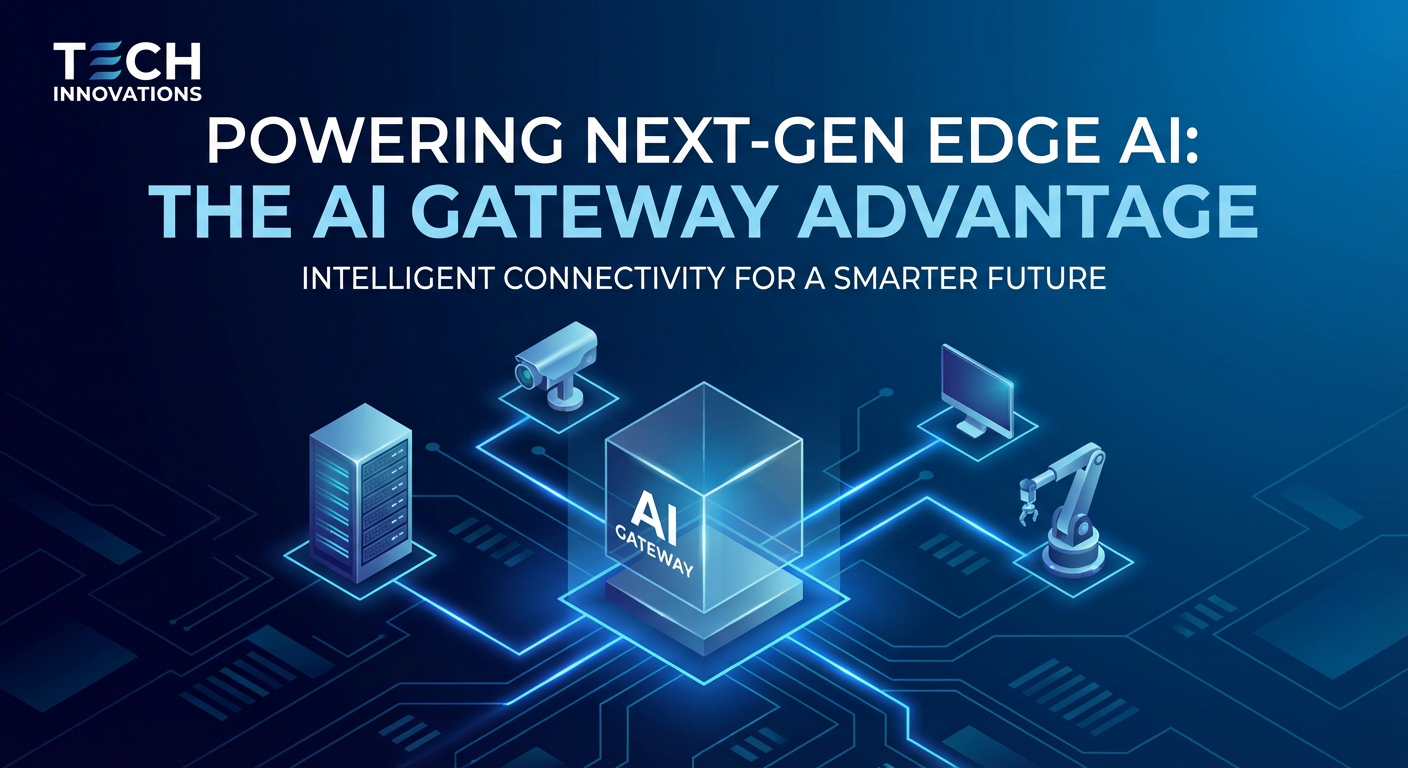


The digital frontier is rapidly expanding, driven by an unprecedented surge in artificial intelligence capabilities. Once confined to the vast computational fortresses of the cloud, AI is now making an inexorable march towards the very edges of our networks. From smart factories optimizing real-time production lines to autonomous vehicles navigating complex urban environments, and from personalized healthcare diagnostics delivered on-device to smart cities managing dynamic traffic flows, edge AI is redefining what's possible. This paradigm shift, however, brings with it a formidable array of challenges: how to efficiently manage, secure, scale, and orchestrate a burgeoning ecosystem of diverse AI models, particularly the increasingly prevalent Large Language Models (LLMs), across a distributed infrastructure with varying computational constraints.
Enter the AI Gateway. More than a mere intermediary, the AI Gateway is emerging as the foundational pillar upon which the next generation of edge AI applications will be built. It is the sophisticated orchestrator, the vigilant guardian, and the intelligent dispatcher, ensuring that AI models—whether nestled locally on a device or accessed remotely from the cloud—are accessible, performant, and secure. This comprehensive exploration delves into the critical role of AI Gateway manufacturers, examining their pivotal contributions to overcoming the complexities of edge AI deployment, from abstracting model intricacies and standardizing API access to managing the unique demands of LLMs. We will unravel the technological underpinnings, strategic advantages, and future trajectory of these essential components, illustrating how they are not just facilitating but actively powering the vision of truly intelligent edge computing.
1. The AI Revolution at the Edge: A Paradigm Shift
The landscape of artificial intelligence is undergoing a profound transformation, characterized by its increasingly pervasive deployment beyond traditional cloud data centers. This migration to the edge is not merely a technical evolution but a fundamental shift in how AI-driven solutions are designed, implemented, and leveraged across industries. Understanding this transition is crucial for appreciating the indispensable role of the AI Gateway.
1.1 The Inexorable March Towards Edge Computing
The gravitation of computing power towards the edge of the network is driven by a confluence of critical factors, each amplifying the necessity for local AI processing. Firstly, latency reduction is paramount for real-time applications. In scenarios such as autonomous driving, industrial automation, or surgical robotics, even milliseconds of delay in processing sensory data can have catastrophic consequences. By performing inference directly on the device or in proximity, edge computing drastically minimizes the round-trip time to a distant cloud server, enabling instantaneous decision-making.
Secondly, data privacy and security concerns are escalating, particularly with the proliferation of sensitive information generated at the edge. Processing data locally, rather than transmitting it to the cloud, can significantly reduce exposure to breaches and simplify compliance with stringent data protection regulations like GDPR or HIPAA. This 'privacy-by-design' approach inherent in edge AI ensures that raw, sensitive data often remains within the confines of the local environment.
Thirdly, bandwidth conservation becomes a major advantage. Imagine thousands of IoT sensors constantly streaming high-resolution video or telemetry data. Transmitting all this raw data to the cloud for processing would overwhelm network infrastructure and incur substantial costs. Edge AI allows for intelligent filtering, aggregation, and pre-processing of data, sending only relevant insights or compressed information to the cloud, thereby optimizing network utilization and reducing operational expenditures.
Finally, offline capability and reliability are enhanced. Many edge environments, such as remote agricultural sites, maritime vessels, or disaster zones, may experience intermittent or no connectivity to the central cloud. Edge AI solutions can continue to operate autonomously, providing uninterrupted service and critical functionality even in disconnected states, ensuring resilience and continuous operation regardless of network availability.
Examples abound across various sectors: autonomous vehicles perform critical perception, planning, and control tasks on-board, relying on ultra-low latency processing of sensor data; smart factories deploy AI to monitor machinery, detect anomalies, predict maintenance needs, and optimize production flows in real-time, often without sending proprietary operational data off-site; smart cities utilize edge AI for traffic management, public safety, and environmental monitoring, processing data from countless sensors to respond dynamically to urban dynamics; and healthcare IoT devices can analyze patient data locally to provide immediate insights or alerts, safeguarding patient privacy while delivering timely care. These diverse applications underscore the fundamental need for robust, distributed AI infrastructure, with the AI Gateway acting as a central nervous system for these localized intelligence hubs.
1.2 The Proliferation of AI Models Beyond the Cloud
The sheer diversity and increasing specialization of artificial intelligence models are another driving force behind the edge revolution. Initially, AI development was heavily centralized, relying on massive datasets and powerful GPUs in cloud environments. However, as AI capabilities have matured, there has been a significant shift towards creating models tailored for specific tasks and optimized for deployment on resource-constrained edge devices.
This proliferation encompasses a wide spectrum of AI, from traditional machine learning algorithms like decision trees and support vector machines, now often containerized and deployed for on-device inference, to advanced deep learning architectures such as Convolutional Neural Networks (CNNs) for image recognition, Recurrent Neural Networks (RNNs) for time-series analysis, and Transformers for natural language processing. The key differentiator for edge deployment is optimization. Manufacturers are not simply porting cloud models to the edge; they are actively developing lightweight, efficient, and specialized models that can run effectively on hardware with limited computational power, memory, and energy budgets.
Techniques like model quantization, where floating-point numbers are converted to lower precision integers, significantly reduce model size and accelerate inference while maintaining acceptable accuracy. Pruning removes redundant connections or neurons in a neural network, slimming down the model without substantial performance degradation. Knowledge distillation involves training a smaller 'student' model to mimic the behavior of a larger 'teacher' model, effectively transferring knowledge and reducing computational overhead. These optimization strategies are paramount because edge devices range from powerful industrial PCs to tiny microcontrollers, each with unique capabilities and limitations.
Moreover, the increasing availability of specialized AI accelerators, such as NPUs (Neural Processing Units) or custom ASICs integrated into edge devices, further fuels this proliferation. These accelerators are designed to execute AI inference tasks with extreme efficiency, unlocking new possibilities for deploying complex models directly where data is generated. The challenge then becomes how to effectively manage, update, and secure this diverse fleet of models across heterogeneous edge devices, a task where the AI Gateway proves invaluable. It acts as the orchestration layer, ensuring that the right model, with the correct version and optimal performance, is delivered and executed precisely where and when it's needed, seamlessly integrating this distributed intelligence into cohesive, functional systems.
1.3 The Emergence of LLMs and Their Edge Implications
The recent explosion in the capabilities and accessibility of Large Language Models (LLMs) represents arguably the most transformative aspect of the current AI landscape. Models like GPT-3/4, LLaMA, and their derivatives have demonstrated unprecedented proficiency in understanding, generating, and translating human language, opening doors to applications previously considered science fiction. While the most powerful iterations of these models are still predominantly cloud-resident due to their colossal size (often hundreds of billions or even trillions of parameters) and immense computational requirements, the drive to bring LLM capabilities closer to the data source—the edge—is intensifying.
The concept of "edge LLMs" refers not necessarily to deploying a full-scale cloud-grade model on a smartphone, but rather to a spectrum of strategies aimed at enabling LLM-like functionalities at or near the edge. This presents unique and significant challenges. The sheer size of cloud-native LLMs makes direct deployment on resource-constrained edge devices (e.g., embedded systems, consumer electronics, or even powerful industrial PCs) practically impossible without substantial modifications. Memory footprint, computational throughput, and power consumption are critical bottlenecks.
To address these, researchers and manufacturers are employing advanced techniques: * Quantization: Reducing the precision of the model's weights and activations (e.g., from 32-bit floating-point to 8-bit or even 4-bit integers) drastically shrinks the model size and accelerates inference, albeit with potential minor accuracy trade-offs. * Pruning and Sparsity: Identifying and removing redundant connections or parameters within the LLM, effectively making the model "sparser" without significantly impacting its performance. * Knowledge Distillation: Training a much smaller, specialized LLM (the student) to mimic the outputs and behaviors of a larger, more powerful LLM (the teacher). This allows the compact student model to inherit complex linguistic capabilities suitable for edge deployment. * Efficient Inference Engines: Developing highly optimized software and hardware stacks specifically designed to accelerate LLM inference on edge-compatible processors, often leveraging specialized instruction sets or accelerators. * Parameter-Efficient Fine-Tuning (PEFT): Instead of fine-tuning the entire large model, PEFT methods like LoRA (Low-Rank Adaptation) modify only a small fraction of the model's parameters, making it feasible to adapt and deploy specialized LLMs at the edge without needing to store or load the full base model for each new task.
These "edge LLMs" are typically smaller, more specialized versions designed for specific tasks (e.g., on-device summarization, local chatbot assistance, private voice commands, or natural language interfaces for machinery). They differ from their cloud counterparts by often having a more limited context window, narrower domain expertise, and reduced generative capabilities, trading off generality for efficiency and local responsiveness. The management of these specialized LLMs, their fine-tuned versions, and their unique invocation patterns—especially concerning prompt engineering and token management—necessitates a new class of intermediary. This is precisely where the LLM Gateway comes into play, a specialized form of AI Gateway that addresses these specific complexities, ensuring that even compact LLMs can be effectively managed, secured, and deployed across the diverse edge ecosystem. It allows developers to abstract away the underlying model complexities, interact with LLMs through standardized interfaces, and ensure efficient, cost-effective usage.
2. Understanding the Core: What is an AI Gateway?
In the burgeoning landscape of distributed artificial intelligence, particularly at the network's edge, an intermediary layer has become indispensable for managing the complexity, securing the interactions, and optimizing the performance of AI models. This critical component is the AI Gateway. It serves as a sophisticated interface between client applications (be they edge devices, mobile apps, or other microservices) and the underlying AI models, whether these models reside locally on the edge, in a hybrid cloud environment, or are accessed as a service from a central data center.
2.1 Defining the AI Gateway
At its essence, an AI Gateway is an advanced form of an api gateway specifically tailored to the unique demands of artificial intelligence workloads. While a traditional api gateway focuses on routing, managing, and securing HTTP/S requests for general-purpose web services, an AI Gateway extends these capabilities with deep understanding and specialized functionalities for AI inference, model lifecycle management, and data handling pertinent to machine learning.
It acts as a single entry point for all AI-related requests, abstracting away the intricacies of various AI model types, frameworks, and deployment locations. Instead of applications needing to know the specific endpoint, data format, or authentication mechanism for each individual AI model, they interact solely with the AI Gateway. This simplification is paramount in a complex edge environment where models might be frequently updated, retrained, or swapped out, and where device capabilities vary widely.
The AI Gateway provides a uniform interface, often leveraging standardized RESTful APIs or gRPC, enabling seamless consumption of AI services. It is the intelligent broker that understands the difference between a sentiment analysis request, an object detection query, or a natural language generation prompt, and then intelligently directs it to the appropriate underlying AI service or model. This central role not only streamlines development but also establishes a critical control point for governance, security, and observability across an organization's entire AI estate. Effectively, it transforms a fragmented collection of AI models into a coherent, manageable, and scalable service layer.
2.2 Key Functions and Capabilities of an AI Gateway
The versatility and power of an AI Gateway stem from its comprehensive suite of specialized functions designed to cater to the unique needs of AI model deployment and management. These capabilities go far beyond those of a generic api gateway, providing deep intelligence and control over AI workflows.
Model Routing and Load Balancing
One of the primary functions of an AI Gateway is to intelligently direct incoming inference requests to the most appropriate AI model or instance. This involves dynamic routing, where the gateway can analyze the request (e.g., based on model ID, input data characteristics, or client metadata) and forward it to a specific model version, a specialized model for a particular task, or an instance deployed on a specific hardware accelerator. For instance, a request for "image classification" might be routed to a model optimized for low-power edge devices, while a complex "medical image analysis" request might be routed to a more powerful cloud-based model with higher precision.
Furthermore, load balancing is critical for distributing inference traffic across multiple instances of the same AI model, preventing any single instance from becoming a bottleneck. This ensures high availability and optimal performance, especially during peak loads. The AI Gateway can employ various load balancing algorithms, such as round-robin, least connections, or even AI-driven predictive balancing, to efficiently utilize available compute resources, whether they are GPUs on an edge server, NPUs in an embedded device, or cloud-based accelerators. This capability ensures that AI services remain responsive and reliable, even when facing fluctuating demand or hardware constraints at the edge.
Request/Response Transformation
AI models often have specific input and output data format requirements that may not align with the data formats used by client applications. The AI Gateway acts as a translator and adapter, performing necessary transformations on the fly. This includes: * Input Pre-processing: Converting raw sensor data (e.g., audio streams, image pixels) into the specific tensor formats expected by a neural network, normalizing data, scaling values, or even performing light feature extraction. For example, resizing an image, converting a string to a tokenized vector, or reshaping data for a specific model input layer. * Output Post-processing: Interpreting the raw output from an AI model (e.g., numerical probabilities, bounding box coordinates, token IDs) into a human-readable or application-consumable format. This could involve converting prediction scores into categorical labels, drawing bounding boxes on an image, or de-tokenizing generated text.
By handling these transformations, the AI Gateway frees client applications from needing to understand the intricate data requirements of each underlying AI model, significantly simplifying integration and reducing the complexity of application development. It also allows for greater flexibility, as model updates that change input/output formats can be managed within the gateway without requiring changes to client applications.
Authentication and Authorization
Securing access to valuable AI models and the sensitive data they process is paramount. The AI Gateway acts as the central enforcement point for authentication and authorization. * Authentication: Verifying the identity of the client application or user attempting to access an AI service. This can involve API keys, OAuth tokens, JWTs (JSON Web Tokens), mTLS (mutual Transport Layer Security), or integration with enterprise identity providers. * Authorization: Determining what specific AI models or services an authenticated client is permitted to access, and what operations they can perform (e.g., inference, training updates). Role-Based Access Control (RBAC) is often implemented here, allowing administrators to define granular permissions based on user roles or team affiliations. For example, a development team might have access to beta models, while production applications only access stable versions.
This layer of security prevents unauthorized access to proprietary models, protects against intellectual property theft, ensures data privacy, and helps maintain compliance with regulatory standards, which is especially critical when AI models handle sensitive information at the edge.
Rate Limiting and Throttling
To maintain the stability and fair usage of AI services, particularly those deployed with limited resources at the edge or those accessing expensive cloud-based models, the AI Gateway implements rate limiting and throttling. * Rate Limiting: Restricting the number of requests a client can make within a specified time window (e.g., 100 requests per minute per API key). This prevents individual clients from monopolizing resources or launching denial-of-service attacks. * Throttling: Dynamically reducing the processing rate for requests when system resources are under strain or when a backend AI service is nearing its capacity. This graceful degradation helps maintain overall system stability rather than allowing a complete failure.
These mechanisms are vital for managing costs associated with pay-per-use cloud AI services, protecting local edge resources from overload, and ensuring a consistent quality of service for all legitimate users.
Monitoring and Logging
Comprehensive observability is crucial for operating robust AI systems. The AI Gateway provides detailed monitoring and logging capabilities that capture every interaction with AI models. * Logging: Recording essential metadata for each API call, including the client ID, timestamp, requested model, input parameters, response status, latency, and any errors encountered. These detailed logs are invaluable for debugging issues, auditing usage, and performing post-incident analysis. * Monitoring: Collecting real-time metrics on gateway performance, AI model invocation rates, error rates, latency distribution, resource utilization (CPU, memory, GPU), and payload sizes. These metrics can be integrated with external monitoring dashboards and alerting systems, allowing operations teams to proactively detect performance degradations, identify anomalous usage patterns, or respond to service outages.
This rich stream of telemetry data enables deep insights into AI system behavior, facilitates proactive maintenance, and ensures that AI services meet their Service Level Agreements (SLAs).
Caching
For AI inference tasks where the same inputs frequently produce identical outputs, or where specific model predictions are highly stable, caching can dramatically improve performance and reduce computational load. The AI Gateway can store the results of previous inference requests and serve them directly if an identical request is received, bypassing the need to re-run the AI model. This is particularly beneficial for: * Static or slowly changing data: If a model classifies a fixed set of items, those classifications can be cached. * Expensive inference tasks: Complex LLM queries or computationally intensive image processing tasks can benefit immensely from caching, reducing both latency and operational costs.
Caching policies can be configured based on time-to-live (TTL), cache size limits, and invalidation strategies, ensuring that cached responses remain fresh and relevant. By reducing redundant computation, caching enhances the responsiveness of AI services and conserves valuable compute resources, especially at the edge where resources are often constrained.
Version Management
The lifecycle of AI models is dynamic, involving continuous iteration, retraining, and improvement. The AI Gateway provides robust version management capabilities, allowing for seamless updates and deployment of new model versions without disrupting client applications. * Zero-Downtime Deployments: New model versions can be deployed alongside existing ones, with the gateway gradually shifting traffic to the new version (e.g., using blue/green deployments or canary releases). This allows for testing the new model in a production environment with a small subset of traffic before a full rollout. * Rollback Capabilities: If a new model version exhibits unexpected behavior or performance issues, the gateway can quickly revert traffic to a previous stable version, minimizing impact on users. * Model Retirement: The gateway manages the graceful decommissioning of older model versions when they are no longer needed.
This controlled approach to versioning ensures that AI services remain up-to-date and performant while maintaining stability and reliability for client applications, which only interact with a stable API endpoint regardless of the underlying model version.
Cost Management and Tracking
Deploying and operating AI models, especially those hosted in the cloud or utilizing specialized hardware, can incur significant costs. An AI Gateway provides granular cost management and tracking capabilities, offering visibility into resource consumption and expenditures. * Usage Attribution: Tracking which client applications, teams, or departments are consuming which AI models and at what volume. This allows for accurate cost allocation and chargebacks. * Budgeting and Alerts: Setting usage thresholds and receiving alerts when consumption approaches predefined limits, helping to prevent unexpected spikes in expenditure. * Cost Optimization Insights: Analyzing historical usage data to identify opportunities for optimizing model deployment (e.g., using more efficient models, leveraging caching more aggressively, or optimizing resource scaling).
By providing detailed insights into AI resource utilization and associated costs, the AI Gateway empowers organizations to make informed decisions, optimize their AI investments, and ensure financial accountability.
Prompt Management (especially for LLMs)
For Large Language Models, the quality and structure of the input prompt are paramount to the quality of the generated response. An LLM Gateway, a specialized AI Gateway, introduces sophisticated prompt management features. * Prompt Encapsulation and Templating: Allowing developers to define, store, and version standardized prompt templates. This ensures consistency across applications and simplifies updates. For example, a "sentiment analysis" API might encapsulate a prompt like "Analyze the sentiment of the following text: [text_input]" within the gateway. * Prompt Guardrails and Injection: Implementing mechanisms to prevent prompt injection attacks (where malicious inputs try to manipulate the LLM) and to enforce safety filters, ensuring prompts adhere to predefined guidelines or ethical standards. * Prompt Versioning and A/B Testing: Managing different versions of prompts and allowing for A/B testing to compare the performance or effectiveness of various prompt strategies with different LLM models. * Context Management: For conversational AI, the gateway can manage the conversation history, ensuring that the LLM receives the necessary context for coherent and relevant responses, even if the client application doesn't explicitly manage it.
This dedicated prompt management layer elevates the quality, security, and maintainability of LLM-powered applications, abstracting prompt engineering complexities from individual developers and ensuring consistent LLM behavior.
Security Features
Beyond authentication and authorization, AI Gateways incorporate advanced security features to protect against a broader spectrum of threats. * Data Encryption: Ensuring that data in transit (between client, gateway, and AI model) is encrypted using TLS/SSL, and potentially supporting encryption of data at rest if the gateway temporarily stores information. * Threat Detection and Anomaly Detection: Monitoring traffic for suspicious patterns that might indicate malicious activity, such as unusual request volumes, strange input formats, or attempts to bypass security controls. AI-powered anomaly detection within the gateway can identify and flag zero-day attacks or novel exploits targeting AI services. * Input Validation and Sanitization: Rigorously checking and cleaning incoming data to prevent common vulnerabilities like injection attacks or malformed inputs that could crash models or expose vulnerabilities. * API Security Best Practices: Enforcing secure coding standards, regularly patching vulnerabilities, and adhering to industry best practices for API security.
These comprehensive security measures are crucial for building trust in AI systems, protecting sensitive data, and ensuring the integrity and availability of AI services, particularly in environments with high-stakes applications at the edge.
For instance, a platform like APIPark demonstrates many of these capabilities. As an open-source AI gateway and API management platform, APIPark offers quick integration of over 100+ AI models, a unified API format for AI invocation, and prompt encapsulation into REST APIs. Its end-to-end API lifecycle management, performance rivaling Nginx (achieving over 20,000 TPS with 8-core CPU and 8GB memory), detailed API call logging, and powerful data analysis features exemplify how a modern AI Gateway can significantly enhance efficiency, security, and data optimization for developers and enterprises, thereby simplifying AI usage and maintenance costs in both cloud and edge contexts.
3. The Specialized Role of LLM Gateways
The advent of Large Language Models (LLMs) has introduced a new dimension of complexity and opportunity within the AI landscape. While a general AI Gateway can manage a wide array of AI models, LLMs, with their unique operational characteristics and resource demands, necessitate a more specialized type of intermediary: the LLM Gateway. This evolution underscores the fact that not all AI is created equal, and specific forms of intelligence require tailored management solutions.
3.1 Why LLMs Need Dedicated Gateway Solutions
The rationale for dedicated LLM Gateway solutions stems from several inherent properties and challenges associated with Large Language Models that differentiate them significantly from traditional machine learning models or even other deep learning architectures.
Firstly, token management and cost implications are paramount. Unlike simpler models that process fixed-size numerical inputs, LLMs operate on tokens, and their usage is typically billed per token for both input prompts and generated output. Without careful management, costs can escalate rapidly, especially with complex prompts or lengthy generative responses. An LLM Gateway can track token usage, enforce quotas, and even optimize prompts to reduce token count without sacrificing quality, something a generic api gateway is not equipped to do.
Secondly, prompt engineering is an art and a science that is central to leveraging LLMs effectively. Crafting the right prompt – one that elicits the desired response, maintains context, and adheres to safety guidelines – is critical. As models evolve and new use cases emerge, prompts themselves need to be managed, versioned, and A/B tested. The complexity of dynamic prompt construction, including injecting user-specific data or conditional logic, is best handled by a specialized gateway that understands the structure and intent of prompts, rather than treating them as arbitrary string inputs.
Thirdly, context window management is a unique challenge. LLMs have a finite 'context window' – the maximum number of tokens they can process in a single turn, including both input and output. For long-running conversations or complex tasks requiring extensive historical data, managing this context window efficiently (e.g., summarizing previous turns, retrieving relevant information, or strategically truncating older messages) is crucial for maintaining coherence and avoiding errors. A dedicated LLM Gateway can intelligently manage this conversational state, ensuring the LLM always receives the most pertinent information within its limits.
Fourthly, computational intensity and latency variability are significant. While smaller, optimized LLMs are appearing at the edge, even these can be computationally demanding. Cloud-based LLMs, on the other hand, can experience variable latency due to network conditions and server load. An LLM Gateway can implement sophisticated routing logic to direct requests to the fastest or most cost-effective LLM provider/instance, manage load across multiple LLM endpoints, and even employ caching for frequently asked questions or stable prompts, thereby mitigating latency and improving user experience.
Finally, the dynamic nature of LLM integration across multiple providers creates a need for abstraction. Organizations often use a mix of LLMs – proprietary models from OpenAI, Google, or Anthropic, alongside open-source models like LLaMA fine-tuned internally. Each provider may have distinct API formats, authentication mechanisms, and response structures. An LLM Gateway provides a unified API layer, abstracting these differences and allowing applications to switch between LLM providers seamlessly without code changes, thus reducing vendor lock-in and enabling greater flexibility in model selection and deployment. This degree of specialization is what elevates an LLM Gateway beyond the capabilities of a standard AI Gateway, making it an indispensable tool for harnessing the full potential of large language models.
3.2 Core Capabilities of an LLM Gateway
The specialized nature of LLM Gateways translates into a rich set of core capabilities that are finely tuned to the intricacies of large language models. These features are designed to enhance control, optimize performance, reduce costs, and bolster the security of LLM-powered applications.
Prompt Versioning and A/B Testing
Effective prompt engineering is central to extracting optimal performance from LLMs. An LLM Gateway facilitates sophisticated prompt versioning, allowing developers to manage different iterations of prompts, track changes, and revert to previous versions if needed. This is crucial for iterating on prompt design and ensuring consistent LLM behavior across different application versions. Beyond versioning, the gateway enables A/B testing of prompts. This capability allows organizations to deploy multiple prompt variations simultaneously to a subset of users or requests, measure their respective performance (e.g., response quality, token usage, latency, user satisfaction), and scientifically determine which prompt yields the best results. For example, a marketing team might test two different prompts for generating ad copy to see which drives higher engagement, with the gateway transparently routing requests and collecting metrics. This iterative, data-driven approach to prompt optimization is a hallmark of a robust LLM Gateway.
Context Management
For conversational AI and multi-turn interactions, maintaining continuity and relevance is paramount. LLMs have a finite 'context window,' and exceeding this limit leads to truncated or incoherent responses. An LLM Gateway implements intelligent context management strategies to address this challenge. It can store and retrieve conversation history, summarize past exchanges to fit within the context window, or employ retrieval-augmented generation (RAG) techniques by fetching relevant information from external knowledge bases and injecting it into the prompt. For instance, in a customer service chatbot, the gateway could automatically summarize the previous five turns of conversation before forwarding the current user query to the LLM, ensuring the LLM has enough information without overflowing its context limit. This capability offloads complex state management from individual applications, simplifying the development of sophisticated conversational interfaces.
Token Usage Tracking and Optimization
Given that LLM usage is often billed per token, diligent token usage tracking and optimization are crucial for cost control. The LLM Gateway precisely monitors the number of input and output tokens for every API call to an LLM. It provides granular reports, allowing organizations to understand usage patterns by application, user, or department, and to accurately attribute costs. Beyond tracking, the gateway can implement optimization strategies to reduce token consumption. This might include automatically shortening verbose prompts, applying summarization techniques to user inputs before forwarding them to the LLM, or identifying opportunities to reuse parts of prompts. For example, if a user repeatedly asks questions related to a single document, the gateway could ensure the document summary is only sent once, rather than with every subsequent prompt, significantly reducing token costs.
Safety and Moderation
Ensuring that LLM interactions are safe, ethical, and free from harmful content is a critical responsibility. The LLM Gateway acts as a crucial layer for safety and moderation. It can integrate with or provide built-in content moderation filters for both incoming prompts and outgoing LLM responses. These filters can detect and block sensitive topics (e.g., hate speech, violence, explicit content), enforce brand guidelines, and prevent the generation of biased or misleading information. The gateway can leverage pre-trained moderation models, keyword blacklists, or even employ a cascading system where highly sensitive content is flagged for human review. For example, a customer support bot powered by an LLM Gateway might automatically filter out prompts containing abusive language before they even reach the LLM, or redact personally identifiable information from LLM-generated responses before they are sent back to the user, thereby protecting both the user and the organization.
Model Agnosticism
Organizations frequently leverage multiple LLMs from different providers (e.g., OpenAI, Anthropic, Google) or deploy various open-source models (e.g., LLaMA, Mistral, Gemma) that have been fine-tuned for specific tasks. Each of these LLMs often comes with its own proprietary API, data format, and authentication mechanisms. An LLM Gateway provides true model agnosticism by offering a unified API interface that abstracts away these underlying differences. This means an application can interact with a single, consistent endpoint on the gateway, and the gateway handles the translation of requests to the appropriate LLM provider's API. This capability drastically reduces vendor lock-in, simplifies model switching (e.g., migrating from one LLM to another for cost or performance reasons), and enables A/B testing across different LLM backends without requiring any code changes in client applications. Developers are freed from having to learn and maintain multiple LLM SDKs, accelerating development and increasing flexibility.
Response Streaming
Many modern LLMs support streaming responses, where tokens are sent back to the client incrementally as they are generated, rather than waiting for the entire response to be complete. This significantly improves the perceived latency and user experience, especially for long generations. An LLM Gateway is designed to efficiently handle and proxy these streaming responses. It ensures that the token stream from the LLM backend is forwarded directly and without delay to the client application, maintaining the real-time interaction. The gateway can also perform real-time moderation on the streaming tokens, flagging or censoring inappropriate content as it appears, or even injecting additional information into the stream. This capability is essential for building highly responsive and interactive LLM-powered applications like chatbots or code assistants, where immediate feedback is crucial.
Fallback Mechanisms
Resilience is a key concern when relying on external LLM services or even locally deployed models that might encounter issues. An LLM Gateway incorporates robust fallback mechanisms to ensure continuous service availability. If a primary LLM endpoint becomes unavailable, experiences high latency, or returns an error, the gateway can automatically reroute the request to a pre-configured secondary or tertiary LLM. This could involve switching to a different provider, a different model version, or a locally deployed, more constrained fallback model. For example, if a premium cloud LLM service is experiencing an outage, the gateway could temporarily direct requests to a smaller, open-source model running on an edge server, perhaps with slightly reduced capabilities but ensuring service continuity. The gateway can also implement circuit breakers to temporarily isolate failing LLM backends and prevent cascading failures, dynamically restoring them once they recover. This proactive approach to reliability significantly enhances the robustness of LLM-dependent applications.
4. The Strategic Importance of AI Gateways for Edge AI
The deployment of artificial intelligence at the edge is no longer a nascent concept but a rapidly expanding reality that promises to redefine industries. However, realizing the full potential of edge AI hinges on overcoming significant architectural and operational complexities. This is precisely where the AI Gateway assumes a strategic, indispensable role, acting as the intelligent fabric that weaves together disparate edge devices, varied AI models, and centralized cloud resources into a cohesive and high-performing ecosystem. Its strategic importance spans multiple dimensions, from bridging architectural divides to bolstering security and streamlining development.
4.1 Bridging the Edge-Cloud Divide
One of the most profound strategic contributions of an AI Gateway is its ability to seamlessly bridge the inherent divide between edge and cloud computing environments. Modern AI applications are rarely purely edge-native or purely cloud-native; instead, they operate in hybrid architectures that leverage the strengths of both paradigms. The AI Gateway acts as the intelligent arbitrator in this distributed landscape.
At the edge, the gateway can manage local AI model inference, minimizing latency and bandwidth consumption for real-time applications. It can direct requests to models physically present on the device or a nearby edge server, ensuring data remains localized for privacy or compliance reasons. Concurrently, for tasks requiring higher computational power, broader datasets, or complex generative capabilities (such as with large LLM Gateway operations for deep analytics), the same AI Gateway can intelligently proxy requests to cloud-based AI services. This dynamic routing allows developers to design flexible AI applications that transparently leverage the most appropriate compute resource for each specific task.
This bridging capability is not just about routing; it’s about orchestrating inference across heterogeneous environments. The AI Gateway handles the translation of data formats, authentication mechanisms, and API protocols that might differ between edge and cloud AI services. It ensures a consistent developer experience, abstracting away the underlying infrastructure complexities. For instance, a smart factory might use an edge AI Gateway to run defect detection models on localized camera feeds for immediate alerts, while simultaneously sending aggregated, anonymized production data to a cloud-based AI service for long-term predictive maintenance analysis or global supply chain optimization. The gateway ensures that these two distinct AI operations, one local and one remote, can coexist and communicate effectively through a unified management plane. This hybrid approach optimizes resource utilization, provides fault tolerance, and unlocks novel use cases that combine the immediacy of edge processing with the vast capabilities of the cloud, making the AI Gateway a cornerstone of scalable and resilient distributed AI architectures.
4.2 Enhancing Security and Compliance at the Edge
The distributed nature of edge AI, with models and data residing outside traditional data center perimeters, inherently introduces a magnified attack surface and intensified compliance challenges. Here, the AI Gateway serves as a paramount strategic asset for enhancing security and ensuring compliance. It establishes a critical control point for all AI interactions, allowing organizations to enforce robust security policies and meet stringent regulatory requirements across their entire edge ecosystem.
Firstly, the AI Gateway acts as a unified authentication and authorization layer for all edge AI models. Instead of managing credentials and access controls for numerous individual models on various devices, all access requests flow through the gateway. This central enforcement point allows for granular control, such as defining which specific edge devices or applications can invoke particular AI models, under what conditions, and with what frequency. It supports advanced authentication methods like mTLS (mutual Transport Layer Security) for device-to-gateway and gateway-to-model communication, ensuring only trusted entities can participate in the AI workflow. This significantly reduces the risk of unauthorized access to proprietary models, intellectual property theft, or data exfiltration at the edge.
Secondly, the gateway is instrumental in protecting sensitive edge data. In many edge AI scenarios, data generated (e.g., patient health records in medical devices, proprietary industrial data in factories, personal identifiable information in smart cameras) is highly sensitive. By processing data locally and ensuring that only anonymized or aggregated insights are sent to the cloud (if at all), the AI Gateway helps maintain data privacy. It can enforce data encryption at rest and in transit for all communications involving AI models, further safeguarding information from interception or tampering. Furthermore, the gateway can implement data masking, redaction, or differential privacy techniques before data is exposed to an AI model or forwarded, ensuring that privacy-by-design principles are strictly adhered to.
Thirdly, the AI Gateway is crucial for meeting regulatory compliance mandates. Regulations like GDPR (General Data Protection Regulation), HIPAA (Health Insurance Portability and Accountability Act), or sector-specific standards often dictate where data must reside, how it must be processed, and who can access it. By providing detailed audit logs, demonstrating clear access controls, and enabling local data processing, the gateway offers the necessary transparency and control required for compliance. It can also enforce governance policies, such as limiting the retention period of specific inference data or ensuring that specific models are only invoked within defined geographical boundaries. Without a centralized, intelligent control point like the AI Gateway, managing security and compliance across a sprawling and diverse edge AI deployment would be an unmanageable and high-risk undertaking, making it a strategic imperative for any enterprise serious about responsible AI adoption.
4.3 Optimizing Performance and Resource Utilization
In the realm of edge AI, where resources are often constrained and real-time responsiveness is paramount, the AI Gateway plays a strategic role in optimizing both performance and resource utilization. It acts as an intelligent optimizer, ensuring that AI models run efficiently, quickly, and with minimal overhead, thereby maximizing the value derived from edge infrastructure.
Firstly, the gateway is instrumental in reducing latency for real-time edge applications. By intelligently routing requests to the nearest or most performant AI model instance (whether local or remote), it minimizes network travel time. Its caching capabilities mean that frequently repeated inference requests can be served almost instantaneously, bypassing computationally expensive model execution. For example, in an autonomous vehicle, an AI Gateway would ensure that a pedestrian detection model always runs on the lowest-latency, on-board compute unit, providing critical real-time safety decisions, while less time-sensitive tasks might be offloaded. This direct impact on response time is crucial for applications where milliseconds matter, directly influencing safety, efficiency, and user experience.
Secondly, the AI Gateway excels at efficiently managing compute resources on constrained devices. Edge devices typically have limited CPU, memory, and often specialized AI accelerators (e.g., NPUs, DSPs, smaller GPUs). The gateway can monitor the load and availability of these resources and dynamically distribute inference workloads. It can prioritize critical AI tasks over less urgent ones, throttle requests when devices are under stress, or even offload tasks to more powerful edge servers or the cloud if local resources are insufficient. This prevents individual edge devices from becoming overloaded, crashing, or underperforming, ensuring stable and continuous operation. For example, in a smart factory, an AI Gateway might balance machine vision inference tasks across several robotic arms, ensuring that no single arm's embedded processor is overwhelmed, thus maintaining consistent production quality and speed.
Furthermore, the gateway's ability to perform request/response transformation and model version management indirectly contributes to performance and resource optimization. By standardizing input formats, it reduces the computational overhead on client applications and simplifies model updates. When new, more optimized model versions become available (e.g., a quantized or pruned LLM Gateway model), the AI Gateway can seamlessly roll them out, immediately benefiting from their improved inference speed and reduced resource footprint without requiring changes to the applications consuming them. This continuous optimization cycle, facilitated by the AI Gateway, is a strategic imperative for getting the most out of every computational cycle and every watt of power consumed by edge AI deployments, making the entire system more sustainable and cost-effective.
4.4 Simplifying Development and Deployment Workflows
The complexity of developing, deploying, and managing AI models, especially in distributed edge environments, can be a significant barrier to innovation. The AI Gateway strategically addresses this by simplifying development and deployment workflows, thereby accelerating time-to-market and reducing operational overhead. It acts as an abstraction layer, shielding developers from the underlying complexities of AI infrastructure.
Firstly, the AI Gateway abstracts away model complexity for developers. Instead of requiring developers to interact directly with various AI frameworks (TensorFlow, PyTorch, ONNX), understand diverse model APIs, or manage specific model versions, they simply interact with a single, unified API provided by the gateway. This standardization means a developer can call a "sentiment analysis" service or an "object detection" service without needing to know which specific model is running behind the scenes, where it's deployed (edge or cloud), or how its data needs to be formatted. This drastically reduces the learning curve and cognitive load for application developers, allowing them to focus on business logic rather than AI plumbing.
Secondly, the gateway significantly streamlines API integration. By offering a consistent API across all AI services, it makes it easier for front-end developers, mobile app developers, or other microservices to consume AI capabilities. This not only speeds up initial integration but also reduces maintenance efforts. If an underlying AI model is updated, replaced, or moved, the client application's code often remains unchanged because it continues to interact with the stable gateway API. This API stability is particularly valuable in dynamic AI environments where models are continuously improved.
Thirdly, for deployments, the AI Gateway enables accelerated time-to-market for edge AI solutions. With features like version management, blue/green deployments, and canary releases, new or updated AI models can be rolled out with minimal risk and downtime. Developers can quickly test new models in production with a small subset of traffic, gather real-world feedback, and then confidently scale up. This agile approach to model deployment, managed centrally by the gateway, drastically reduces release cycles and allows organizations to rapidly iterate on their AI-powered products and services.
Moreover, the gateway's built-in monitoring, logging, and data analysis capabilities provide developers and operations teams with a single pane of glass for observing the health and performance of their AI services. This integrated observability simplifies troubleshooting, performance tuning, and identifying potential issues before they impact end-users. By taking on the heavy lifting of AI service management and abstracting away the underlying infrastructure, the AI Gateway empowers development teams to be more productive, innovative, and responsive to market demands, transforming the challenge of edge AI into a streamlined and efficient process.
4.5 Enabling Scalability and Resilience
The strategic importance of an AI Gateway is further amplified by its fundamental role in enabling scalability and resilience for edge AI deployments. As AI applications grow in scope and complexity, and as the number of connected edge devices proliferate, the ability to scale efficiently and withstand failures becomes paramount. The gateway acts as the architectural linchpin for achieving these critical operational characteristics.
Firstly, the AI Gateway provides the necessary mechanisms for handling fluctuating workloads at the edge. Edge AI deployments are rarely static; demand for inference might surge during peak operational hours in a factory, during a specific event in a smart city, or when a fleet of autonomous vehicles enters a high-density area. The gateway’s load balancing capabilities dynamically distribute incoming requests across multiple AI model instances, whether those instances are running on local edge servers, in nearby micro-data centers, or even across a hybrid cloud infrastructure. This ensures that no single model instance becomes a bottleneck, allowing the system to absorb traffic spikes gracefully and maintain consistent performance. Furthermore, by monitoring resource utilization, the gateway can trigger automated scaling actions, provisioning additional compute resources (e.g., spinning up new containerized AI model instances) to meet increased demand, and scaling them down when traffic subsides to optimize costs.
Secondly, the AI Gateway is critical for ensuring continuous operation and system resilience. In a distributed edge environment, hardware failures, network outages, or software glitches are inevitable. The gateway mitigates these risks through several mechanisms: * Automatic Failover: If an AI model instance or an entire edge node becomes unavailable, the gateway can automatically detect the failure and reroute requests to healthy instances or redundant nodes, ensuring uninterrupted service. This is particularly important for mission-critical edge applications where downtime is unacceptable. * Circuit Breakers: These patterns within the gateway prevent cascading failures. If a backend AI service or external LLM Gateway is repeatedly failing, the circuit breaker temporarily stops sending requests to it, allowing it to recover and preventing the gateway itself from being overwhelmed by retries to a non-responsive service. * Graceful Degradation: In situations of extreme load or partial failures, the gateway can implement strategies for graceful degradation, such as temporarily reducing the precision of an AI model, simplifying an LLM prompt for a faster response, or serving cached responses where acceptable, prioritizing essential functions while other parts of the system recover.
By abstracting the underlying infrastructure and providing these robust scaling and resilience features, the AI Gateway transforms a potentially brittle collection of edge AI models into a highly available, fault-tolerant, and adaptable system. This strategic capability allows enterprises to confidently deploy and expand their edge AI initiatives, knowing that the foundational infrastructure is designed to handle the complexities and uncertainties of real-world operational environments. It underpins the long-term viability and growth of distributed AI, enabling seamless expansion from a few edge devices to a massive, intelligent network.
APIPark is a high-performance AI gateway that allows you to securely access the most comprehensive LLM APIs globally on the APIPark platform, including OpenAI, Anthropic, Mistral, Llama2, Google Gemini, and more.Try APIPark now! 👇👇👇
5. Key Considerations When Choosing an AI Gateway Manufacturer
Selecting the right AI Gateway manufacturer is a strategic decision that can significantly impact the success, scalability, and security of an organization's edge AI and LLM initiatives. Given the diverse landscape of available solutions and the specialized requirements of AI workloads, a thorough evaluation based on several key considerations is essential. This section outlines the critical factors to weigh, ensuring that the chosen gateway aligns with both current needs and future ambitions.
5.1 Performance and Scalability
At the forefront of any AI Gateway evaluation are its performance and scalability capabilities. The effectiveness of an edge AI deployment is directly tied to how quickly and reliably AI inferences can be delivered. Organizations must scrutinize the gateway's ability to handle high volumes of concurrent requests and its response latency.
- Transactions Per Second (TPS) / Requests Per Second (RPS): Manufacturers should provide clear benchmarks for the number of API calls or inference requests the gateway can process per second under various load conditions. This metric is crucial for understanding if the gateway can meet the peak demand of anticipated edge AI applications. For instance, in a smart factory environment with hundreds of sensors feeding data for real-time anomaly detection, the gateway must be able to process thousands of inferences per second without introducing bottlenecks.
- Latency: Beyond throughput, the latency introduced by the gateway itself is critical, especially for real-time edge applications. What is the typical added delay from the moment a request hits the gateway to when the response is forwarded? Low-latency performance is non-negotiable for use cases like autonomous driving or robotic control, where decisions must be made in milliseconds.
- Cluster Capabilities and Horizontal Scaling: A truly scalable AI Gateway must support horizontal scaling, meaning it can be deployed as a cluster of multiple instances working together. This allows for distributing the load and adding more capacity simply by deploying additional gateway instances. The manufacturer's solution should clearly outline its clustering architecture, how load balancing is managed across gateway instances, and its ability to elastically scale up and down based on demand, both on-premises at the edge and in cloud environments.
- Support for Various Data Volumes and Model Complexities: The gateway must be robust enough to handle a wide range of input data sizes (from small sensor readings to large images or video streams) and diverse AI model complexities (from lightweight classification models to hefty
LLM Gatewaymodels). This includes efficient handling of large payloads, support for streaming data, and optimized integration with various AI inference engines.
For example, a solution like APIPark highlights its performance, stating it can achieve over 20,000 TPS with an 8-core CPU and 8GB of memory, and supports cluster deployment to handle large-scale traffic. Such benchmarks are vital indicators of a gateway's potential to power demanding next-gen edge AI applications without becoming a performance bottleneck. A manufacturer's ability to demonstrate real-world performance under expected load conditions, often backed by customer testimonials or case studies, is a strong indicator of their solution's robustness.
5.2 Security Features
Security is paramount for any infrastructure component, but especially for an AI Gateway that acts as the front door to valuable AI models and often sensitive data. Robust security features are non-negotiable to protect against unauthorized access, data breaches, and malicious attacks.
- Authentication Methods: The gateway should support a variety of industry-standard authentication mechanisms, including API keys, OAuth 2.0, OpenID Connect, JWTs (JSON Web Tokens), and mutual TLS (mTLS) for strong client and server identity verification. Integration with enterprise identity providers (e.g., LDAP, Active Directory, Okta) is also highly desirable for centralized user management.
- Authorization and Role-Based Access Control (RBAC): Beyond authentication, the gateway must provide granular authorization capabilities. This means defining who can access which specific AI models or endpoints, and what actions they are permitted to perform. RBAC allows administrators to assign permissions based on user roles (e.g., 'developer,' 'analyst,' 'administrator'), ensuring that individuals or applications only have access to the AI resources they need.
- Data Encryption: All communication flowing through the gateway (client-to-gateway, gateway-to-model) must be encrypted using strong protocols like TLS/SSL. The manufacturer should also detail if the gateway temporarily stores any data and, if so, how that data is encrypted at rest to protect its confidentiality.
- Threat Detection and Anomaly Detection: Advanced gateways incorporate features to identify and mitigate threats. This can include rate limiting (to prevent DDoS attacks), IP blacklisting, input validation and sanitization (to guard against injection attacks), and even AI-powered anomaly detection to spot unusual access patterns or malicious payloads that could indicate a zero-day exploit.
- Compliance Certifications: For organizations operating in regulated industries (e.g., healthcare, finance, defense), the gateway manufacturer's adherence to relevant security standards and certifications (e.g., ISO 27001, SOC 2, HIPAA readiness) is a critical evaluation point. This demonstrates a commitment to robust security practices and helps in meeting regulatory obligations.
- Audit Logging: Comprehensive and immutable audit logs that record all access attempts, successful inferences, errors, and administrative actions are essential for security auditing, forensic analysis, and compliance reporting.
A strong emphasis on security in the AI Gateway design ensures that the intelligent edge remains a trustworthy and protected environment for deploying and operating cutting-edge AI.
5.3 Integration Capabilities
The utility of an AI Gateway is heavily dependent on its ability to seamlessly integrate with a wide array of existing and future technologies. A robust gateway acts as a universal connector, facilitating communication across diverse components of an AI ecosystem.
- Support for Various AI Frameworks and Inference Engines: The gateway should be agnostic to the underlying AI framework (TensorFlow, PyTorch, MXNet, ONNX Runtime) and inference engines (e.g., NVIDIA TensorRT, OpenVINO, custom accelerators). It should be able to route requests to models deployed using any of these technologies, abstracting the specifics from the client. This flexibility is crucial for organizations that use a heterogeneous mix of models and deployment targets.
- Protocol Support: While RESTful APIs are common, edge AI often leverages other protocols. The gateway should ideally support a range of communication protocols, including HTTP/HTTPS, gRPC (for high-performance, low-latency inter-service communication), MQTT (for lightweight IoT messaging), and potentially WebSockets for real-time interactive applications.
- Ease of Integrating with Existing Infrastructure: The gateway shouldn't be a silo. It needs to integrate smoothly with an organization's existing IT infrastructure, including:
- Identity and Access Management (IAM) systems: For centralized user and role management.
- Monitoring and Logging solutions: Exporting metrics and logs to popular platforms like Prometheus, Grafana, ELK Stack, Splunk, or cloud-native monitoring services (e.g., AWS CloudWatch, Azure Monitor, Google Cloud Monitoring).
- CI/CD pipelines: Enabling automated deployment and updates of the gateway itself and the AI models it manages, through tools like Jenkins, GitLab CI/CD, GitHub Actions.
- Container orchestration platforms: Native support for Kubernetes, Docker Swarm, or other container orchestration tools for scalable and resilient deployments.
- Data storage and streaming services: For ingesting input data or archiving inference results.
A manufacturer that provides clear APIs, comprehensive SDKs, extensive documentation, and pre-built connectors for popular tools and platforms demonstrates a strong commitment to integration. The ability of an AI Gateway to act as a versatile integration hub significantly reduces development effort, minimizes vendor lock-in, and ensures that the AI ecosystem can evolve without major architectural overhauls. This flexibility is particularly important as organizations experiment with new AI models, edge hardware, and cloud services, ensuring the gateway remains a relevant and central component.
5.4 Management and Observability
Effective management and comprehensive observability are critical for the day-to-day operation, troubleshooting, and optimization of an AI Gateway and the AI services it fronts. Without these capabilities, even the most performant gateway can become a black box, hindering development and operational efficiency.
- User-Friendly Dashboard and Management Interface: The manufacturer should provide an intuitive, web-based dashboard or a robust CLI (Command Line Interface) for configuring, monitoring, and managing the gateway. This interface should allow administrators to easily:
- Define and update API endpoints for AI models.
- Configure routing rules, load balancing strategies, and caching policies.
- Manage API keys, user roles, and access permissions.
- View real-time traffic metrics, error rates, and latency.
- Access detailed logs and audit trails.
- Manage prompt templates for
LLM Gatewayfunctionality. A well-designed UI/CLI reduces operational complexity and the learning curve for new team members.
- Robust Logging and Metrics: The gateway must generate comprehensive logs and metrics that are easily accessible and actionable.
- Logging: Detailed, contextual logs for every request and response, including timestamps, client IDs, requested models, input/output sizes, response codes, and error messages. These logs are indispensable for debugging application issues, identifying performance bottlenecks, and performing security audits. Logs should be structured (e.g., JSON format) for easy parsing and ingestion into centralized logging systems.
- Metrics: Real-time performance metrics such as request rates, error rates, latency percentiles, CPU/memory/network utilization of the gateway instances, and specific AI model invocation counts. These metrics should be exportable in standard formats (e.g., Prometheus format) to integrate with existing monitoring solutions.
- Alerting Capabilities: The ability to configure automated alerts based on predefined thresholds for critical metrics (e.g., high error rate, excessive latency, low resource availability) is essential for proactive incident management. Alerts should be configurable to notify operations teams via various channels (e.g., email, PagerDuty, Slack).
- API Lifecycle Management Features: An advanced gateway supports the entire lifecycle of APIs and AI models, from design and publication to invocation and decommissioning. This includes:
- Version management: Allowing for smooth updates and rollbacks of AI models behind the API.
- Policy enforcement: Applying policies consistently across API versions.
- Developer portal: Providing a self-service portal where developers can discover available AI services, view documentation, generate API keys, and track their usage. This democratizes access to AI capabilities within the organization.
Platforms like APIPark exemplify strong observability by offering detailed API call logging, which records every aspect of each API invocation for quick troubleshooting, and powerful data analysis that displays long-term trends and performance changes, enabling preventive maintenance. These features are critical for maintaining system stability, ensuring data security, and proactively optimizing AI service delivery at the edge. A manufacturer's dedication to providing rich management and observability tools reflects their understanding of the operational realities of deploying AI at scale.
5.5 Cost-Effectiveness and Licensing Models
The total cost of ownership (TCO) is a significant factor in any enterprise software decision, and an AI Gateway is no exception. Organizations must carefully evaluate the cost-effectiveness of different solutions, considering both the initial investment and ongoing operational expenses, as well as the manufacturer's licensing models.
- Open-Source vs. Commercial Solutions:
- Open-Source: Open-source AI Gateways (like APIPark which is Apache 2.0 licensed) often come with no direct licensing fees for the base product. This can be attractive for startups, small teams, or organizations with strong in-house expertise to implement, customize, and maintain the solution. However, open-source doesn't mean free of cost; it often incurs indirect costs related to internal development, integration, maintenance, security patching, and potentially commercial support subscriptions if advanced features or professional assistance are required.
- Commercial Solutions: Proprietary AI Gateways typically involve licensing fees, which can be based on factors like the number of gateway instances, API calls, connected devices, or deployed models. While these upfront costs can be higher, commercial solutions often include comprehensive professional support, regular updates, advanced features, and a clearer roadmap, which can translate to lower operational risk and faster problem resolution for enterprises.
- Pricing Structure: Understand the pricing model thoroughly. Is it a one-time license, an annual subscription, a consumption-based model (e.g., per API call, per token for
LLM Gateway), or a tiered pricing structure? A consumption-based model might seem attractive but could lead to unpredictable costs with high-volume AI usage at the edge. Fixed-fee models offer predictability but might not scale down for low usage. - Total Cost of Ownership (TCO): Beyond direct licensing fees, consider the indirect costs:
- Infrastructure costs: Hardware (for on-premise edge deployments), cloud compute instances, storage, and networking required to run the gateway and the models it manages.
- Operational costs: Staffing for deployment, configuration, monitoring, maintenance, and troubleshooting. The complexity of the solution directly impacts these costs.
- Training costs: For developers and operations teams to learn and effectively use the gateway.
- Integration costs: Time and effort required to integrate the gateway with existing systems.
- Hidden costs: Potential costs for advanced features that are not included in the base license, or unexpected scaling costs.
Manufacturers should provide transparent pricing and be able to help organizations estimate the TCO based on their specific use cases and scale. A cost-effective AI Gateway strikes a balance between features, performance, and overall expenditure, providing significant value without becoming a financial burden. For many enterprises, the long-term benefits of robust features, strong support, and predictable costs often outweigh the perceived initial savings of a purely open-source approach without commercial backing.
5.6 Ecosystem and Community Support
The long-term viability and success of deploying an AI Gateway solution are not solely dependent on its technical features and cost, but also significantly on the strength of its surrounding ecosystem and the quality of available support.
- Documentation and Tutorials: Comprehensive, clear, and up-to-date documentation is paramount. This includes detailed installation guides, configuration manuals, API references, best practices, and troubleshooting guides. The availability of tutorials, example projects, and use-case scenarios helps developers and operators quickly onboard and maximize the gateway's capabilities. Poor documentation can lead to significant frustration, delays, and increased operational costs.
- Active Community and Forums: For open-source AI Gateway solutions, an active and engaged community is a strong indicator of the project's health and future. Community forums, Stack Overflow presence, and GitHub activity allow users to ask questions, share knowledge, contribute code, and find solutions to common problems. A vibrant community provides a collective knowledge base that can be invaluable for troubleshooting and learning.
- Commercial Support Options: Even with open-source products, enterprises often require professional, guaranteed support. Manufacturers (or third-party vendors for open-source projects) should offer clear commercial support contracts, outlining service level agreements (SLAs), support channels (e.g., phone, email, dedicated portal), response times, and available expertise. This is particularly crucial for mission-critical edge AI deployments where downtime is expensive.
- Partner Ecosystem: A strong partner ecosystem, including system integrators, consulting firms, and technology partners (e.g., cloud providers, hardware manufacturers), can provide additional expertise and resources for complex deployments. This indicates the manufacturer's reach and ability to support diverse customer needs.
- Regular Updates and Roadmap: The pace of AI innovation is rapid. A reputable AI Gateway manufacturer should have a clear roadmap for future features, security updates, and performance improvements. Regular software updates that introduce new capabilities, fix bugs, and address security vulnerabilities are essential for keeping the gateway relevant and secure in an evolving landscape.
- Training and Certification: The availability of official training programs and certifications for developers and administrators can help organizations build in-house expertise, ensuring efficient and effective use of the gateway.
A well-supported AI Gateway ensures that organizations can confidently deploy and scale their edge AI initiatives, knowing that they have access to the resources, knowledge, and assistance needed to overcome challenges and extract maximum value from their investment. Manufacturers who prioritize a strong ecosystem and provide comprehensive support demonstrate a long-term commitment to their customers' success.
6. Leading AI Gateway Solutions and Their Impact
The market for AI Gateways is rapidly evolving, driven by the increasing sophistication of AI models and the distributed nature of modern computing. This section provides an overview of the market landscape, highlighting the different approaches manufacturers are taking, and importantly, showcasing how specific solutions are making a tangible impact.
6.1 Overview of the Market Landscape
The market for solutions that manage and orchestrate AI access is broadly categorized into several overlapping segments:
- Traditional API Gateways Adapting to AI: Many established
api gatewayvendors, recognizing the shift towards AI, have begun to integrate AI-specific features. These might include enhanced routing logic for AI endpoints, basic model versioning, and improved telemetry for AI inference calls. While they offer a solid foundation in API management, their AI capabilities might be more general and less specialized for tasks like prompt management or advanced model optimization. They are often strong in general API security, traffic management, and developer portals. - Specialized AI/LLM Gateways: This emerging category comprises solutions specifically designed from the ground up to address the unique challenges of AI models, particularly Large Language Models. These AI Gateway and LLM Gateway solutions offer deep functionalities for model routing, input/output transformation, advanced security features tailored for AI, comprehensive cost management, and crucial features like prompt engineering, context window management, and token optimization for LLMs. They are often more focused on developer experience for AI consumption and aim to abstract away the complexity of diverse AI backends.
- Cloud Provider Offerings: Major cloud providers (AWS, Azure, Google Cloud) offer their own suite of AI services, often including built-in API management capabilities for their respective AI/ML platforms. While powerful within their cloud ecosystems, these solutions can sometimes lead to vendor lock-in and may not offer the same flexibility for hybrid or multi-cloud deployments, or for integrating with on-premises edge AI models. They excel in seamless integration with other services within their own cloud.
- Open-Source Solutions: A vibrant open-source community is contributing to the AI Gateway space, offering flexible, customizable, and often community-driven solutions. These can range from lightweight proxies with AI-specific plugins to comprehensive platforms. While offering cost advantages and transparency, they typically require significant in-house expertise for deployment, maintenance, and customization, unless backed by commercial support.
The common thread across all these categories is the recognition of the need for an intelligent intermediary. As AI becomes more pervasive, the demand for robust, secure, and scalable AI Gateway solutions, including specialized LLM Gateway capabilities, will only intensify, leading to further innovation and consolidation in the market. Organizations must carefully assess which type of solution best fits their architectural strategy, security requirements, and development resources.
6.2 Deep Dive into Specific Solution Types
Within the AI Gateway market, manufacturers adopt varied strategies to address the complex needs of modern AI deployments. These approaches often reflect their core competencies and target audiences.
Some manufacturers focus on building highly specialized proxies that sit directly in front of AI models, offering granular control over inference traffic, such as dynamic routing to different model versions based on request parameters or load, and sophisticated input/output transformations for data harmonization. These are often performance-optimized for specific AI frameworks or hardware accelerators at the edge. Their strength lies in their deep technical control over the AI inference pipeline, ensuring maximum performance and efficiency in demanding edge environments.
Other solutions lean more towards comprehensive API management platforms that have evolved to include AI-specific features. These often provide robust developer portals, extensive analytics on API usage (now extended to AI model invocations), strong security policies (authentication, authorization, rate limiting), and lifecycle management for APIs that expose AI services. Their advantage is in offering a holistic view of all APIs, both AI and traditional, and integrating seamlessly into existing enterprise API governance frameworks.
Then there are those specifically designing for the burgeoning world of Large Language Models. These LLM Gateway solutions integrate unique capabilities such as: * Prompt Engineering and Versioning: Allowing for the standardized definition, management, and A/B testing of prompts, ensuring consistent and optimized interaction with LLMs. * Context Management: Handling conversational history and managing the LLM's context window to maintain coherent and relevant dialogue. * Token Usage Optimization: Monitoring and minimizing token consumption, which directly impacts cost for pay-per-token LLM services. * Safety and Moderation Filters: Implementing guardrails to prevent harmful content in prompts and responses, crucial for ethical and responsible LLM deployment. * Model Agnosticism: Providing a unified interface to abstract away differences between various LLM providers (e.g., OpenAI, Anthropic, open-source models), enabling flexible model switching and reducing vendor lock-in.
An excellent example of an innovative solution in this space is APIPark. APIPark stands out as an open-source AI gateway and API management platform, licensed under Apache 2.0. It embodies many of the critical features discussed, making it highly relevant for powering next-gen edge AI by simplifying management and usage.
APIPark's impact on powering next-gen edge AI is multifaceted:
- Quick Integration of 100+ AI Models & Unified API Format: This capability directly addresses the complexity of integrating diverse AI models, whether deployed at the edge or in the cloud. By offering a unified management system for authentication and cost tracking, and standardizing the request data format, APIPark simplifies AI usage and maintenance. This is particularly beneficial for edge environments where multiple specialized models might be deployed on various devices, ensuring consistency and ease of interaction.
- Prompt Encapsulation into REST API: For
LLM Gatewayfunctionality, APIPark allows users to quickly combine AI models with custom prompts to create new, specialized APIs (e.g., sentiment analysis, translation). This significantly lowers the barrier to entry for leveraging LLMs, making it easier for developers to build sophisticated AI applications at the edge without deep prompt engineering expertise for every interaction. - End-to-End API Lifecycle Management: Managing the entire lifecycle of APIs—design, publication, invocation, and decommission—is crucial for scaling AI services. APIPark's ability to regulate API management processes, manage traffic forwarding, load balancing, and versioning of published APIs directly contributes to the stability and reliability required for edge AI deployments. This ensures that even in distributed environments, AI services are well-governed and performant.
- Performance Rivaling Nginx: With claims of achieving over 20,000 TPS with modest hardware, APIPark demonstrates the high performance necessary for demanding edge AI workloads. Its support for cluster deployment further enhances its scalability, ensuring that it can handle the large-scale traffic generated by numerous edge devices and applications. High performance at the gateway level is critical to minimizing latency for real-time edge inference.
- Detailed API Call Logging & Powerful Data Analysis: These features provide crucial observability into AI service consumption. For edge AI, where remote troubleshooting can be challenging, comprehensive logs and analytical insights allow businesses to quickly diagnose issues, ensure system stability, and perform preventive maintenance. Understanding usage patterns and performance trends is vital for optimizing edge deployments and ensuring efficient resource utilization.
- Independent API and Access Permissions for Each Tenant & API Resource Access Requires Approval: These security and governance features are essential for multi-tenant edge deployments or for large organizations managing AI across various teams. They ensure that access to valuable AI models at the edge is controlled and secure, preventing unauthorized calls and potential data breaches, which is a major concern for sensitive edge data.
In essence, APIPark, as an open-source AI Gateway and api gateway platform, provides a robust, flexible, and powerful solution that simplifies the complexities of integrating, managing, and securing diverse AI models, including LLMs, across various deployment environments. Its comprehensive feature set directly supports enterprises in realizing the full potential of next-gen edge AI by enhancing efficiency, security, and data optimization, making it an impactful player in the AI Gateway manufacturer landscape.
7. The Future of AI Gateways and Edge AI
The trajectory of artificial intelligence points towards ever-greater decentralization and pervasiveness, with the edge becoming an increasingly vital compute environment. As AI models grow in sophistication and integration demands intensify, the AI Gateway is poised to evolve dramatically, taking on more intelligent and autonomous roles. Its future development will be intrinsically linked to advancements in AI itself, as well as emerging computing paradigms.
7.1 Increased Autonomy and Intelligence at the Gateway
The next generation of AI Gateways will transcend their role as mere proxies, embodying significantly more autonomy and intelligence. They will not only route and manage requests but will actively participate in optimizing the AI inference lifecycle.
One key evolution will be self-optimizing routing and adaptive caching. Future gateways will leverage AI within themselves to analyze real-time traffic patterns, network conditions, and the performance characteristics of various backend AI models (both local and cloud-based). Based on these insights, they will dynamically adjust routing decisions to ensure optimal latency, throughput, and cost-effectiveness. For instance, an LLM Gateway might learn that certain types of prompts are best handled by a specific, cheaper LLM during off-peak hours, or that a local, smaller model is sufficient for common queries, while complex ones are routed to a more powerful cloud LLM. Adaptive caching will similarly become more sophisticated, intelligently predicting which inference results are likely to be reused and proactively caching them, or dynamically purging less relevant data.
Furthermore, AI Gateways could evolve to support federated learning orchestration. In edge environments, where data privacy is paramount and data cannot be easily centralized, federated learning allows AI models to be collaboratively trained on decentralized datasets without the data ever leaving the edge device. The gateway could act as the central orchestrator for this process, securely coordinating model updates, aggregating local model parameters, and distributing the updated global model back to participating edge devices. This would enable continuous learning and improvement of edge AI models while preserving data privacy and minimizing bandwidth usage.
The gateway might also incorporate proactive anomaly detection and self-healing capabilities. Instead of simply logging errors, intelligent gateways could use machine learning to identify unusual patterns in inference requests or model behavior, predict potential failures, and automatically trigger remedial actions, such as rerouting traffic, restarting model instances, or initiating a rollback to a stable version. This elevated level of intelligence will transform the AI Gateway into a truly autonomous and resilient component, capable of managing complex edge AI ecosystems with minimal human intervention.
7.2 Enhanced Security for Pervasive AI
As AI becomes deeply embedded in critical infrastructure and everyday life, the security vulnerabilities associated with it will grow exponentially. Future AI Gateways will become even more sophisticated bastions of defense, implementing enhanced security measures for pervasive AI at the edge.
A significant trend will be the integration of zero-trust architectures for edge AI. In a zero-trust model, no user, device, or application is inherently trusted, regardless of its location (inside or outside the network perimeter). Every request for an AI inference will be rigorously authenticated, authorized, and continuously verified by the AI Gateway. This will involve more stringent device identity management at the edge, continuous behavioral monitoring of AI-consuming applications, and context-aware access policies that dynamically adapt based on factors like time of day, location, and detected threats. The gateway will ensure that every interaction with an edge AI model is explicitly validated, drastically reducing the attack surface.
Furthermore, we can expect greater integration of advanced cryptographic techniques, such as homomorphic encryption, into the AI Gateway. Homomorphic encryption allows computations to be performed on encrypted data without decrypting it first. While computationally intensive, future advancements could enable gateways to facilitate inference on encrypted inputs for highly sensitive edge AI applications (e.g., medical diagnostics, financial fraud detection). This would provide an unparalleled level of data privacy, ensuring that even the AI model itself never sees the unencrypted raw data, thereby revolutionizing privacy guarantees in edge AI.
The gateway will also evolve to offer more robust defenses against AI-specific threats, such as adversarial attacks (where subtle input perturbations cause a model to misclassify) and model inversion attacks (where an attacker tries to reconstruct training data from model outputs). Intelligent AI Gateways will incorporate mechanisms for detecting and potentially mitigating these attacks, perhaps by applying defensive perturbations, monitoring for unusual model outputs, or integrating with external threat intelligence feeds specifically designed for AI. The future of the AI Gateway will be defined not just by its ability to facilitate AI, but by its unwavering commitment to securing it in an increasingly distributed and vulnerable world.
7.3 Democratization of AI through Simplified Access
The ultimate goal of the evolving AI Gateway is to democratize access to sophisticated AI capabilities, making them more widely available and easier to consume for developers, businesses, and end-users alike. This involves significantly lowering the barrier to entry for AI model deployment and consumption.
Future AI Gateways will provide even more user-friendly interfaces and automated workflows. Imagine a low-code/no-code interface where business users, rather than specialized AI engineers, can define new AI services. They might visually drag and drop different AI models, combine them with predefined prompt templates (for an LLM Gateway), and publish them as new APIs, all managed and governed by the gateway. This abstraction will move AI consumption closer to the business logic, enabling faster iteration and innovation without requiring deep technical AI expertise for every task.
The gateway will also facilitate the discovery and consumption of AI services through enhanced developer portals. These portals will become richer, offering not just API documentation but also interactive playgrounds for testing AI models, automatically generated code snippets in multiple languages, and detailed usage analytics. For edge AI, these portals could also provide tools for easily deploying and updating gateway configurations and AI models to a fleet of edge devices, simplifying the operational overhead of managing distributed intelligence.
Furthermore, future AI Gateways will play a crucial role in enabling AI marketplaces. They will allow organizations to not only consume internal AI models but also easily integrate and manage third-party AI services from external providers, treating them as first-class citizens. This could include a marketplace for specialized LLM Gateway models, vision AI models, or analytics services, all accessible and governed through a single gateway. By simplifying the integration and management of diverse AI services, the gateway will foster a richer ecosystem of AI applications, empowering a broader range of innovators to build intelligent solutions without needing to develop every AI model from scratch. This focus on ease of use and accessibility will unlock the full potential of AI, driving innovation across every sector.
7.4 The Convergence of Edge and Quantum Computing
Looking further into the future, the AI Gateway may play an unexpected, yet critical, role in the nascent field of quantum computing, particularly as quantum capabilities begin to manifest at the edge. While practical, fault-tolerant quantum computers are still largely confined to research labs, the concept of quantum-assisted AI models is gaining traction, and their eventual deployment, even in hybrid classical-quantum forms, will require specialized management.
The convergence could begin with preparing gateways for quantum-assisted AI models. Initially, this might involve the AI Gateway routing requests to specialized classical optimizers or feature extractors that are "quantum-aware," meaning they are designed to work with quantum algorithms running in the cloud. As quantum hardware becomes more compact and potentially available closer to the edge (e.g., quantum processing units co-located with classical edge servers), the gateway's role could evolve to orchestrate the hybrid execution of tasks.
For instance, a complex optimization problem for an edge AI application (e.g., highly efficient resource allocation in a smart factory, or optimal route planning for a fleet of autonomous drones) might involve a classical AI model making initial predictions, with the most computationally intensive or combinatorially complex parts of the problem being offloaded to a quantum co-processor or a cloud-based quantum service. The AI Gateway would be responsible for: * Decomposing the AI request: Identifying the quantum-suitable sub-problems. * Translating data formats: Adapting classical data into quantum-compatible input formats (e.g., encoding into qubits). * Routing to quantum backends: Directing quantum tasks to the appropriate quantum processing unit (QPU) – whether local or remote. * Managing quantum-classical interfaces: Stitching together the results from quantum computations back into the classical AI workflow. * Monitoring and securing quantum interactions: Ensuring the integrity and security of the quantum communication, which presents novel cryptographic challenges.
While this future is still distant, the foresight to design AI Gateways with architectural flexibility and extensibility to accommodate such transformative technologies will be key. The gateway, even today, serves as an abstraction layer, and this principle will extend to managing the radical differences between classical and quantum computing paradigms. In this highly speculative but exciting future, the AI Gateway would become the intelligent nexus that seamlessly integrates classical and quantum AI, unlocking unprecedented computational power for next-gen edge applications. This vision underscores the gateway's enduring strategic importance as the adaptable foundation for the intelligent future.
Conclusion
The journey into the realm of next-gen edge AI reveals a landscape brimming with innovation, yet also fraught with significant operational complexities. From the imperative for real-time responsiveness and stringent data privacy at the edge to the nuanced demands of managing diverse AI models, particularly the increasingly influential Large Language Models, organizations face a formidable challenge. Throughout this exploration, one architectural component has emerged as the unequivocal hero: the AI Gateway.
This intelligent intermediary transcends the capabilities of traditional API management, acting as the critical orchestrator, guardian, and optimizer for distributed artificial intelligence. We have seen how the AI Gateway is not just facilitating but actively powering the vision of truly intelligent edge computing by:
- Bridging the Edge-Cloud Divide: Seamlessly integrating hybrid AI architectures and orchestrating inference across heterogeneous compute environments.
- Enhancing Security and Compliance: Establishing a central control point for robust authentication, authorization, and data protection at the edge, crucial for meeting regulatory demands and safeguarding sensitive information.
- Optimizing Performance and Resource Utilization: Reducing latency, efficiently managing compute resources on constrained edge devices, and ensuring maximum throughput and responsiveness for real-time applications.
- Simplifying Development and Deployment Workflows: Abstracting away model complexities, standardizing API access, and accelerating time-to-market for innovative edge AI solutions.
- Enabling Scalability and Resilience: Providing the foundational mechanisms for handling fluctuating workloads, automatic failover, and continuous operation in dynamic and often unpredictable edge environments.
Furthermore, the specialized LLM Gateway extends these capabilities to address the unique requirements of Large Language Models, offering advanced features for prompt management, token optimization, context handling, and model agnosticism. Solutions like APIPark exemplify how a well-designed AI Gateway and api gateway can integrate over 100 AI models, unify API formats, encapsulate prompts, and provide robust lifecycle management, all while delivering high performance and detailed observability—thereby simplifying AI usage and maintenance costs for enterprises.
The future of AI Gateways promises even greater autonomy, intelligence, and integration with emerging paradigms like quantum computing, further democratizing access to powerful AI capabilities. As AI continues its inexorable march towards the edge of our networks, empowering everything from smart cities to autonomous systems, the AI Gateway manufacturers stand as the unsung architects. They are the essential builders of the intelligent infrastructure, meticulously crafting the sophisticated conduits that ensure secure, performant, and manageable access to the next generation of artificial intelligence, thereby powering an increasingly intelligent future for us all.
5 FAQs
1. What is the fundamental difference between an AI Gateway and a traditional API Gateway? A traditional api gateway primarily focuses on routing, managing, and securing HTTP/S requests for general-purpose web services, providing features like load balancing, authentication, and rate limiting. An AI Gateway, while incorporating these functions, is specifically designed and optimized for AI workloads. It offers specialized capabilities such as intelligent model routing (to different AI models/versions based on request), input/output data transformation, model version management, cost tracking for AI inferences, and, for Large Language Models, advanced LLM Gateway features like prompt engineering, token management, and context handling. It abstracts away the complexities of various AI frameworks and deployment locations.
2. Why is an AI Gateway particularly important for Edge AI deployments? For Edge AI, the AI Gateway is crucial due to unique challenges at the edge: * Latency: It minimizes response times by routing requests to local edge models and caching results, vital for real-time applications. * Resource Constraints: It optimizes resource utilization on limited edge hardware through intelligent load balancing and traffic management. * Security & Privacy: It enforces robust authentication and authorization at the perimeter, keeping sensitive data localized and securing access to distributed models. * Complexity: It simplifies deployment and management of numerous, diverse AI models across heterogeneous edge devices, abstracting away underlying infrastructure. * Connectivity: It can manage operations even with intermittent cloud connectivity, enabling hybrid edge-cloud architectures.
3. How does an LLM Gateway help manage Large Language Models (LLMs)? An LLM Gateway is a specialized AI Gateway tailored for LLMs due to their unique demands. It helps by: * Prompt Management: Encapsulating, versioning, and A/B testing prompts to ensure consistent and optimal LLM interactions. * Context Management: Handling conversational history and managing the LLM's finite context window for coherent responses. * Token Optimization: Tracking and minimizing token usage (input and output) to control costs, as LLM usage is often billed per token. * Model Agnosticism: Providing a unified API to switch seamlessly between different LLM providers or models without changing application code. * Safety & Moderation: Implementing filters for harmful content in prompts and responses, crucial for ethical LLM deployment.
4. Can an AI Gateway help reduce costs for AI model usage? Yes, an AI Gateway can significantly contribute to cost reduction. For cloud-based AI services, especially LLMs billed per token, the gateway can optimize token usage, implement rate limiting to prevent overuse, and apply caching for frequently requested inferences, reducing redundant computations. For edge deployments, it optimizes resource utilization on local hardware, ensuring efficient use of compute cycles and preventing over-provisioning. Detailed cost tracking and usage attribution also provide visibility, enabling organizations to make informed decisions about their AI investments and optimize spending across different models and deployments.
5. What should I look for when choosing an AI Gateway manufacturer or solution? When selecting an AI Gateway solution, consider several key factors: * Performance & Scalability: High TPS, low latency, and support for horizontal scaling/clustering. * Security Features: Robust authentication (e.g., OAuth, mTLS), granular authorization (RBAC), data encryption, and threat detection. * Integration Capabilities: Support for various AI frameworks, protocols (REST, gRPC, MQTT), and seamless integration with existing IT infrastructure (IAM, logging, CI/CD). * Management & Observability: User-friendly dashboard, comprehensive logging, real-time metrics, alerting capabilities, and API lifecycle management. * Cost-Effectiveness: Transparent pricing models (open-source vs. commercial), and overall Total Cost of Ownership (TCO). * Ecosystem & Support: Quality documentation, active community, commercial support options, and a clear product roadmap.
🚀You can securely and efficiently call the OpenAI API on APIPark in just two steps:
Step 1: Deploy the APIPark AI gateway in 5 minutes.
APIPark is developed based on Golang, offering strong product performance and low development and maintenance costs. You can deploy APIPark with a single command line.
curl -sSO https://download.apipark.com/install/quick-start.sh; bash quick-start.sh

In my experience, you can see the successful deployment interface within 5 to 10 minutes. Then, you can log in to APIPark using your account.

Step 2: Call the OpenAI API.