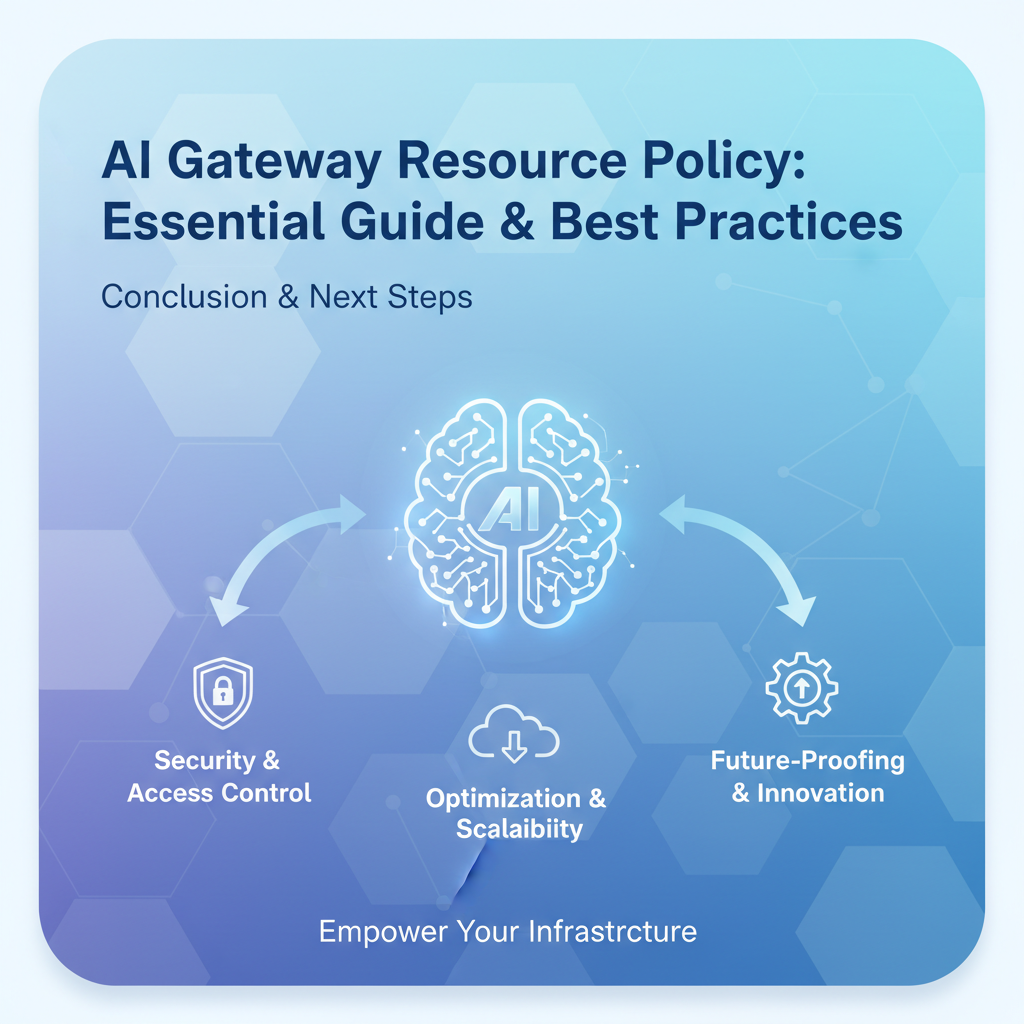
AI Gateway Resource Policy: Essential Guide & Best Practices


The rapid proliferation of Artificial Intelligence (AI) across industries has ushered in an era of unprecedented innovation and operational efficiency. From sophisticated natural language processing models powering chatbots and content generation to intricate machine learning algorithms driving predictive analytics and autonomous systems, AI is reshaping how businesses operate and interact with their customers. As organizations increasingly integrate AI capabilities into their core applications and services, the need for robust, scalable, and secure management of these AI assets becomes paramount. This is where the concept of an AI Gateway emerges as a critical architectural component, acting as the intelligent intermediary between consuming applications and a diverse array of AI models.
An AI Gateway is far more than just a proxy; it’s a specialized api gateway designed to abstract the complexities of various AI models, providing a unified interface for access, management, and governance. It handles challenges inherent to AI services, such as varying API formats, authentication mechanisms, versioning, and the often-significant computational costs associated with model inference. However, merely deploying an AI Gateway is insufficient without a comprehensive framework of AI Gateway Resource Policies. These policies are the foundational rules and configurations that dictate how users, applications, and services interact with the underlying AI models, ensuring security, performance, cost-effectiveness, and compliance.
In the intricate landscape of modern digital infrastructure, neglecting the meticulous design and implementation of AI Gateway resource policies can lead to a cascade of detrimental outcomes. Without proper controls, organizations risk exposing sensitive data, incurring exorbitant cloud computing costs due to unchecked model invocations, suffering from degraded application performance, and failing to meet stringent regulatory compliance standards. This comprehensive guide will delve into the essential aspects of AI Gateway resource policies, exploring their core components, indispensable benefits, best practices for their design and implementation, the challenges they present, and a glimpse into their evolving future. By embracing a proactive and strategic approach to API Governance for AI services, enterprises can unlock the full potential of their AI investments while mitigating inherent risks and maintaining operational excellence.
Understanding AI Gateway Resource Policies: Foundation for Controlled AI Access
At its core, an AI Gateway Resource Policy is a set of defined rules that govern the access, utilization, and behavior of AI models exposed through an AI Gateway. These policies are not merely administrative guidelines; they are actively enforced technical configurations that dictate the interaction lifecycle between a calling application or user and the AI service it seeks to consume. Think of them as the digital gatekeepers and traffic controllers for your AI ecosystem, ensuring every interaction adheres to predefined security, operational, and financial parameters.
The necessity for such specialized policies stems from the unique characteristics and inherent complexities of AI models, which differentiate them significantly from traditional REST APIs. While a conventional api gateway might focus primarily on routing, authentication, and basic rate limiting for static data retrieval or CRUD operations, an AI Gateway must contend with a much broader spectrum of concerns. AI models, particularly generative AI and large language models (LLMs), often involve dynamic, computationally intensive inference processes, consume substantial memory and processing power, and can produce varied outputs based on nuanced inputs. They might also process highly sensitive data, necessitating stringent privacy controls, or incur variable costs based on usage metrics like token count, processing time, or model size.
The objectives of AI Gateway resource policies are multi-faceted. Firstly, they are indispensable for establishing a robust security posture, preventing unauthorized access to proprietary AI models and safeguarding the integrity and confidentiality of the data processed by these models. Secondly, these policies are crucial for optimizing resource utilization and managing costs, an increasingly critical concern given the often-expensive nature of AI inference, especially with high-demand models. Thirdly, they play a pivotal role in ensuring the reliability and performance of AI-powered applications by preventing resource exhaustion and maintaining consistent service levels. Finally, comprehensive policies are fundamental for achieving and demonstrating compliance with a growing array of data privacy regulations and ethical AI guidelines.
API Governance is an overarching concept that provides the framework within which AI Gateway resource policies are developed, implemented, and managed. It encompasses the entire lifecycle of APIs, from design and development to deployment, versioning, security, and retirement. For AI Gateways, API Governance extends to include considerations specific to AI, such as managing model drift, ensuring fairness and transparency, tracking model lineage, and governing the use of prompts. By integrating AI Gateway policies into a broader API Governance strategy, organizations can create a coherent, consistent, and secure environment for all their digital services, fostering innovation while maintaining control and accountability. This holistic approach ensures that every AI-driven service adheres to the highest standards of quality, security, and operational efficiency throughout its existence.
Core Pillars of AI Gateway Resource Policies: A Deep Dive into Essential Controls
Effective management of AI services through an AI Gateway hinges upon the meticulous implementation of a diverse set of resource policies. These policies act as critical control mechanisms, ensuring that every interaction with an AI model is secure, efficient, compliant, and cost-effective. Understanding each core pillar is essential for crafting a robust API Governance strategy tailored for AI.
Authentication & Authorization: The Gatekeepers of AI Access
The first line of defense for any AI service is stringent authentication and authorization. Authentication is the process of verifying the identity of a user or application attempting to access an AI model through the api gateway. Common methods include: * API Keys: Simple tokens often embedded in request headers, providing a basic level of authentication. While easy to implement, they require careful management to prevent compromise. * OAuth 2.0: A more robust and widely adopted standard for delegated authorization, allowing third-party applications to obtain limited access to user resources without exposing user credentials. This is particularly valuable for complex ecosystems with multiple service providers. * JSON Web Tokens (JWTs): Compact, URL-safe means of representing claims to be transferred between two parties. JWTs are often used with OAuth 2.0 and can carry claims about the user or application, enabling fine-grained authorization decisions. * Mutual TLS (mTLS): Provides two-way authentication, where both the client and server verify each other's certificates, establishing a highly secure connection. Ideal for high-security environments.
Authorization, conversely, determines what an authenticated entity is allowed to do. This involves defining granular permissions that dictate access to specific AI models, particular endpoints within a model, or even specific operations (e.g., read-only access to inference, but no access to model retraining functions). * Role-Based Access Control (RBAC): Assigns permissions based on a user's or application's role within an organization (e.g., "Data Scientist" role might have access to experimental models, while "Marketing App" might only access a sentiment analysis model). * Attribute-Based Access Control (ABAC): A more dynamic and flexible approach where access decisions are made based on a combination of attributes (e.g., user attributes, resource attributes, environment attributes). For example, access might be granted only if the user is from a specific department, during business hours, and accessing a non-production model.
For multi-tenant AI services, where different customers or internal teams share the same underlying AI infrastructure, robust authentication and authorization policies are absolutely critical. They ensure strict isolation, preventing one tenant from inadvertently or maliciously accessing another's data or models, thereby maintaining data privacy and operational integrity.
Rate Limiting & Throttling: Ensuring Fairness and Preventing Overload
Rate limiting and throttling are vital policies designed to control the volume of requests an AI Gateway receives and forwards to backend AI models. Their primary goals are to prevent resource exhaustion, protect against denial-of-service (DDoS) attacks, ensure fair usage among consumers, and maintain the overall quality of service. * Preventing Abuse and DDoS Attacks: By setting limits on the number of requests allowed within a specific timeframe, the gateway can block malicious attempts to overwhelm the AI service or exploit vulnerabilities. * Ensuring Fair Usage: In a shared AI environment, rate limits can allocate a fair share of resources to each consuming application, preventing a single high-demand client from monopolizing the AI models and impacting others. * Maintaining Service Quality: Overloading AI models can lead to increased latency, errors, and degraded performance. Rate limits act as a buffer, ensuring the backend models operate within their optimal capacity, thus providing consistent response times and reliability.
Various strategies for implementing rate limiting exist: * Fixed Window: Allows a certain number of requests within a fixed time window (e.g., 100 requests per minute). Simple but can be susceptible to burst traffic at the window edges. * Sliding Window Log: More sophisticated, it tracks individual request timestamps and calculates the rate over a "sliding" window, providing smoother protection against bursts. * Token Bucket: A flexible algorithm where requests consume "tokens" from a bucket that refills at a constant rate. Requests are rejected if the bucket is empty. This allows for bursts up to the bucket's capacity.
A critical consideration for AI models, especially Large Language Models (LLMs), is the variability of inference time. Simple request counts might not suffice; policies might need to consider metrics like tokens processed per minute or computational units consumed to accurately reflect resource usage.
Quota Management & Cost Control: Taming the AI Expenditure Beast
One of the most significant challenges in managing AI services, particularly those utilizing expensive commercial models or cloud-based GPU instances, is controlling costs. Quota management policies directly address this by setting hard limits on resource consumption, typically measured in units that directly correlate with expenditure. * Setting Hard Usage Limits: Quotas can be defined based on: * Number of API Calls: A basic measure, similar to rate limiting but often enforced over longer periods (e.g., monthly). * Tokens Processed: Crucial for LLMs, where costs are often per-token for both input (prompt) and output (completion). * Compute Time: For custom models or on-demand GPU instances, quotas can be based on the actual processing time consumed. * Data Volume: Limits on the amount of data processed or transferred. * Preventing Unexpected Expenditure: By enforcing quotas, organizations can prevent individual applications or users from incurring runaway costs, providing predictability in budgeting and resource allocation. * Tiered Access Models: Quotas facilitate the creation of different service tiers (e.g., Free, Basic, Premium) with varying levels of usage limits and associated pricing, allowing businesses to monetize their AI services effectively. * Alerting and Reporting: Quota management policies should be complemented by robust alerting mechanisms that notify administrators and users when usage approaches or exceeds defined limits, enabling proactive intervention.
Caching Strategies: Boosting Performance and Reducing Latency
Caching is a powerful optimization technique that significantly improves the performance of AI services and reduces the load on backend models, consequently lowering operational costs. By storing frequently requested AI inference results, the AI Gateway can serve subsequent identical requests directly from its cache, bypassing the need to re-run the computationally intensive AI model. * Improving Performance and Reducing Latency: For requests with identical inputs, caching can deliver responses in milliseconds rather than seconds, drastically enhancing the user experience of AI-powered applications. * Reducing Computational Load and Costs: Each cached hit avoids an expensive inference call to the backend AI model, leading to substantial savings, especially for high-volume, repetitive queries. * Types of Caching: * Result Caching: Stores the exact output of an AI model for a given input. This is effective for deterministic models or scenarios where inputs are often repeated. * Input Caching: Caches pre-processed or canonicalized inputs to the AI model, useful when minor variations in input might lead to the same logical query.
Challenges exist, particularly with dynamic AI outputs and stateful models, where results might change even for similar inputs. Cache invalidation strategies (e.g., time-to-live, event-driven invalidation) are critical to ensure data freshness and accuracy. For example, if a model is retrained, its cached results must be invalidated.
Logging, Monitoring, & Observability: The Eyes and Ears of AI Operations
Comprehensive logging, monitoring, and observability are non-negotiable for effective AI Gateway management and API Governance. These policies dictate what information is captured, how it’s processed, and how it’s made accessible, providing invaluable insights into the health, performance, and security of AI services. * Capturing Detailed Data: * Request/Response Payloads: Essential for debugging, auditing, and understanding how AI models are being used. Sensitive data within payloads may require masking or anonymization. * Performance Metrics: Latency, throughput, error rates, CPU/memory usage of the gateway and backend models. * Security Events: Failed authentication attempts, authorization denials, suspicious request patterns. * Usage Data: Per-user/per-application API call counts, token consumption, cost estimates. * Enabling Real-time Monitoring: Dashboards and alerts built on collected metrics provide immediate visibility into operational issues, allowing teams to detect anomalies (e.g., sudden spike in errors, unusual traffic patterns) and respond proactively. * Troubleshooting and Debugging: Detailed logs are crucial for diagnosing issues, tracing the path of a request, and identifying the root cause of performance bottlenecks or application errors. * Auditing and Compliance: Comprehensive logging provides an immutable record of all interactions, which is essential for compliance audits, demonstrating adherence to security policies, and investigating incidents. * Performance Rivaling Nginx: Platforms such as ApiPark offer high-performance logging capabilities that ensure even under heavy loads (e.g., 20,000+ TPS), every detail of each API call is recorded. This feature allows businesses to quickly trace and troubleshoot issues in API calls, ensuring system stability and data security without compromising performance. * Powerful Data Analysis: Beyond real-time monitoring, historical log data provides rich datasets for long-term trend analysis, capacity planning, anomaly detection, and optimization of resource allocation and pricing strategies.
Security & Threat Protection: Guarding Against AI-Specific Vulnerabilities
Beyond basic authentication and authorization, robust security policies for an AI Gateway must encompass a broader range of threat protection mechanisms, particularly those tailored to the unique attack vectors associated with AI services. * Web Application Firewall (WAF) Integration: Filtering malicious traffic, protecting against common web vulnerabilities (e.g., SQL injection, cross-site scripting) that could target the gateway's management interface or API endpoints. * Bot Detection and Mitigation: Identifying and blocking automated malicious bots that might attempt to scrape data, perform credential stuffing, or launch DDoS attacks. * Payload Inspection and Validation: Ensuring that incoming requests adhere to expected schemas and do not contain malicious code or excessively large payloads that could lead to resource exhaustion or prompt injection. * AI-Specific Attack Protection: * Prompt Injection: For generative AI models, this involves crafting malicious prompts to manipulate the model into performing unintended actions (e.g., revealing sensitive data, generating harmful content). Policies might include input sanitization, length limits, and content filtering. * Data Exfiltration: Preventing AI models from inadvertently revealing sensitive training data or internal system information through their outputs. * Adversarial Attacks: While often targeting the model directly, the gateway can provide a layer of defense by inspecting inputs for patterns indicative of adversarial perturbations. * Encryption in Transit and at Rest: Enforcing TLS/SSL for all communication channels and encrypting any cached or logged sensitive data to protect against eavesdropping and data breaches.
Data Governance & Privacy: Navigating Regulatory Complexities
With AI models often processing vast amounts of potentially sensitive data, stringent data governance and privacy policies are paramount. These policies ensure compliance with evolving regulations like GDPR, CCPA, and industry-specific mandates, while upholding ethical data handling practices. * Compliance Enforcement: Policies must explicitly define how data is collected, processed, stored, and retained by AI services, ensuring alignment with legal and regulatory requirements. * Data Handling Directives: * Anonymization/Pseudonymization: Requiring sensitive data to be masked or anonymized before being sent to AI models, especially third-party services, to protect privacy. * Data Retention Policies: Defining how long input and output data can be stored for debugging, auditing, or model improvement purposes, and establishing automated deletion schedules. * Controlling Data Flow: Policies can dictate which types of data can be sent to specific AI models. For instance, PII might be restricted from certain external AI APIs, or only allowed with explicit user consent. * Ethical AI Considerations: Data governance also extends to ethical AI, ensuring that models are not trained on biased datasets and that their usage adheres to principles of fairness, transparency, and accountability. This includes policies around model interpretability and explainability where applicable.
API Versioning & Lifecycle Management: Adapting to Evolution
AI models, like any software component, evolve. They are retrained, updated, deprecated, and replaced. Effective API Governance for an AI Gateway includes policies for managing this lifecycle seamlessly, preventing disruptions to consuming applications. * Managing Evolution: Policies for versioning allow developers to introduce new versions of AI models or their APIs without breaking existing integrations. * URL Versioning: e.g., /v1/sentiment, /v2/sentiment * Header Versioning: e.g., X-API-Version: 1 * Seamless Transitions: The gateway can manage traffic routing to different versions, allowing clients to migrate at their own pace. This supports both backward compatibility and the introduction of new features. * Deprecation Strategies: Policies define the process for deprecating older AI model versions, including warning periods, communication plans, and eventual removal, minimizing impact on dependent applications. * API Service Sharing within Teams: Platforms like ApiPark, an open-source AI gateway and API management platform, offer comprehensive features for end-to-end API lifecycle management, including design, publication, invocation, and decommission. It assists with regulating API management processes, managing traffic forwarding, load balancing, and versioning of published APIs. Such platforms also facilitate the centralized display and sharing of all API services within different departments and teams, making it easier to discover and utilize the required API services while adhering to established lifecycle policies. This is invaluable for robust API Governance and collaborative development. * Prompt Encapsulation into REST API: APIPark further simplifies AI usage by allowing users to quickly combine AI models with custom prompts to create new APIs, such as sentiment analysis or translation APIs. This transforms complex AI invocations into standard REST calls, making versioning and management significantly easier.
Traffic Management & Load Balancing: Ensuring High Availability and Performance
For AI services, especially those critical to business operations, ensuring high availability and optimal performance is paramount. Traffic management and load balancing policies orchestrate how requests are distributed across multiple instances of AI models or even across different AI providers. * Distributing Requests: Policies can distribute incoming requests across a cluster of AI model instances to prevent any single instance from becoming a bottleneck and to ensure even resource utilization. * Ensuring High Availability and Fault Tolerance: If an AI model instance fails or becomes unresponsive, the gateway can automatically detect the issue and route traffic to healthy instances, minimizing downtime and maintaining service continuity. * Advanced Routing Logic: * Latency-Based Routing: Directing requests to the AI model instance or region that offers the lowest latency. * Cost-Based Routing: For scenarios involving multiple AI providers, policies can route requests to the most cost-effective provider at a given time, dynamically optimizing expenditure. * Capacity-Based Routing: Routing requests based on the current load or available capacity of AI model instances. * Geographic Routing: Directing users to the nearest AI model deployment for improved performance and data locality. * A/B Testing and Canary Deployments: Routing a subset of traffic to a new model version or experimental model to evaluate its performance and stability before a full rollout.
By diligently implementing and continuously refining these core pillars, organizations can transform their AI Gateway from a simple pass-through mechanism into a strategic control point, enabling secure, efficient, and compliant access to their invaluable AI assets.
The Indispensable Benefits of Robust AI Gateway Resource Policies
The deliberate investment in crafting and enforcing robust AI Gateway resource policies yields a multitude of profound benefits that extend across an organization's security posture, operational efficiency, financial management, and innovation capabilities. These advantages solidify the AI Gateway as a critical component of modern enterprise architecture and highlight the necessity of comprehensive API Governance.
Enhanced Security Posture: Fortifying the AI Frontier
Perhaps the most immediately apparent benefit of well-defined policies is a dramatically improved security posture. Without proper controls, AI services can become significant vulnerabilities, exposing sensitive data, susceptible to abuse, and targets for sophisticated attacks. Resource policies address these threats head-on: * Preventing Unauthorized Access: Strong authentication (e.g., OAuth 2.0, mTLS) and granular authorization (RBAC, ABAC) ensure that only legitimate users and applications with appropriate permissions can invoke AI models. This prevents malicious actors from gaining access to proprietary AI intellectual property or using AI services for nefarious purposes. * Mitigating Data Breaches: Policies enforcing data anonymization, encryption, and strict data retention schedules significantly reduce the risk of sensitive information being compromised during AI inference or storage. By controlling what data can be sent to which models, particularly third-party services, the risk of accidental data leakage is substantially minimized. * Protection Against AI-Specific Attacks: Beyond generic cybersecurity threats, policies can be tailored to defend against prompt injection attacks, adversarial attacks, and model inversion techniques that aim to extract training data from AI models. This proactive defense preserves the integrity and confidentiality of the AI ecosystem. * Improved Auditability: Comprehensive logging provides an immutable, time-stamped record of every AI service invocation, including who accessed it, when, and with what parameters. This audit trail is indispensable for incident response, forensic analysis, and demonstrating compliance to regulators.
Optimized Performance & Reliability: Delivering Consistent AI Experiences
For user-facing applications or critical business processes, the performance and reliability of AI services are paramount. Resource policies are instrumental in achieving and maintaining these high standards: * Reduced Latency: Caching frequently requested AI inference results directly at the gateway dramatically reduces the time it takes to serve responses, often from seconds to milliseconds. This is crucial for real-time applications where every moment counts. * Increased Throughput: Rate limiting and throttling prevent AI models from being overwhelmed, allowing them to operate within their optimal capacity and process a higher volume of legitimate requests without degradation. Load balancing further distributes traffic efficiently across multiple model instances, maximizing overall system capacity. * Enhanced Stability and Uptime: By isolating failures and automatically rerouting traffic away from unhealthy AI model instances, load balancing policies ensure that service remains available even in the face of partial system outages. This resilience is critical for business continuity. * Consistent Service Levels: By preventing resource contention and ensuring fair access, policies contribute to a predictable and consistent experience for all consuming applications, leading to higher user satisfaction and trust.
Significant Cost Savings: Preventing Uncontrolled Expenditure
The computational demands and commercial licensing of many AI models can quickly lead to exorbitant costs if not meticulously managed. Resource policies provide the necessary controls to prevent financial overruns: * Preventing Over-Utilization: Quota management policies directly cap the usage of AI models by applications or users, preventing them from incurring unexpected and excessive charges. This is particularly vital for pay-per-use models (e.g., per-token for LLMs, per-minute for GPU instances). * Cost-Effective Resource Allocation: By leveraging caching, organizations can significantly reduce the number of costly inference calls to backend AI models. Dynamic routing based on cost can also direct traffic to the most economical AI provider or model version available at any given time. * Optimized Infrastructure Spend: Better understanding of usage patterns through monitoring and logging allows for more accurate capacity planning, ensuring that computational resources for AI models are scaled appropriately – neither over-provisioned (wasting money) nor under-provisioned (impacting performance). * Visibility into Spending: Detailed logging and data analysis provide granular insights into where AI costs are being incurred, enabling finance and operations teams to identify cost centers, optimize spending, and forecast future expenditures with greater accuracy.
Streamlined Compliance & Auditability: Meeting Regulatory Imperatives
The regulatory landscape surrounding AI and data privacy is rapidly evolving, making compliance a complex and critical challenge. AI Gateway resource policies provide the structured framework needed to navigate these mandates: * Demonstrable Adherence to Regulations: Policies explicitly defining data handling, retention, anonymization, and access controls provide concrete evidence of an organization's commitment to compliance with laws like GDPR, CCPA, HIPAA, and industry-specific standards. * Simplified Auditing Processes: Comprehensive logs and policy enforcement records facilitate external and internal audits, allowing organizations to quickly demonstrate how they are protecting data and managing AI services responsibly. * Ethical AI Governance: Policies can be extended to support ethical AI principles, ensuring fairness, transparency, and accountability in AI model usage, helping organizations avoid reputational damage and legal repercussions associated with biased or opaque AI systems. * Data Lineage and Accountability: By tracking who accessed which data through which AI model, policies help establish clear data lineage, which is crucial for accountability and understanding the impact of AI decisions.
Improved User & Developer Experience: Fostering Innovation and Productivity
While many benefits focus on the organization, robust policies also significantly enhance the experience for the end-users of AI-powered applications and the developers building them: * Predictable Service Behavior: Consistent performance, reliable access, and clear usage limits lead to a more predictable experience for developers integrating AI services and for end-users interacting with AI applications. * Clear Access Rules: Well-defined authentication and authorization policies provide clarity to developers on how to access AI services and what permissions they have, reducing frustration and development time. * Self-Service Capabilities: An AI Gateway platform with strong policy enforcement often comes with developer portals that allow developers to discover APIs, manage their API keys, monitor their usage against quotas, and understand policy constraints, fostering self-sufficiency. * Faster Innovation Cycles: By abstracting away the complexities of AI models and providing a stable, governed interface, developers can focus on building innovative applications rather than managing underlying infrastructure, accelerating product development. * API Resource Access Requires Approval: For instance, ApiPark offers subscription approval features, ensuring that callers must subscribe to an API and await administrator approval before they can invoke it. This prevents unauthorized API calls and potential data breaches, while also providing a structured onboarding process for developers.
Scalability & Flexibility: Adapting to the Future of AI
The AI landscape is characterized by rapid change and exponential growth. Resource policies enable organizations to scale their AI operations and adapt to new technologies with agility: * Seamless Scaling: Policies like load balancing and quota management are designed to handle increasing demand by distributing load and preventing individual components from breaking under stress, allowing AI services to scale horizontally. * Adaptability to Evolving AI Models: Through robust API versioning and lifecycle management policies, organizations can seamlessly introduce new AI models or update existing ones without disrupting dependent applications, ensuring continuous innovation. * Multi-Cloud and Hybrid Environment Support: Policies can be designed to apply consistently across diverse deployment environments (on-premises, public cloud, edge), providing a unified management plane for a distributed AI infrastructure. * Future-Proofing AI Investments: By establishing a solid foundation of governance and control, organizations are better positioned to integrate emerging AI technologies and paradigms without a complete architectural overhaul, maximizing the longevity and return on their AI investments.
In essence, robust AI Gateway resource policies transform the management of AI services from a reactive, chaotic endeavor into a proactive, strategically controlled operation. They are not merely technical configurations but fundamental enablers for secure, efficient, compliant, and innovative AI adoption across the enterprise.
Crafting & Implementing Effective AI Gateway Resource Policies: Best Practices & Strategic Considerations
Implementing robust AI Gateway resource policies is a complex undertaking that requires careful planning, strategic decision-making, and continuous refinement. It's not a one-time task but an ongoing process that must evolve with your AI landscape and business needs. Adhering to best practices ensures that your policies are not only effective but also adaptable and sustainable.
1. Start with a Clear Strategy and Business Objectives
Before diving into technical configurations, it's crucial to define why you are implementing these policies and what you aim to achieve. * Define Core Objectives: Are your primary goals security, cost optimization, performance, regulatory compliance, or a combination? For example, a financial institution might prioritize security and compliance above all else, while a high-volume consumer application might focus on performance and cost. * Identify Key Stakeholders: Engage with all relevant departments: security teams, legal, finance, product owners, AI engineers, and application developers. Each stakeholder brings a unique perspective and requirements that must be incorporated into policy design. * Understand Business Use Cases: How are your AI models being used? What types of data do they process? What are the criticality levels of the applications consuming them? These answers will directly influence the granularity and strictness of your policies. For instance, a critical fraud detection AI service will require far more stringent policies than a simple internal content summarization tool.
2. Conduct a Thorough Risk Assessment
Identify potential vulnerabilities, threats, and their potential impact specific to your AI services and the data they handle. * Threat Modeling: Analyze potential attack vectors, including prompt injection, data poisoning, model theft, and denial-of-service. Understand how your AI Gateway can mitigate these risks. * Data Classification: Categorize the sensitivity of data flowing through the gateway (e.g., PII, confidential, public). This dictates the level of protection required for each data type. * Compliance Requirements: Map your AI services to relevant regulations (GDPR, CCPA, HIPAA, etc.) and ensure policies are designed to meet or exceed these requirements. This proactive approach avoids costly remediation later.
3. Define Granular Access Controls (RBAC/ABAC)
Implement the principle of least privilege, granting only the necessary permissions for each user or application. * Role Definition: Clearly define roles within your organization that interact with AI services (e.g., AI Developer, Application User, Auditor, Admin) and assign specific permissions to each role. * Attribute-Based Flexibility: For highly dynamic environments, consider ABAC, where access is determined by real-time attributes (e.g., user's location, time of day, request origin IP, or the sensitivity of the data being accessed). This allows for more contextual and adaptive authorization. * Independent API and Access Permissions for Each Tenant: For organizations managing multiple teams or clients, platforms like ApiPark enable the creation of multiple tenants, each with independent applications, data, user configurations, and security policies. This allows for fine-grained, self-contained access control while sharing underlying infrastructure, improving resource utilization and reducing operational costs.
4. Implement Intelligent Rate Limiting and Quotas
Tailor usage limits to the specific needs and consumption patterns of your AI services. * Tiered Usage Models: Implement different rate limits and quotas for various user groups or applications (e.g., free tier, paid tiers, internal applications). * Dynamic Adjustments: Consider mechanisms to dynamically adjust limits based on real-time factors such as backend AI model load, available capacity, or historical usage patterns. This prevents unnecessary throttling during low demand and enforces stricter limits during peak times. * Cost-Aware Limits: Directly link quotas to the cost of underlying AI model invocations (e.g., token limits for LLMs), providing clear cost predictability and control. * Bursting Allowance: Allow for occasional bursts of traffic above the steady-state rate limit to accommodate legitimate spikes in demand without immediately rejecting requests.
5. Prioritize Data Privacy and Security by Design
Integrate data protection and security measures into the very fabric of your AI Gateway policies from the outset. * Data Masking/Anonymization: Implement policies to automatically mask or anonymize sensitive data fields in requests and responses at the gateway level before they reach the AI model, especially for external or untrusted models. * End-to-End Encryption: Enforce TLS/SSL for all communication channels. For data at rest (e.g., logs, cached responses), ensure strong encryption protocols are used. * Content Filtering and Validation: Implement rules to filter out potentially malicious inputs (e.g., SQL injection attempts in prompts) or to block prompts that violate ethical guidelines or contain prohibited content. * Data Retention Policies: Define clear rules for how long request/response data can be stored, ensuring compliance with privacy regulations and minimizing data exposure.
6. Leverage Comprehensive Monitoring and Alerting
Real-time visibility into your AI Gateway and AI model performance is crucial for proactive management and issue resolution. * Granular Logging: Configure your gateway to log all essential details: request/response headers and bodies (with sensitive data masked), latency, errors, authentication failures, and authorization denials. * Key Performance Indicators (KPIs): Monitor KPIs specific to AI services, such as average inference time, token throughput, error rates, cache hit ratios, and cost per invocation. * Proactive Alerting: Set up automated alerts for anomalies, such as sudden spikes in error rates, unusual traffic patterns, quota breaches, or security incidents. Integrate these alerts with your existing incident management systems. * Powerful Data Analysis: As mentioned with ApiPark, robust data analysis features can analyze historical call data to display long-term trends and performance changes, helping businesses with preventive maintenance before issues occur and informing policy adjustments.
7. Adopt a Policy-as-Code Approach
Treat your AI Gateway policies as code, enabling version control, automation, and reproducibility. * Version Control: Store policy definitions in a version control system (e.g., Git). This allows for tracking changes, reverting to previous versions, and collaborating on policy development. * Automation: Automate the deployment and management of policies using CI/CD pipelines. This ensures consistency across environments (development, staging, production) and reduces the risk of human error. * Reproducibility: A policy-as-code approach ensures that your policies are easily reproducible, making it simpler to set up new gateway instances or recover from disasters. * Testing: Develop automated tests for your policies to ensure they behave as expected and do not introduce unintended side effects.
8. Regularly Review and Update Policies
The AI landscape, threat vectors, and business requirements are constantly evolving, demanding continuous policy review. * Scheduled Reviews: Establish a regular cadence (e.g., quarterly or bi-annually) for reviewing all AI Gateway policies with stakeholders. * Event-Driven Updates: Update policies in response to significant events, such as the introduction of new AI models, changes in regulatory requirements, discovery of new vulnerabilities, or changes in application architecture. * Feedback Loops: Incorporate feedback from developers and operations teams who are directly affected by the policies, identifying pain points or areas for optimization.
9. Educate Stakeholders
Effective policies require buy-in and understanding from everyone involved. * Developer Documentation: Provide clear, concise documentation for developers on how to interact with the AI Gateway, authentication methods, rate limits, and other relevant policies. * Training: Offer training sessions for operations teams on how to monitor, troubleshoot, and manage the gateway and its policies. * Communication: Clearly communicate policy changes and their rationale to all affected stakeholders.
10. Choose the Right AI Gateway/API Management Platform
The platform you choose to host your AI Gateway significantly impacts your ability to implement and manage robust resource policies. * Feature Set Alignment: Select a platform that natively supports the specific policy types you require (e.g., granular authentication, advanced rate limiting, sophisticated caching, data masking, logging). * Scalability and Performance: Ensure the platform can handle the expected traffic volume and performance demands of your AI services. * Extensibility: Look for platforms that allow for custom policy logic or integration with external policy engines if your requirements are highly unique. * Unified API Format for AI Invocation: A platform like ApiPark is an open-source AI Gateway and API management platform that offers a unified API format for AI invocation. This standardizes the request data format across all AI models, ensuring that changes in AI models or prompts do not affect the application or microservices, thereby simplifying AI usage and maintenance costs. Selecting such an AI Gateway platform that natively supports robust resource policy management is paramount. Tools like ApiPark provide integrated capabilities for quick integration of 100+ AI models, independent API and access permissions for each tenant, and end-to-end API lifecycle management, simplifying the enforcement of complex resource policies across diverse AI models and services. * Ease of Deployment and Management: Consider how quickly and easily the platform can be deployed, configured, and maintained. APIPark, for instance, boasts quick deployment in just 5 minutes with a single command line, making it accessible for organizations of all sizes.
By systematically applying these best practices, organizations can build a resilient, secure, and efficient AI Gateway infrastructure, enabling them to confidently leverage the power of AI while maintaining strict API Governance and operational control.
APIPark is a high-performance AI gateway that allows you to securely access the most comprehensive LLM APIs globally on the APIPark platform, including OpenAI, Anthropic, Mistral, Llama2, Google Gemini, and more.Try APIPark now! 👇👇👇
Challenges in the AI Gateway Resource Policy Landscape
While the benefits of robust AI Gateway resource policies are undeniable, their implementation and ongoing management are not without significant challenges. The unique characteristics of AI, coupled with the complexities of enterprise environments, often present hurdles that require careful consideration and strategic solutions.
1. Complexity of AI Models
The inherent nature of AI models, particularly advanced machine learning and generative AI, introduces several layers of complexity for policy enforcement. * Dynamic and Varied Inputs/Outputs: Unlike traditional APIs with well-defined schemas, AI models can have highly flexible input formats and generate diverse, often non-deterministic, outputs. This makes it challenging to apply static validation rules or cache results effectively. For instance, a policy designed for a fixed-format sentiment analysis API might struggle with the unstructured, free-form inputs of a generative text model. * Inference Variability: The time taken for an AI model to process a request (inference time) can vary significantly based on input complexity, model size, current load, and underlying hardware. This variability makes it difficult to set consistent rate limits or time-based quotas, as a simple request count might not accurately reflect resource consumption. * Model Drift and Retraining: AI models are not static; they evolve. As models are retrained with new data or updated, their behavior, performance characteristics, and even security vulnerabilities can change. Policies must be adaptable to these changes without requiring a complete overhaul every time a model is updated, which ties into the need for robust API versioning and lifecycle management.
2. Scalability Demands
The explosion of AI adoption means that AI Gateways must be capable of handling an ever-increasing volume of requests, often with bursty traffic patterns, placing immense pressure on policy enforcement mechanisms. * High Throughput Requirements: AI-powered applications, especially in areas like real-time analytics, content generation, or personalization, can generate millions of requests per second. The api gateway and its policy engine must be able to process these requests at scale without introducing significant latency. * Resource Intensiveness of Policy Evaluation: Each incoming request often needs to be evaluated against multiple policies (authentication, authorization, rate limit, quota, security rules). Performing these evaluations for every request at high throughput requires an extremely efficient and performant policy engine. * Managing Distributed State: For policies like rate limiting or quota management, maintaining accurate state across a cluster of AI Gateway instances (e.g., how many requests a user has made across all gateway nodes) adds significant architectural complexity and potential for inconsistency.
3. Hybrid & Multi-Cloud Environments
Many organizations operate their AI workloads across a mix of on-premises data centers, private clouds, and multiple public cloud providers. * Consistent Policy Enforcement: Ensuring that AI Gateway resource policies are applied consistently and uniformly across these disparate environments is a major challenge. Different cloud providers may have their own native gateway services and policy languages, leading to fragmentation and operational overhead. * Data Locality and Compliance: Policies need to account for data residency requirements. Certain data might only be allowed to be processed by AI models in specific geographic regions, necessitating intelligent routing policies that are challenging to implement and manage across a multi-cloud setup. * Interoperability: Integrating an AI Gateway with various identity providers, logging systems, and monitoring tools across different cloud environments requires careful planning and robust integration capabilities.
4. Evolving Threat Landscape
The security landscape for AI is constantly evolving, with new attack vectors and vulnerabilities emerging regularly. * AI-Specific Vulnerabilities: Attacks like prompt injection, data poisoning, model inversion, and membership inference require specialized policy considerations beyond traditional cybersecurity measures. Keeping up with these novel threats and developing effective mitigation policies is an ongoing battle. * Rapid Iteration of Attack Methods: As AI models become more sophisticated, so do the methods used to exploit them. Policies must be agile enough to adapt quickly to new threat intelligence. * Balancing Security with Usability: Overly strict security policies can hinder developer productivity or negatively impact the user experience. Striking the right balance between robust security and practical usability is a continuous challenge.
5. Integration with Existing Systems
Integrating an AI Gateway and its policies into an organization's existing IT infrastructure and processes can be a complex endeavor. * Legacy Systems: Many enterprises have legacy authentication systems, identity providers, and monitoring tools that may not seamlessly integrate with modern AI Gateway platforms. * Orchestration with Existing API Gateways: If an organization already uses a traditional API Gateway for other services, integrating or coexisting with an AI Gateway requires careful architectural planning to avoid redundancy or conflicts in policy enforcement. * Developer Workflow Integration: Policies must fit naturally into developer workflows (e.g., CI/CD pipelines for policy-as-code). If policies are cumbersome to manage or deploy, developers may seek workarounds, undermining the governance framework.
6. Balancing Performance with Security
There is often an inherent tension between maximizing performance and implementing stringent security policies. * Latency Overhead: Each policy evaluation step adds a small amount of latency to a request. For high-performance, real-time AI applications, cumulative latency from multiple strict policies can be unacceptable. * Resource Consumption: Security measures like deep payload inspection, WAF rules, or encryption/decryption can consume significant CPU and memory resources on the AI Gateway, potentially impacting its ability to handle high throughput. * Optimization Challenge: The challenge lies in optimizing policy enforcement to provide the necessary security without unduly impacting the speed and responsiveness of AI services. This often requires intelligent policy design, efficient algorithms, and powerful underlying infrastructure.
Addressing these challenges requires a strategic approach that combines advanced AI Gateway capabilities, a strong API Governance framework, and a commitment to continuous adaptation and learning within the rapidly evolving AI landscape.
Advanced Concepts in AI Gateway Resource Policy Management
As organizations mature in their AI adoption, the need arises for more sophisticated and intelligent approaches to AI Gateway resource policy management. These advanced concepts move beyond static rules, leveraging dynamic capabilities, AI itself, and broader architectural principles to create a more adaptive, resilient, and efficient AI ecosystem.
1. Dynamic Policy Enforcement
Traditional policies are often static, defined upfront and applied uniformly. Dynamic policy enforcement, however, introduces real-time adaptability based on contextual factors. * Context-Aware Policies: Instead of fixed rate limits, a dynamic policy might adjust limits based on the current load of the backend AI model, the historical behavior of the calling application, the geographical location of the request, or even the time of day. For example, a customer support AI chatbot might have higher rate limits during business hours but lower limits during off-peak times. * Threat Intelligence Integration: Policies can dynamically adapt based on real-time threat intelligence feeds. If a new vulnerability in a specific AI model is identified, the AI Gateway could automatically apply stricter input validation, block certain types of requests, or temporarily restrict access from suspicious IP ranges. * Adaptive Security: Policies might tighten security controls (e.g., require multi-factor authentication, perform deeper payload inspection) for requests originating from unfamiliar networks or exhibiting unusual behavioral patterns, reflecting a "risk-adaptive" approach to security. * Self-Healing Policies: In response to detected anomalies or service degradation (e.g., high error rates from an AI model), the gateway could dynamically adjust routing policies to divert traffic away from the problematic model instance, or temporarily throttle requests to prevent cascading failures.
2. AI-Driven Policy Optimization
This concept takes meta-governance to the next level by using AI itself to optimize and suggest improvements to AI Gateway policies. * Anomaly Detection: Machine learning models can analyze vast amounts of AI Gateway log data and performance metrics to identify abnormal usage patterns, security breaches, or performance bottlenecks that might be missed by static thresholds. For example, an AI could detect subtle prompt injection attempts that bypass simple keyword filters. * Predictive Capacity Planning: AI can analyze historical usage data to predict future demand for specific AI models, allowing the gateway to proactively adjust quotas, scale backend resources, or suggest changes to rate limits to prevent resource exhaustion or optimize cost. * Automated Policy Generation/Refinement: In the future, AI could assist in generating initial policy drafts based on business requirements and compliance mandates, or suggest refinements to existing policies based on observed traffic patterns, security incidents, and performance data. This could help maintain robust API Governance without constant manual intervention. * Cost Optimization through Reinforcement Learning: AI agents could be trained using reinforcement learning to dynamically route requests across multiple AI providers or model versions, aiming to minimize inference costs while maintaining specified performance levels, learning optimal routing decisions over time.
3. Federated Identity & Policy Management
For large enterprises with distributed AI services across multiple business units, geographies, or clouds, federated approaches become essential. * Centralized Identity Management: Integrating the AI Gateway with a centralized identity provider (IdP) allows for a single source of truth for user identities and simplifies access management across the entire AI ecosystem. This supports single sign-on (SSO) for both developers and end-users. * Distributed Policy Enforcement with Central Governance: While policies are enforced at individual AI Gateway instances (e.g., at the edge or in different cloud regions), their definition and updates are managed centrally through a unified API Governance platform. This ensures consistency and simplifies auditing. * Policy Orchestration Across Heterogeneous Gateways: For environments with multiple types of gateways (e.g., an AI Gateway for generative AI, a traditional api gateway for REST services), federated policy management aims to provide a unified way to define and apply policies across all of them, reducing operational complexity.
4. Edge AI Gateway Policies
Pushing AI inference and policy enforcement closer to the data source (the "edge") offers significant advantages, particularly for latency-sensitive applications or scenarios with limited connectivity. * Reduced Latency: By performing inference and applying policies at the edge, data does not need to travel back to a central cloud, drastically reducing latency and improving real-time responsiveness for applications like autonomous vehicles, industrial IoT, or smart retail. * Enhanced Data Privacy and Security: Processing sensitive data at the edge minimizes the risk of data exfiltration during transit to a central cloud. Policies can be enforced locally, ensuring data remains within a specific trusted boundary. * Offline Capability: Edge AI Gateways can continue to operate and enforce policies even when connectivity to the central cloud is intermittent or unavailable, critical for remote or mission-critical deployments. * Optimized Bandwidth Usage: Only necessary or aggregated data needs to be sent to the central cloud, reducing bandwidth costs and network congestion.
5. Zero Trust Principles
Applying Zero Trust security principles to AI Gateway access represents a fundamental shift in how trust is managed. * Never Trust, Always Verify: Instead of implicitly trusting entities within a network perimeter, Zero Trust dictates that every request, regardless of its origin (internal or external), must be authenticated, authorized, and continuously monitored. * Micro-segmentation: AI services are segmented into small, isolated security zones, with policies dictating precise access between them. An AI Gateway enforces these micro-segments, ensuring that even if one AI model is compromised, the blast radius is contained. * Continuous Verification: Authorization is not a one-time event. Policies continuously verify the identity, context, and posture of users and devices interacting with AI services throughout the session. Any change in context (e.g., user moves to a different network, device posture degrades) can trigger re-authentication or re-authorization. * Least Privilege Access: Reinforces the principle that users and applications should only have the bare minimum access required to perform their function, a core tenet of effective AI Gateway authorization policies.
These advanced concepts represent the cutting edge of AI Gateway resource policy management, enabling organizations to build more secure, efficient, and intelligent AI ecosystems capable of navigating the complexities and opportunities of the evolving AI landscape. Implementing these often requires sophisticated platforms and a robust commitment to continuous innovation in API Governance.
The Future Trajectory of AI Gateway Resource Policies
The landscape of Artificial Intelligence is in a state of constant flux, evolving at a blistering pace. As AI models become more sophisticated, pervasive, and integral to business operations, the mechanisms governing their access and use—namely, AI Gateway resource policies—must also undergo significant transformation. The future of these policies is characterized by increasing intelligence, automation, and a heightened focus on ethical considerations.
1. Increased Automation & AI Integration
The trend towards self-managing systems will profoundly impact AI Gateway policies. Manual configuration and reactive adjustments will increasingly be replaced by automated and AI-driven processes. * Self-Optimizing Policies: Future AI Gateways will leverage AI and machine learning to analyze real-time operational data, usage patterns, and security events. These systems will autonomously adjust rate limits, quotas, caching strategies, and even security rules to optimize performance, cost, and security without human intervention. For example, an AI could automatically increase resource allocation for a popular AI model during peak hours and scale it down during off-peak times. * Proactive Threat Response: AI will play a more significant role in identifying novel threats and vulnerabilities specific to AI models. Policies will be automatically updated or generated in response to newly detected prompt injection techniques or adversarial attacks, providing a dynamic defense mechanism. * Policy-as-Code Evolution: While "policy-as-code" is a current best practice, the future will see more sophisticated tools for generating, testing, and deploying these policies, potentially using natural language descriptions to define desired outcomes which are then translated into executable policies.
2. Enhanced Focus on Ethical AI & Explainability
As AI systems influence more critical decisions, the ethical implications of their use will become a central concern for API Governance and AI Gateway policies. * Fairness and Bias Detection Policies: Policies might emerge at the gateway level to monitor AI model outputs for evidence of bias or unfairness, potentially flagging or blocking responses that violate ethical guidelines. These could involve integrating with external fairness assessment tools. * Transparency and Explainability Requirements: Future policies could mandate that AI services provide a certain level of explainability for their decisions, with the AI Gateway enforcing the inclusion of justification metadata or links to interpretability reports in AI responses. This is crucial for compliance in regulated industries. * Accountability Tracing: Enhanced logging and data lineage policies will be developed to track precisely which data inputs led to which AI model decisions, and who was responsible for invoking the model, strengthening accountability frameworks.
3. Standardization of Policy Languages
The current landscape often sees various AI Gateway and api gateway platforms employing their own proprietary policy languages or configurations. The future will likely move towards greater standardization. * Open Policy Agent (OPA) Integration: Tools like OPA (and its Rego policy language) are gaining traction for defining policies that can be enforced across diverse environments and technologies. Future AI Gateways will likely see deeper integration with such universal policy engines, allowing organizations to define policies once and apply them everywhere. * Interoperability Across Platforms: Standardized policy languages will enable easier migration between AI Gateway providers and better interoperability in multi-cloud or hybrid environments, reducing vendor lock-in and simplifying API Governance. * Shared Policy Repositories: The development of open-source or community-driven policy libraries could emerge, providing common best practices and templates for various AI use cases and compliance needs.
4. Tighter Integration with DevSecOps Workflows
Policies will no longer be an afterthought but an intrinsic part of the entire AI application development and deployment lifecycle. * Shift-Left Security and Governance: Policies will be designed, tested, and enforced much earlier in the development process, directly integrated into CI/CD pipelines. Developers will receive immediate feedback if their AI service designs violate established AI Gateway policies. * Automated Policy Testing: Tools will emerge to automatically test the efficacy and impact of AI Gateway policies, ensuring they achieve their desired outcomes without introducing performance bottlenecks or security gaps. * Infrastructure-as-Code for Policies: Building upon policy-as-code, future tools will allow for declarative definition of the entire AI Gateway infrastructure and its associated policies, enabling full automation from provisioning to retirement.
5. Hyper-Personalized Access
As AI itself becomes more personalized, so too will the policies governing access to it. * User Behavior-Driven Policies: AI Gateway policies might adapt not just to generic roles but to individual user behavior and preferences, offering personalized rate limits or access to specific AI model fine-tunes. * AI Model Interaction History: Access policies could be influenced by a user's past interactions with specific AI models, perhaps granting temporary elevated access for successful or frequent engagements, or imposing restrictions if misuse is detected. * Dynamic Trust Scores: Integrating with advanced identity and access management systems, the gateway could use dynamic trust scores for users or applications, adjusting policy strictness in real-time based on their current risk profile.
The future of AI Gateway resource policies is a dynamic interplay of technological advancement, regulatory imperatives, and ethical considerations. These policies will become increasingly intelligent, automated, and integral to ensuring that AI systems are not only powerful and efficient but also secure, compliant, and responsibly managed. Organizations that embrace these future trends in API Governance will be best positioned to harness the full transformative potential of AI.
Conclusion: Securing and Optimizing the AI Frontier
The journey through the intricate landscape of AI Gateway resource policies reveals a truth of undeniable clarity: as Artificial Intelligence rapidly embeds itself into the core operations and offerings of modern enterprises, the strategic management of AI services through a dedicated AI Gateway is no longer an option, but a profound necessity. This architectural imperative is fundamentally driven by the need for robust, intelligent resource policies that govern every interaction with AI models.
We have meticulously explored the foundational pillars of these policies, from the critical enforcement of authentication and authorization that serves as the initial line of defense, to the meticulous management of rate limits and quotas that safeguard against resource exhaustion and financial overruns. Caching strategies stand as crucial enablers for performance and cost optimization, while comprehensive logging, monitoring, and observability provide the indispensable visibility required for operational excellence and compliance. Beyond these, specialized security measures, stringent data governance, seamless API versioning, and intelligent traffic management collectively form a robust framework for secure and efficient AI utilization.
The benefits of diligently implementing these policies are far-reaching and transformative. They translate directly into an enhanced security posture, protecting sensitive data and proprietary AI models from emerging threats. They lead to optimized performance and reliability, ensuring that AI-powered applications deliver consistent, low-latency experiences. Critically, robust policies drive significant cost savings by preventing uncontrolled AI consumption and ensuring judicious resource allocation. Furthermore, they streamline compliance efforts, enabling organizations to navigate the complex web of data privacy regulations and ethical AI guidelines with confidence, while also fostering an improved experience for both developers and end-users.
However, the path to comprehensive AI Gateway policy implementation is not without its challenges. The inherent complexity and dynamic nature of AI models, the immense scalability demands of modern AI applications, the intricacies of hybrid and multi-cloud environments, and the ever-evolving threat landscape all pose significant hurdles. Overcoming these requires a proactive, strategic approach, leveraging advanced concepts such as dynamic policy enforcement, AI-driven optimization, federated management, and the application of Zero Trust principles.
As we look towards the future, the evolution of AI Gateway resource policies will be characterized by increased automation, deeper AI integration for self-optimization, a heightened focus on ethical AI and explainability, and greater standardization. Policies will become intrinsically woven into DevSecOps workflows, ensuring that governance is "shifted left" and embedded from conception to deployment.
In essence, a well-defined and meticulously managed AI Gateway with a comprehensive suite of resource policies is the bedrock upon which successful and sustainable AI strategies are built. It empowers organizations to embrace the transformative power of AI with confidence, securing their digital assets, optimizing their operations, and paving the way for continuous innovation in the AI frontier. Embracing proactive API Governance for AI is not merely about control; it is about intelligently unlocking potential while responsibly navigating the complexities of the AI-driven world.
Frequently Asked Questions (FAQs)
1. What is an AI Gateway Resource Policy? An AI Gateway Resource Policy is a set of rules and configurations that dictate how users, applications, and services can access and interact with AI models exposed through an AI Gateway. These policies govern aspects like authentication, authorization, rate limiting, quotas, caching, security, and data handling to ensure secure, efficient, compliant, and cost-effective utilization of AI services.
2. How do AI Gateway policies differ from traditional API Gateway policies? While both manage API access, AI Gateway policies specifically address the unique challenges of AI models. These include managing variable inference costs (e.g., per-token pricing for LLMs), protecting against AI-specific attacks like prompt injection, handling dynamic and often non-deterministic AI outputs, and ensuring data privacy for model training and inference. Traditional API Gateway policies typically focus more on standard REST API concerns like routing, basic authentication, and fixed-rate limiting.
3. What are the main benefits of implementing robust resource policies for AI Gateways? The primary benefits include enhanced security (preventing unauthorized access, data breaches, and AI-specific attacks), optimized performance and reliability (reducing latency, improving throughput, ensuring availability), significant cost savings (preventing over-utilization, managing expensive AI model access), streamlined compliance and auditability (meeting regulatory requirements, providing audit trails), and an improved experience for developers and end-users.
4. How can organizations manage the cost of AI model usage effectively? Effective cost management for AI involves implementing strong quota management policies (setting limits on API calls, tokens processed, or compute time), leveraging intelligent caching strategies to reduce repetitive inference calls, using dynamic routing to select the most cost-effective AI providers or model versions, and utilizing comprehensive monitoring and data analysis (like ApiPark offers) to track and forecast AI expenditure.
5. Why is API Governance crucial for AI Gateways? API Governance provides the overarching framework for managing the entire lifecycle of AI services, including the design, implementation, and enforcement of AI Gateway resource policies. It ensures consistency, security, compliance, and quality across all AI APIs, helping organizations mitigate risks, maximize the value of their AI investments, and adapt to the rapidly evolving AI landscape in a structured and responsible manner.
🚀You can securely and efficiently call the OpenAI API on APIPark in just two steps:
Step 1: Deploy the APIPark AI gateway in 5 minutes.
APIPark is developed based on Golang, offering strong product performance and low development and maintenance costs. You can deploy APIPark with a single command line.
curl -sSO https://download.apipark.com/install/quick-start.sh; bash quick-start.sh

In my experience, you can see the successful deployment interface within 5 to 10 minutes. Then, you can log in to APIPark using your account.

Step 2: Call the OpenAI API.