AI Gateway: The Future of Secure & Scalable AI Integration
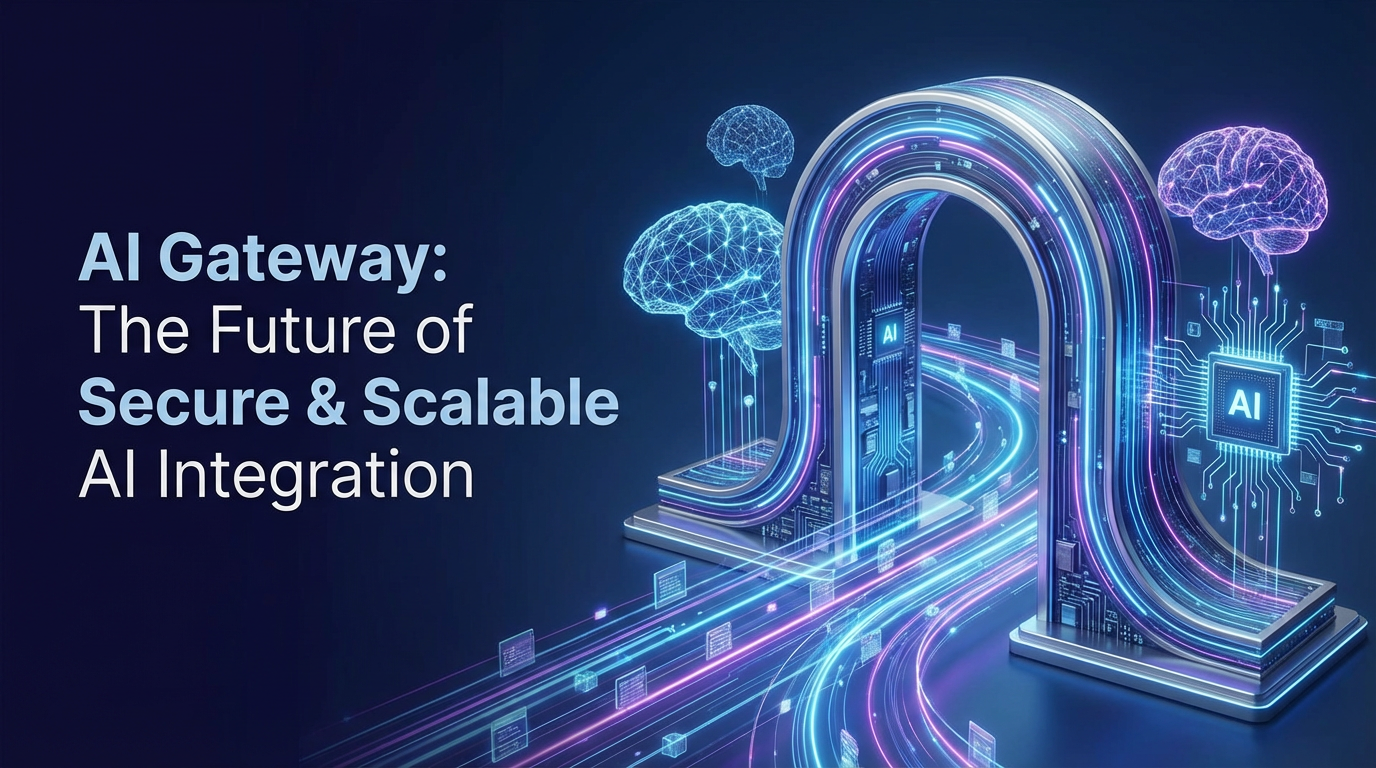


The digital landscape is being irrevocably transformed by the relentless march of Artificial Intelligence. From powering sophisticated recommendation engines that understand our preferences with startling accuracy to facilitating complex scientific research through advanced data analysis, AI is no longer a niche technology but a foundational pillar of modern innovation. Enterprises across every conceivable sector are clamoring to integrate AI capabilities into their products and services, recognizing its immense potential to unlock new efficiencies, create unprecedented value, and foster profound competitive advantages. However, this fervent adoption brings with it a complex tapestry of challenges, particularly when it comes to integrating a diverse and rapidly evolving array of AI models, especially Large Language Models (LLMs), into existing IT infrastructures in a manner that is both secure and scalable. The traditional approaches to API management, while robust for conventional RESTful services, often fall short when confronted with the unique demands of AI, necessitating a more specialized and intelligent solution. This is precisely where the AI Gateway emerges as a critical piece of infrastructure, poised to redefine how organizations harness the power of artificial intelligence.
At its core, an AI Gateway acts as an intelligent intermediary, a sophisticated traffic controller and policy enforcement point specifically designed to manage the ingress and egress of requests to and from AI models. It extends the foundational principles of an API gateway – offering centralized control over authentication, authorization, rate limiting, and observability – but adapts and expands these functionalities to cater to the intricacies of AI. Imagine a world where every new AI model, every nuanced prompt, every specific version, requires its own bespoke integration pathway. Such a fragmented approach would quickly lead to an unmanageable sprawl of code, brittle connections, and security vulnerabilities. The AI Gateway steps into this void, providing a unified, resilient, and intelligent layer that not only streamlines AI integration but also fortifies its security, optimizes its performance, and ensures its long-term scalability. It is not merely an enhancement; it is an essential architectural component for any enterprise serious about building a robust and sustainable AI strategy, making the integration of even the most complex LLMs a manageable and secure endeavor.
The Evolution of API Management and the Rise of AI
To truly appreciate the transformative role of an AI Gateway, it’s essential to first understand the journey of API management and how the advent of AI has reshaped its trajectory. For decades, Application Programming Interfaces (APIs) have been the lifeblood of interconnected systems, enabling disparate software components to communicate and share data seamlessly. As the number of APIs grew exponentially with the rise of microservices architectures and cloud computing, the need for effective API management became paramount.
Traditional API gateways emerged as indispensable tools, solving a multitude of challenges for conventional RESTful APIs. These gateways acted as single entry points for all API calls, centralizing vital functions such as:
- Security: Implementing authentication (e.g., API keys, OAuth tokens) and authorization policies to ensure only legitimate users or applications could access specific resources. They often included capabilities for threat protection, such as preventing SQL injection or DDoS attacks.
- Traffic Management: Handling rate limiting to prevent abuse or service degradation, load balancing requests across multiple backend instances, and throttling to ensure fair resource allocation.
- Routing: Directing incoming requests to the appropriate backend service based on defined rules and pathways.
- Transformation: Modifying request or response payloads to ensure compatibility between different services or to enforce specific data formats.
- Observability: Collecting metrics, logs, and traces to monitor API performance, identify bottlenecks, and troubleshoot issues.
- Caching: Storing frequently accessed data to reduce latency and lighten the load on backend services.
- Versioning: Managing different versions of an API to allow for seamless updates without breaking existing integrations.
These functionalities proved incredibly effective for managing a heterogeneous ecosystem of business logic and data services. However, the paradigm shifted dramatically with the acceleration of the AI revolution. The proliferation of machine learning models, from humble classification algorithms to sophisticated generative AI, introduced a new set of complexities that traditional API gateways were not inherently designed to handle.
The AI landscape today is characterized by:
- Diversity of Models: A vast array of AI models, each with distinct inputs, outputs, computational requirements, and pricing structures. This includes not just LLMs but also vision models, speech-to-text, text-to-speech, recommendation engines, and more.
- Rapid Iteration: AI models are constantly being updated, fine-tuned, and replaced, often at a much faster pace than traditional software services.
- Specialized Payloads: AI requests often involve complex data structures, such as large text prompts, image embeddings, or audio files, which require careful handling and often unique processing.
- Performance Sensitivity: AI inference can be computationally intensive, and latency can significantly impact user experience, particularly for real-time applications.
- Cost Variability: Pricing for AI services, especially LLMs, is often based on usage metrics like token count, requiring granular tracking for cost optimization.
- Ethical and Governance Concerns: AI introduces new dimensions of responsibility, including bias detection, fairness, transparency, and the need for robust data governance around sensitive prompts and generated content.
The gap became glaringly obvious: while a traditional API gateway could technically route a request to an AI service, it lacked the intelligent context and specialized capabilities required to truly manage the AI integration effectively. It couldn't natively understand the nuances of a prompt, abstract away model-specific APIs, or intelligently route based on cost or performance of different AI providers. This fundamental inadequacy paved the way for the conceptualization and necessity of the AI Gateway.
What is an AI Gateway? Defining the Core Concept
An AI Gateway transcends the capabilities of a conventional API gateway by introducing an intelligent, AI-aware layer designed to mediate and orchestrate interactions with artificial intelligence models. It's not just about routing traffic; it's about understanding the specific nature of AI requests, abstracting away their underlying complexities, and applying intelligent policies that are unique to AI workflows. Think of it as a specialized control tower for all your AI traffic, ensuring every interaction is optimized for performance, security, cost, and developer experience.
The core distinction lies in its ability to manage the "AI specifics" that a standard API gateway simply cannot. These include:
- Model Abstraction and Unification: One of the most significant challenges in AI integration is the sheer diversity of AI models and their corresponding APIs. Different providers (OpenAI, Google, Anthropic, Hugging Face, etc.) have distinct API formats, authentication methods, and response structures. An AI Gateway addresses this by providing a unified interface. Developers can interact with a single, standardized API exposed by the gateway, which then translates these requests into the specific format required by the chosen backend AI model. This dramatically simplifies development, reduces integration complexity, and insulates applications from changes in individual AI model APIs. For instance, platforms like ApiPark offer a unified API format for AI invocation, ensuring that changes in underlying AI models or prompts do not affect the application or microservices, thereby simplifying AI usage and maintenance costs. This capability allows quick integration of over 100+ AI models, all managed through a single system for authentication and cost tracking.
- Intelligent Model Routing: Beyond simple URL-based routing, an AI Gateway can make dynamic routing decisions based on various AI-specific criteria. This might include:
- Cost Optimization: Routing a request to the cheapest available model that meets performance requirements.
- Performance (Latency/Throughput): Directing requests to the fastest or least loaded model.
- Feature Set: Selecting a model based on its specific capabilities (e.g., a particular LLM version or a specialized vision model).
- Geographic Proximity/Data Residency: Ensuring data is processed in a specific region for compliance.
- Model Redundancy/Failover: Automatically switching to a backup model if the primary one is unavailable or experiencing issues.
- Prompt Engineering and Management: For generative AI models, particularly LLMs, the quality and structure of the prompt are paramount. An AI Gateway can provide advanced features for managing prompts:
- Prompt Versioning: Tracking changes to prompts, allowing for A/B testing and rollbacks.
- Prompt Templating: Defining reusable prompt templates that can be dynamically filled with user data, ensuring consistency and reducing repetitive code.
- Prompt Encapsulation: Abstracting complex prompts into simple REST API calls, allowing developers to consume AI capabilities like sentiment analysis or summarization without needing deep prompt engineering knowledge. ApiPark facilitates this by allowing users to quickly combine AI models with custom prompts to create new, specialized APIs.
- Guardrails and Moderation: Implementing filters to prevent malicious or inappropriate prompts from reaching the AI model and to filter potentially undesirable AI responses.
- Cost Tracking and Optimization: AI services, especially LLMs, can incur significant costs based on token usage or computational resources. An AI Gateway provides granular visibility into these costs, offering:
- Detailed Usage Metrics: Tracking token counts, request volumes, and computational units per model, per user, or per application.
- Budget Alerts: Notifying administrators when usage approaches predefined thresholds.
- Cost-Aware Routing: As mentioned, intelligent routing can select models based on their real-time cost, helping to optimize expenditure.
- AI-Specific Security: While general API security practices apply, AI introduces unique vectors:
- Data Masking/Redaction: Automatically identifying and obscuring sensitive Personal Identifiable Information (PII) or confidential data within prompts before they reach the AI model, and similarly in responses.
- Prompt Injection Prevention: Guarding against adversarial prompts designed to bypass model safeguards or extract sensitive information.
- Access Control at a Model Level: Defining who can access which specific AI models or even specific functionalities within a model.
In essence, an AI Gateway elevates the management of AI interactions from a mere technical chore to a strategic enabler. It provides the necessary intelligence and controls to integrate AI confidently, securely, and at scale, making it an indispensable component for the future of AI-driven enterprises.
The Specific Challenges of Integrating Large Language Models (LLMs)
Large Language Models (LLMs) represent a significant leap in AI capabilities, capable of generating human-like text, answering complex questions, summarizing documents, translating languages, and much more. Their transformative potential is undeniable, but integrating them into enterprise applications brings forth a distinct set of challenges that underscore the critical need for an LLM Gateway – a specialized form of AI Gateway specifically tailored for these powerful models.
The unique complexities of LLM integration include:
- Diversity of LLM APIs and Ecosystems:
- The LLM landscape is fragmented. Major players like OpenAI (GPT series), Google (PaLM, Gemini), Anthropic (Claude), and various open-source initiatives (Llama, Falcon, Mistral) each offer their own APIs, SDKs, and data formats.
- Integrating directly with each LLM provider means maintaining multiple codebases, handling different authentication mechanisms, and adapting to varying request/response schemas. This creates significant technical debt and vendor lock-in risk. A dedicated LLM Gateway abstracts these differences, presenting a unified interface to application developers, who then don't need to rewrite their code every time a new, better, or cheaper LLM becomes available.
- Prompt Engineering Complexity and Management:
- The "prompt" is the primary input to an LLM, guiding its behavior and dictating the quality of its output. Crafting effective prompts – known as prompt engineering – is a nuanced art and science.
- Prompt Versioning: Prompts evolve. A prompt that works perfectly today might be suboptimal or even counterproductive with a future LLM version. Managing different prompt versions, A/B testing them, and rolling them back is crucial for maintaining application performance and output quality.
- Prompt Templating: Many applications use similar prompt structures with dynamic variables. An LLM Gateway can manage these templates, ensuring consistency and preventing "prompt drift."
- Context Window Management: LLMs have a finite "context window" – the maximum amount of text they can process in a single request. For complex tasks involving long documents or conversational history, intelligent strategies are needed to manage context, summarize previous interactions, or chunk data.
- Prompt Chaining/Orchestration: Advanced LLM applications often involve a sequence of prompts, potentially calling different tools or models. The LLM Gateway can orchestrate these complex workflows.
- Cost Management and Optimization:
- LLMs are typically priced per token (input + output). Costs can escalate rapidly, especially for applications handling large volumes of requests or generating extensive outputs.
- An LLM Gateway provides granular token usage tracking, allowing enterprises to monitor costs in real-time, set budget alerts, and identify usage patterns.
- Cost-aware Routing: The gateway can dynamically choose between LLMs based on their real-time pricing and the specific task requirements, for example, routing a non-critical internal summarization task to a cheaper, slightly less performant open-source model, while directing customer-facing generative tasks to a premium, high-quality commercial model.
- Caching LLM Responses: For prompts that are likely to yield identical or near-identical responses, caching can significantly reduce token usage and cost.
- Security, Data Privacy, and Compliance:
- Sending sensitive user data, proprietary business information, or PII into LLMs raises significant privacy and security concerns.
- Data Redaction/Masking: An LLM Gateway can be configured to automatically detect and redact sensitive information from prompts before they leave the enterprise's control and reach a third-party LLM provider. This is critical for compliance with regulations like GDPR, HIPAA, or CCPA.
- Prompt Injection Attacks: Adversarial users might try to "jailbreak" an LLM by injecting malicious instructions into a prompt, attempting to bypass safety features, extract confidential data, or generate harmful content. The gateway acts as a crucial defensive layer, applying filters and moderation techniques to detect and mitigate such attacks.
- Output Moderation: Similarly, the gateway can analyze LLM responses for harmful, biased, or inappropriate content before it reaches the end-user.
- Access Control: Beyond traditional API keys, an LLM Gateway allows for fine-grained access control, ensuring that only authorized applications or users can invoke specific LLMs or access certain capabilities, and potentially requiring administrator approval for API access, as ApiPark offers.
- Performance and Scalability:
- LLM inference can be resource-intensive and prone to latency variations, especially during peak loads or with very large context windows.
- An LLM Gateway can implement sophisticated load balancing strategies across multiple LLM instances (whether self-hosted or cloud-based), providers, or even different regions to ensure high availability and low latency.
- Rate Limiting: Preventing individual users or applications from overwhelming LLM resources, which is crucial for managing both cost and performance.
- Retries and Fallbacks: Automatically retrying requests that fail or falling back to an alternative LLM if one provider experiences an outage.
Addressing these specific challenges requires more than a generic API gateway. It demands an intelligent, context-aware LLM Gateway that understands the nuances of natural language processing, prompt management, token economics, and the unique security implications of generative AI. By providing this specialized layer of control and optimization, an LLM Gateway transforms the daunting task of integrating LLMs into a streamlined, secure, and cost-effective process, empowering businesses to fully leverage their immense potential.
Key Features and Benefits of a Robust AI Gateway
A truly robust AI Gateway is a multifaceted platform designed to address the entirety of the AI integration lifecycle, from initial development to long-term operational excellence. Its features coalesce to provide unparalleled benefits in terms of security, scalability, performance, cost efficiency, and developer experience.
Unified Access and Abstraction: The Single Pane of Glass for AI
One of the most immediate and impactful benefits of an AI Gateway is its ability to provide a unified access layer to a disparate world of AI models. Without a gateway, developers are forced to contend with a fragmented ecosystem where each AI model or service provider might have its own unique API specifications, data formats, authentication methods, and rate limits. This leads to substantial integration overhead, increased development time, and a fragile architecture prone to breakage with every model update.
An AI Gateway solves this by offering a standardized API endpoint that applications can interact with, regardless of the underlying AI model. This means:
- Simplifying Multi-Model Integration: Instead of writing custom code for OpenAI, Google, Anthropic, or proprietary in-house models, developers interact with a single, consistent API exposed by the gateway. The gateway handles the translation and routing to the correct backend AI service.
- Standardized API Formats for AI Invocation: The gateway can normalize request and response data formats. If one model expects JSON and another requires Protobuf, the gateway transforms the data transparently. This ensures that application logic remains decoupled from specific AI model implementations. As a prime example, ApiPark champions this by standardizing the request data format across all AI models. This crucial feature ensures that any alterations to AI models or prompts will not impact the functionality of the application or microservices that consume these AI capabilities, thereby significantly simplifying AI usage and reducing ongoing maintenance costs.
- Reduced Vendor Lock-in and Increased Agility: By abstracting the AI backend, organizations gain immense flexibility. They can easily swap out one AI model for another (e.g., switching from GPT-3.5 to GPT-4, or an open-source alternative) without requiring significant changes to their downstream applications. This fosters true architectural agility, allowing businesses to adapt quickly to emerging models, optimize for cost, or improve performance without a costly re-platforming effort. This also means applications are less vulnerable to service outages from a single provider, as the gateway can intelligently failover to an alternative.
Enhanced Security and Compliance: Fortifying the AI Perimeter
Security for AI models is paramount, especially when handling sensitive data or operating in regulated industries. An AI Gateway significantly strengthens the security posture of AI integrations, going beyond the capabilities of a traditional API gateway to address AI-specific vulnerabilities.
- Robust Authentication and Authorization: The gateway acts as a central enforcement point for security policies. It can integrate with existing identity providers (e.g., OAuth 2.0, OpenID Connect, JWT) or manage API keys centrally. This ensures that only authenticated and authorized applications or users can invoke AI models. This also extends to granular access control, where different teams or users might have permissions to access specific models or functionalities within models. ApiPark for instance, allows for the activation of subscription approval features, ensuring that callers must subscribe to an API and await administrator approval before they can invoke it, preventing unauthorized API calls and potential data breaches.
- Data Masking and Redaction: A critical feature for privacy and compliance. The gateway can intelligently identify and redact sensitive information (e.g., PII, credit card numbers, confidential business data) from prompts before they are sent to external AI models. This prevents sensitive data from leaving the organization's control, significantly reducing privacy risks and aiding compliance with regulations like GDPR, HIPAA, or CCPA. Similarly, it can scan AI model responses to prevent the accidental leakage of sensitive information.
- Threat Protection and Moderation: Beyond conventional API threat protection (like preventing DDoS or SQL injection), an AI Gateway can implement AI-specific guardrails. This includes detecting and filtering out prompt injection attacks, where malicious users try to manipulate the LLM's behavior or extract confidential data. It can also apply content moderation to both incoming prompts and outgoing AI responses, ensuring that the AI systems are used ethically and do not generate harmful, biased, or inappropriate content.
- Auditing and Compliance Logging: Comprehensive logging of all AI interactions – including prompts, responses (or snippets thereof), user IDs, timestamps, and model invoked – is vital for auditing, troubleshooting, and demonstrating compliance. The gateway provides a centralized, immutable record of these interactions, which is essential for regulated environments.
Advanced Performance and Scalability: Handling the AI Load
AI inference, especially for large models, can be computationally intensive and subject to variable latency. An AI Gateway is engineered to manage these demands, ensuring high performance, availability, and scalability for AI-powered applications.
- Intelligent Load Balancing and Routing: The gateway can distribute AI requests across multiple instances of a model, different model providers, or even different geographic regions. This isn't just round-robin; it can be intelligent, routing based on real-time model availability, latency, cost, or even specific model capabilities. This capability is crucial for maintaining high availability and optimizing resource utilization, especially in a hybrid AI environment (on-premise and cloud models).
- Caching for AI Responses: For idempotent AI requests (e.g., asking for a summary of a static document, or a translation of a fixed phrase), caching the AI model's response can dramatically reduce latency and inference costs. The gateway can store these responses and serve them directly for subsequent identical requests, offloading the backend AI model and speeding up response times.
- Rate Limiting and Throttling: Preventing individual users or applications from overwhelming AI resources is critical for maintaining service quality and managing costs. The gateway can enforce granular rate limits based on tokens, requests per second, or concurrent connections, ensuring fair access and protecting backend AI services.
- High-Throughput Architecture: A well-designed AI Gateway is built for performance. For instance, ApiPark is designed with performance rivaling Nginx, capable of achieving over 20,000 TPS (transactions per second) with just an 8-core CPU and 8GB of memory. Such architectures support cluster deployment to handle even large-scale traffic demands, making them suitable for enterprise-grade AI workloads.
- Retries and Circuit Breaking: The gateway can automatically retry failed AI requests (with exponential backoff) or implement circuit breakers to temporarily isolate problematic AI services, preventing cascading failures and improving overall system resilience.
Cost Management and Optimization: Taming the AI Budget
The operational costs associated with consuming AI models, particularly LLMs, can be substantial and unpredictable if not properly managed. An AI Gateway provides essential tools for gaining visibility into and controlling these expenditures.
- Detailed Usage Tracking: The gateway meticulously tracks AI consumption across various dimensions: per model, per user, per application, per department, or even per API call. This includes metrics like token counts (for LLMs), inference duration, number of requests, and specific features utilized.
- Budgeting and Alerts: Organizations can set budgets for AI usage and configure alerts that trigger when thresholds are approached or exceeded. This proactive monitoring helps prevent unexpected cost overruns.
- Cost-Aware Routing: As discussed, the gateway can dynamically choose the most cost-effective AI model for a given request, balancing price with performance and quality requirements. This could involve routing to a cheaper model during off-peak hours or for non-critical tasks.
- Quota Management: Implementing quotas to limit the number of AI requests or tokens an individual user or application can consume within a given period. This helps distribute resources fairly and manage overall spending.
- Showback/Chargeback: With detailed usage data, enterprises can accurately allocate AI costs back to the specific teams, projects, or business units that consume them, promoting accountability and informed decision-making.
Prompt Engineering and Management: Mastering the Art of Conversation
For generative AI, particularly LLMs, the quality of the output is heavily dependent on the input prompt. An AI Gateway provides dedicated features to manage and optimize this critical aspect.
- Prompt Versioning and A/B Testing: Prompts are living entities. The gateway allows for versioning prompts, enabling developers to test different prompt strategies (A/B testing) to determine which yields the best results without altering application code. This facilitates continuous improvement of AI interactions.
- Prompt Encapsulation into REST API: A powerful feature that allows organizations to "productize" their prompt engineering expertise. Developers can combine specific AI models with finely tuned custom prompts (e.g., "summarize this text in 3 bullet points") and expose this combined functionality as a simple, purpose-built REST API. This abstracts away the complexity of prompt engineering from application developers. ApiPark specifically enables this, allowing users to quickly combine AI models with custom prompts to create new, specialized APIs such as sentiment analysis, translation, or data analysis APIs, making advanced AI capabilities readily consumable.
- Dynamic Prompt Augmentation: The gateway can dynamically inject additional context or instructions into a user's prompt based on user roles, application context, or predefined rules. This ensures consistency and enforces enterprise-wide guidelines for AI interaction.
- Input/Output Transformation: Beyond basic data format changes, the gateway can apply more sophisticated transformations, such as structuring unstructured input for an LLM or extracting specific fields from an LLM's free-form text output.
Observability, Monitoring, and Analytics: Illuminating AI Operations
Understanding how AI models are performing, being used, and contributing value is crucial for ongoing optimization. An AI Gateway serves as a central hub for collecting, aggregating, and analyzing AI interaction data.
- Comprehensive API Call Logging: The gateway records every detail of each AI API call, including the original prompt, the AI model's response, timestamps, user IDs, latency, and any errors encountered. This rich dataset is invaluable for debugging, auditing, and understanding AI behavior. ApiPark emphasizes this with its comprehensive logging capabilities, meticulously recording every detail of each API call, enabling businesses to quickly trace and troubleshoot issues and ensuring system stability and data security.
- Real-time Metrics and Dashboards: Aggregating key performance indicators (KPIs) like request volume, latency, error rates, token usage, and cost into real-time dashboards provides immediate insights into AI system health and performance.
- Anomaly Detection: By analyzing historical patterns, the gateway can detect unusual spikes in errors, latency, or token usage, potentially indicating issues with an AI model, a provider, or an application.
- Powerful Data Analysis for Long-Term Trends: Beyond real-time monitoring, the gateway collects historical call data that can be used for deep analysis. This allows businesses to identify long-term trends in AI usage, performance changes over time, cost fluctuations, and the effectiveness of different prompts or models. ApiPark excels here, analyzing historical call data to display long-term trends and performance changes, empowering businesses with proactive insights for preventive maintenance before issues even manifest. This predictive capability is vital for strategic planning and resource allocation.
- Customizable Alerts: Setting up alerts based on various metrics (e.g., error rate exceeding a threshold, latency increasing, token usage reaching a limit) ensures that operations teams are immediately notified of potential problems.
Developer Experience and Team Collaboration: Fostering AI Innovation
Ultimately, the goal of an AI Gateway is to make AI easier and safer to consume, which directly translates to an improved developer experience and enhanced team collaboration.
- Developer Portals: The gateway can expose a developer portal where teams can discover available AI APIs, access documentation, generate API keys, and monitor their own usage. This self-service approach empowers developers and reduces the burden on central operations teams.
- API Service Sharing within Teams: Centralizing the display and management of all API services, including AI APIs, within the gateway platform makes it incredibly easy for different departments and teams to find, understand, and use the required API services. This breaks down silos and fosters cross-organizational innovation. ApiPark actively facilitates this, allowing for the centralized display of all API services, simplifying discovery and utilization across departments.
- Independent API and Access Permissions for Each Tenant: For larger enterprises or multi-tenant SaaS platforms, the ability to create multiple independent teams (tenants) is crucial. Each tenant can have its own applications, data, user configurations, and security policies, while still sharing the underlying gateway infrastructure. This improves resource utilization, reduces operational costs, and provides necessary isolation. ApiPark offers this capability, enabling the creation of multiple teams (tenants) with independent configurations and security policies while leveraging shared infrastructure.
- End-to-End API Lifecycle Management: The gateway supports the entire lifecycle of APIs, from design and publication to invocation, versioning, and eventual decommission. This structured approach helps regulate API management processes, manage traffic forwarding, load balancing, and ensures that AI APIs are treated with the same rigor as any other critical enterprise service. ApiPark assists with managing this entire lifecycle, ensuring governed processes for design, publication, invocation, and decommissioning, alongside robust traffic and version management.
In summary, a comprehensive AI Gateway is not merely a technical component but a strategic platform that empowers enterprises to confidently navigate the complexities of AI integration. It is the key enabler for building secure, scalable, cost-efficient, and highly performant AI-powered applications, transforming the daunting prospect of managing diverse AI models into a streamlined and optimized operational reality.
Implementing an AI Gateway: Considerations and Best Practices
Deploying an AI Gateway is a strategic decision that requires careful planning and consideration of various factors. The chosen implementation approach will significantly impact security, scalability, cost, and maintainability.
On-Premise vs. Cloud vs. Hybrid Deployment: Balancing Control and Convenience
The choice of deployment model for an AI Gateway is critical and depends heavily on an organization's existing infrastructure, compliance requirements, and operational philosophy.
- On-Premise Deployment:
- Pros: Offers maximum control over data residency, security, and infrastructure. Ideal for organizations with strict compliance requirements, sensitive data, or those operating in highly regulated industries. Can leverage existing hardware investments.
- Cons: Requires significant upfront capital expenditure, ongoing maintenance, and internal expertise for setup, scaling, and patching. Scaling can be less elastic than in the cloud.
- Best For: Enterprises with stringent data sovereignty demands, large existing data centers, or those preferring complete control over their AI infrastructure.
- Example: Running an AI Gateway like ApiPark on private Kubernetes clusters within a corporate data center.
- Cloud Deployment:
- Pros: Offers unparalleled scalability, elasticity, and reduced operational overhead. Pay-as-you-go models can be cost-effective for variable workloads. Access to managed services from cloud providers (AWS API Gateway, Azure API Management, Google Apigee).
- Cons: Potential vendor lock-in, reliance on cloud provider's security and compliance posture (though generally very high), and data egress costs can add up. Data residency might be a concern for some industries.
- Best For: Organizations seeking agility, rapid deployment, and elastic scaling, particularly those already heavily invested in cloud infrastructure.
- Hybrid Deployment:
- Pros: Combines the best of both worlds, offering flexibility to host sensitive AI models or data on-premise while leveraging cloud elasticity for other models or bursting workloads. Can bridge legacy systems with modern cloud AI.
- Cons: Increased architectural complexity, requires robust networking and security between on-premise and cloud environments.
- Best For: Large enterprises with diverse AI portfolios, a mix of legacy and modern applications, or those in transition to a cloud-native strategy. An AI Gateway can serve as the unifying layer across these disparate environments.
Open Source vs. Commercial Solutions: Weighing Flexibility vs. Support
The market offers a range of AI Gateway options, from community-driven open-source projects to feature-rich commercial platforms.
- Open Source Solutions:
- Pros: High degree of flexibility and customization. No licensing fees (though operational costs remain). Community support can be strong. Transparency in code allows for security audits. ApiPark is an excellent example of an open-source AI gateway and API management platform, licensed under Apache 2.0, providing core API resource management for startups.
- Cons: Requires internal expertise for deployment, maintenance, and troubleshooting. May lack professional support, comprehensive documentation, or enterprise-grade features found in commercial offerings.
- Best For: Organizations with strong in-house development and operations teams, those needing deep customization, or startups with budget constraints seeking a solid foundation.
- Commercial Solutions:
- Pros: Professional technical support, comprehensive features (often including advanced analytics, governance, and security modules), polished UIs, and robust documentation. Reduced operational burden due to vendor-managed services. ApiPark also offers a commercial version with advanced features and professional technical support tailored for leading enterprises, demonstrating how open-source projects can evolve to meet broader enterprise needs.
- Cons: Licensing costs can be substantial, potential vendor lock-in, and less flexibility for deep customization.
- Best For: Enterprises prioritizing stability, guaranteed support, rapid time-to-market, and a feature-rich, out-of-the-box solution.
Integration with Existing Infrastructure: A Seamless Fit
An AI Gateway should not operate in isolation; it must seamlessly integrate with an organization's existing IT ecosystem.
- Microservices Architectures: The gateway should be able to route requests to various microservices that might be consuming AI models, acting as a central control plane for all external AI interactions.
- CI/CD Pipelines: Integrating the gateway's configuration and deployment into existing Continuous Integration/Continuous Delivery pipelines ensures that AI API definitions, security policies, and routing rules are managed as code, promoting consistency and reducing manual errors.
- Observability Stacks: The gateway's extensive logging, metrics, and tracing capabilities should feed into existing monitoring tools (e.g., Prometheus, Grafana, ELK stack, Splunk) for a unified view of system health and AI performance.
- Identity and Access Management (IAM): Integration with corporate IAM systems (e.g., Okta, Azure AD, Active Directory) is crucial for consistent authentication and authorization across all AI services.
Phased Rollout: Start Small, Scale Smart
Implementing an AI Gateway should typically follow a phased approach to minimize risk and ensure smooth adoption.
- Pilot Project: Start with a single, non-critical AI application or a specific LLM integration. This allows the team to gain experience with the gateway's features, deployment, and operational aspects.
- Iterative Expansion: Gradually onboard more AI services and applications, progressively moving critical workloads to the gateway.
- Monitor and Optimize: Continuously monitor performance, security logs, and cost metrics. Use this data to fine-tune gateway policies, routing rules, and resource allocation.
- Documentation and Training: Develop comprehensive documentation for developers on how to consume AI APIs through the gateway. Provide training for operations teams on managing and troubleshooting the gateway.
A well-executed implementation of an AI Gateway transforms AI integration from a bespoke, fragile, and often insecure process into a standardized, resilient, and enterprise-grade capability. The ease of deployment, such as ApiPark's quick 5-minute setup with a single command line, demonstrates the commitment of modern gateway solutions to streamline this crucial step, enabling businesses to accelerate their AI journey with confidence.
APIPark is a high-performance AI gateway that allows you to securely access the most comprehensive LLM APIs globally on the APIPark platform, including OpenAI, Anthropic, Mistral, Llama2, Google Gemini, and more.Try APIPark now! 👇👇👇
The Strategic Importance of AI Gateways for Enterprises
In an era where AI is rapidly moving from experimental labs to the core of business operations, the strategic importance of an AI Gateway cannot be overstated. It is far more than just a technical component; it is an architectural linchpin that underpins an enterprise's ability to truly leverage AI at scale, securely, and sustainably.
Accelerating AI Adoption and Time-to-Market
One of the primary strategic advantages of an AI Gateway is its ability to dramatically accelerate the adoption of AI across an organization. By abstracting the complexities of diverse AI models and providing a unified, simplified interface, the gateway significantly lowers the barrier to entry for developers.
- Empowering Developers: Developers no longer need to be AI experts or constantly learn new model-specific APIs. They can focus on building innovative applications, knowing the gateway handles the underlying AI integration complexities. This democratizes AI access and enables a broader range of teams to incorporate AI capabilities into their products.
- Faster Prototyping and Deployment: With standardized access and simplified prompt management, new AI features and applications can be prototyped, tested, and deployed much faster. This agility is critical in a fast-moving AI landscape where speed to market can be a decisive competitive advantage.
- Reusable AI Capabilities: The ability to encapsulate complex prompts and models into simple REST APIs (as offered by ApiPark) means that expertly crafted AI functionalities can be easily shared and reused across different projects and teams, avoiding redundant effort and ensuring consistency.
Minimizing Technical Debt and Ensuring Architectural Resilience
Without an AI Gateway, integrating numerous AI models often leads to a tangled web of point-to-point integrations. Each direct connection creates technical debt, making the system fragile, difficult to maintain, and costly to update.
- Decoupling Applications from AI Backends: The gateway acts as a crucial layer of indirection, decoupling consumer applications from specific AI model implementations. This means changes to an AI model (e.g., an upgrade, deprecation, or a switch to a new provider) do not necessitate changes to every application consuming that model.
- Centralized Control and Management: All AI traffic, security policies, routing rules, and observability are managed from a central location. This significantly reduces operational complexity and the likelihood of configuration drift or security gaps.
- Future-Proofing AI Investments: The rapid evolution of AI means that today's cutting-edge model could be superseded tomorrow. An AI Gateway provides the architectural flexibility to integrate new models and technologies seamlessly, protecting existing AI investments and ensuring the organization can always leverage the best available AI without massive re-engineering efforts.
Enabling Data Governance, Security, and Compliance at Scale
As AI penetrates more sensitive areas of business, robust data governance, stringent security, and verifiable compliance become non-negotiable. The AI Gateway is instrumental in addressing these critical concerns.
- Enforcing Enterprise Security Policies: It provides a central choke point to enforce consistent authentication, authorization, and access control policies across all AI interactions.
- Mitigating AI-Specific Risks: Features like data masking, prompt injection prevention, and output moderation are vital for addressing the unique security and ethical challenges posed by AI, particularly LLMs. This helps prevent data leakage, misuse, and the generation of harmful content.
- Simplified Compliance Audits: With comprehensive logging of all AI calls, an AI Gateway provides an invaluable audit trail. This simplifies the process of demonstrating compliance with industry regulations and internal governance policies, which is increasingly important as AI becomes subject to more regulatory scrutiny.
Optimizing Cost and Resource Utilization
AI inference, especially for proprietary cloud-based LLMs, can be expensive. Effective cost management is a strategic imperative.
- Granular Cost Visibility: The gateway provides the detailed metrics needed to understand exactly where AI costs are being incurred, enabling informed decision-making about resource allocation.
- Intelligent Cost Optimization: Through features like cost-aware routing, caching, and quota management, the gateway directly contributes to reducing operational expenses by intelligently selecting the most cost-effective models and minimizing redundant calls.
- Efficient Resource Allocation: By load balancing across different models and providers, the gateway ensures optimal utilization of both internal and external AI resources, avoiding bottlenecks and maximizing efficiency.
By providing a robust, secure, and intelligent layer for AI integration, the AI Gateway shifts AI adoption from a series of ad-hoc projects to a structured, governed, and scalable enterprise capability. It empowers organizations to confidently experiment with new AI models, integrate them rapidly into their core operations, manage costs effectively, and ensure that their AI strategy is built on a foundation of security and resilience. It is the architectural bridge that connects the vast potential of AI with the practical realities of enterprise deployment, making it an indispensable tool for any forward-thinking business.
Table: Traditional API Gateway vs. AI Gateway
To further illustrate the distinct yet complementary roles of traditional API Gateways and the specialized AI Gateway, let's examine their key differences and overlapping functionalities. This table highlights how the AI Gateway extends and enhances the foundational capabilities of its predecessor to meet the unique demands of modern AI.
| Feature / Aspect | Traditional API Gateway | AI Gateway (including LLM Gateway) |
|---|---|---|
| Primary Focus | Managing RESTful APIs for general microservices. | Managing interactions with AI models (LLMs, vision, speech, etc.). |
| Request Abstraction | Unifies access to backend services via common HTTP API. | Unifies access to diverse AI models with varying APIs/formats. |
| Routing Logic | Based on URL path, headers, basic load balancing. | Intelligent routing based on AI model capabilities, cost, latency, availability, data residency, prompt content. |
| Data Transformation | Basic JSON/XML transformation, header manipulation. | AI-specific transformations: prompt templating, response parsing, context window management, data masking/redaction. |
| Security (General) | Authentication (API keys, OAuth), authorization, threat protection (DDoS, injection). | All traditional security, PLUS AI-specific security: prompt injection prevention, output moderation, PII redaction. |
| Performance Opt. | Rate limiting, caching for static responses, load balancing. | All traditional opt., PLUS AI-specific: caching for idempotent AI calls, cost-aware routing for performance/cost. |
| Observability | Request/response logging, metrics (latency, errors), tracing. | All traditional observability, PLUS AI-specific: token usage tracking, prompt effectiveness, model-specific metrics. |
| Prompt Management | N/A (not applicable to traditional APIs). | Essential: Prompt versioning, templating, encapsulation, moderation, chaining. |
| Cost Management | Basic API usage tracking, rate limits. | Critical: Granular token/inference tracking, budget alerts, cost-aware routing, showback/chargeback. |
| Model Diversity | Manages APIs to various services, not specific models. | Designed for heterogeneous AI models (OpenAI, Google, open-source, custom), abstracting their differences. |
| Vendor Lock-in Reduction | Reduces service-specific API lock-in. | Significantly reduces lock-in to specific AI model providers. |
| AI-Specific Governance | N/A. | Central enforcement of AI ethics, bias monitoring, responsible AI use. |
| Use Cases | Microservice communication, exposing internal services. | AI-powered applications, LLM integration, generative AI, AI assistants. |
This table clearly demonstrates that while an AI Gateway builds upon the robust foundations of an API Gateway, it introduces a layer of intelligence and specialized features absolutely essential for successfully navigating the complexities and harnessing the power of today's rapidly evolving AI landscape. It's not a replacement, but an evolution tailored for the AI era.
Case Studies & Use Cases: AI Gateways in Action
The theoretical benefits of an AI Gateway translate directly into tangible advantages across a multitude of real-world applications. Enterprises adopting this technology are gaining significant competitive edges in various sectors.
1. Enhanced Customer Service & Support
Challenge: Companies want to deploy sophisticated AI chatbots and virtual assistants that can leverage multiple LLMs for different tasks (e.g., one for quick FAQs, another for complex problem-solving, a specialized model for sentiment analysis) without creating a fragmented, high-maintenance backend. AI Gateway Solution: An AI Gateway acts as the central brain for the customer service AI. * Intelligent Routing: It routes incoming customer queries to the most appropriate AI model based on the query's complexity, urgency, or language. For example, a simple "What's my order status?" might go to a cheaper, faster model, while a nuanced complaint is sent to a premium, highly capable LLM. * Prompt Management: Standardized prompt templates ensure consistent brand voice and accurate information retrieval regardless of the underlying LLM. * Cost Optimization: By dynamically selecting models, the gateway ensures that expensive LLMs are only used when truly necessary, keeping operational costs in check. * Security & Compliance: Sensitive customer data (e.g., account numbers, PII) in queries can be automatically redacted before being sent to third-party LLMs, ensuring privacy and compliance with regulations like GDPR. Impact: Customers receive faster, more accurate, and consistent support. The company gains agility in deploying new AI models and ensures data privacy, leading to higher customer satisfaction and reduced support costs.
2. Content Generation & Marketing Automation
Challenge: Marketing teams need to generate vast amounts of personalized content (ad copy, social media posts, blog outlines, email campaigns) using various generative AI models, while maintaining brand consistency, controlling costs, and ensuring content quality. AI Gateway Solution: The AI Gateway becomes the content factory's control panel. * Unified Access to Generative AI: Provides a single API to access a suite of generative models, abstracting away differences between OpenAI, Cohere, or internal fine-tuned models. * Prompt Encapsulation & Templating: Marketers or content strategists can define "content types" (e.g., "Facebook ad for product X," "SEO blog intro on Y") which are then exposed as simple API calls. The gateway encapsulates the complex prompt logic, ensuring consistent style, tone, and keywords for brand consistency. * A/B Testing Prompts: Different prompt strategies for generating headlines can be A/B tested through the gateway to see which yields higher engagement, all while tracking costs and performance. * Output Moderation: The gateway can filter generated content for brand safety, inappropriate language, or factual inaccuracies before it's published. Impact: Content creation becomes faster, more scalable, and consistent. Marketing teams can experiment with AI more effectively, leading to increased content velocity and improved campaign performance while maintaining brand integrity.
3. Data Analysis & Business Intelligence
Challenge: Data analysts and business users want to leverage LLMs for natural language querying of databases, summarizing complex reports, or extracting insights from unstructured text data, but IT needs to ensure secure access to sensitive data and control LLM usage. AI Gateway Solution: The AI Gateway acts as a secure intermediary for AI-driven data interactions. * Secure Data Access: When a user poses a natural language query (e.g., "Show me sales trends for Q3 in Europe"), the gateway can filter or redact sensitive parts of the query, translate it into a safe, parameterized SQL query, or route it to a specialized LLM for SQL generation. It prevents direct access to the database by the LLM. * Context Management: For summarizing large reports, the gateway can intelligently chunk the document, send it to the LLM in manageable segments, and then reassemble the summary. * Usage Tracking & Cost Control: Tracks exactly which LLMs are being used for data analysis, by whom, and at what cost (e.g., token usage for summarization). This allows for internal chargebacks and cost optimization. * Response Validation: The gateway can validate the LLM's generated insights against business rules or known facts before presenting them to the user, ensuring reliability. Impact: Business users can derive insights from data more quickly and intuitively using natural language. IT maintains robust data security, governance, and cost control over powerful AI tools.
4. Personalized Recommendations & User Experience
Challenge: E-commerce platforms or media streaming services want to provide hyper-personalized recommendations, product descriptions, or tailored user journeys using multiple AI models (e.g., a collaborative filtering model, an LLM for descriptive text, a vision model for image tagging). Integrating and managing these diverse models seamlessly and at scale is complex. AI Gateway Solution: The AI Gateway orchestrates the entire personalization stack. * Model Chaining/Orchestration: A user's request for "new sci-fi movies" might first trigger a recommendation engine (via the gateway) to identify relevant titles. The gateway then takes these titles and, for each, sends a request to an LLM (again, via the gateway) to generate a unique, engaging description, and potentially to a vision model to tag related imagery, all before compiling the final personalized display. * Performance Optimization: Caching frequently requested recommendations or descriptions reduces latency. Load balancing ensures that even during peak traffic, users receive fast responses. * Experimentation: The gateway allows A/B testing different recommendation algorithms or LLM prompt strategies for generating descriptions to see which drives higher engagement, seamlessly switching traffic between them. * Tenant Isolation: For multi-brand e-commerce groups, ApiPark's ability to create independent tenants with separate configurations ensures that recommendations and data for one brand remain isolated from others, while sharing underlying infrastructure. Impact: Users receive highly relevant and engaging personalized experiences, driving higher conversion rates and customer loyalty. The platform gains agility in deploying and optimizing advanced AI features.
These use cases vividly demonstrate that the AI Gateway is not a luxury but a strategic necessity for any enterprise looking to harness the full, secure, and scalable potential of artificial intelligence in today's dynamic digital landscape.
The Future Landscape: What's Next for AI Gateways?
The field of AI is characterized by its breathtaking pace of innovation, and the AI Gateway will undoubtedly evolve in lockstep, integrating new capabilities to address emerging challenges and opportunities. The future landscape suggests an even more intelligent, autonomous, and ethically aware gateway.
1. More Intelligent and Adaptive Routing (Semantic Routing)
Current AI Gateways make routing decisions based on predefined rules, cost, or latency. The next generation will incorporate deeper intelligence.
- Semantic Routing: Instead of just looking at metadata, the gateway will analyze the meaning (semantics) of the user's prompt or request. For example, if a user asks a complex coding question, the gateway might route it to a specialized code-generating LLM. If the query is about medical advice, it could be routed to a vetted, domain-specific model or even flagged for human intervention, ensuring the most appropriate and responsible AI is engaged.
- Dynamic Model Composition: The gateway could intelligently break down a complex request into sub-tasks and dynamically compose a pipeline of multiple AI models (e.g., a vision model to extract text, then an LLM to summarize it, then a translation model) to fulfill the request, all orchestrated seamlessly.
- Real-time Contextual Adaption: Routing decisions will adapt not just to static parameters but to real-time contextual cues, such as the user's interaction history, current emotional state (inferred from sentiment analysis), or even the current market conditions.
2. Built-in Guardrails and Proactive Ethical AI Features
As AI becomes more powerful, the need for robust ethical safeguards and guardrails will intensify. Future AI Gateways will embed these directly into their core functionality.
- Proactive Bias Detection and Mitigation: Gateways could analyze prompts and responses for potential biases (gender, race, etc.) and either route to less biased models, apply debiasing filters, or flag the interaction for review.
- Explainable AI (XAI) Integration: For critical applications, the gateway could enforce the inclusion of explainability data from AI models, helping to understand why an AI made a particular decision, fostering transparency and trust.
- Enhanced AI Safety Layers: Beyond basic content moderation, gateways will incorporate advanced techniques for detecting and preventing the generation of harmful, illegal, or unethical content, potentially using secondary "safety" LLMs to review outputs.
- Compliance-as-Code for AI: Policies for data residency, model fairness, and output safety could be defined as code and enforced automatically by the gateway, making compliance more efficient and auditable.
3. Federated AI and Privacy-Preserving AI Integration
The growing concerns around data privacy and the desire to train models on decentralized datasets will drive the AI Gateway towards supporting federated and privacy-preserving AI paradigms.
- Federated Learning Orchestration: The gateway could act as an orchestrator for federated learning workflows, coordinating model updates across decentralized data sources without centralizing the raw data.
- Homomorphic Encryption & Secure Multi-Party Computation (MPC) Integration: While still nascent, future gateways might facilitate interaction with AI models that operate on encrypted data or use MPC techniques, ensuring computations are performed without ever exposing the raw, sensitive information.
- Differential Privacy Enforcement: Gateways could integrate with tools to ensure differential privacy in AI model outputs, adding noise to protect individual data points while still allowing for aggregate insights.
4. Closer Integration with MLOps Pipelines and Lifecycle Management
The distinction between AI development, deployment, and operations will blur further, with the AI Gateway becoming an integral part of the MLOps ecosystem.
- Automated Model Deployment and Versioning: The gateway will seamlessly integrate with MLOps platforms to automatically deploy new model versions, conduct canary releases, and roll back if issues arise, all managed through the gateway's unified interface.
- Feedback Loop for Model Improvement: Data captured by the gateway (e.g., prompt effectiveness, user feedback on AI responses, error rates) will feed directly back into the MLOps pipeline, informing model retraining and improvement cycles.
- A/B Testing AI Pipelines: Beyond individual models, the gateway will enable comprehensive A/B testing of entire AI workflows, allowing organizations to compare different sequences of models, prompt strategies, and post-processing steps.
The AI Gateway is destined to evolve into an even more sophisticated and indispensable component of the modern enterprise AI stack. It will not just manage AI traffic but will actively participate in the intelligence, ethics, and operational efficiency of AI systems, solidifying its role as the central nervous system for secure and scalable AI integration.
Conclusion
The profound impact of Artificial Intelligence on every facet of business and society is undeniable. As enterprises increasingly embed AI, particularly powerful Large Language Models (LLMs), into their core operations, the need for a robust and intelligent integration strategy becomes paramount. The traditional API gateway, while foundational, proves insufficient for the intricate demands of a diverse and rapidly evolving AI landscape. This is precisely why the AI Gateway has emerged not merely as an evolutionary enhancement but as an essential architectural paradigm shift.
An AI Gateway acts as the intelligent conductor for all AI interactions, providing a unified, secure, and highly scalable layer that abstracts away the complexities of disparate AI models. It empowers organizations to confidently navigate challenges ranging from model diversity and prompt management to stringent security, data privacy, and unpredictable costs. By offering features like intelligent model routing, granular cost tracking, comprehensive prompt engineering capabilities (such as ApiPark's ability to encapsulate prompts into simple REST APIs), advanced security guardrails (including data masking and prompt injection prevention), and unparalleled observability, the AI Gateway transforms the daunting task of AI integration into a streamlined, resilient, and optimized process.
Its strategic importance for enterprises cannot be overstated. It accelerates AI adoption by simplifying access for developers, minimizes technical debt by decoupling applications from specific AI backends, and future-proofs AI investments against rapid technological change. Crucially, it provides the central control point necessary to enforce rigorous data governance, ensure AI ethics, and comply with evolving regulatory landscapes, safeguarding sensitive information and building trust. Furthermore, through intelligent optimization strategies, it helps to tame the potentially runaway costs associated with sophisticated AI models, ensuring that AI initiatives remain financially viable and sustainable.
As AI continues its relentless march of progress, expanding into new frontiers and growing in complexity, the AI Gateway will remain at the forefront, adapting and evolving to meet these new challenges. It is the indispensable bridge connecting the vast, transformative potential of AI with the practical realities of enterprise-grade deployment. For any organization committed to building a secure, scalable, and efficient AI future, investing in a comprehensive AI Gateway solution is not just an option; it is an absolute necessity.
Frequently Asked Questions (FAQ)
1. What is an AI Gateway and how is it different from a traditional API Gateway?
An AI Gateway is an intelligent intermediary specifically designed to manage interactions with Artificial Intelligence models, including Large Language Models (LLMs), vision models, etc. While it builds upon the core functionalities of a traditional API Gateway (like authentication, rate limiting, routing), it extends these with AI-specific capabilities. These include unified access to diverse AI models (abstracting their unique APIs), intelligent routing based on model performance or cost, prompt engineering and management, AI-specific security features (e.g., data masking, prompt injection prevention), and granular cost tracking for token usage. Essentially, a traditional API Gateway manages general API traffic, while an AI Gateway understands and optimizes for the unique nuances of AI service consumption.
2. Why do I need an AI Gateway if I'm only using one or two LLMs?
Even with a small number of LLMs, an AI Gateway offers significant benefits. It provides a crucial abstraction layer, meaning your applications are decoupled from the specific LLM provider's API. This protects you from vendor lock-in and makes it easy to switch models or add new ones without rewriting application code. It also centralizes prompt management, allowing for versioning and easy updates, and offers granular cost tracking to prevent unexpected expenses. Furthermore, even a single LLM benefits from enhanced security features like data redaction for sensitive inputs and robust monitoring capabilities that an AI Gateway provides.
3. How does an AI Gateway help with managing costs for LLMs?
AI Gateways are critical for LLM cost management by providing detailed token usage tracking per model, user, and application. They enable "cost-aware routing," allowing you to dynamically route requests to the most cost-effective LLM based on task criticality or real-time pricing. The gateway can also implement caching for idempotent AI requests, significantly reducing the number of costly LLM inferences. Additionally, features like rate limiting and quota management prevent excessive usage, while budgeting alerts notify you of approaching spending limits, giving you proactive control over your AI expenses.
4. What security benefits does an AI Gateway offer for AI integration?
An AI Gateway provides multi-layered security specific to AI workflows. It enforces centralized authentication and authorization, ensuring only legitimate users and applications access your AI models. Crucially, it can perform data masking and redaction on prompts, removing sensitive PII or confidential information before it leaves your network and reaches external AI providers, enhancing privacy and compliance. It also acts as a defense against AI-specific threats like prompt injection attacks, where malicious inputs attempt to bypass model safeguards, and can implement output moderation to prevent the generation of harmful or inappropriate content.
5. Can an AI Gateway help with developer experience and team collaboration?
Absolutely. A well-implemented AI Gateway significantly enhances the developer experience by providing a unified, standardized API to access all AI models, abstracting away their complexities. This reduces development time and learning curves. Features like prompt encapsulation (e.g., turning complex AI logic into simple REST APIs, as seen with ApiPark) make AI capabilities easily consumable. For teams, it offers a centralized developer portal for API discovery, documentation, and key management. Platforms supporting independent tenants (like APIPark) allow different teams to manage their own AI integrations, data, and security policies while sharing a common, efficient infrastructure, fostering collaboration and internal AI service sharing.
🚀You can securely and efficiently call the OpenAI API on APIPark in just two steps:
Step 1: Deploy the APIPark AI gateway in 5 minutes.
APIPark is developed based on Golang, offering strong product performance and low development and maintenance costs. You can deploy APIPark with a single command line.
curl -sSO https://download.apipark.com/install/quick-start.sh; bash quick-start.sh

In my experience, you can see the successful deployment interface within 5 to 10 minutes. Then, you can log in to APIPark using your account.

Step 2: Call the OpenAI API.