AI Gateways: Optimize Your AI Infrastructure
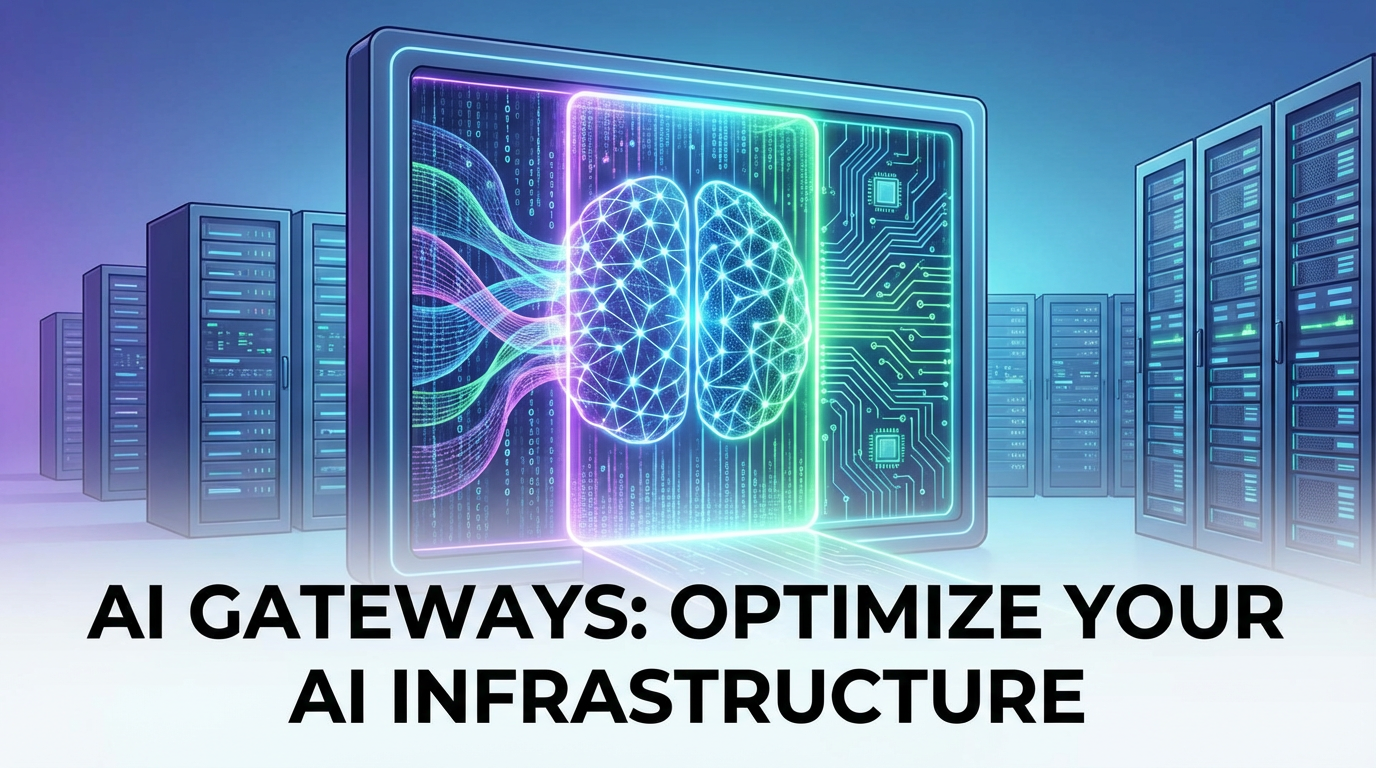


The era of artificial intelligence has ushered in a transformative wave across industries, fundamentally altering how businesses operate, innovate, and interact with the world. From automating complex processes to powering intelligent customer interactions and deriving unprecedented insights from vast datasets, AI models, especially Large Language Models (LLMs), are at the heart of this revolution. However, the sheer proliferation of AI models, the diversity of their underlying technologies, and the myriad of deployment environments present significant operational challenges. Organizations are grappling with managing these intricate AI infrastructures, ensuring their security, optimizing performance, controlling costs, and maintaining agility in a rapidly evolving landscape. This complexity often hinders the very innovation AI promises, turning a powerful asset into a potential liability if not managed effectively.
Amidst this burgeoning complexity, a critical architectural component has emerged as the linchpin for robust, scalable, and secure AI deployments: the AI Gateway. Positioned as an intelligent intermediary between AI consumers (applications, microservices, end-users) and the diverse array of AI models, an AI Gateway abstracts away the underlying intricacies, offering a unified, controlled, and optimized access point. This specialized gateway not only streamlines the invocation of AI services but also embeds crucial functionalities for security, performance, cost management, and operational oversight. For organizations navigating the multi-model, multi-cloud reality of modern AI, understanding and implementing an AI Gateway is no longer a luxury but a strategic imperative. It's the essential layer that transforms a fragmented collection of AI services into a cohesive, manageable, and highly performant AI infrastructure, paving the way for sustained innovation and competitive advantage.
The Evolving Landscape of AI Infrastructure: A Tangle of Innovation and Complexity
The journey of AI from academic labs to enterprise production environments has been marked by relentless innovation, bringing forth an astonishing array of models capable of tasks once considered purely human domains. Initially, the landscape was dominated by traditional machine learning models focused on specific predictive tasks like fraud detection or recommendation systems. These models, while powerful, often operated in isolated silos, managed by specialized data science teams. Deployment typically involved bespoke integrations, point-to-point connections, and manual oversight, a system that, while functional for a limited number of models, quickly became untenable as AI adoption grew.
The advent of deep learning architectures, particularly neural networks, dramatically expanded the scope of AI applications. Computer vision models revolutionized image and video analysis, speech recognition systems transformed human-computer interaction, and natural language processing (NLP) capabilities began to unlock the value embedded in unstructured text. Each of these advancements introduced new frameworks, specialized hardware requirements, and unique API interfaces, further diversifying the AI infrastructure. Enterprises found themselves managing a heterogeneous mix of models—some hosted on cloud platforms, others deployed on-premises, and an increasing number pushed to the edge for real-time inference. This scattered deployment strategy led to a fragmented architectural landscape, making consistent management, security enforcement, and performance optimization an increasingly arduous task.
However, the most significant shift in recent years has been the explosion of Large Language Models (LLMs). Models like OpenAI's GPT series, Anthropic's Claude, Google's Bard (now Gemini), and open-source alternatives have captivated the world with their unprecedented generative capabilities, understanding, and reasoning. These foundational models, often accessible via sophisticated APIs, offer immense potential but also introduce a new layer of complexity. Organizations are not just using one LLM; they are experimenting with multiple providers, fine-tuning custom models, and even running open-source LLMs on their own infrastructure. Each LLM comes with its own API contract, pricing structure, rate limits, and deployment nuances. Furthermore, the sensitive nature of data processed by LLMs, coupled with the potential for prompt injection attacks and hallucination, amplifies the need for robust governance and control.
The current state of AI infrastructure is therefore characterized by:
- Model Proliferation: A rapidly expanding number of AI models, spanning various types (traditional ML, deep learning, LLMs, vision, speech) and capabilities.
- Provider Diversity: Reliance on multiple AI service providers (OpenAI, Google Cloud AI, AWS SageMaker, Azure AI, Hugging Face, custom internal models), each with distinct APIs and operational models.
- Deployment Heterogeneity: Models deployed across diverse environments, including public clouds, private clouds, on-premises data centers, and edge devices, leading to inconsistent management paradigms.
- Versioning Chaos: Constant updates and new versions of AI models, requiring applications to adapt or risking incompatibility.
- API Inconsistency: Varied API specifications, authentication methods, and data formats across different models and providers, complicating integration efforts.
- Escalating Costs: Unpredictable and often high costs associated with model inference, especially for LLMs, requiring meticulous tracking and optimization.
- Security Gaps: Challenges in implementing consistent security policies, access controls, and data privacy measures across a fragmented AI landscape.
- Performance Bottlenecks: Difficulty in optimizing latency, throughput, and reliability when dealing with diverse, distributed AI services.
- Lack of Observability: Limited centralized visibility into AI model usage, performance, errors, and resource consumption, hindering effective troubleshooting and strategic decision-making.
- Developer Friction: Developers spending excessive time on integrating and managing AI services rather than focusing on building innovative applications.
In this intricate and ever-changing environment, traditional API gateways, while effective for standard RESTful services, often fall short. They lack the inherent understanding of AI model specifics, prompt engineering requirements, token counting, and the dynamic routing needed for optimal AI usage. This gap necessitates a more specialized solution—a dedicated AI Gateway—designed from the ground up to address the unique demands of modern AI infrastructure. Without such a centralized, intelligent orchestration layer, enterprises risk spiraling costs, security vulnerabilities, performance degradation, and ultimately, a significant impediment to realizing the full potential of their AI investments.
What is an AI Gateway? Definition and Core Principles
At its core, an AI Gateway is an architectural component that acts as a single, intelligent entry point for all interactions with an organization's AI models. It sits strategically between the client applications or services that consume AI capabilities and the diverse backend AI models themselves, regardless of where they are hosted or which provider they come from. Conceptually, it extends the well-understood principles of an API Gateway, but with a critical layer of AI-specific intelligence and functionality tailored to the unique demands of machine learning and large language models.
Unlike a generic API Gateway that primarily focuses on routing, authentication, and basic traffic management for traditional REST APIs, an AI Gateway possesses a deep understanding of AI workloads. It knows about different model types, their specific input/output formats, token limitations, contextual nuances, and the varying costs associated with their invocation. This specialized awareness allows it to perform sophisticated operations that are crucial for managing complex AI landscapes.
The term LLM Gateway or LLM Proxy is often used interchangeably or as a specific subset of an AI Gateway, particularly when the focus is on managing Large Language Models. An LLM Gateway specifically handles the complexities associated with LLMs: standardizing interfaces for models from different providers (OpenAI, Anthropic, Google, custom open-source models), managing token usage, applying prompt engineering best practices, and implementing robust guardrails against common LLM vulnerabilities. An LLM Proxy similarly denotes an intermediary that facilitates and enhances interaction with LLMs, often emphasizing features like caching, rate limiting, and request transformation specifically for these models. While distinct in their primary focus, both LLM Gateways and LLM Proxies embody the core principles of a broader AI Gateway, serving as specialized traffic controllers and intelligence layers for language-based AI services.
The core principles underpinning an effective AI Gateway include:
- Abstraction and Unification: The gateway abstracts away the complexities of disparate AI models, providers, and APIs. It provides a single, standardized interface for client applications, allowing them to invoke AI services without needing to know the specific endpoint, authentication method, or data format of the underlying model. This unification significantly simplifies development and reduces coupling between applications and AI backends.
- Intelligent Routing and Orchestration: Beyond simple path-based routing, an AI Gateway employs intelligence to direct requests to the most appropriate AI model. This routing can be based on various criteria: the nature of the request, specified model preferences, cost-efficiency, current model load, performance metrics, or even A/B testing configurations. It can also orchestrate multi-model workflows, chaining calls to different AI services to fulfill complex requests.
- Security and Governance Enforcement: All AI traffic flows through the gateway, providing a centralized choke point for enforcing robust security policies. This includes granular authentication and authorization, rate limiting to prevent abuse, data masking or redaction for privacy, and detecting malicious inputs like prompt injection attempts. It serves as a compliance checkpoint, ensuring AI interactions adhere to regulatory requirements.
- Performance Optimization: The gateway actively works to improve the responsiveness and efficiency of AI services. This can involve intelligent caching of frequently requested AI responses, load balancing requests across multiple model instances or providers, request/response payload optimization, and implementing circuit breakers for resilience against model failures.
- Observability and Cost Management: By centralizing all AI traffic, the gateway becomes a rich source of operational data. It logs detailed request/response information, tracks token usage (critical for LLMs), monitors latency and error rates, and provides granular insights into resource consumption. This data is invaluable for performance tuning, troubleshooting, cost attribution, and identifying opportunities for optimization.
- Prompt Management and Enhancement: For LLMs, the gateway can manage prompts centrally, allowing for versioning, testing, and A/B experimentation. It can also apply pre-processing logic to prompts (e.g., adding context, sanitizing inputs) and post-processing logic to model responses (e.g., filtering, formatting, applying guardrails).
In essence, an AI Gateway elevates AI infrastructure management from a collection of point solutions to a holistic, intelligently governed ecosystem. It decouples the consuming applications from the underlying AI complexity, providing a layer of stability, security, and optimization that is indispensable for scaling AI capabilities across an enterprise.
Key Features and Capabilities of AI Gateways
To truly optimize AI infrastructure, an AI Gateway must go beyond basic proxying and incorporate a rich set of features designed specifically for the unique demands of AI workloads. These capabilities span security, performance, cost control, development experience, and operational intelligence, making the gateway an indispensable component in any modern AI stack.
Unified Access & Abstraction
One of the most immediate benefits of an AI Gateway is its ability to provide a single, consistent interface for interacting with a diverse range of AI models. Imagine a scenario where an application needs to use an LLM from OpenAI for creative writing, a vision model from Google Cloud for image tagging, and a custom-trained machine learning model for anomaly detection. Without an AI Gateway, the application would need to integrate with three distinct APIs, each with its own authentication method, data formats, and error handling mechanisms. This creates significant integration overhead, increases development time, and makes the application brittle to changes in any of the underlying AI services.
An AI Gateway solves this by abstracting away these differences. It presents a standardized API endpoint to the client application, irrespective of the underlying AI model's provider or type. This means developers can write code once to interact with the gateway, and the gateway handles the translation and routing to the appropriate backend AI service. This includes support for:
- Standardized API for Diverse AI Models: Whether it's a traditional machine learning model, a deep learning service for computer vision, or a sophisticated LLM Gateway that unifies access to multiple LLM providers (e.g., OpenAI, Anthropic, Google Gemini), the gateway ensures a consistent interaction pattern. This significantly reduces the learning curve for developers and accelerates feature development.
- Abstracting Underlying Model Specifics: The gateway can manage various versions of a model, different deployment regions, or even completely different models that perform similar functions. If an organization decides to switch from one LLM provider to another, or update to a newer version of a vision model, the change can be handled within the gateway without requiring modifications to the consuming applications.
- Simplifying Development: By providing a unified endpoint, developers are freed from the burden of managing multiple SDKs, API keys for different providers, and disparate data formats. They interact with a single, well-documented API, allowing them to focus on building innovative features on top of AI rather than grappling with infrastructure plumbing. This simplification is particularly impactful for rapidly iterating on AI-powered applications.
Security and Access Control
Security is paramount when dealing with sensitive data and powerful AI models. An AI Gateway serves as a critical enforcement point for a robust security posture, centralizing controls that would otherwise be fragmented across various AI services.
- Authentication and Authorization: The gateway can implement strong authentication mechanisms (e.g., API keys, OAuth 2.0, JWT tokens) to verify the identity of calling applications and users. Following authentication, it applies fine-grained authorization policies (Role-Based Access Control – RBAC) to determine which AI models or specific operations a user or application is permitted to access. For instance, a finance application might only be authorized to use a specific LLM for financial analysis, while a marketing tool has access to a generative image model.
- Rate Limiting and Throttling: To prevent abuse, manage costs, and ensure fair usage, the gateway can enforce rate limits on API calls. This prevents single applications or users from overwhelming AI services, protecting against denial-of-service attacks and unexpected billing spikes. Throttling can also be dynamic, adjusting limits based on current system load or predefined quotas.
- IP Whitelisting/Blacklisting: For enhanced network security, the gateway can restrict access to AI services based on source IP addresses, allowing calls only from trusted networks or blocking requests from known malicious sources.
- Data Privacy and Compliance: Many AI applications process sensitive or regulated data. An AI Gateway can implement data masking, redaction, or tokenization rules on incoming requests or outgoing responses to ensure personally identifiable information (PII) or other sensitive data does not reach the AI model or is not exposed inadvertently. This is crucial for compliance with regulations like GDPR, CCPA, or HIPAA.
- Threat Detection and Prevention: Advanced gateways can incorporate logic to detect and mitigate AI-specific threats, such as prompt injection attacks on LLMs. They can identify patterns in input that suggest malicious intent and either block the request or sanitize the prompt before it reaches the model.
Performance Optimization
Latency and throughput are critical for responsive AI-powered applications. An AI Gateway actively optimizes the performance of AI invocations through several mechanisms.
- Load Balancing: When multiple instances of an AI model are available, or when an organization utilizes several providers for a similar capability (e.g., multiple LLM Proxy instances), the gateway can intelligently distribute incoming requests to prevent any single instance from becoming a bottleneck. This can be based on simple round-robin, least connections, or more sophisticated algorithms considering response times and error rates.
- Caching AI Responses: For idempotent AI queries or frequently requested inferences, the gateway can cache responses. Subsequent identical requests can be served directly from the cache, significantly reducing latency and often reducing the cost associated with repeated model inferences. This is particularly effective for static content generation or classification tasks where the output is deterministic for a given input.
- Request/Response Transformation: The gateway can optimize payload sizes by compressing data, filtering unnecessary fields, or transforming data formats to be more efficient for the backend AI model or the client application. This reduces network overhead and processing time.
- Asynchronous Processing and Queuing: For long-running AI tasks, the gateway can decouple the request from the response by queuing requests and providing a callback mechanism or polling endpoint for results. This improves the responsiveness of client applications and allows the AI backend to process requests at its own pace.
- Circuit Breakers: To enhance resilience, a circuit breaker pattern can be implemented. If an AI model or service repeatedly fails, the gateway can temporarily "open" the circuit, preventing further requests from being sent to that failing service. This allows the service to recover without being overwhelmed by a flood of new requests, while the gateway can failover to an alternative model or return an appropriate error.
Monitoring, Logging, and Analytics
Visibility into AI operations is essential for troubleshooting, performance tuning, and strategic planning. An AI Gateway acts as a centralized observatory for all AI traffic.
- Detailed Call Logs: Every interaction passing through the gateway can be meticulously logged, including the request payload, response data, headers, timestamps, latency, and any errors. This comprehensive logging is invaluable for debugging issues, auditing AI usage, and meeting compliance requirements.
- Usage Metrics and Token Tracking: The gateway can track key metrics such as the number of API calls, the volume of data processed, and, crucially for LLMs, the number of input and output tokens consumed. This data provides granular insights into AI model utilization patterns, which is critical for cost attribution and optimization.
- Error Tracking and Alerting: The gateway can detect and log errors originating from AI models or its own processing. Configurable alerts can be set up to notify operations teams of specific error thresholds or patterns, enabling proactive incident response.
- Dashboards for Real-time Insights: Many AI Gateways provide integrated dashboards that visualize real-time and historical data. These dashboards offer a bird's-eye view of AI infrastructure health, showing traffic volumes, latency distributions, error rates, and cost breakdowns.
- Performance Analysis: By correlating call logs and metrics, the gateway facilitates in-depth performance analysis, helping identify bottlenecks, understand load patterns, and optimize resource allocation for AI services.
- Cost Analysis and Optimization: With precise token and usage tracking, the gateway empowers organizations to analyze costs across different models, applications, and users. This data is fundamental for negotiating better rates with AI providers, enforcing budgets, and identifying underutilized resources.
Cost Management and Optimization
Controlling the often-significant costs associated with AI model inference, particularly for LLMs, is a major challenge. An AI Gateway provides powerful tools for granular cost visibility and proactive optimization.
- Visibility into Usage: By tracking every call and token, the gateway offers unparalleled transparency into AI usage broken down by application, team, user, and specific model. This detailed attribution is essential for chargebacks and informed budgeting.
- Policy-Based Routing to Optimize Cost: The gateway can implement intelligent routing policies that prioritize cost-efficiency. For example, it might route requests to a cheaper, smaller model for less critical tasks, while reserving more expensive, higher-performing models for premium applications. It can dynamically switch between providers based on real-time pricing or available credits.
- Budget Enforcement and Alerts: Organizations can set spending limits for specific applications or teams within the gateway. When these budgets are approached or exceeded, the gateway can trigger alerts, apply rate limits, or even temporarily block access to prevent runaway costs.
- Tiered Access and Billing Models: For organizations offering AI services to internal or external customers, the gateway can enforce tiered access, where different service levels correspond to different pricing models, rate limits, or access to specific AI models.
Prompt Management and Engineering
The effectiveness of LLMs heavily depends on well-crafted prompts. An LLM Gateway specifically offers features to manage and enhance this critical aspect.
- Storing, Versioning, and Testing Prompts: The gateway can act as a central repository for prompts, allowing teams to store, version, and manage them like any other code artifact. This ensures consistency and facilitates collaborative prompt engineering. It also enables A/B testing different prompt variations to identify the most effective ones for specific tasks.
- Prompt Templating and Injection: Instead of hardcoding prompts in applications, developers can define prompt templates within the gateway. The gateway can then dynamically inject variables or context into these templates based on incoming request data, ensuring standardized and robust prompt construction.
- Guardrails for Prompt Injection Attacks: A critical security feature for LLMs, the gateway can analyze incoming user-generated content for potential prompt injection attempts (e.g., malicious instructions hidden within user input). It can then sanitize or reject these inputs before they reach the LLM, protecting against unintended model behavior or data exfiltration.
- Pre- and Post-processing of Prompts/Responses: The gateway can apply custom logic before sending a prompt to an LLM (e.g., adding system instructions, formatting input data) and after receiving a response (e.g., filtering sensitive information, reformatting output, checking for hallucinations or unsafe content).
Model Routing and Orchestration
Beyond simple traffic forwarding, an AI Gateway can make intelligent, dynamic decisions about which AI model should handle a given request.
- Intelligent Routing based on Criteria: Requests can be routed based on a multitude of factors:
- Cost: Directing requests to the cheapest available model that meets quality requirements.
- Latency: Sending requests to the fastest responding model instance or provider.
- Accuracy: Prioritizing models known to be more accurate for specific tasks.
- User/Application: Routing specific users or applications to designated models.
- Task Type: Automatically selecting a vision model for image input and an LLM for text input.
- Failover Strategies: If a primary AI model or provider becomes unavailable or experiences high error rates, the gateway can automatically detect the issue and failover to a redundant model or an alternative provider, ensuring high availability and resilience.
- Chaining Multiple AI Models for Complex Workflows: For multi-step AI tasks, the gateway can orchestrate a sequence of calls to different models. For example, a request might first go to a speech-to-text model, then the resulting text to an LLM Proxy for summarization, and finally the summary to a translation model.
- Conditional Routing: The gateway can evaluate characteristics of the incoming request (e.g., input language, data sensitivity, user tier) and route it to a specific model or model variant optimized for that condition.
API Lifecycle Management
Just like any other enterprise API, AI services require robust lifecycle management. An AI Gateway can often provide or integrate with functionalities that support this.
- Design, Publication, Versioning, Deprecation: The gateway can facilitate the definition of API contracts for AI services, their publication to a developer portal, the management of different API versions, and the graceful deprecation of older versions.
- Developer Portal Functionality: Many comprehensive AI Gateways offer a self-service developer portal where internal or external developers can discover available AI services, view documentation, generate API keys, and test integrations.
- Documentation Generation: The gateway can often automatically generate API documentation (e.g., OpenAPI/Swagger specifications) from the defined AI service contracts, ensuring that documentation is always up-to-date.
- Testing and Deployment Workflows: Integration with CI/CD pipelines allows for automated testing and deployment of AI gateway configurations, ensuring consistency and reliability across environments.
Scalability and Resilience
The ability to handle fluctuating loads and recover gracefully from failures is paramount for production AI systems.
- Horizontal Scaling of the Gateway: The AI Gateway itself must be designed to scale horizontally, deploying multiple instances to handle increasing traffic volumes without becoming a bottleneck. This often involves stateless design and cloud-native deployment patterns.
- Automatic Failover and Disaster Recovery: Beyond failing over individual AI models, the gateway infrastructure itself should be resilient, with mechanisms for automatic failover and disaster recovery across different availability zones or regions.
- Service Mesh Integration: For microservices architectures, the AI Gateway can integrate with a service mesh (e.g., Istio, Linkerd) to leverage its advanced traffic management, observability, and security features at a lower level of the network stack.
To illustrate the comprehensive capabilities, consider the following table summarizing key features:
| Feature Category | Specific Capability | Description | Example Benefit |
|---|---|---|---|
| Unified Access | Standardized API Interface | Provides a consistent API for diverse AI models (LLMs, vision, speech) from multiple providers, abstracting underlying differences. | Developers integrate AI services faster; applications are decoupled from specific AI vendors/models. |
| Model Versioning & Abstraction | Manages different versions of AI models, allowing seamless updates or rollbacks without impacting consuming applications. | Enables continuous AI model improvement; minimizes application re-writes when models change. | |
| Security | Authentication & Authorization | Enforces granular access controls (API keys, OAuth, RBAC) to verify users/applications and limit access to specific AI services/operations. | Prevents unauthorized access; ensures only permitted entities can invoke AI models. |
| Rate Limiting & Throttling | Controls the number of requests an application or user can make within a given timeframe to prevent abuse, manage load, and control costs. | Protects AI backend from overload; prevents unexpected billing surges. | |
| Data Privacy (Masking/Redaction) | Automatically identifies and masks or redacts sensitive data (PII) in requests/responses to comply with privacy regulations. | Ensures regulatory compliance (GDPR, HIPAA); minimizes exposure of sensitive information to AI models. | |
| Prompt Injection Guardrails (for LLM Gateways) | Analyzes and sanitizes user input to prevent malicious prompt injection attacks against Large Language Models. | Protects LLMs from being manipulated to generate harmful content or expose sensitive data. | |
| Performance | Intelligent Load Balancing | Distributes incoming requests across multiple instances of an AI model or different providers based on various criteria (load, latency, cost). | Improves availability and responsiveness; optimizes resource utilization across AI models. |
| Response Caching | Stores frequently requested AI model responses, serving subsequent identical requests directly from the cache to reduce latency and inference costs. | Significantly speeds up responses for common queries; reduces operational costs for repeated inferences. | |
| Request/Response Transformation | Modifies payloads (e.g., compression, filtering, format conversion) to optimize data transfer and processing efficiency for both the client and AI model. | Reduces network bandwidth; enhances overall system efficiency. | |
| Cost Management | Usage & Token Tracking | Provides detailed metrics on AI model invocations, data volume, and token consumption (for LLMs) for granular cost attribution. | Enables precise cost analysis per application/user; facilitates chargebacks. |
| Policy-Based Cost Optimization | Routes requests to the most cost-effective AI model or provider based on predefined policies, considering accuracy vs. price trade-offs. | Actively reduces AI inference costs; allows dynamic switching based on pricing. | |
| Observability | Comprehensive Logging | Records detailed information about every API call (request, response, latency, errors) for debugging, auditing, and compliance. | Simplifies troubleshooting; provides an auditable trail of AI interactions. |
| Real-time Monitoring & Analytics | Offers dashboards and alerts for key metrics like traffic volume, error rates, latency, and resource utilization across the entire AI infrastructure. | Provides immediate insights into AI service health; enables proactive problem-solving. | |
| Prompt Engineering | Centralized Prompt Management | Stores, versions, and manages LLM prompts centrally, supporting templating and A/B testing of different prompt strategies. | Ensures consistent prompt usage; allows for iterative improvement of LLM performance. |
| Model Orchestration | Intelligent Routing Logic | Routes requests based on dynamic criteria like input type, user profile, model performance, or cost, even chaining multiple models for complex tasks. | Maximizes model utility; enables complex AI workflows with minimal application logic. |
| Failover & Redundancy | Automatically switches to alternative AI models or providers if a primary service fails or performs poorly, ensuring high availability. | Guarantees continuous operation of AI-powered applications. | |
| Lifecycle Management | Developer Portal | Offers a self-service portal for developers to discover, subscribe to, and manage access to AI services, along with documentation. | Accelerates developer onboarding; streamlines API consumption. |
These extensive features underscore how an AI Gateway (including specific implementations like an LLM Gateway or LLM Proxy) is far more than a simple passthrough. It is an intelligent, strategic layer essential for taming the complexity of modern AI infrastructure and unlocking its full potential securely, efficiently, and cost-effectively.
The Strategic Advantage of Adopting an AI Gateway
The decision to implement an AI Gateway is not merely a technical one; it's a strategic move that delivers profound advantages across an organization. By centralizing the management, security, and optimization of AI interactions, businesses can significantly enhance their operational efficiency, reduce risks, and accelerate their journey towards becoming truly AI-driven. The benefits extend from the technical team building AI applications to the leadership making strategic investments.
Accelerated Development and Innovation
Without an AI Gateway, developers often spend a disproportionate amount of time on boilerplate tasks: integrating with disparate AI service APIs, handling different authentication schemes, managing multiple SDKs, and constantly adapting to model version changes. This "plumbing" diverts valuable engineering effort away from core application logic and innovation.
An AI Gateway dramatically streamlines this process. By providing a unified, consistent API endpoint for all AI services—whether they are diverse traditional ML models or a sophisticated LLM Gateway abstracting multiple foundational models—developers interact with a single interface. This standardization reduces complexity, accelerates the learning curve, and allows developers to focus their creative energy on building innovative features that leverage AI, rather than wrestling with infrastructure nuances. Rapid prototyping, A/B testing of AI models and prompts, and faster time-to-market for AI-powered applications become the norm, giving businesses a significant competitive edge. This shift means more features delivered faster, directly translating to enhanced user experiences and new revenue opportunities.
Enhanced Security Posture
AI models, especially those processing sensitive data or interacting directly with users, represent a significant attack surface. A fragmented AI infrastructure, where security controls are implemented inconsistently across various models and providers, creates numerous vulnerabilities.
An AI Gateway establishes a centralized security enforcement point. All traffic to and from AI models flows through it, enabling the uniform application of robust security policies. This includes: * Centralized Authentication and Authorization: Ensuring only legitimate applications and users can access AI services, with fine-grained control over what they can do. * Data Protection: Implementing data masking, redaction, or encryption to protect sensitive information from reaching AI models or being exposed in responses, crucial for compliance with privacy regulations. * Threat Mitigation: Actively detecting and preventing AI-specific attacks, such as prompt injection against LLMs or denial-of-service attempts. * Auditing and Compliance: Providing comprehensive logs that serve as an immutable audit trail for all AI interactions, essential for regulatory compliance and internal security reviews.
This centralized control drastically reduces the risk of data breaches, unauthorized access, and malicious exploitation, providing peace of mind to stakeholders and ensuring the ethical use of AI.
Significant Cost Savings
The cost of running AI models, particularly large foundational models accessed via tokens, can quickly escalate if not meticulously managed. Uncontrolled usage, inefficient routing, and lack of visibility can lead to substantial, unexpected bills.
An AI Gateway offers a powerful suite of tools for proactive cost management: * Granular Usage Tracking: Providing detailed breakdowns of AI model usage by application, user, and token count, enabling accurate cost attribution. * Intelligent Routing for Cost Optimization: Dynamically routing requests to the cheapest available model or provider that meets performance and quality requirements. For example, a non-critical internal request might be sent to a more economical open-source LLM, while a customer-facing premium feature uses a more expensive but highly performant commercial LLM. * Caching of Responses: Reducing repeated inference calls for identical requests, directly cutting down on pay-per-use costs. * Rate Limiting and Quotas: Preventing uncontrolled consumption by enforcing budget limits and usage caps at a granular level, providing alerts before costs spiral out of control.
By strategically optimizing AI resource allocation and consumption, an AI Gateway can lead to substantial, measurable cost reductions, turning unpredictable expenses into manageable operational costs.
Improved Reliability and Performance
AI-powered applications demand high availability and low latency. Relying on individual AI services, each with its own uptime guarantees and performance characteristics, can lead to fragility and inconsistent user experiences.
The AI Gateway enhances reliability and performance across the entire AI infrastructure: * Load Balancing: Distributing traffic across multiple model instances or providers, preventing any single point of failure and ensuring consistent responsiveness. * Failover and Redundancy: Automatically redirecting requests to healthy alternative models or providers when a service becomes unavailable or degraded, guaranteeing continuous operation. * Response Caching: Significantly reducing latency for frequent requests by serving them directly from the cache, bypassing the need for a full model inference. * Circuit Breakers: Protecting downstream AI services from cascading failures by temporarily isolating unhealthy instances, allowing them to recover without being overwhelmed. * Request/Response Optimization: Improving data transfer efficiency and reducing processing time, contributing to overall faster response times.
This robust operational foundation ensures that AI-powered applications remain consistently available and performant, critical for maintaining user satisfaction and business continuity.
Simplified Management and Governance
Managing a growing portfolio of AI models, providers, and versions manually is an operational nightmare. Lack of centralized control leads to inconsistencies, governance gaps, and a heavy operational burden.
An AI Gateway provides a single pane of glass for managing the entire AI infrastructure: * Centralized Configuration: All routing rules, security policies, rate limits, and model configurations are managed from one place. * Version Control: Facilitating the management of different AI model versions, enabling smooth transitions and rollbacks. * Developer Portal: Offering a self-service platform for developers to discover, access, and understand AI services, reducing the burden on operations teams. * Unified Observability: Consolidating logs, metrics, and analytics from all AI interactions, providing a holistic view of the system's health and usage patterns.
This centralized management approach simplifies operational workflows, ensures policy consistency, and empowers teams to govern their AI assets effectively.
Future-Proofing AI Infrastructure
The AI landscape is characterized by rapid change: new models emerge constantly, existing ones are updated, and providers evolve their offerings. An infrastructure tightly coupled to specific models or vendors will struggle to adapt.
An AI Gateway future-proofs an organization's AI investments by: * Decoupling Applications from Models: Applications interact with the gateway, not directly with specific AI models. This means the underlying AI models can be swapped, updated, or even replaced by entirely different providers without requiring changes to the consuming applications. * Vendor Agnosticism: Facilitating the use of multiple AI providers simultaneously and allowing easy migration between them based on performance, cost, or strategic considerations, avoiding vendor lock-in. * Seamless Integration of New Models: Providing a consistent framework for integrating new AI models or capabilities as they become available, allowing organizations to quickly adopt cutting-edge advancements.
This architectural flexibility ensures that an organization's AI infrastructure remains agile and adaptable, capable of incorporating future innovations without costly re-architecting.
Compliance and Auditability
For many industries, strict regulatory requirements govern data processing and AI model usage. Demonstrating compliance and providing a clear audit trail are critical.
The AI Gateway inherently supports compliance by: * Comprehensive Logging: Capturing every detail of every AI interaction, providing an undeniable record for auditing purposes. * Policy Enforcement: Automatically applying data privacy, security, and usage policies consistently across all AI services. * Access Control: Ensuring that only authorized entities can access AI models, and that their activities are recorded.
This centralized, auditable control over AI interactions simplifies compliance efforts and reduces the regulatory burden on businesses.
In conclusion, the adoption of an AI Gateway transforms an organization's AI strategy from reactive and fragmented to proactive and unified. It's a foundational step towards building a resilient, secure, cost-effective, and highly performant AI infrastructure that can truly unlock the transformative potential of artificial intelligence across the enterprise.
APIPark: A Comprehensive Open-Source Solution for AI Gateway Needs
As organizations increasingly recognize the strategic imperative of an AI Gateway, the market offers various solutions, ranging from proprietary cloud services to open-source alternatives. Among these, ApiPark stands out as a robust, open-source AI Gateway and API management platform, designed to address the multifaceted challenges of managing modern AI infrastructure. APIPark exemplifies many of the core features and benefits discussed, providing a tangible example of how a well-implemented gateway can optimize AI operations.
APIPark - Open Source AI Gateway & API Management Platform is an open-sourced solution under the Apache 2.0 license. This commitment to open-source principles fosters transparency, community collaboration, and flexibility, allowing organizations to inspect, customize, and extend its capabilities to fit their unique requirements. It's designed to be an all-in-one platform, seamlessly integrating AI Gateway functionalities with broader API management capabilities, making it an ideal choice for enterprises looking for a holistic governance solution for both AI and traditional REST services.
Let's delve into how APIPark delivers on the promise of an effective AI Gateway, showcasing its features as a practical implementation of the theoretical benefits discussed earlier:
Quick Integration of 100+ AI Models
One of APIPark's primary strengths as an AI Gateway is its ability to facilitate the swift integration of a vast array of AI models. In today's dynamic AI landscape, enterprises often leverage models from multiple providers—be it OpenAI, Anthropic, Google, or specialized models from other vendors. APIPark provides a unified management system that streamlines the authentication, invocation, and cost tracking across these diverse models. This means developers don't have to learn new APIs or integration patterns for each model; APIPark abstracts these differences, presenting a consistent interface. This capability directly addresses the challenge of model proliferation and provider diversity, significantly accelerating the adoption and deployment of new AI capabilities within an organization.
Unified API Format for AI Invocation
A critical feature that positions APIPark as an effective LLM Gateway and general AI Gateway is its standardization of the request data format across all integrated AI models. This unified API format is a game-changer for development and maintenance. By ensuring consistency in how applications interact with AI services, APIPark guarantees that changes to underlying AI models, providers, or even prompt engineering strategies do not necessitate modifications to the consuming applications or microservices. For instance, if an organization decides to switch from one LLM to another for a specific task, or update the prompt used for sentiment analysis, these changes can be managed within APIPark without causing ripple effects throughout the application layer. This significantly simplifies AI usage, reduces maintenance costs, and makes applications more resilient to changes in the rapidly evolving AI ecosystem.
Prompt Encapsulation into REST API
APIPark extends its utility for LLMs by allowing users to quickly combine various AI models with custom prompts to create new, specialized APIs. This "prompt encapsulation into REST API" feature empowers developers to transform complex AI logic into simple, consumable REST endpoints. Imagine needing a sentiment analysis API, a text summarization API, or a data extraction API tailored to specific business needs. With APIPark, users can define a prompt (or a chain of prompts) that interacts with an LLM and then expose this entire interaction as a standard REST API. This capability drastically reduces the effort required to build and deploy custom AI-powered microservices, accelerating innovation and enabling non-AI specialists to leverage sophisticated AI capabilities through familiar REST interfaces. It acts as a powerful LLM Proxy, making advanced prompt engineering accessible and reusable.
End-to-End API Lifecycle Management
Beyond AI-specific features, APIPark offers comprehensive end-to-end API lifecycle management, a testament to its role as a full-fledged API management platform. This includes tools and processes to assist with the entire journey of an API, from its initial design and publication to its invocation and eventual decommission. For AI services, this means regulating management processes, applying traffic forwarding rules (e.g., routing based on load, cost, or model version), implementing sophisticated load balancing strategies across multiple AI model instances or providers, and managing versioning of published AI APIs. Such robust lifecycle management ensures that AI services are governed with the same rigor and control as any other critical enterprise API, promoting stability, consistency, and long-term maintainability.
API Service Sharing within Teams
In large organizations, departmental silos can hinder the efficient reuse of valuable AI resources. APIPark addresses this by providing a centralized display of all API services, including AI models encapsulated as APIs. This centralized portal makes it effortlessly easy for different departments and teams to discover, understand, and use the required API services. Instead of duplicating effort or relying on informal communication channels, teams can find and consume existing AI capabilities, fostering collaboration, reducing redundant development, and maximizing the return on investment in AI infrastructure.
Independent API and Access Permissions for Each Tenant
For enterprises operating in multi-tenant environments or those needing to segment access for different internal teams or external partners, APIPark supports the creation of multiple tenants (or teams). Each tenant can have independent applications, data configurations, user settings, and security policies, while simultaneously sharing the underlying APIPark application and infrastructure. This multi-tenancy capability is crucial for implementing strong isolation and security boundaries without incurring the overhead of entirely separate deployments. It improves resource utilization, reduces operational costs, and ensures that each team or tenant operates within its own secure and configured environment, crucial for an AI Gateway dealing with varied data and access requirements.
API Resource Access Requires Approval
Security and controlled access are paramount. APIPark allows for the activation of subscription approval features, ensuring that callers must explicitly subscribe to an API (including AI services) and await administrator approval before they can invoke it. This "gatekeeper" mechanism provides an essential layer of control, preventing unauthorized API calls and significantly reducing the risk of potential data breaches or unintended consumption of AI resources. It adds a human verification step to critical access, enhancing overall security posture.
Performance Rivaling Nginx
Performance is a non-negotiable requirement for high-traffic AI applications. APIPark boasts impressive performance, rivaling that of Nginx, a widely recognized high-performance web server. With just an 8-core CPU and 8GB of memory, APIPark can achieve over 20,000 Transactions Per Second (TPS). Furthermore, it supports cluster deployment, allowing organizations to scale horizontally and handle large-scale traffic demands, ensuring that the AI Gateway itself does not become a bottleneck, even under extreme load. This high-performance capability is crucial for real-time AI inference and high-volume applications.
Detailed API Call Logging
Observability is a cornerstone of robust operations. APIPark provides comprehensive logging capabilities, meticulously recording every detail of each API call that passes through the gateway. This includes request payloads, response data, timestamps, latency metrics, and any errors encountered. This feature is invaluable for businesses needing to quickly trace and troubleshoot issues in AI API calls, understand usage patterns, perform security audits, and ensure overall system stability and data security. The granular logs serve as a rich dataset for analysis and compliance.
Powerful Data Analysis
Building on its detailed logging, APIPark offers powerful data analysis features. It processes historical call data to display long-term trends, identify performance changes over time, and provide actionable insights. By analyzing patterns in AI model usage, error rates, and latency, businesses can gain a deeper understanding of their AI infrastructure's health and efficiency. This enables preventive maintenance before issues escalate, identifies opportunities for optimization (e.g., load balancing adjustments, cache invalidation), and informs strategic decisions about AI model selection and resource allocation.
Deployment and Commercial Support
APIPark is designed for ease of use, with quick deployment achievable in just 5 minutes using a single command line: curl -sSO https://download.apipark.com/install/quick-start.sh; bash quick-start.sh. This streamlined deployment process lowers the barrier to entry, allowing organizations to rapidly experiment with and implement a powerful AI Gateway. While the open-source product meets the basic API resource needs of startups and many enterprises, APIPark also offers a commercial version. This commercial offering provides advanced features, enterprise-grade scalability, and professional technical support, catering to the more demanding requirements of leading enterprises seeking dedicated assistance and enhanced capabilities.
APIPark is launched by Eolink, a prominent company in API lifecycle governance solutions, serving over 100,000 companies globally. This background ensures that APIPark is built on a foundation of extensive experience in API management, bringing enterprise-grade reliability and comprehensive features to the open-source AI community.
In summary, APIPark serves as an excellent illustration of how a well-designed AI Gateway can optimize an organization's AI infrastructure. It addresses critical needs for unification, security, performance, cost control, and operational intelligence, directly translating the theoretical benefits of an AI Gateway into a practical, deployable solution. Its open-source nature, coupled with powerful features for managing diverse AI models and detailed analytics, makes it a compelling choice for any organization looking to enhance its AI capabilities.
Implementation Considerations for AI Gateways
Adopting an AI Gateway is a strategic decision that requires careful planning and consideration to ensure successful integration and maximum benefit. Organizations must weigh various factors, from deployment models to team expertise, to make informed choices.
Build vs. Buy
One of the first decisions is whether to build a custom AI Gateway in-house or leverage existing solutions. * Building: A custom build offers maximum flexibility and control, allowing for highly specific optimizations tailored to an organization's unique AI stack and business logic. However, it requires significant engineering resources, ongoing maintenance, security patching, and development time. The complexity of building a robust, scalable, and feature-rich gateway (with features like intelligent routing, rate limiting, and caching) should not be underestimated. It can divert valuable engineering talent from core product development. * Buying/Adopting: Commercial products (like cloud provider AI gateways or specialized vendors) often come with enterprise-grade features, professional support, and faster deployment. Open-source options, like ApiPark, offer a middle ground, providing a ready-to-use foundation that can be deployed quickly while still allowing for customization and community support. The "buy" or "adopt" approach typically leads to faster time-to-value and reduces the operational burden on internal teams, allowing them to focus on leveraging AI rather than managing the gateway infrastructure itself. The choice often depends on the organization's core competencies, budget, and the uniqueness of its AI infrastructure requirements.
Integration Challenges
Integrating an AI Gateway into an existing infrastructure can present its own set of challenges. * Existing Systems and Legacy APIs: The gateway must seamlessly integrate with current applications, microservices, and potentially legacy systems that consume AI. This involves ensuring compatibility with existing authentication mechanisms, network configurations, and data formats. Careful planning is needed to avoid disrupting existing workflows. * AI Model Diversity: The gateway needs to connect to various AI models, which might have different API specifications (REST, gRPC, custom protocols), authentication schemes (API keys, OAuth, custom headers), and deployment locations (cloud, on-premise, edge). A robust AI Gateway must be flexible enough to handle this heterogeneity. * Data Flows: Understanding and configuring how data flows through the gateway, including any necessary transformations, masking, or encryption, is crucial to maintain data integrity and security.
Scalability Requirements
The AI Gateway must be designed to scale horizontally to handle fluctuating and growing volumes of AI requests. * Traffic Volume: Anticipate peak loads and plan for sufficient gateway instances and underlying infrastructure resources to prevent the gateway from becoming a performance bottleneck. * Elasticity: The ability to dynamically scale resources up or down based on demand is vital for cost efficiency and maintaining performance. This often involves leveraging cloud-native deployment patterns and container orchestration (e.g., Kubernetes). * Backend AI Scalability: Ensure that the backend AI models and services the gateway interacts with can also scale adequately to match the traffic the gateway routes to them.
Security Best Practices
Implementing an AI Gateway significantly enhances security, but it also becomes a critical point of focus for security audits. * Layered Security: Apply a defense-in-depth strategy, combining gateway-level security (authentication, authorization, rate limiting, prompt injection guardrails) with network security, host security, and data encryption. * Regular Audits: Conduct regular security audits and penetration testing of the gateway itself and its configurations to identify and remediate vulnerabilities. * Least Privilege: Configure the gateway and its access to backend AI models with the principle of least privilege, granting only the necessary permissions. * Secret Management: Securely manage API keys, credentials, and other sensitive configurations using dedicated secret management solutions.
Monitoring and Alerting
Effective observability is paramount for the health and performance of the AI infrastructure. * Comprehensive Metrics: Set up monitoring for key gateway metrics, including request volume, latency, error rates, CPU/memory usage, and backend AI service health. * Proactive Alerting: Configure alerts for anomalies or threshold breaches (e.g., high error rates, unusual latency, budget overruns) to enable rapid response to issues. * Integrated Logging: Centralize gateway logs with other system logs for holistic analysis and easier troubleshooting. APIPark's powerful data analysis features exemplify how a good gateway facilitates this.
Team Skills and Expertise
Successfully deploying and managing an AI Gateway requires a team with a diverse set of skills. * API Management Expertise: Understanding of API design, governance, security, and lifecycle management. * Cloud Infrastructure/DevOps: Knowledge of cloud platforms, containerization, orchestration, and CI/CD pipelines for deployment and scaling. * AI/ML Familiarity: Basic understanding of AI model types, their APIs, and common challenges (e.g., prompt engineering for LLMs). * Security Professionals: Expertise in securing APIs, data, and cloud environments. Investing in training or hiring personnel with these skills is crucial for long-term success.
Vendor Lock-in
While commercial AI Gateway solutions offer convenience, organizations should be mindful of potential vendor lock-in. * Portability: Consider how easy it would be to migrate from one gateway solution to another if business needs change or a better alternative emerges. * Open Standards: Prioritize solutions that adhere to open standards (e.g., OpenAPI for API definitions) and offer open-source components (like APIPark) to maintain flexibility. * Multi-Cloud Strategy: If adopting a multi-cloud approach for AI, ensure the chosen gateway solution supports consistent operation across different cloud environments.
Deployment Models
The choice of deployment model for the AI Gateway can significantly impact its architecture and operational complexity. * Cloud-native: Deploying the gateway as a managed service or within a containerized environment (e.g., Kubernetes) on a public cloud offers scalability, resilience, and managed services benefits. * On-premises: For highly sensitive data or specific regulatory requirements, deploying the gateway on-premises provides maximum control over the environment. This often requires more internal operational expertise. * Hybrid: A hybrid approach might involve deploying the gateway on-premises to handle local AI models while also integrating with cloud-hosted AI services, providing a bridge between environments.
Each of these considerations plays a vital role in planning, implementing, and deriving maximum value from an AI Gateway. A thoughtful approach ensures that the gateway becomes an enabler of AI innovation rather than another layer of complexity.
The Future of AI Gateways
The rapid pace of innovation in artificial intelligence guarantees that the capabilities and role of AI Gateways will continue to evolve. As AI models become more sophisticated, specialized, and ubiquitous, the gateway will increasingly become an intelligent orchestration layer, anticipating needs and proactively optimizing interactions. The future vision for AI Gateways involves deeper integration, enhanced autonomy, and more sophisticated intelligence embedded within the gateway itself.
Increased Intelligence within the Gateway
Future AI Gateways will move beyond static routing rules to incorporate more dynamic, AI-powered decision-making. * Autonomous Model Selection: The gateway could use machine learning to dynamically select the best AI model for a given request, considering real-time factors like cost, latency, current model load, and even predicted accuracy based on input characteristics. For example, an LLM Gateway might automatically choose between a concise, fast model for simple summarization and a more powerful, slower model for complex reasoning tasks, based on the prompt's complexity. * Adaptive Optimization: The gateway will continuously learn from traffic patterns and model performance, automatically adjusting caching strategies, load balancing algorithms, and routing policies to maintain optimal performance and cost efficiency. * Contextual Awareness: Gateways will gain a deeper understanding of the context of the requesting application and user, using this information to further personalize model responses or apply more granular access controls.
Closer Integration with MLOps Pipelines
The boundary between AI Gateway and MLOps platforms will blur, leading to more seamless integration of AI models from development to production. * Automated Model Deployment: As new AI models are trained and validated within MLOps pipelines, the gateway will automatically detect and integrate them, updating routing rules and API definitions without manual intervention. * Feedback Loops: The gateway's rich monitoring and logging data will feed directly back into MLOps pipelines, providing insights for model retraining, prompt optimization, and performance improvement. This creates a continuous improvement cycle for AI services. * Version Management Automation: Sophisticated versioning capabilities will allow for canary deployments, A/B testing of models, and automated rollbacks managed directly through the gateway, fully integrated with MLOps best practices.
Enhanced Security Features, Especially for LLMs
Given the evolving threat landscape for AI, security features within AI Gateways will become even more advanced. * AI-Powered Threat Detection: The gateway could leverage its own AI models to detect sophisticated prompt injection attacks, adversarial inputs, or anomalous usage patterns in real-time, going beyond signature-based detection. * Data Lineage and Governance: For compliance, gateways will offer enhanced capabilities for tracking data lineage through AI models, ensuring data provenance and adherence to data residency requirements. * Proactive Vulnerability Scanning: Automated scanning for vulnerabilities in AI model APIs and configurations will become a standard feature.
Standardization of AI Model Interfaces
While AI Gateways currently abstract disparate AI APIs, there will be a push towards industry-wide standardization of AI model interfaces. * Open Standards Adoption: Broader adoption of open standards for AI model invocation, similar to OpenAPI for REST services, will simplify integration further and reduce the burden on gateway developers. * Interoperability: This standardization will facilitate greater interoperability between different AI models and platforms, allowing for easier mixing and matching of capabilities.
More Sophisticated Cost Optimization
As AI consumption grows, cost management will remain a top priority, leading to more granular and intelligent optimization within the gateway. * Predictive Cost Analysis: The gateway will predict future costs based on historical usage and anticipated demand, enabling proactive budget management. * Dynamic Tiering: Automatically switching between different AI service tiers (e.g., premium, standard, economy) based on the real-time value or urgency of a request. * Cross-Provider Arbitrage: Intelligently routing requests to providers offering the best real-time pricing for equivalent AI services.
Broader Ecosystem Integration
AI Gateways will become more deeply integrated into the broader enterprise technology ecosystem. * Service Mesh Alignment: Closer collaboration with service mesh technologies for distributed tracing, policy enforcement, and traffic management in microservices environments. * API Management Platforms: The distinction between dedicated AI Gateways and comprehensive API Management platforms (like ApiPark) will further diminish, with leading platforms offering robust AI-specific capabilities alongside traditional API governance. * Edge AI Gateway Considerations: With the rise of edge AI, specialized edge AI gateways will emerge, optimized for low-latency, intermittent connectivity, and resource-constrained environments, extending AI governance closer to the data source.
The future of AI Gateways is one where they transform from essential traffic cops into intelligent orchestrators, actively managing, optimizing, and securing the intricate dance between applications and the ever-expanding universe of artificial intelligence models. They will be the indispensable layer that ensures AI remains a powerful, manageable, and continually evolving force for business transformation.
Conclusion
The widespread adoption of artificial intelligence, particularly the transformative power of Large Language Models, has created an unprecedented landscape of innovation—and complexity. Organizations are now grappling with a heterogeneous mix of AI models from diverse providers, deployed across various environments, each presenting unique challenges in terms of security, performance, cost management, and operational oversight. Without a strategic architectural intervention, this complexity can stifle innovation, lead to unmanageable costs, and expose businesses to significant risks.
This is where the AI Gateway emerges as an indispensable architectural component. Acting as an intelligent intermediary, it centralizes and abstracts the intricacies of AI infrastructure, providing a unified, secure, performant, and cost-effective access point to all AI services. Whether referred to as an AI Gateway, an LLM Gateway, or an LLM Proxy, its core mission remains the same: to decouple consuming applications from the underlying AI complexity, allowing developers to focus on building value while operations teams maintain control and visibility.
Throughout this extensive discussion, we've explored the myriad capabilities of a robust AI Gateway: from providing unified access and enhancing security with granular controls and prompt injection guardrails, to optimizing performance through intelligent load balancing and caching, and meticulously managing costs with detailed usage analytics. We've seen how such a gateway facilitates sophisticated prompt engineering, intelligent model routing, and comprehensive API lifecycle management, thereby accelerating development, improving reliability, and future-proofing an organization's AI investments. The example of ApiPark clearly illustrates how a modern, open-source solution can embody these principles, offering quick integration, unified API formats, powerful prompt encapsulation, and enterprise-grade performance and analytics.
The strategic advantages of adopting an AI Gateway are clear and far-reaching. It translates directly into accelerated innovation, a fortified security posture, significant cost savings, improved system reliability, and simplified governance across the entire AI ecosystem. As AI continues its relentless march of progress, the role of the AI Gateway will only grow in prominence, evolving into an even more intelligent and autonomous orchestrator of artificial intelligence. For any organization serious about harnessing the full potential of AI securely, efficiently, and at scale, the implementation of a comprehensive AI Gateway is not merely a technical upgrade but a fundamental cornerstone of a successful, future-ready AI strategy.
Frequently Asked Questions (FAQs)
1. What is the fundamental difference between an AI Gateway and a traditional API Gateway? A traditional API Gateway primarily handles basic routing, authentication, and traffic management for standard RESTful services. While it can proxy AI service endpoints, it lacks AI-specific intelligence. An AI Gateway, on the other hand, is purpose-built for AI workloads. It understands AI model specifics (e.g., token usage for LLMs, model versions, input formats), provides specialized features like prompt management, intelligent model routing based on cost or performance, AI-specific security guardrails (like prompt injection prevention), and detailed AI usage analytics. It acts as an LLM Gateway or LLM Proxy for Large Language Models, offering unified access and orchestration specific to these models.
2. Why is an AI Gateway crucial for managing Large Language Models (LLMs)? LLMs introduce unique complexities: varying APIs across providers (OpenAI, Anthropic, Google), significant token-based costs, the need for sophisticated prompt engineering, and vulnerabilities like prompt injection. An LLM Gateway (a specialized AI Gateway) is crucial because it unifies access to disparate LLM APIs, tracks token usage for cost control, allows centralized prompt management and versioning, and implements security guardrails specifically for LLM interactions. This simplifies integration, optimizes costs, enhances security, and ensures consistent performance when working with multiple LLMs.
3. How does an AI Gateway help in controlling costs associated with AI models? An AI Gateway provides granular visibility into AI model usage, including API calls and token consumption for LLMs, broken down by application, user, or team. With this data, it enables intelligent routing policies to direct requests to the most cost-effective AI model or provider that meets performance requirements. It can also implement caching for frequently requested inferences to avoid repeated billing, enforce rate limits, and set up budget alerts to prevent unexpected cost overruns. Solutions like ApiPark offer powerful data analysis tools for deep cost optimization.
4. Can an AI Gateway improve the security of my AI applications? Absolutely. An AI Gateway centralizes security enforcement for all AI interactions. It implements robust authentication and authorization mechanisms (e.g., API keys, OAuth, RBAC), applies data privacy measures like masking or redaction of sensitive information, and enforces rate limiting to prevent abuse or DDoS attacks. Crucially for LLMs, it can include specific guardrails to detect and mitigate prompt injection attacks, safeguarding against malicious inputs. By providing a single point of control, it simplifies security management and enhances the overall security posture of your AI infrastructure.
5. Is it better to build a custom AI Gateway or use an existing solution like APIPark? The choice between building and adopting depends on your organization's resources, expertise, and specific requirements. Building a custom AI Gateway offers maximum control and customization but demands significant engineering effort for development, maintenance, and security. Adopting an existing solution, especially an open-source platform like ApiPark, offers faster deployment, immediate access to a rich feature set (like unified AI model integration, prompt management, and detailed analytics), and often benefits from community support or professional commercial backing. For most organizations, leveraging an existing, robust solution allows them to accelerate their AI initiatives by focusing on application development rather than infrastructure plumbing.
🚀You can securely and efficiently call the OpenAI API on APIPark in just two steps:
Step 1: Deploy the APIPark AI gateway in 5 minutes.
APIPark is developed based on Golang, offering strong product performance and low development and maintenance costs. You can deploy APIPark with a single command line.
curl -sSO https://download.apipark.com/install/quick-start.sh; bash quick-start.sh

In my experience, you can see the successful deployment interface within 5 to 10 minutes. Then, you can log in to APIPark using your account.

Step 2: Call the OpenAI API.