API Essentials: What Are APIs Used For?


In the vast, interconnected tapestry of modern technology, where information flows ceaselessly and digital services interact almost magically, there exists a fundamental connective tissue that enables this intricate dance: the Application Programming Interface, or API. Far from being a niche technical concept, APIs are the silent architects behind virtually every digital experience we encounter daily, from scrolling through social media feeds and checking the weather to making online payments and navigating with GPS. They are the unsung heroes of software interoperability, defining the rules by which different software components communicate, share data, and expose functionalities to one another. Understanding what APIs are and, more importantly, what they are used for, is not merely a technical curiosity but a key to comprehending the mechanics of the digital world and the future of innovation.
This comprehensive exploration will delve deep into the essence of APIs, dissecting their fundamental principles, examining their pervasive applications across industries, and shedding light on the sophisticated management strategies that ensure their security and efficiency. We will uncover how APIs facilitate everything from seamless data integration and service extension to the burgeoning API economy, where digital functionalities themselves become valuable products. Moreover, we will address critical aspects like API gateway technologies, the rise of the API Open Platform, and best practices for securing these vital digital conduits. By the end of this journey, you will gain a profound appreciation for the indispensable role APIs play in powering our digital lives and driving the relentless pace of technological progress.
Chapter 1: The Fundamental Concept of APIs: Unveiling the Digital Translator
To truly grasp the utility of APIs, one must first understand their core identity. At its heart, an API is a set of defined rules, protocols, and tools for building software applications. It acts as an intermediary that allows two separate software applications to talk to each other. Think of it as a universal translator and a polite waiter rolled into one, facilitating communication between disparate systems that might otherwise speak entirely different digital languages.
What Exactly is an API? An Analogy to Demystify
Imagine you're at a restaurant. You, the customer, want a meal. The kitchen, where the meal is prepared, is a separate entity. You don't go into the kitchen yourself, nor do you need to know how the chef prepares the food or where they source their ingredients. Instead, you interact with a waiter. You look at the menu (which lists what's available and how to order it), tell the waiter your order, and the waiter takes your request to the kitchen. The kitchen then prepares the meal, and the waiter brings it back to you.
In this analogy: * You (the customer) are the client application or system. * The kitchen is the server or the software system that holds the data or functionality you need. * The menu is the API documentation, outlining the available requests (endpoints) and the specific parameters needed for each. * The waiter is the API itself, receiving your request, transmitting it to the kitchen, and bringing back the response.
This analogy highlights several key characteristics of APIs: 1. Abstraction: APIs abstract away the complexity of the underlying system. You don't need to know the intricate logic or database structure of the 'kitchen'; you just need to know how to make a valid request. 2. Standardization: APIs provide a standardized way to interact. The 'menu' ensures that everyone orders in a consistent format. 3. Encapsulation: APIs encapsulate specific functionalities. The 'kitchen' exposes certain dishes but keeps its internal operations private. 4. Interaction: APIs enable dynamic, programmatic interaction between different software components.
The Client-Server Model in the API Context
Most APIs operate within a client-server architecture. The "client" is the application or system initiating the request (e.g., your mobile app, a web browser, another server). The "server" is the application or system that processes the request and sends back a response (e.g., a database server, a third-party service provider, a cloud function). When a client needs to access a specific piece of data or perform a particular action residing on a server, it sends an API request. This request travels over a network (like the internet) to the server. The server then processes the request, retrieves or manipulates the necessary data, and sends a response back to the client. This response typically contains the requested data or confirmation of the action performed.
Requests and Responses: The Digital Dialogue
The communication between client and server via an api is a carefully structured dialogue of requests and responses.
Requests are typically composed of several parts: * Endpoint: A specific URL that identifies the resource the client wants to interact with. For example, https://api.example.com/users might be an endpoint to access user data. * Method (HTTP Verb): This indicates the type of action the client wants to perform. Common HTTP methods include: * GET: Retrieve data (e.g., get a list of users). * POST: Send new data to create a resource (e.g., create a new user). * PUT: Update an existing resource entirely. * PATCH: Update an existing resource partially. * DELETE: Remove a resource. * Headers: Metadata about the request, such as authentication credentials (API keys, tokens), the type of content being sent or expected (e.g., Content-Type: application/json), or client details. * Body: For POST, PUT, or PATCH requests, the body contains the data being sent to the server, often in JSON or XML format.
Responses from the server also have several components: * Status Code: A numerical code indicating the success or failure of the request (e.g., 200 OK for success, 404 Not Found, 500 Internal Server Error). * Headers: Metadata about the response, such as content type, caching instructions, or server information. * Body: The actual data requested by the client, or a message indicating the result of an action, typically in the same format as the request body (JSON, XML).
This structured exchange ensures clarity and reliability in software interactions, forming the backbone of interconnected digital systems.
Different Types of APIs: A Spectrum of Interaction Paradigms
While the fundamental concept of an API remains consistent, different architectural styles and protocols have emerged to suit various needs and preferences. Understanding these distinctions is crucial for appreciating the versatility of APIs.
- REST (Representational State Transfer) APIs: The most prevalent type of api on the web. REST APIs are stateless, meaning each request from a client to a server contains all the information needed to understand the request. They typically use standard HTTP methods (GET, POST, PUT, DELETE) and commonly exchange data in JSON or XML format. REST APIs are valued for their simplicity, scalability, and loose coupling, making them ideal for web services.
- SOAP (Simple Object Access Protocol) APIs: An older, more rigid protocol that uses XML for message formatting and typically relies on HTTP or SMTP for message transmission. SOAP APIs are known for their strong typing, robust error handling, and built-in security features, often favored in enterprise-level applications where strict data contracts and high security are paramount. However, they are generally more complex and verbose than REST.
- GraphQL APIs: A query language for APIs and a runtime for executing those queries with existing data. GraphQL allows clients to request exactly the data they need and nothing more, reducing over-fetching or under-fetching of data. This contrasts with REST, where endpoints often return fixed data structures. GraphQL is gaining popularity in mobile and complex web applications for its efficiency and flexibility.
- gRPC (Google Remote Procedure Call) APIs: A high-performance, open-source universal RPC framework developed by Google. gRPC uses Protocol Buffers for data serialization, which are more efficient than JSON or XML, and HTTP/2 for transport. This makes gRPC particularly well-suited for microservices communication, mobile client-server communication, and scenarios requiring high throughput and low latency.
Each API type offers distinct advantages, and the choice often depends on specific project requirements, existing infrastructure, and performance considerations. Regardless of their underlying protocol, all APIs serve the same essential purpose: to enable programmatic interaction between software components, unlocking immense potential for innovation and integration.
Chapter 2: The Ubiquity of APIs in Modern Technology: Invisible Threads of Connection
APIs are not just theoretical constructs; they are the invisible threads that weave together the fabric of our digital world. While often operating behind the scenes, their presence is felt in nearly every application, website, and digital service we interact with daily. From the mundane to the miraculous, APIs power the seamless experiences we've come to expect.
Everyday Examples: APIs in Action All Around Us
To truly appreciate the pervasive nature of APIs, consider these common scenarios:
- Social Media Sharing: When you see a "Share on Facebook" or "Tweet This" button on a website or news article, it's leveraging an API. The website uses the social media platform's API to send the content and receive confirmation of the share, all without you ever leaving the original page. This allows for seamless cross-platform content dissemination and user engagement, driving traffic and extending reach for both the content creator and the social platform.
- Online Shopping and Payments: Every time you add an item to your cart, proceed to checkout, and make a payment on an e-commerce site, multiple APIs are at work. The e-commerce platform's API might communicate with a payment gateway API (like Stripe or PayPal) to process your credit card information securely. It might also interact with a shipping carrier's API (like FedEx or UPS) to calculate shipping costs and generate tracking numbers. Furthermore, product recommendations are often powered by APIs that integrate with recommendation engines, analyzing your browsing history and purchase patterns to suggest relevant items.
- Weather Applications: How does your phone's weather app or a website display accurate, up-to-the-minute local weather forecasts? It doesn't have its own weather station. Instead, it queries a weather service API (e.g., OpenWeatherMap, AccuWeather). The API receives your location, fetches the relevant meteorological data from its vast databases, and returns it to your app, which then displays it in an easy-to-understand format. This exemplifies how APIs enable access to massive datasets and complex computational services with a simple request.
- Mapping and Navigation: Google Maps, Apple Maps, or any GPS-enabled application relies heavily on APIs. When you search for directions, the app sends your starting point, destination, and possibly your mode of transport to a mapping API. The API processes this information, calculates the optimal route, retrieves relevant map tiles, points of interest, and real-time traffic data, and sends it all back to your app for display. This intricate process, happening in mere seconds, showcases the power of APIs to integrate complex spatial data and algorithms into user-friendly interfaces.
- Travel Booking Sites: Websites like Expedia or Booking.com don't own hotels, airlines, or rental car fleets. They aggregate information from thousands of providers using their respective APIs. When you search for a flight, the travel site sends requests to various airline APIs, retrieves flight schedules, prices, and availability, and presents them to you. Similarly for hotels and car rentals. This aggregation capability, powered by APIs, offers consumers a one-stop-shop for travel planning and comparison, while also creating massive marketplaces for service providers.
- Single Sign-On (SSO): When you log in to a third-party application using your Google or Facebook account, you're using an API. OAuth, a common authorization framework, allows services to securely communicate your identity information without sharing your actual password. This not only simplifies the user experience by reducing credential fatigue but also enhances security by centralizing authentication.
These examples underscore that APIs are not just technical constructs but essential enablers of convenience, efficiency, and interconnectedness in our daily digital lives.
Behind the Scenes: Mobile Apps and Web Applications
The smooth operation of virtually all modern mobile and web applications is deeply reliant on APIs.
- Mobile Apps: A mobile application often acts as a sophisticated client. It typically has a minimalist frontend that users interact with, but the heavy lifting – storing data, processing business logic, performing complex calculations, and fetching dynamic content – is handled by backend servers. APIs are the bridge between the mobile app and these backend servers. When you refresh your social media feed, load new content in a streaming app, or save data in a productivity tool, your mobile app is making API calls to fetch or send information from the backend. This architecture allows mobile apps to be lightweight and responsive, offloading intensive tasks to powerful cloud-based servers.
- Web Applications: Similarly, modern web applications, particularly those built with single-page application (SPA) frameworks like React, Angular, or Vue, use APIs extensively. The web browser downloads the application's static assets (HTML, CSS, JavaScript) once, and then all subsequent data interactions – fetching user profiles, updating content, submitting forms – occur via API calls to a backend server. This approach results in a highly interactive, fluid user experience that closely mimics desktop applications, avoiding full page reloads and providing dynamic content updates in real-time. APIs separate the frontend (user interface) from the backend (data and logic), allowing development teams to work independently and iterate faster.
IoT and Smart Devices: The Interconnected World of Things
The burgeoning Internet of Things (IoT) ecosystem, comprising smart homes, wearable devices, connected vehicles, and industrial sensors, is entirely predicated on API communication. Each "thing" in the IoT needs to communicate its status, send data, receive commands, and interact with other devices or central cloud platforms.
- Smart Homes: When you use a voice assistant to turn on your smart lights or adjust your thermostat, the voice assistant's platform makes API calls to the smart device's manufacturer's cloud service. That service then uses its own APIs to send the command to your device. Similarly, sensor data from door locks, security cameras, or smart appliances is sent via APIs to a central hub or cloud platform for monitoring and control.
- Wearable Technology: Fitness trackers and smartwatches collect a wealth of data about your health and activity. This data is transmitted via APIs to companion mobile apps or cloud platforms, where it's stored, analyzed, and presented to you. APIs also enable these devices to integrate with other health platforms, social networks, or third-party fitness apps, allowing for a holistic view of your well-being.
- Industrial IoT (IIoT): In industrial settings, sensors on machinery collect vast amounts of data on performance, temperature, vibration, and more. These devices use APIs to send telemetry data to manufacturing execution systems (MES), supervisory control and data acquisition (SCADA) systems, or cloud-based analytics platforms. This data, processed and analyzed via APIs, enables predictive maintenance, optimizes operational efficiency, and enhances safety.
In essence, APIs are the lingua franca of the digital age, enabling diverse software systems, from personal devices to global enterprises, to communicate, collaborate, and co-create value. Their ubiquity underscores their fundamental importance in powering the experiences and innovations that define our modern technological landscape.
Chapter 3: Core Use Cases and Applications of APIs: Powering Innovation Across Industries
The true power of APIs lies in their ability to unlock new possibilities, streamline operations, and foster unprecedented levels of innovation across virtually every industry. From enhancing efficiency within an organization to creating entirely new business models, APIs are the catalysts for digital transformation.
Data Integration: Harmonizing Disparate Information Systems
One of the most foundational and impactful uses of APIs is facilitating data integration. Modern enterprises typically operate with a myriad of software systems—Customer Relationship Management (CRM), Enterprise Resource Planning (ERP), Human Resources Information Systems (HRIS), marketing automation platforms, and various analytics tools. Without APIs, these systems often exist in silos, leading to data inconsistencies, manual data entry, and a fragmented view of business operations.
- Syncing Data Between Systems: APIs enable real-time or near real-time synchronization of data across these disparate platforms. For instance, when a new customer is added to a CRM system, an API call can automatically create a corresponding entry in the ERP system for billing and order fulfillment, and update the marketing automation platform to initiate a welcome campaign. This eliminates redundant data entry, reduces errors, and ensures that all departments operate with the most up-to-date information.
- Consolidated Reporting and Analytics: By integrating data from various sources through APIs, businesses can pull information into a centralized data warehouse or business intelligence (BI) tool. This allows for comprehensive reporting, cross-system analysis, and a holistic view of performance metrics, empowering better decision-making. Imagine combining sales data from your CRM, website traffic from Google Analytics (via its API), and customer support interactions from a helpdesk system (via its API) to understand the complete customer journey.
- Automated Data Migration: When transitioning to new software systems or consolidating existing ones, APIs are invaluable for automating the migration of historical data, significantly reducing the manual effort and potential for errors associated with such complex projects.
Service Integration: Embedding External Functionalities
Beyond just data, APIs allow applications to leverage specialized services provided by third parties, embedding sophisticated functionalities without having to build them from scratch. This significantly accelerates development cycles and allows businesses to focus on their core competencies.
- Payment Gateways: As discussed earlier, e-commerce platforms integrate with payment gateway APIs (e.g., Stripe, PayPal, Square) to securely process credit card transactions. These APIs handle sensitive financial data, compliance requirements, and fraud detection, offloading a massive burden from the e-commerce site.
- Shipping and Logistics: Online retailers integrate with shipping carrier APIs to calculate real-time shipping costs, generate labels, track packages, and schedule pickups. This provides customers with accurate information and streamlines the fulfillment process.
- Authentication and Authorization: Services like Auth0, Okta, or even social media logins (Google, Facebook) provide APIs for user authentication and authorization. This allows applications to securely verify user identities and manage access permissions without implementing complex security protocols themselves.
- Communication Services: APIs from providers like Twilio or SendGrid enable applications to send SMS messages, make voice calls, or deliver emails programmatically. This is crucial for notifications, two-factor authentication, marketing campaigns, and customer support interactions.
- Maps and Location Services: Embedding interactive maps, calculating routes, or performing geocoding (converting addresses to coordinates) in an application is typically done by integrating with mapping APIs (e.g., Google Maps Platform, Mapbox).
Automation: Streamlining Workflows and Reducing Manual Effort
APIs are central to automation strategies, enabling software to perform repetitive tasks, trigger actions based on events, and orchestrate complex workflows without human intervention.
- Workflow Automation: Tools like Zapier, IFTTT, or enterprise-level integration platforms use APIs to connect different applications and automate multi-step workflows. For example, a new entry in a spreadsheet (via Google Sheets API) could automatically trigger the creation of a task in a project management tool (via Asana API) and send a notification to a team chat channel (via Slack API).
- DevOps and CI/CD: In software development, APIs are critical for continuous integration/continuous deployment (CI/CD) pipelines. Development tools use APIs to interact with version control systems (e.g., GitHub API), build servers, testing frameworks, and deployment platforms, automating the entire software delivery process from code commit to production deployment.
- IT Operations and Infrastructure as Code: APIs allow for the programmatic management of cloud infrastructure (e.g., AWS, Azure, Google Cloud APIs). This enables "Infrastructure as Code," where servers, databases, and network configurations can be provisioned, updated, and decommissioned automatically through scripts, ensuring consistency and repeatability.
Extending Functionality: Building on Existing Platforms
APIs foster ecosystems where developers can extend the capabilities of existing platforms or create entirely new applications that build upon their services.
- Third-Party App Integration: Many popular software platforms, such as Salesforce, Shopify, or WordPress, provide extensive APIs that allow third-party developers to create plugins, extensions, and integrations. This enriches the core platform's functionality and caters to diverse user needs, creating vibrant marketplaces of complementary products.
- Custom Applications: Businesses often use APIs to build custom applications that perfectly fit their unique operational requirements, integrating data and services from various internal and external sources. For instance, a custom dashboard might pull sales data, marketing metrics, and customer support tickets from separate systems via APIs to provide a consolidated real-time overview for executives.
- AI and Machine Learning Integration: APIs are becoming increasingly crucial for integrating advanced AI and Machine Learning (ML) capabilities into applications. Instead of building complex ML models from scratch, developers can leverage APIs from cloud providers (e.g., Google Cloud AI, AWS AI Services) for tasks like natural language processing, image recognition, sentiment analysis, or recommendation engines. This democratizes access to powerful AI technologies.
This is precisely where platforms dedicated to streamlining such advanced integrations add immense value. For example, managing the lifecycle of AI and REST services, especially when dealing with prompt encapsulation and unified invocation formats, becomes streamlined with platforms like ApiPark. APIPark offers an open-source AI gateway and API management solution, simplifying the complexities involved in integrating diverse AI models and ensuring that changes in underlying AI services or prompts don't disrupt the application layer. This type of platform is essential for businesses looking to rapidly deploy AI-powered features and manage them efficiently.
Monetization: The API Economy and New Revenue Streams
APIs have evolved beyond mere technical interfaces to become valuable products in themselves, giving rise to the "API Economy." Companies can expose their data or services via APIs and charge for access, creating new revenue streams and business models.
- Data as a Service: Businesses with unique or valuable datasets (e.g., financial market data, demographic information, real-time traffic data) can monetize them by offering API access to developers and other companies.
- Functionality as a Service: Specialized service providers, such as payment gateways, SMS providers, or identity verification services, generate revenue by allowing other applications to use their core functionality via APIs on a per-transaction or subscription basis.
- Platform Monetization: Companies like Amazon Web Services (AWS) and Google Cloud Platform (GCP) offer a vast array of services (compute, storage, databases, AI/ML) primarily accessible through APIs. Their business model is entirely built on charging for the consumption of these API-exposed resources.
In summary, APIs are far more than just technical connectors; they are strategic assets that drive efficiency, enable innovation, facilitate automation, and unlock new commercial opportunities. Their versatile applications underscore their indispensable role in shaping the digital landscape and empowering businesses to build more agile, integrated, and intelligent systems.
Chapter 4: Diving Deeper into API Management: Orchestrating the Digital Ecosystem
As the number of APIs consumed and produced by organizations grows exponentially, managing them effectively becomes paramount. Without robust API management strategies, businesses risk security vulnerabilities, performance bottlenecks, inconsistent experiences, and development inefficiencies. API gateway technology and comprehensive API lifecycle management are critical components of a mature API strategy.
API Lifecycle Management: From Conception to Retirement
Managing APIs is not a one-time task but an ongoing process that spans the entire lifecycle of an API, from its initial design to its eventual retirement. This structured approach ensures that APIs remain reliable, secure, and valuable throughout their existence.
- Design: This initial phase involves defining the API's purpose, scope, functionality, and how it will interact with consumers. It includes specifying endpoints, data models, authentication mechanisms, error handling, and versioning strategies. A design-first approach, often using tools like OpenAPI (Swagger), promotes consistency and clarity, allowing developers to build against a contract before the backend implementation is complete.
- Development: Once designed, the API's backend logic is implemented. This involves writing the code that processes requests, interacts with databases, and prepares responses. Developers also build unit tests and integration tests to ensure the API functions as expected.
- Testing: Rigorous testing is crucial. This includes functional testing (does it do what it's supposed to?), performance testing (can it handle expected load?), security testing (is it vulnerable to attacks?), and integration testing (does it work well with other systems?). Automated testing frameworks are often employed to speed up this process and catch regressions.
- Deployment: Once tested, the API is deployed to a server or cloud environment, making it accessible to consumers. This phase often involves setting up load balancers, configuring firewalls, and integrating with a API gateway.
- Publication/Documentation: For APIs to be used, they must be discoverable and understandable. Comprehensive documentation (often generated from the design specification) is published on a developer portal. This documentation includes endpoint details, request/response examples, authentication requirements, and usage guidelines.
- Monitoring and Analytics: After deployment, APIs must be continuously monitored for performance, availability, errors, and security threats. Analytics tools track usage patterns, identify popular endpoints, and provide insights into consumer behavior, helping to optimize the API.
- Versioning: As APIs evolve, new features are added, and existing ones might change. Versioning (e.g.,
/v1/users,/v2/users) allows API providers to introduce breaking changes while supporting older versions for existing consumers, ensuring backward compatibility and minimizing disruption. - Deprecation/Retirement: Eventually, older versions of APIs or entire APIs may need to be retired. A clear deprecation strategy involves notifying consumers well in advance, providing migration paths, and defining a sunset schedule to gracefully phase out old APIs.
Security: Protecting the Digital Gates
API security is paramount, as APIs often expose critical business logic and sensitive data. A breach in an API can have devastating consequences. Robust security measures must be integrated at every stage of the API lifecycle.
- Authentication: Verifying the identity of the API consumer. Common methods include:
- API Keys: Simple tokens often passed in request headers or URL parameters.
- OAuth 2.0: A robust authorization framework that allows third-party applications to obtain limited access to an HTTP service, either on behalf of a resource owner or by allowing the application to obtain access on its own behalf. Widely used for delegated authorization.
- JWT (JSON Web Tokens): Self-contained tokens that securely transmit information between parties. They are compact, URL-safe, and digitally signed, making them verifiable and trustworthy.
- Authorization: Determining what an authenticated consumer is allowed to do. This involves role-based access control (RBAC) or attribute-based access control (ABAC) to ensure users only access resources they are permitted to.
- Rate Limiting and Throttling: Preventing abuse, denial-of-service (DoS) attacks, and ensuring fair usage by limiting the number of requests a consumer can make within a specified time frame.
- Input Validation and Output Encoding: Protecting against injection attacks (e.g., SQL injection, XSS) by rigorously validating all input data and properly encoding output before display or storage.
- Data Encryption: Using HTTPS (SSL/TLS) to encrypt data in transit, protecting it from eavesdropping and tampering. Sensitive data at rest should also be encrypted.
- API Gateway: A crucial component in enforcing security policies.
Monitoring and Analytics: Gaining Insights into API Performance and Usage
Continuous monitoring provides visibility into the health and performance of APIs, allowing teams to quickly detect and resolve issues, anticipate problems, and optimize resource allocation.
- Performance Metrics: Tracking latency, error rates, throughput (requests per second), and resource utilization (CPU, memory) helps identify bottlenecks and ensure a smooth user experience.
- Uptime and Availability: Ensuring APIs are consistently accessible to consumers is critical. Automated checks and alerts notify teams of any downtime.
- Usage Patterns: Analytics provide insights into which APIs are most popular, who is using them, and how they are being used. This data informs future API development, deprecation decisions, and monetization strategies.
- Error Tracking: Detailed logging and error reporting help pinpoint the root cause of issues, facilitating faster debugging and resolution.
- Security Logging: Monitoring for suspicious activity, failed authentication attempts, or unusual traffic patterns is vital for detecting and responding to potential security threats. Platforms like ApiPark offer powerful data analysis and detailed API call logging, providing businesses with comprehensive historical data to display long-term trends, performance changes, and quickly trace and troubleshoot issues, thereby enhancing system stability and data security.
Documentation: The Cornerstone of API Usability
Even the most robust and feature-rich API is useless if developers cannot understand how to use it. Clear, comprehensive, and up-to-date documentation is a non-negotiable aspect of effective API management.
- API Reference: Detailed descriptions of each endpoint, accepted methods, parameters, request/response examples, status codes, and error messages.
- Authentication Guide: Clear instructions on how to authenticate and authorize requests.
- Tutorials and Quick Start Guides: Step-by-step guides to help developers get started quickly with common use cases.
- SDKs and Code Samples: Client libraries in various programming languages and executable code snippets that demonstrate API usage.
- Developer Portal: A central hub where all documentation, tools, community forums, and support resources are made available to API consumers.
The API Gateway: Your Centralized Control Point
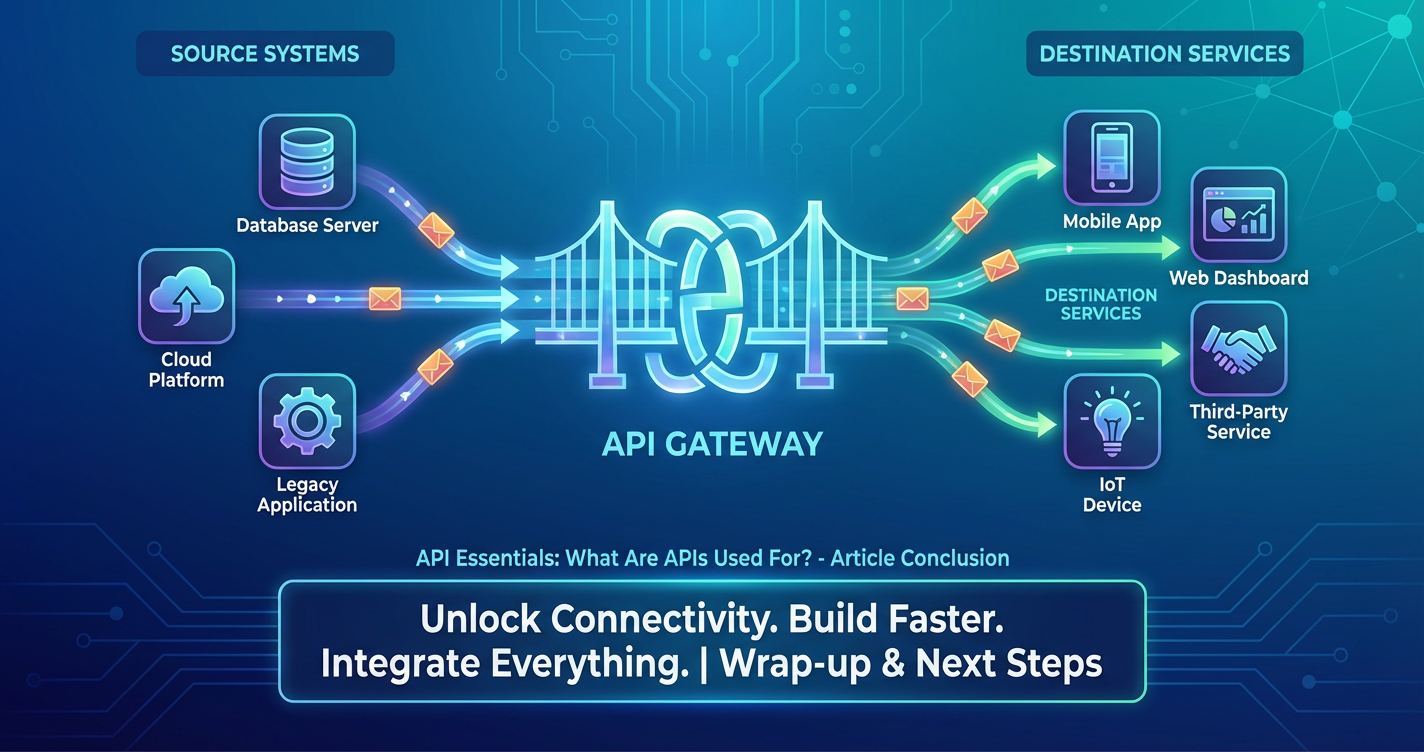
The API gateway is a critical piece of infrastructure in modern API architectures. It acts as a single entry point for all client requests, routing them to the appropriate backend services. More than just a simple proxy, an api gateway performs a multitude of essential functions that centralize and streamline API management, enhancing security, performance, and scalability.
Key Functions of an API Gateway:
- Request Routing: Directs incoming API requests to the correct backend microservice or legacy system based on predefined rules. This abstracts the complexity of the backend infrastructure from the client.
- Authentication and Authorization: Enforces security policies by validating API keys, OAuth tokens, or JWTs. It can offload authentication from individual backend services, centralizing identity management.
- Rate Limiting and Throttling: Prevents API abuse and ensures service availability by limiting the number of requests from clients within a certain time frame.
- Traffic Management: Balances incoming traffic across multiple instances of a backend service, ensuring high availability and optimal performance. It can also handle blue/green deployments or canary releases.
- Caching: Stores responses from backend services to fulfill subsequent identical requests more quickly, reducing load on backend systems and improving API response times.
- Protocol Translation: Can translate between different protocols (e.g., REST to SOAP, HTTP/1.1 to HTTP/2), allowing disparate systems to communicate seamlessly.
- Request and Response Transformation: Modifies request headers, body, or URL paths before forwarding them to the backend, and transforms responses before sending them back to the client. This helps standardize API interfaces.
- Logging and Monitoring: Collects detailed logs of all API traffic, providing valuable insights into usage patterns, performance metrics, and error rates, often integrating with external monitoring systems.
- Security Policies: Enforces various security policies beyond authentication, such as IP whitelisting/blacklisting, WAF (Web Application Firewall) integration, and payload validation.
- Versioning: Can manage different versions of an API, routing requests to the appropriate backend version based on the client's request.
The api gateway is an indispensable component for any organization with a significant number of APIs, acting as the central nervous system for all API interactions. It provides a crucial layer of abstraction, control, and security that enables scalable and resilient API ecosystems. Many commercial and open-source solutions exist, offering varying degrees of functionality and deployment flexibility. API management platforms like ApiPark incorporate robust API gateway capabilities, designed to manage the entire lifecycle of APIs, including design, publication, invocation, and decommission, with performance rivaling specialized web servers like Nginx.
APIPark is a high-performance AI gateway that allows you to securely access the most comprehensive LLM APIs globally on the APIPark platform, including OpenAI, Anthropic, Mistral, Llama2, Google Gemini, and more.Try APIPark now! 👇👇👇
Chapter 5: The Rise of API Open Platforms and the API Economy: Unleashing Collaborative Innovation
Beyond merely connecting disparate systems within an enterprise, APIs have become powerful tools for external collaboration, ecosystem building, and revenue generation. This evolution has given rise to the concept of the API Open Platform and the expansive "API Economy," fundamentally reshaping how businesses create value and interact with their customers and partners.
What Defines an API Open Platform?
An API Open Platform is a strategic initiative by an organization to expose its core services, data, and functionalities to external developers, partners, and even competitors, typically through publicly accessible APIs. It’s more than just publishing a few APIs; it’s about fostering an ecosystem around those APIs. Key characteristics define an API Open Platform:
- Publicly Accessible APIs: The cornerstone of an open platform is a set of well-documented APIs that are designed for consumption by third parties. These APIs usually follow industry standards (like REST) and are robust enough for external integration.
- Developer Portal: A dedicated online hub that serves as the gateway for external developers. It provides comprehensive API documentation, quick-start guides, code samples, SDKs, tutorials, community forums, and tools for API key management and monitoring. The developer portal is crucial for making APIs discoverable and usable.
- Self-Service Capabilities: Developers should be able to register, generate API keys, access documentation, and often even test APIs without requiring direct interaction with the platform provider's support team. This low-friction access encourages adoption.
- Clear Business Model (Optional but Common): While some open platforms offer free access, many involve a tiered pricing structure, pay-as-you-go models, or partnership agreements, turning API access into a revenue stream.
- Community and Support: Active engagement with the developer community through forums, hackathons, and dedicated support channels helps foster a thriving ecosystem and gather valuable feedback for API improvement.
- Governance and Versioning: Maintaining stability and reliability for external consumers requires strong API governance, including clear versioning strategies, deprecation policies, and robust security measures.
Benefits for Businesses: Innovation, Speed, and New Revenue Streams
Embracing an API Open Platform strategy offers a multitude of benefits for the platform provider:
- Accelerated Innovation: By opening up their core capabilities, businesses can tap into a vast pool of external developers who can build new applications, services, and features that the platform provider might not have conceived or had the resources to develop internally. This crowdsourced innovation significantly speeds up the pace of development.
- Expanded Reach and Ecosystem: APIs allow a business's products and services to be integrated into countless other applications and platforms, dramatically extending its reach beyond its direct user base. This creates a larger ecosystem around the core product, solidifying its market position.
- New Revenue Streams (The API Economy): As discussed, APIs can be monetized directly, transforming core functionalities into marketable products. Companies like Stripe (payments), Twilio (communications), and AWS (cloud infrastructure) have built multi-billion dollar businesses entirely on their API offerings.
- Enhanced Customer Engagement and Loyalty: By allowing customers (or their developers) to integrate the platform's services into their own workflows, businesses make their offerings stickier and more indispensable, fostering deeper engagement and loyalty.
- Increased Efficiency and Reduced Costs: Internally, an API-first approach that can be externalized to an open platform encourages modularity and reusability of services, leading to more efficient development cycles and reduced redundant efforts.
- Data Insights and Market Intelligence: Monitoring how external developers use the APIs can provide invaluable insights into market trends, unmet needs, and opportunities for future product development.
- Strategic Partnerships: Open APIs facilitate easier integration with strategic partners, enabling joint ventures, data sharing initiatives, and collaborative product development.
Benefits for Developers: Access to Tools, Data, and Faster Development
For the developers consuming these APIs, the advantages are equally compelling:
- Faster Development: Developers don't need to build every component from scratch. They can leverage powerful, pre-built functionalities (e.g., payment processing, mapping, AI models) via APIs, significantly accelerating their development timelines and reducing costs.
- Access to Rich Data: APIs provide programmatic access to vast datasets that would otherwise be inaccessible, enabling the creation of data-driven applications and insights.
- Focus on Core Value: By offloading commodity functionalities to APIs, developers can concentrate their efforts on building the unique features and business logic that differentiate their own applications.
- Innovation and Creativity: APIs provide a palette of digital building blocks, empowering developers to combine services in novel ways to create innovative applications and solutions.
Examples of Successful API Open Platforms
- Stripe: A payments platform that provides a suite of APIs for processing online transactions, managing subscriptions, and handling fraud. Its developer-friendly APIs and comprehensive documentation have made it a favorite among startups and enterprises alike, powering the e-commerce backbone of countless businesses.
- Twilio: Offers a cloud communications platform that allows developers to programmatically make and receive phone calls, send and receive text messages, and perform other communication functions using its APIs. It has revolutionized how businesses interact with their customers.
- Google Maps Platform: Provides a rich set of APIs and SDKs for embedding maps, calculating routes, searching for places, and performing location-based services. It's a prime example of monetizing data and functionality through an API.
- Salesforce AppExchange: While not purely API-driven in the same way, Salesforce provides extensive APIs that allow developers to integrate with its CRM platform, enabling a vast ecosystem of third-party applications that extend Salesforce's core functionality.
The proliferation of API Open Platforms underscores a fundamental shift in how businesses operate and innovate. It’s a move towards a more collaborative, interconnected, and service-oriented economy where digital capabilities are not just consumed but also shared and recombined to create unprecedented value. Managing these complex ecosystems requires sophisticated tools, and platforms offering an API gateway and comprehensive lifecycle management are essential for success in this open, interconnected world.
Chapter 6: API Security Best Practices: Fortifying the Digital Gates
Given their role as conduits for critical data and business logic, APIs are prime targets for cyberattacks. A single vulnerability can expose sensitive information, disrupt services, or lead to significant financial and reputational damage. Therefore, robust API security is not merely an option but a paramount necessity. Implementing a layered defense strategy, encompassing technical measures and operational best practices, is crucial for fortifying these digital gates.
1. Robust Authentication and Authorization
The first line of defense is ensuring that only legitimate users and applications can access your APIs, and that they only have access to what they are authorized for.
- Strong Authentication Mechanisms:
- OAuth 2.0 and OpenID Connect (OIDC): For user-facing APIs, these standards provide secure, delegated authorization, allowing applications to access resources on behalf of a user without handling their credentials directly. OIDC adds an identity layer on top of OAuth 2.0.
- API Keys: While simpler, API keys should be treated like passwords. They should be generated securely, stored encrypted, and never embedded directly in client-side code. They are best suited for client-to-server or machine-to-machine authentication where the client can securely store the key.
- JWT (JSON Web Tokens): Ideal for stateless authentication in microservices architectures. JWTs digitally sign user claims, allowing services to verify authenticity without needing to query a central authentication server for every request.
- Mutual TLS (mTLS): For highly sensitive service-to-service communication, mTLS provides two-way authentication, where both the client and the server verify each other's digital certificates, ensuring that both parties are trusted.
- Granular Authorization: Implement role-based access control (RBAC) or attribute-based access control (ABAC) to ensure that authenticated users/applications can only access resources and perform actions that align with their assigned permissions. Avoid "all-or-nothing" access.
- Principle of Least Privilege: Grant only the minimum necessary permissions required for an API consumer to perform its intended function.
2. Input Validation and Output Encoding
Many API vulnerabilities stem from improper handling of data.
- Validate All Inputs: Treat all incoming data from API requests as untrusted. Rigorously validate all parameters (query, path, header, body) against expected data types, formats, lengths, and ranges. This prevents injection attacks (SQL injection, NoSQL injection, command injection), XML External Entity (XXE) attacks, and other forms of malicious input.
- Sanitize and Escape Outputs: Before returning data in an API response or displaying it in a client application, ensure it is properly encoded or sanitized to prevent cross-site scripting (XSS) attacks. Never trust data you didn't originate, and always assume that malicious content might be present.
- Schema Enforcement: Use API schema definitions (e.g., OpenAPI/Swagger) to validate request and response payloads, ensuring they conform to the defined contract.
3. Rate Limiting and Throttling
Protecting your APIs from abuse, resource exhaustion, and denial-of-service (DoS) attacks is crucial.
- Implement Rate Limits: Define the maximum number of API requests a user or application can make within a specific time window. Block or temporarily suspend users who exceed these limits.
- Throttling: Beyond simple rate limits, throttling can involve gradually slowing down responses or prioritizing requests based on subscription tiers or resource availability.
- Burst Limits: Allow for temporary spikes in traffic while still enforcing overall rate limits.
- API Gateway Role: An API gateway is the ideal place to enforce rate limiting and throttling policies, as it sits at the entry point of all API traffic.
4. Secure Communication (HTTPS)
Encrypting data in transit is a fundamental security requirement.
- Always Use HTTPS: All API communication must use HTTPS (HTTP over SSL/TLS). This encrypts the data exchanged between the client and the server, preventing eavesdropping and man-in-the-middle attacks.
- Strong TLS Configuration: Ensure your TLS configuration uses strong ciphers, disables weak protocols (like TLS 1.0/1.1), and keeps certificates up-to-date.
5. Logging, Monitoring, and Alerting
Visibility into API activity is essential for detecting and responding to security incidents.
- Comprehensive Logging: Log all API requests and responses, including client IP addresses, timestamps, request headers, request bodies (with sensitive data masked), response status codes, and error messages.
- Centralized Logging: Aggregate logs from all API services into a centralized logging system for easier analysis and correlation.
- Real-time Monitoring: Continuously monitor API performance, usage patterns, and security events. Look for anomalies such as unusual traffic spikes, repeated failed authentication attempts, or access from suspicious IP addresses.
- Automated Alerts: Set up automated alerts for critical security events or performance deviations, ensuring that security teams are immediately notified of potential breaches or issues. As noted earlier, products like ApiPark provide powerful data analysis and detailed API call logging, which are invaluable for quickly tracing and troubleshooting issues and identifying suspicious activities.
6. Regular Security Audits and Penetration Testing
Proactively identify vulnerabilities before attackers do.
- Code Reviews: Conduct thorough code reviews for all API implementations to identify potential security flaws.
- Vulnerability Scanning: Use automated tools to scan APIs for known vulnerabilities.
- Penetration Testing: Engage ethical hackers to simulate real-world attacks against your APIs to uncover weaknesses that automated tools might miss.
- Stay Updated: Keep all underlying frameworks, libraries, and dependencies updated to the latest secure versions to patch known vulnerabilities.
- API Security Checklist: Regularly review your API security posture against established checklists (e.g., OWASP API Security Top 10) to ensure comprehensive coverage.
By meticulously applying these best practices across the entire API lifecycle, organizations can significantly reduce their attack surface, protect sensitive data, and maintain the trust of their API consumers and partners. API security is an ongoing commitment, requiring continuous vigilance and adaptation to evolving threat landscapes.
Chapter 7: Challenges and Future Trends in APIs: Navigating the Evolving Digital Frontier
While APIs have revolutionized software development and interconnectedness, their widespread adoption also introduces new challenges. However, these challenges are fertile ground for innovation, driving forward new trends that promise even more sophisticated and efficient API ecosystems. Understanding both the hurdles and the horizon is crucial for anyone building or leveraging APIs in the modern digital age.
Challenges in API Management and Consumption
The complexity and scale of modern API landscapes present several significant challenges:
- Complexity and Sprawl: As organizations adopt microservices architectures and leverage numerous third-party services, the number of APIs they manage and consume can grow exponentially. This "API sprawl" can lead to difficulties in discovery, documentation, and consistent governance across a vast and diverse set of interfaces. Without proper tools and processes, this can result in duplicated efforts, inconsistencies, and a higher risk of security vulnerabilities.
- Security Risks: As discussed in the previous chapter, APIs are attractive targets for attackers due to their direct access to data and business logic. Ensuring robust authentication, authorization, input validation, and continuous monitoring across a sprawling API landscape is a constant battle against evolving threats. Misconfigurations or weak security practices in just one API can compromise the entire system.
- Versioning Headaches: Evolving APIs inevitably lead to changes, but breaking changes can disrupt consuming applications. Managing multiple API versions simultaneously, providing clear deprecation policies, and ensuring smooth migration paths for consumers is a complex logistical challenge that requires meticulous planning and communication.
- Performance Bottlenecks: Poorly designed APIs or inefficient backend services can lead to slow response times, impacting user experience and application scalability. Managing latency, ensuring high throughput, and implementing effective caching strategies across distributed systems is technically demanding.
- Documentation Gaps and Inconsistency: Inadequate or outdated API documentation is a major pain point for developers. Without clear instructions, it's difficult for consumers to understand how to use an API correctly, leading to integration issues, increased support requests, and reduced adoption. Maintaining consistency across numerous API docs is also a challenge.
- Discovery and Governance: For large enterprises, finding the right API for a specific task can be difficult if there isn't a centralized, searchable catalog or an API Open Platform with a developer portal. Enforcing consistent design standards, security policies, and operational best practices across different teams and projects also requires robust governance frameworks.
- Cost Management: While APIs offer efficiencies, their usage can also incur significant costs, especially with third-party APIs that charge per transaction or data volume. Monitoring and optimizing API consumption to manage expenditure is an ongoing challenge.
Future Trends in APIs: The Path Forward
Innovation never rests, and the API landscape is continually evolving to address current challenges and unlock new possibilities. Several key trends are shaping the future of APIs:
- Hyperautomation and AI-Driven APIs: The convergence of APIs with artificial intelligence (AI) and machine learning (ML) is leading to more intelligent and automated systems. AI is being used to generate API code, test APIs, and even predict API usage patterns. Furthermore, APIs are the primary means by which AI models are exposed and consumed, enabling "AI as a Service." This allows developers to integrate sophisticated AI capabilities like natural language processing, computer vision, and predictive analytics into their applications with simple API calls. As APIs become more sophisticated, especially with the integration of AI, specialized tools are essential. Platforms like ApiPark provide an open-source AI gateway designed to simplify the integration and management of diverse AI models, offering features like quick integration of 100+ AI models and a unified API format for AI invocation, which are crucial for this trend.
- API Standardization and Governance Evolution: As API sprawl becomes a greater issue, there's an increasing emphasis on stricter governance models and industry-wide standardization initiatives. Organizations are investing in API design standards, style guides, and automated tools to enforce consistency, improve reusability, and reduce the learning curve for developers. This trend aims to create more predictable, reliable, and secure API ecosystems.
- Event-Driven Architectures (EDA): Beyond traditional request-response APIs, event-driven architectures are gaining prominence. Here, services communicate by publishing and subscribing to events, enabling highly decoupled, scalable, and real-time systems. Technologies like Kafka and message queues, exposed and managed via event-driven APIs (e.g., AsyncAPI specification), are becoming critical for data streaming and reactive programming patterns.
- Serverless Computing and Function-as-a-Service (FaaS): Serverless platforms (like AWS Lambda, Azure Functions, Google Cloud Functions) allow developers to deploy individual functions that are triggered by API calls or events, without managing underlying servers. This model perfectly aligns with API development, enabling highly scalable, cost-effective, and event-driven microservices that are directly exposed via APIs.
- Increased Adoption of GraphQL: While REST remains dominant, GraphQL continues to gain traction, particularly in complex applications with diverse data requirements and large mobile client bases. Its ability to allow clients to request exactly what they need, reducing over-fetching and multiple requests, makes it a powerful choice for optimizing data exchange.
- API Security Automation and Zero Trust: The focus on API security is intensifying, with a move towards more automated security testing, continuous compliance, and "zero-trust" security models. This means no user or application, inside or outside the network, is automatically trusted. Every request to an API must be verified and authorized.
- API Mesh and Unified API Experiences: For large organizations with hundreds or thousands of APIs, managing them individually becomes unsustainable. The concept of an "API Mesh" involves creating a layer that unifies and orchestrates multiple APIs, often using GraphQL or other query languages, to provide a consistent and simplified access point for consumers. This aims to reduce fragmentation and improve discoverability.
- API Platforms for Everything: The rise of comprehensive API management platforms, often integrating an API gateway, developer portals, analytics, and security features, is accelerating. These platforms provide an all-in-one solution for designing, developing, deploying, securing, and monitoring APIs across an enterprise. The trend is towards integrated environments that simplify the entire API lifecycle.
The journey of APIs is far from over. As technology continues its relentless march forward, APIs will remain at the forefront, adapting to new paradigms, overcoming challenges, and continuously enabling the seamless, interconnected, and intelligent digital experiences that define our modern world. The future promises more intelligent, autonomous, and secure API ecosystems, further solidifying their role as the indispensable foundation of digital innovation.
Conclusion: The Indispensable Backbone of Our Digital Age
From humble beginnings as technical specifications for internal software communication, APIs have blossomed into the indispensable backbone of the modern digital landscape. They are the unseen forces that orchestrate the intricate dance of data and functionality across countless applications, devices, and services, empowering everything from the simplest daily interactions to the most complex enterprise operations. We've explored how APIs serve as universal translators, enabling seamless data integration, extending service capabilities, driving automation, and fostering entirely new business models within the burgeoning API economy.
The journey has taken us through the critical phases of API lifecycle management, emphasizing the strategic importance of robust security measures to protect these vital digital conduits. We delved into the transformative role of the API gateway, a central traffic cop and enforcer of policies, ensuring the security, performance, and scalability of API ecosystems. Furthermore, we illuminated the profound impact of the API Open Platform, a strategic approach that unlocks collaborative innovation, expands market reach, and creates new revenue streams by transforming digital functionalities into marketable products.
As we look to the future, the API landscape continues to evolve, driven by advancements in AI, event-driven architectures, and serverless computing. While challenges like complexity, security, and consistent governance persist, they are continually being addressed by innovative solutions and sophisticated management platforms, including those that streamline the integration of advanced AI models and offer comprehensive API lifecycle governance, such as ApiPark. These platforms are crucial for navigating the increasing sophistication and scale of modern API deployments.
In essence, APIs are not merely a technical detail; they are a fundamental paradigm that underpins our interconnected world. They are the building blocks of digital transformation, the accelerators of innovation, and the engines of the digital economy. Understanding what APIs are used for is not just about comprehending technology; it's about grasping the very essence of how our modern, always-on, and ever-evolving digital society functions and will continue to thrive. The power of APIs will only grow, continuing to shape the way we live, work, and interact in the digital age.
5 Frequently Asked Questions (FAQs) About APIs
1. What exactly is an API, and how does it work in simple terms?
An API (Application Programming Interface) is a set of rules and protocols that allows different software applications to communicate with each other. In simple terms, think of an API as a waiter in a restaurant. You (the client application) tell the waiter (the API) what you want from the kitchen (the server or service provider). The waiter takes your order, brings it to the kitchen, and then delivers your meal (the response data or action) back to you. You don't need to know how the kitchen prepares the food; you just need to know how to order from the menu (API documentation). This abstraction allows applications to share data and functionalities seamlessly without needing to understand each other's internal complexities.
2. What is an API Gateway, and why is it important for API management?
An API Gateway is a central entry point for all client requests to an API ecosystem. Instead of clients sending requests directly to individual backend services, all requests first go through the API Gateway. It's important because it provides a centralized point to manage, secure, and monitor APIs. Its key functions include request routing to the correct backend service, authenticating and authorizing requests, enforcing rate limits to prevent abuse, caching responses to improve performance, transforming requests/responses, and collecting valuable logs and metrics. This centralization simplifies API management, enhances security, improves performance, and increases the scalability of API deployments.
3. What is an API Open Platform, and what are its main benefits for businesses?
An API Open Platform is a strategic initiative where an organization makes its core services, data, and functionalities available to external developers, partners, and the public through well-documented, publicly accessible APIs. It's designed to foster an ecosystem around the platform's offerings. The main benefits for businesses include: * Accelerated Innovation: Tapping into external developer creativity to build new features and applications. * Expanded Reach: Integrating services into countless other platforms, extending market presence. * New Revenue Streams: Monetizing data and functionalities through API access (the "API Economy"). * Enhanced Customer Engagement: Making core offerings more indispensable to users who can integrate them into their own workflows. * Strategic Partnerships: Facilitating easier collaboration and joint ventures with other businesses.
4. How do APIs contribute to the "API Economy"?
APIs contribute to the "API Economy" by transforming digital functionalities and data into valuable, marketable products. Instead of selling entire software packages, companies can sell access to specific capabilities (like payment processing, communication services, or AI models) via APIs. This creates new business models where revenue is generated per transaction, subscription, or data volume consumed through an API. It enables businesses to specialize in core services and allow others to integrate those services into their own products, fostering a vast ecosystem of interconnected services and creating immense economic value through digital interoperability and collaboration.
5. What are some key security considerations when using or providing APIs?
API security is paramount due to their direct access to sensitive data and business logic. Key security considerations include: * Authentication and Authorization: Ensuring only verified users/applications can access APIs, and only to resources they are permitted to see or modify (e.g., using OAuth 2.0, API Keys, JWT). * Input Validation: Rigorously checking all incoming data to prevent injection attacks (SQL injection, XSS). * Rate Limiting and Throttling: Controlling the number of requests to prevent abuse and denial-of-service (DoS) attacks. * Secure Communication (HTTPS): Encrypting all data in transit to protect against eavesdropping and tampering. * Logging and Monitoring: Continuously tracking API activity for suspicious patterns and immediate threat detection. * Error Handling: Providing generic error messages without revealing sensitive internal information. * Regular Audits: Performing security audits and penetration testing to proactively identify vulnerabilities.
🚀You can securely and efficiently call the OpenAI API on APIPark in just two steps:
Step 1: Deploy the APIPark AI gateway in 5 minutes.
APIPark is developed based on Golang, offering strong product performance and low development and maintenance costs. You can deploy APIPark with a single command line.
curl -sSO https://download.apipark.com/install/quick-start.sh; bash quick-start.sh

In my experience, you can see the successful deployment interface within 5 to 10 minutes. Then, you can log in to APIPark using your account.

Step 2: Call the OpenAI API.