API Explained: What Are APIs For?
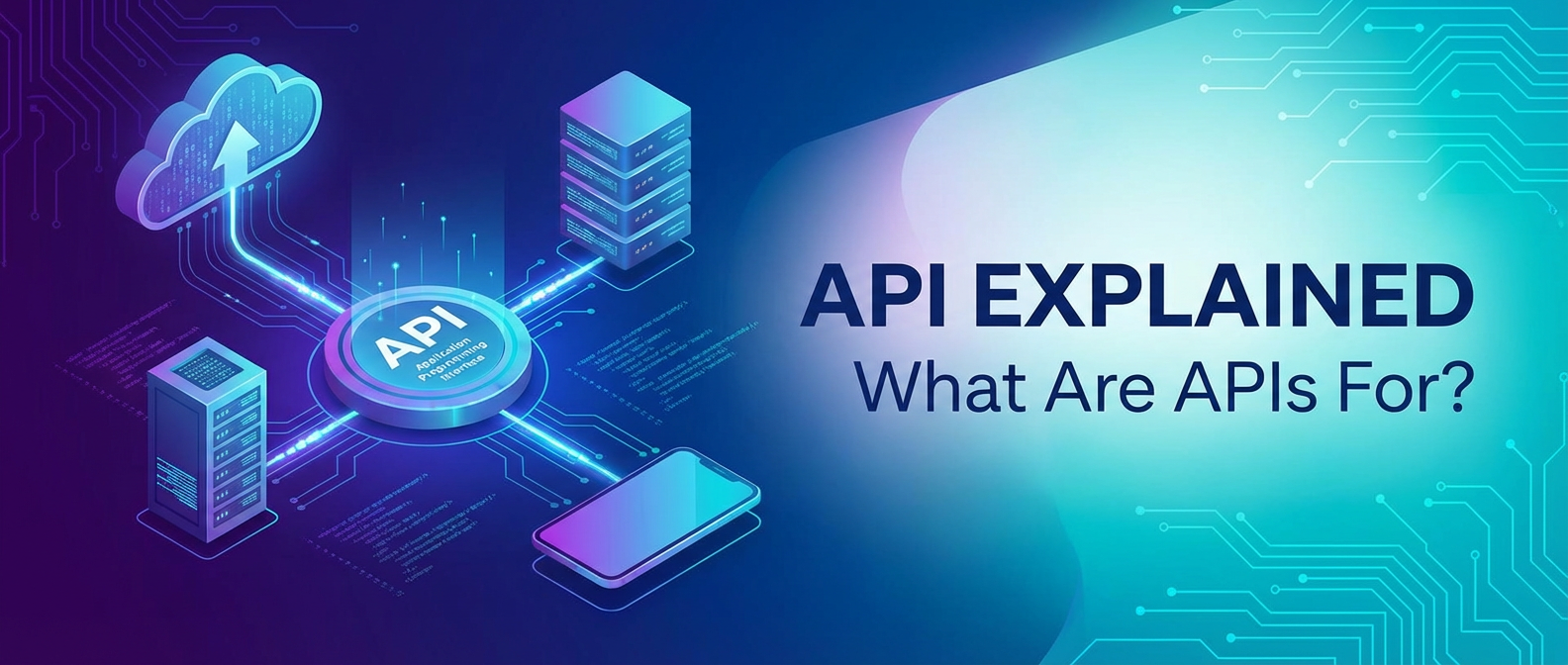


In an increasingly interconnected digital world, the invisible threads that weave together disparate software systems are often taken for granted. These threads, fundamental yet frequently misunderstood, are known as Application Programming Interfaces, or APIs. Far from being a mere technicality, APIs are the very bedrock upon which modern digital services are built, enabling seamless communication, fostering innovation, and driving the global digital economy. Understanding what an API is, how it functions, and critically, what APIs are for, unlocks a profound appreciation for the intricate dance of data and functionality that characterizes our contemporary technological landscape. This comprehensive exploration aims to demystify APIs, delving into their fundamental nature, diverse applications, underlying mechanisms, and the critical role they play in everything from mobile apps to enterprise-level integrations, all while highlighting essential concepts like the API gateway and the OpenAPI specification.
The Invisible Connectors: What Exactly is an API?
At its most fundamental level, an API serves as a software intermediary that allows two applications to talk to each other. It's not a database, nor is it a server; rather, it's the set of definitions and protocols for building and integrating application software. Think of it as a well-defined contract between two pieces of software. When you use an application on your phone, send an instant message, check the weather, or even simply browse a website, you are almost certainly interacting with APIs, often without realizing it. They are the silent enablers behind the scenes, making complex interactions appear effortless.
To truly grasp the concept, consider a common analogy: a restaurant. You, the customer, are the "client" or requesting application. The kitchen is the "server" or the system that has the resources you want. The waiter is the "API." You don't go into the kitchen yourself to get your food (request data from the server directly). Instead, you interact with the waiter, telling them what you want from the menu (making an API call with specific parameters). The waiter takes your order to the kitchen, waits for the kitchen to prepare it, and then brings the finished meal back to you. You don't need to know how the kitchen operates, what ingredients are on hand, or the chef's specific techniques; you just need to know how to communicate your request to the waiter and what to expect in return.
In the digital realm, this analogy translates perfectly. When your weather app wants to display the current temperature, it doesn't directly access the weather station's sensors or databases. Instead, it sends a request to a weather service's API, asking for the temperature for a specific location. The API then communicates with the weather service's backend systems, retrieves the data, and delivers it back to your app in a standardized format. Your app then interprets this data and presents it to you in a user-friendly way. This abstraction is key: APIs hide the complexity of the underlying systems, offering a simplified and standardized way for different software components to interact. They specify the types of requests that can be made, the data formats that should be used, the conventions that should be followed, and even the expected responses. This contractual agreement ensures reliability and predictability in inter-application communication.
The evolution of APIs can be traced back to the early days of computing, when libraries and operating system calls allowed programs to interact with underlying hardware and software services. However, the true explosion of API usage came with the rise of the internet and web services. With the web, the challenge became connecting geographically dispersed systems over a network, leading to the development of protocols like SOAP (Simple Object Access Protocol) and later, REST (Representational State Transfer), which would become the dominant architectural style for web APIs. These web APIs extended the concept of software intermediaries across the vast expanse of the internet, enabling a new era of distributed computing and interconnected applications.
The Core Purpose of APIs: What Are APIs For?
Understanding what an API is naturally leads to the more crucial question of what APIs are for. Their utility extends far beyond mere technical integration; they are fundamental drivers of innovation, efficiency, and business strategy in the modern digital age. The purposes APIs serve are multifaceted and deeply impactful across various industries and technological domains.
1. Enabling Communication Between Disparate Systems
The primary and most foundational purpose of an API is to facilitate communication between different software systems, often built by different teams, in different programming languages, and running on different infrastructures. Without APIs, every application would be an isolated island, unable to share data or functionality with others. APIs bridge these gaps, allowing applications to request information or trigger actions in other systems. For example, when you buy something online and choose to pay with PayPal, the e-commerce website uses PayPal's API to process the payment securely. The website doesn't need to know the intricacies of PayPal's payment processing infrastructure; it simply sends a request to the API, and the API handles the secure transaction. This ability to make diverse systems "speak the same language" is paramount for creating integrated digital experiences.
2. Facilitating Integration and Interoperability
Beyond mere communication, APIs are the backbone of integration. They allow developers to combine functionalities from various sources to create new, more powerful applications. Consider mapping services: instead of every application building its own mapping functionality from scratch, they integrate with Google Maps, OpenStreetMap, or Apple Maps APIs. This allows them to display maps, calculate routes, or search for points of interest directly within their application, leveraging years of development and vast datasets without reinventing the wheel. This modular approach significantly reduces development time and costs, as developers can focus on their core competencies while relying on specialized third-party APIs for other functionalities. Interoperability, the ability of different systems to work together seamlessly, is directly enabled by standardized API contracts.
3. Promoting Reusability and Modularity
APIs encourage a modular design paradigm in software development. Instead of building monolithic applications where every piece of functionality is tightly coupled, developers can create smaller, independent services, each exposing its capabilities via an API. These services can then be reused across multiple applications or parts of the same application. This not only makes code easier to maintain and update but also allows different teams to work on different services concurrently, accelerating development cycles. For instance, an authentication service can be developed once and then exposed via an API for use by a website, a mobile app, and even internal administrative tools, ensuring consistent user management across all platforms.
4. Driving Innovation and New Product Development
The accessibility provided by APIs has been a massive catalyst for innovation. By exposing specific functionalities to the outside world, companies enable a vast ecosystem of developers to build new products and services on top of their platforms. This "API economy" has given rise to countless startups and features that would have been impossible or prohibitively expensive to create otherwise. Social media platforms, for example, offer APIs that allow third-party developers to integrate social sharing, user profiles, or content feeds into their applications, leading to richer user experiences and new business models. This open approach democratizes access to powerful technologies, fostering creativity and rapid prototyping. Developers can experiment with different combinations of services, rapidly iterating on ideas and bringing novel solutions to market.
5. Allowing Specialization and Focus
APIs allow organizations to specialize in their core competencies. A company focused on logistics doesn't need to build its own payment processing system; it can integrate with a payment API. A financial institution doesn't need to develop a complex messaging system; it can use a communication API. This specialization leads to higher quality services in each domain, as experts can focus on perfecting their specific offerings. It also means businesses can leverage best-in-class solutions for various aspects of their operations without the massive investment in in-house development for every single component. This focus on "doing one thing well" and exposing that "one thing" via a robust API is a hallmark of modern software architecture.
6. Enabling Data Sharing and Monetization
For many companies, APIs are a critical channel for sharing data, both internally and externally. Internally, APIs can unify data from different departments or legacy systems, providing a consolidated view for business intelligence or operational dashboards. Externally, companies can choose to expose certain datasets through APIs, allowing partners or the public to access and utilize that data, often for a fee. This data monetization strategy can create new revenue streams and enhance the value of proprietary information. For example, financial data providers offer APIs that deliver real-time stock quotes, economic indicators, and historical financial data to trading platforms, research firms, and news organizations, creating a thriving market for information access.
The Diverse Landscape: Types of APIs
While the core concept of an API remains consistent, their implementation and purpose can vary significantly. Understanding the different categories helps to contextualize their broad impact.
1. Web APIs
The most commonly discussed type of API today, web APIs, are designed to be consumed over the internet. They enable communication between web servers and web clients (like browsers or mobile apps) or between different web services.
- RESTful APIs (Representational State Transfer): The predominant architectural style for web APIs. REST APIs are stateless, meaning each request from client to server contains all the information needed to understand the request. They leverage standard HTTP methods (GET, POST, PUT, DELETE) to perform operations on resources, which are identified by URLs. Data is typically exchanged in JSON or XML format. Their simplicity, flexibility, and scalability have made them ubiquitous.
- SOAP APIs (Simple Object Access Protocol): An older, more rigid protocol for web APIs. SOAP relies on XML for message formatting and typically uses HTTP or SMTP for message transmission. It offers stronger security features and transaction management capabilities, often favored in enterprise environments and legacy systems, but its complexity makes it less agile than REST.
- GraphQL APIs: A newer query language for APIs and a runtime for fulfilling those queries with your existing data. GraphQL allows clients to request exactly the data they need, no more, no less, reducing over-fetching or under-fetching of data common in REST APIs. It's gaining popularity for its efficiency and flexibility, especially in mobile applications.
2. Local APIs
These APIs offer services to software running on the same machine. They are often part of an operating system or a library.
- Operating System APIs: These allow applications to interact with the underlying operating system. For example, Windows API (Win32 API) or POSIX APIs for Unix-like systems enable programs to perform tasks like file system operations, memory management, or creating graphical user interfaces.
- Library/Framework APIs: When you use a programming library or framework (like Python's
mathmodule, Java'sCollectionsframework, or React's component APIs), you are interacting with local APIs. These expose functionalities within the library for use by your application code.
3. Database APIs
Database APIs allow applications to communicate with database management systems. They abstract the complexities of database queries and transactions.
- JDBC (Java Database Connectivity) / ODBC (Open Database Connectivity): These are standards that provide a common interface for applications to access various types of databases. A developer writes code against the JDBC/ODBC API, and the specific database driver handles the translation to the database's native protocol.
4. Internal, Partner, and Public APIs
APIs can also be classified by their target audience and accessibility:
- Internal APIs: Used within an organization to connect its own systems and services. They help different departments or microservices communicate efficiently and foster internal reuse. For instance, a customer service portal might use an internal API to retrieve order history from an internal order management system.
- Partner APIs: Shared with specific business partners to facilitate data exchange and integration. These are often tightly controlled and require specific authentication and authorization mechanisms. An airline might expose a partner API to a travel agency, allowing the agency to book flights directly through their system.
- Public (or Open) APIs: Made available to the general public, often with varying degrees of restrictions and monetization models. These are the APIs that power app ecosystems and drive broad innovation, like the Google Maps API, Twitter API, or Stripe API for payments. They typically come with extensive documentation and developer support.
How APIs Work: A Peek Under the Hood
To fully appreciate the power of APIs, it's beneficial to understand the fundamental mechanisms governing their operation. While the specifics can vary greatly depending on the API type, web APIs (especially RESTful ones) offer a clear illustration of the typical request-response cycle.
The Request-Response Cycle
The interaction between a client and an API server typically follows a simple yet robust request-response model:
- The Client Makes a Request: An application (the client) initiates communication by sending a request to the API. This request usually contains:
- Endpoint: The specific URL that identifies the resource the client wants to interact with (e.g.,
https://api.example.com/products/123). - HTTP Method: An action verb indicating what the client wants to do with the resource (e.g., GET to retrieve, POST to create, PUT to update, DELETE to remove).
- Headers: Metadata about the request, such as authentication tokens, content type, or preferred language.
- Body (optional): For methods like POST or PUT, the request body contains the data payload to be sent to the server (e.g., JSON data for a new product).
- Endpoint: The specific URL that identifies the resource the client wants to interact with (e.g.,
- The API Gateway (Optional but Recommended): Before the request even reaches the actual backend service, it often passes through an API gateway. This component acts as the single entry point for all API calls, handling critical cross-cutting concerns. An API gateway can perform authentication, authorization, rate limiting, traffic management, and routing. For instance, a robust platform like APIPark serves as an intelligent AI gateway and API management platform, centralizing these functions, especially for complex AI and REST services. It ensures that only legitimate and authorized requests proceed to the backend, thereby enhancing security and operational efficiency.
- The Server Processes the Request: The API server receives the request, validates it, processes the requested action (e.g., fetches data from a database, performs a calculation, updates a record), and generates a response.
- The Server Sends a Response: The server sends a response back to the client, which includes:
- Status Code: A numerical code indicating the outcome of the request (e.g., 200 OK for success, 404 Not Found for a missing resource, 500 Internal Server Error for a server issue).
- Headers: Metadata about the response, such as content type, caching instructions, or server information.
- Body (optional): The actual data requested by the client, typically in JSON or XML format, or an error message if something went wrong.
- The Client Interprets the Response: The client receives the response, parses the data, and uses it to update its UI, store information, or take further actions.
Key Components in Detail
- HTTP Methods: These are the verbs of API interaction:
GET: Retrieve data from a specified resource. Safe and idempotent (multiple identical requests have the same effect as a single one).POST: Submit data to a specified resource, often resulting in a change in state or the creation of a new resource. Not idempotent.PUT: Update a specified resource or create it if it doesn't exist. Idempotent.DELETE: Remove a specified resource. Idempotent.PATCH: Apply partial modifications to a resource. Not necessarily idempotent.HEAD: Same as GET, but without the response body. Used to check metadata.
- Data Formats: The standard ways data is structured for exchange:
- JSON (JavaScript Object Notation): A lightweight, human-readable, and machine-parsable data interchange format. It's the de facto standard for web APIs due to its simplicity and flexibility.
- XML (Extensible Markup Language): A more verbose but highly structured data format. While still used, particularly in enterprise and legacy systems, its complexity has led to JSON's dominance for most new web APIs.
- Endpoints: These are the specific URLs that identify the network location of a resource. Each distinct URL represents a specific piece of data or function that can be accessed via the API. For example,
api.example.com/usersmight retrieve a list of users, whileapi.example.com/users/123retrieves details for user ID 123. - Authentication and Authorization:
- Authentication: Verifying the identity of the client making the request. Common methods include API keys, OAuth 2.0 (a standard for delegated authorization), and JSON Web Tokens (JWTs).
- Authorization: Determining what actions an authenticated client is permitted to perform on a resource. This might involve roles, permissions, or access control lists. These security layers are often managed by the API gateway to ensure that only legitimate and authorized requests reach the backend services, adding a crucial layer of protection to the system.
The Indispensable Role of an API Gateway
As the number of APIs and microservices grows within an organization, managing individual API endpoints, securing them, and monitoring their performance becomes an increasingly complex and arduous task. This is precisely where an API gateway becomes not just useful, but absolutely indispensable. An API gateway acts as a single entry point for all client requests, routing them to the appropriate backend services. It sits between the client and the collection of backend services, abstracting the complexity of the microservices architecture from the client.
What is an API Gateway?
In essence, an API gateway is a management tool that acts as a reverse proxy, accepting API calls and routing them to the relevant microservice or backend application. More than just a router, it consolidates various functionalities that are critical for managing, securing, and optimizing API traffic. It's the traffic cop, the bouncer, and the bouncer's supervisor all rolled into one, ensuring smooth and secure operations for your digital ecosystem. For platforms that integrate complex AI models and a multitude of REST services, like APIPark, the API gateway component is central to providing a unified, secure, and performant management layer.
Why is an API Gateway Needed?
The necessity of an API gateway becomes clear when considering the challenges of modern distributed architectures:
- Security Enhancement:
- Authentication & Authorization: The gateway can handle authentication (verifying client identity) and authorization (checking permissions) for all incoming requests before forwarding them. This offloads security logic from individual backend services, simplifying their development.
- Threat Protection: It can protect against common API security threats like SQL injection, DDoS attacks, and API abuse by filtering malicious requests and enforcing security policies.
- Encryption: Enforcing HTTPS for all external communication.
- Traffic Management:
- Rate Limiting & Throttling: Prevent API abuse and ensure fair usage by limiting the number of requests a client can make within a certain timeframe. This protects backend services from being overwhelmed.
- Load Balancing: Distribute incoming requests across multiple instances of backend services to improve performance and reliability.
- Traffic Routing: Direct requests to the correct backend service instance, potentially based on criteria like URL path, HTTP method, or request headers.
- Caching: Store responses to frequently accessed data, reducing the load on backend services and speeding up response times for clients.
- Performance Monitoring and Analytics:
- Logging & Metrics: An API gateway can centralize logging of all API calls, providing crucial data for monitoring performance, identifying bottlenecks, and troubleshooting issues. APIPark, for instance, provides detailed API call logging, recording every detail of each API call, which is invaluable for tracing and troubleshooting issues.
- Analytics: Collects metrics on API usage, error rates, and response times, offering insights into API health and consumer behavior. This data can be used for capacity planning and business intelligence.
- API Transformation and Orchestration:
- Request/Response Transformation: Modify request or response payloads (e.g., adding/removing headers, transforming data formats) to align with client or backend service expectations without altering the underlying service code.
- API Composition/Orchestration: For complex client requests that require data from multiple backend services, the API gateway can orchestrate these calls, aggregate the results, and present a single, simplified response to the client.
- Simplified Client Interaction:
- Single Entry Point: Clients interact with a single, well-defined endpoint, rather than managing multiple backend service URLs. This simplifies client-side development and makes API consumption easier.
- Version Management: The gateway can handle API versioning, allowing different clients to use different versions of an API without affecting others.
- Microservices Enablement:
- In a microservices architecture, where applications are broken down into many smaller, independent services, an API gateway is crucial. It abstracts the distributed nature of the system, making it appear as a single, cohesive API to the outside world. This separation of concerns allows individual microservices to evolve independently without impacting client applications.
The capabilities of an API gateway are clearly critical for managing the complexity, security, and performance of any modern API ecosystem. Platforms like ApiPark exemplify this, providing an open-source AI gateway and API management platform that quickens the integration of over 100 AI models, offers unified API formats for AI invocation, and provides end-to-end API lifecycle management, all while demonstrating performance rivaling established solutions like Nginx. Such solutions are not just about routing traffic; they are about enabling robust, scalable, and secure digital foundations.
APIPark is a high-performance AI gateway that allows you to securely access the most comprehensive LLM APIs globally on the APIPark platform, including OpenAI, Anthropic, Mistral, Llama2, Google Gemini, and more.Try APIPark now! 👇👇👇
Standardizing the Blueprint: Designing and Documenting APIs with OpenAPI
The success of any API hinges not only on its functionality but also on its usability and maintainability. A poorly designed or undocumented API can be a nightmare for developers, leading to integration headaches, errors, and ultimately, abandonment. This is where standardized specifications for API design and documentation, particularly the OpenAPI Specification, become invaluable.
The Importance of Good API Design
Designing an API is akin to designing a user interface, but for machines. It requires careful consideration of consistency, predictability, intuitiveness, and clarity. A well-designed API should: * Be easy to understand and consume, with clear, logical resource paths and self-explanatory parameters. * Be consistent in its naming conventions, error handling, and data structures. * Be flexible enough to accommodate future changes and extensions without breaking existing client integrations. * Provide clear error messages that help developers diagnose and resolve issues efficiently. * Adhere to REST principles where applicable, leveraging standard HTTP methods and status codes.
Without a systematic approach to design, APIs can quickly become convoluted, leading to frustration for both the API provider and consumer. This is where a standardized approach to describing APIs enters the picture.
What is the OpenAPI Specification?
The OpenAPI Specification (OAS), formerly known as Swagger Specification, is a language-agnostic, human-readable, and machine-readable interface description language for HTTP APIs. In simpler terms, it provides a standard, structured format (using JSON or YAML) for describing RESTful APIs. It's like a blueprint for your API, detailing every aspect of its functionality.
An OpenAPI document describes: * Available Endpoints: All the URLs that clients can interact with (e.g., /users, /products/{id}). * Operations on Each Endpoint: Which HTTP methods (GET, POST, PUT, DELETE) are supported for each endpoint. * Parameters: The inputs required for each operation, including their names, data types, locations (path, query, header, cookie), and whether they are optional or required. * Request Body: The structure of the data that clients need to send in the request body for operations like POST or PUT. * Response Messages: The possible responses from the API, including their HTTP status codes (e.g., 200 OK, 400 Bad Request) and the structure of the data returned in the response body. * Authentication Methods: How clients can authenticate with the API (e.g., API keys, OAuth2). * Contact Information, License, Terms of Use: General metadata about the API.
How OpenAPI Helps
The power of OpenAPI lies in its ability to provide a single, definitive source of truth for an API, which can then be leveraged by a multitude of tools and processes:
- Documentation Generation: The most immediate benefit is automatic, interactive API documentation. Tools can read an OpenAPI document and generate beautiful, browsable web pages (like Swagger UI) that developers can use to explore the API, understand its capabilities, and even make test calls directly from the browser. This eliminates the need for manual, often outdated, documentation.
- Client Code Generation: Developers can use OpenAPI definitions to automatically generate client-side SDKs (Software Development Kits) in various programming languages (Java, Python, JavaScript, etc.). This means less boilerplate code for consumers, faster integration, and fewer errors due to manual coding.
- Server Stub Generation: Similarly, backend developers can generate server-side stubs based on the OpenAPI definition. This provides a starting point for implementing the API logic, ensuring that the implementation adheres strictly to the defined contract.
- Automated Testing: OpenAPI definitions can be used to generate test cases, allowing for automated validation of API endpoints against the specified contract. This helps catch discrepancies between the definition and the actual implementation early in the development cycle.
- API Mocking: During development, before the actual backend services are fully built, an OpenAPI definition can be used to create mock servers. These mock servers simulate the API's behavior, allowing frontend developers to start building their applications without waiting for the backend.
- Design-First Approach: OpenAPI encourages a "design-first" approach to API development. Instead of coding the API and then documenting it (which often leads to inconsistencies), developers can first define the API using OpenAPI, review it with stakeholders, and then implement it. This ensures a well-thought-out API from the outset.
By providing a universal language for describing APIs, OpenAPI fosters a robust and efficient API ecosystem. It reduces ambiguity, automates tedious tasks, and significantly improves the developer experience for both API providers and consumers. It's an essential tool for any organization committed to building high-quality, maintainable, and widely adoptable APIs.
Fortifying the Foundations: Security Considerations for APIs
The ubiquity of APIs means that they are increasingly becoming prime targets for cyberattacks. A compromised API can lead to data breaches, service disruptions, and severe reputational damage. Therefore, robust API security is not merely a feature but a paramount necessity, encompassing various layers of defense. Effective API security requires a holistic approach, considering every stage of the API lifecycle and employing a combination of technical controls and best practices.
1. Authentication: Proving Who You Are
Authentication is the process of verifying the identity of the client making an API request. Without proper authentication, any attacker could potentially interact with your API.
- API Keys: Simple tokens (often a long string of characters) provided to clients. The client includes the API key in each request (e.g., in a header or query parameter). While easy to implement, API keys are less secure than other methods as they offer no specific user identity and can be easily compromised if exposed. They are often best suited for public APIs with low-risk data.
- OAuth 2.0: An industry-standard protocol for delegated authorization. It allows a client application to access resources on behalf of a user without needing the user's credentials. Instead, the user grants permission to the client, and an authorization server issues an access token. OAuth 2.0 is highly flexible and secure, commonly used by social media APIs and identity providers.
- JSON Web Tokens (JWTs): A compact, URL-safe means of representing claims to be transferred between two parties. JWTs are often used as access tokens in conjunction with OAuth 2.0. A server generates a JWT after a user authenticates, and the client includes this token in subsequent API requests. The server can then verify the token's authenticity and validity using its digital signature.
- Mutual TLS (mTLS): Provides two-way authentication, where both the client and the server verify each other's identity using digital certificates. This offers the highest level of trust and is often used in highly sensitive B2B integrations or internal microservices communication.
2. Authorization: What You Are Allowed To Do
Once a client is authenticated, authorization determines what specific actions that client is permitted to perform on which resources.
- Role-Based Access Control (RBAC): Assigns permissions based on predefined roles (e.g., "admin," "editor," "viewer"). Users are assigned roles, and their access is determined by the permissions associated with those roles.
- Attribute-Based Access Control (ABAC): A more granular approach where access decisions are based on attributes of the user, the resource, the environment, and the action being performed. This allows for very fine-grained and dynamic authorization policies.
- Scope-Based Authorization: Often used with OAuth 2.0, scopes define the specific permissions an access token grants (e.g.,
read_profile,write_posts). The API enforces that the client only performs actions within its granted scopes.
3. Rate Limiting and Throttling
These mechanisms control the number of requests a client can make to an API within a specified timeframe.
- Rate Limiting: Prevents API abuse, protects against denial-of-service (DoS) attacks, and ensures fair usage among clients. If a client exceeds the defined rate limit, the API gateway will block further requests for a period.
- Throttling: Similar to rate limiting but often focuses on managing the total load on the backend systems, sometimes dynamically adjusting limits based on system capacity.
An API gateway is the ideal place to implement rate limiting and throttling policies, shielding backend services from excessive traffic.
4. Input Validation and Sanitization
APIs are entry points for data into your systems. Inadequate input validation is a common vulnerability that can lead to:
- Injection Attacks: (SQL Injection, Command Injection) where malicious code is inserted into input fields.
- Cross-Site Scripting (XSS): where malicious scripts are injected into web applications.
- Buffer Overflows: where input exceeding buffer size can overwrite memory.
All incoming data from API requests must be rigorously validated against expected formats, types, and constraints. Data should also be sanitized (e.g., stripping dangerous characters) before being processed or stored. This helps prevent many common web application security vulnerabilities.
5. Data Encryption in Transit and at Rest
- HTTPS/TLS: All communication between clients and APIs, especially over public networks, must be encrypted using HTTPS (HTTP over TLS/SSL). This prevents eavesdropping and tampering with data in transit. An API gateway often enforces this across all incoming API calls.
- Encryption at Rest: Sensitive data stored in databases or files should be encrypted to protect it even if the storage system is breached.
6. API Gateway's Role in Security
The API gateway serves as a critical choke point for enforcing security policies. It can: * Enforce API key validation, OAuth flows, and JWT verification. * Apply rate limits and throttling policies. * Filter malicious requests and protect against common attack vectors. * Centralize logging for security audits and anomaly detection. * Abstract security complexities from individual microservices.
By centralizing these security functions at the gateway level, organizations can maintain a consistent and robust security posture across their entire API ecosystem, significantly reducing the attack surface. This unified approach to security management is a cornerstone of advanced API management platforms.
The Journey of an API: API Management and Lifecycle
An API is not a static entity; it evolves over time, requiring continuous management from its inception to its eventual retirement. This comprehensive process is known as API lifecycle management, and it involves a series of stages that ensure APIs remain relevant, secure, and performant throughout their existence. A robust API management platform helps streamline these processes, providing tools and governance for each stage.
1. Design
The lifecycle begins with careful planning and design. This stage focuses on defining what the API will do, how it will be structured, and who its target audience is. * Requirements Gathering: Understanding the business needs and user stories the API will address. * API Specification: Creating a clear and detailed specification using a tool like OpenAPI. This involves defining endpoints, resources, data models, request/response formats, and authentication mechanisms. * Prototyping & Mocking: Creating mock APIs based on the design to allow frontend developers to start building even before the backend is complete, facilitating early feedback. * Governance & Standardization: Ensuring the API design adheres to organizational standards, security policies, and best practices.
2. Develop and Implement
Once designed, the API needs to be built. * Backend Implementation: Coding the logic for the API's endpoints and integrating with backend systems (databases, other services). * Security Integration: Implementing the chosen authentication and authorization mechanisms. * Version Control: Managing the API code within a version control system (e.g., Git). * Tooling: Using IDEs, frameworks, and libraries to accelerate development.
3. Test
Thorough testing is crucial to ensure the API is functional, reliable, and secure. * Unit Testing: Testing individual components or functions of the API. * Integration Testing: Verifying that different parts of the API work correctly together and with integrated backend systems. * Functional Testing: Ensuring the API meets its specified requirements. * Performance Testing: Assessing the API's speed, scalability, and stability under various load conditions. * Security Testing: Conducting penetration testing, vulnerability scanning, and fuzz testing to identify and remediate security weaknesses. * Compliance Testing: Ensuring the API adheres to relevant industry standards and regulatory requirements.
4. Publish and Deploy
After successful testing, the API is made available for consumption. * Deployment: Deploying the API to production environments, often behind an API gateway. This can involve deploying microservices, configuring load balancers, and setting up scaling policies. * Documentation Publication: Making the API documentation (generated from OpenAPI) readily accessible to developers, often through a developer portal. * Developer Portal: A central hub where developers can discover APIs, read documentation, sign up for access, manage their API keys, and track their usage. * Onboarding: Providing clear instructions and support for developers to start using the API.
5. Operate and Monitor
Once live, an API requires continuous monitoring and management. * Performance Monitoring: Tracking metrics like response times, error rates, and uptime to ensure the API is performing as expected. * Error Logging and Alerting: Capturing and analyzing API call logs to identify and troubleshoot issues quickly. Solutions like APIPark provide comprehensive logging capabilities, recording every detail of each API call, enabling businesses to quickly trace and troubleshoot issues, ensuring system stability and data security. * Traffic Management: Continuously adjusting rate limits, throttling, and caching strategies via the API gateway to optimize performance and prevent abuse. * Security Auditing: Regularly reviewing access logs and security events to detect and respond to potential threats. * Scalability Management: Ensuring the infrastructure supporting the API can scale dynamically to handle varying loads.
6. Versioning
As APIs evolve, new features are added, existing ones are modified, or bugs are fixed. Versioning ensures that changes can be rolled out without breaking existing client applications. * Major/Minor Versions: Using clear version indicators (e.g., v1, v2 in the URL or headers). * Backward Compatibility: Striving to maintain compatibility as much as possible to minimize disruption for consumers. * Deprecation Strategy: Clearly communicating when old versions of an API will be retired, providing ample notice for clients to migrate.
7. Retirement
Eventually, an API may reach the end of its useful life, replaced by newer versions or becoming obsolete. * Deprecation Notice: Informing API consumers well in advance about the upcoming retirement. * Migration Support: Providing tools and resources to help clients transition to new APIs. * Decommissioning: Carefully removing the API from service to avoid any lingering vulnerabilities or resource consumption.
Effective API lifecycle management, supported by robust platforms like ApiPark, is crucial for maintaining a healthy and thriving API ecosystem. It ensures that APIs are not just built, but managed strategically as valuable digital assets, supporting business growth and innovation over the long term.
The Business Impact and Future of APIs
The technical intricacies of APIs are fascinating, but their true significance lies in their profound business impact and their role in shaping the future of technology. APIs are no longer merely technical plumbing; they are strategic assets that drive digital transformation, foster innovation, and enable new business models across virtually every industry.
The API Economy: A New Paradigm for Business
The rise of the "API economy" signifies a paradigm shift where businesses actively expose their core services and data through APIs, creating new value propositions and revenue streams. Companies like Stripe (payments), Twilio (communications), and Plaid (financial data) have built their entire business models around providing APIs as their primary product. Others, like Salesforce, integrate extensively with APIs to enhance their offerings and connect with a vast ecosystem of partners. This economy is characterized by:
- Platform Business Models: Companies build platforms that attract third-party developers to create applications and services on top of their core offerings, forming powerful network effects.
- Faster Time to Market: Businesses can rapidly develop and launch new products by assembling functionality from existing APIs, rather than building everything from scratch.
- Increased Agility: The modularity enabled by APIs allows organizations to respond quickly to market changes and innovate at an accelerated pace.
- Enhanced Customer Experience: Seamless integrations powered by APIs lead to more fluid, connected, and personalized experiences for end-users.
Digital Transformation and Ecosystems
APIs are central to digital transformation initiatives within enterprises. They facilitate the modernization of legacy systems, enabling older applications to integrate with newer cloud-native services without costly and time-consuming re-architecture. This allows businesses to unlock data trapped in silos, creating a unified view of operations and customers. Furthermore, APIs are the glue that holds together complex digital ecosystems, allowing companies to collaborate with partners, suppliers, and customers in unprecedented ways. This extends beyond simple data exchange to co-creation of value and shared innovation.
AI and Machine Learning APIs
The burgeoning field of Artificial Intelligence and Machine Learning is profoundly impacted by APIs. Cloud providers like Google, Amazon, and Microsoft offer a plethora of AI/ML APIs for tasks such as natural language processing, image recognition, speech-to-text, and predictive analytics. These APIs democratize access to advanced AI capabilities, allowing developers to integrate sophisticated intelligence into their applications without needing deep expertise in data science or machine learning model training. For example, a developer can use an AI API to add sentiment analysis to customer reviews or power a chatbot with natural language understanding. This is where specialized platforms excel; APIPark, for instance, is designed as an open-source AI gateway that simplifies the integration of over 100 AI models, offering a unified API format for AI invocation and allowing users to encapsulate prompts into REST APIs for tasks like sentiment analysis or translation. This kind of platform is crucial for organizations looking to leverage AI at scale without managing the underlying complexities of diverse AI models.
Serverless Computing and APIs
The rise of serverless computing (e.g., AWS Lambda, Azure Functions, Google Cloud Functions) is deeply intertwined with APIs. In a serverless architecture, functions are triggered by events, and many of these events are API calls. An API gateway often sits in front of serverless functions, routing HTTP requests to the appropriate function. This combination allows for highly scalable, cost-effective, and event-driven architectures where developers can focus purely on code logic without worrying about server provisioning or management.
The Future: More Intelligent, More Specialized, More Secure
The trajectory of APIs points towards even greater intelligence, specialization, and security. We can expect: * Event-Driven APIs: A shift towards APIs that not only respond to requests but also proactively push notifications or events to clients when certain conditions are met, enabling more real-time and reactive applications. * Hyper-Personalized APIs: APIs that adapt their behavior and responses based on the context and preferences of the specific user or application making the request. * Enhanced API Security: Continuous innovation in authentication, authorization, and threat detection mechanisms, with AI and machine learning playing a larger role in identifying and mitigating risks. * API Marketplaces: More sophisticated platforms for discovering, consuming, and monetizing APIs, further fueling the API economy. * Human-Centric API Design: A continued emphasis on designing APIs that are intuitive, easy to use, and well-documented, recognizing that developer experience is paramount.
APIs are not just a trend; they are a fundamental and enduring component of our digital infrastructure. They are the invisible engines driving connectivity, empowering innovation, and enabling the rapid evolution of technology that defines the 21st century. As our world becomes ever more interconnected, the role of APIs will only continue to expand, becoming even more critical to every facet of our digital lives.
| API Type | Primary Use Case | Typical Protocol/Style | Data Formats Often Used | Key Advantages | Key Challenges |
|---|---|---|---|---|---|
| RESTful API | Web services, mobile apps, general purpose data exchange | HTTP/REST | JSON, XML | Simple, flexible, scalable, widely adopted | Can suffer from over/under-fetching data, no built-in state |
| SOAP API | Enterprise applications, legacy systems, financial services | HTTP, SMTP, JMS | XML | Strong security, ACID transactions, formal contracts | Complex, verbose, slower development |
| GraphQL API | Client-driven data fetching, mobile apps, microservices | HTTP/GraphQL | JSON | Efficient data fetching, strong typing, single endpoint | Learning curve, caching complexities, potential for complex queries |
| Database API | Application interaction with databases (e.g., ORMs) | Vendor-specific, SQL | Varies | Abstraction of database details, security for data access | Performance tuning, impedance mismatch |
| Operating System API | Software interaction with OS functions | System Calls, Libraries | Varies | Low-level control, direct access to hardware/software | Platform-specific, complex for high-level applications |
| Internal API | Intra-organizational communication between services | Varies (often RESTful) | JSON, XML | Promotes modularity, reusability, internal efficiency | Governance, discovery within large organizations |
| Partner API | Business-to-business integrations with specific partners | Varies (often RESTful) | JSON, XML | Streamlined collaboration, specific data sharing | Security, access control, relationship management |
| Public (Open) API | Broad accessibility for third-party developers | Varies (often RESTful) | JSON, XML | Fosters innovation, ecosystem growth, new revenue streams | Security, scaling, clear documentation, monetization |
| AI/ML API | Integrating AI models into applications (e.g., NLP, vision) | HTTP/REST | JSON | Democratizes AI, rapid integration of advanced features | Model governance, cost management, data privacy |
This table illustrates the diverse landscape of APIs, each serving distinct purposes and offering unique advantages and challenges. The common thread among them is their role as defined interfaces that enable communication and interoperability in the vast digital ecosystem.
Conclusion
From the intricate dance of data between microservices to the seamless interactions on our smartphones, APIs are the unsung heroes of the digital age. They are the invisible hand orchestrating the flow of information, the architectural pillars supporting distributed systems, and the fertile ground for innovation across every industry. We have journeyed through their fundamental definition, explored their diverse types and crucial purposes, delved into the mechanics of their operation, and underscored the vital roles played by the API gateway and the OpenAPI specification in managing their complexity, ensuring their security, and facilitating their adoption.
APIs empower developers to build sophisticated applications faster, enable businesses to forge new partnerships and revenue streams, and drive the digital transformation that is reshaping our world. They are not merely a technical concept but a strategic imperative, allowing companies to specialize, integrate, and innovate at an unprecedented pace. As technology continues its rapid advancement, with AI and machine learning increasingly becoming pervasive, the importance of robust, secure, and well-managed APIs will only grow. Platforms like ApiPark, which unify AI gateway and API management capabilities, are at the forefront of this evolution, offering the tools necessary to navigate the complexities of this interconnected future. The ultimate purpose of APIs, then, is to unlock potential – the potential for seamless collaboration, boundless creativity, and a future where every piece of software can communicate, learn, and grow together.
5 Frequently Asked Questions (FAQs) About APIs
1. What is the fundamental difference between an API and a website? A website is primarily designed for human interaction, presenting information and functionalities through a graphical user interface (GUI) that humans can see and navigate with a browser. An API, on the other hand, is designed for machine-to-machine interaction. It defines how software components should communicate with each other, exchanging data and triggering actions programmatically without a visual interface for humans. While a website is what you see and interact with, APIs are the underlying mechanisms that allow different parts of that website (or other applications) to function and exchange data. For example, when you search for flights on an airline's website, that website likely uses APIs to communicate with backend databases to retrieve flight schedules and prices.
2. Why are APIs so important for modern applications and businesses? APIs are crucial because they enable modularity, integration, and innovation. For applications, they allow developers to leverage existing functionalities and data from other services (e.g., payment gateways, mapping services, weather data) without having to build them from scratch, significantly reducing development time and costs. For businesses, APIs drive digital transformation by connecting disparate systems, fostering collaboration with partners (API economy), creating new revenue streams through data monetization, and accelerating the pace of innovation. They allow businesses to focus on their core competencies while integrating best-in-class services for other functionalities, leading to more efficient, scalable, and adaptable digital offerings.
3. What is an API Gateway, and why would I need one? An API gateway acts as a single entry point for all API requests to an organization's backend services, especially in microservices architectures. It sits between the client applications and the backend, handling various cross-cutting concerns like authentication, authorization, rate limiting, traffic management, logging, and routing requests to the correct service. You need an API gateway to simplify client interactions (they only talk to one endpoint), enhance security (centralized policy enforcement), improve performance (caching, load balancing), and streamline monitoring. It's essential for managing the complexity, security, and scalability of a growing API ecosystem, preventing individual backend services from being burdened with these common tasks.
4. How does the OpenAPI Specification help in API development? The OpenAPI Specification (OAS) provides a standardized, language-agnostic format (JSON or YAML) for describing RESTful APIs. It acts as a machine-readable blueprint, detailing an API's endpoints, operations, parameters, request/response structures, and authentication methods. This specification is incredibly helpful because it enables automatic generation of interactive documentation (like Swagger UI), client-side SDKs, and server-side stubs, significantly reducing manual coding and potential errors. It also supports a "design-first" approach, allowing teams to agree on the API contract before implementation, leading to more consistent, well-designed, and maintainable APIs.
5. What are some common security concerns with APIs, and how are they addressed? Common API security concerns include unauthorized access, data breaches, and denial-of-service (DoS) attacks. These are primarily addressed through robust authentication and authorization mechanisms (e.g., API keys, OAuth 2.0, JWTs) to verify identity and control access permissions. Other critical measures include: * Rate Limiting and Throttling: To prevent abuse and DoS attacks by restricting the number of requests a client can make. * Input Validation and Sanitization: To prevent injection attacks (SQL, XSS) by ensuring all incoming data conforms to expected formats and is free from malicious content. * Data Encryption: Using HTTPS/TLS for data in transit and encryption at rest for sensitive stored data. * Security Auditing and Monitoring: Continuously logging API calls and monitoring for unusual activity. Many of these security functions are centralized and enforced by an API gateway, providing a crucial layer of protection for the entire API ecosystem.
🚀You can securely and efficiently call the OpenAI API on APIPark in just two steps:
Step 1: Deploy the APIPark AI gateway in 5 minutes.
APIPark is developed based on Golang, offering strong product performance and low development and maintenance costs. You can deploy APIPark with a single command line.
curl -sSO https://download.apipark.com/install/quick-start.sh; bash quick-start.sh

In my experience, you can see the successful deployment interface within 5 to 10 minutes. Then, you can log in to APIPark using your account.

Step 2: Call the OpenAI API.