API Gateway Main Concepts: Essential Understanding


In the increasingly interconnected digital landscape, where applications communicate seamlessly and services are disaggregated into micro-components, the concept of an API (Application Programming Interface) has evolved from a mere technical interface into a fundamental building block of modern software architectures. APIs are the conduits through which software systems exchange information, enabling everything from mobile apps accessing cloud services to complex enterprise systems integrating with third-party vendors. However, as the number of APIs proliferates and the complexity of underlying services grows, managing these connections efficiently, securely, and scalably becomes a daunting challenge. This is precisely where the API Gateway steps in, emerging as an indispensable component in today's distributed systems, particularly within microservices architectures.
Imagine a bustling metropolis where various districts represent different backend services, each offering unique functionalities. Clients, whether mobile applications, web browsers, or other services, need to access these districts. Without a central point of entry, each client would need to know the specific location and access protocols for every single district they wish to visit. This direct, unmediated access would lead to chaos: clients would be burdened with complex routing logic, security would be difficult to enforce consistently across all districts, and any change in a district's internal layout would necessitate updates across countless client applications. The API Gateway acts as the grand central station of this digital city, providing a single, intelligent entry point that directs traffic, enforces security, optimizes performance, and simplifies interactions for all incoming requests.
This article aims to unravel the essential understanding of an API Gateway, exploring its core concepts, fundamental functionalities, immense benefits, and the critical considerations for its successful implementation. By delving into the architecture and operational mechanics of this pivotal component, developers, architects, and business stakeholders can gain a comprehensive perspective on how an API Gateway transforms complex service landscapes into manageable, secure, and highly performant ecosystems. From centralizing authentication to orchestrating service requests and providing invaluable insights through monitoring, the gateway is far more than just a proxy; it is a strategic control point that dictates the efficiency and resilience of an entire API infrastructure.
The API Landscape Before API Gateways: A Glimpse into Complexity
Before the widespread adoption of API gateways, especially in the context of monolithic applications or early microservices architectures, the interaction between clients and backend services often presented significant challenges. Understanding these prior complexities is crucial to fully appreciating the transformative role of an API gateway.
In a traditional monolithic architecture, where all functionalities of an application are bundled into a single unit, clients typically interact with a single, well-defined endpoint. While this simplifies client-side routing, the monolith itself can become unwieldy, difficult to scale, and prone to "big bang" deployments. The internal structure might be complex, but the external interface is usually singular.
The paradigm shifted significantly with the rise of microservices, where an application is decomposed into a collection of small, independently deployable services, each responsible for a specific business capability. This architectural style offers numerous advantages, such as improved scalability, faster development cycles, and technological diversity. However, it also introduces a new set of challenges regarding client-service communication:
- Client-Side Complexity: Without an API gateway, clients would need to directly interact with multiple backend services. This means a mobile application, for instance, might have to discover, connect to, and manage separate endpoints for user profiles, order processing, product catalogs, and payment services. Each service might reside at a different URL, expose different APIs, and potentially require distinct authentication mechanisms. This places a heavy burden on client developers, increasing code complexity and maintenance overhead.
- Security Dispersal: Enforcing security policies becomes a distributed nightmare. Each microservice would individually need to handle authentication, authorization, SSL termination, and potentially input validation. Replicating this security logic across dozens or even hundreds of services is not only inefficient but also highly error-prone, creating potential vulnerabilities where a single missed configuration could compromise the entire system.
- Cross-Cutting Concerns Replication: Beyond security, other common functionalities—such as logging, monitoring, rate limiting, and caching—would also need to be implemented within each individual service. This leads to significant code duplication, inconsistency in implementation, and a fragmented view of the system's operational health. It dilutes the focus of service developers, forcing them to address infrastructure concerns rather than core business logic.
- Service Discovery and Evolvability: Microservices are dynamic; they can scale up or down, be deployed to different locations, or change their internal APIs. Clients directly calling these services would struggle with service discovery—how do they find the correct, available instance of a service? Furthermore, evolving or refactoring a backend service could directly impact all consuming clients, leading to a rigid and difficult-to-change system.
- Protocol Mismatches and Aggregation: Clients might require different data formats or communication protocols than what the backend services expose. For example, a mobile client might need a lightweight JSON response, while an internal service might produce a verbose XML output. Additionally, a single client request might require data from multiple backend services, necessitating complex client-side aggregation logic.
These challenges highlight the critical need for an intermediary layer, a central control point that can abstract away the backend complexity, unify the client experience, and centralize common functionalities. This intermediary is precisely what the API gateway provides, transforming a chaotic mesh of direct connections into an organized and efficient system.
Defining the API Gateway: The Central Orchestrator
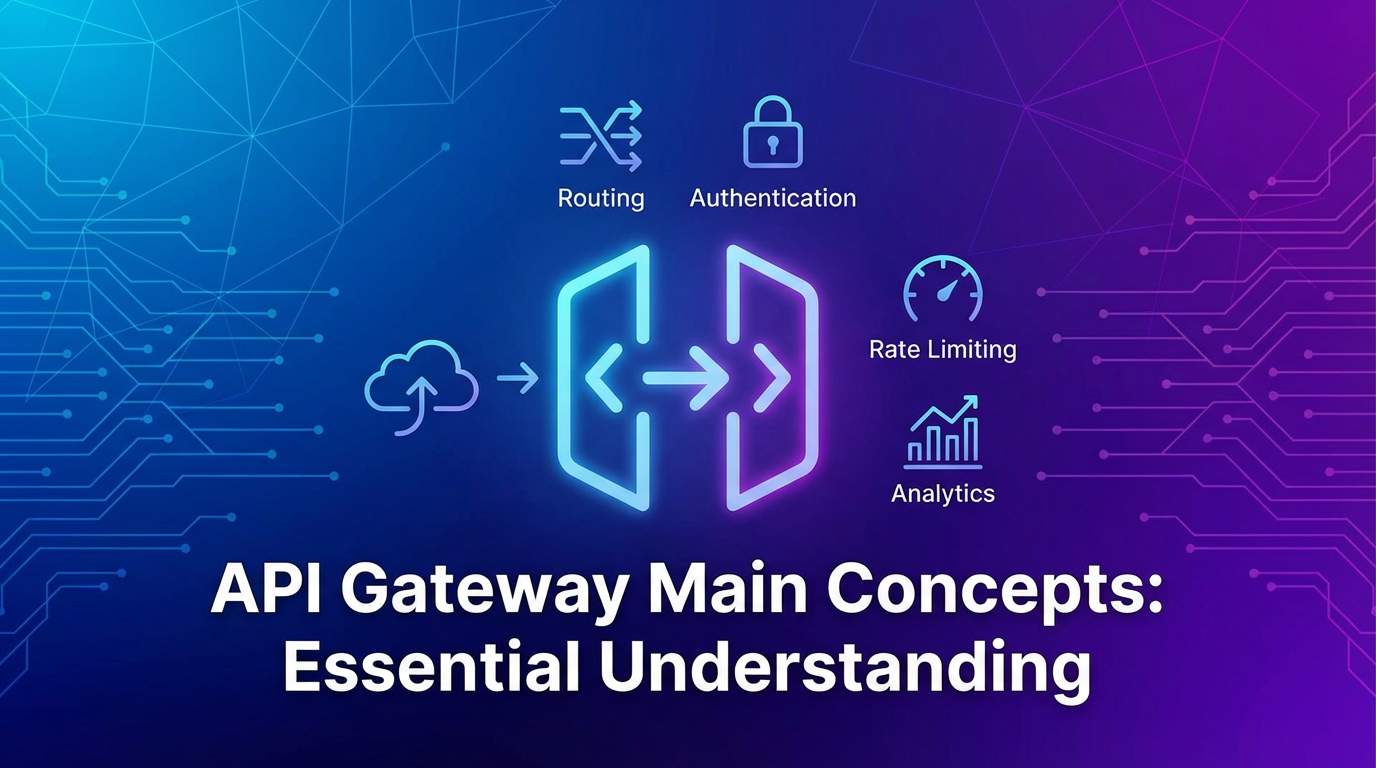
At its core, an API Gateway serves as a single entry point for all client requests into a microservices ecosystem or a complex backend system. It acts as a reverse proxy that accepts API calls, aggregates necessary data from multiple services if required, and routes them to the appropriate backend services. More profoundly, it is an intelligent traffic cop, a security checkpoint, and a versatile translator, all rolled into one pivotal component.
An API gateway is not merely a simple load balancer or a basic reverse proxy. While it incorporates functionalities similar to these, its primary distinction lies in its ability to understand and process HTTP requests at a higher, application layer. It can interpret API contracts, enforce business policies, and perform transformations on requests and responses based on the context of the API being called.
Think of it as the highly capable concierge of a grand hotel. Guests (clients) don't need to know the intricate layouts of the various departments (backend services) or the specific rules for each. They simply approach the concierge, state their request (an API call), and the concierge (the API gateway) handles everything: * Authenticating the guest: Verifying identity and access rights. * Directing them to the correct department: Routing the request to the appropriate service. * Translating requests: Ensuring the guest's needs are understood by the department. * Ensuring smooth service: Applying rate limits, caching, and handling potential issues. * Aggregating information: Gathering data from multiple departments if the guest needs a composite answer.
In an architectural sense, the API gateway sits at the edge of the system, between the client applications and the backend services. All external traffic passes through it. This strategic position allows it to intercept, inspect, modify, and manage every API request and response, providing a centralized control plane for the entire API infrastructure. It offloads numerous cross-cutting concerns from individual microservices, allowing them to focus solely on their specific business logic, thereby adhering more closely to the single responsibility principle.
This centralized approach simplifies client interactions, enhances security, improves performance, and significantly reduces the operational complexity inherent in distributed systems. It transforms a potentially fragmented and vulnerable set of services into a cohesive, robust, and manageable API ecosystem.
Core Concepts and Functionalities of an API Gateway
The power of an API Gateway stems from its rich set of functionalities, each designed to address specific challenges in managing and exposing APIs. These core concepts form the bedrock of its utility and explain why it has become an indispensable part of modern architectures.
Request Routing and Dispatching
One of the most fundamental roles of an API Gateway is to act as an intelligent router for incoming requests. When a client sends an API call, it hits the gateway first. The gateway then analyzes the request – typically based on the URL path, HTTP method, headers, or query parameters – and determines which backend service should handle it.
- Dynamic Routing: Modern API gateways often integrate with service discovery mechanisms (like Kubernetes, Eureka, Consul) to dynamically locate available instances of a target service. This means services can be scaled up or down, or moved, without clients needing to update their configurations. The gateway maintains an up-to-date map of service locations.
- Path-Based and Host-Based Routing: A common pattern involves routing requests based on parts of the URL. For example, requests to
/users/*might go to the User Service, while requests to/products/*might go to the Product Catalog Service. Host-based routing routes requests based on the domain name (e.g.,api.example.comto one set of services,admin.example.comto another). - Load Balancing: While dedicated load balancers often sit in front of the gateway itself, an API gateway can also perform basic load balancing among multiple instances of the same backend service. This ensures that traffic is evenly distributed, preventing any single service instance from becoming overwhelmed and improving overall system resilience and performance. The gateway can employ various algorithms, such as round-robin, least connections, or IP hash, to distribute the load effectively.
- Traffic Splitting: More advanced routing capabilities include traffic splitting, allowing a percentage of requests to be routed to a new version of a service (e.g., for canary deployments or A/B testing), while the majority still goes to the stable version. This enables gradual rollouts and minimizes risk.
This intelligent routing mechanism abstracts the internal topology of the microservices from the clients, providing a clean, stable public interface even as the backend evolves.
Authentication and Authorization
Centralizing security at the API Gateway is perhaps one of its most significant advantages. Instead of each microservice being responsible for authenticating every incoming request and checking authorization policies, the gateway can handle these concerns upfront.
- Unified Authentication: The gateway can act as the sole point for authenticating client identities. It can support various authentication schemes, including:
- OAuth2/OIDC: Common for user-based authentication, where the gateway validates access tokens issued by an identity provider.
- JWT (JSON Web Tokens): The gateway can validate the signature and claims of JWTs, ensuring they are authentic and not expired, and then forward relevant user identity information to backend services.
- API Keys: For machine-to-machine communication, the gateway can validate API keys against a registered list or a secure store.
- Mutual TLS (mTLS): Ensuring both client and server authenticate each other using digital certificates, crucial for high-security scenarios.
- Centralized Authorization: Once a client is authenticated, the gateway can apply granular authorization policies. This involves checking if the authenticated user or application has the necessary permissions to access a particular API endpoint or perform a specific action. This often leverages Role-Based Access Control (RBAC) or Attribute-Based Access Control (ABAC), where the gateway inspects the user's roles or attributes (from JWT claims, for example) against predefined policies.
- Reduced Security Burden on Services: By offloading these critical security functions, individual microservices can become simpler and more focused on their business logic. They receive requests that are already authenticated and authorized by the gateway, significantly reducing the attack surface and the complexity of securing each service independently. This consistency in security enforcement is vital for maintaining a robust and trustworthy API ecosystem.
The ability to enforce security policies uniformly at the edge makes the API Gateway a formidable defense line against unauthorized access and malicious activity. Moreover, platforms like APIPark offer advanced features such as "API Resource Access Requires Approval," ensuring that callers must subscribe to an API and await administrator approval before they can invoke it, further preventing unauthorized API calls and potential data breaches.
Rate Limiting and Throttling
To protect backend services from overload, prevent abuse (e.g., DDoS attacks, excessive scraping), and ensure fair usage among different consumers, API gateways implement rate limiting and throttling.
- Rate Limiting: This mechanism restricts the number of requests a client can make to an API within a specific timeframe. For instance, a client might be allowed 100 requests per minute. If this limit is exceeded, subsequent requests are rejected, usually with an HTTP 429 "Too Many Requests" status code.
- Algorithms: Common algorithms include:
- Fixed Window: A simple approach where a counter resets after a fixed time interval. If the counter reaches the limit within the window, new requests are blocked.
- Sliding Window Log: More accurate, it tracks timestamps of each request and removes old ones, giving a better moving average.
- Token Bucket: A flexible approach where tokens are added to a bucket at a fixed rate. Each request consumes a token. If the bucket is empty, requests are denied. This allows for bursts of traffic up to the bucket's capacity.
- Algorithms: Common algorithms include:
- Throttling: While often used interchangeably with rate limiting, throttling typically refers to smoothing out traffic rather than strictly limiting counts. It might involve delaying requests or prioritizing certain types of traffic over others, especially during peak loads, to prevent the backend from being overwhelmed and ensure service quality for critical consumers.
- Granularity: Rate limits can be applied at various granularities: per-IP address, per-user, per-API key, per-tenant, or even per API endpoint. This allows for fine-tuned control over resource consumption and can be critical for monetized API products.
- Impact: By effectively managing the flow of requests, the API Gateway ensures the stability and availability of backend services, protects valuable resources, and maintains a consistent quality of service for all legitimate users. Without it, a single misbehaving client or a sudden traffic surge could easily bring down an entire system.
Caching
Caching is a powerful technique employed by API gateways to improve performance, reduce latency, and decrease the load on backend services. If multiple clients request the same data frequently, the gateway can serve cached responses instead of forwarding every request to the backend.
- How it Works: When a request arrives, the gateway first checks its cache. If a valid, non-expired response for that request is found (a cache hit), it serves the cached data directly to the client. Only if the response is not in the cache or has expired (a cache miss) does the gateway forward the request to the backend service. Once the backend responds, the gateway stores this response in its cache for future requests.
- HTTP Caching Semantics: The API gateway adheres to standard HTTP caching headers (like
Cache-Control,Expires,ETag,Last-Modified) to determine cacheability and validity. This allows backend services to control how their data is cached. - Types of Caching:
- In-memory Cache: Fastest, but limited by the gateway's memory. Suitable for frequently accessed, small, and short-lived data.
- Distributed Cache: Utilizes external caching systems (like Redis, Memcached) to store cached data, allowing multiple gateway instances to share the same cache and providing greater scalability and persistence.
- Invalidation Strategies: Managing cache invalidation is crucial to ensure clients always receive fresh data when necessary. Strategies include time-based expiration, explicit invalidation (e.g., a backend service notifying the gateway that data has changed), or event-driven invalidation.
- Benefits: Caching significantly reduces response times for clients, minimizes the computational burden on backend services, and lowers operational costs, especially for read-heavy APIs. It's particularly effective for static or semi-static data that doesn't change frequently.
Request and Response Transformation
Modern applications often require flexible data formats and communication protocols. The API Gateway acts as a powerful mediation layer, transforming requests and responses to suit the needs of both clients and backend services.
- Payload Modification: The gateway can modify the request body before forwarding it to a backend service or modify the response body before sending it back to the client. This includes:
- Schema Transformation: Converting between different data formats (e.g., XML to JSON, or older JSON schemas to newer ones).
- Data Masking/Redaction: Removing sensitive information from responses before they reach the client (e.g., masking credit card numbers).
- Data Augmentation: Adding contextual information to requests (e.g., user ID after authentication) or enriching responses from backend services.
- Header Manipulation: It can add, remove, or modify HTTP headers. For instance, injecting authentication tokens for backend services, adding correlation IDs for tracing, or removing internal headers before sending responses to external clients.
- Protocol Translation: In some advanced scenarios, an API gateway might translate between different communication protocols. For example, a client making a RESTful HTTP call might trigger a gRPC call to a backend service, with the gateway handling the conversion.
- API Versioning Support: Transformations are particularly useful for managing API versions. The gateway can translate requests from an older API version to a newer backend service interface, allowing clients to continue using old versions while the backend evolves. This provides a crucial layer of backward compatibility, mitigating the impact of changes on consumers.
- Data Aggregation and Fan-out: A single client request might require data from multiple backend services. The API gateway can handle this aggregation logic: it sends requests to several services concurrently, collects their responses, combines them into a single, cohesive response, and then sends it back to the client. Conversely, a single client request might trigger multiple internal API calls (fan-out) to update various services. This pattern is common in "Backend for Frontend" (BFF) architectures.
This transformation capability allows clients and backend services to evolve independently, reducing tight coupling and increasing the overall flexibility and maintainability of the system.
Monitoring, Logging, and Analytics
Observability is paramount in distributed systems, and the API Gateway provides a centralized vantage point for gathering critical operational data. Since all traffic flows through it, the gateway is perfectly positioned to capture comprehensive logs and metrics.
- Centralized Logging: The API Gateway can record every detail of each API call, including:
- Request headers, body, and method.
- Response status, headers, and body.
- Client IP address and user agent.
- Backend service latency and response time.
- Errors and anomalies. This centralized logging simplifies troubleshooting and provides a holistic view of API interactions. Platforms like APIPark provide "Detailed API Call Logging," recording every aspect to help businesses quickly trace and troubleshoot issues, ensuring system stability and data security.
- Performance Metrics: The gateway can track key performance indicators (KPIs) such as request volume, average response times, error rates, and resource utilization (CPU, memory). These metrics are invaluable for identifying bottlenecks, capacity planning, and ensuring the health of the API ecosystem.
- Integration with Monitoring Tools: Typically, API gateways integrate seamlessly with external monitoring and alerting systems (e.g., Prometheus, Grafana, ELK Stack, Splunk). This allows operations teams to visualize performance trends, set up alerts for critical issues, and respond proactively to potential problems.
- Powerful Data Analysis: By collecting and analyzing historical call data, the gateway can display long-term trends and performance changes. This predictive analysis helps businesses with preventive maintenance, anticipating issues before they occur, optimizing resource allocation, and understanding API usage patterns for business intelligence. APIPark, for example, highlights its "Powerful Data Analysis" capabilities to aid in preventive maintenance.
- Traceability and Correlation IDs: The gateway can inject unique correlation IDs into requests as they enter the system and ensure these IDs are propagated to all subsequent backend services. This enables end-to-end tracing of a single request across multiple microservices, a crucial capability for debugging complex distributed transactions.
The centralized observability provided by the API Gateway transforms fragmented operational data into actionable insights, making the management of complex API landscapes significantly more efficient and robust.
Circuit Breaking and Fault Tolerance
In a microservices architecture, a failure in one service can rapidly cascade and bring down other dependent services, leading to a system-wide outage. The API Gateway acts as a crucial line of defense against such cascading failures by implementing fault tolerance patterns like circuit breaking.
- Circuit Breaker Pattern: Inspired by electrical circuit breakers, this pattern prevents a failing service from continuously receiving requests, thus giving it time to recover and protecting upstream services from suffering due to its unresponsiveness.
- States: A circuit breaker typically has three states:
- Closed: The default state, requests pass through normally. If the error rate exceeds a predefined threshold, the circuit transitions to Open.
- Open: All requests to the failing service are immediately rejected (fail-fast) without even attempting to call the backend. After a configurable timeout, it transitions to Half-Open.
- Half-Open: A small number of "test" requests are allowed to pass through to the backend. If these requests succeed, the circuit returns to Closed. If they fail, it immediately goes back to Open.
- States: A circuit breaker typically has three states:
- Timeouts and Retries: The gateway can enforce timeouts for backend service calls. If a service doesn't respond within a specified duration, the gateway can terminate the request, preventing clients from waiting indefinitely and releasing resources. It can also implement retry logic for transient failures, but with careful consideration to avoid overwhelming a struggling service.
- Bulkheads: Similar to the compartments in a ship, bulkheads isolate failures. The API gateway can allocate separate resource pools (e.g., thread pools or connection limits) for different backend services. This ensures that a failure or slowdown in one service does not consume all resources and impact the availability of other unrelated services.
- Fallbacks: In case of a service failure or a circuit breaker opening, the API gateway can be configured to provide fallback responses (e.g., default data, cached data, or a generic error message) to clients instead of a raw error. This improves the user experience by gracefully degrading functionality.
By implementing these fault tolerance mechanisms, the API Gateway significantly enhances the resilience and stability of the entire system, ensuring that transient issues in individual services do not lead to widespread outages.
API Versioning
As APIs evolve, new functionalities are added, existing ones are modified, and sometimes older ones are deprecated. Managing these changes without disrupting existing client applications is a critical challenge, and the API Gateway plays a pivotal role in facilitating smooth API versioning.
- Strategies for Versioning: The gateway can support various versioning strategies:
- URL Path Versioning: E.g.,
/v1/users,/v2/users. This is intuitive and clear but can lead to bloated URLs. - Header Versioning: E.g.,
Accept: application/vnd.example.v1+json. This keeps URLs clean but is less visible. - Query Parameter Versioning: E.g.,
/users?api-version=1. Simple but can be easily missed.
- URL Path Versioning: E.g.,
- Backward Compatibility: The gateway can maintain multiple versions of an API concurrently, allowing older clients to continue using their existing API version while newer clients adopt the latest. As discussed in transformations, the gateway can translate requests from an older version to the new backend interface, ensuring clients are decoupled from internal service changes.
- Deprecation and Decommissioning: When an API version is deprecated, the gateway can be configured to gradually transition traffic away from it, eventually blocking requests to decommissioned versions, often returning appropriate HTTP status codes (e.g., 410 Gone).
- Simplified API Evolution: By abstracting version management at the gateway, backend services can evolve their APIs more freely without immediately breaking existing clients. This provides a buffer and allows for controlled, phased migrations, minimizing disruption and ensuring a stable API consumption experience. The gateway is instrumental in "End-to-End API Lifecycle Management," assisting with managing the entire lifecycle of APIs, from design and publication to invocation and decommissioning.
Developer Portal Integration
While not a core functionality within the gateway itself, the API Gateway is a critical component that feeds into and integrates with a developer portal. A developer portal is a self-service website where API consumers (developers) can discover, learn about, register for, test, and subscribe to APIs.
- Centralized API Catalog: The API Gateway's configuration, including available APIs, their endpoints, security requirements, and rate limits, forms the authoritative source for the API catalog displayed in the developer portal.
- Self-Service Onboarding: Through the portal, developers can register their applications, obtain API keys or credentials, and subscribe to specific APIs. The gateway then enforces these subscriptions and credentials.
- Documentation and Testing: The portal presents comprehensive API documentation (often generated from OpenAPI/Swagger specifications), and the gateway provides the live endpoints for developers to test their integrations directly within the portal.
- Usage Analytics: Data collected by the API Gateway (logs, metrics) can be exposed through the developer portal, allowing API consumers to monitor their own usage, performance, and billing information.
- Team Collaboration and Sharing: Platforms like APIPark, which offer an "API Service Sharing within Teams" feature, demonstrate how a centralized platform, often powered by an underlying gateway, can display all API services, making it easy for different departments and teams to find and use required API services. This fosters internal collaboration and accelerates development by promoting API reuse.
This integration transforms the technical role of the API gateway into a business enabler, fostering a vibrant ecosystem around the organization's APIs. APIPark, as an open-source AI gateway and API management platform, encapsulates many of these features, from quick integration of AI models to unified API formats and end-to-end API lifecycle management, positioning itself as a comprehensive solution for modern API governance. Its developer portal aspect allows for sharing and management, making it easier to expose and manage APIs effectively.
Types of API Gateways
The market offers a diverse range of API Gateway solutions, each with its own strengths, deployment models, and target use cases. Understanding these categories helps in selecting the right gateway for specific organizational needs.
- Proprietary/Commercial Gateways: These are enterprise-grade solutions offered by vendors, often as part of a broader API management suite. They typically come with extensive features, dedicated support, intuitive UIs, and robust analytics dashboards. Examples include:
- Apigee (Google Cloud): A comprehensive API management platform offering full lifecycle management, advanced security, analytics, and monetization capabilities.
- AWS API Gateway: A fully managed service that allows developers to create, publish, maintain, monitor, and secure APIs at any scale. Deeply integrated with AWS ecosystem.
- Azure API Management (Microsoft Azure): Similar to AWS API Gateway, offering a fully managed solution with enterprise-grade features and integration with Azure services.
- Kong Enterprise: Offers advanced functionalities, plug-ins, and enterprise-grade support on top of its open-source core.
- MuleSoft Anypoint Platform: Provides a unified platform for API management, integration, and orchestration. These solutions are often chosen by larger enterprises requiring extensive features, scalability, and professional support, though they can come with significant licensing costs and potential vendor lock-in.
- Open-Source Gateways: These solutions offer flexibility, community support, and the advantage of no direct licensing costs, making them popular among startups, mid-sized companies, and organizations seeking greater control and customization. Examples include:
- Kong Community Edition: A lightweight, fast, and flexible API gateway built on Nginx and Lua, extensible with plugins.
- Apache APISIX: A dynamic, real-time, high-performance Cloud-Native API gateway that provides rich traffic management features such as load balancing, dynamic upstream, canary release, circuit breaking, authentication, observability, etc.
- Tyk: An open-source API gateway and management platform known for its performance and feature set.
- Ocelot: An open-source .NET Core API Gateway. Open-source options like these empower developers with transparency, extensibility, and the ability to tailor the gateway to very specific requirements. It's in this category that we find solutions like APIPark, which is an open-source AI gateway and API management platform. Launched under the Apache 2.0 license, APIPark is designed to help developers and enterprises manage, integrate, and deploy AI and REST services with ease, offering features like quick integration of 100+ AI models, unified API formats for AI invocation, and prompt encapsulation into REST APIs, all while providing performance rivalling Nginx with remarkable TPS capabilities.
- Homegrown/Custom Gateways: Some organizations, especially those with very unique requirements or a strong engineering culture, choose to build their own API gateway from scratch. This approach offers ultimate control and customization but comes with significant development, maintenance, and operational overhead. It requires a deep understanding of network programming, security, and distributed systems. While it avoids vendor lock-in, it shifts the burden of maintaining and evolving the gateway entirely onto the in-house team, which can be a substantial long-term cost. This is generally only advisable for organizations with specific, unmet needs and ample resources.
- Hybrid Gateways: Many modern architectures leverage a hybrid approach, deploying some gateway functionalities in the cloud (e.g., for public-facing APIs) and others on-premise (e.g., for internal enterprise APIs or legacy systems). This allows organizations to take advantage of cloud scalability and managed services while maintaining control over sensitive data or legacy integrations within their private data centers.
The choice of API gateway depends on factors such as organizational size, budget, technical expertise, existing infrastructure, security requirements, and the specific functionalities needed. For instance, a startup might find an open-source solution like APIPark ideal for its flexibility and cost-effectiveness, especially with its focus on AI integration, while a large enterprise might opt for a comprehensive commercial platform.
Benefits of Using an API Gateway
The strategic placement and comprehensive functionalities of an API Gateway yield a multitude of benefits that profoundly impact the design, development, security, and operational efficiency of modern software systems.
- Simplified Client-Side Development: The most immediate benefit is the abstraction of backend complexity from client applications. Clients interact with a single, well-defined API Gateway endpoint, rather than needing to manage connections to numerous disparate microservices. This drastically simplifies client-side routing, error handling, and data aggregation logic, allowing client developers to focus on user experience rather than intricate backend integration details. This leads to faster development cycles for client applications.
- Enhanced Security: By centralizing authentication, authorization, and other security policies at the gateway, organizations can establish a consistent and robust security posture. The gateway acts as the primary defense line, filtering malicious requests, enforcing access controls, and potentially integrating with Web Application Firewalls (WAFs) or DDoS protection services. This reduces the attack surface on individual microservices and ensures that security rules are uniformly applied, minimizing the risk of misconfigurations or vulnerabilities within individual services. Features like APIPark's "API Resource Access Requires Approval" further bolster this by adding an explicit subscription and approval layer.
- Improved Performance and Scalability: The API Gateway contributes significantly to system performance and scalability through several mechanisms:
- Caching: By serving cached responses for frequently requested data, it reduces the load on backend services and slashes response times.
- Rate Limiting and Throttling: It protects backend services from being overwhelmed by excessive traffic, ensuring their availability and stable performance.
- Load Balancing: Distributing requests across multiple service instances prevents bottlenecks and allows for horizontal scaling of backend services without client-side awareness.
- Reduced Network Hops: For aggregated requests, the gateway can make multiple internal calls more efficiently than a client making numerous external calls.
- Increased Resilience and Fault Tolerance: Implementing circuit breakers, timeouts, and bulkheads at the gateway level prevents cascading failures. If one backend service experiences issues, the gateway can isolate that failure, prevent requests from overloading it, and even provide fallback responses, ensuring that the overall system remains operational and responsive. This significantly improves the system's ability to withstand transient failures and maintain a high level of availability.
- Better Observability: As the central point of ingress, the API Gateway provides an unparalleled vantage point for collecting comprehensive logs, metrics, and tracing information for all API traffic. This centralized observability simplifies monitoring, troubleshooting, and auditing. Detailed API call logs and powerful data analysis, as highlighted by APIPark, enable deep insights into API usage, performance trends, and potential issues, facilitating proactive maintenance and informed decision-making.
- Easier API Management and Evolution: The gateway facilitates smooth API versioning, allowing backend services to evolve independently without breaking existing client applications. It provides a control plane for managing the entire API lifecycle, including publishing, deprecating, and decommissioning APIs. Request and response transformations enable backward compatibility and allow for flexible adaptation to different client requirements, greatly simplifying API governance and evolution. APIPark's "End-to-End API Lifecycle Management" is a prime example of this benefit.
- Microservices Decoupling: The API Gateway serves as a strong decoupling layer between clients and backend microservices. Clients are insulated from changes in the internal service topology, instance locations, or even underlying protocols. This allows microservices teams to innovate, deploy, and scale their services independently, fostering agility and accelerating product delivery.
- Cost Efficiency: By centralizing cross-cutting concerns (security, logging, rate limiting), the API Gateway reduces the need to implement and maintain these functionalities in every single microservice. This saves development effort, reduces code duplication, and streamlines operational processes, leading to overall cost efficiencies in development and maintenance. For instance, APIPark, being open source and offering high performance, can be a cost-effective solution for managing AI and REST APIs without hefty licensing fees, while providing enterprise-level capabilities.
- Enabling AI Integration: With specialized AI gateways like APIPark, organizations gain the unique benefit of integrating diverse AI models with a unified management system. This simplifies authentication, cost tracking, and standardizes request formats, making AI invocation much more manageable and cost-effective. Prompt encapsulation into REST API allows for quick creation of new AI-powered APIs, accelerating AI adoption and innovation.
In summary, the API Gateway is not just a technical component; it is a strategic asset that underpins the success of modern, distributed architectures, enabling organizations to build, secure, and manage their API ecosystems with unprecedented efficiency and confidence.
APIPark is a high-performance AI gateway that allows you to securely access the most comprehensive LLM APIs globally on the APIPark platform, including OpenAI, Anthropic, Mistral, Llama2, Google Gemini, and more.Try APIPark now! 👇👇👇
Challenges and Considerations for API Gateway Implementation
While the benefits of an API Gateway are compelling, its implementation is not without challenges and requires careful consideration to ensure it effectively serves its purpose without introducing new bottlenecks or complexities.
- Single Point of Failure (SPOF): Ironically, by centralizing traffic, the API Gateway can become a single point of failure. If the gateway goes down, all traffic to the backend services is halted, effectively bringing the entire application to a standstill.
- Mitigation: This critical risk must be addressed through robust high availability (HA) and disaster recovery strategies. This involves deploying multiple gateway instances across different availability zones or regions, utilizing load balancers (in front of the gateways) to distribute traffic, and implementing automated failover mechanisms. For example, APIPark supports cluster deployment to handle large-scale traffic, directly addressing this concern.
- Performance Overhead: Introducing an API Gateway adds an extra hop in the request-response chain, which inherently introduces a small amount of latency. While often negligible, for extremely low-latency applications, this overhead needs to be measured and optimized.
- Mitigation: Choosing a high-performance gateway solution, optimizing its configuration (e.g., efficient routing rules, minimal transformations), utilizing caching effectively, and ensuring the underlying infrastructure is robust are crucial. Performance benchmarks, such as APIPark achieving over 20,000 TPS with modest resources, indicate that high performance is achievable with well-engineered gateways.
- Complexity of Configuration and Management: As the central control point, the API Gateway can accumulate a significant amount of configuration: routing rules, security policies, rate limits, transformation logic, caching settings, etc. Managing this complexity, especially in large, dynamic environments, can be challenging.
- Mitigation: Utilizing declarative configurations (e.g., YAML, JSON), leveraging automation tools (IaC - Infrastructure as Code), and integrating with CI/CD pipelines for automated deployment and testing of gateway configurations are essential. A user-friendly administrative interface, common in commercial and mature open-source solutions, also helps.
- Vendor Lock-in (for Commercial Solutions): Adopting a proprietary API Gateway solution can lead to vendor lock-in, making it difficult and costly to switch to another platform later. The configuration, policies, and integrations can be tightly coupled to the vendor's ecosystem.
- Mitigation: Thoroughly evaluating the vendor's ecosystem, understanding migration paths, and considering open standards and open-source alternatives like APIPark (which offers the flexibility of Apache 2.0 license) can reduce this risk.
- Operational Overhead: Deploying, monitoring, maintaining, and troubleshooting the API Gateway itself adds to the operational burden. It requires dedicated attention from operations teams to ensure its health and performance.
- Mitigation: Leveraging managed gateway services (cloud-based), implementing robust monitoring and logging, and having well-defined operational procedures are vital. The ease of deployment, like APIPark's 5-minute quick-start script, can significantly reduce initial operational friction.
- Granular Control vs. Abstraction: There's a balance to strike between abstracting away backend complexity for clients and still providing enough granular control over specific API behaviors. Over-abstraction can hide critical details, while too much exposure defeats the purpose of the gateway.
- Mitigation: Carefully design the API contracts exposed by the gateway and ensure that transformations are applied judiciously, only where necessary, to achieve the desired balance.
- Deployment Strategies: The API Gateway can be deployed in several ways, each with trade-offs:
- Shared Gateway: A single gateway instance or cluster serves all microservices. Simplifies management but can become a bottleneck.
- Sidecar Gateway: Each microservice has its own dedicated gateway instance (often in a service mesh context). Provides strong isolation but increases resource consumption and operational complexity.
- Backend for Frontend (BFF) Pattern: Multiple, specialized gateways are deployed, each tailored to a specific client type (e.g., one for web, one for mobile). Reduces client-side aggregation but increases the number of gateways to manage.
- Tenant Isolation: For multi-tenant applications, ensuring independent APIs, access permissions, and configurations for each tenant while sharing underlying infrastructure, as offered by APIPark, is a crucial consideration.
- Security Vulnerabilities: While the gateway enhances overall security, it also becomes a prime target for attacks. A vulnerability in the gateway itself could have catastrophic consequences.
- Mitigation: Regular security audits, keeping the gateway software updated, strict access control to gateway configurations, and integration with advanced threat detection systems are paramount.
Addressing these considerations proactively during the design and planning phases is essential for a successful API Gateway implementation, ensuring it becomes a powerful enabler rather than an Achilles' heel for the system.
Real-World Use Cases and Industry Applications
The versatility and strategic importance of API Gateways have led to their widespread adoption across various industries and technological landscapes. Their ability to manage complexity, enhance security, and improve performance makes them invaluable for diverse use cases.
- E-commerce Platforms: In modern e-commerce, customer experiences are driven by highly dynamic and personalized interactions. An API Gateway is crucial for orchestrating requests across numerous microservices:
- A user request to view a product page might trigger calls to the product catalog service, inventory service, user recommendations service, pricing service, and review service, with the gateway aggregating these responses into a single view.
- Security is paramount for transactions, with the gateway handling authentication for user sessions, authorization for payment processing, and rate limiting to prevent bots or fraudulent activities.
- Caching product information at the gateway level significantly speeds up page load times during peak shopping seasons.
- Mobile Backend for Frontend (BFF) Patterns: For mobile applications, network latency and bandwidth conservation are critical. The BFF pattern involves creating a separate API gateway (or a set of specialized gateways) specifically tailored for each client type (e.g., one for iOS, one for Android, one for web).
- These specialized gateways aggregate and transform data from multiple backend services into a format optimized for the specific mobile client, reducing the number of requests the mobile app needs to make and minimizing payload sizes.
- They might also handle client-specific authentication flows or integrate with mobile push notification services.
- IoT Device Management: Internet of Things (IoT) deployments involve a vast number of devices communicating with backend platforms. An API Gateway is essential for managing this massive influx of diverse requests:
- It acts as a secure ingestion point for telemetry data from devices, handling device authentication (e.g., using client certificates or unique device IDs) and authorization.
- It can apply rate limits to prevent individual misbehaving devices from flooding the system and can route data to appropriate processing services (e.g., time-series databases, analytics engines).
- Protocol translation might be needed, as IoT devices often use lightweight protocols (MQTT, CoAP) that need to be translated to HTTP for backend services.
- Fintech (Financial Technology): In the highly regulated and security-conscious financial industry, API Gateways are critical for:
- Robust Security: Enforcing stringent authentication (e.g., mTLS, multi-factor authentication) and authorization policies for sensitive financial transactions and customer data. Compliance with regulations like PSD2 often necessitates a strong gateway layer.
- Auditability and Logging: Providing comprehensive, tamper-proof logs of all API interactions, crucial for regulatory compliance and forensic analysis.
- Open Banking APIs: Facilitating secure and controlled access for third-party developers to financial data and services, while adhering to strict security and privacy standards.
- Enterprise Integration and Legacy Systems: Large enterprises often have a complex mix of modern microservices and legacy monolithic applications. An API Gateway can serve as an integration layer:
- It can expose a unified, modern RESTful API for legacy systems that might only have SOAP or other proprietary interfaces, abstracting away the underlying complexity and protocol differences.
- It allows new microservices to interact with older systems through a consistent API without direct coupling.
- It can also manage access to internal enterprise APIs, ensuring secure and controlled consumption by different internal departments or partner systems.
- AI Service Integration (with specific AI Gateways): As AI models become ubiquitous, integrating them into applications presents new challenges. An AI-focused API Gateway like APIPark is specifically designed to address these:
- It unifies the invocation of diverse AI models (e.g., LLMs, image recognition, NLP) under a single API endpoint, abstracting away model-specific APIs.
- It can standardize prompt formats, handle model-specific input/output transformations, and manage authentication and cost tracking for various AI providers.
- It allows developers to quickly combine AI models with custom prompts into new, reusable REST APIs, accelerating the development of AI-powered features (e.g., sentiment analysis as a service).
These examples illustrate that the API Gateway is not a niche technology but a foundational component for building resilient, secure, and scalable distributed systems across virtually every industry undergoing digital transformation.
Integrating API Gateway with the Broader Ecosystem
An API Gateway rarely operates in isolation. It is a critical component that integrates with and complements other infrastructure and development tools to form a comprehensive, modern IT ecosystem. Understanding these integrations is key to deploying a truly effective gateway.
- Service Mesh (Complementary, Not Replacement): There's often confusion about the relationship between an API Gateway and a Service Mesh (e.g., Istio, Linkerd).
- An API Gateway typically manages north-south traffic (traffic from outside the cluster/system to inside). It focuses on edge concerns like authentication, rate limiting, and routing for external clients.
- A Service Mesh manages east-west traffic (traffic between services within the cluster). It handles service-to-service communication concerns like traffic management, fault injection, security (mTLS), and observability at a granular level for internal services.
- They are complementary: the API Gateway is the entry point, and once traffic is inside, the Service Mesh takes over for inter-service communication. Many organizations deploy an API Gateway at the edge of their Service Mesh to get the best of both worlds.
- CI/CD Pipelines (Continuous Integration/Continuous Deployment): For agile development and rapid deployment, the API Gateway's configuration must be treated as code and integrated into CI/CD pipelines.
- Automated Configuration: Changes to routing rules, security policies, rate limits, or transformations should be committed to version control and automatically deployed to the gateway through the pipeline.
- Testing: Automated tests can validate gateway configurations and ensure new deployments don't introduce regressions or security vulnerabilities. This ensures consistency, reduces manual errors, and speeds up release cycles.
- Containerization and Orchestration (Kubernetes): In cloud-native environments, API Gateways are typically deployed as containers orchestrated by platforms like Kubernetes.
- Scalability: Kubernetes can automatically scale gateway instances based on traffic load, ensuring high availability and performance.
- Service Discovery: The gateway can integrate with Kubernetes' service discovery mechanisms to dynamically route requests to backend services.
- In-cluster Gateways: Some solutions, like Nginx Ingress Controller or Kubernetes Ingress objects, act as lightweight API gateways within a Kubernetes cluster, though often a more feature-rich gateway is still used at the edge.
- API Management Platforms: Often, the API Gateway is a core component within a larger API management platform. Such platforms provide a comprehensive suite of tools for the entire API lifecycle.
- Design & Documentation: Tools for designing APIs (e.g., Swagger/OpenAPI editors) and generating documentation.
- Developer Portal: A self-service portal for API discovery, subscription, and testing, as discussed earlier.
- Monetization: Features for tracking API usage, billing, and pricing models.
- Lifecycle Management: Governance and workflows for publishing, versioning, deprecating, and decommissioning APIs. APIPark is an excellent example of such an integrated platform, explicitly defined as an "AI gateway and API management platform." It offers end-to-end API lifecycle management, from quick integration of AI models and prompt encapsulation to comprehensive logging and data analysis, providing a holistic solution for governing APIs.
- Identity and Access Management (IAM) Systems: The API Gateway integrates with external IAM systems (e.g., Okta, Auth0, Keycloak, or internal LDAP/Active Directory) to perform centralized authentication and retrieve user/application roles and permissions for authorization. This ensures a single source of truth for identity management across the enterprise.
- Monitoring and Logging Systems: As discussed, the API Gateway is a rich source of operational data. It integrates with external logging (e.g., ELK Stack, Splunk, DataDog) and monitoring systems (e.g., Prometheus, Grafana, New Relic) to export metrics and logs for real-time visibility, alerting, and long-term analysis.
This interconnectedness highlights that an API Gateway is not a standalone product but a crucial node in a sophisticated network of tools and services. Its effective deployment relies on seamless integration with the broader ecosystem, enabling automation, enhancing visibility, and maximizing the efficiency of API governance.
The Future of API Gateways
The digital landscape is in a constant state of flux, driven by technological advancements and evolving business demands. The API Gateway, as a pivotal component at the edge of distributed systems, is naturally evolving to meet these new challenges and opportunities.
- AI-Driven Capabilities and Intelligence at the Edge: The integration of Artificial Intelligence and Machine Learning into API Gateways is a significant emerging trend. This goes beyond just integrating with AI services. Future gateways will likely:
- Intelligent Traffic Management: Use ML to predict traffic patterns and dynamically adjust routing, rate limits, and caching strategies for optimal performance and resource utilization.
- Advanced Threat Detection: Employ AI to detect sophisticated anomaly patterns for DDoS attacks, bot activity, and other security threats in real-time, providing proactive defense.
- Automated API Generation/Optimization: Potentially assist in generating or optimizing API definitions based on usage patterns or business requirements.
- AI Service Specialization: Platforms like APIPark exemplify this future, specifically designed as an "AI gateway" to quickly integrate 100+ AI models, unify API formats for AI invocation, and encapsulate prompts into REST APIs. This specialization for AI services will become increasingly common as AI permeates all aspects of software.
- Edge Computing and Serverless Functions: As computing moves closer to the data source and serverless architectures gain traction, API Gateways will adapt:
- Distributed Gateways: Gateways will become more distributed, residing closer to the clients at the edge of the network, reducing latency for global users.
- Serverless Gateways: Integration with serverless functions will deepen, allowing gateway logic (e.g., transformations, custom authentication) to be implemented as lightweight serverless functions, scaling on demand and reducing operational overhead.
- Function-as-a-Service (FaaS) as Backend: The gateway will seamlessly route requests to serverless functions, acting as the interface to a function-driven backend.
- API-as-a-Product Paradigm: The trend of treating APIs as products, with clear business value, monetization strategies, and dedicated product management, will continue to shape API Gateway development:
- Enhanced Monetization Features: More sophisticated billing, subscription, and tiering capabilities built directly into or tightly integrated with the gateway.
- Business Intelligence from API Usage: Deeper analytics for product managers to understand API adoption, retention, and usage patterns, guiding API strategy.
- Self-Service and Governance: Greater emphasis on self-service developer portals and robust governance frameworks, often powered by the gateway's capabilities, to manage the complete API lifecycle effectively.
- Evolving Security Threats and Standards: As the threat landscape becomes more complex, API Gateways will need to continually evolve their security capabilities:
- Zero Trust Architectures: Increased adoption of "never trust, always verify" principles, with the gateway playing a central role in continuous authentication and authorization.
- Advanced Threat Intelligence: Integration with real-time threat intelligence feeds to identify and block known malicious actors or attack patterns.
- Compliance and Regulatory Requirements: Gateways will need to adapt to new data privacy regulations (e.g., GDPR, CCPA) and industry-specific compliance standards, offering features for data masking, audit trails, and access control necessary to meet these requirements.
- Standardization and Interoperability: Efforts towards greater standardization in API definitions (OpenAPI), security protocols, and gateway configurations will foster better interoperability and reduce fragmentation in the ecosystem. This will allow for easier migration between gateway solutions and more seamless integration with other tools.
The API Gateway is set to remain an indispensable component, not just as a traffic manager but as an intelligent, adaptive, and secure control plane that will continue to evolve at the forefront of distributed system architectures. Its future is tied to the broader trends of AI integration, cloud-native development, edge computing, and the increasing strategic importance of APIs as digital products.
Conclusion
The journey through the essential concepts of an API Gateway reveals its profound significance in the tapestry of modern software architecture. From its fundamental role as a single, intelligent entry point to its sophisticated functionalities spanning security, performance optimization, and fault tolerance, the API Gateway is far more than a simple intermediary. It is a strategic control plane that orchestrates interactions, enforces policies, and ensures the seamless operation of distributed systems, particularly within complex microservices environments.
We have explored how the API Gateway addresses the inherent complexities of direct client-service communication, simplifying client-side development, centralizing critical cross-cutting concerns, and significantly enhancing the overall security posture. Its capabilities in request routing, authentication, rate limiting, caching, data transformation, monitoring, and circuit breaking collectively contribute to building systems that are not only robust and scalable but also easier to manage and evolve. The diverse landscape of API Gateway types, from commercial powerhouses to flexible open-source solutions like APIPark – an open-source AI gateway and API management platform – offers organizations the flexibility to choose a solution that aligns with their specific needs, whether it's managing a plethora of AI models or governing traditional REST services.
While the implementation of an API Gateway introduces its own set of challenges, such as mitigating the risk of a single point of failure or managing configuration complexity, these can be effectively addressed through careful planning, robust architectural patterns, and seamless integration with the broader ecosystem, including service meshes, CI/CD pipelines, and cloud-native orchestration platforms. The real-world applicability of API Gateways across e-commerce, mobile backends, IoT, fintech, and enterprise integration underscores their universal value. Looking ahead, the evolution of API Gateways towards AI-driven intelligence, deeper integration with edge computing and serverless architectures, and enhanced capabilities for API-as-a-product models, signals their continued and growing importance in shaping the future of digital connectivity.
In essence, the API Gateway transforms a potentially chaotic network of services into an organized, secure, and highly performant API ecosystem. It empowers developers, operations teams, and business leaders to deliver innovative digital experiences with confidence, making it an indispensable component for any organization navigating the complexities of today's interconnected world. Its comprehensive governance capabilities, whether for traditional APIs or the burgeoning realm of AI services, position it as the linchpin for efficient, secure, and scalable API management.
Frequently Asked Questions (FAQs)
1. What is the fundamental difference between an API Gateway and a traditional reverse proxy or load balancer?
A traditional reverse proxy primarily forwards client requests to backend servers and can terminate SSL/TLS connections, while a load balancer distributes traffic across multiple backend instances to ensure high availability and performance. An API Gateway, while incorporating these functionalities, goes significantly further. It operates at the application layer, understanding API contracts and enforcing business logic. It can perform complex tasks like centralized authentication and authorization, rate limiting, request/response transformations, API versioning, caching, and even aggregate data from multiple backend services. Essentially, it adds an intelligent management and control layer specific to APIs, whereas reverse proxies and load balancers are more focused on network traffic management.
2. Why is an API Gateway considered crucial for microservices architectures?
In microservices, an application is broken down into many small, independent services. Without an API Gateway, clients would need to interact directly with numerous backend services, leading to client-side complexity, dispersed security, and fragmented cross-cutting concerns (like logging, monitoring, rate limiting). The API Gateway solves this by providing a single entry point, abstracting backend complexity, centralizing security enforcement, offloading common functionalities from individual services, and enabling graceful API evolution, thereby making microservices architectures more manageable, secure, and performant.
3. How does an API Gateway enhance the security of an API ecosystem?
An API Gateway significantly enhances security by centralizing critical security functions at the edge of the network. It acts as the primary defense mechanism, handling authentication (e.g., OAuth2, JWT, API Keys) and authorization (e.g., RBAC, ABAC) for all incoming API requests. This ensures consistent security policy enforcement, reduces the attack surface on individual microservices, and prevents unauthorized access or malicious traffic from reaching the backend. Additionally, features like rate limiting protect against DDoS attacks and brute-force attempts, while detailed logging aids in auditing and incident response.
4. Can an API Gateway also be used for internal (east-west) traffic between microservices, or is it primarily for external (north-south) traffic?
While API Gateways are primarily known for managing external (north-south) traffic from clients to backend services, they can be used for internal traffic in some scenarios, especially for larger internal APIs that need similar governance (e.g., rate limiting for internal consumers). However, for purely service-to-service communication within a cluster, a Service Mesh (like Istio or Linkerd) is generally a more specialized and efficient solution. Service Meshes focus on concerns like service discovery, inter-service authentication (mTLS), advanced traffic routing, and observability at a granular level for internal communication. Often, an API Gateway will manage north-south traffic at the edge, and then a Service Mesh will take over for the east-west traffic within the services layer.
5. What role does an API Gateway play in managing AI models and services, especially with new platforms emerging?
New specialized API Gateways, such as APIPark, are emerging to specifically address the unique challenges of managing AI models and services. They provide a unified interface to integrate a wide variety of AI models, abstracting away model-specific APIs and standardizing request data formats for AI invocation. This simplifies authentication, cost tracking, and ensures that changes in AI models or prompts do not affect dependent applications. Furthermore, these gateways enable users to quickly encapsulate custom prompts with AI models into new REST APIs, facilitating the rapid development and deployment of AI-powered features and services. They centralize management, enhance observability, and apply traditional gateway benefits (security, rate limiting) to the dynamic world of AI.
🚀You can securely and efficiently call the OpenAI API on APIPark in just two steps:
Step 1: Deploy the APIPark AI gateway in 5 minutes.
APIPark is developed based on Golang, offering strong product performance and low development and maintenance costs. You can deploy APIPark with a single command line.
curl -sSO https://download.apipark.com/install/quick-start.sh; bash quick-start.sh

In my experience, you can see the successful deployment interface within 5 to 10 minutes. Then, you can log in to APIPark using your account.

Step 2: Call the OpenAI API.