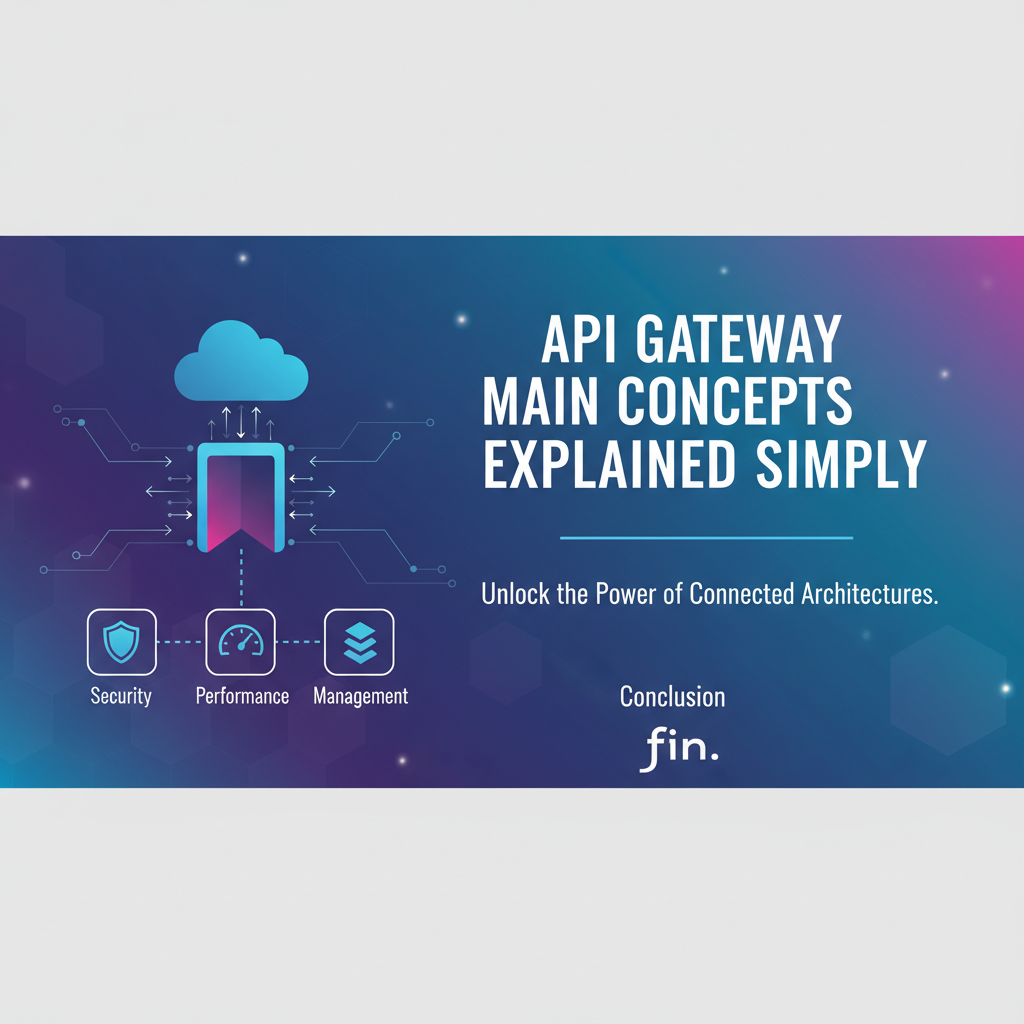
API Gateway Main Concepts Explained Simply
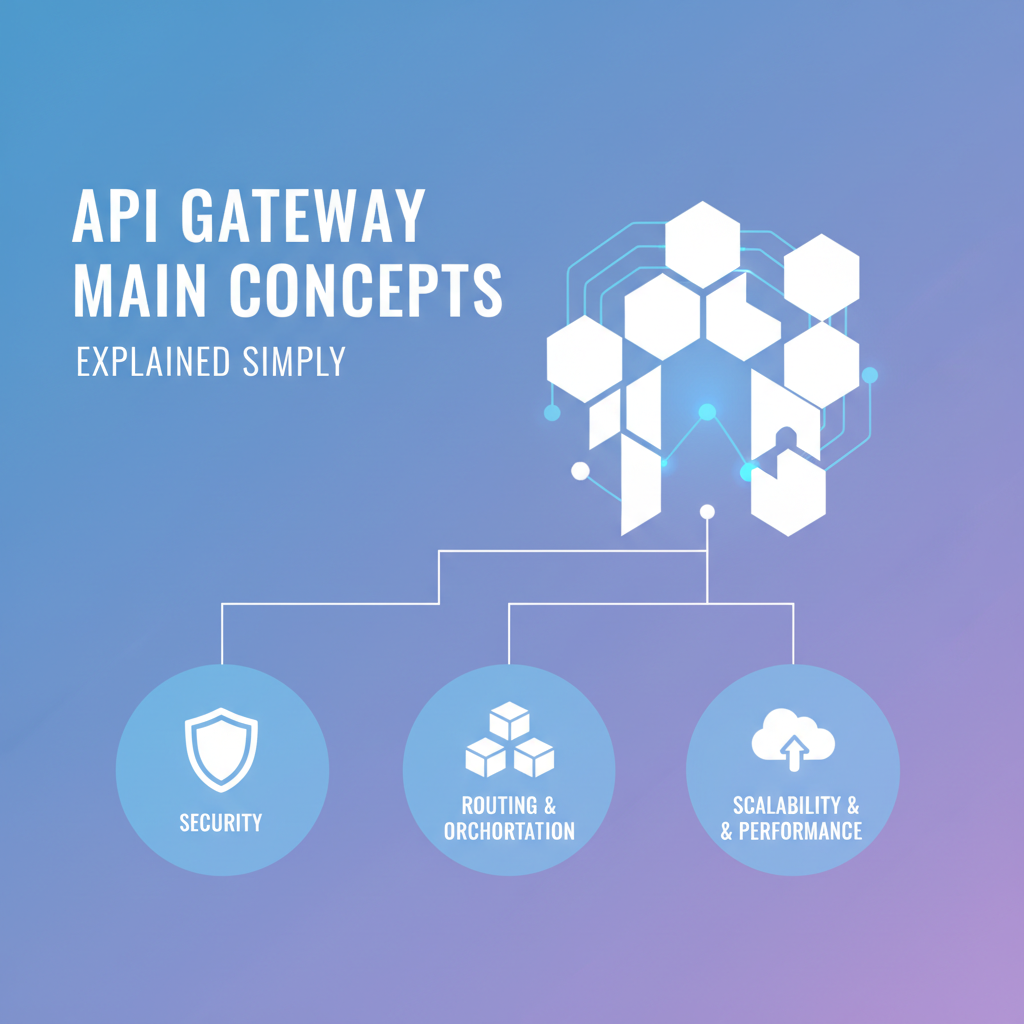


In the intricate tapestry of modern software architecture, where monolithic applications are increasingly giving way to distributed systems and microservices, managing the flow of data and requests becomes a paramount challenge. Imagine a bustling metropolis with countless individual businesses, each offering specialized services. Without a well-organized infrastructure, without clear roads and a central postal system, chaos would quickly ensue, leading to inefficiency, security breaches, and a frustrating experience for anyone trying to access these services. This analogy perfectly encapsulates the predicament faced by developers and organizations as their digital ecosystems expand. Applications are no longer standalone entities; they are constellations of interconnected services, each with its own API (Application Programming Interface), designed to communicate and exchange information.
The sheer volume of these APIs, the myriad protocols they might employ, and the diverse security requirements they demand can quickly become an unmanageable burden. Developers struggle with inconsistent authentication mechanisms, performance bottlenecks, and the daunting task of monitoring the health and usage of every single service. This is precisely where the concept of an API Gateway emerges not just as a convenience, but as an indispensable architectural component. An API gateway acts as a single, intelligent entry point for all API requests, orchestrating interactions between external clients and internal backend services. It’s like the central control tower for all air traffic, directing planes to their correct destinations, ensuring safety, and managing the flow efficiently. By centralizing common functionalities such as security, routing, and rate limiting, an API gateway simplifies the development experience, enhances system resilience, and provides a clear, consistent interface for consumers of your services. This comprehensive article aims to demystify the core concepts behind API gateways, explaining their functionalities, benefits, and critical role in modern distributed architectures in a clear and accessible manner.
What is an API Gateway? A Centralized Orchestrator
At its most fundamental level, an API gateway is a server that acts as an API frontend, sitting between clients and a collection of backend services. It takes all API requests, determines which services are responsible for fulfilling them, and routes the requests accordingly. But it’s far more than a simple reverse proxy or a load balancer. A sophisticated API gateway is imbued with intelligence, capable of applying a rich set of policies and transformations to requests and responses. It’s the gatekeeper, the bouncer, and the concierge all rolled into one, managing the interface between the chaotic outside world and the carefully constructed internal landscape of your applications.
Consider the complexity of a microservices architecture. A single client request might require data from several different backend services. Without an API gateway, the client would need to know the specific endpoints of each service, manage multiple network calls, and then aggregate the results itself. This tightly couples the client to the internal architecture, making changes difficult and increasing network overhead. The API gateway abstracts this complexity. It presents a simplified, unified API to the client, handling the internal orchestration, service discovery, and data aggregation seamlessly. This not only simplifies client development but also allows the internal services to evolve independently without impacting external consumers. It centralizes cross-cutting concerns that would otherwise need to be implemented in every single microservice, leading to redundancy and potential inconsistencies. Think of it as a universal translator and dispatcher for all your digital communications.
The introduction of an API gateway transforms a sprawling collection of individual API endpoints into a coherent and manageable system. It becomes the single point of contact for all external interactions, a crucial chokepoint where policies can be uniformly applied. This centralization dramatically improves consistency across your entire API landscape, ensuring that security measures, usage policies, and monitoring protocols are standardized. Furthermore, by decoupling clients from direct interaction with backend services, the gateway provides an invaluable layer of abstraction. This means backend services can be refactored, scaled, or even replaced without requiring client-side modifications, fostering greater agility and reducing the total cost of ownership for your software ecosystem. In essence, the API gateway transforms a potentially chaotic network of services into a well-ordered, efficient, and secure digital machine.
Key Concepts and Core Functionalities of an API Gateway
The power of an API gateway lies in its comprehensive suite of functionalities, each designed to address specific challenges in modern API management. Understanding these core concepts is crucial to appreciating the strategic value an API gateway brings to any distributed system.
Traffic Management and Routing
One of the primary responsibilities of an API gateway is intelligently directing incoming requests to the appropriate backend services. This isn't just about simple forwarding; it involves sophisticated logic to ensure reliability, performance, and scalability.
- Intelligent Routing: The gateway analyzes incoming requests based on various criteria such as URL path, HTTP headers, query parameters, or even the client's identity. Based on predefined rules, it forwards the request to the correct upstream service. For instance, requests to
/api/v1/usersmight go to the User Service, while/api/v1/productsmight go to the Product Catalog Service. This path-based routing is fundamental, but gateways can also perform more complex routing, like A/B testing, where a percentage of traffic is sent to a new version of a service. - Load Balancing: When multiple instances of a backend service are running, the API gateway distributes incoming requests across them to prevent any single instance from becoming overloaded. Common load balancing algorithms include round-robin (distributing requests sequentially), least connections (sending requests to the server with the fewest active connections), and IP hash (ensuring requests from the same client always go to the same server). This ensures high availability and optimal resource utilization, crucial for maintaining a responsive system under varying loads.
- Circuit Breakers: To enhance the resilience of the system, API gateways often implement circuit breaker patterns. If a backend service starts exhibiting errors or becomes unresponsive, the gateway can temporarily stop sending requests to it, "breaking the circuit." After a predefined period, it might try to send a few test requests to see if the service has recovered, "half-opening" the circuit. If the service is healthy, traffic resumes; otherwise, the circuit remains open. This prevents cascading failures, where one failing service brings down others by exhausting their resources waiting for a response, and dramatically improves the fault tolerance of the entire system.
- Retries and Timeouts: The gateway can also be configured to automatically retry failed requests to backend services, perhaps with an exponential backoff strategy, to overcome transient network issues or temporary service unavailability. Similarly, it enforces timeouts for backend responses, preventing client requests from hanging indefinitely if a service is slow or unresponsive. These features collectively contribute to a more robust and reliable API infrastructure.
Authentication and Authorization
Security is arguably the most critical aspect of any API gateway. It serves as the primary enforcement point for ensuring that only legitimate and authorized users or applications can access your backend services.
- Centralized Authentication: Instead of each microservice implementing its own authentication logic, the API gateway handles it centrally. When a request comes in, the gateway extracts authentication credentials (e.g., API keys, JWTs, OAuth tokens) and validates them against an identity provider. If the credentials are valid, the gateway allows the request to proceed; otherwise, it rejects it. This significantly reduces the security burden on individual services and ensures consistent authentication policies across the entire API landscape.
- Token Validation: For modern authentication protocols like OAuth2 and OpenID Connect, the gateway can validate access tokens (e.g., JSON Web Tokens or JWTs). It verifies the token's signature, expiration, and claims (scopes, user ID, etc.) to confirm its authenticity and integrity. Once validated, the gateway can inject relevant user or client information into the request headers before forwarding it to the backend service, allowing the service to perform fine-grained authorization without needing to re-authenticate.
- API Key Management: For simpler use cases, API keys provide a straightforward way to identify clients and track their usage. The API gateway can manage these keys, associating them with specific clients or applications and validating them with each incoming request. This allows for basic client identification and can be combined with rate limiting for usage control.
- Authorization Enforcement (RBAC/ABAC): Beyond authentication, the gateway can enforce authorization policies. This involves determining if an authenticated user or application has the necessary permissions to access a specific resource or perform a particular action. Role-Based Access Control (RBAC) assigns permissions based on user roles (e.g., administrator, guest), while Attribute-Based Access Control (ABAC) uses a more dynamic set of attributes (user attributes, resource attributes, environmental conditions) to make access decisions. By centralizing authorization, the gateway ensures that sensitive data and functionalities are protected consistently across all services.
Rate Limiting and Throttling
To protect backend services from overload, prevent abuse, and ensure fair usage among consumers, API gateways implement rate limiting and throttling mechanisms.
- Rate Limiting: This mechanism restricts the number of requests a client can make to an API within a specific time window. For example, a client might be limited to 100 requests per minute. If the client exceeds this limit, subsequent requests are rejected until the window resets. This is crucial for maintaining the stability and performance of your services, preventing denial-of-service (DoS) attacks, and ensuring that legitimate users have consistent access.
- Throttling: Similar to rate limiting, throttling manages the overall usage of an API. It can be applied at a broader level (e.g., per application, per user, or even globally across the gateway) to control the total load on the backend. Throttling often involves queuing requests when the limit is reached, processing them as resources become available, rather than outright rejecting them. This provides a smoother experience for clients during peak loads, allowing the system to gracefully degrade rather than fail catastrophically.
- Algorithms: Various algorithms power rate limiting, each with its own characteristics. The fixed window counter simply counts requests within a fixed time window; sliding window log stores timestamps of requests and removes old ones; sliding window counter is a hybrid that smooths out bursts at window edges; and leaky bucket models requests as water droplets filling a bucket, which leaks at a constant rate, handling bursts gracefully. The choice of algorithm depends on the specific requirements for fairness, resource allocation, and burst tolerance.
Caching
Caching at the gateway level can significantly improve API response times and reduce the load on backend services, especially for data that doesn't change frequently.
- Reduced Backend Load: When a client requests data that has been recently accessed and is stored in the gateway's cache, the gateway can serve the response directly without forwarding the request to the backend service. This drastically reduces the number of requests hitting the backend, conserving computational resources and reducing operational costs.
- Improved Performance: By serving cached responses, the gateway eliminates the network latency and processing time associated with backend service calls. This results in faster response times for clients, leading to a better user experience and potentially better SEO rankings for public-facing APIs.
- Cache Invalidation: A critical aspect of caching is knowing when cached data becomes stale and needs to be refreshed. API gateways support various invalidation strategies, such as time-to-live (TTL) policies (where cached items expire after a certain period), event-driven invalidation (where a backend service publishes an event to clear specific cache entries when data changes), or explicit invalidation via an administration API. Effective cache invalidation ensures that clients always receive up-to-date information when necessary.
- Types of Caching: Caching can be applied to full responses, specific data fragments, or even authentication tokens. The gateway might use in-memory caches for high-speed access or integrate with external distributed caching systems (like Redis or Memcached) for larger datasets and shared cache across multiple gateway instances.
Request/Response Transformation
The API gateway acts as a powerful intermediary, capable of modifying requests and responses on the fly to meet diverse integration needs.
- Data Aggregation: A common use case in microservices is when a single client request requires data from multiple backend services. The gateway can receive an incoming request, fan it out to several internal services, aggregate their responses, and then compose a single, unified response tailored for the client. This offloads complexity from the client and reduces the number of network calls it needs to make, making the client application simpler and more efficient.
- Protocol Translation: In heterogeneous environments, different backend services might use different communication protocols (e.g., some might expose REST APIs, others gRPC, or even SOAP). The gateway can act as a protocol translator, receiving requests in one format (e.g., RESTful HTTP) and converting them into another format required by the backend service. This allows clients to interact with a unified interface without needing to understand the underlying protocol diversity.
- Header Manipulation: The gateway can add, remove, or modify HTTP headers in both requests and responses. This is useful for injecting authentication tokens, tracing IDs, client metadata, or for removing sensitive internal headers before a response is sent to an external client. For example, it might add a
X-Request-IDheader for distributed tracing or removeServerheaders to obscure backend technology details. - Body Transformation: More advanced transformations involve modifying the request or response body. This could include converting data formats (e.g., XML to JSON, or vice versa), mapping field names, restructuring data structures, or even applying business logic to transform data payloads. This capability is invaluable when integrating systems with disparate data models or when a client requires a specific data shape that isn't directly provided by a backend service.
Monitoring, Logging, and Analytics
Observability is crucial for understanding the health and performance of your API ecosystem. An API gateway provides a centralized vantage point for collecting comprehensive operational data.
- Centralized Logging: Every request that passes through the API gateway can be logged, providing a detailed audit trail of all API interactions. These logs typically include information such as the request timestamp, client IP, request path, HTTP method, response status code, latency, and any errors encountered. Centralized logging simplifies troubleshooting, security auditing, and compliance efforts, offering a single source of truth for API traffic.
- Metrics Collection: The gateway collects a wealth of performance metrics, including the number of requests per second (RPS), average response times, error rates, cache hit ratios, and CPU/memory utilization. These metrics are vital for real-time monitoring, capacity planning, and identifying performance bottlenecks. They can be exported to monitoring systems like Prometheus or Datadog for visualization and alerting.
- Distributed Tracing: In microservices architectures, a single client request can trigger a chain of calls across multiple backend services. Distributed tracing tools (like Jaeger or Zipkin), often integrated with the gateway, allow you to visualize this entire request flow. The gateway injects a unique trace ID into the initial request, which is then propagated to all subsequent service calls, enabling developers to pinpoint exactly where latency occurs or errors originate within the complex service graph.
- Analytics and Reporting: By aggregating and analyzing the collected logs and metrics, API gateways can generate valuable insights into API usage patterns. This includes identifying top consumers, most popular endpoints, peak usage times, and error trends. These analytics help business teams understand how their APIs are being consumed, inform product development decisions, and identify opportunities for optimization or new revenue streams.
This is where platforms like APIPark truly shine. As an all-in-one AI gateway and API management platform, it provides robust logging and powerful data analysis capabilities. APIPark records every detail of each API call, enabling businesses to quickly trace and troubleshoot issues, ensuring system stability and data security. Furthermore, its powerful data analysis features analyze historical call data to display long-term trends and performance changes, helping businesses with preventive maintenance before issues occur. You can learn more about its capabilities at ApiPark.
Advanced Security
Beyond basic authentication and authorization, API gateways offer advanced security features to safeguard your API infrastructure from sophisticated threats.
- SSL/TLS Termination: The gateway can terminate SSL/TLS connections, encrypting and decrypting traffic between clients and the gateway. This offloads the computational overhead of encryption from backend services and ensures that all client-facing communication is secure. It also allows the gateway to inspect and apply policies to unencrypted traffic before forwarding it internally.
- Web Application Firewall (WAF) Integration: Many API gateways integrate with or include WAF functionalities to protect against common web vulnerabilities such as SQL injection, cross-site scripting (XSS), cross-site request forgery (CSRF), and other OWASP Top 10 threats. A WAF inspects HTTP traffic for malicious patterns and blocks suspicious requests, adding a critical layer of defense.
- DDoS Protection: By acting as the single entry point, the gateway is strategically positioned to detect and mitigate Distributed Denial-of-Service (DDoS) attacks. It can employ various techniques, such as IP blacklisting, traffic filtering, and rate limiting (as discussed earlier), to absorb or deflect malicious traffic before it reaches and overwhelms backend services.
- Threat Protection: Beyond specific attack types, API gateways can implement broader threat protection policies, such as validating input schemas to prevent malformed requests, enforcing content-type restrictions, or detecting and blocking known botnet IPs. This proactive security posture significantly reduces the attack surface of your entire API ecosystem.
Versioning
Managing different versions of an API is a common challenge, especially in evolving software environments. An API gateway simplifies this process significantly.
- Concurrent Version Support: The gateway allows multiple versions of an API to run simultaneously, ensuring that existing clients continue to function while new clients can adopt newer versions. This is crucial for backward compatibility and a smooth transition during API evolution.
- Versioning Strategies: API gateways support various methods for clients to specify the desired API version:
- URL Path Versioning: The version number is embedded directly in the URL (e.g.,
/api/v1/users,/api/v2/users). This is straightforward but can make URLs longer. - Header Versioning: The client specifies the version in a custom HTTP header (e.g.,
X-API-Version: 2). This keeps URLs clean but requires clients to manage headers. - Query Parameter Versioning: The version is included as a query parameter (e.g.,
/api/users?version=2). This is simple but might conflict with other query parameters.
- URL Path Versioning: The version number is embedded directly in the URL (e.g.,
- Graceful Deprecation: The gateway facilitates the graceful deprecation of older API versions by allowing developers to set deprecation notices or slowly phase out old endpoints, providing warnings to clients before completely removing them. This gives consumers ample time to migrate to newer versions, minimizing disruption.
Policy Enforcement
API gateways are powerful engines for enforcing a wide array of policies that govern the behavior, security, and usage of your APIs. These policies go beyond the technical aspects of routing or authentication and can encompass business rules and compliance requirements.
- Custom Policies: Beyond the built-in functionalities, many API gateways allow for the creation and deployment of custom policies. These policies can be written using scripting languages or configuration files to implement very specific business logic. For example, a custom policy might check a client's subscription tier before allowing access to a premium feature, or it might transform a specific data field based on regional compliance regulations. This extensibility makes the gateway incredibly flexible for accommodating unique organizational needs.
- Compliance and Governance: For industries with stringent regulatory requirements (e.g., healthcare, finance), the API gateway serves as a critical control point for enforcing compliance. It can ensure that data privacy rules (like GDPR or HIPAA) are met, that access controls are correctly applied, and that audit trails are meticulously maintained. By centralizing these controls, organizations can streamline their compliance efforts and reduce the risk of non-compliance.
- Service Level Agreements (SLAs): API gateways can enforce SLAs by monitoring performance metrics and applying policies based on predefined thresholds. For example, if a client has an SLA guaranteeing a certain level of performance, the gateway can prioritize their requests or allocate more resources, ensuring that the SLA is met. Conversely, it can apply penalties or restrictions if a client exceeds their agreed-upon usage limits.
- Request and Response Validation: Policies can be set to validate the structure and content of incoming requests and outgoing responses against predefined schemas (e.g., OpenAPI/Swagger definitions). This ensures that only well-formed and expected data enters or leaves the system, preventing errors and security vulnerabilities caused by malformed payloads. It acts as a contract enforcement mechanism, ensuring that both clients and services adhere to the defined API specifications.
Benefits of Using an API Gateway
The multifaceted functionalities of an API gateway translate into significant advantages for organizations leveraging API-driven architectures.
Improved Security Posture
By centralizing authentication, authorization, and threat protection, an API gateway creates a robust security perimeter around your backend services. It acts as a single point of enforcement for all security policies, making it easier to manage, audit, and update security configurations. This reduces the risk of individual services having inconsistent or weak security measures. With capabilities like SSL/TLS termination, WAF integration, and DDoS protection, the gateway significantly reduces the attack surface, shielding your valuable backend resources from various cyber threats. This consolidated approach to security not only enhances protection but also simplifies compliance efforts, especially in regulated industries.
Enhanced Performance and Scalability
The API gateway plays a crucial role in optimizing performance and ensuring the scalability of your entire system. Through intelligent load balancing, it distributes traffic efficiently across multiple service instances, preventing bottlenecks and maximizing resource utilization. Caching frequently accessed data at the gateway level drastically reduces latency and offloads work from backend services, allowing them to focus on core business logic. Furthermore, features like rate limiting and circuit breakers protect backend services from overload, ensuring graceful degradation under extreme load rather than complete system failure. This resilience allows your system to handle fluctuating traffic demands more effectively, scaling dynamically to meet user needs without compromising performance.
Simplified API Management and Development
For both API providers and consumers, the API gateway simplifies the entire API lifecycle. Providers benefit from centralized management of cross-cutting concerns, reducing the boilerplate code required in individual microservices. This allows development teams to focus purely on business logic, accelerating development cycles. For API consumers, the gateway presents a unified and consistent interface, abstracting away the complexity of the underlying microservices architecture. Instead of interacting with dozens of different endpoints, clients only need to know the gateway's endpoint. This streamlined consumption model improves the developer experience, making it easier for external and internal teams to integrate with your services. Versioning management through the gateway also ensures backward compatibility, allowing for seamless updates without breaking existing client applications.
Better Developer Experience (DX)
A well-implemented API gateway drastically improves the Developer Experience by providing a consistent and predictable interaction model. Developers consume a single, well-documented API endpoint rather than wrestling with a multitude of scattered services. This unified access point often comes with a consolidated developer portal, sometimes integrated into the gateway platform, where documentation, API specifications (like OpenAPI), and testing tools are readily available. The abstraction provided by the gateway means client applications are decoupled from internal service changes; developers don't need to re-code their applications simply because a backend service has been refactored or moved. Furthermore, standardized authentication, error handling, and data formats enforced by the gateway reduce the guesswork and friction typically associated with integrating disparate services, allowing developers to focus on building features rather than solving integration puzzles.
Centralized Control and Observability
The API gateway acts as a central control point, offering unparalleled visibility into your API ecosystem. All API traffic flows through it, providing a strategic location for comprehensive logging, monitoring, and analytics. This centralized data collection simplifies troubleshooting, performance analysis, and security auditing. Operations teams can gain real-time insights into API usage, identify trends, detect anomalies, and set up alerts for critical events, ensuring proactive management of the system. This level of observability is paramount for maintaining system health, ensuring compliance, and making data-driven decisions about API evolution and business strategy. It transforms a collection of services into a transparent and understandable operational entity.
When to Use an API Gateway (and When Not To)
While an API gateway offers compelling benefits, it’s not a one-size-fits-all solution. Understanding when and when not to deploy one is crucial for optimal architectural design.
Ideal Use Cases for an API Gateway
- Microservices Architectures: This is the quintessential use case. In a microservices environment with numerous independently deployable services, an API gateway is almost a necessity. It provides the crucial abstraction layer, handles cross-cutting concerns, and simplifies client interaction with a complex backend. Without it, clients would be tightly coupled to the internal service topology, leading to fragility and increased development overhead.
- Public APIs: If you expose APIs to external developers, partners, or third-party applications, an API gateway is invaluable. It provides essential features like robust security, rate limiting, analytics, and versioning, which are critical for managing external consumption, ensuring fair usage, and monetizing your APIs.
- Complex Integrations or Legacy Systems: When integrating with legacy systems that might have inconsistent API designs, different protocols (e.g., SOAP alongside REST), or specific data format requirements, the gateway can act as an integration layer. It can perform necessary transformations, protocol translations, and data aggregations to present a modern, consistent API to consumers without altering the underlying legacy systems.
- Mobile and Web Backend for Frontend (BFF): For applications that serve different client types (e.g., a mobile app and a web single-page application), a specialized API gateway pattern known as Backend for Frontend (BFF) can be employed. Each client type gets its own dedicated gateway, tailored to its specific data needs and network constraints, further optimizing the client experience.
- Multi-tenant Environments: In SaaS solutions or platforms supporting multiple independent customers (tenants), an API gateway can enforce tenant-specific policies, manage access permissions, and ensure data isolation. APIPark, for instance, highlights its capability for independent API and access permissions for each tenant, enabling the creation of multiple teams each with independent configurations while sharing underlying infrastructure. This is particularly valuable for platforms requiring strong separation of concerns.
Considerations Against Using an API Gateway
- Small, Simple Applications (Monoliths): For very small applications or traditional monolithic architectures where there are only a handful of API endpoints and minimal client-server interaction, the overhead of introducing an API gateway might outweigh its benefits. It adds another layer of complexity, an additional component to manage and monitor, which can be overkill for straightforward systems.
- Increased Complexity and Operational Overhead: While simplifying some aspects, an API gateway introduces its own set of operational complexities. It becomes another critical component that needs to be deployed, configured, monitored, and scaled. Incorrect configuration can lead to system-wide issues. Organizations need to have the expertise and resources to manage this additional infrastructure.
- Single Point of Failure (SPOF) Risk: If not properly designed and deployed with high availability in mind, the API gateway can become a single point of failure. If the gateway goes down, all traffic to your backend services will cease. Mitigating this requires redundant deployments, clustering, and robust monitoring, which adds to the operational burden.
- Potential Performance Overhead: While an API gateway can improve overall system performance through caching and load balancing, it also adds an extra hop in the request path, introducing a small amount of latency. For extremely low-latency applications where every microsecond counts, this additional hop might be a consideration, though for most applications, the benefits far outweigh this minor overhead.
APIPark is a high-performance AI gateway that allows you to securely access the most comprehensive LLM APIs globally on the APIPark platform, including OpenAI, Anthropic, Mistral, Llama2, Google Gemini, and more.Try APIPark now! 👇👇👇
Types of API Gateways
The landscape of API gateways is diverse, ranging from cloud-managed services to open-source software that can be self-hosted. Each type offers different levels of control, flexibility, and integration capabilities.
Cloud-Native API Gateways
These are managed services provided by cloud providers, seamlessly integrating with their respective ecosystems.
- AWS API Gateway: A fully managed service that allows developers to create, publish, maintain, monitor, and secure APIs at any scale. It integrates deeply with other AWS services (Lambda, EC2, S3) and offers features like caching, throttling, and authentication.
- Azure API Management: Microsoft's offering, providing a turnkey solution for publishing APIs to external, partner, and internal developers. It includes a developer portal, analytics, security policies, and integrates with Azure Active Directory.
- Google Cloud API Gateway: A fully managed service that helps developers create, secure, and monitor APIs for serverless backends, including Cloud Functions, Cloud Run, and App Engine. It focuses on simplifying API management for cloud-native applications.
These cloud-native gateways offer convenience, scalability, and high availability out-of-the-box, abstracting away much of the underlying infrastructure management. However, they can lead to vendor lock-in and might offer less flexibility for highly customized scenarios or specific deployment environments.
Self-Hosted / Open Source API Gateways
For organizations that require more control, customization, or operate in hybrid/on-premise environments, open-source API gateways are an excellent choice.
- Kong Gateway: One of the most popular open-source API gateways, built on Nginx and LuaJIT. It's highly extensible via plugins and offers robust features for traffic management, security, and analytics.
- Tyk Open Source API Gateway: Written in Go, Tyk is known for its performance and comprehensive feature set, including an API management dashboard, developer portal, and extensive policy engine.
- Apache APISIX: A high-performance, open-source API gateway for microservices, written in Lua and Nginx. It's known for its dynamic capabilities, real-time traffic management, and support for various protocols.
- KrakenD: A high-performance open-source API gateway that acts as a lightning-fast API gateway for assembling services. It focuses on performance and ease of configuration, especially for Backend for Frontend patterns.
- APIPark: An emerging and powerful open-source AI gateway and API management platform. APIPark stands out by offering an all-in-one solution for managing, integrating, and deploying both AI and REST services. It is open-sourced under the Apache 2.0 license, providing immense flexibility and transparency. Its key features include quick integration of over 100+ AI models, a unified API format for AI invocation (which simplifies AI usage and maintenance by standardizing request data), and the ability to encapsulate prompts into REST APIs, allowing users to quickly create new APIs like sentiment analysis or translation. APIPark also provides end-to-end API lifecycle management, service sharing within teams, independent tenant permissions, and performance rivaling Nginx (achieving over 20,000 TPS with modest resources). Its detailed API call logging and powerful data analysis make it an excellent choice for organizations needing deep insights into their API operations. Deployment is incredibly simple, often requiring just a single command line:
curl -sSO https://download.apipark.com/install/quick-start.sh; bash quick-start.sh.
Embedded Gateways / Service Meshes
While distinct from traditional API gateways, service meshes (like Istio, Linkerd, Consul Connect) also perform many gateway-like functions, especially for internal service-to-service communication. They use sidecar proxies (like Envoy) to handle traffic management, observability, and security at the individual service level. Often, an API gateway will sit at the edge, handling external traffic, and then hand off requests to a service mesh for internal routing within the microservices cluster. This hybrid approach combines the best of both worlds: robust external API management and fine-grained internal service control.
The choice of gateway type depends heavily on an organization's specific needs, cloud strategy, existing infrastructure, and operational capabilities. Cloud-native solutions offer convenience, while open-source options provide greater control and customization, making platforms like APIPark particularly attractive for those looking for a powerful, flexible, and AI-centric API management solution.
Implementation Considerations and Best Practices
Deploying and managing an API gateway effectively requires careful planning and adherence to best practices to maximize its benefits and mitigate potential risks.
Deployment Strategies
- Containerization and Orchestration: Deploying API gateways within Docker containers and orchestrating them with Kubernetes is a common and highly recommended practice. This approach provides scalability, fault tolerance, and simplified management. Kubernetes can automatically scale gateway instances based on traffic load and restart failed containers, ensuring high availability.
- Edge Deployment: The API gateway typically resides at the edge of your network, exposed to the internet. This positioning allows it to be the first line of defense and the single entry point for all external traffic. Careful consideration of network architecture, firewall rules, and DNS configuration is essential for optimal performance and security.
- Hybrid Deployments: For organizations with on-premise data centers and cloud environments, a hybrid deployment strategy might involve gateways in both locations, or a single cloud-based gateway routing to both cloud and on-premise services. This requires robust connectivity and security measures between environments.
High Availability and Fault Tolerance
Given that the API gateway is a critical component and potential single point of failure, ensuring its high availability is paramount.
- Redundant Deployments: Always deploy multiple instances of your API gateway across different availability zones or regions. This ensures that if one instance or an entire zone fails, others can seamlessly take over.
- Load Balancing (External): Use an external load balancer (e.g., cloud provider's Load Balancer, Nginx, or HAProxy) in front of your gateway instances to distribute incoming traffic and provide failover capabilities.
- Auto-Scaling: Configure auto-scaling rules to automatically adjust the number of gateway instances based on traffic load, ensuring that performance is maintained during peak times and resources are conserved during off-peak periods.
Scalability and Performance Tuning
- Resource Allocation: Provide sufficient CPU, memory, and network resources to your gateway instances to handle anticipated traffic volumes. Monitor resource utilization closely to identify and address bottlenecks.
- Connection Pooling: Optimize connection pooling to backend services to reduce the overhead of establishing new connections for every request.
- Caching Strategy: Implement an effective caching strategy for static or frequently accessed data to reduce the load on backend services and improve response times. Fine-tune cache expiry times based on data volatility.
- Efficient Configuration: Keep gateway configurations lean and efficient. Complex policy evaluations or extensive transformations can introduce latency. Profile your gateway's performance under load to identify and optimize slow paths.
Monitoring and Alerting
- Comprehensive Monitoring: Implement robust monitoring for all gateway instances. Track key metrics such as request rates, error rates, latency, CPU/memory usage, and network I/O.
- Alerting: Set up alerts for critical thresholds (e.g., high error rates, prolonged high latency, resource exhaustion) to proactively identify and address issues before they impact users. Integrate alerts with your incident management systems.
- Logging: Ensure detailed request and error logging is enabled and integrated with a centralized logging system (e.g., ELK Stack, Splunk, cloud logging services). This is crucial for troubleshooting and auditing.
- Distributed Tracing: Integrate distributed tracing tools to gain end-to-end visibility into request flows across the gateway and backend services. This is invaluable for debugging complex microservices interactions.
API Design Principles
While the API gateway provides abstraction, adhering to good API design principles (like RESTfulness, clear resource naming, consistent error handling) is still essential. The gateway can enforce these principles, ensuring that the API it exposes is intuitive, predictable, and easy for developers to consume. It can also help to align disparate backend APIs into a unified external API specification.
Security Best Practices
- Least Privilege: Configure the gateway and its underlying infrastructure with the principle of least privilege. Grant only the necessary permissions to perform its functions.
- Regular Updates: Keep the gateway software and its dependencies up to date to patch known vulnerabilities.
- Secure Configuration: Disable unnecessary features, restrict administrative access, and use strong passwords/keys for all configurations.
- Auditing and Compliance: Regularly audit gateway configurations and logs to ensure compliance with security policies and regulatory requirements.
- Web Application Firewall (WAF): Leverage WAF capabilities to protect against common web attacks, even if the gateway doesn't have a built-in WAF, integrate with an external one.
- Input Validation: Enforce strict input validation at the gateway to prevent malicious data from reaching backend services. Validate against OpenAPI schemas where possible.
By thoughtfully implementing these best practices, organizations can harness the full power of an API gateway to build secure, scalable, and high-performance API ecosystems.
The Future of API Gateways
The evolution of software architectures and the increasing sophistication of API consumption continue to shape the trajectory of API gateway technology. The future points towards even more intelligence, integration, and a focus on empowering developers and businesses.
Integration with Service Meshes
As microservices become more pervasive, the line between an edge API gateway and an internal service mesh is blurring. Expect tighter integration, where the API gateway handles external traffic and initial policy enforcement, then seamlessly hands off requests to a service mesh for sophisticated internal service-to-service communication, including mutual TLS, fine-grained traffic shifting, and internal observability. This hybrid approach will offer an "API fabric" that spans from the public internet to individual service instances.
AI-Powered Insights and Automation
The rise of artificial intelligence and machine learning will undoubtedly impact API gateways. Imagine gateways that can: * Proactively Detect Anomalies: Using AI to analyze real-time traffic patterns, identifying unusual behavior (e.g., potential attacks, service degradation) before it becomes critical. * Intelligent Rate Limiting: Dynamically adjust rate limits based on current system load, historical usage patterns, and user behavior, rather than static thresholds. * Automated Policy Generation: Suggesting or even automatically generating security and traffic policies based on observed API usage and common attack vectors. * Optimized Resource Allocation: Using AI to predict traffic spikes and automatically scale gateway instances or backend services to meet demand.
Platforms like APIPark are already at the forefront of this trend, offering an AI gateway that simplifies the integration and management of AI models, hinting at a future where the gateway itself leverages AI for enhanced functionality.
Edge Computing Relevance
With the proliferation of IoT devices and the demand for ultra-low latency applications, API gateways will increasingly be deployed closer to the data source and consumers – at the "edge" of the network. These edge gateways will process requests and data locally, reducing reliance on centralized cloud infrastructure, minimizing latency, and optimizing bandwidth usage. This will require gateways that are lightweight, resilient, and capable of operating in resource-constrained environments.
Focus on Developer Experience
The emphasis on developer experience will only intensify. Future API gateways will offer more intuitive developer portals, streamlined API onboarding processes, richer documentation generation from API specifications (like OpenAPI), and integrated testing tools. The goal is to make it as effortless as possible for developers to discover, understand, integrate with, and troubleshoot APIs, accelerating time-to-market for new applications and features.
GraphQL Gateways and Universal API Layers
The increasing adoption of GraphQL for flexible data fetching will lead to more specialized GraphQL gateways that can aggregate data from multiple backend services into a single, unified GraphQL schema. More broadly, gateways will evolve into "universal API layers" capable of handling a multitude of protocols (REST, gRPC, GraphQL, WebSockets) and translating between them, providing a truly unified and flexible interface to diverse backend systems.
The API gateway is no longer just a technical component; it's a strategic platform that enables businesses to unlock the full potential of their digital assets. Its evolution will continue to mirror the broader trends in cloud computing, microservices, and artificial intelligence, cementing its role as an indispensable part of the modern software landscape.
Conclusion
In the dynamic and increasingly complex world of distributed systems and microservices, the API gateway has transitioned from a useful tool to an indispensable architectural component. We have explored how an API gateway acts as the intelligent front door to your backend services, centralizing critical functionalities that would otherwise fragment across numerous individual APIs. From its fundamental role in traffic management and intelligent routing to its paramount importance in enforcing robust security, handling rate limiting, and providing invaluable insights through monitoring and analytics, the gateway simplifies complexity and enhances the resilience of your entire API ecosystem.
By abstracting the intricate details of internal service topology from external clients, an API gateway fosters greater agility, improved performance through caching, and a significantly better developer experience. It serves as the strategic chokepoint where policies are uniformly applied, ensuring consistency, compliance, and control over your digital assets. Whether managing public-facing APIs, orchestrating microservices, or integrating with legacy systems, the strategic deployment of an API gateway contributes directly to more secure, scalable, and manageable API infrastructure. Open-source solutions like APIPark, with their specialized focus on AI gateway capabilities and comprehensive API management, exemplify the innovation pushing this technology forward, offering powerful and flexible options for organizations of all sizes.
As the digital landscape continues its rapid evolution, with trends towards AI integration, edge computing, and ever-increasing demands for performance and security, the role of the API gateway will only grow in significance. Understanding its core concepts is not merely a technical exercise; it is fundamental to building robust, future-proof, and successful API-driven applications in the modern era.
API Gateway Feature Comparison Table
To summarize some of the key functionalities discussed, here's a comparative table highlighting different aspects of a typical API Gateway.
| Feature Category | Specific Functionality | Description | Primary Benefit |
|---|---|---|---|
| Traffic Management | Routing | Directs incoming requests to the correct backend service based on URL, headers, or other criteria. | Ensures requests reach intended destination; enables complex service topologies. |
| Load Balancing | Distributes traffic across multiple instances of a backend service to prevent overload and ensure high availability. | Optimizes resource utilization; improves system resilience and performance. | |
| Circuit Breakers | Prevents cascading failures by temporarily stopping requests to unhealthy backend services. | Increases fault tolerance; protects services from being overwhelmed. | |
| Security | Authentication | Verifies the identity of clients or users accessing APIs (e.g., API keys, JWT validation, OAuth2). | Secures access to APIs; prevents unauthorized usage. |
| Authorization | Determines if an authenticated client has permission to access a specific resource or perform an action (e.g., RBAC, ABAC). | Enforces fine-grained access control; protects sensitive data and functionality. | |
| SSL/TLS Termination | Handles encryption/decryption of traffic, offloading this compute-intensive task from backend services. | Enhances communication security; improves backend service performance. | |
| WAF Integration | Protects against common web vulnerabilities like SQL injection and XSS. | Adds a critical layer of defense against cyberattacks. | |
| Performance & Ops | Rate Limiting & Throttling | Restricts the number of requests a client can make within a timeframe to prevent abuse and ensure fair usage. | Protects backend services from overload; maintains system stability. |
| Caching | Stores frequently accessed API responses to serve them directly without hitting backend services. | Reduces latency; decreases load on backend services; improves response times. | |
| Request/Response Transformation | Modifies headers, body, or parameters of requests and responses; aggregates data from multiple services. | Decouples clients from backend complexities; facilitates integration; unifies APIs. | |
| Monitoring, Logging & Analytics | Collects metrics, logs all API calls, and provides insights into API usage, performance, and errors. | Enhances observability; aids troubleshooting; informs business decisions. | |
| Management | API Versioning | Allows multiple versions of an API to coexist and be managed concurrently. | Ensures backward compatibility; enables seamless API evolution. |
| Policy Enforcement | Applies custom rules and business logic to API requests and responses (e.g., subscription checks, compliance rules). | Enforces business logic and compliance; offers extensibility. |
Frequently Asked Questions (FAQs)
1. What is the fundamental difference between an API Gateway and a simple Reverse Proxy or Load Balancer?
While a reverse proxy or load balancer can route requests and distribute traffic, an API Gateway is far more intelligent and feature-rich. A reverse proxy primarily forwards client requests to a server on a private network, and a load balancer distributes traffic across multiple servers. An API Gateway, however, performs complex functionalities like authentication, authorization, rate limiting, caching, request/response transformation, and API versioning. It acts as an abstraction layer, decoupling clients from the internal microservices architecture, whereas proxies and load balancers are more focused on network traffic management. The API Gateway understands the API semantics, not just network packets.
2. Is an API Gateway always necessary for a microservices architecture?
While not strictly "always" necessary, an API Gateway becomes highly beneficial and often indispensable as a microservices architecture grows in complexity. For very small systems with only a few microservices and limited external interactions, direct client-to-service communication might suffice. However, as the number of services increases, managing authentication, security, routing, and versioning across all services individually becomes cumbersome and error-prone. An API Gateway centralizes these cross-cutting concerns, vastly simplifying client development, enhancing security, and improving overall system manageability and resilience. For public-facing APIs, it is almost always recommended.
3. How does an API Gateway contribute to the security of an API ecosystem?
An API Gateway significantly enhances security by acting as the primary enforcement point for all incoming API requests. It centralizes authentication (e.g., validating API keys, JWTs, OAuth tokens) and authorization (e.g., role-based access control), ensuring that only legitimate and authorized users/applications can access backend services. Furthermore, it can include or integrate with Web Application Firewalls (WAFs) to protect against common cyber threats like SQL injection and XSS, handle SSL/TLS termination to secure communication, and provide DDoS protection. This consolidated security perimeter reduces the attack surface and ensures consistent security policies across all your APIs.
4. Can an API Gateway help with data transformation and aggregation?
Absolutely. One of the powerful features of an API Gateway is its ability to perform request and response transformations. This means it can modify HTTP headers, query parameters, and even the body of requests and responses on the fly. For instance, if a client needs a specific data format that a backend service doesn't directly provide, the Gateway can transform the response. More critically, in a microservices environment, a single client request might require data from multiple backend services. The Gateway can fan out the request to these services, collect their individual responses, and then aggregate and compose a single, unified response tailored for the client, simplifying client-side development.
5. What are the key considerations when choosing between a cloud-native API Gateway and an open-source solution like APIPark?
The choice depends on your specific needs and operational context. Cloud-native Gateways (e.g., AWS API Gateway, Azure API Management) offer ease of deployment, scalability, and managed services, abstracting much of the infrastructure complexity. They are ideal for organizations deeply integrated into a specific cloud ecosystem and preferring less operational overhead. Open-source solutions like APIPark, Kong, or Tyk, on the other hand, provide greater control, customization flexibility, and can be deployed in any environment (on-premise, hybrid, multi-cloud). APIPark, in particular, offers specialized capabilities for AI model integration and unified API formats, making it attractive for AI-driven services. However, self-hosting requires more operational expertise for deployment, management, and scaling. The decision often balances convenience versus control and specific feature requirements.
🚀You can securely and efficiently call the OpenAI API on APIPark in just two steps:
Step 1: Deploy the APIPark AI gateway in 5 minutes.
APIPark is developed based on Golang, offering strong product performance and low development and maintenance costs. You can deploy APIPark with a single command line.
curl -sSO https://download.apipark.com/install/quick-start.sh; bash quick-start.sh

In my experience, you can see the successful deployment interface within 5 to 10 minutes. Then, you can log in to APIPark using your account.

Step 2: Call the OpenAI API.