API Gateway: Secure, Scale, and Simplify Your APIs


In the ever-evolving landscape of modern software development, Application Programming Interfaces (APIs) have emerged as the foundational building blocks for connecting disparate systems, services, and applications. From mobile apps interacting with backend services to microservices communicating within a distributed architecture, and from enterprise systems exchanging data with partners to the burgeoning world of artificial intelligence models, APIs are the ubiquitous language of digital communication. They power the very fabric of our interconnected world, enabling innovation, fostering collaboration, and driving business growth at an unprecedented pace. However, as the number and complexity of these APIs multiply, so too do the challenges associated with their management, security, and performance. Simply exposing an endpoint is no longer sufficient; a robust, intelligent, and centralized control point becomes not just advantageous, but absolutely essential for any organization striving for agility and reliability in its digital operations.
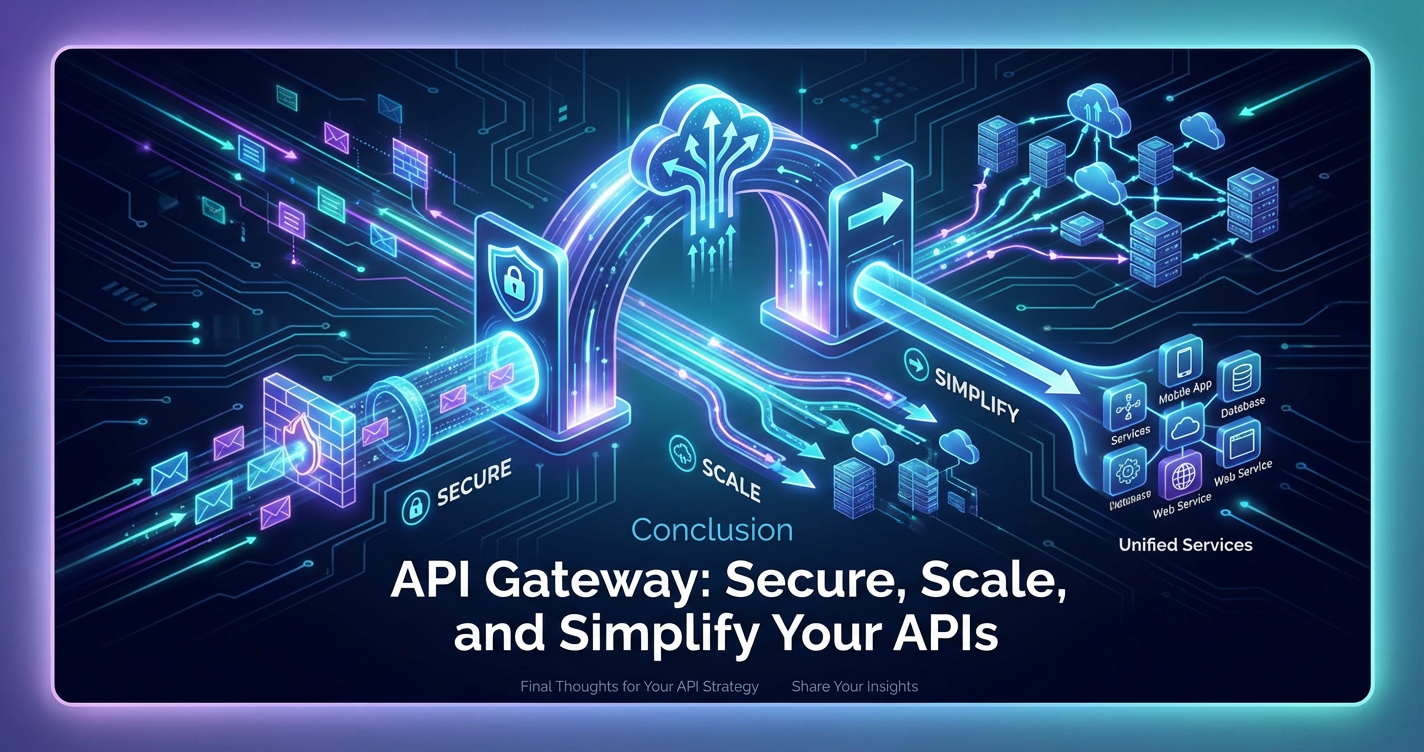
This is precisely where the API Gateway steps into the spotlight. More than just a simple proxy or a load balancer, an API Gateway acts as the single entry point for all client requests, serving as a powerful orchestrator that sits between clients and a multitude of backend services. It is the sophisticated gatekeeper, the vigilant security guard, and the efficient traffic controller all rolled into one, performing a myriad of functions that are critical for modern API architectures. Without a well-implemented gateway, organizations would grapple with fragmented security policies, inconsistent performance, intractable scaling issues, and a significantly hampered developer experience. The journey of understanding and implementing an effective api gateway is therefore not merely a technical exercise, but a strategic imperative that directly impacts an organization's ability to innovate, protect its assets, and deliver seamless user experiences. This comprehensive article will delve deep into the multifaceted world of API Gateways, exploring in detail how these indispensable components empower organizations to secure, scale, and simplify their APIs, thereby unlocking their full potential in the digital economy. We will dissect the architectural benefits, operational efficiencies, and strategic advantages that a robust api gateway brings to the table, providing a thorough understanding for developers, architects, and business leaders alike.
Chapter 1: Understanding the API Landscape and the Core Problem
The digital transformation sweeping across industries has fundamentally reshaped how software is designed, developed, and deployed. Traditional monolithic applications are increasingly being disaggregated into smaller, independent services, giving rise to microservices architectures. This paradigm shift, coupled with the rapid adoption of cloud-native principles, serverless computing, and containerization, has led to an exponential increase in the number of APIs. Enterprises now juggle not only external APIs exposed to partners and customers but also a vast ecosystem of internal APIs facilitating communication between their own services. Furthermore, the burgeoning field of artificial intelligence introduces a new layer of complexity, with numerous AI models needing to be exposed, managed, and consumed through well-defined APIs.
This proliferation of APIs, while enabling unprecedented agility and innovation, simultaneously introduces a host of intricate challenges that, if left unaddressed, can severely undermine the benefits of a distributed architecture. One of the most significant issues is the inherent complexity of managing direct client-service communication. Without a centralized gateway, clients would need to be aware of the specific endpoints, protocols, and security requirements of each individual backend service they wish to interact with. This tight coupling between clients and services creates a brittle architecture, where changes in backend services (e.g., refactoring, new versions, or even simple URL changes) necessitate corresponding updates on the client side, leading to increased development overhead, prolonged release cycles, and a higher risk of introducing bugs. Imagine a mobile application needing to call ten different microservices for a single screen; if each of those services had its own authentication scheme, caching strategy, or error handling mechanism, the client-side code would quickly become an unmanageable mess.
Beyond the direct communication challenges, security becomes a monumental concern in an environment without a centralized api gateway. Each microservice would typically be responsible for implementing its own authentication, authorization, input validation, and rate limiting. This decentralized approach often leads to inconsistencies in security posture, potential vulnerabilities due to oversight in one service, and a significant duplication of effort. Ensuring that every single service adheres to the latest security best practices and compliance regulations becomes an arduous, if not impossible, task. The sheer surface area for potential attacks expands dramatically when every service endpoint is directly exposed to external traffic, making the system highly susceptible to various cyber threats.
Furthermore, managing performance and scalability across a multitude of independent services presents its own set of hurdles. How do you implement global rate limiting to protect your entire ecosystem from abuse without touching every single service? How do you efficiently cache responses for frequently requested data to reduce the load on your backend services? How do you monitor API usage, latency, and error rates consistently across hundreds or even thousands of API endpoints? Without a centralized component, answers to these questions are often piecemeal, reactive, and lack the holistic view necessary for proactive management. Developers would have to painstakingly implement cross-cutting concerns like logging, monitoring, and tracing in each service, leading to boilerplate code, inconsistencies, and a higher chance of errors.
Versioning and transformation requirements add another layer of complexity. As APIs evolve, new versions are released, and older versions may need to be maintained for backward compatibility. Managing multiple versions of an API across different services and ensuring that clients are directed to the correct version is a non-trivial task. Moreover, clients might require data in a different format than what backend services provide, or they might need to aggregate data from several services into a single response. Implementing these transformations and compositions within each backend service or on the client side adds unnecessary burden and complexity, creating a tangled web of dependencies and responsibilities.
In essence, the core problem is one of distributed complexity. While microservices simplify individual service development, they introduce significant complexity at the system boundary and across the entire ecosystem. The absence of a centralized, intelligent management layer to abstract, secure, and optimize these interactions leads to an architecture that is difficult to secure, challenging to scale, cumbersome to maintain, and slow to evolve. This critical gap highlights the indispensable need for an API gateway – a sophisticated traffic cop and orchestrator that streamlines these interactions, centralizes cross-cutting concerns, and ultimately simplifies the entire API management lifecycle, transforming a chaotic landscape into a well-ordered, resilient, and high-performing system.
Chapter 2: What is an API Gateway? The Central Orchestrator
Having established the inherent complexities of managing a multitude of APIs in a distributed environment, we can now precisely define the solution: the API Gateway. At its heart, an API Gateway is a server-side component that acts as a single entry point for all client requests, sitting strategically between a client (such as a web application, mobile app, or another microservice) and a collection of backend services. It is not merely a pass-through proxy; rather, it is an intelligent layer that intercepts, processes, and routes requests, while also handling a wide array of cross-cutting concerns that would otherwise burden individual backend services or complex client implementations.
To truly grasp the concept, consider the api gateway through a series of analogies. Imagine it as the front desk of a grand hotel. When a guest (client) arrives, they don't directly knock on the door of the hundreds of individual rooms (backend services). Instead, they interact with the concierge (the api gateway). The concierge handles their check-in (authentication), directs them to their room (routing), perhaps offers them a welcome drink (caching a common response), and ensures their stay complies with hotel policies (rate limiting, security). Similarly, the api gateway acts as a traffic cop directing vehicles (API requests) to their correct destinations (backend services), ensuring smooth flow, enforcing speed limits (rate limiting), and even checking driver licenses (authentication). It's also akin to a bouncer at an exclusive club, verifying identities, enforcing entry rules, and ensuring only authorized individuals gain access to the inner sanctum.
The primary function of an api gateway is to serve as an intelligent facade, abstracting the internal architecture of the system from external clients. Clients interact only with the gateway, sending requests to a single, well-defined endpoint. The gateway then takes on the responsibility of dissecting these requests, identifying the appropriate backend service (or services) to fulfill them, and routing the requests accordingly. This decoupling is profound; clients no longer need to know the internal topology of the microservices, their specific network locations, or their individual API contracts. This significantly simplifies client-side development and makes the backend architecture more flexible and resilient to change.
Beyond simple routing, a robust api gateway performs a multitude of critical functions, transforming the raw API interaction into a secure, efficient, and streamlined process:
- Request Routing: This is the most fundamental task. The gateway determines which backend service (or services) should handle an incoming request based on factors like the URL path, HTTP method, headers, or even custom logic. It acts as a sophisticated dispatcher.
- Authentication and Authorization: Instead of each service handling its own security, the api gateway can centralize authentication (e.g., validating API keys, JWT tokens, OAuth2 access tokens) and authorization (e.g., checking user roles and permissions). This ensures consistent security policies across all APIs and offloads this burden from backend services.
- Rate Limiting and Throttling: To prevent abuse, control resource consumption, and manage traffic flow, the gateway can enforce limits on the number of requests a client can make within a specified timeframe. This protects backend services from being overwhelmed.
- Caching: Frequently accessed data can be cached at the gateway layer, reducing the load on backend services and significantly improving response times for clients. This is particularly beneficial for read-heavy operations.
- Logging and Monitoring: The api gateway provides a centralized point to log all incoming and outgoing requests, capture performance metrics, and monitor API usage. This data is invaluable for analytics, troubleshooting, security auditing, and capacity planning.
- Protocol Translation and Transformation: A gateway can convert requests between different protocols (e.g., HTTP to AMQP, REST to SOAP) or transform data formats (e.g., XML to JSON, or vice versa). It can also perform request/response body transformations to aggregate data from multiple services or tailor responses for specific clients.
- Load Balancing: By distributing incoming requests across multiple instances of a backend service, the api gateway ensures high availability and efficient resource utilization. It can employ various load balancing algorithms to optimize performance.
- API Composition and Aggregation: For complex client requirements, the gateway can aggregate responses from several backend services into a single, cohesive response, reducing the "chatty" nature of client-service interactions and optimizing network traffic.
While a traditional reverse proxy primarily deals with network-level traffic forwarding, and a load balancer focuses solely on distributing load, an api gateway operates at a higher application layer. It understands the content of the HTTP request, the nuances of API contracts, and the intricacies of business logic, allowing it to perform intelligent routing, content-based transformations, and policy enforcement. This deeper understanding elevates it from a mere infrastructure component to a strategic orchestrator within a modern, distributed architecture, enabling organizations to secure, scale, and simplify their entire api ecosystem. It is the critical control plane that brings order, governance, and efficiency to the dynamic world of APIs.
Chapter 3: Securing Your APIs with an API Gateway
In an era where data breaches are rampant and regulatory compliance is paramount, securing APIs is no longer an afterthought but a foundational requirement. The direct exposure of backend services to the internet, without an intelligent intermediary, creates an expansive attack surface ripe for exploitation. This is precisely where the API Gateway proves its indispensable value, acting as the first line of defense and a centralized security enforcement point for all API traffic. By consolidating security measures at the gateway level, organizations can achieve a consistent and robust security posture, significantly reduce the risk of vulnerabilities, and streamline compliance efforts.
One of the most critical security functions of an api gateway is centralized authentication and authorization. In a microservices architecture, individual services should ideally focus on their core business logic rather than duplicating complex security mechanisms. The gateway offloads this burden entirely. When a client sends a request, the api gateway can be configured to intercept it and validate the client's identity. This might involve verifying an API key, decrypting a JSON Web Token (JWT), validating an OAuth2 access token, or integrating with an identity provider using OpenID Connect. Once authenticated, the gateway can then determine if the client (or the user represented by the client) has the necessary permissions to access the requested resource or perform the intended action. This involves enforcing granular authorization policies, such as Role-Based Access Control (RBAC) or Attribute-Based Access Control (ABAC), ensuring that only authorized entities can interact with specific API endpoints. By centralizing these processes, the api gateway ensures uniformity across all services, preventing fragmented security implementations and significantly reducing the likelihood of a service-level security lapse.
Beyond access control, the api gateway provides a crucial layer of threat protection against a variety of malicious attacks. It can act as a sophisticated Web Application Firewall (WAF) by inspecting incoming requests for common attack patterns, such as SQL injection, Cross-Site Scripting (XSS), XML External Entity (XXE) attacks, and other OWASP Top 10 vulnerabilities. By validating request schemas, headers, and payloads against predefined rules or expected formats, the gateway can effectively filter out malformed or malicious requests before they even reach the backend services. Furthermore, a robust api gateway can implement distributed denial-of-service (DDoS) protection mechanisms, identifying and mitigating high-volume attacks designed to overwhelm services. It can also detect and block bot traffic, preventing automated scraping, credential stuffing, or other forms of automated abuse that can compromise data or degrade service performance. Another vital security feature is TLS/SSL termination, where the gateway decrypts incoming HTTPS traffic, processes the request, and then re-encrypts it before forwarding to backend services, often using mutual TLS for enhanced inter-service security. This offloads the cryptographic overhead from individual services and simplifies certificate management.
Rate limiting and throttling are indispensable security and operational controls. While primarily seen as performance management tools, they are also powerful deterrents against abusive behavior. By configuring the api gateway to enforce limits on the number of requests a client can make within a given period (e.g., 100 requests per minute per API key), organizations can prevent brute-force attacks, protect backend resources from being overwhelmed by a single misbehaving client, and ensure fair usage among all consumers. This not only safeguards the stability of the system but also allows for differentiated service levels, enabling monetization strategies where premium tiers offer higher request quotas. The gateway acts as the central enforcer of these policies, ensuring consistency and ease of management.
Finally, auditing and comprehensive logging capabilities are fundamental for security forensics, compliance, and proactive threat detection. A well-configured api gateway captures detailed logs of every incoming request and outgoing response, including metadata such as client IP address, timestamp, HTTP method, URL, headers, and even sanitized request/response bodies. This rich dataset provides an invaluable audit trail, enabling security teams to trace suspicious activities, identify the source of attacks, and analyze the impact of any security incidents. These logs are also crucial for demonstrating compliance with various industry regulations (e.g., GDPR, HIPAA, PCI DSS) by providing irrefutable evidence of who accessed what, when, and how. By centralizing this logging at the gateway level, organizations gain a holistic view of all API interactions, significantly simplifying troubleshooting, performance analysis, and security monitoring across their entire digital ecosystem. In essence, the api gateway transforms the complex task of securing a distributed api landscape into a manageable, centralized, and highly effective operation, providing peace of mind and protecting valuable digital assets.
Chapter 4: Scaling Your APIs for Growth with an API Gateway
As businesses grow and digital interactions intensify, the demand for APIs inevitably surges. Handling an ever-increasing volume of requests, maintaining low latency, and ensuring continuous availability become paramount. An API Gateway is not just a security enforcer; it is equally critical as a strategic component for scaling APIs effectively and ensuring robust performance under heavy load. By offloading resource-intensive tasks and intelligently managing traffic, the gateway empowers organizations to support massive growth without compromising on reliability or user experience.
One of the most foundational scaling mechanisms an api gateway provides is intelligent load balancing. In a distributed architecture, backend services typically run as multiple instances to handle increased demand and provide fault tolerance. The api gateway acts as the primary load balancer, distributing incoming client requests across these available service instances. It can employ various sophisticated algorithms, such as round-robin, least connections, IP hash, or even more advanced application-aware methods, to ensure that traffic is evenly distributed, preventing any single service instance from becoming a bottleneck. If one service instance fails or becomes unhealthy, the gateway can automatically detect this and route traffic away from it, ensuring continuous service availability. This capability is vital for maintaining high uptime and preventing service degradation during peak periods or in the event of partial system failures.
Another powerful feature for scaling is caching. Many API requests, especially those for static or frequently accessed data, produce identical responses over time. The api gateway can be configured to cache these responses. When a subsequent request for the same data arrives, the gateway can serve the cached response directly, without forwarding the request to the backend service. This dramatically reduces the load on backend databases and compute resources, freeing them up to handle more complex or dynamic requests. Caching not only improves the overall throughput of the system but also significantly enhances the response time for clients, leading to a much snappier user experience. Sophisticated caching policies can be defined, including time-to-live (TTL) settings, cache invalidation strategies, and conditional caching based on request parameters.
Advanced traffic management and routing capabilities offered by an api gateway are instrumental for gradual rollouts and maintaining service stability during deployments. Beyond basic routing, the gateway can dynamically route requests based on intricate criteria such as specific headers, query parameters, user groups, or even geographic location. This flexibility enables crucial deployment strategies like canary deployments, where a new version of a service is rolled out to a small subset of users (e.g., 5%) while the majority continues to use the stable version. The gateway can then monitor the performance of the new version and, if successful, gradually increase the traffic routed to it. Similarly, A/B testing and blue/green deployments can be orchestrated through the gateway, allowing organizations to test new features or entire service versions with real user traffic without impacting the main user base. Furthermore, the gateway can implement resilience patterns such as circuit breakers, which temporarily stop routing traffic to a failing service to prevent cascading failures, and bulkheads, which isolate services to prevent failures in one from affecting others.
The api gateway also plays a crucial role in service discovery integration. In dynamic cloud environments, service instances are constantly being created, scaled up, scaled down, or decommissioned. A robust gateway can integrate with service discovery mechanisms (e.g., Consul, Eureka, Kubernetes API server) to automatically learn about the current health and location of backend services. This dynamic awareness allows the gateway to adapt its routing rules in real-time, ensuring that requests are always sent to healthy and available service instances without manual intervention.
For organizations looking to build highly scalable and performant API ecosystems, selecting the right platform is critical. A robust API management platform, like ApiPark, excels in scaling operations. Designed as an open-source AI gateway and API management platform, APIPark demonstrates impressive performance metrics, rivaling traditional high-performance web servers such as Nginx. It can achieve over 20,000 transactions per second (TPS) with just an 8-core CPU and 8GB of memory, and crucially, supports cluster deployment to handle even larger-scale traffic demands. This capability ensures that as your API consumption grows, your underlying infrastructure can effortlessly keep pace. APIPark's features also encompass comprehensive traffic forwarding and load balancing, which are essential for distributing incoming requests efficiently across multiple service instances, ensuring high availability and optimal resource utilization. Such platforms not only manage the sheer volume of requests but also optimize their flow, contributing significantly to the overall stability and responsiveness of the API landscape, thereby effectively supporting exponential business growth.
In essence, by centralizing load balancing, caching, advanced routing, and integrating with service discovery, the api gateway transforms a potentially chaotic and fragile distributed system into a resilient, high-performance, and infinitely scalable api ecosystem. It acts as the intelligent backbone that allows organizations to confidently expand their digital footprint, knowing that their APIs can gracefully handle the demands of burgeoning user bases and increasing data volumes.
APIPark is a high-performance AI gateway that allows you to securely access the most comprehensive LLM APIs globally on the APIPark platform, including OpenAI, Anthropic, Mistral, Llama2, Google Gemini, and more.Try APIPark now! 👇👇👇
Chapter 5: Simplifying API Management and Development with an API Gateway
Beyond security and scalability, a primary benefit of implementing an API Gateway is its profound ability to simplify the entire API management and development lifecycle. This simplification extends across various stakeholders, from frontend developers consuming APIs to backend engineers building services, and from operations teams managing infrastructure to business leaders seeking clearer insights into their digital products. By acting as a unified facade and a central control plane, the gateway streamlines processes, reduces complexity, and fosters a more efficient and productive environment.
One of the most significant areas of simplification is the developer experience (DX) for API consumers. Without an api gateway, client-side developers would typically need to interact with multiple backend service endpoints, each potentially having different base URLs, authentication mechanisms, and data formats. This fragmented approach increases the cognitive load on developers, makes client-side code more complex, and introduces integration headaches. With an api gateway, clients interact with a single, stable entry point. The gateway presents a unified API to the outside world, abstracting away the underlying microservice architecture. This consistency simplifies client-side development, reduces the learning curve for new developers, and accelerates the integration process. Furthermore, a comprehensive API management platform, often built around an api gateway, frequently includes a developer portal. This portal provides a centralized display of all available API services, complete with interactive documentation, code examples, and sandbox environments. This is a core benefit offered by platforms like ApiPark, which functions as an open-source AI gateway and API developer portal. By centralizing the display of all API services, APIPark makes it incredibly easy for different departments and teams within an organization to discover, understand, and consume the required API services, fostering internal collaboration and reducing friction in software development.
The api gateway also greatly simplifies API versioning management. As backend services evolve, new versions of their APIs are inevitably released. Maintaining backward compatibility for existing clients while introducing new features can be challenging. The gateway provides a robust mechanism to manage API versions. It can route requests to specific service versions based on URL paths (e.g., /v1/users, /v2/users), headers, or query parameters. This allows organizations to introduce breaking changes more gracefully, supporting older clients on a deprecated version while new clients adopt the latest one. The gateway can also facilitate the deprecation process, signaling to clients when an older version will be retired, ensuring a smooth transition without immediate service disruption.
API composition and aggregation are powerful simplification capabilities. For many client applications, a single user interface screen or a specific business function might require data from multiple backend services. Without an api gateway, the client would have to make multiple calls to different services, aggregate the data itself, and then present it. This can lead to "chatty" client-service interactions, increased network latency, and more complex client-side logic. The gateway can aggregate these multiple backend calls into a single API endpoint. The client makes one request to the gateway, which then intelligently fetches data from several internal services, composes a unified response, and sends it back to the client. This "backend-for-frontend" (BFF) pattern drastically simplifies client-side development, reduces network traffic, and optimizes response times for composite data requests.
Furthermore, protocol transformation is a significant simplification for integrating disparate systems. In complex enterprise environments, clients might need to communicate using different protocols or data formats than what backend services expose. For instance, a legacy client might only understand XML, while a modern microservice produces JSON. The api gateway can handle this translation seamlessly. It can convert request and response bodies between JSON and XML, or even bridge entirely different protocols like REST and gRPC or SOAP, ensuring interoperability without requiring changes to either the client or the backend service.
From an operational perspective, the api gateway offers centralized monitoring and analytics. By acting as the sole entry point, it becomes the ideal place to collect comprehensive metrics on API usage, performance (latency, throughput), and error rates. This centralized data feeds into unified dashboards, providing operations teams and business stakeholders with a holistic view of the entire API ecosystem. Platforms like APIPark provide powerful data analysis capabilities, which analyze historical call data to display long-term trends and performance changes, helping businesses with preventive maintenance before issues occur. APIPark also offers comprehensive logging capabilities, recording every detail of each API call. This feature is invaluable for businesses to quickly trace and troubleshoot issues in API calls, ensuring system stability and data security. This detailed telemetry is crucial for troubleshooting, capacity planning, and making data-driven decisions about API evolution and resource allocation.
Crucially, APIPark assists with end-to-end API lifecycle management, a critical aspect of simplifying governance. It supports managing APIs from their initial design phase through publication, invocation, and eventual decommissioning. This means it helps regulate API management processes, manage traffic forwarding, load balancing, and versioning of published APIs, ensuring a structured and controlled approach to API evolution. The platform also enhances API service sharing within teams by providing a centralized display for all API services, making it easy for different departments and teams to find and use the required services efficiently.
For larger organizations or those managing multiple projects and departments, APIPark supports independent API and access permissions for each tenant. This enables the creation of multiple teams (tenants), each with independent applications, data, user configurations, and security policies, all while sharing underlying applications and infrastructure. This multi-tenancy significantly improves resource utilization and reduces operational costs while maintaining necessary isolation. Additionally, APIPark allows for the activation of API resource access requiring approval, meaning callers must subscribe to an API and await administrator approval before they can invoke it. This prevents unauthorized API calls and potential data breaches, adding an extra layer of control and security.
In conclusion, the api gateway is a powerful simplification engine. It improves the developer experience by providing a unified, stable interface; it streamlines API versioning; it optimizes client-server interactions through composition; it enables seamless interoperability via protocol transformation; and it offers centralized, insightful monitoring. By taking on these cross-cutting concerns, the gateway allows backend services to remain focused on their core business logic, fostering greater agility, reducing development effort, and ultimately accelerating the delivery of value across the entire organization.
Chapter 6: Key Features of a Robust API Gateway
Understanding the individual benefits of an API Gateway in terms of security, scalability, and simplification is crucial, but it's equally important to grasp the collective power of its features. A robust api gateway integrates a comprehensive suite of functionalities that work in concert to deliver these advantages. These features are not merely add-ons; they are fundamental building blocks that enable modern distributed architectures to thrive. The choice of an api gateway often hinges on which of these features are most critical to an organization's specific needs and its existing technological landscape. Below, we outline the essential capabilities that define a high-performing and adaptable gateway, illustrating how each contributes to a well-governed and efficient API ecosystem.
| Feature | Description | Benefit |
|---|---|---|
| Authentication & Authorization | Centralized validation of client identities (e.g., API keys, OAuth2, JWT) and enforcement of access policies (e.g., RBAC, ABAC) before requests reach backend services. | Enhanced Security & Consistency: Ensures uniform security across all APIs, offloads security logic from microservices, and reduces the attack surface. |
| Rate Limiting & Throttling | Controls the number of requests a client can make within a specified timeframe, preventing abuse, resource exhaustion, and ensuring fair usage across different consumers. | System Stability & Protection: Safeguards backend services from being overwhelmed, defends against DDoS/brute-force attacks, and enables differentiated service tiers. |
| Request Routing & Traffic Management | Intelligently directs incoming API requests to the appropriate backend service instances based on configured rules (e.g., URL path, headers), supporting dynamic routing, canary deployments, and A/B testing. | Increased Agility & Resilience: Decouples clients from service topology, facilitates seamless deployments, enables experimentation, and ensures high availability through intelligent traffic distribution. |
| Caching | Stores frequently accessed API responses at the gateway level, serving subsequent identical requests directly from the cache without involving backend services. | Improved Performance & Reduced Load: Significantly lowers latency for clients, drastically reduces the load on backend compute and database resources, and improves overall system throughput. |
| Logging & Monitoring | Captures detailed records of all API requests and responses, including metadata, errors, and performance metrics, providing a comprehensive audit trail and real-time insights into API health and usage. | Enhanced Visibility & Troubleshooting: Essential for security forensics, compliance, performance analysis, and rapid identification/resolution of issues. |
| Protocol & Data Transformation | Converts requests and responses between different communication protocols (e.g., HTTP to gRPC, REST to SOAP) and data formats (e.g., JSON to XML, or custom schema mapping). | Seamless Interoperability: Bridges heterogeneous systems, allowing diverse clients and backend services to communicate effectively without requiring modifications to either end. |
| API Composition & Aggregation | Combines multiple backend service calls into a single, unified API response for clients, reducing the number of round trips required to fetch complete data sets. | Simplified Client Development & Optimized Performance: Reduces client-side complexity, minimizes network latency, and enhances the efficiency of data retrieval for composite UIs/applications. |
| API Versioning | Manages different versions of an API, allowing for graceful evolution of services while maintaining backward compatibility for older clients, typically through URL paths or header-based routing. | Managed Evolution & Client Continuity: Enables controlled API changes, supports phased migrations, and prevents immediate breaking changes for existing client applications. |
| Service Discovery Integration | Automatically discovers and tracks the health and network locations of backend service instances, dynamically updating routing tables without manual configuration. | Dynamic Scalability & Resilience: Ensures the gateway always routes traffic to healthy and available service instances in dynamic, cloud-native environments, supporting elastic scaling. |
| Developer Portal | A self-service web interface where developers can discover, learn about, test, and subscribe to APIs, access documentation, and manage their API keys. | Accelerated Adoption & Productivity: Greatly improves the developer experience, streamlines onboarding, reduces support overhead, and fosters a vibrant API ecosystem. (e.g., as offered by ApiPark) |
| End-to-End API Lifecycle Management | Provides tools and processes to manage APIs through their entire journey, from design and publication to invocation, monitoring, and eventual decommissioning. | Structured Governance & Efficiency: Ensures consistent standards, reduces manual effort, and enforces policies across all stages of an API's life. (e.g., a core feature of APIPark) |
| Multi-Tenancy Support | Allows for the creation of isolated environments (tenants) within a single gateway instance, each with independent APIs, configurations, and security policies. | Resource Optimization & Scalability for Enterprises: Enables efficient resource sharing while maintaining strong separation, reducing operational costs for organizations managing multiple teams or clients (e.g., APIPark feature). |
Each of these features represents a critical capability that transforms a simple request forwarder into a sophisticated control point. When combined effectively, they create an API gateway that is not only robust and performant but also incredibly adaptable to the rapidly changing demands of modern digital enterprises. The power of a well-chosen gateway lies in its ability to centralize these diverse responsibilities, thereby simplifying management, enhancing security, and optimizing the scalability of an organization's entire API portfolio.
Chapter 7: Choosing the Right API Gateway and Implementation Considerations
Selecting the appropriate API Gateway is a pivotal decision that can significantly impact the success of an organization's API strategy, influencing development velocity, operational overhead, security posture, and overall system scalability. The market offers a diverse range of solutions, from lightweight open-source options to feature-rich commercial platforms and cloud-managed services, each with its own strengths and trade-offs. Making an informed choice requires careful consideration of several key factors and an understanding of various implementation models.
One of the foremost considerations is performance. The api gateway is a critical path component; every API request flows through it. Therefore, its latency and throughput capabilities are paramount. A high-performance gateway should be able to handle a massive volume of requests with minimal overhead. Factors like the underlying programming language, efficient network stack, and optimization for concurrent connections play a significant role. Equally important are the features it offers. Does it provide the necessary authentication mechanisms (OAuth2, JWT, API Keys)? Does it support advanced routing, caching, rate limiting, and protocol transformations that your architecture demands? Does it have robust logging, monitoring, and analytics capabilities? Matching the feature set with your current and anticipated needs is crucial.
Ease of deployment and management is another vital aspect. How quickly can the gateway be set up? Is it container-friendly (Docker, Kubernetes)? Does it offer intuitive configuration interfaces (GUI, YAML, CLI)? The operational complexity associated with managing, updating, and troubleshooting the gateway can quickly negate its benefits if it's too cumbersome. Similarly, ecosystem integration matters; does it integrate well with your existing identity providers, monitoring tools, CI/CD pipelines, and service mesh solutions? A well-integrated gateway minimizes friction and maximizes automation.
The choice often comes down to open-source versus commercial solutions, and sometimes cloud-native offerings. Open-source gateways like Kong, Apache APISIX, and Tyk offer flexibility, community support, and often lower initial costs, allowing for extensive customization. However, they typically require in-house expertise for deployment, maintenance, and support. Commercial products, such as those from Apigee (Google Cloud), Azure API Management, or AWS API Gateway, often come with managed services, professional support, enterprise-grade features, and simpler setup, but at a higher cost. These cloud-managed gateways also benefit from deep integration with their respective cloud ecosystems. The decision depends on an organization's resources, budget, and appetite for operational responsibility.
Deployment models also need careful evaluation. 1. Self-hosted: Deploying the gateway on your own servers (on-premises or in a private cloud) provides maximum control but also maximum responsibility for infrastructure management. 2. Cloud-managed: Using a gateway service provided by a cloud vendor (e.g., AWS API Gateway) offloads infrastructure management to the provider, simplifying operations and benefiting from cloud scalability, but potentially leading to vendor lock-in. 3. Hybrid: A blend of both, where some gateways are self-hosted for internal APIs, while others are cloud-managed for external APIs, or a single gateway manages APIs across hybrid infrastructure.
Architectural considerations are paramount for successful implementation. Where should the gateway be placed in your network? It typically sits at the edge of your network, acting as a demilitarized zone (DMZ) for API traffic. How will it interact with other infrastructure components like firewalls, load balancers, and potentially service meshes? Ensuring proper network segmentation, firewall rules, and DNS configuration is critical. Furthermore, consider its high availability and disaster recovery strategy. The api gateway is a single point of entry; a failure here can bring down your entire api ecosystem. Therefore, deploying it in a highly available, fault-tolerant configuration with redundancy across multiple availability zones is non-negotiable.
For organizations that are heavily invested in AI or are looking for a powerful open-source solution with enterprise-grade capabilities, ApiPark presents an excellent choice. APIPark is an open-source AI gateway and API management platform that stands out for its quick deployment (achieved in just 5 minutes with a single command), robust performance rivaling Nginx, and comprehensive feature set tailored for modern API ecosystems. As highlighted earlier, it can achieve over 20,000 TPS on modest hardware and supports cluster deployment for high scalability. APIPark is particularly strong in integrating 100+ AI models with a unified management system, standardizing AI invocation formats, and encapsulating prompts into REST APIs, making it ideal for the rapidly expanding AI application landscape. Beyond AI, it offers end-to-end API lifecycle management, robust security features like access approval, detailed call logging, and powerful data analytics. While the open-source product meets the basic API resource needs of startups, APIPark also offers a commercial version with advanced features and professional technical support for leading enterprises, providing a flexible pathway for growth. This combination of open-source flexibility, high performance, specialized AI integration, and commercial support positions APIPark as a compelling solution for a wide range of organizations, from startups to large enterprises, seeking to manage their APIs securely, scalably, and simply.
Ultimately, the decision for an api gateway should align with the organization's strategic goals, technical capabilities, security requirements, and budget constraints. It's not just about selecting a product, but implementing a strategic component that will serve as the central nervous system for your digital operations for years to come. Thorough research, proof-of-concept testing, and careful planning are indispensable steps in this critical selection and implementation journey.
Conclusion
The journey through the intricate world of APIs reveals a landscape brimming with opportunities for innovation and growth, yet equally fraught with challenges pertaining to management, security, and scalability. In this complex environment, the API Gateway emerges not merely as a technical component, but as an indispensable architectural cornerstone for any modern, distributed system. It stands as the vigilant gatekeeper, the efficient traffic controller, and the intelligent orchestrator that transforms a potentially chaotic ecosystem of disparate services into a cohesive, resilient, and high-performing digital platform.
We have meticulously explored how a well-implemented api gateway fundamentally addresses the core challenges faced by organizations operating in the digital realm. In terms of security, the gateway centralizes authentication and authorization, serving as the first and most robust line of defense against malicious attacks. It enforces consistent security policies, provides crucial threat protection mechanisms, implements granular rate limiting to prevent abuse, and generates comprehensive audit logs—all vital for safeguarding sensitive data and ensuring regulatory compliance. By offloading these critical security concerns from individual microservices, the gateway enables backend developers to focus on their core business logic, thereby improving efficiency and reducing the surface area for vulnerabilities.
Regarding scalability, the api gateway proves its mettle by intelligently managing API traffic to accommodate ever-increasing loads. Through advanced load balancing, it distributes requests efficiently across multiple service instances, ensuring high availability and optimal resource utilization. Its caching capabilities drastically reduce the burden on backend systems and enhance response times for clients, while dynamic routing and service discovery integration enable seamless scaling and resilient deployments. For platforms like APIPark, which exhibit performance rivaling Nginx and support cluster deployments, the ability to handle massive traffic volumes without compromising speed or reliability is a testament to the gateway's role in supporting exponential business growth.
Finally, the gateway plays a transformative role in simplifying the entire API management and development lifecycle. It presents a unified, stable API interface to consumers, drastically improving the developer experience and accelerating integration efforts. Through API composition and aggregation, it reduces client-side complexity and optimizes network interactions. Furthermore, features like protocol transformation, centralized monitoring, and end-to-end API lifecycle management streamline operations, foster interoperability, and provide invaluable insights for continuous improvement. Platforms that offer multi-tenancy support and API resource access approvals, such as ApiPark, further simplify governance for large organizations by allowing isolated environments while optimizing resource use and enhancing security controls.
In summation, an API gateway is far more than a technical intermediary; it is a strategic asset that empowers organizations to unlock the full potential of their API investments. It enables greater agility, enhances security posture, ensures unparalleled scalability, and streamlines development and operations. As the digital economy continues its relentless expansion, driven by the proliferation of APIs and the integration of advanced AI models, the role of a robust api gateway will only grow in significance. It is the architectural linchpin that allows businesses to innovate confidently, deliver seamless digital experiences, and maintain a competitive edge in an increasingly interconnected world. Embracing a well-designed and properly implemented gateway is therefore not merely a best practice; it is a fundamental prerequisite for sustained success in the digital age.
5 FAQs
Q1: What is the primary difference between an API Gateway and a traditional Reverse Proxy or Load Balancer? A1: While a traditional reverse proxy primarily forwards network requests and a load balancer distributes network traffic across servers, an API Gateway operates at a higher application layer. It understands the content of the API requests, enabling it to perform intelligent routing based on API logic, enforce API-specific security policies (like authentication, authorization, rate limiting), transform request/response payloads, and aggregate responses from multiple services. It acts as a single entry point for all API calls, abstracting backend complexities, whereas a reverse proxy or load balancer typically operates at a lower network or transport layer, unaware of the application-level context of the request.
Q2: How does an API Gateway improve API security? A2: An API Gateway significantly enhances API security by centralizing critical security functions. It acts as the primary enforcement point for authentication (e.g., validating API keys, JWT tokens, OAuth2), authorization (checking user permissions), and threat protection (like WAF functionalities to prevent SQL injection or XSS attacks). It also enforces rate limiting to prevent abuse and DDoS attacks, provides TLS/SSL termination to secure communication, and generates comprehensive logs for auditing and forensics. By consolidating these measures, it ensures consistent security policies across all APIs, reducing the burden on individual backend services and lowering the risk of vulnerabilities.
Q3: Can an API Gateway help with API versioning? A3: Yes, an API Gateway is an excellent tool for managing API versioning. It can be configured to route requests to different versions of backend services based on various criteria such as the URL path (e.g., /v1/users vs. /v2/users), request headers (e.g., Accept-Version: v2), or query parameters. This allows organizations to introduce new API versions without immediately breaking existing client applications, supporting backward compatibility and enabling a smoother transition for API consumers. It provides a centralized control point to manage the lifecycle of different API versions.
Q4: How does an API Gateway contribute to the scalability of an API ecosystem? A4: An API Gateway contributes to scalability in several ways. It provides intelligent load balancing to distribute incoming requests efficiently across multiple instances of backend services, preventing bottlenecks and ensuring high availability. Its caching capabilities store frequently accessed data, reducing the load on backend systems and improving response times. Dynamic routing, advanced traffic management (like canary deployments), and integration with service discovery mechanisms allow the gateway to adapt to fluctuating loads and service changes in real-time, enabling seamless horizontal scaling of backend services without client-side modifications.
Q5: Is an API Gateway always necessary for a microservices architecture? A5: While not strictly "always necessary" for every single microservice, an API Gateway becomes increasingly essential as the number of microservices and their consumers grows, or as the complexity of cross-cutting concerns (security, logging, traffic management) increases. For simple architectures with very few services and limited external exposure, direct client-service communication might suffice. However, for most real-world microservices deployments, an API Gateway provides critical benefits in terms of centralized security, consistent governance, simplified client development, improved scalability, and enhanced operational visibility, making it a highly recommended and often indispensable component for managing a robust and maintainable microservices ecosystem.
🚀You can securely and efficiently call the OpenAI API on APIPark in just two steps:
Step 1: Deploy the APIPark AI gateway in 5 minutes.
APIPark is developed based on Golang, offering strong product performance and low development and maintenance costs. You can deploy APIPark with a single command line.
curl -sSO https://download.apipark.com/install/quick-start.sh; bash quick-start.sh

In my experience, you can see the successful deployment interface within 5 to 10 minutes. Then, you can log in to APIPark using your account.

Step 2: Call the OpenAI API.