API Gateway: Secure & Scale Your APIs Effectively
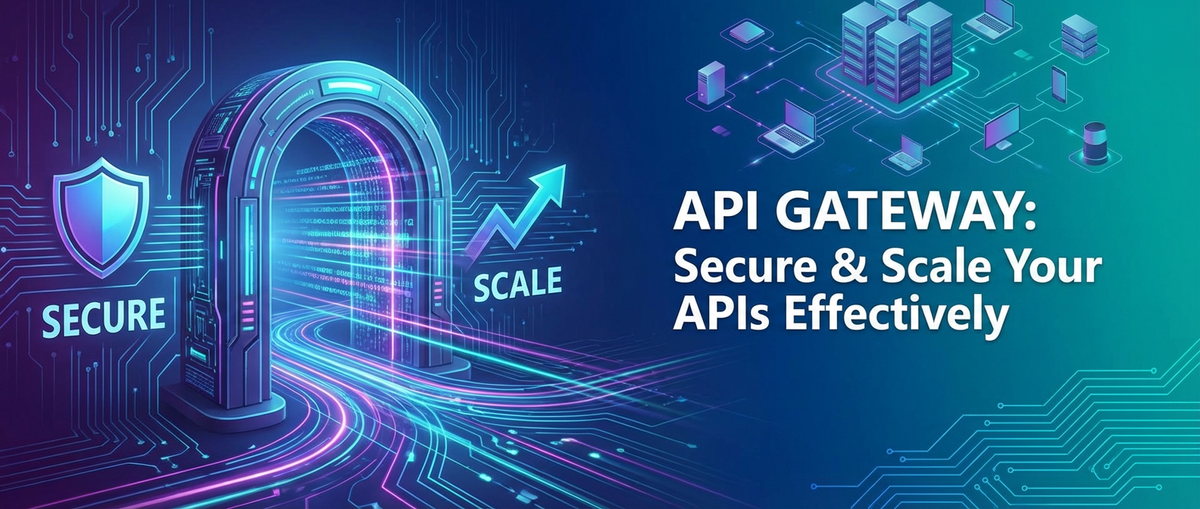


In the relentless march of digital transformation, Application Programming Interfaces (APIs) have emerged as the foundational connective tissue of modern software ecosystems. From mobile applications interacting with backend services to intricate microservices orchestrating complex business logic, APIs are everywhere, serving as the conduits through which data flows and functionalities are exposed. However, the sheer proliferation of APIs, coupled with the increasing demands for robust security, unwavering performance, and effortless scalability, presents formidable challenges for organizations. Simply exposing backend services directly to consumers or internal clients is a recipe for security vulnerabilities, operational nightmares, and an inevitable bottleneck in growth. This is precisely where the API gateway steps in, not merely as a technical component, but as a strategic imperative for any enterprise serious about building a resilient, secure, and scalable digital infrastructure.
An API gateway acts as a single, intelligent entry point for all client requests, abstracting the complexity of backend services while simultaneously enforcing security policies, managing traffic, and ensuring optimal performance. It is the sophisticated bouncer at the club, the efficient concierge at a luxury hotel, and the vigilant traffic controller all rolled into one, mediating every interaction between the outside world and your internal systems. Without a robust API gateway, organizations risk exposing their sensitive services directly, struggling with disparate security controls across multiple endpoints, and facing significant hurdles in scaling their operations to meet fluctuating demands. This article will meticulously explore the critical role of the API gateway in fortifying API security, enhancing system scalability, and streamlining the entire API management lifecycle, providing a comprehensive understanding of why this architectural pattern is indispensable in today's interconnected digital landscape.
1. Understanding the API Gateway Paradigm
The architectural shift towards distributed systems, epitomized by microservices, has profoundly reshaped how applications are designed, deployed, and managed. While offering unparalleled agility and flexibility, this paradigm also introduced new complexities, particularly around managing external access and securing a multitude of independent services. The API gateway emerged as a direct response to these evolving needs, solidifying its position as a central pillar in modern API architectures.
1.1 What Exactly is an API Gateway?
At its core, an API gateway is a server that acts as a single entry point for a defined set of APIs. It sits between clients and a collection of backend services, receiving all API requests, routing them to the appropriate service, and then returning the service’s response to the client. But describing it merely as a reverse proxy or a load balancer would be an understatement, as an API gateway possesses a far richer set of functionalities and intelligence. Think of it as a highly sophisticated gateway that understands the intricacies of your APIs, capable of performing a multitude of tasks beyond simple traffic forwarding.
Unlike a generic reverse proxy which primarily handles network-level routing, an API gateway operates at the application layer. It understands the HTTP protocol, can inspect request headers and bodies, and can apply policies based on this contextual information. For instance, it can authenticate users, authorize requests against specific resources, rate-limit excessive calls, transform data formats, and even compose responses from multiple backend services before sending them back to the client. This centralized control point means that backend services can remain focused on their core business logic, offloading cross-cutting concerns to the gateway. This abstraction not only simplifies the development of individual services but also enhances their security and maintainability. In essence, the API gateway is the strategic traffic cop, the vigilant security guard, and the helpful translator for your entire API ecosystem.
1.2 The Evolution of API Management and the Rise of the Gateway
The journey of API management has mirrored the evolution of software architectures. In the era of monolithic applications, exposing functionality typically involved direct access to a large, single codebase. As applications grew in complexity, the need for more structured exposure led to the concept of service-oriented architectures (SOAs), where services communicated over well-defined interfaces. However, it was the explosion of microservices and cloud-native development that truly cemented the necessity of the API gateway.
Before the widespread adoption of API gateways, clients often had to interact directly with multiple backend services. This "client-to-microservice" communication pattern introduced several significant drawbacks:
- Increased Client Complexity: Clients needed to know the network locations of individual services, handle load balancing, and implement their own resilience logic (e.g., retries, circuit breakers). This made client applications brittle and difficult to maintain.
- Security Dispersal: Security concerns like authentication and authorization had to be implemented in each service, leading to inconsistent security policies, duplicated effort, and a fragmented security posture that was difficult to audit and manage.
- Coupling and Rigidity: Any change in the internal structure of microservices (e.g., merging two services, splitting one into two) would often necessitate changes in client applications, hindering the agility that microservices promised.
- Cross-Cutting Concerns Duplication: Responsibilities such as logging, monitoring, rate limiting, and caching would be replicated across numerous services, leading to boilerplate code, increased development costs, and potential inconsistencies.
The API gateway emerged as the elegant solution to these challenges. By providing a single, consolidated entry point, it allows developers to centralize these cross-cutting concerns, abstract the backend service landscape from clients, and establish a consistent, enforceable layer for security and traffic management. This architectural pattern transforms the chaotic "API sprawl" into an organized, governed, and highly efficient ecosystem, paving the way for organizations to truly leverage the benefits of distributed architectures without succumbing to their inherent complexities. The gateway thus became not just a component, but a critical enabler for modern digital businesses.
2. Core Functions and Capabilities of an API Gateway
The utility of an API gateway stems from its rich array of functionalities, each designed to address specific challenges in managing, securing, and scaling APIs. These capabilities collectively transform the gateway from a simple router into an intelligent orchestrator for your entire API ecosystem.
2.1 Request Routing and Load Balancing
One of the most fundamental roles of an API gateway is to act as an intelligent traffic director. When a client sends a request to the gateway, it is the gateway's responsibility to understand which backend service should handle that request and then forward it appropriately. This involves:
- Dynamic Routing: Based on criteria such as the request path, HTTP method, headers, or even custom logic, the gateway can route requests to the correct upstream service. For instance,
/api/v1/usersmight go to the User Service, while/api/v1/productsgoes to the Product Service. This allows clients to interact with a single endpoint (api.yourcompany.com) without needing to know the individual URLs of dozens or hundreds of microservices. - Service Discovery Integration: In dynamic microservices environments, service instances come and go, and their network locations (IP addresses, ports) can change frequently. An effective API gateway integrates with service discovery mechanisms (like Consul, Eureka, or Kubernetes' built-in discovery) to dynamically find available instances of a target service, ensuring requests are always sent to healthy, active endpoints.
- Load Balancing: Once the target service is identified, the gateway distributes requests across multiple instances of that service to ensure even workload distribution and prevent any single instance from becoming a bottleneck. Common load balancing algorithms include round-robin (distributing requests sequentially), least connections (sending to the instance with the fewest active connections), and IP hash (ensuring a client always connects to the same instance for session stickiness). This capability is crucial for maintaining high availability and optimizing resource utilization, particularly as traffic patterns fluctuate. By centralizing load balancing, the gateway offloads this complexity from both clients and individual backend services, streamlining the overall architecture and improving system resilience.
2.2 Security and Access Control
Perhaps the most critical function of an API gateway is its role as the primary enforcement point for security policies. By acting as the sole entry point, the gateway becomes the ideal location to centralize security mechanisms, providing a consistent and robust defense layer for all backend services.
- Authentication: The gateway can verify the identity of the client making the request. This can involve validating API keys, JSON Web Tokens (JWTs), OAuth2 access tokens, or even integrating with identity providers (IdPs) like Okta or Auth0. Once authenticated, the gateway can pass the user's identity information (e.g., user ID, roles) to the backend services, removing the need for each service to perform its own authentication. This centralization simplifies security management and ensures consistency across the entire API portfolio.
- Authorization: Beyond knowing who is making the request, the gateway can determine what the authenticated user is allowed to do. It can enforce fine-grained access policies based on roles (Role-Based Access Control - RBAC) or attributes (Attribute-Based Access Control - ABAC), ensuring that clients can only access resources and perform operations for which they have explicit permissions. This prevents unauthorized data access and manipulation at the perimeter.
- Threat Protection: API gateways can act as a crucial line of defense against common web vulnerabilities. They can inspect incoming requests for malicious payloads, such as SQL injection attempts, cross-site scripting (XSS) attacks, and other forms of data manipulation or code injection. By filtering and sanitizing requests before they reach the backend, the gateway significantly reduces the attack surface of individual services.
- Rate Limiting and Throttling: To prevent abuse, denial-of-service (DoS) attacks, or simply to manage resource consumption, API gateways can enforce rate limits. This means restricting the number of requests a client can make within a specified timeframe (e.g., 100 requests per minute per user). Throttling, a related concept, might temporarily slow down requests rather than outright rejecting them, providing a more graceful degradation of service. This ensures fair usage, protects backend services from being overwhelmed, and can be used to implement tiered service plans for different types of customers.
- IP Whitelisting/Blacklisting: For enhanced security, an API gateway can restrict access to certain APIs or resources based on the client's IP address. Whitelisting allows only specified IPs, while blacklisting explicitly denies known malicious IPs.
- SSL/TLS Termination: The gateway is typically the point where SSL/TLS encryption is terminated. This means the gateway handles the decryption of incoming requests and encryption of outgoing responses. This offloads the computationally intensive task of encryption/decryption from individual backend services, allowing them to focus on their core logic and improving overall system performance. It also centralizes certificate management, simplifying operations.
The comprehensive suite of security features offered by an API gateway makes it an indispensable component for building a secure API infrastructure, providing a strong perimeter defense that protects sensitive backend systems from external threats and misuse.
2.3 Traffic Management and Policy Enforcement
Beyond routing and security, API gateways excel at managing the flow and characteristics of API traffic. These capabilities are vital for enhancing performance, ensuring resilience, and enabling flexible API versioning.
- Request/Response Transformation: It's common for internal services to have different data formats or communication protocols than what external clients expect. An API gateway can bridge this gap by transforming request and response data on the fly. This might involve modifying HTTP headers, rewriting request URLs, converting XML to JSON (and vice-versa), or even enriching responses with data from other services. This capability decouples clients from backend implementation details, allowing internal services to evolve without breaking external consumers.
- Caching: To reduce the load on backend services and improve response times, an API gateway can cache responses to frequently accessed API requests. When a subsequent identical request comes in, the gateway can serve the cached response directly, bypassing the backend service entirely. This significantly boosts performance for read-heavy APIs and conserves backend resources. Effective caching strategies, including cache invalidation and time-to-live (TTL) settings, are crucial for ensuring data freshness.
- Circuit Breaking: In a microservices architecture, a failure in one service can rapidly cascade and impact other dependent services, leading to a complete system outage. The circuit breaker pattern, often implemented within an API gateway, prevents this. If a backend service starts to fail or respond slowly, the gateway can "open the circuit" for that service, immediately failing subsequent requests to it instead of waiting for timeouts. After a defined period, it might "half-open" the circuit to test if the service has recovered. This pattern isolates failures and allows unhealthy services to recover without being continuously bombarded with requests, significantly improving the overall resilience of the system.
- Retries and Timeouts: For transient network issues or temporary service unavailability, the API gateway can be configured to automatically retry failed requests a certain number of times before declaring a definitive failure. Similarly, timeouts prevent clients from waiting indefinitely for a response from a slow or unresponsive backend service, ensuring a better user experience and preventing resource exhaustion.
- Versioning: As APIs evolve, new versions are frequently introduced. An API gateway simplifies the management of multiple API versions simultaneously. It can route requests to specific versions of a backend service based on criteria like URL path (
/v1/products,/v2/products), query parameters, or custom HTTP headers (Accept: application/vnd.yourcompany.v2+json). This allows developers to introduce new versions without immediately breaking existing clients, providing a smooth transition path and enabling continuous innovation.
These traffic management capabilities elevate the API gateway beyond a simple proxy, making it a powerful tool for optimizing performance, enhancing reliability, and facilitating the agile evolution of APIs in complex distributed systems.
2.4 Monitoring, Logging, and Analytics
Visibility into API traffic and performance is paramount for maintaining a healthy and efficient system. The API gateway, as the central point of contact for all API interactions, is uniquely positioned to provide comprehensive monitoring, logging, and analytical insights.
- Centralized Visibility: Every request and response passing through the gateway can be captured and logged. This provides a single, unified source of truth for all API interactions, making it significantly easier to diagnose issues, track usage patterns, and audit activity. Instead of collecting logs from dozens or hundreds of individual microservices, administrators can rely on the gateway's consolidated logs.
- Performance Metrics: An API gateway can track and expose crucial performance metrics, such as request latency (end-to-end and per-service), error rates (HTTP 4xx and 5xx responses), throughput (requests per second), and resource utilization (CPU, memory of the gateway itself). These metrics are invaluable for identifying performance bottlenecks, capacity planning, and ensuring service level agreements (SLAs) are met. Visual dashboards built on these metrics provide real-time operational insights.
- Auditing Capabilities for Compliance: For regulated industries or simply for robust governance, the gateway's detailed logs serve as an excellent audit trail. Information such as who accessed which API, when, from where, and what the outcome was, can be recorded. This is crucial for forensic analysis in case of security incidents and for demonstrating compliance with various industry standards and data protection regulations.
- Integration with Monitoring Tools: Modern API gateways are designed to integrate seamlessly with external monitoring, logging, and analytics platforms. This includes tools like Prometheus, Grafana, ELK stack (Elasticsearch, Logstash, Kibana), Splunk, and cloud-native monitoring services (e.g., AWS CloudWatch, Google Cloud Monitoring). This allows organizations to leverage their existing observability stacks for deep insights into their API ecosystem, generating alerts for anomalies and proactive identification of potential problems.
- Powerful Data Analysis: Leveraging historical call data, an API gateway solution can provide powerful data analysis. For instance, APIPark offers comprehensive logging capabilities that record every detail of each API call, enabling businesses to quickly trace and troubleshoot issues. Furthermore, APIPark analyzes historical call data to display long-term trends and performance changes, helping businesses with preventive maintenance before issues occur. This kind of robust analytics allows for more informed decision-making regarding API design, resource allocation, and business strategy.
The robust monitoring, logging, and analytics features of an API gateway are indispensable for operational excellence, allowing teams to maintain system stability, ensure data security, optimize performance, and gain deep insights into their API consumers and usage patterns.
3. Strategic Advantages of Deploying an API Gateway
Beyond its technical functions, an API gateway delivers profound strategic advantages that directly impact an organization's security posture, operational efficiency, development velocity, and overall ability to innovate. It's not just a piece of infrastructure; it's a critical enabler for digital success.
3.1 Enhanced Security Posture
The most compelling argument for an API gateway often revolves around security. By centralizing security concerns, the gateway creates a formidable defensive perimeter that significantly strengthens an organization's overall security posture.
- Consolidating Security Policies at the Edge: Instead of implementing authentication, authorization, and threat protection logic within each backend service—a distributed and error-prone approach—the API gateway acts as a unified enforcement point. All security policies are defined, managed, and enforced consistently at this single ingress point. This greatly simplifies security audits, reduces the chance of misconfigurations, and ensures every API endpoint benefits from the same rigorous protection.
- Protecting Backend Services from Direct Exposure: Backend services, especially in a microservices architecture, are often designed with the assumption that they will only be accessed by trusted internal components or by the gateway itself. Direct exposure to the public internet would necessitate each service implementing robust, outward-facing security. The API gateway acts as a shield, insulating these internal services from the raw, untrusted internet. It sanitizes requests, authenticates users, and filters malicious traffic before anything reaches the core business logic, significantly reducing the attack surface.
- Simplified Compliance and Auditing: Meeting regulatory compliance standards (e.g., GDPR, HIPAA, PCI DSS) requires stringent control over data access and interaction. The centralized logging and policy enforcement capabilities of an API gateway provide an invaluable audit trail, detailing every API call, its originator, and the outcome. This streamlines the process of demonstrating compliance and simplifies forensic investigations in the event of a security incident.
- Reduction of Attack Surface: By presenting a single, controlled interface to the external world, the API gateway effectively minimizes the number of exposed endpoints. Attackers no longer have a multitude of services to probe directly; instead, they face a hardened, intelligent gateway designed to thwart their attempts. This focused defense allows security teams to concentrate their efforts on securing and monitoring a single critical component rather than scattering resources across an ever-growing number of individual services.
The API gateway transforms security from a fragmented, service-by-service burden into a coherent, centralized, and highly effective defense strategy, providing unparalleled protection for valuable digital assets.
3.2 Superior Scalability and Performance
Beyond security, the API gateway is instrumental in achieving and maintaining high levels of scalability and performance for complex API ecosystems. Its strategic placement allows for optimizations that would be difficult or impossible to implement at the individual service level.
- Efficient Traffic Distribution: The gateway's advanced load balancing and intelligent routing capabilities ensure that incoming requests are efficiently distributed across healthy backend service instances. This prevents individual services from being overwhelmed during peak loads, maximizing resource utilization and maintaining consistent performance as demand scales up. When new service instances are added or removed, the gateway dynamically adjusts traffic distribution, ensuring seamless horizontal scaling.
- Caching and Offloading Capabilities: By caching frequently accessed responses, the API gateway can serve content directly to clients without bothering backend services. This dramatically reduces the load on those services, frees up their compute resources, and significantly lowers latency for consumers. Similarly, offloading computationally intensive tasks like SSL/TLS termination from backend services to the gateway further enhances their performance, allowing them to dedicate their cycles to core business logic. These offloading and caching mechanisms are fundamental to scaling read-heavy APIs efficiently.
- Resilience Patterns (Circuit Breakers, Retries): The implementation of resilience patterns like circuit breaking within the API gateway is a game-changer for system stability under stress. If a backend service becomes unhealthy, the gateway can temporarily isolate it, preventing a ripple effect of failures across dependent services. This allows the failing service time to recover without being hammered by more requests, and ensures that other parts of the system remain operational. Similarly, automatic retries for transient errors improve the reliability of calls without requiring clients or individual services to implement complex retry logic. These patterns are crucial for maintaining high availability and graceful degradation of service during partial outages or performance degradations.
- Horizontal Scalability of the Gateway Itself: Just as backend services can scale horizontally, modern API gateway solutions are designed to be highly scalable. They can be deployed as clusters of instances, often leveraging containerization and orchestration platforms like Kubernetes, to handle enormous volumes of traffic. This ensures that the gateway itself does not become a single point of failure or a performance bottleneck, providing a robust and flexible foundation for growth. For example, APIPark boasts performance rivaling Nginx, capable of achieving over 20,000 TPS with modest hardware and supporting cluster deployment to handle large-scale traffic, highlighting the potential for gateways to scale to enterprise needs.
By intelligently managing traffic, offloading common tasks, and embedding resilience, the API gateway empowers organizations to build API architectures that are not only capable of handling current demands but are also inherently prepared for future growth and unpredictable traffic spikes.
3.3 Simplified API Consumption and Development
The advantages of an API gateway extend significantly to the developer experience, both for those consuming APIs and those building the backend services. It streamlines interactions, abstracts complexity, and fosters a more agile development environment.
- Single Endpoint for Diverse Services: From a client's perspective, interacting with a complex microservices architecture directly can be daunting. An API gateway provides a single, unified endpoint (e.g.,
api.yourcompany.com) that abstracts away the underlying service topology. Clients simply send requests to this one gateway, which then intelligently routes them to the correct backend service, regardless of its internal location or protocol. This dramatically simplifies client-side development, as developers don't need to manage multiple service URLs or understand the intricacies of internal service communication. - Abstraction of Backend Complexity: Backend microservices often communicate using internal protocols or have specific data formats optimized for their domain. The API gateway can perform protocol translation and data transformation, presenting a consistent, client-friendly API interface. For instance, an internal gRPC service might be exposed as a standard RESTful HTTP API to external consumers. This abstraction allows backend teams to choose the best technology for their specific service without imposing those choices on all consumers, fostering greater independence and flexibility.
- Consistent Developer Experience: With a gateway in place, developers consuming APIs benefit from a consistent interface and predictable behavior. Security policies (authentication, rate limits) are applied uniformly, documentation can point to a single entry point, and monitoring tools provide a consolidated view. This predictability reduces the learning curve for new developers and minimizes integration headaches, leading to a more positive and productive developer experience. Moreover, features like prompt encapsulation into REST API, as offered by APIPark, allow users to quickly combine AI models with custom prompts to create new APIs (e.g., sentiment analysis, translation), further simplifying complex functionalities into easily consumable REST endpoints.
- Faster Iteration and Deployment of Microservices: By centralizing cross-cutting concerns (security, traffic management, logging) at the gateway, individual microservices can be kept lean and focused purely on their business domain logic. This reduces the cognitive load on service developers, allowing them to iterate and deploy changes much faster. They don't need to worry about implementing authentication for every new endpoint or managing rate limits; the gateway handles it. This decoupling of concerns significantly boosts development velocity and accelerates the delivery of new features and improvements.
The API gateway acts as a powerful enabler for developer productivity and satisfaction, streamlining how APIs are consumed and built, ultimately contributing to a more agile and efficient software development lifecycle.
3.4 Centralized Governance and Observability
In complex, distributed environments, maintaining control, consistency, and visibility across numerous APIs can be a daunting task. The API gateway offers a centralized vantage point that significantly enhances governance and observability, transforming potential chaos into manageable order.
- Unified Policy Management: Without a gateway, applying policies (like security rules, rate limits, or caching strategies) across a growing number of backend services becomes an operational nightmare. Each service might have its own implementation, leading to inconsistencies, gaps, and increased maintenance overhead. The API gateway centralizes the definition and enforcement of these policies. A single configuration change at the gateway can instantly apply a new rule to all relevant APIs, ensuring uniformity and greatly simplifying governance. This allows for easier enforcement of architectural standards and operational best practices.
- Comprehensive Insights into API Usage: Every request traversing the API gateway provides valuable data. By aggregating logs and metrics from this central point, organizations gain unparalleled insights into how their APIs are being used. This includes who is calling which API, how frequently, from where, what the performance looks like, and what errors are occurring. This holistic view is crucial for understanding user behavior, identifying popular or underutilized APIs, detecting anomalies, and making data-driven decisions about API evolution, resource allocation, and even business strategy. For instance, APIPark provides powerful data analysis features that analyze historical call data to display long-term trends and performance changes, offering proactive insights for preventive maintenance.
- Easier Troubleshooting and Maintenance: When an issue arises in a distributed system, pinpointing the root cause can be challenging. Was it the client, the network, the API gateway, or a specific backend service? With the gateway acting as a central logging point, all API call details are captured in one place. This consolidated log data, combined with performance metrics, significantly accelerates troubleshooting efforts. Engineers can quickly trace the path of a request through the gateway to the backend, identify where a failure occurred, and diagnose the problem much more efficiently than sifting through logs from numerous disparate services. This reduces mean time to resolution (MTTR) and improves overall system stability.
- API Service Sharing within Teams: Platforms like APIPark facilitate the centralized display of all API services, making it easy for different departments and teams to find and use the required API services. This fosters internal collaboration and reuse, preventing duplication of effort and ensuring that the entire organization can leverage the full potential of its API assets. The ability to create independent API and access permissions for each tenant further enhances this, allowing multiple teams to operate securely and autonomously while sharing underlying infrastructure.
In essence, the API gateway transforms a potentially chaotic distributed system into a well-governed, transparent, and manageable ecosystem. It provides the necessary tools and vantage points for teams to effectively monitor, control, and evolve their API landscape with confidence and efficiency.
| Feature Area | Without API Gateway | With API Gateway |
|---|---|---|
| Security | Fragmented, inconsistent, complex per-service | Centralized, consistent, robust perimeter defense |
| Scalability | Difficult to load balance, prone to cascading failures | Efficient load balancing, caching, circuit breaking, horizontal scaling |
| Performance | Higher latency due to multiple hops, repeated encryption | Reduced latency via caching, SSL offloading |
| Client Complexity | High, clients manage multiple endpoints & resilience | Low, clients interact with single, abstracted endpoint |
| Backend Agility | Tightly coupled to clients, internal changes impact clients | Decoupled, backend changes abstracted by gateway |
| Observability | Distributed logs, difficult to correlate | Centralized logs, metrics, consolidated analytics |
| Governance | Dispersed policy enforcement, inconsistent standards | Unified policy management, easier compliance |
| Development Speed | Slower due to duplicate cross-cutting concerns | Faster, services focus on core logic, gateway handles common tasks |
APIPark is a high-performance AI gateway that allows you to securely access the most comprehensive LLM APIs globally on the APIPark platform, including OpenAI, Anthropic, Mistral, Llama2, Google Gemini, and more.Try APIPark now! 👇👇👇
4. Implementation Considerations and Best Practices
While the benefits of an API gateway are clear, its successful implementation requires careful planning, thoughtful selection, and adherence to best practices. A poorly implemented gateway can itself become a bottleneck or a single point of failure.
4.1 Choosing the Right API Gateway Solution
The market offers a diverse range of API gateway solutions, from open-source projects to commercial offerings, cloud-native services, and self-hosted options. The "right" choice depends heavily on an organization's specific needs, existing infrastructure, budget, and technical capabilities.
Key factors to consider include:
- Open-Source vs. Commercial: Open-source gateways (like Kong, Apache APISIX, Envoy Proxy) offer flexibility, community support, and no licensing costs, but require internal expertise for deployment, maintenance, and custom development. Commercial products (like Azure API Management, AWS API Gateway, Google Cloud Endpoints, Apigee) often come with enterprise-grade features, professional support, intuitive UIs, and managed services, but at a cost.
- Feature Set: Evaluate the required functionalities. Do you need advanced traffic transformation, robust security policies, integration with specific identity providers, or specialized support for AI models? Some gateways are general-purpose, while others are optimized for particular use cases. For teams seeking a robust, open-source AI gateway and API management platform that combines extensive features with high performance, APIPark stands out. It offers quick integration of 100+ AI models, unified API formats, end-to-end API lifecycle management, and enterprise-grade performance, rivaling established solutions like Nginx, making it an excellent choice for scaling and securing diverse API ecosystems, especially those incorporating AI services. It supports independent API and access permissions for each tenant, and its deployment is remarkably simple, enabling setup in just 5 minutes with a single command.
- Cloud-Native vs. Self-Hosted: Cloud-native gateways (like AWS API Gateway) are fully managed services that integrate seamlessly with other cloud offerings, reducing operational overhead. Self-hosted gateways provide maximum control and flexibility, suitable for on-premises deployments or specific regulatory requirements, but demand significant operational expertise. Hybrid options exist for organizations with mixed infrastructures.
- Ecosystem and Community Support: A strong community or a reputable vendor provides access to documentation, tutorials, plugins, and support, which can be invaluable during implementation and ongoing maintenance. Consider the ease of integration with your existing monitoring, logging, and CI/CD tools.
- Performance and Scalability: Ensure the chosen gateway can meet your current and projected traffic demands. Look at benchmarks, support for horizontal scaling, and built-in resilience features.
Careful evaluation against these criteria will guide organizations toward a solution that aligns with their strategic objectives and technical roadmap.
4.2 Deployment Strategies
The way an API gateway is deployed significantly impacts its performance, resilience, and operational management. Modern deployments often leverage cloud-native principles and containerization.
- Cloud-Native Deployments (Kubernetes, Serverless): For organizations embracing cloud-native architectures, deploying API gateways within container orchestration platforms like Kubernetes is common. This allows the gateway to benefit from Kubernetes' inherent capabilities for scaling, self-healing, and service discovery. Gateways like Envoy (often used as an Ingress Controller or within a service mesh) and commercial solutions can be deployed as pods, managed by Kubernetes operators. Serverless gateways (e.g., AWS API Gateway, Azure API Management) offer a fully managed, pay-per-use model, abstracting away server management entirely, ideal for event-driven architectures and fluctuating workloads.
- Hybrid and Multi-Cloud Environments: Many enterprises operate in hybrid environments (on-premises and cloud) or across multiple cloud providers. The API gateway needs to be capable of integrating and routing traffic seamlessly across these disparate infrastructures. This might involve deploying gateway instances in each environment and potentially using a global load balancer or DNS to direct traffic to the closest or most appropriate gateway. Some gateway solutions offer a unified control plane that can manage gateways deployed in different locations from a single interface, simplifying management in complex scenarios.
- Edge Deployments: For applications requiring extremely low latency or processing large volumes of data close to the source, API gateways can be deployed at the "edge" – closer to the end-users or data sources. This could involve deploying gateways in regional data centers, on IoT devices, or leveraging Content Delivery Networks (CDNs) that offer API management capabilities. Edge deployments are particularly beneficial for global applications or those with real-time requirements, reducing network hops and improving responsiveness.
The chosen deployment strategy should align with the organization's broader infrastructure strategy, balancing factors like cost, latency, regulatory requirements, and operational complexity.
4.3 Designing Effective API Gateway Policies
The power of an API gateway lies in its ability to enforce a wide array of policies. Designing these policies effectively is crucial for maximizing the gateway's benefits while maintaining agility.
- Granularity and Reusability: Policies should be granular enough to address specific security or traffic management needs, but also designed for reusability. Instead of creating a unique authentication policy for every API, aim for a common authentication policy that can be applied across multiple APIs, possibly with minor overrides for specific cases. This reduces duplication and simplifies management. For example, a global rate-limiting policy might apply to all consumers, while specific, stricter limits are applied to individual high-value APIs.
- Version Control for Policies: Treat API gateway configurations and policies as code. Store them in a version control system (like Git) to track changes, enable collaboration, and facilitate rollbacks. This "Gateway as Code" approach aligns with DevOps principles, enabling automated testing and deployment of gateway configurations.
- Automated Testing of Gateway Configurations: Just like application code, API gateway policies should be thoroughly tested. Implement automated tests that verify routing rules, security policies (e.g., authentication failure scenarios, rate-limit enforcement), transformations, and error handling. This ensures that changes to the gateway configuration do not introduce regressions or security vulnerabilities. Integrating these tests into your CI/CD pipeline ensures that only validated configurations are deployed to production.
- Least Privilege Principle: When configuring authorization policies, always adhere to the principle of least privilege. Grant clients and internal services only the minimum permissions necessary to perform their functions. This limits the blast radius in case of a compromise.
- Clear Error Handling and Feedback: Design gateway policies to provide clear, actionable error messages to clients when requests are rejected (e.g., due to authentication failure, rate limits). Vague error messages can frustrate developers and hinder troubleshooting.
Effective policy design transforms the API gateway into a dynamic and intelligent enforcement layer, ensuring that security, performance, and governance objectives are met consistently across the entire API portfolio.
4.4 Monitoring and Maintaining Your Gateway
An API gateway is a mission-critical component; therefore, robust monitoring and diligent maintenance are essential to ensure its continuous operation and optimal performance.
- Setting Up Alerts and Dashboards: Implement comprehensive monitoring for the API gateway itself. This includes tracking its resource utilization (CPU, memory, network I/O), error rates (e.g., 5xx errors generated by the gateway), latency, and overall request throughput. Configure alerts for critical thresholds (e.g., high error rates, low available memory, sustained high latency) to proactively identify and address issues before they impact users. Dashboards should provide a clear, real-time overview of the gateway's health and performance.
- Regular Security Audits: Given the gateway's role as a security enforcement point, regular security audits are paramount. This involves reviewing gateway configurations, access control policies, and logs to identify potential vulnerabilities, misconfigurations, or suspicious activity. Penetration testing of the gateway endpoint should be a routine part of your security regimen to uncover any weaknesses in its defenses. Ensure that the gateway software itself is kept up-to-date with the latest security patches.
- Performance Tuning: Periodically review and tune the gateway's performance. This might involve optimizing caching strategies (e.g., adjusting TTLs, identifying cache misses), refining load balancing algorithms, or adjusting resource allocations to the gateway instances. Performance testing under various load conditions is crucial to understand its limits and inform capacity planning. For example, understanding how a gateway like APIPark handles 20,000 TPS on specific hardware configurations allows for precise capacity planning and ensures smooth operation under anticipated loads.
- Log Management and Analysis: Ensure that API gateway logs are collected, stored securely, and made accessible for analysis. Integrate logs with centralized logging solutions (e.g., ELK stack, Splunk) to facilitate searching, correlation, and long-term retention. Regular analysis of these logs can uncover usage trends, potential abuse patterns, and subtle performance degradations that might not be immediately apparent from metrics alone.
- Disaster Recovery and High Availability Planning: Since the gateway is a single point of entry, plan for its high availability and disaster recovery. This involves deploying gateways in redundant configurations across multiple availability zones or regions, implementing automatic failover mechanisms, and having clear procedures for restoring gateway services in the event of a catastrophic failure.
Proactive monitoring and maintenance of the API gateway are essential to transform it from a mere component into a resilient, high-performing, and secure foundation for your entire API ecosystem.
5. The Future Landscape of API Gateways
The evolution of software architectures is a continuous journey, and the API gateway is not static. As new technologies emerge and demands on digital infrastructure intensify, the gateway will continue to adapt and expand its capabilities. Understanding these future trends is crucial for organizations to stay ahead.
5.1 Integration with Service Meshes
One of the most significant architectural trends is the rise of the service mesh (e.g., Istio, Linkerd, Consul Connect). A service mesh provides capabilities like traffic management, observability, and security for internal service-to-service communication within a cluster, typically at the data plane level (sidecar proxies). This often raises the question of overlap and synergy with API gateways.
- Synergy vs. Overlap: While both an API gateway and a service mesh handle traffic management and security, their primary domains are different. The API gateway focuses on "north-south" traffic (external client to internal services), acting as the perimeter defense and abstraction layer. The service mesh focuses on "east-west" traffic (internal service-to-service communication), providing deep visibility and control within the cluster.
- External vs. Internal Traffic: In an ideal architecture, the API gateway acts as the ingress controller, handling all external traffic, applying edge policies, and then forwarding validated requests to the service mesh. The service mesh then takes over, managing the internal routing, load balancing, and communication between microservices. The gateway might send authenticated user identity to the mesh, which then enforces internal authorization policies.
- Unified Control Plane: The future likely involves tighter integration, where the API gateway and service mesh might share a unified control plane or at least be managed through a common set of tools. This would allow for a consistent policy definition and enforcement across both external and internal traffic, simplifying governance and reducing operational complexity. The gateway will remain crucial for external concerns like developer portals, billing, and highly specialized transformations, while the mesh manages the intricate details of internal resilience and observability.
5.2 AI and Machine Learning in Gateways
The rapid advancements in Artificial Intelligence (AI) and Machine Learning (ML) are poised to revolutionize how API gateways operate, making them even more intelligent, adaptive, and predictive.
- Intelligent Threat Detection: AI/ML algorithms can analyze vast amounts of API traffic data in real-time to detect anomalous patterns indicative of sophisticated security threats (e.g., zero-day attacks, advanced persistent threats) that traditional rule-based systems might miss. Machine learning models can learn normal usage patterns and flag deviations, providing a proactive layer of defense against malicious actors.
- Adaptive Rate Limiting: Instead of static rate limits, AI-powered gateways could implement adaptive rate limiting. This means the gateway dynamically adjusts limits based on real-time traffic patterns, backend service health, and historical usage. For instance, if a service is under stress, the gateway might temporarily lower limits for less critical users, or if a user consistently exhibits legitimate high usage, their limits might be intelligently relaxed.
- Predictive Analytics for Scaling: ML models can analyze historical traffic patterns, seasonal trends, and even external events to predict future API usage. This predictive capability allows the API gateway to proactively scale up or down its own resources, or even alert backend services to prepare for anticipated load increases, ensuring optimal performance and resource efficiency. The powerful data analysis capabilities offered by platforms like APIPark, which display long-term trends and performance changes, are a strong precursor to fully predictive gateway operations.
- Automated API Discovery and Policy Generation: AI could assist in automatically discovering new APIs or changes in existing ones within a dynamic microservices environment. Furthermore, it could suggest or even automatically generate initial security and traffic management policies based on observed usage patterns and best practices, further reducing manual configuration efforts.
The integration of AI/ML will transform the API gateway into a truly "smart" component, capable of self-optimization, proactive threat mitigation, and intelligent resource management.
5.3 Edge Computing and Global Distribution
As applications become more global and demand for lower latency increases, the concept of deploying API gateways closer to the end-users – at the edge – will become even more prevalent.
- Bringing APIs Closer to Consumers: Edge computing involves distributing compute resources closer to the data sources and end-users. For APIs, this means deploying lightweight gateway instances in regional data centers, points of presence (PoPs), or even directly on customer premises. This significantly reduces network latency, as requests don't have to travel across continents to reach a central gateway and backend services.
- Reducing Latency: For interactive applications, real-time analytics, or IoT deployments, every millisecond of latency matters. An edge gateway can handle requests, perform basic authentication, and even serve cached responses locally, providing a snappier experience for global users.
- Distributed Gateway Architectures: This trend points towards a more distributed API gateway architecture, where a central control plane manages multiple gateway instances deployed globally. Each edge gateway would handle local traffic, synchronize policies from the central control plane, and potentially forward complex requests to central backend services only when necessary. This hybrid approach combines the benefits of centralized governance with distributed performance.
The future API gateway will likely be a highly distributed, globally aware entity, optimizing performance and resilience by intelligently placing functionality closer to where it's needed most.
5.4 Evolution Towards Unified Control Planes
Managing APIs across diverse environments—on-premises, multiple clouds, edge locations, and even serverless functions—presents significant operational challenges. The future will see a strong push towards unified control planes that can orchestrate and manage all API gateway instances and policies from a single point.
- Managing APIs Across Various Environments: A unified control plane would provide a consistent interface for defining, deploying, and monitoring API policies, regardless of where the underlying gateway instance resides. This abstraction simplifies operations for complex, hybrid, and multi-cloud architectures.
- Centralized Policy Definition and Distribution: Policies (security, traffic, transformation) can be defined once in the control plane and then propagated to all relevant gateway instances globally. This ensures consistency and reduces manual configuration errors.
- Holistic Observability: The unified control plane would aggregate metrics, logs, and traces from all distributed gateway instances, offering a holistic view of the entire API ecosystem's health, performance, and security posture from a single dashboard.
- Streamlined Developer Portal Integration: Integrating with developer portals for discovery, documentation, and subscription management will become even more seamless under a unified control plane, providing a consistent experience for API consumers across all environments.
This move towards unified control planes will be a crucial step in maturing API gateway solutions, enabling organizations to manage their increasingly complex and distributed API landscapes with unprecedented efficiency and control.
Conclusion
The journey through the intricate world of API gateways reveals a component far more sophisticated and indispensable than a simple traffic router. In an era where digital ecosystems are built upon a foundation of interconnected APIs, the API gateway has unequivocally established itself as the strategic cornerstone for any organization aiming to build a secure, scalable, and resilient digital infrastructure. It is the vigilant guardian, intelligently managing the flow of information, meticulously enforcing security policies, and adeptly optimizing performance across a sprawling landscape of backend services.
From centralizing authentication and authorization to intelligently routing requests, mitigating threats, and offloading crucial tasks like SSL termination and caching, the gateway shields sensitive backend services while simultaneously enhancing their performance and scalability. It transforms the potential chaos of microservices into an orderly, manageable, and highly efficient system. By abstracting backend complexities, streamlining developer experiences, and providing unparalleled visibility into API usage, the API gateway accelerates innovation and empowers development teams to focus on core business logic rather than cross-cutting concerns. Solutions like APIPark exemplify this evolution, offering comprehensive features for AI model integration, end-to-end API lifecycle management, and enterprise-grade performance, underscoring the vital role such platforms play in modern API governance.
As technology continues to advance, the API gateway will evolve further, integrating more deeply with service meshes, leveraging artificial intelligence for smarter threat detection and adaptive traffic management, and becoming a globally distributed entity positioned at the very edge of our networks. Its future will see it at the heart of unified control planes, orchestrating an ever-more complex tapestry of APIs across hybrid and multi-cloud environments.
Ultimately, the decision to deploy and strategically manage an API gateway is not merely a technical consideration; it is a fundamental business imperative. It underpins security, fuels scalability, streamlines operations, and enables the agility required to thrive in a rapidly evolving digital economy. For any organization leveraging APIs—which, today, means virtually every organization—the API gateway is not just an option, but an essential, non-negotiable component of a robust and future-proof digital strategy.
5 Frequently Asked Questions (FAQs)
1. What is the primary difference between an API Gateway and a traditional Reverse Proxy? While both direct traffic, an API Gateway is significantly more intelligent and feature-rich. A traditional reverse proxy typically operates at the network layer (Layer 4/TCP or Layer 7/HTTP) primarily for load balancing and basic routing. An API Gateway, however, operates at the application layer, understanding the nuances of API requests. It can perform advanced functions like authentication, authorization, rate limiting, request/response transformation, caching, and even orchestrate multiple backend service calls into a single response, effectively abstracting backend complexity from clients.
2. Why is an API Gateway considered crucial for microservices architectures? In a microservices architecture, there are typically many small, independent services. Without an API Gateway, clients would need to know and interact with each service directly, leading to complex client-side logic, dispersed security concerns, and difficulty in managing cross-cutting functionalities (like logging, monitoring). The API Gateway centralizes these concerns, providing a single, secure entry point, abstracting backend service topology, enforcing consistent policies, and simplifying client interactions, thereby enabling the full benefits of microservices (agility, independent deployment) without their inherent complexities.
3. How does an API Gateway enhance API security? An API Gateway acts as the first line of defense for your APIs. It centralizes and enforces critical security policies such as: * Authentication: Validating API keys, JWTs, or OAuth tokens. * Authorization: Ensuring clients only access permitted resources. * Rate Limiting/Throttling: Preventing abuse and DDoS attacks. * Threat Protection: Filtering malicious payloads (e.g., SQL injection, XSS). * SSL/TLS Termination: Offloading encryption and centralizing certificate management. By consolidating these at the edge, it creates a robust and consistent security perimeter, protecting backend services from direct exposure and reducing the overall attack surface.
4. Can an API Gateway also help with scalability? Absolutely. An API Gateway significantly boosts scalability through several mechanisms: * Load Balancing: Efficiently distributes incoming requests across multiple instances of backend services. * Caching: Stores frequently accessed responses, reducing load on backend services and improving latency. * Circuit Breaking & Retries: Implements resilience patterns to prevent cascading failures and ensure service availability during transient issues. * Offloading: Handles compute-intensive tasks like SSL termination, freeing up backend services to focus on business logic. * Horizontal Scalability: The gateway itself can be deployed in a cluster, enabling it to handle massive traffic volumes.
5. How does an API Gateway integrate with a developer portal? An API Gateway is often a core component of a broader API Management platform, which typically includes a developer portal. The gateway enforces the policies (security, rate limits, subscriptions) defined in the management layer and exposed via the portal. Developers use the portal to discover APIs, read documentation, and subscribe to them. Once subscribed and approved (a feature like API resource access requiring approval, as offered by APIPark, can be activated), the gateway uses the subscription information (e.g., API key, OAuth token) to authenticate and authorize their requests, ensuring a seamless and governed experience from discovery to consumption.
🚀You can securely and efficiently call the OpenAI API on APIPark in just two steps:
Step 1: Deploy the APIPark AI gateway in 5 minutes.
APIPark is developed based on Golang, offering strong product performance and low development and maintenance costs. You can deploy APIPark with a single command line.
curl -sSO https://download.apipark.com/install/quick-start.sh; bash quick-start.sh

In my experience, you can see the successful deployment interface within 5 to 10 minutes. Then, you can log in to APIPark using your account.

Step 2: Call the OpenAI API.