API Gateway X-Frame-Options Update: Prevent Clickjacking
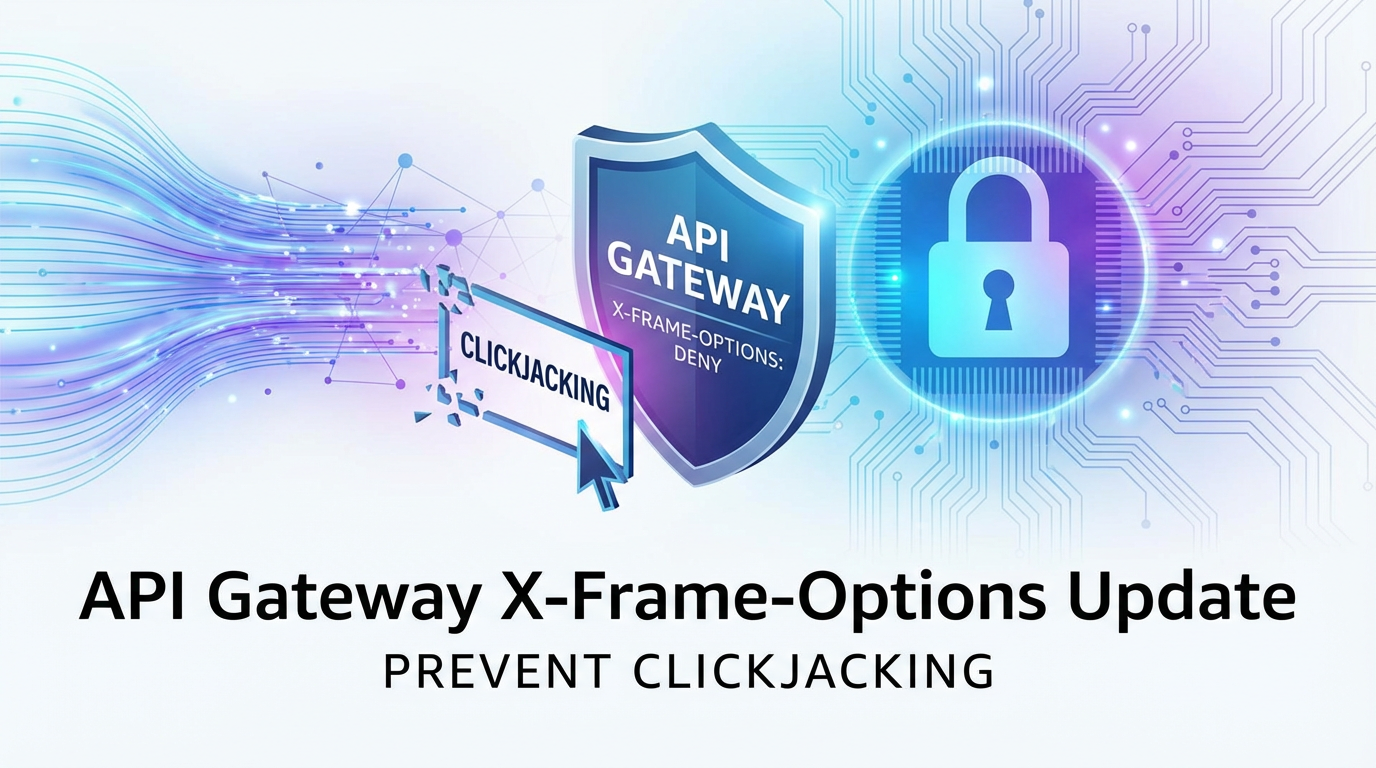


In the intricate tapestry of modern web applications, where services interact seamlessly across networks, the role of robust security measures cannot be overstated. With an increasing reliance on Application Programming Interfaces (APIs) to power everything from mobile applications to enterprise systems, the entry points to valuable data and functionalities become prime targets for malicious actors. Among the myriad of threats that developers and security professionals must contend with, clickjacking stands out as a particularly insidious form of attack. This deceptive technique exploits user trust and browser rendering mechanisms, leading to unauthorized actions performed unknowingly by the victim. To combat this silent saboteur, web security standards have evolved, with the HTTP X-Frame-Options header emerging as a foundational defense. This comprehensive exploration delves into the critical update of X-Frame-Options within API Gateway configurations, elucidating its importance in preventing clickjacking and reinforcing the overall security posture of web services. We will dissect the mechanics of clickjacking, understand the intricacies of X-Frame-Options, and illustrate how a strategically deployed API Gateway acts as an unyielding bulwark against such threats, ensuring the integrity and confidentiality of digital interactions.
The Unseen Battle for Web Security: Introduction to a Persistent Threat
The digital landscape is a dynamic battlefield where innovation frequently clashes with malevolence. Every day, new web applications and services are launched, each promising to enhance user experience, streamline operations, or unlock unprecedented capabilities. However, with this rapid expansion comes an equally swift evolution of cyber threats, constantly probing for vulnerabilities and weak points in the digital infrastructure. For organizations and individual users alike, maintaining a secure online presence is no longer merely a best practice; it is an absolute necessity. The consequences of security breaches can range from financial losses and reputational damage to the erosion of user trust and significant legal ramifications.
At the heart of many modern applications lies the Application Programming Interface (API). APIs serve as the connective tissue that allows disparate software systems to communicate and exchange data, forming the backbone of microservices architectures, single-page applications, and mobile platforms. Given their pivotal role in facilitating data flow and controlling application logic, APIs naturally become high-value targets for attackers. Securing these interfaces is paramount, and this responsibility often falls to an API Gateway – a sophisticated traffic manager that acts as a single entry point for all API requests. The API Gateway is not just a routing mechanism; it is a critical enforcement point for security policies, playing an instrumental role in authentication, authorization, rate limiting, and threat protection.
Among the various threats that an API Gateway is designed to mitigate, clickjacking, also known as a UI redressing attack, presents a unique challenge due to its deceptive nature. Unlike direct hacking attempts that might involve brute force or code injection, clickjacking manipulates the user interface itself, tricking users into performing actions they did not intend. Imagine browsing a seemingly harmless website, yet with every click or keystroke, you are unknowingly interacting with a hidden, malicious page embedded beneath a transparent overlay. This silent sabotage can lead to disastrous outcomes, from unauthorized financial transactions to unwitting propagation of malware or exposure of sensitive data. The insidious nature of clickjacking lies in its ability to exploit user trust and the fundamental way web browsers render content, making it a subtle yet powerful weapon in an attacker's arsenal.
To counter this stealthy threat, web security standards have introduced specific HTTP response headers, one of the most prominent being X-Frame-Options. This header provides a straightforward yet effective mechanism for websites to declare whether they can be embedded within <frame>, <iframe>, <embed>, or <object> tags. By properly configuring X-Frame-Options, web administrators can instruct browsers to prevent their pages from being loaded into frames by other domains, thereby thwarting clickjacking attempts before they can even begin. The update and diligent application of this header within API Gateway configurations represent a crucial step in fortifying web services against UI redressing attacks. This article will meticulously dissect the anatomy of clickjacking, explore the various directives of X-Frame-Options, and illustrate how an API Gateway serves as an indispensable bastion for implementing and enforcing these vital security policies, ultimately safeguarding the integrity of digital interactions in an increasingly interconnected world.
Deconstructing Clickjacking: A Silent Sabotage of User Trust
Clickjacking, also referred to as a UI redressing attack, is a sophisticated and highly deceptive technique employed by malicious actors to trick users into performing actions on a website without their knowledge or explicit consent. Its name itself, "clickjacking," succinctly describes the essence of the attack: the malicious party "jacks" the user's clicks, redirecting them to an unintended target. This form of attack capitalizes on the visual nature of web browsing and the trust users place in the interfaces they interact with daily. Unlike more overt phishing attempts that try to lure users to fake websites, clickjacking subtly manipulates the user's interaction with a legitimate, trusted site.
How Clickjacking Works: Layers of Deception
The fundamental mechanism behind clickjacking involves layering. An attacker creates an innocent-looking, often benign webpage as a decoy. Beneath or above this visible decoy page, they embed a legitimate but vulnerable webpage from a different domain using HTML elements like <iframe>, <frame>, <embed>, or <object>. The critical part of the attack is making this embedded, legitimate page completely transparent or partially obscured, using CSS properties like opacity:0; or by positioning it precisely over interactive elements of the visible decoy.
When a user visits the attacker's decoy page, they see what appears to be a normal interface. However, when they attempt to click a button, check a box, or enter data on the visible page, their click or input is unknowingly directed to the hidden, legitimate page underneath. For instance, a user might intend to click a "Download" button on the visible page, but their actual click registers on a "Confirm Transaction" button on a hidden banking website frame. The user perceives they are interacting with the benign page, while in reality, they are unwittingly performing an action on another site, often one that carries significant consequences.
Real-World Impact: Unauthorized Actions with Serious Consequences
The repercussions of a successful clickjacking attack can be severe and far-reaching, ranging from privacy invasions to direct financial theft. Here are some examples of the real-world impact:
- Unauthorized Social Media Actions: A classic example involves tricking users into "liking" pages, "sharing" content, or "following" profiles on social media platforms. An attacker could overlay a legitimate social media button (e.g., Facebook "Like") over a button on their own site, so when the user clicks what they think is "Next" or "Continue," they are actually liking a malicious page or sharing spam content with their entire network.
- Financial Transactions: Perhaps the most alarming impact, clickjacking can be used to authorize money transfers, purchase items, or modify account settings on banking or e-commerce sites. If a user is logged into their online banking portal in another tab, an attacker could embed a transparent frame of a transaction confirmation page, aligning the "Confirm" button with a seemingly harmless button on their decoy site.
- Credential Theft and Account Takeover: While not directly stealing credentials, clickjacking can be used to change security settings, reset passwords, or enable features that facilitate later account takeover. For example, tricking a user into changing their email address associated with an account.
- Enabling Webcam/Microphone Access: Modern browsers require explicit user consent for webcam or microphone access. An attacker could overlay a legitimate browser permission prompt (e.g., "Allow camera access?") over a benign button on their site. When the user clicks the innocent button, they unknowingly grant access to their camera or microphone to a malicious application.
- Downloading Malware: Users might be tricked into clicking a "Download" button that, instead of downloading a legitimate file, initiates the download of malware or ransomware from a hidden frame.
- Disabling Security Features: Some websites allow users to disable certain security features in their profile settings. An attacker could use clickjacking to trick a user into deactivating features like two-factor authentication or privacy controls.
Different Attack Vectors: Sophistication in Deception
Clickjacking is not monolithic; attackers continuously refine their techniques, leading to various sophisticated attack vectors:
- Full-Page Overlays: The simplest form, where an entire malicious page is rendered transparently over a legitimate one. The user thinks they are interacting with the top page but are interacting with the hidden one.
- Cursor Tracking and "Drag-and-Drop" Clickjacking: More advanced techniques involve precisely tracking the user's cursor movements. The transparent frame might dynamically reposition itself to align with the user's cursor, ensuring that whatever the user intends to click on the decoy page, they end up clicking on the hidden element. "Drag-and-drop" clickjacking extends this to trick users into dragging elements (e.g., a file) onto a hidden frame, inadvertently uploading it to a malicious service.
- Keylogging (UI Redressing via Keystrokes): While less common than click-based attacks, similar principles can be applied to keystrokes. An attacker might overlay an input field from a legitimate site over a decoy input field. When the user types into the visible field, their keystrokes are recorded by the hidden, legitimate field, potentially revealing sensitive information like passwords.
- "Like-Jacking" and Social Engineering: Specifically targeting social media platforms, these attacks aim to increase engagement for malicious content or profiles by forcing users to "like" or "share." This leverages social engineering principles, as the user's network then sees the activity, lending credibility to the malicious content.
The insidious nature of clickjacking lies in its ability to exploit user trust and the fundamental way web browsers render content. It doesn't require breaking encryption or sophisticated hacking tools; instead, it leverages a subtle manipulation of the user interface. This makes it a particularly difficult threat for the average user to detect and avoid, underscoring the critical need for robust server-side and browser-side protections. Enterprises, particularly those managing sensitive API endpoints, must prioritize defenses against such attacks, making the proper configuration of X-Frame-Options (or its more modern successor, Content Security Policy) an essential component of their overall security strategy, especially when enforced through an API Gateway.
X-Frame-Options: The First Line of Defense Against Clickjacking
In the ongoing battle against web-based vulnerabilities, developers and security professionals continuously seek mechanisms to fortify web applications. One of the earliest and most direct defenses specifically engineered to combat clickjacking attacks is the X-Frame-Options HTTP response header. Introduced by Microsoft Internet Explorer 8 and subsequently adopted by most other major browsers, this header provides a straightforward yet remarkably effective way for a web server to declare whether its content can be embedded within <frame>, <iframe>, <embed>, or <object> tags by other websites. Its core purpose is to prevent a web page from being loaded into a frame on another domain, thereby removing the attacker's ability to layer a malicious site over a legitimate one.
Origin and Purpose: A Clear Directive to Browsers
Before X-Frame-Options, browsers primarily determined whether to render framed content based on the browser's own security policies, which often were not robust enough to prevent all forms of framing abuse. The absence of a clear directive from the server left a significant gap that clickjacking exploited. X-Frame-Options filled this void by empowering the website itself to explicitly control its framing behavior. When a browser receives a web page with this header, it respects the instruction before rendering any embedded content. If the instruction prohibits framing from a particular origin or altogether, the browser will refuse to load the page within a frame, even if the embedding page attempts to do so. This proactive measure effectively cuts off the primary attack vector for clickjacking.
The Core Mechanism: Instructing Browsers on Framing Behavior
The X-Frame-Options header is transmitted as part of the HTTP response for a web page. For example:
HTTP/1.1 200 OK
Content-Type: text/html
X-Frame-Options: DENY
When a browser encounters X-Frame-Options: DENY, it understands that the page should not be displayed in a frame, regardless of the origin of the framing page. If a page tries to embed this content, the browser will block the rendering of the framed content, typically displaying an error message or a blank space where the frame would have been. This mechanism is crucial because it offloads the security decision from the potentially compromised client-side (the attacker's page) to the trusted server-side (the legitimate website), enforced by the browser's adherence to HTTP standards.
Directives Explained: Granular Control Over Framing
The X-Frame-Options header supports three primary directives, each offering a different level of control over framing behavior:
| Directive | Description | Use Case & Implications |
|---|---|---|
DENY |
This is the most restrictive directive. It completely prevents the page from being displayed in a frame, regardless of the origin attempting to embed it. Whether the framing page is from the same domain or a different one, the browser will block the content from rendering within an <iframe> or similar tag. |
Use Case: Highly recommended for pages containing sensitive information (e.g., login pages, user dashboards, administrative interfaces, transaction confirmation pages). It provides the strongest protection against clickjacking. Implications: Can cause issues if legitimate cross-domain framing is required for specific application functionalities (e.g., embedding a widget from a CDN). It forces developers to re-evaluate such legitimate framing needs or seek alternative integration methods. It is the safest default choice when no framing is expected or desired. |
SAMEORIGIN |
This directive allows the page to be displayed in a frame only if the framing page is from the exact same origin as the page itself. The "origin" includes the protocol, domain, and port number. If any of these differ, the browser will block the framing. | Use Case: Suitable for applications that need to embed their own pages within frames for legitimate reasons (e.g., internal administrative dashboards with embedded reports, certain legacy application architectures that use frames for navigation or modular content display). It offers a balance between security and internal flexibility. Implications: Offers good protection against cross-domain clickjacking, which is the most common scenario. However, it does not protect against same-origin clickjacking, which can still occur if an attacker manages to inject malicious code (e.g., via XSS) onto the same domain. Less secure than DENY but more flexible. |
ALLOW-FROM uri |
This directive permits the page to be displayed in a frame only if the framing page originates from the specified uri. The uri must be a single, fully qualified domain name (e.g., https://trusted-domain.com). |
Use Case: Intended for specific scenarios where a page absolutely must be framed by a known, trusted external domain, and no other solution (like postMessage for cross-domain communication) is feasible. Implications: This directive has significant limitations and is deprecated or inconsistently supported by modern browsers (e.g., Chrome, Firefox have largely dropped support, though some older versions or niche browsers might still respect it). It is also less secure due to the difficulty of managing a whitelist of allowed origins and the potential for new subdomains to introduce vulnerabilities. Its use is strongly discouraged in favor of Content-Security-Policy's frame-ancestors directive for fine-grained control. |
Practical Implications of Each Directive
DENY: This is the most secure option and should be the default for all sensitiveAPIendpoints and web pages that are not explicitly designed to be framed. Its rigidity ensures maximum protection against unauthorized framing, simplifying security decisions by eliminating potential edge cases where an attacker might find a loophole.SAMEORIGIN: This directive is a good compromise when an application legitimately uses frames internally. For example, an administrative panel might use an<iframe>to display a user's profile details within a broader dashboard. In such cases,SAMEORIGINallows this internal functionality while still protecting against external, cross-domain clickjacking. However, it's crucial to ensure that there are no XSS vulnerabilities on the same origin that an attacker could exploit to conduct same-origin clickjacking.ALLOW-FROM uri: Due to its limited browser support and inherent security risks (e.g., a compromise of the alloweduricould lead to clickjacking), this directive is largely considered obsolete and should be avoided. Developers needing such specific control should instead migrate to theContent-Security-Policy(CSP) header with theframe-ancestorsdirective, which offers more robust and widely supported granular control.
Browser Support and Historical Context
The X-Frame-Options header has enjoyed widespread support across major browsers (Chrome, Firefox, Safari, Edge) for many years, making it a reliable defense mechanism for clickjacking. However, as web security standards evolved, the need for more flexible and powerful policies became apparent. This led to the development of Content Security Policy (CSP), which includes a more advanced frame-ancestors directive that can achieve the same and more granular control than X-Frame-Options. While CSP's frame-ancestors directive is now the recommended approach for framing control, X-Frame-Options remains relevant for backward compatibility and as a quick, effective solution for preventing clickjacking, especially in contexts where full CSP implementation might be complex or unnecessary. Notably, if both X-Frame-Options and a frame-ancestors CSP are present, modern browsers are typically designed to prioritize the CSP, offering a layered approach to security.
In conclusion, X-Frame-Options is a vital HTTP response header that provides a clear and enforceable mechanism to prevent clickjacking. By explicitly instructing browsers on whether a page can be framed and from which origins, it significantly reduces the attack surface for UI redressing attacks. While newer, more comprehensive security headers like CSP exist, the simplicity and widespread support of X-Frame-Options ensure its continued relevance as a crucial component of a robust web security strategy, particularly when enforced at the critical juncture of an API Gateway. Its proper configuration is not just a best practice; it's a fundamental safeguard for user trust and data integrity.
APIPark is a high-performance AI gateway that allows you to securely access the most comprehensive LLM APIs globally on the APIPark platform, including OpenAI, Anthropic, Mistral, Llama2, Google Gemini, and more.Try APIPark now! 👇👇👇
The Indispensable Role of an API Gateway in Security Enforcement
In the sprawling landscape of modern software architectures, particularly those built around microservices and distributed systems, the API Gateway has ascended from a convenient routing mechanism to an indispensable component of infrastructure. More than just a traffic director, an API Gateway acts as the single entry point for all API requests from clients to an organization's backend services. This strategic position makes it an ideal and often mandatory location for enforcing a wide array of security policies, including those aimed at preventing sophisticated attacks like clickjacking. By centralizing security enforcement at the gateway level, organizations can achieve consistent protection, streamline management, and offload critical security tasks from individual backend services, allowing them to focus on core business logic.
What is an API Gateway? A Unified Front for API Requests
An API Gateway is essentially a proxy server that sits between client applications and a collection of backend services. When a client makes an API request, it first hits the API Gateway, which then routes the request to the appropriate backend service. But its functions extend far beyond simple routing. A robust API Gateway typically handles:
- Request Routing: Directing incoming requests to the correct service based on defined rules.
- Load Balancing: Distributing traffic across multiple instances of a service to ensure high availability and performance.
- Protocol Translation: Converting requests from one protocol to another (e.g., HTTP to gRPC).
- Request Aggregation: Combining multiple requests into a single call to reduce network round trips.
- Monitoring and Analytics: Collecting metrics and logs about API usage and performance.
- Security Enforcement: This is where the
API Gatewaytruly shines as a security powerhouse, providing a unified front for protecting backend services.
Why API Gateways are Ideal for Enforcing Security Policies
The API Gateway's position at the edge of an organization's network, intercepting every incoming API request, makes it a perfect choke point for security enforcement. Here are several reasons why it is ideally suited for this role:
- Centralized Control: Instead of implementing security measures in each individual microservice (which can be hundreds or thousands), the
gatewayallows for a single point of configuration and management. This ensures consistency across all APIs and reduces the chances of misconfiguration. - Decoupling Security from Business Logic: By handling security concerns at the
gateway, backend services can remain lightweight and focused solely on their business functionality. This improves developer productivity and simplifies service development and maintenance. - Performance Optimization: Security checks like authentication, authorization, and rate limiting can be resource-intensive. Offloading these tasks to a highly optimized
gatewayallows backend services to serve requests faster. - Early Threat Detection and Mitigation: Threats can be identified and blocked at the
gatewaybefore they even reach the backend services, thereby protecting critical resources from being overwhelmed or exploited. - Policy Standardization: The
gatewayensures that all APIs adhere to organizational security standards and regulatory compliance requirements consistently.
Implementing X-Frame-Options at the Gateway Level: A Strategic Defense
The application of X-Frame-Options at the API Gateway level is a prime example of centralized security enforcement. Instead of each backend service needing to be configured to send the X-Frame-Options header, the gateway can inject this header into every response before it reaches the client. This ensures that all exposed API endpoints and web pages served through the gateway are uniformly protected against clickjacking.
Header Injection Mechanisms:
API Gateways provide various mechanisms to inject or modify HTTP headers. Typically, this involves:
- Policy Management Features: Most enterprise-grade
API Gatewaysoffer a rich policy engine that allows administrators to define rules for request and response modification. This includes adding, removing, or modifying HTTP headers. ForX-Frame-Options, a policy would dictate: "For all responses originating from services behind thisgateway, add theX-Frame-Optionsheader with a value ofDENY(orSAMEORIGIN)." - Configuration Files/Declarative APIs: Some
gatewaysuse configuration files (e.g., YAML, JSON) or declarative APIs whereX-Frame-Optionscan be specified globally or perAPIroute. - Plugins/Modules: Many
gatewaysare extensible through plugins or modules. A security plugin could be configured to automatically enforceX-Frame-Optionsand other security headers.
Ensuring Consistent Application Across All Exposed Services:
The beauty of gateway-level enforcement is its universality. Once configured, every API call that passes through the gateway will have the X-Frame-Options header appended to its response, irrespective of whether the backend service itself was explicitly programmed to include it. This prevents scenarios where a new service might be deployed without the header, creating a potential security loophole.
Example Scenarios for DENY vs. SAMEORIGIN in a Gateway Context:
DENY: For the vast majority ofAPIendpoints that serve data or trigger actions,DENYis the safest choice. For instance, anAPIthat facilitates financial transactions, user profile updates, or data retrieval should always be served withX-Frame-Options: DENY. This ensures that these critical interfaces cannot be unknowingly embedded by a malicious site. TheAPI Gatewaywould be configured to injectDENYfor all responses.SAMEORIGIN: If an organization hosts anAPIdeveloper portal or an internal dashboard that legitimately frames content from its own APIs or other internal applications (e.g., embedding a graph generated by an analyticsAPIon the same domain), thenSAMEORIGINmight be appropriate for those specific routes. TheAPI Gatewaycould be configured with more granular policies, applyingSAMEORIGINonly to the responses of the developer portal's web pages while applyingDENYto all otherAPIendpoints.
For organizations looking to consolidate their API management and security, platforms like APIPark offer comprehensive solutions. As an open-source AI gateway and API management platform, APIPark enables robust API lifecycle management, including the ability to define and enforce critical security policies such as X-Frame-Options across all managed APIs. This centralized approach significantly streamlines the deployment of security measures, ensuring that all services behind the gateway are protected against threats like clickjacking, while also offering advanced features for AI model integration and traffic management. With APIPark, businesses can manage not only traditional REST APIs but also integrate and standardize invocation formats for over 100 AI models, encapsulating prompts into new REST APIs, all while benefiting from end-to-end API lifecycle management, performance rivaling Nginx, and detailed API call logging for enhanced security and operational insights.
Beyond X-Frame-Options: Other Gateway Security Features
While X-Frame-Options is crucial for clickjacking prevention, an API Gateway's security capabilities extend much further, providing a layered defense-in-depth strategy:
- Authentication and Authorization: The
gatewaycan authenticate incoming requests using various schemes (e.g., API keys, OAuth2, JWTs, mutual TLS) and authorize access based on roles and permissions before forwarding requests to backend services. - Rate Limiting and Throttling: To prevent abuse, DDoS attacks, and ensure fair usage, the
gatewaycan enforce limits on the number of requests a client can make within a specified timeframe. - IP Whitelisting/Blacklisting: Blocking traffic from known malicious IP addresses or allowing traffic only from trusted sources.
- Web Application Firewall (WAF) Integration: Integrating with or acting as a WAF to detect and block common web attacks like SQL injection, cross-site scripting (XSS), and more.
- Input Validation: Sanity checking and validating input parameters to prevent malformed requests from reaching backend services.
- TLS/SSL Termination: Encrypting traffic between clients and the
gateway, offloading this compute-intensive task from backend services. - Threat Protection: Detecting and mitigating various other threats like XML bomb attacks, JSON web token tampering, and malicious payload detection.
- API Key Management: Issuing, revoking, and managing
APIkeys for clients. - Traffic Management and Load Balancing: While primarily for performance, these features also contribute to security by preventing single points of failure and distributing potential attack loads.
The API Gateway thus stands as a formidable first line of defense, not just against specific threats like clickjacking but against a broad spectrum of cyber dangers. Its strategic placement allows for uniform, efficient, and robust security enforcement, freeing up backend services to focus on their core competencies and enabling organizations to scale their API ecosystems securely and confidently. The consistent application of headers like X-Frame-Options through an API Gateway is a testament to this powerful security paradigm.
Evolving Web Security: Beyond X-Frame-Options
While X-Frame-Options has served as a foundational defense against clickjacking for many years, the relentless evolution of web technologies and attack vectors has necessitated the development of more comprehensive and flexible security policies. The modern web browser environment is significantly more complex than it was when X-Frame-Options was first introduced, with intricate interactions between different origins, embedded content, and user-generated scripts. This complexity has given rise to the Content Security Policy (CSP), a powerful and versatile security mechanism that can address a broader range of client-side vulnerabilities, including more robust control over framing behavior. Understanding the capabilities of CSP and other crucial HTTP security headers is essential for building a truly resilient web security posture, moving beyond the specific scope of X-Frame-Options to embrace a layered, defense-in-depth strategy.
Content Security Policy (CSP): A More Granular and Powerful Alternative
Content Security Policy (CSP) is an HTTP response header that allows web application administrators to control the resources (scripts, stylesheets, images, media, etc.) that the user agent is allowed to load for a given page. Its primary goal is to mitigate various forms of cross-site scripting (XSS) and other code injection attacks by specifying allowed sources for content. Crucially, CSP also includes a directive specifically designed to control framing, offering a more powerful and flexible alternative to X-Frame-Options.
How CSP Tackles Framing (frame-ancestors directive):
The frame-ancestors directive within CSP is the modern equivalent and successor to X-Frame-Options. It provides more granular control over which origins are permitted to embed the current page.
Example of frame-ancestors:
Content-Security-Policy: frame-ancestors 'self' https://trusted-domain.com;
This CSP header instructs the browser that the page can only be framed by pages from its own origin ('self') or from https://trusted-domain.com.
Comparison with X-Frame-Options:
DENYequivalent in CSP:Content-Security-Policy: frame-ancestors 'none';SAMEORIGINequivalent in CSP:Content-Security-Policy: frame-ancestors 'self';ALLOW-FROM uriequivalent in CSP:Content-Security-Policy: frame-ancestors https://trusted-domain.com;(Note: CSP allows multiple sources and schemes, offering greater flexibility thanALLOW-FROM).
Benefits of CSP over X-Frame-Options:
- Granularity and Flexibility: CSP's
frame-ancestorsallows for multiple trusted sources ('self', specific domains, IP addresses, wildcards), providing much finer control than the limited options ofX-Frame-Options. - Broader Scope: Beyond framing, CSP can prevent XSS, mixed content issues, and other injection attacks by controlling script execution, stylesheet loading, font usage, and more. This makes it a comprehensive security policy.
- Report-Only Mode: CSP can be deployed in a
Content-Security-Policy-Report-Onlymode, allowing developers to test policies and monitor violations without blocking content. This is invaluable for gradual implementation and avoiding unintended breakage. - Modern Browser Support: While
X-Frame-Optionshas good support, CSP is actively developed and widely supported across all modern browsers, making it the preferred standard for new implementations.
When to Use X-Frame-Options vs. CSP (Complementary Roles):
While CSP's frame-ancestors is generally superior, X-Frame-Options still has a place, particularly for backward compatibility.
- Prioritization: If both
X-Frame-OptionsandContent-Security-Policywithframe-ancestorsare present, modern browsers generally prioritize theframe-ancestorsdirective. This means you can deployX-Frame-Optionsas a fallback for older browsers that might not fully support CSP, while relying on CSP for modern browsers. - Simplicity for Specific Needs: For applications where the only concern is framing and other CSP benefits are not immediately required,
X-Frame-Optionscan be a simpler, quicker implementation. However, moving to CSP is always recommended as part of a long-term security strategy. - API Endpoints: For pure
APIendpoints that primarily return JSON or XML and are not intended to be rendered as HTML pages,X-Frame-Options(orframe-ancestors) might seem less critical. However, if theAPIcan ever return an HTML error page or a fallback HTML document, then these headers are still highly relevant to prevent those pages from being framed in a malicious context. This is especially true forAPI Gatewaysthat might serve custom error pages.
Other Crucial HTTP Security Headers: A Multi-Layered Defense
Beyond framing control, a holistic web security strategy relies on several other HTTP response headers to protect against a variety of client-side attacks and enforce best practices:
- HTTP Strict Transport Security (HSTS):
- Header:
Strict-Transport-Security: max-age=31536000; includeSubDomains; preload - Purpose: Forces browsers to interact with a website only over HTTPS, preventing downgrade attacks and cookie hijacking. It tells browsers to automatically convert all future HTTP requests for the domain into HTTPS requests for a specified duration (
max-age).
- Header:
- Referrer-Policy:
- Header:
Referrer-Policy: no-referrer-when-downgrade(orsame-origin,strict-origin-when-cross-origin,no-referrer, etc.) - Purpose: Controls how much referrer information (the URL of the previous page) is sent with requests, helping to protect user privacy and prevent leakage of sensitive URLs to third parties.
- Header:
- Feature-Policy / Permissions-Policy:
- Header:
Permissions-Policy: geolocation=(self), camera=() - Purpose: Allows web developers to selectively enable and disable browser features and APIs (e.g., camera, microphone, geolocation, fullscreen) for their own and embedded content. This mitigates risks from malicious third-party content attempting to access sensitive features.
Feature-Policyis the older version,Permissions-Policyis the newer standard.
- Header:
- X-Content-Type-Options:
- Header:
X-Content-Type-Options: nosniff - Purpose: Prevents browsers from "sniffing" a response's MIME type away from the declared
Content-Type. This prevents malicious users from uploading files that masquerade as a different content type (e.g., an executable file disguised as an image), which could then be executed by the browser. Crucial for preventing XSS attacks.
- Header:
- X-XSS-Protection:
- Header:
X-XSS-Protection: 1; mode=block - Purpose: Activates the XSS filter built into most modern web browsers. While modern browsers increasingly rely on CSP for XSS protection, this header provides an additional layer for older browsers or as a supplementary defense.
- Header:
- Cross-Origin-Opener-Policy (COOP) and Cross-Origin-Embedder-Policy (COEP):
- Headers:
Cross-Origin-Opener-Policy: same-originandCross-Origin-Embedder-Policy: require-corp - Purpose: These headers work together to create an isolated "cross-origin isolated" browsing context. They are vital for mitigating side-channel attacks like Spectre and enabling powerful features such as
SharedArrayBufferin modern browsers.COOPprevents a page from being in the same browsing context group as another page unless they are explicitly opted in, whileCOEPprevents a document from loading any cross-origin resources that don't explicitly grant permission to be embedded.
- Headers:
Layered Security Approach: Defense in Depth
The sheer volume and variety of web security headers underscore the importance of a "defense-in-depth" strategy. No single security measure is a silver bullet. By implementing a combination of these headers, along with robust server-side security, secure coding practices, and continuous monitoring, organizations can build a formidable multi-layered defense. An API Gateway is an ideal place to centralize the enforcement of these headers, ensuring that all API traffic benefits from a consistent and comprehensive set of security policies before requests ever reach backend services. This approach not only protects against known vulnerabilities but also builds a more resilient infrastructure against future, unforeseen threats. The continuous vigilance and updates in the security landscape mean that security configurations, especially those at the gateway level, should be regularly reviewed and adapted to meet emerging challenges.
Practical Considerations and Best Practices for Implementation
Implementing security measures in a live production environment requires careful planning, thorough testing, and a deep understanding of potential impacts. While X-Frame-Options and other security headers are vital for protection, their incorrect application can lead to broken functionality, negative user experiences, or even introduce new vulnerabilities. Therefore, a thoughtful approach guided by best practices is essential, especially when configuring these policies at the API Gateway level, which acts as a central control point for numerous services.
Assessing the Need for X-Frame-Options (or CSP)
Before deploying X-Frame-Options or its more powerful successor, Content Security Policy (CSP) with frame-ancestors, it's crucial to assess the application's actual needs and potential framing scenarios.
- Identify Sensitive Pages: Prioritize pages that handle sensitive user data, authentication, authorization, or critical business transactions (e.g., login pages, user dashboards, payment portals, administrative interfaces). These pages should almost always be protected by
DENYor'none'to prevent clickjacking. - Evaluate Legitimate Framing Needs: Determine if any part of your application legitimately embeds other pages using frames.
- Same-Origin Framing: If your application frames its own content (e.g., an internal analytics dashboard embedding reports generated by another part of the same application, or an old-style frameset for navigation),
SAMEORIGINorframe-ancestors 'self'might be necessary. - Cross-Origin Framing: If your application legitimately needs to be framed by a third-party site (e.g., as a widget, an embedded form, or for a partner integration), then
DENYorSAMEORIGINwill break this functionality. In such rare cases, ifX-Frame-Optionsis strictly necessary,ALLOW-FROMmight be considered (though deprecated), but a stronger, more flexible solution likeContent-Security-Policywithframe-ancestorslisting the specific trusted origins is highly recommended. However, such legitimate cross-origin framing should be minimized due to inherent security risks. Modern approaches often preferpostMessagefor cross-origin communication without direct framing.
- Same-Origin Framing: If your application frames its own content (e.g., an internal analytics dashboard embedding reports generated by another part of the same application, or an old-style frameset for navigation),
- Default to Strongest Protection: If there's no clear, legitimate reason for a page to be framed, the safest default is
DENYforX-Frame-Optionsorframe-ancestors 'none'for CSP. This "deny by default" principle is a cornerstone of robust security.
Choosing the Right Directive: DENY is Generally Safest
As discussed, the choice of directive is critical:
DENY(orframe-ancestors 'none'): This should be the default for virtually allAPIendpoints and web pages that are not explicitly designed to be framed. It offers the strongest protection against clickjacking by completely disallowing embedding. If yourAPI GatewayservesAPIresponses, error pages, or any other content that should not be framed by external sites,DENYis the most secure and straightforward choice.SAMEORIGIN(orframe-ancestors 'self'): Use this only when there is a confirmed, legitimate requirement for your application to frame its own content. Carefully audit these internal framing uses to ensure they don't inadvertently create same-origin clickjacking opportunities, which can arise if there's an XSS vulnerability on the same domain.ALLOW-FROM uri(or specificframe-ancestorsorigins): This should be used sparingly, if at all, forX-Frame-Optionsdue to deprecation and limited browser support. If cross-origin framing is truly essential, migrate to CSP'sframe-ancestorsand list only trusted, known origins. Be extremely cautious as whitelisting third-party domains always introduces a dependency on their security posture.
Thorough Testing After Implementation
Implementing security headers, especially at an API Gateway level, where changes affect multiple services, demands rigorous testing.
- Functional Testing: Ensure that no legitimate functionalities are inadvertently broken. If
SAMEORIGINwas chosen for internal framing, verify that all internal framed content still renders correctly. IfDENYwas applied, ensure no legitimate applications that were embedding your content are now failing. - Security Testing (Clickjacking Specific):
- Manual Testing: Create a simple HTML page on a different domain (or even locally) with an
<iframe>trying to load your target page. The browser should block the content from loading ifDENYorSAMEORIGIN(from different origin) is correctly applied. - Automated Scanners: Utilize web vulnerability scanners (e.g., OWASP ZAP, Burp Suite, commercial scanners) that can check for the presence and correctness of security headers, including
X-Frame-Optionsand CSP. - Browser Developer Tools: Use the browser's developer console (Network tab, Security tab) to inspect HTTP response headers and confirm that
X-Frame-Optionsor CSP are present with the expected values. Look for console errors related to frame blocking.
- Manual Testing: Create a simple HTML page on a different domain (or even locally) with an
- Staging Environment Deployment: Always deploy changes to a staging or testing environment that closely mirrors production before going live. This allows for comprehensive testing without impacting users.
- Gradual Rollout (if feasible): For large, complex
APIecosystems, consider a gradual rollout ofX-Frame-Optionsor CSP, perhaps by applying it to less criticalAPIroutes first, monitoring, and then expanding. For CSP, theReport-Onlymode is invaluable for this.
Developer Awareness and Training
Security is not solely the responsibility of the security team or API Gateway administrators; it's a collective effort. Developers should be educated on:
- The threat of clickjacking: Understanding how these attacks work helps them appreciate the need for protective measures.
- The purpose of
X-Frame-Optionsand CSP: Knowing which headers prevent which attacks and how to configure them. - Secure coding practices: Avoiding XSS vulnerabilities, which can undermine
SAMEORIGINprotection. - Impact of security headers: How these headers affect browser rendering and legitimate framing, informing design decisions. Training programs, internal documentation, and code review processes should reinforce these best practices.
Monitoring and Logging for Security Incidents
Even with the best preventative measures, continuous monitoring is crucial.
- API Gateway Logging: Ensure your
API Gateway(like APIPark, which offers detailed API call logging) is configured to log all relevant security events, including blocked requests due to policy violations. This can help detect sophisticated attacks or attempted exploits. - Browser Reporting: For CSP, configure
report-uriorreport-todirectives to send violation reports to a specified endpoint. This provides real-time insights into attempted attacks or unintended policy blocks. - Incident Response Plan: Have a clear plan for how to respond to detected clickjacking attempts or other security incidents.
The Trade-Off Between Security and Legitimate Functionality
Security headers often impose restrictions that can, in some cases, clash with legitimate functionalities or integration requirements. The key is to strike a balance:
- Prioritize Security: For sensitive data and actions, security should always take precedence. If a legitimate function requires cross-origin framing, explore alternative, more secure integration methods (e.g.,
postMessageAPI, secure server-to-server communication, embedded content served from the same domain). - Careful Assessment: Each decision regarding
X-Frame-Optionsor CSP directives should be an informed one, weighing the security benefits against potential functional impacts. Avoid blindly applying the strictest policy without understanding its implications. - Documentation: Clearly document all security header configurations, their rationale, and any known legitimate uses that required less restrictive policies. This aids in future maintenance and audits.
By adhering to these practical considerations and best practices, organizations can effectively leverage X-Frame-Options (or CSP) within their API Gateway to build a robust defense against clickjacking, ensuring the integrity of their web applications and maintaining user trust without compromising essential functionality.
Conclusion: A Commitment to Unyielding Security
In the ever-evolving digital realm, where convenience and connectivity are paramount, the imperative for robust security stands as an unyielding pillar of trust and operational integrity. Our exploration has traversed the landscape of clickjacking, dissecting its deceptive mechanics and illuminating its potential for silent sabotage. This insidious attack, which preys on the unsuspecting user by hijacking their clicks, underscores the sophisticated nature of modern cyber threats and the continuous need for proactive, multi-layered defenses.
At the forefront of this defense, the HTTP X-Frame-Options header emerges as a critical, foundational safeguard. By enabling web applications to explicitly control their framing behavior, X-Frame-Options directly confronts clickjacking, instructing browsers to prevent unauthorized embedding of content. Whether through the stringent DENY directive, the balanced SAMEORIGIN option, or the more flexible (though now largely superseded) ALLOW-FROM, this header empowers website administrators to declare their stance against UI redressing attacks, ensuring that user interactions are genuine and intentional.
However, the efficacy of X-Frame-Options is profoundly amplified when enforced at the strategic juncture of an API Gateway. As the unified entry point for all API traffic, the API Gateway is uniquely positioned to centralize and standardize security policies across an entire ecosystem of services. By injecting X-Frame-Options into every relevant HTTP response, the API Gateway guarantees consistent protection, offloading security concerns from individual backend services and presenting a formidable, uniform defense against clickjacking. This centralization not only streamlines management but also fortifies the entire API landscape, making it inherently more resilient to attack. Platforms such as APIPark exemplify how modern API Gateways can integrate comprehensive API management with robust security features, providing a vital tool for organizations aiming to protect their digital assets and user interactions.
Beyond X-Frame-Options, the journey toward unyielding security extends to a broader suite of HTTP security headers, notably the Content Security Policy (CSP) with its powerful frame-ancestors directive, and others like HSTS, Referrer-Policy, and Permissions-Policy. These headers, when deployed in concert, form a formidable defense-in-depth strategy, addressing a wide spectrum of client-side vulnerabilities. The commitment to security is an ongoing one, demanding continuous vigilance, adaptability, and the embrace of evolving standards and best practices.
Ultimately, the proactive configuration of X-Frame-Options within an API Gateway is more than a technical implementation; it is a clear declaration of an organization's commitment to protecting its users and its digital infrastructure. It underscores the understanding that in the interconnected world of APIs and web services, security is not an afterthought but an integral component of trust, reliability, and sustained success. By embracing such fundamental safeguards and continually refining our defensive posture, we can collectively build a more secure and trustworthy digital future.
FAQ
1. What is clickjacking and how does X-Frame-Options help prevent it? Clickjacking, also known as a UI redressing attack, is a malicious technique that tricks users into clicking on something different from what they perceive, usually by overlaying a transparent malicious page over a legitimate one. This can lead to unauthorized actions. The X-Frame-Options HTTP response header helps prevent clickjacking by telling web browsers whether a page can be loaded within an <iframe>, <frame>, <embed>, or <object> tag. By setting directives like DENY or SAMEORIGIN, it prevents unauthorized external websites from embedding your content, thus eliminating the core mechanism of clickjacking.
2. What are the different directives for X-Frame-Options and when should each be used? There are three main directives: * DENY: Prevents the page from being displayed in any frame, regardless of the origin. This is the most secure option and should be the default for sensitive pages. * SAMEORIGIN: Allows the page to be displayed in a frame only if the framing page is from the exact same origin (protocol, domain, and port) as the page itself. Use this if your application legitimately frames its own content internally. * ALLOW-FROM uri: Allows the page to be framed only by a specific, trusted URI. This directive has limited browser support and is largely deprecated in favor of CSP's frame-ancestors. Its use is generally discouraged due to security risks and browser inconsistencies.
3. Why is an API Gateway an ideal place to implement X-Frame-Options? An API Gateway sits as a central entry point for all API requests, making it an ideal location for enforcing security policies. Implementing X-Frame-Options at the gateway level ensures that the header is consistently applied to all relevant responses from backend services, regardless of whether individual services were configured to send it. This centralization streamlines management, provides a uniform security posture across the entire API ecosystem, and ensures that threats like clickjacking are mitigated at the network edge before reaching backend services.
4. Is X-Frame-Options still relevant with the advent of Content Security Policy (CSP)? While Content Security Policy (CSP) with its frame-ancestors directive offers more granular control and broader security benefits (like preventing XSS), X-Frame-Options remains relevant. Modern browsers typically prioritize CSP's frame-ancestors if both are present. However, X-Frame-Options can serve as a fallback for older browsers that might not fully support CSP. For simplicity or specific, limited framing concerns, X-Frame-Options can still be a quick and effective solution. For a comprehensive security strategy, a combination of both is often recommended, with CSP being the preferred long-term solution.
5. What are some best practices for implementing X-Frame-Options at the API Gateway? Key best practices include: * Assess Needs Carefully: Determine which pages or API responses truly need protection and if any legitimate framing exists. * Default to DENY: Apply X-Frame-Options: DENY (or CSP frame-ancestors 'none') as the default for all sensitive content unless a specific, legitimate reason for framing exists. * Thorough Testing: After implementation, rigorously test both functionality and security, ensuring no legitimate features are broken and that clickjacking attempts are effectively blocked. Use developer tools and vulnerability scanners. * Developer Education: Ensure your development teams understand clickjacking and the importance of security headers. * Continuous Monitoring: Use API Gateway logging and potentially CSP's Report-Only mode to monitor for any violations or attempted attacks. * Layered Security: Combine X-Frame-Options with other security headers and API Gateway features (like authentication, rate limiting) for a comprehensive defense-in-depth strategy.
🚀You can securely and efficiently call the OpenAI API on APIPark in just two steps:
Step 1: Deploy the APIPark AI gateway in 5 minutes.
APIPark is developed based on Golang, offering strong product performance and low development and maintenance costs. You can deploy APIPark with a single command line.
curl -sSO https://download.apipark.com/install/quick-start.sh; bash quick-start.sh

In my experience, you can see the successful deployment interface within 5 to 10 minutes. Then, you can log in to APIPark using your account.

Step 2: Call the OpenAI API.