API Open Platform: Driving Business Innovation
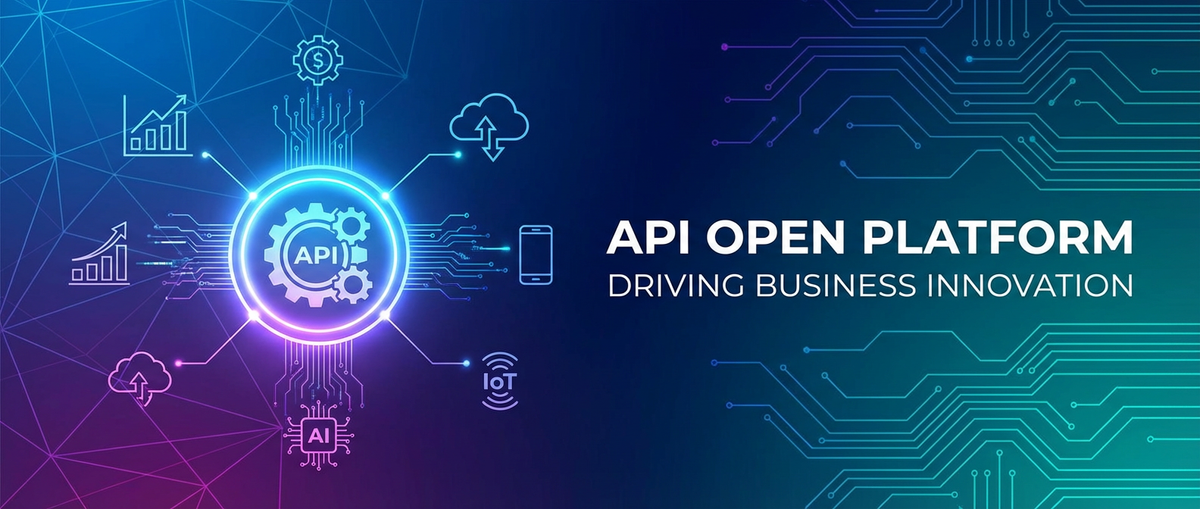


In an increasingly interconnected and digitally-driven world, the ability to rapidly innovate, collaborate, and adapt has become paramount for businesses seeking to maintain a competitive edge and unlock new avenues for growth. At the heart of this transformative shift lies the API Open Platform, a concept that has evolved from mere technical integration to a strategic imperative for organizations across every industry sector. This comprehensive exploration delves into the profound impact of API Open Platforms on business innovation, dissecting their architecture, strategic implications, challenges, and the exciting future they herald. It argues that by thoughtfully embracing and implementing a robust API Open Platform strategy, companies can not only streamline operations and enhance existing offerings but also catalyze entirely new business models, foster vibrant ecosystems, and ultimately drive unparalleled value creation in the digital economy.
The journey towards pervasive digitalization has fundamentally reshaped how businesses interact with their customers, partners, and even their internal operations. Traditional monolithic systems, once the backbone of enterprise IT, are giving way to agile, modular architectures designed for speed and flexibility. This paradigm shift is largely powered by Application Programming Interfaces (APIs), which act as digital connectors, allowing different software components to communicate and share data seamlessly. However, the true innovation leap occurs when these individual APIs are curated, governed, and exposed within an Open Platform environment, transforming a collection of disparate digital services into a cohesive, accessible, and powerful innovation engine. This is the essence of an API Open Platform: a centralized, governed, and publicly or privately accessible ecosystem of APIs that empowers developers, both internal and external, to build new applications and services, thereby extending the core capabilities and reach of the host organization. It's about breaking down silos, fostering collaboration, and democratizing access to digital assets, paving the way for unprecedented business agility and innovation.
The Genesis and Evolution of APIs and Open Platforms: A Historical Perspective on Connectivity
The concept of programmatic interfaces is far from new, tracing its roots back to the early days of computing when libraries and operating systems exposed functions for developers to use. However, the modern understanding of an API as an interface for web-based services began to truly take shape in the late 1990s and early 2000s with the advent of the internet and distributed computing. Initially, the focus was primarily on enterprise application integration (EAI), using technologies like SOAP (Simple Object Access Protocol) to connect internal systems within a company, often behind firewalls and with complex, rigid contracts. These early api implementations, while functional, were typically designed for tightly coupled environments and required significant effort for integration, limiting their broader accessibility and innovative potential.
The mid-2000s marked a pivotal shift with the rise of Representational State Transfer (REST) APIs. Coined by Roy Fielding in his 2000 dissertation, REST proposed a more lightweight, stateless, and resource-oriented approach to web service design, leveraging the existing HTTP protocol. This simplicity, combined with the widespread adoption of web browsers and mobile devices, democratized access to digital services. Companies like eBay and Amazon were early pioneers, exposing parts of their core functionalities through RESTful APIs, allowing third-party developers to build new applications and extensions on top of their platforms. This was the nascent stage of the "API Economy," where APIs were no longer just technical plumbing but valuable business assets that could create new revenue streams, expand market reach, and foster external innovation. The term "Open Platform" began to gain traction as organizations realized the strategic advantage of opening up their digital capabilities, not just to selected partners but to a broader community of developers. This openness was often characterized by public API documentation, developer portals, and streamlined access mechanisms, signaling a fundamental change from closed, proprietary systems to collaborative, ecosystem-driven models.
The evolution continued with the refinement of API management practices, as companies grappled with the challenges of securing, scaling, documenting, and monetizing their growing portfolio of APIs. The rise of microservices architecture further accelerated this trend, encouraging organizations to break down monolithic applications into smaller, independently deployable services that communicate via APIs. This modularity made applications more resilient, scalable, and easier to develop and maintain. Today, the API Open Platform stands as a sophisticated embodiment of this evolution, integrating robust API gateways, comprehensive developer portals, advanced security measures, and powerful analytics tools to create a thriving ecosystem where internal teams and external innovators alike can discover, consume, and contribute to a vast array of digital services. It represents the maturation of the API economy, moving beyond simple data exchange to become a strategic cornerstone for digital transformation and continuous innovation.
Core Components and Architecture of an API Open Platform
A sophisticated API Open Platform is not merely a collection of exposed APIs; it is a meticulously engineered ecosystem comprising several interconnected components, each playing a critical role in ensuring the platform's functionality, security, scalability, and usability. Understanding these core architectural elements is crucial for any organization aiming to build or leverage such a platform effectively to drive business innovation.
At the very front line of an API Open Platform is the API Gateway. This component acts as a single entry point for all API calls, serving as a reverse proxy that sits between clients (developers, applications) and the backend services. Its responsibilities are multifaceted and critical: * Traffic Management: It routes requests to appropriate backend services, handles load balancing to distribute traffic efficiently, and manages connection pooling. * Security Enforcement: The gateway is the primary defense mechanism, enforcing authentication (e.g., API keys, OAuth tokens), authorization policies, and often acting as a firewall against various threats. It performs request validation and can even apply rate limiting to protect backend services from overload or abuse. * Policy Enforcement: It can apply cross-cutting policies such as caching, logging, transformation of request/response data, and circuit breaking to prevent cascading failures. * Protocol Translation: It can translate between different protocols (e.g., REST to SOAP, or vice versa) if needed, allowing for greater flexibility in backend systems.
Adjacent to the gateway, and equally vital for fostering an active developer community, is the Developer Portal. This is the public face of the Open Platform, providing everything a developer needs to discover, understand, and integrate with the exposed APIs. Key features typically include: * Comprehensive Documentation: Up-to-date and easily navigable documentation, often in interactive formats like OpenAPI (Swagger) specifications, detailing API endpoints, request/response formats, authentication methods, and error codes. * API Discovery: A searchable catalog of available APIs, often categorized by domain or business capability. * Self-Service Management: Tools for developers to register applications, generate API keys, manage subscriptions, and monitor their own usage. * Code Samples and SDKs: Ready-to-use code snippets and software development kits (SDKs) in various programming languages to accelerate integration. * Sandbox Environments: Non-production environments where developers can test their applications against live-like data without affecting production systems. * Community Forums: Platforms for developers to ask questions, share insights, report bugs, and collaborate with other users and the platform provider.
API Management is an overarching function that encompasses the entire lifecycle of an API, from design and development to publication, versioning, retirement, and monitoring. This includes: * API Design and Definition: Tools for creating API specifications, ensuring consistency and adherence to standards. * Lifecycle Management: Managing different versions of an API, deprecating old ones gracefully, and ensuring backward compatibility where necessary. * Monetization: If applicable, managing billing models, usage metering, and payment processing for commercial APIs. * Governance: Establishing standards, policies, and processes for API development and deployment across the organization.
Security Mechanisms are paramount for any API Open Platform. Beyond what the API Gateway provides, a comprehensive security strategy includes: * Authentication and Authorization: Robust mechanisms like OAuth 2.0 for user authentication and granular role-based access control (RBAC) or attribute-based access control (ABAC) for authorization. * Data Encryption: Ensuring data is encrypted both in transit (TLS/SSL) and at rest. * Threat Detection and Mitigation: Implementing tools for detecting and responding to API-specific attacks (e.g., SQL injection, DDoS attacks) and conducting regular security audits and penetration testing. * Compliance: Adhering to relevant industry standards and regulatory requirements (e.g., GDPR, CCPA, HIPAA).
Analytics and Monitoring provide crucial insights into the performance, usage, and health of the Open Platform and its constituent APIs: * Real-time Monitoring: Tracking API availability, latency, error rates, and resource utilization. * Usage Analytics: Understanding which APIs are most popular, who is using them, and how frequently, which informs future development and strategic decisions. * Business Intelligence: Correlating API usage data with business outcomes to measure the platform's impact and identify opportunities for optimization. * Alerting: Setting up automated alerts for anomalies or performance degradation, enabling proactive incident response.
Finally, the Data and Integration Layers refer to the backend systems that actually provide the services and data exposed through the APIs. This can include databases, enterprise resource planning (ERP) systems, customer relationship management (CRM) systems, legacy applications, and even other third-party services. The platform’s ability to abstract and unify access to these diverse backend systems is a key enabler of innovation, allowing developers to consume data and functionality without needing to understand the underlying complexity.
In essence, a well-architected API Open Platform acts as a sophisticated nervous system for digital business, enabling controlled, secure, and efficient exposure of core capabilities. It transforms a company's digital assets from internal resources into accessible, consumable building blocks for a vast ecosystem of innovators, significantly amplifying the organization's potential for growth and market influence.
The Transformative Power of API Open Platforms on Business Innovation
The adoption of an API Open Platform is not merely a technical upgrade; it is a profound strategic move that fundamentally redefines how businesses operate, innovate, and compete. By externalizing core capabilities through well-designed APIs and fostering a vibrant Open Platform environment, organizations unlock a multitude of pathways to innovation, leading to significant competitive advantages in the digital economy. The impact is multifaceted, touching every aspect from product development and customer engagement to operational efficiency and the very fabric of business models.
Accelerating Product Development and Time-to-Market
One of the most immediate and tangible benefits of an API Open Platform is its ability to dramatically accelerate product development cycles. Instead of building every feature from scratch, internal development teams can leverage existing APIs as modular building blocks. This reusability significantly reduces redundant effort, shortens development time, and allows teams to focus on core differentiators rather than reinventing common functionalities. For instance, a financial institution implementing an API Open Platform can expose APIs for account information, payment processing, or customer authentication. New product teams can then rapidly assemble these existing api services to launch novel banking applications, personalize customer experiences, or create innovative wealth management tools in a fraction of the time it would take to develop them from the ground up. This agile approach not only speeds up time-to-market for new features and products but also enables more frequent experimentation and iteration, which is crucial for staying relevant in fast-evolving markets. By abstracting complex backend logic into simple API calls, developers are freed from intricate technical details, allowing them to concentrate on user experience and business logic.
Fostering Ecosystems and Expanding Reach Through Strategic Partnerships
Perhaps the most revolutionary aspect of an API Open Platform is its capacity to foster expansive ecosystems and facilitate strategic partnerships that extend a business's reach far beyond its traditional boundaries. By opening up specific functionalities via api, companies invite third-party developers, startups, and even competitors to build applications and services that complement or enhance their core offerings. This collaborative model generates a powerful network effect: the more developers build on the platform, the more valuable it becomes to end-users, which in turn attracts even more developers.
Consider the example of major e-commerce platforms or social media networks that thrive on their Open Platform strategies. They provide APIs that allow developers to integrate their products, create marketing tools, automate tasks, or analyze data. This not only adds immense value to the core platform but also creates new revenue streams, often through a marketplace model where third-party solutions are sold. For a traditional enterprise, this could mean partnering with specialized FinTech companies to offer advanced lending solutions, integrating with logistics providers to enhance supply chain visibility, or collaborating with data analytics firms to derive deeper customer insights. These partnerships, enabled by a robust API Open Platform, allow businesses to innovate at a scale and speed that would be impossible through internal efforts alone, effectively crowdsourcing innovation and leveraging external expertise. This strategy transforms a company from a sole product provider into a platform orchestrator, commanding a central position in a vibrant digital ecosystem.
Enhancing Customer Experience and Personalization
In today's customer-centric landscape, seamless and personalized experiences are non-negotiable. An API Open Platform plays a pivotal role in achieving this by enabling the integration of data and services across disparate channels and systems. By exposing api that provide access to customer profiles, transaction histories, preferences, and real-time status updates, businesses can create unified customer journeys. For instance, a customer service agent accessing an integrated dashboard powered by various APIs can view a holistic picture of a customer's interactions across web, mobile, and in-store channels, leading to more informed and personalized support. Similarly, marketing teams can leverage these APIs to build highly targeted campaigns, offering products and services precisely tailored to individual needs and behaviors. This level of personalization, driven by integrated data, significantly elevates customer satisfaction, fosters loyalty, and creates a distinct competitive advantage. The ability to connect different touchpoints and data sources through a unified Open Platform framework ensures that customers receive a consistent, rich, and contextually relevant experience, regardless of how or where they interact with the brand.
Driving Operational Efficiency and Internal Agility
Beyond external innovation, an API Open Platform profoundly impacts internal operations, fostering greater efficiency and agility within the organization itself. By providing well-documented and easily consumable APIs for internal services and data, departments can break down historical data silos. This facilitates seamless information flow, automates complex workflows, and reduces manual effort. For example, a sales team can instantly access product inventory data from the manufacturing department's api, or a human resources system can automatically update employee records by integrating with a payroll api. This internal Open Platform approach is often termed an "API-first" strategy, where every new service or functionality is designed with an API in mind, making it immediately reusable and accessible across the enterprise.
This internal modularity also promotes a microservices architecture, where applications are composed of loosely coupled services that communicate via APIs. This approach enhances system resilience, simplifies maintenance, and enables independent deployment of services, accelerating development cycles and reducing the risk of large-scale failures. When internal teams can quickly discover and integrate with existing corporate assets through a well-managed API Open Platform, they gain significant autonomy and speed, leading to greater overall organizational agility and a more efficient allocation of resources. This operational excellence translates directly into cost savings and improved productivity, freeing up resources that can then be redirected towards more strategic, innovative endeavors.
Unlocking New Business Models and Revenue Streams
Perhaps the most exciting aspect of an API Open Platform is its potential to unlock entirely new business models and significant revenue streams that were previously unimaginable. By transforming core business functionalities into consumable services, companies can move beyond selling traditional products to offering "platform as a service" (PaaS) or "data as a service" models.
A prime example is Twilio, which doesn't operate a phone network but provides communication APIs (voice, SMS, video) that allow developers to embed communication capabilities directly into their applications. Similarly, Stripe revolutionized online payments by offering a developer-friendly payment processing api, enabling countless businesses to easily accept payments. These companies have built their entire business around an Open Platform model, proving its immense financial potential. For established enterprises, this could mean monetizing proprietary data by offering curated datasets via APIs, providing specialized software components as a service, or taking a share of revenue generated by third-party applications built on their platform. The ability to expose digital assets in new, creative ways through an API Open Platform allows businesses to diversify their offerings, tap into new markets, and create sustainable growth engines beyond their traditional product lines, fundamentally redefining their market position and value proposition. This shift from product-centric to platform-centric thinking is a hallmark of truly innovative companies in the digital age.
APIPark is a high-performance AI gateway that allows you to securely access the most comprehensive LLM APIs globally on the APIPark platform, including OpenAI, Anthropic, Mistral, Llama2, Google Gemini, and more.Try APIPark now! 👇👇👇
Strategic Considerations for Implementing an API Open Platform
Embarking on the journey of establishing an API Open Platform is a strategic endeavor that demands careful planning and execution, extending far beyond mere technical implementation. A successful Open Platform strategy requires a clear vision, robust governance, a focus on the developer experience, and a deep understanding of security and monetization implications. Without these strategic considerations, even the most technically sound platform can fail to gain traction or deliver its intended business value.
Defining Vision, Strategy, and Governance
Before writing a single line of code, organizations must articulate a clear vision for their API Open Platform. What specific business problems will it solve? What new opportunities will it create? Who is the target audience (internal developers, external partners, independent software vendors, the public)? A well-defined vision acts as a guiding star for all subsequent decisions. This vision must then be translated into a concrete strategy that outlines which APIs will be exposed, the order of their release, the expected value proposition for developers, and how success will be measured. Is the goal to drive internal efficiency, foster an external ecosystem, generate new revenue, or enhance customer experience? The strategy will dictate the scope, investment, and operational model of the platform.
Crucially, governance is the backbone of a sustainable API Open Platform. This involves establishing clear policies, standards, and processes for the entire API lifecycle. Governance defines who owns which API, how APIs are designed (e.g., REST principles, data formats), how they are documented, how changes are managed (versioning), and how they are eventually retired. Without strong governance, an api portfolio can quickly devolve into a chaotic and inconsistent mess, deterring developers and undermining the platform's value. Effective governance ensures consistency, quality, security, and maintainability across the entire API landscape, fostering trust and encouraging widespread adoption. It also includes defining roles and responsibilities for platform management, API product ownership, and community engagement.
Technical Architecture Decisions: Building a Solid Foundation
The technical architecture underpinning an API Open Platform must be robust, scalable, and secure. Key decisions revolve around the infrastructure, tooling, and design principles. * Infrastructure: Companies must decide between on-premise deployment, cloud-native solutions, or a hybrid approach. Cloud platforms offer elasticity, global reach, and managed services, which can significantly accelerate deployment and reduce operational overhead for a public-facing Open Platform. * API Gateway and Management Tools: Selecting the right api gateway and API management platform is critical. These tools provide essential functionalities for security, traffic management, lifecycle management, analytics, and developer onboarding. The choice should align with the organization's existing technology stack, scalability requirements, and specific feature needs (e.g., advanced AI integration, specific security protocols). * Scalability and Reliability: The architecture must be designed to handle varying levels of traffic, from initial low usage to potential spikes, without compromising performance or availability. This involves leveraging microservices, containerization (e.g., Docker, Kubernetes), serverless computing, and distributed database systems. Redundancy, failover mechanisms, and disaster recovery plans are essential for maintaining high availability. * Security by Design: Security should be an inherent part of the architecture, not an afterthought. This includes end-to-end encryption, robust identity and access management (IAM) for both internal and external users, threat detection systems, and secure coding practices. * Observability: Implementing comprehensive logging, monitoring, and tracing capabilities across all components of the platform is vital for understanding system behavior, diagnosing issues, and ensuring optimal performance.
Security and Compliance: Non-Negotiable Pillars
The exposure of data and functionality through an API Open Platform introduces significant security risks if not managed meticulously. Protecting sensitive information and ensuring the integrity of services are non-negotiable priorities. * Authentication and Authorization: Implementing strong authentication mechanisms (e.g., OAuth 2.0, OpenID Connect) and granular authorization policies is fundamental. Each api call must be verified for identity and allowed permissions. API keys, client IDs, and secrets must be managed securely. * Data Privacy: Adherence to data privacy regulations (e.g., GDPR, CCPA, HIPAA) is paramount. This includes data anonymization, consent management, data residency requirements, and strict access controls to personally identifiable information (PII). * Threat Detection and Mitigation: Continuous monitoring for common API attack vectors such as injection flaws, broken authentication, excessive data exposure, and security misconfigurations is crucial. Implementing Web Application Firewalls (WAFs), API firewalls, and bot detection systems can provide additional layers of defense. * Auditing and Logging: Comprehensive logging of all API interactions is essential for security audits, forensic analysis, and troubleshooting. These logs should be immutable and securely stored. * Regular Security Audits: Periodic security assessments, penetration testing, and vulnerability scanning are necessary to identify and remediate potential weaknesses before they can be exploited.
Developer Experience (DX) as a Cornerstone of Adoption
The success of an API Open Platform hinges on its adoption by developers. A positive Developer Experience (DX) is therefore as important as the underlying technology. If developers find the platform difficult to use, poorly documented, or unreliable, they will simply look elsewhere. * Intuitive Developer Portal: As discussed earlier, a well-designed developer portal is the gateway to the platform. It must be easy to navigate, with clear paths for registration, API discovery, and key management. * Excellent Documentation: Comprehensive, accurate, and up-to-date documentation is non-negotiable. It should include clear descriptions of endpoints, request/response examples, authentication methods, error handling, and use cases. Interactive documentation tools (like Swagger UI) are highly valued. * Code Samples and SDKs: Providing ready-to-use code snippets and software development kits (SDKs) in popular programming languages significantly reduces the integration effort for developers, accelerating their time to first successful call (TTFSC). * Sandbox Environments: Dedicated sandboxes with realistic test data allow developers to build and test their applications without impacting production systems, fostering confidence and reducing friction. * Community Support: Active forums, online chat channels, and accessible support personnel provide avenues for developers to get help, share knowledge, and contribute feedback, fostering a sense of community. * Consistent API Design: Adhering to consistent design principles (e.g., RESTful conventions, clear naming standards, predictable error structures) across all APIs reduces the cognitive load for developers and makes the platform easier to learn and use.
Monetization Strategies: Deriving Value from the Platform
For many organizations, an API Open Platform is not just a cost center but a potential source of new revenue. Developing a clear monetization strategy is key to realizing this value. * Free Tier/Freemium: Offering a free tier allows developers to experiment with the APIs without commitment, lowering the barrier to entry and encouraging adoption. Once they build compelling applications, they can be converted to paid tiers. * Pay-as-You-Go: A usage-based pricing model where developers pay based on the number of API calls, data volume, or compute resources consumed. This provides flexibility and scalability. * Tiered Pricing: Offering different tiers with varying levels of access, rate limits, support, and features. Higher tiers cater to enterprise-level usage and premium requirements. * Revenue Sharing: In ecosystem models, the platform provider might take a percentage of the revenue generated by third-party applications or services built on their api. * Developer Support and Premium Services: Charging for enhanced support, dedicated account management, custom API development, or advanced analytics.
Regardless of the chosen strategy, pricing models should be transparent, easy to understand, and aligned with the value delivered to developers. They should also be flexible enough to adapt as the platform evolves and market dynamics change. Carefully considering these strategic imperatives will lay a strong foundation for an API Open Platform that not only enables technological innovation but also drives tangible business success and sustainable growth.
Challenges and Best Practices in API Open Platform Management
While the benefits of an API Open Platform are substantial, its successful implementation and ongoing management are not without significant challenges. Navigating these complexities requires a combination of robust technical solutions, sound governance, and a commitment to continuous improvement. Understanding these hurdles and adopting industry best practices are crucial for realizing the full potential of an Open Platform strategy.
Navigating the Landscape of Challenges
- Security Vulnerabilities and Data Breaches: Exposing api to the internet inherently increases the attack surface. Inadequate authentication, broken authorization, excessive data exposure, and poor input validation are common vulnerabilities. A single data breach can severely damage reputation, lead to regulatory fines, and erode user trust, making security the paramount concern.
- Versioning Complexity and Backward Compatibility: As APIs evolve, new features are added, existing ones are modified, or even retired. Managing different versions of an api while ensuring backward compatibility for existing consumers is a constant challenge. Breaking changes can disrupt developer applications, leading to frustration and abandonment of the platform.
- API Discoverability and Adoption: Even with a robust platform, if developers cannot easily find, understand, and integrate with the APIs, adoption will suffer. Poor documentation, lack of clear use cases, and complex onboarding processes are significant barriers.
- Performance Bottlenecks and Scalability Issues: As the platform grows and traffic increases, performance can degrade rapidly if the underlying architecture is not designed for scalability. Latency, error rates, and system outages can severely impact the user experience and business operations.
- Regulatory Compliance and Data Governance: Operating an API Open Platform across different geographies and industries requires strict adherence to diverse regulatory frameworks (e.g., GDPR, CCPA, HIPAA, PSD2). Managing data residency, privacy, and consent across multiple data sources and third-party integrations is a complex task.
- Managing a Diverse Developer Ecosystem: An Open Platform attracts a wide range of developers with varying skill levels, needs, and expectations. Providing adequate support, engaging the community, and addressing their diverse feedback effectively can be resource-intensive.
- Monetization Challenges: If the platform aims to generate revenue, defining fair and transparent pricing models, metering usage accurately, and handling billing can be intricate. Finding the right balance between attracting developers with free tiers and capturing value from high usage is a continuous optimization challenge.
Best Practices for Effective API Open Platform Management
To overcome these challenges and build a thriving API Open Platform, organizations should adhere to several best practices:
- Adopt an API-First Design Approach: Treat APIs as first-class products, not just technical interfaces. Design them with consistency, usability, and developer experience in mind from the outset. This involves a design-first philosophy where API specifications are defined and reviewed before implementation begins, ensuring clarity and alignment with business goals. Tools that enforce design standards and provide mock servers for early testing are invaluable here.
- Implement Robust Governance and Lifecycle Management: Establish clear processes and tools for managing the entire API lifecycle. This includes:
- Standardized Design Guidelines: Enforce consistent naming conventions, data formats, authentication methods, and error handling across all APIs.
- Version Strategy: Plan for versioning from the start. Use clear versioning schemes (e.g., semantic versioning) and provide deprecation policies with ample notice for developers to migrate.
- Change Management: Institute a formal process for introducing changes, communicating them effectively, and testing their impact.
- Retirement Strategy: Have a clear plan for gracefully deprecating and retiring old or unused APIs, avoiding abrupt disconnections.
- Prioritize Security at Every Layer: Security must be embedded into the platform's DNA.
- Zero-Trust Model: Assume no user or system is inherently trustworthy, and verify every request.
- Strong Authentication & Authorization: Implement industry standards like OAuth 2.0 and fine-grained access controls. Rotate API keys and secrets regularly.
- Input Validation & Output Filtering: Protect against injection attacks by rigorously validating all inputs and sanitizing all outputs.
- Rate Limiting & Throttling: Prevent abuse and denial-of-service attacks by controlling the number of requests clients can make.
- Continuous Monitoring & Threat Intelligence: Use specialized tools to monitor API traffic for anomalous behavior, identify potential threats, and respond quickly to incidents. Regularly update security policies and defenses based on new threat intelligence.
- Invest Heavily in Developer Experience (DX): A superior DX is the most critical factor for adoption.
- Exceptional Documentation: Provide living, breathing documentation that is accurate, comprehensive, and easy to navigate. Include tutorials, quick-start guides, and interactive API explorers.
- User-Friendly Developer Portal: Ensure the portal is intuitive, offers self-service capabilities (API key generation, usage tracking), and a clear path from discovery to integration.
- SDKs, Code Samples, and Libraries: Reduce integration friction by providing developer tools for popular languages.
- Active Community and Support: Foster a vibrant community through forums, chat channels, and dedicated support teams to assist developers and gather feedback.
- Implement Comprehensive Monitoring, Analytics, and Feedback Loops:
- Real-time Performance Monitoring: Track API availability, latency, error rates, and resource utilization. Set up alerts for any deviations from baseline.
- Usage Analytics: Understand who is using the APIs, how they are being used, and which ones are most popular. This data is invaluable for identifying opportunities, prioritizing enhancements, and making data-driven decisions.
- Feedback Mechanisms: Actively solicit feedback from developers through surveys, forums, and direct engagement to continuously improve the platform and address their needs.
Leveraging an API Management Platform for Enhanced Efficiency
To effectively manage the complexities outlined above, many organizations turn to dedicated API Management Platforms. These comprehensive solutions provide a unified suite of tools to address the entire API lifecycle, from design and security to deployment and analytics. For organizations that need to manage both traditional REST services and emerging AI models with efficiency and scalability, an open-source solution like APIPark stands out.
APIPark offers an all-in-one AI gateway and API developer portal that is open-sourced under the Apache 2.0 license. It's specifically designed to simplify the management, integration, and deployment of both AI and REST services, which is increasingly critical in today's innovation-driven landscape. For instance, APIPark can quickly integrate over 100+ AI models, providing a unified management system for authentication and cost tracking. This feature is particularly valuable as businesses increasingly embed artificial intelligence into their applications but struggle with the complexity of managing disparate AI APIs. APIPark's unified API format for AI invocation ensures that changes in AI models or prompts do not affect the application or microservices, thereby simplifying AI usage and maintenance costs. Furthermore, it allows users to quickly combine AI models with custom prompts to create new APIs, such as sentiment analysis or translation services, transforming complex AI capabilities into consumable, modular building blocks within the Open Platform.
Beyond AI, APIPark excels in end-to-end API lifecycle management, assisting with design, publication, invocation, and decommission. It helps regulate API management processes, manage traffic forwarding, load balancing, and versioning of published APIs, directly addressing many of the governance and versioning challenges. The platform also enhances security by allowing for subscription approval features, preventing unauthorized api calls. With performance rivaling Nginx, supporting over 20,000 TPS on modest hardware and scalable through cluster deployment, APIPark ensures that performance bottlenecks are minimized. Its detailed API call logging and powerful data analysis features provide the crucial monitoring and feedback mechanisms needed to trace issues, ensure stability, and analyze long-term trends, informing preventive maintenance and strategic decisions. By leveraging such a platform, businesses can streamline their API operations, enhance security, improve developer experience, and focus their resources on driving genuine business innovation rather than grappling with infrastructure complexities.
The Future Landscape: AI, IoT, and Hyper-Automation with API Open Platforms
The trajectory of digital transformation points towards an even more interconnected and intelligent future, where API Open Platforms will play an increasingly pivotal role. Emerging technologies like Artificial Intelligence (AI), the Internet of Things (IoT), and advanced automation are not just new capabilities; they are new ecosystems waiting to be unlocked and integrated, and APIs are the foundational glue that will enable this next wave of innovation. The future of the API Open Platform is deeply intertwined with these technological advancements, promising a landscape of hyper-connectivity, predictive intelligence, and unprecedented operational fluidity.
AI-Powered APIs: Embedding Intelligence Everywhere
The advent of powerful AI models, particularly in areas like natural language processing (NLP), computer vision, and machine learning, is fundamentally changing how applications are built and how businesses operate. API Open Platforms are becoming the primary conduits for delivering this intelligence. Instead of complex, specialized AI deployments, developers can now consume AI capabilities as simple, well-defined api services. This democratizes access to AI, allowing any application to become "smart" by integrating capabilities like sentiment analysis, language translation, image recognition, predictive analytics, or content generation through an api call.
The future will see AI embedded into virtually every service exposed via an Open Platform. Think of smart customer service bots powered by NLP APIs, predictive maintenance systems triggered by sensor data analyzed by machine learning APIs, or personalized content recommendations generated by AI-driven APIs. The challenge, however, lies in managing the proliferation of these AI models, ensuring their reliability, ethical use, and cost-effectiveness. API Open Platforms are evolving to address this by providing unified interfaces for diverse AI models, streamlining authentication, managing versions of AI models (which change frequently), and offering cost tracking. They will serve as AI Gateways, abstracting the complexity of different AI frameworks and providers, allowing developers to consume AI as a utility without deep expertise in machine learning. Platforms like APIPark are already at the forefront of this evolution, offering quick integration of numerous AI models and standardizing their invocation format, thereby making AI capabilities accessible and manageable for enterprises. This unification ensures that AI becomes a seamless part of the Open Platform ecosystem, driving intelligence into every layer of business operations and customer interactions.
IoT Connectivity: APIs as the Lingua Franca for Devices
The Internet of Things (IoT) is generating an unprecedented volume of data from countless connected devices, ranging from smart home appliances and wearable tech to industrial sensors and autonomous vehicles. For this data to be actionable and for these devices to participate in broader applications, they need to communicate effectively. APIs are emerging as the universal language for IoT communication. An API Open Platform can serve as the central nervous system for IoT ecosystems, providing secure and scalable api for devices to: * Report Data: Sensors sending real-time data on temperature, location, performance, etc. * Receive Commands: Applications sending instructions to devices (e.g., turn on a light, adjust a thermostat). * Integrate with Business Systems: Connecting IoT data streams with ERP, CRM, or analytics platforms to derive business insights and automate processes.
The future will see API Open Platforms incorporating features specifically designed for IoT, such as handling high volumes of small data packets, supporting low-power communication protocols, and managing the unique security challenges of edge devices. They will enable the orchestration of complex IoT workflows, allowing businesses to build smart factories, intelligent cities, and connected health solutions by weaving together disparate devices and data streams through standardized APIs. This will transform raw IoT data into valuable, actionable intelligence, driving new services and efficiencies across industries.
Blockchain and Web3: Decentralized APIs
The rise of blockchain technology and the broader vision of Web3 introduces a new paradigm for decentralized applications and trusted transactions. Here, APIs will play a crucial role in bridging traditional systems with decentralized ledgers. API Open Platforms will evolve to include support for: * Blockchain Oracles: APIs that provide real-world data to smart contracts, enabling them to execute based on external events. * Access to Decentralized Applications (dApps): APIs for interacting with dApps and blockchain networks, abstracting the complexities of cryptographic keys and distributed ledger technologies. * Tokenization and Digital Assets: APIs for managing and transferring digital assets and tokens, opening up new possibilities for financial services, supply chain management, and digital identity.
This integration will allow enterprises to leverage the benefits of blockchain – transparency, immutability, and security – within their existing digital infrastructure, creating new forms of trust and value exchange through API-enabled decentralized interactions.
Hyper-Automation and Low-Code/No-Code Platforms: Orchestrating the Future
The convergence of AI, Machine Learning, Robotic Process Automation (RPA), and traditional workflow automation is leading to an era of hyper-automation. API Open Platforms are the linchpin of this transformation, providing the connective tissue that allows these diverse automation technologies to interoperate seamlessly. By exposing every automated process and intelligent service as an api, businesses can orchestrate complex, end-to-end automated workflows that span multiple systems and applications.
Furthermore, the proliferation of low-code and no-code development platforms is empowering a new generation of "citizen developers" to build applications without extensive coding knowledge. These platforms heavily rely on APIs to connect to backend services, databases, and third-party functionalities. The future API Open Platform will be designed to be even more consumable by these low-code/no-code tools, offering simplified API consumption models, visual API builders, and pre-built integrations that accelerate the development of automated solutions by a wider range of users across the enterprise. This will significantly broaden the base of innovators, allowing business users to directly contribute to digital transformation initiatives by assembling sophisticated applications and automated processes using a readily available library of API-enabled services.
In conclusion, the future of the API Open Platform is one of profound integration and intelligent orchestration. It will not only continue to drive business innovation by enabling faster product development and ecosystem expansion but will also serve as the fundamental backbone for incorporating emerging technologies like AI, IoT, and blockchain into mainstream business operations. By providing a unified, secure, and scalable framework for accessing and managing these advanced capabilities, Open Platform strategies will empower organizations to navigate the complexities of the digital age, unlock unprecedented levels of automation, intelligence, and connectivity, and ultimately redefine the very essence of business value creation. The journey has just begun, and the potential for innovation through API-driven ecosystems is limitless.
Frequently Asked Questions (FAQs)
1. What is an API Open Platform and how does it differ from just using APIs? An API Open Platform is a strategic ecosystem where an organization thoughtfully exposes a curated set of its digital capabilities and data through well-documented APIs, often with a developer portal and management tools, for consumption by internal teams, external partners, and third-party developers. While using individual APIs is about specific integrations, an API Open Platform is about building a scalable, governed environment that fosters broad innovation, collaboration, and ecosystem development around a company's core assets. It's a strategic business model that leverages APIs for systemic growth and reach, rather than just point-to-point technical connections.
2. Why is an API Open Platform crucial for business innovation in the current digital landscape? An API Open Platform is crucial because it acts as a force multiplier for innovation. It enables businesses to accelerate product development by reusing existing functionalities, foster vibrant ecosystems by allowing third parties to build on their services, enhance customer experiences through seamless data integration, drive operational efficiencies by automating workflows, and unlock entirely new business models (e.g., "platform as a service"). In a rapidly evolving digital world, an Open Platform provides the agility, connectivity, and collaborative power needed to stay competitive and discover new value streams.
3. What are the key components of a robust API Open Platform? A robust API Open Platform typically comprises several key components: an API Gateway for security, traffic management, and routing; a Developer Portal for documentation, self-service onboarding, and community engagement; comprehensive API Management for lifecycle governance, versioning, and policy enforcement; strong Security Mechanisms (e.g., OAuth, API keys, threat detection); and Analytics & Monitoring tools for performance tracking and usage insights. These components work together to ensure the platform is secure, scalable, and user-friendly for developers.
4. What are the biggest challenges in implementing and managing an API Open Platform? Key challenges include ensuring robust security against data breaches and cyber threats, managing versioning complexity while maintaining backward compatibility, achieving sufficient API discoverability and adoption by developers, addressing potential performance bottlenecks and scalability issues, navigating diverse regulatory compliance requirements (e.g., GDPR), and effectively managing a diverse developer ecosystem. Overcoming these requires a combination of strong governance, technical expertise, and a continuous focus on the developer experience.
5. How can platforms like APIPark assist in managing an API Open Platform, especially with emerging technologies? Platforms like APIPark provide an all-in-one solution that significantly simplifies the management of an API Open Platform. APIPark, for example, acts as an AI gateway and API management platform, making it easy to integrate and manage both traditional REST services and emerging AI models. It offers features like unified AI model integration with standardized invocation formats, prompt encapsulation into REST APIs, end-to-end API lifecycle management, robust security features (like subscription approvals), high performance, detailed logging, and powerful data analytics. These capabilities directly address challenges related to scalability, security, governance, and integrating complex new technologies like AI, allowing businesses to focus on innovation rather than infrastructure.
🚀You can securely and efficiently call the OpenAI API on APIPark in just two steps:
Step 1: Deploy the APIPark AI gateway in 5 minutes.
APIPark is developed based on Golang, offering strong product performance and low development and maintenance costs. You can deploy APIPark with a single command line.
curl -sSO https://download.apipark.com/install/quick-start.sh; bash quick-start.sh

In my experience, you can see the successful deployment interface within 5 to 10 minutes. Then, you can log in to APIPark using your account.

Step 2: Call the OpenAI API.