Breaker Breakers: Your Ultimate Guide to Electrical Safety
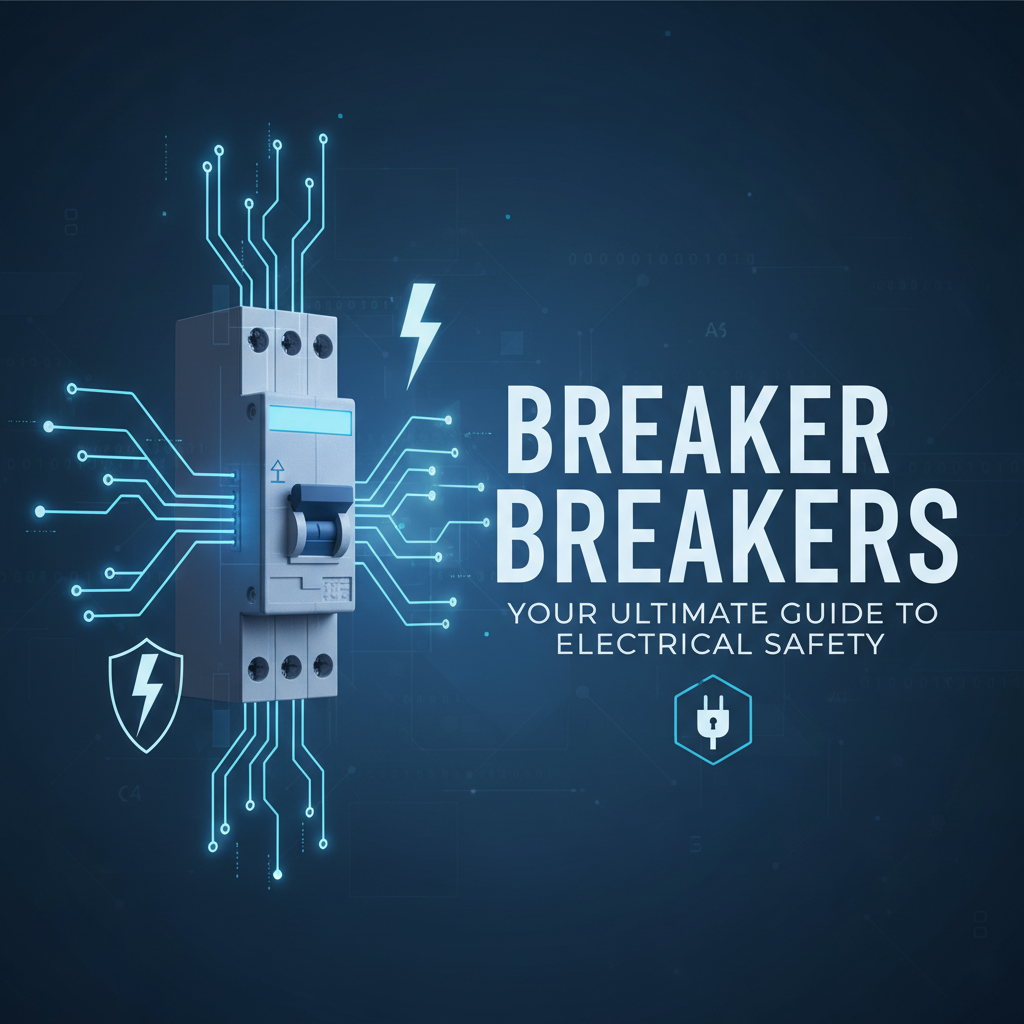


Electricity, an indispensable force in modern life, powers our homes, invigorates our industries, and illuminates our world. From the smallest LED bulb to the most complex industrial machinery, its presence is ubiquitous. Yet, for all its convenience and utility, electricity harbors a formidable power, capable of causing severe injury, extensive property damage, and even death if mishandled or uncontrolled. It is a force demanding respect, understanding, and meticulous management. At the heart of this management within our homes and workplaces lies a seemingly humble yet profoundly critical device: the circuit breaker. Far from being mere on-off switches, circuit breakers are the unsung guardians of our electrical systems, vigilant sentinels tirelessly watching over every circuit, ready to sacrifice themselves to prevent catastrophe. This comprehensive guide will plunge deep into the world of circuit breakers, exploring their vital role in electrical safety, dissecting their various types and intricate workings, and equipping you with the essential knowledge to maintain a safe and secure electrical environment. Understanding these devices is not merely a technical exercise; it is a fundamental pillar of safeguarding our lives and assets against the potential hazards of an improperly managed electrical supply.
The Indispensable Role of Electricity in Modern Life and Its Inherent Dangers
In the intricate tapestry of 21st-century living, electricity is the foundational thread that weaves through nearly every aspect of our daily existence. Consider a typical morning: the alarm clock buzzing to life, the coffee maker brewing, the refrigerator preserving food, the lights dispelling shadows, and the devices charging – all depend entirely on a reliable flow of electrical current. Beyond the domestic sphere, electricity fuels the global economy, powering factories, hospitals, communication networks, and transportation systems. It enables technological innovation, supports medical advancements, and facilitates instantaneous global communication, transforming the world into an interconnected village. Our reliance on this invisible force is absolute, and its continuous, uninterrupted supply is often taken for granted.
However, beneath this veneer of convenience and dependability lies an inherent danger. Electricity, while beneficial, is unforgiving. It operates silently, often without visible warning signs until a fault occurs. Electrical shocks can range from an uncomfortable jolt to severe burns, cardiac arrest, or even electrocution. Faulty wiring, overloaded circuits, damaged appliances, or improper use can generate excessive heat, leading to electrical fires that can rapidly engulf structures, causing immense property loss and posing a significant threat to life. The sheer speed and destructive potential of an electrical fire, often igniting in concealed spaces within walls, make it particularly insidious and difficult to contain. Therefore, while embracing the myriad benefits electricity offers, it is paramount to acknowledge and actively mitigate its inherent risks. A robust understanding of electrical safety principles and the protective devices designed to uphold them is not a luxury, but a necessity for anyone living or working in a modern electrically-powered environment.
What Exactly are Circuit Breakers? Guardians of the Electrical Realm
At its core, a circuit breaker is an automatic electrical safety device designed to protect an electrical circuit from damage caused by an overcurrent, which can result from an overload or a short circuit. Unlike older, single-use fuses that melt and must be replaced after tripping, a circuit breaker can be reset (either manually or automatically) to resume normal operation once the fault condition has been cleared. This reusability makes them a more convenient and cost-effective solution for modern electrical systems. Think of a circuit breaker as an intelligent gatekeeper, constantly monitoring the flow of electricity through its designated circuit. When it detects an anomalous, dangerously high current that exceeds the safe operating limit of the wiring and connected appliances, it instantaneously and automatically "breaks" or opens the circuit, interrupting the flow of electricity. This immediate cessation of power prevents overheating of wires, protects sensitive electronic equipment from damage, and most critically, mitigates the risk of electrical fires and electric shock hazards.
The significance of circuit breakers in maintaining electrical safety cannot be overstated. Without them, even a minor electrical fault could quickly escalate into a catastrophic event. For example, if a faulty appliance creates a short circuit, drawing an excessive amount of current, the wires supplying that appliance would rapidly heat up. Without a circuit breaker to interrupt the current, these wires could overheat to the point of melting their insulation, potentially causing arcing, igniting nearby combustible materials, and spreading fire throughout the building. Similarly, plugging too many high-power appliances into a single circuit can lead to an overload, where the total current drawn exceeds the wiring's capacity. A circuit breaker would trip, preventing the wires from overheating and becoming a fire hazard. Thus, circuit breakers are not merely components; they are the proactive guardians of our electrical realm, silently performing their vital function day in and day out, ready to act decisively at a moment's notice to avert potential disaster and preserve the integrity of our electrical infrastructure and the safety of its users.
The Anatomy of a Circuit Breaker: A Marvel of Electromechanical Engineering
To truly appreciate the vital function of a circuit breaker, it's essential to understand its internal anatomy and the ingenious principles by which it operates. While external appearances may vary, the fundamental components and their interactions remain consistent across most common residential and commercial breakers.
At its heart, every circuit breaker contains a switching mechanism that allows it to open and close the electrical circuit. This mechanism is typically activated by two primary sensing elements designed to detect different types of overcurrent faults: the thermal trip unit and the magnetic trip unit.
The thermal trip unit is designed to protect against sustained overloads. It typically consists of a bimetallic strip, which is made of two different metals bonded together, each with a different rate of thermal expansion. As current flows through the circuit breaker, it generates heat. If an overload occurs, causing the current to exceed the breaker's rated capacity for a prolonged period, the bimetallic strip heats up. Because the two metals expand at different rates, the strip bends. When this bending reaches a predetermined point, it trips a latch, causing the circuit breaker's contacts to open and interrupt the circuit. This mechanism is effective at responding to gradual, persistent overcurrents that would otherwise cause wiring to slowly overheat.
The magnetic trip unit, conversely, is engineered for rapid response to severe overcurrents, specifically short circuits. A short circuit represents a sudden, massive surge of current – often hundreds or even thousands of amperes – that occurs when a low-resistance path is created between live wires or between a live wire and ground. The magnetic trip unit comprises an electromagnet or a solenoid coil. When an extremely high current, characteristic of a short circuit, flows through this coil, it generates a powerful magnetic field almost instantaneously. This magnetic field is strong enough to directly pull a plunger or armature, which in turn trips the same latch mechanism as the bimetallic strip, causing the circuit breaker's contacts to open with exceptional speed. This rapid disconnection is crucial because short circuits can generate immense heat and destructive forces in a fraction of a second, potentially leading to immediate fires or explosions.
Beyond these tripping mechanisms, a circuit breaker also features fixed and moving contacts that are typically made from copper alloys, often with silver plating to ensure low resistance and efficient current transfer when the breaker is closed. When a trip occurs, these contacts quickly separate. This rapid separation can generate an electrical arc, a superheated plasma column that can be extremely damaging. To safely extinguish this arc, circuit breakers incorporate an arc chute or arc suppressor. This component consists of a series of metal plates or fins designed to rapidly cool and divide the arc into smaller, less energetic segments, thereby dissipating its energy and extinguishing it safely within milliseconds.
Finally, the entire assembly is housed within a robust, insulating case, typically made from thermoset plastic, which provides electrical insulation and structural integrity, protecting the internal components from environmental factors and ensuring safe operation. An operating mechanism with a handle or switch allows for manual resetting after a trip and manual switching (on/off) of the circuit. The combination of these meticulously engineered components ensures that a circuit breaker is not just a switch, but a sophisticated safety device capable of responding precisely and reliably to dangerous electrical anomalies, thereby safeguarding both life and property.
Diverse Protectors: Understanding the Types of Circuit Breakers
While all circuit breakers share the fundamental goal of protecting against overcurrents, modern electrical systems employ various specialized types, each designed to address specific hazards and provide tailored levels of protection. Understanding these distinctions is crucial for ensuring comprehensive electrical safety.
1. Miniature Circuit Breakers (MCBs) / Standard Circuit Breakers
These are the most common types found in residential and commercial electrical panels. MCBs are designed to protect against both overloads and short circuits, as described in the anatomy section. They typically come in single-pole (protecting one hot wire), double-pole (protecting two hot wires, often for 240V circuits), and sometimes three-pole configurations. Each MCB is rated for a specific current capacity (e.g., 15A, 20A, 30A), and it will trip if the current flowing through it exceeds this rating. The tripping curve (how quickly it trips at a given overcurrent) can vary (e.g., B, C, D curves), with C-curve being common for general-purpose loads. These devices form the backbone of circuit protection, ensuring that the vast majority of circuits in a building are safeguarded from the primary forms of overcurrent damage. Their compact size and reliable operation have made them the ubiquitous choice for branch circuit protection in electrical distribution boards worldwide.
2. Ground Fault Circuit Interrupters (GFCIs)
GFCIs are specialized devices designed to protect people from electric shock. Unlike MCBs, which respond to overcurrents, GFCIs detect ground faults. A ground fault occurs when electricity deviates from its intended path and finds an unintended path to ground – often through a person. Even a small amount of current (as little as 5 milliamps) flowing through the human body can be dangerous, potentially causing severe injury or electrocution.
The GFCI operates by continuously monitoring the current flowing out on the hot wire and the current flowing back on the neutral wire. In a healthy circuit, these currents should be identical. If there's an imbalance – meaning some current is "leaking" out of the circuit, perhaps through a person touching a faulty appliance and providing a path to ground – the GFCI detects this difference (typically 5mA or more) and trips almost instantaneously (within 25 milliseconds). This rapid response is critical, as it can interrupt the current before it causes serious harm. GFCIs are legally required in areas where water and electricity are likely to mix, such as bathrooms, kitchens, laundry rooms, garages, outdoors, and near swimming pools or hot tubs. They are available as circuit breakers (installed in the electrical panel) or as receptacles (outlets). The installation of GFCI protection in these high-risk areas has dramatically reduced instances of electrocution and severe shock, highlighting their profound impact on human safety.
3. Arc Fault Circuit Interrupters (AFCIs)
AFCIs are a more recent and sophisticated innovation in electrical safety, designed to protect against electrical fires caused by arc faults. An arc fault is an unintended electrical discharge that occurs when electricity jumps across a gap in a conductor. This can happen due to damaged wire insulation, loose connections, frayed wires, pinched cords, or even faulty appliances. These arcs generate intense heat (reaching thousands of degrees Fahrenheit) and molten particles, which can easily ignite nearby combustible materials like wood, insulation, or fabric, leading to devastating fires.
Unlike GFCIs, which detect ground faults, or MCBs, which detect sustained overcurrents, AFCIs are equipped with advanced electronics and microprocessors that can "listen" to the unique electrical signatures of dangerous, intermittent arcing. They can distinguish between harmless operational arcing (e.g., from a light switch being flipped) and hazardous arcing that signals a potential fire risk. Upon detecting a dangerous arc, the AFCI trips, interrupting the circuit. AFCIs are typically required for bedroom circuits and increasingly for other living areas in new construction and renovated homes, as these are common locations for arc-fault-initiated fires. They are available as circuit breakers (installed in the panel) or as a combination AFCI/GFCI device, providing dual protection. The complex algorithms within an AFCI represent a significant leap forward in proactive fire prevention, catching hidden hazards that traditional breakers cannot.
4. Residual Current Devices (RCDs) / Residual Current Circuit Breakers (RCCBs)
Primarily used outside of North America (e.g., Europe, Australia), RCDs are essentially the international equivalent of GFCIs, focusing solely on protection against electric shock and ground faults. They function on the same principle of detecting an imbalance between the live and neutral currents. RCDs do not, however, offer protection against overcurrents (overloads or short circuits). Therefore, they are often used in conjunction with MCBs, where the RCD provides earth fault protection and the MCB provides overload and short-circuit protection for a specific circuit or group of circuits. Some integrated devices, known as RCBOs (Residual Current Breaker with Overcurrent protection), combine both functionalities into a single unit, providing comprehensive protection against all three primary electrical hazards: overcurrent, ground fault, and electric shock.
Table: Comparison of Common Circuit Breaker Types
To summarize the distinct roles and protection mechanisms of these critical devices, the following table provides a quick reference:
| Circuit Breaker Type | Primary Hazard Protected Against | Detection Mechanism | Typical Installation Areas / Applications | Key Benefit |
|---|---|---|---|---|
| Miniature Circuit Breaker (MCB) | Overloads, Short Circuits | Thermal (bimetallic strip), Magnetic (electromagnet) | General purpose circuits (lights, outlets) | Prevents wiring damage, appliance damage, fires from overcurrents |
| Ground Fault Circuit Interrupter (GFCI) | Electric Shock, Ground Faults | Current imbalance between hot and neutral wires | Wet/damp locations (bathrooms, kitchens, outdoors, garages) | Protects human life from electrocution |
| Arc Fault Circuit Interrupter (AFCI) | Electrical Fires from Arc Faults | Electronic analysis of arc signatures | Bedroom circuits, living areas | Prevents fires caused by damaged wiring |
| Residual Current Device (RCD) | Electric Shock, Ground Faults | Current imbalance between live and neutral wires | Main incoming supply or groups of circuits (outside NA) | Protects human life from electrocution (similar to GFCI) |
This diverse array of circuit breakers, each engineered with specific detection and protection capabilities, underscores the comprehensive approach required for modern electrical safety. Each type plays a unique yet complementary role in safeguarding properties and, most importantly, lives from the multifaceted dangers that electricity can pose when uncontrolled.
The Invisible Workings: How Circuit Breakers Perform Their Duty
The efficacy of circuit breakers lies in their ability to perform two distinct yet equally critical functions: protecting against overloads and protecting against short circuits. While both scenarios involve an excessive flow of current, their characteristics and the speed of response required differ significantly.
Protecting Against Overloads
An electrical overload occurs when too many appliances or devices are plugged into a single circuit, or when a single device draws more current than the circuit's wiring is safely designed to handle. For instance, a 15-amp circuit typically uses 14-gauge wire, safely rated for up to 15 amps of continuous current. If a homeowner simultaneously plugs in a space heater (12.5 amps), a vacuum cleaner (8 amps), and a hairdryer (10 amps) into outlets on that single 15-amp circuit, the total current draw would be 30.5 amps – more than double the circuit's capacity.
When such an overload condition persists, the current flowing through the circuit wires generates heat due to electrical resistance. The higher the current, the more heat is generated. If this heat build-up is allowed to continue, the insulation around the wires can melt, leading to potential short circuits, arcing, and ultimately, electrical fires. The thermal trip unit within the circuit breaker is specifically designed to detect and respond to these sustained overloads. As discussed, the bimetallic strip heats up, bends, and trips the breaker. The intentional delay in the thermal trip mechanism is crucial; it allows for momentary current surges (like those when a motor starts) without nuisance tripping, while still protecting against prolonged, dangerous overcurrents. This function acts as a safety valve, preventing the gradual overheating of wires that could otherwise go unnoticed until a fire breaks out within the walls.
Protecting Against Short Circuits
A short circuit is a far more immediate and dangerous electrical fault. It occurs when a low-resistance path is created for electricity, allowing current to bypass its intended route and flow directly between the hot and neutral wires, or between a hot wire and ground. This can happen due to damaged wire insulation (e.g., from old age, rodents chewing, or physical damage), loose wiring connections that touch, or a fault within an appliance.
When a short circuit occurs, the resistance in the circuit drops dramatically, causing an almost instantaneous and massive surge of current – often hundreds or even thousands of amperes – far exceeding the normal operating current and the circuit breaker's rating. This immense current can generate extreme heat and explosive forces in a fraction of a second. If not interrupted immediately, a short circuit can vaporize wires, melt metal, cause severe arcing, and trigger immediate electrical fires or even minor explosions.
The magnetic trip unit is the hero in this scenario. Its electromagnet responds to the sudden, powerful magnetic field generated by the short-circuit current. Unlike the thermal unit's delayed response, the magnetic unit acts almost instantaneously, typically within a few milliseconds. This rapid response is paramount to preventing catastrophic damage. The speed of the magnetic trip ensures that the circuit is opened before the extreme heat and energy of the short circuit can cause significant destruction or ignition. Together, these two distinct tripping mechanisms – thermal for gradual overloads and magnetic for sudden short circuits – provide comprehensive and layered protection, ensuring the safety and integrity of the entire electrical system.
Why Do Breakers Trip? Common Causes and Troubleshooting
A tripping circuit breaker is rarely a sign of a faulty breaker; rather, it's typically an indication that the breaker is doing its job and detecting a problem within the electrical circuit it protects. Understanding the common reasons for a trip is the first step in effective troubleshooting and maintaining a safe electrical system.
Common Reasons for Tripping:
- Circuit Overload: This is arguably the most frequent cause. It happens when the total electrical load (the sum of all power drawn by devices and appliances) on a circuit exceeds its ampere rating. For example, if you have a 15-amp circuit supplying your kitchen and you simultaneously run a toaster (1000W / 120V ≈ 8.3A), a microwave (1200W / 120V ≈ 10A), and a coffee maker (900W / 120V ≈ 7.5A), the combined current draw (25.8A) would significantly exceed the 15A limit, causing the breaker to trip. This is the thermal trip unit at work.
- Short Circuit: As discussed, a short circuit is a direct, low-resistance path for current, leading to a massive surge. This can be caused by:
- Damaged Wire Insulation: Rodents chewing wires, nails puncturing wires, or insulation deteriorating over time.
- Loose Connections: Wires coming loose from terminals and touching each other or the metal box.
- Faulty Appliance: An internal wiring fault within an appliance creating a short.
- Water Intrusion: Water acting as a conductor between live and neutral/ground wires. This triggers the magnetic trip unit due to the sudden, high current.
- Ground Fault: This occurs when a hot wire comes into contact with a ground wire or a grounded object (like a metal appliance casing) or, more dangerously, with a person who is grounded. Even a small leakage of current (5mA or more) will cause a GFCI breaker or receptacle to trip, protecting against electric shock. This is the GFCI's dedicated role.
- Arc Fault: This is an unintended electrical arc between conductors, often caused by damaged wires, loose terminals, or faulty plugs. These arcs generate intense heat and can ignite fires. An AFCI breaker detects the unique electrical "signature" of these dangerous arcs and trips to prevent a fire.
- Faulty Appliance or Device: Sometimes the fault isn't in the home's wiring but within an appliance itself. An internal short, a damaged cord, or a malfunction can cause the appliance to draw too much current or create a ground/arc fault, triggering the breaker.
- "Nuisance" Tripping: Less common, but sometimes a breaker might trip without an obvious fault. This can be due to:
- Overly Sensitive Breaker: Occasionally, an older breaker might become more sensitive than intended.
- Brief Inrush Current: Some motors (like in old refrigerators or air conditioners) can draw a very high "inrush" current for a split second when starting, which might be just enough to trip a sensitive breaker if the circuit is already heavily loaded.
- Lightning Strike or Utility Surge: While less common for interior breakers, extreme external electrical events can sometimes cause trips as a protective measure.
- Faulty Breaker Itself: While rare, a circuit breaker can wear out or become defective over time, leading to it tripping without a legitimate electrical fault. If all other causes have been ruled out, a faulty breaker might be the culprit, necessitating replacement.
Troubleshooting a Tripped Breaker: A Step-by-Step Approach
When a breaker trips, it's important to approach the situation systematically and safely:
- Do Not Immediately Reset: Resist the urge to flip the breaker back on right away. The breaker tripped for a reason, and simply resetting it without addressing the underlying issue can be dangerous.
- Locate the Tripped Breaker: Go to your electrical panel. A tripped breaker will usually be in the "off" position, or more commonly, in an intermediate "tripped" position (usually between ON and OFF, sometimes with a red or orange indicator). It won't be firmly ON or OFF.
- Identify the Affected Circuit: Look at the labels on your electrical panel door or inside the panel to determine which rooms or outlets are on that circuit.
- Unplug Devices: In the affected area, unplug all devices and appliances from the outlets on that circuit. This is crucial to remove any potential cause of an overload or fault.
- Reset the Breaker: To reset, firmly push the breaker handle all the way to the "OFF" position first, then firmly push it all the way to the "ON" position. You should hear a distinct click.
- Test the Circuit:
- If the breaker holds (doesn't immediately trip again), plug in one device at a time, starting with essential items, to identify which one might be causing the issue. If a specific device causes it to trip, that device is likely faulty and should be repaired or replaced.
- If the breaker immediately trips again even with nothing plugged in, this indicates a more serious underlying issue within the circuit wiring itself (a short circuit or ground fault) or a faulty breaker. In this situation, do not attempt to reset it again, and call a qualified electrician immediately.
- Address Overload Issues: If you've identified an overload as the cause, redistribute your electrical load. Move high-power appliances to different circuits, or simply avoid running too many high-draw devices simultaneously on the same circuit.
- Look for Visible Damage: Briefly inspect cords, outlets, and switches for any signs of scorching, burning, or damaged insulation. Such signs are strong indicators of a serious fault.
Remember, if you are unsure about the cause of a tripping breaker, or if a breaker repeatedly trips, always consult a licensed electrician. Electrical work can be dangerous and should only be undertaken by those with proper training and expertise.
APIPark is a high-performance AI gateway that allows you to securely access the most comprehensive LLM APIs globally on the APIPark platform, including OpenAI, Anthropic, Mistral, Llama2, Google Gemini, and more.Try APIPark now! 👇👇👇
Understanding Your Electrical Panel: The Heart of Your Home's Electrical System
The electrical panel, often referred to as the breaker box, service panel, or load center, is the central distribution hub for electricity within your home. It's where the main power supply enters your house and is then safely divided into various individual circuits, each protected by its own circuit breaker. Understanding its layout and function is fundamental to appreciating how electricity is managed and how circuit breakers play their critical role.
Components of the Electrical Panel:
- Main Breaker: Typically located at the top of the panel, this is the largest circuit breaker and controls all electricity to the entire house. Flipping this breaker to the "OFF" position disconnects power to every circuit in your home. It usually has a higher amperage rating (e.g., 100A, 150A, 200A) than individual branch circuit breakers. In an emergency, or when doing significant electrical work, this is the primary disconnect.
- Branch Circuit Breakers: These are the smaller, individual breakers (15A, 20A, 30A, etc.) that protect specific circuits within your home. Each branch circuit supplies power to a designated area or set of outlets, lights, or specific appliances (e.g., kitchen outlets, master bedroom lights, dishwasher, central air conditioner).
- Hot Bus Bars: These are metal bars that run vertically down the center of the panel, supplying incoming "hot" (live) electrical current from the utility meter to the individual branch circuit breakers.
- Neutral Bus Bar: This is a separate metal bar, typically silver-colored, where all the neutral wires from the branch circuits are terminated. It provides the return path for current under normal operating conditions.
- Ground Bus Bar: This is another metal bar, often bonded directly to the metal casing of the panel itself, where all the ground wires from the branch circuits are terminated. It provides a safe path for fault currents to return to the earth, preventing electric shock.
- Service Entrance Conductors: These are the heavy-gauge wires that bring power from the utility company's meter into your main breaker.
- Panel Cover/Door: This metal cover protects the internal wiring and components and must always be securely closed, except when an electrician is working inside. It usually contains a legend or label on the inside of the door that identifies each circuit breaker and the area it serves.
The Importance of Proper Labeling:
One of the most critical aspects of managing your electrical panel for safety and convenience is proper labeling. Each individual branch circuit breaker should have a clear, accurate label indicating which lights, outlets, or appliances it controls. Unfortunately, in many older homes, these labels are often vague, outdated, or entirely missing.
- Why is accurate labeling so important?
- Safety during emergencies: If there's an electrical issue, a fire, or a flood, quickly identifying and shutting off the affected circuit (or the main breaker) can be crucial for safety.
- Troubleshooting: When a breaker trips, knowing immediately what areas are affected simplifies the troubleshooting process.
- Maintenance and repairs: When performing any work on an electrical fixture or outlet, turning off the correct circuit ensures safety for the person doing the work. Fumbling with unlabeled breakers can lead to accidentally cutting power to critical systems or, worse, working on a live circuit.
If your panel is poorly labeled, it's highly recommended to take the time to map out your circuits. This can be a tedious but worthwhile task, involving systematically turning off each breaker and checking which lights, outlets, and appliances lose power. Labeling with clear, concise descriptions (e.g., "Kitchen Counter Outlets," "Master Bedroom Lights," "Basement Furnace") will pay dividends in safety and convenience.
Understanding your electrical panel is not about becoming an electrician, but about gaining fundamental knowledge of how your home's electrical nervous system is organized. It empowers you to respond appropriately during minor electrical incidents and to recognize when professional intervention is required, reinforcing the overall goal of comprehensive electrical safety.
Electrical Safety Best Practices: A Proactive Approach
Beyond understanding the mechanics of circuit breakers, adopting a proactive mindset towards electrical safety is paramount. Many electrical hazards can be prevented by adhering to established best practices and exercising common sense.
1. Regular Inspections and Maintenance:
Electrical systems are not "set it and forget it." Over time, wires can degrade, connections can loosen, and insulation can become brittle. * Visual Checks: Periodically inspect visible electrical cords, outlets, and switches for signs of damage, fraying, scorching, or excessive heat (discoloration). * Professional Inspections: Consider having a licensed electrician perform a comprehensive electrical inspection of your home every few years, especially if your home is older, you've recently purchased it, or you're experiencing frequent electrical issues. They can identify hidden hazards in wiring, ensure proper grounding, and assess the condition of your panel. * Test GFCIs and AFCIs: Regularly test GFCI outlets and breakers by pressing the "TEST" button (usually monthly). This should cause the device to trip. Press "RESET" to restore power. For AFCI breakers, consult your manufacturer's instructions, but they typically have a "TEST" button as well.
2. Avoid Overloading Circuits:
This is a recurring theme because it's a common and dangerous practice. * Distribute Loads: Spread high-wattage appliances (e.g., space heaters, hair dryers, microwaves, toasters) across different circuits if possible. * Be Mindful of Extensions: If you're using extension cords because you don't have enough outlets, it's a strong indicator you might be overloading a circuit. Consider having a qualified electrician install additional dedicated circuits or outlets. * Know Your Circuits: Refer to your labeled electrical panel to understand which outlets are on which circuit.
3. Proper Use of Extension Cords:
Extension cords are designed for temporary use, not as permanent wiring solutions. * Temporary Use Only: Never run extension cords under rugs, through doorways, or behind furniture where they can be pinched, damaged, or become a tripping hazard. * Proper Rating: Ensure the extension cord is rated for the power requirements of the appliance it's powering. Overloading an extension cord can lead to overheating and fire. * Inspect Cords: Regularly check extension cords for fraying, cracks, or exposed wires. Discard damaged cords immediately. * Avoid Daisy Chaining: Never plug one extension cord into another. This significantly increases the risk of overloading and fire.
4. Water and Electricity Don't Mix:
This is a fundamental rule of electrical safety. * GFCI Protection: Ensure all outlets in wet or damp locations (bathrooms, kitchens, laundry rooms, garages, outdoors) are GFCI protected. * Dry Hands: Always ensure your hands are dry before touching electrical switches, outlets, or appliances. * Avoid Wet Areas: Keep electrical appliances away from sinks, bathtubs, and other sources of water. Never reach for an appliance that has fallen into water while it's still plugged in. * Outdoor Outlets: Use only outdoor-rated, weather-resistant covers for exterior outlets, and ensure they are GFCI protected.
5. Child Safety Measures:
Children are particularly vulnerable to electrical hazards. * Outlet Covers: Use plastic outlet caps or sliding outlet covers on all unused outlets, especially in areas accessible to children. * Cord Management: Keep electrical cords neatly bundled and out of reach of young children to prevent chewing, pulling, or entanglement. * Educate Children: Teach older children about the dangers of electricity and the importance of never playing with outlets or electrical appliances.
6. Appliance Safety:
- Read Manuals: Always read and follow the manufacturer's instructions for electrical appliances.
- Inspect Regularly: Check appliance cords for damage. If a cord is frayed or cracked, have it repaired by a professional or replace the appliance.
- Unplug When Not in Use: Unplug small appliances (toasters, hair dryers) when not in use, especially before cleaning.
- Watch for Warning Signs: Unplug and discontinue use of any appliance that sparks, smokes, smells burnt, or frequently trips a breaker.
7. Know When to Call a Professional:
While basic troubleshooting and preventative measures are good, certain situations demand the expertise of a licensed electrician. * Frequent Tripping: If a circuit breaker repeatedly trips, even after you've unplugged devices, it indicates a serious wiring issue. * Burning Smells: Any burning smell from an outlet, switch, or the electrical panel is a critical red flag. * Sparks or Arcing: Seeing sparks or hearing arcing sounds from outlets or switches. * Hot Outlets/Switches: Outlets or switch plates that are hot to the touch. * Flickering Lights: Persistent flickering or dimming lights, especially when appliances are turned on. * Buzzing/Humming Sounds: Unusual buzzing or humming sounds from the electrical panel. * DIY Limits: Never attempt complex electrical repairs or installations unless you are qualified. Even simple-seeming tasks can be dangerous if not performed correctly.
By consistently integrating these best practices into your daily routine and home maintenance, you significantly reduce the risk of electrical accidents, fires, and equipment damage, fostering a truly safe electrical environment.
Advanced Electrical Safety Concepts: Grounding, Surge Protection, and Fire Prevention
Beyond the immediate protection offered by circuit breakers, a comprehensive electrical safety strategy incorporates several advanced concepts that fortify the entire system against various threats. These include robust grounding and bonding, effective surge protection, and specific measures aimed at preventing electrical fires.
Grounding and Bonding: The Invisible Shield
Grounding and bonding are often misunderstood but fundamentally critical components of a safe electrical system. They provide a protective pathway for electricity to safely dissipate in the event of a fault, preventing electric shock and equipment damage.
- Grounding (Earthing): The act of connecting an electrical circuit or equipment to the earth (ground). This is achieved through a dedicated grounding electrode (like a metal rod driven into the earth or the building's metallic water pipe) connected to the electrical panel's ground bus bar. In the event of a fault (e.g., a hot wire touching the metal casing of an appliance), the fault current has a direct, low-resistance path to the earth. This causes a massive surge in current, which immediately trips the circuit breaker or GFCI, shutting off power and preventing the metal casing from becoming energized and posing a shock hazard. Without proper grounding, the fault current might seek a path to ground through a person who touches the faulty appliance.
- Bonding: The permanent joining of metallic parts to form an electrically conductive path that ensures electrical continuity and the capacity to safely conduct any fault current likely to be imposed. In simpler terms, bonding ensures that all exposed non-current-carrying metal parts of an electrical system (like metal conduit, equipment enclosures, appliance frames, and even gas pipes) are connected together and ultimately connected to the main grounding system. This equalizes the electrical potential of all these metal parts, preventing dangerous voltage differences between them that could cause a shock if touched simultaneously. A properly bonded system ensures that if any metal component accidentally becomes energized, a fault current immediately flows, tripping the protective device.
A properly grounded and bonded system is an invisible shield, constantly diverting dangerous fault currents away from people and equipment, ensuring that protective devices like circuit breakers can effectively do their job.
Surge Protection: Guarding Against Transient Overvoltages
While circuit breakers protect against overcurrents, they generally do not protect against sudden, very brief, but extremely high voltage spikes known as surges or transient overvoltages. These surges can be caused by external factors (like lightning strikes or utility grid switching) or internal factors (like the cycling of large motors in appliances). While most surges are not powerful enough to trip a standard breaker, they can be highly damaging to sensitive electronics, microprocessors, and circuit boards, often leading to immediate failure or gradual degradation.
- Types of Surge Protection:
- Point-of-Use Surge Protectors (Surge Strips): These are the most common type, resembling power strips, and offer protection for individual devices plugged into them. They are effective for protecting specific electronics like computers, TVs, and gaming consoles. It's crucial to ensure they have a good Joule rating (higher is better) and a fast response time.
- Whole-House Surge Protectors (Service Entrance Surge Protectors): These are installed directly into your electrical panel or at the utility meter. They protect all circuits in your home from external surges, diverting excess voltage harmlessly to the ground before it can enter your home's wiring. While they may not completely eliminate the need for point-of-use protectors for highly sensitive electronics, they provide a crucial first line of defense against the most powerful surges.
Investing in robust surge protection, particularly whole-house protection, can save thousands of dollars in damaged electronics and provide peace of mind, complementing the overcurrent protection offered by circuit breakers.
Electrical Fire Prevention: A Multi-faceted Approach
Beyond the direct protection of AFCIs, preventing electrical fires requires a holistic approach that combines proper installation, regular maintenance, and diligent use.
- Professional Installation: Always have new wiring, panel upgrades, or major electrical appliance installations performed by a licensed electrician. Correct installation according to electrical codes is the foundation of fire prevention.
- Quality Materials: Ensure that only high-quality, approved electrical components (wires, outlets, switches, breakers) are used. Inferior materials can fail prematurely, leading to hazards.
- Adequate Wire Sizing: Wires must be appropriately sized for the current they carry. Undersized wires will overheat and pose a fire risk. This is part of proper circuit design.
- Secure Connections: Loose electrical connections are a major cause of arcing, heat buildup, and fires. Electricians ensure all connections are tight and secure.
- Maintain Clearances: Ensure that electrical panels and large electrical equipment have adequate clear space around them, as specified by code, for ventilation and safe access. Never use electrical closets or areas around panels for storage of combustible materials.
- Smoke Detectors: While not an electrical safety device in themselves, working smoke detectors (and carbon monoxide detectors) are vital for early warning in case an electrical fire does occur. Ensure they are properly installed, regularly tested, and batteries are replaced as needed.
By integrating robust grounding, comprehensive surge protection, and diligent fire prevention strategies, we move beyond basic circuit protection to create an exceptionally resilient and safe electrical environment, capable of withstanding a broader range of electrical threats.
When to Call an Electrician: Recognizing the Limits of DIY
While this guide empowers you with knowledge about circuit breakers and electrical safety, it's crucial to understand the limitations of do-it-yourself (DIY) electrical work. Electricity is unforgiving, and improper handling can lead to severe injury, electrocution, fire, or damage to your home's electrical system. Knowing when to call a licensed professional is perhaps one of the most important safety practices.
You should always call a qualified, licensed electrician for any of the following situations:
- Repeated Circuit Breaker Trips: If a circuit breaker repeatedly trips even after you've unplugged all devices and reset it, there's a serious underlying wiring issue (short circuit, severe ground fault) or a faulty breaker. This requires professional diagnosis and repair.
- Burning Smells, Sparks, or Smoke: Any visual or olfactory sign of burning, sparking, or smoke coming from outlets, switches, appliances, or the electrical panel itself is an immediate emergency. Shut off power at the main breaker if safe to do so, and call an electrician immediately.
- Hot Outlets, Switches, or Cover Plates: If an outlet, light switch, or its cover plate feels warm or hot to the touch, it indicates excessive resistance and heat buildup, a significant fire hazard.
- Flickering or Dimming Lights (Persistent): Occasional minor fluctuations might be normal, but persistent flickering, dimming, or brightening of lights, especially when other appliances turn on, can signal loose connections, overloaded circuits, or issues with the main electrical service.
- Buzzing or Humming Sounds: Unusual buzzing, humming, or crackling sounds emanating from outlets, switches, or the electrical panel are often indicators of loose connections or arcing, which are serious fire risks.
- Mild Shocks or Tingles: Feeling even a mild shock or tingle when touching an appliance, light switch, or outlet is a critical sign of a ground fault or faulty wiring and should be addressed immediately. This indicates a potential path for current through your body.
- Outdated Wiring (Knob and Tube, Aluminum Wiring): If your home has very old wiring (e.g., knob and tube, which lacks a ground wire, or aluminum wiring from the 1960s/70s, which is prone to loosening and overheating at connections), it poses significant hazards and should be inspected and likely upgraded by an electrician.
- Electrical Panel Issues:
- Corrosion or Rust: Any signs of corrosion, rust, or water damage inside or on the exterior of your electrical panel.
- Loose Wires: Visibly loose wires or breakers within the panel.
- Panel is Hot to Touch: The panel cover or the breakers feel hot.
- Fuses Blowing Frequently (in older homes): If you still have a fuse box and fuses are blowing often, it indicates persistent overloading or faults.
- Insufficient Capacity: If you're constantly tripping breakers and need more circuits, an electrician can assess if your panel needs an upgrade.
- GFCI/AFCI Issues: If a GFCI or AFCI device fails to trip when tested, or if it trips constantly without an apparent cause.
- New Installations or Major Upgrades: Installing new outlets or light fixtures, adding new circuits, upgrading your electrical panel, running new wiring, or installing large appliances (like hot tubs, EV chargers, central air conditioning) always requires professional expertise to ensure compliance with electrical codes and safety standards.
- Water Damage: If your electrical system has been exposed to water (e.g., from a flood, leak, or burst pipe), it must be inspected by an electrician before restoring power.
- Any Situation Beyond Your Comfort or Expertise: If you feel even a slight hesitation or lack confidence in performing an electrical task, err on the side of caution and call a professional. Your safety and the safety of your home are not worth the risk.
Licensed electricians undergo extensive training, adhere to strict safety protocols, and are knowledgeable about local and national electrical codes. They have the specialized tools and diagnostic equipment to safely identify and rectify complex electrical issues, ensuring that your home's electrical system is not only functional but also fundamentally safe. Remember, attempting DIY repairs on live electrical circuits can be fatal. When in doubt, call an expert.
The Foundation of Safety: Electrical Codes and Standards
The robust safety provided by circuit breakers and all other electrical components isn't arbitrary; it's meticulously defined and enforced through comprehensive electrical codes and standards. These regulations serve as the bedrock for safe electrical installation and maintenance, transforming complex engineering principles into actionable guidelines for electricians, inspectors, and manufacturers.
In the United States, the most influential standard is the National Electrical Code (NEC), published by the National Fire Protection Association (NFPA). The NEC is not itself a law, but it is widely adopted (often with local amendments) by states and municipalities, making its requirements legally enforceable. It is updated every three years to incorporate advancements in technology, new safety insights, and lessons learned from electrical incidents.
Key Aspects Governed by Electrical Codes:
- Wiring Methods and Materials: The NEC specifies acceptable types of wire, conduit, junction boxes, and their proper installation techniques. This includes requirements for wire gauges relative to circuit amperage, insulation types, and methods for securing and protecting wiring within walls, ceilings, and outdoors.
- Circuit Protection: Crucially, the NEC dictates where and when specific types of circuit breakers must be used. This includes:
- Overcurrent Protection: Every circuit must be protected by an appropriately sized circuit breaker or fuse.
- GFCI Protection: Mandatory in bathrooms, kitchens, garages, basements, outdoors, and other wet locations to protect against electric shock. The scope of GFCI requirements has expanded significantly over the years.
- AFCI Protection: Required for nearly all 15- and 20-amp branch circuits supplying outlets and switches in dwelling units, specifically targeting the prevention of electrical fires from arc faults. The locations requiring AFCI protection have also expanded.
- Grounding and Bonding: Detailed requirements for proper grounding electrodes, equipment grounding conductors, and bonding of all metallic parts to ensure a safe path for fault currents and prevent dangerous voltage differences.
- Outlet and Switch Installation: Rules for the placement, height, and type of receptacles, including tamper-resistant receptacles (TRRs) in dwelling units to protect children.
- Electrical Panel Requirements: Specifications for the type, size, location, and accessibility of electrical service panels, including minimum clear working spaces.
- Special Equipment: Regulations for the installation of specific electrical equipment like swimming pool wiring, spas, electric vehicle charging stations, solar panels, and emergency systems.
- Permits and Inspections: Local authorities typically require electrical permits for new construction, renovations, and major electrical work. This ensures that the work is inspected by qualified personnel to verify compliance with the NEC and local codes before it is covered up or put into service.
The continuous evolution of electrical codes reflects an unwavering commitment to enhancing safety. Each revision often introduces new requirements, such as the expansion of GFCI and AFCI protection to more areas, driven by incident data and technological innovation. Adherence to these codes is not merely a bureaucratic formality; it is a critical investment in the safety and longevity of your electrical system and the well-being of those who interact with it. Homeowners should always ensure that any electrical work performed on their property by professionals is compliant with the latest version of the NEC and local amendments.
The Future of Electrical Safety: Smart Homes, Data, and Seamless Management
As we look towards the horizon, electrical safety continues to evolve, driven by technological advancements and the increasing complexity of our interconnected world. The rise of smart homes, the Internet of Things (IoT), and sophisticated AI-driven systems introduces new layers of electrical interaction and management, pushing the boundaries of traditional safety paradigms. While circuit breakers will always remain the physical last line of defense, the broader landscape of electrical safety is being reshaped by digital intelligence and proactive monitoring.
Imagine homes where every appliance, every light switch, and every circuit is not just protected by a physical breaker, but also monitored by intelligent systems that can predict faults before they become dangerous. Smart circuit breakers, for instance, are emerging, capable of providing granular data on energy consumption, detecting subtle anomalies that might precede a fire, and even allowing remote diagnostics and resets. This level of interconnectedness, however, also introduces new challenges related to data management, system integration, and the secure communication between diverse devices and platforms.
In this increasingly complex digital ecosystem, where countless smart devices, sensors, and AI-powered applications need to communicate seamlessly and securely, the underlying infrastructure that manages these interactions becomes paramount. Just as robust electrical panels are the heart of a safe home's power distribution, efficient digital infrastructure is the backbone of modern data and service management. For instance, managing vast networks of interconnected services, especially in the realm of artificial intelligence, often necessitates advanced solutions. An API Gateway like APIPark, for example, plays a crucial role in centralizing the management of these diverse services. It acts as a single entry point for various APIs, enhancing security and efficiency, ensuring that data flows correctly and securely, much like how a circuit breaker ensures electricity flows safely. Similarly, for applications dealing with large language models, an LLM Gateway is essential for orchestrating requests and responses, ensuring seamless and controlled communication between AI models and user applications. Furthermore, protocols like the Model Context Protocol are vital for maintaining conversational state and data integrity across different AI interactions, ensuring that complex AI systems operate predictably and reliably.
While these advanced technological solutions operate in a different domain (the digital management of data and AI services), their underlying principle of ensuring robust, secure, and efficient operation through dedicated management systems resonates with the foundational principles of electrical safety we've discussed: meticulous design, proper implementation, and continuous monitoring to prevent unforeseen hazards. The future of electrical safety, therefore, isn't just about stronger breakers; it's about smarter systems, predictive capabilities, and the seamless, secure management of both physical and digital power, ensuring that homes remain safe, efficient, and intelligently connected. This convergence of physical and digital safety systems promises to usher in an era where risks are not just mitigated, but proactively anticipated and prevented, ultimately making our electrical environments safer than ever before.
Conclusion: Empowering Safety Through Knowledge
Our journey through the world of "Breaker Breakers" underscores a fundamental truth: electrical safety is an ongoing commitment, not a one-time fix. From the ubiquitous Miniature Circuit Breakers guarding against common overloads and short circuits, to the life-saving Ground Fault Circuit Interrupters, and the fire-preventing Arc Fault Circuit Interrupters, each device plays a vital, specific role in forming a layered defense against the inherent dangers of electricity. Understanding their function, how they work, and why they trip empowers homeowners and occupants to engage with their electrical systems intelligently and responsibly.
We've delved into the intricacies of the electrical panel, the central nervous system of your home's power, emphasizing the critical importance of clear labeling and regular inspections. We've outlined comprehensive best practices, from avoiding circuit overloads and proper extension cord usage to vigilance around water and electricity, and safeguarding children. Advanced concepts like grounding, bonding, and surge protection were explored as essential layers of defense, complementing the foundational role of circuit breakers. Crucially, we highlighted the paramount importance of knowing when to defer to the expertise of a licensed electrician, recognizing that professional intervention is a non-negotiable aspect of serious electrical safety.
The continuous evolution of electrical codes and standards, driven by a relentless pursuit of enhanced safety, ensures that our electrical infrastructure remains robust and secure in the face of new technologies and challenges. As homes become smarter and more integrated, the principles of meticulous design, precise implementation, and proactive monitoring will extend beyond the physical wiring to the digital frameworks that manage our increasingly complex environments.
Ultimately, this guide aims to demystify electrical systems and equip you with the knowledge to be a proactive guardian of your own home's safety. Electricity is a powerful servant, but it demands respect and careful management. By understanding and appreciating the silent, ceaseless work of circuit breakers and adhering to established safety practices, you are not just preventing potential hazards; you are actively investing in the peace of mind, security, and well-being of yourself and everyone under your roof. Let knowledge be your ultimate circuit breaker against electrical danger.
5 FAQs About Circuit Breakers and Electrical Safety
1. How often should I test my GFCI and AFCI breakers/outlets? It is generally recommended to test GFCI (Ground Fault Circuit Interrupter) outlets and breakers monthly. Look for a "TEST" button on the device; pressing it should cause the device to trip and cut power. Then, press "RESET" to restore power. For AFCI (Arc Fault Circuit Interrupter) breakers, while some manufacturers suggest testing annually or semi-annually, it's best to consult the specific instructions provided by the manufacturer of your AFCI device for their recommended testing frequency. Regular testing ensures these life-saving and fire-preventing devices are functioning correctly.
2. What should I do if a circuit breaker keeps tripping after I've reset it and unplugged devices? If a circuit breaker repeatedly trips even after you've unplugged all appliances and devices from that circuit and correctly reset the breaker (firmly OFF then firmly ON), it indicates a serious underlying electrical issue. This could be a short circuit or a severe ground fault within the home's wiring itself, or potentially a faulty breaker. In this scenario, do not attempt to reset the breaker again. Leave the breaker in the "OFF" (or tripped) position and immediately contact a licensed and qualified electrician for professional diagnosis and repair. Continuing to reset a breaker under these conditions poses a significant risk of fire or electrical shock.
3. Is it safe to replace a standard circuit breaker with a higher-amp breaker to prevent tripping? Absolutely not. This is an extremely dangerous practice that can lead to electrical fires. Circuit breakers are designed to match the current-carrying capacity of the wiring in that specific circuit. For example, a 15-amp circuit typically uses 14-gauge wire, which can only safely carry 15 amps. Installing a 20-amp breaker on this circuit would allow 20 amps to flow, causing the 14-gauge wire to overheat, melt its insulation, and likely start a fire, all without the breaker tripping. Always use a breaker that matches the original amperage rating of the circuit, as determined by the wire gauge. If you consistently need more power on a circuit, the solution is to have a licensed electrician install a new, appropriately wired circuit, not to alter the existing protection.
4. What's the difference between an electrical overload and a short circuit? An electrical overload occurs when too many devices or appliances are drawing power from a single circuit, causing the total current to exceed the circuit's safe design limit. This often leads to the circuit breaker's thermal trip unit activating after a period of time as the wires gradually heat up. A short circuit, on the other hand, is a sudden, massive surge of current that happens when electricity finds an unintended, low-resistance path, usually between hot and neutral/ground wires. This causes the circuit breaker's magnetic trip unit to activate almost instantaneously, preventing rapid, extreme heat buildup and potential explosions or fires. Both are dangerous, but short circuits are typically more immediate and catastrophic without rapid intervention.
5. How can I tell if my electrical panel needs an upgrade? Several signs can indicate your electrical panel might need an upgrade. These include: frequent circuit breaker trips, especially if the panel is old (e.g., 20-30 years or more); flickering or dimming lights when appliances turn on; fuses blowing regularly (if you have an old fuse box); visible signs of wear, corrosion, or burning smells from the panel; and an inability to add new major appliances (like central air conditioning or an EV charger) because your current panel lacks the capacity or available slots. If your panel is hot to the touch, buzzing, or if you still have an old "fuse box" instead of a circuit breaker panel, it's also a strong indicator that a professional assessment and potential upgrade are warranted for safety and modern electrical demands. Always consult a licensed electrician for an assessment.
🚀You can securely and efficiently call the OpenAI API on APIPark in just two steps:
Step 1: Deploy the APIPark AI gateway in 5 minutes.
APIPark is developed based on Golang, offering strong product performance and low development and maintenance costs. You can deploy APIPark with a single command line.
curl -sSO https://download.apipark.com/install/quick-start.sh; bash quick-start.sh

In my experience, you can see the successful deployment interface within 5 to 10 minutes. Then, you can log in to APIPark using your account.

Step 2: Call the OpenAI API.