Caching vs. Stateless Operation: Understanding Key Differences
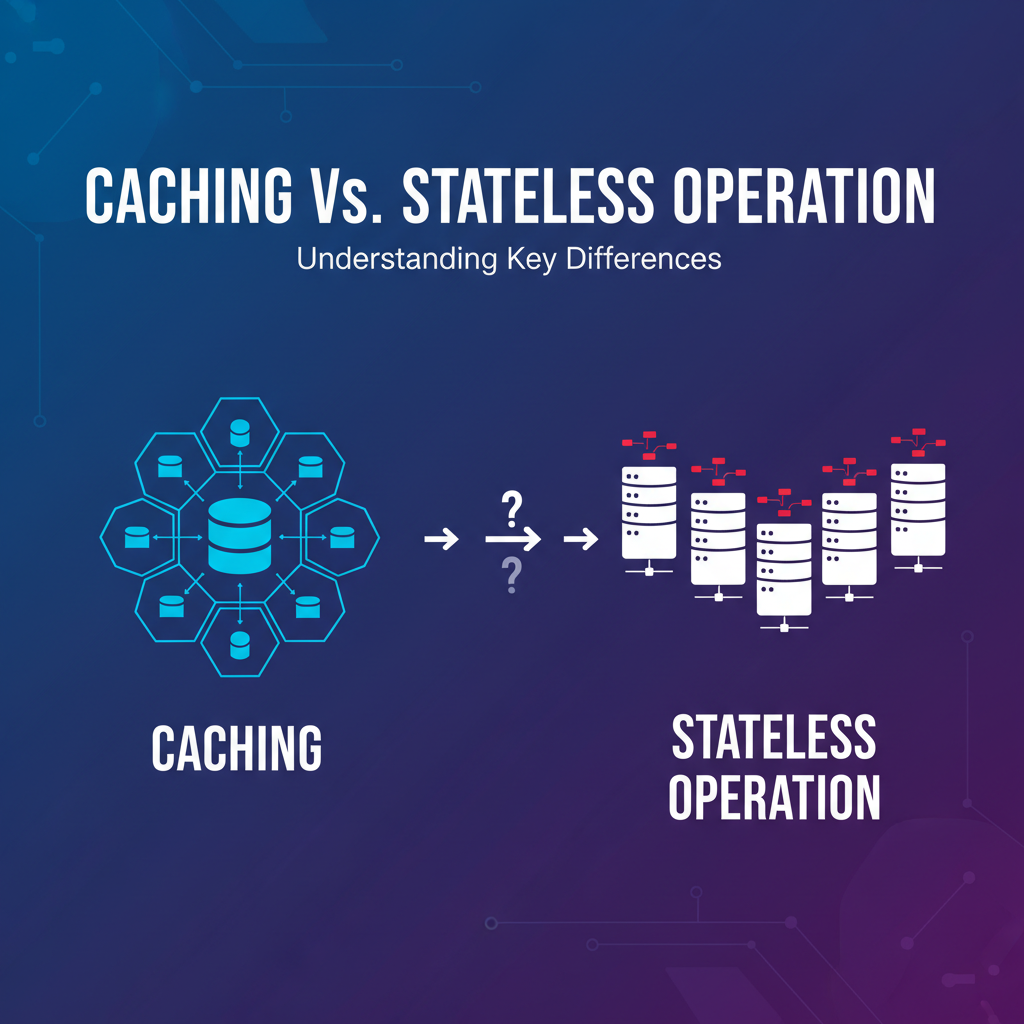


In the complex tapestry of modern distributed systems, architects and developers are constantly striving for optimal performance, scalability, and resilience. The challenges posed by ever-increasing user loads, burgeoning data volumes, and the demand for real-time responsiveness necessitate a deep understanding of fundamental architectural patterns. Among these, caching and stateless operation stand out as two pillars, often discussed, sometimes conflated, yet fundamentally distinct in their core philosophies and implementation. While both aim to enhance system efficiency and reliability, they approach these goals from different angles, leveraging different mechanisms and introducing their own sets of trade-offs. A comprehensive grasp of their individual merits, inherent limitations, and how they can be harmoniously integrated is paramount for crafting robust and future-proof software solutions. This extensive exploration will delve into the intricacies of each concept, dissecting their underlying principles, examining their manifold benefits and drawbacks, and ultimately guiding the reader towards an informed decision on their application in various architectural contexts, with a particular focus on the crucial role of an api gateway in orchestrating these patterns.
The Foundation of Scalability: Embracing Stateless Operation
At its core, a stateless operation signifies an interaction where the server (or any processing entity) does not retain any memory or context from previous requests made by the same client. Each request arriving at a stateless server is treated as an entirely new and independent transaction, containing all the necessary information for the server to process it to completion without relying on any stored server-side session data. This architectural paradigm is a cornerstone of horizontal scalability, a crucial attribute for systems designed to handle vast and fluctuating loads.
Defining Statelessness: A Deep Dive
Consider the internet's foundational protocol, HTTP, which by design is stateless. When your web browser sends a request to a server, the server processes that request without any inherent knowledge of past requests from your browser. If you send another request a moment later, it's again treated as a fresh interaction. Any information required to understand the context of the second request, such as authentication credentials or specific session identifiers, must be explicitly provided within that request itself, perhaps through cookies, headers, or URL parameters.
This principle extends far beyond simple web browsing. In a microservices architecture, for instance, individual services are often designed to be stateless. When a client application interacts with a particular microservice, each API call is self-contained. If that service needs to interact with another service to fulfill the request, the interaction between those services is also typically stateless. The absence of server-side state drastically simplifies the logic required to manage concurrent users and requests, as there is no need to synchronize or share session data across multiple instances of a service. This single characteristic, the lack of server-side "memory" between requests, is what fundamentally defines a stateless system. It promotes a highly decoupled and independent operational model, where the burden of maintaining continuity or "state" for a multi-step process often falls upon the client or an external, explicitly designated state management layer.
The Unpacking of Benefits: Why Go Stateless?
The advantages conferred by a stateless architectural style are profound and directly address many of the challenges inherent in building large-scale distributed systems:
- Unparalleled Horizontal Scalability: This is perhaps the most significant benefit. Since no server holds unique session data, any request can be handled by any available server instance. This makes adding or removing server instances ("scaling out" or "scaling in") incredibly straightforward. Load balancers can simply distribute incoming requests across all available servers without needing sticky sessions or complex session replication mechanisms. A surge in traffic? Spin up more instances. Traffic subsides? Scale them down. The underlying infrastructure remains agile and responsive to demand fluctuations.
- Enhanced Resilience and Fault Tolerance: In a stateless system, the failure of a single server instance does not lead to the loss of user sessions or critical in-progress operations. Since all necessary context is embedded within each request, a failed server simply means that particular request might be retried on another healthy instance, or the client might receive an error and resend the request. There's no complex failover logic required to transfer session data, greatly simplifying recovery and improving the overall robustness of the system.
- Simplified Server-Side Logic: Without the need to manage, store, and synchronize session state across multiple servers, the application logic running on each server instance becomes significantly simpler. Developers can focus on the core business logic for processing individual requests rather than grappling with the complexities of state management, such as locking mechanisms, distributed session stores, or session replication protocols. This reduces development overhead and potential for bugs related to state consistency.
- Optimized Load Balancing: Because any server can handle any request, load balancers have maximum flexibility. They can use simple, highly efficient algorithms like round-robin or least-connections to distribute traffic evenly, without the performance overhead or single points of failure associated with "sticky sessions" (where a client is always routed to the same server to maintain session state). This leads to better utilization of server resources and more predictable performance.
- Improved Resource Utilization: Without the need to allocate and maintain memory for thousands or millions of client sessions, individual server instances can be more efficient. The memory and CPU cycles are dedicated to processing incoming requests rather than managing session objects, which can be particularly resource-intensive for high-concurrency applications.
Navigating the Trade-offs: The Drawbacks of Statelessness
While immensely powerful, statelessness is not a panacea and introduces its own set of challenges that must be carefully considered:
- Increased Request Payload and Network Overhead: Since each request must carry all the necessary information (e.g., authentication tokens, user preferences, current context), the size of individual requests can increase. This translates to more data being transmitted over the network for every interaction, potentially impacting network bandwidth and latency, especially for chattier applications with many small requests.
- Potential for Repeated Processing: If certain pieces of information (e.g., user permissions, configuration settings) are needed for every request, and this information is expensive to retrieve or compute, a purely stateless approach might lead to repeated processing for each incoming request. Without caching mechanisms, this can negate some of the performance benefits of simplified server logic by shifting the bottleneck elsewhere.
- Complexity Shifts to the Client or External State Management: While server-side logic is simplified, the burden of managing multi-step processes or user journeys (like a shopping cart checkout) often shifts to the client application. The client must maintain its own state and send it with each request, or an external, explicitly defined state store (like a shared database, a distributed cache, or a dedicated session service) must be introduced. This reintroduces a form of state management, albeit external to the primary application servers, potentially adding complexity to the overall system design.
- Debugging Challenges for Multi-Step Workflows: In a stateless environment, tracing the flow of a multi-step user interaction can be more challenging. Since there's no server-side session to inspect, debugging often relies on correlated request IDs passed through logs or analyzing client-side state, which can be more cumbersome than traditional stateful debugging.
To illustrate, consider an api gateway acting as the entry point to a microservices ecosystem. A well-designed api gateway like APIPark inherently supports stateless interactions. It receives requests, performs initial authentication and authorization checks (often using stateless tokens like JWTs), and then forwards these self-contained requests to the appropriate backend services without holding any session data itself. This architectural choice allows the backend services to remain lean and scalable, while the api gateway handles the common cross-cutting concerns in a stateless manner, ensuring that each api call is processed independently and efficiently. APIPark's comprehensive API lifecycle management features, including traffic forwarding and load balancing, perfectly complement a stateless design, enabling efficient distribution of requests across multiple instances. Furthermore, its ability to integrate 100+ AI models and encapsulate prompts into REST apis naturally aligns with a stateless paradigm, where each api call is self-contained and independently processable, greatly simplifying AI usage and maintenance costs.
The Performance Accelerator: Understanding Caching Mechanisms
If statelessness is about simplifying server logic and maximizing horizontal scalability through independence, caching is primarily about accelerating performance and reducing the load on backend systems by avoiding redundant work. Caching involves storing copies of data or computational results in a temporary, faster-to-access location, so that subsequent requests for that same data can be served much more quickly than re-fetching or re-computing it from its original, slower source.
Defining Caching: The Concept of Proximity and Speed
The fundamental idea behind caching is simple: if you've already retrieved or computed something once, and it's likely to be needed again soon, store it somewhere close at hand. This "somewhere close at hand" can vary significantly in its physical location and technological implementation, ranging from a few kilobytes in a CPU's L1 cache to terabytes in a globally distributed content delivery network (CDN).
The effectiveness of a cache is typically measured by its "hit ratio" – the percentage of requests that are successfully served from the cache rather than the original source. A high hit ratio indicates that the cache is effectively reducing the load on the backend and significantly improving response times. The goal is always to maximize the hit ratio while ensuring the cached data remains sufficiently fresh and relevant, balancing performance gains against the risk of serving stale information. This balancing act is where much of the complexity and art of caching lies.
The Spectrum of Caching Types: Where and What to Cache?
Caching is not a monolithic concept; it manifests in various forms across different layers of a system architecture:
- Client-Side Caching (Browser/Device Cache): This is the closest cache to the user. Web browsers, for instance, cache static assets like images, CSS files, JavaScript, and even full HTML pages based on HTTP caching headers (e.g.,
Cache-Control,Expires,ETag,Last-Modified). Mobile applications can also cache data locally. The primary benefit here is dramatically reduced network requests and faster page load times for returning users. - CDN Caching (Content Delivery Network): CDNs are geographically distributed networks of proxy servers that cache static and sometimes dynamic content closer to end-users. When a user requests content, it's served from the nearest CDN edge node, significantly reducing latency and offloading the origin server. This is crucial for global applications serving media, static assets, or publicly accessible data.
- Reverse Proxy / API Gateway Caching: Situated between clients and backend services, a reverse proxy or an api gateway can cache responses from backend APIs. This is particularly effective for read-heavy apis that return non-sensitive, frequently requested data. An api gateway like APIPark can be configured to cache responses based on various criteria, such as URL paths, query parameters, and HTTP headers, thus shielding backend services from repetitive requests and improving the perceived performance of the api.
- Application-Level Caching:
- In-Memory Caching: Data is stored directly in the application's RAM. This offers the fastest access but is limited by the server's memory capacity and is lost if the application restarts. It's often used for frequently accessed small datasets or computational results within a single application instance.
- Distributed Caching: For microservices or multiple application instances, an external, shared cache store like Redis or Memcached is used. These are typically key-value stores optimized for high-speed reads and writes. Distributed caches are crucial for maintaining a consistent cache across a horizontally scaled application. They overcome the limitations of in-memory caching by being external and often persistent or highly available.
- Database Caching: Databases themselves often employ various caching mechanisms, such as query caches (caching the results of identical SQL queries), buffer caches (caching frequently accessed data blocks from disk in memory), and index caches. While effective, relying solely on database caching might not be sufficient for very high read loads or might introduce contention.
The Power of Caching: Tangible Benefits
The strategic implementation of caching yields a multitude of benefits across different aspects of system performance and operational efficiency:
- Dramatic Performance Improvement and Reduced Latency: This is the most direct and impactful benefit. By serving data from a fast-access cache instead of a slower backend system (like a database or another microservice), response times for cached requests can be reduced from milliseconds to microseconds. This directly translates to a snappier user experience and higher system throughput.
- Significant Reduction in Backend Load: Caching acts as a buffer, absorbing a large portion of read requests before they ever reach the origin servers or databases. This offloads the backend systems, allowing them to dedicate their resources to processing writes, complex queries, or unique, uncached requests. Reduced load means backend systems operate well within their capacity, preventing performance degradation and failures under peak traffic.
- Enhanced Scalability (Indirect): By reducing the load on backend services, caching indirectly improves their ability to scale. Fewer backend instances might be needed to handle the same overall traffic, or existing instances can handle a higher volume of unique, non-cached requests. For example, an api gateway with effective caching can allow backend apis to serve thousands more requests per second without scaling their own infrastructure.
- Cost Savings: Less load on backend systems can translate directly to lower infrastructure costs. If fewer database servers, application servers, or microservice instances are required, the operational expenses for hosting and maintaining these systems decrease. This can be particularly significant in cloud environments where resource consumption directly correlates with billing.
- Improved Availability and Resilience: In scenarios where backend services experience temporary outages or performance degradation, a sufficiently populated cache can continue to serve requests for at least some period, maintaining a level of service availability even if the origin is unhealthy. This acts as a crucial layer of defense against transient failures.
The Intricacies and Pitfalls: Drawbacks of Caching
Despite its powerful advantages, caching introduces complexities and potential pitfalls that demand careful architectural consideration:
- The Perennial Problem of Stale Data and Cache Invalidation: This is universally recognized as the hardest problem in caching. If the original data changes but the cached copy is not updated or invalidated, users will be served outdated information. Developing an effective cache invalidation strategy – determining when and how to remove or refresh stale entries – is notoriously difficult. Common strategies include Time-To-Live (TTL), explicit invalidation through events, or sophisticated consistency models. Mistakes here can lead to data inconsistencies and frustrated users.
- Increased System Complexity: Introducing a cache layer adds another component to the system architecture. This means more infrastructure to deploy, monitor, and manage. Developers need to understand how the cache works, how data flows through it, and how to debug issues related to cache misses or stale data. This added complexity can outweigh the benefits for simpler applications.
- Memory/Storage Overhead and Cost: Caches, especially distributed ones, consume memory or storage resources. While often cheaper per transaction than processing on the backend, the aggregate cost of maintaining a large cache can be significant. This requires careful sizing and management of the cache infrastructure.
- Cache Warm-up and Cold Start Issues: When a cache is initially deployed, restarted, or when a new data set is accessed for the first time, it is "cold" – meaning it contains no data. The first few requests for that data will result in "cache misses," directly hitting the backend. This can lead to initial performance spikes and slower response times until the cache is populated ("warmed up"). For critical applications, strategies for pre-warming caches are often necessary.
- Potential for Single Points of Failure or Performance Bottlenecks: If a cache service is not designed for high availability and scalability, it can itself become a single point of failure or a performance bottleneck. A distributed cache needs to be robust, fault-tolerant, and able to handle its own share of traffic and data volume.
To illustrate, consider an api gateway with caching enabled. For an api endpoint that returns publicly available product details (e.g., GET /products/{id}), an api gateway can cache the response for a few minutes. When subsequent requests for the same product come in, the api gateway serves the cached response instantly, never even forwarding the request to the backend microservice that fetches product data from a database. This significantly reduces the load on the product service and database. However, if a product's price changes, the cache needs to be invalidated immediately to avoid serving stale price information. This is where the complexity of cache invalidation comes into play. Solutions like APIPark offer powerful data analysis capabilities, which can help in monitoring cache hit/miss ratios and understanding performance changes, assisting businesses with preventive maintenance and optimizing caching strategies.
The Interplay: Caching and Statelessness in Modern Architectures
It is crucial to understand that caching and statelessness are not mutually exclusive concepts; rather, they often coexist and complement each other in sophisticated distributed systems. A system can be designed to be largely stateless at the application server level while simultaneously employing aggressive caching strategies at various layers to enhance performance.
Complementary Strengths
Imagine a microservices architecture built on stateless principles. Each microservice processes requests independently, without relying on server-side session data. This design facilitates horizontal scaling and resilience. However, many of these stateless services might frequently access the same underlying data, such as product catalogs, user profiles, or configuration settings. If every request to these stateless services triggers a fresh database query or an expensive computation, the benefits of statelessness in terms of simple server logic might be overshadowed by performance bottlenecks at the data layer.
This is precisely where caching steps in. An api gateway, for instance, can sit in front of these stateless microservices, acting as an intelligent intermediary. While the api gateway itself operates in a largely stateless manner concerning client sessions (it doesn't typically maintain long-lived session data for the backend services it proxies), it can implement powerful caching mechanisms for responses from those backend services. When a client requests data from a stateless api endpoint, the api gateway first checks its cache. If a valid, non-stale response is found, it's served immediately, fulfilling the request without ever reaching the backend service. Only if there's a cache miss does the api gateway forward the request to the appropriate stateless backend service.
This combination allows the core application logic (the microservices) to remain simple, scalable, and resilient due to its stateless nature, while the overall system achieves superior performance and reduced backend load thanks to caching. The cache effectively "absorbs" redundant read requests, making the entire system appear faster and more efficient from the client's perspective, without requiring the backend services themselves to manage complex state or caching logic.
Scenarios of Synergy
- Read-Heavy API Endpoints: Many apis primarily serve data that changes infrequently but is accessed often. Think of an api for listing current weather conditions for a city, retrieving public holiday dates, or fetching metadata for movies. These endpoints are perfect candidates for stateless backend services combined with aggressive api gateway caching. The stateless nature of the backend ensures high scalability, while caching at the api gateway level ensures lightning-fast responses for repeated requests, dramatically reducing the load on the weather, holiday, or movie database services.
- Public Data and Content Delivery: Websites serving public news articles, product information, or static assets (images, videos) can leverage stateless backend apis to generate this content. CDNs and api gateways then cache these responses at edge locations, ensuring global reach and minimal latency for users, regardless of their geographical location. The content generation process itself can be stateless and scalable, while delivery is accelerated by caching.
- Authentication and Authorization: While individual application sessions might involve state, the verification of authentication tokens (like JWTs) is often a stateless operation. An api gateway can receive a request with a JWT, validate its signature and expiry (a stateless check), and then forward the request. The result of a successful validation (e.g., user ID and roles) can be cached by the api gateway for a very short period to avoid re-validating the token for every single subsequent request within a tight timeframe, offering a slight performance boost without compromising the fundamental statelessness of token validation.
This synergy allows systems to achieve the best of both worlds: the operational simplicity and scalability benefits of statelessness, coupled with the performance and efficiency gains of caching. The key lies in identifying which parts of the system are truly stateful (and thus less amenable to caching or require complex state management) versus those that can operate stateless and benefit immensely from caching.
Strategic Decision-Making: Choosing the Right Approach
The decision to primarily favor stateless operations, heavily rely on caching, or, more commonly, integrate both, is a critical architectural choice that influences a system's performance, scalability, resilience, and operational complexity. There's no one-size-fits-all answer; the optimal strategy depends heavily on the specific requirements and characteristics of the application.
Factors Guiding the Choice
Several key factors should be weighed carefully when designing your system:
- Data Volatility and Consistency Requirements:
- Highly Volatile Data: If data changes frequently and real-time consistency is paramount (e.g., stock trading prices, bank balances, real-time chat messages), aggressive caching can be problematic due to the high risk of serving stale data. Short cache TTLs or complex invalidation mechanisms might be required, potentially negating some of the performance benefits. A stateless approach, fetching fresh data on every request, might be more appropriate, perhaps with very localized, short-lived caches.
- Infrequently Changing Data: Data that rarely changes (e.g., product catalog descriptions, user profile details, configuration settings) is an ideal candidate for caching. Longer TTLs can be used, and cache invalidation is simpler.
- Eventual Consistency: If the application can tolerate a slight delay in data propagation (eventual consistency), then caching with moderate TTLs is often a good compromise.
- Read-Write Ratio:
- Read-Heavy Systems: Applications with a disproportionately high number of read operations compared to write operations (e.g., social media feeds, news sites, product browsing) stand to gain the most from caching. Caches can absorb the vast majority of read traffic, offloading backend databases and services.
- Write-Heavy Systems: For applications dominated by write operations (e.g., logging services, analytics data ingestion, transaction processing), caching offers fewer direct benefits for writes. While some write-through or write-back caching strategies exist, the primary focus might be on ensuring robust, scalable write paths, where statelessness often helps.
- Scalability Needs:
- Horizontal Scalability: If the primary driver is the ability to scale out by adding more instances to handle increasing user load, statelessness is often the preferred default for backend services. It inherently simplifies load balancing and ensures that any new instance can immediately contribute to serving requests without complex state synchronization. Caching then enhances this by reducing the load per backend instance.
- Performance for Specific Hotspots: If the goal is to specifically boost performance for certain highly accessed data or computational results, caching is the direct solution.
- System Complexity Tolerance:
- Statelessness: Generally leads to simpler server-side logic and easier operational management (scaling, deployment). The complexity often shifts to the client or an external, well-defined state store.
- Caching: Introduces additional complexity in terms of cache placement, invalidation logic, monitoring cache hit ratios, and managing the cache infrastructure itself. For systems where simplicity is paramount, the overhead of caching might not be justified.
- User Experience and Latency Expectations:
- Low Latency Required: If users expect near-instantaneous responses, caching becomes almost essential for frequently accessed data. Without it, even a highly optimized stateless backend might still struggle to meet very aggressive latency targets due to inherent network and database access times.
- Tolerance for Slight Delays: If users can tolerate slightly longer response times (e.g., for batch processing or less interactive interfaces), then a purely stateless approach might suffice without the added complexity of caching.
Hybrid Approaches: The Power of Integration
In most real-world, large-scale systems, the most effective strategy involves a thoughtful blend of both stateless operations and caching.
- Stateless Microservices + API Gateway Caching: As previously discussed, this is a powerful combination. Backend microservices are stateless for scalability and resilience, while an api gateway provides intelligent caching for public or frequently accessed api responses, reducing backend load and improving latency. The gateway acts as a stateless facade, routing requests but offering a stateful caching layer for performance.
- Client-Side State + Server-Side Statelessness: For complex user flows (like multi-step forms or shopping carts), the client application can manage its own state (e.g., in local storage, cookies) and send relevant pieces of this state with each request to a stateless backend api. This keeps the backend simple while still supporting interactive user experiences. Critical or sensitive state can then be managed in a dedicated, highly available, and potentially stateful external store, accessed by stateless services as needed.
- Caching for Read-Heavy Data, Stateless for Transactions: An application might use extensive caching for its product catalog or news feed (read-heavy), where immediate consistency is less critical. However, for transactional operations like purchases, bookings, or user registrations (write-heavy), it would rely on stateless backend services that directly interact with a highly consistent database, ensuring atomicity and integrity.
The ultimate goal is to apply the right tool for the right job, understanding that each architectural pattern comes with its own set of strengths and weaknesses. A skilled architect will leverage statelessness to achieve robust scalability and simplify core service logic, while judiciously introducing caching layers to boost performance and reduce the burden on data stores for appropriate data sets.
APIPark is a high-performance AI gateway that allows you to securely access the most comprehensive LLM APIs globally on the APIPark platform, including OpenAI, Anthropic, Mistral, Llama2, Google Gemini, and more.Try APIPark now! 👇👇👇
Deep Dive into Implementation Aspects
Moving beyond the conceptual framework, understanding the practical implementation details of both stateless operations and caching is crucial for successful system design and deployment. These details touch upon critical areas such as authentication, data propagation, cache strategies, and monitoring.
Implementing Statelessness: Practical Considerations
The realization of a truly stateless system involves careful consideration of how context and security are managed without relying on server-side memory.
- Authentication and Authorization:
- JSON Web Tokens (JWTs): JWTs are a prime example of stateless authentication. After a user logs in, the authentication service issues a token containing user identity and permissions. This token is signed (ensuring its integrity) and sent back to the client. For every subsequent request, the client includes this JWT in the
Authorizationheader. The backend service (or an api gateway) can then validate the token's signature and expiry statelessly (without needing to query a session store) to authenticate and authorize the request. This eliminates the need for server-side sessions. - OAuth 2.0 Tokens: Access tokens issued via OAuth 2.0 (e.g., bearer tokens) are also used in a stateless manner. The token itself may be an opaque string, and the service receiving it might have to make an introspect call to an authorization server to validate it. Even this introspection can be cached by an api gateway for a short period to reduce repeated calls to the authorization server, thus maintaining overall system responsiveness.
- JSON Web Tokens (JWTs): JWTs are a prime example of stateless authentication. After a user logs in, the authentication service issues a token containing user identity and permissions. This token is signed (ensuring its integrity) and sent back to the client. For every subsequent request, the client includes this JWT in the
- Context Propagation:
- HTTP Headers: Custom HTTP headers are an effective way to pass contextual information (e.g.,
X-Request-IDfor tracing,X-Client-ID,X-Locale) between services in a stateless chain of calls. - Query Parameters and Request Body: For data directly relevant to the request's processing, query parameters (for GET requests) and the request body (for POST/PUT requests) are standard mechanisms.
- Idempotency Keys: For operations that could be retried (e.g., payment processing), a stateless system benefits from idempotency. Clients can send an
Idempotency-Keyheader with their request. If the server receives the same key for an already processed request, it simply returns the previous result without reprocessing, preventing duplicate operations in a stateless, retry-friendly environment.
- HTTP Headers: Custom HTTP headers are an effective way to pass contextual information (e.g.,
- Client-Side State Management: For complex user interactions, clients (web browsers, mobile apps) might manage application state themselves using local storage, session storage, or in-memory state management libraries (like Redux in web applications). This state is then selectively sent to the backend with each relevant request, enabling multi-step workflows without server-side sessions.
Implementing Caching: Practical Considerations
Effective caching requires careful design, deployment, and ongoing management to realize its benefits while mitigating its risks.
- Cache Placement and Technology:
- API Gateway Caching: For services exposed via an api gateway, configuring caching directly on the gateway is often the first and most effective step. An advanced api gateway like APIPark provides robust capabilities for caching api responses based on various criteria (URL, headers, query parameters), enabling fine-grained control over what gets cached and for how long.
- Distributed Cache Stores: For application-level caching across multiple instances, dedicated distributed cache technologies like Redis or Memcached are essential. These provide high-speed, scalable, and often fault-tolerant key-value stores.
- CDN Integration: For global content delivery, integrating with a CDN is crucial. This offloads static assets and public dynamic content from the origin servers and delivers them from edge locations.
- Cache Invalidation Strategies:
- Time-To-Live (TTL): The simplest and most common strategy. Each cached item is assigned an expiration time. After this time, the item is considered stale and removed, or re-fetched on the next request. TTLs are suitable for data that can tolerate some staleness.
- Event-Driven Invalidation (Publish/Subscribe): When data changes in the source system (e.g., a database), an event is published (e.g., via a message queue like Kafka or RabbitMQ). Cache subscribers (application instances, api gateway) listen for these events and explicitly invalidate relevant cached entries. This offers stronger consistency but adds complexity.
- Write-Through/Write-Back:
- Write-Through: Data is written to both the cache and the underlying data store simultaneously. This ensures consistency but adds latency to write operations.
- Write-Back: Data is written only to the cache initially and then asynchronously written to the data store. This offers lower write latency but higher risk of data loss if the cache fails before data is persisted.
- Cache-Control Headers: For HTTP-based caching (client-side, CDN, api gateway), standard
Cache-Controlheaders (e.g.,max-age,no-cache,private,public) are used to instruct intermediaries and clients on how to cache responses.
- Cache Key Design: A well-designed cache key is crucial. It must uniquely identify the data being cached and reflect all parameters that influence the data. For api responses, this often includes the api endpoint path, query parameters, relevant request headers (e.g.,
Accept-Language), and sometimes even parts of the request body for POST requests if the body determines the response. - Monitoring and Analytics:
- Cache Hit Ratio: Crucial metric indicating the effectiveness of the cache. A low hit ratio might suggest poor cache key design, too short TTLs, or data that is not frequently reused.
- Cache Miss Rate: Conversely, a high miss rate indicates that many requests are still hitting the backend.
- Latency Metrics: Monitoring the latency for both cache hits and misses provides insights into the overall performance impact.
- Memory/CPU Usage: For distributed caches, monitoring their resource consumption is vital to ensure they are adequately scaled and not becoming bottlenecks. APIPark, for instance, offers powerful data analysis capabilities that record every detail of each api call, displaying long-term trends and performance changes, which can be invaluable for optimizing caching strategies and understanding their real-world impact.
By meticulously implementing these aspects, architects can construct systems that are not only stateless and scalable but also exceptionally performant and resilient through intelligent caching. The choice of tools and strategies for each, along with their harmonious integration, forms the bedrock of modern, high-performance distributed systems.
Security Considerations: Safeguarding Data in Both Paradigms
Security is not an afterthought but an integral part of system design, and both stateless operations and caching introduce their unique security challenges and requirements. A robust api gateway plays a critical role in enforcing security policies across both paradigms.
Security in Stateless Systems
While statelessness simplifies server logic, it doesn't eliminate security concerns; rather, it shifts their focus:
- Token Security (JWTs, OAuth):
- Signature Verification: For JWTs, it's paramount to verify the token's signature using the correct secret key. A compromised secret key can allow attackers to forge tokens. The api gateway or backend service must always perform this verification.
- Token Expiration: Tokens should have a reasonable expiration time (
expclaim in JWTs) to limit the window of opportunity for attackers if a token is stolen. Short-lived access tokens, potentially refreshed by longer-lived refresh tokens, are a common pattern. - No Sensitive Data in Tokens: While JWTs can carry claims, highly sensitive data that might need to be revoked quickly or is confidential should not be stored directly in the token, as tokens are often visible to the client.
- Token Revocation (Blacklisting): In a purely stateless system, revoking a token before its natural expiry is challenging. If a user logs out, changes their password, or is banned, their active token remains valid until it expires. Solutions often involve a "blacklist" (a small, fast cache or database) for revoked tokens that the api gateway checks before forwarding requests, adding a small element of "state" specifically for security.
- Input Validation: Regardless of statefulness, all input from clients must be rigorously validated to prevent injection attacks (SQL, XSS, command injection), buffer overflows, and other vulnerabilities. The api gateway can perform initial schema validation and sanitization.
- Data Transmission Security: All communication should be encrypted using TLS/SSL (HTTPS) to prevent eavesdropping and tampering with request payloads, especially since stateless requests often carry authentication credentials and full context.
Security in Cached Systems
Caching, while improving performance, can introduce risks related to data exposure and consistency:
- Caching Sensitive Data: The most significant risk is inadvertently caching sensitive or personalized user data (e.g., credit card numbers, personal health information) in a public or shared cache. This can lead to severe data breaches. Caches should be meticulously configured to only store non-sensitive, public, or anonymous data, or implement very strict access controls and short TTLs for personalized data.
- Cache Poisoning: An attacker might try to inject malicious data into a cache (e.g., through specially crafted URLs or headers) that is then served to other legitimate users. Rigorous input validation at the api gateway and backend, along with careful cache key design, is essential to prevent this.
- Cache Invalidation for Security Events: When a security-relevant event occurs (e.g., a user's permissions change, a sensitive configuration is updated, or a user logs out), any relevant cached data must be immediately invalidated. Failure to do so can lead to unauthorized access or outdated access rights being granted. This highlights the importance of robust, event-driven cache invalidation.
- Access Control for Cache Management: The cache infrastructure itself must be secured. Access to cache administration interfaces and cache data stores (like Redis instances) should be restricted to authorized personnel and services to prevent unauthorized data manipulation or deletion.
The Role of an API Gateway in Security
An api gateway acts as the frontline defense and enforcement point for many security policies, regardless of whether the backend is stateless or uses caching:
- Authentication and Authorization: The api gateway is ideally positioned to handle centralized authentication (e.g., validating JWTs or OAuth tokens) and initial authorization checks before requests ever reach backend services. This offloads security logic from individual services.
- Rate Limiting and Throttling: Preventing Denial-of-Service (DoS) attacks by limiting the number of requests a client can make within a given period.
- Input Validation: Performing initial validation and sanitization of request headers, query parameters, and body content.
- Security for Caching: Configuring granular caching rules to prevent sensitive data from being cached, enforcing
Cache-Controlheaders, and potentially integrating with cache invalidation mechanisms for security events. - API Security Policy Enforcement: Ensuring that all api calls adhere to defined security policies before routing them to backend systems.
APIPark, as an open-source AI gateway and api management platform, provides robust features for securing apis. Its independent api and access permissions for each tenant, along with the requirement for api resource access approval, directly address concerns about unauthorized api calls and potential data breaches, working in tandem with the principles of stateless operations and intelligent caching to build a secure and performant system.
Future Trends and the Evolving Landscape
The architectural landscape is dynamic, with new paradigms and technologies constantly emerging. Both statelessness and caching continue to evolve, adapting to new demands and offering innovative solutions.
- Edge Computing and Caching at the Edge: As applications become more geographically distributed and demand even lower latency, computing and caching are moving closer to the end-users – to the "edge" of the network. This involves deploying micro-services and highly localized caches on edge devices or in edge data centers, further reducing round-trip times and offloading central cloud resources. This complements stateless architectures by allowing backend services to remain centralized and stateless, while performance for users worldwide is boosted by edge caching.
- Serverless Functions (FaaS): Serverless computing platforms (like AWS Lambda, Azure Functions, Google Cloud Functions) embody the stateless paradigm almost perfectly. Each function invocation is typically a cold start, processing an independent request without relying on previous function state. This inherent statelessness greatly simplifies scaling, as the platform automatically manages scaling function instances up and down based on demand. Caching is still relevant, often implemented externally through distributed caches or CDNs in front of the serverless function endpoints.
- Advanced Cache Invalidation Techniques: Research and development continue in overcoming the challenges of cache invalidation. Techniques like Content Addressable Storage (CAS) with immutable data, Conflict-Free Replicated Data Types (CRDTs) for eventually consistent systems, and more sophisticated event-sourcing patterns are being explored to manage data consistency across distributed caches more effectively.
- AI-Driven Caching Strategies: With advancements in machine learning, there's a growing interest in using AI to predict data access patterns and dynamically adjust caching strategies. An AI model could analyze historical access logs to determine optimal TTLs, pre-warm caches, or identify specific data segments that are most likely to be requested, leading to more intelligent and efficient cache utilization.
- Graph Caching: For applications built on graph databases or consuming complex graph-like data structures, specialized graph caching solutions are emerging. These caches understand relationships between data entities, allowing for more intelligent caching of interconnected data and efficient invalidation when nodes or edges change.
The continuous evolution of these concepts underscores their enduring importance in the field of software architecture. As systems become even more distributed and complex, the principles of independent processing (statelessness) and efficient data access (caching) will remain fundamental, albeit implemented with increasingly sophisticated tools and strategies. The role of an api gateway, like APIPark, will also continue to expand, becoming an even more critical orchestrator, providing the foundational capabilities for both stateless routing and intelligent caching, while also adapting to emerging trends like AI model integration and edge deployment.
Conclusion: A Strategic Blend for Optimal System Design
In the journey through the architectural paradigms of caching and stateless operation, we have dissected their core tenets, illuminated their distinct advantages and disadvantages, and explored the intricate dance of their interplay in modern distributed systems. Statelessness, with its emphasis on self-contained requests, champion's horizontal scalability, fault tolerance, and simplified server logic, making it a cornerstone for resilient and agile microservices architectures. Caching, conversely, is the performance workhorse, drastically reducing latency and offloading backend systems by intelligently storing and serving frequently accessed data closer to the point of consumption.
The profound insight is that these two architectural philosophies are not mutually exclusive battlegrounds but rather complementary forces that, when harnessed together, can yield systems of exceptional performance, scalability, and robustness. A highly scalable, stateless backend API service often finds its ultimate performance amplifier in a strategically placed cache, particularly at the api gateway layer. This allows the core business logic to remain lean and independent, while the user experience is dramatically enhanced by the speed of cached responses.
The judicious selection and implementation of these patterns demand a thorough understanding of an application's specific requirements, including data volatility, consistency needs, read-write patterns, and tolerance for complexity. While statelessness generally simplifies the server's internal state management, caching introduces its own layer of complexity, primarily centered around the perennial challenge of cache invalidation. However, the benefits in terms of latency reduction, backend load mitigation, and cost efficiency often far outweigh these complexities for read-heavy workloads.
Ultimately, the mastery of modern system architecture lies in the ability to strategically blend these concepts. It involves designing stateless backend services that are inherently scalable, then carefully identifying bottlenecks and opportunities for caching at various layers – from the client and CDN to the api gateway and distributed in-memory stores. Solutions like APIPark exemplify how a well-engineered api gateway can serve as the central nervous system, orchestrating both stateless request routing and sophisticated caching mechanisms, empowering developers and enterprises to manage, integrate, and deploy performant and scalable apis with unprecedented ease.
As technology continues its relentless march forward, with trends like edge computing, serverless functions, and AI-driven optimizations shaping the future, the foundational principles of stateless design and intelligent caching will remain indispensable. Architects and developers who deeply understand these concepts and their synergistic application will be best equipped to build the next generation of resilient, high-performance, and scalable digital experiences. The continuous quest for efficiency and reliability in software systems will forever demand a nuanced appreciation for the powerful, yet distinct, roles of caching and stateless operation.
Frequently Asked Questions (FAQ)
- What is the fundamental difference between caching and stateless operation? The fundamental difference lies in their approach to state. Stateless operation means that each request to a server or service is independent and contains all necessary information, with the server retaining no memory of past requests from the same client. Its primary goal is horizontal scalability and resilience. Caching, on the other hand, involves storing copies of data for faster retrieval in the future. Its primary goal is to improve performance by reducing latency and offloading backend systems, and it inherently introduces a form of state (the cached data).
- Can a system be both stateless and use caching? How do they work together? Absolutely, and this is a common and highly effective architectural pattern. A system can have backend services designed to be stateless (for scalability and simplicity), while external components like an api gateway, CDN, or distributed cache provide caching. For example, an api gateway can receive a stateless request, check its cache for a valid response, and if found, serve it immediately. If not, it forwards the stateless request to the backend service. This combines the scalability benefits of statelessness with the performance benefits of caching.
- What are the main benefits of adopting a stateless architecture for an API? The main benefits include unparalleled horizontal scalability (easy to add/remove server instances), enhanced resilience and fault tolerance (server failures don't lose session data), simplified server-side logic (no session management), and optimized load balancing (any server can handle any request). These advantages make stateless apis ideal for microservices and distributed systems.
- What are the biggest challenges when implementing caching, and how can an API gateway help? The biggest challenge is cache invalidation, ensuring that cached data remains consistent with the source data and isn't stale. Other challenges include increased system complexity, memory/storage overhead, and cold start issues. An api gateway can help by centralizing caching logic, providing a configurable caching layer for api responses, managing TTLs, supporting cache-control headers, and potentially integrating with cache invalidation mechanisms, all while providing detailed logging and analytics to monitor cache performance.
- When should I prioritize stateless operations over heavy caching, and vice versa? Prioritize stateless operations when:
- Horizontal scalability and resilience are the absolute top priorities.
- Data changes very frequently, making caching difficult or risky for consistency.
- The system is write-heavy, as caching offers fewer benefits for writes.
- The aim is to simplify server-side logic and delegate state management elsewhere. Prioritize heavy caching when:
- The system is read-heavy with many repetitive requests for the same data.
- Low latency and high throughput are critical performance goals.
- Data changes infrequently and can tolerate some staleness.
- There's a need to reduce load on backend services and databases. In many cases, a strategic blend of both will yield the best results, using statelessness for core processing and caching for performance acceleration.
🚀You can securely and efficiently call the OpenAI API on APIPark in just two steps:
Step 1: Deploy the APIPark AI gateway in 5 minutes.
APIPark is developed based on Golang, offering strong product performance and low development and maintenance costs. You can deploy APIPark with a single command line.
curl -sSO https://download.apipark.com/install/quick-start.sh; bash quick-start.sh

In my experience, you can see the successful deployment interface within 5 to 10 minutes. Then, you can log in to APIPark using your account.

Step 2: Call the OpenAI API.