Cloudflare AI Gateway: Secure & Optimize Your AI
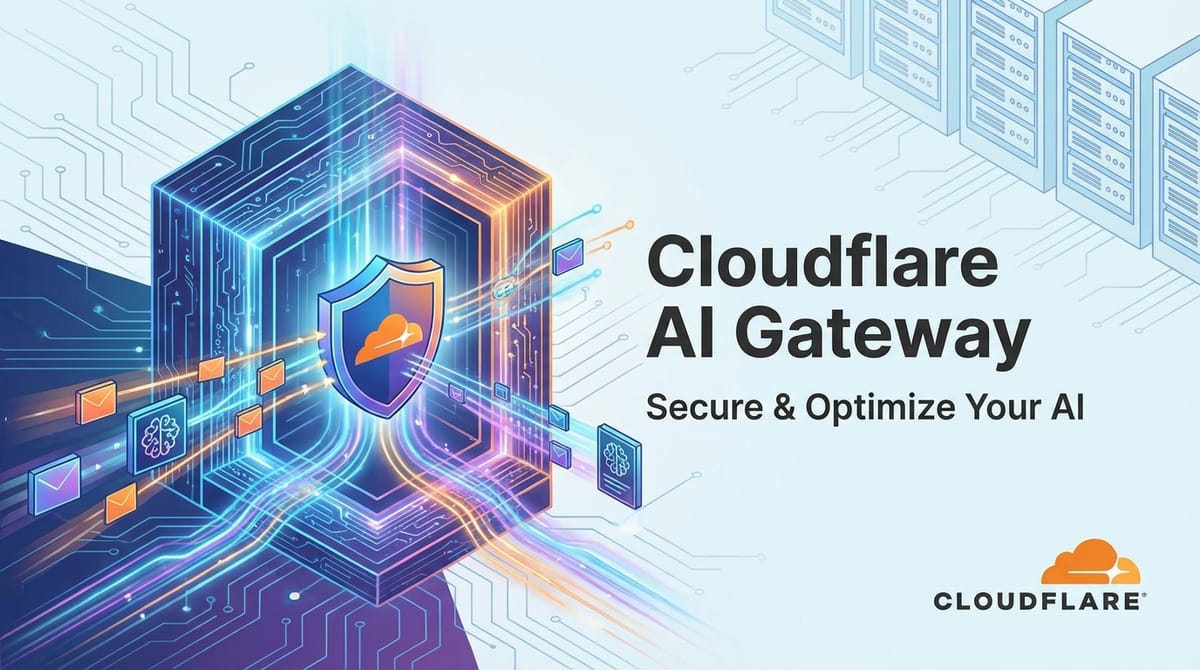


The landscape of technology is undergoing a profound transformation, driven by the explosive growth of Artificial Intelligence (AI). From sophisticated large language models (LLMs) generating human-like text to advanced computer vision systems powering autonomous vehicles, AI is no longer a niche technology but a foundational layer for countless applications and services. This ubiquitous integration, however, introduces a novel set of challenges that traditional web infrastructure was not designed to handle. Enterprises and developers alike grapple with securing sensitive AI interactions, optimizing performance for latency-sensitive applications, managing diverse model ecosystems, and controlling spiraling costs. In response to these complex demands, a specialized solution has emerged as an indispensable component of modern AI architecture: the AI Gateway. Cloudflare, a leader in global network security and performance, has positioned itself at the forefront of this evolution with its sophisticated Cloudflare AI Gateway, offering a robust platform designed to secure, optimize, and manage the entire lifecycle of AI interactions.
The promise of AI is immense, yet its deployment is fraught with unique operational complexities. Every interaction with an AI model, be it a prompt sent to an LLM or a data inference request, represents a potential security vulnerability, a performance bottleneck, or an unmonitored cost center. Without a dedicated layer to intelligently mediate these interactions, organizations risk exposing proprietary data, delivering subpar user experiences, and incurring unsustainable expenses. Cloudflare AI Gateway directly addresses these concerns, acting as an intelligent intermediary that sits between your applications and the various AI models you leverage. By providing a unified control plane, advanced security features, and intelligent optimization capabilities, it transforms the chaotic complexity of AI integration into a streamlined, secure, and highly performant operation. This comprehensive approach is not merely an enhancement but a fundamental necessity for any organization serious about harnessing the full potential of AI securely and efficiently in today's rapidly evolving digital world.
The Genesis of AI Challenges and the Indispensable Need for a Specialized Gateway
The advent of AI, particularly the proliferation of Large Language Models (LLMs) and generative AI, has ushered in an era of unprecedented technological capability. These models, ranging from OpenAI's GPT series to Google's Gemini and Meta's Llama, are transforming how businesses operate, how content is created, and how users interact with digital services. However, integrating these powerful but often resource-intensive and sensitive models into production environments presents a unique set of challenges that go far beyond what traditional API management solutions were designed to address. The sheer scale, complexity, and specific nature of AI workloads demand a purpose-built solution, leading to the undeniable necessity of a dedicated AI Gateway.
One of the most pressing concerns in the AI paradigm is security. Unlike standard APIs that primarily handle structured data, AI models process and generate highly dynamic and often context-dependent information. This opens the door to novel attack vectors such as prompt injection, where malicious inputs can manipulate the AI's behavior, leading to unintended outputs, data exfiltration, or even unauthorized actions. Furthermore, the sensitive nature of data fed into AI models, which can include personally identifiable information (PII) or proprietary business data, necessitates robust data loss prevention (DLP) mechanisms. Traditional api gateway solutions, while excellent at authenticating requests and enforcing basic rate limits, often lack the deep contextual understanding required to analyze and mitigate these AI-specific threats. They operate at a lower level of abstraction, unable to inspect the semantic content of prompts or filter sensitive information from AI-generated responses effectively. The need for an LLM Gateway that can intelligently parse and protect the conversational flow and data inherent in LLM interactions is paramount.
Performance is another critical dimension where AI models introduce significant hurdles. Many AI applications, such as real-time customer service bots, content recommendation engines, or interactive AI assistants, are extremely sensitive to latency. Users expect near-instantaneous responses, yet AI model inference can be computationally intensive and time-consuming, especially for complex queries or large models hosted remotely. Managing high volumes of requests, ensuring consistent response times, and preventing bottlenecks are crucial for maintaining a positive user experience. Standard API gateways can offer basic load balancing and caching, but they are often ill-equipped to handle the dynamic scaling requirements of AI workloads, intelligently route requests to the optimal model instance based on real-time load, or apply advanced caching strategies for AI-generated content. The global distribution of users further exacerbates latency issues, making edge-based optimization essential to bring AI processing closer to the user.
Cost management is rapidly becoming a significant headache for organizations leveraging AI. Accessing powerful commercial AI models often involves pay-per-token or pay-per-request pricing structures. Without proper oversight, usage can quickly escalate, leading to unpredictable and often exorbitant bills. Tracking individual model usage, setting granular budgets, and identifying inefficient or redundant queries are complex tasks that require deep visibility into AI interactions. Traditional gateways offer limited telemetry for this level of detailed cost analysis, making it difficult to attribute usage to specific applications or teams, or to implement strategies for cost optimization. An AI Gateway must provide detailed analytics and reporting tailored to AI consumption patterns to prevent runaway expenses and ensure economic viability.
Finally, observability and control over a diverse AI ecosystem are increasingly vital. As organizations integrate multiple AI models from different providers (e.g., one LLM for creative writing, another for code generation, a third for data analysis), managing access, API keys, versions, and performance across all these endpoints becomes a logistical nightmare. Developers need a unified interface to deploy, monitor, and iterate on AI applications without getting bogged down in the intricacies of each individual model's API. This includes robust logging, error tracking, and auditing capabilities specifically designed to provide insights into AI interactions, aiding in debugging, compliance, and performance tuning. The ability to perform A/B testing on different prompts or model versions through a centralized control point is also a powerful feature that an AI Gateway can provide, facilitating rapid experimentation and improvement.
In essence, while conventional api gateway solutions excel at managing the routing, authentication, and rate limiting for generic REST APIs, they lack the specialized intelligence, security features, and optimization capabilities required for the unique demands of AI workloads. The complexities of prompt engineering, model inference, sensitive data handling, and dynamic scaling necessitate a dedicated AI Gateway, particularly an LLM Gateway for language models, that can act as an intelligent, secure, and performant intermediary, ensuring that the promise of AI can be realized without succumbing to its inherent challenges. Cloudflare AI Gateway steps into this critical role, offering a comprehensive platform designed from the ground up to address these specific needs, thereby empowering developers and enterprises to confidently build and deploy AI-powered applications at scale.
Deep Dive into Cloudflare AI Gateway's Core Offerings
Cloudflare AI Gateway is not just another reverse proxy; it is a meticulously engineered layer specifically designed to sit at the crucial intersection of your applications and the rapidly evolving world of AI models. Leveraging Cloudflare's expansive global network and its decades of experience in edge computing, security, and performance optimization, the AI Gateway provides a suite of indispensable features that collectively elevate the reliability, security, and efficiency of your AI deployments. Its core offerings can be broadly categorized into unparalleled security, dynamic performance optimization, and advanced management with rich observability, each intricately designed to tackle the unique challenges posed by modern AI workloads.
3.1. Unparalleled Security for AI Workloads
The security posture of AI applications is a paramount concern, given the potential for sensitive data exposure, model manipulation, and service abuse. Cloudflare AI Gateway integrates deeply with Cloudflare's existing security ecosystem, extending its formidable protective capabilities directly to your AI interactions. This creates a multi-layered defense mechanism that is uniquely suited to the nuances of AI.
At its foundation, Cloudflare AI Gateway benefits immensely from Cloudflare's Edge Security Philosophy. With data centers in over 300 cities worldwide, Cloudflare operates at the internet's edge, meaning that AI requests and responses are inspected and processed as close to the user and the origin AI model as possible. This distributed architecture provides inherent resilience against various threats. The gateway acts as a shield, protecting your origin AI models from direct exposure to the public internet. This includes automatic DDoS protection, where sophisticated algorithms can identify and mitigate volumetric attacks targeting your AI endpoints, ensuring service availability even under duress. Furthermore, Cloudflare's industry-leading Web Application Firewall (WAF) extends its protective capabilities to AI API calls, inspecting request headers, bodies, and parameters for known attack patterns, SQL injection, cross-site scripting, and other OWASP Top 10 vulnerabilities that might still be present in the underlying API infrastructure of AI services.
Beyond generic web threats, Cloudflare AI Gateway delivers specialized protection against Prompt Injection Attacks. This is a novel and increasingly sophisticated threat unique to LLMs, where carefully crafted inputs can override system instructions, bypass safety guardrails, or even extract confidential information from the model or its environment. The gateway employs advanced techniques, potentially including heuristic analysis, pattern matching, and integration with threat intelligence feeds, to detect and block malicious prompts before they ever reach your LLM. This proactive defense mechanism is crucial for maintaining the integrity and trustworthiness of your AI applications, preventing scenarios where an LLM might generate inappropriate content or divulge sensitive internal data.
Data Loss Prevention (DLP) is another critical security pillar. Organizations often feed sensitive information, such as customer data, financial figures, or proprietary code, into AI models for analysis, summarization, or generation. The risk of this sensitive data being inadvertently exposed in an AI's response or through an unsecure interaction is significant. Cloudflare AI Gateway can be configured with DLP policies that scan both incoming prompts and outgoing AI responses for predefined patterns of sensitive information (e.g., credit card numbers, social security numbers, email addresses, specific keywords). If sensitive data is detected, the gateway can redact, block, or alert on the interaction, ensuring that confidential information remains protected and compliance requirements (like GDPR, HIPAA, or CCPA) are met. This capability is vital for maintaining data privacy and preventing accidental disclosures that could lead to significant financial and reputational damage.
Access Control and Authorization are fundamental to securing any API, and even more so for AI endpoints. Cloudflare AI Gateway provides granular control over who can access which AI models and under what conditions. This can involve integrating with existing identity providers (IdPs) for user authentication, enforcing API key rotations, or leveraging Cloudflare Access to define fine-grained policies based on user identity, device posture, and location. For instance, you could configure policies that only allow internal development teams to access experimental LLM versions, while production-ready models are accessible only to authenticated applications with specific API keys. This level of control ensures that only authorized entities can interact with your valuable AI resources, minimizing the risk of unauthorized use or abuse.
Furthermore, Cloudflare AI Gateway integrates with Bot Management and API Abuse Prevention capabilities. AI endpoints can be tempting targets for automated attacks, including credential stuffing against API keys, brute-force attacks to discover vulnerabilities, or even sophisticated bots designed to exhaust rate limits and incur high costs. Cloudflare's robust bot management system can identify and mitigate these automated threats in real-time, distinguishing between legitimate API traffic and malicious bot activity. This protects your AI services from being overwhelmed or exploited by automated attackers, preserving resources and maintaining service quality.
Finally, the gateway enhances Observability for Security Events. Every security-related action, from a blocked prompt injection attempt to an unauthorized access attempt, is meticulously logged. These detailed logs provide security teams with invaluable insights into potential threats and attack patterns. Integration with Cloudflare's analytics and alerting systems ensures that suspicious activities trigger immediate notifications, enabling rapid response and investigation. This comprehensive logging and alerting capability is crucial for maintaining a strong security posture, facilitating compliance audits, and continuously improving the resilience of your AI applications against evolving threats. In essence, Cloudflare AI Gateway acts as an intelligent security sentinel, guarding your AI models from a broad spectrum of threats, both common and unique to the AI domain.
3.2. Optimizing Performance and Latency for AI Interactions
The true value of many AI applications is realized through their responsiveness and efficiency. Latency, even in milliseconds, can significantly degrade user experience, especially in interactive AI scenarios. Cloudflare AI Gateway is engineered to be a performance powerhouse, leveraging Cloudflare's global infrastructure to ensure that your AI interactions are as fast and efficient as possible. This focus on optimization is critical for delivering a seamless and engaging AI experience.
A cornerstone of Cloudflare's performance strategy is its Global Network Edge. With servers strategically located in hundreds of cities worldwide, Cloudflare brings the processing of AI requests and responses physically closer to your users. This geographical proximity drastically reduces the round-trip time (RTT) between a user's device, the gateway, and the origin AI model. Instead of requests traversing vast distances across the internet to a centralized AI inference server, they are handled at the nearest Cloudflare edge location. This "edge computing" paradigm is particularly beneficial for AI, as it minimizes network latency, translating directly into faster AI responses and a more fluid user experience for applications ranging from chatbots to real-time content generation tools.
Caching Strategies are another potent tool in the AI Gateway's optimization arsenal. Many AI prompts, particularly common queries or frequently requested data points, might yield identical or very similar responses. The gateway can intelligently cache these responses at the edge. When a subsequent, identical or sufficiently similar prompt arrives, the gateway can serve the cached response instantly, without needing to forward the request to the origin AI model. This not only dramatically reduces response times but also significantly decreases the load on your backend AI models, thereby saving computational resources and reducing operational costs. Advanced caching rules can be configured, allowing for fine-grained control over what gets cached, for how long, and under what conditions, ensuring cache freshness and relevance.
Rate Limiting and Throttling are essential mechanisms to prevent abuse, manage costs, and ensure fair usage of your AI resources. AI inference can be computationally expensive, and an uncontrolled influx of requests can quickly overwhelm your models or lead to unexpected billing spikes. Cloudflare AI Gateway allows you to define granular rate limits based on various parameters such as IP address, API key, user ID, or even specific prompt characteristics. For example, you can limit a single user to 10 requests per minute for a premium LLM, or throttle requests from a specific application that is exhibiting unusually high usage. This intelligent throttling prevents resource exhaustion, protects your AI infrastructure from malicious or accidental overload, and provides a crucial lever for cost control.
For organizations leveraging multiple instances of an AI model or different AI models for the same task, Load Balancing becomes a critical optimization. Cloudflare AI Gateway can intelligently distribute incoming AI requests across multiple backend AI endpoints. This ensures that no single model instance becomes a bottleneck and that computational load is evenly distributed, leading to improved overall system throughput and reliability. Advanced load balancing algorithms, such as least latency or least connections, can be employed to direct traffic to the most performant or least loaded AI backend, dynamically optimizing resource utilization and minimizing response times.
Traffic Prioritization is a sophisticated feature that ensures your most critical AI applications receive preferential treatment. In scenarios where resources are constrained or during peak traffic, you might want to prioritize requests from premium users, mission-critical applications, or specific internal services over less urgent queries. The gateway allows you to define policies to prioritize certain types of AI traffic, ensuring that essential interactions are always handled promptly, even when the system is under heavy load. This capability is vital for maintaining service level agreements (SLAs) for your most important AI-powered services.
Finally, Smart Routing enhances performance by dynamically choosing the most optimal path for an AI request. This could involve directing a request to the closest available AI model instance, selecting a model with lower current latency, or even routing based on cost considerations. Cloudflare AI Gateway can leverage real-time performance metrics and network intelligence to make informed routing decisions, ensuring that each AI interaction takes the most efficient path from the user to the processing model and back. This dynamic optimization is a powerful advantage, constantly adapting to network conditions and backend performance to deliver the best possible experience.
In summary, Cloudflare AI Gateway's performance optimization features are deeply integrated with Cloudflare's global network, providing an unparalleled ability to reduce latency, manage traffic, and ensure the efficient operation of your AI applications. By intelligently caching, load balancing, rate limiting, and routing, the gateway transforms potentially slow and resource-intensive AI interactions into fast, reliable, and cost-effective operations, thereby enhancing user satisfaction and operational efficiency.
3.3. Advanced Management & Observability for AI
Beyond security and performance, effectively managing and monitoring a complex AI ecosystem is crucial for sustained success. Cloudflare AI Gateway provides a comprehensive suite of management and observability tools that give developers and operations teams unprecedented control and insight into their AI interactions. This unified approach simplifies operations, facilitates cost control, and accelerates the development lifecycle.
A key benefit of the AI Gateway is its provision of a Unified Control Plane. Instead of juggling multiple API keys, authentication methods, and documentation for various AI models (e.g., OpenAI, Anthropic, Google Gemini, custom models), the gateway allows you to manage all your AI endpoints from a single, intuitive interface. This centralization significantly reduces operational overhead and simplifies the integration process for developers. It abstracts away the underlying complexities of each AI provider, presenting a consistent interface for your applications to interact with, regardless of the backend model being used. This unified management extends to authentication, where you can configure common authentication schemes, and API keys, which are securely stored and managed by the gateway.
Detailed Logging and Analytics are fundamental for understanding and optimizing AI usage. Cloudflare AI Gateway meticulously tracks every single AI request and response that passes through it. This includes details such as the timestamp, source IP, API key used, specific prompt sent, full AI response received, latency, and any errors encountered. These granular logs provide an invaluable audit trail, essential for debugging, security investigations, and compliance. Furthermore, the gateway processes this raw log data into actionable analytics, displaying usage patterns, identifying peak traffic times, tracking performance metrics across different models, and highlighting error rates. This rich telemetry empowers teams to make data-driven decisions regarding model selection, prompt optimization, and resource allocation, transforming opaque AI usage into transparent, measurable insights.
This detailed data directly feeds into Cost Optimization Features. With pay-per-token or pay-per-request models common for commercial AI, costs can quickly spiral out of control. The gateway’s comprehensive logging and analytics allow you to track AI consumption down to the individual request. You can identify which applications or users are generating the most expensive queries, pinpoint inefficient prompts that consume excessive tokens, and monitor spending against predefined budgets. Armed with this information, organizations can implement strategies such as enforcing hard limits on token usage, optimizing prompts for brevity and efficiency, or even dynamically routing requests to cheaper models for less critical tasks. This proactive approach to cost management ensures that AI innovation doesn't come with an unsustainable price tag.
For continuous improvement and experimentation, Versioning and A/B Testing capabilities are invaluable. As prompts evolve, or as new iterations of custom models are developed, the ability to manage different versions seamlessly is crucial. Cloudflare AI Gateway can facilitate the deployment of multiple versions of a prompt or even route traffic to different versions of an underlying AI model. This enables robust A/B testing, where a percentage of traffic can be directed to a new prompt version to compare its performance, cost, and output quality against an existing one, without impacting the entire user base. This iterative development model allows for rapid experimentation and confident deployment of improvements, accelerating the pace of AI innovation within an organization.
Secure and efficient API Key Management is another critical aspect. Accessing external AI services invariably requires API keys or other credentials. Managing these keys, ensuring their rotation, and controlling their scope can be a significant administrative burden and security risk. The AI Gateway provides a centralized, secure repository for these credentials, abstracting them away from individual applications. Applications only need to authenticate with the gateway, which then securely handles the API keys for the respective backend AI services. This minimizes the risk of API key exposure and simplifies the credential management lifecycle.
Finally, a particularly powerful aspect for Cloudflare users is the seamless Integration with Workers AI. For developers already building on Cloudflare Workers, the AI Gateway provides a natural extension, offering a unified platform for both custom serverless logic and managed AI interactions. This integration allows for sophisticated workflows where Workers can process requests, enrich prompts, or even orchestrate calls to multiple AI models through the gateway, leveraging the same underlying infrastructure and management plane. When operating as an LLM Gateway specifically, it offers specialized features for language model interactions, such as prompt templating, response filtering, and contextual logging tailored to conversational AI. This tight integration ensures a cohesive and powerful development experience for building AI-powered applications directly on Cloudflare's global network.
In conclusion, Cloudflare AI Gateway's advanced management and observability features provide a holistic view and granular control over your AI ecosystem. By centralizing management, offering detailed analytics, enabling cost optimization, and facilitating versioning and A/B testing, it empowers teams to operate their AI applications with confidence, efficiency, and a clear understanding of performance and consumption patterns. This comprehensive approach is vital for scaling AI initiatives and deriving maximum value from your investments in artificial intelligence.
4. The Technical Architecture Behind Cloudflare AI Gateway
The efficacy of Cloudflare AI Gateway stems from its deeply integrated technical architecture, which intelligently leverages the formidable capabilities of Cloudflare's existing global network and its suite of edge computing services. It transcends the limitations of a simplistic proxy, acting as a dynamic, programmable, and intelligent intermediary specifically engineered for the unique demands of AI workloads. Understanding this architecture illuminates how it transforms raw AI API calls into secure, optimized, and observable interactions.
At its core, Cloudflare AI Gateway is built upon and seamlessly integrates with Cloudflare's globally distributed network of over 300 data centers. This massive edge network is the bedrock that enables its low-latency performance and robust security. When an application makes a request to an AI model through the Cloudflare AI Gateway, that request is first routed to the nearest Cloudflare edge location. This minimizes the physical distance the request has to travel, significantly reducing network latency compared to directly connecting to a centralized AI provider's server. This edge-centric processing is critical for interactive AI applications where every millisecond counts.
The gateway functions primarily as an intelligent reverse proxy but with specialized AI-aware capabilities. Unlike a traditional reverse proxy that merely forwards requests, the AI Gateway intercepts and can actively inspect, modify, and augment both incoming AI prompts and outgoing AI responses. This is where its unique value proposition as a sophisticated api gateway specifically tailored for AI emerges.
Upon receiving an incoming request, the gateway first applies a suite of security checks. This involves leveraging Cloudflare's existing security products like the WAF, DDoS protection, and Bot Management, but also includes AI-specific security layers. For instance, it can parse the content of the prompt to detect prompt injection attacks, sensitive data patterns (DLP), or other malicious intent. This deep packet inspection and content analysis at the edge are capabilities that traditional generic api gateway solutions typically lack.
Following security validation, the gateway moves to request transformation and processing. This is a highly programmable layer, often facilitated by Cloudflare Workers. Cloudflare Workers are serverless functions that run directly on Cloudflare's edge network, allowing developers to execute JavaScript, TypeScript, Rust, or other WASM-compatible code at the same location as the AI Gateway. This programmability is incredibly powerful: * Prompt Engineering at the Edge: Workers can dynamically modify prompts based on user context, A/B testing rules, or internal business logic before forwarding them to the AI model. For example, a Worker could append a system instruction to every user prompt, or translate prompts into a specific format required by a backend model. * Authentication and Authorization: Workers can perform custom authentication checks, enforce granular access policies, and manage API keys for various backend AI services, abstracting these complexities from the client application. * Rate Limiting and Load Balancing: While the gateway offers built-in rate limiting, Workers can implement more complex, context-aware rate limiting logic, or dynamically select the most performant or cost-effective AI model backend based on real-time metrics. * Caching Logic: Custom caching rules can be implemented beyond basic HTTP caching, allowing for intelligent caching of AI responses based on prompt similarity or content analysis.
Once the request is processed, the gateway then intelligently routes it to the chosen backend AI model. This routing can be based on load balancing algorithms, geographic proximity of the AI model, cost considerations, or even a specific version of a model. The gateway securely manages the connection to the external AI service, using the appropriate API keys or credentials, which are never exposed to the client application.
When the AI model responds, the Cloudflare AI Gateway again intercepts the response. This allows for response processing and filtering at the edge. The gateway can inspect the AI-generated output for sensitive data (DLP on egress), filter out unwanted content, transform the response format to a standardized output, or even cache the response for future identical queries. For example, an LLM Gateway configuration could automatically filter out any potentially harmful or inappropriate language generated by a large language model before it reaches the end-user application.
Crucially, throughout this entire process – from ingress to egress – the gateway generates detailed logging and telemetry data. This data is then ingested into Cloudflare's analytics platform, providing comprehensive insights into every AI interaction. This includes request and response details, latency metrics, error codes, and security event logs. This robust observability is foundational for debugging, performance tuning, cost analysis, and security auditing, providing a transparent window into the black box of AI interactions.
The tight integration with Cloudflare's other services, such as R2 for object storage (potentially for storing cached AI responses or model artifacts), and Cloudflare Access for identity-aware proxying, further enhances the capabilities of the AI Gateway. This synergistic approach ensures that the Cloudflare AI Gateway is not just a standalone product but a deeply embedded and powerful component within a broader, secure, and performant edge computing ecosystem. Its architecture effectively elevates it from a simple data forwarder to an intelligent, programmable, and security-hardened control point for all your AI interactions.
5. Real-World Use Cases and Business Value
The tangible benefits of implementing Cloudflare AI Gateway extend across a multitude of real-world use cases, translating directly into enhanced operational efficiency, fortified security postures, reduced costs, and accelerated innovation across diverse industries. By abstracting complexities and providing intelligent control, the gateway empowers organizations to unlock the full potential of AI without being bogged down by its inherent challenges.
One of the most immediate impacts is on Enhanced User Experience. Consider a customer service chatbot powered by an LLM. Without an AI Gateway, every user query would travel directly to the LLM's backend server, potentially across continents. This introduces noticeable latency, leading to frustrating delays for the user. With Cloudflare AI Gateway, queries are routed and processed at the nearest edge location, often caching common responses, drastically reducing response times. This means the chatbot can provide faster, more fluid, and more natural conversations, directly improving customer satisfaction and engagement. Similarly, content generation platforms or real-time data analysis tools relying on AI models can deliver results almost instantaneously, making applications feel more responsive and intuitive.
From a financial perspective, the gateway leads to Reduced Operational Costs. The intelligent caching mechanisms significantly cut down on redundant API calls to expensive commercial AI models, as frequently asked questions can be answered from the cache. Granular rate limiting prevents accidental or malicious over-usage, acting as a crucial guardrail against unexpected billing spikes. Detailed cost analytics provide insights into token consumption per application or user, allowing organizations to identify and optimize inefficient prompts or dynamically route less critical requests to more cost-effective models. This level of control is invaluable for budget management and ensuring that AI initiatives remain economically viable at scale.
Perhaps the most critical benefit is a Stronger Security Posture. In an era where data breaches and sophisticated cyberattacks are commonplace, protecting sensitive AI interactions is paramount. For example, a legal tech company using an LLM to summarize confidential client documents faces a high risk of prompt injection or data leakage. Cloudflare AI Gateway's prompt injection protection, DLP features, and robust access controls mitigate these risks, ensuring that confidential data within prompts and responses remains secure. Unauthorized access attempts are blocked, and suspicious activities are logged, providing an auditable trail for compliance. This robust, AI-aware security layer allows businesses to process sensitive information with AI models confidently, minimizing legal and reputational risks.
The gateway also fosters Faster Innovation within development teams. Developers can focus on building innovative AI-powered features and applications rather than spending valuable time on configuring complex security rules, managing API keys for disparate AI services, or optimizing network performance. The unified control plane and standardized interaction layer provided by the AI Gateway abstract away many infrastructure concerns. This accelerates the development lifecycle, enabling faster prototyping, easier A/B testing of prompts or model versions, and quicker deployment of new AI capabilities to market. Teams can iterate more rapidly, experiment with different AI models seamlessly, and bring value to users at an accelerated pace.
Furthermore, Cloudflare AI Gateway contributes significantly to Compliance and Auditability. Industries with stringent regulatory requirements, such as finance or healthcare, need to demonstrate robust controls over data processing. The comprehensive logging capabilities of the gateway, which record every detail of each AI API call, provide an immutable audit trail. This detailed record is invaluable for proving compliance with regulations like GDPR, HIPAA, or SOC 2, by showing exactly who accessed which AI model, with what prompt, and what the AI's response was. This level of transparency and accountability is crucial for operating AI ethically and compliantly in regulated environments.
Let's consider specific examples: * Customer Service & Support: A large e-commerce company deploys an AI chatbot for frontline customer support. The LLM Gateway ensures rapid response times, enhancing customer satisfaction. Security features protect sensitive customer data in queries, while rate limiting prevents abuse, keeping operational costs in check. The unified management allows the company to easily switch between different LLMs for specialized tasks (e.g., one for product recommendations, another for returns processing) without re-engineering their application. * Content Creation & Marketing: A media agency uses generative AI for drafting articles, social media posts, and ad copy. The AI Gateway optimizes latency for content generation, allowing writers to work efficiently. It prevents prompt injection that could lead to off-brand content and monitors API usage to manage costs, ensuring the creative process is smooth, secure, and budget-friendly. * Developer Tooling & SaaS: A SaaS company integrates multiple AI models to provide enhanced features like code suggestions, data summarization, or intelligent search within its product. The api gateway unifies access to these diverse AI models, simplifies API key management, and provides detailed analytics on model performance and usage. This enables the SaaS provider to offer cutting-edge AI features reliably and cost-effectively to its own customers.
In essence, Cloudflare AI Gateway transforms AI deployment from a challenging, risky, and expensive endeavor into a streamlined, secure, and cost-effective operation. It provides the critical infrastructure layer that allows organizations to confidently embrace the AI revolution, leveraging its power to innovate, enhance user experiences, and achieve strategic business objectives without compromising on security or performance.
APIPark is a high-performance AI gateway that allows you to securely access the most comprehensive LLM APIs globally on the APIPark platform, including OpenAI, Anthropic, Mistral, Llama2, Google Gemini, and more.Try APIPark now! 👇👇👇
6. Cloudflare AI Gateway vs. Traditional API Gateways
While both Cloudflare AI Gateway and traditional API Gateways serve as intermediaries for API traffic, their specialization and feature sets diverge significantly when it comes to handling the unique demands of Artificial Intelligence workloads. Understanding these differences is crucial for selecting the right solution for an AI-first strategy. Traditional api gateway solutions have been the backbone of microservices architectures and web APIs for years, excelling at routing, authentication, basic rate limiting, and traffic management for RESTful services. However, AI, particularly the explosion of LLMs, introduces complexities that push the limits of these conventional tools.
The primary differentiator lies in AI-centric intelligence and security. A traditional api gateway operates primarily at the HTTP layer, inspecting headers, paths, and perhaps basic JSON structures. Its security mechanisms are typically focused on standard web vulnerabilities (DDoS, WAF rules for common exploits), authentication token validation, and IP-based access controls. While important, these are insufficient for AI. Cloudflare AI Gateway, on the other hand, possesses a deep, semantic understanding of AI interactions. It can analyze the content of prompts for prompt injection attacks, a threat entirely absent in traditional APIs. It can implement Data Loss Prevention (DLP) by inspecting both prompts and AI-generated responses for sensitive PII or proprietary data, something a generic gateway cannot do without custom, often complex, integrations. This AI-aware security is a fundamental capability that sets it apart, transforming it into a specialized AI Gateway.
Another key distinction is in performance optimization tailored for AI. Traditional gateways offer generic caching of HTTP responses, but these are often less effective for dynamic, context-dependent AI responses. They provide load balancing, but usually without the real-time, global intelligence needed for AI inference. Cloudflare AI Gateway leverages Cloudflare's global edge network to bring AI processing closer to the user, drastically reducing latency. Its caching is more sophisticated, potentially leveraging content hashes or semantic similarity for AI outputs. Furthermore, it offers smart routing based on real-time AI model performance, cost metrics, or geographic proximity, ensuring optimal delivery of AI services. When acting as an LLM Gateway, it can apply specific optimizations for token processing and streaming responses that are unique to large language models.
Management and observability also differ significantly. While traditional gateways provide logs and metrics for API calls, these are typically generic HTTP status codes, latency, and throughput. They lack the context specific to AI interactions. Cloudflare AI Gateway, however, provides detailed AI-specific logging and analytics. It can log the actual prompts and responses (if configured), token consumption, model IDs, and specific AI-related errors. This granular data is critical for cost optimization in pay-per-token models, allowing organizations to track spending down to individual AI interactions and identify areas for efficiency improvement – a capability largely absent in traditional gateway offerings. Its unified control plane simplifies the management of diverse AI models, providing a single interface for managing API keys and access policies across multiple providers.
Finally, the programmability and integration with AI workflows is where Cloudflare AI Gateway truly shines. With Cloudflare Workers, it allows for custom logic to be executed directly at the edge, before and after AI model interaction. This enables dynamic prompt rewriting, response post-processing, custom A/B testing of prompts, and complex orchestration of multiple AI models – capabilities that are either impossible or require significant additional infrastructure to achieve with a traditional api gateway. It facilitates the rapid iteration and experimentation that is characteristic of AI development, providing a flexible platform for innovation.
The following table summarizes the key differences:
| Feature/Aspect | Traditional API Gateway | Cloudflare AI Gateway (as an AI Gateway/LLM Gateway) |
|---|---|---|
| Primary Focus | General REST API management, HTTP proxying | Specialized for AI/LLM API interactions |
| Security | Basic WAF, DDoS, Auth/AuthZ (HTTP-level) | AI-aware security: Prompt Injection, DLP, AI-specific WAF, granular access |
| Performance | Basic caching (HTTP), load balancing | AI-optimized: Edge processing, intelligent caching (AI responses), smart routing, Workers for custom logic |
| Latency Reduction | Network-level optimization, CDN | Edge AI Inference: Brings AI processing closer to users, global network benefits |
| Cost Management | Basic usage metrics | Granular AI Cost Tracking: Token/request analysis, budget alerts, cost optimization insights |
| Observability | Generic API logs (HTTP status, URL, IP) | Detailed AI Logs: Prompts, responses, token usage, model IDs, AI errors, full audit trail |
| Request/Response Transformation | Basic header/body manipulation | Deep AI Payload Manipulation: Prompt rewriting, response filtering, content redaction |
| Model Management | N/A (manages generic APIs) | Unified AI Model Management: Centralized control for multiple AI models/providers |
| A/B Testing | Basic routing for A/B testing A/B API versions | AI-specific A/B Testing: Prompt versions, model versions, dynamic routing |
| Programmability | Often limited to configuration, some plugins | Highly Programmable (Cloudflare Workers): Custom logic before/after AI calls |
| Unique Threats Addressed | Common web exploits (SQLi, XSS, etc.) | AI-Specific Threats: Prompt Injection, Model Evasion, Data Leakage via AI responses |
In conclusion, while a traditional api gateway is a foundational piece of modern infrastructure, it is ill-equipped to handle the specialized requirements of AI. Cloudflare AI Gateway fills this critical gap, providing a purpose-built solution that secures, optimizes, and manages AI interactions with an intelligence and depth that conventional gateways cannot match. For any organization serious about deploying AI at scale, transitioning to a dedicated AI Gateway is not just an upgrade, but a necessity.
7. Integrating APIPark with Cloudflare AI Gateway
While Cloudflare AI Gateway provides robust edge security, advanced performance optimization, and critical observability for AI workloads, managing the full lifecycle of a diverse set of AI models and APIs, along with intricate team collaborations, granular access controls, and a comprehensive developer portal, often requires an additional layer of comprehensive API management. This is precisely where platforms like APIPark come into play, offering a complementary set of capabilities that extend beyond the network edge to encompass the deeper operational and developer-centric aspects of API and AI model governance.
Think of it as a layered approach: Cloudflare AI Gateway acts as the intelligent, secure, and performant front door for your AI services, sitting at the internet's edge, safeguarding your models, and optimizing every AI interaction for speed and reliability. APIPark, on the other hand, functions as a centralized hub for managing the entire lifecycle of these AI and traditional REST services from an organizational and developer perspective, offering tools for integration, publication, internal sharing, and advanced team management.
APIPark is an open-source AI Gateway and API management platform that offers a powerful suite of features, designed to help developers and enterprises manage, integrate, and deploy AI and REST services with remarkable ease. Under the Apache 2.0 license, it champions flexibility and extensibility. One of its standout features is the Quick Integration of 100+ AI Models, providing a unified management system for authentication and cost tracking across a vast array of AI services. This means that while Cloudflare AI Gateway is optimizing the traffic for these models, APIPark is providing the management layer for integrating and standardizing them internally.
A core strength of APIPark lies in its ability to offer a Unified API Format for AI Invocation. It standardizes request data formats across all integrated AI models, ensuring that changes in underlying AI models or specific prompts do not necessitate costly application or microservice modifications. This significantly simplifies AI usage and maintenance, working in concert with Cloudflare's edge capabilities to ensure that applications remain resilient and agile. Furthermore, APIPark allows for Prompt Encapsulation into REST API, enabling users to quickly combine AI models with custom prompts to create new, specialized APIs (e.g., sentiment analysis, translation, or data analysis APIs) which can then be exposed and managed through its platform, leveraging Cloudflare's gateway for external access and security.
The platform provides End-to-End API Lifecycle Management, assisting with everything from API design and publication to invocation and decommissioning. It helps regulate API management processes, manage traffic forwarding, load balancing, and versioning of published APIs. While Cloudflare handles the performance and security at the network edge, APIPark focuses on the internal governance and orchestration of these services. For teams, API Service Sharing within Teams is a significant advantage, as APIPark centralizes the display of all API services, making it effortless for different departments and teams to discover and utilize necessary API services. This fosters collaboration and prevents duplication of effort.
Security and control are paramount, and APIPark offers Independent API and Access Permissions for Each Tenant, allowing for the creation of multiple teams, each with their own applications, data, user configurations, and security policies, all while sharing the underlying infrastructure for efficiency. Moreover, API Resource Access Requires Approval, where subscription approval features can be activated, ensuring callers must subscribe to an API and await administrator approval before invocation, thereby preventing unauthorized API calls and potential data breaches. These granular internal access controls complement the external, edge-based security provided by Cloudflare.
APIPark boasts impressive Performance Rivaling Nginx, capable of achieving over 20,000 TPS with modest hardware and supporting cluster deployment for large-scale traffic. This robust backend performance ensures that the internal management layer can handle the demands of extensive AI and API ecosystems. Detailed API Call Logging and Powerful Data Analysis features provide comprehensive insights into API usage, long-term trends, and performance changes, which can be correlated with the network-level insights provided by Cloudflare AI Gateway for a complete picture of your AI operations.
Deployment of APIPark is remarkably simple, executable in just 5 minutes with a single command line, making it highly accessible. While its open-source version caters to the basic API resource needs of startups, APIPark also offers a commercial version with advanced features and professional technical support for leading enterprises. Backed by Eolink, a prominent API lifecycle governance solution company, APIPark extends Eolink's expertise to an open-source audience, serving millions of professional developers globally.
In essence, Cloudflare AI Gateway and APIPark form a powerful, complementary duo. Cloudflare ensures your AI interactions are secure, fast, and globally optimized at the network edge, acting as a crucial first line of defense and performance enhancer. APIPark, meanwhile, provides the comprehensive internal management, integration, developer portal, and lifecycle governance necessary to wrangle a diverse and complex array of AI models and APIs within your organization. Together, they offer a holistic solution for embracing the AI revolution with confidence, efficiency, and unparalleled control.
8. Future of AI Gateways and Cloudflare's Vision
The rapid evolution of Artificial Intelligence, particularly the advancements in Large Language Models (LLMs) and generative AI, ensures that the role of the AI Gateway will only grow in importance and sophistication. As AI models become more ubiquitous, integrated into every facet of business and daily life, the need for intelligent intermediaries to manage, secure, and optimize their interactions will become even more critical. Cloudflare, with its strategic position at the internet's edge and its continuous commitment to innovation, is poised to lead this charge, shaping the future of AI Gateways.
One of the emerging trends for AI Gateways will be deeper contextual intelligence. Current AI Gateways perform remarkable feats, but future iterations will likely move beyond just parsing prompts and responses for keywords or patterns. They will incorporate more sophisticated machine learning models themselves, potentially running inference at the edge, to understand the intent behind a prompt, the user's historical context, or even the emotional tone of an interaction. This deeper understanding will enable more nuanced security responses (e.g., distinguishing between a genuinely curious but potentially sensitive query versus a malicious prompt injection), more intelligent caching (e.g., caching based on semantic similarity rather than exact text matching), and more adaptive routing (e.g., dynamically selecting an LLM based on its current specialization or bias profile for a given context). The LLM Gateway will evolve into a semantic proxy, capable of rich, real-time understanding.
Another significant area of development will be enhanced federation and orchestration of AI models. As organizations increasingly leverage a portfolio of AI models from various providers (e.g., a commercial LLM for general knowledge, an open-source model for code generation, a fine-tuned proprietary model for internal data), the AI Gateway will become the central orchestration layer. This includes intelligent request routing based on model capabilities, cost-efficiency, and compliance requirements. It also entails sophisticated chaining of models, where the output of one AI model might automatically feed into another, or where multiple models are queried in parallel to synthesize a more comprehensive response. The api gateway will transform into an AI orchestration engine, simplifying complex multi-model workflows.
Advanced security for AI biases and intellectual property protection will also be paramount. Beyond prompt injection, future AI Gateways will likely incorporate mechanisms to detect and mitigate model biases that could lead to discriminatory or unfair outputs. They may also offer more robust protection for intellectual property embedded in fine-tuned models or proprietary prompts, ensuring that these valuable assets are not inadvertently leaked or reverse-engineered through gateway interactions. The focus will shift to not just protecting against attacks, but also protecting the integrity and ethical behavior of the AI itself.
Cloudflare's vision for the AI Gateway aligns perfectly with these trends. Leveraging its global network of Workers AI, Cloudflare is building an ecosystem where AI inference can happen directly at the edge, closer to the data and the users. This means the AI Gateway will not only mediate interactions with external AI models but also serve as a control plane for AI models running within Cloudflare's own network. This tight integration will enable unprecedented levels of performance, security, and cost efficiency. Imagine a scenario where a prompt is analyzed for security risks, then routed to the most appropriate AI model (either external or running on Workers AI) based on real-time cost and performance metrics, with the response being post-processed for data loss prevention, all within milliseconds at Cloudflare's edge.
The ongoing development of Cloudflare Workers as a powerful, programmable edge computing platform will fuel the sophistication of the AI Gateway. Developers will have even more flexibility to build custom AI logic directly into the gateway, creating highly specialized and context-aware solutions. This will democratize access to advanced AI capabilities, allowing businesses of all sizes to implement cutting-edge AI without needing to manage complex backend infrastructure.
In conclusion, the future of the AI Gateway is bright and dynamic, driven by the relentless pace of AI innovation. It will evolve from a specialized proxy into a truly intelligent and programmable orchestration layer, capable of understanding, securing, optimizing, and managing the most complex AI ecosystems. Cloudflare's commitment to building out its AI Gateway on its global edge network ensures it will remain a critical enabler for organizations looking to harness the power of AI safely, efficiently, and at scale, solidifying its position as an indispensable component in the AI-first era.
9. Conclusion
The breathtaking speed at which Artificial Intelligence is evolving has presented organizations with an unparalleled opportunity to innovate, streamline operations, and create revolutionary products and services. Yet, this AI revolution comes with its own unique set of formidable challenges: securing sensitive data flowing through prompts, optimizing performance for real-time AI interactions, effectively managing a diverse ecosystem of models, and controlling the escalating costs associated with AI consumption. Traditional infrastructure, including generic api gateway solutions, simply isn't equipped to handle these specialized demands, creating a critical gap in the modern technology stack.
Cloudflare AI Gateway emerges as the definitive solution to bridge this gap, acting as an indispensable intelligent intermediary that sits at the crucial intersection of your applications and the rapidly expanding world of AI models. By leveraging Cloudflare's globally distributed network and its decades of expertise in edge computing, security, and performance, the AI Gateway delivers a comprehensive and purpose-built platform designed from the ground up to address the complexities of AI at scale.
Its core strengths lie in its unparalleled security, safeguarding AI interactions against novel threats like prompt injection, preventing data loss with advanced DLP features, and providing granular access controls, all while benefiting from Cloudflare's foundational DDoS protection and WAF. The gateway's dynamic performance optimization capabilities are critical for delivering seamless AI experiences, drastically reducing latency through edge processing, intelligent caching, smart routing, and robust rate limiting. Furthermore, its advanced management and observability features provide a unified control plane for diverse AI models, detailed AI-specific logging and analytics for cost optimization, and powerful tools for versioning and A/B testing, empowering developers and operations teams with unprecedented control and insight.
The Cloudflare AI Gateway is more than just a network component; it is a strategic asset that empowers businesses to confidently embrace the AI revolution. It mitigates risks, enhances user experiences, drives down operational costs, and accelerates the pace of innovation. By offloading the complexities of AI security, performance, and management to this specialized AI Gateway, organizations can focus their energy on building transformative AI applications, rather than wrestling with underlying infrastructure challenges. Whether you're integrating a single LLM or orchestrating a complex array of AI services, the Cloudflare AI Gateway, acting as a sophisticated LLM Gateway and broader api gateway for AI, provides the secure, efficient, and intelligent foundation necessary for sustained success in the AI-first era. It is the critical layer that transforms the promise of AI into a secure, performant, and manageable reality.
10. FAQs
1. What exactly is a Cloudflare AI Gateway and how does it differ from a regular API Gateway? A Cloudflare AI Gateway is a specialized proxy designed specifically for Artificial Intelligence (AI) and Large Language Model (LLM) API interactions. While a regular api gateway handles general REST APIs with basic routing, authentication, and rate limiting, an AI Gateway adds AI-specific intelligence. This includes protections against prompt injection, data loss prevention (DLP) for sensitive AI data, intelligent caching of AI responses, smart routing based on AI model performance or cost, and detailed logging of AI-specific metrics like token usage. It acts as an LLM Gateway specifically for language models, understanding the semantic content of prompts and responses.
2. How does Cloudflare AI Gateway enhance the security of my AI applications? Cloudflare AI Gateway enhances security through several layers. It provides prompt injection protection to prevent malicious inputs from manipulating your AI model, Data Loss Prevention (DLP) to scan and redact sensitive information in prompts and responses, and granular access control and authorization to ensure only authorized entities interact with your AI. It also benefits from Cloudflare's broader network security, including DDoS protection and Web Application Firewall (WAF) applied to AI endpoints, safeguarding against general cyber threats while addressing AI-specific vulnerabilities.
3. Can the Cloudflare AI Gateway help reduce costs associated with using AI models? Absolutely. Cost optimization is a significant benefit. The gateway's intelligent caching strategies reduce redundant calls to expensive AI models by serving cached responses for common queries. Its robust rate limiting and throttling prevent uncontrolled usage and unexpected billing spikes. Furthermore, detailed AI-specific logging and analytics provide granular insights into token consumption and usage patterns, allowing organizations to identify inefficient prompts, track spending against budgets, and make data-driven decisions to optimize their AI expenditure.
4. How does Cloudflare AI Gateway improve the performance of my AI-powered applications? Performance is boosted primarily through Cloudflare's Global Network Edge. By processing AI requests and responses at the nearest edge location (often less than 50ms away from users), the gateway drastically reduces network latency. Intelligent caching of AI responses speeds up delivery for repeated queries. Load balancing distributes requests across multiple AI models for improved throughput, and smart routing directs traffic to the most optimal or performant AI backend in real-time. This combination ensures faster AI responses and a superior user experience.
5. Is Cloudflare AI Gateway compatible with various AI models and providers? Yes, Cloudflare AI Gateway is designed to be highly compatible and flexible. It provides a unified control plane to manage interactions with multiple AI models from different providers (e.g., OpenAI, Anthropic, Google Gemini, custom models, and Cloudflare's own Workers AI). This abstracts away the complexities of integrating with diverse AI APIs, offering a consistent interface for your applications. It also leverages the programmability of Cloudflare Workers, allowing developers to build custom logic for request transformation, response processing, and routing to virtually any AI endpoint.
🚀You can securely and efficiently call the OpenAI API on APIPark in just two steps:
Step 1: Deploy the APIPark AI gateway in 5 minutes.
APIPark is developed based on Golang, offering strong product performance and low development and maintenance costs. You can deploy APIPark with a single command line.
curl -sSO https://download.apipark.com/install/quick-start.sh; bash quick-start.sh

In my experience, you can see the successful deployment interface within 5 to 10 minutes. Then, you can log in to APIPark using your account.

Step 2: Call the OpenAI API.