Cloudflare AI Gateway: Unlock Secure AI Management
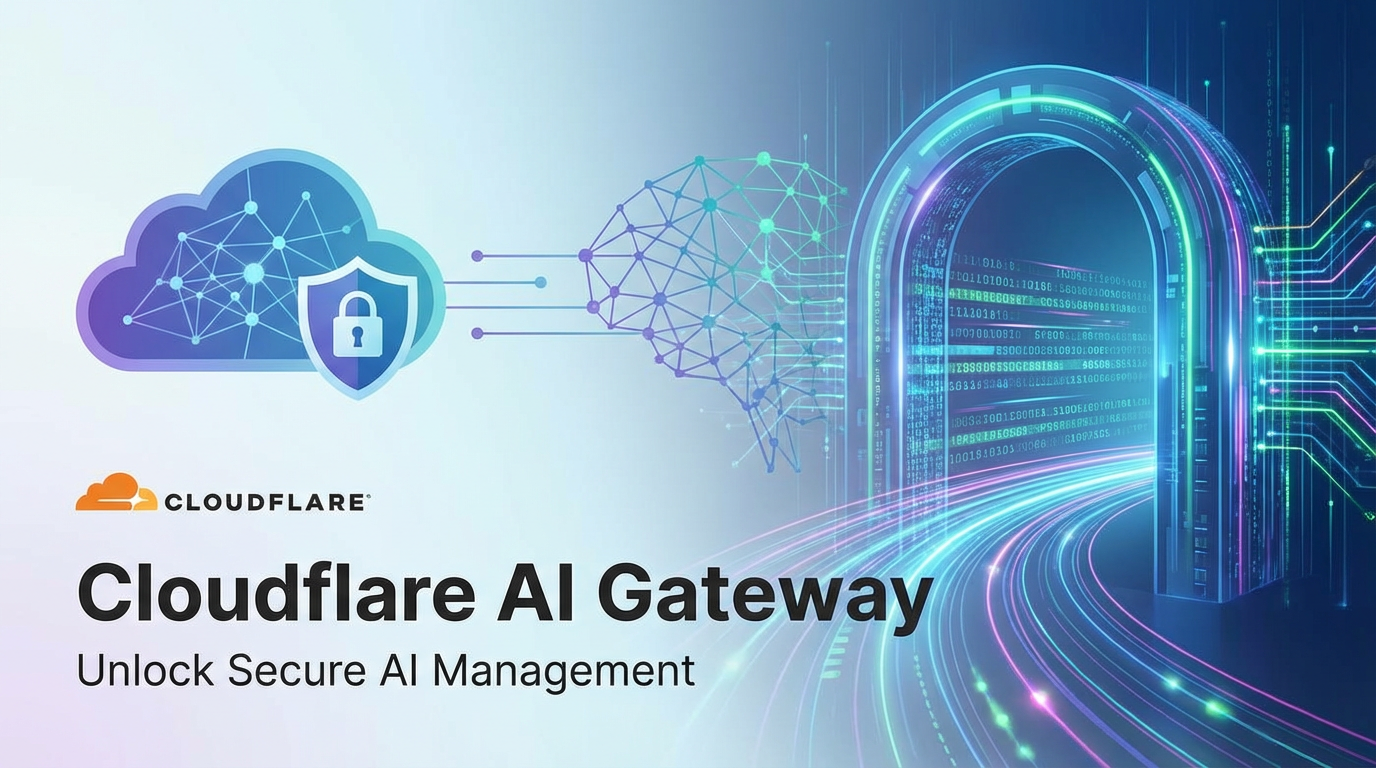


The relentless march of artificial intelligence into the heart of modern enterprise and consumer applications has unveiled a landscape brimming with unprecedented opportunities. From sophisticated large language models (LLMs) powering conversational agents to intricate machine learning algorithms driving personalized recommendations and predictive analytics, AI is reshaping how businesses operate and how individuals interact with technology. However, this transformative power comes with a complex set of challenges, particularly concerning the secure, efficient, and scalable management of AI models and their associated APIs. As organizations increasingly integrate diverse AI services, the need for a robust, centralized control plane becomes paramount. This is precisely where the concept of an AI Gateway emerges as an indispensable architectural component, acting as the critical intermediary between applications and the disparate AI services they consume.
Cloudflare, a company synonymous with securing and accelerating a significant portion of the internet, has naturally extended its expertise into this burgeoning domain with its Cloudflare AI Gateway offering. Leveraging its globally distributed network, advanced security capabilities, and developer-centric tools, Cloudflare aims to provide a comprehensive solution that addresses the multifaceted demands of modern AI management. This article will delve deeply into the intricacies of Cloudflare AI Gateway, exploring how it tackles the security vulnerabilities, performance bottlenecks, and operational complexities inherent in deploying AI at scale. We will dissect its core features, understand its architectural advantages, examine its practical applications, and contextualize its role within the broader ecosystem of API Gateway and LLM Gateway solutions, ultimately revealing how it empowers organizations to unlock the full potential of AI with unparalleled security and efficiency.
The Landscape of AI Application Development and Its Challenges
The rapid proliferation of artificial intelligence, particularly large language models (LLMs), has revolutionized software development, enabling applications to perform tasks previously thought impossible for machines. However, integrating these powerful AI capabilities into production systems is far from trivial. Developers and enterprises face a myriad of challenges that span security, performance, cost, and operational complexity, each demanding careful consideration and robust solutions. Without a strategic approach, the promise of AI can quickly turn into a labyrinth of unmanaged risks and inefficiencies.
One of the foremost challenges lies in the sheer complexity and diversity of AI models themselves. The AI landscape is fragmented, with numerous providers offering different models (e.g., OpenAI's GPT series, Anthropic's Claude, Google's Gemini, various open-source models like Llama 2), each with unique APIs, input/output formats, pricing structures, and rate limits. An application might need to leverage multiple models for different tasks—an LLM for text generation, a vision model for image analysis, and a specialized model for sentiment analysis. Integrating these disparate services directly into an application creates tight coupling, making the codebase brittle and difficult to maintain. Any change in a model's API, a provider's service, or a pricing policy can necessitate significant application-level modifications, hindering agility and increasing development overhead. Furthermore, managing model versions and ensuring backward compatibility across these evolving interfaces adds another layer of complexity, often leading to technical debt and slowed innovation.
Beyond integration, security concerns represent a critical hurdle. AI models, especially LLMs, are not merely data processors; they are interactive agents that can be influenced by their inputs. This opens the door to novel attack vectors such as prompt injection, where malicious inputs manipulate the model into performing unintended actions, leaking sensitive information, or generating harmful content. Unauthorized access to AI APIs, similar to traditional API security, can lead to data breaches, service abuse, and significant financial losses. Data privacy is another paramount concern, particularly when sensitive user data is processed by third-party AI models. Ensuring compliance with regulations like GDPR, HIPAA, or CCPA requires meticulous data governance, anonymization, and robust access controls. Traditional security measures may not fully address these AI-specific threats, necessitating a specialized security posture that understands the nuances of AI interactions and data flows.
Performance and scalability are equally pressing issues. AI applications, especially those serving a large user base or requiring real-time responses, demand low latency and high throughput. Direct interaction with AI providers can introduce latency due to network hops, geographical distance, and provider-specific processing times. Managing high request volumes requires sophisticated rate limiting, caching strategies, and potentially load balancing across multiple instances or even multiple providers to prevent service degradation or outages. Without a centralized mechanism, developers are left to implement these performance optimizations within each application, leading to inconsistent behavior and resource inefficiencies. The cost implications of unoptimized requests, particularly for token-based LLMs, can also quickly escalate, making efficient resource utilization a top priority.
Cost management and optimization stand out as a significant operational challenge. Different AI models and providers have varied pricing models, often based on input/output tokens, compute time, or specific feature usage. Tracking and attributing these costs across different applications, teams, or even individual users can be incredibly difficult without a unified metering and billing system. Accurately forecasting expenses and identifying areas for optimization, such as choosing cheaper models for less critical tasks or leveraging caching to reduce API calls, becomes an arduous manual process. This lack of granular visibility often results in unexpected expenditures and difficulty in justifying the ROI of AI initiatives.
Finally, observability and monitoring are crucial for debugging, performance tuning, and maintaining the reliability of AI-powered applications. When an AI model behaves unexpectedly, generates inaccurate results, or fails to respond, developers need comprehensive logs, metrics, and tracing information to diagnose the root cause. This includes tracking input prompts, model responses, latency, error rates, and resource consumption. Without a centralized logging and monitoring solution, correlating these events across multiple AI services and application components becomes a complex, time-consuming task. Furthermore, auditing AI interactions for compliance or dispute resolution purposes necessitates detailed, immutable records of all API calls and responses. These challenges collectively underscore the critical need for a specialized management layer that can abstract away the complexities, enhance security, optimize performance, and provide clear visibility into AI operations.
Understanding the Core Concept: What is an AI Gateway?
In response to the intricate challenges posed by modern AI application development, the AI Gateway has emerged as a fundamental architectural pattern, serving as a pivotal control point for managing interactions with various artificial intelligence models and services. At its core, an AI Gateway functions as a sophisticated reverse proxy, sitting between client applications and the diverse array of AI APIs. Its primary purpose is to centralize management, enhance security, optimize performance, and provide a unified interface for consuming AI capabilities, thereby abstracting away the underlying complexities of different AI providers and models.
Conceptually, an AI Gateway extends the well-established principles of a traditional API Gateway but with specialized functionalities tailored to the unique characteristics and demands of AI workloads. While a generic API Gateway focuses on managing HTTP APIs for microservices, providing features like routing, authentication, rate limiting, and caching, an AI Gateway goes several steps further. It specifically understands the nuances of AI requests—such as prompt engineering, token usage, model versioning, and AI-specific security threats like prompt injection—and offers policies and controls designed to address these. This specialization allows it to act as an intelligent intermediary, transforming raw application requests into provider-specific AI API calls and vice-versa, all while enforcing critical enterprise policies.
The core functions of an AI Gateway are multifaceted:
- Unified Endpoint and Model Abstraction: One of its most compelling benefits is providing a single, consistent API endpoint for applications to interact with, regardless of the underlying AI model or provider. Whether an application needs to call OpenAI, Anthropic, Google AI, or a self-hosted model, it communicates with the AI Gateway using a standardized interface. The gateway then translates these requests into the appropriate format for the target AI service, effectively shielding the application from provider-specific APIs and changes. This abstraction significantly reduces integration complexity and allows for seamless swapping of AI models without altering application code.
- Enhanced Security: Security is paramount for AI applications. An AI Gateway acts as the first line of defense, implementing robust authentication and authorization mechanisms (e.g., API keys, OAuth, JWT validation) to ensure only authorized entities can access AI services. Critically, it provides AI-specific security features, such as prompt injection detection and mitigation, content moderation filters for inputs and outputs, and Data Loss Prevention (DLP) to prevent sensitive information from being sent to or received from AI models. It can also enforce granular access control, defining which users or applications can access specific models or perform certain types of requests.
- Performance Optimization: To ensure AI applications are responsive and efficient, an AI Gateway incorporates performance-enhancing features. Caching mechanisms can store responses from frequently requested prompts, reducing latency and cutting down on redundant API calls to AI providers, which in turn lowers costs. Intelligent load balancing can distribute requests across multiple instances of an AI model or even across different AI providers, improving availability and throughput. Rate limiting prevents abuse and ensures fair usage, protecting both the application and the upstream AI services from overload.
- Comprehensive Observability and Analytics: Gaining insight into AI usage is crucial for cost management, debugging, and compliance. An AI Gateway captures detailed logs of every interaction, including input prompts, model responses, timestamps, user IDs, token counts, and latency metrics. This rich telemetry data powers comprehensive dashboards and analytics, providing visibility into usage patterns, error rates, performance trends, and—critically—cost attribution across different models, applications, and teams. This level of insight is invaluable for optimizing resource allocation and identifying potential issues proactively.
- Cost Management and Optimization: By centralizing AI interactions, the gateway offers a perfect vantage point for monitoring and controlling expenditure. It can track token usage and API calls with precision, allowing for detailed cost reporting. Policy enforcement can prioritize cheaper models for less critical tasks or enforce strict budget limits. Through caching and efficient routing, it directly contributes to reducing the overall spend on AI services.
Within the broader AI Gateway category, a specialized type has emerged known as an LLM Gateway. While all LLM Gateways are AI Gateways, not all AI Gateways are LLM Gateways. An LLM Gateway specifically focuses on the unique requirements of large language models, offering features like: * Prompt Management: Versioning, testing, and A/B testing prompts. * Response Moderation: Filtering out toxic or undesirable outputs. * Context Management: Handling conversational context over multiple turns. * Model Routing: Dynamically selecting the best LLM based on cost, performance, or specific task requirements. * Fine-tuning Integration: Orchestrating interactions with fine-tuned models.
The value proposition of an AI Gateway, and by extension an LLM Gateway, is clear: it simplifies the consumption of AI, enhances security against evolving threats, optimizes performance and cost, and provides unprecedented visibility into AI operations. By acting as a powerful control plane, it allows developers to focus on building innovative AI-powered features rather than grappling with the underlying infrastructure and operational complexities, ultimately accelerating the secure and efficient adoption of AI across the enterprise.
Deep Dive into Cloudflare AI Gateway: Features and Capabilities
Cloudflare's entry into the AI Gateway space is a natural evolution, building upon its decades of experience securing and accelerating internet traffic at a global scale. With its vast edge network spanning hundreds of cities worldwide, Cloudflare is uniquely positioned to offer an AI Gateway that not only addresses the generic challenges of AI management but also leverages its core infrastructure strengths to deliver unparalleled security, performance, and reliability. The Cloudflare AI Gateway isn't just another proxy; it's an intelligent orchestration layer deeply integrated into Cloudflare's ecosystem, designed to streamline AI deployments from development to production.
Cloudflare's Unique Position and Architectural Advantage:
Cloudflare's foundation is its massive, interconnected global network, which processes an astonishing amount of internet traffic. This network provides several inherent advantages for an AI Gateway: * Global Reach and Low Latency: By processing requests at the edge, close to users and AI providers, Cloudflare minimizes network latency, crucial for real-time AI applications. * Built-in Security: Cloudflare's core offerings—DDoS protection, Web Application Firewall (WAF), Bot Management, and Zero Trust platform—are seamlessly integrated, providing an unparalleled security posture for AI interactions. * Scalability: The network is designed to handle immense traffic volumes, making the AI Gateway inherently scalable without requiring additional infrastructure management from the user. * Developer Platform: Integration with Cloudflare Workers, R2 (object storage), and other developer tools allows for highly customizable and powerful AI workflows.
Now, let's explore the key features and capabilities that make Cloudflare AI Gateway a compelling solution for secure AI management:
1. Unified Endpoint and Model Abstraction for Simplified Integration:
One of the most significant complexities in AI integration is managing diverse model APIs. Cloudflare AI Gateway simplifies this by providing a single, consistent API endpoint that your applications interact with. Instead of writing custom code for OpenAI, Anthropic, Google's Gemini, or other models, developers send requests to their Cloudflare AI Gateway. The gateway then intelligently routes and translates these requests to the correct upstream AI service. * Benefits: * Reduced Development Overhead: Developers write less boilerplate code and spend less time learning disparate APIs. * Future-Proofing: Easily swap out AI models or providers without touching application code. If a new, more performant, or cost-effective model emerges, updating your gateway configuration is often all that's required. * Standardized Interaction: Ensures consistent data formats and request structures, simplifying debugging and maintenance.
2. Robust Security Posture with AI-Specific Protections:
Leveraging its world-class security infrastructure, Cloudflare AI Gateway offers a multi-layered defense strategy specifically designed for AI workloads. * Authentication and Authorization: * API Key Management: Centralized management and rotation of API keys for upstream AI services, reducing the risk of exposure. * Granular Access Control: Define who can access which AI models or routes based on Cloudflare's Zero Trust policies, ensuring only authorized applications and users interact with specific AI capabilities. * JWT Validation: Integrate with existing identity providers to validate JSON Web Tokens (JWTs), allowing for secure, user-scoped access to AI resources. * Prompt Injection Protection: This is a critical, AI-specific security measure. Cloudflare's WAF and edge intelligence can analyze incoming prompts for patterns indicative of prompt injection attacks, where malicious inputs attempt to hijack the LLM's behavior. Policies can be configured to block, log, or sanitize suspicious prompts before they reach the upstream model, protecting against data leakage, unauthorized actions, and harmful content generation. * Data Loss Prevention (DLP): Configure rules to identify and redact sensitive information (e.g., credit card numbers, PII, national identification numbers) from both input prompts before they are sent to AI models and from model responses before they reach the end-user. This is vital for regulatory compliance and protecting user privacy. * DDoS Protection and Rate Limiting: As an inherent part of Cloudflare's network, the AI Gateway is automatically shielded by Cloudflare's leading DDoS protection, absorbing volumetric attacks before they can impact your AI services. Sophisticated rate limiting policies can be applied at various granularities (per user, per IP, per application, per AI model) to prevent API abuse, control costs, and ensure fair resource allocation. * Content Moderation: Implement policies to filter out undesirable or harmful content in both user inputs and AI model outputs, helping maintain brand safety and compliance with ethical AI guidelines.
3. Performance Optimization and Unparalleled Scalability:
Performance is crucial for AI applications, especially those requiring real-time interaction. Cloudflare's global edge network provides significant advantages here. * Intelligent Caching: The AI Gateway can cache responses from AI models based on specific prompts. For frequently asked questions or common AI tasks, this significantly reduces latency by serving responses directly from Cloudflare's edge rather than making a full round trip to the upstream AI provider. It also drastically cuts down on API costs. * Global Edge Network: By processing AI requests at data centers geographically closest to the user, Cloudflare minimizes network transit time, delivering faster responses worldwide. This global distribution also means higher availability and resilience. * Load Balancing and Failover: While Cloudflare's AI Gateway itself is a single entry point, it can facilitate strategies for upstream load balancing or failover across multiple instances of an AI model or even different AI providers. For example, if OpenAI experiences an outage, the gateway could automatically route requests to Anthropic (assuming a compatible model is configured), ensuring continuous service. * Optimized Routing: Cloudflare's intelligent routing algorithms can determine the fastest and most reliable path to the upstream AI provider, further enhancing performance.
4. Comprehensive Observability and Analytics for Insightful Management:
Visibility into AI usage is critical for debugging, cost control, and performance monitoring. Cloudflare AI Gateway provides rich telemetry. * Detailed Logging: Every interaction with the AI Gateway is logged, including the input prompt, the model response, latency, token usage (both input and output), user ID, application ID, error codes, and more. These logs are invaluable for auditing, debugging, and understanding AI behavior. * Real-time Metrics and Dashboards: Access to real-time metrics such on request volume, latency, error rates, cache hit ratios, and token consumption. These metrics are presented through intuitive dashboards, allowing operators to quickly identify trends, anomalies, and performance bottlenecks. * Cost Tracking and Attribution: With detailed token counts and API call volumes, the gateway provides granular data for accurate cost attribution. Organizations can understand their AI spend per application, per team, or even per user, enabling better budget management and optimization strategies. * Alerting: Configure alerts based on predefined thresholds for error rates, latency spikes, or unusual usage patterns, ensuring that operators are proactively notified of potential issues.
5. AI-Specific Policy Enforcement and Workflow Customization:
Beyond basic routing and security, Cloudflare AI Gateway allows for intelligent manipulation and enforcement of policies specific to AI interactions. * Input/Output Transformation: Modify prompts before sending them to the AI model (e.g., add system instructions, format for specific models) or transform responses before sending them back to the client (e.g., strip metadata, apply formatting). * Content Rewriting: Implement rules to rewrite or redact specific elements in AI responses based on business logic or compliance requirements. * Conditional Routing: Route requests to different AI models based on specific criteria within the prompt (e.g., if the prompt indicates a request for code, route to a code-specific LLM; if it's a translation request, route to a translation model). * Integration with Cloudflare Workers: For highly customized logic, developers can deploy Cloudflare Workers (serverless functions) directly on the gateway path. This allows for complex prompt engineering, custom logging, advanced request modification, or even chaining multiple AI calls.
Integration with Other Cloudflare Products:
The power of Cloudflare AI Gateway is amplified by its seamless integration with the broader Cloudflare ecosystem: * Cloudflare Zero Trust: Enforce identity-aware access policies for internal applications consuming AI services. * Cloudflare Workers: Extend gateway functionality with custom logic, serverless AI functions, and more complex workflows. * Cloudflare R2: Store AI model outputs, prompt histories, or other AI-related data securely and cost-effectively. * Cloudflare Logs: Stream detailed AI gateway logs to SIEM systems or analytics platforms for deeper insights and compliance.
In essence, Cloudflare AI Gateway transforms the complex, fragmented world of AI consumption into a unified, secure, and highly observable experience. By leveraging Cloudflare's foundational strengths in network performance and security, it empowers organizations to integrate AI into their operations with confidence, unlocking innovation while mitigating risks and optimizing resource utilization.
Use Cases and Practical Applications of Cloudflare AI Gateway
The versatility and robust capabilities of Cloudflare AI Gateway make it an invaluable tool across a spectrum of industries and operational scenarios. Its ability to centralize management, enhance security, optimize performance, and provide deep observability addresses critical needs for organizations adopting AI at scale. Let's explore some key use cases and practical applications that demonstrate its transformative potential.
1. Enterprise AI Adoption and Integration:
For large enterprises, the secure and compliant integration of AI into existing business processes is paramount. Cloudflare AI Gateway facilitates this by: * Standardizing AI Access: Enterprises can establish a single, secure gateway for all internal applications to consume AI models, ensuring consistency in how AI is accessed and governed across departments. This avoids a fragmented approach where different teams integrate AI models independently, leading to security gaps and operational silos. * Policy Enforcement and Compliance: Organizations operating in regulated industries (e.g., finance, healthcare) can enforce strict data privacy policies (e.g., PII redaction, anonymization) and content moderation rules at the gateway level. This ensures that sensitive information is never accidentally exposed to or processed by unauthorized AI models, helping meet compliance requirements like GDPR, HIPAA, or CCPA. * Cost Control and Chargeback: With granular logging and analytics, enterprises can accurately track AI token usage and API calls by application, project, or department. This enables precise cost allocation and chargeback mechanisms, ensuring that AI spending is transparent and accountable across the organization.
2. Developer Productivity and AI Application Lifecycle Management:
Developers often spend significant time managing AI model integrations, authentication, and error handling. Cloudflare AI Gateway streamlines these efforts: * Simplified Development: Developers can focus on building core application logic rather than wrestling with the specific APIs, authentication methods, and rate limits of various AI providers. They interact with one unified gateway endpoint, significantly accelerating development cycles. * Seamless Model Swapping: During development and testing, or even in production, developers can easily experiment with different LLMs (e.g., trying OpenAI, then Anthropic, then a fine-tuned open-source model) by simply changing a configuration in the gateway, without modifying application code. This promotes agility and allows for quick iteration to find the best-performing or most cost-effective model for a given task. * Prompt Engineering and Versioning: The gateway can serve as a central point for managing and versioning prompts, allowing developers to test different prompt strategies, A/B test their effectiveness, and ensure consistency across deployments. Custom Cloudflare Workers integrated with the gateway can further enable sophisticated prompt transformation and injection.
3. SaaS Providers Building AI-Powered Features:
SaaS companies are increasingly embedding AI features into their platforms, from intelligent chatbots to advanced data analytics. Cloudflare AI Gateway helps them deliver these capabilities reliably and securely: * Consistent Performance and User Experience: By leveraging Cloudflare's global edge network and caching capabilities, SaaS providers can ensure low-latency AI responses for their users worldwide, regardless of where the underlying AI models are hosted. This leads to a smoother, more responsive user experience. * Scalability for Peak Loads: As user demand for AI features fluctuates, the gateway automatically handles scaling requests, applying rate limits to protect upstream models and ensuring the SaaS application remains responsive even during peak traffic. * Multi-Tenancy and Access Control: For multi-tenant SaaS platforms, the gateway can enforce tenant-specific rate limits, security policies, and access controls to AI models, ensuring that each tenant's usage is isolated and secured.
4. Building AI-Powered Chatbots and Virtual Assistants:
Chatbots and conversational AI systems often rely on multiple LLMs and frequently process sensitive user inputs. The Cloudflare AI Gateway is ideally suited for this domain: * Prompt Injection Mitigation: Protect chatbots from sophisticated prompt injection attacks that could trick them into revealing sensitive information, generating harmful content, or performing unintended actions. * Content Moderation: Ensure that both user inputs and chatbot responses adhere to content guidelines, preventing the generation or propagation of inappropriate, hateful, or dangerous language. * Context Management: While the gateway itself doesn't manage conversational state, it can be integrated with Cloudflare Workers to implement custom logic for managing conversation history, dynamically selecting LLMs based on conversational context, or enriching prompts with historical data before sending them to the AI model. * Fallback Strategies: Configure the gateway to automatically switch to a backup LLM provider if the primary one experiences an outage, ensuring continuous service for conversational AI.
5. Data Science Teams and MLOps:
Data scientists often experiment with various models and require robust infrastructure for deploying models into production. * Secure API Exposure for Internal Models: For proprietary or fine-tuned models hosted internally, the Cloudflare AI Gateway can provide a secure and managed public-facing endpoint, complete with authentication, rate limiting, and monitoring, making it easier for other applications to consume these models. * A/B Testing AI Models: Route a percentage of traffic to a new model or prompt variation to test its performance, accuracy, and user satisfaction against existing models in a controlled production environment. * Observability for Model Performance: Gain granular insights into how models are performing in production, identifying issues like concept drift, performance degradation, or increased error rates through detailed logs and metrics.
6. Preventing API Abuse and Resource Exhaustion:
Even outside of security, misuse can lead to significant costs. * Rate Limiting as a Cost Control: Implement stringent rate limits per user, API key, or application to prevent runaway costs from excessive or inefficient AI API calls. This is especially critical for token-based LLMs. * Automated Scaling for AI Consumption: While the gateway itself handles traffic, it provides the metrics needed to trigger automated scaling of application components that consume AI, ensuring they can keep up with demand without over-provisioning or incurring unnecessary costs.
In each of these scenarios, the Cloudflare AI Gateway acts as a powerful enabler, simplifying the operational complexities of AI, strengthening its security posture, and optimizing its performance and cost. It allows organizations to focus on the strategic value of AI, rather than getting bogged down in the intricacies of its underlying infrastructure.
The Broader Ecosystem: API Gateway and LLM Gateway in Context
To truly appreciate the value proposition of Cloudflare AI Gateway, it's essential to contextualize it within the broader landscape of API management solutions. The evolution from a generic API Gateway to specialized AI Gateway and LLM Gateway solutions reflects the increasing maturity and specific demands of modern software architectures. While these terms are sometimes used interchangeably, understanding their distinctions and overlaps is crucial for choosing the right tool for the job.
At its foundation, an API Gateway is a core component in modern microservices architectures. It acts as a single entry point for a group of microservices, handling requests, routing them to the appropriate backend service, and returning the response. Its primary responsibilities include: * Request Routing: Directing incoming requests to the correct backend service based on the URL path, headers, or other criteria. * Authentication and Authorization: Verifying client identity and permissions before forwarding requests. * Rate Limiting: Protecting backend services from overload by controlling the number of requests clients can make. * Caching: Storing responses to frequently requested data to reduce latency and load on backend services. * Request/Response Transformation: Modifying headers, body, or parameters of requests and responses. * Logging and Monitoring: Providing a central point for collecting metrics and logs related to API calls.
Traditional API Gateways are highly effective for managing RESTful APIs, gRPC services, and other standard web protocols. They are designed for general-purpose API traffic, providing a foundational layer of security, reliability, and observability for numerous backend services. Examples include Kong Gateway, Apache APISIX, Amazon API Gateway, and Google Cloud Apigee.
However, as AI services, particularly large language models, became prominent, it became clear that a generic API Gateway, while useful, wasn't fully equipped to handle the unique challenges and requirements of AI workloads. This is where the AI Gateway emerged. An AI Gateway is essentially a specialized form of an API Gateway, purpose-built to manage interactions with AI models. It encompasses all the core functionalities of a traditional API Gateway but extends them with AI-specific features. These include: * AI Model Abstraction: Unifying interactions with different AI providers (e.g., OpenAI, Anthropic, Google) behind a single API. * Prompt Engineering Management: Potentially handling prompt versioning, transformation, and optimization. * AI-Specific Security: Prompt injection protection, data loss prevention (DLP) for sensitive AI inputs/outputs, and AI-centric content moderation. * Token Usage Tracking: Granular monitoring of token consumption for cost attribution and optimization. * Intelligent Model Routing: Dynamically selecting the best AI model based on cost, performance, or specific task requirements.
The AI Gateway understands the semantic context of AI requests, enabling it to apply more intelligent policies and transformations. For instance, it can analyze the content of a prompt to determine its intent before routing it, or it can strip out PII from an LLM response before it reaches the end-user.
Further specializing this category is the LLM Gateway. While technically a subset of an AI Gateway, an LLM Gateway is even more narrowly focused on the particular characteristics of large language models. Given the explosive growth and specific complexities of LLMs, a dedicated LLM Gateway offers enhanced features such as: * Advanced Prompt Management: A/B testing prompts, prompt chaining, and sophisticated prompt templating. * Conversational Context Handling: While the gateway itself is stateless, it can provide mechanisms or integrate with external services to manage the continuity of conversations across multiple LLM calls. * Fine-tuning Orchestration: Seamlessly integrating with fine-tuned LLMs hosted on various platforms. * Output Consistency and Safety: More advanced features for ensuring LLM outputs are consistent, safe, and aligned with brand guidelines.
The choice between a generic API Gateway, an AI Gateway, or a specific LLM Gateway depends heavily on an organization's primary use case and the maturity of its AI adoption. * If your needs are primarily to manage traditional REST APIs for microservices, a robust API Gateway is the appropriate solution. * If you are integrating diverse AI models (LLMs, vision models, speech models) and require AI-specific security, observability, and abstraction, an AI Gateway is essential. * If your primary focus is on managing large language models specifically, with an emphasis on prompt engineering, cost optimization, and advanced security against LLM-specific threats, then a dedicated LLM Gateway offers the most tailored features.
Cloudflare AI Gateway, as discussed, is a comprehensive AI Gateway solution that inherently provides many LLM Gateway capabilities given the prevalence of LLMs in the current AI landscape. It leverages Cloudflare's unique global network and security infrastructure to offer a powerful, cloud-native managed service. However, it's important to recognize that a vibrant ecosystem exists beyond fully managed cloud offerings.
While Cloudflare offers a strong cloud-based solution, it's worth noting that open-source alternatives like APIPark provide similar robust AI gateway and API management capabilities, particularly for those seeking self-hosted solutions, extensive AI model integration, and comprehensive API lifecycle management. APIPark offers an all-in-one AI gateway and API developer portal, distinguishing itself with features like quick integration of 100+ AI models, unified API format for AI invocation, prompt encapsulation into REST API, and strong performance rivaling Nginx, achieving over 20,000 TPS with modest hardware. It also provides end-to-end API lifecycle management, API service sharing within teams, independent API and access permissions for each tenant, and detailed API call logging with powerful data analysis. This provides flexibility for different architectural preferences and deployment strategies, catering to diverse enterprise requirements, especially for those prioritizing an open-source, self-managed approach with a high degree of customization and control over their infrastructure. APIPark's official website can be found at https://apipark.com/.
In essence, the evolution of gateway solutions reflects the increasing sophistication of modern applications. Whether leveraging a cloud-native solution like Cloudflare AI Gateway or an open-source alternative like APIPark, the core principle remains: to provide a secure, efficient, and observable control plane for interacting with the complex world of AI. Choosing the right platform means evaluating specific needs regarding deployment model (cloud vs. self-hosted), integration requirements, budget, and the desired level of control over the underlying infrastructure and policies.
Implementing and Configuring Cloudflare AI Gateway
Setting up and configuring Cloudflare AI Gateway is designed to be a straightforward process, leveraging the intuitive Cloudflare dashboard and its robust API. The goal is to get your AI applications communicating securely and efficiently with various AI models through a centralized control point, quickly harnessing the power of Cloudflare's global network and security features.
Overview of the Setup Process:
The general workflow for implementing Cloudflare AI Gateway involves several key steps:
- Enabling the AI Gateway: This typically begins within your Cloudflare dashboard, where you navigate to the AI Gateway section and enable the service for your desired zone or account.
- Defining AI Gateway Routes: You'll configure routes that specify how your applications will send requests to the gateway and where those requests should be forwarded upstream to the actual AI model providers.
- Configuring Upstream AI Providers: Link your Cloudflare AI Gateway to your accounts with various AI providers (e.g., OpenAI, Anthropic, Google AI) by securely providing API keys or other credentials.
- Implementing Policies: Apply security, performance, and logging policies to your routes. This is where you configure features like prompt injection protection, rate limiting, caching, and detailed logging.
- Updating Application Endpoints: Modify your client applications to send their AI requests to your Cloudflare AI Gateway endpoint instead of directly to the upstream AI providers.
Key Configuration Parameters and Best Practices:
When configuring your Cloudflare AI Gateway, several parameters are crucial for optimizing performance, security, and cost:
- Endpoint Definition:
- Custom Hostnames: While Cloudflare provides a default endpoint, you can often configure a custom subdomain (e.g.,
ai.yourdomain.com) for a more branded and controlled access point. - Path Routing: Define specific URL paths that map to different AI models or functions. For example,
/v1/chatcould route to OpenAI's chat completion endpoint, while/v1/imageroutes to a vision model.
- Custom Hostnames: While Cloudflare provides a default endpoint, you can often configure a custom subdomain (e.g.,
- Upstream Configuration:
- API Key Management: Securely store and manage API keys for your AI providers within Cloudflare's secrets management system. Avoid hardcoding these keys in your applications. Implement key rotation policies for enhanced security.
- Provider Selection: Specify the AI provider and model version for each route (e.g.,
OpenAI/gpt-4-turbo,Anthropic/claude-3-opus).
- Security Policies:
- Authentication: Implement strong authentication for clients accessing your gateway. This could involve API keys issued by Cloudflare, JWT validation, or integration with Cloudflare's Zero Trust platform for internal applications.
- Prompt Injection Rules: Enable and fine-tune rules to detect and mitigate prompt injection attacks. Monitor logs to understand which prompts are being flagged and adjust rules as needed to balance security with legitimate usage.
- Data Loss Prevention (DLP): Configure regex patterns or predefined data identifiers to scan for sensitive information (e.g., credit card numbers, email addresses) in both incoming prompts and outgoing responses, with actions to redact, block, or alert.
- Rate Limiting: Set appropriate rate limits (e.g., requests per minute, per IP, per authenticated user) to prevent abuse, protect upstream AI models, and manage costs. Consider different tiers of rate limits for different types of users or applications.
- Performance Optimization:
- Caching Rules: Define caching policies for AI responses, specifying cache duration and cache keys (e.g., cache based on the full prompt hash). This is particularly effective for static or frequently repeated AI queries.
- Edge Processing: Leverage Cloudflare Workers to implement custom caching logic, response transformation, or intelligent load balancing across multiple AI providers in real-time at the edge.
- Observability and Logging:
- Detailed Logging: Ensure comprehensive logging is enabled for all AI gateway interactions. Integrate these logs with your preferred SIEM (Security Information and Event Management) system or analytics platform for centralized monitoring and auditing.
- Metrics Monitoring: Regularly review the provided dashboards for key metrics such as latency, error rates, request volume, and token usage to identify performance issues, cost anomalies, or security incidents.
- Alerting: Set up alerts for critical events, such as unusual spikes in error rates, high token consumption, or frequent prompt injection attempts.
Choosing an AI Gateway solution involves comparing various factors, from security features to deployment models. The following table highlights some of the comparative features, contrasting generic AI Gateway benefits with the specific advantages offered by Cloudflare AI Gateway.
| Feature Category | Generic AI Gateway Benefits | Cloudflare AI Gateway Specific Advantages |
|---|---|---|
| Security | Centralized auth, rate limiting, basic input validation | Global DDoS protection, advanced WAF, Prompt Injection protection, DLP, Zero Trust integration, managed API key storage |
| Performance | Caching, load balancing, basic traffic shaping | Global edge network caching (closer to users/providers), intelligent routing, high-performance network infrastructure, serverless Workers for advanced logic |
| Observability | Logs, metrics, basic cost tracking, dashboards | Detailed analytics with Cloudflare's extensive logging (e.g., Logs Engine), real-time dashboards, deep Cloudflare integration for comprehensive insights, token usage tracking |
| Model Management | Unified API, abstraction, versioning | Seamless integration with various AI models, future-proofing for Cloudflare-powered AI solutions, ease of switching providers |
| Deployment & Scale | Flexible deployment (on-prem, cloud VM), scalability with infrastructure | Serverless approach (managed service), global reach, massive scalability inherent to Cloudflare's network, minimal operational overhead |
| Developer Experience | API for configuration, documentation, SDKs | Intuitive dashboard, declarative configuration (Terraform-friendly), robust API, Workers for extensibility, integrated with existing Cloudflare tools |
| AI-Specific Features | Prompt engineering, content moderation (basic) | Advanced prompt sanitization, fine-grained content filtering, integration with Cloudflare's AI capabilities (e.g., Workers AI) |
By carefully configuring these parameters and adhering to best practices, organizations can maximize the benefits of Cloudflare AI Gateway, achieving a robust, secure, and efficient management layer for their AI applications. The integration with Cloudflare's existing suite of products ensures a cohesive and powerful solution that scales with the demands of the modern AI landscape.
The Future of AI Gateways and Cloudflare's Vision
The rapid evolution of artificial intelligence is an unstoppable force, and with it, the role of the AI Gateway is destined to become even more critical and sophisticated. As AI models grow in complexity, become more specialized, and integrate deeper into the fabric of enterprise operations, the demand for intelligent, secure, and highly performant intermediary layers will only intensify. Cloudflare, with its strategic position at the internet's edge, is not merely reacting to these trends but actively shaping the future of how AI services are managed and consumed.
One major trend driving the future of AI Gateways is the increasing hybridization of AI deployments. Enterprises will likely run a mix of proprietary, fine-tuned models on-premises or in private clouds, alongside public, off-the-shelf models from providers like OpenAI or Google. An AI Gateway will need to seamlessly bridge these environments, offering unified management, security, and observability across this heterogeneous landscape. This implies more advanced capabilities for connecting to internal model registries, intelligently routing requests based on data sensitivity, and ensuring consistent policy enforcement regardless of the model's physical location. The gateway will evolve into a truly federated control plane for all AI assets.
The focus on ethical AI and comprehensive governance will also push AI Gateways towards more advanced functionalities. Beyond basic content moderation, future gateways will likely incorporate features for bias detection in AI outputs, explainability (e.g., generating metadata about why a model made a certain decision), and enhanced auditing for fairness and transparency. As regulatory frameworks around AI mature globally, the AI Gateway will serve as a crucial enforcement point, helping organizations demonstrate compliance with evolving standards for responsible AI deployment. This could include automated reporting on model usage, data provenance, and adherence to internal ethical guidelines.
Furthermore, intelligent automation and optimization will become hallmarks of next-generation AI Gateways. Imagine a gateway that not only caches responses but also intelligently predicts which model would be most cost-effective or performant for a given prompt based on historical data and real-time provider prices. This could involve dynamically switching between different LLM providers or even different versions of a model based on granular cost-benefit analysis. Techniques like reinforcement learning might be used within the gateway itself to continually optimize routing, caching, and resource allocation, making AI consumption more efficient and adaptive without manual intervention.
Cloudflare's vision for its AI Gateway is deeply aligned with these future trends. Leveraging its global network, Cloudflare is uniquely positioned to offer a serverless, highly distributed AI Gateway that brings AI models closer to the data and closer to the users, minimizing latency and enhancing security. Their continued investment in their Workers platform will allow for unprecedented customization and intelligence at the edge, enabling developers to build sophisticated AI workflows directly within the gateway. This includes advanced prompt engineering, real-time response transformations, and the creation of "AI agents" that can orchestrate calls to multiple models and services through the gateway itself.
Cloudflare's commitment to Zero Trust security will also extend further into the AI domain, ensuring that access to AI services is authenticated, authorized, and continuously validated, moving beyond perimeter-based defenses. The integration of cutting-edge threat intelligence from their vast network will enable even more proactive detection and mitigation of novel AI-specific attacks, such as sophisticated prompt engineering techniques or data poisoning attempts.
In essence, the future of AI Gateways is about becoming more than just a proxy; they will transform into intelligent, adaptive, and highly secure orchestrators of AI at scale. Cloudflare's continuous innovation in network infrastructure, security, and developer tools positions its AI Gateway at the forefront of this evolution, ensuring that organizations can not only unlock the immense potential of artificial intelligence but do so with unwavering confidence in its security, performance, and governability. The growing necessity of such platforms is undeniable, as they become the indispensable bridge between burgeoning AI capabilities and the imperative for secure, efficient, and ethical deployment.
Conclusion
The advent of artificial intelligence, particularly the transformative power of large language models, has ushered in a new era of innovation and capability for enterprises worldwide. However, this profound shift brings with it an equally complex array of challenges, spanning security vulnerabilities, performance bottlenecks, cost management intricacies, and operational complexities. Direct integration with diverse and rapidly evolving AI models is fraught with peril, demanding a sophisticated intermediary layer to abstract away the underlying chaos. This is precisely the pivotal role that an AI Gateway plays in modern architectures.
The AI Gateway acts as the crucial control plane, a sophisticated reverse proxy that centralizes the management, security, and optimization of all interactions with AI services. By offering a unified endpoint, it simplifies developer workflows, allowing applications to seamlessly integrate with a multitude of AI models without being tightly coupled to provider-specific APIs. Critically, it extends the foundational principles of a traditional API Gateway with AI-specific intelligence, addressing novel threats like prompt injection and enabling granular control over data flow to and from sensitive AI models. For specialized needs, an LLM Gateway further refines this concept, offering tailored features for large language models, including advanced prompt management and cost optimization for token usage.
Cloudflare AI Gateway stands out as a preeminent solution in this evolving landscape. Leveraging Cloudflare's expansive global network, unparalleled DDoS protection, and advanced security services, it provides an AI Gateway that is not only robust and highly performant but also inherently secure. Its comprehensive features, including prompt injection protection, advanced rate limiting, intelligent caching at the edge, and detailed observability, empower organizations to deploy and manage AI applications with confidence. From standardizing enterprise AI adoption and boosting developer productivity to securing AI-powered chatbots and optimizing MLOps pipelines, Cloudflare AI Gateway addresses the full spectrum of modern AI management needs. While a powerful cloud-native offering, the broader ecosystem also includes flexible open-source solutions like APIPark, which cater to those seeking self-hosted, feature-rich alternatives for comprehensive API and AI gateway management.
In an increasingly AI-driven world, the secure and efficient management of artificial intelligence is no longer an optional add-on but a fundamental necessity. Cloudflare AI Gateway provides the critical infrastructure to navigate this complex terrain, ensuring that organizations can truly unlock the full potential of AI—securely, efficiently, and with complete visibility—thereby accelerating innovation and safeguarding their digital future.
5 FAQs about Cloudflare AI Gateway
1. What is Cloudflare AI Gateway, and how does it differ from a traditional API Gateway? Cloudflare AI Gateway is a specialized reverse proxy designed to manage interactions between your applications and various AI models (like LLMs, vision models, etc.). While a traditional API Gateway primarily handles general API traffic, routing, and authentication for microservices, an AI Gateway extends these capabilities with AI-specific features. These include AI model abstraction (unifying different AI providers behind one API), prompt injection protection, intelligent caching for AI responses, token usage tracking for cost management, and advanced content moderation, all tailored to the unique characteristics and security demands of AI workloads.
2. How does Cloudflare AI Gateway enhance the security of my AI applications? Cloudflare AI Gateway provides robust security by leveraging Cloudflare's core infrastructure. It offers features like centralized API key management, granular access control with Zero Trust policies, and crucially, AI-specific protections such as prompt injection detection and mitigation. It can also implement Data Loss Prevention (DLP) to prevent sensitive information from being sent to or received from AI models, apply content moderation filters, and utilize Cloudflare's global DDoS protection and advanced Web Application Firewall (WAF) to shield your AI endpoints from various cyber threats.
3. Can Cloudflare AI Gateway help reduce costs associated with using AI models? Yes, Cloudflare AI Gateway can significantly help in cost optimization. By providing detailed logging and analytics on token usage and API calls across different models, applications, and users, it enables precise cost attribution and helps identify areas for optimization. Its caching capabilities reduce redundant API calls to upstream AI providers, directly lowering expenditure. Additionally, features like intelligent rate limiting prevent overuse, and the ability to dynamically route to more cost-effective models (or apply policies that prioritize them) can further contribute to substantial savings, especially for token-based LLMs.
4. Is Cloudflare AI Gateway compatible with various AI model providers (e.g., OpenAI, Anthropic, Google AI)? Absolutely. One of the core benefits of Cloudflare AI Gateway is its ability to abstract away the differences between various AI model providers. It provides a unified API endpoint for your applications, and then the gateway handles the translation and routing of requests to the appropriate upstream AI service, whether it's OpenAI, Anthropic, Google AI, or other popular models. This allows developers to easily switch between models or experiment with different providers without needing to modify their application's core code.
5. How does Cloudflare AI Gateway improve the performance of AI-powered applications? Cloudflare AI Gateway boosts performance primarily through its global edge network and intelligent caching. By processing AI requests at Cloudflare's data centers geographically closest to your users and AI providers, it significantly minimizes network latency. Its caching mechanism stores responses to frequently asked prompts, allowing subsequent identical requests to be served directly from the edge, bypassing the need to query the upstream AI model again. This drastically reduces response times and improves the overall responsiveness of your AI-powered applications, delivering a smoother user experience globally.
🚀You can securely and efficiently call the OpenAI API on APIPark in just two steps:
Step 1: Deploy the APIPark AI gateway in 5 minutes.
APIPark is developed based on Golang, offering strong product performance and low development and maintenance costs. You can deploy APIPark with a single command line.
curl -sSO https://download.apipark.com/install/quick-start.sh; bash quick-start.sh

In my experience, you can see the successful deployment interface within 5 to 10 minutes. Then, you can log in to APIPark using your account.

Step 2: Call the OpenAI API.