Databricks AI Gateway: Simplify & Scale Your AI Workflows


The landscape of artificial intelligence is undergoing a profound transformation, evolving from niche academic pursuits to the bedrock of enterprise innovation. Organizations across every sector are increasingly recognizing the strategic imperative of integrating AI, machine learning (ML), and especially large language models (LLMs) into their core operations. This shift promises unprecedented efficiencies, deeper customer insights, and entirely new product offerings. However, the path from experimental AI models to scalable, production-ready AI workflows is fraught with complexity. Developers and data scientists grapple with a myriad of challenges, including orchestrating diverse models, managing compute resources efficiently, ensuring robust security, and maintaining consistent performance at scale. It’s here that the concept of an AI Gateway emerges not merely as a convenience, but as an indispensable architectural component for navigating this intricate terrain.
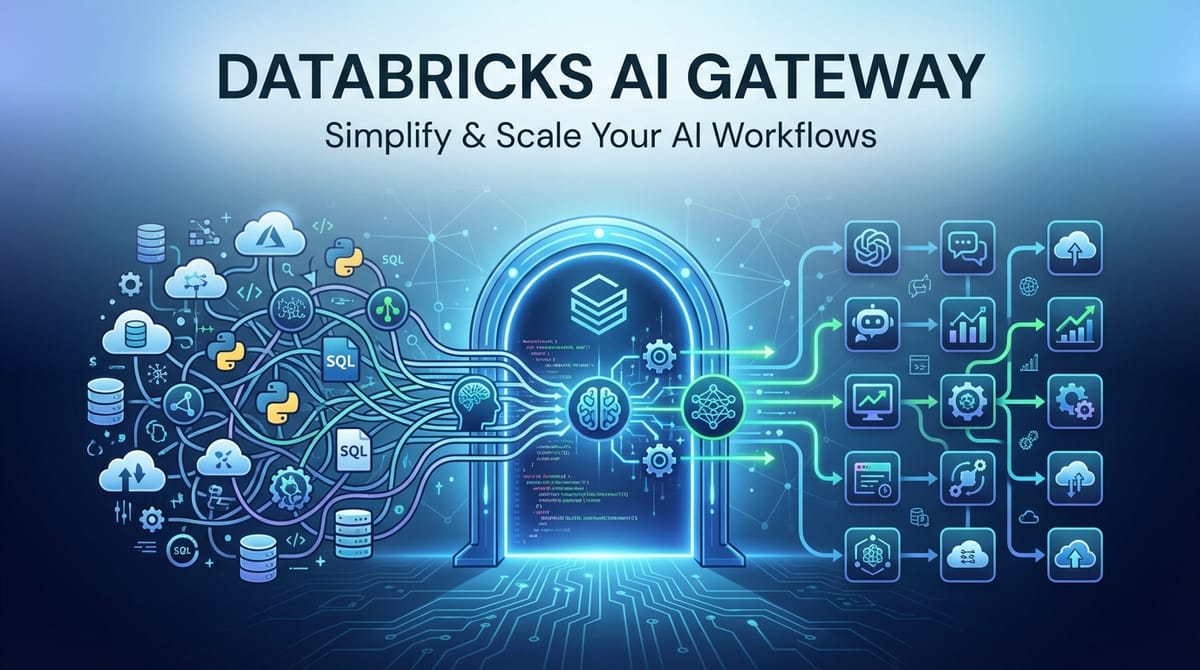
An AI Gateway acts as a centralized control plane, abstracting away the underlying complexities of AI model deployment and invocation. It provides a single, unified entry point for all AI services, regardless of their underlying infrastructure or model type. While traditional API Gateways have long served a similar role for general-purpose web services, the unique demands of AI—such as varying model sizes, diverse inference requirements, specialized security protocols, and the need for sophisticated prompt management in the case of LLMs—necessitate a more specialized solution. This is where the Databricks AI Gateway steps in, offering a robust and integrated platform designed to dramatically simplify and scale your AI workflows within the familiar and powerful Databricks Lakehouse Platform. By providing a streamlined approach to deploying, managing, and monitoring AI models, the Databricks AI Gateway empowers organizations to accelerate their journey from data to intelligent applications, unlocking the full potential of their AI investments with unparalleled efficiency and control.
The AI/ML Landscape and Its Challenges: Navigating the Modern Data Frontier
The modern enterprise is awash in data, and the promise of artificial intelligence lies in transforming this raw data into actionable insights and intelligent automation. We've witnessed a spectacular rise in the sophistication and accessibility of AI/ML technologies, particularly with the advent of generative AI (GenAI) and Large Language Models (LLMs). These models are not just incremental improvements; they represent a paradigm shift, capable of understanding, generating, and even reasoning with human language and complex data types. From automating customer service and personalizing marketing campaigns to revolutionizing drug discovery and financial forecasting, the applications of these advanced AI capabilities are virtually limitless. The ability to deploy and manage these models effectively has become a critical differentiator for businesses aiming to stay competitive in an increasingly data-driven world.
However, the journey to operationalize AI, especially at enterprise scale, is far from straightforward. The inherent complexities pose significant hurdles that often delay or even derail promising AI initiatives. One of the primary challenges lies in the sheer proliferation of models. Organizations frequently leverage dozens, if not hundreds, of different AI models—each with its own specific framework (TensorFlow, PyTorch, Scikit-learn), version, and deployment requirements. Managing this diverse portfolio, ensuring compatibility, and providing consistent access across various applications and teams can quickly become an unmanageable task. Furthermore, the infrastructure demands for AI inference are often specialized and costly. Deploying models, particularly large deep learning models, necessitates access to powerful compute resources like GPUs or specialized AI accelerators, which require careful provisioning, scaling, and cost optimization to prevent spiraling expenditures.
Beyond infrastructure, performance and latency are critical concerns, especially for real-time AI applications. A customer service chatbot or a fraud detection system cannot afford delays; responses must be instantaneous. Achieving low-latency inference at scale requires meticulous optimization, efficient load balancing, and resilient infrastructure that can handle fluctuating traffic patterns without compromising user experience. Security and access control also present formidable challenges. AI models often process sensitive customer data or proprietary business information, making robust authentication, authorization, and data privacy mechanisms absolutely essential. Ensuring that only authorized applications and users can invoke specific models, and that data remains secure throughout the inference pipeline, is a non-negotiable requirement for regulatory compliance and safeguarding competitive advantage.
Moreover, integrating AI models into existing applications and microservices architectures can be a complex undertaking. Each model might expose a different API, require unique input formats, or produce varying output structures. Developers are then burdened with writing bespoke integration logic for every model, increasing development time and technical debt. The lack of a unified interface hinders agility and makes it difficult to swap out models or upgrade versions without impacting downstream applications. Finally, the ability to monitor, observe, and manage the costs associated with AI inference at scale is paramount. Without clear visibility into model performance, resource utilization, and expenditure, organizations risk operational inefficiencies and unexpected budget overruns. These multifaceted challenges underscore the urgent need for a sophisticated solution that can abstract away this complexity, offering a unified, scalable, and secure platform for AI model deployment and management. The modern AI Gateway is precisely that solution, providing the architectural foundation necessary to transform ambitious AI visions into tangible, operational realities.
Understanding AI Gateways: The Architectural Imperative for Modern AI
In the intricate tapestry of modern enterprise architecture, the role of gateways has been instrumental in managing complexity, ensuring security, and enabling scalability. Just as a traditional API Gateway serves as the single entry point for microservices, orchestrating requests and enforcing policies for a diverse array of RESTful APIs, an AI Gateway assumes a similar, yet significantly specialized, function for artificial intelligence services. It acts as an intelligent intermediary, sitting between AI-consuming applications and the underlying AI models, abstracting away the intricate details of model deployment, infrastructure management, and inference execution. This architectural imperative arises from the unique demands and inherent complexities of AI workloads, which extend far beyond those of typical data retrieval or CRUD operations.
The fundamental purpose of an AI Gateway is to simplify the consumption of AI services for developers while providing a robust control plane for operations teams. Why are they necessary? Consider an organization leveraging multiple AI models for different tasks: a computer vision model for object detection, a natural language processing model for sentiment analysis, and several proprietary LLMs for content generation or summarization. Without an AI Gateway, each model might be deployed independently, each requiring its own endpoint, authentication mechanism, and potentially unique input/output specifications. This scattered approach leads to integration headaches, inconsistent security policies, and an operational nightmare for scaling and monitoring. An AI Gateway consolidates these disparate services, offering a unified interface that allows applications to interact with AI models through a consistent, standardized protocol, irrespective of the model's origin, framework, or underlying infrastructure.
The distinction between a traditional API Gateway and an AI Gateway is crucial. While both facilitate request routing, authentication, and policy enforcement, an AI Gateway introduces capabilities specifically tailored for AI workloads. For instance, it might handle model-specific data transformations (e.g., converting an image to a tensor, tokenizing text for an LLM), manage model versioning and A/B testing, and provide metrics relevant to AI inference, such as latency per model, token usage, or GPU utilization. When we talk about Large Language Models, the concept further refines into an LLM Gateway. An LLM Gateway extends these capabilities to specifically address the unique challenges of interacting with LLMs. This includes managing complex prompt engineering (e.g., storing and retrieving prompt templates, handling few-shot examples), routing requests to different LLMs based on cost or performance criteria, applying content moderation and safety filters, and providing deep observability into token consumption and model-specific nuances.
Key functionalities that define a comprehensive AI Gateway include:
- Unified Endpoint & Routing: A single, consistent API endpoint for all managed AI models, with intelligent routing logic to direct requests to the appropriate model based on specified criteria (e.g., model ID, version, performance, cost).
- Authentication & Authorization: Robust security mechanisms to control access to specific models, integrating with enterprise identity providers and enforcing granular permissions (Role-Based Access Control - RBAC).
- Rate Limiting & Throttling: Preventing abuse, ensuring fair resource distribution, and protecting backend models from being overwhelmed by managing the volume of incoming requests.
- Caching: Storing inference results for frequently requested prompts or inputs to reduce latency and computational costs, particularly beneficial for LLMs with common queries.
- Data Transformation: Automatically handling input pre-processing (e.g., serialization, formatting) and output post-processing (e.g., deserialization, result interpretation) specific to different models.
- Model Version Management: Facilitating seamless updates, rollbacks, and A/B testing of models without affecting consuming applications, enabling continuous iteration and improvement.
- Load Balancing & Scalability: Distributing inference requests across multiple instances of a model to maximize throughput and ensure high availability, with auto-scaling capabilities to adapt to fluctuating demand.
- Monitoring & Logging: Comprehensive capture of inference requests, responses, errors, and performance metrics, providing critical insights for troubleshooting, optimization, and auditing. This often includes specialized metrics for LLMs like token counts, prompt success rates, and moderation flaggings.
- Cost Optimization: Intelligent routing based on cost, tiered access to different models, and detailed tracking of resource consumption to manage operational expenses effectively.
- Safety and Moderation (for LLMs): Implementing filters to detect and prevent harmful, biased, or inappropriate content in both prompts and model responses, crucial for responsible AI deployment.
By centralizing these critical functions, an AI Gateway transforms the complexity of AI model deployment into a manageable, scalable, and secure service. It empowers developers to consume AI models as easily as any other service, while providing operations teams with the control and visibility needed to run AI workloads reliably in production. This architectural pattern is not just about efficiency; it's about enabling innovation, accelerating time-to-market for AI-powered applications, and ensuring that AI can deliver its full transformative potential across the enterprise.
Introducing Databricks AI Gateway: A Deep Dive into Seamless AI Operations
In the pursuit of democratizing data and AI, Databricks has continually evolved its Lakehouse Platform to unify data, analytics, and machine learning. The Databricks AI Gateway represents a significant leap forward in this mission, specifically addressing the operational complexities of deploying, managing, and scaling AI models, particularly large language models, within the familiar and integrated Databricks ecosystem. It’s not just another component; it's a strategic overlay that transforms the way organizations interact with their AI assets, turning the challenge of multi-model orchestration into a streamlined, high-performance reality.
The Databricks AI Gateway is designed to provide a centralized, managed service that simplifies access to a wide array of AI models, including those registered in MLflow, custom models, and even external LLMs. Its core value proposition revolves around four pillars: simplification, scalability, security, and cost-efficiency for all AI workloads. By abstracting away the intricate details of model serving infrastructure, it empowers developers to consume AI models via a simple REST API endpoint, freeing them from the burden of provisioning, configuring, and maintaining compute resources. For operations teams, it offers a robust control plane for governance, monitoring, and cost management, ensuring that AI initiatives not only deliver value but do so responsibly and sustainably.
The true power of the Databricks AI Gateway lies in how deeply it leverages and integrates with the existing Lakehouse architecture. Databricks' unified platform ensures that data preparation, feature engineering, model training, and model serving all occur within a consistent environment. The AI Gateway extends this consistency to inference, allowing organizations to operationalize models that have been meticulously developed and tracked using MLflow and governed by Unity Catalog. This tight integration means that models can seamlessly transition from experimentation to production, benefiting from the same data governance, security, and lineage tracking that define the Lakehouse experience.
Let's delve into the detailed features and benefits that make the Databricks AI Gateway an indispensable tool for modern AI operations:
1. Unified Access Point: Simplification at its Core
The Databricks AI Gateway provides a single, consistent REST API endpoint for all your AI models. Whether you're serving a custom machine learning model registered in MLflow, utilizing a publicly available large language model from a third-party provider, or deploying a fine-tuned open-source LLM, they can all be exposed through this centralized gateway. This eliminates the need for applications to manage multiple API keys, different request formats, or varying authentication mechanisms for each model. Developers interact with a uniform interface, dramatically reducing integration complexity and accelerating time-to-market for AI-powered applications. This unified approach is a cornerstone of any effective AI Gateway strategy, fostering consistency and reducing cognitive load.
2. Seamless Integration with the Databricks Ecosystem
One of the most compelling advantages of the Databricks AI Gateway is its deep integration with the broader Databricks ecosystem. It works hand-in-hand with MLflow, the open-source platform for the machine learning lifecycle. Models tracked and versioned in MLflow can be effortlessly exposed through the gateway, inheriting their metadata and lineage. Furthermore, its integration with Unity Catalog ensures that access control, data governance, and auditing capabilities are extended to your AI endpoints. This means that model access can be managed with the same rigor and consistency as your data assets, enforcing enterprise-wide security policies and simplifying compliance.
3. Scalability & Performance: AI at Enterprise Scale
Performance and scalability are paramount for production AI workloads. The Databricks AI Gateway is engineered for high throughput and low latency, leveraging Databricks' optimized infrastructure. It offers automatic scaling capabilities, dynamically adjusting compute resources (e.g., GPU clusters for deep learning models) based on demand. This ensures that your AI applications can handle fluctuating traffic patterns without manual intervention, providing consistent performance even during peak loads. Intelligent load balancing distributes requests efficiently across model instances, maximizing resource utilization and minimizing response times. For latency-sensitive applications, this robust scaling mechanism is vital, ensuring that your AI models remain responsive and reliable.
4. Security & Governance: Protecting Your AI Assets
Security is a non-negotiable aspect of enterprise AI. The Databricks AI Gateway offers comprehensive security and governance features designed to protect your valuable AI models and the data they process. It supports robust authentication and authorization mechanisms, allowing you to define granular access policies based on user roles, teams, or applications, all managed through Unity Catalog. Data privacy is maintained by ensuring that sensitive data is processed securely during inference, with capabilities for auditing all model invocations. This level of control is essential for meeting regulatory compliance requirements and safeguarding intellectual property. This makes it a formidable LLM Gateway for sensitive enterprise LLM deployments.
5. Cost Optimization: Intelligent Resource Management
Running AI models, especially large language models, can be resource-intensive and costly. The Databricks AI Gateway provides tools for intelligent cost optimization. By centralizing model serving, it enables more efficient resource pooling and sharing, reducing the idle time of expensive compute resources. It offers detailed cost tracking and reporting, giving organizations granular visibility into which models are consuming resources and at what cost. This allows data science and operations teams to make informed decisions about resource allocation, set budgets, and optimize their AI spending, preventing unexpected cost overruns and maximizing return on investment.
6. Observability & Monitoring: Insights into AI Performance
Understanding how your AI models perform in production is critical for continuous improvement and rapid issue resolution. The Databricks AI Gateway provides built-in observability and monitoring capabilities. It captures comprehensive logs of all inference requests and responses, along with detailed performance metrics such as latency, error rates, and throughput. These metrics can be visualized through intuitive dashboards, allowing teams to monitor model health, identify performance bottlenecks, and detect anomalies in real-time. Automated alerts can be configured to notify stakeholders of critical issues, ensuring proactive management and minimizing downtime. For LLMs, this includes tracking token usage and specific model behavior.
7. Model Versioning & Experimentation: Agile AI Development
The lifecycle of an AI model is iterative, involving frequent updates, refinements, and experiments. The Databricks AI Gateway facilitates agile AI development by supporting robust model versioning and experimentation strategies. You can deploy multiple versions of a model behind the same gateway endpoint, directing traffic to different versions for A/B testing or canary deployments. This allows you to test new model iterations with a subset of live traffic, gather performance metrics, and confidently roll out improvements without disrupting production applications. This capability is essential for continuous model optimization and ensuring that only the highest-performing models are deployed at scale.
8. Prompt Engineering & LLM Management: Mastering Large Language Models
For organizations leveraging LLMs, the Databricks AI Gateway offers specialized features as a sophisticated LLM Gateway. It allows for the management and templating of prompts, ensuring consistency and reusability across different applications. Developers can define and store prompt templates, apply dynamic substitutions, and even implement few-shot examples directly within the gateway configuration. This centralized prompt management simplifies the process of interacting with LLMs and makes it easier to experiment with different prompt strategies. Furthermore, it supports routing requests to various LLMs (e.g., proprietary, open-source, or third-party) based on specific criteria, allowing for cost-effective model selection and seamless failover strategies. Content moderation and safety filters can also be applied at the gateway level, enhancing the responsible deployment of LLMs.
9. Developer Experience: Empowering Innovation
Ultimately, the Databricks AI Gateway is designed to empower developers. By providing a simple, unified REST API access, it significantly lowers the barrier to entry for consuming AI services. Developers can integrate AI models into their applications with minimal effort, using familiar tools and programming languages. The simplified SDKs and comprehensive documentation further enhance the developer experience, allowing teams to focus on building innovative AI-powered features rather than grappling with infrastructure complexities. This focus on ease of use accelerates the pace of innovation across the enterprise.
In essence, the Databricks AI Gateway transforms the operational overhead of AI into a managed, integrated, and high-performance service within the Lakehouse Platform. It is the missing piece for many organizations struggling to move their AI models from isolated experiments to scalable, secure, and cost-effective production deployments, enabling them to truly harness the power of artificial intelligence to drive business outcomes.
APIPark is a high-performance AI gateway that allows you to securely access the most comprehensive LLM APIs globally on the APIPark platform, including OpenAI, Anthropic, Mistral, Llama2, Google Gemini, and more.Try APIPark now! 👇👇👇
Use Cases and Practical Applications of Databricks AI Gateway
The versatility and robust capabilities of the Databricks AI Gateway unlock a multitude of practical applications and use cases across various industries and business functions. By simplifying the deployment and management of AI models, it enables organizations to move faster, innovate more securely, and extract maximum value from their data and AI investments. From critical enterprise-wide LLM deployments to highly specialized real-time inference scenarios, the gateway proves to be an indispensable component in the modern AI stack.
1. Enterprise LLM Deployment: Securely Unleashing Generative AI
One of the most impactful use cases for the Databricks AI Gateway is the secure deployment and management of internal LLMs. Enterprises are increasingly building or fine-tuning their own large language models for specific internal knowledge bases, code generation, customer support automation, or content creation. However, deploying these powerful models—often requiring significant compute resources—and ensuring their secure access across various internal applications (e.g., intranet portals, developer tools, CRM systems) presents a formidable challenge. The LLM Gateway capabilities of Databricks AI Gateway provide a unified, secure endpoint for these proprietary LLMs. It handles authentication, ensures prompt privacy, applies content moderation policies, and enables granular access control, ensuring that sensitive data is not inadvertently exposed and that LLM usage adheres to internal governance standards. This allows different departments to consume the same foundational LLM securely, tailored to their specific needs without duplicating infrastructure or compromising data integrity.
2. Multi-Model Applications: Orchestrating Complex AI Workflows
Modern AI applications often rely on a combination of different models to achieve their objectives. Consider a Retrieval-Augmented Generation (RAG) system, which typically involves an embedding model to convert queries into vectors, a vector database for similarity search, and an LLM to generate a coherent response based on the retrieved context. Or imagine an e-commerce recommendation engine that combines a collaborative filtering model with a computer vision model (for visual similarity) and an NLP model (for product description matching). The Databricks AI Gateway simplifies the orchestration of such multi-model applications. It provides a single point of entry where incoming requests can be routed sequentially or in parallel to different specialized models. This allows developers to construct sophisticated AI workflows by chaining together diverse models, treating them as modular services accessible through a uniform AI Gateway interface, without needing to manage the complex interconnections themselves.
3. Real-time Inference: Powering Latency-Sensitive Applications
Many critical business applications demand real-time AI inference, where decisions must be made in milliseconds. Examples include fraud detection systems that analyze transactions as they occur, personalized recommendation engines that adapt to user behavior instantly, or self-driving car components that process sensor data in real-time. The Databricks AI Gateway is engineered for high-performance, low-latency serving, making it ideal for these demanding scenarios. Its auto-scaling capabilities ensure that compute resources can rapidly adjust to sudden spikes in traffic, maintaining responsiveness. Furthermore, features like caching for common inference requests and intelligent load balancing across model instances minimize response times, providing the reliability and speed essential for mission-critical, real-time AI applications.
4. A/B Testing and Canary Deployments: Accelerating Model Iteration
The journey of an AI model doesn't end with its initial deployment; it's a continuous cycle of iteration and improvement. Data scientists constantly refine models, train new versions, and experiment with different architectures to enhance performance or address new requirements. The Databricks AI Gateway facilitates agile model experimentation through its robust support for model versioning, A/B testing, and canary deployments. Teams can deploy a new version of an AI model alongside the current production version, directing a small percentage of live traffic to the new model (canary release) to monitor its performance and stability without impacting the majority of users. Once validated, traffic can be gradually shifted, or a full rollout can be performed seamlessly. This capability reduces the risk associated with model updates, enables rapid iteration, and ensures that only the best-performing models reach full production scale.
5. Cost Control in AI: Managing Budgets Effectively
AI workloads, particularly those involving powerful GPUs or extensive LLM inference, can quickly become expensive if not managed carefully. The Databricks AI Gateway provides crucial mechanisms for cost control and optimization. By centralizing all AI inference, it offers granular visibility into resource consumption per model, per application, and even per user or team. This detailed telemetry allows organizations to identify cost hotspots, allocate budgets effectively, and implement resource quotas. For example, specific teams might be allocated a certain number of inference requests or tokens per month for a particular LLM. Furthermore, the gateway's ability to intelligently route requests based on cost-performance trade-offs (e.g., directing less critical requests to a more cost-effective, slightly slower model) helps in optimizing overall expenditure without sacrificing essential performance.
6. Data Security and Compliance: Meeting Regulatory Demands
When AI models handle sensitive personal data, financial information, or proprietary business logic, data security and regulatory compliance become paramount. The Databricks AI Gateway is built with enterprise-grade security features. It ensures that access to AI endpoints is strictly controlled through robust authentication and authorization policies, integrated with enterprise identity management systems. All interactions with the gateway are logged, providing an auditable trail for compliance purposes. For LLM Gateway use cases, specific data masking or redaction policies can be applied to prompts or responses at the gateway level to prevent sensitive information from being processed or leaked. This comprehensive security posture helps organizations meet stringent regulatory requirements (e.g., GDPR, HIPAA) and protect their valuable data assets throughout the AI inference lifecycle.
7. Democratizing AI Access: Empowering Citizen Developers
Beyond expert data scientists, many organizations aim to empower citizen developers and business analysts to leverage AI in their applications. However, exposing complex models directly can be daunting. The Databricks AI Gateway simplifies this by providing a clean, consistent API Gateway for all AI services. Business users or low-code/no-code platforms can easily integrate with these standardized endpoints without needing deep AI expertise. The gateway abstracts away the complexities of model formats, infrastructure, and deployment, making AI consumption as straightforward as calling any other web service. This democratization of AI access accelerates innovation across different departments and enables a broader range of employees to build intelligent applications.
These diverse use cases underscore the transformative potential of the Databricks AI Gateway. By providing a unified, secure, scalable, and cost-effective platform for AI inference, it enables organizations to operationalize their AI investments with confidence and agility, turning cutting-edge research into tangible business value.
Architectural Considerations and Best Practices for AI Gateways
Deploying an AI Gateway like the Databricks AI Gateway is a strategic architectural decision that can profoundly impact an organization's AI capabilities. To maximize its benefits and ensure long-term success, careful consideration of architectural patterns and adherence to best practices are essential. This involves not only understanding how the gateway fits into your existing infrastructure but also planning for security, scalability, observability, and managing the full lifecycle of your AI models.
Integrating Databricks AI Gateway into Existing Architectures
The Databricks AI Gateway is designed to be a natural extension of the Databricks Lakehouse Platform. For organizations already heavily invested in Databricks for data engineering, analytics, and ML training, the integration is seamless. However, even in heterogeneous environments, the gateway serves as a bridge. Applications, whether they reside in other cloud environments, on-premises data centers, or edge devices, can invoke AI models exposed through the gateway via standard REST API calls. This simplifies the client-side integration considerably, as developers only need to know a single, consistent endpoint and API contract. It’s crucial to ensure network connectivity and firewall rules allow secure communication between your consuming applications and the Databricks AI Gateway endpoints. For optimal performance, consider deploying consuming applications geographically close to your Databricks workspace.
Designing for High Availability and Disaster Recovery
Production AI workloads demand high availability and resilience. The Databricks AI Gateway, as a managed service, typically inherits the underlying high availability features of the Databricks platform. However, it's prudent to design your overall architecture with disaster recovery in mind. This might involve: * Geographic Redundancy: Deploying your AI models and gateway configurations across multiple Databricks workspaces in different cloud regions. * Failover Mechanisms: Implementing client-side logic or an external API Gateway (e.g., an enterprise-wide API management solution) in front of the Databricks AI Gateway to automatically route requests to a secondary region if the primary becomes unavailable. * Backup and Restore: Regularly backing up MLflow model registries and gateway configurations to ensure rapid recovery in case of data loss or misconfiguration.
Security Best Practices: Robust Protection for AI Endpoints
Security is paramount, especially when dealing with proprietary models or sensitive inference data. * API Key Management: Implement robust API key lifecycle management. Use short-lived, rotated keys. Store keys securely, preferably in a secrets manager, and never hardcode them in application logic. * OAuth/RBAC Integration: Leverage Databricks' integration with Unity Catalog and enterprise identity providers (e.g., Azure Active Directory, Okta) to enforce Role-Based Access Control (RBAC). Grant the least privilege necessary for each application or user group to access specific AI models. * Data Encryption: Ensure all data in transit to and from the gateway is encrypted using TLS/SSL. * Input/Output Validation: Implement strict input validation at the gateway level to prevent malicious payloads or unexpected data formats that could exploit vulnerabilities or cause model failures. For LLM Gateway functions, apply prompt injection defenses and sanitization. * Auditing and Logging: Regularly review audit logs provided by the Databricks AI Gateway and integrate them with your central security information and event management (SIEM) system for comprehensive security monitoring.
Monitoring Strategies: Gaining Deep Observability
Effective monitoring provides the insights needed to maintain performance, troubleshoot issues, and optimize costs. * Key Metrics: Monitor critical metrics like request latency, throughput, error rates, model-specific metrics (e.g., token usage for LLMs), and compute resource utilization (CPU, GPU). * Alerting: Set up automated alerts for deviations from baseline performance, sudden spikes in errors, or exceeding cost thresholds. * Distributed Tracing: Integrate with distributed tracing tools if your application architecture relies on microservices, to trace requests end-to-end, including their journey through the AI Gateway to the underlying model. * Feedback Loops: Establish mechanisms to collect user feedback on model responses, especially for generative AI, to continuously improve model quality and safety.
Cost Management Strategies: Controlling AI Spend
AI infrastructure can be expensive. Proactive cost management is crucial. * Resource Tagging: Utilize resource tagging in Databricks to attribute costs to specific teams, projects, or applications, enabling granular cost analysis. * Quota Enforcement: Implement quotas on inference requests or token usage at the gateway level for different teams or applications to prevent uncontrolled spending. * Intelligent Routing: For LLMs, configure the LLM Gateway to intelligently route requests to different models based on their cost-performance profile. For example, less critical or less complex prompts might go to a cheaper, smaller model, while premium requests go to a more powerful but expensive LLM. * Right-Sizing: Regularly review model inference resource utilization and right-size your endpoints to avoid over-provisioning. * Caching: Leverage gateway caching for frequently requested inferences to reduce redundant computations and associated costs.
Model Lifecycle Management with the Gateway
The gateway plays a central role in managing the AI model lifecycle. * Continuous Integration/Continuous Deployment (CI/CD): Integrate the deployment of new model versions through the gateway into your CI/CD pipelines. Automate testing of new models via the gateway before full rollout. * A/B Testing & Canary Releases: Use the gateway's versioning capabilities to safely deploy new model versions, monitoring their performance in a controlled environment before full promotion. * Rollback Procedures: Define clear rollback procedures in case a new model version introduces regressions, leveraging the gateway's ability to quickly switch back to a stable previous version.
Choosing Between Internal and External Model Hosting
While Databricks AI Gateway excels at serving models within the Databricks ecosystem, organizations often use a mix of internally developed models and externally hosted, commercial AI services (e.g., OpenAI, Anthropic, Google Cloud AI). * Unified Access: The Databricks AI Gateway can serve as a unified facade for both internally hosted MLflow models and proxies for external API Gateway endpoints for commercial LLMs. This provides a consistent AI Gateway experience for developers. * Policy Enforcement: Even for external models, the gateway can enforce common policies such as rate limiting, authentication, logging, and potentially data masking before requests are forwarded to the external service.
Leveraging Broader API Management Capabilities with APIPark
While the Databricks AI Gateway is an exceptional solution for managing AI models within the Databricks Lakehouse, organizations often have broader API gateway needs. This might include managing a wider array of traditional REST services, integrating with numerous external AI models not necessarily hosted or managed within Databricks, or providing a comprehensive API developer portal for their entire service ecosystem. For such comprehensive AI Gateway and API management platform requirements, robust open-source solutions like APIPark emerge as powerful alternatives or complements.
APIPark is an open-source AI gateway and API developer portal that offers an all-in-one platform for managing, integrating, and deploying both AI and REST services with remarkable ease. It provides key features such as quick integration with over 100+ AI models, a unified API format for AI invocation that simplifies maintenance, and prompt encapsulation into REST APIs. Furthermore, APIPark delivers end-to-end API lifecycle management, enables API service sharing within teams, and offers independent API and access permissions for each tenant. Its performance rivals Nginx, achieving over 20,000 TPS on modest hardware, and it provides detailed API call logging and powerful data analysis capabilities. By considering solutions like APIPark alongside vendor-specific gateways, enterprises can craft a highly flexible and comprehensive API gateway strategy that caters to the full spectrum of their API and AI integration needs, providing a robust foundation for their digital transformation journey. The decision between leveraging a platform-native gateway like Databricks AI Gateway versus a broader, open-source solution like APIPark often comes down to the scope of services to be managed and the level of vendor independence desired, with many enterprises opting for a hybrid approach to gain the best of both worlds.
The Future of AI Gateways and Databricks' Vision
The rapid evolution of artificial intelligence, particularly in the realm of large language models and generative AI, ensures that the role of AI Gateways will continue to grow in importance and sophistication. As AI models become more complex, specialized, and pervasive across enterprise operations, the need for an intelligent intermediary to manage their lifecycle, ensure their secure consumption, and optimize their performance will only intensify. The future of AI gateways is intertwined with several key emerging trends in AI itself, and Databricks is strategically positioned to lead this evolution within the Lakehouse paradigm.
One significant trend is the increasing demand for serverless AI. Developers want to focus on model development and application logic, not on provisioning and scaling infrastructure. Future AI Gateways will abstract away even more infrastructure concerns, offering truly "pay-per-inference" models that automatically spin up and down resources, minimizing idle costs and operational overhead. Databricks is already moving in this direction with its serverless compute offerings, and its AI Gateway will naturally extend these benefits to model serving, making it even easier to deploy and scale AI without managing underlying servers or clusters.
Another critical area of development is edge AI. As more applications move closer to the data source—whether it's on factory floors, autonomous vehicles, or smart devices—the ability to perform inference at the edge becomes crucial for low-latency decisions and privacy. While edge AI itself presents unique deployment challenges, an AI Gateway can play a role in orchestrating models deployed to edge devices, managing updates, and aggregating telemetry back to a central platform. Databricks' vision for a unified data and AI platform extends to supporting these distributed AI architectures, ensuring consistency from the cloud to the edge.
The proliferation of multimodal AI is also reshaping the landscape. Models that can process and generate information across various modalities—text, images, audio, video—are becoming more common. Future AI Gateways will need to handle increasingly diverse input and output formats, potentially performing complex data transformations on the fly to accommodate these multimodal interactions. This will require more sophisticated data pipeline integration and deeper understanding of different data types within the gateway itself, allowing it to serve as a versatile API Gateway for all forms of intelligent interaction.
Databricks' strategic direction for its AI Gateway is firmly rooted in enhancing its integration with the Lakehouse Platform and expanding its capabilities to meet these future demands. This includes: * Further Integration with Unity Catalog: Deeper integration for model discovery, governance, and access control, treating models as first-class assets alongside data tables. * Enhanced LLM-specific Features: Continuous innovation as an LLM Gateway, including more advanced prompt templating, response moderation, fine-tuning management, and intelligent routing for a broader range of LLM providers and open-source models. * Broader Model Support: Expanding support beyond traditional MLflow models to easily integrate with a wider ecosystem of pre-trained models, foundation models, and custom AI services. * Advanced Observability and Debugging: Providing even richer metrics, tracing capabilities, and tools for debugging complex AI workflows and understanding model behavior in production. * Responsible AI Guardrails: Building in more sophisticated mechanisms for bias detection, fairness monitoring, and ethical AI governance directly into the gateway.
The importance of open standards and interoperability cannot be overstated. While Databricks provides a powerful integrated platform, the AI ecosystem thrives on collaboration and open exchange. The Databricks AI Gateway, while proprietary, leverages open-source foundations like MLflow, and its API interfaces adhere to industry standards, ensuring that organizations retain flexibility and avoid vendor lock-in. The future will likely see greater emphasis on open-source contributions and interoperable solutions within the AI gateway space, allowing enterprises to mix and match the best tools for their specific needs.
In essence, the Databricks AI Gateway is not just a tool for today's AI challenges; it's a foundational component for navigating the complexities and harnessing the opportunities of tomorrow's AI. By continuously evolving its capabilities and deeply integrating with the unified Lakehouse Platform, Databricks aims to make advanced AI accessible, manageable, and impactful for every organization, driving a new era of intelligent applications and data-driven innovation.
Conclusion
The journey of artificial intelligence from nascent research to a transformative force within every enterprise has been marked by both incredible progress and persistent operational challenges. As organizations increasingly rely on complex AI models, particularly the groundbreaking capabilities of large language models, the need for a robust, scalable, and secure operational framework has become paramount. This is precisely the void that the AI Gateway fills, acting as the indispensable architectural layer that bridges the gap between sophisticated AI models and their consumption by business applications.
The Databricks AI Gateway stands out as a powerful and highly integrated solution within this landscape. By providing a unified control plane, it dramatically simplifies the deployment, management, and scaling of AI workloads across the entire Databricks Lakehouse Platform. We've explored how it tackles the multifaceted complexities of modern AI—from the proliferation of diverse models and the demanding infrastructure requirements to the critical imperatives of security, performance, and cost optimization. Its specialized features as an LLM Gateway further empower organizations to leverage the full potential of large language models, offering sophisticated prompt management, content moderation, and intelligent routing capabilities.
Key benefits of adopting the Databricks AI Gateway include: * Simplification: Offering a single, consistent API endpoint for all AI models, drastically reducing integration complexity for developers. * Scalability: Enabling automatic scaling of compute resources and efficient load balancing to handle fluctuating demands, ensuring high performance for real-time applications. * Security & Governance: Providing enterprise-grade security, granular access control through Unity Catalog, and comprehensive auditing to protect sensitive data and ensure compliance. * Cost Efficiency: Optimizing resource utilization, offering detailed cost tracking, and enabling intelligent routing to manage AI expenditures effectively. * Agility: Facilitating agile model development through robust versioning, A/B testing, and canary deployments, accelerating the pace of innovation. * Observability: Delivering deep insights into model performance, errors, and resource consumption through integrated monitoring and logging.
By integrating seamlessly with MLflow and Unity Catalog, the Databricks AI Gateway operationalizes the entire AI lifecycle, ensuring that models transition smoothly from experimentation to production with consistent governance and lineage. It empowers data scientists and developers to focus on building innovative AI-powered features, while operations teams gain the control and visibility needed to run AI at enterprise scale. Furthermore, by understanding that some enterprises have broader API gateway needs extending beyond the Databricks ecosystem, solutions like APIPark offer complementary, open-source platforms for comprehensive API and AI model management, demonstrating the diverse tools available to meet varied architectural demands.
In conclusion, the Databricks AI Gateway is not merely a technical component; it is a strategic enabler. It transforms the challenge of operationalizing AI into a streamlined, secure, and scalable process, democratizing access to intelligent capabilities and accelerating the journey from data to impactful business outcomes. As AI continues to redefine what's possible, solutions like the Databricks AI Gateway will be instrumental in ensuring that organizations can confidently and efficiently harness this transformative power, driving innovation and maintaining a competitive edge in an increasingly intelligent world.
Frequently Asked Questions (FAQs)
1. What is an AI Gateway and how does it differ from a traditional API Gateway?
An AI Gateway serves as a specialized intermediary between AI-consuming applications and the underlying AI models, similar to how a traditional API Gateway manages access to general web services. However, an AI Gateway extends beyond basic routing and authentication by offering functionalities tailored for AI workloads. This includes model-specific data transformations (e.g., tokenization for LLMs), model version management, intelligent routing based on model performance or cost, AI-specific monitoring metrics (like token usage or GPU utilization), and prompt engineering management for large language models (making it an effective LLM Gateway). While a traditional API Gateway focuses on general service exposure, an AI Gateway is deeply integrated with the AI model lifecycle and unique inference demands.
2. How does the Databricks AI Gateway enhance the deployment and management of Large Language Models (LLMs)?
The Databricks AI Gateway acts as a powerful LLM Gateway by providing specialized features for managing large language models. It offers a unified endpoint for various LLMs (whether custom, open-source, or third-party), allowing developers to interact with them through a consistent API. Key enhancements include centralized prompt management (storing and templating prompts), intelligent routing to different LLMs based on cost or performance criteria, applying content moderation and safety filters, and providing detailed observability into token consumption and model-specific latency. This simplifies LLM integration, ensures responsible AI usage, and optimizes operational costs for generative AI applications.
3. What security features does the Databricks AI Gateway offer for AI models and data?
Security is a core focus of the Databricks AI Gateway. It provides robust authentication and authorization mechanisms, leveraging Unity Catalog for granular, role-based access control (RBAC) to specific AI models. This ensures that only authorized users and applications can invoke models. All data transmitted to and from the gateway is encrypted in transit using TLS/SSL. Furthermore, it offers comprehensive audit logging of all model invocations, which is critical for compliance and security monitoring. For LLMs, it can implement prompt privacy and content moderation policies to protect sensitive data and prevent the generation of harmful content.
4. Can the Databricks AI Gateway help reduce costs associated with AI inference?
Yes, the Databricks AI Gateway offers several features designed to optimize and reduce AI inference costs. By centralizing model serving, it enables more efficient resource pooling and sharing, minimizing the idle time of expensive compute resources like GPUs. It provides detailed cost tracking and reporting, giving organizations granular visibility into which models and applications are consuming resources. Intelligent routing can direct requests to the most cost-effective model for a given task, and caching for common inference requests reduces redundant computations. These capabilities help organizations manage budgets effectively and avoid unexpected expenditure spikes.
5. How does the Databricks AI Gateway fit into a broader enterprise API management strategy, especially if an organization uses other API gateways?
The Databricks AI Gateway is primarily focused on managing AI model inference within the Databricks Lakehouse Platform. For organizations with a broader enterprise API management strategy that includes a wide array of traditional REST services and potentially external AI models not hosted on Databricks, the AI Gateway can complement existing solutions. An organization might use a commercial API Gateway or an open-source solution like APIPark as a front-end to manage all enterprise APIs, including the Databricks AI Gateway's endpoint. This allows for a unified API Gateway experience for developers while leveraging the specialized capabilities of the Databricks AI Gateway for AI workloads. Such a hybrid approach combines the best of platform-native AI management with overarching enterprise API governance.
🚀You can securely and efficiently call the OpenAI API on APIPark in just two steps:
Step 1: Deploy the APIPark AI gateway in 5 minutes.
APIPark is developed based on Golang, offering strong product performance and low development and maintenance costs. You can deploy APIPark with a single command line.
curl -sSO https://download.apipark.com/install/quick-start.sh; bash quick-start.sh

In my experience, you can see the successful deployment interface within 5 to 10 minutes. Then, you can log in to APIPark using your account.

Step 2: Call the OpenAI API.