Demystifying 3.4 as a Root: Core Principles
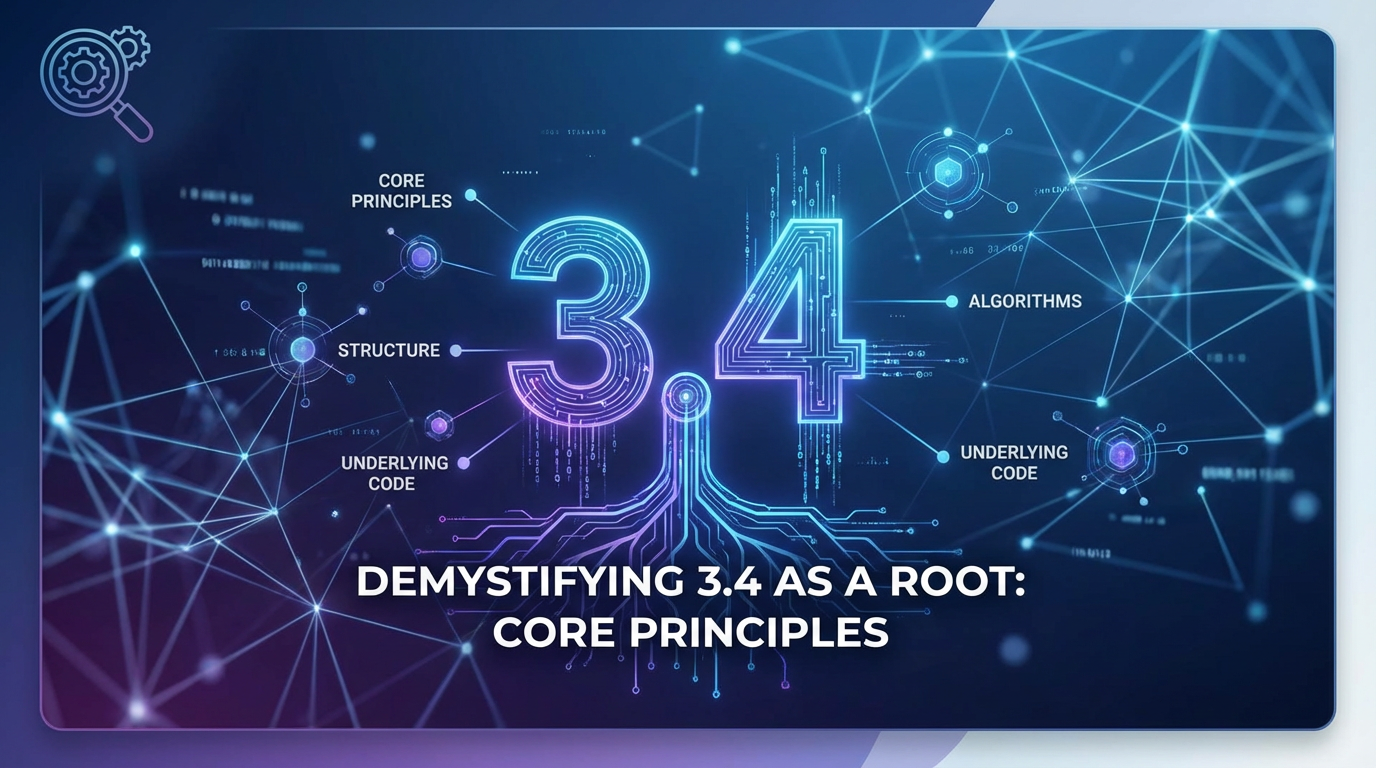


The rapid evolution of Artificial Intelligence has thrust us into an era where machines are not merely executing commands but are increasingly engaging in nuanced, context-aware interactions. At the heart of this transformative capability lies the intricate challenge of context management, a domain where the Model Context Protocol (MCP) has emerged as a critical architectural paradigm. This article embarks on a comprehensive journey to demystify "3.4 as a root," not as a mere version number, but as a conceptual cornerstone—a set of foundational principles and architectural advancements that underpin the sophisticated context-handling mechanisms in modern AI, particularly within frameworks like Claude MCP. We will delve into the profound impact of these core principles, exploring how they enable AI models to maintain coherence, understand subtle cues, and engage in extended, meaningful dialogues, ultimately paving the way for more intelligent and adaptable systems.
The very notion of "intelligence" in AI is inextricably linked to its ability to comprehend and utilize context. Without context, even the most advanced language models are reduced to sophisticated pattern matchers, generating plausible but often irrelevant or contradictory responses. The journey from nascent statistical models to the current generation of large language models (LLMs) has been characterized by a relentless pursuit of better context integration. Early AI systems struggled with retaining information across turns in a conversation, often losing track of previous statements or user preferences. This limitation significantly hampered their utility, confining them to short, transactional interactions. The advent of transformer architectures marked a seismic shift, introducing self-attention mechanisms that allowed models to weigh the importance of different words in a sequence, thus implicitly encoding some form of context. However, as AI systems grew in complexity and users demanded more sophisticated, multi-turn interactions, the need for explicit, robust, and scalable context management became paramount. This is where the Model Context Protocol (MCP) steps in, offering a structured approach to defining, maintaining, and updating the contextual state that guides an AI model's behavior. The conceptual "3.4" iteration represents a pivotal moment in this evolution, solidifying the architectural roots that define contemporary context management in AI.
The Evolving Landscape of AI Context Management: From Tokens to Cognitive States
Before we can fully appreciate the significance of "3.4 as a root," it's crucial to understand the historical context of AI's struggle with context. Initially, AI models treated input as discrete, independent units. Rule-based systems relied on pre-defined triggers, and early machine learning models processed data points in isolation. The advent of sequence models, like Recurrent Neural Networks (RNNs) and Long Short-Term Memory (LSTM) networks, offered a glimmer of hope by allowing information to persist across sequential inputs. These networks had internal states that could, theoretically, carry contextual information from one token to the next. However, they suffered from the "vanishing gradient problem," making it difficult to maintain long-term dependencies. As sequences grew, the influence of earlier tokens would fade, leading to a form of AI amnesia.
The revolutionary transformer architecture, introduced in 2017, dramatically improved context handling by allowing every token in an input sequence to attend to every other token. This parallel processing capability, combined with self-attention mechanisms, enabled models to capture complex dependencies across vast spans of text, leading to unprecedented gains in natural language understanding (NLU) and generation (NLG). Models like BERT, GPT, and their successors demonstrated an uncanny ability to generate coherent and contextually relevant text. Yet, even with transformers, limitations persisted. The primary bottleneck remained the fixed "context window" – the maximum number of tokens a model could process at once. Beyond this window, information was effectively forgotten, leading to truncated conversations and incomplete understandings in longer interactions.
Furthermore, context is not merely a sequence of tokens. It encompasses a multitude of factors: the user's intent, their history of interactions, their preferences, the current state of a task, external knowledge bases, and even real-world constraints. Managing this rich tapestry of information goes beyond simply extending the token limit. It requires a protocol, a set of agreed-upon standards and mechanisms, to define how these diverse contextual elements are represented, stored, accessed, and updated. This pressing need gave rise to the Model Context Protocol (MCP), designed to provide a comprehensive framework for managing the multifaceted nature of AI context. The "3.4" iteration marks a critical period where foundational architectural choices were solidified, defining the bedrock upon which future advancements in context management would be built. It represents a paradigm shift from merely processing sequences to actively managing a dynamic, multifaceted cognitive state for AI.
Introducing the Model Context Protocol (MCP): A Blueprint for Coherent AI
The Model Context Protocol (MCP) is a sophisticated framework designed to standardize and optimize how AI models perceive, store, and utilize contextual information throughout an interaction or task. Far more than just a method for extending memory, MCP establishes a principled approach to maintaining a consistent and relevant understanding of the operational environment, user intent, and historical data. Its primary goal is to empower AI systems to transcend token-level processing, enabling them to engage in truly coherent, multi-turn dialogues and execute complex, stateful tasks with unparalleled accuracy and relevance.
At its core, MCP addresses several fundamental challenges inherent in complex AI interactions: * Contextual Persistence: Ensuring that relevant information from past interactions or external sources is consistently available to the model, preventing "amnesia." * Dynamic Adaptation: Allowing the context to evolve naturally with the interaction, incorporating new information, user feedback, and changing circumstances. * Semantic Coherence: Guaranteeing that the model's responses and actions align not just syntactically, but also semantically with the overarching context. * Efficiency: Managing context in a way that is computationally feasible, balancing the need for rich information with processing speed and resource consumption. * Interpretability and Control: Providing mechanisms for developers to understand and influence the contextual state, aiding in debugging and fine-tuning.
MCP typically comprises several interlinked components, each playing a crucial role in the lifecycle of context management: 1. Context Store: A robust and scalable repository for all forms of contextual data. This might include conversational history, user profiles, task states, retrieved knowledge snippets, and system configurations. Unlike a simple log, the context store is designed for efficient retrieval and updates. 2. Contextualizer Module: Responsible for processing incoming user input and existing context to generate an enriched contextual representation. This module might perform entity recognition, intent detection, sentiment analysis, or retrieve relevant information from external databases, integrating these into the ongoing context. 3. Context Query Language/API: A standardized interface that allows the core AI model to query and retrieve specific pieces of contextual information from the Context Store. This API ensures that the model can access precisely what it needs, when it needs it, without having to process the entire context window every time. 4. Context Update Mechanism: A set of rules and algorithms that dictate how the context is modified based on new inputs, model outputs, or external events. This includes strategies for adding new information, prioritizing relevant data, pruning irrelevant details, and resolving conflicts. 5. Contextual Projection Layer: An interface that translates the managed context into a format suitable for the specific AI model. For large language models, this might involve constructing a prompt that strategically incorporates relevant context snippets, ensuring they fall within the model's effective context window and influence its generation process.
The introduction of MCP represents a maturation of AI development, moving beyond brute-force token processing towards a more intelligent, structured, and manageable approach to cognition. Its principles are not just theoretical; they are implemented in practical systems, enabling a new generation of AI applications that can hold complex conversations, assist with multi-step tasks, and adapt to individual user needs. The specific architectural decisions and philosophical underpinnings solidified during the "3.4" iteration are what grant MCP its profound impact, establishing the foundational "root" for subsequent advancements.
The Significance of "3.4" as a Root: A Conceptual Epoch in MCP Evolution
When we speak of "3.4 as a root" in the context of the Model Context Protocol (MCP), we are referring to a pivotal conceptual epoch, an intellectual and architectural turning point, rather than necessarily a specific public software release version. This "3.4" iteration signifies a period where the fundamental principles for robust, scalable, and intelligent context management in AI systems were deeply entrenched and formalized. It represents the point at which the design philosophy for MCP shifted from reactive context handling to proactive, predictive, and structurally aware context governance.
Prior to this "3.4" conceptual shift, MCP implementations, while functional, often grappled with inherent limitations: * Linear Context Windows: Earlier approaches primarily focused on extending the maximum token count a model could "see." While beneficial, this was a superficial fix, still susceptible to the "garbage in, garbage out" problem and inefficient processing of irrelevant information. * Passive Context Aggregation: Context was largely seen as a passive accumulation of past interactions. There was less emphasis on actively filtering, prioritizing, or semantically structuring this information. * Fragile State Management: Maintaining complex, multi-turn task states was often brittle, relying on hard-coded rules or simple key-value stores that struggled with ambiguity or unexpected user input. * Limited External Integration: Connecting the internal context of the AI with external knowledge bases or dynamic real-world data was often an afterthought, leading to an isolated and less informed AI.
The "3.4 as a root" conceptualization addresses these shortcomings by championing several transformative principles:
- Semantic Contextualization over Raw Token Dumping: The most profound shift introduced in the "3.4" era is the move away from simply concatenating past dialogue or documents into a prompt. Instead, MCP at this stage emphasizes semantic extraction and summarization. It recognizes that the meaning and intent are more crucial than the raw sequence of words. This means employing advanced NLP techniques within the Contextualizer Module to identify key entities, topics, sentiments, and relationships, distilling them into a concise, structured representation. For example, instead of feeding an entire transcript, MCP 3.4 would abstract "User is planning a trip to Paris, interested in Louvre and Eiffel Tower, budget around $2000 for flights and accommodation." This structured context is far more efficient and potent.
- Hierarchical and Multi-Modal Context Structuring: The "3.4" iteration established the importance of organizing context hierarchically. Instead of a flat list of facts, context is viewed as layered: global session context, specific task context, user profile context, and dynamic query context. Furthermore, it explicitly integrated the idea of multi-modal context – incorporating not just text, but also visual information, audio cues, or sensor data where applicable. This structured approach allows the AI to prioritize relevant contextual layers based on the current interaction, significantly improving efficiency and reducing cognitive load on the model.
- Active Context Pruning and Prioritization: A critical innovation in the "3.4" foundational principles is the concept of active context management. Recognizing that not all past information is equally relevant, MCP began to integrate intelligent pruning and prioritization algorithms. This involves:
- Recency Bias: Giving more weight to recent interactions.
- Relevance Scoring: Using techniques like similarity search or keyword matching to identify context elements most pertinent to the current query.
- Goal-Oriented Filtering: Retaining context specifically related to an ongoing task or user goal, discarding irrelevant tangents. This active management ensures that the AI's internal "thought process" is not cluttered with extraneous information, leading to more focused and accurate responses.
- External Knowledge Integration as a First-Class Citizen: Prior to "3.4," integrating external knowledge bases (KBs) was often an ad-hoc process. The "3.4" principles codified the seamless, on-demand integration of external knowledge as a core component of MCP. This means that when a model encounters a query it cannot answer from its internal parametric knowledge or current conversational context, the Contextualizer Module automatically triggers retrieval from external KBs, embedding the most relevant snippets directly into the working context. This significantly enhances the AI's factual accuracy, breadth of knowledge, and ability to handle novel queries.
- Robust State Machine Integration for Task Management: For task-oriented AI, "3.4" solidified the architectural pattern of integrating a robust state machine within the Model Context Protocol. This allows the AI to track complex, multi-step tasks – knowing exactly where it is in a process (e.g., booking a flight: "destination confirmed," "dates pending," "passenger details needed") and using this state to guide context prioritization and response generation. This move significantly reduces ambiguity and improves the user experience for complex workflows.
In essence, "3.4 as a root" represents the moment when MCP matured from a simple memory extension strategy to a comprehensive, intelligent, and architecturally sound protocol for cognitive state management. It laid down the fundamental design principles that empower systems like Claude MCP to achieve their remarkable coherence and adaptability. This conceptual epoch shifted the paradigm from mere information storage to intelligent information governance, ensuring that AI models possess a dynamically managed, semantically rich, and precisely tailored understanding of their operational environment at all times.
Deep Dive into MCP Core Principles (as seen in "3.4" and beyond)
The foundational principles established during the "3.4" conceptualization of the Model Context Protocol (MCP) are not static; they continue to evolve and deepen with subsequent research and development. However, their core tenets remain robust, forming the blueprint for sophisticated context handling in advanced AI systems. Let's delve deeper into these crucial principles:
1. Contextual Integrity and Consistency: The Bedrock of Reliability
At its core, MCP emphasizes the absolute necessity of contextual integrity. This principle dictates that the context presented to the AI model must be consistent, non-contradictory, and accurately reflect the current state of the interaction, user, and environment. Without integrity, an AI can generate illogical or confusing responses, undermining user trust and system reliability.
- Mechanisms: MCP 3.4 implemented sophisticated mechanisms to uphold integrity. This includes conflict resolution algorithms that identify and reconcile contradictory pieces of information within the context store. For instance, if a user initially states a preference for "pizza" but later asks for "sushi," the protocol defines how the context should be updated – perhaps by replacing the old preference, adding a new one, or prompting for clarification. Data validation rules ensure that context entries adhere to predefined schemas, preventing malformed or nonsensical information from polluting the context. Furthermore, versioning of context elements allows for auditing and rollback, crucial for debugging and maintaining a reliable history of interactions. The Context Store is not just a dump but an actively curated semantic database.
2. Dynamic Adaptability and Evolution: Learning as We Go
The world is dynamic, and so too must be the AI's understanding of it. The "3.4" principles heavily underscored dynamic adaptability, meaning the context is not static but continuously evolves based on new inputs, model outputs, and external events. This is critical for long-running conversations, multi-step tasks, and adapting to changing user needs or external circumstances.
- Mechanisms: The Context Update Mechanism, refined in MCP 3.4, plays a central role here. It's not a simple append operation; it involves intelligent algorithms for:
- Incremental Updating: Adding new information without re-processing the entire context from scratch.
- Prioritized Replacement: Replacing older, less relevant information with newer, more pertinent data, especially when dealing with limited context window real estate.
- Feedback Loops: Incorporating model-generated responses and user feedback (e.g., explicit corrections, implied satisfaction/dissatisfaction) back into the context to refine future interactions.
- External Triggers: Allowing external systems (e.g., a calendar API updating an appointment, a weather service reporting a change) to inject or modify contextual elements, enabling real-time responsiveness. This proactive and reactive update capability transforms the context from a passive record into an active, living memory.
3. Semantic Coherence and Granularity: Beyond Surface-Level Understanding
"3.4 as a root" elevated the importance of semantic coherence – ensuring that the AI's understanding aligns with the underlying meaning and intent, not just keyword matches. This requires fine-grained control over how context is represented and utilized.
- Mechanisms:
- Entity and Intent Recognition: The Contextualizer Module became highly sophisticated, employing advanced NLP models to precisely identify entities (people, places, things), their attributes, and the user's underlying intent (e.g., "book flight," "check status," "get recommendations"). This moves beyond simple keyword spotting to deep semantic parsing.
- Relational Graph Construction: For complex interactions, MCP 3.4 advocated for building internal knowledge graphs or semantic networks within the context store. This represents relationships between entities (e.g., "user 'John' is interested in 'Paris'," "Paris is a 'city' in 'France'"). This structured representation allows the AI to perform logical inferences and draw connections that would be impossible with flat text.
- Abstractive Summarization: Instead of merely extracting snippets, MCP 3.4 pushed for abstractive summarization techniques to create concise, high-level representations of past interactions or long documents, capturing the essence without unnecessary detail. This maintains richness while conserving context window space.
4. Efficiency and Scalability: Performance in Production Environments
For any protocol to be practical, it must be efficient and scalable. The "3.4" principles prioritized these aspects, recognizing that context management could quickly become a computational bottleneck.
- Mechanisms:
- Indexed Context Store: Implementing highly optimized, often in-memory or distributed, indexed databases for the Context Store. This ensures lightning-fast retrieval of specific context elements, avoiding linear scans of vast historical data.
- Context Chunking and Retrieval-Augmentation: Breaking down large contexts into manageable "chunks" and using sophisticated retrieval-augmentation techniques (e.g., vector similarity search) to fetch only the most relevant chunks on demand. This is critical for operating within the strict token limits of many LLMs.
- Lazy Loading and Eviction Policies: Only loading context elements into active memory when they are needed and implementing intelligent eviction policies (e.g., LRU - Least Recently Used, LFU - Least Frequently Used, or relevance-based eviction) to manage memory usage efficiently.
- Parallel Processing: Designing components of MCP, particularly the Contextualizer Module, to leverage parallel processing capabilities, speeding up the enrichment and preparation of context.
5. Controllability and Interpretability: Developer Empowerment
A key principle solidified in MCP 3.4 is the ability for developers to both control and understand the context. This moves context management from a black box to a transparent and manipulable component, essential for debugging, fine-tuning, and ensuring ethical AI behavior.
- Mechanisms:
- Context Schema Definitions: Allowing developers to define explicit schemas for different types of context (e.g., user profiles, task states), ensuring structured data and predictable behavior.
- Context Visualization Tools: Providing dashboards and debuggers that allow developers to inspect the current state of the context store, see how it changes over time, and understand which elements are being used by the AI model.
- Prompt Engineering with Contextual Placeholders: Enabling precise control over how context is injected into the model's prompt, using placeholders or templates, which can be dynamically populated by the MCP.
- Audit Trails: Maintaining logs of all context modifications, providing an audit trail for understanding how the context evolved during an interaction.
These five core principles, solidified and deeply integrated during the conceptual "3.4" epoch, form the resilient root system of the Model Context Protocol. They allow AI systems to move beyond superficial interactions, enabling them to comprehend the deeper meaning of conversations, maintain consistent state across complex tasks, and adapt intelligently to dynamic environments. This deep-seated architectural understanding is precisely what empowers advanced AI models, fostering a new generation of intelligent applications.
APIPark is a high-performance AI gateway that allows you to securely access the most comprehensive LLM APIs globally on the APIPark platform, including OpenAI, Anthropic, Mistral, Llama2, Google Gemini, and more.Try APIPark now! 👇👇👇
Practical Applications and Implementations: The Case of Claude MCP
The theoretical underpinnings of the Model Context Protocol (MCP), particularly the foundational principles established in its "3.4" conceptualization, find their most compelling expression in real-world AI systems. One notable example that embodies these principles is Claude MCP, referring to the advanced context management system employed by Anthropic's Claude family of large language models. Claude, renowned for its lengthy context windows and ethical considerations, leverages a sophisticated MCP implementation to achieve its impressive conversational coherence and deep understanding.
Claude MCP takes the "3.4 as a root" principles to heart, demonstrating how semantic contextualization, dynamic adaptability, and efficient scaling are critical for state-of-the-art performance:
- Extended and Intelligent Context Windows: While Claude boasts impressively large token limits (e.g., 100K or 200K tokens), its MCP doesn't simply dump raw chat history into this window. Instead, Claude MCP actively prunes and prioritizes information. The Contextualizer Module within Claude's architecture semantically analyzes incoming turns and the existing conversational history. It might automatically summarize lengthy discussions, extract key facts, and identify current user intent, ensuring that the most salient information is always within the effective context window. This is a direct application of the "semantic contextualization over raw token dumping" principle from MCP 3.4. For instance, if a user is discussing a complex coding problem, Claude's MCP will highlight code snippets, error messages, and the user's explicit goals, rather than just retaining every "hello" and "um."
- Robust Turn-Taking and Conversational State Management: Claude MCP excels in maintaining a consistent conversational state across numerous turns. This is achieved by continuously updating the internal representation of the dialogue, incorporating new information from the user, and refining its understanding of the user's ongoing task or query. If a user asks a follow-up question referencing an earlier part of the conversation, Claude MCP can intelligently retrieve and re-introduce that specific piece of context without requiring the entire history to be re-read. This aligns perfectly with the "dynamic adaptability and evolution" principle, where context is a living, breathing entity. This allows Claude to manage complex dialogues, like planning a detailed itinerary or debugging multi-step programming issues, without losing track.
- Ethical Context Filtering and Safety Mechanisms: A unique aspect of Claude MCP, building upon the "controllability and interpretability" principles, is its integration with ethical AI design. The protocol can be designed to filter out or flag sensitive, harmful, or out-of-scope content from the context, ensuring that the model's responses remain aligned with safety guidelines. This is achieved by routing context through additional safety layers within the Contextualizer Module, which can detect and mitigate risks before the context reaches the core generation model. This isn't just about technical coherence but also about responsible AI deployment.
- Integration with External Tools and Knowledge: While not always publicly exposed, advanced versions of Claude MCP internally demonstrate capabilities consistent with the "external knowledge integration as a first-class citizen" principle. When a query requires up-to-date factual information or the execution of specific tasks (e.g., searching the web, performing calculations), the MCP can act as an orchestrator. It identifies the need for external tools, queries them, and then seamlessly injects the results back into the context for the core LLM to utilize. This expands Claude's utility far beyond its trained data, making it a more versatile and informed assistant.
- Efficiency through Abstractive Context Representation: To handle truly long contexts efficiently, Claude MCP employs forms of abstractive summarization. Instead of merely remembering every word, it can distill the essence of past interactions into a more compact, higher-level representation. This reduces the computational load while preserving the critical semantic information necessary for coherent responses. This is a direct outcome of the "efficiency and scalability" principle, ensuring that large context windows don't translate into prohibitively slow processing times.
Illustrative Example: Long-form Technical Support with Claude MCP
Consider a scenario where a software developer is debugging a complex distributed system, interacting with Claude over several hours. * Initial Problem Statement: The developer provides logs, code snippets, and a high-level description of the issue. Claude MCP processes this, extracting key entities (service names, error codes, timestamps), initial hypotheses about the problem, and the developer's goal (fix the bug). * Deep Dive and Clarification: Over subsequent turns, the developer provides more diagnostic output, answers Claude's questions, and tries different approaches. Claude MCP continuously updates the context: * It identifies new error patterns. * It prunes irrelevant older logs once new, more pertinent ones are introduced. * It notes the developer's preferred debugging tools or methodologies. * It builds a mental model of the system architecture based on the conversation. * Solution Identification: Eventually, after many turns and potentially external tool use (if available to Claude for code lookup or documentation search), Claude MCP has a rich, structured context that allows the core Claude model to synthesize a solution or suggest a precise next step. The ability to recall a specific detail mentioned an hour ago, relate it to a new log entry, and connect it to the overarching goal is a testament to the robust MCP principles at play.
This deep contextual understanding, facilitated by the underlying Model Context Protocol (whose foundational "root" lies in the "3.4" conceptual shift), transforms AI models from simple chat interfaces into truly intelligent collaborators. It highlights how architectural decisions around context management directly translate into superior performance and utility in complex, real-world applications.
Challenges and Future Directions of MCP
While the Model Context Protocol (MCP), with its foundational "3.4" principles, has dramatically advanced AI's ability to manage context, it is by no means a perfected solution. Significant challenges remain, and research continues to push the boundaries of what's possible in contextual AI. Understanding these limitations and future directions is crucial for anticipating the next generation of intelligent systems.
Current Challenges:
- Context Window Limitations (Even with Smart Management): Despite ingenious MCP strategies like semantic summarization and retrieval-augmentation, the inherent architectural limitations of transformer models mean there's still a finite amount of information that can be effectively processed in a single forward pass. While Claude and others have expanded these windows considerably, extremely long, multi-day, or multi-user interactions still pose significant challenges for maintaining a truly comprehensive and deep context without incurring prohibitive computational costs. The "root" principles of 3.4 laid the groundwork, but the physical constraints persist.
- The "Lost in the Middle" Problem: Even within large context windows, studies have shown that LLMs sometimes struggle to recall information presented in the middle of a long prompt, performing best on information at the beginning or end. This highlights that simply having information in the context isn't enough; its placement and salience still matter. MCP needs more sophisticated mechanisms for "active attention focusing" within the context.
- Computational Overhead of Rich Context Management: The sophisticated mechanisms of MCP (semantic parsing, knowledge retrieval, conflict resolution, dynamic updates) are computationally intensive. As contexts grow richer and more dynamic, the resources required for context management can become substantial, impacting inference speed and cost. Balancing richness with efficiency remains a perpetual challenge.
- Representing and Updating Real-World State: While MCP 3.4 emphasized external knowledge integration, fully representing and constantly synchronizing an AI's internal context with the dynamic, unpredictable state of the real world (e.g., real-time sensor data, complex human behaviors) is incredibly difficult. Most current MCPs excel in textual or structured data contexts, but integrating truly ambient, multi-modal, and constantly changing environmental context is still nascent.
- Personalization vs. Generalization: Crafting a context that is deeply personalized for an individual user while still leveraging general knowledge and avoiding overfitting to potentially idiosyncratic user patterns is a delicate balance. MCP needs better mechanisms for learning and adapting to individual user nuances over long periods without requiring explicit reprogramming for each user.
- Interpretability and Debugging in Complex Contexts: As contexts become richer and more dynamically managed, understanding why an AI produced a particular response can become opaque. Tracing the influence of specific context elements on a model's output is challenging, making debugging and auditing complex MCP deployments difficult.
Future Directions:
- Beyond Token-Based Context: Future MCP iterations will likely move further away from a purely token-based view of context. This could involve graph-based context representations, where entities and their relationships are explicitly modeled, allowing for more powerful inference and retrieval than linear text. Event-driven context models that focus on key events and their impact on state are also promising.
- Adaptive Context Window Sizing and Focused Attention: Instead of fixed context windows, future MCPs might dynamically adjust the effective window size based on the complexity of the current query or the perceived "cognitive load." This could be coupled with more advanced attention mechanisms that allow the model to dynamically focus its attention on the most relevant parts of a massive context without having to process everything.
- Meta-Contextual Learning: AI models could be trained to learn how to manage their context. Instead of relying solely on heuristic rules for pruning or prioritization, a "meta-MCP" could use reinforcement learning or other adaptive techniques to discover optimal context management strategies for different tasks and users. This would take the "dynamic adaptability" principle to a new level.
- Deep Integration of Multi-modal Context: As AI expands into robotics, augmented reality, and pervasive computing, MCPs will need to seamlessly integrate diverse modalities (vision, audio, haptics) into a unified contextual representation. This requires advances in multi-modal fusion techniques and novel ways to represent heterogeneous information within a coherent protocol.
- Decentralized and Distributed Context Management: For large-scale AI ecosystems involving multiple agents or services, context management might become distributed. Each agent could maintain its local context, with a higher-level MCP coordinating the sharing and synchronization of relevant contextual information across the entire system. This is crucial for collaborative AI.
- Human-in-the-Loop Context Refinement: Future MCPs could incorporate more direct human feedback mechanisms for context refinement. Users or domain experts could explicitly annotate, correct, or prioritize contextual elements, creating a virtuous loop that continuously improves the AI's understanding. This aligns with the "controllability and interpretability" principles, making them more interactive.
The journey of Model Context Protocol is one of continuous innovation. The "3.4 as a root" principles provided a robust foundation, but the challenges ahead demand even more sophisticated and intelligent approaches to context management. As these future directions materialize, we can expect AI systems to achieve unprecedented levels of understanding, adaptability, and cognitive coherence, blurring the lines between artificial and human intelligence.
The Role of API Management in Advanced AI Systems: Orchestrating the Intelligence
As AI systems evolve, leveraging sophisticated mechanisms like the Model Context Protocol (MCP) to manage intricate contextual states, their complexity often increases exponentially. These advanced AI architectures are rarely monolithic; instead, they are often composed of numerous interconnected components: specialized models for different tasks (e.g., sentiment analysis, image recognition), external knowledge bases, data repositories, and various internal services that handle context processing, decision-making, and response generation. Each of these components, whether an internal module processing context or a third-party AI service, exposes an Application Programming Interface (API) for interaction. This proliferation of APIs, coupled with the need for seamless integration and robust operation, highlights the indispensable role of powerful API management platforms.
Managing the sophisticated interactions and diverse APIs of AI models, especially those built on evolving protocols like MCP, necessitates robust API management solutions. Platforms like ApiPark, an open-source AI gateway and API management platform, provide the essential infrastructure to orchestrate these complex AI ecosystems effectively.
Here's why API management platforms are critical for advanced AI systems operating with MCP:
- Unified Access and Orchestration for Diverse AI Components: An AI system leveraging MCP might integrate multiple foundational models, fine-tuned models, and various external tools (e.g., search engines, databases, real-time data feeds) to enrich its context or execute actions. Each of these can be exposed as an API. An API gateway acts as a single entry point, abstracting the complexity of interacting with these disparate services. It allows the core AI orchestrator (which might house the MCP's central logic) to call a unified API, and the gateway intelligently routes the request to the correct underlying AI model or service. This is particularly relevant for the "external knowledge integration" principle of MCP, where various data sources need to be seamlessly queried.
- Authentication, Authorization, and Security for Contextual Data: Contextual data, especially that managed by MCP, often contains sensitive user information, proprietary business logic, or critical task states. Protecting this data is paramount. API management platforms provide robust security features:
- Authentication: Verifying the identity of systems or users trying to access AI APIs.
- Authorization: Granting specific permissions (e.g., read-only access to certain context types, execute permissions for specific AI models).
- Threat Protection: Shielding AI services from common web vulnerabilities and denial-of-service attacks. For instance, APIPark offers features like API resource access requiring approval, ensuring that callers must subscribe to an API and await administrator approval before they can invoke it, preventing unauthorized API calls and potential data breaches. This is crucial for maintaining the "contextual integrity" and "controllability" principles of MCP in a secure environment.
- Traffic Management and Load Balancing: Advanced AI models, particularly LLMs involved in complex MCP interactions, can experience fluctuating traffic loads. An API gateway effectively distributes incoming requests across multiple instances of AI services, preventing bottlenecks and ensuring high availability. This is vital for maintaining the "efficiency and scalability" principles of MCP under heavy demand. APIPark, for example, boasts performance rivaling Nginx, achieving over 20,000 TPS with modest resources and supporting cluster deployment for large-scale traffic.
- Monitoring, Analytics, and Observability of Contextual Flows: Understanding how AI services are being used, their performance, and identifying potential issues is critical for complex AI systems. API management platforms provide detailed logs and analytics on API calls, including latency, error rates, and usage patterns. This data is invaluable for optimizing MCP implementations, identifying which context elements are frequently accessed, or pinpointing bottlenecks in context processing. APIPark provides comprehensive logging capabilities, recording every detail of each API call, and offers powerful data analysis to display long-term trends and performance changes, helping with preventive maintenance. This enhances the "interpretability" of the entire AI system, including the context flow.
- API Versioning and Lifecycle Management: AI models, and especially their associated MCP implementations, are constantly evolving. New versions are deployed, existing ones are updated, and sometimes deprecated. An API management platform simplifies the management of API versions, allowing for seamless transitions without disrupting applications that consume the AI services. It supports the entire API lifecycle – from design and publication to invocation and decommissioning. This flexibility is essential for the "dynamic adaptability and evolution" of MCP itself, as the underlying context mechanisms are continually refined.
- Prompt Encapsulation and Standardization: A key feature of platforms like APIPark is the ability to encapsulate AI models with custom prompts into new REST APIs. This allows developers to combine specific AI models with predefined MCP-driven contextual cues or templates to create highly specialized APIs (e.g., a "sentiment analysis API for customer feedback" that leverages specific context for business reviews). This standardizes the invocation of AI models, ensuring that changes in underlying AI models or prompts do not affect the application, thereby simplifying AI usage and reducing maintenance costs. This directly supports the structured and semantic utilization of context championed by MCP.
- Team Collaboration and Service Sharing: In large enterprises, different teams or departments might leverage the same underlying AI infrastructure, but with different contextual requirements or specialized models. API management platforms facilitate the sharing of API services within teams, centralizing their display and making it easy for different departments to find and use the required API services. APIPark enables the creation of multiple teams (tenants), each with independent applications, data, user configurations, and security policies, while sharing underlying infrastructure to improve resource utilization.
In conclusion, as AI systems become more intelligent and context-aware through protocols like MCP, the operational overhead and complexity increase. API management platforms like APIPark act as the crucial infrastructure layer, abstracting this complexity, enforcing security, ensuring performance, and providing the necessary tools for monitoring and governance. They empower developers and enterprises to effectively deploy, manage, and scale their sophisticated AI solutions, transforming raw intelligence into reliable, production-grade services. The seamless integration capabilities and robust management features provided by such platforms are indispensable for realizing the full potential of advanced AI architectures rooted in comprehensive context management.
Conclusion: The Enduring Legacy of 3.4 as a Root
Our journey to demystify "3.4 as a root" has illuminated a profound conceptual shift in the realm of Artificial Intelligence – specifically, within the evolution of the Model Context Protocol (MCP). This metaphorical "3.4" epoch signifies a critical turning point where context management transitioned from ad-hoc mechanisms and simple memory extensions to a structured, intelligent, and principled architectural paradigm. It laid down the foundational "roots" for how modern AI systems, exemplified by sophisticated implementations like Claude MCP, understand, maintain, and adapt their internal cognitive state over complex interactions.
We've explored how "3.4 as a root" instilled core principles that define contemporary MCP: * Semantic contextualization, moving beyond raw tokens to capture the essence and intent of information. * Dynamic adaptability, ensuring context is a living, evolving entity, not a static record. * Hierarchical structuring and active pruning, enabling efficient and focused attention. * Seamless external knowledge integration, bridging internal model knowledge with the vastness of the real world. * Robust state machine integration, empowering task-oriented AI with unparalleled coherence. * Efficiency, scalability, interpretability, and controllability, making these advanced systems practical and manageable for developers.
These principles are not merely academic concepts; they are the bedrock upon which the remarkable capabilities of today's advanced language models are built. They allow AI to engage in extended, coherent dialogues, execute multi-step tasks with precision, and adapt intelligently to nuanced user needs, transcending the limitations of earlier, context-blind systems. The impact is evident in applications ranging from intelligent assistants and advanced customer support to complex scientific research and creative content generation.
However, the journey of MCP is far from over. While the "3.4 as a root" provided an incredibly robust foundation, challenges persist in terms of ultimate context window limits, computational overhead, and the seamless integration of truly multi-modal and real-world dynamic states. The future promises even more sophisticated approaches, including meta-contextual learning, graph-based context representations, and decentralized management, pushing the boundaries of AI cognition further.
Ultimately, the demystification of "3.4 as a root" reveals that the true intelligence of advanced AI systems is deeply interwoven with their ability to manage context with unprecedented sophistication. It underscores that architectural decisions made at a foundational level, often unseen by the end-user, are paramount to unlocking the full potential of artificial intelligence. As we continue to build more complex and capable AI, the legacy of these core principles will endure, guiding the ongoing quest for truly intelligent and context-aware machines.
Frequently Asked Questions (FAQ)
1. What does "3.4 as a root" refer to in the context of Model Context Protocol (MCP)? "3.4 as a root" is a conceptual epoch, not necessarily a specific software version. It represents a pivotal period where foundational principles and architectural choices for robust, scalable, and intelligent context management within AI systems were solidified. It signifies the point where MCP shifted from basic context handling to a more proactive, semantic, and structurally aware governance of an AI's operational state, forming the bedrock for subsequent advancements.
2. What are the main challenges MCP aims to solve for AI models? MCP primarily addresses challenges like AI "amnesia" (losing context in long interactions), generating irrelevant or contradictory responses, inefficient context processing, and the difficulty of integrating external knowledge. By providing a structured framework, MCP ensures contextual persistence, dynamic adaptation, semantic coherence, and efficient management of information for AI systems.
3. How does Model Context Protocol (MCP) improve AI's understanding compared to earlier methods? Earlier methods often relied on fixed token windows or simple sequential memory, which were prone to forgetting. MCP, especially with its "3.4" principles, improves understanding by emphasizing semantic extraction and summarization, hierarchical context structuring, active pruning of irrelevant information, and seamless integration of external knowledge. This allows AI to grasp deeper meaning, maintain a coherent state, and leverage broader knowledge bases.
4. How is Claude MCP an example of these MCP principles in practice? Claude MCP demonstrates the practical application of the "3.4 as a root" principles by employing extended and intelligent context windows (which semantically prune and prioritize information), robust conversational state management, ethical context filtering, and the ability to integrate with external tools and knowledge. These features allow Claude models to maintain coherence over long, complex interactions and provide relevant, well-informed responses.
5. Why is API management, like ApiPark, important for AI systems using MCP? API management platforms like ApiPark are crucial because advanced AI systems with MCP involve numerous interconnected components and services, each exposing APIs. These platforms provide unified access, robust security (authentication, authorization, threat protection), efficient traffic management and load balancing, comprehensive monitoring and analytics, and streamline API versioning. They also enable prompt encapsulation into new APIs, simplifying the management, integration, and scaling of complex AI solutions, ensuring that the sophisticated intelligence of MCP-driven systems can be reliably deployed and governed in production environments.
🚀You can securely and efficiently call the OpenAI API on APIPark in just two steps:
Step 1: Deploy the APIPark AI gateway in 5 minutes.
APIPark is developed based on Golang, offering strong product performance and low development and maintenance costs. You can deploy APIPark with a single command line.
curl -sSO https://download.apipark.com/install/quick-start.sh; bash quick-start.sh

In my experience, you can see the successful deployment interface within 5 to 10 minutes. Then, you can log in to APIPark using your account.

Step 2: Call the OpenAI API.