Demystifying API Gateway Main Concepts
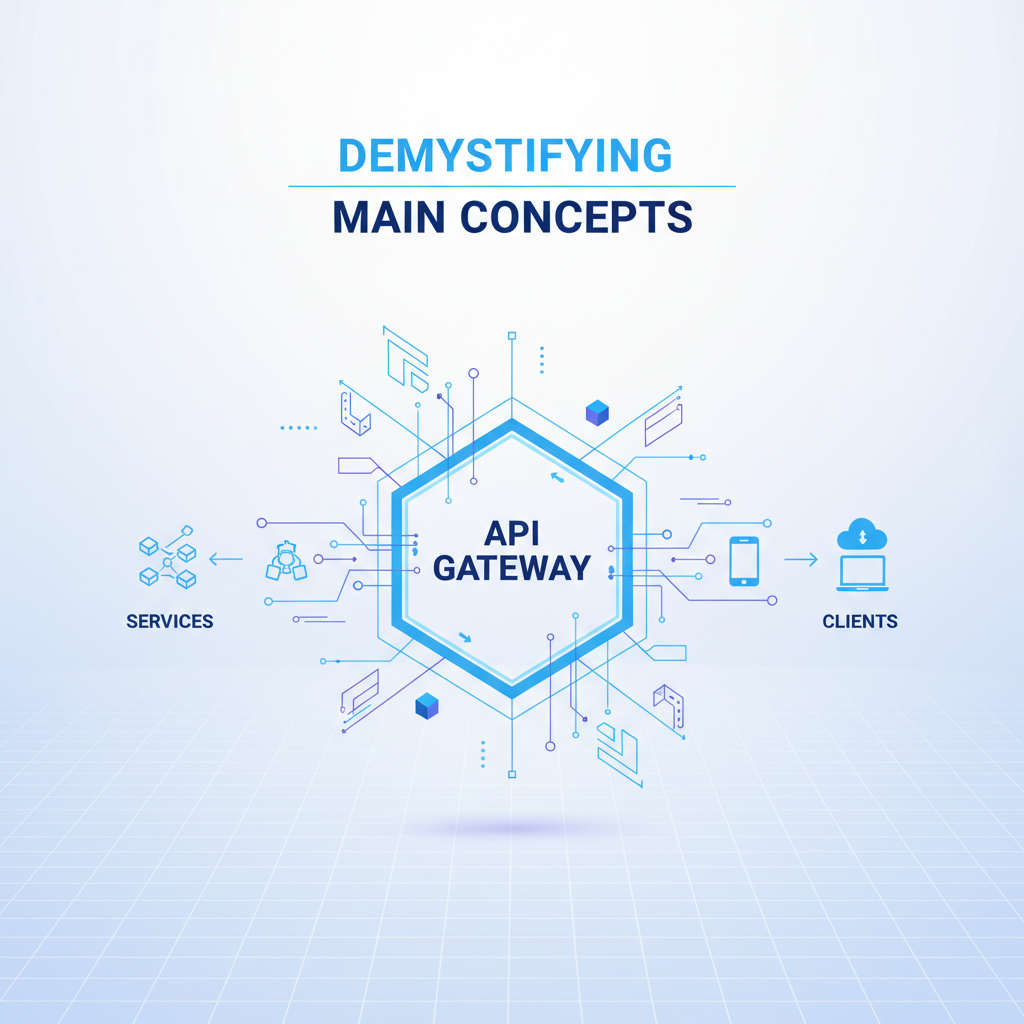


In the sprawling, interconnected landscape of modern software development, where microservices reign supreme and applications communicate across intricate networks, the sheer volume and complexity of interactions can quickly become overwhelming. Gone are the days of monolithic applications where all functionality resided within a single, self-contained unit. Today, highly distributed systems, often composed of dozens or even hundreds of independent services, necessitate a robust, intelligent, and flexible intermediary to manage the constant flow of requests and responses. This is precisely where the API Gateway emerges as an indispensable architectural component, transforming chaos into order and enabling seamless, secure, and scalable communication.
The API Gateway stands as the sentinel at the edge of your microservices ecosystem, serving as the single entry point for all external consumers. It acts as a powerful orchestrator, abstracting the intricate topology of backend services from the client, handling a myriad of cross-cutting concerns that would otherwise burden individual services. Without a well-designed API Gateway, clients would be forced to interact directly with multiple service endpoints, leading to increased complexity, security vulnerabilities, and a host of operational challenges. Understanding the fundamental concepts behind this critical piece of infrastructure is no longer a luxury but a necessity for any architect, developer, or business striving to build resilient and efficient digital platforms. This article will meticulously dissect the API Gateway's role, its core functionalities, the architectural patterns it enables, and its profound impact on the modern API-driven world, ensuring that by its conclusion, the formidable power of the gateway is fully demystified.
Chapter 1: The Genesis and Evolution of API Gateways
The journey to understanding the API Gateway begins with a foundational grasp of the elements that necessitated its creation: the rise of APIs and the subsequent architectural shifts driven by microservices.
1.1 What is an API? A Foundational Understanding
At its most fundamental level, an API (Application Programming Interface) is a set of defined rules, protocols, and tools for building software applications. It serves as a contract, a clear interface, allowing different software components to communicate and interact with one another. Think of an API as a waiter in a restaurant: you, the customer, tell the waiter what you want (e.g., "I'd like a pizza"), and the waiter takes your request to the kitchen (the backend system), which prepares the order. The waiter then brings you the pizza, without you ever needing to know how the kitchen operates, what ingredients are used, or who cooked it. The API acts as that waiter, abstracting away the internal complexities of a system while providing a standardized way to access its functionalities.
In the contemporary digital landscape, APIs are the invisible threads that weave together the fabric of our interconnected world. From checking the weather on your phone to making online payments, from integrating third-party services into your application to enabling internal microservices to collaborate, APIs are everywhere. They facilitate the sharing of data and functionality across disparate systems, driving innovation and enabling rapid development cycles. The most prevalent type of API today is the RESTful API, which leverages standard HTTP methods (GET, POST, PUT, DELETE) and typically exchanges data in lightweight formats like JSON or XML. However, other styles like SOAP (Simple Object Access Protocol), GraphQL, and gRPC are also widely utilized, each addressing specific use cases and offering distinct advantages in terms of data efficiency, strictness, or performance. The proliferation of mobile applications, cloud computing, and the Internet of Things (IoT) has exponentially increased the demand for robust and accessible APIs, transforming them from mere technical interfaces into strategic business assets. Enterprises now expose APIs not just for internal communication but also as products, enabling partners and developers to build new applications and services on top of their platforms, creating entire ecosystems. This explosion of APIs, while immensely beneficial, also brought forth a new set of challenges, setting the stage for the API Gateway.
1.2 The Monolith Problem and the Rise of Microservices
For decades, the dominant architectural pattern for software applications was the monolith. In a monolithic application, all components – user interface, business logic, data access layer, and integrations – are tightly coupled and run as a single service. This approach offered simplicity in development during the early stages, as everything was in one codebase, making deployment straightforward. However, as applications grew in size and complexity, the limitations of the monolith became increasingly apparent and restrictive.
Scalability became a significant hurdle. To scale a specific component, the entire application had to be scaled, leading to inefficient resource utilization. Development speed suffered as a large team working on a single codebase often resulted in code conflicts, slower integration, and longer release cycles. The adoption of new technologies or frameworks was also challenging, as it often required rewriting large portions of the application. Furthermore, a single point of failure in one component could bring down the entire system, impacting reliability. These challenges ultimately led to the emergence of the microservices architectural style as a compelling alternative.
Microservices advocate for breaking down a large application into a collection of small, independently deployable services, each running in its own process and communicating with others through well-defined APIs. Each service is typically owned by a small, autonomous team and focuses on a single business capability. This paradigm offers numerous advantages: independent scalability (only resource-intensive services need to be scaled), technology polyglotism (different services can use different programming languages and databases best suited for their tasks), enhanced resilience (failure in one service doesn't necessarily bring down the entire application), and accelerated development velocity. Teams can deploy services independently, reducing the risk of conflicts and enabling continuous delivery. However, this decentralized approach, while solving many problems of the monolith, introduced its own set of complexities. Instead of one large application, developers now had to manage dozens, sometimes hundreds, of smaller, interconnected services, each with its own endpoint, deployment cycle, and operational considerations. The once simple client-server interaction now involved navigating a web of distributed services, laying the groundwork for the critical need of an intelligent intermediary – the API Gateway.
1.3 The Need for an API Gateway: From Direct Calls to Centralized Management
In the early days of microservices adoption, clients – whether web browsers, mobile applications, or other external systems – would often interact directly with individual microservices. If an application needed data from three different services, the client would make three separate calls to three distinct endpoints, each potentially requiring its own authentication credentials and understanding of the service's specific API contract. This direct client-to-service communication model, while seemingly straightforward at first glance, quickly revealed significant drawbacks as the number of microservices grew.
Firstly, clients became tightly coupled to the internal architecture of the microservices system. Any changes to service endpoints, partitioning of services, or even the underlying communication protocols would necessitate client-side updates, leading to brittle systems and increased maintenance overhead. Secondly, managing cross-cutting concerns became a nightmare. Issues like authentication, authorization, rate limiting, logging, and security often had to be implemented repetitively in each individual service. This led to code duplication, inconsistencies, and potential security vulnerabilities, as ensuring uniform enforcement across many services was challenging. Thirdly, the network overhead for clients was significant. A single user request might require multiple round trips to various services, increasing latency and consuming more network resources. Lastly, directly exposing internal services to the external world presented a substantial security risk, as it made the internal topology vulnerable to external attacks and unauthorized access.
It became evident that a central point was needed to aggregate, secure, and manage these interactions. This is precisely the void that the API Gateway fills. It serves as a protective façade, a unified entry point that sits between external clients and the multitude of internal microservices. Instead of making multiple direct calls, clients interact solely with the API Gateway, which then intelligently routes requests to the appropriate backend services, aggregates responses, and applies a range of policies. The API Gateway thus became the essential architectural component that enabled the scalability, security, and manageability of microservices architectures, abstracting complexity and providing a robust operational layer. It evolved from simple reverse proxies or load balancers, which primarily operate at the network layer, to a sophisticated application-aware intermediary capable of understanding, manipulating, and securing API requests at a much deeper level.
Chapter 2: Core Concepts and Architectural Patterns of an API Gateway
To fully appreciate the power of an API Gateway, it's crucial to delve into its definition, myriad functions, and the various ways it can be structured within an enterprise architecture.
2.1 The Definition of an API Gateway
An API Gateway is essentially a server that acts as a single entry point for a group of microservices. It's akin to a dedicated traffic controller for your APIs, directing incoming requests to the correct internal service, while also handling a multitude of other tasks before those requests ever reach their final destination. More formally, an API Gateway is a specialized gateway that stands between client applications and a collection of backend services, abstracting the complexity of the underlying service architecture and providing a unified, secure, and managed interface for clients.
Its primary role is to encapsulate the internal system architecture and provide an API that is tailored to each client. For example, a web API might require a different data structure or aggregation logic than a mobile API, even if both ultimately consume data from the same backend services. The API Gateway can compose these requests and responses, performing necessary transformations. Unlike a traditional reverse proxy, which primarily forwards requests based on network-level rules, an API Gateway operates at the application layer. This means it understands the semantics of API requests (e.g., HTTP methods, URIs, headers, body content), allowing it to apply intelligent routing, authentication, authorization, caching, rate limiting, and other policies based on the content and context of the API call. It effectively centralizes many cross-cutting concerns that would otherwise be duplicated across individual microservices, thereby reducing boilerplate code, improving consistency, and enhancing the overall security posture of the system.
2.2 Key Functions and Capabilities of an API Gateway
The versatility of an API Gateway stems from its extensive feature set, each designed to address a specific challenge in distributed systems.
2.2.1 Request Routing and Load Balancing
One of the most fundamental tasks of an API Gateway is to route incoming requests to the appropriate backend service. In a microservices architecture, clients don't know the specific network locations of individual services; they simply send a request to the gateway. The gateway then inspects the request (e.g., its URL path, HTTP method, headers, or query parameters) and, based on predefined rules, forwards it to the correct backend service instance. For example, /users/123 might be routed to the User Service, while /products/456 goes to the Product Service.
Beyond simple routing, the API Gateway often integrates with load balancing mechanisms. As microservices are typically deployed in multiple instances to ensure high availability and scalability, the gateway needs to distribute incoming traffic evenly across these instances. It can employ various load balancing algorithms, such as round-robin, least connections, or IP hash, to optimize resource utilization and prevent any single service instance from becoming a bottleneck. This intelligent routing and load balancing ensure that requests are processed efficiently and that the system remains responsive even under heavy loads.
2.2.2 Authentication and Authorization
Security is paramount in any API-driven system, and the API Gateway serves as the first line of defense. It centralizes the authentication and authorization processes, preventing unauthenticated or unauthorized requests from ever reaching the backend services.
Authentication involves verifying the identity of the client making the request. The gateway can support various authentication schemes, such as API keys, OAuth2 tokens (e.g., JWTs - JSON Web Tokens), or mutual TLS. When a request arrives, the gateway extracts the credentials, validates them against an identity provider (e.g., an OAuth server or an internal user store), and, if successful, may inject identity information (like a user ID or role) into the request before forwarding it to the backend service. This offloads the authentication burden from individual services, allowing them to focus solely on their core business logic.
Authorization determines whether an authenticated client has the necessary permissions to access a specific resource or perform a particular action. After successful authentication, the gateway can evaluate authorization policies, often based on roles (Role-Based Access Control - RBAC) or scopes embedded in the client's token. For instance, an API to update user profiles might only be accessible to users with an "admin" role. By enforcing these policies at the gateway level, it prevents unauthorized access to sensitive data or functionality, significantly reducing the attack surface of the microservices.
2.2.3 Rate Limiting and Throttling
To protect backend services from abuse, prevent resource exhaustion, and ensure fair usage among different consumers, API Gateways implement rate limiting and throttling.
Rate limiting restricts the number of requests a client can make within a specified time window. For example, a client might be limited to 100 requests per minute. If this limit is exceeded, subsequent requests from that client are rejected with an appropriate error response (e.g., HTTP 429 Too Many Requests). This is crucial for maintaining the stability and performance of your services, especially when dealing with public APIs where some consumers might attempt to scrape data or launch denial-of-service attacks.
Throttling is a more dynamic form of rate limiting, often used to manage resource consumption based on the current load of the system or specific subscription tiers. For instance, premium subscribers might have higher rate limits than free-tier users. The gateway can enforce these differentiated policies, dynamically adjusting limits based on various factors. Both mechanisms are vital for ensuring system resilience, preventing cascading failures caused by overloaded services, and managing operational costs associated with compute resources. Different algorithms are used, such as fixed window, sliding window, or leaky bucket, each offering varying trade-offs in terms of precision and resource consumption.
2.2.4 Caching
Caching is a powerful technique employed by API Gateways to improve performance, reduce latency, and decrease the load on backend services. The gateway can store copies of frequently accessed responses from backend services. When a subsequent request for the same resource arrives, the gateway can serve the response directly from its cache instead of forwarding the request to the backend.
This significantly speeds up response times for clients, as retrieving data from a local cache is much faster than making a round trip to a potentially remote backend service. It also reduces the computational burden on backend services, allowing them to handle more unique or complex requests. Caching strategies can vary, including client-side caching (where the gateway provides appropriate HTTP cache headers), or gateway-side caching (where the gateway itself maintains a cache). Effective cache invalidation mechanisms are crucial to ensure that clients always receive up-to-date data. The duration for which data remains in the cache, known as the Time-To-Live (TTL), must be carefully configured based on the volatility of the data and the freshness requirements of the application.
2.2.5 Protocol Translation and Transformation
In a diverse microservices ecosystem, not all services may speak the same language or expect the same data format. For instance, some legacy services might still communicate over SOAP or expect XML payloads, while newer services adhere to RESTful JSON standards. Clients might also prefer a simplified API model than what the backend provides. The API Gateway acts as a versatile translator and transformer.
It can translate between different communication protocols (e.g., converting an HTTP/1.1 request to HTTP/2 for internal services, or even adapting a REST call to a gRPC invocation). More commonly, it performs data format transformations, converting XML request bodies to JSON for a modern service, or aggregating multiple JSON responses from different services into a single, unified JSON response tailored for a specific client. This capability is invaluable for evolving architectures, allowing for gradual migration of services without breaking existing client integrations and enabling clients to consume APIs in a format most convenient for them. The gateway can also perform complex request or response payload manipulations, such as adding or removing headers, modifying query parameters, or restructuring JSON objects, providing a powerful abstraction layer over the backend's specific API contracts.
2.2.6 API Versioning
As applications evolve, APIs inevitably change. New features are added, existing functionalities are modified, and sometimes, old features are deprecated. Managing these changes without breaking existing client applications is a significant challenge. API Gateways provide robust mechanisms for API versioning, allowing developers to introduce new API versions while maintaining backward compatibility for older clients.
Common versioning strategies include: * URI Versioning: Including the version number directly in the URL (e.g., /v1/users, /v2/users). The gateway can then route requests based on the specified version. * Header Versioning: Specifying the API version in a custom HTTP header (e.g., X-API-Version: 1). * Query Parameter Versioning: Passing the version as a query parameter (e.g., /users?api-version=1).
The gateway can intelligently route requests based on the version indicated by the client. It can also manage the lifecycle of different API versions, ensuring smooth transitions, allowing clients to gradually migrate to newer versions, and eventually deprecating older versions without disrupting services. This capability is crucial for public APIs and large-scale enterprise systems, where clients cannot always update their integrations immediately.
2.2.7 Monitoring, Logging, and Analytics
Observability is a cornerstone of reliable distributed systems, and the API Gateway serves as a centralized point for gathering critical operational data. Since all client traffic flows through the gateway, it's an ideal location to collect metrics, logs, and trace information related to API calls.
The gateway can record comprehensive details for every incoming and outgoing request: request headers, response status codes, latency, payload sizes, client IP addresses, authentication results, and more. This detailed API call logging is invaluable for troubleshooting issues, understanding API usage patterns, identifying performance bottlenecks, and detecting anomalies. The collected data can then be exported to centralized logging systems (like ELK stack, Splunk), monitoring dashboards (Prometheus, Grafana), and analytics platforms. By analyzing historical call data, businesses can display long-term trends and performance changes, which is crucial for preventive maintenance before issues occur and for making informed decisions about capacity planning and API improvements. This centralized visibility into API traffic helps ensure system stability and data security.
2.2.8 Circuit Breaker and Retries
Microservices, by their nature, are distributed and thus subject to network latency, transient failures, and service outages. To prevent cascading failures – where a failure in one service brings down dependent services – API Gateways often incorporate resilience patterns like circuit breakers and automatic retries.
A circuit breaker pattern acts like an electrical circuit breaker: if a downstream service repeatedly fails or becomes unresponsive, the gateway "opens" the circuit for that service, preventing further requests from being sent to it for a defined period. Instead, it immediately returns a fallback response (e.g., an error message or cached data) without even attempting to call the failing service. After a timeout, the circuit enters a "half-open" state, allowing a few test requests to pass through. If these succeed, the circuit "closes," resuming normal operation; otherwise, it re-opens. This prevents client requests from piling up and consuming resources while waiting for a failing service, protecting both the client and the struggling service, allowing it time to recover.
Retries involve automatically re-sending a failed request to a backend service, often with an exponential backoff strategy (waiting longer between retry attempts). This is useful for transient failures that might resolve themselves quickly, such as temporary network glitches or brief service restarts. The gateway can be configured with specific retry policies, including the maximum number of retries and the delay between attempts, to enhance the robustness of API calls without burdening client applications with this logic.
2.2.9 Service Discovery Integration
In a dynamic microservices environment, service instances are constantly being spun up, scaled down, or moved. Clients cannot hardcode the IP addresses or ports of services because they are ephemeral. Service discovery mechanisms address this by providing a registry where services register themselves upon startup and clients can query to find available instances.
The API Gateway plays a crucial role here by integrating with a service discovery system (e.g., Consul, Eureka, Kubernetes DNS). Instead of routing requests to fixed IP addresses, the gateway queries the service registry to dynamically obtain the network location of healthy instances of the target backend service. This enables the gateway to automatically adapt to changes in the service landscape, ensuring that requests are always routed to available and healthy service instances without manual configuration updates. This dynamic lookup capability is essential for highly elastic and scalable microservices deployments.
2.2.10 Cross-Origin Resource Sharing (CORS) Management
Web browsers implement a security feature called the Same-Origin Policy, which prevents a web page from making requests to a different domain than the one from which it originated. While crucial for security, this policy poses a challenge for modern web applications that often need to consume APIs hosted on different domains (e.g., a frontend SPA on app.example.com calling an API on api.example.com). Cross-Origin Resource Sharing (CORS) is a W3C standard that allows servers to specify who can access their assets.
The API Gateway is an ideal place to centralize CORS configuration and enforcement. Instead of configuring CORS headers in every backend service, the gateway can handle all preflight OPTIONS requests and inject the necessary Access-Control-Allow-Origin, Access-Control-Allow-Methods, and Access-Control-Allow-Headers headers into responses. This simplifies the development of both frontend applications and backend services, ensuring that APIs are accessible to legitimate cross-origin requests while maintaining security. Centralizing CORS management prevents inconsistencies and reduces the risk of misconfigurations that could expose your APIs.
Here's a summary table of the key API Gateway capabilities:
| Capability | Description | Primary Benefit |
|---|---|---|
| Request Routing & Load Balancing | Directs incoming requests to the correct backend service instance and distributes traffic efficiently across multiple instances. | Improved service availability, scalability, and performance. |
| Authentication & Authorization | Verifies client identity and permissions, centralizing security enforcement. | Enhanced security, reduced attack surface, consistent policy application. |
| Rate Limiting & Throttling | Controls the number of requests a client can make over a period, preventing abuse and resource exhaustion. | System stability, fair usage, protection against DDoS attacks. |
| Caching | Stores copies of responses to reduce latency and load on backend services. | Faster response times, reduced backend load, improved user experience. |
| Protocol & Data Transformation | Converts between different communication protocols and data formats (e.g., REST to gRPC, JSON to XML). | Interoperability, simplified client integration, architectural flexibility. |
| API Versioning | Manages different versions of APIs, allowing for smooth evolution without breaking existing clients. |
Backward compatibility, controlled API evolution, reduced client dependency. |
| Monitoring, Logging & Analytics | Collects comprehensive data on API calls for insights into performance, usage, and errors. |
Enhanced observability, faster troubleshooting, informed decision-making. |
| Circuit Breaker & Retries | Implements resilience patterns to prevent cascading failures and handle transient errors gracefully. | Improved system resilience, increased fault tolerance, better user experience. |
| Service Discovery Integration | Dynamically locates healthy backend service instances, adapting to changes in the microservices landscape. | Automated routing, high availability, simplified service management. |
| CORS Management | Centralizes the configuration and enforcement of Cross-Origin Resource Sharing policies for web applications. | Simplified frontend development, consistent security, seamless cross-domain access. |
2.3 API Gateway Architectural Patterns
While the core functionalities of an API Gateway remain consistent, its implementation can vary based on the specific needs of an organization and the complexity of its microservices landscape. Several architectural patterns have emerged to address different deployment scenarios.
2.3.1 Centralized Gateway
The most straightforward API Gateway pattern involves deploying a single, centralized gateway that handles all incoming client requests for all microservices within an organization. All external traffic passes through this one gateway, which then routes to the appropriate backend service.
Pros: * Simplicity: Easier to set up and manage initially, as there's only one component to configure and monitor for external access. * Single Point of Control: All cross-cutting concerns (authentication, rate limiting, logging) are managed in one place, ensuring consistency. * Reduced Overhead: Less operational overhead compared to managing multiple gateway instances.
Cons: * Single Point of Failure: If the centralized gateway goes down, the entire system becomes inaccessible. High availability (HA) configurations with clustering and redundancy are essential to mitigate this risk. * Performance Bottleneck: As all traffic flows through a single gateway, it can become a performance bottleneck under high load if not adequately scaled. * Team Autonomy Issues: Different development teams might have conflicting requirements for gateway configuration or desire faster deployment cycles for their APIs, leading to coordination challenges. * Generic APIs: The gateway might expose a generic API that doesn't perfectly fit the needs of every specific client type (e.g., mobile vs. web).
Despite the cons, for smaller organizations or those starting their microservices journey, a centralized gateway often provides a good balance of features and manageability.
2.3.2 Backend for Frontend (BFF)
The Backend for Frontend (BFF) pattern addresses some of the limitations of a centralized gateway, particularly the challenge of catering to diverse client types. Instead of a single gateway for all clients, the BFF pattern proposes creating a dedicated API Gateway for each type of client application (e.g., one BFF for web applications, another for iOS mobile apps, and yet another for Android mobile apps). Each BFF is optimized for the specific needs of its client.
Pros: * Client-Specific Optimizations: Each BFF can expose an API that is precisely tailored to the specific client it serves, reducing client-side logic and network overhead. For example, a mobile BFF might aggregate data from multiple backend services into a single, compact response to minimize data transfer over cellular networks. * Increased Autonomy for Frontend Teams: Frontend teams can own and evolve their respective BFFs independently, aligning with their specific UI/UX requirements without impacting other clients or core microservices. * Reduced Backend Complexity for Frontend: The BFF can perform complex data aggregation and transformation, presenting a simplified view of the backend services to the frontend client.
Cons: * Increased Complexity: Managing multiple gateway instances introduces more operational overhead and requires careful coordination. * Potential for Duplication: Common cross-cutting concerns (like core authentication or logging) might need to be implemented or configured across multiple BFFs, leading to some code duplication. * Resource Overhead: Each BFF instance consumes resources, potentially increasing infrastructure costs.
The BFF pattern is particularly beneficial for organizations with a wide variety of client applications that have significantly different API consumption patterns or data requirements.
2.3.3 Sidecar Pattern (Service Mesh Integration)
While not strictly an API Gateway pattern in the traditional sense, the Sidecar pattern, particularly in the context of a Service Mesh, represents an evolution in how some gateway-like functionalities are handled for internal microservice-to-microservice communication. A service mesh (e.g., Istio, Linkerd, Consul Connect) provides a dedicated infrastructure layer for handling service-to-service communication. It typically injects a "sidecar" proxy (like Envoy) alongside each service instance.
These sidecar proxies intercept all inbound and outbound network traffic for their respective services and can perform many functions traditionally associated with an API Gateway, such as: * Load Balancing (internal): Distributing requests among instances of a downstream service. * Traffic Management: A/B testing, canary deployments, dark launches. * Resilience: Circuit breakers, retries, timeouts for internal calls. * Security: Mutual TLS for service-to-service communication. * Observability: Collecting metrics, logs, and traces for internal service interactions.
In this model, the "edge" API Gateway (centralized or BFF) still handles external client traffic, applying all the external-facing policies. However, once a request passes the edge gateway and enters the internal network, the service mesh takes over, managing the complexities of service-to-service communication. This pattern separates concerns: the API Gateway focuses on external client interactions and public API contracts, while the service mesh handles internal network resilience, security, and observability. This leads to a highly robust and observable microservices architecture, where the gateway complements rather than competes with the service mesh.
2.4 The Role of an API Management Platform
While an API Gateway is a powerful runtime component, it is often just one piece of a broader API Management Platform. An API Management Platform provides a comprehensive suite of tools and functionalities that span the entire API lifecycle, from design and development to deployment, security, monitoring, and eventual deprecation. It encompasses more than just the runtime gateway functionalities, adding layers for governance, collaboration, and external developer engagement.
Key components of a full API Management Platform typically include: * Developer Portal: A self-service portal where API consumers (internal teams, partners, external developers) can discover, learn about, register for, and test APIs. It usually includes interactive API documentation (like Swagger/OpenAPI), SDKs, code examples, and community forums. * API Lifecycle Management: Tools to manage API versions, publish APIs to the portal, manage subscriptions, and retire old APIs. This helps regulate API management processes, manage traffic forwarding, load balancing, and versioning of published APIs. * Security and Access Control: Beyond basic authentication/authorization, this includes advanced threat protection, encryption, and granular access policy management. Platforms allow for the activation of subscription approval features, ensuring that callers must subscribe to an API and await administrator approval before they can invoke it, preventing unauthorized API calls and potential data breaches. * Analytics and Reporting: Detailed dashboards and reports on API usage, performance, errors, and monetization metrics. This extends the gateway's logging capabilities into actionable business intelligence. * Monetization: Capabilities to define pricing models, manage billing, and track API consumption for commercial API offerings.
In this context, the API Gateway acts as the enforcement point for the policies defined within the management platform. The platform is the control plane, where policies are configured, APIs are published, and analytics are gathered. The gateway is the data plane, executing those policies in real-time as requests flow through.
For organizations looking to not just proxy APIs but to truly leverage them as strategic assets, a full API Management Platform becomes essential. It streamlines the API consumption experience, enhances security, and provides invaluable insights into API performance and usage. An excellent example of such an integrated solution is ApiPark, which stands out as an all-in-one AI gateway and API developer portal. It's an open-source platform under the Apache 2.0 license, designed to help developers and enterprises manage, integrate, and deploy AI and REST services with remarkable ease. APIPark goes beyond being merely a gateway; it offers comprehensive "end-to-end API Lifecycle Management," facilitating the regulation of API management processes, traffic forwarding, load balancing, and versioning of published APIs. Furthermore, it enables "API Service Sharing within Teams" through centralized display of services and supports "Independent API and Access Permissions for Each Tenant," allowing the creation of multiple teams each with independent applications, data, user configurations, and security policies, all while sharing underlying infrastructure to improve resource utilization and reduce operational costs. This holistic approach empowers businesses to maximize the value of their APIs throughout their entire lifecycle.
Chapter 3: Benefits and Challenges of Implementing an API Gateway
Implementing an API Gateway introduces a powerful layer of abstraction and control into an architecture, yielding significant advantages but also presenting certain considerations.
3.1 Tangible Benefits for Businesses and Developers
The strategic adoption of an API Gateway translates into a multitude of benefits, enhancing various aspects of software development, operations, and business strategy.
3.1.1 Enhanced Security
Perhaps one of the most critical benefits of an API Gateway is the centralized enforcement of security policies. By acting as the sole entry point to your backend services, the gateway can apply robust authentication, authorization, and threat protection mechanisms before any request reaches the internal services. This significantly reduces the attack surface, as internal service endpoints are no longer directly exposed to the internet. The gateway can filter malicious requests, detect API abuse patterns (e.g., through rate limiting), validate input payloads against schemas, and enforce encrypted communication (TLS/SSL). This centralized security posture ensures consistent application of policies across all APIs, making it easier to audit and comply with regulatory requirements, and safeguarding sensitive data from unauthorized access or breaches.
3.1.2 Improved Performance and User Experience
API Gateways contribute directly to better performance and a smoother user experience. Through capabilities like caching, the gateway can dramatically reduce the latency for frequently requested data by serving responses directly from its cache, bypassing the need to interact with slower backend services. Load balancing ensures that requests are distributed efficiently across healthy service instances, preventing any single service from becoming overloaded and thus improving overall system responsiveness. Furthermore, by aggregating multiple backend calls into a single API call for the client (composition), the gateway reduces network round trips from the client, especially beneficial for mobile applications operating on constrained networks, leading to faster loading times and a more fluid user interaction.
3.1.3 Simplified Client Development
For client developers, interacting with a microservices architecture directly can be a complex endeavor, requiring knowledge of multiple service endpoints, authentication mechanisms, and data contracts. The API Gateway abstracts away this complexity, presenting a simplified, unified API to clients. Clients only need to know a single gateway endpoint and a consistent API contract, regardless of how many backend services are involved in fulfilling their request. This simplification reduces the learning curve for developers, accelerates client-side development, and minimizes the impact of internal architectural changes on client applications, allowing frontend teams to focus on building compelling user experiences rather than navigating backend intricacies.
3.1.4 Increased Agility and Scalability
An API Gateway significantly enhances an organization's agility by decoupling client applications from backend services. Development teams can independently deploy, update, and scale their microservices without requiring changes to client applications, as long as the API contract exposed by the gateway remains consistent. This independent deployability speeds up development cycles and enables faster innovation. In terms of scalability, the gateway itself can be scaled horizontally to handle increased traffic, and its load balancing capabilities ensure that the increased load is distributed effectively across backend service instances. This flexibility allows businesses to adapt quickly to changing market demands and user loads without costly re-architecting.
3.1.5 Better Observability and Control
By acting as the central nexus for all API traffic, the API Gateway provides an unparalleled vantage point for monitoring, logging, and analytics. It can capture every detail of every API call, including latency, error rates, request/response payloads, and authentication status. This granular data offers deep insights into API usage patterns, performance trends, and potential issues within the microservices ecosystem. Centralized logging simplifies troubleshooting, allowing operations teams to quickly trace problems across distributed services. The comprehensive analytics derived from gateway data empower businesses to make informed decisions about API evolution, capacity planning, and even API monetization strategies, providing a clear picture of the health and effectiveness of their digital assets.
3.1.6 Cost Optimization
Beyond technical benefits, an API Gateway can lead to tangible cost savings. By centralizing functions like authentication, rate limiting, and caching, it prevents the duplication of effort and resources across numerous backend services. Efficient load balancing ensures optimal utilization of server resources, reducing the need for over-provisioning. Rate limiting and throttling prevent API abuse, which could otherwise lead to excessive resource consumption and higher infrastructure bills. Furthermore, by simplifying API consumption for clients, it reduces development time and maintenance overhead for both client and backend teams, translating into lower operational expenditures.
3.1.7 Facilitating Microservices Adoption
For organizations transitioning from monolithic architectures to microservices, the API Gateway is not just a beneficial component but often a critical enabler. It addresses many of the inherent complexities of distributed systems, such as service discovery, unified security, and client coupling, which can otherwise deter or complicate microservices adoption. By providing a stable, managed interface for external consumers, the gateway allows internal teams to evolve their microservices independently, mitigating the "distributed monolith" anti-pattern and fostering a truly agile, modular architecture. It makes the leap to microservices less daunting and more sustainable by providing a robust operational backbone.
3.2 Common Challenges and Considerations
Despite its numerous advantages, implementing and managing an API Gateway is not without its challenges. Awareness of these considerations is crucial for successful adoption and long-term maintenance.
3.2.1 Single Point of Failure
A primary concern with a centralized API Gateway is its potential to become a single point of failure. If the gateway itself goes offline, no clients can access any of the backend services, regardless of their individual health. This risk necessitates robust high availability (HA) strategies for the gateway deployment. This typically involves deploying multiple gateway instances across different availability zones, utilizing load balancers (like cloud provider ELBs or external hardware load balancers) to distribute traffic to these instances, and implementing automatic failover mechanisms. While cloud-native gateway solutions often provide HA out-of-the-box, self-hosted solutions require careful planning and configuration to ensure resilience.
3.2.2 Increased Latency
Introducing an API Gateway into the request path adds an extra network hop and processing step, which inherently introduces some additional latency. While this added latency is often negligible (typically milliseconds) and frequently offset by benefits like caching or reduced client-side calls (through API composition), it's a factor that needs to be considered, especially for extremely low-latency applications where every millisecond counts. Careful performance tuning, efficient gateway configuration, and leveraging caching strategies are essential to minimize this overhead. The gateway itself needs to be highly performant to avoid becoming a bottleneck. For instance, platforms like ApiPark are engineered for high performance, capable of achieving over 20,000 TPS with just an 8-core CPU and 8GB of memory, and supporting cluster deployment to effectively handle large-scale traffic, demonstrating that performance concerns can be thoroughly addressed with the right solution.
3.2.3 Operational Complexity
While an API Gateway simplifies client interaction, it introduces its own set of operational complexities. Deploying, configuring, updating, and monitoring the gateway requires specialized knowledge and dedicated resources. Managing routing rules, security policies, rate limits, and API versions can become intricate, especially as the number of microservices and APIs grows. Teams need to establish clear processes for gateway configuration management, ensuring that changes are tested, version-controlled, and deployed reliably. This operational overhead, though often justified by the benefits, must not be underestimated. Automation tools and integration with CI/CD pipelines are crucial to streamline gateway management.
3.2.4 Development Overhead
The initial setup and configuration of an API Gateway require a significant upfront investment in time and effort. Defining all the routing rules, security policies, data transformations, and API documentation takes planning and implementation. While this "boilerplate" code is offloaded from individual microservices, it still needs to be written and maintained somewhere – within the gateway itself or its associated management platform. Developers need to learn the gateway's specific configuration language or UI, and integrate it into their development workflows. This initial development overhead can sometimes slow down early-stage projects but typically pays dividends as the system scales.
3.2.5 Vendor Lock-in (for commercial solutions)
Choosing a commercial API Gateway or API Management Platform can lead to vendor lock-in. Migrating from one commercial solution to another can be a complex and costly endeavor due to proprietary configurations, integrations, and unique features. This is a significant consideration for long-term architectural planning. Open-source solutions, while requiring more self-management, offer greater flexibility and avoid vendor lock-in, providing a balance between powerful features and control. For instance, ApiPark, being an open-source solution licensed under Apache 2.0, addresses this concern by offering transparency, community support, and the freedom to customize and extend the platform without proprietary restrictions.
3.2.6 Security Vulnerabilities
Paradoxically, while an API Gateway enhances overall security, it also becomes a high-value target for attackers. As the single entry point, if the gateway itself is compromised, the entire backend system could be at risk. Therefore, securing the API Gateway with the utmost rigor is paramount. This includes implementing strong access controls for gateway management interfaces, regularly patching and updating the gateway software, conducting security audits and penetration testing, and implementing robust monitoring for suspicious activity specifically on the gateway. Any vulnerability in the gateway could expose the entire infrastructure.
3.2.7 Performance Bottleneck
As mentioned previously regarding latency, the API Gateway must be performant enough to handle peak traffic loads without becoming a bottleneck. Poorly configured gateways, or those deployed on insufficient hardware, can quickly degrade system performance. This requires careful capacity planning, performance testing, and continuous monitoring to ensure the gateway can sustain required throughput and latency targets. High-performance gateways often leverage efficient programming languages (like Go or Rust), asynchronous I/O models, and optimized network stacks. Choosing a gateway solution that is known for its performance and scalability, such as APIPark, which is built to rival Nginx in performance metrics, is a critical decision in this regard.
APIPark is a high-performance AI gateway that allows you to securely access the most comprehensive LLM APIs globally on the APIPark platform, including OpenAI, Anthropic, Mistral, Llama2, Google Gemini, and more.Try APIPark now! 👇👇👇
Chapter 4: Practical Aspects and Deployment Considerations
Moving beyond theoretical concepts, the practical implementation of an API Gateway involves making informed choices about the right solution, deployment strategies, and ongoing operational best practices.
4.1 Choosing the Right API Gateway
The market offers a diverse range of API Gateway solutions, each with its strengths and weaknesses. The selection process should be guided by specific organizational needs, technical requirements, budget constraints, and long-term strategy.
Open Source vs. Commercial Solutions: * Open Source Gateways (e.g., Kong, Tyk, Envoy, Ocelot, APIPark): Offer flexibility, community support, and no licensing costs. They typically require more in-house expertise for setup, customization, and ongoing support. They are ideal for organizations that want full control, can dedicate engineering resources, and wish to avoid vendor lock-in. For instance, ApiPark is an excellent example, providing a rich feature set, strong performance, and the transparency of an open-source project under the Apache 2.0 license, making it a compelling choice for many enterprises seeking both flexibility and capability. * Commercial Gateways (e.g., Apigee, AWS API Gateway, Azure API Management, Nginx Plus): Often come with extensive features, professional support, enterprise-grade tooling, and typically have a lower initial learning curve due to managed services or comprehensive UIs. They are suitable for organizations prioritizing speed of deployment, extensive feature sets out-of-the-box, and professional support, often at a higher cost and with potential for vendor lock-in.
Factors to Consider During Selection: 1. Feature Set: Does it provide all the core capabilities you need (routing, authentication, rate limiting, caching, transformation, monitoring)? Are there advanced features like GraphQL support, event-driven API management, or AI model integration (like APIPark's unique capabilities for integrating 100+ AI models)? 2. Performance and Scalability: Can it handle your projected traffic loads? What are its benchmarks for TPS (transactions per second) and latency? Does it support clustering and horizontal scaling? 3. Ease of Deployment and Management: How easy is it to install, configure, and maintain? Does it integrate well with your existing infrastructure (e.g., Kubernetes, CI/CD pipelines)? 4. Ecosystem and Integrations: Does it integrate with your chosen monitoring tools, identity providers, and service discovery mechanisms? 5. Community and Support: For open-source solutions, is there an active community? For commercial, what level of professional support is offered? APIPark, being from Eolink, a company serving over 100,000 companies, benefits from robust professional backing and expertise. 6. Cost: Factor in licensing fees (for commercial), infrastructure costs, and operational overhead. 7. Programmability and Extensibility: Can you easily extend its functionality with custom plugins or logic?
For those seeking robust open-source solutions that are both powerful and adaptable, platforms like APIPark offer a compelling blend of features, performance, and flexibility. Its focus on AI gateway functionalities and API management makes it particularly relevant for modern architectures dealing with a mix of traditional REST and emerging AI services.
4.2 Deployment Strategies
The way an API Gateway is deployed profoundly impacts its resilience, scalability, and operational manageability. Modern deployment practices heavily favor containerization and orchestration.
- Containerization (Docker): Deploying the
API Gatewayas a Docker container (or similar container technology) offers several advantages. Containers encapsulate thegatewayapplication and all its dependencies, ensuring consistent behavior across different environments. They facilitate rapid deployment, scaling, and rollback. ManyAPI Gatewayproducts provide official Docker images, simplifying the setup process. - Orchestration (Kubernetes): For large-scale microservices deployments, container orchestration platforms like Kubernetes are indispensable. Kubernetes can manage the deployment, scaling, and lifecycle of
API Gatewaycontainers. It provides features like:- Automated Scaling: Automatically scale
gatewayinstances up or down based on traffic load. - Self-Healing: Automatically restart failed
gatewayinstances. - Service Discovery: Integrate with Kubernetes' native service discovery to route requests to backend microservices.
- Configuration Management: Manage
gatewayconfigurations using Kubernetes ConfigMaps and Secrets. - Blue/Green or Canary Deployments: Facilitate safe updates to the
gatewayitself.
- Automated Scaling: Automatically scale
- Hybrid Cloud and Multi-Cloud Deployments: Organizations often operate across hybrid environments (on-premise and public cloud) or even multiple cloud providers. The
API Gatewayplays a critical role in bridging these environments, providing a unified access layer. It needs to be deployable across these diverse infrastructures, often leveraging cloud-agnostic containerization and orchestration. - Edge Deployment: For specific use cases, such as IoT or content delivery,
API Gatewayfunctionality can be pushed closer to the network edge (edge computing) to minimize latency and improve responsiveness for geographically dispersed users. This often involves lightweightgatewayinstances or specialized edge proxies.
One of the significant advantages of APIPark is its incredibly straightforward deployment. It can be quickly deployed in just 5 minutes with a single command line:
curl -sSO https://download.apipark.com/install/quick-start.sh; bash quick-start.sh
This ease of deployment significantly lowers the barrier to entry, allowing teams to quickly set up a robust API Gateway and API management platform without extensive configuration headaches.
4.3 Security Best Practices for API Gateways
Given its pivotal role as the system's entry point, securing the API Gateway must be a top priority. A compromised gateway can expose the entire backend infrastructure.
- Least Privilege Principle: Configure the
gatewaywith only the minimum necessary permissions to perform its functions. Limit administrative access to thegatewayitself to a very small, authorized group. - Regular Security Audits and Updates: Continuously monitor for new vulnerabilities in the
gatewaysoftware and its underlying operating system. Apply patches and updates promptly. Conduct regular security audits and penetration tests on thegatewaydeployment. - Strong Authentication and Authorization: Enforce robust authentication mechanisms for
APIconsumers (e.g., strongAPIkeys, OAuth2 with complex tokens) and implement fine-grained authorization policies at thegatewaylevel. Do not expose internal service credentials through thegateway. - Input Validation and Sanitization: Implement rigorous input validation on all incoming requests to prevent common attacks like SQL injection, cross-site scripting (XSS), and command injection. Sanitize all user-supplied data before it's passed to backend services.
- DDoS Protection: Integrate the
API Gatewaywith external DDoS (Distributed Denial of Service) protection services or configure thegatewaywith built-in features to mitigate large-scale traffic attacks. Rate limiting and throttling are also crucial for this. - Encrypted Communication (TLS/SSL): All communication between clients and the
gateway, and ideally between thegatewayand backend services, should be encrypted using TLS/SSL to prevent eavesdropping and data tampering. Use strong ciphers and up-to-date TLS versions. - Comprehensive Logging and Monitoring of Security Events: Ensure the
gatewaylogs all relevant security events, such as failed authentication attempts, unauthorized access attempts, andAPIabuse. Integrate these logs with a SIEM (Security Information and Event Management) system for real-time threat detection and analysis.APIParkprovides comprehensive logging capabilities, recording every detail of eachAPIcall, which is essential for tracing and troubleshooting security issues, ensuring system stability and data security.
4.4 Monitoring and Observability
Effective monitoring and observability are crucial for ensuring the health, performance, and reliability of your API Gateway and the services it fronts.
- Key Metrics: Monitor essential
gatewaymetrics in real-time:- Request Rate: Number of requests per second.
- Latency: Average, p95, p99 response times for
APIcalls. - Error Rates: Percentage of requests resulting in errors (e.g., 4xx, 5xx HTTP status codes).
- Resource Utilization: CPU, memory, and network I/O of
gatewayinstances. - Cache Hit Ratio: Percentage of requests served from cache.
- Rate Limit Violations: Number of requests blocked due to rate limits.
- Tools: Leverage established monitoring and logging tools:
- Metrics Collection: Prometheus, Datadog, New Relic.
- Visualization: Grafana for dashboards.
- Centralized Logging: ELK stack (Elasticsearch, Logstash, Kibana), Splunk, Graylog.
- Alerting: PagerDuty, OpsGenie to notify teams of critical issues.
- Distributed Tracing: For complex microservices architectures, distributed tracing tools (e.g., Jaeger, Zipkin, OpenTelemetry) are invaluable. They allow you to trace a single request as it traverses through the
API Gatewayand multiple backend services, providing a clear visualization of latency bottlenecks and failure points across the entire request path. Thegatewayshould ideally inject trace IDs into requests and forward them to backend services. - Powerful Data Analysis: As mentioned,
APIParkexcels in this area by providing "Powerful Data Analysis" capabilities. It analyzes historical call data to display long-term trends and performance changes, which is instrumental in helping businesses with preventive maintenance before issues occur. This predictive capability moves beyond reactive troubleshooting to proactive system health management. By correlatinggatewaymetrics with backend service metrics, operations teams can quickly pinpoint the root cause of issues, whether they originate at thegatewayitself or in a downstream service.
Chapter 5: The Future Landscape of API Gateways
The API Gateway is a dynamic technology, constantly evolving to meet the demands of emerging architectural patterns and technological advancements. Its future is intertwined with concepts like service meshes, artificial intelligence, and edge computing.
5.1 Integration with Service Meshes
As discussed in Chapter 2, the rise of service meshes has brought a new dimension to managing inter-service communication. While both API Gateways and service meshes handle traffic management, security, and observability, their primary domains of operation are distinct. The API Gateway traditionally focuses on "north-south" traffic (client-to-service, or external traffic), managing the edge of the microservices system and providing external API contracts. A service mesh, on the other hand, primarily handles "east-west" traffic (service-to-service, or internal traffic), providing reliable and observable communication within the microservices cluster.
In the future, a synergistic relationship between API Gateways and service meshes is increasingly common. The API Gateway continues to serve as the critical entry point for external clients, applying policies such as authentication, rate limiting, and API versioning. Once a request passes through the gateway and enters the internal network, the service mesh takes over, providing advanced capabilities for internal load balancing, circuit breaking, traffic routing (e.g., for canary deployments), and mutual TLS between services. This clear delineation of responsibilities allows each component to excel in its respective domain, leading to a highly resilient, secure, and observable distributed system. The gateway acts as the first line of defense and external orchestrator, while the service mesh provides internal governance and communication reliability.
5.2 AI and Machine Learning in API Management
Artificial Intelligence and Machine Learning are poised to revolutionize many aspects of software, and API management is no exception. Integrating AI/ML capabilities into API Gateways and management platforms will unlock new levels of automation, intelligence, and predictive power.
Potential applications include: * Predictive Traffic Management: AI models can analyze historical API traffic patterns and anticipate future load, allowing the gateway to proactively scale resources or adjust rate limits to prevent bottlenecks before they occur. * Anomaly Detection for Security: Machine learning algorithms can learn normal API usage patterns and automatically detect anomalous behavior (e.g., unusual traffic spikes from a specific IP, attempts to access unauthorized resources, or strange sequences of calls) that might indicate a security threat or an API abuse attempt. * Automated API Discovery and Documentation: AI can assist in automatically discovering new APIs within an ecosystem, generating documentation, and even suggesting API contracts based on observed traffic. * Intelligent API Composition and Optimization: AI could help optimize API composition for specific clients, dynamically selecting the most efficient backend calls or response transformations based on real-time performance data. * Enhanced Developer Experience: AI-powered chatbots or intelligent assistants within developer portals could help developers quickly find relevant APIs, understand documentation, and troubleshoot integration issues.
Some forward-thinking solutions are already integrating these capabilities. For example, ApiPark is specifically positioned as an "all-in-one AI gateway" and API management platform. Its features like "Quick Integration of 100+ AI Models" and "Unified API Format for AI Invocation" demonstrate its commitment to the future of AI-driven APIs. Furthermore, its "Prompt Encapsulation into REST API" allows users to quickly combine AI models with custom prompts to create new APIs, such as sentiment analysis, translation, or data analysis APIs, showcasing a practical application of AI within the gateway layer, simplifying AI usage and maintenance costs by standardizing request formats. This positions API Gateways not just as proxies for traditional services but as intelligent orchestrators for the rapidly expanding world of AI models.
5.3 Serverless Functions and Edge Computing
The adoption of serverless computing (Functions-as-a-Service, FaaS) and edge computing continues to grow, and API Gateways are adapting to these paradigms.
- Serverless Backends:
API Gateways are often the primary front for serverless functions. For example, AWSAPI Gatewayis tightly integrated with AWS Lambda, allowing HTTP requests to trigger serverless functions. Thegatewayhandles authorization, validation, and routing, abstracting the underlying serverless compute from the client. The future will see more seamless integrations and advancedgatewayfeatures specifically optimized for the unique characteristics of serverless functions, such as cold start management and event-drivenAPIs. - Edge Computing: With the proliferation of IoT devices and demand for ultra-low latency applications, there's a growing need to process data and serve
APIs closer to the data source or end-user – at the "edge" of the network.API Gatewayfunctionalities are being deployed in lightweight forms on edge devices or in regional edge data centers. This reduces latency, conserves bandwidth, and enhances resilience by allowingAPIs to function even with intermittent connectivity to central clouds. Futuregateways will become even more distributed and intelligent, making real-time decisions closer to the user.
5.4 GraphQL Gateways and Emerging API Styles
While REST has been the dominant API style for years, other paradigms like GraphQL are gaining significant traction, particularly for complex client applications that require flexible data fetching.
- GraphQL Gateways: A GraphQL
gatewayacts as a single endpoint that exposes a GraphQL schema. It can then resolve queries by fetching data from various underlying REST services, databases, or even other GraphQL services. This allows clients to request exactly the data they need in a single round trip, avoiding over-fetching or under-fetching of data. TheAPI Gatewaywill increasingly need to support not just proxying RESTAPIs but also acting as a GraphQL engine, orchestrating data retrieval from diverse backend sources. - Emerging
APIStyles: AsAPItechnology continues to evolve, new communication styles and protocols (e.g., WebSockets for real-time communication, gRPC for high-performance microservices) will emerge.API Gateways will need to remain adaptable, providing seamless support and transformation capabilities for these evolvingAPIparadigms, ensuring that enterprises can leverage the bestAPIstyle for each specific use case without fragmenting theirAPImanagement strategy. This adaptability is key to future-proofingAPIarchitectures.
The future of API Gateways is one of increasing intelligence, distribution, and integration. They will continue to be the cornerstone of managing complex API ecosystems, adapting to new technologies and empowering businesses to harness the full potential of their digital services.
Conclusion
The API Gateway has unequivocally cemented its position as an indispensable component in the architecture of modern distributed systems. Born out of the necessity to tame the complexities introduced by microservices and the explosion of API-driven interactions, it has evolved into a sophisticated traffic controller, a vigilant security guard, and a powerful orchestrator all rolled into one. By providing a single, unified entry point for clients, the API Gateway effectively abstracts the intricate internal topology of backend services, simplifying client development and fostering greater agility for development teams.
We have meticulously explored its core functionalities, from intelligent request routing and robust authentication to critical resilience patterns like circuit breakers and advanced capabilities like API versioning and caching. The gateway's ability to centralize cross-cutting concerns not only enhances security and performance but also significantly improves the overall observability and manageability of API ecosystems. While challenges such as potential single points of failure and operational complexity require careful planning and execution, the benefits—including enhanced security, improved user experience, accelerated development, and substantial cost optimization—far outweigh these considerations, making the API Gateway a strategic investment for any enterprise building or consuming APIs at scale.
Looking ahead, the API Gateway is not a static solution but a dynamic one, continuously adapting to new architectural paradigms. Its integration with service meshes for internal traffic management, its increasing embrace of AI and machine learning for predictive insights and intelligent API orchestration (as exemplified by innovative platforms like ApiPark with its AI gateway capabilities), and its adaptation to serverless and edge computing underscore its enduring relevance. The API Gateway is more than just a technical component; it is a critical enabler of the digital economy, providing the foundation for secure, scalable, and intelligent API interactions that drive innovation and empower businesses in an ever-connected world. Demystifying its core concepts is the first step towards unlocking its transformative potential and building resilient, future-ready digital platforms.
5 Frequently Asked Questions (FAQs)
1. What is the fundamental purpose of an API Gateway? The fundamental purpose of an API Gateway is to act as a single entry point for all clients consuming an organization's APIs. It abstracts the complexity of the underlying microservices architecture from the client, providing a unified, managed, and secure interface. This allows clients to interact with a single endpoint, while the gateway handles request routing, authentication, authorization, rate limiting, and other cross-cutting concerns before forwarding requests to the appropriate backend services.
2. How does an API Gateway differ from a traditional Load Balancer or Reverse Proxy? While an API Gateway incorporates functionalities similar to a load balancer and reverse proxy, it operates at a higher, application-specific layer. A traditional reverse proxy or load balancer typically directs traffic based on network-level rules (like IP addresses and ports). An API Gateway, however, understands API semantics (HTTP methods, URIs, headers, body content) and can apply intelligent routing, policy enforcement (authentication, rate limiting, caching), and data transformations specific to the APIs being exposed. It's more intelligent and API-aware than a simple network intermediary.
3. What are the key benefits of using an API Gateway in a microservices architecture? The key benefits include enhanced security through centralized authentication and authorization, improved performance and user experience via caching and API composition, simplified client development by providing a single, consistent API interface, increased agility for backend development teams through decoupling, better observability with centralized logging and monitoring, and overall system resilience through features like rate limiting and circuit breakers.
4. Can an API Gateway become a single point of failure or a performance bottleneck? Yes, an API Gateway can potentially become a single point of failure if not properly deployed with high availability (HA) configurations (e.g., multiple instances, clustering, failover mechanisms). Similarly, if not adequately scaled or configured, it can become a performance bottleneck due to the added processing layer and network hop. However, these challenges are typically mitigated through robust architecture, proper capacity planning, performance tuning, and leveraging high-performance gateway solutions (like APIPark, which is designed for high TPS and cluster deployment).
5. What is the role of an API Management Platform in conjunction with an API Gateway? An API Management Platform provides a comprehensive ecosystem that encompasses the entire API lifecycle, extending beyond the runtime functions of an API Gateway. While the API Gateway is the runtime component that enforces policies and routes traffic, the API Management Platform is the control plane. It includes features like a developer portal for API discovery and documentation, lifecycle management tools (versioning, publishing), advanced security controls, analytics dashboards, and even monetization capabilities. The API Gateway executes the rules and policies configured within the broader API Management Platform, providing a holistic solution for governing APIs.
🚀You can securely and efficiently call the OpenAI API on APIPark in just two steps:
Step 1: Deploy the APIPark AI gateway in 5 minutes.
APIPark is developed based on Golang, offering strong product performance and low development and maintenance costs. You can deploy APIPark with a single command line.
curl -sSO https://download.apipark.com/install/quick-start.sh; bash quick-start.sh

In my experience, you can see the successful deployment interface within 5 to 10 minutes. Then, you can log in to APIPark using your account.

Step 2: Call the OpenAI API.