Demystifying Optional API Watch Route for Developers
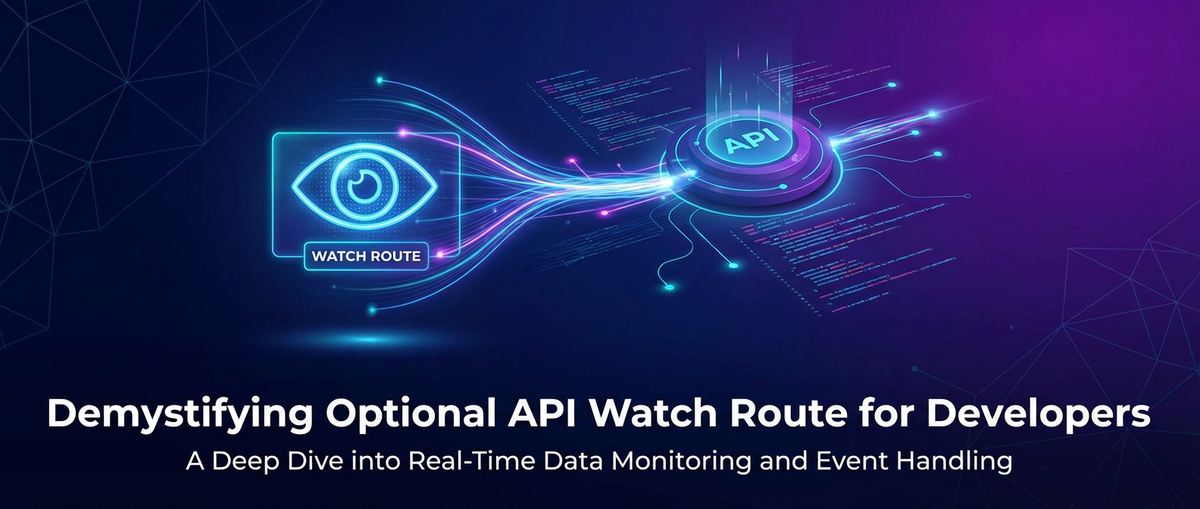


The modern digital landscape thrives on immediacy. Users expect real-time updates, instant notifications, and dynamic interfaces that reflect the current state of data without manual refresh. For developers, this expectation translates into a constant demand for more reactive and efficient ways to deliver information through Application Programming Interfaces (APIs). While traditional request-response api interactions remain the backbone of most applications, a growing segment of use cases necessitates a paradigm shift: the "API watch route." This article aims to demystify what an optional api watch route entails, exploring its underlying technologies, architectural implications, integration with an api gateway, and how it can be elegantly documented using OpenAPI. We will delve deep into the practicalities for developers, providing insights into implementation, challenges, and best practices to unlock the full potential of real-time data delivery.
The Paradigm Shift: From Polling to Pushing
For decades, the standard interaction model for APIs has been a synchronous, pull-based system. A client sends a request to a server, and the server processes that request and sends a response back. This model, while robust and well-understood, introduces inherent limitations when dealing with dynamic data or events that occur asynchronously on the server side.
The Limitations of Traditional Polling
Imagine an application displaying a live stock ticker, a real-time chat, or a dashboard monitoring active users. In a purely pull-based system, the client would have to repeatedly ask the server, "Has anything changed since I last asked?" This mechanism is known as polling.
- Latency: If the polling interval is too long, updates will be delayed, impacting the user experience. A 5-second polling interval means an event occurring immediately after a poll will take almost 5 seconds to be reflected on the client.
- Resource Inefficiency (Client-Side): Short polling intervals (e.g., every second) can overwhelm the client with unnecessary requests, consuming bandwidth and processing power even when no new data is available. This drains battery life on mobile devices and increases network traffic unnecessarily.
- Resource Inefficiency (Server-Side): Each poll request, regardless of whether it yields new data, requires the server to process an incoming HTTP request, query its data stores, and send an HTTP response. For a large number of clients polling frequently, this can lead to significant server load, database stress, and increased operational costs, generating a lot of "empty" traffic.
- Complexity for Server: Managing countless redundant queries for potentially non-existent updates adds an overhead that could be better spent on delivering actual value.
These drawbacks become particularly pronounced in applications where timely updates are critical or where a large number of concurrent clients need to observe changes in data. The solution lies in shifting from a client-driven "pull" model to a server-driven "push" model, where the server proactively notifies clients when relevant events occur or data changes. This fundamental shift underpins the concept of an api watch route.
Introduction to Event-Driven Architectures and Real-Time Updates
Event-driven architectures fundamentally change how systems communicate. Instead of direct requests, components communicate by emitting and reacting to events. In the context of APIs, this means that instead of a client repeatedly asking for updates, the server, upon detecting a change, "pushes" that change to subscribed clients. This model is inherently more efficient and responsive, as data is delivered only when it's available and relevant.
Real-time updates are not just about speed; they are about enhancing user experience, enabling new categories of applications, and optimizing resource utilization across the entire application stack. Whether it's a collaborative document editor showing cursor movements, a gaming application syncing player states, or an IoT dashboard displaying sensor readings, the ability to deliver information as it happens is paramount. The journey from traditional polling to sophisticated watch routes is a testament to the evolving demands and capabilities of modern web development.
Understanding "Watch" Functionality in APIs
At its core, "watch" functionality in an api allows a client to subscribe to changes or events related to a specific resource or a collection of resources. Instead of sending discrete requests for the current state, the client expresses an interest in being notified whenever that state changes. This mechanism transforms the api from a purely transactional interface into a reactive one, facilitating highly interactive and dynamic applications.
What Does It Mean to "Watch" an API Resource?
To "watch" an api resource means establishing a persistent or semi-persistent connection or registration with the server, indicating that the client wishes to receive subsequent updates related to that resource without initiating a new request for each update. For example, a client might watch a user's profile to be notified if their status changes, or watch a chat room to receive new messages as they are posted. The server then takes on the responsibility of informing the client when such an event occurs.
This can involve: * State Change Notifications: Informing the client that a specific attribute of a resource has changed (e.g., an order status transitions from "pending" to "shipped"). * New Resource Creation: Notifying the client when a new item is added to a collection being watched (e.g., a new comment in a forum thread). * Resource Deletion: Alerting the client when a watched resource is removed. * Stream of Events: Providing a continuous flow of related events (e.g., log entries, sensor data readings).
The key differentiator from polling is the proactive nature of the server. The server becomes an active participant in data dissemination, pushing information to the client rather than passively waiting for requests.
Common Use Cases for API Watch Routes
The applications for api watch routes are vast and diverse, spanning various industries and user experiences:
- Real-time Chat Applications: The most quintessential example, where new messages must appear instantly for all participants.
- Live Dashboards and Monitoring Tools: Displaying metrics, server health, system logs, or financial data that updates continuously.
- Collaborative Editing: Showing changes made by other users in documents (like Google Docs), displaying cursor positions, or indicating who is currently viewing a page.
- Gaming: Synchronizing game states, player positions, chat messages, and scores in multiplayer online games.
- IoT (Internet of Things): Receiving sensor readings, device status updates, or alerts from connected devices in real-time.
- Financial Trading Platforms: Broadcasting stock prices, currency exchange rates, or trade executions as they happen.
- Notification Systems: Delivering push notifications to clients about new emails, social media mentions, or system alerts.
- Order Tracking: Providing live updates on the status of an e-commerce order from placement to delivery.
In each of these scenarios, the immediacy of data is not just a "nice-to-have" but a critical component of the application's functionality and user satisfaction.
The "Optional" Aspect: Why Isn't It Always There?
The term "optional" in "optional api watch route" is crucial. While highly beneficial, implementing and maintaining watch routes introduces significant complexity and resource demands that may not be justified for every api or every resource.
Reasons why watch routes are often optional or not implemented by default include:
- Increased Server Complexity:
- Connection Management: Maintaining numerous persistent connections (for WebSockets or SSE) consumes server memory and CPU. Managing their lifecycle (creation, termination, error handling) is non-trivial.
- State Management: The server needs to track which clients are watching what resources and their last known state, especially for features like "only send diffs" or "send from last known timestamp."
- Broadcasting/Multicasting: Efficiently sending updates to multiple subscribed clients requires sophisticated messaging queues or pub/sub systems.
- Scalability Challenges: Scaling an
apiwith many long-lived connections is different from scaling stateless request-response APIs. Load balancers need to handle sticky sessions, and distributed systems need mechanisms to ensure messages reach the correct client, regardless of which server instance they are connected to. - Resource Consumption: Persistent connections consume server resources (sockets, memory buffers) and network bandwidth, even when idle. For resources that rarely change, this overhead might outweigh the benefits.
- Client-Side Complexity: While watch routes simplify the concept of getting updates, robust client-side implementations still require handling reconnections, error states, and potentially reconciling out-of-order updates.
- Security Implications: Persistent connections can be targets for DDoS attacks. Ensuring proper authentication and authorization for long-lived connections adds another layer of security considerations.
- Development and Maintenance Overhead: Building and debugging real-time systems is inherently more complex than traditional request-response APIs. It requires different skill sets and monitoring tools.
- Use Case Justification: For many APIs, simple request-response or even infrequent polling is perfectly adequate. For example, an
apito retrieve static configuration data rarely needs a watch route. The additional complexity and cost are only justified when real-time updates significantly enhance the user experience or enable core application functionality.
Therefore, an api watch route is typically offered as an option for specific, high-value resources where real-time reactivity provides a clear and substantial advantage, and where the development and operational overhead can be justified by the business value it delivers. Understanding these trade-offs is fundamental for any developer considering integrating watch functionality into their api design.
Core Technologies for Implementing API Watch Routes
When a developer decides that an api watch route is necessary, they have several powerful technologies at their disposal, each with its own characteristics, advantages, and limitations. The choice depends on the specific requirements for bidirectionality, browser compatibility, simplicity, and scalability.
Long Polling: The Evolution of Polling
Long polling is an ingenious technique that bridges the gap between traditional polling and true real-time push. It's a clever way to simulate push notifications using the standard HTTP request-response model.
How it works: 1. Client Request: The client sends an HTTP request to the server, similar to a regular poll, but with an expectation that the server might not respond immediately. 2. Server Holds Request: If the server has no new data to send, instead of responding with an empty payload, it holds the connection open. It essentially "pauses" the response. 3. Event Occurs or Timeout: The server waits for new data or an event relevant to the client. * If new data becomes available, the server immediately sends an HTTP response containing that data. * If a predefined timeout period elapses without new data, the server sends an empty or "no updates" response. 4. Client Processes and Re-initiates: Upon receiving any response (data or timeout), the client processes it and immediately sends a new long polling request, restarting the cycle.
Pros: * Simplicity: Relatively easy to implement compared to WebSockets or SSE, as it uses standard HTTP requests and responses. No special protocol or browser API beyond XMLHttpRequest or Fetch. * Widespread Compatibility: Works in virtually all browsers and environments, as it relies on HTTP. * Firewall/Proxy Friendly: Standard HTTP requests are generally not blocked by firewalls or proxies. * Reduced Empty Traffic: Unlike short polling, the server only responds when there's actual data or a timeout, significantly reducing the number of empty responses and associated network/server load.
Cons: * Simulated Push: It's not true push. There's always a slight delay between an event and the client receiving it due to the need to re-establish the connection. * Resource Intensive (Server-Side): Holding open many HTTP connections can still consume significant server resources (sockets, memory). Each client consumes one connection per long poll. * Head-of-Line Blocking: While better than short polling, if multiple events occur rapidly, they might queue up behind an active long poll, leading to slight delays. * Complexity with Load Balancers: Maintaining "sticky sessions" or ensuring requests from the same client are routed to the same server instance can be tricky for load balancers.
Implementation Patterns: Often involves a server-side endpoint that, upon receiving a long poll request, subscribes the client to an internal event bus. When an event is published, the server checks if any clients are waiting and, if so, sends the response. If no events occur within a specified timeframe, the server sends a timeout response (e.g., HTTP 204 No Content) to allow the client to re-initiate the connection and prevent permanent connection hogging.
Server-Sent Events (SSE): Unidirectional Push Over HTTP
Server-Sent Events provide a native browser api for receiving a stream of updates from a server over a single, long-lived HTTP connection. Unlike long polling, SSE is designed specifically for unidirectional (server-to-client) push.
How it works: 1. Client Establishes Connection: The client creates an EventSource object in JavaScript, pointing it to an api endpoint. 2. Server Sends Content-Type: text/event-stream: The server responds with a special Content-Type header and maintains an open connection. 3. Server Streams Events: The server continuously sends data chunks formatted as "events" over this single connection. Each event has a specific format (e.g., event: message\ndata: Hello World\n\n). 4. Client Listens for Events: The EventSource object on the client automatically parses these events, manages reconnection attempts if the connection drops, and dispatches them as JavaScript events that the developer can listen to.
Pros: * True Push (Unidirectional): Provides genuine server-initiated push for data streams. * Simplicity (Client-Side): The browser's EventSource API handles connection management, parsing, and automatic reconnection, making client-side implementation straightforward. * HTTP/2 Multiplexing: Can leverage HTTP/2 to send multiple SSE streams over a single TCP connection, reducing overhead. * Firewall/Proxy Friendly: Operates over standard HTTP/HTTPS, making it generally compatible with network infrastructure. * Efficient: Less overhead than WebSockets for purely unidirectional data streams.
Cons: * Unidirectional: Data flows only from server to client. If the client needs to send frequent messages back to the server, SSE is not suitable. * Limited Browser Support (for older browsers): While widely supported in modern browsers, older IE versions do not support it natively (polyfills exist). * Default Connection Limit: Browsers typically limit the number of concurrent SSE connections (usually 6 per domain), which can be a concern for highly concurrent applications or multiple tabs. * Text-Based: Data is typically sent as UTF-8 encoded text. While binary data can be base64 encoded, it adds overhead.
Implementation Patterns: On the server, it usually involves setting appropriate HTTP headers (Content-Type: text/event-stream, Cache-Control: no-cache, Connection: keep-alive) and then writing formatted event strings to the response stream. Frameworks often provide specific utilities for SSE.
WebSockets: Full-Duplex Bi-directional Communication
WebSockets provide a persistent, full-duplex communication channel over a single TCP connection. Once established, the connection remains open, allowing both the client and the server to send messages to each other at any time, without the overhead of HTTP headers for each message.
How it works: 1. HTTP Handshake: The client initiates an HTTP request (a "WebSocket handshake") to a special ws:// or wss:// URL. This request includes specific headers (Upgrade: websocket, Connection: Upgrade) indicating the desire to upgrade the connection. 2. Server Upgrade: If the server supports WebSockets, it responds with an HTTP 101 Switching Protocols status, agreeing to upgrade the connection from HTTP to WebSocket. 3. Full-Duplex Connection: Once upgraded, the connection becomes a persistent, raw TCP socket over which arbitrary data (text or binary) can be sent by either party. HTTP is no longer involved.
Pros: * Full-Duplex: Enables true bi-directional communication, making it ideal for interactive applications where both client and server need to send messages frequently. * Low Latency: After the initial handshake, message overhead is minimal, leading to very low latency. * High Efficiency: Reduced overhead compared to HTTP for continuous data exchange. * Versatile: Can send text or binary data. * Widespread Support: Modern browsers, servers, and development environments universally support WebSockets.
Cons: * Complexity: More complex to implement and manage than SSE or long polling, especially concerning scaling, load balancing, and connection lifecycle management. * Firewall/Proxy Challenges: While designed to pass through HTTP proxies, some strict firewalls might interfere with the WebSocket handshake or persistent connection, though wss:// (secure WebSockets) mitigates this significantly. * Resource Intensive: Maintaining many persistent TCP connections consumes significant server resources (sockets, memory). * Protocol Overhead: Requires a dedicated WebSocket server or a framework that supports WebSocket protocol.
Implementation Patterns: Requires a WebSocket server library (e.g., ws in Node.js, Spring WebSockets in Java, channels in Django) on the backend. Client-side uses the native WebSocket API. Frameworks often provide abstractions (Socket.IO, SignalR) to simplify development, add fallbacks, and manage reconnection logic.
Webhooks: Event-Driven Server-to-Server Push
Webhooks represent a different, but complementary, approach to event-driven communication. Instead of a client subscribing to a server for real-time updates over a persistent connection, a webhook allows a server (the producer) to notify another server (the consumer) about events by making an HTTP POST request.
How it works: 1. Registration: A consumer server registers an HTTP endpoint (a "webhook URL") with a producer server. 2. Event Occurs: When a specified event occurs on the producer server, it constructs an HTTP POST request containing data about the event. 3. Producer Pushes to Consumer: The producer sends this POST request to the registered webhook URL of the consumer. 4. Consumer Processes: The consumer receives the request and processes the event data.
Pros: * Asynchronous: Decouples the producer from the consumer. The producer doesn't need to know the state of the consumer; it just sends the event. * Simple Implementation: From the producer's perspective, it's just an HTTP POST request. From the consumer's perspective, it's a standard HTTP endpoint. * Scalable: Producers can send events to many consumers without managing persistent connections for each. * Stateless (for producer): The producer doesn't need to maintain state about client connections. * Powerful Integrations: Ideal for server-to-server integrations, notifying third-party services (e.g., GitHub webhooks, Stripe webhooks).
Cons: * Reliability Challenges: Ensuring reliable delivery of webhooks can be complex (retries, dead-letter queues, exponential backoff). * Security Concerns: Webhook URLs need to be secured (HTTPS, signature verification) to prevent tampering or unauthorized event injection. * No Real-time Client UI: Webhooks are server-to-server. To update a client UI, the consumer server would then need to use SSE or WebSockets to push the event to connected clients. * Consumer Availability: The consumer's endpoint must be publicly accessible and robust enough to handle incoming event traffic.
Implementation Patterns: Often involves a "webhook manager" component on the producer to manage registered URLs, queue events, and handle retries. On the consumer side, it's a standard REST endpoint with robust parsing and validation logic.
Summary of Technologies
Each technology offers a distinct approach to delivering real-time updates. Long polling is a pragmatic choice for HTTP-friendly environments with moderate update frequency. SSE excels at efficient, unidirectional server-to-client streaming. WebSockets provide the ultimate flexibility with full-duplex communication for highly interactive applications. Webhooks, while not directly client-facing, are indispensable for server-to-server event notification, often acting as the initial trigger for a client-facing watch route. A developer's task is to carefully select the most appropriate technology based on the specific requirements of their api watch route.
Architectural Considerations for Watch Routes
Implementing an api watch route goes beyond simply choosing a technology; it requires careful architectural design to ensure scalability, reliability, security, and efficient resource management. These considerations become even more critical when dealing with persistent connections and asynchronous data flows.
Scalability: Handling Many Persistent Connections
Scaling an api with watch routes, particularly those relying on long-lived connections like WebSockets or SSE, presents unique challenges compared to stateless REST APIs.
- Connection Limits: Operating systems have limits on the number of open file descriptors/sockets a single process can manage. While these limits are configurable, a single server instance can only handle so many simultaneous connections before performance degrades or it runs out of resources.
- Load Balancing: Traditional HTTP load balancers might not be optimized for persistent connections. For WebSockets,
api gatewaysolutions and load balancers need to support theUpgradeheader and maintain "sticky sessions," ensuring that a client's subsequent WebSocket frames are routed back to the same server instance that established the connection. This is crucial for maintaining connection state. - Horizontal Scaling (Pub/Sub): To scale beyond a single server, a Publish/Subscribe (Pub/Sub) messaging system (e.g., Redis Pub/Sub, Apache Kafka, RabbitMQ) becomes essential. When an event occurs, the server instance detecting it publishes the event to a topic. All server instances that have clients subscribed to that topic then receive the event and forward it to their respective connected clients. This decouples event generation from event delivery to clients across a cluster.
- Connection Servers: For very large-scale deployments, it's common to use dedicated "connection servers" that manage the WebSocket/SSE connections and act as proxies to internal services that handle business logic and event processing. This offloads the connection burden from the core application servers.
Reliability: Message Delivery Guarantees and Reconnection Strategies
Reliability is paramount for real-time systems. Clients need assurance that they will receive all relevant updates, even in the face of network glitches or server restarts.
- Automatic Reconnection: Browsers'
EventSourceAPI handles automatic reconnection, but for WebSockets, developers often need to implement custom reconnection logic (e.g., exponential backoff) to prevent overwhelming the server during outages. This involves listening for connection close events, waiting for a short duration, and then attempting to reconnect. - Message Buffering and Persistence: If a client temporarily disconnects, messages sent during that offline period would be lost by default. For critical updates, a server might need to buffer messages or persist them in a queue (e.g., Kafka topic, database) for a period, allowing clients to "catch up" upon reconnection by providing a "last seen" ID or timestamp.
- Acknowledgement Mechanisms: For critical messages, a client-side acknowledgment system can be implemented (especially with WebSockets). The client sends an ACK message back to the server upon receiving and processing a message, allowing the server to retransmit if no ACK is received within a timeout.
- Heartbeats/Keepalives: To detect dormant connections or network partitions, both client and server can send periodic "heartbeat" messages. If heartbeats stop, either side can assume the connection is dead and initiate a graceful shutdown or reconnection attempt.
Security: Authentication, Authorization, and DDoS Protection
Watch routes introduce new security vectors due to their persistent nature.
- Authentication: The initial handshake (HTTP for WebSockets/SSE, or the long poll request) must be authenticated. This often involves sending a JWT (JSON Web Token) or session cookie. For WebSockets, this token can be passed during the upgrade request or as part of the initial message after connection. The server must validate this token before establishing the persistent connection.
- Authorization: Even after authentication, clients must be authorized to watch specific resources. The server needs to enforce granular permissions, ensuring a client can only receive updates for data they are permitted to access. This can be complex if permissions change mid-connection; the server needs a mechanism to revoke access or terminate connections if authorization changes.
- DDoS Protection: Persistent connections can be targets for denial-of-service attacks. A malicious actor could open many connections without sending data, exhausting server resources.
- Rate Limiting: Limit the number of connection attempts from a single IP address.
- Connection Limits: Set limits on the total number of open connections per user or per IP.
- Idle Connection Timeouts: Implement aggressive timeouts for idle connections that don't send/receive data.
- Firewall Rules: Use network firewalls and
api gatewaysolutions to filter suspicious traffic.
Resource Management: Server Memory, CPU, Network Bandwidth
Efficient resource management is crucial for the economic operation of watch routes.
- Memory: Each open connection consumes memory for buffers, session state, and protocol overhead. As the number of connections grows, memory usage can skyrocket. Careful design, efficient data structures, and perhaps offloading state to external stores (like Redis) are necessary.
- CPU: Processing events, formatting messages, and managing connections consume CPU cycles. High message throughput or complex event processing logic can quickly bottleneck the CPU. Asynchronous I/O and non-blocking operations are essential for handling concurrency.
- Network Bandwidth: While more efficient than polling, a large number of concurrent watch routes constantly streaming data will consume significant network bandwidth. Optimize message size, use compression, and send only necessary diffs instead of full resource states.
- Connection Lifespan: Implement mechanisms to gracefully close connections that are no longer active or needed. For example, log out clients, or expire sessions.
State Management: Tracking Client Subscriptions and Last-Seen Data
The server needs to intelligently manage who is watching what.
- Subscription Management: A mapping of clients to the resources they are watching. This could be stored in-memory (for single server), or in a distributed cache (like Redis) for clustered environments.
- "Last Seen" State: For
apis that guarantee delivery of missed events, the server needs to track the last event ID or timestamp a client received. This allows the client to provide this information upon reconnection and for the server to send any missed events from that point onwards. - Event Sourcing: In advanced architectures, event sourcing can be used to capture all state changes as a sequence of events. Clients can then subscribe to these event streams and rebuild their local state.
The Role of an API Gateway in Watch Routes
An api gateway is a critical component in any modern api architecture, acting as a single entry point for all clients. For watch routes, its role becomes even more pronounced, providing essential services that offload complexity from individual backend services and enhance the overall reliability, security, and performance of the real-time apis. A robust api gateway is indispensable, providing features like unified authentication, traffic management, and detailed call logging. Platforms like APIPark exemplify how an advanced api gateway can streamline the integration and management of various api types, including those requiring persistent connections for real-time updates. By centralizing core functionalities, an api gateway ensures consistent enforcement of policies and offers a holistic view of api traffic.
How an API Gateway Can Manage and Proxy These Connections
An api gateway sits in front of your backend services, routing client requests to the appropriate service. For watch routes, it performs several vital functions:
- Connection Termination: The
api gatewaycan terminate the client's connection (e.g., WebSocket, SSE, long poll) and establish its own connection to the backend service. This can abstract the backend from direct client connection management. - Protocol Translation: While most modern gateways support WebSocket proxying directly, some might perform protocol translation if a backend service uses a different real-time protocol internally.
- Sticky Sessions: For WebSockets and long polling, sticky sessions are crucial. The
api gatewaycan ensure that once a client establishes a persistent connection with a specific backend instance, all subsequent requests (or frames) from that client are consistently routed to the same instance. This maintains session state and connection integrity. - Load Distribution: Beyond sticky sessions, the
api gatewayefficiently distributes initial connection requests across available backend instances, preventing any single service from becoming a bottleneck.
Traffic Shaping and Rate Limiting for Watch Routes
Even persistent connections need management to prevent abuse and ensure fair resource allocation.
- Connection Rate Limiting: The
api gatewaycan limit the rate at which clients can establish new connections, preventing connection-flooding attacks. - Message Rate Limiting: For WebSockets, the gateway can inspect incoming messages and apply rate limits on the number of messages a client can send within a given period.
- Connection Duration Limits: Some gateways can enforce maximum connection durations, forcing clients to reconnect periodically, which helps in resource cleanup and load re-distribution.
- Concurrent Connection Limits: Limit the total number of simultaneous connections from a specific client,
apikey, or IP address.
Authentication and Authorization at the Gateway Level
Centralizing security at the api gateway simplifies backend services and provides a unified security posture.
- Unified Authentication: The
api gatewaycan handle initial authentication for allapirequests, including the handshake for watch routes. It can validate tokens (JWTs), session cookies, orapikeys before allowing the connection to be established or proxied to the backend. This ensures that only authenticated users can initiate a watch. - Centralized Authorization: After authentication, the gateway can enforce authorization policies. It can check if the authenticated user has the necessary permissions to watch a particular resource or collection. If permissions are complex or require external checks, the
api gatewaycan query an authorization service before forwarding the connection. - Token Refresh: For long-lived connections, tokens might expire. The
api gatewaycan potentially handle token refreshes or provide mechanisms for clients to re-authenticate without fully dropping and re-establishing the persistent connection to the backend.
Centralized Logging and Monitoring
An api gateway provides a single point for comprehensive observability.
- Connection Logging: Log connection establishments, closures, and any errors, providing a crucial audit trail.
- Traffic Monitoring: Monitor the volume of data flowing through watch routes, the number of active connections, and latency metrics. This helps identify performance bottlenecks or unusual usage patterns.
- Alerting: Configure alerts for abnormal connection rates, high error rates, or resource exhaustion.
- Integration with Observability Tools: Gateways often integrate with external logging, monitoring, and tracing systems, providing a consolidated view of
apihealth and performance. This is where platforms like APIPark shine, offering detailedapicall logging and powerful data analysis features that help businesses trace and troubleshoot issues, ensuring system stability and data security while also displaying long-term trends and performance changes for preventive maintenance.
Integration with Service Mesh
In microservices architectures, an api gateway often works in conjunction with a service mesh.
- Edge vs. Internal Traffic: The
api gatewayhandles "north-south" traffic (client to services), while the service mesh handles "east-west" traffic (service to service). - Unified Policy Enforcement: Policies defined at the
api gateway(e.g., authentication, rate limiting) can be consistently applied, while the service mesh might manage internal policies (e.g., retries, circuit breaking, mTLS) for event publishing and consumption among backend services that power the watch routes. - Observability Complement: Both provide observability, with the
api gatewayfocusing on external interactions and the service mesh on internal service interactions, offering a complete picture of the real-time data flow.
By centralizing these critical functions, an api gateway dramatically simplifies the development and operation of api watch routes, allowing backend services to focus purely on business logic rather than boilerplate concerns like security, scalability, and observability. This separation of concerns is fundamental for building resilient and manageable real-time api architectures.
Designing and Documenting Optional Watch Routes with OpenAPI
For developers, a well-documented api is as crucial as the api itself. When dealing with optional watch routes, which introduce different communication paradigms, clear and precise documentation becomes paramount. OpenAPI (formerly Swagger) is the de facto standard for defining RESTful APIs, and while traditionally focused on request-response, it can be extended to describe the nuances of real-time communication.
How OpenAPI Can Describe These Routes
OpenAPI provides a structured, machine-readable format for describing apis. For watch routes, the challenge is to represent concepts like long-lived connections, streamed events, and different protocols (SSE, WebSockets) within this framework.
- Standard Path Item Objects: Even for watch routes, there will typically be a base path.
OpenAPI'sPath Item ObjectandOperation Objectare the starting points. callbacksObject for Webhooks: For webhooks,OpenAPI3.0 introduced thecallbacksobject, which is perfect for describing out-of-band notifications. You define an event and then specify the HTTP method (typically POST) and payload that theapiwill send to a registered URL when that event occurs. This explicitly documents the server-to-server push mechanism.serversObject for WebSocket/SSE Endpoints: WhileOpenAPI'sserversobject primarily handles HTTP/HTTPS, you can listws://orwss://URLs for WebSocket endpoints, providing the base URL for clients. For SSE, it will typically be anhttp(s)://endpoint.
Defining Request/Response Schemas for Long Polling, SSE
Representing these methods within OpenAPI requires slightly different approaches.
- Long Polling:
- Request: Documented like a standard GET request. Parameters might include
timeoutorlastEventId. - Response: The
responseobject for the long poll endpoint should describe the potential payloads. Since the server holds the connection, the documentation should clearly state that the response might not be immediate. - HTTP Status Codes: Clearly define expected status codes, e.g.,
200 OKfor data,204 No Contentfor timeout. - Example:
yaml /events/long-poll: get: summary: Retrieve events via long polling description: | Establishes a long-polling connection to retrieve new events. The server will hold the connection until an event occurs or a timeout is reached. parameters: - name: lastEventId in: query description: The ID of the last event received by the client. Used to fetch new events since then. required: false schema: type: string responses: '200': description: New event(s) available. content: application/json: schema: type: array items: $ref: '#/components/schemas/Event' '204': description: No new events within the timeout period. Client should re-initiate the connection. '408': description: Request Timeout (server-side, if not handled by 204). x-long-polling: true # Custom extension to indicate long polling
- Request: Documented like a standard GET request. Parameters might include
- Server-Sent Events (SSE):
- Response: The critical part is the
Content-Type.OpenAPI'sresponseobject can specifytext/event-stream. The schema should describe the structure of the individual events that will be streamed, even though they arrive one by one.
- Response: The critical part is the
Example: ```yaml /events/stream: get: summary: Subscribe to a stream of Server-Sent Events (SSE) description: | Establishes a persistent connection to receive real-time updates as a stream of SSE. The connection will remain open until closed by the server or client. responses: '200': description: A continuous stream of events. content: text/event-stream: schema: type: string # SSE is text, schema describes the format of each event example: | event: new_message data: {"id": "msg-123", "text": "Hello", "timestamp": "..."}
            event: user_joined
            data: {"userId": "user-abc", "username": "Alice"}
        # Use a custom extension to describe the structure of the *individual event data*
        x-sse-event-schema:
          type: object
          properties:
            event:
              type: string
              description: The event type (e.g., 'new_message', 'user_joined').
            data:
              type: object
              description: The JSON payload of the event.
              oneOf: # Define possible event data schemas
                - $ref: '#/components/schemas/NewMessageEvent'
                - $ref: '#/components/schemas/UserJoinedEvent'
```
Describing WebSocket Protocols within OpenAPI
OpenAPI was primarily built for HTTP/REST. Describing full-duplex WebSocket protocols requires more creative use of OpenAPI extensions or external documentation.
- Using
serversObject: List thewss://URL. ```yaml servers:- url: wss://api.example.com/ws description: WebSocket server for real-time updates ```
- Custom
x-Extensions: This is the most common way to add WebSocket-specific details. You can define custom properties to describe the messages exchanged.yaml paths: /ws/chat: get: # Represents the WebSocket handshake initiation summary: Establish a WebSocket connection for real-time chat description: | Upgrades the HTTP connection to a WebSocket connection for bi-directional chat messages. parameters: - name: token in: query description: Authentication token for WebSocket connection. required: true schema: type: string responses: '101': description: Switching Protocols (WebSocket handshake successful) x-webSocket: description: Describes the messages exchanged over the WebSocket protocol. messageSchemas: clientToServer: $ref: '#/components/schemas/ClientChatMessage' serverToClient: oneOf: - $ref: '#/components/schemas/ServerChatMessage' - $ref: '#/components/schemas/UserStatusUpdate' components: schemas: ClientChatMessage: type: object properties: type: { type: string, enum: [ "message" ] } content: { type: string } roomId: { type: string } ServerChatMessage: type: object properties: type: { type: string, enum: [ "message" ] } senderId: { type: string } content: { type: string } timestamp: { type: string, format: date-time } UserStatusUpdate: type: object properties: type: { type: string, enum: [ "status_update" ] } userId: { type: string } status: { type: string, enum: [ "online", "offline" ] } - External Documentation: For complex WebSocket sub-protocols, it might be more practical to reference external documentation from
OpenAPI. TheexternalDocsfield can link to a detailed markdown or HTML page explaining the WebSocket message formats and flows.
Making the "Optional" Nature Clear in the Documentation
The OpenAPI specification, along with clear prose, must explicitly state that a watch route is an alternative to traditional polling.
- Discriminator in
description: Use thedescriptionfield for theapiendpoint or schema to clearly state that the watch route is an option. "This endpoint provides real-time updates via SSE. For clients that do not support SSE, or for simpler implementations, consider using the/resource/{id}/pollendpoint for polling." - Grouping
apis: OrganizeOpenAPItags or paths to group relatedapis (e.g.,ResourcePollingAPIandResourceWatchAPI). - Conditional Descriptions: If a watch route is only available under certain conditions (e.g., specific
apiplans), mention these constraints. - Feature Flags/Parameters: If the watch functionality is toggled by a request parameter (less common for persistent connections but possible for long polling), document that parameter as
optional.
Example OpenAPI Snippets (Integrated above)
The examples provided within the previous sections illustrate how OpenAPI can be adapted. The key is to: 1. Use description fields generously: Explain the behavior, expectations, and any non-standard aspects. 2. Leverage Content-Type: Crucial for SSE (text/event-stream). 3. Define clear schemas: Even for streamed data, define the structure of the individual messages or events. 4. Employ x- extensions: When OpenAPI doesn't have a direct primitive, create custom extensions for machine readability. 5. Provide examples: Real-world examples of event payloads are invaluable.
By diligently applying these practices, developers can create OpenAPI specifications that accurately and comprehensively document optional api watch routes, making it easier for client developers to understand, integrate, and leverage real-time capabilities. This clarity is essential for accelerating development cycles and reducing integration friction.
APIPark is a high-performance AI gateway that allows you to securely access the most comprehensive LLM APIs globally on the APIPark platform, including OpenAI, Anthropic, Mistral, Llama2, Google Gemini, and more.Try APIPark now! 👇👇👇
Implementing Watch Routes: Practical Developer Insights
Moving from theoretical understanding to practical implementation requires navigating various technical choices and best practices. Developers need to consider both backend and frontend implications, error handling, and robust testing strategies.
Backend Implementation: Framework Choices
The choice of backend technology significantly influences how efficiently and easily watch routes can be implemented. Modern languages and frameworks often provide robust asynchronous I/O capabilities, which are crucial for handling many concurrent, long-lived connections.
- Node.js:
- Strength: Highly suited for real-time applications due to its event-driven, non-blocking I/O model. A single-threaded event loop can handle thousands of concurrent connections with minimal overhead.
- Frameworks:
Express.jsfor basic routing,wsorSocket.IOfor WebSockets,Sprocketfor SSE.Socket.IOis particularly popular as it provides fallbacks (e.g., long polling) for environments that don't fully support WebSockets. - Considerations: CPU-bound tasks can block the event loop, so offload heavy computations to worker threads or external services.
- Go (Golang):
- Strength: Excellent for concurrency with goroutines and channels. Its lightweight threads and efficient network stack make it highly performant for handling many concurrent connections without significant resource consumption.
- Frameworks: Standard library
net/httpfor HTTP,gorilla/websocketfor WebSockets. - Considerations: Steep learning curve for some, but produces highly optimized and reliable real-time services.
- Java (Spring WebFlux/Spring Boot):
- Strength: Modern Java frameworks like
Spring WebFlux(reactive stack) are designed for non-blocking I/O and reactive programming paradigms, making them suitable for SSE and WebSockets.Spring Bootprovides excellent auto-configuration. - Frameworks:
Spring WebFluxfor reactive HTTP and SSE,Spring WebSocketsfor WebSocket integration. - Considerations: Can be more resource-intensive (memory) than Node.js or Go, but offers robust enterprise features and a mature ecosystem.
- Strength: Modern Java frameworks like
- Python (FastAPI, Django Channels):
- Strength: Python's
asynciolibrary enables asynchronous programming. Frameworks likeFastAPI(built onStarlette) are modern and performant.Django ChannelsextendsDjangoto handle WebSockets and other asynchronous protocols. - Frameworks:
FastAPIfor HTTP/ASGI,Django Channelsfor integrating WebSockets and background tasks intoDjangoprojects. - Considerations: The GIL (Global Interpreter Lock) can limit true parallelism for CPU-bound tasks, but for I/O-bound real-time applications,
asynciois highly effective.
- Strength: Python's
- Ruby (Rails ActionCable):
- Strength:
ActionCableintegrates WebSockets seamlessly intoRailsapplications, providing a convention-over-configuration approach for real-time features. - Frameworks:
Rails ActionCable. - Considerations: Might be less performant for very high concurrency compared to Go or Node.js, but excellent for quick prototyping and integration within a
Railsecosystem.
- Strength:
Regardless of the chosen language, the backend implementation will typically involve: 1. Event Source: A mechanism to detect changes (e.g., database triggers, message queues, internal services). 2. Message Broker/Pub-Sub: To distribute events efficiently to all connected backend instances (e.g., Redis Pub/Sub, Kafka, RabbitMQ). 3. Connection Manager: To handle the lifecycle of client connections (WebSockets, SSE, long polls), subscribe them to relevant topics, and push events.
Frontend Implementation: JavaScript EventSource, WebSocket API, Polling Logic
The client-side implementation primarily relies on browser native APIs for efficient real-time communication.
- JavaScript
EventSource(for SSE): ```javascript const eventSource = new EventSource('https://api.example.com/events/stream');eventSource.onmessage = (event) => { const data = JSON.parse(event.data); console.log('Received generic event:', data); // Handle the event data to update UI };eventSource.addEventListener('new_message', (event) => { const message = JSON.parse(event.data); console.log('New chat message:', message); // Append message to chat window });eventSource.onerror = (error) => { console.error('EventSource failed:', error); // The browser's EventSource will try to reconnect automatically };// To manually close the connection // eventSource.close();``EventSource` is simple and handles reconnection automatically, making it ideal for purely server-to-client updates. - JavaScript
WebSocketAPI: ```javascript const socket = new WebSocket('wss://api.example.com/ws/chat?token=your_auth_token');socket.onopen = (event) => { console.log('WebSocket connection opened:', event); socket.send(JSON.stringify({ type: 'join_room', roomId: 'general' })); };socket.onmessage = (event) => { const message = JSON.parse(event.data); console.log('Received WebSocket message:', message); if (message.type === 'message') { // Display chat message } else if (message.type === 'user_status_update') { // Update user status in UI } };socket.onclose = (event) => { console.log('WebSocket connection closed:', event); // Implement manual reconnection logic here with exponential backoff if (event.wasClean) { console.log(Connection closed cleanly, code=${event.code} reason=${event.reason}); } else { console.error('Connection died'); // Reconnect attempt after a delay setTimeout(() => { // Implement exponential backoff for reconnection const reconnectDelay = Math.min(1000 * Math.pow(2, reconnectAttempts), 30000); // Max 30s reconnectAttempts++; console.log(Attempting to reconnect in ${reconnectDelay / 1000} seconds...); // new WebSocket(...) }, reconnectDelay); } };socket.onerror = (error) => { console.error('WebSocket error:', error); };// To send a message // socket.send(JSON.stringify({ type: 'message', content: 'Hello!' }));`` TheWebSocketAPI is more powerful but requires developers to implement their own reconnection logic and message parsing. Libraries likeSocket.IO-client` abstract much of this complexity. - Polling Logic (for Long Polling or Fallbacks): ```javascript let lastEventId = null;async function pollForEvents() { try { const response = await fetch(
/api/events/long-poll?lastEventId=${lastEventId || ''}); if (response.status === 200) { const events = await response.json(); events.forEach(event => { console.log('Received event:', event); // Update UI, potentially update lastEventId lastEventId = event.id; // Assuming events have unique IDs }); } else if (response.status === 204) { console.log('No new events.'); } else { console.error('Error polling:', response.status); } } catch (error) { console.error('Network error during polling:', error); } finally { // Immediately re-initiate the long poll pollForEvents(); } }pollForEvents();`` Long polling reuses the samefetchorXMLHttpRequest` API as standard HTTP requests but with special handling for delays and immediate re-initiation.
Error Handling and Retry Mechanisms
Robust error handling is crucial for any real-time system.
- Network Disconnections: Both SSE and WebSockets can experience network issues.
EventSourcehandles reconnections automatically. For WebSockets, implement exponential backoff for reconnect attempts to avoid overwhelming the server. - Server Errors: If the server encounters an error during a watch session (e.g., database down, internal service failure), it should gracefully close the connection with an appropriate error code (for WebSockets) or send an error event (for SSE). The client should react by showing an error message, attempting to reconnect, or falling back to a different
api. - Client-Side Errors: Invalid data, processing failures on the client. The client should log these errors and potentially notify the user.
- Idempotency: If messages can be retransmitted due to network issues, ensure that processing them multiple times doesn't lead to incorrect state (e.g., using unique message IDs to deduplicate).
Client-Side State Management
Managing state on the client for real-time updates can be complex.
- Data Consistency: When multiple updates arrive, ensure they are applied in the correct order. If messages can arrive out of order (less common with a single stream, but possible in distributed systems), client-side logic might need to reorder them or handle conflicts.
- Snapshot and Delta: For rapidly changing data, it might be more efficient to periodically send a full "snapshot" of the resource and then send "delta" updates between snapshots. The client needs logic to apply these deltas.
- Offline State: What happens if the client goes offline? Upon reconnection, should it fetch all missed events, or just the latest state? This depends on the application's requirements for data consistency and eventual consistency. "Last-seen" IDs or timestamps are vital here.
Testing Watch Routes
Testing real-time features requires specialized approaches.
- Unit Tests: Test individual components (e.g., event parsers, connection managers).
- Integration Tests:
- Backend: Simulate client connections and event generation. Verify that events are correctly pushed to connected clients.
- Frontend: Use testing frameworks (e.g., Jest, React Testing Library) to simulate incoming messages and verify that the UI updates correctly.
- Load Testing: Crucial for watch routes. Simulate thousands or tens of thousands of concurrent connections and measure server performance (CPU, memory, bandwidth), latency, and error rates. Tools like
k6,Gatling, or specialized WebSocket load testers are necessary. - Chaos Engineering: Intentionally introduce network partitions, server restarts, or
api gatewayfailures to test the robustness of reconnection logic and error handling. - End-to-End Tests: Automated browser tests that simulate user interactions and verify that real-time updates occur as expected.
Implementing watch routes is a rewarding but challenging endeavor. By carefully selecting technologies, designing for scalability and reliability, and rigorously testing both client and server components, developers can build highly responsive and robust real-time applications that meet the demands of modern users.
Challenges and Pitfalls
Despite their power, api watch routes introduce a new set of challenges and potential pitfalls that developers must be aware of and proactively address. Overlooking these can lead to unstable systems, performance bottlenecks, and a poor user experience.
Connection Management and Cleanup
One of the most significant challenges is effectively managing the lifecycle of persistent connections.
- Orphaned Connections: Clients might close their browser tabs or lose network connectivity without sending a graceful disconnect signal. If the server doesn't detect and clean up these "orphaned" connections, it can lead to resource leaks (memory, sockets) and eventual server exhaustion. Heartbeats and aggressive idle timeouts (for WebSockets) are crucial.
- Server Restarts/Deployments: During server restarts or deployments, all active connections are dropped. Clients must be designed to gracefully handle these disconnections and attempt to reconnect with appropriate backoff strategies.
- Resource Throttling: If a client is unable to process incoming messages as fast as the server is sending them ("backpressure"), the server might build up message queues for that client, consuming excessive memory. The server needs mechanisms to detect this, potentially throttle sending, or even disconnect the slow client.
- Connection Limits: Operating systems and proxies impose limits on the number of open file descriptors/sockets. For large-scale applications, hitting these limits is a common issue requiring careful system tuning and horizontal scaling.
Backpressure Handling
Backpressure occurs when a producer generates data faster than a consumer can process it. In the context of watch routes:
- Server as Producer, Client as Consumer: If the server sends events too quickly for the client to process (e.g., client has a slow network, resource-intensive UI updates, or a buggy
EventSourcelistener), messages can queue up on the client or, more critically, within the server's network buffers for that specific client connection. - Consequences: This can lead to increased memory usage on the server, high latency for the affected client, and eventually, the client falling far behind or the server forcefully closing the connection to reclaim resources.
- Solutions:
- Client-side Buffering: Clients can buffer incoming messages and process them in batches, or display a "processing updates" indicator.
- Rate Limiting on Server: The server can detect slow consumers and reduce the rate at which it sends messages to them, or even temporarily pause.
- Explicit Flow Control (WebSockets): While TCP provides some flow control, for application-level backpressure, WebSocket messages can include acknowledgements or sequence numbers, allowing the client to explicitly signal readiness for more data.
Cross-Origin Issues (CORS)
Just like traditional AJAX requests, real-time connections initiated from a web browser are subject to the Same-Origin Policy.
- SSE:
EventSourceautomatically handles CORS preflight requests (OPTIONSHTTP method) if the server is configured with the correctAccess-Control-Allow-Originheaders. - WebSockets: The WebSocket handshake is an HTTP request, so it's also subject to CORS. The server must include the appropriate CORS headers in its handshake response. If not configured correctly, the browser will block the connection attempt.
- Troubleshooting: Browser developer tools are essential for debugging CORS issues, looking for preflight failures or blocked connection attempts in the network tab.
Client-Side Complexity
While the allure of real-time updates is strong, it often shifts complexity from server-side polling logic to client-side state management and error handling.
- Reconnection Logic: As discussed,
EventSourcehandles it, but for WebSockets, developers must implement robust reconnection with exponential backoff and potentially "last-seen" IDs to fetch missed messages. - Data Consistency and Ordering: What if updates arrive out of order? What if a client reconnects and needs to reconcile its local state with the server's current state and potentially missed events? This requires sophisticated client-side logic.
- UI Performance: Rapid fire updates can overwhelm the browser's rendering engine, leading to a sluggish UI. Techniques like debouncing, throttling, virtualized lists, and efficient diffing algorithms are often necessary.
- Battery Consumption: Keeping a persistent connection open, even for low message rates, consumes more battery than occasional HTTP requests. Clients should implement logic to gracefully close connections or reduce activity when the application is in the background or the device is low on power.
Debugging Distributed Systems
Real-time systems, especially those distributed across multiple backend services, an api gateway, and message brokers, are inherently harder to debug.
- Event Flow: Tracing an event from its origin, through a message broker, across multiple backend services, through the
api gateway, and finally to a client, can be extremely challenging. - Observability: Comprehensive logging (including
api gatewaylogs as offered byAPIPark), distributed tracing (e.g., OpenTelemetry, Jaeger), and metrics (connection counts, message rates, latency) across all components are indispensable. - Reproducibility: Issues, especially those related to race conditions or network flakiness, can be hard to reproduce reliably in development environments.
- Stateful Nature: Debugging persistent connections involves inspecting the state of active connections, message queues, and client subscriptions, which is more complex than analyzing stateless HTTP request logs.
By proactively addressing these challenges, developers can build more resilient, performant, and maintainable api watch routes, transforming potential pitfalls into opportunities for robust system design.
When to Choose Which Watch Mechanism: A Decision Matrix
Selecting the right technology for an api watch route is critical. The optimal choice depends heavily on the specific requirements of the application, including the need for bidirectionality, browser compatibility, simplicity of implementation, and expected scale. This table provides a quick comparison to aid in decision-making.
| Feature / Mechanism | Long Polling | Server-Sent Events (SSE) | WebSockets | Webhooks |
|---|---|---|---|---|
| Communication Flow | Unidirectional (server responds to client pull) | Unidirectional (server pushes to client) | Full-Duplex (bi-directional) | Unidirectional (server A pushes to server B) |
| Protocol | HTTP/1.1 (standard request/response) | HTTP/1.1 or HTTP/2 (text/event-stream Content-Type) |
WebSocket protocol (upgraded from HTTP) | HTTP/HTTPS (POST requests) |
| Browser API | XMLHttpRequest, Fetch API |
EventSource API |
WebSocket API |
N/A (server-to-server) |
| Bidirectionality | No (client sends new request for each poll) | No (client needs separate HTTP request to send data) | Yes (both client and server can send/receive freely) | No (client server needs separate API call to respond) |
| Connection Type | Short-lived (re-est. for each update) | Long-lived (single, persistent connection) | Long-lived (single, persistent connection) | Short-lived (individual request for each event) |
| Overhead per Event | Relatively high (full HTTP headers) | Low (minimal framing for each event) | Very low (minimal framing) | Moderate (full HTTP headers per event) |
| Latency | Moderate (delay for re-establishing connection) | Low (real-time stream) | Very Low (near real-time) | Variable (depends on network, consumer processing time) |
| Complexity | Low-Moderate (client handles re-poll logic) | Low (browser EventSource handles much of the complexity) |
Moderate-High (client/server handles connection management, scaling) | Low-Moderate (producer config, consumer endpoint) |
| Firewall/Proxy | Very friendly (standard HTTP) | Very friendly (standard HTTP/HTTPS) | Generally friendly (uses HTTP ports, but may face issues with strict proxies) | Very friendly (standard HTTP/HTTPS) |
| Error Handling | Manual reconnection logic | Auto-reconnection by EventSource |
Manual reconnection logic, heartbeat management | Producer handles retries, dead-letter queues |
| Common Use Cases | Infrequent updates, older browsers, simple dashboards | Live feeds, stock tickers, notifications, log streaming, chat where client sends data less frequently | Real-time chat, multiplayer games, collaborative editing, high-frequency data | Server-to-server notifications, integrations with third-party services |
| Scalability Concerns | Server connection limits, resource use per connection | Server connection limits (though more efficient than long polling) | High server resource consumption for many connections, sticky sessions | Ensuring reliable delivery, managing consumer endpoints |
This matrix highlights that no single solution is universally superior. The "optional" nature of watch routes underscores the need for a deliberate choice. For straightforward, server-to-client updates, SSE often provides the best balance of simplicity and efficiency. When bi-directional communication or extremely low latency is paramount, WebSockets are the clear choice. Long polling remains a viable fallback or a simple solution for environments with strict network constraints. Webhooks, while not directly client-facing, are indispensable for robust server-to-server event architectures that can then trigger client-facing updates. Developers should weigh these factors carefully against their specific project needs and infrastructure capabilities.
Real-World Examples and Case Studies
The principles behind api watch routes are not abstract concepts but are deeply embedded in many of the interactive applications we use daily. Understanding how prominent platforms utilize these mechanisms helps solidify their practical value.
- GitHub (Webhooks): GitHub is a prime example of extensive webhook usage. When an event occurs in a repository (e.g., a push to a branch, a new pull request, a comment on an issue), GitHub sends an HTTP POST request to pre-configured webhook URLs. This allows continuous integration (CI) services like Jenkins or CircleCI to automatically run tests, deployment services to deploy code, or custom applications to trigger notifications. This is a quintessential server-to-server push mechanism.
- Google Docs / Figma (WebSockets): Collaborative editing tools like Google Docs and design platforms like Figma rely heavily on WebSockets. When multiple users are editing a document or design simultaneously, every keystroke, every mouse movement, and every shape manipulation needs to be reflected almost instantly across all collaborators' screens. This requires bi-directional, low-latency communication, which WebSockets are perfectly designed for. Changes from any client are immediately broadcasted to all other connected clients, enabling seamless real-time collaboration.
- Financial Trading Platforms (WebSockets / SSE): Applications that display live stock prices, cryptocurrency values, or foreign exchange rates use WebSockets or SSE to stream real-time market data. The server continuously pushes price updates, order book changes, and trade executions to subscribers. This allows traders to make informed decisions based on the most current information, where even milliseconds of delay can be critical.
- Twitter / Facebook (Streaming APIs - WebSockets/Long Polling for older versions): Social media platforms need to update users' feeds with new posts, likes, and comments in real-time. While complex behind the scenes, their streaming APIs (often WebSockets, or long polling in earlier iterations) allow clients to receive a continuous stream of relevant events without constantly refreshing. This creates the dynamic, "live" feel of social media.
- Live Sports Scores / News Feeds (SSE / Long Polling): Websites and apps that display live sports scores, election results, or breaking news often use SSE for efficient, unidirectional updates. A single connection can stream new scores, play-by-play updates, or news headlines to millions of concurrent users without the overhead of WebSockets if no client-to-server interaction is needed for the updates themselves.
- IoT Dashboards (WebSockets / MQTT over WebSockets): Dashboards monitoring sensor data, device status, or environmental conditions in IoT solutions frequently use WebSockets. Devices might publish data via MQTT (Message Queuing Telemetry Transport), which can then be proxied or converted to WebSockets by an
api gatewayor backend service to stream to web-based dashboards. This provides real-time visibility into the operational state of connected devices.
These examples underscore that api watch routes are not niche functionalities but fundamental building blocks for creating engaging, responsive, and efficient digital experiences across a wide spectrum of applications. The "optional" nature emphasizes that developers must carefully assess the value proposition and choose the appropriate technology and architecture to meet their specific real-time requirements.
Future Trends
The landscape of real-time communication is continuously evolving, driven by new protocols, architectural patterns, and the ever-increasing demand for instantaneous data. Several emerging trends promise to further enhance the capabilities and simplify the implementation of api watch routes.
HTTP/3 and QUIC Potential
HTTP/3, built on top of QUIC (Quick UDP Internet Connections), represents a significant leap forward in network protocols. While HTTP/2 improved performance by multiplexing multiple streams over a single TCP connection, it still suffered from TCP's head-of-line blocking. QUIC, by contrast, operates over UDP and implements its own stream multiplexing and reliable delivery mechanisms.
- Reduced Latency: QUIC's 0-RTT (zero round-trip time) or 1-RTT connection establishment drastically reduces latency for new connections, which could benefit long polling and the initial handshake for WebSockets.
- Elimination of Head-of-Line Blocking: With QUIC, if one stream experiences packet loss, it doesn't block other independent streams on the same connection, a major advantage for multiplexed protocols like SSE or even future WebSocket-like implementations built directly on QUIC.
- Improved Connection Migration: QUIC connections can seamlessly migrate across different IP addresses (e.g., switching from Wi-Fi to cellular data) without interrupting the stream, which is a massive benefit for mobile real-time applications.
- Impact on Watch Routes: While direct WebSocket support over QUIC is still evolving (WebSocket over HTTP/3), the underlying performance improvements of QUIC/HTTP/3 will naturally benefit any real-time
apileveraging HTTP, including SSE and long polling, making them even more performant and reliable. Future real-time protocols might leverage QUIC directly.
Serverless Functions for Event Processing
Serverless architectures are transforming how developers build and deploy applications, and their utility extends to real-time event processing.
- Event-Driven Nature: Serverless functions (e.g., AWS Lambda, Azure Functions, Google Cloud Functions) are inherently event-driven. They can be triggered by events from message queues, database changes, or even HTTP requests.
- Scalability for Events: A serverless function can process an incoming event, publish it to a message broker, or directly trigger a push notification to a client. This scales automatically without provisioning servers.
- Backend for Frontend: Serverless functions can act as lightweight "backends for frontends" (BFFs) that process events and then push them to clients using WebSocket gateways (like AWS API Gateway's WebSocket support) or SSE endpoints.
- Cost Efficiency: You only pay for the compute time used to process events, which can be highly cost-effective for sporadic or bursty real-time workloads.
- Considerations: Managing persistent connections directly within serverless functions can be challenging due to their ephemeral nature. This often requires integrating with specialized managed services (e.g., managed WebSocket services).
GraphQL Subscriptions
GraphQL is an api query language that provides a more efficient and powerful alternative to REST for data fetching. GraphQL subscriptions extend this paradigm to real-time updates.
- How it works: A client sends a "subscription" query to a GraphQL server, specifying the data it wants to receive in real-time. The server then maintains a persistent connection (typically WebSockets) and pushes relevant data payloads to the client whenever that data changes on the server.
- Declarative Updates: Clients specify what data they want to watch using the same query language they use for fetching, simplifying client-side logic.
- Reduced Over-fetching: Clients only receive the exact data fields they request, minimizing payload size.
- Strong Typing: GraphQL's type system provides compile-time validation, making schema definition and client code more robust.
- Impact on Watch Routes: GraphQL subscriptions offer a higher-level abstraction for real-time data compared to raw WebSockets or SSE. They integrate data fetching and real-time updates into a single, cohesive
apiexperience, making it easier for developers to build complex, real-time UIs. The underlying transport is often WebSockets, but the client and server interaction is defined by the GraphQL protocol.
These trends signify a continued movement towards more efficient, scalable, and developer-friendly ways of delivering real-time data. Developers who stay abreast of these advancements will be better equipped to design and implement cutting-edge api watch routes that power the next generation of interactive applications.
The Value Proposition for Developers
The careful design and implementation of optional api watch routes offer a compelling value proposition for developers, translating directly into enhanced application performance, improved user experience, and optimized resource utilization. Embracing these real-time capabilities is not merely about adopting new technologies but about fundamentally improving the way applications interact with data.
Enhanced User Experience
The most immediate and tangible benefit of api watch routes is a significantly enhanced user experience.
- Immediacy and Responsiveness: Users no longer need to manually refresh or wait for arbitrary polling intervals. Updates appear instantly, creating a sense of immediacy that is crucial for modern applications.
- Dynamic Interfaces: Applications can display live dashboards, collaborative documents, or real-time communication interfaces that truly feel "alive." This fosters greater user engagement and satisfaction.
- Reduced Frustration: Eliminating the delays and inconsistencies associated with polling reduces user frustration and makes applications feel more performant and reliable.
- New Application Possibilities: Real-time capabilities enable entirely new categories of applications, from multiplayer games and collaborative tools to sophisticated IoT monitoring and financial trading platforms, which would be impossible or impractical with traditional request-response APIs.
Reduced Client-Side Complexity (Compared to Manual Polling)
While watch routes introduce server-side complexities, they often simplify client-side logic compared to managing efficient polling.
- Native Browser Support:
EventSourceandWebSocketAPIs are native to browsers, abstracting away much of the underlying connection management, parsing, and basic reconnection logic. - Elimination of Polling Logic: Developers no longer need to implement intricate timers, polling intervals, or
last-seendata tracking for repeatedGETrequests. The server simply pushes data when it's available. - Consistent Data Flow: With a persistent connection, developers can assume a continuous stream of events, simplifying the state management required to track changes.
- Focus on Business Logic: Clients can primarily focus on rendering updates and reacting to specific events rather than worrying about the mechanics of data retrieval.
Efficiency Gains
Api watch routes are inherently more efficient than short polling, leading to cost savings and better resource utilization.
- Reduced Network Traffic: Data is sent only when there's an actual update. This significantly reduces redundant network requests and empty responses, conserving bandwidth for both client and server.
- Lower Server Load: By eliminating the need to process countless redundant poll requests, backend servers can dedicate their resources to handling actual data changes and delivering value.
- Optimized Resource Usage: While persistent connections require more server memory, the overall efficiency gain often outweighs this, especially for high-frequency updates or large numbers of concurrent users. Less wasted processing power and bandwidth translate directly to lower infrastructure costs.
- Scalability: When designed correctly with pub/sub systems and
api gatewaysolutions, real-time architectures can scale to handle millions of concurrent connections more gracefully and cost-effectively than an equivalent polling-based system.
By understanding and strategically implementing api watch routes, developers can build superior applications that are not only more engaging for users but also more efficient, scalable, and robust in their underlying architecture. The investment in learning and implementing these technologies pays dividends in the form of elevated product quality and user satisfaction.
Conclusion
The journey through the intricacies of optional api watch routes reveals a powerful evolution in how applications interact with data. We've moved beyond the synchronous pull model of traditional REST APIs, embracing a more dynamic, server-driven push paradigm that underpins much of the real-time functionality users now expect. From the foundational concept of watching a resource for changes to the diverse technological landscape spanning Long Polling, Server-Sent Events (SSE), WebSockets, and Webhooks, each mechanism offers a unique blend of capabilities tailored to specific communication needs.
We've explored the critical architectural considerations, emphasizing the paramount importance of scalability, reliability, security, and efficient resource management – aspects that transform a simple real-time feature into a robust, production-ready system. The indispensable role of an api gateway in unifying authentication, traffic management, and observability, as exemplified by platforms like APIPark, becomes evident in the context of persistent connections. Furthermore, the ability to clearly design and document these complex interactions using OpenAPI is crucial for developer productivity and seamless integration.
For developers, the practical insights into backend and frontend implementation, alongside strategies for error handling, state management, and rigorous testing, provide a roadmap for navigating the challenges inherent in real-time systems. While pitfalls such as connection management, backpressure, and cross-origin issues exist, they are surmountable with careful design and best practices.
Ultimately, the decision to implement an "optional" api watch route is a strategic one, driven by the desire to deliver an enhanced user experience, unlock new application possibilities, and achieve significant efficiency gains over traditional polling. As future trends like HTTP/3, serverless functions, and GraphQL subscriptions continue to shape the real-time landscape, the foundational understanding of watch routes will remain invaluable. By thoughtfully choosing the right tools and architectural patterns, developers can confidently build the next generation of highly responsive, interactive, and intelligent applications that thrive on immediacy.
5 FAQs
Q1: What is the primary difference between Long Polling, SSE, and WebSockets for real-time apis? A1: The primary difference lies in their communication flow and overhead. * Long Polling simulates push by holding open an HTTP request until data is available or a timeout occurs, then the client re-establishes the connection. It's half-duplex and requires new HTTP headers for each "update" cycle. * Server-Sent Events (SSE) provide a true unidirectional (server-to-client) push over a single, persistent HTTP connection. It's efficient for streaming data from server to client without much overhead per event. * WebSockets offer full-duplex (bi-directional) communication over a single, persistent TCP connection, after an initial HTTP handshake. It has very low overhead per message and allows both client and server to send messages freely at any time.
Q2: When should I choose WebSockets over SSE, or vice versa? A2: * Choose SSE when you primarily need to send real-time data from the server to the client (unidirectional) and the client doesn't need to send frequent messages back to the server. Examples include live news feeds, stock tickers, or event logs. SSE is simpler to implement on both client and server for this use case and handles reconnection automatically in the browser. * Choose WebSockets when you need bi-directional communication (both client and server send frequent messages) and low latency is critical. Examples include real-time chat, multiplayer games, or collaborative editing. WebSockets are more complex to manage but offer superior flexibility and efficiency for interactive applications.
Q3: How does an api gateway help manage api watch routes, especially for WebSockets? A3: An api gateway like APIPark is crucial for managing watch routes by: 1. Proxying and Load Balancing: It can proxy WebSocket connections and distribute them across multiple backend servers. For persistent connections, it often provides "sticky sessions" to ensure a client remains connected to the same backend instance. 2. Authentication and Authorization: It centralizes security, authenticating the initial handshake for watch routes and enforcing authorization policies before routing connections to backend services. 3. Traffic Management: It can apply rate limiting to connection establishments or message throughput, protecting backend services from abuse or overload. 4. Observability: It provides centralized logging and monitoring for all api traffic, including watch routes, which is vital for debugging and performance analysis.
Q4: Can OpenAPI fully describe WebSocket APIs? A4: While OpenAPI (formerly Swagger) is primarily designed for HTTP/REST APIs, it can be adapted to describe WebSocket APIs, though not as natively as REST. You can: * List WebSocket URLs (ws:// or wss://) in the servers object. * Use custom x- extensions to describe the message schemas for both client-to-server and server-to-client communication. * Provide a standard GET operation for the initial HTTP handshake and document the 101 Switching Protocols response. For very complex WebSocket sub-protocols, linking to external, detailed documentation from your OpenAPI spec is often a pragmatic approach.
Q5: What are the main challenges when implementing api watch routes at scale? A5: Key challenges include: * Scalability: Handling a large number of concurrent, persistent connections efficiently requires careful load balancing (with sticky sessions for WebSockets), horizontal scaling with pub/sub messaging systems, and optimized backend resource management. * Reliability: Ensuring message delivery guarantees, implementing robust reconnection strategies with exponential backoff, and handling message buffering for clients that temporarily disconnect. * Resource Management: Persistent connections consume significant server memory and CPU, requiring optimized code, efficient frameworks, and diligent monitoring to prevent resource exhaustion. * Backpressure Handling: Managing situations where the server produces data faster than clients can consume it to avoid server-side queuing and resource exhaustion. * Debugging: Real-time distributed systems are inherently complex to debug, necessitating comprehensive logging, distributed tracing, and specialized monitoring tools across all components.
🚀You can securely and efficiently call the OpenAI API on APIPark in just two steps:
Step 1: Deploy the APIPark AI gateway in 5 minutes.
APIPark is developed based on Golang, offering strong product performance and low development and maintenance costs. You can deploy APIPark with a single command line.
curl -sSO https://download.apipark.com/install/quick-start.sh; bash quick-start.sh

In my experience, you can see the successful deployment interface within 5 to 10 minutes. Then, you can log in to APIPark using your account.

Step 2: Call the OpenAI API.