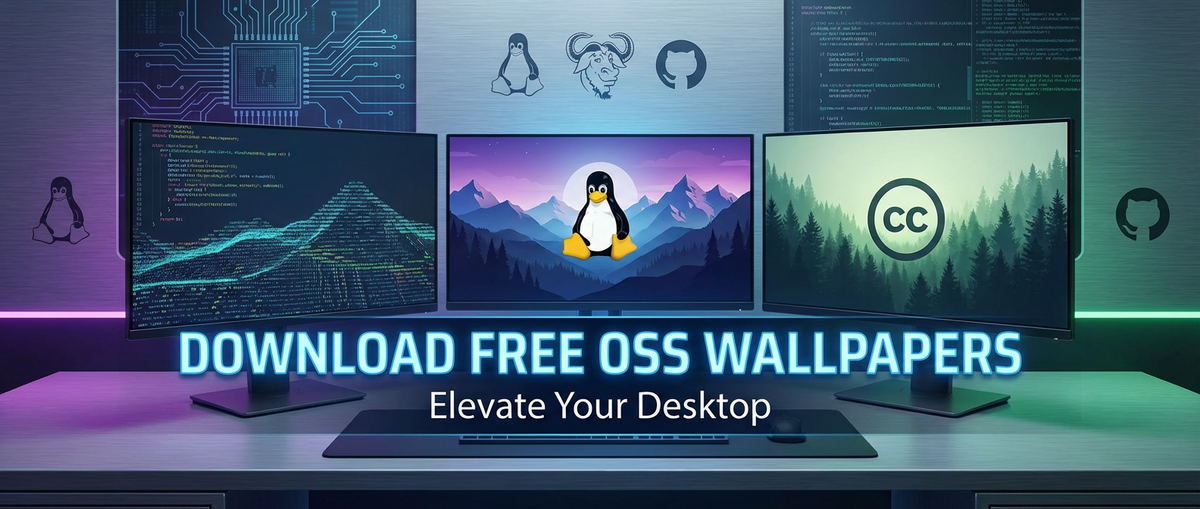
Download Free OSS Wallpapers: Elevate Your Desktop


In an increasingly digitized world, our desktop serves as more than just a functional workspace; it's a personal canvas, a reflection of our digital identity, and a subtle influence on our daily mood and productivity. From the moment we power on our machines, the visual aesthetics of our operating system greet us, setting the tone for the hours ahead. For many, this initial impression is often overlooked, relegated to default settings or generic images. However, a thriving movement built on the principles of openness, collaboration, and artistic freedom offers an unparalleled opportunity to transcend the mundane: the world of Free Open Source Software (OSS) wallpapers. This comprehensive guide will delve deep into the philosophy, practicality, and boundless artistic potential that open-source wallpapers unlock, demonstrating how they can profoundly elevate your desktop experience, making it not just aesthetically pleasing but also a true extension of your unique style and values.
We'll explore why embracing the open-source ethos for your desktop's backdrop is a decision steeped in artistic integrity and community spirit. From understanding the core tenets of open source as applied to digital art to discovering the myriad sources and styles available, this article aims to be your definitive resource. We will also touch upon the broader implications of open platforms, examining how the same principles that bring us stunning desktop visuals also underpin critical technological infrastructures, such as an LLM Gateway open source solution, demonstrating the pervasive power of shared innovation. Prepare to transform your digital environment from a mere screen into a dynamic, inspiring, and deeply personal portal.
The Canvas of the Digital Age: Understanding Open Source in Visual Design
The term "open source" often conjures images of lines of code, complex software architectures, and collaborative development projects that power the internet and countless applications. However, the philosophy underpinning open source — transparency, collaboration, freedom to use, modify, and distribute — extends far beyond mere code. It represents a paradigm shift in how we create, share, and interact with digital assets, including visual art. When applied to wallpapers, open source isn't just about "free" images in the monetary sense; it's about artistic freedom, community empowerment, and the democratisation of aesthetics.
Imagine a global collective of artists, designers, and photographers, each contributing their unique vision to a shared pool of creativity. This is precisely what the open-source art movement facilitates. Unlike proprietary art, which is often bound by restrictive licenses and commercial interests, open-source art encourages modification, remixing, and redistribution. This means that a stunning landscape photograph can be adapted by a graphic designer into an abstract digital painting, which can then be used by a casual user as their desktop background, all within the bounds of open licenses like Creative Commons. This iterative process fosters innovation, allowing art to evolve and adapt, rather than remaining static. It transforms the act of choosing a wallpaper from a passive consumption into an active participation in a larger creative ecosystem.
Furthermore, the open-source philosophy promotes an environment where credit is given where it's due, and artists retain a certain level of control over how their work is used, even as they embrace its free distribution. This delicate balance ensures that creators are acknowledged and encouraged, while users gain access to an unparalleled diversity of high-quality art without financial barriers. It's a testament to the idea that true value isn't always measured in monetary terms, but often in the richness of shared experiences and collective contributions. By choosing open-source wallpapers, you're not just picking an image; you're endorsing a movement that champions access, creativity, and the collaborative spirit that defines the best of the digital world.
Why Choose Open Source Wallpapers? A Deep Dive into Benefits
Beyond the ethical and philosophical underpinnings, the practical advantages of opting for open-source wallpapers are compelling and diverse, offering tangible benefits that transcend mere cost savings. Embracing this rich tapestry of digital art can profoundly impact your daily computing experience.
Uniqueness and Originality: Breaking Free from the Mundane
One of the most immediate benefits of open-source wallpapers is the sheer breadth of originality they offer. Unlike stock photo websites or mainstream commercial wallpaper collections, which often feature repetitive themes or overly polished, generic imagery designed for mass appeal, the open-source art world is a haven for unique visions. Artists, often driven by passion rather not profit, experiment with diverse styles, unconventional subjects, and innovative techniques. This means you're far less likely to encounter the same wallpaper on a colleague's machine or in a generic presentation. Your desktop becomes a statement, a curated gallery of distinctive artwork that reflects your personal taste and stands apart from the digital crowd. Whether you're seeking a hyper-realistic digital painting, an abstract fractal design, a whimsical illustration, or a thought-provoking photographic composition, the open-source community provides an almost infinite palette of options, ensuring your desktop truly reflects your individuality.
Freedom from Licensing Concerns: Simplicity and Peace of Mind
Navigating the labyrinth of copyright and licensing can be a daunting task when sourcing digital assets. Commercial images often come with complex usage agreements, limiting how and where an image can be displayed, shared, or modified. Violating these terms, even unknowingly, can lead to legal complications. Open-source wallpapers, predominantly released under permissive licenses like various Creative Commons (CC) licenses, simplify this dramatically. For instance, a CC BY license allows you to use, adapt, and share the work for any purpose, as long as you provide attribution. CC BY-SA requires attribution and that any derivatives be shared under the same license. This clarity provides immense peace of mind, knowing that you can freely download, display, share with friends, or even subtly modify a wallpaper to perfectly fit your desktop without fear of infringement. This freedom empowers users to truly own their digital space, fostering a sense of creative liberation rather than restrictive compliance.
Supporting Artists and Communities: A Virtuous Cycle
Choosing open-source wallpapers is an active way to support the global community of independent artists and designers. Many open-source creators contribute their work out of a genuine love for art and a belief in the power of sharing. By downloading and using their creations, you acknowledge their talent and contribute to the visibility of their work. Often, these artists operate outside traditional commercial galleries or agencies, relying on community engagement and digital platforms to showcase their talent. Your choice sends a clear message: that independent, freely shared art has value and an audience. Furthermore, many open-source projects thrive on community feedback and collaboration. Engaging with these artists, perhaps by leaving a comment, sharing their work, or even making a small donation if they provide that option, strengthens the ecosystem, encouraging more artists to share their creations and fostering a vibrant, self-sustaining artistic movement. It’s a virtuous cycle where creators are celebrated, and users benefit from an ever-expanding trove of stunning visuals.
Variety and Diversity: A World of Visuals at Your Fingertips
The sheer volume and diversity of open-source wallpapers are staggering. Unlike curated commercial collections that often cater to specific popular trends, the open-source landscape is a mosaic of every imaginable style, theme, and artistic sensibility. From hyper-realistic photographs of distant galaxies to intricate vector art depicting fantasy worlds, from serene minimalist gradients to chaotic abstract explosions of color, there is truly something for everyone. This diversity is a direct consequence of the decentralized nature of open-source creation; it's not dictated by a single editor or market trend, but rather by the collective imagination of countless individuals worldwide. This means you can easily find wallpapers that match your mood, the season, a particular interest, or even the aesthetic of your favorite open-source operating system or desktop environment. This unparalleled variety ensures that your desktop never has to feel stale, offering endless possibilities for refreshing your digital backdrop with visuals that truly resonate with you.
Cost-Effectiveness: A Free Upgrade for Your Desktop
Perhaps the most immediately apparent benefit is the lack of monetary cost. "Free" in "Free Open Source Software" often refers to freedom, but in the context of wallpapers, it also undeniably means cost-free. There are no subscription fees, no per-download charges, and no hidden costs. This makes open-source wallpapers an incredibly accessible option for anyone looking to refresh their desktop aesthetics without dipping into their wallet. For students, budget-conscious users, or anyone who simply appreciates value, this is a significant advantage. The financial barrier to accessing high-quality, unique art is completely removed, democratizing aesthetic enhancement for everyone. This cost-effectiveness allows users to experiment freely, download multiple options, and frequently change their wallpapers without any financial implications, encouraging exploration and continuous personalization of their digital space.
Where to Find Your Next Masterpiece: Top OSS Wallpaper Sources
Embarking on the quest for the perfect open-source wallpaper can be an exciting journey, with numerous digital treasure troves awaiting discovery. The key is knowing where to look, as the open-source art community is dispersed across various platforms, each with its unique flavor and offerings.
Community Platforms: The Hubs of Shared Creativity
- DeviantArt (with specific filtering): While not exclusively open source, DeviantArt is a colossal art community where millions of artists share their work. By using specific search terms like "Creative Commons," "open source wallpaper," or filtering by license type, you can uncover a wealth of stunning images. Many artists explicitly label their work for free use or under specific CC licenses. It's a fantastic place to find diverse artistic styles, from digital paintings and fan art to photography and abstract creations, often directly from the artists themselves.
- Unsplash, Pexels, and Pixabay: These platforms are renowned for offering high-quality, royalty-free stock photography, much of which falls under licenses that are functionally very similar to open source (e.g., the Unsplash License, which allows free use for commercial and non-commercial purposes without attribution, though attribution is appreciated). While primarily focused on photography, the sheer volume and quality make them invaluable resources for breathtaking landscapes, minimalist compositions, abstract textures, and vibrant urban scenes suitable for desktop backgrounds. Always check the specific license for each image to ensure it aligns with your usage intentions, though generally, they are very permissive.
- Reddit Communities (e.g., r/wallpapers, r/WidescreenWallpapers, r/amoledbackgrounds): Reddit hosts numerous subreddits dedicated to wallpapers. While not all content is explicitly open source, users frequently share images they've created or found, often with discussions about sources and permissions. Many submissions are from individual artists sharing their work freely, and the community is generally very good at pointing out copyrighted material. These communities are excellent for discovering trends, niche aesthetics, and high-resolution images curated by fellow enthusiasts.
Linux Distributions' Own Repositories: Curated Aesthetics
Many popular open-source operating systems, particularly Linux distributions, take great pride in their default wallpaper collections. These aren't just generic images; they are often carefully curated, high-quality artworks commissioned or specifically chosen to reflect the distribution's aesthetic and philosophy.
- Ubuntu: Known for its iconic purple and orange themes, Ubuntu regularly updates its default wallpaper collection with each release, often featuring abstract designs or nature photography. These images are typically developed in-house or sourced from community competitions and are freely available.
- Fedora: Fedora's wallpapers often lean towards abstract and geometric designs, with a clean and modern aesthetic. They frequently hold community contests for new wallpaper submissions, ensuring a fresh and diverse set of options with every release, all adhering to open-source principles.
- KDE Plasma and GNOME: As leading desktop environments for Linux, KDE Plasma and GNOME offer their own stunning default wallpapers and themes. These are highly integrated into the desktop experience and showcase the visual prowess of open-source design. Users can often find their wallpaper repositories on their respective Git labs or websites.
- Arch Linux and Derivatives: While Arch itself doesn't have official default wallpapers in the same vein as Ubuntu or Fedora, its community often shares minimalist, tech-oriented, or abstract designs that resonate with the distribution's philosophy.
Dedicated Open-Source Art Repositories and Platforms
- OpenDesktop.org (KDE Store, GNOME-Look.org): These are comprehensive portals specifically designed for sharing open-source desktop customizations, including wallpapers, icon themes, cursors, and more. They are particularly popular among Linux users but offer a vast library accessible to everyone. The content is explicitly designed to be open source and free.
- ArtStation (with careful filtering): Similar to DeviantArt, ArtStation is a professional platform for digital artists. While much content is commercial, many artists also share personal projects or free assets, sometimes under open licenses. It requires more diligent filtering but can yield incredibly high-quality, professional-grade artwork.
GitHub/GitLab and Personal Artist Websites: Direct from the Source
- GitHub/GitLab for shared art projects: Many open-source enthusiasts and artists use code repositories like GitHub or GitLab to host their wallpaper collections, especially if they involve dynamic wallpapers, scripts, or very specific themes. Searching for "wallpaper collection" or "desktop backgrounds" on these platforms can uncover hidden gems shared directly by creators.
- Personal Artist Websites/Blogs: Independent artists often maintain personal websites or blogs where they showcase their portfolios. Many generously offer high-resolution versions of their work for free download as wallpapers, especially those who align with the open-source ethos. A quick search for "free desktop wallpaper artist" or "Creative Commons photography" can lead to these personal galleries.
By exploring these diverse sources, you can build a truly unique and dynamic collection of open-source wallpapers, ensuring your desktop remains a constantly inspiring and personal space.
Types of OSS Wallpapers to Transform Your Desktop
The boundless creativity of the open-source art community ensures that there's a wallpaper style to suit every taste, mood, and digital aesthetic. Exploring these diverse categories can help you pinpoint the perfect visuals to complement your desktop environment and personal preferences.
Abstract Art: Geometric, Fluid, Conceptual
Abstract wallpapers are a perennial favorite for their ability to evoke emotion and interest without depicting specific objects. They can range from intricate geometric patterns and mesmerizing fractal designs to soft, fluid gradients and chaotic bursts of color. * Impact: Abstract art often promotes focus and can create a sense of calm or energy, depending on the composition and color palette. They are excellent for maintaining a clean desktop aesthetic, as they typically don't compete with icons or widgets for attention. * Examples: Swirling nebulae, vibrant paint splatters, minimalist geometric grids, bokeh effects, or digital renditions of natural textures like marble or smoke. Many Linux distribution default wallpapers lean heavily into abstract forms.
Nature & Landscapes: Serene, Vibrant, Inspiring
For those who find solace and inspiration in the natural world, open-source nature wallpapers offer a window to breathtaking vistas, serene forests, majestic mountains, and tranquil seascapes. * Impact: Nature themes can reduce stress, promote relaxation, and inject a sense of vastness and wonder into your workspace. They are perfect for creating a calming backdrop, especially for individuals working long hours indoors. * Examples: Golden hour photographs of mountain ranges, dense forest canopies, crashing ocean waves, starry night skies, blossoming spring fields, or close-ups of delicate flora and fauna.
Sci-Fi & Fantasy: Escapism, Futuristic Visions
Delve into worlds beyond imagination with science fiction and fantasy wallpapers. These categories transport you to futuristic cityscapes, alien planets, mythical realms, or epic battles. * Impact: Ideal for gamers, writers, or anyone with a vivid imagination, these wallpapers can fuel creativity, provide an escape from reality, and add an element of adventure to your desktop. * Examples: Cyberpunk cityscapes at night, spaceships soaring through nebulae, dragon-guarded castles, fantastical creatures, or intricate steampunk machinery.
Minimalist Designs: Clean, Focused, Productivity-Oriented
Emphasizing simplicity, clean lines, and often sparse compositions, minimalist wallpapers are perfect for users who prefer an uncluttered desktop that aids focus and productivity. * Impact: These designs help reduce visual clutter, making icons and widgets stand out more clearly. They promote a sense of order and calm, ideal for professional or highly focused environments. * Examples: Simple gradients, solid colors with subtle textures, line art, monochromatic schemes, or small, central focal points on an otherwise empty background.
Typography & Quotes: Inspirational Messages
For those who appreciate the power of words, typography wallpapers feature inspiring quotes, philosophical musings, or stylized text designs. * Impact: These wallpapers can serve as daily motivators, reminders, or simply add a touch of intellectual elegance to your desktop. They are a unique way to personalize your space with meaning. * Examples: A favorite literary quote in an elegant font, a powerful motivational phrase, or artistic renditions of single words or symbols.
Digital Art & Illustrations: Unique Styles
This broad category encompasses a vast array of artistic expressions created using digital tools, often showcasing unique styles not easily categorized. * Impact: Digital art can range from whimsical and playful to deeply intricate and thought-provoking, offering a highly personalized and often vibrant desktop aesthetic. * Examples: Stylized character art, imaginative concept art, detailed vector illustrations, pixel art, or unique digital paintings that blend various artistic techniques.
Photography (CC-licensed): Real-World Beauty
Many open-source wallpapers come from the rich tradition of photography, captured by talented individuals who choose to share their work under Creative Commons licenses. * Impact: High-quality photographs offer a direct connection to real-world beauty, whether it's a bustling cityscape, a serene wildlife shot, or a captivating portrait. They bring a sense of realism and often a poignant narrative to your desktop. * Examples: Macro photography of insects, street photography capturing candid moments, architectural marvels, stunning astrophotography, or vibrant cultural scenes.
By exploring these diverse types, you can curate a collection of open-source wallpapers that not only beautify your desktop but also resonate with your personality, aspirations, and aesthetic preferences. The collaborative spirit of open source ensures a never-ending supply of fresh, inspiring visuals.
Beyond Static Images: Dynamic and Interactive OSS Wallpapers
While static images offer a stable and aesthetically pleasing backdrop, the open-source ecosystem also extends to dynamic and interactive wallpaper solutions, transforming your desktop into a living, breathing canvas. These advanced options allow for a far more engaging and responsive visual experience.
Live Wallpapers: Bringing Your Desktop to Life
Live wallpapers, sometimes called animated wallpapers, introduce motion to your desktop. Instead of a single static image, you get a looping video, an animated graphic, or a scene that subtly changes over time. * KDE Plasma's Dynamic Wallpapers: The KDE Plasma desktop environment on Linux is a prime example of an open platform that excels in dynamic wallpapers. It offers built-in features to use videos as wallpapers, or even more sophisticated "slideshows" that change based on the time of day, weather, or other system parameters. Many community-contributed dynamic wallpapers are available through the KDE Store, ranging from animated celestial bodies to serene nature scenes with subtle movements. * Third-Party Tools for Other OS: While less common or native on Windows and macOS, open-source projects exist to bring live wallpaper capabilities to these platforms. Tools like Lively Wallpaper (open source on GitHub) for Windows allow users to set videos, GIFs, or even interactive web pages as their desktop background, offering a high degree of customization and responsiveness.
Wallpaper Changers and Automation Tools: A Fresh View Every Day
Manual wallpaper changes can be tedious. Open-source wallpaper changers and automation tools streamline this process, ensuring your desktop always feels fresh without manual intervention. * Variety (Linux): Variety is a popular open-source wallpaper changer for Linux that automatically downloads and changes wallpapers from various online sources (like Unsplash, Flickr, or local folders) at user-defined intervals. It can apply image filters, display fun quotes, and even prevent images that might interfere with icon visibility. Its intelligent features make it a beloved tool for those who crave constant visual novelty. * Wallch (Linux): Another robust open-source option for Linux, Wallch supports setting daily Bing images, live Earth maps, and even animated wallpapers. It provides a comprehensive solution for managing and rotating your wallpaper collection. * Windows/macOS Scripting: For users comfortable with scripting, batch files (Windows) or AppleScript/Bash scripts (macOS) can be written to automatically change wallpapers from a local folder at specific intervals or upon certain triggers. This allows for highly personalized and custom automation, leveraging the open nature of these scripting environments.
Weather-Based Wallpapers: Reflecting Your Environment
Imagine your desktop wallpaper dynamically shifting to reflect the current weather conditions outside your window. Sunny skies give way to rainy scenes, or a snowy landscape appears as winter approaches. * Community Projects: Several open-source projects, often found on GitHub, integrate with weather APIs to fetch local weather data and apply corresponding wallpaper themes. These can range from simple image swaps to more complex overlays or animated weather effects directly on the desktop. This creates an immersive experience that blurs the line between your digital and physical environments.
Terminal-Based Art and Retro Themes: Niche but Engaging
For a more niche, often retro or tech-oriented aesthetic, some open-source projects bring ASCII art or terminal-style visuals to the desktop. * XScreenSaver (Linux): While primarily a screen saver collection, many of its modules can be adapted or are designed to run as desktop backgrounds, offering captivating and often retro visual effects, from swirling mathematical patterns to simulated old-school terminal displays. * Custom Scripts: Advanced users can create scripts that generate dynamic text art or system monitoring displays as their wallpaper, leveraging terminal commands and graphical libraries to create a truly unique, data-rich backdrop.
These dynamic and interactive open-source wallpaper solutions represent the cutting edge of desktop customization, transforming a static display into a responsive, engaging, and always-evolving visual experience. They showcase the power of open collaboration, where imagination meets technical prowess to create truly living desktops.
The Technical Side: Resolution, Aspect Ratios, and Display Considerations
Beyond the aesthetic appeal, understanding the technical aspects of wallpapers is crucial for achieving a crisp, professional, and visually harmonious desktop. The open-source community, with its emphasis on quality and user control, offers abundant resources and tools to manage these technicalities effectively.
Matching Resolutions: The Key to Clarity
The most critical technical consideration is resolution. A wallpaper's resolution (e.g., 1920x1080 for Full HD, 3840x2160 for 4K) should ideally match or exceed your monitor's native resolution. * Undersized Wallpapers: Using a wallpaper with a lower resolution than your monitor will result in pixelation, blurriness, or stretching when scaled to fit, significantly degrading the visual quality. The image will appear "blocky" and unprofessional. * Oversized Wallpapers: A wallpaper with a significantly higher resolution than your monitor is generally acceptable. Your operating system will downscale it, which usually results in a sharp image. However, excessively large files can consume more memory and, in rare cases, might cause minor performance hiccups on older systems, though this is less common with modern hardware. * Finding the Right Fit: Many open-source wallpaper sources provide images in multiple resolutions, or explicitly state the resolution. Tools like GIMP (GNU Image Manipulation Program), an open-source alternative to Photoshop, allow you to easily crop, resize, and scale images to perfectly match your monitor's native resolution, ensuring optimal clarity and sharpness.
Aspect Ratios: Preventing Distortion
Aspect ratio refers to the proportional relationship between an image's width and height (e.g., 16:9 for widescreen monitors, 16:10, 21:9 for ultrawide). * Mismatched Ratios: If a wallpaper's aspect ratio doesn't match your screen's, your operating system will typically stretch, crop, or add black bars (pillarboxing or letterboxing) to make it fit. Stretching distorts the image, making circles look like ovals and people appear wider or taller. Cropping might cut off important parts of the image, while black bars can be distracting. * Optimal Matching: Ideally, seek wallpapers that match your monitor's aspect ratio. For example, most modern monitors are 16:9. Ultrawide monitors use ratios like 21:9 or 32:9. When an exact match isn't available, choosing a wallpaper with a slightly larger resolution and the same aspect ratio allows you to use your OS's "center" or "fill" options without distortion. Again, GIMP or other open-source image editors can be used to non-destructively crop or add borders to images to achieve the desired aspect ratio without distortion.
Multi-Monitor Setups: Expanding Your Canvas
For users with multiple monitors, open-source desktop environments and tools offer sophisticated solutions for wallpaper management. * Spanning vs. Individual Images: * Spanning: A single large image can stretch across all monitors, creating a continuous panoramic view. This requires a wallpaper with a very high resolution that combines the total width of all your monitors (e.g., for two 1920x1080 monitors, you'd need an image at least 3840x1080). * Individual Images: Each monitor can have its own distinct wallpaper. This is often easier to manage and allows for diverse themes across your workspace. * OS Support: Linux desktop environments like KDE Plasma and GNOME offer excellent native support for multi-monitor wallpapers, allowing users to easily configure spanning or individual images. Tools like HydraPaper (open source on GitHub) for Linux further enhance this by providing advanced control, including setting different wallpapers per workspace or per monitor, and even intelligent cropping for spanning images. * Windows/macOS: While Windows and macOS have improved their multi-monitor wallpaper support, open-source alternatives sometimes offer more granular control and features for these environments as well.
Color Calibration and Impact on Wallpaper Display
The accuracy with which colors are displayed can significantly impact how your wallpaper appears. * Uncalibrated Displays: Without proper monitor calibration, colors might look dull, oversaturated, or inaccurate compared to how the artist intended. A vibrant red might appear muted, or subtle gradients could be lost. * Calibration Tools: Open-source tools like DisplayCAL (using ArgyllCMS) allow for professional-grade monitor calibration, ensuring that your display accurately represents colors. While this is more for professionals, even basic calibration can make your wallpapers look much better. * Color Spaces: Most images are in the sRGB color space. High-quality art might use wider color spaces. Ensuring your display and image viewer are color-managed can prevent unwanted color shifts.
File Formats: Quality vs. Size
The choice of file format for your wallpaper can impact quality and file size. * JPG/JPEG: Most common, excellent for photographs due to efficient compression. However, heavy compression can introduce artifacts, especially with sharp lines or text. Best for complex images with many colors. * PNG: Lossless compression, meaning no data is lost. Ideal for images with sharp lines, text, or transparent backgrounds. Results in larger file sizes than JPG for photographs, but superior quality for digital art and graphics. * WebP: A modern format developed by Google, offering superior lossless and lossy compression for web images. It can provide smaller file sizes than JPG or PNG while retaining high quality. While less universally supported by older OS wallpaper managers, its adoption is growing. * Choosing Wisely: For photographic wallpapers, a high-quality JPG is usually sufficient. For digital art with crisp edges or areas of solid color, PNG is often preferred.
By paying attention to these technical details, you can ensure that your chosen open-source wallpapers not only look fantastic but are also displayed with optimal clarity, accuracy, and professionalism across all your screens. The flexibility and toolset within the open-source community make achieving this level of control remarkably accessible.
APIPark is a high-performance AI gateway that allows you to securely access the most comprehensive LLM APIs globally on the APIPark platform, including OpenAI, Anthropic, Mistral, Llama2, Google Gemini, and more.Try APIPark now! 👇👇👇
Curating Your Collection: Tips for a Harmonious Desktop
A desktop isn't just a random assortment of images; it's a carefully curated visual space that influences your mood, productivity, and overall computing experience. Building a harmonious collection of open-source wallpapers involves more than just downloading pretty pictures; it requires thoughtful consideration of themes, colors, and functionality.
Thematic Consistency: Creating a Cohesive Narrative
While diversity is a strength of open-source wallpapers, a degree of thematic consistency within your active rotation can create a more cohesive and professional feel. * Categorization: Organize your wallpapers into thematic folders: "Nature," "Abstract," "Minimalist," "Sci-Fi," "Dark Themes," "Light Themes," etc. This allows you to quickly switch between moods or styles. * Seasonal Rotations: Curate collections for different seasons. A vibrant spring meadow in March, a sun-drenched beach in July, autumnal forests in October, and snowy landscapes in December can keep your desktop feeling fresh and aligned with the outside world. * Project-Specific Themes: If you work on different projects, consider having wallpapers that subtly relate to each project. A coding project might get a minimalist dark theme, while a design project gets something more vibrant and artistic.
Color Palettes and Mood: The Psychology of Your Desktop
Colors have a profound psychological impact. The dominant colors in your wallpaper can influence your mood, focus, and energy levels. * Cool Tones (Blues, Greens, Purples): Often associated with calmness, serenity, and productivity. Ideal for workspaces where focus and concentration are paramount. * Warm Tones (Reds, Oranges, Yellows): Can evoke energy, creativity, and passion. Use sparingly if you need a calm environment, but great for injecting vibrancy. * Neutrals (Grays, Whites, Blacks): Excellent for minimalist setups, providing a clean backdrop that allows icons and applications to stand out. Dark themes are often preferred for eye comfort, especially in low-light conditions. * Color Harmony: Look for wallpapers where colors complement each other rather than clash. Tools like KDE Plasma's color scheme integration (an open platform feature) can even adapt your system's accent colors to match your current wallpaper, creating a truly unified aesthetic.
Considering Icon Visibility: Functionality Meets Form
A beautiful wallpaper is less effective if it makes your desktop icons unreadable or your widgets hard to distinguish. * Contrast is Key: Choose wallpapers that provide sufficient contrast with your icon labels. Dark text on a dark background, or light text on a light background, is a recipe for frustration. * "Busy" vs. "Clean" Backgrounds: Highly detailed or visually busy wallpapers can make it difficult to locate specific icons. Minimalist or abstract wallpapers with large areas of consistent color often work best for keeping icons prominent. * Strategic Placement: If you love a busy wallpaper, consider organizing your icons into specific areas of your desktop where the background is less distracting, or using a dock that obscures less of the background. * Using Desktop Environments Effectively: Desktop environments like GNOME or KDE Plasma allow for various levels of icon display and widget integration. GNOME, for instance, typically minimizes desktop icons, favoring a clean view of the wallpaper. KDE Plasma offers unparalleled widget customization, allowing them to be transparent or semi-transparent, adapting gracefully to any background.
Utilizing Desktop Environments (DEs) for Enhanced Management
Open-source desktop environments offer powerful, built-in tools for managing your wallpaper collection and desktop aesthetics. * GNOME: Known for its minimalist interface, GNOME allows easy cycling through wallpapers from a designated folder. Its clean design means wallpapers take center stage without too much visual clutter. * KDE Plasma: A highly customizable DE, KDE Plasma offers robust wallpaper management. You can set individual wallpapers for each virtual desktop, use slideshows with various effects, apply dynamic wallpapers, and even have the system adapt its theme colors to the wallpaper. Its extensive settings provide granular control over every aspect of your desktop's appearance. * XFCE/LXDE/MATE: Lighter-weight DEs also offer competent wallpaper management, focusing on efficiency while still providing options for slideshows and basic customization. They are excellent for older hardware or users who prefer a snappier, less resource-intensive desktop experience.
By thoughtfully curating your open-source wallpaper collection and leveraging the capabilities of your desktop environment, you can transform your digital workspace into a constantly inspiring, functional, and deeply personal extension of yourself.
The Broader Open-Source Ecosystem: More Than Just Wallpapers
The pursuit of beautiful, free desktop wallpapers is but one facet of the expansive and impactful open-source ecosystem. The same principles of collaboration, transparency, and freedom that bring us stunning visual art also underpin foundational technologies that power our modern digital world. Understanding this broader context reveals the true versatility and transformative power of the open-source movement.
The open-source philosophy isn't merely about making software available; it's about fostering an Open Platform – an environment where innovation thrives through shared knowledge and collective effort. This concept is paramount, driving progress in fields as diverse as operating systems, web browsers, scientific computing, and, increasingly, artificial intelligence. An Open Platform embodies the idea that foundational tools and frameworks should be accessible to all, encouraging widespread adoption, scrutiny, and continuous improvement. It stands in stark contrast to closed, proprietary systems, which often limit customization, innovation, and interoperability.
In the realm of infrastructure, for instance, the spirit of open source extends to complex challenges like managing large language models (LLMs) and their associated APIs. As AI becomes more integrated into applications and services, developers face the daunting task of connecting to, managing, and unifying diverse AI models from various providers. This is where the need for a robust and flexible solution becomes critical, leading to the development of tools like an LLM Gateway open source solution. Such a gateway acts as a central point for managing AI model invocations, handling authentication, rate limiting, data transformation, and ensuring a consistent interface regardless of the underlying AI model.
APIPark stands as a prime example of an open-source AI gateway and API management platform that truly embodies this spirit. It's an all-in-one solution designed to simplify the integration and deployment of both AI and REST services, demonstrating how open-source principles can address sophisticated enterprise and developer needs. Just as open-source wallpapers empower individual users to customize their digital aesthetic, APIPark empowers developers and enterprises to build, manage, and scale their AI-powered applications with greater ease and flexibility. It offers quick integration of over 100 AI models, a unified API format for AI invocation, and the ability to encapsulate prompts into new REST APIs. Its end-to-end API lifecycle management, performance rivaling industry giants like Nginx, and powerful data analysis features showcase the profound impact of an Open Platform on critical infrastructure. This parallels the impact of open-source art on our desktops – transforming a complex, often proprietary landscape into an accessible, customizable, and high-performance environment. The existence of solutions like APIPark underscores that the value of open source is not confined to niche applications but extends to powering the very backbone of modern technology.
Beyond core infrastructure, the open-source ecosystem offers a plethora of applications that further enrich your desktop experience. For instance, while you might download claude desktop to interact with a specific AI model, the broader open-source desktop environment provides the freedom to integrate such tools seamlessly alongside other open-source applications. Consider the full suite of open-source software available: * Operating Systems: Linux distributions (Ubuntu, Fedora, Mint, Arch) provide stable, secure, and customizable foundations for your entire computing experience. * Web Browsers: Firefox offers a powerful, privacy-focused alternative to proprietary browsers. * Office Suites: LibreOffice provides a comprehensive set of productivity tools, fully compatible with proprietary formats. * Creative Tools: GIMP for image editing, Krita for digital painting, Blender for 3D modeling and animation, Audacity for audio editing – all free and open source, offering professional-grade capabilities. * Development Tools: VS Code (open core), Git, Docker, and countless libraries and frameworks essential for software development.
These tools, much like open-source wallpapers, are products of global collaboration, driven by communities dedicated to innovation and accessibility. They allow users to construct an entire digital environment based on principles of freedom, transparency, and control. Integrating diverse open-source applications, including specialized tools like those needed to download claude desktop for advanced AI interaction, within an open-source operating system creates a cohesive, powerful, and truly user-centric computing experience. The vibrant spirit of the open-source community ensures that whether you're looking for a stunning background or a sophisticated AI management platform, an Open Platform solution exists to meet your needs, fostering innovation and empowering users at every level of the digital experience.
| Category | Description | Example Platforms/Tools | Key Characteristics |
|---|---|---|---|
| OSS Wallpapers | Digital art, photography, and illustrations released under open licenses (e.g., Creative Commons), intended for desktop backgrounds. Emphasizes artistic freedom, community sharing, and visual personalization. | DeviantArt (filtered for CC), Unsplash/Pexels/Pixabay (permissive licenses), Linux distribution repositories (Ubuntu, Fedora, KDE Plasma), OpenDesktop.org, GitHub/GitLab for artist collections. | Diverse styles, high resolution, free to use/modify/share (with attribution often required), community-driven, enhances desktop aesthetics, reflects personal style. |
| Operating Systems | Fundamental software that manages computer hardware and software resources, providing a foundation for all other applications. Open-source OS are known for security, stability, and customization. | Linux distributions (Ubuntu, Fedora, Mint, Arch Linux, Debian), FreeBSD. | Free, highly customizable, community-supported, generally more secure, wide range of desktop environments (GNOME, KDE Plasma, XFCE). |
| Creative Software | Tools for digital art, graphic design, 3D modeling, video editing, and audio production. Empowers users with professional-grade capabilities without proprietary licenses. | GIMP (image manipulation), Krita (digital painting), Blender (3D modeling/animation), Inkscape (vector graphics), Audacity (audio editing), DaVinci Resolve (free version, partly open source features). | Cost-free professional tools, extensive feature sets, active development, community tutorials and support, cross-platform availability. |
| Productivity Suites | Integrated applications for office tasks like word processing, spreadsheets, and presentations. Offers robust alternatives to commercial suites. | LibreOffice (Writer, Calc, Impress), Apache OpenOffice. | Fully functional, compatible with proprietary formats (e.g., .docx, .xlsx), regular updates, supports various languages, ideal for personal and business use. |
| AI/API Gateways | Infrastructure for managing and orchestrating access to AI models and other APIs. Centralizes authentication, rate limiting, routing, and data transformation for diverse services. Essential for integrating AI into applications. | APIPark (AI Gateway & API Management), Kong Gateway (open-core), Ocelot (.NET API Gateway). | Unified API management, enhanced security, performance optimization, flexible deployment, simplifies AI integration, enables Open Platform for developers. |
| Developer Tools | Software and platforms designed to assist programmers in creating, debugging, and maintaining other applications. Forms the backbone of modern software development workflows. | Git (version control), Visual Studio Code (open-core IDE), Docker (containerization), Node.js, Python, various SDKs and libraries. | Accelerates development, fosters collaboration, vast community support, extensive plugin ecosystems, essential for modern software engineering. |
| Web Browsers | Software application for accessing the World Wide Web. Open-source browsers prioritize user privacy, security, and open standards. | Mozilla Firefox, Chromium (the open-source project behind Google Chrome). | Focus on privacy, strong security features, highly customizable through extensions, support for open web standards, community-driven development. |
Case Studies and Examples of Impactful OSS Art Projects
The open-source art movement, particularly in the realm of wallpapers, isn't just about individual artists; it often thrives through collaborative projects and community-driven initiatives that challenge traditional notions of ownership and distribution. These case studies highlight the diverse ways open-source art enriches our digital lives.
The Ubuntu Wallpaper Contest: A Legacy of Community Contribution
For many years, the Ubuntu Linux distribution held a popular wallpaper contest prior to each major release. This initiative was a shining example of how a large, open-source project could leverage its community for artistic contribution. Artists from around the globe would submit their original creations, often aligning with a specific theme or aesthetic vision for the upcoming Ubuntu release. The community would then vote on their favorites, and a selection of winning wallpapers would be included by default in the new operating system. * Impact: This not only provided Ubuntu with a rich, diverse, and high-quality collection of wallpapers that genuinely resonated with its user base but also gave aspiring and established artists a global platform for their work. It fostered a sense of shared ownership and pride within the Ubuntu community, showcasing that stunning visuals could emerge from collective, open participation rather than exclusive design studios. Many now-iconic Ubuntu wallpapers originated from these contests, demonstrating the power of democratized art curation.
KDE Plasma's System-Integrated Art: Dynamic and Cohesive Design
The KDE Plasma desktop environment is renowned for its unparalleled customization options, and its approach to wallpapers is no exception. KDE not only ships with a curated collection of beautiful default wallpapers (often contributed by artists and designers within the open-source community) but also integrates them seamlessly with system themes and dynamic functionalities. * Impact: KDE's approach allows users to install new wallpapers directly from within their desktop settings, often linking to repositories on OpenDesktop.org or similar platforms where artists share their work under permissive licenses. More impressively, KDE Plasma supports dynamic wallpapers that can change based on the time of day, weather, or even subtle animations. This level of system-wide integration elevates wallpapers from mere static images to an integral, living part of the desktop experience, demonstrating how an Open Platform design philosophy can lead to highly interactive and visually harmonious environments. Artists creating for KDE are often encouraged to consider these dynamic possibilities, pushing the boundaries of what a "wallpaper" can be.
Unsplash and the Permissive License Revolution: Democratizing Photography
While Unsplash isn't exclusively an "open-source art" platform in the strictest software sense, its licensing model has had a profound impact on the availability of high-quality, free-to-use photography, blurring the lines between traditional stock photography and open distribution. The Unsplash License allows users to download and use photos for free, for commercial and non-commercial purposes, without permission from or attribution to the photographer or Unsplash. This highly permissive approach aligns closely with the "freedom" aspect of open source. * Impact: Unsplash revolutionized how designers, bloggers, and everyday users access professional-grade photography. It empowered countless individuals to enhance their digital projects, including their desktop backgrounds, with stunning visuals that would otherwise be costly or legally complex to acquire. It demonstrated that a model of radical generosity and ease of use could create a thriving community of photographers willing to share their work, ultimately benefiting millions of users worldwide and providing an inexhaustible source of high-quality, diverse wallpapers. This model has inspired many other platforms and artists to adopt similar permissive licenses for their visual works.
Individual Artists and Digital Communities on GitHub/GitLab: Code as Canvas
Beyond major platforms, many individual artists and small collectives use code-hosting platforms like GitHub and GitLab to manage and distribute their wallpaper collections. This might seem unconventional for art, but it perfectly encapsulates the open-source ethos of transparency, version control, and easy sharing. * Impact: Artists might share high-resolution images, collections of dynamic wallpaper scripts, or even source files for their digital paintings, inviting others to download, use, and even fork (copy and modify) their work. This direct-from-creator approach often comes with clear licensing information and fosters direct engagement between artists and users. It highlights how the infrastructure of open-source software development can also serve as an effective Open Platform for distributing and collaborating on digital art, challenging the traditional art gallery model and emphasizing accessibility over exclusivity. Such repositories are treasure troves for finding unique, often technically oriented, or deeply personalized wallpaper sets.
These examples illustrate that open-source art is a vibrant, evolving landscape, continually fostered by the spirit of collaboration and generosity. From large-scale community contests to individual artist initiatives, the open-source movement consistently enriches our visual world, providing endless opportunities to personalize and elevate our digital environments.
Setting Up Your OSS Wallpaper: A Practical Guide
Once you've found that perfect open-source wallpaper, the next step is to seamlessly integrate it into your desktop. The process is generally straightforward across different operating systems, though each has its nuances and advanced options.
General Steps for Most Operating Systems (Windows, macOS, Linux)
- Download the Wallpaper:
- Locate the download link or button on your chosen open-source wallpaper source (e.g., Unsplash, DeviantArt, a Linux distribution's website).
- Ensure you download the highest resolution available that matches or exceeds your monitor's native resolution to prevent blurriness or pixelation.
- Save the image to a memorable folder, perhaps a dedicated "Wallpapers" folder in your "Pictures" directory.
- Access Desktop Settings:
- Windows: Right-click anywhere on your desktop and select "Personalize."
- macOS: Click the Apple menu in the top-left corner, select "System Settings" (or "System Preferences" on older versions), then navigate to "Wallpaper" (or "Desktop & Screen Saver").
- Linux (GNOME, KDE Plasma, XFCE, MATE): Right-click on the desktop and select "Change Background," "Configure Desktop," or "Desktop Settings." Alternatively, open your system's "Settings" application and look for "Background," "Desktop," or "Appearance."
- Select Your Image:
- In the settings window, you'll typically find an option to "Browse," "Add Picture," or "Choose Folder." Navigate to where you saved your downloaded wallpaper.
- Select the image file.
- Choose Fit Option:
- Most operating systems offer various "fit" options for wallpapers:
- Fill/Scale: Stretches or crops the image to fill the entire screen, maintaining its aspect ratio as much as possible. This is often the best choice for high-resolution images that are close to your screen's aspect ratio.
- Fit/Contain: Scales the entire image to fit on the screen without cropping, potentially adding black bars if the aspect ratio doesn't match.
- Stretch: Forces the image to fill the screen, distorting its aspect ratio if necessary (generally not recommended).
- Center: Places the image in the center of the screen at its original size. Good for smaller images you want to highlight, with solid colors filling the rest.
- Tile: Repeats smaller images to fill the screen.
- Experiment with these options to find what looks best for your chosen wallpaper and monitor setup.
- Most operating systems offer various "fit" options for wallpapers:
Tools for Advanced Management
For users who want more control, automation, or dynamic features, open-source tools can significantly enhance wallpaper management.
- For Linux Users:
- Variety: (As mentioned previously) A feature-rich wallpaper changer that can automatically download, rotate, and manage wallpapers from various online sources and local folders. It supports various image effects, text overlays, and intelligent image cropping.
- Wallch: Another robust changer that offers features like daily Bing images, live Earth maps, and dynamic wallpaper capabilities.
- HydraPaper (for Multi-Monitor): Specifically designed for multi-monitor setups, HydraPaper allows you to set different wallpapers per monitor or span a single image seamlessly across multiple screens, with advanced cropping and placement options.
- KDE Plasma's Built-in Features: KDE Plasma's desktop settings are incredibly powerful, allowing for slideshows, dynamic wallpapers (based on time of day, weather scripts), and per-virtual desktop backgrounds, all natively within the environment.
- For Windows Users:
- Lively Wallpaper: An open-source application available on GitHub and the Microsoft Store that allows you to use videos, GIFs, web pages, or even games as your desktop background, transforming your desktop into a dynamic, interactive canvas. It offers extensive customization and is lightweight.
- Wallpaper Engine (Proprietary, but often recommended): While not open source, it's a popular choice for dynamic wallpapers on Windows. However, for a truly open-source experience, Lively Wallpaper is the superior choice.
- For macOS Users:
- macOS has gained some built-in dynamic wallpaper features (e.g., changing with time of day for specific Apple-provided images).
- Third-Party Automation (Scripting): Users can write simple AppleScripts or shell scripts to automate wallpaper changes from a folder. While not a full-fledged application, scripting offers granular, open-source control for those comfortable with it.
Best Practices for Seamless Integration
- Create a Dedicated Wallpaper Folder: Keep all your downloaded wallpapers in a single, organized folder. This makes it easy for your operating system or wallpaper management tools to access them.
- Rename Files for Clarity: Give your wallpaper files descriptive names (e.g.,
mountain_sunset_4k.jpg) rather than generic downloads, especially if you have many. - Consider Dark/Light Modes: Many modern OS feature dark and light modes. Some users choose to have separate wallpaper collections that complement each mode, either changing manually or using automation tools that support this.
- Test for Icon Visibility: After setting a new wallpaper, briefly check how your desktop icons and widgets appear. Adjust their placement or use a less "busy" wallpaper if visibility is an issue.
By following these practical steps and leveraging the powerful open-source tools available, you can easily and effectively set up and manage a stunning collection of open-source wallpapers, continually refreshing and elevating your desktop experience.
The Future of Open Source Desktop Aesthetics
The landscape of desktop aesthetics is in constant flux, driven by technological advancements, evolving design philosophies, and the boundless creativity of global communities. For open-source desktop aesthetics, the future promises even more personalization, interactivity, and deeper integration with emerging technologies. The core tenets of freedom, collaboration, and accessibility will continue to be the guiding stars, ensuring that these advancements benefit everyone.
AI-Generated Open-Source Art: A New Frontier for Creativity
Artificial Intelligence, particularly generative AI, is poised to revolutionize content creation, and art is no exception. Large Language Models (LLMs) and diffusion models are already capable of generating incredibly sophisticated and unique images from simple text prompts. The future of open-source wallpapers will undoubtedly see an explosion of AI-generated art, much of it shared under open licenses. * Ethical Considerations: This exciting development also brings ethical considerations. Ensuring transparency about AI authorship, addressing potential biases in generated content, and developing fair attribution models for artists who contribute to the training data are critical challenges the open-source community will need to address collaboratively. However, the potential for limitless, custom-generated wallpapers tailored to individual preferences is immense. Imagine simply describing your desired desktop background to an AI model and having a unique, high-resolution image generated on demand, ready to be used and perhaps even further refined by other artists. * Community Integration: Open-source platforms could integrate AI art generation tools directly, allowing users to create and share their unique AI-generated wallpapers within the same ecosystem, fostering a new kind of collaborative art. This means that while you might currently download claude desktop to experiment with AI models, in the future, these very models could be directly involved in creating your personalized desktop environment.
More Dynamic and Personalized Experiences: Desktops That Adapt
The trend towards dynamic and adaptive desktops will continue to accelerate, offering experiences that go far beyond simple slideshows. * Context-Aware Wallpapers: Future open-source desktops could feature wallpapers that intelligently adapt to various contexts: your location, the time of day, your current activity (e.g., a calm, focus-oriented background for writing; a vibrant, energetic one for creative tasks), or even your calendar events. * Interactive Backgrounds: Beyond live videos, we could see more interactive wallpapers that respond to mouse movements, system activity, or even external data feeds (like stock market trends or real-time news headlines, rendered artistically). This level of responsiveness would blur the line between a wallpaper and a lightweight desktop application, all powered by open-source frameworks. * Accessibility Features: Open-source development also prioritizes accessibility. Future wallpapers could dynamically adjust contrast, color saturation, or even provide auditory cues based on user preferences or accessibility needs, ensuring a comfortable and inclusive experience for all.
Increased Community Involvement and Collaborative Design
The strength of open source lies in its community. This collaborative spirit will continue to drive innovation in desktop aesthetics. * Crowd-Sourced Design Systems: Imagine Open Platform initiatives where entire desktop themes, including wallpapers, icon sets, and widget styles, are collaboratively designed and iterated upon by a global community. This could lead to a highly cohesive and aesthetically pleasing ecosystem of desktop components. * Integrated Creation Tools: Open-source desktop environments might integrate more powerful, yet easy-to-use, wallpaper creation tools directly into their settings, allowing users to not just download but also generate, modify, and share their own designs seamlessly. This democratizes content creation, empowering everyone to be a designer. * API-Driven Aesthetics: The principles exemplified by APIPark – managing and integrating diverse services through APIs – could extend to desktop aesthetics. Imagine a system that pulls dynamic visual elements from various open APIs (weather, news, personal data) and renders them as part of your wallpaper, creating an information-rich yet visually pleasing backdrop. This would showcase the power of an LLM Gateway open source approach, not just for backend AI, but for front-end aesthetic experiences, demonstrating how open infrastructure can fuel open-ended creativity.
The future of open-source desktop aesthetics is bright, promising a rich tapestry of AI-powered creativity, deeply personalized experiences, and an ever-growing spirit of community collaboration. As technology evolves, the open-source movement will continue to ensure that our digital canvases remain free, vibrant, and infinitely adaptable to the human spirit.
Conclusion
Our digital desktops are more than just functional interfaces; they are intimate spaces that reflect our personalities, influence our moods, and serve as a constant backdrop to our daily work and leisure. Embracing the world of Free Open Source Software (OSS) wallpapers is not merely a choice for aesthetic improvement; it's a statement about supporting artistic freedom, fostering community, and embracing a philosophy of openness that permeates the entire digital landscape. From the unique, unbridled creativity found in open-source art collections to the freedom from restrictive licensing, the benefits are clear and compelling.
We've journeyed through the philosophical underpinnings of open source in visual design, explored the myriad benefits of choosing OSS wallpapers, and discovered the best sources to unearth your next digital masterpiece. We've categorized the vast array of styles, from serene nature scenes to futuristic sci-fi vistas, and delved into the exciting realm of dynamic and interactive wallpapers that bring your desktop to life. Crucially, we've also touched upon the technical considerations – resolution, aspect ratios, and multi-monitor setups – ensuring your chosen visuals always look their best.
Beyond the immediate visual appeal, the article has highlighted how the principles behind open-source wallpapers extend to foundational technologies, powering robust infrastructures and innovative solutions. Just as open-source communities provide a continuous stream of stunning visuals to personalize our desktops, the same spirit drives critical tools like an LLM Gateway open source solution, exemplified by APIPark. This powerful open-source AI gateway and API management platform showcases how the Open Platform philosophy empowers developers and enterprises to seamlessly integrate AI and REST services, reflecting the same values of accessibility and collaborative excellence found in every free wallpaper you download. Whether you're customizing your visual desktop or exploring advanced AI tools like those you might download claude desktop, the open-source ecosystem provides a coherent and empowering framework.
As we look to the future, the integration of AI-generated art, increasingly dynamic and context-aware desktop experiences, and even deeper community involvement promise an even richer and more personalized aesthetic journey. The open-source movement continues to democratize access to high-quality digital art and cutting-edge technology, ensuring that our digital lives are not just functional, but truly inspiring. So, embark on your own journey, explore the vast open-source galleries, and elevate your desktop into a vibrant, personal, and ever-evolving canvas.
Frequently Asked Questions (FAQ)
Q1: What exactly does "open source" mean in the context of wallpapers? A1: In the context of wallpapers, "open source" primarily refers to digital art, photography, or illustrations released under permissive licenses, such as various Creative Commons (CC) licenses. This means the artwork is generally free to download, use, display, and often modify or redistribute, provided you adhere to the specific terms of the license (e.g., providing attribution to the artist). It contrasts with proprietary or commercial art that comes with restrictive usage rights.
Q2: Are open-source wallpapers always of high quality? A2: Yes, many open-source wallpapers are of exceptionally high quality, often created by professional artists, photographers, and designers who choose to share their work freely. Platforms like Unsplash and Pexels are known for their high-resolution photography, while community art sites like DeviantArt (when filtered for open licenses) host stunning digital art. Many Linux distributions also commission or source high-quality open-source art for their default backgrounds.
Q3: Can I use open-source wallpapers on any operating system (Windows, macOS, Linux)? A3: Absolutely! Open-source wallpapers are typically standard image files (like JPG, PNG, or WebP) that can be set as a desktop background on any operating system. The process involves downloading the image and then setting it through your operating system's personalization or display settings. Advanced open-source tools for dynamic wallpapers might be more prevalent on Linux but are also available for Windows (e.g., Lively Wallpaper).
Q4: How do I ensure I'm using an open-source wallpaper correctly, especially regarding attribution? A4: Always check the specific license associated with the wallpaper you download. Many open-source artworks are released under Creative Commons licenses. The most common is CC BY (Attribution), which requires you to credit the creator. If you're using it purely as a personal desktop background, attribution might not be explicitly required on your screen, but it's good practice to keep the source information. If you're sharing or modifying the work, always adhere to the license terms. Platforms like Unsplash often have very permissive licenses that don't strictly require attribution for personal use, but it's always appreciated.
Q5: Besides wallpapers, what other open-source tools can enhance my desktop experience? A5: The open-source ecosystem offers a vast array of tools. You can use open-source operating systems like Linux distributions (Ubuntu, Fedora), web browsers like Firefox, office suites like LibreOffice, and creative tools like GIMP (image editing) or Krita (digital painting). For developers and enterprises managing AI and APIs, platforms like APIPark provide an open-source AI gateway and API management solution. These tools collectively empower users with freedom, customization, and access to high-quality software across all aspects of their digital life.
🚀You can securely and efficiently call the OpenAI API on APIPark in just two steps:
Step 1: Deploy the APIPark AI gateway in 5 minutes.
APIPark is developed based on Golang, offering strong product performance and low development and maintenance costs. You can deploy APIPark with a single command line.
curl -sSO https://download.apipark.com/install/quick-start.sh; bash quick-start.sh

In my experience, you can see the successful deployment interface within 5 to 10 minutes. Then, you can log in to APIPark using your account.

Step 2: Call the OpenAI API.