Easy Provider Flow Login: A Step-by-Step Guide


The digital landscape of service provision has evolved dramatically, transforming how businesses and individuals interact with essential services. From healthcare platforms to financial portals, and from educational systems to logistical dashboards, providers across every sector rely on robust, secure, and user-friendly access mechanisms. At the heart of this access lies the "Provider Flow Login" – a sequence of interactions designed to authenticate users, grant them appropriate permissions, and connect them seamlessly to the resources they need. While the ultimate goal is an "easy" experience for the provider, the intricate architecture underpinning this simplicity is often sophisticated, leveraging cutting-edge technologies like APIs and API Gateways to ensure security, scalability, and efficiency.
This comprehensive guide delves into the multi-layered process of an easy provider flow login. We will dissect the journey from a user’s initial credential entry to their successful access, exploring the critical components, best practices, and the underlying technological infrastructure that makes such a smooth experience possible. Our focus will extend beyond the superficial user interface to illuminate the pivotal roles played by Application Programming Interfaces (APIs) in facilitating communication between disparate systems, and the indispensable function of an API Gateway in securing, managing, and optimizing these interactions. By understanding these foundational elements, providers can not only ensure a streamlined login experience for their users but also build a resilient and future-proof digital ecosystem.
Chapter 1: Understanding the Foundation – What is a Provider Flow Login?
At its core, a "Provider Flow Login" refers to the structured sequence of steps a designated "provider" takes to gain authenticated access to a digital service or platform. The term "provider" is broad and context-dependent. It could signify a healthcare professional accessing patient records, a financial advisor managing client portfolios, an educator utilizing a learning management system, a logistics company representative tracking shipments, or even an internal employee accessing specialized business tools. Regardless of the specific role, the common thread is the need for secure, verified access to sensitive or proprietary information and functionalities.
The "flow" aspect emphasizes the journey – it's not a single event but a carefully orchestrated series of checks and validations. This journey typically begins with the user identifying themselves (e.g., entering a username and password) and culminates in their authorized entry into the system, where they can perform their designated tasks. The primary objective is to make this process "easy" from the user's perspective, minimizing friction, reducing cognitive load, and ensuring a swift, intuitive path to their workspace. However, this apparent ease is a testament to sophisticated backend engineering that masks complexity, handling everything from credential verification to session management and access control with precision.
The importance of a well-designed provider login flow cannot be overstated. For service providers, it is the crucial gateway to their operational tools, client data, and collaborative environments. A cumbersome, slow, or insecure login process can lead to significant productivity losses, user frustration, and, more critically, security vulnerabilities. Imagine a doctor struggling to access patient charts in an emergency, or a financial advisor unable to securely log in during market hours – the consequences can range from minor inefficiencies to catastrophic service failures and data breaches. Therefore, investing in a robust and user-centric login flow is paramount for maintaining operational integrity, ensuring data privacy, and upholding the trust placed in the service provider. This initial understanding sets the stage for exploring the technical intricacies that transform a mere authentication prompt into a secure and efficient access portal.
Chapter 2: The Core Components of a Secure Login Flow
A seemingly simple act of logging in is, in reality, a complex dance between multiple interconnected components, each playing a vital role in ensuring security, efficiency, and a seamless user experience. Deconstructing these components is essential to appreciate the architectural depth of a robust provider login system.
2.1 User Interface (UI): The Gateway to Interaction
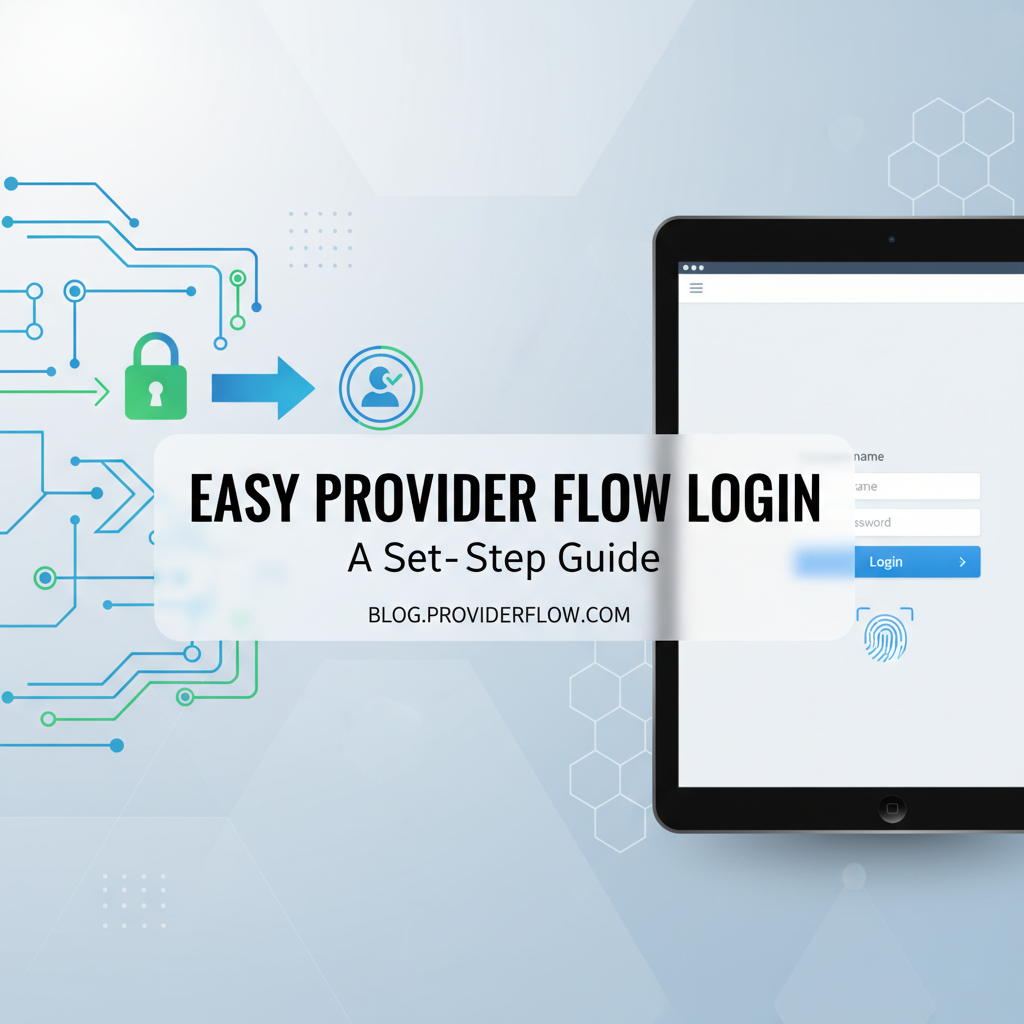
The User Interface is the tangible part of the login flow that the provider directly interacts with. This typically includes a login page with fields for username/email and password, a "Login" button, and often links for "Forgot Password" or "Sign Up." For enhanced security, it might also feature elements for Multi-Factor Authentication (MFA), such as a field for a one-time password (OTP) or a prompt for biometric verification. The UI's design is critical for usability; it must be intuitive, accessible, and responsive across various devices. A cluttered or confusing UI can quickly lead to user frustration and increase the likelihood of errors, thereby undermining the "easy" aspect of the flow. Beyond aesthetics, the UI is also responsible for basic client-side validation, providing immediate feedback to the user on input errors (e.g., incorrect email format) before data is even sent to the server. This early validation step improves efficiency and reduces unnecessary server load.
2.2 Client-Side Logic: The Intelligent Front-End
Behind the visual facade of the UI, client-side logic, primarily implemented using JavaScript frameworks (like React, Angular, or Vue.js) or native mobile SDKs, orchestrates the initial stages of the login process. This logic handles user input, performs initial data sanitation and validation (e.g., checking if fields are empty, applying regex for email validation), and securely packages the credentials for transmission. Critically, client-side logic can also manage the user experience around MFA challenges, dynamically displaying new input fields or prompts based on server responses. It's also responsible for securely storing temporary data, such as session tokens or user preferences, in browser storage (like localStorage or sessionStorage) or secure enclaves on mobile devices, ensuring that once authenticated, the user can navigate the application without repeated logins. The security implications here are significant; sensitive data should never be permanently stored client-side, and communication with the backend must always be encrypted.
2.3 Backend Authentication Service: Verifying Identity
The backend authentication service is the brain of the login flow. Its primary responsibility is to verify the user's identity. This service typically integrates with an Identity Provider (IdP), which could be an internal system, an external service like Auth0 or Okta, or a standard like OAuth 2.0 and OpenID Connect (OIDC). When credentials arrive from the client, the authentication service retrieves the stored hash of the user's password from a database, salts it (if not already part of the stored hash), and compares it to a hash of the submitted password. If they match, the user's identity is verified. This service also manages MFA challenges, issuing OTPs or initiating biometric verification processes. Upon successful authentication, it generates and issues a secure session token (e.g., a JSON Web Token – JWT) to the client, signifying the user's authenticated state. This token is crucial for subsequent authorized interactions with other backend services.
2.4 Authorization Service: Granting Permissions
Separate from authentication, but equally critical, is the authorization service. Once a user's identity is verified, the authorization service determines what resources and actions that user is permitted to access within the system. This is based on roles, groups, or specific permissions assigned to the user. For instance, a "Doctor" role might grant access to patient records, while an "Administrator" role might allow configuration changes. The authorization service often relies on the information embedded in the session token (e.g., roles in a JWT) or queries a dedicated permissions database. It acts as a gatekeeper, ensuring that even an authenticated user cannot access functionalities or data that are outside their scope of responsibility. This separation of concerns (authentication vs. authorization) is a fundamental principle of secure system design, providing granular control over access and limiting potential damage in case of a security breach.
2.5 Data Stores: The Memory of the System
Login flows rely heavily on various data stores. The most obvious is the user database, which stores user profiles, encrypted password hashes, email addresses, and sometimes MFA preferences. Secure storage of these credentials is non-negotiable, often involving strong encryption and hashing algorithms (like bcrypt or Argon2) to protect against data breaches. Beyond user credentials, other data stores manage session information, such as active session tokens, their expiry times, and associated user IDs. This allows the system to remember an authenticated user across multiple requests without requiring re-authentication. Furthermore, audit logs, crucial for security monitoring and compliance, are also stored, recording every login attempt, success, and failure. The integrity and security of these data stores are paramount to the overall resilience of the provider login system.
2.6 APIs: The Unseen Connective Tissue
APIs (Application Programming Interfaces) are the unsung heroes of modern login flows. They are the communication contracts that allow different software components and services to interact with each other in a standardized way. In a provider login flow, APIs facilitate almost every interaction behind the scenes: * The client-side logic uses an authentication API to submit credentials to the backend service. * The authentication service might use an identity API to query an external IdP. * Upon successful authentication, the system uses profile APIs to retrieve user-specific data or dashboard APIs to populate the provider's main workspace. * Even MFA challenges might be handled via dedicated MFA APIs that communicate with SMS gateways or authenticator apps.
APIs enable a modular, distributed architecture, allowing different parts of the login system (e.g., UI, authentication service, authorization service) to be developed, deployed, and scaled independently. This modularity is crucial for complex enterprise systems, ensuring flexibility and maintainability. Without robust and well-defined APIs, the login flow would be a monolithic, unwieldy application, severely limiting scalability and integration capabilities. The design of these APIs, including their endpoints, request/response formats, and security protocols, directly impacts the efficiency and security of the entire login process.
2.7 API Gateway: The Central Traffic Controller and Guardian
The API Gateway serves as a single entry point for all client requests to backend services. Instead of clients directly interacting with multiple authentication, authorization, or data APIs, all requests first pass through the API Gateway. This centralized position makes it an indispensable component for securing, managing, and optimizing the login flow. For a provider login, the API Gateway performs several critical functions: * Authentication and Authorization Offloading: It can validate session tokens (e.g., JWTs) received from the client before forwarding requests to backend services, offloading this responsibility from individual services. * Traffic Management: Routes requests to the correct backend services, handles load balancing, and can implement rate limiting to protect against brute-force attacks on login endpoints. * Security Policies: Enforces security policies like IP whitelisting, Web Application Firewall (WAF) rules, and SSL/TLS termination, ensuring all communication is encrypted. * Observability: Collects logs and metrics on all API calls, providing crucial insights into login attempts, successes, and failures, which is vital for monitoring and troubleshooting. * API Versioning: Manages different versions of APIs, allowing for seamless updates and deprecation without disrupting existing client applications.
By acting as a protective shield and an intelligent router, the API Gateway significantly enhances the security, performance, and maintainability of the provider login flow. It simplifies client-side development by providing a unified API interface and allows backend services to focus purely on business logic rather than boilerplate security and traffic management concerns. The role of an API Gateway is so crucial that it often acts as the first line of defense against malicious login attempts and ensures that only legitimate, authenticated requests reach the sensitive backend resources.
Chapter 3: Pre-Login Considerations – Setting the Stage
Before a provider can even attempt to log in, several foundational processes and strategic decisions must be in place. These pre-login considerations are crucial for building a secure, efficient, and user-friendly system, establishing the framework within which the login flow operates. Neglecting these aspects can lead to vulnerabilities, poor user experience, and operational headaches down the line.
3.1 User Registration and Account Creation
The journey begins with user registration. This process involves collecting necessary information from the prospective provider (e.g., name, email, professional ID, organization details) and creating a unique account within the system. It's vital to implement robust validation during registration to prevent fraudulent accounts or data entry errors. For example, email verification (sending a confirmation link to the provided email) is a standard practice to ensure the user owns the email address and to prevent bots. For highly sensitive provider portals, manual approval or a more extensive identity verification process (e.g., KYC - Know Your Customer for financial services, or credential verification for healthcare professionals) might be required before an account is fully activated. The registration flow should be as smooth and guided as the login process itself, setting positive expectations from the outset.
3.2 Password Policies and Hashing
The security of user credentials, particularly passwords, is paramount. A strong password policy enforces complexity requirements (e.g., minimum length, inclusion of uppercase/lowercase letters, numbers, and special characters), encourages unique passwords, and prevents the reuse of old passwords. Equally important is the secure storage of these passwords. Never store plain-text passwords. Instead, they must be hashed using strong, slow hashing algorithms like bcrypt or Argon2, which are designed to be computationally intensive, making brute-force attacks significantly harder. Each password should also be "salted" with a unique, random string before hashing. Salting ensures that identical passwords across different users result in different hashes, further protecting against rainbow table attacks and making each password hash unique even if the original passwords are the same. This combination of strong policies and robust hashing is a fundamental pillar of login security.
3.3 Multi-Factor Authentication (MFA) Setup
In today's threat landscape, passwords alone are often insufficient. Multi-Factor Authentication (MFA) adds an extra layer of security by requiring users to provide two or more verification factors to gain access. These factors typically fall into three categories: * Knowledge Factor: Something the user knows (e.g., password, PIN). * Possession Factor: Something the user has (e.g., a smartphone for an OTP, a hardware token, a smart card). * Inherence Factor: Something the user is (e.g., fingerprint, facial recognition, voiceprint).
During the registration or initial login, providers should be prompted to set up MFA. This could involve linking an authenticator app (like Google Authenticator), registering a phone number for SMS OTPs, or enrolling biometric data. The setup process must be clear and offer various options to accommodate different user preferences and organizational security requirements. Enabling and enforcing MFA significantly reduces the risk of unauthorized access, even if a password is compromised, making it an indispensable component of any secure provider flow login.
3.4 Session Management Strategies
Once a provider successfully logs in, a "session" is established, allowing them to interact with the application without re-entering credentials for every action. Effective session management is crucial for both security and user experience. This involves generating secure, unique session tokens (e.g., JWTs) that are stored client-side and sent with every subsequent request. Key considerations include: * Token Expiry: Session tokens should have a limited lifespan and expire after a certain period of inactivity or a fixed duration, forcing re-authentication or token refresh. * Token Revocation: Mechanisms to immediately invalidate tokens (e.g., on logout, password change, or suspected compromise) are essential. * Secure Storage: Tokens must be stored securely client-side, typically in HTTP-only cookies (to prevent JavaScript access and XSS attacks) or secure local storage on mobile devices. * Token Refresh: For longer sessions, a refresh token mechanism allows the client to obtain a new access token without requiring the user to log in again, provided the refresh token itself is valid and securely managed. Proper session management balances convenience with security, preventing unauthorized prolonged access.
3.5 Security Best Practices (HTTPS, Rate Limiting)
Implementing foundational security best practices across the entire system is non-negotiable for any provider login flow. * HTTPS (Hypertext Transfer Protocol Secure): All communication between the client (browser/app) and the server must be encrypted using HTTPS. This prevents eavesdropping and man-in-the-middle attacks, ensuring that credentials and sensitive session data are transmitted securely. Without HTTPS, any login attempt is vulnerable to interception. * Rate Limiting: To combat brute-force attacks (where attackers try numerous password combinations), rate limiting restricts the number of login attempts from a specific IP address or account within a given time frame. For example, after 5 failed attempts in 5 minutes, the account or IP might be temporarily locked out or subjected to a CAPTCHA challenge. This prevents automated scripts from rapidly guessing passwords. * Cross-Site Scripting (XSS) and Cross-Site Request Forgery (CSRF) Prevention: Implementing measures like content security policies (CSPs) and CSRF tokens are crucial to protect against common web vulnerabilities that could compromise the login process or user sessions. * Input Sanitization: All user inputs, including usernames and passwords, must be rigorously sanitized on the server-side to prevent injection attacks (e.g., SQL injection, command injection) that could exploit vulnerabilities in the backend.
These pre-login considerations collectively build a robust and secure foundation. They transform the login flow from a simple credential check into a fortified gateway, safeguarding provider data and maintaining the integrity of the entire system.
Chapter 4: Step-by-Step Guide: The Easy Provider Flow Login Process
Having laid the groundwork with foundational components and pre-login considerations, we can now embark on the actual step-by-step journey of a provider logging into a system. While the backend choreography is complex, the goal is always to present an "easy" and intuitive experience for the user. Each step is meticulously designed to contribute to security, efficiency, and clarity.
4.1 Step 1: User Initiates Login – The First Interaction
The login process begins when a provider decides to access their designated platform. This typically involves:
- Accessing the Login URL: The user navigates to the application's login page, either by typing the URL directly, clicking a bookmark, or following a link from an email or a main website. The application's server responds by delivering the login page (HTML, CSS, JavaScript) to the user's browser or by launching a mobile application that presents the login interface. Crucially, this communication must be over HTTPS to ensure that the login page itself is delivered securely and cannot be tampered with en route.
- Entering Credentials: The user is presented with input fields, usually for a username (which might be an email address or a specific ID) and a password. The user types their previously registered credentials into these fields. For enhanced security and user experience, password fields typically mask the input with asterisks or dots. Modern browsers often offer password autofill features, which can be convenient but also require careful consideration regarding security implications if devices are shared or compromised. The UI should guide the user clearly, indicating required fields and providing prompts if there are specific format requirements (e.g., "Email address" or "Provider ID").
This initial step is the user's direct interaction point. Its clarity and responsiveness are paramount to a positive first impression and an "easy" start to the flow.
4.2 Step 2: Client-Side Validation – Immediate Feedback
Once the user has entered their credentials and attempts to submit them (e.g., by clicking a "Login" button or pressing Enter), the client-side logic (JavaScript in a web browser or code in a mobile app) performs immediate, preliminary checks. This validation occurs before any data is sent to the server.
- Basic Format Checks: The client-side logic verifies that the input fields are not empty, that the email address (if used as a username) conforms to a standard email format (e.g., contains "@" and a domain), and that the password meets any defined client-side length or complexity requirements.
- User Experience Enhancement: The primary benefit of client-side validation is instant feedback. If an email is malformed or a field is left blank, the user receives an immediate error message (e.g., "Please enter a valid email address") without having to wait for a server response. This significantly improves the user experience by preventing unnecessary network requests and guiding the user to correct errors quickly.
- Security Note: It's crucial to understand that client-side validation is for convenience and user experience, not for security. Malicious users can bypass client-side checks. Therefore, comprehensive validation must always be performed again on the server-side.
This step is about speed and usability, ensuring the user corrects obvious mistakes efficiently before engaging the backend systems.
4.3 Step 3: Credential Submission to Backend – The Secure Hand-Off
After successful client-side validation, the client-side logic securely transmits the provider's credentials to the backend authentication service.
- Secure Transmission: The client packages the username and password (and possibly other information like a remember-me flag or device ID) into a request payload. This request is always sent over HTTPS, meaning the data is encrypted during transit. This prevents eavesdroppers from intercepting the credentials as they travel over the internet.
- API Endpoint Interaction: The request is typically an HTTP POST request directed at a specific authentication API endpoint (e.g.,
/api/loginor/auth/authenticate). The request payload often uses JSON format, containing fields like"username": "provider@example.com"and"password": "securepassword123". - Role of the API Gateway: In many modern architectures, this request doesn't go directly to the authentication service. Instead, it first hits an API Gateway. The API Gateway acts as the initial point of contact, applying basic security policies like rate limiting (to prevent brute-force attacks) and ensuring the request is well-formed before forwarding it to the designated backend authentication service. This adds an important layer of defense and traffic management.
This step marks the hand-off from the user-facing interface to the backend system, initiating the core authentication process under a shield of encryption provided by HTTPS and potentially managed by an API Gateway.
4.4 Step 4: Backend Authentication and Verification – The Identity Check
Upon receiving the credentials, the backend authentication service (often behind an API Gateway) performs the critical identity verification process.
- Credential Retrieval and Hashing: The service looks up the provided username in its user database. If found, it retrieves the associated stored password hash and salt. It then takes the submitted plain-text password, applies the same salting and hashing algorithm, and compares the newly generated hash with the stored hash. This comparison must happen on the server to prevent exposing actual passwords.
- Identity Provider (IdP) Interaction: For systems using external IdPs or single sign-on (SSO), the authentication service might forward the credentials (or a token representing them) to the IdP for verification. The IdP then confirms the user's identity and sends a response back to the authentication service.
- Multi-Factor Authentication (MFA) Challenge (if applicable): If MFA is enabled for the account, even after successful password verification, the process isn't complete. The authentication service triggers an MFA challenge. This could involve sending an OTP to the user's registered phone or email, prompting for a biometric scan, or requiring input from an authenticator app. The user must provide this second factor to proceed.
- Session Token Generation: Once all authentication factors are successfully verified, the authentication service generates a secure session token (e.g., a JSON Web Token - JWT). This token contains information about the authenticated user (e.g., user ID, roles, expiry time) and is cryptographically signed to prevent tampering.
- Audit Logging: Every login attempt, whether successful or failed, is meticulously recorded in audit logs. This is crucial for security monitoring, detecting suspicious activities (e.g., multiple failed attempts from a single IP), and meeting compliance requirements.
This is the most critical juncture of the login flow, where the system rigorously confirms the provider's identity before granting any access.
4.5 Step 5: Authorization and Resource Provisioning – What Can You Do?
After successful authentication and token generation, the system moves to authorization, determining what the authenticated provider is allowed to do and see.
- Role and Permission Retrieval: The authorization service examines the session token (or queries a database using the user ID from the token) to identify the provider's assigned roles, groups, and specific permissions. For instance, a "Nurse" might have access to patient medical histories but not billing information, while an "Administrator" has broader system configuration privileges.
- Access Control Decisions: Based on these permissions, the authorization service makes access control decisions. It dictates which APIs the provider can invoke, which data sets they can view or modify, and which features are visible within their user interface.
- Resource Provisioning: The system begins to prepare the specific resources and data that the provider is authorized to access. This might involve querying various backend data services (via APIs) to retrieve initial dashboard data, client lists, or pending tasks relevant to the provider's role. For example, a financial advisor's dashboard would be populated with their specific client accounts and market data.
- API Interactions for Content: All these interactions to retrieve and provision content are typically facilitated by APIs. The authorization service might call various data APIs (e.g.,
/api/patients/{id},/api/transactions) with the user's token, and these APIs would then return only the data the user is authorized to see. The API Gateway would again play a role here, ensuring that only requests with valid, authorized tokens are forwarded to these sensitive data APIs.
This step ensures that even a fully authenticated provider only interacts with the functionalities and data relevant and permitted to their specific role, enforcing the principle of least privilege.
4.6 Step 6: Redirect to Provider Dashboard/Application – Entering the Workspace
With authentication and authorization complete, and initial resources provisioned, the system guides the provider into their designated workspace.
- Secure Redirect: The backend authentication service sends a response to the client, typically including the session token (e.g., in a secure HTTP-only cookie or as part of a JSON response body) and a signal to redirect the user. The client-side logic then redirects the browser or navigates the mobile app to the main provider dashboard or the specific application entry point. This redirection URL should be configured securely to prevent open redirects.
- Client-Side Session Storage: Upon redirection, the client-side logic securely stores the received session token. For web applications, this is often an HTTP-only cookie, making it inaccessible to JavaScript and mitigating XSS risks. For mobile applications, it might be stored in a secure local storage solution provided by the operating system. This token will be automatically included in subsequent requests to the backend.
- Displaying the Dashboard: The provider's dashboard or application loads, displaying the authorized content and functionalities. Because the session token is now present, subsequent requests for data or actions (e.g., clicking on a client profile, performing a transaction) will carry this token. The backend, often via the API Gateway, validates this token for each request to ensure the user is still authenticated and authorized.
This is the culminating step from the user's perspective, representing their successful entry into the protected system, ready to perform their tasks.
4.7 Step 7: Ongoing Session Management – Sustaining and Ending Access
Once logged in, the system continues to manage the provider's session to maintain security and provide a consistent experience.
- Token Refresh and Expiry: Session tokens have a finite lifespan. To avoid frequent re-logins, a refresh token mechanism is often employed. When an access token expires, the client can use a longer-lived refresh token (stored even more securely) to obtain a new access token without requiring the user to re-enter credentials. If both tokens expire, the user is prompted to log in again. This limits the window of opportunity for attackers if a token is compromised.
- Idle Timeout: For security, sessions should automatically terminate after a period of inactivity. This prevents unauthorized access if a provider leaves their workstation unattended.
- Logout Mechanism: A clear and easily accessible "Logout" button is essential. When clicked, the client sends a logout request to the backend. The backend then explicitly invalidates the session token (and any associated refresh tokens) in its data store, ensuring that the token can no longer be used for authentication. The client also clears its local copy of the token and redirects the user back to the login page.
- Security Monitoring: The system continuously monitors session activity for anomalies, such as access from unusual locations or attempts to perform unauthorized actions. This monitoring, often facilitated by logs collected by the API Gateway and individual services, helps detect and respond to potential security incidents in real-time.
This final stage ensures that access is not only granted securely but also managed and revoked responsibly, maintaining the integrity of the provider's session throughout their interaction with the platform.
APIPark is a high-performance AI gateway that allows you to securely access the most comprehensive LLM APIs globally on the APIPark platform, including OpenAI, Anthropic, Mistral, Llama2, Google Gemini, and more.Try APIPark now! 👇👇👇
Chapter 5: Deep Dive: The Critical Role of APIs in Provider Login Flows
While often hidden beneath user-friendly interfaces, APIs (Application Programming Interfaces) are the very backbone that allows the intricate machinery of a provider login flow to function. They are the standardized communication protocols and tools that enable different software applications to talk to each other, forming the connective tissue for modular, scalable, and integrated systems. Without robust APIs, the "easy" provider login experience would collapse into a monolithic, inflexible, and unmanageable beast.
5.1 Why APIs are Essential for Modularity, Scalability, and Integration
The reliance on APIs in a modern provider login flow stems from several fundamental advantages:
- Modularity: Instead of a single, colossal application handling everything from UI to authentication, authorization, and data retrieval, APIs allow developers to break down the system into smaller, independent services (microservices). Each service, such as an "Authentication Service," an "User Profile Service," or a "Patient Data Service," exposes its functionalities through well-defined APIs. This modularity means that changes or updates to one service (e.g., improving the password hashing algorithm in the Authentication Service) do not necessarily impact others, simplifying development, testing, and deployment.
- Scalability: When individual components are exposed via APIs, they can be scaled independently. If the authentication service experiences a surge in login attempts, only that service (and potentially its underlying database) needs to scale up, without affecting the performance of, say, the reporting service. This horizontal scalability is crucial for applications that experience fluctuating loads, ensuring the login flow remains responsive even under heavy traffic.
- Integration: APIs are the universal language for software integration. A provider platform often needs to integrate with various third-party services: an SMS gateway for MFA, an external identity provider for SSO, a payment gateway, or a CRM system. Standardized APIs make these integrations straightforward, enabling the provider ecosystem to extend its capabilities without reinventing the wheel. For a login flow, this means seamless integration of features like social logins or enterprise SSO.
5.2 Types of APIs Involved in Login and Access
A typical provider login flow orchestrates interactions with several distinct types of APIs:
- Authentication APIs: These are the primary APIs used to verify a user's identity. Examples include
/auth/login,/auth/token, or/api/v1/authenticate. They receive credentials (username, password) and return a session token upon successful verification. - Authorization APIs: While often integrated with authentication, dedicated authorization APIs might exist to query specific permissions or roles (e.g.,
/auth/permissions?userId=X). They ensure that even an authenticated user has the right to access a specific resource or perform an action. - User Profile APIs: After authentication, these APIs are called to retrieve and manage user-specific data, such as
/api/v1/users/{userId},/api/v1/profile, or/api/v1/settings. They fetch the information needed to personalize the provider's dashboard. - Data APIs: Once authorized, providers interact with various data-specific APIs to access and manipulate the core business data. For a healthcare provider, this might be
/api/v1/patients/{patientId}/records; for a financial advisor,/api/v1/clients/{clientId}/portfolios. These APIs are protected by the authentication and authorization mechanisms established during login. - MFA APIs: These specialized APIs handle the logistics of Multi-Factor Authentication, such as
/auth/mfa/send-otpor/auth/mfa/verify-otp, interacting with external services to deliver and validate one-time passcodes or biometric challenges.
5.3 RESTful API Principles in Login
Most modern web-based provider login flows leverage RESTful APIs, adhering to the principles of Representational State Transfer (REST).
- Statelessness: Each API request from the client to the server contains all the information needed to understand the request, without relying on any stored session state on the server. This means the session token (e.g., JWT) is included in every request, allowing the server to process it independently. This enhances scalability and reliability.
- Resource-Based: APIs are designed around "resources" (e.g., a "user," a "session," a "patient record") identified by unique URLs (URIs). Standard HTTP methods (GET, POST, PUT, DELETE) are used to perform actions on these resources. For login, a POST request to a
/sessionsor/authresource typically creates a new session. - Standard HTTP Methods: The use of standard HTTP methods makes APIs intuitive and interoperable. POST is used to submit credentials and create a session, GET to retrieve user profile data, etc.
- Standard Data Formats: JSON (JavaScript Object Notation) is the most common format for sending and receiving data through RESTful APIs, offering lightweight, human-readable data exchange.
Adhering to REST principles makes the login APIs predictable, easier to consume by various clients (web browsers, mobile apps), and simpler to integrate with other systems.
5.4 Security of APIs (OAuth, JWTs)
The security of the underlying APIs is paramount to protecting the entire login flow and the data it accesses.
- OAuth 2.0 and OpenID Connect (OIDC): These are industry-standard protocols for delegated authorization and authentication, respectively. OAuth 2.0 allows a user to grant a third-party application limited access to their resources on another service (e.g., letting an app access your Google Drive). OIDC builds on OAuth 2.0 to provide identity layer, enabling single sign-on (SSO) and robust authentication. Many provider login flows use OIDC for their core authentication, generating ID tokens and access tokens.
- JSON Web Tokens (JWTs): JWTs are a compact, URL-safe means of representing claims between two parties. After a successful login, the authentication API often issues a JWT as the session token. JWTs typically contain user identity information and permissions, and they are digitally signed with a secret key, ensuring their integrity and authenticity. The backend services (or the API Gateway) can then verify this signature without needing to query a central database for every request, making authorization highly efficient.
- HTTPS/TLS: As mentioned, all API communication must occur over HTTPS/TLS to encrypt data in transit, preventing eavesdropping and tampering.
- API Keys/Client Secrets: For machine-to-machine API calls or trusted client applications, API keys or client secrets can be used for authentication, though this is less common for direct user login flows.
- Input Validation and Sanitization: Every API endpoint must rigorously validate and sanitize all incoming data to prevent injection attacks and other common vulnerabilities.
APIs are not just channels for data; they are contracts that must be built with security as a primary concern. Properly secured APIs are the foundation of a trusted provider login experience.
5.5 API Versioning and Deprecation
As systems evolve, so do their APIs. API versioning is the practice of managing changes to APIs in a controlled manner, allowing developers to introduce new features or changes without breaking existing client applications. For a provider login flow, this means that even if the authentication API undergoes significant changes (e.g., a new MFA method is introduced), older client applications can continue to use the previous API version until they are updated.
Common versioning strategies include:
- URL Versioning: e.g.,
/api/v1/authenticate,/api/v2/authenticate. - Header Versioning: Specifying the API version in an HTTP header.
- Query Parameter Versioning: Less common, but
?api-version=1.
Deprecation involves announcing that an older API version will eventually be retired, giving client developers time to migrate to newer versions. Effective API versioning ensures the long-term maintainability and evolution of the provider platform, safeguarding the investment in the login flow.
In essence, APIs are the hidden architects of the "easy" provider login. They enable the modularity that allows different parts of the system to scale and evolve independently, they facilitate seamless integration with external services, and when built with rigorous security protocols, they protect the sensitive exchanges that occur during authentication and authorization. Understanding their pervasive role is key to appreciating the sophistication behind modern access management.
Chapter 6: Enhancing Security and Performance with an API Gateway
While APIs are the critical communication channels, managing a multitude of APIs, especially in a complex provider ecosystem, introduces its own set of challenges regarding security, performance, and operational oversight. This is where the API Gateway steps in, acting as the central traffic controller and guardian for all inbound API requests. Its strategic position makes it an indispensable component for any robust provider login flow, significantly enhancing both its security posture and operational efficiency.
6.1 What is an API Gateway? Its Position in the Architecture
An API Gateway is a server that acts as the single entry point for a set of APIs. Instead of clients sending requests directly to individual backend microservices (e.g., an authentication service, a user profile service, a data service), all requests are first routed through the API Gateway. The API Gateway then forwards these requests to the appropriate backend services, aggregates responses, and sends them back to the client.
In the context of a provider login flow, its architectural position is critical:
- Front-facing to Clients: All web browsers, mobile applications, or other client applications interact only with the API Gateway.
- Backend Interface: The API Gateway communicates directly with the various backend authentication, authorization, and data APIs and microservices.
- First Line of Defense: It acts as a protective shield, intercepting all external traffic before it reaches the core business logic, making it the ideal place to enforce global policies.
This centralized control simplifies client development (they only need to know one API Gateway URL) and provides a unified point for applying cross-cutting concerns like security, monitoring, and routing.
6.2 Key Functions of an API Gateway in a Login Flow
The API Gateway contributes significantly to the "easy" and secure provider login experience through several key functions:
- Traffic Management and Routing:
- Request Routing: It intelligently routes incoming requests to the correct backend service based on the URL path, headers, or other criteria. For login, it ensures
/api/loginrequests go to the authentication service,/api/profileto the user profile service, etc. - Load Balancing: Distributes incoming traffic across multiple instances of backend services to prevent overload and ensure high availability and responsiveness, especially during peak login times.
- Circuit Breaking: Protects backend services from cascading failures by temporarily blocking requests to services that are experiencing issues, rerouting traffic, or returning fallback responses.
- Request Routing: It intelligently routes incoming requests to the correct backend service based on the URL path, headers, or other criteria. For login, it ensures
- Authentication and Authorization Offloading:
- Token Validation: The API Gateway can validate session tokens (like JWTs) for every incoming request before forwarding them to backend services. It verifies the token's signature, checks its expiry, and confirms its integrity. This offloads the token validation burden from each individual backend service, allowing them to focus solely on their business logic.
- Policy Enforcement: Based on the validated token, the API Gateway can enforce coarse-grained authorization policies (e.g., "only users with 'admin' role can access
/admin/**endpoints"). This pre-authorization prevents unauthorized requests from even reaching the sensitive backend services.
- Security Policy Enforcement:
- Rate Limiting: Crucial for the login flow, the API Gateway can effectively implement rate limiting policies to prevent brute-force attacks and denial-of-service (DoS) attempts. It can limit the number of login attempts from a single IP address or user account within a specific time frame, protecting the authentication service.
- IP Whitelisting/Blacklisting: Blocks or allows requests based on their source IP addresses, adding another layer of network security.
- SSL/TLS Termination: The API Gateway handles the secure HTTPS connection from the client, decrypting incoming requests and encrypting outgoing responses. This centralizes certificate management and frees backend services from managing SSL/TLS, improving performance.
- Web Application Firewall (WAF) Integration: Many API Gateway solutions integrate WAF functionalities to protect against common web vulnerabilities like SQL injection, XSS, and more.
- Observability (Logging and Monitoring):
- Centralized Logging: The API Gateway can log every API request and response, providing a comprehensive audit trail of all interactions with the backend services. For login, this means logging successful and failed attempts, response times, and originating IPs, which is invaluable for security audits, troubleshooting, and anomaly detection.
- Metrics and Monitoring: It collects performance metrics (e.g., request latency, error rates, traffic volume), providing real-time insights into the health and performance of the entire API ecosystem and the login flow.
- API Transformation and Aggregation:
- Request/Response Transformation: The API Gateway can modify request payloads or response bodies on the fly, translating between different API versions or formats, simplifying backend APIs, and standardizing output.
- API Aggregation: For complex dashboards that require data from multiple backend services, the API Gateway can aggregate responses from several APIs into a single response for the client, reducing the number of requests the client needs to make.
6.3 How an API Gateway Simplifies Backend Complexity for Login
Without an API Gateway, each backend service would have to implement its own security, logging, rate limiting, and possibly authentication/authorization logic. This leads to:
- Duplication of Effort: Every developer building a microservice would need to replicate common functionalities.
- Inconsistency: Different services might implement security policies or logging differently, leading to vulnerabilities or monitoring gaps.
- Increased Complexity: Client applications would need to know and manage multiple backend service endpoints.
The API Gateway centralizes these cross-cutting concerns, making the entire system more coherent, easier to manage, and less prone to errors. It allows backend developers to focus purely on their core business logic, knowing that the API Gateway handles the surrounding infrastructure.
For a provider login specifically, this means: * The authentication service only needs to verify credentials and issue a token. The API Gateway ensures malicious requests don't even reach it. * Subsequent data APIs don't need to re-validate the token's signature or expiry; the API Gateway handles that. * Rate limiting against login attempts is centrally managed, protecting all backend services.
An excellent example of a platform that embodies the capabilities of an API Gateway and beyond is APIPark. As an open-source AI Gateway & API Management Platform, APIPark is designed to manage, integrate, and deploy both AI and REST services with ease. It provides functionalities like quick integration of over 100 AI models, unified API format for AI invocation, prompt encapsulation into REST API, and end-to-end API lifecycle management. Crucially for our discussion, APIPark delivers performance rivaling Nginx, detailed API call logging, and powerful data analysis, all of which are vital functions for securing and optimizing any high-traffic API ecosystem, including the sophisticated backend powering a seamless provider login flow. Its ability to manage and secure a diverse range of APIs, from authentication services to data APIs and even AI models that might be integrated into a provider's analytical tools, demonstrates how a robust API Gateway is a cornerstone of modern, scalable, and secure digital platforms.
By leveraging an API Gateway, organizations can transform their complex web of APIs into a manageable, secure, and high-performing system, ensuring the "easy provider flow login" is not just a user-facing promise but a deeply engineered reality.
Chapter 7: Advanced Login Features and Best Practices
As the digital landscape evolves, so do the expectations for security, convenience, and functionality within login flows. Beyond the basic username and password, advanced features and best practices are crucial for offering a truly "easy," highly secure, and compliant provider login experience. These enhancements cater to diverse user needs and robust threat models.
7.1 Single Sign-On (SSO)
Single Sign-On (SSO) allows a provider to log in once with a single set of credentials and gain access to multiple related, but independent, software systems or applications without having to log in again. This significantly enhances user experience and productivity, especially for providers who need to navigate several internal tools or integrated third-party applications daily.
- How it Works: SSO systems typically rely on an Identity Provider (IdP) (e.g., Okta, Auth0, Microsoft Azure AD) and protocols like SAML (Security Assertion Markup Language) or OpenID Connect (OIDC). When a user logs into one application, the IdP issues an authentication token. Subsequent attempts to access other applications in the SSO ecosystem trigger a check with the IdP, which, seeing the valid token, grants access without requiring re-authentication.
- Benefits: Reduces "password fatigue" (where users struggle to remember multiple unique passwords), improves security (users can use stronger, more complex passwords for the single SSO login), and streamlines access management for IT administrators.
- Considerations: Implementing SSO adds complexity and requires careful configuration to ensure all integrated applications properly trust the IdP.
7.2 Social Logins
Social logins allow providers to use their existing credentials from popular third-party services (e.g., Google, Microsoft, Apple) to sign up for and log into an application. While more common for consumer-facing apps, they can be relevant for providers, especially in broader ecosystems or for specific integration scenarios.
- How it Works: The application delegates the authentication process to the chosen social identity provider. The user is redirected to the social provider's login page, authenticates there, and then grants permission for the application to access specific profile information. The social provider then sends a token back to the application, confirming the user's identity.
- Benefits: Extreme convenience for users, faster registration, and reduced burden on the application for managing credentials (as the social provider handles it).
- Considerations: Reliance on external providers, potential privacy concerns if excessive profile data is requested, and the need to map social identities to internal provider roles and permissions.
7.3 Biometric Authentication
Biometric authentication uses unique biological characteristics (fingerprints, facial features, iris patterns) for identity verification. It offers a highly convenient and secure alternative or addition to traditional password-based logins, particularly prevalent in mobile applications.
- How it Works: Instead of typing a password, the user interacts with a biometric sensor on their device (e.g., fingerprint reader, facial recognition camera). The device securely verifies the biometric data against a stored template (often stored locally on the device's secure enclave) and then confirms to the application that the user has been successfully authenticated on the device.
- Benefits: Extremely user-friendly (no passwords to remember), high level of security (biometrics are hard to steal or forge), and often faster than traditional methods.
- Considerations: Device dependency, privacy implications of biometric data storage (though typically stored locally and securely), and the need for a fallback authentication method in case biometrics fail or are unavailable. Many systems implement "passwordless" flows where biometrics act as the primary factor, backed by a PIN or device unlock.
7.4 Session Hijacking Prevention
Session hijacking is a severe security threat where an attacker gains unauthorized control over a user's active session. Robust measures are essential to mitigate this risk.
- Secure Session Token Management: Using HTTP-only cookies for session tokens (to prevent JavaScript access and XSS) and ensuring tokens are generated with high entropy and are regularly rotated.
- TLS/HTTPS Everywhere: As previously mentioned, consistent use of HTTPS prevents attackers from sniffing session tokens from network traffic.
- IP Address Binding: Binding a session to the IP address from which it originated. If the IP address changes drastically mid-session, it could indicate a hijacking attempt, prompting re-authentication or session termination. (Note: this can be problematic for mobile users whose IPs frequently change).
- User Agent Monitoring: Detecting changes in the user agent string (browser, OS) during an active session can also signal a hijacking attempt.
- Short Session Lifespans and Regular Re-authentication: Limiting the active lifespan of sessions and implementing periodic re-authentication for critical actions adds a layer of protection.
- Logout Functionality: A robust logout process that completely invalidates the session token on the server-side.
7.5 Brute-Force Attack Prevention
Brute-force attacks involve an attacker systematically trying many password combinations or usernames until the correct one is found. While rate limiting at the API Gateway is a primary defense, other measures are also critical.
- Strong Password Policies: As discussed, enforcing complex, unique passwords makes guessing significantly harder.
- Account Lockout: Temporarily locking an account after a certain number of consecutive failed login attempts (e.g., 5 attempts in 5 minutes). This prevents attackers from indefinitely trying passwords.
- CAPTCHA/reCAPTCHA: Implementing CAPTCHA challenges after a few failed attempts. This differentiates human users from automated bots, making brute-force attacks infeasible for scripts.
- Obsfucated Error Messages: Providing generic error messages like "Invalid credentials" rather than "Incorrect password" or "Username not found." This prevents attackers from enumerating valid usernames.
- IP Blocklisting: Automatically identifying and blocking IP addresses that exhibit suspicious brute-force patterns.
7.6 Compliance (HIPAA, GDPR for Providers)
For many provider platforms, regulatory compliance is not just a best practice but a legal mandate. Login flows must be designed with these regulations in mind.
- HIPAA (Health Insurance Portability and Accountability Act): For healthcare providers, HIPAA mandates strict security measures for electronic protected health information (ePHI). This includes strong authentication (MFA is often recommended), access controls, audit trails of all access attempts, and secure storage of credentials. The login flow must be auditable and demonstrate adherence to these controls.
- GDPR (General Data Protection Regulation): Applicable to providers handling personal data of EU citizens, GDPR emphasizes data minimization, consent, data subject rights, and robust security measures. Login flows must ensure secure processing of personal data (username, email), provide clear consent mechanisms during registration, and enable users to exercise their rights (e.g., access, rectification, erasure).
- Other Regulations: Depending on the industry (e.g., PCI DSS for financial services, SOC 2 for service organizations), specific compliance requirements will dictate aspects of the login flow's design, security, and auditing.
A strong understanding of relevant compliance frameworks is crucial for designing a login flow that not only is technically secure but also legally sound. This table summarizes some of the advanced features and their benefits:
| Advanced Feature | Primary Benefit | Key Technical Enablers/Considerations |
|---|---|---|
| Single Sign-On (SSO) | Enhanced user convenience, reduced password fatigue | Centralized Identity Provider (IdP), SAML/OIDC protocols, consistent user stores. |
| Social Logins | Super-easy onboarding, offloads credential management | Integration with OAuth 2.0/OIDC providers (Google, Microsoft), secure redirection, mapping social IDs to internal accounts. |
| Biometric Auth | Passwordless convenience, high security | Device-level secure enclave for template storage, client-side SDKs for interaction, fallback authentication (PIN/password), local verification. |
| Session Hijacking Prev. | Protects active user sessions | HTTP-only cookies, robust token rotation/expiry, IP binding (with caveats), user agent monitoring, server-side session invalidation on logout/compromise. |
| Brute-Force Prev. | Defends against credential stuffing/guessing | Rate limiting (API Gateway), account lockout policies, CAPTCHA, generic error messages, strong password policies. |
| Compliance (HIPAA, GDPR) | Legal and ethical assurance | Detailed audit logging, robust access controls, data minimization, consent management, data encryption (at rest and in transit), regular security audits, documented policies & procedures. |
By implementing these advanced features and adhering to best practices, provider login flows can evolve from mere access gates into intelligent, highly secure, and exceptionally user-friendly portals, meeting the demands of modern digital service provision.
Chapter 8: Troubleshooting Common Login Issues
Even with the most robust and carefully designed provider login flow, users will occasionally encounter issues. An "easy" login experience also means an easy path to resolution when problems arise. Anticipating common login issues and providing clear, efficient troubleshooting mechanisms is a critical part of a positive user journey. Effective troubleshooting reduces support costs, prevents user frustration, and maintains productivity.
8.1 Forgot Password Flow
This is arguably the most common login issue. Providers often forget their complex passwords, especially if they use many different systems. A robust and secure "Forgot Password" or "Reset Password" flow is essential.
- Mechanism: Typically involves the user clicking a "Forgot Password" link on the login page. They enter their registered email address or username. The system then securely generates a unique, time-limited password reset token and sends it via email (or sometimes SMS) to the registered contact. The user clicks a link in the email, which takes them to a page where they can set a new password.
- Security Best Practices:
- Token Expiration: Reset tokens must expire quickly (e.g., within 15-30 minutes) to limit their vulnerability.
- Single-Use Tokens: Each token should be valid for only one password reset attempt.
- Email Verification: The system should confirm the email address before sending a reset link.
- Secure Redirection: Ensure the reset link directs to an HTTPS-secured page.
- Post-Reset Notification: Notify the user (and possibly an alternative contact method) that their password has been successfully reset.
- Avoid Security Questions: "What's your mother's maiden name?" is easily guessable and not a secure reset mechanism.
- User Experience: Clear instructions at each step, immediate feedback if an email is not found, and confirmation messages are vital.
8.2 Account Lockout
As a defense against brute-force attacks, systems often implement account lockout policies. While necessary, this can inadvertently lock out legitimate users who make too many mistakes.
- Mechanism: After a predefined number of failed login attempts (e.g., 5 attempts), the account is temporarily locked, preventing further login attempts for a specific duration (e.g., 30 minutes) or until manually unlocked by an administrator.
- User Experience: The login page should clearly inform the user that their account is locked, state the reason (too many failed attempts), and provide instructions on how to proceed (e.g., "Please try again in 30 minutes," or "Contact support to unlock your account").
- Troubleshooting:
- Automated Unlock: Provide a self-service option (similar to forgot password) to unlock the account via email verification.
- Support Channel: Clearly direct users to a support team if automated unlock isn't feasible or successful.
- Security vs. Convenience: It's a balance. Too aggressive a lockout policy can frustrate users, while too lenient a policy exposes the system to attacks. The API Gateway's rate limiting can help differentiate between broad brute-force attempts and individual user errors.
8.3 MFA Device Loss or Inaccessibility
Multi-Factor Authentication (MFA) is critical for security, but what happens if a provider loses their MFA device (e.g., phone stolen, authenticator app deleted) or cannot access their registered factor?
- Mechanism: A robust system includes backup recovery options.
- Recovery Codes: During MFA setup, provide a list of one-time recovery codes that the user can print or store securely. If they lose their device, they can use one of these codes to log in and re-configure MFA.
- Alternative MFA Factors: Allow users to register multiple MFA factors (e.g., an authenticator app and a backup phone number for SMS OTPs).
- Administrative Reset: A secure, multi-step process for an administrator to verify the user's identity and manually reset their MFA settings. This often involves a live call, identity verification questions, and documented audit trails.
- User Experience: Clear guidance on how to use recovery codes or access alternative MFA methods. Provide prominent links to support for situations requiring administrative intervention.
8.4 Browser Compatibility and Cache Issues
Sometimes, login issues stem from the client-side environment rather than the backend system.
- Browser Compatibility: Older browsers or specific browser configurations might not fully support the JavaScript, CSS, or security protocols used by the login page.
- Cache and Cookies: Corrupted browser cache or stale cookies can interfere with the login process, preventing proper session establishment.
- Troubleshooting Steps for Users:
- Clear Browser Cache and Cookies: This is often the first suggestion from support.
- Try a Different Browser: This helps isolate whether the issue is browser-specific.
- Disable Browser Extensions: Some browser extensions (especially ad blockers or security tools) can interfere with login scripts.
- Ensure JavaScript is Enabled: The login page heavily relies on JavaScript for client-side validation and secure submission.
- System Design: Developers should ensure broad browser compatibility and build login pages that gracefully handle minor client-side issues.
8.5 Generic Error Messages and Logging
When a login fails, the system should provide clear, actionable feedback to the user, while also logging detailed information for administrators.
- User-Facing Errors: Provide generic but helpful error messages (e.g., "Invalid username or password," "Account locked," "MFA challenge failed") to avoid giving attackers clues. For "Forgot Password," confirm a reset link has been sent if the email is registered, rather than stating if an email is found or not found.
- Backend Logging: For every failed login attempt, the backend (and the API Gateway) should log detailed information:
- Timestamp
- IP address
- Username attempted
- Reason for failure (e.g., incorrect password, account locked, MFA failure, non-existent user)
- User agent This detailed logging is invaluable for security monitoring, identifying attack patterns, and troubleshooting specific user issues. APIPark’s comprehensive logging capabilities, which record every detail of each API call, are particularly beneficial here, allowing businesses to quickly trace and troubleshoot issues in API calls and ensure system stability and data security. This data can then be fed into APIPark’s powerful data analysis features to display long-term trends and performance changes, aiding in preventive maintenance.
By proactively addressing these common troubleshooting scenarios through careful design, robust recovery mechanisms, and clear user communication, providers can ensure that their "easy provider flow login" remains easy even when unexpected problems arise. This foresight is key to maintaining user satisfaction and operational continuity.
Conclusion: The Harmony of Ease and Engineering
The journey through the "Easy Provider Flow Login: A Step-by-Step Guide" reveals a nuanced interplay between user experience and sophisticated backend engineering. What appears as a simple input form and a click of a button is, in reality, a meticulously choreographed sequence of authentications, authorizations, and data exchanges, all designed to grant secure and efficient access to vital services. The "ease" from the provider's perspective is a direct outcome of robust foundational components, adherence to stringent pre-login considerations, and the seamless operation of an intricate multi-step process.
We have delved into the critical roles played by APIs as the unseen connective tissue, enabling modularity, scalability, and integration across disparate services. These programmatic interfaces ensure that various parts of the login and subsequent access processes can communicate effectively and securely. Further enhancing this architecture is the API Gateway, a central guardian that orchestrates traffic, offloads security burdens, and ensures consistent policy enforcement, acting as the first line of defense against threats while optimizing performance. Platforms like APIPark exemplify how a comprehensive API Gateway & API Management platform can streamline these complexities, unifying API management and securing crucial interaction points within any digital ecosystem.
Beyond the core mechanics, advanced features such as Single Sign-On, biometric authentication, and robust compliance measures elevate the login experience, catering to modern demands for convenience, high security, and regulatory adherence. Furthermore, a proactive approach to troubleshooting common issues, from forgotten passwords to account lockouts, ensures that support mechanisms are as user-friendly as the login itself.
Ultimately, an "easy provider flow login" is not an accident; it is the deliberate result of thoughtful design, meticulous implementation, and continuous vigilance. By embracing modern architectural patterns, leveraging powerful tools like API Gateways, and prioritizing both security and user experience at every turn, organizations can build login flows that are not only secure and scalable but truly effortless for the providers who rely on them daily. This commitment ensures that the gateway to critical services remains a path of productivity, trust, and seamless interaction.
5 FAQs
1. What is the primary difference between Authentication and Authorization in a provider login flow? Authentication is the process of verifying a user's identity (e.g., "Are you who you say you are?" based on username and password). Authorization, which occurs after successful authentication, determines what specific resources or actions that authenticated user is permitted to access within the system (e.g., "What can you do?"). In a provider flow, you first authenticate as a doctor, then you are authorized to view specific patient records relevant to your role.
2. Why are APIs so crucial for a modern provider login flow, and what role does an API Gateway play? APIs are crucial because they enable modularity, scalability, and integration. They allow different services (like authentication, user profiles, or specific data services) to communicate securely and independently, preventing the system from becoming a monolithic, unwieldy application. An API Gateway acts as a central entry point for all API requests. It enhances security by offloading authentication/authorization checks, implements rate limiting to prevent attacks, manages traffic, and provides centralized logging and monitoring, making the entire API ecosystem more robust and easier to manage.
3. What are the key security measures that protect credentials during the provider login process? Several measures protect credentials: 1) HTTPS/TLS encryption ensures all data (including username/password) is encrypted during transit between the client and server. 2) Password Hashing and Salting on the server-side prevents plain-text storage of passwords. 3) Multi-Factor Authentication (MFA) adds an extra layer of verification beyond just a password. 4) Rate Limiting (often managed by an API Gateway) defends against brute-force attacks by limiting login attempts. 5) Secure Session Token Management ensures that once logged in, the session token is protected from hijacking.
4. How does Single Sign-On (SSO) benefit provider login experiences? SSO significantly benefits providers by allowing them to log in once with a single set of credentials and then access multiple related applications or systems without needing to re-enter their login details. This dramatically reduces "password fatigue," improves overall user convenience and productivity, and enhances security by allowing providers to use one strong, complex password for their central SSO identity.
5. What should a provider do if they forget their password or lose their MFA device? If a provider forgets their password, they should use the "Forgot Password" or "Reset Password" link on the login page. This usually involves entering their registered email, receiving a secure, time-limited reset link, and then setting a new password. If an MFA device is lost or inaccessible, the provider should typically look for backup recovery options provided during MFA setup (e.g., pre-generated recovery codes) or contact the platform's support team. A robust system will have a secure process for identity verification and MFA reset.
🚀You can securely and efficiently call the OpenAI API on APIPark in just two steps:
Step 1: Deploy the APIPark AI gateway in 5 minutes.
APIPark is developed based on Golang, offering strong product performance and low development and maintenance costs. You can deploy APIPark with a single command line.
curl -sSO https://download.apipark.com/install/quick-start.sh; bash quick-start.sh

In my experience, you can see the successful deployment interface within 5 to 10 minutes. Then, you can log in to APIPark using your account.

Step 2: Call the OpenAI API.