eBPF: Decoding Incoming Packet Information


The modern digital landscape is a vast, intricate web of interconnected systems, constantly exchanging data in the form of packets. From streaming high-definition video to processing complex financial transactions, every interaction boils down to these discrete units of information traversing networks at incredible speeds. Understanding the journey of these packets, how they are formed, where they travel, and what they contain, is paramount for maintaining system performance, ensuring robust security, and enabling efficient operations. For decades, achieving deep, granular visibility into this low-level network activity within the operating system kernel has been a Herculean task, often requiring compromises between performance, safety, and functionality. However, a revolutionary technology has emerged from the depths of the Linux kernel to fundamentally change this paradigm: eBPF.
eBPF, or extended Berkeley Packet Filter, is not merely a tool for network analysis; it's a programmable engine residing within the kernel, allowing developers to safely run custom code in a highly privileged environment without modifying the kernel source code or loading potentially unstable kernel modules. This unprecedented capability empowers engineers to observe, filter, and manipulate network traffic with an accuracy and efficiency previously unimaginable. By providing a safe, performant, and extensible way to decode incoming packet information, eBPF revolutionizes our approach to network observability, security, and performance optimization. It offers a surgical lens into the very heartbeat of the network, revealing the intricate dance of data that underpins all modern applications, from individual microservices communicating via APIs to vast enterprise systems managed by an API gateway. This article will embark on a comprehensive journey into the world of eBPF, exploring its architectural foundations, practical applications in decoding incoming packet information, and its profound impact on the design and operation of resilient network infrastructure, including its symbiotic relationship with higher-level constructs like API management and API gateway solutions.
The Genesis and Power of eBPF: A Kernel-Native Revolution
To truly appreciate the transformative power of eBPF, it's essential to understand its lineage and the problems it set out to solve. Its roots lie in the original Berkeley Packet Filter (BPF), introduced in the early 1990s. BPF provided a simple, bytecode-based virtual machine within the kernel, primarily designed for filtering network packets before they were copied to user-space applications like tcpdump. This early iteration was groundbreaking, allowing for efficient packet capture without incurring significant CPU overhead by discarding irrelevant packets at the kernel level. However, original BPF had limitations; it was largely restricted to network filtering, its instruction set was somewhat primitive, and it lacked the versatility required for broader kernel observability.
The leap from BPF to eBPF, initiated by Alexei Starovoitov and others at Facebook and beyond, was not merely an incremental update but a complete architectural reimagining. eBPF transformed BPF into a general-purpose, in-kernel virtual machine, significantly expanding its instruction set, register count, and capabilities. It evolved from a specialized packet filter into a powerful execution engine capable of running arbitrary programs triggered by various kernel events, not just network events. This includes syscalls, kprobes (kernel function entry/exit), uprobes (user-space function entry/exit), tracepoints, and crucially, a wide array of network-related hooks.
The core strength of eBPF lies in its kernel-level superpower: the ability to safely execute user-defined programs within the kernel's trusted context. This is achieved through a rigorous verification process. Before any eBPF program is loaded into the kernel, a built-in verifier thoroughly analyzes its code to ensure it meets strict safety criteria. This includes guaranteeing that the program will always terminate (no infinite loops), it won't access invalid memory locations, and it won't crash the kernel. This verifier is the cornerstone of eBPF's security model, making it a viable and safe alternative to traditional kernel modules, which, if buggy, can easily panic the entire system. Furthermore, eBPF programs are just-in-time (JIT) compiled into native machine code for the host architecture, offering near-native performance, which is critical for high-throughput network operations.
Traditional methods for gaining kernel-level insights often fall short in comparison to eBPF's capabilities. Debugging and tracing tools like perf and ftrace offer valuable data, but their extensibility for custom analysis is limited. Existing network tools like iptables and netfilter provide powerful packet filtering and manipulation, but they operate with a fixed set of rules and capabilities, making them inflexible for dynamic, custom analysis or complex decision-making based on decoded packet contents. Kernel modules, while offering ultimate flexibility, are notoriously difficult to write, debug, and maintain, and pose significant security risks if not developed perfectly. eBPF elegantly sidesteps these challenges by providing a safe, performant, and highly programmable interface to the kernel, democratizing kernel-level introspection and allowing network engineers and developers to craft bespoke solutions for their specific needs. This flexibility is vital in complex distributed systems where understanding every nuance of packet flow, especially those related to API calls passing through an API gateway, can mean the difference between seamless operation and debilitating outages.
Architectural Deep Dive: How eBPF Hooks into the Packet Flow
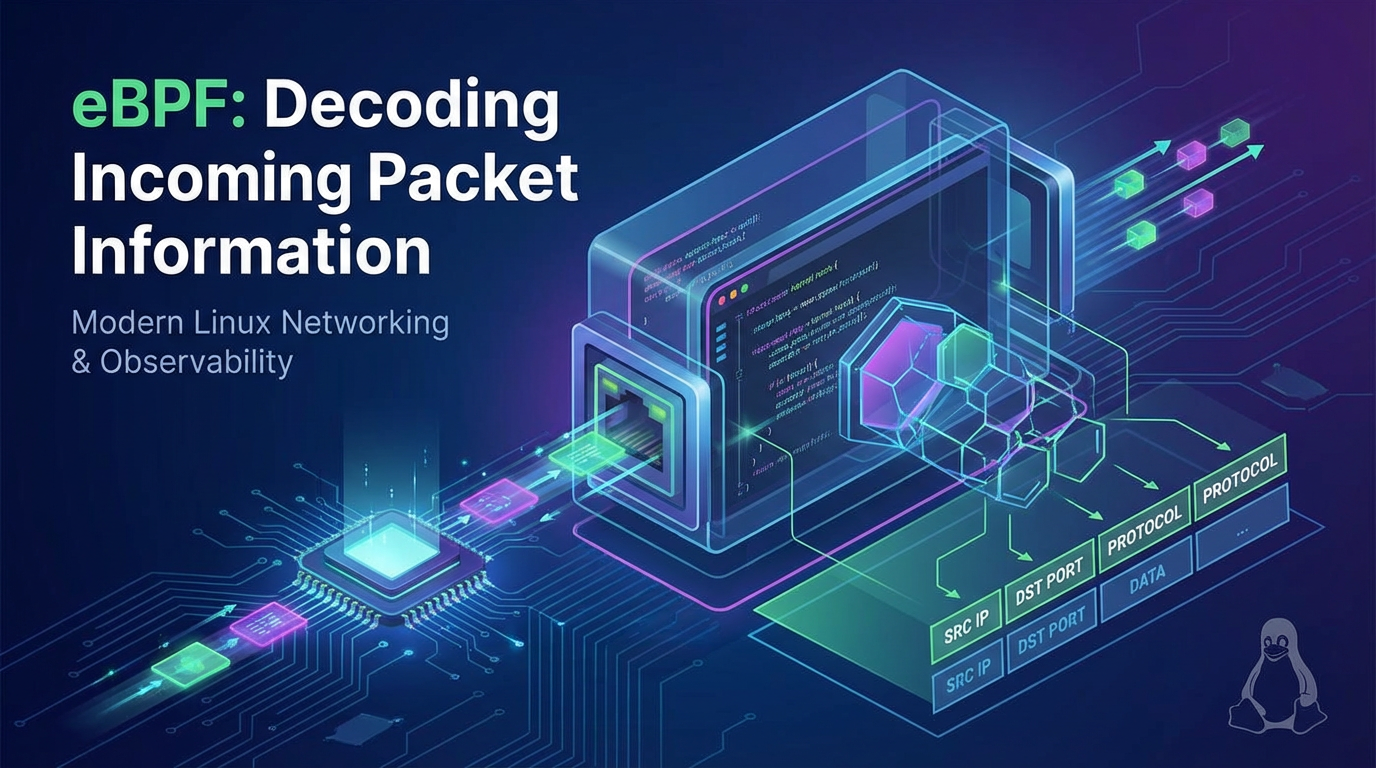
Understanding how eBPF programs intercept and process incoming packet information requires a closer look at the key attachment points within the Linux kernel's networking stack. The beauty of eBPF is its versatility; programs can be attached at various stages of a packet's journey, from the moment it hits the network interface card (NIC) to when it's finally processed by an application in user space. This granular control allows for highly optimized and targeted operations, minimizing overhead and maximizing the relevance of captured data.
One of the most powerful and earliest attachment points for network-related eBPF programs is XDP (eXpress Data Path). XDP programs run directly in the network driver, often before the packet has even been fully pushed up the kernel's generic networking stack. This extremely early vantage point provides unparalleled opportunities for high-performance packet processing. For instance, an XDP program can inspect an incoming packet and decide to drop it immediately if it's deemed malicious (e.g., part of a DDoS attack), redirect it to another CPU core or network interface, or simply pass it up the stack. This "zero-copy" architecture, where packets are processed without being copied into kernel memory buffers, is a game-changer for applications requiring extreme throughput and low latency, significantly offloading the burden from the CPU and protecting higher-level services, including those served by an API gateway, from being overwhelmed by unwanted traffic.
Further up the networking stack, eBPF programs can be attached to the Traffic Control (TC) subsystem. TC programs operate at a later stage than XDP, but still within the kernel's data path, allowing for more sophisticated packet manipulation. They can be used for advanced traffic shaping, quality of service (QoS) enforcement, and complex routing decisions. For example, a TC eBPF program could inspect the destination port or source IP of an incoming packet and based on pre-defined policies, prioritize it, rate-limit it, or even rewrite its headers before it continues its journey towards a specific application or service. This level of control is invaluable for ensuring critical API traffic, perhaps destined for a microservice behind an API gateway, receives preferential treatment over less critical data.
Another crucial attachment point is at the socket level. eBPF socket filter programs can inspect packets as they arrive at a specific socket, allowing applications to apply custom filtering rules before the data is passed to the user-space program. This is reminiscent of the original BPF's primary use case but with the enhanced capabilities of eBPF. Additionally, eBPF programs can be attached to sockops (socket operations) to manipulate socket options or affect connection behavior, offering fine-grained control over how TCP/IP connections are established and maintained.
The lifecycle of an incoming packet, therefore, can involve multiple eBPF interactions: 1. NIC Ingress (XDP): Packet arrives at the NIC. An XDP program might perform initial validation, dropping malformed packets or DDoS traffic, or fast-path forwarding. 2. Generic Network Stack (TC): If not dropped by XDP, the packet proceeds up the kernel stack. A TC eBPF program can then apply traffic shaping, policing, or more complex routing based on deeper packet inspection. 3. Socket Layer (Socket Filters/Sockops): As the packet reaches the destination socket, another eBPF program might filter it based on application-specific criteria or modify socket behavior. 4. Application Layer: Finally, the packet data is copied to the user-space application, which could be an API gateway service waiting to process an incoming API request.
Throughout this journey, eBPF programs can leverage "maps," which are kernel-resident data structures that can be accessed by both eBPF programs and user-space applications. Maps allow eBPF programs to maintain state, store statistics, or communicate with user-space. For instance, an XDP program might count dropped packets and store the statistics in a map, which a user-space monitoring application can then query. This shared memory mechanism is fundamental for building sophisticated eBPF-based observability and control systems, providing the context and persistence needed for truly intelligent packet decoding and reaction, critical for modern distributed architectures where APIs are the lifeblood of inter-service communication.
Decoding Incoming Packet Information: Practical Applications
The ability of eBPF to programmatically access and process network packets at various stages within the kernel opens up a treasure trove of practical applications. Decoding incoming packet information is not merely about observing; it's about gaining actionable insights that drive better security, enhance performance, and provide unparalleled observability into the intricate workings of a network.
Network Observability: The Eyes and Ears of the Kernel
One of the most immediate and profound benefits of eBPF for network operations is its capacity for deep network observability. Traditional network monitoring tools often rely on sampling, aggregated statistics, or user-space packet capture, which can introduce overhead or miss crucial details. eBPF, by contrast, can provide full fidelity, per-packet visibility directly from the kernel.
- Latency Monitoring: With eBPF, engineers can precisely trace a packet's journey from the moment it enters the kernel until it's delivered to an application socket, or even further into the application's processing. By attaching eBPF programs at various ingress points and timestamping packets, one can calculate granular latency metrics for different stages: network interface processing time, kernel stack traversal time, and even the time spent waiting in a socket buffer. This level of detail is invaluable for diagnosing network bottlenecks, especially in environments where microservices communicate extensively via APIs. Pinpointing whether an API call is slow due to network congestion, kernel processing, or the application itself becomes a much clearer task.
- Throughput Analysis: While gross throughput can be measured by traditional tools, eBPF allows for nuanced analysis. For instance, it can categorize traffic by source, destination, protocol, or even specific API endpoints if looking at HTTP/S traffic. This helps in understanding which services or clients are consuming the most bandwidth, identifying unexpected traffic patterns, or verifying that traffic engineering policies are working as intended. An API gateway can monitor its own throughput, but eBPF can confirm if the underlying network infrastructure is truly capable of delivering that capacity.
- Connection Tracking and Flow Analysis: eBPF can build sophisticated connection tracking tables in kernel maps, recording details like source/destination IPs and ports, connection state (SYN, SYN-ACK, ESTABLISHED, FIN), bytes/packets transferred per connection, and even application-level context. This provides a holistic view of all active network flows, helping to identify rogue connections, orphaned sessions, or misconfigured services. For distributed systems heavily relying on API interactions, this is critical for understanding inter-service communication patterns and ensuring all intended connections are established and terminated correctly.
- Protocol Analysis and Deep Packet Inspection (DPI): Beyond basic IP and TCP/UDP headers, eBPF programs can be crafted to parse higher-layer protocols. For example, an eBPF program can inspect HTTP headers in incoming packets to extract method (GET, POST), URL paths, hostnames, and even HTTP status codes. This allows for real-time monitoring of API request patterns, identifying frequently accessed endpoints, detecting API errors, or tracking specific user transactions without the overhead of full user-space packet capture and analysis. This granular insight can directly inform the health and performance metrics surfaced by an API gateway.
Network Security: A Kernel-Resident Guardian
The ability to inspect and react to packets at the earliest possible stage makes eBPF an exceptionally powerful tool for network security. It can act as a vigilant guardian, proactively defending against threats and providing crucial forensic data.
- DDoS Mitigation: As mentioned with XDP, eBPF programs can identify and drop malicious traffic volumes, such as SYN floods or UDP floods, directly at the NIC level. By inspecting source IP addresses, packet rates, and protocol anomalies, XDP programs can implement highly efficient, kernel-bypass DDoS countermeasures, significantly reducing the impact on the system's resources and ensuring legitimate traffic, including critical API requests, can still reach their destinations. This is a vital first line of defense that complements the rate limiting and authentication features typically found in an API gateway.
- Intrusion Detection Systems (IDS): eBPF can power highly performant, kernel-resident IDS. By defining rules that look for specific byte patterns, sequence numbers, or flag combinations within packets, eBPF programs can detect known attack signatures, port scans, or unusual protocol behavior. Upon detection, an eBPF program can log the event to a kernel map, drop the malicious packet, or signal a user-space application to take further action (e.g., blocking the source IP at a firewall level).
- Dynamic Firewalling: While
iptablesprovides static firewall rules, eBPF enables dynamic, context-aware firewalling. An eBPF program can inspect packets and apply rules based on application context, user identity, or even observed behavior. For instance, if an application exhibits suspicious outbound connections, an eBPF program could dynamically block incoming connections to that application's ports, or block all traffic from an IP address that has previously attempted unauthorized API access. - Anomaly Detection: By continuously monitoring network flows and statistics, eBPF can establish baselines for normal traffic patterns. Deviations from these baselines – sudden spikes in traffic to an unusual port, an unusually high rate of failed API calls, or unexpected protocol usage – can be flagged as anomalies. This proactive detection can alert security teams to potential compromises or novel attack vectors that traditional signature-based systems might miss.
Performance Optimization: Squeezing Every Ounce of Efficiency
Beyond observability and security, eBPF's low-level access and high performance unlock significant opportunities for network performance optimization.
- Intelligent Load Balancing: Instead of relying solely on IP-level hashing, eBPF can implement highly intelligent load balancing logic at the kernel level. By inspecting application-level headers (e.g., HTTP Host header for an API gateway), or even connection metrics maintained in maps, eBPF programs can direct incoming connections to the most appropriate backend server, minimizing latency and optimizing resource utilization. This can be significantly more efficient than user-space proxies, especially for high-volume API traffic.
- Traffic Shaping and Prioritization: As discussed with TC, eBPF allows for fine-grained control over traffic prioritization. Critical API traffic can be given higher priority, ensuring responsive services even under heavy load. Less critical background tasks or bulk data transfers can be de-prioritized to maintain the quality of experience for interactive applications.
- Bypassing the Kernel Stack (Direct Packet Processing): In highly specialized, extreme performance scenarios, eBPF combined with XDP can facilitate direct packet processing by user-space applications, bypassing much of the traditional kernel networking stack. While complex, this approach can achieve near wire-speed packet processing, beneficial for highly specialized network functions or data plane applications where every microsecond counts, often seen in custom high-performance network devices or specialized gateway deployments.
In essence, eBPF transforms the Linux kernel into a programmable, intelligent network co-processor. It provides the detailed information necessary to understand the complex flow of data, enabling engineers to build robust, secure, and highly performant network infrastructures that can gracefully handle the demands of modern distributed applications and the ceaseless stream of API calls that drive them.
eBPF and the Modern Network Stack: Bridging Low-Level and High-Level Concerns
The architectural landscape of modern applications has dramatically shifted towards microservices, serverless functions, and distributed systems. In this complex tapestry, communication is no longer monolithic; it's fragmented into countless interactions between discrete, independently deployable services. The glue that holds this distributed fabric together is the API (Application Programming Interface). Every microservice exposes APIs, and every interaction, from a user request hitting a frontend service to a backend service retrieving data from a database, likely involves an API call.
Given this reliance on APIs, the need for efficient, secure, and observable API management becomes paramount. This is where the API gateway steps in as a critical control point. An API gateway acts as a single entry point for all API requests, routing them to the appropriate backend services, handling authentication and authorization, enforcing rate limits, transforming requests/responses, and often providing caching and analytics. It sits at the nexus of internal and external service communication, protecting backend services and streamlining client interactions.
At first glance, eBPF, operating deep within the kernel, and an API gateway, operating at the application layer, might seem like disparate technologies. However, they share a symbiotic relationship that is increasingly vital in high-performance, high-security environments. eBPF underpins the foundational network performance and security that an API gateway implicitly relies upon. While the API gateway manages the "what" and "who" of API interactions, eBPF provides unparalleled visibility into the "how" and "where" at the packet level.
Consider an API gateway processing thousands of API calls per second. Its performance is heavily dependent on the underlying network stack. If there's network congestion, packet loss, or a low-level network attack, the API gateway's performance will suffer, even if its application logic is perfectly optimized. This is precisely where eBPF shines. By deploying eBPF programs, an organization can:
- Monitor Network Health Before the Gateway: eBPF can provide real-time metrics on network interface load, CPU utilization from network processing, packet drops due to buffer overflows, and latency through the kernel network stack before packets even reach the user-space API gateway application. This allows operators to identify and troubleshoot network infrastructure issues that would otherwise manifest as "slow API gateway" symptoms, without truly understanding the root cause.
- Detect Network-Level Attacks: While an API gateway offers application-level security features like authentication, authorization, and advanced bot detection, eBPF can detect and mitigate network-level attacks that might precede or circumvent these higher-level defenses. For instance, an XDP eBPF program can drop a SYN flood or a large-scale port scan directly at the NIC, preventing it from consuming kernel resources or even reaching the API gateway process, which might struggle under such an onslaught. This complementary defense layer enhances the overall security posture.
- Granular Latency Metrics for API Requests: When an API call arrives, an eBPF program can timestamp its entry into the kernel, its progress through the network stack, and its delivery to the API gateway's listening socket. This provides precise data points for analyzing the network latency component of an API request. If an API call is slow, eBPF can help differentiate between network overhead, kernel processing time, and the actual time spent within the API gateway's application logic or the backend service.
- Informing API Gateway Configurations: The real-time network insights gained from eBPF can dynamically inform API gateway configurations. For example, if eBPF detects a sudden spike in network congestion on a particular egress interface, the API gateway could dynamically adjust its load balancing strategy to route traffic away from that congested path, or temporarily reduce rate limits to prevent overwhelming downstream services. This creates a more resilient and adaptive system.
- Troubleshooting Inter-Service API Calls: In a microservices architecture, an API gateway routes requests to various backend services, which in turn might call other services via internal APIs. eBPF can trace these internal network flows, identifying slow links or unexpected packet drops between services. This is crucial for debugging complex distributed transactions where pinpointing the exact point of failure within the network fabric is often challenging.
In essence, eBPF provides the deep network truth, offering a microscope into the foundational layers that an API gateway builds upon. The API gateway handles the orchestration, security policies, and management of the APIs themselves, while eBPF ensures the underlying network infrastructure is robust, performant, and secure enough to reliably deliver those API calls. Together, they form a powerful combination for building and operating highly available and performant distributed systems.
APIPark is a high-performance AI gateway that allows you to securely access the most comprehensive LLM APIs globally on the APIPark platform, including OpenAI, Anthropic, Mistral, Llama2, Google Gemini, and more.Try APIPark now! 👇👇👇
Case Study: Using eBPF for HTTP/S Traffic Analysis – Connecting Low-Level to Application Behavior
While eBPF predominantly operates at layers 3 (IP) and 4 (TCP/UDP) of the OSI model, its versatility allows it to peer into application layer 7 (HTTP/S) data by parsing packet payloads. This capability is particularly relevant for understanding and debugging API traffic, which is overwhelmingly HTTP-based. Being able to extract HTTP method, URL, host, and even status codes directly from the kernel provides invaluable insights that can be correlated with the behavior of an API gateway and its backend services.
Imagine a scenario where an application is experiencing intermittent slowdowns or errors, specifically related to certain API endpoints. A typical diagnostic process might involve checking the API gateway's logs, application logs, and then perhaps using tcpdump for packet capture, followed by offline analysis with Wireshark. This process can be cumbersome, slow, and may not capture ephemeral issues.
With eBPF, a custom program can be attached to the sockops hooks or directly inspect ingress packets, specifically looking for TCP connections on ports 80 or 443 (HTTP/S). Once a connection is established, the eBPF program can begin parsing the incoming TCP segments for HTTP request lines and headers. For instance, it can extract:
- HTTP Method: GET, POST, PUT, DELETE, etc.
- Request URL Path:
/api/v1/users,/data/report, etc. - Host Header:
api.example.com,internal-service.local - User-Agent: Identifying the client making the API call.
- Request Latency: By timestamping when the request header is seen and when the corresponding HTTP response header (with status code) is observed, the eBPF program can calculate the kernel-level round-trip time for that specific API request.
- HTTP Status Code: Parsing the first line of the HTTP response (e.g.,
HTTP/1.1 200 OK,HTTP/1.1 404 Not Found).
This data can be stored in eBPF maps, accessible by user-space agents that can then aggregate, analyze, and visualize it in real-time. For example, a dashboard could show:
- The distribution of HTTP methods for incoming API calls.
- The top 10 slowest API endpoints by average kernel-level latency.
- The frequency of 4xx or 5xx HTTP status codes observed for specific paths, indicating application-level errors or client misconfigurations.
- Traffic volume to particular API gateway routes.
This allows for incredibly precise performance diagnostics. If the eBPF data shows high latency for a specific /api/v1/heavy-computation endpoint at the kernel level, but the API gateway's internal metrics report low processing time, it might indicate network saturation or issues with the TCP stack itself for that particular connection. Conversely, if kernel-level latency is low but the API gateway reports high application latency, the problem lies within the gateway's processing or the backend service. This granular visibility helps significantly reduce the Mean Time To Resolution (MTTR) for complex issues in distributed environments.
This capability is a stark contrast to traditional methods. While tcpdump can capture all packets, analyzing them for specific HTTP content in real-time and at scale is resource-intensive and often done offline. eBPF, by executing filtering and parsing logic directly in the kernel, provides a low-overhead, real-time mechanism for deep application-level insights, bridging the gap between raw packet data and meaningful application behavior.
To put eBPF's capabilities in context, let's compare it with some traditional tools used for network monitoring and analysis:
| Feature | Traditional Tools (e.g., tcpdump, netstat, Wireshark, iptables) | eBPF-based Solutions (e.g., Cilium, Falco, custom eBPF programs) |
|---|---|---|
| Execution Location | User-space (tcpdump, netstat), kernel-space (iptables rules) | Kernel-space (safe, verified bytecode) |
| Performance Overhead | Can be significant, especially with full packet capture to user-space. | Very low, near-native performance due to JIT compilation; often zero-copy. |
| Visibility Depth | Packet headers (netstat), full packet (tcpdump/Wireshark offline). | Deep kernel context, stack traces, syscalls, network events, even L7 data. |
| Programmability | Limited to pre-defined commands/filters (tcpdump), static rules (iptables). | Highly programmable, custom logic for specific use cases. |
| Safety | User-space tools are safe. Kernel modules (alternatives to eBPF) are dangerous if buggy. | Kernel-safe due to verifier, no risk of kernel panic. |
| Real-time Analysis | Often requires offline analysis or complex scripting. | Real-time, in-kernel processing and aggregation. |
| Application Layer (L7) Insight | Requires full packet capture and user-space parsing. | Can parse L7 protocols (HTTP/S) directly in kernel, e.g., for API calls. |
| Security Use Cases | Static firewalls (iptables), manual IDS (tcpdump logs). | Dynamic firewalls, DDoS mitigation (XDP), kernel-level IDS. |
| Troubleshooting | Reactive, often requires manual data correlation. | Proactive, precise, direct correlation with kernel events. |
| Integration with API Gateways | Indirect, requires separate monitoring and correlation. | Direct insights into network conditions impacting API gateway traffic. |
This table clearly illustrates why eBPF represents such a significant leap forward in network telemetry and control. Its kernel-native, safe, and programmable nature allows for a level of insight and proactive action that traditional tools struggle to match, especially when dealing with the high-volume, dynamic API traffic that characterizes modern applications managed by an API gateway.
The Operational Impact of eBPF for Network Engineers and Developers
The operational benefits of adopting eBPF-driven solutions are multifaceted, offering profound improvements across the entire lifecycle of network and application management. For network engineers, site reliability engineers (SREs), and application developers alike, eBPF reshapes how they approach troubleshooting, security, and performance tuning.
Reduced Mean Time To Resolution (MTTR)
One of the most critical operational metrics for any technical team is MTTR. When an incident occurs—a service slowdown, an API endpoint returning errors, or an unexpected network outage—the speed at which the root cause is identified and resolved directly impacts business continuity and customer satisfaction. eBPF dramatically reduces MTTR by providing unprecedented diagnostic clarity. Instead of sifting through fragmented logs, running multiple diagnostic commands, or deploying temporary debug agents, eBPF allows engineers to ask very specific questions of the kernel in real-time.
For instance, if an API gateway is reporting high latency, an eBPF program can immediately determine if the packets are even reaching the server's network stack, if they are spending excessive time in kernel queues, or if the delay occurs after they're handed off to the user-space application. This surgical precision eliminates hours of guesswork, helping teams to quickly isolate whether a problem lies in the physical network, the kernel, or the application layer logic, particularly crucial when debugging complex inter-service API calls.
Proactive Problem Identification
Beyond reactive troubleshooting, eBPF excels at proactive problem identification. By continuously monitoring key kernel metrics and network behaviors, eBPF can detect anomalies or impending issues before they escalate into full-blown incidents. For example, an eBPF program could monitor the number of retransmitted TCP packets to a specific API endpoint. A sudden, sustained increase might indicate a subtle network degradation or a misbehaving client, triggering an alert before users even notice a performance dip. Similarly, monitoring network buffer usage with eBPF can provide early warnings of potential congestion points that could eventually lead to packet drops and service degradation for API traffic. This shift from reactive firefighting to proactive maintenance significantly improves system stability and availability.
Enhanced Security Posture
As elaborated previously, eBPF fundamentally strengthens an organization's security posture. Its ability to inspect and act on packets at the earliest possible stage, even before they fully enter the kernel's processing pipeline, provides a robust layer of defense. Kernel-resident firewalls, DDoS mitigation, and intrusion detection systems powered by eBPF are highly performant and difficult for attackers to circumvent, operating beneath the visibility of user-space rootkits or compromised applications. This low-level enforcement complements the application-level security features of an API gateway, creating a layered defense strategy that is more resilient against sophisticated threats, safeguarding sensitive API data and ensuring the integrity of service communications.
Simplified Debugging in Complex Distributed Environments
The complexity of modern distributed systems, with their myriad microservices, containers, and orchestration layers, makes debugging a daunting task. Tracing a single user request or an API call across multiple services, hosts, and network hops is often akin to finding a needle in a haystack. eBPF simplifies this by offering a unified lens into the entire system. Tools built on eBPF can provide full network observability, tracing requests from the client, through the API gateway, across internal service-to-service API calls, and down to database interactions. This end-to-end visibility, combining network-level insights with application-level context extracted from kernel events, makes it far easier to pinpoint performance bottlenecks, identify communication failures, or understand unexpected behavior patterns.
The Learning Curve and Tooling Ecosystem
While the raw power of eBPF is immense, working directly with eBPF programs requires a deep understanding of kernel internals, C programming (or Rust, Go, etc., with eBPF bindings), and the eBPF instruction set. This can represent a significant learning curve for many developers and network engineers. However, a thriving and rapidly maturing ecosystem of eBPF tools and frameworks has emerged, abstracting much of this complexity. Projects like Cilium (for networking, security, and observability in Kubernetes), Falco (for container security), and various specialized tools (e.g., bpftrace, bcc tools) provide user-friendly interfaces, pre-built eBPF programs, and higher-level scripting languages that allow engineers to leverage eBPF's power without becoming kernel experts. These tools lower the barrier to entry, enabling a broader range of teams to benefit from eBPF's capabilities, fostering a new era of network and system introspection.
Integrating APIPark with a Robust Network Foundation
As organizations leverage eBPF for unparalleled network visibility and control, ensuring the integrity and efficiency of their higher-level application interactions becomes equally crucial. The vast number of API calls traversing modern infrastructure demands sophisticated management and security at the application layer. This is precisely where solutions like APIPark become indispensable, forming a powerful synergy with the low-level insights provided by eBPF.
While eBPF provides the granular insight into how packets traverse the kernel and what network conditions impact performance, APIPark operates at the application layer, offering an all-in-one AI gateway and API developer portal. It's designed to help developers and enterprises manage, integrate, and deploy AI and REST services with ease. A robust network foundation, observable and secured by eBPF, ensures that platforms like APIPark can deliver on their promise of high performance, reliability, and security for the APIs they manage.
Consider how APIPark complements an eBPF-enhanced network environment:
- Unified API Management: APIPark provides a centralized platform for managing the entire lifecycle of APIs, from design and publication to invocation and decommissioning. While eBPF tells you if a network path to an API endpoint is slow, APIPark helps you define and manage the API itself, ensuring its consistency and discoverability.
- AI Model Integration & Standardization: With the capability to quickly integrate 100+ AI models and offer a unified API format for AI invocation, APIPark streamlines the deployment of AI-powered features. eBPF ensures that the underlying network can handle the potentially large data transfers and numerous API calls associated with AI inference, providing the network performance bedrock for APIPark's AI gateway features.
- Performance Rivaling Nginx: APIPark's impressive performance, capable of over 20,000 TPS on modest hardware, is built upon efficient design. This high throughput is only achievable and sustainable if the underlying kernel and network stack are equally performant and free from low-level bottlenecks. eBPF, through its deep network monitoring, can validate and help maintain this foundational performance, ensuring APIPark operates at its peak capacity without hidden network-induced degradations.
- Detailed API Call Logging & Data Analysis: APIPark provides comprehensive logging for every API call, enabling businesses to trace and troubleshoot application-level issues. By correlating this application-level data with kernel-level network statistics from eBPF, teams gain a holistic view. If APIPark logs indicate high latency for an API call, eBPF can quickly tell if that latency originates from network congestion (e.g., retransmissions, high kernel queue depths) or from the API gateway's processing or backend service. This joint visibility dramatically accelerates root cause analysis.
- Security and Access Control: While APIPark enforces robust application-level security, including subscription approvals and independent permissions for each tenant, eBPF provides an additional layer of low-level network security. eBPF can detect and mitigate threats like DDoS attacks or unauthorized port scans before they even reach the APIPark gateway, safeguarding the platform and the APIs it exposes.
In summary, eBPF ensures the roads are clear, well-maintained, and secure, while APIPark builds and manages the destinations (the APIs) and the traffic controllers (the API gateway) on those roads. Both are critical for a resilient, performant, and secure digital infrastructure, especially in an era defined by ubiquitous API communication and the rapid adoption of AI services. APIPark, as an open-source AI gateway and API management platform, provides the enterprise-grade capabilities to orchestrate these higher-level interactions, building upon the solid, observable network foundation that eBPF helps to establish.
Challenges and the Future of eBPF
Despite its immense power and growing adoption, eBPF is not without its challenges, and its future development continues to address these complexities while expanding its horizons.
One of the primary challenges lies in its complexity and debugging. While high-level tools exist, developing bespoke eBPF programs still requires a specialized skillset and deep knowledge of kernel internals. Debugging eBPF programs, especially when they misbehave in subtle ways, can be notoriously difficult due as they run in a constrained, sandboxed kernel environment with limited direct debugging facilities. Tools like bpftool and kernel-level tracing utilities are improving, but it remains a domain for experienced developers. The verifier, while ensuring safety, can also be challenging for complex programs, sometimes rejecting valid code that it cannot definitively prove safe.
The evolving nature of kernel APIs also presents a challenge. As the Linux kernel itself evolves, the internal structures and function signatures that eBPF programs might hook into can change. This requires eBPF programs to be updated or built with careful consideration for kernel version compatibility. However, the eBPF community and kernel developers are increasingly working to stabilize eBPF-specific APIs, known as BTF (BPF Type Format), to provide more robust and forward-compatible interfaces.
Security implications of powerful kernel programming are another area of ongoing scrutiny. While the eBPF verifier is incredibly robust, the sheer power of being able to execute arbitrary code within the kernel context means that any potential bug in the verifier itself, or a clever exploit that bypasses its checks, could have severe consequences. The community is constantly auditing and strengthening the verifier and the eBPF runtime environment to maintain its high security standards. This continuous vigilance is paramount given eBPF's increasing use in critical infrastructure, including cloud-native networking solutions that manage vast amounts of API traffic.
Looking to the future, eBPF is poised for even greater impact:
- Hardware Offloading: A significant area of innovation is eBPF hardware offloading. Modern NICs are becoming increasingly programmable, and efforts are underway to allow eBPF programs (especially XDP) to be offloaded and executed directly on the network card's processing units. This would enable even higher throughput and lower latency for packet processing, freeing up CPU cycles for application workloads and further accelerating network-intensive tasks, such as those handled by an API gateway.
- Wider Adoption and Standardisation: eBPF is rapidly moving beyond niche use cases and into mainstream adoption. Cloud providers, telecommunication companies, and large enterprises are increasingly relying on eBPF for networking, security, and observability. This wider adoption will likely drive further standardization of eBPF features and interfaces, making it easier for developers to build portable eBPF applications.
- Integration with Cloud-Native Platforms: eBPF is becoming a cornerstone of cloud-native networking and security, particularly within Kubernetes environments. Projects like Cilium demonstrate how eBPF can power efficient service mesh implementations, network policies, and load balancing for containerized applications. Its ability to provide deep context about network flows and application behavior makes it ideal for microservices architectures that heavily rely on APIs for inter-service communication.
- Beyond Networking: While its roots are in networking, eBPF's general-purpose nature means its applications are expanding. It's already being used for security auditing (syscall monitoring), performance profiling (user-space function tracing), and even storage I/O monitoring. This trend will continue, with eBPF becoming a ubiquitous mechanism for safely extending and observing various parts of the kernel.
- Enhanced Developer Experience: The tooling ecosystem will continue to mature, with higher-level languages, more intuitive debuggers, and better integration with existing development workflows. This will lower the barrier to entry, enabling more engineers to leverage eBPF's capabilities without needing to become kernel programming experts.
The trajectory of eBPF is clear: it is rapidly becoming an indispensable technology for anyone building, operating, or securing modern Linux-based systems. Its ability to decode incoming packet information and act upon it with unprecedented efficiency and safety has fundamentally reshaped our understanding and control over the network, providing foundational insights that are critical for higher-level application management, including the robust operation of any sophisticated API gateway handling a torrent of API traffic.
Conclusion
The journey of an incoming packet through a network stack is a ballet of intricate processes, each step crucial for delivering data to its intended application. For decades, gaining deep, unbiased visibility into this kernel-level dance was a challenging endeavor, often requiring compromises between performance, safety, and the richness of insight. With the advent of eBPF, this paradigm has been irrevocably altered. eBPF empowers developers and network engineers with a revolutionary, safe, and highly performant mechanism to program the Linux kernel, enabling them to decode incoming packet information with unparalleled precision and react to network events dynamically.
We have explored eBPF's evolution from a niche packet filter to a general-purpose in-kernel virtual machine, highlighting its architectural elegance, the critical role of its verifier for safety, and its JIT compilation for performance. Its ability to attach programs at various points in the packet's journey—from the XDP layer directly at the NIC to the TC subsystem and socket filters—provides a surgical lens into network activity. These capabilities translate into tangible benefits across network observability, allowing for granular latency monitoring, comprehensive throughput analysis, and sophisticated connection tracking. In the realm of security, eBPF acts as a formidable guardian, enabling high-performance DDoS mitigation, dynamic firewalling, and proactive anomaly detection directly within the kernel. Furthermore, its application in performance optimization, such as intelligent load balancing and traffic shaping, underscores its transformative potential.
In the complex tapestry of modern distributed systems, where APIs form the very fabric of inter-service communication and an API gateway serves as the critical control plane, eBPF's role becomes even more pronounced. It provides the essential, low-level network truth that ensures the robustness and performance of these higher-level constructs. By bridging the gap between raw packet data and application-level behavior, eBPF-driven insights can inform API gateway configurations, accelerate troubleshooting of API call failures, and provide a foundational layer of security against network-borne threats. Platforms like APIPark, an advanced AI gateway and API management solution, can fully leverage the power of an eBPF-optimized network environment, ensuring their high-performance API delivery and comprehensive API governance features operate on a foundation that is both highly observable and incredibly secure.
While challenges such as complexity and an evolving API surface remain, the vibrant eBPF community and ongoing advancements are rapidly addressing these, making eBPF an increasingly accessible and indispensable tool. Its trajectory points towards a future where kernel-level programmability is a standard, enabling systems to be more resilient, secure, and performant than ever before. eBPF is not just decoding incoming packet information; it is decoding the future of network and system management.
Frequently Asked Questions (FAQs)
1. What is eBPF and how is it different from traditional packet filters? eBPF (extended Berkeley Packet Filter) is a revolutionary technology that allows developers to run custom, sandboxed programs directly within the Linux kernel. Unlike traditional packet filters (like the original BPF or iptables), eBPF is a general-purpose virtual machine, not limited to just filtering network packets. It can attach to a wide range of kernel events (network, system calls, function entries/exits) and perform complex logic, gather telemetry, or manipulate data, all while being rigorously verified for safety by the kernel. This provides unparalleled programmability and flexibility compared to fixed-function filters.
2. How does eBPF enhance network security? eBPF significantly enhances network security by allowing early and dynamic intervention in the packet flow. For instance, eBPF programs can be attached at the eXpress Data Path (XDP) layer, processing packets even before they fully enter the kernel's network stack. This enables high-performance DDoS mitigation by dropping malicious traffic directly at the network interface card (NIC), dynamic firewalling rules that adapt to real-time conditions, and kernel-resident intrusion detection systems (IDS) that can inspect packet payloads for anomalies or attack signatures with minimal overhead. This provides a powerful, low-level defense that complements higher-level security measures like those found in an API gateway.
3. Can eBPF monitor application-layer (L7) protocols like HTTP/S? Yes, while eBPF primarily operates at lower network layers (L3/L4), it can be programmed to parse application-layer protocols such as HTTP/S. By attaching eBPF programs to appropriate network hooks, they can inspect the payload of TCP segments, extract HTTP headers (e.g., method, URL path, host), and even identify HTTP status codes from responses. This capability provides deep, real-time insights into application traffic, including API calls, without the need for full user-space packet capture, which is often resource-intensive.
4. How does eBPF relate to or benefit an API Gateway? eBPF and an API Gateway have a symbiotic relationship. An API Gateway manages and secures API calls at the application layer, handling routing, authentication, rate limiting, and more. eBPF complements this by providing unprecedented visibility into the underlying network health and performance that the API Gateway relies upon. eBPF can detect network congestion or low-level attacks before they impact the API Gateway, provide granular latency metrics for API requests from the kernel perspective, and even inform dynamic adjustments to API Gateway configurations based on real-time network conditions. It ensures the network infrastructure is robust and observable, allowing the API Gateway to perform optimally.
5. What are some real-world examples of eBPF in action? eBPF is increasingly prevalent in various real-world scenarios. Cloud-native networking solutions like Cilium use eBPF for high-performance Kubernetes networking, network policy enforcement, and load balancing for microservices. Observability platforms leverage eBPF to gather comprehensive network and system telemetry, providing insights into latency, throughput, and resource utilization across distributed applications. Security products utilize eBPF for advanced threat detection and prevention, including dynamic firewalls and kernel-level runtime security. Companies like Facebook (now Meta) were early adopters, using eBPF for massive-scale load balancing and network infrastructure monitoring. Solutions like APIPark rely on an efficiently performing network foundation, which eBPF helps to establish and monitor, to ensure their high-performance API gateway capabilities are fully realized.
🚀You can securely and efficiently call the OpenAI API on APIPark in just two steps:
Step 1: Deploy the APIPark AI gateway in 5 minutes.
APIPark is developed based on Golang, offering strong product performance and low development and maintenance costs. You can deploy APIPark with a single command line.
curl -sSO https://download.apipark.com/install/quick-start.sh; bash quick-start.sh

In my experience, you can see the successful deployment interface within 5 to 10 minutes. Then, you can log in to APIPark using your account.

Step 2: Call the OpenAI API.