eBPF & Incoming Packets: What Information It Uncovers
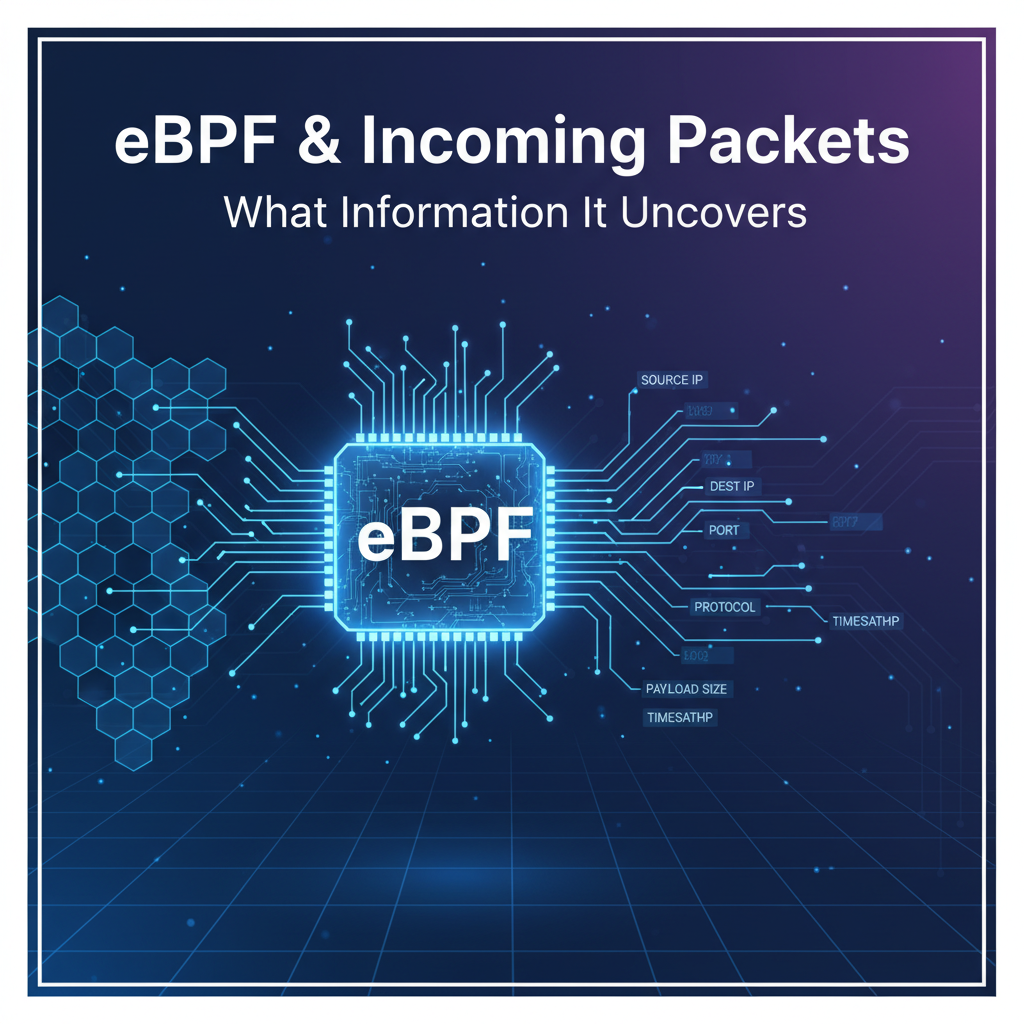


In the intricate tapestry of modern computing, where data flows ceaselessly across networks, the ability to peer into the very essence of this movement is paramount. Network packets, those diminutive carriers of digital information, form the lifeblood of every application, every transaction, every interaction in our interconnected world. Yet, for decades, truly understanding their journey and extracting meaningful insights from them at the operating system level has been a formidable challenge, often requiring invasive techniques or significant compromises in performance. This landscape, however, has been irrevocably transformed by the advent of eBPF (Extended Berkeley Packet Filter).
eBPF is not merely an incremental improvement; it is a paradigm shift in how we observe, secure, and optimize systems. By providing a safe, programmable, and highly performant way to run custom code within the Linux kernel, eBPF unlocks an unprecedented level of visibility into the kernel's inner workings, especially its network stack. When an incoming packet arrives, it embarks on a complex journey through various layers of the kernel, each step presenting an opportunity for eBPF to interject, observe, and even modify its trajectory or extract critical data.
This article embarks on an extensive exploration of eBPF's profound capabilities in dissecting incoming packets. We will delve into the fundamental mechanisms that enable eBPF to attach to strategic points within the kernel network stack, revealing the rich spectrum of information it can uncover. From rudimentary network performance metrics to sophisticated application-level details, and from robust security measures to deep insights into the behavior of complex systems like API gateways and APIs themselves, eBPF is redefining observability. We will demonstrate how this powerful technology empowers developers, operators, and security professionals to gain granular, real-time understanding of their network traffic, transforming reactive troubleshooting into proactive intelligence.
The journey through the kernel network stack is complex, but with eBPF as our guide, the seemingly opaque world of incoming packets becomes transparent, yielding a wealth of knowledge that was previously unattainable without significant performance penalties or kernel modifications. This deep dive will illuminate not only what information eBPF can extract but also how it achieves this, solidifying its position as an indispensable tool in the modern technological toolkit.
Chapter 1: The Foundation – Understanding eBPF
To truly appreciate the power eBPF wields over incoming packets, one must first grasp its underlying philosophy and architecture. eBPF is often described as a "superpower for the Linux kernel," and for good reason. It allows user-space programs to execute custom, sandboxed code directly within the kernel, responding to various events, including the arrival of network packets.
From BPF to eBPF: A Historical Leap
The lineage of eBPF can be traced back to the original Berkeley Packet Filter (BPF), introduced in 1992. Classic BPF (cBPF) was primarily designed for efficient packet filtering in user space, allowing tools like tcpdump to capture specific network traffic without copying all packets to user space. It operated by generating a small, virtual machine-like bytecode that the kernel could execute to filter packets. While revolutionary for its time, cBPF was limited in scope, primarily focused on network filtering, and lacked the generality and power needed for broader kernel observability.
eBPF, introduced in the Linux kernel around 2014 (initially by Alexei Starovoitov), represents a significant expansion and re-architecture of cBPF. It transformed a specialized packet filter into a general-purpose, in-kernel virtual machine that can run arbitrary programs triggered by a multitude of kernel events, not just network traffic. This evolution unlocked its potential for system tracing, security, and networking functions far beyond simple filtering. The 'e' in eBPF stands for "extended," a modest descriptor for such a profound transformation.
How eBPF Works: A Safe, Programmable Kernel Extension
The magic of eBPF lies in its elegant yet robust design. Here’s a breakdown of its core components and operational flow:
- eBPF Programs: These are small, event-driven C programs compiled into eBPF bytecode. Developers write these programs in a restricted C dialect, focusing on specific tasks like monitoring network events, tracing system calls, or inspecting kernel data structures.
- eBPF Maps: Programs running in the kernel often need to store and share data, both among themselves and with user-space applications. eBPF maps are highly efficient, in-kernel key-value stores that serve this purpose. They come in various types (hash tables, arrays, ring buffers, etc.) and facilitate critical communication and state management.
- eBPF Verifier: Before any eBPF program can be loaded into the kernel, it must pass a rigorous verification process by the eBPF verifier. This kernel component ensures that the program is safe to run:
- It will not crash the kernel.
- It will terminate (no infinite loops).
- It will not access invalid memory addresses.
- It will not attempt to exploit vulnerabilities. This safety guarantee is paramount and distinguishes eBPF from traditional, potentially dangerous kernel modules.
- Just-In-Time (JIT) Compiler: Once verified, the eBPF bytecode is translated by a JIT compiler into native machine code specific to the host architecture (x86, ARM, etc.). This ensures that eBPF programs execute at near-native speed, minimizing performance overhead.
- Kernel Hooks: eBPF programs are attached to specific "hooks" within the kernel. These hooks are predefined points where kernel code can pause execution and allow an attached eBPF program to run. For incoming packets, these hooks are strategically placed within the network stack, ranging from the earliest point of packet reception to higher-level socket operations.
Why eBPF is Transformative: Safety, Performance, Programmability
The combination of these features makes eBPF a game-changer:
- Safety: The verifier provides an unparalleled level of security. Unlike traditional kernel modules, which can introduce critical vulnerabilities or system instability if poorly written, eBPF programs are guaranteed to be safe.
- Performance: JIT compilation and in-kernel execution mean eBPF programs run extremely fast, often with negligible overhead. This allows for high-frequency data collection and real-time intervention without impacting system performance.
- Programmability: Developers can write custom logic to address specific problems, rather than being limited by predefined kernel functionalities. This flexibility is what allows eBPF to adapt to a vast array of use cases.
- Non-Invasiveness: eBPF programs observe and act on kernel events without requiring modifications to the kernel source code or recompilation. This makes it incredibly easy to deploy and update.
- Observability: By providing unprecedented access to kernel internals, eBPF allows for deep, granular observability into system behavior, including networking, process execution, and storage, which was previously only possible with intrusive debugging tools.
The significance of eBPF cannot be overstated. It empowers users to extend the kernel's functionality dynamically and safely, providing a powerful lens through which to examine the intricate dance of data, especially as incoming packets traverse the complex network stack.
Chapter 2: The Journey of an Incoming Packet and eBPF's Interception Points
Before we delve into the specific types of information eBPF can uncover, it's crucial to understand the intricate journey an incoming packet undertakes from the network cable to its ultimate destination within an application. Each stage of this journey represents a potential "hook" or interception point where eBPF can attach its programs, observe the packet's contents, and even influence its path.
From Wire to Application: The Kernel Network Stack
When a network packet arrives at a server's Network Interface Card (NIC), it begins a sophisticated traversal through the Linux kernel's network stack:
- NIC Reception: The hardware itself is the first point of contact. The NIC receives the electrical or optical signal and converts it into digital data, often performing initial checksums or offloading tasks.
- Driver Level: The NIC's driver, a piece of kernel software, handles the low-level interaction, moving the packet data from the NIC's buffers into kernel memory (SKB -
sk_buffstructures). At this stage, various optimizations like Generic Receive Offload (GRO) or Large Receive Offload (LRO) might coalesce multiple small packets into larger ones for efficiency. - Network Layer (IP): The kernel's IP layer processes the packet, checks its destination IP address, and determines if it's meant for this host or needs to be forwarded. It handles IP fragmentation/reassembly and routes the packet.
- Transport Layer (TCP/UDP): If the packet is destined for the local host, it proceeds to the transport layer. Here, TCP handles connection state, sequence numbers, acknowledgements, and retransmissions, while UDP provides a simpler, connectionless service. Port numbers direct the packet to a specific application or service.
- Socket Layer: Finally, the packet arrives at the socket layer, where it is queued for delivery to a user-space application that has opened a listening socket on the corresponding port. The application then reads the data from its socket buffer.
This complex pipeline offers multiple vantage points for eBPF to inject its logic and observe the packet.
Key eBPF Interception Points for Incoming Packets
eBPF programs can attach to various points, each offering unique advantages and insights:
- XDP (eXpress Data Path):
- Location: The earliest possible point in the kernel network stack, directly after the NIC driver has placed the packet in memory, but before the kernel allocates a full
sk_buffstructure and performs most of its complex network stack processing. - Purpose: Primarily designed for high-performance packet processing, firewalling, load balancing, and DDoS mitigation. Because it operates so early, it can drop, redirect, or modify packets with minimal overhead.
- Information Uncovered: Raw L2 (Ethernet) and L3 (IP) headers. Basic L4 (TCP/UDP) port numbers. Source/destination MAC and IP addresses. Packet length. This is ideal for very fast, early-stage filtering based on simple header information.
- Significance: XDP's "zero-copy" architecture makes it incredibly efficient, as packets can be processed or dropped without ever reaching the main network stack, saving CPU cycles and memory bandwidth. It's perfect for detecting and mitigating high-volume malicious traffic before it can impact higher-layer services or an
API gateway.
- Location: The earliest possible point in the kernel network stack, directly after the NIC driver has placed the packet in memory, but before the kernel allocates a full
tcIngress Hooks (Traffic Control):- Location: After XDP, but still relatively early in the network stack, at the ingress point of a network interface, before the packet enters the main IP routing decision logic.
- Purpose: More sophisticated packet classification, shaping, policing, and redirection than XDP. It leverages the
tcsubsystem's capabilities. - Information Uncovered: Full L2, L3, and L4 headers. Can parse further into L7 if programmed (e.g., extracting HTTP method from a raw payload). Offers a more complete view of the packet than XDP because the
sk_buffstructure is fully formed. - Significance:
tceBPF allows for more complex ingress filtering and traffic management, enabling policy enforcement based on more detailed packet attributes. It can be used to implement advanced firewalls, custom load balancing logic, or even integrate with monitoring systems that analyze traffic directed at specificAPIs.
- Socket Filters (
SO_ATTACH_BPF):- Location: At the socket layer, just before the packet data is delivered to a user-space application via a specific socket.
- Purpose: Allows an application to attach an eBPF program to its own socket (or a raw socket) to filter packets before they are copied into the application's receive buffer. This reduces unnecessary data copying.
- Information Uncovered: Full L2, L3, L4 headers, and the entire payload. The program has access to the complete
sk_buffstructure associated with that socket's received packets. - Significance: Ideal for applications that need to selectively receive packets or extract specific information from their own traffic. For instance, an
APIserver could use a socket filter to quickly discard malformed requests or to extract specific headers for logging before the full application-level parsing.
- Tracepoints and Kprobes/Uprobes:
- Location: These are not fixed network stack points but dynamic attachment points anywhere within the kernel code (
kprobe) or user-space applications (uprobe), as well as statically definedtracepointsby kernel developers. - Purpose: General-purpose dynamic tracing and observability. For network packets,
kprobescan be attached to specific kernel functions involved in packet processing (e.g.,ip_rcv,tcp_v4_rcv,sock_rcv_skb) to observe their arguments and return values.Uprobescan similarly trace network-related functions within user-space libraries orAPI gatewayapplications. - Information Uncovered: Depends heavily on the specific function being probed. Can reveal function arguments (e.g.,
sk_buffpointer, socket details), internal kernel state, and execution paths. Withtracepoints, developers can access predefined, stable kernel data structures at specific events. - Significance: Provides the deepest possible introspection into the kernel's (or user-space application's) handling of packets, allowing for detailed performance profiling, debugging of complex network issues, and understanding specific kernel behaviors that impact
APIperformance or network latency.
- Location: These are not fixed network stack points but dynamic attachment points anywhere within the kernel code (
| eBPF Attachment Point | Location in Network Stack | Primary Use Cases | Uncovered Information Focus | Performance Impact |
|---|---|---|---|---|
| XDP | Earliest (NIC Driver) | High-performance filtering, DDoS mitigation, LB | Raw L2/L3 headers, basic L4, packet length | Extremely Low |
tc Ingress |
After XDP (Netdev Ingress) | Advanced filtering, traffic shaping, policy enforcement | Full L2/L3/L4 headers, payload bytes for custom parsing | Low |
| Socket Filters | Before User-space Socket | Application-specific filtering, data extraction | Full L2/L3/L4 headers, complete payload | Moderate |
| Kprobes/Uprobes | Anywhere in Kernel/User | Dynamic tracing, debugging, performance analysis | Function arguments, return values, internal data structures | Variable (Low-High depending on frequency) |
| Tracepoints | Static Kernel Events | Stable, predefined kernel event monitoring | Predefined kernel data relevant to the event (e.g., sk_buff) |
Low |
By judiciously selecting the appropriate attachment point, eBPF programs can gain precisely the level of detail and control required for a given task, whether it's optimizing network performance, enhancing security, or gaining granular insights into application-level communication, including calls to and from an API gateway or individual APIs.
Chapter 3: Unveiling Network Performance with eBPF
One of eBPF's most compelling applications is its ability to provide unparalleled visibility into network performance metrics. Traditional tools often rely on sampling or aggregated data, offering a generalized view. eBPF, however, can inspect every single packet, enabling real-time, high-fidelity analysis that uncovers subtle performance bottlenecks and anomalies.
Latency Analysis: The Silent Killer of Performance
Latency, the delay encountered by a packet from its source to its destination, is a critical performance indicator. High latency can severely impact user experience, particularly for interactive applications or time-sensitive API calls. eBPF offers multiple ways to measure and diagnose latency:
- Packet Arrival to Application Read: By attaching eBPF programs at the XDP layer (for initial reception timestamp) and then again at the socket layer (when the packet is delivered to the application), one can precisely measure the time spent within the kernel's network stack for a specific packet. This reveals kernel-level processing delays or queuing issues.
- TCP Round-Trip Time (RTT) Measurement: eBPF programs can directly inspect TCP headers, matching sequence numbers of outgoing packets with acknowledgment numbers of incoming packets. This allows for highly accurate RTT calculations from the kernel's perspective, offering a more precise measure of network latency than typical user-space probes.
- Congestion Window and Slow Start Observation: For TCP connections, eBPF can monitor the TCP congestion window size and observe events like slow start or congestion avoidance. Changes in these parameters, or unexpected reductions in window size, can indicate network congestion affecting the application's ability to transmit or receive data efficiently.
- Latency Hotspots in the Kernel: By attaching
kprobesto various critical functions within the network stack (e.g., buffer allocations, queueing mechanisms, IP routing lookups), eBPF can identify specific kernel functions that are introducing delays. This granular detail is invaluable for diagnosing complex performance regressions.
Throughput Monitoring: Quantifying Data Flow
Throughput, the amount of data successfully transferred over a period, is another fundamental metric. While simple ifconfig or ip -s link can provide basic byte/packet counts, eBPF offers deeper insights:
- Per-Flow Throughput: eBPF can track individual network flows (defined by source/destination IP and port, protocol) and count the packets and bytes transferred for each. This allows identification of "top talkers" or flows consuming significant bandwidth, which might be impacting other critical
APIsor services. - Application-Specific Throughput: By combining flow tracking with
uprobeattachments to user-space network I/O functions (e.g.,read,recvmsg), eBPF can attribute throughput directly to specific processes or even particularAPIendpoints within an application. - Buffer Utilization and Dropped Packets: eBPF can monitor the fill level of kernel network buffers (e.g.,
netdev_budget, socket receive queues). High buffer utilization or unexpected packet drops (which eBPF can directly count at various points like XDP ortc) are clear indicators of congestion or insufficient processing capacity, directly impacting perceived throughput.
Congestion Detection: Pinpointing Bottlenecks
Network congestion manifests in various forms, and eBPF is exceptionally well-suited to detect and diagnose it:
- Packet Drops: As mentioned, eBPF can count drops at different stages. A drop at XDP might indicate a driver-level issue or overwhelming traffic, while drops at a
tcqueue could point to misconfigured QoS or upstream congestion. Drops in the socket buffer suggest the application isn't reading fast enough. - Retransmissions: For TCP traffic, eBPF can directly observe retransmission events by comparing sequence numbers. A high rate of retransmissions is a strong indicator of packet loss and network congestion, severely degrading performance for
APIcalls or data transfers. - Out-of-Order Packets: While not always indicative of congestion, a significant number of out-of-order packets can point to complex routing issues or load balancing mechanisms that are not behaving as expected. eBPF can track packet sequence numbers to identify such occurrences.
- Queue Lengths: Monitoring the length of various queues within the kernel network stack (e.g.,
qdiscqueues fortcingress/egress,backlogqueues for incoming packets) provides immediate feedback on bottlenecks. If queues are consistently full, it implies a bottleneck at that processing stage.
Network Flow Analysis: Understanding Communication Patterns
Beyond raw numbers, understanding who is talking to whom and how is crucial for capacity planning and troubleshooting.
- Connection Tracking: eBPF can maintain connection states in maps, allowing it to track the lifetime of TCP connections, including SYN, SYN-ACK, ACK handshake, and FIN/RST termination. This helps identify short-lived connections, connection storms, or orphaned connections.
- Top Talkers and Listeners: By aggregating packet and byte counts per IP address and port, eBPF can identify the most active clients and servers, providing a clear picture of network resource consumption. This is particularly useful for analyzing traffic directed towards an
API gatewayto understand client behavior. - Protocol Distribution: eBPF can classify traffic by protocol (HTTP, HTTPS, SSH, DNS, etc.), providing insights into the overall network usage patterns and ensuring that critical
APItraffic is prioritized or monitored appropriately.
By leveraging these capabilities, eBPF transforms the opaque world of network performance into a transparent, measurable domain. It provides the essential, low-level data points that, when combined with higher-level application metrics, offer a complete and actionable view of system health.
Chapter 4: Deep Dive into Application-Level Insights with eBPF
While eBPF operates primarily at the kernel level, its true power extends to extracting highly granular, application-level information from incoming packets. This capability bridges the gap between raw network data and meaningful business or operational insights, especially concerning API communications and the performance of API gateways.
From Raw Packets to Meaningful Application Data
The journey from a stream of bytes to an understanding of an API request involves several layers of parsing:
- Extracting Network Headers (L2, L3, L4): As discussed, eBPF can access Ethernet (MAC addresses, VLAN IDs), IP (source/destination IP, TTL, protocol), and TCP/UDP (source/destination ports, flags, sequence numbers) headers. This foundational data allows for basic routing, connection tracking, and initial filtering.
- Protocol Parsing within eBPF: With sufficient programming, eBPF can parse beyond L4. For instance, an eBPF program can inspect the payload of a TCP packet to identify the start of an HTTP request. It can then extract the HTTP method (GET, POST), URL path, host header, and even specific custom headers. This is a powerful technique for gaining insights into application protocols without the overhead of sending all data to user space.
- HTTP/HTTPS: For unencrypted HTTP, eBPF can easily read request lines, headers, and even parts of the body. For HTTPS, eBPF can still see the TLS handshake details (ClientHello, ServerHello, SNI - Server Name Indication), which can be valuable for routing or security policies, even if the encrypted payload remains opaque without further intervention.
- gRPC: Similar to HTTP, gRPC uses HTTP/2 as its transport. eBPF can parse HTTP/2 frames, identify gRPC method calls, and extract service and method names, offering deep visibility into microservices communication.
- DNS: eBPF can inspect UDP port 53 traffic to extract DNS queries and responses, providing insights into service discovery and external dependencies.
Observing API Calls: The Heart of Modern Applications
Modern applications are built on APIs, and understanding their behavior is critical. eBPF provides a unique, low-level perspective on API interactions:
- Latency of Individual
APIRequests: By timestamping packets carryingAPIrequests (e.g., HTTP POST) and their corresponding responses (e.g., HTTP 200 OK), eBPF can calculate the precise network round-trip time for individualAPIcalls. This is more accurate than application-level timers, which might include internal processing time that isn't network-related. - Error Rates and
APIResponse Codes: For HTTP-basedAPIs, eBPF can parse the response line to extract the HTTP status code (200 OK, 404 Not Found, 500 Internal Server Error). By aggregating these in eBPF maps, it can provide real-timeAPIerror rates directly from the kernel, offering an immediate signal of application health or issues within anAPI gateway. - Tracing Specific
APIEndpoints: An eBPF program can be configured to filter for specific URL paths (e.g.,/api/v1/usersor/checkout) and track metrics like latency, throughput, and error rates for each endpoint. This provides granular performance insights for criticalAPIservices. - Identifying Slow
APICalls: By monitoring response times for allAPItraffic, eBPF can identify individual requests that exceed a predefined latency threshold, helping pinpoint specific problematicAPIcalls or backend service issues. This can be aggregated to show the slowestAPIendpoints over time. - Payload Analysis for Business Metrics: In certain scenarios, eBPF can extract specific identifiers or parameters from
APIrequest or response payloads (e.g., auser_idortransaction_idfrom a JSON body, assuming it's unencrypted and within a parsable segment). This allows for highly customized business metrics to be generated from network traffic directly.
Integration Point for APIPark: Enhancing API Gateway Observability
Managing complex API ecosystems, especially those involving sophisticated AI gateways and diverse API models, presents unique observability challenges. Platforms like APIPark are designed to streamline the management, integration, and deployment of both AI and REST services, providing a unified API format, prompt encapsulation, and end-to-end lifecycle management.
While APIPark offers robust built-in monitoring and logging capabilities, eBPF provides an unparalleled low-level perspective that complements these higher-level metrics. For instance:
- Validating
API GatewayPerformance: eBPF can monitor the network traffic entering and exiting theAPIParkgatewayprocess itself. This allows for independent validation of thegateway's network performance, identifying any kernel-level bottlenecks or drops that might occur before theAPIParkapplication even processes the request. - Micro-observability for AI
APIs: WhenAPIParkintegrates over 100 AI models and unifies theirAPIinvocation format, eBPF can provide micro-observability for the underlying network interactions with these models. It can trace the exact packets flowing between theAPIParkgatewayand the various AI model endpoints, measuring their network latency and throughput from the kernel's viewpoint. - Security Context for
APIManagement: eBPF's ability to detect anomalous network patterns (as discussed in the next chapter) can provide an additional layer of security context forAPIPark'sAPIresource access approval and detailed call logging features. For example, eBPF could flag unusual packet sizes or frequencies hitting thegatewaythat might precede an application-layer attack.
By combining the powerful API management capabilities of APIPark with the deep kernel-level insights offered by eBPF, organizations can achieve a holistic and highly resilient API infrastructure. eBPF ensures the plumbing is sound and performs optimally, while APIPark orchestrates the sophisticated API logic and consumption.
APIPark is a high-performance AI gateway that allows you to securely access the most comprehensive LLM APIs globally on the APIPark platform, including OpenAI, Anthropic, Mistral, Llama2, Google Gemini, and more.Try APIPark now! 👇👇👇
Chapter 5: Enhancing Network Security and Anomaly Detection with eBPF
Beyond performance and application insights, eBPF stands as a formidable tool for fortifying network security and detecting anomalies at a fundamental level. Its ability to inspect and react to packets in real-time, coupled with its kernel-level vantage point, provides a powerful layer of defense and surveillance that complements traditional security solutions.
High-Performance Firewalling and Packet Filtering
Traditional firewalls often operate at various layers, sometimes introducing latency. eBPF, particularly when leveraging XDP, can implement extremely efficient, kernel-native firewall rules:
- Early Packet Drop: XDP programs can inspect incoming packets right at the NIC driver level and drop malicious or unwanted traffic before it even enters the main network stack. This is significantly more efficient than dropping packets at higher layers, saving valuable CPU cycles and memory resources.
- Custom Filtering Logic: Unlike static
iptablesrules, eBPF allows for dynamic and programmable filtering logic. This means firewalls can be tailored to specific, complex conditions that would be difficult or impossible with traditional rule sets, such as filtering based on sequences of packets or specific payload content. - Policy Enforcement: eBPF can enforce network policies by inspecting packet headers and payloads, ensuring only authorized traffic reaches designated services. This can be used to isolate workloads, prevent unauthorized lateral movement, or restrict access to sensitive
APIsbefore they even reach the application layer.
DDoS Mitigation at the Edge
Distributed Denial of Service (DDoS) attacks aim to overwhelm a target with a flood of traffic. eBPF, especially via XDP, is an excellent first line of defense:
- Volumetric Attack Detection and Mitigation: eBPF programs can monitor packet rates and identify sudden, massive surges in traffic from suspicious sources or targeting specific ports. At XDP, these programs can then drop or rate-limit the offending traffic with extreme efficiency, preventing the attack from consuming kernel resources or reaching user-space applications, including
API gateways. - Stateless Mitigation: Many DDoS attacks are stateless (e.g., UDP floods). XDP's stateless nature allows it to process and discard these packets without maintaining complex connection state, making it highly effective against such attacks.
- Signature-Based Filtering: eBPF can be programmed to identify specific attack signatures within packet headers or small parts of the payload (e.g., malformed SYN packets, specific byte sequences) and drop them immediately.
Intrusion Detection and Anomaly Identification
eBPF's deep observability allows it to act as a highly effective intrusion detection system (IDS) by identifying anomalous network behavior:
- Port Scanning Detection: eBPF can monitor attempts to connect to a wide range of ports on a host in a short period. This pattern, indicative of a port scan, can be detected and reported (or even blocked) directly in the kernel.
- Unusual Protocol Behavior: eBPF can enforce expected protocol behavior. For instance, if a non-HTTP packet arrives on port 80, eBPF can detect this anomaly. Similarly, it can flag unusual flag combinations in TCP packets or malformed IP headers that might indicate an attempt at network manipulation.
- Covert Channel Detection: While more advanced, eBPF can be used to detect subtle patterns of data exfiltration or command-and-control communication hidden within legitimate-looking traffic, by monitoring deviations from established baselines of network flow.
Observing API Gateway Attacks
API gateways are often prime targets for attackers looking to exploit API vulnerabilities or gain unauthorized access. eBPF provides critical insights into the network-level aspects of such attacks:
- Rate Limiting Bypass Attempts: While
API gatewayslike APIPark have built-in rate limiting, attackers might try to bypass these by rapidly changing source IPs or using other obfuscation techniques. eBPF can observe the raw incoming traffic patterns at a kernel level, potentially identifying a coordinated high-volume attack aimed at thegatewayeven if individual requests are within application-level limits. - Unusual
APIRequest Patterns: eBPF can track parameters like packet size, frequency of specificAPIendpoint requests, or unusual source/destination port combinations aimed at anAPI gateway. Deviations from baseline behavior could indicate reconnaissance, brute-force attempts, or other attack vectors targeting theAPIlayer. - Protocol Fuzzing Detection: Malformed or highly unusual
APIrequests (e.g., excessively long URLs, bizarre HTTP methods) intended to crash or exploit agatewaycan be detected by eBPF through deep packet inspection before the request even reaches thegateway's application logic. - TLS Inspection Challenges and Possibilities: For encrypted HTTPS
APItraffic, eBPF cannot directly decrypt the payload without access to the session keys. However, it can still observe the TLS handshake details. For example, by usinguprobeson cryptographic libraries (like OpenSSL'sSSL_readorSSL_writefunctions), eBPF can gain access to plaintext data after decryption or before encryption by the application, providing a powerful means to observe encryptedAPItraffic without modifying the application code. This is a complex but increasingly utilized technique for security and observability in production environments.
In essence, eBPF transforms the kernel into an active, intelligent security agent. By providing granular visibility and programmatic control over every incoming packet, it enables proactive defense, rapid anomaly detection, and deep forensic analysis, significantly hardening the network's posture against a wide array of threats, particularly those targeting critical API infrastructure.
Chapter 6: Practical Applications and Tools Leveraging eBPF
The theoretical prowess of eBPF would remain just that without practical tools and widespread adoption. Fortunately, the eBPF ecosystem has matured rapidly, offering a rich suite of frameworks and applications that democratize its power and bring its benefits to diverse fields, from cloud networking to robust security products.
Real-World Use Cases: Where eBPF Shines
eBPF's flexibility allows it to address a multitude of challenges across the modern computing landscape:
- Cloud Native Networking (Service Mesh): In environments dominated by microservices and containers, inter-service communication is complex. eBPF is at the heart of many service mesh implementations (like Cilium's Envoy integration). It can transparently inject observability, security policies, and routing logic directly into the kernel, often bypassing the need for traditional proxies or sidecars, or enhancing their functionality. This enables:
- High-performance Load Balancing: Distributing incoming requests across multiple service instances.
- Network Policy Enforcement: Ensuring services can only communicate with authorized peers.
API-Aware Routing: Routing requests based on HTTP headers or gRPC method calls without modifying applications.- Encrypted Traffic Observability: Providing insights into encrypted
APItraffic by attachinguprobesto cryptographic libraries.
- Container Security and Runtime Enforcement: eBPF can monitor syscalls, file access, and network activity of individual containers. This allows security tools to:
- Detect Suspicious Behavior: Flagging unusual process execution or network connections from a container.
- Enforce Security Policies: Preventing a container from making unauthorized network calls or accessing sensitive files.
- Isolate Breaches: Quickly identifying and isolating compromised containers.
- Network Performance Monitoring and Troubleshooting: Beyond general metrics, eBPF enables pinpoint diagnosis:
- Latency Breakdown: Precisely measuring time spent in various kernel components (e.g., NIC driver, IP stack, TCP layer) for specific
APIrequests. - Packet Flow Tracing: Visualizing the exact path a packet takes through the kernel, identifying unexpected detours or drops.
- Resource Utilization: Monitoring CPU, memory, and buffer usage by network stack components in real-time.
- Latency Breakdown: Precisely measuring time spent in various kernel components (e.g., NIC driver, IP stack, TCP layer) for specific
- Kernel and Application Tracing: For developers and kernel engineers, eBPF offers unprecedented debugging capabilities:
- Dynamic Debugging: Attaching probes to any kernel function or user-space function to inspect arguments and return values without recompiling.
- Profiling: Identifying performance bottlenecks in kernel code or user-space applications (including
API gatewaysor backendAPIs) by measuring function execution times or call counts. - Custom Metrics: Generating unique metrics tailored to specific application or kernel behaviors.
Popular eBPF Tools: Simplifying Development and Deployment
The raw complexity of writing eBPF programs in C and managing kernel interactions can be daunting. A vibrant ecosystem of tools and frameworks has emerged to abstract away much of this complexity, making eBPF accessible to a wider audience:
- BCC (BPF Compiler Collection):
- Overview: A toolkit for creating powerful and efficient kernel tracing and manipulation programs using eBPF. It provides Python (and C++) bindings to simplify eBPF program development, compilation, and loading.
- Key Features: Offers a vast library of pre-built eBPF tools for various observability tasks (networking, CPU, memory, I/O). It handles the compilation of eBPF C code to bytecode and interaction with kernel APIs.
- Application: Ideal for system administrators and developers who want to rapidly prototype and deploy custom eBPF tools for performance analysis, debugging, and security monitoring. Many standard eBPF examples use BCC.
- bpftrace:
- Overview: A high-level tracing language for Linux, built on top of LLVM and eBPF. It's inspired by DTrace and SystemTap but leverages the safety and performance of eBPF.
- Key Features: Allows users to write short, concise scripts to probe various kernel and user-space events. It has a powerful syntax for pattern matching, aggregation, and printing custom output.
- Application: Perfect for quick, ad-hoc tracing and debugging of system behavior, identifying hotspots, and understanding event sequences. It's often the go-to tool for rapid network diagnostics or inspecting application
APIcalls at a low level.
- Cilium:
- Overview: An open-source, cloud-native networking, security, and observability solution for Kubernetes. It uses eBPF extensively to provide network connectivity, security policy enforcement, and load balancing.
- Key Features: Replaces traditional
kube-proxywith eBPF-based load balancing, offers identity-based security policies for containers, and provides deep observability into L3-L7 traffic. - Application: Essential for organizations running Kubernetes at scale, enabling high-performance networking, fine-grained security for microservices, and sophisticated
API-aware routing. It directly leverages eBPF's capabilities to manage traffic flow to and fromAPIswithin a cluster.
- Falco:
- Overview: A cloud-native runtime security project that detects unexpected application behavior. It leverages eBPF (among other kernel mechanisms) to monitor system calls and other kernel events.
- Key Features: Provides a rich rule engine to define security policies and alert on anomalous behavior (e.g., a web server spawning a shell, a database making unexpected outbound network connections).
- Application: A crucial component for runtime security in containerized environments, complementing network-level security by observing application behavior, including suspicious activity related to
APIprocesses.
Another Integration Point for APIPark: Holistic API Ecosystem Management
While eBPF tools provide the raw, granular observability power at the kernel level, platforms like APIPark offer the high-level management, orchestration, and analytics necessary for businesses to truly leverage their API infrastructure effectively. eBPF provides the technical insights into "how" the network is performing, while APIPark provides the business context for "what" APIs are being used, "by whom," and "for what purpose."
For example, eBPF might reveal a spike in network latency to a specific backend service, or an unusual number of 500 errors originating from packets destined for a particular API endpoint managed by APIPark. This low-level eBPF data can then inform APIPark's higher-level API call logging, performance analytics, and even its API lifecycle management processes. If eBPF identifies a persistent performance degradation for an AI model API served through APIPark, this data can trigger alerts within APIPark or inform decisions about model deployment and resource allocation.
By working in tandem, eBPF ensures the underlying network and kernel operate optimally, providing a robust foundation, while APIPark builds upon this foundation to deliver a comprehensive, efficient, and secure API management experience, crucial for both traditional REST APIs and the emerging landscape of AI gateways.
Chapter 7: The Symbiosis: eBPF and API Gateway Observability
In the modern microservices architecture, API gateways serve as critical entry points, acting as reverse proxies that route, manage, and secure incoming requests to various backend APIs. They handle tasks like authentication, authorization, rate limiting, traffic management, and analytics. While API gateways typically provide their own rich set of metrics and logs, eBPF offers a unique, complementary, and often more granular layer of observability into their underlying network and operating system interactions. This symbiosis creates a complete picture of API performance and security.
How eBPF Monitors API Gateways
An API gateway is essentially a user-space application that processes network traffic. eBPF can observe this application's behavior and its interaction with the kernel in several profound ways:
- Network Ingress and Egress to the
GatewayProcess:- Pre-
GatewayInspection: Using XDP ortcingress programs, eBPF can observe every packet destined for theAPI gateway's listening port before it even reaches thegatewayapplication. This allows for metrics on raw request volume, initial connection attempts, and early packet drops, offering insight into traffic load even if thegatewayitself is overloaded or unresponsive. - Post-
GatewayEgress: Similarly, eBPF can monitor packets as they leave thegateway(e.g., being forwarded to a backendAPI). This helps measure thegateway's forwarding latency and ensures traffic is correctly egressing to the intended backend services. - Identifying Bottlenecks: If there's a discrepancy between the raw incoming traffic observed by eBPF at XDP and the traffic reported by the
API gateway's internal metrics, it could indicate kernel-level queuing issues, dropped packets before reaching thegatewayprocess, or inefficient kernel network stack processing.
- Pre-
- Resource Utilization Monitoring for
GatewayProcesses:- CPU and Memory Usage: While general system tools can report process-level resource usage, eBPF can provide more granular insights. For example,
kprobeson memory allocation functions (kmalloc,kfree) oruprobeson standard library functions (malloc,free) can reveal if theAPI gatewayis experiencing memory leaks or excessive allocation patterns in response to specificAPIrequests. - File Descriptor Usage:
API gatewayshandle numerous connections, meaning they open many file descriptors (sockets). eBPF can track file descriptor creation and closure, helping to identify potential descriptor leaks or resource exhaustion issues within thegateway.
- CPU and Memory Usage: While general system tools can report process-level resource usage, eBPF can provide more granular insights. For example,
- Tracing Requests from the
Gatewayto Backend Services:- Inter-service Latency: When an
API gatewayforwards a request to a backend microservice, eBPF can trace the entire network path. By attachingkprobesto socket send/receive functions (sendmsg,recvmsg) within thegatewayprocess, and then again at the backend service's receiving socket, eBPF can precisely measure the network latency of the internalAPIcall initiated by thegateway. - Connection Pooling Efficiency:
API gatewaysoften use connection pooling to backendAPIs. eBPF can observe the actual creation and reuse of these connections, helping to validate the efficiency of the pooling mechanism and identify potential connection saturation. - Protocol Conversions: If an
API gatewayperforms protocol conversions (e.g., REST to gRPC), eBPF can potentially observe the raw packets for both sides of the conversion, offering a unique perspective on the efficiency and correctness of the translation.
- Inter-service Latency: When an
- Traffic Shaping and Load Balancing Validation at the Kernel Level:
- Verifying
GatewayLoad Balancing:API gatewaysimplement load balancing algorithms. eBPF can independently verify if packets are indeed being distributed according to thegateway's configuration by observing the destination IP/port of egress packets from thegatewayprocess. This ensures the load balancer is working as expected and not introducing bias or errors. - QoS and Prioritization: If the
API gatewayapplies Quality of Service (QoS) policies to prioritize certainAPItraffic, eBPF usingtcprograms can confirm that these policies are being reflected in the kernel's packet scheduling and queueing mechanisms.
- Verifying
How eBPF Data Complements API Gateway's Own Metrics
API gateways provide invaluable application-level metrics: request counts, API response times, error rates (e.g., 4xx, 5xx), authentication failures, and business-specific API usage data. eBPF does not replace these; instead, it provides a foundational layer of visibility that enhances and validates them:
- Root Cause Analysis: If an
API gatewayreports an increase inAPIlatency, eBPF can help pinpoint why. Is it a kernel network stack bottleneck? A slow TCP handshake? Or is the latency originating within thegatewayapplication logic itself, or deeper in the backend service? eBPF provides the kernel context for application-level problems. - Independent Verification: eBPF offers an "out-of-band" perspective. Its metrics are derived directly from the kernel and are not reliant on the
API gatewayapplication's internal instrumentation, which might be faulty or itself be the source of issues. This independent verification is crucial for high-stakes environments. - Security Context: While
API gatewaysdetect application-level attacks (e.g., SQL injection, XSS), eBPF can detect lower-level network attacks (e.g., port scans, SYN floods, unusual packet sizes) that might precede or accompany application-layer exploits.
Another APIPark Mention: Robust API Delivery with eBPF Insights
Specifically for AI gateways and API management platforms like APIPark, eBPF can offer crucial insights into the performance of the underlying network and operating system components that power these services. APIPark facilitates the quick integration of 100+ AI models and unifies API invocation formats, making API management efficient and scalable. However, even the most sophisticated API gateway depends on a healthy and high-performing network infrastructure.
eBPF ensures this by: * Validating APIPark's Performance Claims: If APIPark boasts over 20,000 TPS on certain hardware, eBPF can verify that the kernel network stack is not the bottleneck, tracking packet processing rates and latency at the lowest levels. * Optimizing Resource Allocation: Insights from eBPF regarding kernel CPU usage, network buffer pressure, or high system call rates related to APIPark's processes can inform better resource allocation and tuning for APIPark deployments, especially when handling large-scale traffic. * Proactive Problem Identification: Before an API endpoint shows elevated error rates in APIPark's detailed call logging, eBPF might detect precursors like increasing packet retransmissions or subtle network latency spikes, allowing for proactive intervention.
The integration of eBPF-derived insights with API gateway metrics creates a powerful, multi-layered observability strategy. It empowers organizations to ensure the robust, secure, and efficient delivery of all API services, from traditional REST APIs to the cutting-edge AI APIs managed by platforms like APIPark.
Conclusion
The journey through the intricate world of incoming network packets, illuminated by the transformative power of eBPF, reveals a landscape of unparalleled observability and control. What was once an opaque, complex realm of kernel internals has become transparent, programmable, and highly actionable. eBPF, evolving from its humble origins as a packet filter, has emerged as a cornerstone technology for modern systems, redefining how we understand, secure, and optimize our digital infrastructure.
We have meticulously explored the fundamental principles of eBPF, from its architectural safety nets like the verifier and JIT compiler to its strategic attachment points within the Linux kernel network stack – XDP, tc hooks, socket filters, and dynamic tracing mechanisms like kprobes and uprobes. Each of these vantage points offers a unique perspective, allowing developers and operators to choose the most appropriate level of granularity for their specific needs.
The information eBPF uncovers from incoming packets is vast and invaluable. At the most fundamental level, it provides granular insights into network performance, enabling precise measurement of latency, throughput, and the early detection of congestion and packet drops. This real-time, per-packet visibility far surpasses the capabilities of traditional aggregation-based monitoring, empowering proactive troubleshooting and optimization.
Moving beyond raw network metrics, eBPF delves into application-level insights, dissecting protocol headers and even portions of the payload to understand the nuances of API calls. It can track individual API request latencies, identify error codes, trace specific API endpoints, and pinpoint slow API interactions directly from the kernel. This capability is particularly critical in today's API-driven world, where the performance and reliability of APIs directly impact business outcomes.
Furthermore, eBPF stands as a formidable ally in enhancing network security and anomaly detection. Its ability to implement high-performance, programmable firewalling at the earliest stages of packet reception (via XDP) provides a robust defense against DDoS attacks. Its deep introspection capabilities enable the detection of sophisticated anomalies, such as port scans, unusual protocol behavior, and even attempts to bypass API gateway security measures, all from the secure confines of the kernel.
Throughout our exploration, we have seen how eBPF's low-level, high-fidelity data complements and enhances higher-level management platforms. Specifically, for platforms managing complex API ecosystems, including sophisticated AI gateways and API management solutions like APIPark, eBPF offers an indispensable layer of foundational observability. It provides an independent, granular validation of network and system performance, ensuring that the underlying infrastructure effectively supports the robust and secure delivery of all API services. Whether it's validating the performance of an AI gateway handling a surge of requests to an AI model, or tracing latency to a critical backend API, eBPark provides the kernel-level truth to augment application-centric metrics.
The future of eBPF is bright, with ongoing developments expanding its capabilities and further integrating it into diverse domains. Its transformative impact on observability, security, and networking continues to grow, making it an essential skill and technology for anyone operating at the cutting edge of system management and development. By mastering eBPF, we gain the power to not just observe the flow of packets, but to truly understand and shape the very pulse of our digital world.
Frequently Asked Questions (FAQs)
1. What is eBPF and how does it differ from traditional kernel modules?
eBPF (Extended Berkeley Packet Filter) is a revolutionary technology that allows user-space programs to execute custom, sandboxed code within the Linux kernel. Unlike traditional kernel modules, which require compilation against a specific kernel version and can potentially crash the entire system if poorly written, eBPF programs are guaranteed safe by an in-kernel verifier. They are then Just-In-Time (JIT) compiled into native machine code for high performance and can be loaded/unloaded dynamically without kernel reboots or recompilation, offering unparalleled flexibility and security.
2. How can eBPF help in monitoring incoming network packet performance?
eBPF provides highly granular insights into incoming packet performance by attaching programs at various points in the kernel network stack. It can accurately measure packet-level latency (e.g., time spent in kernel buffers), precisely calculate TCP Round-Trip Times (RTT), monitor throughput on a per-flow basis, and detect congestion by observing packet drops, retransmissions, and queue lengths. This allows for real-time identification of network bottlenecks and performance issues that impact applications and API calls.
3. Can eBPF see into encrypted network traffic like HTTPS API calls?
Directly decrypting encrypted traffic (like HTTPS API calls) using eBPF is not possible without access to the session keys, as eBPF operates within the kernel. However, eBPF can still gain valuable insights. It can observe the TLS handshake details (e.g., ClientHello, Server Name Indication), which can be useful for routing or security policies. More advanced techniques involve attaching uprobes to user-space cryptographic libraries (e.g., OpenSSL) to intercept plaintext data before encryption or after decryption by the application, effectively providing visibility into encrypted API payloads at the application boundary.
4. How does eBPF assist in securing API Gateways?
eBPF can significantly enhance the security of API Gateways by acting as a low-level, high-performance security enforcement point. Using XDP, it can perform early packet filtering and DDoS mitigation directly at the NIC driver, dropping malicious traffic before it impacts the API Gateway application. It can detect port scans, unusual API request patterns, and protocol anomalies. Furthermore, eBPF can trace system calls and network activity originating from the API Gateway process, helping to identify and prevent unauthorized actions or attempts to bypass API Gateway security features.
5. What are some popular tools and platforms that leverage eBPF?
The eBPF ecosystem is rich with tools and platforms. Some prominent examples include: * BCC (BPF Compiler Collection): A toolkit with Python/C++ bindings for building eBPF programs for tracing and performance analysis. * bpftrace: A high-level tracing language that simplifies writing eBPF scripts for ad-hoc system introspection. * Cilium: A cloud-native networking, security, and observability solution for Kubernetes that uses eBPF for high-performance networking, security policies, and load balancing. * Falco: A runtime security tool that uses eBPF to detect unexpected application behavior in containers and hosts. Additionally, platforms like APIPark, an open-source AI gateway and API management platform, can significantly benefit from eBPF's low-level insights by providing the underlying network and kernel observability necessary to ensure the robust performance and security of its managed APIs and AI models.
🚀You can securely and efficiently call the OpenAI API on APIPark in just two steps:
Step 1: Deploy the APIPark AI gateway in 5 minutes.
APIPark is developed based on Golang, offering strong product performance and low development and maintenance costs. You can deploy APIPark with a single command line.
curl -sSO https://download.apipark.com/install/quick-start.sh; bash quick-start.sh

In my experience, you can see the successful deployment interface within 5 to 10 minutes. Then, you can log in to APIPark using your account.

Step 2: Call the OpenAI API.