Edge AI Gateway: Powering Intelligent IoT at the Edge
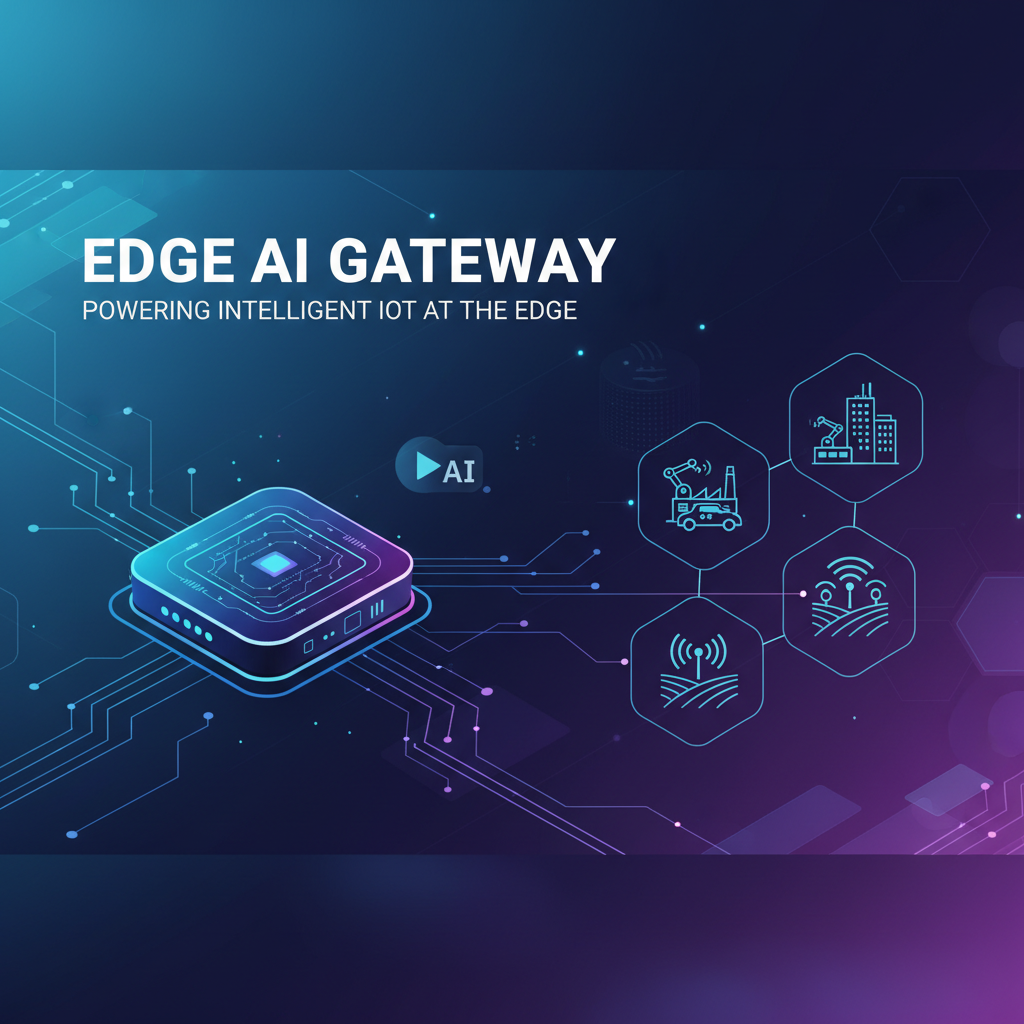


The landscape of technology is perpetually shifting, propelled forward by an insatiable human desire for greater efficiency, deeper insights, and seamless automation. At the forefront of this relentless march are two monumental forces: Artificial Intelligence (AI) and the Internet of Things (IoT). For years, these twin pillars have been developing along parallel paths, each demonstrating immense potential in their respective domains. IoT has woven a vast, intricate web of interconnected devices, sensors, and machines, constantly generating an unprecedented deluge of data from the physical world. AI, on the other hand, has evolved into a sophisticated engine for processing, interpreting, and learning from this data, unlocking patterns and predictive capabilities previously unimaginable. The true revolution, however, lies not in their individual prowess, but in their synergistic convergence, a powerful fusion that is reshaping industries and everyday life.
Yet, this convergence introduces a unique set of challenges. The sheer volume and velocity of data streaming from millions, soon to be billions, of IoT devices can overwhelm traditional centralized cloud computing infrastructures. Sending every byte of raw data back to a distant cloud for processing introduces unavoidable latency, incurs significant bandwidth costs, and raises serious privacy concerns, especially for mission-critical applications where real-time decision-making is paramount. Imagine autonomous vehicles needing to react in milliseconds, or industrial robots requiring immediate fault detection; a round-trip to the cloud simply isn't feasible. This critical bottleneck has paved the way for a transformative paradigm shift: Edge AI Gateway technology.
An Edge AI Gateway stands as a sophisticated intermediary, a robust and intelligent hub positioned at the very periphery of the network, closer to the data sources themselves. Unlike conventional IoT gateways that primarily facilitate data transfer, an Edge AI Gateway possesses the inherent capability to process, analyze, and infer insights directly at the edge, leveraging embedded artificial intelligence. This powerful local intelligence empowers IoT devices to transition from mere data collectors to proactive, intelligent agents capable of making autonomous decisions without constant reliance on the cloud. By bringing AI directly to the source of data generation, these intelligent gateways are not just optimizing network traffic; they are fundamentally redefining the capabilities of the entire IoT ecosystem, making it more responsive, resilient, secure, and profoundly intelligent. This article will delve deep into the intricate world of Edge AI Gateways, exploring their architecture, capabilities, transformative impact, and the pivotal role they play in forging the next generation of intelligent IoT.
Chapter 1: The Evolution of IoT and the Emergence of Edge Computing
The journey of the Internet of Things has been nothing short of remarkable, transforming from a nascent concept into a ubiquitous reality that permeates nearly every facet of modern existence. In its earliest iterations, IoT was primarily concerned with connecting devices to the internet to enable basic data collection and remote monitoring. Think of early smart thermostats that allowed users to adjust home temperatures from their smartphones, or industrial sensors transmitting rudimentary operational data to a central control room. These systems, while groundbreaking at the time, were largely passive. Devices served as mere conduits, gathering raw information and shipping it off to distant data centers or cloud platforms for storage, analysis, and subsequent action. The architecture was predominantly cloud-centric, with the cloud acting as the brain, processing hub, and decision-maker for the entire network of connected things.
However, as the number of connected devices exploded, growing from thousands to millions and now billions, and as the sophistication of the data generated by these devices escalated, the limitations of a purely cloud-centric model became glaringly apparent. One of the most significant challenges was latency. For applications demanding instantaneous responses, such as autonomous driving, real-time industrial automation, or critical medical monitoring, the delay introduced by sending data to the cloud, processing it, and then sending instructions back to the device was simply unacceptable. Even a few hundred milliseconds of delay could have catastrophic consequences, leading to safety hazards, operational inefficiencies, or missed opportunities. The physical distance between the data source and the cloud, coupled with network congestion, became a fundamental bottleneck.
Another pressing concern was bandwidth. Imagine a factory floor with thousands of sensors, cameras, and machines, each generating gigabytes of data per second. Transmitting all this raw, unfiltered data across wide area networks (WANs) to the cloud would consume immense bandwidth, leading to exorbitant data transfer costs and potential network saturation. This issue is compounded in remote or constrained environments where reliable high-bandwidth connectivity is either unavailable or prohibitively expensive. Moreover, the sheer volume of data often contains redundant or irrelevant information, making the transmission of everything an inefficient and unsustainable practice.
Data privacy and security also emerged as significant hurdles. Sending sensitive operational data, personal health information, or proprietary industrial secrets to a public cloud raises legitimate concerns about data exposure and regulatory compliance. Industries with stringent data governance requirements, like healthcare, finance, and defense, often face severe restrictions on where their data can be stored and processed. Centralized data repositories, while convenient, also present single points of failure, making them attractive targets for cyberattacks. A breach in the cloud could expose vast amounts of sensitive information from numerous devices and organizations.
Recognizing these inherent limitations, the concept of edge computing began to gain traction. Edge computing represents a distributed computing paradigm that brings computation and data storage closer to the sources of data generation – the "edge" of the network. Instead of relying solely on a distant cloud, processing power is distributed to localized devices, micro data centers, or, crucially, specialized gateway devices positioned near the IoT endpoints. This architectural shift fundamentally alters the data flow, allowing a significant portion of data processing and analysis to occur right where the data is created.
The rise of edge computing is not merely an optimization; it is a fundamental shift that enables a new class of intelligent IoT applications. By reducing latency, it empowers real-time decision-making, allowing systems to respond to events as they happen, not minutes later. By filtering and aggregating data locally, it drastically reduces the volume of data that needs to be transmitted to the cloud, alleviating bandwidth strain and cutting costs. Furthermore, processing sensitive data at the edge enhances privacy by keeping critical information within a controlled, local environment, minimizing its exposure to external networks. This distributed intelligence also contributes to greater system resilience, allowing edge devices and their connected counterparts to operate autonomously even when connectivity to the cloud is interrupted. The confluence of these benefits underscores why edge computing has become an indispensable component in the quest to unlock the full potential of advanced, intelligent, and autonomous IoT ecosystems, laying the groundwork for the powerful capabilities of Edge AI Gateways.
Chapter 2: Understanding Edge AI Gateway Technology
In the rapidly evolving landscape of the Internet of Things, the Edge AI Gateway has emerged as a pivotal piece of infrastructure, serving as the bridge between raw physical data and actionable intelligence. To fully appreciate its significance, it's crucial to understand what it is, how it differs from its predecessors, and the core components that empower its sophisticated operations.
At its most fundamental, an Edge AI Gateway is a specialized physical device or a software-defined entity that resides at the very edge of the network, strategically located close to IoT sensors, devices, and industrial equipment. Its primary distinction from a traditional IoT gateway lies in its integrated artificial intelligence capabilities. While a standard IoT gateway primarily serves as a communication hub—translating protocols, aggregating data, and securely transmitting it to the cloud—an Edge AI Gateway takes this functionality several steps further by embedding computational power and AI inference engines directly into its architecture. This allows it to perform complex data processing, real-time analytics, and AI model execution locally, without constant reliance on a remote cloud server. It acts as an intelligent intermediary, transforming inert data streams into immediate, actionable insights right where they originate.
The intricate workings of an Edge AI Gateway are a testament to sophisticated engineering, blending robust hardware with intelligent software. Its key components typically include:
- High-Performance Processing Unit: At the heart of any Edge AI Gateway lies a powerful processor, often a System-on-Chip (SoC) specifically designed for edge AI workloads. This might include CPUs, GPUs, NPUs (Neural Processing Units), or DSPs (Digital Signal Processors). These specialized accelerators are crucial for efficiently running machine learning models, especially for tasks like image recognition, natural language processing, or complex predictive analytics, which are computationally intensive. The choice of processor directly impacts the gateway's ability to handle multiple AI models concurrently and process data at high speeds.
- Memory and Storage: Adequate RAM (Random Access Memory) is essential for running the operating system, AI models, and processing data streams in real-time. Persistent storage, often in the form of SSDs (Solid State Drives) or eMMC (embedded MultiMediaCard), is required for storing the operating system, application software, AI models, and temporary data logs. The capacity and speed of storage are critical for data buffering and efficient model loading.
- Diverse Connectivity Options: An Edge AI Gateway must be highly versatile in its connectivity to interact with a multitude of IoT devices and communicate effectively with the cloud or other edge systems. This includes wired interfaces like Ethernet, and wireless technologies such as Wi-Fi, Bluetooth, Zigbee, LoRaWAN, and increasingly, 4G/5G cellular modules for broad area network connectivity. The ability to support various protocols (MQTT, CoAP, AMQP, Modbus, OPC UA) is also paramount for bridging disparate device ecosystems.
- Operating System (OS): Typically, a lightweight, real-time operating system (RTOS) or a stripped-down Linux distribution (e.g., Yocto Linux, Ubuntu Core) is employed. These operating systems are optimized for resource-constrained environments, offering stability, security features, and the ability to run containerized applications for flexible deployment.
- AI Inference Engine and Frameworks: This is where the "AI" in AI Gateway truly manifests. The gateway hosts runtimes and frameworks (like TensorFlow Lite, OpenVINO, ONNX Runtime, PyTorch Mobile) specifically designed for deploying pre-trained machine learning models on edge hardware. These engines are optimized for inference (making predictions) rather than training, which typically occurs in the cloud. They often incorporate techniques like model quantization and pruning to reduce the computational footprint without significantly sacrificing accuracy.
- Data Pre-processing and Filtering Modules: Before AI models can work their magic, raw data often needs cleaning, normalization, and aggregation. These software modules handle tasks like sensor data fusion, noise reduction, outlier detection, and data compression. By pre-processing data at the edge, only relevant and refined information is fed to the AI models, improving efficiency and reducing processing overhead.
- Security Modules: Given their critical position at the network edge, Edge AI Gateways are prime targets for cyberattacks. Therefore, robust security features are non-negotiable. These include secure boot mechanisms, hardware-backed root of trust, cryptographic modules for data encryption (at rest and in transit), secure credential management, firewall capabilities, and intrusion detection systems. Regular over-the-air (OTA) updates for firmware and software are also vital for patching vulnerabilities.
- Edge Application and Container Orchestration: Modern Edge AI Gateways often leverage containerization technologies (like Docker and Kubernetes) to deploy and manage applications and AI models in an isolated, portable, and scalable manner. This allows for flexible deployment of custom logic, easy updates, and efficient resource allocation.
The operational flow of an Edge AI Gateway generally follows several steps: Data from connected IoT devices is ingested through various communication protocols. This raw data then undergoes initial pre-processing and filtering to refine it. Subsequently, embedded AI models execute inference on this processed data, generating insights, predictions, or triggering specific actions. Only the most critical, aggregated, or processed data—along with the AI-derived insights—is then securely transmitted upstream to the cloud for broader analytics, long-term storage, or further orchestration. This intelligent filtering drastically reduces network traffic and provides immediate local value.
In essence, an Edge AI Gateway moves intelligence from the distant cloud to the immediate vicinity of the data source. It transforms a passive conduit into an active, intelligent participant in the IoT ecosystem, enabling a new era of real-time, autonomous, and highly responsive applications.
Chapter 3: Core Capabilities and Features of Edge AI Gateways
The true power of an Edge AI Gateway lies in its multifaceted capabilities, which extend far beyond mere data forwarding. These sophisticated devices are engineered to be intelligent orchestrators at the network's periphery, delivering a suite of features that redefine efficiency, security, and responsiveness in IoT deployments. Understanding these core capabilities illuminates why they are indispensable for truly intelligent edge applications.
AI Inference at the Edge
Perhaps the most defining feature of an Edge AI Gateway is its capacity to perform AI inference locally. This means that pre-trained machine learning models can be deployed directly onto the gateway's hardware, allowing it to analyze data and make predictions or classifications without needing to send everything to the cloud. For instance, in a smart factory, an AI Gateway can run a computer vision model to detect defects on a production line in real-time, instantly flagging issues. In smart cities, it might analyze traffic flow from roadside cameras to optimize signal timings within milliseconds. This real-time analytical capability is crucial for time-sensitive applications where latency is unacceptable. Furthermore, some advanced gateways support continuous learning, where models can be periodically retrained or fine-tuned at the edge based on new, incoming data, adapting to changing conditions without complete model redeployment from the cloud. This significantly enhances the adaptability and accuracy of edge intelligence over time.
Data Pre-processing and Filtering
IoT devices generate enormous volumes of raw data, much of which can be redundant, noisy, or irrelevant for specific analytical tasks. An Edge AI Gateway excels at data pre-processing and filtering directly at the source. It can clean sensor data, normalize values, remove outliers, and aggregate data points, significantly reducing the volume of information that needs to be stored or transmitted. For example, instead of sending continuous temperature readings every second, the gateway might send only averages per minute, or trigger an alert only when a temperature threshold is exceeded. This intelligent filtering dramatically alleviates bandwidth constraints, lowers data storage costs in the cloud, and ensures that only valuable, refined data is fed into AI models or sent upstream, making subsequent cloud-based analytics more efficient and focused.
Protocol Translation and Connectivity
The IoT landscape is notoriously fragmented, with myriad devices communicating over diverse protocols (e.g., MQTT, CoAP, OPC UA, Modbus, Zigbee, LoRaWAN, Bluetooth, Wi-Fi, Ethernet, 5G). An Edge AI Gateway acts as a universal translator, offering robust protocol translation and connectivity capabilities. It can simultaneously connect to and ingest data from devices using different communication standards, normalize this data, and then present it in a unified format to other applications or the cloud. This interoperability is vital for integrating legacy industrial equipment with modern smart sensors, ensuring that diverse components of an IoT ecosystem can communicate seamlessly and contribute to a cohesive data flow. Its ability to manage multiple wired and wireless connections also ensures robust and redundant communication paths.
Security and Privacy
Given their critical position at the periphery of the network and their handling of potentially sensitive data, security and privacy are paramount for Edge AI Gateways. These devices incorporate multiple layers of defense to protect data and system integrity. Features include hardware-rooted security elements (like Trusted Platform Modules - TPMs) for secure boot and key storage, end-to-end data encryption for both data at rest and in transit, robust authentication and authorization mechanisms for accessing devices and data, and integrated firewalls. By processing sensitive data locally, the gateway minimizes the exposure of that data to public networks, thereby enhancing privacy and aiding compliance with regulations such as GDPR or HIPAA. Regular firmware and software updates, often delivered securely over-the-air (OTA), are also essential for patching vulnerabilities and maintaining a strong security posture against evolving threats.
Autonomous Operation and Resilience
One of the most compelling advantages of an Edge AI Gateway is its capacity for autonomous operation. Unlike cloud-dependent systems that cease functioning when network connectivity is lost, gateways with embedded AI can continue to collect data, perform local analysis, and make critical decisions independently. This resilience is vital for remote deployments, disaster recovery scenarios, or environments with intermittent connectivity. For example, an autonomous farming gateway can continue to monitor soil conditions and control irrigation systems even if the internet connection goes down, preventing crop loss. This local decision-making capability ensures uninterrupted operation and maintains the integrity of mission-critical processes, significantly increasing system reliability.
Centralized Management and Orchestration
Despite operating autonomously, Edge AI Gateways are not isolated islands. They are typically part of a larger, centrally managed IoT deployment. This necessitates robust centralized management and orchestration tools. These platforms allow administrators to remotely monitor the health and performance of an entire fleet of gateways, deploy software updates, push new AI models, configure device settings, and troubleshoot issues from a single console. This capability streamlines operations, reduces the need for costly on-site visits, and ensures that all edge devices are running the latest, most secure, and most efficient software and AI models. Effective fleet management is critical for scaling IoT solutions from dozens to thousands of distributed edge devices.
API Management and AI Service Exposure
As Edge AI Gateways generate valuable insights and processed data, they often need to expose these outputs to other applications, services, or cloud platforms in a structured and secure manner. This is where API Management becomes crucial. An Edge AI Gateway, or the platform it integrates with, often functions as an API gateway, presenting the AI-derived intelligence as consumable APIs (Application Programming Interfaces). For instance, a gateway monitoring machine health might expose an API that allows a maintenance application to query the current predictive maintenance status or retrieve specific alerts.
Managing these APIs, especially when dealing with a multitude of AI models and diverse services, can become complex. This is precisely where solutions like APIPark shine. APIPark is an all-in-one open-source AI Gateway and API developer portal designed to help developers and enterprises manage, integrate, and deploy AI and REST services with ease. It offers critical features such as quick integration of 100+ AI models, ensuring a unified API format for AI invocation, which simplifies AI usage and maintenance. Imagine your Edge AI Gateway processing data and inferring anomalies; APIPark can then encapsulate this prompt into a REST API, making it effortlessly consumable by other systems. It also provides end-to-end API lifecycle management, ensuring secure access with approval features, and offers performance rivaling Nginx for handling large-scale traffic from your edge deployments. By leveraging a robust api gateway solution like APIPark, the intelligence generated at the edge can be securely and efficiently shared across the enterprise, maximizing its value and enabling seamless integration into broader business processes.
APIPark is a high-performance AI gateway that allows you to securely access the most comprehensive LLM APIs globally on the APIPark platform, including OpenAI, Anthropic, Mistral, Llama2, Google Gemini, and more.Try APIPark now! 👇👇👇
Chapter 4: The Transformative Impact of Edge AI Gateways Across Industries
The capabilities of Edge AI Gateways are not merely theoretical; they are actively driving profound transformations across a diverse spectrum of industries. By infusing local intelligence into IoT ecosystems, these gateways are enabling unprecedented levels of efficiency, safety, and innovation, fundamentally reshaping operational paradigms and unlocking new revenue streams.
Manufacturing (Industry 4.0)
In the realm of manufacturing, the advent of Industry 4.0 demands hyper-efficiency, predictive capabilities, and minimal downtime. Edge AI Gateways are at the forefront of this revolution. They are deployed on factory floors, connecting legacy industrial machinery with modern sensors and systems. Here, they perform real-time predictive maintenance by analyzing vibration, temperature, and current data from critical equipment. Instead of waiting for a machine to break down, the AI gateway can predict impending failures hours or days in advance, allowing for scheduled maintenance and preventing costly unplanned downtime. Furthermore, computer vision models running on edge gateways can perform quality control inspections on production lines at high speed, identifying defects or anomalies that human eyes might miss, significantly improving product quality and reducing waste. They also facilitate robot collaboration and process optimization, allowing autonomous robots to make real-time adjustments based on sensor feedback, leading to more flexible and efficient manufacturing processes.
Smart Cities
For urban environments striving to become "smart," Edge AI Gateways offer scalable and responsive solutions for managing complex infrastructure. In traffic management, AI Gateways deployed at intersections can analyze real-time video feeds to detect traffic density, pedestrian crossings, and emergency vehicles. Based on this local intelligence, they can dynamically adjust traffic signal timings to optimize flow, reduce congestion, and improve public safety, all without sending continuous video streams to the cloud. For public safety, they can process video from surveillance cameras to detect suspicious activities, identify abandoned packages, or count crowds, alerting authorities instantly. In environmental monitoring, gateways can aggregate data from air quality, noise, and weather sensors, applying AI to identify pollution hotspots or predict localized weather events, helping city planners make data-driven decisions.
Healthcare
The healthcare sector stands to gain immensely from Edge AI, particularly in enhancing patient care, operational efficiency, and data privacy. Edge AI Gateways are crucial for remote patient monitoring, collecting vital signs (heart rate, blood pressure, glucose levels) from wearable devices and home sensors. They can analyze this data locally to detect anomalies or deteriorating conditions in real-time, triggering immediate alerts for healthcare providers if an emergency arises, potentially saving lives. In elder care, they can monitor movement patterns and detect falls, offering a non-intrusive way to ensure safety. Within hospitals, AI Gateway devices can track medical equipment, manage patient flow, and even assist in preliminary AI-driven diagnostics by analyzing medical images locally, reducing the burden on centralized systems and accelerating diagnosis, all while keeping sensitive patient data within the local network to maintain privacy and compliance.
Retail
The competitive retail landscape demands personalized experiences and optimized operations. Edge AI Gateways are transforming retail by providing real-time insights directly in stores. For inventory management, gateways connected to smart shelves can use computer vision to monitor stock levels, identify misplaced items, and alert staff for restocking, preventing empty shelves and lost sales. They enable personalized shopping experiences by analyzing in-store customer behavior (while respecting privacy guidelines), such as dwell times in specific aisles or interactions with displays, to inform dynamic digital signage or targeted promotions. In loss prevention, AI Gateways can detect suspicious activities like shoplifting or unauthorized access, triggering alerts for security personnel. For store analytics, they provide real-time insights into foot traffic, popular zones, and queue lengths, helping store managers optimize layouts, staffing, and customer flow.
Agriculture (Smart Farming)
Modern agriculture faces the challenge of feeding a growing global population efficiently and sustainably. Edge AI Gateways are instrumental in smart farming. They connect various sensors deployed across fields, monitoring soil moisture, nutrient levels, crop health, and weather conditions. By processing this data locally, the AI gateway can provide real-time recommendations for crop yield optimization, automating irrigation systems to deliver water precisely when and where it's needed, thus conserving water. For livestock monitoring, wearables on animals can transmit data to gateways, which then analyze behavior patterns to detect illness, estrus, or stress, leading to better animal welfare and productivity. They can also facilitate automated irrigation and disease detection in crops by analyzing drone imagery or sensor data, enabling targeted interventions and reducing the need for blanket pesticide applications.
Energy
The energy sector, particularly with the growth of smart grids and renewable energy sources, benefits significantly from edge intelligence. Edge AI Gateways are deployed in substations, wind farms, solar arrays, and individual homes to manage and optimize energy distribution. In smart grids, they can analyze energy consumption patterns in local neighborhoods, predict demand fluctuations, and dynamically adjust power distribution to prevent overloads and optimize resource allocation. For renewable energy management, gateways in wind farms can analyze wind conditions and adjust turbine angles in real-time for maximum energy capture. They facilitate demand response programs by aggregating data from smart meters and appliances, allowing for localized energy management during peak hours. Furthermore, in infrastructure monitoring, gateways can analyze data from sensors on power lines and transformers to detect anomalies, predict equipment failures, and ensure the reliability and safety of the energy infrastructure.
These diverse applications highlight a common thread: Edge AI Gateways empower localized intelligence, enabling faster, more secure, and more efficient operations across virtually every industry, fundamentally transforming how we interact with and manage our physical world.
Chapter 5: Key Considerations for Implementing Edge AI Gateway Solutions
Deploying an Edge AI Gateway solution is not a one-size-fits-all endeavor. It requires careful planning and consideration of several critical factors to ensure successful implementation, optimal performance, and long-term sustainability. Enterprises must navigate a complex interplay of hardware, software, security, and integration challenges to maximize the return on investment.
Hardware Selection
The foundational choice for any Edge AI Gateway implementation is the hardware selection. This decision impacts everything from processing power and energy consumption to ruggedness and longevity. Enterprises must assess their specific needs for AI inference – will it involve complex computer vision, natural language processing, or simpler anomaly detection? This will dictate the required processing power, whether a simple CPU is sufficient, or if specialized accelerators like GPUs, NPUs, or DSPs are necessary. Beyond raw compute, considerations include: * Ruggedness: For industrial or outdoor environments, the gateway must withstand extreme temperatures, vibrations, dust, and moisture (e.g., IP-rated enclosures). * Power Efficiency: Battery-powered or remote deployments demand ultra-low power consumption to extend operational life. * Connectivity Options: The gateway must support the specific wired (Ethernet, Serial) and wireless (Wi-Fi, Bluetooth, LoRa, 5G, satellite) protocols required to connect to both the IoT devices and the upstream cloud/network. * I/O Ports: Sufficient ports (USB, HDMI, GPIO) are needed for peripherals, local displays, or debugging. * Memory and Storage: Adequate RAM for running AI models and sufficient, fast storage (e.g., industrial-grade SSDs) for the OS, applications, and local data buffering are crucial. The chosen hardware must align with the deployment environment, the complexity of the AI models, and the expected data throughput.
Software Stack
Equally critical is the software stack that runs on the Edge AI Gateway. This encompasses the operating system, AI frameworks, containerization tools, and custom applications. * Operating System: A lightweight, secure, and stable OS (e.g., custom Linux distributions like Yocto, Ubuntu Core, or even purpose-built RTOS for highly constrained environments) is preferred. It should support OTA updates and strong security features. * AI Frameworks and Runtimes: The chosen AI models must be compatible with the edge-optimized inference engines available on the gateway (e.g., TensorFlow Lite, OpenVINO, ONNX Runtime). Understanding the optimization capabilities of these runtimes is crucial for maximizing model performance on resource-constrained hardware. * Containerization: Technologies like Docker and Kubernetes are increasingly used for deploying applications and AI models in isolated containers, offering portability, easier management, and efficient resource utilization. The software stack should support these tools for flexible deployment and updates. * Management Software: Tools for remote monitoring, configuration, and diagnostics of the AI Gateway fleet are essential for large-scale deployments. The entire software stack must be robust, secure, and designed for efficient operation in potentially resource-limited and intermittently connected environments.
AI Model Optimization
Deploying sophisticated AI models, often trained in powerful cloud environments, directly onto resource-constrained edge hardware presents a unique challenge: AI model optimization. Models must be made smaller, faster, and more power-efficient without significantly sacrificing accuracy. * Model Quantization: Reducing the precision of model weights (e.g., from 32-bit floating point to 8-bit integer) can drastically reduce model size and inference time. * Model Pruning: Removing redundant or less important connections in a neural network can thin out the model, making it smaller and faster. * Knowledge Distillation: Training a smaller "student" model to mimic the behavior of a larger "teacher" model can achieve similar performance with reduced computational cost. * Architecture Search (NAS): Automatically designing compact and efficient neural network architectures specifically for edge devices. * Framework-specific Optimizations: Utilizing tools provided by AI frameworks (e.g., TensorFlow Lite converter, OpenVINO Model Optimizer) to prepare models for edge deployment. The goal is to strike the right balance between model performance, resource consumption, and acceptable accuracy for the given edge application.
Scalability and Management
For enterprises deploying hundreds or thousands of Edge AI Gateways, scalability and management are paramount. Manual configuration and updates become impractical at scale. * Fleet Management Tools: A centralized platform is needed to provision new gateways, push software and AI model updates (Over-The-Air - OTA), monitor device health, diagnose issues, and manage configurations across the entire fleet. * Zero-Touch Provisioning: The ability to automatically configure and onboard new gateways with minimal human intervention simplifies large-scale deployments. * Remote Monitoring: Real-time visibility into the operational status, resource utilization, and performance of each gateway is critical for proactive maintenance and troubleshooting. * Version Control: Managing different software and model versions across a distributed fleet, ensuring compatibility and secure rollbacks, is a complex but necessary task. Effective management solutions ensure operational efficiency and reduce the total cost of ownership (TCO) for large-scale edge deployments.
Security Best Practices
Security is not an afterthought for Edge AI Gateways; it must be designed in from the ground up. Given their exposed position, these devices are prime targets. Adhering to security best practices is non-negotiable. * Hardware-Backed Security: Leveraging features like Trusted Platform Modules (TPMs) or Hardware Security Modules (HSMs) for secure boot, key storage, and cryptographic operations. * Secure Boot: Ensuring that only authenticated and authorized software can load on the gateway. * End-to-End Encryption: Encrypting all data at rest and in transit between devices, the gateway, and the cloud. * Authentication and Authorization: Implementing strong access controls for devices, users, and applications interacting with the gateway and its data. * Network Segmentation: Isolating the edge network from the broader enterprise network to limit the blast radius of any potential breach. * Regular Patching and Updates: A robust process for delivering secure OTA updates for firmware, OS, and applications to address discovered vulnerabilities swiftly. * Intrusion Detection and Prevention: Implementing systems to detect and respond to suspicious activities on the gateway. A comprehensive security strategy is essential to protect data, intellectual property, and operational integrity.
Integration Challenges
Edge AI Gateway solutions rarely exist in isolation. They must integrate seamlessly with existing enterprise systems, cloud platforms, and diverse IoT devices. * Interoperability: Ensuring the gateway can communicate with a wide array of legacy and modern IoT devices using various protocols. * Data Pipelines: Establishing reliable and secure data pipelines to transmit filtered, aggregated, or AI-inferred data to cloud data lakes, enterprise resource planning (ERP) systems, or other business intelligence tools. * API Integration: The ability for the AI Gateway to expose its intelligence and capabilities through well-defined APIs that can be consumed by other applications. This is where a robust api gateway solution, such as APIPark, becomes invaluable for managing the interface between edge intelligence and enterprise applications, standardizing AI invocation, and ensuring security and scalability. * Cloud Platform Integration: Compatibility with major cloud providers (AWS IoT, Azure IoT, Google Cloud IoT) for remote management, data storage, and broader analytics. Overcoming these integration challenges ensures that the edge intelligence contributes effectively to the overall enterprise data strategy and operational workflows.
Cost-Benefit Analysis
Finally, a thorough cost-benefit analysis is crucial to justify the investment in Edge AI Gateway solutions. This goes beyond the initial hardware and software costs. * Total Cost of Ownership (TCO): Consider not just upfront costs but also ongoing operational costs, including maintenance, power consumption, data transfer costs (which edge AI aims to reduce), and security overheads. * Return on Investment (ROI): Quantify the benefits, such as reduced latency, improved operational efficiency, predictive maintenance savings, enhanced product quality, new revenue streams from data monetization, improved safety, and regulatory compliance. * Scalability Costs: Evaluate the cost implications as the deployment grows, including hardware upgrades, increased management overhead, and potential license fees. By carefully evaluating these considerations, organizations can build a compelling business case and implement Edge AI Gateway solutions that deliver tangible value and drive meaningful transformation.
Chapter 6: Challenges and Future Trends in Edge AI Gateway Technology
While Edge AI Gateways represent a monumental leap forward for intelligent IoT, the technology is still evolving, and its widespread adoption faces several challenges. Concurrently, ongoing innovation promises to unlock even greater potential, shaping the future trajectory of distributed intelligence.
Challenges in Edge AI Gateway Deployment
- Standardization Across Vendors: The current market for Edge AI Gateways is highly fragmented, with numerous vendors offering proprietary hardware and software stacks. This lack of universal gateway standards creates interoperability issues, vendor lock-in, and complicates large-scale deployments and multi-vendor integrations. Developers often face the challenge of adapting their AI models and applications to different edge platforms, increasing development time and cost. A universal architectural framework or set of open standards would greatly accelerate adoption and foster a more robust ecosystem.
- Power Consumption vs. Performance: Achieving high AI inference performance on limited edge hardware, particularly in battery-powered or energy-constrained environments, remains a significant balancing act. Powerful processors consume more energy, generating heat and requiring more robust cooling solutions, which can increase size, weight, and cost. Conversely, ultra-low-power devices may lack the computational muscle for complex AI tasks. Innovating in ultra-efficient AI chips and power management techniques is a continuous challenge for AI Gateway manufacturers.
- Deployment and Maintenance Complexity: Deploying, configuring, and maintaining a large fleet of geographically distributed Edge AI Gateways can be incredibly complex. Managing software updates, AI model versions, security patches, and troubleshooting issues remotely requires sophisticated orchestration tools and robust network infrastructure. The heterogeneous nature of edge devices, varying connectivity, and potential physical inaccessibility add layers of complexity that far exceed traditional centralized IT management.
- Security in Distributed Environments: While processing data at the edge can enhance privacy, it also introduces a highly distributed attack surface. Each AI Gateway becomes a potential point of compromise, requiring robust, multi-layered security measures from hardware root-of-trust to application-level encryption and continuous monitoring. Securing the entire data pipeline from the sensor to the cloud, including the integrity of AI models and their inference results, is a daunting task, especially with evolving cyber threats.
- Data Privacy and Regulatory Compliance: Edge AI Gateways deal with sensitive data at the periphery, raising intricate questions about data governance, privacy, and regulatory compliance (e.g., GDPR, CCPA, HIPAA). Deciding what data to process locally, what to filter, and what to send to the cloud, and ensuring adherence to local data residency laws, requires careful architectural design and legal consideration. The lines between what is considered "processed" and "raw" data become blurred, adding to compliance complexities.
Future Trends in Edge AI Gateway Technology
The challenges, however, are merely catalysts for innovation, and the future of Edge AI Gateways is brimming with exciting possibilities:
- Even More Powerful, Smaller, and Energy-Efficient Hardware: Expect continued advancements in specialized AI accelerators (NPUs, custom ASICs) that are designed for maximum inference performance with minimal power consumption and footprint. New material sciences and packaging techniques will lead to even more compact and rugged AI Gateway devices capable of operating in increasingly harsh environments. The synergy between hardware and software will be optimized for specific edge AI workloads.
- Federated Learning at the Edge: This paradigm shifts AI model training from a centralized cloud to the edge. Instead of sending raw data to the cloud, local AI Gateway devices will train models on their own datasets and then send only model updates (e.g., weights) back to a central server, which aggregates these updates to create a robust global model. This approach significantly enhances data privacy, reduces bandwidth usage, and allows models to adapt to local data distributions without direct data exposure.
- Explainable AI (XAI) for Edge Decisions: As AI makes more critical decisions at the edge (e.g., in autonomous vehicles or medical devices), understanding why a particular decision was made becomes crucial. Future Edge AI Gateways will integrate XAI techniques, allowing them to provide human-interpretable explanations for their inferences, building trust and enabling better debugging and compliance. This move towards transparent AI will be vital for highly regulated industries.
- 5G and Beyond for Enhanced Connectivity: The rollout of 5G, with its ultra-low latency, massive bandwidth, and support for a dense array of devices (mMTC - massive Machine Type Communications), is a game-changer for Edge AI. It will enable more sophisticated real-time interactions between edge devices and gateways, support complex AI models requiring higher data rates, and facilitate advanced applications like real-time augmented reality and truly autonomous systems. Future generations of cellular technology will only deepen this integration.
- Convergence with Digital Twins and Metaverse: Edge AI Gateways will play a crucial role in bridging the physical and digital worlds. By providing real-time data and AI-driven insights from physical assets, they will feed the creation and maintenance of highly accurate digital twins – virtual replicas of physical objects or systems. This real-time data flow will enable simulation, predictive analytics, and control in virtual environments, forming the backbone for future industrial metaverse applications where human operators interact with AI-driven digital representations of physical assets.
- Greater Emphasis on Autonomous Decision-Making: As trust in edge AI grows and capabilities mature, Edge AI Gateways will increasingly be empowered to make more complex and impactful autonomous decisions without human intervention or cloud oversight. This will range from self-healing industrial systems to fully autonomous infrastructure management in smart cities, pushing the boundaries of what distributed intelligence can achieve. The role of the api gateway in orchestrating these autonomous decisions and exposing their outcomes securely will become even more critical.
The journey of Edge AI Gateways is just beginning. As these trends mature and challenges are overcome, the edge will not just be a point of data collection but a vibrant, intelligent domain, capable of orchestrating complex operations and transforming our interaction with the physical world in ways we are only beginning to imagine.
Conclusion
The transformative power of the Internet of Things, once envisioned as a vast network of connected devices, has found its true zenith in the intelligent capabilities of the Edge AI Gateway. We have traversed the intricate landscape from the early, cloud-centric paradigms of IoT to the sophisticated, distributed intelligence offered by today's edge computing. The inherent limitations of latency, bandwidth constraints, and privacy concerns that plagued centralized architectures have unequivocally paved the way for these powerful, localized processing units.
An Edge AI Gateway is far more than a simple data conduit; it is a meticulously engineered nexus of hardware and software, capable of performing complex AI inference, data pre-processing, and secure communication directly at the periphery of the network. These intelligent gateways empower IoT devices to transition from mere data producers to proactive, decision-making agents, fundamentally altering the speed, efficiency, and security of operations across myriad industries. From the meticulous precision of predictive maintenance in manufacturing and the dynamic adaptability of smart city traffic management to the life-saving capabilities in remote patient monitoring and the sustainable optimization of smart farming, Edge AI Gateways are proving to be indispensable catalysts for innovation. Their ability to deliver real-time insights, bolster security and privacy by keeping sensitive data local, and ensure autonomous operation even in challenging environments underscores their pivotal role in modern digital ecosystems.
However, the journey is ongoing. Challenges such as standardization, balancing power with performance, and managing vast distributed fleets demand continued innovation and collaboration. Yet, the future trends — from the promise of federated learning and explainable AI at the edge to the pervasive influence of 5G and the convergence with digital twins — paint a compelling picture of a future where intelligence is truly ubiquitous. Solutions like APIPark further exemplify how specialized API Gateway platforms will be crucial in managing and exposing the sophisticated AI-driven services generated at the edge, ensuring that this localized intelligence can be seamlessly integrated into broader enterprise applications.
In essence, Edge AI is not merely an incremental optimization; it represents a profound paradigm shift. It is the architectural cornerstone upon which the next generation of truly intelligent, autonomous, and responsive IoT applications will be built. By bringing AI to the very source of data generation, Edge AI Gateways are not just connecting the world; they are making it profoundly smarter, more resilient, and infinitely more capable. The future of intelligent IoT is undeniably at the edge, powered by these formidable intelligent AI Gateway systems.
Frequently Asked Questions (FAQs)
1. What is the fundamental difference between a traditional IoT gateway and an Edge AI Gateway?
A traditional IoT gateway primarily acts as a communication hub, responsible for collecting data from various IoT devices, translating protocols, and securely forwarding this raw or slightly aggregated data to a centralized cloud for processing and analysis. It's largely a data conduit. An Edge AI Gateway, conversely, integrates significant computational power and an embedded AI inference engine directly into its architecture. This allows it to perform complex data processing, real-time analytics, and execute AI models locally, at the "edge" of the network, without constantly relying on cloud connectivity. It transforms raw data into actionable insights closer to the source, enabling immediate decision-making and reducing upstream data traffic.
2. Why is latency a critical factor that Edge AI Gateways address for IoT applications?
Latency, the delay in data transmission and processing, is a major hindrance for many critical IoT applications. In cloud-centric models, data must travel from the edge device to a distant cloud server, be processed, and then travel back, introducing significant delays. For applications like autonomous vehicles, industrial automation, or real-time medical monitoring, even milliseconds of delay can have severe consequences, impacting safety, efficiency, or responsiveness. Edge AI Gateways mitigate this by processing data and running AI inference locally. By making decisions at the edge, they drastically reduce the round-trip time, enabling near real-time responses essential for mission-critical, time-sensitive operations and enhancing the overall responsiveness of the IoT ecosystem.
3. How do Edge AI Gateways enhance data privacy and security in IoT deployments?
Edge AI Gateways significantly boost data privacy and security by enabling local processing of sensitive data. Instead of transmitting all raw data, which might contain personally identifiable information or proprietary industrial secrets, to the cloud, the gateway can process and analyze it at the edge. Only aggregated, anonymized, or highly filtered insights are then sent upstream, if at all. This minimizes the exposure of sensitive data to public networks, reducing the risk of breaches and aiding compliance with stringent data protection regulations like GDPR or HIPAA. Additionally, these gateways typically incorporate robust security features, including hardware-backed security, secure boot, encryption, and access controls, protecting the device and its data from cyber threats at the periphery.
4. Can Edge AI Gateways operate autonomously without constant cloud connectivity?
Yes, a key advantage of Edge AI Gateways is their ability to operate autonomously or semi-autonomously, even when network connectivity to the cloud is intermittent or entirely lost. Because they contain embedded processing power and AI models, they can continue to collect data, perform local analysis, make decisions, and execute actions based on pre-programmed logic or AI inferences. This capability is vital for deployments in remote locations, environments with unreliable network infrastructure, or in situations requiring maximum system resilience. This autonomous operation ensures uninterrupted service and maintains the integrity of critical processes regardless of external network conditions, which enhances overall system robustness.
5. What role does an API Gateway play in an Edge AI solution, and how does APIPark fit in?
In an Edge AI solution, an API Gateway acts as a crucial interface for exposing the intelligence and insights generated by the Edge AI Gateway to other applications, services, or cloud platforms. As the Edge AI Gateway processes data and performs AI inference, it creates valuable outputs—predictions, alerts, processed data streams. An API Gateway facilitates the secure and structured consumption of these outputs via Application Programming Interfaces (APIs). This allows developers to easily integrate edge-derived intelligence into broader enterprise systems without needing to understand the underlying edge complexities.
APIPark specifically fits into this ecosystem as a comprehensive open-source AI Gateway and API management platform. It allows for the rapid integration of various AI models (even beyond those on the edge) and standardizes their invocation via a unified API format. For an Edge AI solution, APIPark could manage the APIs that expose the Edge AI Gateway's specific functions (e.g., a "predictive maintenance status" API or a "real-time anomaly detection" API). Its features like end-to-end API lifecycle management, secure access control with approval features, and robust performance ensure that the valuable intelligence cultivated at the edge can be securely, efficiently, and scalably shared and consumed across the enterprise.
🚀You can securely and efficiently call the OpenAI API on APIPark in just two steps:
Step 1: Deploy the APIPark AI gateway in 5 minutes.
APIPark is developed based on Golang, offering strong product performance and low development and maintenance costs. You can deploy APIPark with a single command line.
curl -sSO https://download.apipark.com/install/quick-start.sh; bash quick-start.sh

In my experience, you can see the successful deployment interface within 5 to 10 minutes. Then, you can log in to APIPark using your account.

Step 2: Call the OpenAI API.