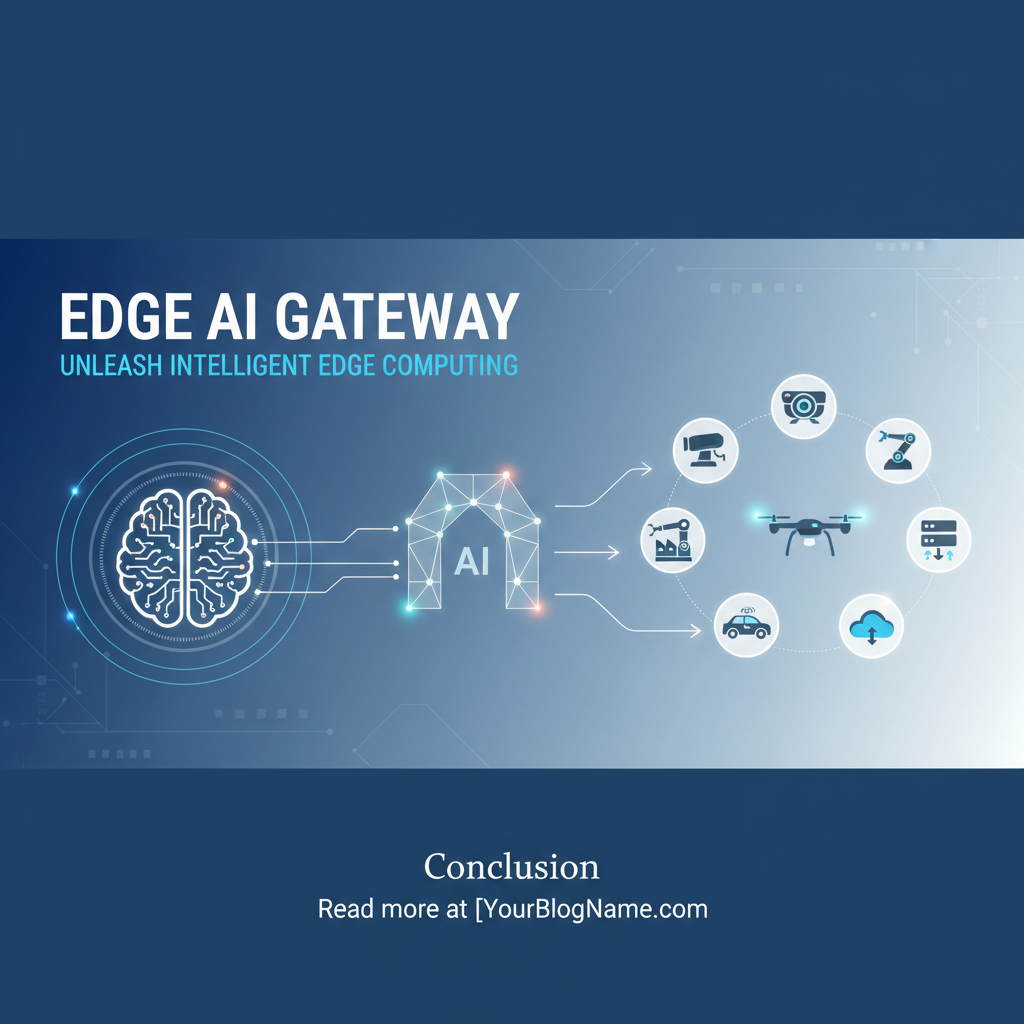
Edge AI Gateway: Unleash Intelligent Edge Computing


In an era defined by ubiquitous connectivity and an insatiable appetite for data, the digital landscape is undergoing a profound transformation. From smart cities teeming with sensors to factories buzzing with automated machinery, and from advanced medical devices to autonomous vehicles navigating complex environments, the sheer volume of data being generated at the "edge" of networks is staggering. This proliferation of data has not only highlighted the limitations of traditional cloud-centric computing models but has also opened up unprecedented opportunities for innovation, particularly through the convergence of Artificial Intelligence (AI) and Edge Computing. At the very heart of this revolutionary paradigm lies the Edge AI Gateway, a powerful and sophisticated piece of technology that is fundamentally reshaping how intelligence is distributed, processed, and leveraged across diverse environments. This extensive exploration will delve into the intricacies of Edge AI Gateways, their architectural underpinnings, their burgeoning importance, and the myriad ways they are poised to unleash the full potential of intelligent edge computing.
1. Introduction: The Dawn of Intelligent Edge Computing
The rapid advancement of the Internet of Things (IoT) has led to an explosion in the number of connected devices, each contributing to an ever-growing deluge of data. Historically, the prevailing strategy for processing this data involved transmitting it to centralized cloud data centers for analysis and action. While the cloud offers immense computational power and scalability, this model presents significant challenges when dealing with time-sensitive applications, bandwidth-constrained networks, or sensitive data that requires localized processing for security and privacy reasons. The sheer distance and network hops between the data source and the cloud introduce latency, making real-time decision-making difficult or impossible for critical applications like autonomous driving, remote surgery, or industrial automation. Furthermore, continuously uploading massive quantities of raw data can incur substantial bandwidth costs and strain network infrastructure.
This inherent tension between the need for real-time intelligence and the limitations of cloud-only processing has given rise to Edge Computing. Edge Computing advocates for bringing computation and data storage closer to the data sources, reducing latency, conserving bandwidth, and enhancing security. By processing data at or near where it is generated, decisions can be made instantaneously, even in environments with intermittent or unreliable connectivity. However, simply pushing compute to the edge is not enough; for truly intelligent applications, AI must be seamlessly integrated into this decentralized infrastructure.
Enter the Edge AI Gateway. More than just a simple data aggregator or router, an Edge AI Gateway is a sophisticated computing device deployed at the network edge, designed specifically to perform AI inference and often even local model training on raw sensor data. It acts as a critical intermediary, transforming raw, unstructured data into actionable intelligence directly at the source, without necessarily requiring constant communication with a distant cloud. This enables a new class of intelligent applications that are highly responsive, robust, and efficient, marking a pivotal shift from merely connected devices to truly intelligent edge systems. This shift is not just an incremental improvement but a fundamental re-architecture of how we conceive and deploy AI, moving towards a world where intelligence is distributed, pervasive, and instantly accessible wherever it is needed. The journey to unleash intelligent edge computing starts with understanding and effectively deploying these formidable gateways.
2. Understanding Edge AI Gateway: Architecture and Core Concepts
To fully appreciate the transformative power of an Edge AI Gateway, it is crucial to dissect its architecture and grasp its core conceptual differences from other network devices. At its fundamental level, an Edge AI Gateway is a robust, compact computing device strategically placed close to data-generating sources, such as sensors, cameras, and IoT devices. However, its capabilities extend far beyond those of a conventional IoT gateway. While a standard IoT gateway primarily focuses on collecting, translating, and securely transmitting data from various protocols to a centralized platform, an Edge AI Gateway integrates advanced computational power specifically tailored for artificial intelligence workloads.
The typical architecture of an Edge AI Gateway comprises several critical components that work in concert:
- Processing Units (CPUs/GPUs/NPUs/ASICs): Unlike traditional gateways that might rely on basic microcontrollers, Edge AI Gateways often incorporate more powerful general-purpose CPUs for managing the operating system, networking, and overall gateway functionality. Crucially, they also feature specialized AI accelerators such as Graphics Processing Units (GPUs), Neural Processing Units (NPUs), or Application-Specific Integrated Circuits (ASICs). These accelerators are specifically designed to perform parallel computations required for AI inference, making them exceptionally efficient at running machine learning models with high throughput and low latency.
- Memory and Storage: Adequate RAM is essential for loading AI models, processing data streams, and running multiple applications concurrently. Similarly, sufficient non-volatile storage (e.g., SSDs, eMMC) is required to store operating systems, pre-trained AI models, application software, and temporary data logs. The capacity and speed of storage are critical for quick model loading and efficient data handling.
- Communication Modules: Robust and versatile connectivity is a cornerstone of any gateway. Edge AI Gateways support a wide array of wired and wireless communication protocols to interface with both local IoT devices and the broader network or cloud. This includes Ethernet, Wi-Fi, Bluetooth, Zigbee, LoRaWAN for short-range and low-power IoT connections, and increasingly, 4G/5G cellular modems for high-bandwidth and wide-area connectivity, especially in remote or mobile deployments.
- Input/Output (I/O) Interfaces: A variety of I/O ports (e.g., USB, HDMI, serial ports, GPIOs) enable connection to different types of sensors, actuators, and peripheral devices, making the gateway adaptable to diverse industrial and commercial environments.
- Operating System and Software Stack: Most Edge AI Gateways run embedded Linux distributions (e.g., Yocto Linux, Ubuntu Core), providing a flexible and powerful environment for deploying complex software. The software stack includes drivers for hardware components, containerization technologies (like Docker or Kubernetes at the edge for managing microservices), and specialized AI inference engines (e.g., TensorFlow Lite, OpenVINO, ONNX Runtime) that optimize pre-trained models for efficient execution on the gateway's hardware.
The core concept differentiating an Edge AI Gateway is its ability to perform "intelligent processing" locally. Instead of merely forwarding raw sensor data, it can analyze video streams for object detection, process audio for speech recognition, or interpret sensor readings for anomaly detection, all without continuous reliance on cloud resources. This local intelligence capability empowers the gateway to filter irrelevant data, aggregate critical insights, and even make autonomous decisions in real-time.
Furthermore, an AI Gateway in this context often serves as a centralized point for managing various AI models and services deployed across multiple edge devices. It can orchestrate the deployment of different models for different tasks, manage their lifecycles, and present a unified interface for applications to interact with these diverse AI capabilities. This centralized management simplifies the integration of AI into complex edge systems, streamlining development and reducing operational overhead. Whether it's running a computer vision model for quality control on a factory floor or a predictive maintenance algorithm for a remote pump, the Edge AI Gateway ensures that the right intelligence is delivered at the right place, at the right time.
3. The Imperative for Edge AI Gateways: Why Now?
The compelling need for Edge AI Gateways is driven by several fundamental limitations of traditional cloud-centric computing and the accelerating demands of modern intelligent applications. The confluence of these factors has created an undeniable imperative for distributing AI capabilities closer to the source of data generation. Understanding these drivers is key to grasping the strategic importance of this technology.
Latency Reduction: The Quest for Real-Time Decision-Making
Perhaps the most critical driver for Edge AI Gateways is the necessity of minimizing latency. In many cutting-edge applications, even milliseconds of delay can have significant, if not catastrophic, consequences. Consider autonomous vehicles: a self-driving car needs to process sensor data (from cameras, lidar, radar) and make immediate decisions regarding braking, acceleration, or steering. Sending this data to a distant cloud for processing and awaiting a response is simply not feasible; the inherent network latency would introduce unacceptable delays, compromising safety. Similarly, in industrial automation, real-time control loops for robotic arms or precise manufacturing processes demand immediate feedback. Edge AI Gateways eliminate the round trip to the cloud, allowing AI models to infer and respond within microseconds directly at the edge, making real-time decision-making a tangible reality. This capability unlocks applications that were previously impossible due to network constraints.
Bandwidth Optimization: Taming the Data Deluge
The sheer volume of data generated by modern IoT devices, especially high-resolution video streams from surveillance cameras or high-frequency sensor data from industrial machinery, can quickly overwhelm network infrastructure. Transmitting terabytes or even petabytes of raw data to the cloud for processing is not only prohibitively expensive in terms of bandwidth costs but also inefficient. Edge AI Gateways address this challenge by performing intelligent pre-processing and filtering locally. For instance, a smart camera with an Edge AI Gateway can analyze video footage in real-time, only sending alerts or metadata (e.g., "person detected," "abnormal activity") to the cloud, rather than the entire raw video stream. This drastically reduces the data volume transmitted over the network, optimizing bandwidth usage and significantly lowering operational costs associated with data egress charges from cloud providers.
Enhanced Security and Privacy: Protecting Sensitive Information
Security and data privacy are paramount, especially in sectors dealing with highly sensitive information such as healthcare, finance, or critical infrastructure. Transmitting raw, unencrypted data over public networks to the cloud introduces potential vulnerabilities and exposes data to various threats. Edge AI Gateways offer a robust solution by enabling local processing of sensitive data. For example, in a hospital setting, patient data collected by medical devices can be analyzed on an Edge AI Gateway within the facility, with only aggregated, anonymized, or alert data being sent to the cloud. This "process-then-transmit" approach minimizes the exposure of raw, sensitive information, helps meet stringent regulatory compliance requirements (like GDPR or HIPAA), and significantly enhances the overall security posture of intelligent systems. Data never leaves the secure perimeter unless absolutely necessary, and then only in a highly processed and secure format.
Operational Resilience: Functioning in Disconnected Environments
Many edge environments are characterized by intermittent, unreliable, or completely non-existent network connectivity. Remote oil rigs, agricultural fields, disaster zones, or moving vehicles often face connectivity challenges. Cloud-dependent AI solutions would fail outright in such scenarios. Edge AI Gateways are designed to operate autonomously, even when disconnected from the central cloud. They can continue to collect data, perform AI inference, and make critical decisions independently. Once connectivity is restored, they can synchronize relevant data or processed insights with the cloud. This operational resilience ensures business continuity and uninterrupted service in challenging conditions, making intelligent systems robust and dependable in the face of network outages or geographical limitations.
Cost Efficiency: Reducing Cloud and Network Expenses
While the initial investment in Edge AI Gateways might seem significant, the long-term cost efficiencies are substantial. By reducing the volume of data sent to the cloud, organizations can dramatically cut down on cloud storage costs, data transfer fees (egress charges), and the compute resources required in the cloud. Performing inference locally on optimized hardware is often more cost-effective than running the same inference on expensive cloud GPUs for every single data point. Moreover, the reduced bandwidth requirements can postpone or eliminate the need for costly network infrastructure upgrades. Over time, the distributed intelligence offered by Edge AI Gateways translates into a lower total cost of ownership for large-scale AI deployments, making advanced AI solutions more accessible and economically viable across a wider range of applications and industries.
In summary, the imperative for Edge AI Gateways is multifaceted, addressing critical challenges related to speed, data management, security, reliability, and cost. They are not merely an add-on but a fundamental necessity for unlocking the next generation of intelligent, responsive, and secure applications at the very edge of our digital world.
4. Key Features and Capabilities of Modern Edge AI Gateways
Modern Edge AI Gateways are sophisticated devices engineered with a rich suite of features and capabilities designed to meet the rigorous demands of intelligent edge computing. These features transcend basic data collection, transforming the gateway into a powerful, autonomous intelligence hub. Understanding these capabilities is essential for appreciating the versatility and impact of these devices.
AI Model Deployment and Management
The cornerstone of an Edge AI Gateway's functionality is its ability to efficiently deploy and manage AI models. * On-Device Inference: This is the primary function, enabling the gateway to run pre-trained machine learning models directly on its specialized hardware (GPUs, NPUs, ASICs). This capability is optimized for speed and power efficiency, ensuring that AI predictions or classifications occur almost instantaneously at the point of data generation. * Model Optimization: Edge devices often have resource constraints (memory, power, computational cycles). Gateways support various model optimization techniques such as quantization (reducing the precision of model weights and activations), pruning (removing less important connections in a neural network), and model compilation for specific hardware accelerators. This ensures that even complex models can run efficiently on the gateway's limited resources without significant loss of accuracy. * Over-the-Air (OTA) Updates for AI Models: The ability to remotely update, patch, and deploy new versions of AI models is crucial for continuous improvement and adaptation. Gateways facilitate secure OTA updates, ensuring that deployed intelligence remains current and responsive to evolving requirements or data patterns without requiring physical intervention. * Support for Various AI Frameworks: To maximize compatibility and flexibility, modern Edge AI Gateways are designed to support popular AI frameworks and inference engines. These include TensorFlow Lite (for TensorFlow models), OpenVINO (optimized for Intel hardware), PyTorch Mobile, and ONNX Runtime. This allows developers to train models using their preferred tools in the cloud and then deploy optimized versions to the edge.
Data Pre-processing and Filtering
Raw sensor data is often noisy, redundant, and unformatted. Edge AI Gateways play a vital role in preparing this data for AI inference and reducing the burden on upstream systems. * Sensor Data Aggregation: Gateways can collect data from a multitude of disparate sensors (temperature, pressure, vibration, images, audio) and aggregate it into a unified stream, resolving protocol incompatibilities and formatting differences. * Noise Reduction and Anomaly Detection: Before feeding data to an AI model, gateways can perform local filtering to remove sensor noise, calibrate readings, or even detect blatant anomalies that might indicate a sensor malfunction. This improves the quality of data for inference and reduces false positives. * Feature Extraction at the Source: Instead of sending raw, high-dimensional data, gateways can perform initial feature extraction. For example, from a video stream, it might extract motion vectors or bounding box coordinates rather than sending every pixel, drastically reducing the data footprint.
Connectivity and Protocols
Robust and flexible connectivity is paramount for Edge AI Gateways to interact with both local devices and the wider network. * Wide Range of Wired and Wireless Options: Gateways offer diverse connectivity options including high-speed Ethernet for backbone connections, Wi-Fi 6 for local area networking, Bluetooth and Zigbee for short-range IoT device communication, LoRaWAN for long-range, low-power applications, and crucially, 4G/5G cellular modems for reliable wide-area connectivity, especially in remote or mobile deployments. * Protocol Translation: IoT ecosystems are notoriously fragmented with various communication protocols (e.g., MQTT, CoAP, AMQP, OPC UA for industrial environments). Edge AI Gateways act as protocol translators, allowing disparate devices to communicate seamlessly and integrate their data into a unified platform for AI processing.
Security Features
Given their critical role and exposure at the network edge, security is a non-negotiable aspect of Edge AI Gateways. * Hardware-Rooted Trust (Trusted Platform Module - TPM): Many gateways incorporate hardware security modules (like TPMs) that establish a hardware root of trust. This ensures that the device boots securely, its firmware hasn't been tampered with, and cryptographic keys are protected. * Secure Boot and Encrypted Storage: Secure boot mechanisms verify the integrity of the operating system and applications during startup. Encrypted storage protects sensitive data, AI models, and configuration files from unauthorized access, even if the device is physically compromised. * Access Control and Secure Communication: Role-based access control (RBAC) restricts who can access and configure the gateway. All communication, both northbound (to the cloud) and southbound (to IoT devices), should be encrypted using industry-standard protocols (TLS/SSL) to prevent eavesdropping and data manipulation.
Edge Orchestration and Management
Deploying and managing hundreds or thousands of Edge AI Gateways requires sophisticated orchestration capabilities. * Remote Device Provisioning and Configuration: Gateways support zero-touch provisioning, allowing them to be deployed and configured remotely with minimal manual intervention. This streamlines large-scale rollouts. * Software and Firmware Updates: Centralized platforms enable remote management of software and firmware updates across the entire fleet of gateways, ensuring they remain secure and up-to-date with the latest features. * Health Monitoring and Logging: Gateways continuously monitor their own health, performance metrics (CPU usage, memory, network traffic), and log events. This data is critical for troubleshooting, performance optimization, and proactive maintenance. * Containerization (Docker, Kubernetes at the Edge): Many modern gateways support containerization technologies like Docker or even lightweight Kubernetes distributions (e.g., K3s). This allows applications and AI models to be deployed as isolated, portable containers, simplifying deployment, scaling, and lifecycle management of edge services. This modular approach enhances flexibility and fault isolation.
These robust features collectively enable Edge AI Gateways to function as autonomous, intelligent, and secure mini-data centers at the very periphery of the network, driving the next wave of innovation in distributed AI.
5. The Evolving Role of AI Gateways and LLM Gateways
As the landscape of AI continues to expand and diversify, the concept of an "AI Gateway" has grown beyond just the physical device at the edge. It now encompasses a broader architectural pattern for managing, orchestrating, and securing access to AI models, regardless of their deployment location—be it cloud, on-premises, or at the very edge. Within this evolving framework, a specialized form, the LLM Gateway, is emerging to address the unique challenges posed by Large Language Models.
AI Gateway as a Central Point for AI Service Orchestration
In its broader definition, an AI Gateway serves as a unified abstraction layer that sits in front of various AI models and services. Its primary purpose is to simplify the interaction between consumer applications and the complex world of artificial intelligence. * Simplifying AI Model Integration and Invocation: Imagine an application needing to access multiple AI models for different tasks—sentiment analysis, image recognition, anomaly detection, translation. Without an AI Gateway, the application would need to know the specific endpoints, authentication mechanisms, and data formats for each individual model. An AI Gateway abstracts this complexity, providing a single, standardized entry point for all AI services. It intelligently routes requests to the appropriate backend AI model, handling transformations and protocol conversions transparently. * Unified API Formats for Diverse AI Models: One of the most significant benefits of an AI Gateway is its ability to normalize API formats. Different AI models, even for similar tasks, might expose different input and output structures. The AI Gateway can act as a translator, ensuring that applications always interact with a consistent API, regardless of the underlying model's specifics. This shields consumer applications from changes in AI model versions, underlying technologies, or even a complete swap of one AI model for another. This standardization significantly reduces development effort and maintenance costs. * Prompt Encapsulation into REST APIs: For many generative AI tasks, particularly with Large Language Models, the interaction involves crafting specific "prompts." An AI Gateway can encapsulate these prompts, along with specific model parameters, into simple, reusable REST APIs. For instance, a complex prompt designed for sentiment analysis (e.g., "Analyze the sentiment of the following text and return as positive, negative, or neutral:") can be pre-configured within the gateway and exposed as a /sentiment_analysis API endpoint. Applications then just send the text, and the gateway handles the prompt injection and model invocation, simplifying AI usage for developers.
This is where platforms like APIPark truly shine. As an open-source AI gateway and API management platform, APIPark offers robust capabilities for quick integration of 100+ AI models, providing a unified management system for authentication and cost tracking. Its focus on a unified API format for AI invocation ensures that changes in underlying AI models or prompts do not affect the application or microservices, significantly simplifying AI usage and maintenance. Furthermore, APIPark allows users to quickly combine AI models with custom prompts to create new, specialized APIs, such as sentiment analysis or translation APIs, directly addressing the need for prompt encapsulation into REST APIs. This level of abstraction and standardization is invaluable for managing a diverse portfolio of AI services, whether they are running in the cloud or distributed across numerous edge devices.
LLM Gateway: Specific Considerations for Large Language Models at the Edge
The advent of Large Language Models (LLMs) like GPT-4, Llama, and others introduces a new set of challenges and opportunities for AI Gateways, leading to the specialized concept of an LLM Gateway. * Challenges of Deploying LLMs on Resource-Constrained Devices: Full-scale LLMs are notoriously resource-intensive, requiring immense computational power and memory. Deploying them entirely on typical edge devices, which have limited resources, is currently impractical for the largest models. However, smaller, specialized LLMs, or highly optimized versions, are increasingly becoming viable at the edge for specific tasks. * Techniques for Smaller, Specialized LLMs or Edge-Optimized Models: Research is rapidly progressing on techniques like knowledge distillation, pruning, and quantization to create "tiny LLMs" or specialized models capable of running efficiently on edge hardware. These models can handle specific natural language understanding (NLU) or natural language generation (NLG) tasks locally. * Hybrid Approaches: Local Inference for Simpler Tasks, Cloud for Complex Queries via LLM Gateway: An LLM Gateway enables a powerful hybrid strategy. Simpler, frequently occurring LLM tasks (e.g., basic chatbots, local search queries, simple text summarization) can be handled by smaller models running locally on the edge device for immediate, low-latency responses. More complex, computationally intensive queries requiring the full power of a large cloud-based LLM would then be routed securely through the LLM Gateway to the cloud. This gateway acts as an intelligent traffic cop, deciding where best to process the request based on complexity, latency requirements, and cost considerations. * The Role of an LLM Gateway in Managing Access, Rate Limiting, and Optimizing LLM Calls: Similar to a general api gateway, an LLM Gateway adds specialized functionality for LLMs. It can manage access to different LLM providers (e.g., OpenAI, Google, Anthropic) through a unified interface, apply rate limiting to prevent abuse or control costs, and implement caching mechanisms for common queries to further reduce latency and expense. It can also perform prompt engineering at scale, ensuring consistent input to LLMs, and even handle tokenization/detokenization, optimizing payload sizes. For organizations deploying generative AI, an LLM Gateway becomes an indispensable tool for securing, managing, and scaling access to these powerful models, ensuring efficient resource utilization and adherence to usage policies, whether the LLMs are at the edge, in a private data center, or accessed via public cloud APIs.
In essence, whether we speak of a broad AI Gateway orchestrating diverse models or a specialized LLM Gateway optimizing access to large language models, these solutions are critical for abstracting complexity, ensuring consistency, enhancing security, and managing the cost-effectiveness of AI deployments across the entire computing continuum, from the cloud to the intelligent edge. They are the conduits through which intelligence flows freely and efficiently.
APIPark is a high-performance AI gateway that allows you to securely access the most comprehensive LLM APIs globally on the APIPark platform, including OpenAI, Anthropic, Mistral, Llama2, Google Gemini, and more.Try APIPark now! 👇👇👇
6. Technical Deep Dive: Architectures and Technologies
A true appreciation for the capabilities of Edge AI Gateways necessitates a deeper look into the underlying technical architectures and specific technologies that empower them. These devices are complex integrations of specialized hardware, robust operating systems, and intelligent software stacks, all working in concert to deliver localized AI.
Hardware Architectures
The selection of hardware is paramount for an Edge AI Gateway, directly influencing its performance, power consumption, and suitability for specific AI workloads. * System-on-Chips (SoCs): Many Edge AI Gateways are built around powerful SoCs that integrate multiple components onto a single chip, including the CPU, GPU, memory controller, and specialized AI accelerators. Prominent examples include: * NVIDIA Jetson Series: These platforms (e.g., Jetson Nano, Jetson Xavier NX, Jetson AGX Orin) are widely adopted for edge AI due to their powerful integrated GPUs, which are excellent for parallel processing tasks common in deep learning, particularly computer vision. They come with a rich software stack (JetPack SDK) that simplifies AI development and deployment. * Intel Movidius VPU/OpenVINO: Intel's Movidius Vision Processing Units (VPUs) are specialized AI accelerators designed for low-power, high-performance inference of deep learning models. They are often integrated into SoCs or offered as USB accelerators. Intel's OpenVINO toolkit further optimizes models for execution on these and other Intel hardware. * Google Coral Edge TPU: Google's Tensor Processing Unit (TPU) is an ASIC specifically designed for accelerating TensorFlow Lite models. The Coral Edge TPU is a compact version, available in development boards or USB accelerators, providing highly efficient inference for quantized models. * Field-Programmable Gate Arrays (FPGAs) and Application-Specific Integrated Circuits (ASICs): For highly specialized and demanding AI workloads where ultimate performance and efficiency are required, FPGAs and custom ASICs come into play. * FPGAs: These reconfigurable chips can be programmed to perform specific AI computations with extremely low latency and high parallelism. They offer flexibility, allowing hardware acceleration to be customized for unique model architectures or data types, though they require specialized development skills. * ASICs: These are purpose-built chips designed from the ground up for specific AI tasks. While expensive to design, they offer unparalleled performance and power efficiency for high-volume applications where the AI workload is fixed (e.g., a specific neural network for always-on keyword spotting). * Processor Types: ARM vs. x86: * ARM-based Processors: Dominate the embedded and mobile space due to their high power efficiency, making them ideal for battery-powered or passively cooled edge devices. Many AI accelerators are designed to work seamlessly with ARM CPUs. * x86-based Processors: Found in more powerful industrial Edge AI Gateways, offering higher general-purpose computing power and compatibility with a vast ecosystem of existing software. They typically consume more power but can handle more complex system-level tasks alongside AI inference.
Software Stack
The software stack running on an Edge AI Gateway is just as crucial as its hardware, providing the intelligence and flexibility required for diverse applications. * Operating Systems (OS): * Linux Variants: Most Edge AI Gateways run stripped-down or optimized versions of Linux (e.g., Yocto Linux, Ubuntu Core, Debian). Linux offers unparalleled flexibility, a vast open-source ecosystem, strong networking capabilities, and robust security features, making it the de facto standard for embedded and edge devices. * Real-Time Operating Systems (RTOS): For extremely time-critical applications requiring deterministic behavior (e.g., industrial control), an RTOS might be used, sometimes alongside a Linux kernel in a hybrid setup. * Container Runtimes: * Docker: The ability to run containerized applications (using Docker) is fundamental for modern Edge AI deployments. Containers package applications and their dependencies into isolated, portable units, simplifying deployment, scaling, and ensuring consistent execution across different gateways. * Kubernetes at the Edge: Lightweight Kubernetes distributions (like K3s or MicroK8s) are gaining traction for orchestrating containerized workloads across a cluster of edge devices. This enables powerful management capabilities for complex multi-service edge applications, including automatic scaling, service discovery, and rolling updates. * Middleware for Data Ingestion and Processing: Software components that facilitate the collection, transformation, and routing of data from various sources to AI models or other services. Examples include MQTT brokers, Kafka clients, or custom data pipelines. * Edge AI Frameworks and Inference Engines: These are specialized libraries and runtimes that enable AI models to be executed efficiently on edge hardware. * TensorFlow Lite: An optimized version of TensorFlow for mobile and edge devices, supporting various hardware accelerators. * OpenVINO (Open Visual Inference and Neural Network Optimization): Intel's toolkit for optimizing and deploying deep learning models across Intel hardware, including CPUs, GPUs, and Movidius VPUs. * ONNX Runtime: A cross-platform inference engine that supports models from various frameworks (PyTorch, TensorFlow) converted to the ONNX (Open Neural Network Exchange) format, allowing for greater model portability.
Networking Topologies
The way Edge AI Gateways are connected within a broader network architecture significantly impacts their effectiveness and resilience. * Hierarchical Edge-Cloud Topology: This is the most common model, where Edge AI Gateways perform initial processing and inference, then send aggregated insights or filtered data to a central cloud for further analysis, long-term storage, or more complex AI models. * Peer-to-Peer Edge Networks: In some scenarios, edge devices might communicate directly with each other, sharing data and insights without always relying on a central gateway or cloud. This fosters distributed intelligence and increases resilience. * Mesh Networks for Resilience: For dense deployments, a mesh network topology can enhance robustness. If one gateway or communication path fails, data can be rerouted through other connected gateways, ensuring continuous operation. * 5G and Beyond: The advent of 5G, with its ultra-low latency, massive connectivity, and enhanced mobile broadband, is a game-changer for Edge AI. It enables more devices to connect directly to the edge, facilitating dense deployments and supporting real-time applications that require immense throughput and responsiveness. Future generations of wireless technology will only deepen this integration.
This detailed technical overview underscores that an Edge AI Gateway is not a monolithic product but rather a highly customizable and integrated solution, where the optimal combination of hardware and software is carefully chosen to meet the unique demands of specific edge AI applications. The synergy between these components is what truly unleashes intelligent computing at the edge.
7. Implementing Edge AI Gateways: Best Practices and Considerations
Successfully deploying and managing Edge AI Gateways requires careful planning and adherence to best practices. Given their distributed nature and critical role, specific considerations must be addressed throughout the entire lifecycle, from design to ongoing operations.
Scalability: Designing for Growth in Devices and Data
An effective Edge AI Gateway solution must be designed with future growth in mind. * Modular Architecture: Implement a modular approach where new AI models, applications, or connectivity options can be added or updated without disrupting existing services. Containerization (e.g., Docker) greatly facilitates this by encapsulating services. * Centralized Management Platform: For large-scale deployments involving hundreds or thousands of gateways, a centralized management platform is indispensable. This platform should enable remote provisioning, configuration management, software updates, and monitoring of all gateways from a single pane of glass. This prevents operational bottlenecks as the number of devices grows. * Flexible Resource Allocation: The gateway's hardware should offer some headroom for increased processing demands. Additionally, the software stack should allow for dynamic allocation of computational resources (CPU, GPU, memory) to different AI models or tasks based on priority and real-time needs. * Data Tiering Strategy: Plan how data will be handled: what is processed locally, what is aggregated, and what is sent to the cloud. This strategy should evolve with increasing data volumes, leveraging the gateway's ability to filter and summarize data effectively.
Maintainability: Remote Management, Updates, and Troubleshooting
Maintaining a fleet of distributed Edge AI Gateways can be challenging without robust remote management capabilities. * Over-the-Air (OTA) Updates: Implement secure and reliable OTA mechanisms for updating firmware, operating systems, applications, and AI models. This minimizes the need for costly and time-consuming physical site visits. The update process should include rollback capabilities in case of issues. * Comprehensive Logging and Monitoring: Gateways must generate detailed logs for system events, application performance, AI inference results, and network activity. These logs should be securely transmitted to a central logging and monitoring system for analysis, proactive issue detection, and post-mortem troubleshooting. Integration with cloud monitoring services (e.g., AWS CloudWatch, Azure Monitor) can streamline this. * Remote Access and Debugging: Secure remote access capabilities (e.g., SSH with strong authentication, VPNs) are essential for diagnosing and resolving issues without physical presence. Tools for remote debugging and performance profiling can further enhance maintainability. * Automated Health Checks and Self-Healing: Implement automated health checks that regularly assess the operational status of the gateway and its running services. For certain issues, the gateway should be capable of self-healing actions, such as restarting services or rolling back to a previous configuration.
Interoperability: Ensuring Compatibility with Existing Systems and Future Technologies
Edge AI Gateways rarely operate in isolation; they must integrate seamlessly with existing IT infrastructure and be ready for future technological advancements. * Standardized APIs and Protocols: Utilize industry-standard api gateway solutions to expose AI services from the edge. This includes using RESTful APIs for northbound communication and common IoT protocols (MQTT, CoAP) for southbound device communication. Adhering to standards reduces integration complexity. * Open Standards and Formats: Favor open standards for data formats (e.g., JSON, Protocol Buffers), AI model formats (e.g., ONNX), and communication protocols. This promotes interoperability with a wider range of software and hardware components. * Cloud Integration: Ensure robust and secure integration with chosen cloud platforms for data storage, advanced analytics, model retraining, and centralized management. This includes leveraging cloud IoT services and data lakes. * Future-Proofing Connectivity: Design for evolving connectivity standards, such as 5G, Wi-Fi 6, and emerging low-power wide-area networks (LPWANs), to ensure the gateways remain relevant as network technologies advance.
Security from Design: Zero-Trust Principles at the Edge
Given the distributed and often physically exposed nature of edge devices, security cannot be an afterthought. * Hardware Security: Leverage hardware-rooted trust (TPM, secure boot), secure storage, and hardware-level encryption to protect the device's integrity and data. * Least Privilege Principle: Implement the principle of least privilege for all users, applications, and services. Each component should only have the minimum permissions necessary to perform its function. * Network Segmentation: Isolate the Edge AI Gateway network from other IT networks where possible to contain potential breaches. Use firewalls and network access controls to restrict inbound and outbound traffic. * Continuous Vulnerability Management: Regularly scan for and patch security vulnerabilities in the operating system, applications, and firmware. Implement a robust patch management strategy. * Secure API Access: Utilize strong authentication and authorization mechanisms for accessing AI services exposed by the gateway. This is where an api gateway plays a crucial role, providing authentication, authorization, rate limiting, and traffic management at the edge. * Data Encryption: Encrypt all data at rest and in transit, both within the gateway and during communication with other systems.
Resource Management: Efficient Power Consumption and Computational Load Balancing
Edge environments often have constraints on power and cooling, making efficient resource utilization critical. * Power Optimization: Select hardware components known for their power efficiency. Implement power management features in the software (e.g., dynamic frequency scaling, sleep modes) to conserve energy, especially for battery-powered or passively cooled devices. * Efficient AI Model Deployment: Use optimized AI models (quantized, pruned) and efficient inference engines to minimize computational demands. Monitor AI model performance to identify bottlenecks. * Load Balancing and Task Prioritization: For gateways running multiple AI models or applications, implement strategies for load balancing and task prioritization. Critical, real-time AI tasks should be prioritized over background processes. * Memory Management: Optimize memory usage through efficient coding, avoiding memory leaks, and leveraging techniques like memory-mapped files when appropriate.
Model Lifecycle Management: Continuous Training, Deployment, and Monitoring of AI Models
The intelligence at the edge is not static; AI models need continuous updates and monitoring. * Continuous Integration/Continuous Deployment (CI/CD) for AI: Establish CI/CD pipelines specifically for AI models, enabling automated retraining, validation, and deployment of updated models to edge gateways. * Model Versioning: Implement robust version control for AI models to track changes, facilitate rollbacks, and manage different model versions deployed across a fleet of gateways. * Drift Detection: Continuously monitor the performance of deployed AI models. If model accuracy degrades over time (due to data drift or concept drift), trigger alerts and initiate retraining. * Feedback Loops: Establish feedback mechanisms from the edge back to the cloud, allowing edge-generated data or inference results to be used for retraining and improving cloud-based AI models, creating a virtuous cycle of intelligence.
By meticulously considering these best practices, organizations can build resilient, secure, scalable, and highly effective Edge AI Gateway solutions that truly unleash the power of intelligent computing at the network's periphery.
8. Use Cases and Applications Across Industries
The transformative potential of Edge AI Gateways is being realized across a diverse array of industries, each leveraging localized intelligence to achieve unprecedented levels of efficiency, safety, and innovation. The ability to perform real-time AI inference at the source of data generation unlocks a new generation of applications that were previously impractical or impossible with cloud-only architectures.
Manufacturing and Industry 4.0: The Smart Factory Revolution
In the realm of manufacturing, Edge AI Gateways are fundamental to Industry 4.0 initiatives, driving automation, predictive capabilities, and quality enhancement. * Predictive Maintenance: Gateways collect vibration, temperature, and acoustic data from industrial machinery. AI models running on the gateway analyze this data in real-time to detect subtle anomalies that indicate impending equipment failure. This allows maintenance teams to intervene proactively, preventing costly downtime and optimizing operational schedules. * Quality Control and Defect Detection: High-speed cameras integrated with Edge AI Gateways inspect products on assembly lines. AI computer vision models deployed on the gateway identify defects (e.g., cracks, scratches, misalignments) instantly, flagging faulty items without human intervention. This ensures consistent product quality and reduces waste. * Robot Guidance and Collaboration: Edge AI can provide real-time perception and decision-making for autonomous mobile robots (AMRs) and collaborative robots (cobots). This enables them to navigate complex factory floors, interact safely with human workers, and perform precise tasks with dynamic adjustments. * Process Optimization: Analyzing sensor data from various stages of a manufacturing process, Edge AI Gateways can identify inefficiencies, optimize parameters, and reduce energy consumption, leading to more lean and sustainable operations.
Smart Cities: Enhancing Urban Living and Safety
Edge AI Gateways are critical enablers for building smarter, safer, and more efficient urban environments. * Traffic Management and Optimization: Cameras and sensors at intersections feed data to Edge AI Gateways. AI models analyze traffic flow, detect congestion, identify accidents, and dynamically adjust traffic signals in real-time to improve urban mobility and reduce commute times. * Public Safety and Surveillance: AI-powered video analytics on gateways can detect suspicious activities, identify abandoned packages, or count crowd densities in public spaces, sending immediate alerts to law enforcement or emergency services, enhancing public safety while minimizing data transfer of raw video. * Environmental Monitoring: Gateways collect data from air quality sensors, noise sensors, and waste bins. AI models can predict pollution hotspots, optimize waste collection routes, or manage energy consumption in smart buildings, contributing to urban sustainability. * Smart Parking: Edge AI Gateways with cameras can detect available parking spots in real-time, guiding drivers efficiently and reducing urban traffic caused by parking searches.
Retail: Revolutionizing Customer Experience and Operations
In the retail sector, Edge AI Gateways offer profound insights into customer behavior and operational efficiencies. * Inventory Management and Shelf Monitoring: Cameras with AI vision on gateways can monitor product availability on shelves, detect out-of-stock items, and trigger reorder alerts in real-time. This ensures optimal stock levels and minimizes lost sales. * Customer Analytics and Experience: Anonymized video analytics can track customer movement patterns, dwell times in specific aisles, and engagement with product displays. This data helps retailers optimize store layouts, product placement, and personalize the shopping experience without compromising privacy (as raw data is processed locally). * Loss Prevention: AI-powered video analytics can detect unusual activities, identify potential shoplifting incidents, or monitor self-checkout anomalies, reducing shrinkage and improving store security. * Personalized Digital Signage: Edge AI Gateways can use anonymized demographic data from passers-by to dynamically adjust digital signage content, displaying relevant advertisements or promotions in real-time.
Healthcare: Enabling Advanced Patient Care and Operational Efficiency
Edge AI Gateways are transforming healthcare by bringing intelligence closer to the patient and improving facility operations. * Remote Patient Monitoring: Wearable devices and bedside sensors transmit vital signs and other health data to an Edge AI Gateway in a patient's home or a healthcare facility. AI models can detect subtle changes indicative of health deterioration, alerting caregivers or medical professionals to intervene promptly. This is crucial for managing chronic conditions and elder care. * Diagnostic Assistance at the Edge: In remote clinics with limited internet access, Edge AI Gateways can run AI models for initial analysis of medical images (e.g., X-rays, pathology slides) to flag potential issues, aiding clinicians in faster diagnosis. * Hospital Workflow Optimization: AI vision on gateways can monitor patient flow, bed occupancy, or equipment utilization within a hospital, optimizing resource allocation and improving operational efficiency. * Medical Device Anomaly Detection: Gateways connected to critical medical equipment can use AI to detect anomalies in device performance, ensuring reliability and preventing potential failures during critical procedures.
Autonomous Systems: Vehicles, Drones, and Robotics
The realm of autonomous systems is perhaps where the need for real-time, on-device intelligence is most pronounced. * Autonomous Vehicles: Edge AI Gateways are foundational to self-driving cars. They process massive amounts of data from cameras, lidar, radar, and ultrasonic sensors in real-time to perceive the environment, detect objects, predict trajectories, and make immediate driving decisions, all within milliseconds. * Drones for Inspection and Delivery: Autonomous drones use Edge AI for real-time navigation, obstacle avoidance, object recognition during inspections (e.g., power lines, pipelines), and secure landing, even in GPS-denied environments. * Robotics in Logistics and Exploration: Robots in warehouses use Edge AI for navigation, picking, and sorting tasks. In exploration (e.g., space, deep sea), robots use edge intelligence for autonomous decision-making and data analysis when communication with a base station is intermittent or delayed.
Agriculture: Precision Farming for a Sustainable Future
Edge AI is revolutionizing agriculture, enabling farmers to optimize resource use and improve yields. * Crop Monitoring and Disease Detection: Drones or ground-based robots equipped with cameras and Edge AI Gateways can scan crops to detect early signs of disease, pest infestations, or nutrient deficiencies, allowing for targeted interventions rather than blanket treatments. * Precision Irrigation and Fertilization: Sensors measure soil moisture and nutrient levels. Edge AI Gateways analyze this data to precisely control irrigation systems and fertilizer application, minimizing water waste and chemical runoff. * Livestock Monitoring: AI-powered cameras on gateways can monitor animal health, detect unusual behavior, or identify individual animals, improving animal welfare and productivity.
These diverse applications illustrate that Edge AI Gateways are not merely a niche technology but a pervasive enabler of intelligent systems across virtually every sector, driving efficiency, safety, and innovation by bringing AI directly to the point of action.
9. The Synergy with API Management: How API Gateway Enhances Edge AI Deployments
While Edge AI Gateways provide the local compute and intelligence, the true power of these deployments is unlocked when they are seamlessly integrated into a broader digital ecosystem. This is where the discipline of API Management, and specifically the role of an api gateway, becomes not just beneficial but absolutely essential. An API Gateway, in its more traditional sense, serves as the single entry point for all API calls, acting as a traffic cop, bouncer, and translator all rolled into one. When applied to the edge, it amplifies the capabilities of Edge AI Gateways and ensures their efficient, secure, and manageable operation.
The Importance of an API Gateway at the Edge
Consider an Edge AI Gateway deployed in a factory. It might be running multiple AI models, each providing a distinct service (e.g., defect detection, predictive maintenance alerts, robot status). How do other applications—whether they are cloud-based dashboards, local human-machine interfaces (HMIs), or other edge devices—consume these services? How is access controlled? How is traffic managed? This is precisely where an api gateway steps in. * Standardizing Access to Edge AI Services: An API Gateway provides a uniform interface for accessing all services exposed by the Edge AI Gateway (and potentially other local edge devices). Instead of applications needing to know the specific IP address, port, and authentication method for each individual AI model or service running on the edge, they interact with a single, well-defined API endpoint provided by the API Gateway. This significantly simplifies development and integration for consuming applications. * Security, Authentication, and Authorization for Edge-Generated APIs: Edge devices, by their nature, are often more exposed to physical and network threats. An API Gateway acts as the first line of defense. It enforces stringent security policies, handling API key validation, token-based authentication (OAuth, JWT), and authorization checks before any request reaches the underlying AI service. This protects the integrity of the edge AI models and the data they process, preventing unauthorized access and potential data breaches. For instance, only authenticated and authorized applications might be allowed to query the defect detection API or retrieve sensor data. * Rate Limiting and Traffic Management: Edge AI Gateways, while powerful, still have finite resources. An API Gateway can implement rate limiting to prevent individual applications or users from overwhelming the gateway with too many requests, ensuring fair access and stable performance for all. It can also manage traffic, routing requests based on load, service availability, or specific policy rules, contributing to the overall resilience of the edge deployment. * Monitoring and Analytics of Edge Service Invocations: An API Gateway provides a centralized point for logging all API requests and responses. This rich data can then be used for monitoring API usage, identifying performance bottlenecks, troubleshooting issues, and gaining insights into how edge AI services are being consumed. This operational visibility is crucial for maintaining the health and efficiency of the entire edge ecosystem.
How Platforms like APIPark Enhance Edge AI Deployments
This synergy between Edge AI Gateways and robust API management is vividly demonstrated by platforms like APIPark. APIPark, as an open-source AI gateway and API management platform, is uniquely positioned to enhance Edge AI deployments by addressing the management and integration challenges inherent in distributed intelligent systems.
Consider APIPark's key features in the context of an Edge AI deployment: * Unified API Format for AI Invocation: At the edge, you might have multiple AI models from different vendors or developed using different frameworks. APIPark's ability to standardize the request data format across all AI models ensures that edge applications or microservices interact with a consistent API, regardless of the underlying model. This means that if you update an object detection model on an Edge AI Gateway, the consuming application doesn't need to change its integration code, significantly reducing maintenance. * Prompt Encapsulation into REST API: For edge scenarios involving specialized language models or complex data analysis, APIPark allows users to quickly combine AI models with custom prompts to create new, ready-to-use APIs. This is immensely valuable for creating specific edge services, such as a localized sentiment analysis API for customer feedback in a retail store, or a predictive text API for industrial maintenance logs, directly consumable via a simple REST call. * End-to-End API Lifecycle Management: Managing APIs on potentially hundreds or thousands of Edge AI Gateways can be a logistical nightmare. APIPark assists with managing the entire lifecycle of APIs, from design and publication to invocation and decommission. It helps regulate API management processes, manage traffic forwarding, load balancing, and versioning of published APIs across your entire edge fleet. This central control is vital for maintaining order and ensuring consistent service delivery. * API Service Sharing within Teams: In large organizations, different departments or teams might need access to specific edge AI capabilities. APIPark allows for the centralized display of all API services, making it easy for authorized personnel to find and use the required API services provided by your Edge AI Gateways. * Independent API and Access Permissions for Each Tenant: APIPark enables the creation of multiple teams (tenants), each with independent applications, data, user configurations, and security policies. This is crucial for multi-tenant edge deployments, where different departments or even external partners might consume AI services from the same underlying edge infrastructure, all while maintaining strict isolation and security. * API Resource Access Requires Approval: To prevent unauthorized use of critical edge AI services, APIPark allows for the activation of subscription approval features. Callers must subscribe to an API and await administrator approval before they can invoke it, providing an additional layer of security and governance.
In essence, an API management platform like APIPark transforms a collection of disparate Edge AI Gateways into a cohesive, manageable, and secure ecosystem of intelligent services. It provides the necessary abstraction, governance, and control to effectively harness the distributed intelligence generated at the edge, making it readily consumable, secure, and scalable for any application or user. This integration ensures that the powerful compute capabilities of the Edge AI Gateway are not isolated but are seamlessly woven into the broader fabric of an organization's digital operations.
10. Challenges and Future Directions for Edge AI Gateways
While Edge AI Gateways offer immense promise, their widespread adoption and full potential are still accompanied by significant challenges that demand innovative solutions. Simultaneously, the rapid pace of technological advancement is paving the way for exciting future directions that will further solidify their role in the computing landscape.
Challenges
- Heterogeneous Hardware and Software Environments: The edge ecosystem is incredibly diverse, comprising a vast array of hardware architectures (ARM, x86, FPGAs, ASICs) and operating systems. Developing AI models and applications that can run efficiently across this heterogeneous landscape is complex, requiring specialized optimization, cross-compilation, and platform-specific tuning. This fragmentation can hinder standardized development and deployment.
- Lack of Standardized Development and Deployment Tools: Unlike the mature cloud environment with well-established DevOps tools and platforms, the edge lacks truly universal, end-to-end tooling for the entire AI lifecycle. Managing model training, versioning, deployment, and monitoring across thousands of distributed, often disconnected, edge devices presents unique challenges that current tools are only beginning to address comprehensively.
- Security Vulnerabilities Unique to Distributed Edge Systems: Edge devices are often physically exposed, making them susceptible to tampering, theft, or unauthorized access. Their distributed nature also complicates patch management and vulnerability scanning. Securing the entire attack surface, from hardware roots of trust to secure communication and application layers, in an environment that may lack continuous connectivity, is a formidable task. Supply chain security for edge hardware and software is also a growing concern.
- Power Consumption and Heat Dissipation for High-Performance AI: Running complex AI models, especially deep neural networks, generates significant heat and consumes substantial power. Many edge environments have strict constraints on power availability, battery life, and passive cooling. Designing high-performance AI accelerators that are also ultra-low power and can operate reliably in harsh industrial or outdoor conditions remains a key engineering challenge.
- Ethical Considerations of Autonomous AI at the Edge: As AI models at the edge gain more autonomy in decision-making, ethical concerns surrounding bias, transparency, accountability, and data privacy become amplified. For instance, facial recognition AI on an Edge AI Gateway in a public space raises significant privacy implications, while autonomous decisions in industrial settings require clear ethical guidelines for safety and responsibility.
- Data Consistency and Synchronization: Managing data generated at the edge and ensuring its consistency with cloud-based data stores, especially during intermittent connectivity, is complex. Merging conflicting data, handling eventual consistency, and ensuring data integrity across a distributed system require robust synchronization mechanisms.
- Talent Gap: The specialized skillset required to develop, deploy, and manage Edge AI solutions, encompassing expertise in embedded systems, AI/ML, networking, and security, is currently in high demand and short supply.
Future Directions
- Federated Learning at the Edge: This emerging paradigm allows AI models to be trained collaboratively across multiple edge devices without centralizing raw data. Instead of sending data to the cloud, edge devices train local models on their data, and only model updates (weights) are sent to a central server for aggregation. This enhances privacy, reduces bandwidth, and enables continuous learning, making it a powerful approach for future Edge AI.
- Quantum-Inspired Computing for Edge AI: While full-scale quantum computers are distant, quantum-inspired algorithms and specialized hardware (e.g., annealing processors) that leverage quantum principles for optimization problems could find niches in highly specific Edge AI applications, offering ultra-efficient solutions for tasks like route optimization or complex scheduling.
- Self-Healing and Autonomous Edge Systems: Future Edge AI Gateways will incorporate more advanced self-monitoring and self-healing capabilities. They will be able to detect faults, diagnose issues, and automatically take corrective actions (e.g., restart services, roll back software, switch to redundant paths) with minimal human intervention, enhancing resilience and reducing operational costs.
- Closer Integration with 5G and Future Connectivity Standards: The ongoing evolution of 5G, with its emphasis on ultra-low latency, massive machine-type communication (mMTC), and network slicing, is perfectly aligned with Edge AI. Future connectivity standards will further enhance the ability of Edge AI Gateways to communicate efficiently, support denser deployments, and enable new types of real-time, mission-critical applications. Edge-specific network functions (e.g., MEC - Multi-access Edge Computing) will become increasingly prevalent.
- More Powerful and Efficient AI Accelerators: The relentless innovation in chip design will continue to yield more powerful, yet smaller and more energy-efficient, AI accelerators. These advancements will enable more complex AI models, including larger language models or sophisticated generative AI, to run directly on the edge, pushing the boundaries of what's possible.
- The Continued Evolution of LLM Gateway Solutions: As Large Language Models become more specialized and optimized for edge deployments, the role of an LLM Gateway will become even more critical. These gateways will evolve to manage a hybrid architecture of local, smaller LLMs and cloud-based, larger LLMs, intelligently routing queries, managing costs, enforcing policies, and ensuring seamless integration into diverse applications. They will also incorporate more advanced prompt engineering, fine-tuning, and model-serving capabilities specifically tailored for generative AI.
- AI for Edge Resource Orchestration: Paradoxically, AI itself will be increasingly used to manage and optimize Edge AI deployments. AI algorithms can dynamically allocate resources on gateways, predict and prevent failures, optimize energy consumption, and manage the deployment of AI models across heterogeneous edge infrastructure.
The journey of Edge AI Gateways is still in its early stages, yet its trajectory is clear. By overcoming the current challenges and embracing these exciting future directions, Edge AI Gateways will undoubtedly become an even more indispensable component of our increasingly intelligent, distributed, and autonomous world.
11. Conclusion: The Intelligent Edge Unleashed
The digital frontier is no longer solely defined by the expansive, centralized power of the cloud. Instead, a new, dynamic landscape is emerging at the periphery of our networks, driven by the proliferation of interconnected devices and the pressing need for instantaneous intelligence. At the heart of this transformative shift lies the Edge AI Gateway, a pivotal technology that is fundamentally redefining the architecture of artificial intelligence and unleashing its full potential at the source of data generation.
We have traversed the intricate landscape of Edge AI Gateways, beginning with their imperative role in overcoming the limitations of cloud-centric models – addressing critical concerns such as latency, bandwidth, security, resilience, and cost. We delved into their sophisticated architecture, highlighting the confluence of powerful processing units, specialized AI accelerators, robust connectivity, and an intelligent software stack that empowers them to perform complex AI inference locally. The evolution of the AI Gateway concept, particularly with the advent of the specialized LLM Gateway, underscores the adaptability and foresight embedded in this technology, anticipating the complex demands of managing diverse and increasingly powerful AI models.
The discussion extended to the rigorous best practices essential for successful implementation, emphasizing scalability, maintainability, ironclad security, efficient resource management, and a holistic approach to model lifecycle governance. The widespread applicability of Edge AI Gateways was illustrated through a multitude of use cases spanning manufacturing, smart cities, retail, healthcare, autonomous systems, and agriculture, demonstrating their profound impact across virtually every industry. Crucially, we explored the indispensable synergy between Edge AI Gateways and robust API Management platforms, exemplified by solutions like APIPark, which elevate raw edge intelligence into consumable, secure, and governable services, thereby integrating distributed AI seamlessly into enterprise operations.
Finally, we confronted the current challenges that temper the full realization of Edge AI's promise, acknowledging the complexities of heterogeneous environments, the need for standardized tooling, and the paramount importance of security and ethical considerations. Yet, these challenges serve as fertile ground for innovation, propelling us towards exciting future directions such as federated learning, quantum-inspired computing, autonomous edge systems, and an ever-deeper integration with evolving connectivity standards like 5G.
In summary, Edge AI Gateways are not merely a technological add-on; they are the architectural cornerstone of a truly distributed and intelligent computing paradigm. They are the conduits through which raw data transforms into actionable insights, where machines learn and adapt in real-time, and where decisions are made with unprecedented speed and precision. By bringing the power of AI to the very edge, these gateways are unleashing a new era of innovation, efficiency, and autonomy, promising to build a future where intelligence is not just pervasive, but intelligently distributed, responsive, and resilient, shaping the very fabric of our connected world. The intelligent edge is not just a concept; it is being actively unleashed, one gateway at a time.
12. Frequently Asked Questions (FAQs)
Q1: What is the fundamental difference between a traditional IoT Gateway and an Edge AI Gateway? A1: A traditional IoT Gateway primarily focuses on collecting data from various sensors and devices, translating protocols, and securely transmitting that raw data to a central cloud for processing and analysis. Its role is largely data forwarding. An Edge AI Gateway, however, goes a significant step further. It incorporates specialized hardware (like GPUs or NPUs) and a robust software stack to perform AI inference and often even local model training directly on the raw data at the edge. This means it can analyze data, make intelligent decisions, and filter irrelevant information locally before sending only aggregated insights or critical alerts to the cloud, drastically reducing latency, bandwidth usage, and enhancing privacy.
Q2: What are the primary benefits of deploying an Edge AI Gateway in an industrial setting? A2: In industrial settings (Industry 4.0), Edge AI Gateways offer profound benefits. They enable real-time applications like predictive maintenance (detecting equipment failures before they happen), automated quality control (instant defect detection on assembly lines), and real-time robot guidance. By processing data locally, they drastically reduce operational latency for critical decisions, minimize the bandwidth strain from high-resolution sensor data, enhance data security by keeping sensitive operational data on-premises, and provide operational resilience, allowing systems to function even with intermittent cloud connectivity.
Q3: How does an API Gateway enhance the deployment of Edge AI solutions? A3: An API Gateway acts as a crucial abstraction layer for Edge AI deployments. It provides a single, standardized entry point for consuming applications to access various AI services exposed by edge devices, simplifying integration. It enforces vital security policies such as authentication, authorization, and rate limiting, protecting the edge AI models from unauthorized access and overuse. Furthermore, it centralizes API traffic management, monitoring, and logging, offering critical visibility and control over how edge intelligence is accessed and utilized across the enterprise. Platforms like APIPark exemplify how an AI Gateway can unify and manage diverse AI models.
Q4: What are the main challenges in implementing Edge AI Gateways on a large scale? A4: Implementing Edge AI Gateways at scale faces several challenges. These include managing highly heterogeneous hardware and software environments across numerous devices, the lack of standardized end-to-end development and deployment tools for the AI lifecycle at the edge, ensuring robust security against physical tampering and network threats, managing power consumption and heat dissipation for high-performance AI, and addressing the ethical implications of autonomous decision-making at the edge. Data consistency and synchronization across distributed systems also pose significant hurdles.
Q5: What is an LLM Gateway, and why is it becoming increasingly relevant for edge computing? A5: An LLM Gateway is a specialized type of AI Gateway designed to manage and optimize access to Large Language Models (LLMs). It handles challenges unique to LLMs such as their high computational demands. For edge computing, an LLM Gateway becomes relevant by enabling hybrid approaches: it can route simpler, less resource-intensive LLM queries to smaller, optimized LLMs running locally on the edge device for low-latency responses, while directing complex queries to larger, cloud-based LLMs. It also manages access, rate limiting, and cost optimization for LLM calls, ensuring efficient and secure utilization of these powerful models, even as they become increasingly viable for deployment closer to the data source.
🚀You can securely and efficiently call the OpenAI API on APIPark in just two steps:
Step 1: Deploy the APIPark AI gateway in 5 minutes.
APIPark is developed based on Golang, offering strong product performance and low development and maintenance costs. You can deploy APIPark with a single command line.
curl -sSO https://download.apipark.com/install/quick-start.sh; bash quick-start.sh

In my experience, you can see the successful deployment interface within 5 to 10 minutes. Then, you can log in to APIPark using your account.

Step 2: Call the OpenAI API.