Edge AI Gateway: Unlocking Next-Gen IoT Intelligence
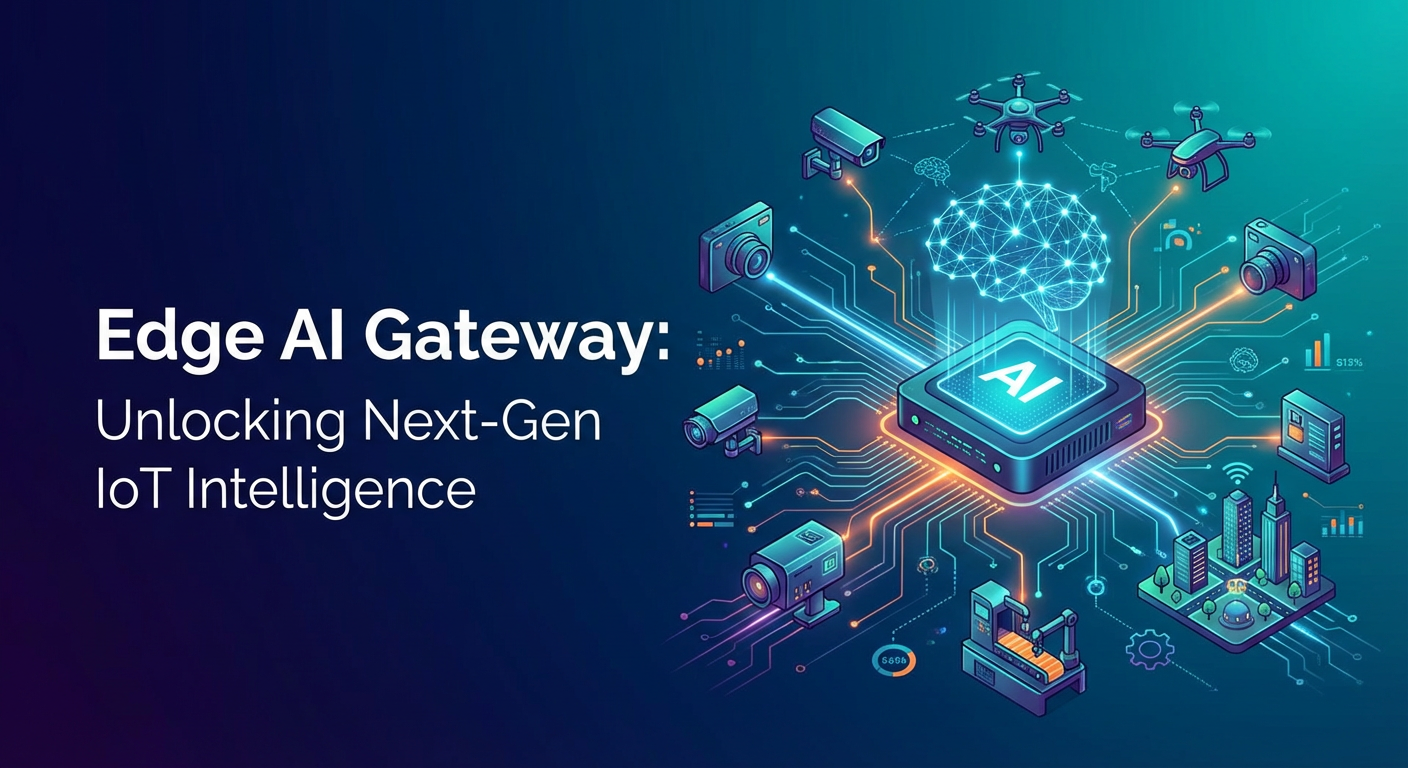


The dawn of the 21st century heralded an era of unprecedented connectivity, giving rise to the Internet of Things (IoT) – a sprawling network of physical objects embedded with sensors, software, and other technologies, enabling them to connect and exchange data with other devices and systems over the internet. From smart homes to industrial sensors, IoT has woven itself into the fabric of modern existence, generating colossal volumes of data at an astonishing pace. However, the true potential of this data often remains untapped, bottlenecked by the traditional cloud-centric processing paradigms that struggle with latency, bandwidth limitations, and privacy concerns inherent in distributed IoT environments.
As our world becomes increasingly interconnected and reliant on instant, intelligent decision-making, a paradigm shift is underway. The convergence of Artificial Intelligence (AI) and the very edge of the network is paving the way for a revolutionary approach: the Edge AI Gateway. This powerful new class of device is not merely a conduit for data; it is a localized intelligence hub, capable of processing, analyzing, and acting upon data in real-time, right where it is generated. By embedding AI capabilities directly into these gateways, we are fundamentally transforming how IoT operates, moving from reactive data transmission to proactive, autonomous intelligence. This article delves deep into the architecture, benefits, challenges, and transformative power of Edge AI Gateways, illustrating how they are poised to unlock the next generation of IoT intelligence and drive innovation across virtually every industry sector. We will explore the intricate dance between the "edge," "AI," and "gateway" components, revealing how this synergy addresses critical limitations of current IoT deployments and sets the stage for a future of truly intelligent, responsive environments.
Understanding the Core Components: Deconstructing the Edge AI Gateway
To fully grasp the revolutionary impact of Edge AI Gateways, it is essential to dissect their fundamental components and understand the roles they play in this transformative architecture. The name itself — "Edge AI Gateway" — signifies a powerful fusion of distinct technological concepts, each bringing critical capabilities to the forefront of next-gen IoT.
What is an Edge AI Gateway?
At its heart, an Edge AI Gateway is a specialized computational device strategically positioned at the "edge" of a network, close to the data sources (IoT sensors, cameras, machines). Unlike a traditional IoT gateway, which primarily serves as a bridge for data transmission between edge devices and the cloud, an Edge AI Gateway is endowed with significant local processing power, specifically designed to run Artificial Intelligence and Machine Learning (AI/ML) models directly on-site. This allows it to perform complex tasks such as data aggregation, filtering, analysis, inference, and even decision-making without constant reliance on a centralized cloud server.
The evolution from traditional IoT gateways to Edge AI Gateways marks a profound shift in operational philosophy. Traditional gateways, while vital for connectivity, are often passive data collectors. They might perform basic protocol translation, data buffering, or rudimentary filtering before forwarding raw or minimally processed data to the cloud for heavy lifting. This model, while effective for many use cases, introduces inherent latencies, consumes significant bandwidth, and raises data privacy concerns, particularly when dealing with sensitive information or time-critical applications.
In contrast, an Edge AI Gateway is an active participant in the intelligent ecosystem. It transforms raw sensor input into actionable insights locally, making smart decisions in milliseconds. Consider a surveillance camera system: a traditional gateway would send all video footage to the cloud for analysis. An Edge AI Gateway, however, could perform real-time object detection, facial recognition, or anomaly detection on the video stream itself, sending only alerts or aggregated metadata to the cloud, significantly reducing data volume and enabling instantaneous responses to security events.
Key characteristics that define an Edge AI Gateway include: * Local Compute Power: Equipped with CPUs, GPUs, NPUs (Neural Processing Units), or FPGAs (Field-Programmable Gate Arrays) optimized for AI workloads. * Robust Connectivity: Supporting various wireless (Wi-Fi, 4G/5G, LoRaWAN, Zigbee, Bluetooth) and wired (Ethernet) protocols to interface with diverse IoT devices and backhaul networks. * Advanced Security Features: Incorporating hardware-level security, secure boot, data encryption, and access controls to protect sensitive data and prevent unauthorized access. * Manageability and Orchestration: Capable of remote management, over-the-air (OTA) updates for AI models and firmware, and seamless integration with cloud-based management platforms. * AI Acceleration: Specialized hardware and software stacks to efficiently execute AI inference tasks with low power consumption. * Resilience: Often designed for harsh industrial environments, with features like wide operating temperature ranges and vibration resistance.
| Feature | Traditional IoT Gateway | Edge AI Gateway |
|---|---|---|
| Primary Role | Data collection, protocol translation, data forwarding. | Local data processing, AI inference, intelligent decision-making. |
| Compute Power | Minimal, focused on data handling. | Significant, optimized for AI/ML workloads (CPUs, GPUs, NPUs). |
| Data Processing | Basic filtering, aggregation, sometimes none. | Real-time complex analytics, anomaly detection, pattern recognition. |
| Latency | Higher, dependent on cloud roundtrip. | Very low, near-instantaneous local response. |
| Bandwidth Usage | High, often sends raw data to cloud. | Optimized, sends only insights/alerts, reducing backhaul. |
| Autonomy | Limited, reliant on cloud for intelligence. | High, capable of independent operation and decision-making. |
| Security Focus | Data in transit, network access. | Data at rest and in transit, model integrity, hardware security. |
| Key Benefit | Connectivity, data ingestion. | Real-time intelligence, reduced costs, enhanced privacy. |
The "Edge" Context
The term "edge" refers to the geographical and logical periphery of a network, where data is generated by sensors and devices. It stands in contrast to the centralized "cloud," where data has traditionally been sent for processing. The rationale for shifting processing capabilities to the edge is multi-faceted and compelling:
- Latency: For applications demanding immediate responses—such as autonomous vehicles, industrial control systems, or critical medical devices—even a few milliseconds of delay introduced by sending data to the cloud and back can be catastrophic. Processing at the edge drastically reduces this roundtrip time, enabling real-time decision-making.
- Bandwidth: The sheer volume of data generated by modern IoT deployments (e.g., high-resolution video streams) can quickly overwhelm network bandwidth, leading to congestion and expensive data transmission costs. By processing data locally and transmitting only aggregated insights or critical events, edge computing significantly alleviates bandwidth strain.
- Privacy and Security: Sending sensitive data (e.g., personal health information, proprietary industrial processes) to a centralized cloud introduces potential privacy risks and compliance challenges (like GDPR, HIPAA). Processing data locally at the edge, where it is generated, can help keep sensitive information within a defined perimeter, enhancing privacy and security posture.
- Reliability: Cloud connectivity can be intermittent or completely unavailable in remote locations or during network outages. Edge computing allows systems to continue operating autonomously, making intelligent decisions even without a constant connection to the cloud. This resilience is critical for mission-critical applications.
The "edge" itself is not a monolithic entity; it manifests in various forms, each with distinct characteristics and computational demands: * Micro-edge: Consists of individual sensors or small devices with minimal compute resources, often performing very specific, simple AI tasks (e.g., wake word detection on a smart speaker). * Enterprise edge: Found in factories, retail stores, hospitals, or offices, where a moderate amount of compute power is available, capable of handling multiple video streams, complex analytics, or local data aggregation. This is where most Edge AI Gateways reside. * Telecom edge (or far edge): Located closer to end-users within cellular networks, leveraging 5G infrastructure for ultra-low latency applications, often in distributed data centers.
The relationship between the edge and the cloud is not one of replacement but rather synergy. Edge computing offloads immediate processing and decision-making, while the cloud retains its role for long-term data storage, large-scale model training, complex analytics, and overall system orchestration. This hybrid architecture optimizes resource allocation, leveraging the strengths of both environments.
The "AI" Component
Integrating Artificial Intelligence into edge devices is the cornerstone of the Edge AI Gateway concept. This involves deploying trained machine learning models to perform inference directly on the data stream at the source.
- On-device Inference: Instead of continuously streaming raw data to powerful cloud servers for AI processing, on-device inference executes the AI model locally. This means the decision-making "brain" is physically present at the edge, enabling immediate action. This is crucial for applications where delays are unacceptable or data transfer is impractical. For example, in industrial quality control, an AI model on an edge gateway can detect manufacturing defects in real-time on a production line, stopping the line instantly before more faulty products are made.
- Types of AI Models at the Edge: While the cloud can host massive, complex deep learning models, edge devices often operate under resource constraints (power, memory, compute). Therefore, AI models deployed at the edge are typically optimized versions:
- Machine Learning (ML) Models: Traditional ML algorithms like support vector machines (SVMs), decision trees, or random forests are often lighter and require less computational power, making them suitable for simpler tasks.
- Deep Learning (DL) Models: For more complex tasks like image recognition, natural language processing, or predictive analytics, deep learning models are used. However, they undergo optimization techniques like pruning (removing less important connections in the neural network), quantization (reducing the precision of numerical representations, e.g., from 32-bit floating point to 8-bit integers), and knowledge distillation (training a smaller "student" model to mimic a larger "teacher" model). These techniques significantly reduce model size and inference time without drastically compromising accuracy.
- Model Deployment and Management Challenges: Deploying and managing AI models on a fleet of distributed edge devices is inherently complex. It involves:
- Model conversion: Adapting models trained in frameworks like TensorFlow or PyTorch for edge-optimized runtimes (e.g., TensorFlow Lite, OpenVINO, ONNX Runtime).
- Over-the-Air (OTA) updates: Securely pushing new or updated models and firmware to remote devices.
- Model versioning: Managing different versions of models deployed across various gateways.
- Performance monitoring: Tracking model accuracy and inference speed in real-world conditions.
- Retraining: Collecting edge data to periodically retrain and improve model performance in the cloud, then redeploying the updated model.
The "Gateway" Aspect: AI Gateway and API Gateway
The "gateway" function ties everything together. In the context of Edge AI, the gateway acts as the central orchestrator, manager, and interface for the local intelligent ecosystem. It's more than just a network router; it's a smart aggregation point, a security enforcer, and a service exposure layer.
- Role as a Central Point for Communication and Data Flow: An Edge AI Gateway collects data from various disparate IoT devices (sensors, actuators, cameras, industrial machinery) using a multitude of communication protocols. It normalizes this data, performs initial data quality checks, and then directs it to the appropriate local AI models for processing or forwards it to the cloud if necessary. It can also route commands from the cloud or local AI models back to the edge devices, enabling control and actuation.
- How an AI Gateway Aggregates, Pre-processes, and Routes Data for AI: Before AI models can perform inference, data often needs preparation. The AI Gateway plays a crucial role in:
- Data Aggregation: Collecting data from hundreds or thousands of devices.
- Pre-processing: Cleaning, normalizing, and transforming raw data into a format suitable for AI models. This might include resizing images, filtering noise from sensor readings, or converting data types.
- Contextualization: Adding metadata or contextual information to data streams to enrich their meaning for AI.
- Load Balancing: Distributing AI inference tasks across available local compute resources or even deciding which inference tasks can be offloaded to the cloud if local capacity is exceeded.
- Event Filtering: Identifying and prioritizing critical events or anomalies based on predefined rules or preliminary AI checks, ensuring that only relevant data triggers further processing or alerts.
- The Function of an API Gateway in Managing Access and Interaction with Edge Services and AI Models: As edge devices become more intelligent and capable of running sophisticated AI models, they essentially host mini-services. For other applications, local devices, or even cloud services to interact with these edge-based AI models and services, a robust interface is required. This is where the concept of an API Gateway becomes indispensable at the edge.An API Gateway, traditionally used in cloud-native architectures, provides a single, unified entry point for external systems to access a collection of services. At the edge, an API Gateway can: * Expose Edge AI Services: Turn local AI models (e.g., an object detection model, a predictive maintenance model) into easily consumable RESTful APIs. This allows other applications, even those running on other edge devices or mobile apps, to leverage the intelligence without needing to understand the underlying AI model's complexities. * Manage Access and Authentication: Securely control who can access which edge AI services, implementing authentication and authorization mechanisms. This prevents unauthorized calls to sensitive local intelligence. * Traffic Management: Handle requests to edge services, perform load balancing if multiple instances of an AI model are running, and manage rate limiting to prevent overload. * Policy Enforcement: Apply security, routing, and transformation policies to API requests and responses. * Monitoring and Analytics: Track API calls, performance metrics, and usage patterns for local edge services.For organizations looking to streamline the management and exposure of their AI and REST services, particularly in distributed environments like the edge, specialized platforms are emerging. One such platform is APIPark. APIPark is an open-source AI gateway and API management platform designed to help developers and enterprises manage, integrate, and deploy AI and REST services with ease. It offers features like quick integration of 100+ AI models, unified API formats for AI invocation, and the ability to encapsulate prompts into REST APIs. This level of comprehensive API lifecycle management, traffic forwarding, load balancing, and access control is precisely what's needed to effectively operationalize AI at the edge, turning complex AI models into easily consumable services. By using a platform like APIPark, organizations can centralize the display of all API services, enabling different departments and teams to find and use the required API services efficiently, thereby unlocking the full potential of edge intelligence.
The "Unlocking Next-Gen IoT Intelligence" Aspect: Benefits and Capabilities
The strategic deployment of Edge AI Gateways is not merely a technical refinement; it represents a fundamental shift that unlocks a new tier of intelligence and capability for IoT ecosystems. By moving computational power and AI inference closer to the data source, these gateways deliver a host of profound benefits that were previously unattainable or prohibitively expensive within traditional cloud-centric models.
Real-time Processing and Low Latency
Perhaps the most compelling advantage of Edge AI Gateways is their capacity for real-time processing and ultra-low latency. In a cloud-dependent model, data captured by an IoT sensor must travel to a remote data center, undergo processing and AI inference, and then have the resulting action or insight transmitted back to the edge. This roundtrip can take hundreds of milliseconds, or even seconds, which is unacceptable for applications demanding instantaneous reactions.
Consider use cases such as: * Autonomous Vehicles: Every millisecond counts for collision avoidance and navigation decisions. An autonomous car needs to identify obstacles, predict movements, and react immediately, which is impossible with cloud-dependent AI. Edge AI within the vehicle itself, or very close by (e.g., roadside edge gateways), is absolutely critical. * Industrial Automation: In a smart factory, robots and machinery need to perform precise movements and respond to changes on the production line in real-time. Detecting a defect, predicting a machine failure, or optimizing a robotic arm's path must happen in an instant to prevent downtime, waste, or safety hazards. An Edge AI Gateway can analyze sensor data from machinery, detect anomalies indicating impending failure, and trigger maintenance alerts or even system shutdowns within milliseconds, preventing costly breakdowns. * Public Safety and Surveillance: Real-time analysis of video feeds for detecting suspicious activities, recognizing missing persons, or identifying unauthorized access requires immediate inference. An Edge AI Gateway can perform these analyses locally, alerting authorities instantly rather than after a delay incurred by cloud transmission and processing.
By keeping the data at the edge for AI inference, the latency is reduced to the order of single-digit milliseconds, enabling a truly responsive and agile IoT environment where devices can make critical decisions autonomously and in sync with the physical world.
Bandwidth Optimization and Cost Reduction
The exponential growth of IoT devices, particularly those generating high-volume data like video streams, presents a massive challenge for network bandwidth. Transmitting all raw data from potentially millions of devices to the cloud is not only technically demanding but also incredibly expensive. Data transfer costs, especially across cellular networks, can quickly become astronomical.
Edge AI Gateways address this challenge by intelligently filtering and pre-processing data locally. Instead of sending terabytes of raw video footage, an Edge AI Gateway can: * Perform Event-based Transmission: Only transmit video clips when an event of interest (e.g., motion detection, object identified) occurs. * Send Metadata Only: Extract key insights and descriptive metadata (e.g., "person detected at 14:30 in zone 3," "temperature exceeded threshold") and send only this much smaller data packet to the cloud. * Data Aggregation: Combine data from multiple sensors over time, sending only summary statistics or trends rather than every individual reading.
This intelligent data culling and summarization dramatically reduce the volume of data that needs to be transmitted over backhaul networks to the cloud. The immediate economic implications are significant: lower bandwidth consumption directly translates to reduced operational costs for data transfer. Moreover, by reducing the load on cloud infrastructure, it can also lead to savings in cloud storage and processing fees, especially for applications that might otherwise require continuous, high-volume data ingestion and analysis in the cloud. For large-scale IoT deployments, these bandwidth and cost optimizations are not just beneficial but often essential for economic viability.
Enhanced Security and Privacy
Data security and privacy are paramount concerns in the age of pervasive connectivity. Edge AI Gateways offer distinct advantages in strengthening both aspects:
- Data Localization: By processing data at the edge, sensitive information can remain within a defined local perimeter, reducing its exposure to external networks and potential cyber threats. Less data transmitted over public networks means fewer opportunities for interception or unauthorized access. For example, in a healthcare setting, patient data can be analyzed on an edge gateway within the hospital's secure network for diagnostic assistance, without ever leaving the premises or being exposed to the public internet, ensuring compliance with strict regulations like HIPAA.
- Compliance with Data Sovereignty Regulations: Many regions and countries have stringent data sovereignty laws (e.g., GDPR in Europe) that dictate where data can be stored and processed. Edge AI Gateways facilitate compliance by allowing data to be processed and retained within specific geographical boundaries, addressing concerns about cross-border data transfers.
- On-device Anomaly Detection and Threat Response: Edge AI can be deployed to continuously monitor network traffic and device behavior for anomalies that might indicate a cyberattack or a system malfunction. For instance, an edge gateway can detect unusual data patterns from an industrial control system, identify a potential intrusion, and trigger immediate localized countermeasures, such as isolating the affected device, before the threat propagates through the broader network or reaches the cloud.
- Minimizing Attack Surface: By sending only aggregated insights or encrypted data to the cloud, the "attack surface" for cloud-based systems is reduced. Even if a cloud system is compromised, the raw, sensitive edge data remains protected locally.
Robust security features, including secure boot processes, hardware root of trust, encrypted storage, and stringent access controls, are integral to the design of Edge AI Gateways, making them formidable assets in an enterprise's overall cybersecurity strategy.
Improved Reliability and Autonomy
A significant vulnerability of purely cloud-dependent IoT systems is their reliance on continuous network connectivity. If the connection to the cloud is lost due to network outages, power failures, or remote location challenges, the entire intelligent system can become inoperable.
Edge AI Gateways mitigate this risk by enabling high levels of reliability and autonomy: * Continued Operation During Connectivity Loss: With local AI processing capabilities, edge gateways can continue to collect data, perform inference, and make critical decisions even when disconnected from the cloud. This resilience is vital for applications in remote areas (e.g., oil rigs, agricultural fields), critical infrastructure (e.g., power grids, water treatment plants), or situations where intermittent connectivity is the norm. A smart irrigation system, for instance, can continue to monitor soil moisture and adjust watering schedules based on local AI models, even if its internet connection is temporarily down. * Decentralized Decision-Making: Edge AI promotes a decentralized intelligence architecture. Instead of all decisions flowing from a central cloud brain, intelligence is distributed throughout the network. This not only improves resilience but also allows for faster, more localized responses to dynamic conditions, reducing the single point of failure inherent in centralized systems. * Mission-Critical Applications: For scenarios where failure is not an option (e.g., medical devices, safety systems), the guaranteed operational continuity provided by edge autonomy is indispensable.
Scalability and Flexibility
Deploying and managing a large-scale IoT ecosystem often grapples with challenges in scalability and adaptability to diverse environments. Edge AI Gateways offer significant advantages in this regard: * Modular Deployment of AI Models: New AI models or updates can be deployed to individual gateways or groups of gateways as needed, without affecting the entire system. This modularity allows for agile iteration and deployment of intelligence tailored to specific edge contexts. * Adapting to Diverse IoT Environments: Edge AI Gateways are designed to be flexible, supporting a wide array of sensors, protocols, and deployment scenarios. They can be configured to process different types of data, run various AI models, and interface with disparate back-end systems, making them suitable for highly heterogeneous IoT landscapes, from a smart city's diverse sensor network to a factory's specialized machinery. * Scalable Intelligence: As the number of IoT devices grows, simply scaling up cloud resources can become economically unfeasible. By offloading intelligence to the edge, the computational burden is distributed, allowing the overall system to scale more efficiently. More edge devices can be added without necessarily requiring a proportional increase in central cloud processing power.
Actionable Insights at the Source
Ultimately, the goal of any intelligent system is to transform raw data into meaningful and actionable insights. Edge AI Gateways excel at this by providing immediate intelligence at the very source of data generation: * Transforming Raw Sensor Data into Immediate Actions: Instead of merely reporting a temperature reading, an Edge AI Gateway can infer that a machine is overheating based on multiple sensor inputs, predict potential failure, and then trigger a proactive shutdown or send a detailed maintenance alert. This transforms passive data into active intervention. * Predictive Maintenance: By continuously analyzing vibration, temperature, and sound data from industrial equipment, edge AI can predict equipment failures long before they occur, allowing for scheduled maintenance and preventing costly unplanned downtime. * Quality Control: In manufacturing, visual inspection AI models running on edge gateways can identify defects on a production line in real-time, immediately flagging or removing faulty products, ensuring consistent quality and reducing waste. * Operational Efficiency: Edge AI can monitor energy consumption patterns in buildings, optimize HVAC systems based on occupancy and external weather conditions, or manage smart streetlights based on traffic flow, leading to significant energy savings and improved operational efficiency.
By providing this level of immediate, localized intelligence, Edge AI Gateways empower businesses and organizations to make smarter, faster decisions, leading to enhanced safety, reduced costs, improved productivity, and entirely new service offerings across a multitude of sectors.
Technical Architecture and Implementation Considerations
Building and deploying effective Edge AI Gateway solutions involves navigating a complex interplay of hardware, software, security, and management challenges. The technical architecture must be robust, scalable, and adaptable to the unique constraints and demands of edge environments.
Hardware Considerations
The physical foundation of an Edge AI Gateway is critical, dictating its performance, power efficiency, and ability to withstand environmental conditions.
- Processing Units: The choice of processing unit is paramount for AI inference performance:
- CPUs (Central Processing Units): General-purpose processors capable of handling various tasks, including AI. Modern CPUs often include specialized instructions (e.g., AVX-512 for Intel, NEON for ARM) that accelerate AI workloads. They are versatile but may be less power-efficient for pure inference compared to specialized accelerators.
- GPUs (Graphics Processing Units): Highly parallel processors excellent for deep learning inference due to their ability to perform many computations simultaneously. NVIDIA's Jetson series is a popular choice for edge AI, offering significant compute power in a compact, low-power form factor.
- NPUs (Neural Processing Units): Dedicated hardware accelerators specifically designed to optimize neural network operations. They offer superior power efficiency and inference speed for AI tasks compared to general-purpose CPUs or even GPUs, as they are custom-built for tensor operations. Examples include Google's Edge TPU.
- FPGAs (Field-Programmable Gate Arrays): Reconfigurable hardware that can be programmed to perform specific AI algorithms very efficiently. They offer a balance of flexibility and performance, allowing developers to customize the hardware logic for their specific AI models, though they require specialized programming skills. The selection depends on the complexity of the AI models, real-time requirements, power budget, and cost constraints. Often, a heterogeneous architecture combining a CPU for general-purpose tasks and a specialized accelerator (GPU, NPU, FPGA) for AI inference is employed.
- Memory, Storage, and Power Consumption:
- Memory (RAM): Sufficient RAM is needed for operating systems, application code, and loading AI models. Edge devices often have 4GB to 32GB of RAM, depending on the workload.
- Storage: Reliable and fast storage (e.g., eMMC, SSD) is required for the OS, applications, logged data, and AI model weights. Often, devices are designed for industrial-grade storage that can withstand harsh conditions and frequent writes.
- Power Consumption: Edge devices are often deployed in environments with limited power (e.g., battery-powered, solar-powered, or in remote locations). Low power consumption is a key design criterion, influencing the choice of components and overall system design.
- Ruggedization for Industrial Environments: Many edge deployments occur in challenging physical environments (factories, outdoor sites, vehicles). Edge AI Gateways must be designed to withstand:
- Extreme Temperatures: Operating reliably in very hot or cold conditions.
- Vibration and Shock: Resisting mechanical stress common in industrial machinery or moving vehicles.
- Dust and Moisture: Often requiring IP (Ingress Protection) ratings to protect against solid particles and liquids.
- Electromagnetic Interference (EMI): Shielding against interference from other industrial equipment. These physical demands necessitate robust enclosures, fanless designs, and industrial-grade components.
Software Stack
Beyond the hardware, a sophisticated software stack is essential to manage, deploy, and execute AI models efficiently at the edge.
- Operating Systems (OS):
- Linux Variants: Debian, Ubuntu Core, Yocto Linux, or customized embedded Linux distributions are popular choices, offering flexibility, open-source advantages, and a vast ecosystem of tools and libraries.
- RTOS (Real-Time Operating Systems): For applications with strict timing requirements (e.g., industrial control), RTOS like FreeRTOS or VxWorks ensure deterministic behavior and low-latency task execution.
- Containerization (Docker, Kubernetes at the Edge):
- Container technologies like Docker encapsulate applications and their dependencies into portable, isolated units. This simplifies deployment, ensures consistency across different edge devices, and facilitates over-the-air updates.
- Edge Kubernetes (K3s, MicroK8s, OpenShift Edge): Lightweight Kubernetes distributions are emerging to manage and orchestrate containerized workloads across a fleet of edge gateways, providing advanced features like self-healing, scaling, and declarative deployment.
- Edge AI Frameworks: These frameworks are optimized for efficient AI inference on resource-constrained devices:
- TensorFlow Lite: A lightweight version of TensorFlow designed for mobile and embedded devices, supporting model quantization and optimized operations.
- OpenVINO (Open Visual Inference and Neural Network Optimization): Intel's toolkit for optimizing and deploying deep learning models on Intel hardware (CPUs, GPUs, VPUs, FPGAs), providing significant speedups for inference.
- ONNX Runtime: An open-source inference engine that runs ONNX (Open Neural Network Exchange) models across various hardware platforms and operating systems, offering flexibility.
- PyTorch Mobile: A version of PyTorch optimized for mobile and edge deployment.
- Data Ingestion and Streaming Protocols: Efficiently collecting and moving data is paramount:
- MQTT (Message Queuing Telemetry Transport): A lightweight, publish-subscribe messaging protocol ideal for IoT devices with limited resources and often unreliable networks.
- Kafka/Pulsar at the Edge: Lightweight versions or distributions of these stream processing platforms can be deployed at the edge for high-throughput, fault-tolerant data ingestion and real-time analytics.
- AMQP, CoAP, DDS: Other protocols are used depending on specific requirements for reliability, real-time performance, or message patterns.
- API Gateway for Managing Services and Microservices at the Edge: As discussed earlier, an API Gateway is crucial for exposing the localized intelligence and services running on edge devices. It acts as a single point of entry, managing security, routing, and access control for these edge-native APIs. This layer is vital for integrating edge intelligence with broader enterprise applications, mobile clients, or even other edge devices. A platform like APIPark, functioning as an open-source AI gateway and API management platform, excels in this role. It allows for the unified management of diverse AI models, encapsulating them into standardized REST APIs, and providing end-to-end lifecycle management. This simplifies the consumption of edge AI services and ensures their secure, efficient exposure.
- Remote Management and Orchestration Platforms: Managing hundreds or thousands of distributed edge gateways requires robust tools for:
- Device Onboarding and Provisioning: Securely adding new devices to the network.
- Configuration Management: Remotely configuring device settings and application parameters.
- Software and Model Updates: Performing over-the-air (OTA) updates for firmware, operating systems, and AI models.
- Monitoring and Diagnostics: Collecting telemetry data (device health, resource utilization, application performance) and troubleshooting issues remotely.
- Centralized Control: Orchestrating workloads and deployments across the entire edge fleet from a central cloud dashboard.
Model Management and Deployment Lifecycle
The effective lifecycle management of AI models is a continuous process, spanning from training in the cloud to inference and continuous improvement at the edge.
- Training in the Cloud, Deployment at the Edge: AI models are typically trained on large datasets in powerful cloud environments (or on-premises data centers) due to the significant computational resources required. Once trained and validated, these models are then optimized (quantized, pruned) and deployed to the resource-constrained edge gateways for inference. This split workflow leverages the strengths of both environments.
- Over-the-Air (OTA) Updates for Models and Firmware: The ability to remotely update AI models and device firmware is essential. Models need periodic retraining with new data to maintain accuracy and adapt to changing conditions. Firmware updates are critical for security patches and feature enhancements. OTA updates must be secure, robust, and capable of rolling back in case of issues, minimizing downtime and human intervention.
- Model Versioning, Monitoring, and Retraining:
- Model Versioning: Maintaining different versions of AI models is crucial for reproducibility, A/B testing, and ensuring compatibility with various edge device capabilities.
- Monitoring: Continuously monitoring the performance and accuracy of deployed models at the edge is vital. This includes tracking inference latency, resource utilization, and crucially, "model drift" – where a model's performance degrades over time due to changes in the real-world data distribution it encounters.
- Retraining: When model drift is detected, or new data becomes available, the edge gateway can securely send aggregated and anonymized data samples (or insights from mispredictions) back to the cloud for retraining the AI model. The newly trained model is then optimized and redeployed to the edge, closing the continuous improvement loop.
Security Best Practices at the Edge
Given the distributed nature of edge deployments and the sensitivity of the data often processed, security is not an afterthought but a foundational design principle.
- Secure Boot and Hardware Root of Trust:
- Secure Boot: Ensures that only trusted software (firmware, OS) can load on the device by verifying digital signatures at each stage of the boot process.
- Hardware Root of Trust (HRoT): Utilizes specialized hardware components (e.g., Trusted Platform Modules - TPMs) to establish an unchangeable identity for the device and provide a secure environment for cryptographic operations. This prevents tampering and ensures the integrity of the gateway.
- Data Encryption (at Rest and in Transit):
- Data at Rest: All sensitive data stored on the gateway's local storage (e.g., logs, configuration files, cached data, model weights) must be encrypted to prevent unauthorized access even if the device is physically compromised.
- Data in Transit: All communication between edge devices, the gateway, and the cloud must be encrypted using strong cryptographic protocols (e.g., TLS 1.2/1.3 for HTTPS, MQTT over TLS) to protect against eavesdropping and man-in-the-middle attacks.
- Access Control and Authentication:
- Least Privilege: Users, applications, and services at the edge should only have the minimum necessary permissions to perform their functions.
- Strong Authentication: Implement robust authentication mechanisms for accessing edge gateways and their services, including multi-factor authentication for administrative access. This extends to the API Gateway layer, where access to exposed edge APIs must be strictly controlled through API keys, OAuth, or other secure methods.
- Regular Patching and Vulnerability Management:
- Edge devices, like any other computing system, are susceptible to software vulnerabilities. A continuous process of vulnerability scanning, security patching for operating systems, firmware, and application software is critical.
- Centralized remote management platforms are essential for efficiently distributing and applying patches across a large fleet of geographically dispersed gateways.
By meticulously addressing these technical considerations, organizations can build secure, high-performing, and resilient Edge AI Gateway solutions that effectively unlock next-gen IoT intelligence.
APIPark is a high-performance AI gateway that allows you to securely access the most comprehensive LLM APIs globally on the APIPark platform, including OpenAI, Anthropic, Mistral, Llama2, Google Gemini, and more.Try APIPark now! 👇👇👇
Use Cases and Industry Impact
The transformative power of Edge AI Gateways is not confined to theoretical discussions; it is actively reshaping industries and creating unprecedented opportunities across a wide spectrum of applications. By bringing intelligence to the source of data, these gateways are enabling solutions that were previously impossible, impractical, or too costly.
Smart Manufacturing and Industry 4.0
The manufacturing sector is perhaps one of the most significant beneficiaries of Edge AI. Industry 4.0 envisions smart factories where machinery, systems, and products communicate and cooperate, and Edge AI Gateways are the central nervous system for this vision.
- Predictive Maintenance: Edge AI Gateways monitor vibration, temperature, acoustic patterns, and other operational data from industrial machinery in real-time. AI models running on the gateway analyze this data to detect subtle anomalies that indicate impending equipment failure. This allows manufacturers to schedule maintenance proactively, preventing costly unplanned downtime, extending equipment lifespan, and optimizing resource allocation for maintenance teams.
- Quality Inspection: High-speed production lines require real-time quality control. Edge AI, particularly computer vision models, can inspect products for defects (e.g., surface imperfections, missing components, incorrect labeling) as they pass through the line. The gateway can immediately flag faulty items for removal, ensuring consistent product quality without human intervention, which significantly reduces waste and improves efficiency.
- Robot Guidance and Control: Collaborative robots (cobots) and autonomous guided vehicles (AGVs) in a factory rely on precise, real-time spatial awareness and decision-making. Edge AI Gateways can process sensor data (Lidar, cameras) to guide robots, avoid collisions, and optimize their paths in dynamic environments, ensuring both safety and efficiency.
- Worker Safety Monitoring: AI-powered cameras connected to edge gateways can monitor factory floors for adherence to safety protocols (e.g., wearing hard hats, maintaining safe distances from machinery), detect falls, or identify individuals entering restricted zones, automatically issuing alerts to enhance worker safety.
Smart Cities and Public Safety
Edge AI Gateways are instrumental in building safer, more efficient, and more sustainable urban environments.
- Traffic Management: AI models at the edge can analyze real-time video feeds from traffic cameras to monitor vehicle flow, detect congestion, identify accidents, and even predict traffic patterns. This intelligence can then be used to dynamically adjust traffic light timings, reroute vehicles, or dispatch emergency services, optimizing urban mobility and reducing response times.
- Surveillance and Anomaly Detection: In public spaces, AI-powered surveillance systems linked to edge gateways can perform real-time object detection, facial recognition (where permissible and ethical), and anomaly detection (e.g., unattended bags, unusual crowd behavior). Alerts can be generated instantly for security personnel, enhancing public safety and enabling rapid response to potential threats.
- Environmental Monitoring: Edge gateways connected to air quality, noise, and weather sensors can process local environmental data, identify pollution hotspots, and monitor climate patterns. This localized intelligence can inform urban planning, pollution control measures, and provide real-time public health advisories.
- Disaster Response: During emergencies, edge devices can maintain local communication networks and provide immediate situational awareness by processing data from drones or remote sensors, even if central communication infrastructure is compromised, aiding first responders.
Retail and Smart Spaces
Edge AI is transforming the retail experience and optimizing the management of commercial and public spaces.
- Inventory Management and Shelf Analytics: AI cameras and sensors integrated with edge gateways can monitor shelf stock levels, identify out-of-stock items, and analyze customer browsing patterns. This provides real-time insights for inventory replenishment, optimizes product placement, and reduces lost sales.
- Customer Analytics and Personalized Experiences: Edge AI can analyze anonymized customer foot traffic, dwell times, and demographic patterns within a store, providing retailers with insights into store layout effectiveness and customer behavior. It can also power personalized digital signage or promotions based on real-time customer presence without sending sensitive data to the cloud.
- Loss Prevention: AI models can detect suspicious activities like shoplifting or unauthorized access at entrances and exits, immediately alerting staff to prevent theft.
- Smart Building Management: In commercial buildings, edge gateways can optimize energy consumption by integrating AI with HVAC systems, lighting, and occupancy sensors, adjusting environmental controls in real-time to match demand and save energy.
Healthcare
Edge AI is poised to revolutionize healthcare delivery, particularly in remote patient monitoring and diagnostic support.
- Remote Patient Monitoring: Wearable sensors and in-home medical devices can stream vital signs and other health data to an Edge AI Gateway in a patient's home. The gateway can run AI models to detect critical changes, predict health deterioration, or identify emergencies, sending immediate alerts to healthcare providers while keeping sensitive raw data localized. This enables proactive intervention and reduces the need for frequent hospital visits.
- Diagnostic Assistance: In clinics or remote medical facilities, Edge AI Gateways can provide real-time analysis of medical images (e.g., X-rays, MRI scans) to assist clinicians in preliminary diagnoses, triage cases, and identify potential anomalies, especially in areas with limited access to specialist radiologists.
- Asset Tracking and Management: In large hospital complexes, edge AI can track the location of critical medical equipment (e.g., wheelchairs, IV pumps) and personnel, optimizing resource utilization and improving operational efficiency.
Autonomous Systems (Vehicles, Drones)
The very concept of autonomy is intrinsically linked to edge intelligence, as decisions must be made instantaneously without external reliance.
- Real-time Decision-Making: Autonomous vehicles and drones rely heavily on Edge AI to process massive streams of sensor data (cameras, lidar, radar) in real-time. AI models identify objects, track movement, predict trajectories, and make split-second navigation and collision avoidance decisions, all computed locally.
- Environmental Perception: Edge AI enables these systems to build a robust, real-time understanding of their surrounding environment, crucial for safe and effective operation in complex and dynamic scenarios.
- Edge-to-Edge Communication: While individual autonomous units have their own edge AI, communication between vehicles (V2V) or between vehicles and infrastructure (V2I) can be facilitated by roadside Edge AI Gateways, enhancing overall system awareness and coordination.
Agriculture (Smart Farming)
Edge AI is bringing precision and automation to the agricultural sector, optimizing resource use and increasing yields.
- Crop Health Monitoring: Drones equipped with multispectral cameras can capture detailed images of crops. Edge AI Gateways on the drone or at a local farm processing unit can analyze these images in real-time to detect early signs of disease, pest infestations, or nutrient deficiencies, allowing farmers to apply targeted treatments precisely where needed, reducing pesticide use and increasing yield.
- Precision Farming: Sensors measuring soil moisture, temperature, and nutrient levels feed data to edge gateways. AI models can then recommend optimized irrigation schedules and fertilizer application rates tailored to specific sections of a field, conserving resources and improving crop growth.
- Livestock Tracking and Health Monitoring: Edge gateways can process data from RFID tags or cameras to monitor the location, behavior, and health of livestock, identifying sick animals or unusual activities that require intervention.
In each of these diverse use cases, the common thread is the power of local, immediate intelligence provided by Edge AI Gateways. They are not merely enhancing existing systems but fundamentally reshaping possibilities, driving unprecedented levels of efficiency, safety, and innovation across global industries.
Challenges and Future Directions
While Edge AI Gateways hold immense promise for unlocking next-gen IoT intelligence, their widespread adoption and full potential are accompanied by several significant challenges that require careful consideration and innovative solutions. Simultaneously, the field is rapidly evolving, pointing towards exciting future directions that will further amplify their impact.
Challenges
- Interoperability and Standardization: The IoT landscape is fragmented, characterized by a dizzying array of devices, communication protocols, data formats, and AI frameworks. Achieving seamless interoperability among diverse edge devices, gateways, and cloud platforms remains a major hurdle. The lack of universal standards complicates integration, management, and data exchange, leading to vendor lock-in and increased development costs. Efforts by organizations like the Linux Foundation Edge (LF Edge) and the OpenFog Consortium (now part of the Industrial Internet Consortium) are attempting to address this, but a unified ecosystem is still a distant goal.
- Resource Constraints (Compute, Power, Network): While Edge AI Gateways are more powerful than individual sensors, they still operate under significant constraints compared to cloud data centers.
- Compute: Balancing the need for powerful AI inference with the limitations of compact, fanless, and often passively cooled designs is a constant challenge.
- Power: Many edge deployments are in remote locations with limited access to consistent power, necessitating highly power-efficient hardware and software.
- Network: Intermittent connectivity, low bandwidth, and varying network quality at the edge require robust data synchronization strategies and offline capabilities. Developing AI models that are both accurate and light enough to run efficiently on these constrained resources is an ongoing research area.
- Skill Gap for Edge AI Development: The convergence of embedded systems, AI/ML engineering, cloud computing, and cybersecurity requires a highly specialized skill set. There is a significant shortage of professionals who possess expertise across all these domains. This talent gap hinders the rapid development, deployment, and maintenance of sophisticated Edge AI solutions. Training programs and accessible development tools are crucial to bridge this divide.
- Security Complexity Across Distributed Systems: Securing a sprawling network of geographically dispersed edge gateways, each potentially running different software and AI models, presents an enormous challenge. Managing access control, patching vulnerabilities, ensuring data integrity, and protecting against physical tampering across thousands of devices is far more complex than securing a centralized cloud data center. The threat surface is exponentially larger, requiring advanced security architectures and continuous monitoring.
- Data Governance and Ethics: Edge AI processes sensitive data (e.g., video feeds, personal health data) close to its source, raising critical questions about data ownership, privacy, consent, and ethical AI use. Ensuring compliance with evolving data protection regulations (e.g., GDPR, CCPA) and developing ethical guidelines for AI decision-making at the edge (especially in applications like surveillance or autonomous systems) is paramount. The ability to collect, process, and potentially share data locally requires robust governance frameworks to prevent misuse.
Future Directions
Despite these challenges, the trajectory of Edge AI Gateways is one of rapid innovation and expansion, driven by advancements in hardware, software, and networking technologies.
- Further Miniaturization and Power Efficiency: Continued breakthroughs in semiconductor technology will lead to even smaller, more powerful, and significantly more power-efficient AI accelerators and processors. This will enable the deployment of sophisticated AI capabilities into increasingly smaller and more resource-constrained edge devices, pushing intelligence even further down to the "tiny edge" (e.g., smart sensors themselves).
- Federated Learning at the Edge: Federated learning is a machine learning technique that trains an algorithm across multiple decentralized edge devices or servers holding local data samples, without exchanging their data. This approach is highly promising for Edge AI, as it allows for collaborative model training while preserving data privacy and reducing the need to transfer raw data to the cloud. Edge gateways will act as orchestrators for these distributed learning processes, enabling continuous improvement of AI models using localized data without compromising confidentiality.
- Reinforcement Learning on Edge Devices: While current Edge AI predominantly focuses on inference, the future may see more reinforcement learning agents deployed at the edge. These agents could learn optimal control policies for physical systems (e.g., robots, smart grids) by interacting with their environment in real-time, performing trial-and-error locally, and adapting their behavior without constant cloud supervision.
- Integration with 5G and Beyond: The rollout of 5G networks, with their ultra-low latency, massive connectivity, and high bandwidth capabilities, is a natural complement to Edge AI. 5G will enable seamless and reliable communication between edge devices and gateways, as well as between gateways and nearby "far edge" cloudlets, further blurring the lines between edge and cloud. Future generations of wireless technology will continue to enhance these capabilities, supporting even more data-intensive and time-critical edge applications.
- More Sophisticated Edge Orchestration: As edge deployments grow in scale and complexity, the need for advanced orchestration and management tools will intensify. Future platforms will offer more intelligent ways to deploy, manage, and update containerized AI applications and models across diverse edge hardware, providing fine-grained control, automated resource management, and predictive maintenance for the entire edge infrastructure from a unified control plane. This will encompass everything from hardware lifecycle to model performance monitoring and automatic retraining pipelines.
The journey of Edge AI Gateways is still in its early phases, yet its foundational role in the evolution of IoT intelligence is undeniable. Addressing the current challenges while embracing these exciting future directions will be key to realizing a world where intelligence is truly pervasive, responsive, and seamlessly integrated into our physical environments.
Conclusion
The digital revolution has brought us to an inflection point, where the sheer volume and velocity of data generated by billions of interconnected devices demand a new paradigm for processing and analysis. Traditional cloud-centric models, while powerful, are increasingly proving inadequate for the latency-sensitive, bandwidth-constrained, and privacy-critical demands of modern IoT. It is into this breach that the Edge AI Gateway has confidently stepped, fundamentally reshaping the landscape of interconnected intelligence.
We have meticulously explored the intricate components that constitute this transformative technology: the strategic "edge" positioning that brings compute closer to the data source, the embedded "AI" capabilities that enable real-time inference and decision-making, and the robust "gateway" function that orchestrates data flow, manages services, and ensures security. The synergy of these elements culminates in a powerful system capable of unlocking unparalleled benefits – from ultra-low latency and significant bandwidth optimization to enhanced security, privacy, and unwavering operational autonomy. These advantages are not merely incremental improvements; they are foundational shifts that allow for the creation of truly intelligent, responsive, and resilient IoT ecosystems.
The impact of Edge AI Gateways is already being felt across a myriad of industries. In smart manufacturing, they are powering predictive maintenance and real-time quality control, transforming factories into adaptive, efficient hubs. In smart cities, they enable dynamic traffic management and proactive public safety, creating safer and more livable urban environments. Retail, healthcare, and autonomous systems are likewise being revolutionized, witnessing unprecedented levels of automation, personalized experiences, and life-critical decision-making at the very source. Tools like APIPark, an open-source AI gateway and API management platform, further simplify the complex task of integrating and managing diverse AI models and exposing them as secure, standardized APIs at the edge, streamlining the journey from raw data to actionable intelligence.
While challenges such as interoperability, resource constraints, the skill gap, and security complexities persist, the future trajectory of Edge AI Gateways is one of relentless innovation. Advancements in miniaturization, power efficiency, federated learning, and deeper integration with next-generation communication technologies like 5G promise to extend their capabilities even further, embedding sophisticated intelligence into every corner of our physical world.
In essence, Edge AI Gateways are not just another piece of technology; they are the lynchpin for the next generation of IoT intelligence. They represent a fundamental evolution, moving us beyond mere connectivity to a future where devices are not just connected, but truly intelligent, autonomous, and capable of profound impact, right where the action happens. The promise of a world where real-time, context-aware decisions are made instantaneously, securely, and efficiently is no longer a distant vision, but an imminent reality, brought to life by the transformative power of Edge AI Gateways.
5 Frequently Asked Questions (FAQs)
1. What is the fundamental difference between a traditional IoT gateway and an Edge AI Gateway? A traditional IoT gateway primarily acts as a communication bridge, collecting data from edge devices and forwarding it to the cloud for processing, often performing basic tasks like protocol translation and data buffering. An Edge AI Gateway, however, possesses significant local compute power, allowing it to process, analyze, and perform AI inference on data directly at the edge, near the data source. This enables real-time decision-making, reduced latency, bandwidth optimization, and enhanced autonomy, whereas a traditional gateway relies on the cloud for true intelligence.
2. Why is latency reduction so crucial for Edge AI applications? Latency reduction is paramount for applications where immediate responses are critical. In scenarios like autonomous vehicles, industrial automation (e.g., robotic control, quality inspection), or real-time public safety surveillance, even a few milliseconds of delay can lead to catastrophic failures, safety hazards, or missed opportunities. By performing AI inference directly at the edge, Edge AI Gateways eliminate the roundtrip delay to the cloud, enabling near-instantaneous decision-making and actions, which is essential for mission-critical and time-sensitive operations.
3. How do Edge AI Gateways enhance data security and privacy compared to cloud-centric IoT? Edge AI Gateways enhance security and privacy primarily through data localization. By processing sensitive data (e.g., video feeds, personal health information) at the edge, less raw data needs to be transmitted over public networks to the cloud, reducing the exposure to potential cyber threats and minimizing the attack surface. This also aids in complying with data sovereignty regulations (like GDPR) by keeping data within defined geographical boundaries. Additionally, robust security features like secure boot, hardware root of trust, and on-device encryption further protect the integrity and confidentiality of the data and the gateway itself.
4. What kind of AI models can be deployed on an Edge AI Gateway, and how are they optimized? Both traditional machine learning (ML) models and deep learning (DL) models can be deployed on Edge AI Gateways. However, due to resource constraints (power, memory, compute) at the edge, DL models typically undergo optimization techniques. These include pruning (removing less important connections in the neural network), quantization (reducing the precision of numerical representations, e.g., from 32-bit floating point to 8-bit integers), and knowledge distillation (training a smaller "student" model to mimic a larger "teacher" model). These optimizations significantly reduce model size and inference time without substantially compromising accuracy, making them suitable for efficient execution on edge hardware like NPUs, GPUs, and even optimized CPUs.
5. How do Edge AI Gateways integrate with existing cloud infrastructure? Edge AI Gateways typically operate in a hybrid architecture with cloud infrastructure, forming a symbiotic relationship rather than a replacement. The edge gateway handles real-time, localized data processing and immediate decision-making, while the cloud retains its role for long-term data storage, large-scale AI model training, complex analytics, and overall system orchestration and management. Edge gateways send only aggregated insights, filtered data, or critical alerts to the cloud, optimizing bandwidth and cloud resource usage. Cloud platforms also provide remote management capabilities for deploying, updating, and monitoring AI models and firmware on edge gateways, creating a continuously improving and centrally managed intelligent ecosystem.
🚀You can securely and efficiently call the OpenAI API on APIPark in just two steps:
Step 1: Deploy the APIPark AI gateway in 5 minutes.
APIPark is developed based on Golang, offering strong product performance and low development and maintenance costs. You can deploy APIPark with a single command line.
curl -sSO https://download.apipark.com/install/quick-start.sh; bash quick-start.sh

In my experience, you can see the successful deployment interface within 5 to 10 minutes. Then, you can log in to APIPark using your account.

Step 2: Call the OpenAI API.