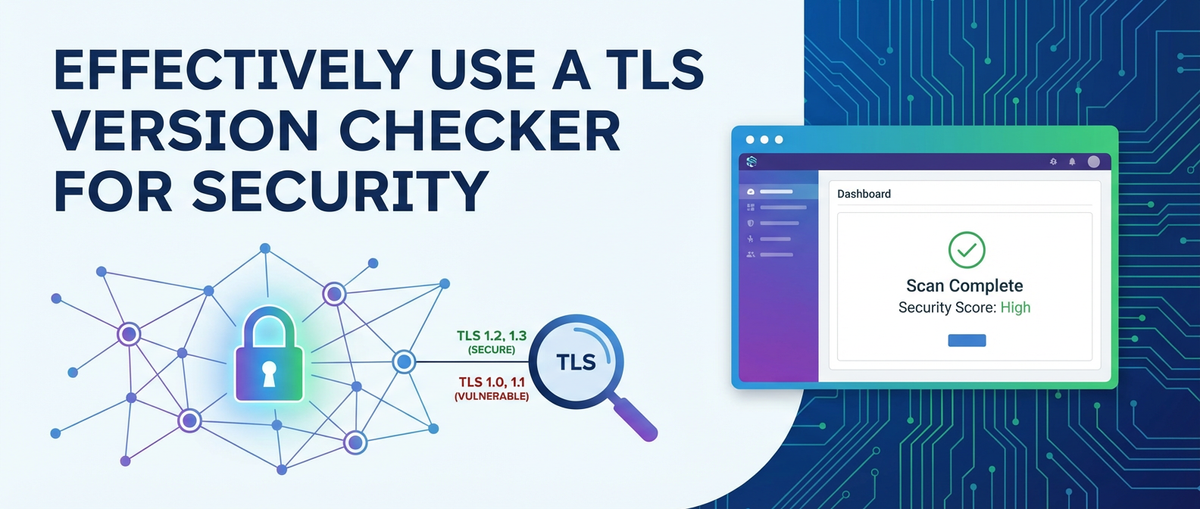
Effectively Use a TLS Version Checker for Security


In the vast, interconnected expanse of the modern internet, where data flows ceaselessly across borders and through intricate networks, the unassuming acronym TLS stands as a pivotal guardian of digital trust and confidentiality. Transport Layer Security, the successor to the now-defunct Secure Sockets Layer (SSL) protocol, is the cryptographic bedrock upon which secure communication is built. From safeguarding your online banking transactions to protecting the integrity of sensitive corporate data exchanged between distributed applications, TLS ensures that information traversing the public internet remains encrypted, authenticated, and untampered. However, the efficacy of TLS is not a static guarantee; it is a dynamic landscape shaped by relentless advancements in cryptography, evolving threat models, and the continuous discovery of new vulnerabilities. This ongoing evolution means that merely having TLS is insufficient; its version and configuration are paramount. An outdated or improperly configured TLS version can render even the most sophisticated security measures moot, opening critical doors for malicious actors.
This comprehensive guide delves into the critical importance of effectively utilizing a TLS version checker as an indispensable tool in your cybersecurity arsenal. We will embark on a detailed exploration of what TLS is, trace its evolutionary path through various versions, and meticulously dissect why specific versions pose inherent security risks. Furthermore, we will illuminate the mechanisms of TLS version checkers, offering practical insights into their deployment and interpretation across different environments. Beyond mere technical execution, the article will extend its scope to integrate these practices within a broader cybersecurity framework, particularly in the context of API Gateway implementations and robust API Governance strategies. By the conclusion, you will possess a profound understanding of why proactive TLS version management is not merely a best practice but an absolute necessity for maintaining a resilient and trustworthy digital presence in an increasingly hostile cyber landscape. The sheer volume of data exchanged today, from personal messages to mission-critical business intelligence, underscores the non-negotiable demand for uncompromised security, a demand that begins with the vigilant management of TLS.
The Foundation of Secure Communication: Understanding TLS
At its core, Transport Layer Security (TLS) is a cryptographic protocol designed to provide secure communication over a computer network. When you see "HTTPS" in your browser's address bar, it signifies that TLS (or its predecessor, SSL) is actively working to encrypt the data exchanged between your browser and the website's server. This encryption ensures that any information—be it login credentials, financial details, or confidential messages—is transformed into an unreadable format, making it unintelligible to anyone who might intercept it without the proper decryption key. Beyond encryption, TLS also performs two other vital functions: authentication and integrity. Authentication verifies the identity of the server (and optionally the client) through digital certificates, preventing man-in-the-middle attacks where an impostor might try to eavesdrop or alter communications. Integrity ensures that the data exchanged has not been tampered with during transit, providing assurance that what was sent is precisely what was received. These three pillars—encryption, authentication, and integrity—collectively establish a secure and trustworthy channel for digital interactions.
The history of TLS began with Netscape's development of Secure Sockets Layer (SSL) in the mid-1990s. SSL 1.0 was never publicly released due to significant security flaws. SSL 2.0 followed shortly after but also had critical vulnerabilities, leading to the rapid development of SSL 3.0. While SSL 3.0 was a significant improvement and saw widespread adoption, it too eventually succumbed to various cryptographic weaknesses, most notably the POODLE attack in 2014. Recognizing the need for a more robust and standardized protocol, the Internet Engineering Task Force (IETF) took over the development, renaming it Transport Layer Security (TLS). TLS 1.0 was released in 1999, essentially an upgrade to SSL 3.0. Since then, TLS has undergone several critical revisions: TLS 1.1 (2006), TLS 1.2 (2008), and the current industry standard, TLS 1.3 (2018). Each new version has aimed to address vulnerabilities discovered in its predecessors, incorporate stronger cryptographic algorithms, and improve performance, making it progressively more resilient against increasingly sophisticated cyber threats. The evolution reflects an ongoing arms race between cryptographers striving for ultimate security and attackers relentlessly seeking to exploit any chink in the digital armor. Understanding this lineage is crucial because the version of TLS currently in use directly dictates the level of security afforded to your communications.
Key cryptographic principles underpin the entire TLS handshake process, which is the initial negotiation phase between a client and a server. During this handshake, they agree on a suite of cryptographic parameters, including the TLS version to be used, the cipher suite (a combination of algorithms for key exchange, encryption, and hashing), and the compression method. The server then presents its digital certificate, which contains its public key and is signed by a trusted Certificate Authority (CA). The client verifies this certificate to authenticate the server's identity. Once authenticated, the client and server use an agreed-upon key exchange mechanism (like RSA or Diffie-Hellman) to securely establish a shared "master secret," which is then used to derive session keys for symmetric encryption. Symmetric encryption, being much faster than asymmetric encryption, is used for the bulk of the data transfer. Finally, message authentication codes (MACs) are generated using hashing algorithms to ensure data integrity. The complexity of this process underscores the sophisticated engineering required to maintain secure online interactions, yet its seamless operation is often taken for granted by end-users. A TLS version checker essentially probes this handshake to report on the specific protocol version and cipher suites that a server supports, offering a direct window into its security posture.
Why TLS Version Matters: The Security Imperative
The choice of TLS version is not a minor technical detail; it is a critical security decision with profound implications for the confidentiality, integrity, and availability of digital communications. The progression from SSL 2.0 to TLS 1.3 is a direct response to the continuous discovery of cryptographic weaknesses and vulnerabilities that have compromised older protocols. Each iteration of TLS has sought to patch existing flaws, deprecate weak algorithms, and introduce more robust mechanisms to counteract evolving cyber threats. Consequently, using an outdated TLS version is akin to leaving a back door open in an otherwise secure edifice. While some might argue that backward compatibility is important, especially in legacy systems, the security risks associated with older TLS versions far outweigh the convenience of maintaining compatibility, often mandated by external compliance bodies and internal risk assessments.
Vulnerabilities in Older TLS/SSL Versions
The history of SSL/TLS is punctuated by a series of high-profile vulnerabilities that have exposed the weaknesses of older protocol versions. SSL 2.0 and SSL 3.0 are notorious for their susceptibility to various attacks. SSL 2.0, for instance, suffered from fundamental design flaws, including weak MACs and poor key exchange mechanisms, making it trivial for attackers to decrypt encrypted data. SSL 3.0, despite being an improvement, famously fell victim to the POODLE (Padding Oracle On Downgraded Legacy Encryption) attack in 2014. This attack exploited a vulnerability in the way SSL 3.0 handled block cipher padding, allowing an attacker to decrypt small blocks of encrypted data if they could manipulate the connection to downgrade to SSL 3.0. Even TLS 1.0 and TLS 1.1, while more resilient than their predecessors, are not immune. They are susceptible to attacks like BEAST (Browser Exploit Against SSL/TLS), which exploits weaknesses in CBC (Cipher Block Chaining) mode, and CRIME/BREACH attacks, which leverage data compression vulnerabilities. Furthermore, these older versions often support weak cipher suites (e.g., those using RC4 or older DES algorithms) and SHA-1 hashing, which are no longer considered cryptographically secure due to advancements in computational power and cryptanalysis techniques. The existence of these known vulnerabilities means that any system still relying on SSL 2.0, SSL 3.0, TLS 1.0, or TLS 1.1 is inherently exposed to sophisticated attackers who are well-versed in exploiting these well-documented flaws. For a deeper dive into how APIs can be secured against these and other threats, a robust gateway solution becomes indispensable.
Deprecation of Older Versions and Compliance Requirements
Recognizing the severe risks posed by outdated TLS versions, major industry bodies, browser vendors, and regulatory frameworks have moved decisively to deprecate them. The National Institute of Standards and Technology (NIST) has long recommended migrating away from TLS 1.0 and TLS 1.1. Similarly, the Payment Card Industry Data Security Standard (PCI DSS), a critical compliance framework for any organization handling credit card data, mandated the deprecation of SSL/early TLS by June 30, 2018. Organizations failing to comply face severe penalties, including fines and revocation of their ability to process credit card transactions. Beyond PCI DSS, other regulatory bodies and standards, such as HIPAA for healthcare data, GDPR for personal data in the EU, and various governmental directives, implicitly or explicitly encourage or require the use of strong, modern cryptographic protocols, effectively pushing organizations towards TLS 1.2 and, increasingly, TLS 1.3.
Major browser vendors – Google Chrome, Mozilla Firefox, Microsoft Edge, and Apple Safari – have also played a crucial role. They have progressively phased out support for TLS 1.0 and TLS 1.1, displaying warning messages or outright blocking connections to websites using these older versions. This collective industry stance creates a powerful incentive for organizations to upgrade their TLS configurations, as failure to do so results in broken user experiences, reduced security, and significant reputational damage. The explicit deprecation signals a clear consensus that these versions are no longer fit for purpose in securing contemporary internet communications, regardless of perceived legacy system constraints. Effective API Governance policies are crucial here to ensure that all internal and external-facing services adhere to these evolving standards.
Reputational Risks and Data Breaches
The consequences of failing to maintain modern TLS versions extend far beyond technical vulnerabilities and compliance penalties; they strike at the very heart of an organization's reputation and financial stability. A data breach resulting from the exploitation of an outdated TLS protocol can be catastrophic. Imagine a scenario where sensitive customer data—personal identifiable information (PII), financial records, or intellectual property—is intercepted and compromised because a server was still running TLS 1.0 with a known vulnerability. The immediate aftermath would involve costly incident response efforts, forensic investigations, and potential legal battles. Beyond the direct financial impact, the reputational damage can be irreparable. Customers, increasingly aware of cybersecurity threats, are unlikely to trust an organization that has demonstrated lax security practices. News of a data breach can erode customer confidence, lead to significant churn, and deter potential new clients.
Furthermore, search engines like Google actively factor security into their ranking algorithms. Websites that utilize outdated TLS versions or exhibit security warnings are likely to be penalized, resulting in reduced visibility and traffic. In an era where digital trust is paramount, an organization's commitment to robust security, visibly demonstrated by its adherence to the latest TLS standards, becomes a competitive differentiator. Conversely, neglecting this fundamental aspect of security can quickly transform into a significant liability, impacting not just the IT department but the entire business ecosystem. This is where a comprehensive api gateway solution, like APIPark, can play a pivotal role. By centralizing security policy enforcement, it ensures that all managed APIs comply with the highest TLS standards, protecting against these very real threats and reinforcing the organization’s commitment to security.
What is a TLS Version Checker?
A TLS version checker is a specialized tool or utility designed to identify the specific versions of the Transport Layer Security (TLS) protocol, along with its predecessor, Secure Sockets Layer (SSL), that a server or client supports and actively uses for secure communication. In essence, it acts as a digital stethoscope, probing a connection to listen for the cryptographic handshake that occurs at the beginning of any secure session. By simulating this handshake and attempting to negotiate connections using various protocol versions, the checker can meticulously report back on what versions are enabled, which ones are preferred, and what cipher suites are supported alongside them. This information is absolutely critical for assessing the security posture of any network-accessible service, as the presence of older, vulnerable TLS/SSL versions indicates a potential weak link in the security chain.
The fundamental purpose of a TLS version checker is two-fold: first, to identify and verify the current TLS configuration of a system, and second, to highlight any outdated or insecure protocols that might be enabled. For example, if a web server intended to support only TLS 1.2 and TLS 1.3 inadvertently has TLS 1.0 still enabled, a checker will flag this, bringing a significant security oversight to light. Such a misconfiguration could be exploited by attackers to force a downgrade attack, pushing the client and server to negotiate a less secure protocol version, thereby making subsequent decryption easier. The checker's output typically includes not just the protocol versions but also the list of supported cipher suites for each version, providing a more granular view of the cryptographic strength. A cipher suite specifies the key exchange algorithm, the bulk encryption algorithm, and the message authentication code (MAC) algorithm used for the connection. Identifying weak cipher suites, even on modern TLS versions, is equally important, as some combinations are known to be vulnerable or computationally weak.
A TLS version checker operates by initiating a connection with the target server and systematically attempting to negotiate a secure session using different TLS/SSL protocol versions, often starting with the newest and working backward or vice versa. When the server responds, it indicates which versions it is willing to support. For instance, if a checker attempts to establish a TLS 1.3 connection and the server successfully responds, it records that TLS 1.3 is supported. If the TLS 1.3 attempt fails, the checker might then try TLS 1.2, then TLS 1.1, and so on, until a successful negotiation occurs or all attempts fail. This process, often referred to as "handshake probing," allows the tool to build a comprehensive profile of the server's TLS capabilities. In addition to the protocol version, the checker also enumerates the various cipher suites that the server offers for each supported TLS version. By analyzing these responses, the tool can then report on the overall security configuration, often providing a rating or recommendations based on industry best practices and known vulnerabilities. This diagnostic capability is what makes TLS version checkers indispensable for system administrators, security auditors, and developers striving to maintain robust digital defenses.
Types of Checkers: A Toolkit for Every Scenario
The utility of TLS version checkers manifests in various forms, catering to different needs and technical expertise levels. Understanding the distinctions between these types is key to selecting the most appropriate tool for a given scenario.
- Online SSL/TLS Scanners: These are web-based services that allow users to simply enter a domain name or IP address, and the service will then perform a comprehensive scan of the target's TLS configuration. Prominent examples include Qualys SSL Labs SSL Server Test and Hardenize. These tools are incredibly user-friendly and provide detailed reports, including supported TLS versions, cipher suites, certificate information, and potential vulnerabilities, often with an overall grade. They are excellent for quick, external assessments of publicly accessible services and for gaining an independent, third-party perspective on your server's security posture. Their primary limitation is that they can only scan publicly resolvable hosts.
- Command-Line Tools: For those who prefer granular control and scripting capabilities, command-line tools are invaluable. The most widely used is
openssl s_client. This versatile utility, part of the OpenSSL toolkit, allows users to manually specify TLS versions and cipher suites to test against a server. For example,openssl s_client -connect example.com:443 -tls1_2specifically attempts a TLS 1.2 connection. It provides raw output of the handshake process, certificate details, and cipher suite negotiation. Other command-line tools liketestssl.shbuild uponopensslto provide a more automated and user-friendly interface for comprehensive scans directly from a terminal. These tools are ideal for system administrators, developers, and security professionals who need to perform checks on internal servers, integrate scanning into scripts, or debug specific TLS issues. - Network Scanners and Vulnerability Assessment Tools: Enterprise-grade security solutions often incorporate TLS version checking as part of their broader network scanning and vulnerability assessment capabilities. Tools like Nessus, OpenVAS, and Tenable.io can automatically discover network services, perform TLS checks, and integrate these findings into comprehensive vulnerability reports. These platforms are designed for large organizations to manage security across vast and complex IT infrastructures, automating the identification of insecure TLS configurations across hundreds or thousands of servers. They offer scalability, centralized reporting, and integration with other security workflows, which is crucial for maintaining
API Governanceacross an expansive digital footprint. - Library Functions and Programmatic Checks: Developers can also integrate TLS version checking directly into their applications or scripts using programming language libraries. For example, Python's
sslmodule, Java'sjavax.net.sslpackage, or Node.js'stlsmodule provide APIs to establish TLS connections and inspect the negotiated protocol version and cipher suite. This approach is particularly useful for building custom monitoring solutions, validating connections within an application's lifecycle, or ensuring that client-side applications connect using only approved TLS versions. This programmatic control is essential for applications that demand rigorous security at every layer, enabling developers to bake security directly into the software itself rather than relying solely on external checks.
Each type of checker serves a unique purpose, contributing to a holistic strategy for managing TLS security. While online scanners offer quick external validation, command-line tools provide flexibility for internal and scripted checks, and enterprise solutions automate large-scale assessments. Programmatic checks offer the deepest integration, ensuring security from the application's perspective. The key is to leverage a combination of these tools to achieve comprehensive visibility and maintain robust TLS security across your entire digital infrastructure, a critical component of any sound gateway strategy.
Practical Application: Implementing a TLS Version Checker
Effectively leveraging a TLS version checker requires a systematic approach, encompassing both server-side and client-side perspectives, along with established best practices for ongoing vigilance. The insights gained from these checks are invaluable for identifying and remediating potential security weaknesses, ensuring compliance, and maintaining the trust of users and partners.
Server-Side Checking: Probing Your Digital Front Doors
The most common and arguably most critical application of a TLS version checker is to assess the configuration of your servers. These are the digital front doors through which clients access your services, and their TLS setup directly dictates the security of those interactions.
Using openssl s_client for Detailed Analysis
The openssl s_client command-line utility is the gold standard for granular server-side TLS analysis. It allows you to simulate a client connection and specify the exact TLS/SSL version you wish to test. This level of control is invaluable for diagnosing specific issues or verifying protocol deprecation.
Example Command and Interpretation:
To test if a server supports TLS 1.3:
openssl s_client -connect example.com:443 -tls1_3
- If TLS 1.3 is supported: The output will typically show
Protocol : TLSv1.3in the handshake details. You will also see details about the negotiated cipher suite (e.g.,Cipher : TLS_AES_256_GCM_SHA384). The connection will be established successfully, and you'll enter an interactive session. - If TLS 1.3 is NOT supported: The command will likely fail with an error message such as
handshake failure,protocol mismatch, orno shared cipher.
To test for TLS 1.2, replace -tls1_3 with -tls1_2:
openssl s_client -connect example.com:443 -tls1_2
Similarly, you can test for -tls1_1, -tls1, and even -ssl3 (though -ssl3 is highly discouraged for production systems due to severe vulnerabilities).
A more comprehensive check to see all supported protocols in order of preference might involve iterating through versions or using more advanced scripts. For instance, to get the server's preferred protocol and cipher suite:
openssl s_client -connect example.com:443 -servername example.com
(The -servername flag is important for SNI - Server Name Indication, especially if multiple domains share an IP address.)
The output of openssl s_client is dense but highly informative. Look for: * Protocol: Indicates the negotiated TLS/SSL version. * Cipher: Specifies the negotiated cipher suite. * Server certificate: Details about the server's digital certificate, including issuer, validity dates, and subject. * Verification: Shows if the certificate chain was successfully verified.
Analyzing this output allows you to confirm that older, insecure protocols are indeed disabled and that the server is prioritizing modern, robust cipher suites. This fine-grained control is essential for rigorous security auditing, especially when dealing with the complex configurations often found in an api gateway.
Online SSL/TLS Scanners for Holistic Views
While openssl s_client is powerful, online scanners provide an invaluable high-level, external perspective. Services like Qualys SSL Labs SSL Server Test (https://www.ssllabs.com/ssltest/) are renowned for their thoroughness.
How they work: You simply enter your domain name, and the service initiates a series of connections, probing your server with various client configurations (different browsers, OS versions, TLS versions, cipher suites). It then aggregates the findings into a comprehensive report.
Key information from an online scanner report: * Overall Rating (A+ to F): A quick indicator of your server's security posture. * Protocol Support: Clearly lists all supported TLS/SSL versions (e.g., TLS 1.0, 1.1, 1.2, 1.3) and indicates if any are considered insecure. * Cipher Suites: Enumerates all supported cipher suites for each protocol version, highlighting weak or insecure ones. * Certificate Information: Detailed breakdown of your server's certificate, including chain validity, revocation status, and trust paths. * Handshake Simulation: Shows how various clients (modern browsers, older clients) would connect to your server. * Vulnerabilities: Detects known vulnerabilities like Heartbleed (though this is more of an OpenSSL implementation flaw than a TLS protocol flaw), POODLE, BEAST, CRIME, etc., if applicable to your configuration.
Regularly using an online scanner (e.g., monthly or after any server configuration change) is a simple yet highly effective way to gain an objective, third-party assessment of your public-facing services. This is especially important for ensuring that your gateway infrastructure, which often handles a high volume of public traffic, remains impervious to known threats.
Integrating into CI/CD Pipelines
For organizations embracing DevOps methodologies, TLS version checking should be integrated directly into Continuous Integration/Continuous Deployment (CI/CD) pipelines. This ensures that security checks are automated and performed early in the development lifecycle, preventing insecure configurations from reaching production environments.
How to integrate: * Automated Scripting: Use command-line tools like testssl.sh or custom Python scripts that leverage openssl in your CI/CD jobs. * Configuration Validation: Before deploying a new server or updating an existing one, the pipeline can run a series of TLS checks against a staging environment. * Policy Enforcement: If the checks reveal support for deprecated TLS versions (e.g., TLS 1.0 or 1.1) or weak cipher suites, the pipeline can automatically fail the build, preventing deployment until the issue is remediated. * Reporting: Generate reports that summarize TLS configurations and integrate them into security dashboards.
This proactive approach to security ensures that every deployment adheres to defined API Governance standards, reducing the risk of introducing vulnerabilities due to human error or oversight.
Automated Scanning Tools
Beyond CI/CD, dedicated automated scanning tools continuously monitor your infrastructure. These tools, often part of a broader Vulnerability Management System (VMS) or Security Information and Event Management (SIEM) platform, schedule regular scans (daily, weekly) across your entire network. They can detect changes in TLS configurations, identify newly disclosed vulnerabilities, and alert administrators. This continuous monitoring is vital in dynamic environments where configurations can drift or new services are constantly being introduced. Such tools are particularly beneficial for large enterprises managing a multitude of services and microservices, ensuring that every gateway endpoint and service maintains its security integrity without manual intervention.
Client-Side Checking: Ensuring Secure Outbound Connections
While server-side checks focus on protecting incoming connections, client-side checks are equally important for ensuring that your internal applications and user devices are establishing secure outbound connections. This prevents your applications from inadvertently connecting to insecure endpoints or being forced into downgrade attacks.
Browser Developer Tools
For end-users and front-end developers, modern web browsers offer built-in developer tools that provide insights into the TLS connection of a visited website.
How to access: 1. Open your browser (Chrome, Firefox, Edge). 2. Navigate to the desired website. 3. Right-click anywhere on the page and select "Inspect" or "Inspect Element." 4. Go to the "Security" tab (or "Network" tab, then click on a request and look for security details). 5. You will typically see information like "Connection secure," the TLS version used (e.g., TLS 1.3), and the cipher suite. Some browsers also show certificate details.
This is useful for quickly verifying the security of web-based applications that your organization uses or develops.
Programmatic Checks
For applications that make programmatic API calls (e.g., microservices, backend systems), verifying the TLS version used for outbound connections is crucial. This can be achieved using programming language-specific libraries.
Example in Python:
import ssl
import socket

def check_tls_version(host, port=443):
    context = ssl.create_default_context()
    # Try to enforce TLS 1.2 and 1.3
    context.minimum_version = ssl.TLSVersion.TLSv1_2

    try:
        with socket.create_connection((host, port)) as sock:
            with context.wrap_socket(sock, server_hostname=host) as ssock:
                print(f"Connected to {host}:{port}")
                print(f"TLS Version: {ssock.version()}")
                print(f"Cipher Suite: {ssock.cipher()}")
                print(f"Certificate Details: {ssock.getpeercert()}")
    except ssl.SSLError as e:
        print(f"SSL Error connecting to {host}:{port}: {e}")
    except socket.error as e:
        print(f"Socket Error connecting to {host}:{port}: {e}")

# Example usage:
check_tls_version("api.example.com")
This Python snippet demonstrates how an application can establish an SSL/TLS connection and then query the ssock.version() and ssock.cipher() methods to determine the negotiated protocol and cipher suite. By programmatically checking these details, developers can ensure that their applications are not falling back to insecure TLS versions, especially when interacting with third-party APIs or internal microservices, potentially routed through a centralized api gateway.
Best Practices for Regular Checking: Cultivating Vigilance
The effectiveness of TLS version checking hinges on its regularity and thoroughness. It's not a one-time task but an ongoing commitment to cybersecurity hygiene.
- Frequency:
- Public-facing services: Daily or weekly automated scans using online tools or internal scripts. Manual checks should be performed immediately after any configuration changes.
- Internal services and APIs: Monthly or quarterly automated scans, or whenever a new service is deployed or a significant configuration change occurs.
- Critical infrastructure: Continuous monitoring with alerts for any deviations from baseline TLS configurations.
- Scope:
- All Public-Facing Endpoints: Every web server, API endpoint, mail server, and VPN endpoint exposed to the internet must be regularly checked.
- Internal APIs and Services: While not directly exposed to the internet, internal communications can still be subject to threats (e.g., insider threats, compromised internal hosts). Ensuring strong TLS versions for inter-service communication, especially across a microservices architecture managed by an
api gateway, is crucial. - Third-Party Integrations: If your applications connect to external APIs or services, verify their TLS posture. You are only as strong as your weakest link.
- Alerting and Reporting:
- Automated Alerts: Configure monitoring systems to generate immediate alerts (email, Slack, PagerDuty) if an insecure TLS version is detected or if a certificate is nearing expiry.
- Regular Reports: Generate summary reports for security teams and management, outlining the TLS security posture, identifying trends, and tracking remediation efforts.
- Audit Trails: Maintain detailed logs of all TLS checks, findings, and remediation actions for compliance and auditing purposes.
By embedding these practices into your operational routines, you create a robust defense mechanism that continuously verifies and reinforces the integrity of your secure communications.
APIPark is a high-performance AI gateway that allows you to securely access the most comprehensive LLM APIs globally on the APIPark platform, including OpenAI, Anthropic, Mistral, Llama2, Google Gemini, and more.Try APIPark now! 👇👇👇
Beyond TLS Version: A Holistic Approach to API Security
While diligent TLS version checking is undeniably critical, it represents just one facet of a comprehensive cybersecurity strategy. In the modern digital landscape, where applications are increasingly built upon interconnected services and APIs, a broader, more holistic approach to API security is absolutely essential. This is where the concepts of gateway, api gateway, and robust API Governance come into play, providing foundational layers of defense that complement and extend the security benefits derived from proper TLS configurations. The sheer volume and sensitivity of data flowing through APIs demand a multi-layered security paradigm, where TLS acts as the encrypted tunnel, but the gateway acts as the fortified checkpoint guarding access and traffic within and beyond that tunnel.
The Role of an API Gateway in Enforcing TLS Policies
An API Gateway stands as a powerful intermediary between clients (be they web browsers, mobile apps, or other services) and the myriad backend services that fulfill API requests. Far more than just a simple proxy, a well-implemented api gateway centralizes a host of critical functions, including routing, load balancing, authentication, authorization, rate limiting, and, crucially, security policy enforcement. When it comes to TLS, the api gateway becomes the primary enforcement point for ensuring consistent and secure communication across an entire API ecosystem.
Specifically, an API Gateway can:
- Terminate and Re-encrypt TLS Connections: Many gateways terminate incoming client TLS connections, decrypt the traffic, apply various policies (authentication, rate limiting), and then re-encrypt the traffic before forwarding it to backend services. This architecture provides a clear point where TLS versions and cipher suites can be rigorously enforced for all incoming requests. The gateway can be configured to reject connections using deprecated TLS versions (e.g., SSL 3.0, TLS 1.0, 1.1) or weak cipher suites, regardless of whether the client attempts to use them.
- Centralized TLS Configuration: Instead of configuring TLS settings individually on dozens or hundreds of backend services, the
api gatewayallows for a single, centralized configuration. This simplifies management, reduces the potential for misconfigurations, and ensures uniformity across all exposed APIs. Any updates to TLS standards or certificate rotations can be managed in one place, significantly streamlining operational security. - Client Certificate Authentication: Beyond server authentication (where the client verifies the server's identity), an
api gatewaycan also enforce client certificate authentication (mutual TLS or mTLS). This requires clients to present their own trusted certificates, adding an extra layer of identity verification critical for high-security APIs and machine-to-machine communication. - Security Headers and Protocol Enforcement: A
gatewaycan inject security headers (e.g., HTTP Strict Transport Security - HSTS) that instruct browsers to only connect via HTTPS, preventing downgrade attacks at the browser level. It can also manage allowed HTTP methods, enforce strong parameter validation, and integrate with Web Application Firewalls (WAFs) for deeper threat detection.
By centralizing these functions, an api gateway transforms the complex task of securing a diverse API landscape into a manageable and scalable process. It acts as a single point of control for ensuring that all API traffic adheres to the highest TLS standards, protecting against vulnerabilities at the perimeter.
APIPark: Enhancing Security and Governance for Your APIs
In the realm of robust API Gateway solutions, products like APIPark offer comprehensive capabilities that directly support and enhance a secure TLS strategy within the broader context of API Governance. As an open-source AI gateway and API management platform, APIPark is designed to streamline the management, integration, and deployment of both AI and REST services, placing a strong emphasis on security and operational efficiency.
For organizations deeply concerned with maintaining stringent TLS configurations and overarching API security, APIPark provides several features that align perfectly:
- End-to-End API Lifecycle Management: APIPark helps regulate API management processes from design to decommission. This includes defining and enforcing security policies, such as mandatory TLS versions and approved cipher suites, across the entire lifecycle of an API. By integrating security into the very fabric of API creation and deployment, APIPark ensures that robust TLS configurations are not an afterthought but a core component of
API Governance. - Centralized Control and Access Permissions: With features like independent API and access permissions for each tenant and subscription approval for API resource access, APIPark provides granular control over who can access which API and under what conditions. This extends to ensuring that only secure connections, adhering to the organization’s stipulated TLS policies, are permitted. By centralizing access policy enforcement, the
gatewayacts as a sentinel, only allowing secure, authenticated, and authorized traffic to pass. This actively prevents unauthorized API calls and potential data breaches that could arise from connections over insecure protocols. - Detailed API Call Logging and Data Analysis: APIPark provides comprehensive logging of every API call, recording crucial details that can be vital for security audits and incident response. This includes information about the connection, which can be leveraged to monitor the TLS versions and cipher suites being used. Powerful data analysis capabilities can then track long-term trends and performance changes, allowing businesses to identify and address security anomalies proactively, including any attempts to connect using deprecated TLS versions or unexpected protocol downgrades. This forensic capability ensures that even if a misconfiguration were to occur, it would be quickly identified and remediated.
- Performance and Scalability: With performance rivaling Nginx, APIPark can handle over 20,000 TPS on modest hardware, supporting cluster deployment for large-scale traffic. This high performance ensures that security checks, including TLS validation, do not become a bottleneck, allowing organizations to scale their API operations without compromising security or user experience.
By implementing an API Gateway like APIPark, organizations gain a powerful ally in their quest for superior API security. It not only facilitates the enforcement of stringent TLS policies but also provides a unified platform for comprehensive API Governance, safeguarding both traditional REST APIs and emerging AI services from the ever-present threats in the digital realm.
API Governance and Its Role in Defining and Enforcing Security Standards
API Governance refers to the holistic set of policies, processes, and tools used to manage the entire lifecycle of APIs within an organization. It's about establishing consistency, security, quality, and maintainability across all APIs, ensuring they align with business objectives and regulatory requirements. When it comes to security, API Governance is the framework that mandates why and how TLS versions are managed.
Key aspects of API Governance related to TLS security include:
- Establishing Security Policies: Governance defines clear policies regarding acceptable TLS versions, minimum cipher strength, certificate requirements, and secure header usage. For instance, a governance policy might state: "All public-facing APIs must only support TLS 1.2 or TLS 1.3, with a minimum key strength of 2048-bit for RSA and 256-bit for ECC."
- Compliance with Regulations: Governance ensures that all APIs adhere to relevant industry standards and regulatory frameworks (e.g., PCI DSS, HIPAA, GDPR, ISO 27001). Since these regulations often specify minimum cryptographic standards,
API Governancetranslates these external requirements into internal, actionable policies for TLS configuration. - Standardization: It promotes the standardization of security configurations across different teams and services. Without governance, each team might implement TLS differently, leading to inconsistencies and security gaps. Governance provides a centralized playbook.
- Audit and Enforcement:
API Governancedefines the audit processes for verifying compliance with security policies, including the regular use of TLS version checkers. It also empowers theapi gatewayor other enforcement points to block non-compliant traffic or APIs. - Documentation and Training: A robust governance framework includes documenting security best practices for TLS and providing training to developers and operations teams to ensure consistent understanding and implementation.
In essence, API Governance provides the strategic direction, and the api gateway (bolstered by tools like APIPark) provides the tactical enforcement for TLS and overall API security. Together, they form a formidable defense, moving beyond reactive patching to proactive, policy-driven security management. This integrated approach is vital for any organization serious about protecting its digital assets and maintaining trust in a highly interconnected world.
Migration Strategies for Outdated TLS Versions
The decision to migrate away from outdated TLS versions, while critical for security, is often accompanied by practical challenges, particularly in large, complex IT environments with a mix of legacy and modern systems. A poorly executed migration can disrupt services, break client compatibility, and lead to unintended outages. Therefore, a well-planned, phased migration strategy is essential to minimize risks and ensure a smooth transition to more secure protocols.
Planning the Upgrade: A Comprehensive Assessment
The first and most crucial step in any TLS migration is thorough planning, which begins with a comprehensive assessment of your current infrastructure and its dependencies.
- Identify All Services and Endpoints: Create an exhaustive inventory of all internal and external-facing services that use TLS. This includes web servers, application servers,
API Gatewayinstances, load balancers, mail servers, VPNs, databases, and any other systems communicating over TLS. For each service, document its function, owners, and criticality. - Determine Current TLS Support: Use TLS version checkers (as discussed earlier – online scanners,
openssl s_client, automated tools) to meticulously identify the current TLS/SSL versions and cipher suites supported by each service. This will highlight where deprecated protocols (SSL 3.0, TLS 1.0, 1.1) are still enabled. - Identify Client Compatibility: This is often the trickiest part. Document all client applications that connect to your services. This includes:
- Internal Applications: Legacy applications, enterprise software, custom scripts, microservices.
- External Applications: Partner integrations, third-party APIs, mobile apps, IoT devices.
- User Agents: Web browsers (and their versions), operating systems (and their updates). Determine which minimum TLS version each client requires. For example, older operating systems like Windows XP or older Android versions might not support TLS 1.2 or 1.3. This assessment will help you understand the potential impact of disabling older TLS versions. Tools like browser usage statistics from analytics platforms or internal client logs can aid in this.
- Assess Dependencies and Interoperability: Map out the communication flows between your services. If Service A depends on Service B, and Service B is upgraded to TLS 1.3, Service A must also support TLS 1.3 (or at least TLS 1.2) to maintain communication. Identify any hardcoded TLS versions in client applications or configuration files.
- Define Target TLS Configuration: Based on your security policies, compliance requirements (e.g., PCI DSS), and client compatibility assessment, define the desired TLS configuration. This typically involves enabling only TLS 1.2 and TLS 1.3, and explicitly disabling all older versions (SSL 2.0/3.0, TLS 1.0/1.1), along with a carefully selected list of strong cipher suites.
Testing Compatibility: The Non-Negotiable Phase
Once the planning is complete, rigorous testing is absolutely non-negotiable before making any changes in a production environment. This phase aims to uncover any unexpected compatibility issues and ensure a seamless transition.
- Staging Environment Testing: Always implement and test TLS changes in a staging or non-production environment that closely mirrors your production setup. This minimizes the risk of production outages.
- Phased Disabling of Older Protocols: Instead of immediately disabling all old TLS versions, consider a phased approach. For example, first disable SSL 2.0/3.0 and TLS 1.0. Monitor for any issues. Once stable, then proceed to disable TLS 1.1. This iterative approach helps isolate issues.
- Diverse Client Testing: Test connectivity from a wide range of client types identified during the planning phase. This includes:
- Modern browsers and OS: Ensure optimal performance with TLS 1.2/1.3.
- Older but supported clients: Verify that clients still in use but unable to support the very latest TLS versions (e.g., those limited to TLS 1.2) can still connect.
- Internal applications: Test all internal microservices, scripts, and legacy applications that connect to the upgraded services.
- Partner systems: Coordinate with external partners to test their integrations.
- Load Testing: After confirming functional compatibility, perform load testing to ensure that the new TLS configuration does not introduce performance bottlenecks. TLS 1.3, for instance, offers performance improvements due to fewer round trips in the handshake, but other changes might have unforeseen impacts.
- Monitor Logs and Metrics: During testing, closely monitor server logs,
api gatewaylogs, and application error logs for any TLS-related errors, connection failures, or warnings. Track performance metrics like CPU usage, memory, and latency to detect any adverse effects. If you're using a platform like APIPark, its detailed API call logging and data analysis features become invaluable here, allowing you to quickly spot anomalies related to TLS negotiations.
Monitoring Impact: Post-Deployment Vigilance
The migration doesn't end with successful testing and deployment. Continuous monitoring after the change is paramount to catch any issues that might have slipped through the testing phase or arise due to edge cases.
- Real-Time Monitoring: Implement real-time monitoring of server logs,
api gatewayaccess logs, and application error logs for TLS handshake failures, connection errors, or authentication issues. Set up alerts for specific error codes related to TLS (e.g., SSL_ERROR_SYSCALL, handshake_failure). - Traffic Analysis: Analyze traffic patterns to identify any significant drops in connections or client types that are no longer able to connect. This might indicate that an unforeseen client was relying on a deprecated TLS version.
- Feedback Channels: Establish clear communication channels for internal teams and external partners to report any connectivity issues or service disruptions directly attributable to the TLS upgrade.
- Periodic Re-validation: Even after a successful migration, regularly use TLS version checkers (both internal and external) to ensure that the desired TLS configuration remains stable and no old versions have been inadvertently re-enabled during subsequent updates or patches. This continuous vigilance is a cornerstone of effective
API Governance.
Rollback Plans: A Safety Net
Despite meticulous planning and testing, unforeseen issues can occur. Having a well-defined rollback plan is your safety net.
- Document Original Configurations: Before making any changes, back up all TLS-related configuration files (e.g., Nginx, Apache, application server configurations).
- Pre-tested Rollback Steps: Define and ideally test the exact steps required to revert to the previous, working TLS configuration. This might involve restoring configuration files, restarting services, or even reverting to a previous server image.
- Communication Strategy: In case of a rollback, have a communication plan ready to inform affected users and stakeholders about the temporary reversal and the steps being taken to resolve the underlying issue.
By diligently following these migration strategies, organizations can confidently transition to modern, secure TLS versions, significantly enhancing their overall security posture while minimizing operational disruptions.
The Future of TLS and Continuous Vigilance
The digital landscape is a constantly shifting environment, characterized by relentless innovation and an equally relentless stream of evolving threats. In this dynamic arena, the concept of a "set-it-and-forget-it" security strategy is a dangerous fallacy. Transport Layer Security, while foundational, is no exception to this rule. The journey from SSL 2.0 to TLS 1.3 exemplifies a continuous arms race between cryptographic defenders and adversarial attackers. Therefore, understanding the current state and anticipated future of TLS, coupled with an unwavering commitment to continuous vigilance, is paramount for maintaining robust digital defenses.
TLS 1.3 and Its Advantages: A Leap Forward
TLS 1.3, formally ratified in August 2018, represents the most significant overhaul of the TLS protocol in nearly two decades. It was designed from the ground up to address the accumulated weaknesses and complexities of its predecessors, offering both enhanced security and improved performance.
Key advantages of TLS 1.3 include:
- Stronger Cryptography by Default: TLS 1.3 significantly pares down the number of supported cryptographic algorithms, removing all known insecure or questionable cipher suites. It mandates the use of modern, strong cryptographic primitives (e.g., authenticated encryption with associated data - AEAD ciphers like AES-GCM and ChaCha20-Poly1305, and elliptic-curve Diffie-Hellman for key exchange). All RSA key exchange ciphers, static Diffie-Hellman, and other problematic modes from TLS 1.2 are gone. This drastically reduces the attack surface and eliminates entire classes of vulnerabilities.
- Reduced Handshake Latency (0-RTT and 1-RTT): One of TLS 1.3's most celebrated features is its performance improvement. It streamlines the handshake process from two round-trips (2-RTT) to just one (1-RTT) in most cases. This reduces the time it takes to establish a secure connection, making web browsing and API interactions feel faster. Furthermore, it introduces "0-RTT" (zero round-trip time) mode for resumed sessions, allowing clients to send encrypted application data in their very first message if they have previously connected to the server. This nearly eliminates handshake latency for returning visitors, a massive boon for latency-sensitive applications and APIs.
- Enhanced Forward Secrecy: TLS 1.3 enforces forward secrecy for all connections, meaning that even if the server's long-term private key is compromised in the future, past communications encrypted with TLS 1.3 cannot be decrypted. This is achieved by relying exclusively on ephemeral Diffie-Hellman key exchange, where session keys are generated anew for each connection and discarded afterward.
- Increased Privacy: The simplified handshake and encryption of more handshake messages in TLS 1.3 mean that less information about the connection is exposed to passive observers. For instance, the server's certificate is encrypted in the handshake, and the specific cipher suite chosen is also not visible to passive eavesdroppers. This improves user privacy by making it harder for network intermediaries to fingerprint connections or infer browsing behavior.
The benefits of TLS 1.3 are so compelling that organizations are strongly encouraged to prioritize its adoption for all new deployments and actively migrate existing systems. An api gateway solution that fully supports and leverages TLS 1.3, such as APIPark, provides immediate gains in both security and performance for all managed APIs.
Quantum-Resistant Cryptography: The Horizon of Security
Looking further into the future, the cryptographic community is already preparing for the advent of quantum computing. While large-scale, fault-tolerant quantum computers capable of breaking current asymmetric cryptographic algorithms (like RSA and ECC) are likely still a decade or more away, their potential to utterly dismantle the security of existing TLS protocols necessitates proactive research and development.
Quantum computers, once powerful enough, could render the cryptographic foundations of TLS 1.2 and TLS 1.3 vulnerable to attacks like Shor's algorithm, which can efficiently factor large numbers and solve discrete logarithm problems, thereby compromising key exchange and digital signatures. This impending threat has led to significant research into "post-quantum cryptography" or "quantum-resistant cryptography" (QRC).
NIST is leading a global effort to standardize new QRC algorithms that are resilient to attacks from quantum computers. These new algorithms are often based on different mathematical problems (e.g., lattice-based cryptography, hash-based signatures) that are believed to be hard even for quantum computers. While QRC is not yet integrated into mainstream TLS protocols, it represents the next frontier in secure communication. Organizations with long-term data retention requirements or those handling extremely sensitive information are beginning to follow QRC developments closely, recognizing that future-proofing security against quantum threats will eventually require another fundamental shift in cryptographic protocols. While this is beyond the immediate scope of current TLS version checking, it underscores the never-ending evolution of security and the need for continuous awareness and adaptation.
The Need for Continuous Monitoring and Adaptation
The journey of securing digital communications is an ongoing process, not a destination. The rapid pace of technological change, the ingenuity of malicious actors, and the continuous discovery of new vulnerabilities mean that continuous monitoring and adaptation are non-negotiable for robust security.
- Regular TLS Version Checking: As highlighted throughout this article, regular use of TLS version checkers is fundamental. This includes automated scanning, manual verification after changes, and integration into CI/CD pipelines. This vigilance ensures that your
gatewayand all services consistently adhere to the most current security standards. - Stay Informed on Vulnerabilities: Subscribe to security advisories, follow reputable cybersecurity news sources, and monitor vulnerability databases (e.g., CVE, NVD) to stay abreast of new threats to TLS protocols or their implementations (like OpenSSL).
- Patch Management: Promptly apply security patches and updates to your operating systems, web servers,
api gatewaysoftware (like APIPark), and libraries that handle TLS. Many vulnerabilities are exploited simply because patches are not applied in a timely manner. - Evolve
API Governance: YourAPI Governanceframework must be a living document, evolving to incorporate new TLS standards, post-quantum cryptography developments, and lessons learned from security incidents. Regular reviews and updates to security policies are essential. - Invest in Continuous Education: Ensure that your security teams, developers, and operations staff are continuously educated on the latest TLS best practices, new attack vectors, and secure coding principles. A knowledgeable workforce is your strongest defense.
By embracing a culture of continuous vigilance and proactive adaptation, organizations can ensure that their TLS configurations remain resilient against current threats and are prepared for the security challenges of tomorrow. The security of data, the trust of users, and the integrity of operations all depend on this unwavering commitment to excellence in cryptographic protocol management.
Conclusion
In the intricate tapestry of the modern digital world, Transport Layer Security (TLS) stands as an indispensable pillar, underpinning the very notion of secure communication. From the simplest web interaction to the most complex inter-service API call, TLS encrypts, authenticates, and ensures the integrity of data traversing potentially hostile networks. However, the mere presence of TLS is a false sense of security if its version and configuration are not meticulously managed. The evolutionary history of TLS, marked by the progressive deprecation of older, vulnerable versions, unequivocally demonstrates that the efficacy of this foundational protocol is intrinsically linked to its currency.
Effectively utilizing a TLS version checker is not merely a technical chore; it is a critical security imperative. These tools, whether online scanners, command-line utilities, or integrated within an api gateway, provide the necessary visibility into your infrastructure’s TLS posture. They expose outdated SSL/TLS protocols and weak cipher suites, which, if left unchecked, represent gaping vulnerabilities that can be exploited by attackers, leading to devastating data breaches, regulatory non-compliance, and irreparable reputational damage. The proactive and regular application of these checkers, integrated into CI/CD pipelines and complemented by continuous monitoring, forms the bedrock of a robust defense strategy.
Furthermore, a comprehensive approach to security extends beyond individual TLS configurations. It necessitates the strategic deployment of an api gateway to centralize and enforce security policies across an entire API ecosystem. Solutions like APIPark exemplify how a sophisticated gateway can not only ensure the use of modern TLS versions but also provide end-to-end API lifecycle management, granular access control, detailed logging, and performance at scale. This forms the tangible enforcement layer for robust API Governance, translating strategic security policies into operational reality.
As we look towards the future, with the advent of TLS 1.3 offering enhanced security and performance, and the looming horizon of quantum-resistant cryptography, the mandate for continuous vigilance becomes even more pronounced. The digital threat landscape is perpetually evolving, demanding that organizations adapt, educate, and innovate in their security practices. By embracing regular TLS version checking, implementing a powerful API Gateway, and maintaining strong API Governance, businesses can build a resilient, trustworthy, and future-proof digital infrastructure, safeguarding their assets and earning the unwavering trust of their users in an increasingly interconnected and complex world.
Frequently Asked Questions (FAQs)
1. What is the difference between SSL and TLS? SSL (Secure Sockets Layer) was the original cryptographic protocol developed by Netscape. Due to significant security flaws in early versions, the Internet Engineering Task Force (IETF) took over development and renamed it TLS (Transport Layer Security). TLS is essentially the more secure, modern successor to SSL. While many people still use "SSL" interchangeably, all current secure internet communications use TLS (versions 1.0 through 1.3), with older SSL versions (2.0 and 3.0) being entirely deprecated due to severe vulnerabilities.
2. Why is it important to disable older TLS versions (like TLS 1.0 and 1.1)? Older TLS versions, particularly TLS 1.0 and 1.1, have known cryptographic weaknesses and vulnerabilities that can be exploited by attackers (e.g., BEAST, POODLE attacks). Major industry bodies (like PCI DSS), browser vendors, and security experts now strongly recommend or mandate disabling these older versions in favor of TLS 1.2 or, ideally, TLS 1.3. Continuing to support them exposes your services to known exploits, undermines data confidentiality, and can lead to compliance failures and reputational damage.
3. How often should I use a TLS version checker? The frequency depends on the criticality of your service and the dynamism of your environment. For public-facing, critical services, automated TLS version checks should be performed daily or weekly. For internal services, monthly or quarterly checks are generally advisable. Crucially, any time you make changes to server configurations, deploy new services, or update underlying operating systems or api gateway software, you should immediately run a TLS check to confirm that the desired security posture is maintained and no regressions have occurred.
4. What role does an API Gateway play in TLS security? An API Gateway acts as a centralized enforcement point for TLS security. It can terminate incoming TLS connections, enforce specific TLS versions and strong cipher suites, and then re-encrypt traffic to backend services. This centralizes TLS configuration, simplifies management across many APIs, prevents insecure connections from reaching your internal services, and often offers additional security features like client certificate authentication (mTLS). Products like APIPark exemplify how an API Gateway can provide comprehensive API Governance and robust security, including strong TLS enforcement.
5. What is TLS 1.3 and why should I prioritize its adoption? TLS 1.3 is the latest major version of the TLS protocol, offering significant improvements in both security and performance over TLS 1.2. It mandates stronger cryptographic algorithms, removes all known insecure features, enforces forward secrecy, and dramatically reduces handshake latency (often to just one round-trip). By adopting TLS 1.3, you enhance the confidentiality and integrity of your data, provide a faster user experience, and future-proof your communications against many current and emerging cryptographic threats.
🚀You can securely and efficiently call the OpenAI API on APIPark in just two steps:
Step 1: Deploy the APIPark AI gateway in 5 minutes.
APIPark is developed based on Golang, offering strong product performance and low development and maintenance costs. You can deploy APIPark with a single command line.
curl -sSO https://download.apipark.com/install/quick-start.sh; bash quick-start.sh

In my experience, you can see the successful deployment interface within 5 to 10 minutes. Then, you can log in to APIPark using your account.

Step 2: Call the OpenAI API.