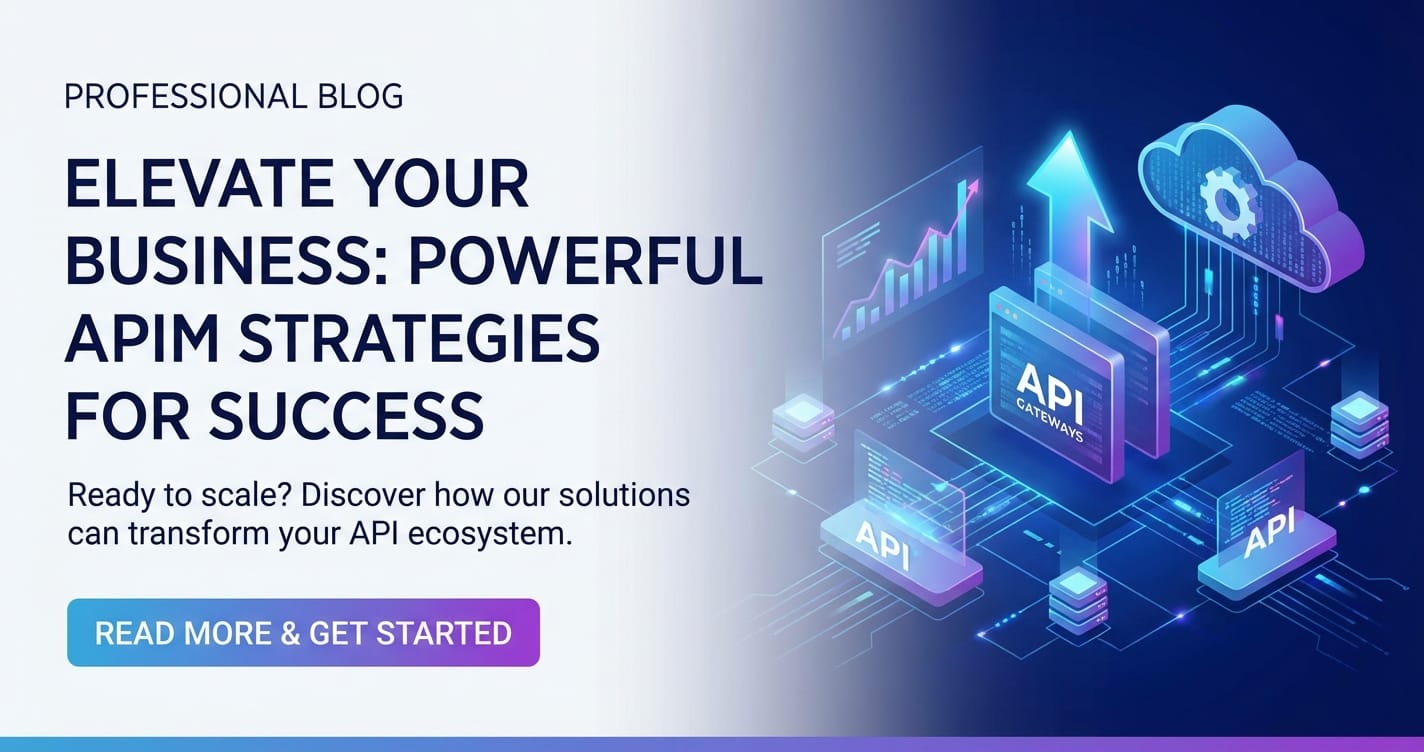
Elevate Your Business: Powerful APIM Strategies for Success



In the ever-accelerating current of the digital age, businesses are constantly seeking new paradigms to innovate, connect, and thrive. The foundational bedrock upon which much of this modern progress rests is the Application Programming Interface, or API. Far from being merely technical connectors, APIs have evolved into strategic assets, serving as the digital glue that binds disparate systems, applications, and services, enabling seamless data exchange and unlocking unprecedented opportunities for collaboration and value creation. However, the proliferation of APIs, while immensely beneficial, also introduces a complex web of challenges related to security, scalability, performance, and discoverability. This is where API Management (APIM) emerges not just as a necessity, but as a critical strategic imperative for any organization aiming to sustain a competitive edge and drive meaningful digital transformation.
This comprehensive exploration delves into the intricate world of APIM, dissecting the core components that underpin a robust and successful API strategy. We will embark on a detailed journey through the architecture and functionality of an API gateway, understanding its pivotal role as the central nervous system for all API traffic. Following this, we will navigate the crucial landscape of API Governance, a disciplined approach to ensuring consistency, security, and quality across an organization's entire API ecosystem. Finally, we will illuminate the transformative power of an API Developer Portal, a crucial interface designed to empower developers, foster community, and accelerate the adoption of an organization's API offerings. By meticulously examining each of these pillars and their synergistic relationship, this article aims to equip business leaders, technology strategists, and developers alike with the insights needed to craft and implement powerful APIM strategies that not only address immediate operational challenges but also lay a resilient foundation for future growth and innovation in an API-first world. The effective mastery of these strategies is not merely about managing technology; it is about strategically leveraging technology to unlock new markets, build stronger partnerships, and ultimately, elevate your business to unprecedented levels of success.
Understanding the Foundation: The Indispensable Role of API Management
API Management (APIM) is a comprehensive discipline that encompasses the entire lifecycle of an API, from its initial design and development through to deployment, versioning, security, monitoring, and eventual deprecation. It is a strategic approach that goes far beyond simply exposing services; it is about cultivating an API ecosystem that is secure, scalable, well-documented, and easy for both internal and external consumers to use. In essence, APIM provides the tools and processes necessary to manage, govern, and publish APIs, ensuring their reliable and efficient delivery to developers and applications. Without a structured APIM strategy, organizations risk fragmentation, security vulnerabilities, inconsistent user experiences, and substantial operational overhead, ultimately hindering their ability to leverage APIs as engines of innovation and growth.
The scope of APIM is vast, touching upon various facets of an organization's technical and business operations. It involves defining clear API strategies that align with broader business objectives, implementing robust security measures to protect sensitive data and prevent unauthorized access, and establishing performance benchmarks to ensure optimal responsiveness and reliability. Furthermore, APIM facilitates the creation of a seamless experience for API consumers by providing comprehensive documentation, intuitive developer tools, and transparent usage analytics. For businesses navigating complex digital landscapes, APIM is not a luxury but a fundamental necessity. It acts as the bridge between technical capabilities and business outcomes, enabling organizations to unlock new revenue streams, foster deeper integration with partners, and accelerate their digital transformation initiatives. By centralizing the management of APIs, organizations gain unparalleled visibility and control, allowing them to make informed decisions about their API landscape, optimize resource allocation, and proactively address potential issues before they impact services or users.
The benefits derived from a well-executed APIM strategy are manifold and far-reaching. Firstly, it significantly accelerates innovation and time-to-market. By providing a standardized, easily consumable set of APIs, developers can rapidly build new applications and services without having to reinvent the wheel, dramatically shortening development cycles. This agility is crucial in today's fast-paced market where competitive advantage often hinges on the speed of innovation. Secondly, APIM enhances data exchange and integration, breaking down traditional data silos within an enterprise and enabling seamless communication between disparate systems. This improved interoperability not only streamlines internal operations but also fosters a more integrated ecosystem with external partners and third-party developers, leading to richer data insights and more comprehensive service offerings.
Thirdly, and perhaps most critically, APIM plays a pivotal role in improving security and compliance. Centralized API management allows organizations to enforce consistent security policies, implement robust authentication and authorization mechanisms, and monitor API traffic for suspicious activities. This proactive approach to security is indispensable in an era of escalating cyber threats and stringent regulatory requirements. Adhering to standards such as GDPR, HIPAA, or PCI DSS becomes significantly more manageable when API access and data flows are meticulously governed. Fourthly, APIM actively fosters collaboration and ecosystem growth. By making APIs discoverable, well-documented, and easy to consume, organizations empower internal teams to collaborate more effectively and external partners to integrate their services more readily. This cultivates a vibrant developer community, which in turn can lead to co-innovation, expanded service offerings, and new business models. Finally, APIM can directly drive new revenue streams. Monetizing APIs, whether through direct subscriptions, tiered access models, or indirect value creation by enabling new product lines, has become a significant strategic avenue for many businesses. A comprehensive APIM platform provides the necessary tools for metering usage, billing, and analytics to support these monetization strategies effectively.
In the grand tapestry of digital transformation, APIM is the thread that weaves together disparate technical components into a coherent, strategic whole. It elevates APIs from mere technical interfaces to powerful business capabilities, enabling organizations to navigate complexity, mitigate risks, and seize new opportunities. Investing in a robust APIM strategy is, therefore, an investment in the future resilience, agility, and competitive success of any enterprise striving to thrive in the digital economy. It is about building an architecture that is not only functional but also future-proof, capable of adapting to evolving market demands and technological advancements while maintaining the highest standards of security and performance.
The Cornerstone of Control: Mastering the API Gateway
At the very heart of any sophisticated API Management strategy lies the API gateway. This critical component serves as a single, centralized entry point for all API calls, acting as a facade to the underlying backend services. Instead of client applications directly interacting with multiple microservices or legacy systems, all requests are routed through the API gateway. This architectural pattern brings a multitude of benefits, transforming a potentially chaotic network of service interactions into a streamlined, secure, and highly manageable system. The API gateway is not merely a traffic director; it is a powerful orchestrator that applies policies, enforces security, and optimizes performance, all while abstracting the complexities of the backend infrastructure from the API consumers.
The core functions of an API gateway are diverse and indispensable. Firstly, it handles routing and load balancing, intelligently directing incoming API requests to the appropriate backend services and distributing traffic across multiple instances to ensure optimal performance and availability. This prevents any single service from becoming a bottleneck and improves the overall resilience of the system. Secondly, and critically, the API gateway is the primary enforcer of security policies. It handles authentication (verifying the identity of the caller) and authorization (determining if the caller has permission to access the requested resource), often integrating with identity providers and OAuth/OpenID Connect mechanisms. This centralized security layer ensures that every API call adheres to defined access rules before reaching the backend, significantly reducing the attack surface.
Furthermore, API gateways are vital for rate limiting and throttling, controlling the number of requests an individual user or application can make within a specified period. This prevents abuse, protects backend services from being overwhelmed by traffic spikes, and ensures fair usage for all consumers. Caching is another powerful feature, allowing the gateway to store responses from backend services and serve subsequent identical requests directly, thereby reducing latency and offloading processing from the backend. The gateway can also perform request and response transformation, modifying data formats, headers, or payloads to ensure compatibility between disparate systems or to mask internal implementation details. Through these comprehensive functionalities, the API gateway acts as a robust shield and an efficient intermediary, enhancing both the security and performance of the API ecosystem.
The criticality of an API gateway cannot be overstated. It provides a centralized control point for all API traffic, offering unparalleled visibility and management capabilities that would be otherwise impossible to achieve across a distributed architecture. This consolidation simplifies monitoring, logging, and analytics, providing a holistic view of API performance and usage patterns. From a security perspective, the gateway serves as the first line of defense, applying crucial threat protection measures like injection prevention and DDoS mitigation before malicious traffic can even reach internal services. It ensures consistent application of security policies across all APIs, minimizing the risk of misconfigurations or vulnerabilities in individual backend services.
Performance optimization is another significant advantage. By implementing caching mechanisms, intelligently routing requests, and providing throttling capabilities, the API gateway ensures a smoother and faster experience for API consumers. This directly translates to improved user satisfaction and better application performance. Moreover, the gateway elegantly decouples backend services from frontend consumers. This abstraction allows backend developers to refactor, update, or even completely replace services without impacting the public API interface, ensuring stability for consumers and agility for developers. This decoupling is particularly beneficial in microservices architectures, where individual services can evolve independently without causing cascading changes across the entire system.
In recent years, the capabilities of API gateways have expanded significantly, embracing advanced features that cater to the evolving demands of modern digital enterprises. One such notable advancement is the integration of AI capabilities directly into the gateway. Platforms like APIPark exemplify this innovation, offering an open-source AI gateway and API management platform that can rapidly integrate over 100 AI models. APIPark provides a unified management system for authentication and cost tracking across these AI models, and crucially, it standardizes the request data format for AI invocation. This standardization means that changes in underlying AI models or prompts do not necessitate alterations in the consuming application or microservices, vastly simplifying AI usage and reducing maintenance costs. This kind of advanced API gateway becomes a powerful tool for businesses looking to leverage artificial intelligence at scale, encapsulating complex AI logic into simple REST APIs for wider consumption. For businesses looking to explore such capabilities, more information can be found at ApiPark.
Furthermore, modern API gateways offer robust support for microservices architectures, facilitating service discovery, circuit breaking, and retry mechanisms to build more resilient distributed systems. They can also handle protocol translation, allowing traditional SOAP services to be exposed as RESTful APIs or vice-versa, bridging the gap between legacy systems and modern applications. Comprehensive versioning management capabilities within the gateway ensure that multiple versions of an API can coexist gracefully, allowing developers to introduce breaking changes without disrupting existing consumers, and providing a controlled deprecation path for older API versions.
Consider a scenario where an e-commerce platform needs to expose its product catalog, order processing, and customer support functionalities as APIs to mobile applications, partner websites, and internal analytics dashboards. Without an API gateway, each client would need to know the specific endpoints and authentication mechanisms for each backend service, leading to a complex and brittle integration. With an API gateway, all clients interact with a single, well-defined endpoint. The gateway handles the authentication tokens, routes the request to the correct microservice (e.g., product catalog service, order service), applies rate limits to prevent abuse, caches frequently accessed product data, and logs all transactions for audit and analytics. If the product catalog service needs to be updated or migrated, the gateway shields the clients from these changes, maintaining continuous service delivery. This powerful orchestration capability underscores why the API gateway is truly the cornerstone of modern API strategies, enabling scalability, security, and an unparalleled level of control over the entire API ecosystem.
Ensuring Order and Quality: The Imperative of API Governance
While an API gateway provides the crucial infrastructure for API traffic management, the efficacy and longevity of an API program are ultimately determined by a robust framework of API Governance. API Governance is a systematic and holistic approach to managing the entire API lifecycle, establishing a clear set of policies, standards, processes, and guidelines that ensure consistency, security, quality, and strategic alignment across all APIs within an organization. It's about bringing order to the potential chaos of a growing API landscape, ensuring that every API, regardless of its purpose or origin, adheres to a predefined set of organizational principles and best practices. Without effective governance, APIs can become inconsistent, insecure, poorly documented, and ultimately, unsustainable, leading to increased technical debt and diminished business value.
The scope of API Governance is broad, covering every stage of an API's existence. It begins at the design phase, dictating how APIs should be structured, named, and versioned to ensure consistency and ease of use. This includes defining clear resource paths, request/response formats, error handling conventions, and authentication mechanisms. During development, governance ensures that coding standards are met, and security vulnerabilities are addressed from the outset. For deployment, it establishes protocols for testing, staging, and production release. Throughout its active life, governance dictates versioning strategies, ensuring smooth transitions and backward compatibility where necessary, and setting guidelines for security protocols to protect data integrity and user privacy. It also mandates the quality and completeness of documentation, making APIs easily discoverable and consumable. Finally, governance outlines the process for deprecation, ensuring that older APIs are phased out gracefully without causing disruption to existing consumers.
API Governance is essential for several compelling reasons. Firstly, it ensures consistency and standardization across all APIs. Without governance, different teams might design APIs in disparate ways, leading to a fragmented and confusing experience for developers. Standardized APIs are easier to understand, integrate, and maintain, significantly reducing the learning curve and improving developer productivity. Secondly, it is paramount for risk mitigation. Effective governance establishes clear security policies, mandating encryption, access controls, and vulnerability testing. This proactive approach helps prevent data breaches, unauthorized access, and compliance failures, which can have severe financial and reputational consequences. Compliance with regulatory frameworks such as GDPR, CCPA, or industry-specific regulations becomes systematically manageable when governance policies are ingrained in the API lifecycle.
Thirdly, API Governance drives operational efficiency and reduces technical debt. By enforcing best practices from design to deprecation, it minimizes errors, improves API reliability, and streamlines maintenance efforts. Consistent design patterns and comprehensive documentation reduce the need for constant support and clarification, freeing up valuable developer resources. Finally, governance fosters a better developer experience, which is crucial for API adoption and ecosystem growth. When APIs are consistent, well-documented, secure, and reliable, developers are more likely to integrate them into their applications, leading to increased usage and value creation. Furthermore, it ensures strategic alignment with broader business goals, ensuring that API investments directly contribute to organizational objectives rather than operating in silos.
The implementation of a robust API Governance framework rests upon several key pillars. The first pillar is the establishment of clear policies and standards. This includes defining design principles (e.g., RESTful conventions, OpenAPI specifications), security policies (e.g., OAuth2, API key management, input validation), data handling policies (e.g., data anonymization, retention), and performance metrics (e.g., latency, error rates). These policies should be documented, communicated, and regularly reviewed to remain relevant.
The second pillar involves tools and processes that automate and enforce these policies. This includes design review processes, where API designs are vetted against established standards before development begins. Automated testing tools can verify adherence to functional, performance, and security requirements. For comprehensive lifecycle management, platforms that offer end-to-end capabilities are invaluable. For instance, APIPark provides robust tools for managing the entire lifecycle of APIs, including design, publication, invocation, and decommission. Such platforms help regulate API management processes, manage traffic forwarding, load balancing, and versioning of published APIs, ensuring that governance policies are not just theoretical but actively implemented and monitored throughout an API's journey.
The third pillar is defining clear roles and responsibilities within the organization. Who is responsible for defining API standards? Who approves new API designs? Who monitors API security? Establishing an API Center of Excellence (CoE) or a dedicated governance team can centralize these responsibilities and ensure consistent oversight. This includes API architects, security officers, documentation specialists, and product managers working in concert. Finally, API Governance is not a one-time setup but a commitment to continuous improvement. Regular audits, feedback loops from developers, and performance reviews are essential to adapt governance policies to evolving technological landscapes and business needs.
Let's consider a practical example. A large financial institution aims to expose various banking services (account information, transaction history, payment initiation) through APIs to third-party fintech partners. Without strong API Governance, different teams might create APIs with inconsistent authentication methods, varying data formats for account numbers, or disparate error codes. This would lead to integration headaches for partners, increase security risks, and slow down innovation. With robust API Governance, the institution establishes clear policies: all external APIs must use OAuth2 for authentication, all account numbers must adhere to a specific ISO standard, error codes must follow a predefined taxonomy, and all data transfers must be encrypted. A design review process ensures new APIs meet these standards, and automated testing validates their security and functionality. The API gateway, operating under these governance rules, enforces rate limits and monitors for suspicious activities. This integrated approach ensures that the financial institution's APIs are not only functional but also secure, compliant, and easy for partners to consume, fostering a trusted and efficient ecosystem. The investment in API Governance is an investment in long-term stability, security, and the strategic value of an organization's digital assets.
APIPark is a high-performance AI gateway that allows you to securely access the most comprehensive LLM APIs globally on the APIPark platform, including OpenAI, Anthropic, Mistral, Llama2, Google Gemini, and more.Try APIPark now! 👇👇👇
Empowering Developers: The Power of an API Developer Portal
Once an organization has established a robust API gateway for managing traffic and instituted comprehensive API Governance for ensuring quality and consistency, the next critical step is to make these powerful APIs easily discoverable, understandable, and consumable by their target audience. This is precisely where an API Developer Portal comes into play. An API developer portal is essentially a self-service website or platform designed to serve as the central hub for all things related to an organization's APIs. It is the primary interface through which developers – whether internal, partners, or third-party – can discover available APIs, learn how to use them, access documentation, test functionalities, manage their applications, and engage with a broader community. In essence, it transforms a collection of technical endpoints into an accessible, user-friendly product.
The purpose of an API developer portal extends far beyond simply hosting documentation; it is about creating an empowering ecosystem that fosters adoption, innovation, and self-sufficiency among developers. It aims to minimize friction in the API consumption process, allowing developers to quickly understand, integrate, and deploy applications leveraging the organization's services without requiring direct, constant intervention from the API providers. This self-service model not only accelerates the time-to-market for new applications but also significantly reduces the support burden on internal teams, allowing them to focus on core development rather than answering repetitive queries.
An effective API Developer Portal is characterized by several key components, each designed to enhance the developer experience. Firstly, it must provide comprehensive and interactive documentation. This is often powered by OpenAPI (Swagger) specifications, which allow for machine-readable API descriptions. The portal should present this documentation in an easily navigable and aesthetically pleasing format, offering interactive capabilities such as "try-it-out" features where developers can make live API calls directly from the documentation to see responses in real-time. This includes detailed explanations of endpoints, parameters, request/response bodies, authentication methods, and error codes.
Secondly, sandbox environments and testing tools are indispensable. A sandbox provides a safe, isolated environment where developers can experiment with APIs without affecting production data or incurring costs. Integrated testing tools, often leveraging the same OpenAPI definitions, allow developers to validate their API calls and troubleshoot issues efficiently. Thirdly, the portal should offer code samples and Software Development Kits (SDKs) in multiple popular programming languages. These pre-built examples and libraries drastically reduce the amount of boilerplate code developers need to write, accelerating integration and reducing the likelihood of errors.
Fourthly, robust API developer portals often include forums, blogs, and community features. These elements foster a sense of community among API consumers, allowing them to ask questions, share solutions, report bugs, and provide feedback directly to the API providers. This bidirectional communication is invaluable for continuous improvement and building a loyal developer base. Fifthly, self-service subscription and access management capabilities are crucial. Developers should be able to register applications, subscribe to APIs, manage their API keys, and track their usage from within the portal. Platforms like APIPark excel in this area, offering features such as "API service sharing within teams," which allows for the centralized display of all API services, making it easy for different departments and teams to find and use the required API services. Furthermore, APIPark enables "API resource access requires approval," allowing for the activation of subscription approval features, ensuring that callers must subscribe to an API and await administrator approval before they can invoke it, preventing unauthorized API calls and potential data breaches. This level of granular control and collaborative sharing is essential for both internal and external developer communities.
Finally, analytics and usage dashboards within the portal provide developers with insights into their API consumption patterns, performance metrics, and quota usage. This transparency helps them optimize their applications and understand the impact of their integrations. For the API provider, these dashboards offer aggregated data on API adoption, popular endpoints, and potential areas for improvement.
The benefits of a well-designed API Developer Portal for businesses are profound. Firstly, it leads to faster adoption of APIs. By making APIs easy to find, understand, and use, the portal removes common barriers to entry, encouraging more developers to integrate with the organization's services. This speed of adoption can be a significant competitive advantage. Secondly, it results in reduced support costs. A comprehensive self-service portal empowers developers to find answers to their questions and troubleshoot issues independently, decreasing the reliance on costly support teams and freeing up internal resources.
Thirdly, a robust portal helps in building and expanding the partner ecosystem. By providing a seamless onboarding experience and all the necessary tools, it encourages external partners and third-party developers to integrate their applications, leading to new collaborative opportunities and potentially new revenue streams. Fourthly, it significantly improves developer satisfaction and loyalty. Developers appreciate well-documented, reliable APIs and a supportive environment. A positive experience fosters loyalty, turning developers into advocates for the platform. Lastly, and perhaps most importantly, an API developer portal is a powerful engine for innovation enablement. By democratizing access to an organization's digital capabilities, it empowers a wider range of developers to build creative new applications and services that the API provider might not have envisioned, opening up new market opportunities and fostering organic growth.
Consider a large enterprise that wants to open its data to external developers for hackathons and partnerships. Without a developer portal, providing access would be a laborious, manual process involving sending out documentation, managing individual API keys, and handling support queries via email. With an API developer portal, the enterprise can host all its APIs, documentation, and sandbox environments in one place. Developers can register themselves, browse available APIs, subscribe to the ones they need (with or without approval, as offered by platforms like APIPark), generate API keys, test their code, and discuss issues in a community forum. This not only streamlines the entire process for developers but also establishes the enterprise as an innovative, developer-friendly organization, enhancing its brand and attracting top talent and partners. A truly effective API developer portal transforms APIs from mere technical interfaces into a thriving product, complete with its own user base, community, and continuous cycle of feedback and improvement, cementing its role as a strategic differentiator in the digital economy.
Integrating APIM Components: A Synergistic Approach
The true power of an API Management strategy emerges not from the isolated implementation of an API Gateway, API Governance, or an API Developer Portal, but from their seamless integration and synergistic operation. Each component plays a distinct yet interconnected role, creating a cohesive framework that maximizes efficiency, security, and innovation across the entire API lifecycle. Imagine these three pillars as interlocking gears, where the smooth operation of one directly influences the effectiveness of the others, driving the overall engine of your digital business forward.
The API Gateway, acting as the frontline enforcer, directly benefits from well-defined API Governance policies. Governance dictates the security standards, rate limits, authentication mechanisms, and data transformation rules that the gateway then rigorously applies to every incoming request. For example, if governance mandates OAuth 2.0 for all public APIs, the gateway is configured to validate OAuth tokens before routing requests. Without governance, the gateway would merely be a technical routing mechanism; with it, it becomes an intelligent policy enforcement point. This integration ensures that every API call adheres to organizational standards, protecting backend systems and sensitive data from vulnerabilities and misuse, while also providing consistent performance and reliability.
Conversely, the policies and standards defined by API Governance are often implemented and monitored through the capabilities of the API Gateway. The gateway’s logging and analytics features provide the crucial data necessary for governance teams to assess API performance, identify potential security breaches, monitor compliance with usage policies, and track overall API health. This feedback loop is vital for the continuous improvement of governance policies, allowing them to adapt to evolving threats and business requirements. The API Gateway, in this sense, provides the operational data that breathes life and relevance into governance frameworks.
The API Developer Portal serves as the primary interface for developers to interact with the APIs managed by the API Gateway, all under the guiding hand of API Governance. The portal hosts the documentation, code samples, and self-service tools that explain how to consume APIs, and these resources directly reflect the governance standards. For instance, the portal’s documentation (often generated from OpenAPI specifications) will detail the exact request formats, authentication methods, and error codes that are enforced by the API Gateway, ensuring consistency between what is documented and what is actually implemented.
Furthermore, the self-service capabilities of the developer portal, such as API key generation and subscription management, are often tightly integrated with the API Gateway. When a developer subscribes to an API through the portal, the gateway is updated to grant the appropriate access permissions and apply specific rate limits for that developer's applications. This seamless flow eliminates manual intervention, accelerates developer onboarding, and ensures that access control is both efficient and compliant with governance policies. Platforms like APIPark, with its features for "independent API and access permissions for each tenant" and "API resource access requires approval," perfectly illustrate how a developer portal interacts directly with the underlying gateway mechanisms to manage access securely and efficiently, providing multi-tenancy support while adhering to strict approval workflows as dictated by governance.
Let's illustrate this synergy with a practical scenario. A logistics company wants to expose an API for tracking shipment statuses to its partners. 1. API Governance dictates that this API must use a specific RESTful design standard, require OAuth2 authentication, have a maximum rate limit of 100 requests per minute per partner, and encrypt all sensitive data in transit. It also mandates comprehensive documentation. 2. The API Gateway is then configured to enforce these governance policies. It validates OAuth2 tokens, routes requests to the backend tracking service, applies the 100-request-per-minute rate limit, and decrypts/encrypts data as needed. It also logs every API call, including successful and failed attempts, and monitors latency. 3. The API Developer Portal provides partners with all the information needed. It hosts the API documentation (generated from the OpenAPI spec, which adheres to governance design standards), explains the OAuth2 authentication flow, provides code samples in various languages, and offers a sandbox environment for testing. Partners can register their applications, request access to the shipment tracking API (which might require approval through the portal, as with APIPark's capabilities), and receive their unique API keys. Once approved, these keys are linked in the API Gateway to their specific rate limits and permissions.
This integrated approach ensures that when a partner uses the API, their requests are securely authenticated and authorized by the gateway according to governance rules. Any attempt to exceed the rate limit is blocked by the gateway. If an issue arises, the logs from the gateway allow the operations team to quickly trace and troubleshoot. The developer portal ensures that new partners can easily discover and integrate the API, while governance provides the overarching framework for quality, security, and strategic alignment. This holistic strategy transforms API management from a collection of discrete tasks into a powerful, coherent system that drives business value, fosters innovation, and maintains the highest standards of security and reliability.
Key API Management Components and Their Synergies
To further clarify the interconnectedness and individual contributions of these critical APIM components, let's examine them in a structured format:
| Component | Primary Role | Key Benefits | Synergistic Interaction with Others |
|---|---|---|---|
| API Gateway | Central entry point for all API traffic | Centralized control, enhanced security, performance optimization, backend abstraction | Governance: Enforces policies (security, rate limits, authentication) defined by governance. Provides data for governance monitoring. Developer Portal: Exposes APIs documented in the portal. Manages access and subscriptions initiated via the portal. Logs usage for portal analytics. |
| API Governance | Defines policies, standards, and processes for APIs | Consistency, security, risk mitigation, operational efficiency, strategic alignment | API Gateway: Provides the rules and configuration parameters for the gateway to enforce. Utilizes gateway monitoring data for policy adherence. Developer Portal: Ensures documentation, examples, and API designs displayed in the portal comply with standards. Dictates approval workflows for API access. |
| API Developer Portal | Self-service hub for API discovery and consumption | Faster adoption, reduced support costs, ecosystem growth, improved developer satisfaction | API Gateway: Serves as the user interface to discover and subscribe to APIs managed by the gateway. Access permissions granted by the gateway are reflected here. Governance: Ensures all API resources, documentation, and tools presented adhere to defined governance standards and security policies. |
This table underscores that while each component has its unique focus, their true strength lies in their ability to function as a unified system, where the output of one component directly informs and empowers the others. This integrated strategy is what truly elevates API Management from a tactical necessity to a powerful strategic enabler for business success.
Conclusion: Orchestrating Success in the API-First Era
In the intricate and ever-evolving landscape of modern business, APIs have transcended their original technical utility to become fundamental strategic assets, driving innovation, fostering collaboration, and creating new revenue streams. The journey through the core components of API Management – the indispensable API gateway, the imperative of API Governance, and the empowering API Developer Portal – reveals a profound truth: success in the API-first era is not achieved through isolated efforts but through a meticulously orchestrated and synergistic strategy. Each component, while powerful on its own, reaches its full potential only when integrated seamlessly with the others, forming a robust and resilient ecosystem capable of propelling digital transformation.
The API Gateway stands as the vigilant sentinel, the central nervous system that manages, secures, and optimizes all API traffic. It is the frontline enforcer of security policies, the intelligent router of requests, and the performance optimizer that ensures a smooth and reliable experience for all API consumers. Its ability to abstract backend complexities, enforce rate limits, and provide real-time monitoring makes it an indispensable infrastructure component for any organization dealing with a growing number of APIs. Without a robust gateway, the API landscape can quickly descend into chaos, rife with security vulnerabilities, performance bottlenecks, and operational nightmares.
Complementing the gateway's operational strength is the disciplined framework of API Governance. This is the strategic compass that guides the entire API lifecycle, from design to deprecation, ensuring consistency, quality, and adherence to security and compliance standards. Governance transforms ad-hoc API development into a structured, predictable, and maintainable process, mitigating risks, reducing technical debt, and aligning API initiatives with broader business objectives. It is the silent architect that ensures every API, regardless of its origin, contributes positively to the organization's strategic vision and maintains the highest levels of trustworthiness and reliability.
Finally, the API Developer Portal emerges as the vibrant marketplace and community hub, the crucial interface that unlocks the true potential of an organization's APIs. By providing comprehensive documentation, interactive tools, sandbox environments, and self-service capabilities, the portal empowers developers to discover, learn, and integrate APIs with unprecedented ease. It fosters an active community, accelerates API adoption, reduces support overheads, and sparks external innovation, turning a collection of technical services into a thriving product ecosystem. The portal is the bridge that connects technical capability with creative application, democratizing access to digital assets and fostering a collaborative environment for growth.
The synergy among these three pillars is the bedrock of a truly powerful APIM strategy. API Governance defines the rules that the API Gateway enforces. The API Gateway operationalizes these rules and provides the data needed to refine governance policies. The API Developer Portal makes the APIs (governed by policies and managed by the gateway) discoverable and consumable, facilitating adoption and collecting feedback that can inform both governance and gateway enhancements. For forward-thinking organizations, leveraging advanced platforms that integrate these components, such as ApiPark – an open-source AI gateway and API management platform – can provide an unparalleled advantage, especially in integrating and managing complex AI models alongside traditional REST services. APIPark’s capabilities in unified API format for AI invocation and end-to-end API lifecycle management demonstrate how a comprehensive platform can streamline operations, enhance security, and drive innovation, allowing businesses to harness the full power of their digital assets.
In conclusion, investing in a holistic API Management strategy is no longer optional; it is a strategic imperative for businesses aiming to thrive in the digital economy. By mastering the API gateway, embracing robust API governance, and empowering developers through an intuitive API developer portal, organizations can build a resilient, scalable, and innovative digital foundation. This integrated approach not only addresses immediate operational challenges but also unlocks new pathways for growth, fosters deeper partnerships, and ensures long-term competitive advantage. The future of business is API-driven, and those who strategically orchestrate their API ecosystem will be the ones to truly elevate their business to unprecedented levels of success and innovation.
Frequently Asked Questions (FAQs)
1. What is the fundamental difference between an API Gateway and an API Management platform?
An API Gateway is a core component within a broader API Management (APIM) platform. The API Gateway primarily acts as a single entry point for API calls, handling routing, authentication, authorization, rate limiting, and other runtime policies. It's the operational muscle. An APIM platform, on the other hand, is a comprehensive suite of tools and services that covers the entire API lifecycle, including design, development, deployment, governance, monitoring, and developer engagement (via a developer portal). So, while an API Gateway focuses on runtime traffic management and security, an APIM platform provides the strategic framework and tools for end-to-end API lifecycle governance and ecosystem cultivation.
2. Why is API Governance so critical, and what are the main consequences of lacking it?
API Governance is critical because it establishes consistent policies, standards, and processes across an organization's API ecosystem. It ensures that APIs are designed securely, developed consistently, and managed effectively throughout their lifecycle. Lacking API Governance can lead to several severe consequences: inconsistent API designs (making them harder to consume), increased security vulnerabilities (due to disparate security implementations), higher operational costs (due to technical debt and maintenance issues), compliance risks (failure to meet regulatory requirements), poor developer experience, and ultimately, a reduced return on investment from API initiatives. It’s about bringing order, quality, and strategic alignment to the API landscape.
3. How does an API Developer Portal directly contribute to business growth?
An API Developer Portal contributes significantly to business growth by accelerating API adoption and fostering an ecosystem of innovation. By providing self-service access to comprehensive documentation, code samples, sandboxes, and community features, it drastically reduces the time and effort for developers (internal, partners, or external) to discover, understand, and integrate with APIs. This leads to faster time-to-market for new applications, expanded partner integrations (driving new revenue streams), reduced support costs, and increased developer satisfaction, which in turn attracts more talent and innovation to your platform. It essentially productizes your APIs, making them attractive and easy to consume.
4. Can an API Gateway also help with integrating Artificial Intelligence (AI) models?
Yes, modern API Gateways are increasingly being designed to facilitate the integration of Artificial Intelligence (AI) models. Some advanced API gateways, like APIPark, function specifically as "AI Gateways." They provide capabilities to quickly integrate numerous AI models, unify their invocation format, manage authentication and cost tracking across them, and even encapsulate custom prompts into simple REST APIs. This allows businesses to abstract the complexity of AI models, making them easily consumable by applications and microservices, thereby accelerating the adoption of AI-powered features without extensive re-engineering.
5. What is the typical deployment time for a comprehensive API Management solution like APIPark, and does it offer commercial support?
The deployment time for a comprehensive API Management solution can vary, but platforms like APIPark are designed for rapid setup. According to its documentation, APIPark can be quickly deployed in just 5 minutes with a single command line. This ease of deployment makes it highly accessible for teams looking to quickly establish an API management infrastructure. Furthermore, while the open-source version addresses basic needs, APIPark does offer a commercial version with advanced features and professional technical support specifically tailored for leading enterprises, ensuring that businesses can scale their APIM capabilities with robust backing.
🚀You can securely and efficiently call the OpenAI API on APIPark in just two steps:
Step 1: Deploy the APIPark AI gateway in 5 minutes.
APIPark is developed based on Golang, offering strong product performance and low development and maintenance costs. You can deploy APIPark with a single command line.
curl -sSO https://download.apipark.com/install/quick-start.sh; bash quick-start.sh

In my experience, you can see the successful deployment interface within 5 to 10 minutes. Then, you can log in to APIPark using your account.

Step 2: Call the OpenAI API.