Enhance AI Security & Performance with LLM Proxy


In an era increasingly defined by the transformative power of Artificial Intelligence, large language models (LLMs) have emerged as pivotal drivers of innovation, reshaping industries from healthcare to finance, customer service to creative content generation. These sophisticated models, capable of understanding, generating, and processing human language with unprecedented nuance, are rapidly being integrated into the core operations of businesses worldwide. However, this profound capability comes with a unique set of challenges. Deploying LLMs at scale in enterprise environments is not merely about invoking an API; it necessitates robust infrastructure to address critical concerns around security, performance, cost management, and operational complexity. This is precisely where the concept of an LLM Proxy, often interchangeably referred to as an LLM Gateway or AI Gateway, becomes not just beneficial, but absolutely indispensable.
An LLM Proxy acts as an intelligent intermediary layer positioned between user applications and the various LLM providers or models. Much like a traditional API Gateway manages and secures access to microservices, an AI Gateway is specifically engineered to handle the unique demands of AI interactions. It serves as a single point of entry and control for all AI-related traffic, offering a comprehensive suite of functionalities designed to fortify security postures, optimize performance metrics, streamline management workflows, and reduce operational overhead. This extensive article will delve deep into the multifaceted ways an LLM Proxy enhances both the security and performance of AI deployments, exploring its core components, advanced features, and the strategic advantages it offers to organizations navigating the complex landscape of AI integration. We will unpack how this crucial piece of infrastructure transforms potential liabilities into reliable assets, ensuring that enterprises can harness the full potential of AI securely, efficiently, and at scale.
The AI Landscape and Emerging Challenges: Navigating the Complexities of LLM Integration
The rapid advancement and widespread adoption of Large Language Models (LLMs) represent a paradigm shift in how businesses operate and innovate. From enhancing customer service through intelligent chatbots to accelerating research with data summarization, and even revolutionizing content creation, LLMs are proving to be extraordinarily versatile tools. Enterprises across diverse sectors are eager to integrate these capabilities into their existing ecosystems, seeking to gain competitive advantages, improve efficiency, and unlock new revenue streams. However, the journey from experimentation to production-grade deployment of LLMs is fraught with intricate challenges that extend far beyond simply calling an API endpoint. These challenges, if not adequately addressed, can significantly hinder the potential benefits of AI, introduce substantial risks, and escalate operational costs. Understanding these complexities is the first step towards appreciating the critical role of an LLM Gateway in modern AI infrastructure.
One of the most pressing concerns in the widespread deployment of LLMs revolves around security. Unlike traditional data processing, interactions with generative AI models introduce novel attack vectors and privacy risks. Organizations often process sensitive proprietary data or personally identifiable information (PII) through LLMs, raising profound questions about data leakage, unauthorized access, and compliance with stringent regulatory frameworks like GDPR, HIPAA, or CCPA. There's the pervasive threat of 'prompt injection,' where malicious users manipulate model behavior to bypass safety guardrails or extract confidential information. Moreover, the lack of robust authentication and authorization mechanisms across disparate LLM providers can lead to uncontrolled access, making it difficult to trace or audit interactions effectively. Ensuring the integrity and confidentiality of data both in transit and at rest, while simultaneously safeguarding against model manipulation, demands a highly sophisticated security layer that goes beyond conventional perimeter defenses.
Beyond security, performance stands as another critical pillar for successful LLM integration. The perceived value of an AI application is often directly correlated with its responsiveness and reliability. High latency in model responses can degrade user experience, leading to frustration and reduced adoption. Furthermore, as AI applications scale, managing the sheer volume of concurrent requests to LLMs becomes a significant hurdle. Ensuring consistent throughput, handling sudden spikes in traffic, and preventing service degradation under heavy load requires intelligent request routing, load balancing, and efficient resource allocation. Without these mechanisms, organizations risk overwhelming their LLM providers, incurring exorbitant costs due to inefficient usage, or experiencing service outages that cripple AI-powered functionalities. The dynamic nature of LLM workloads, varying in complexity and resource intensity, makes static infrastructure incapable of providing the agility and resilience needed for enterprise-grade performance.
Cost management emerges as a silent yet substantial challenge. LLM usage is typically billed based on token consumption, API calls, or computational resources. When an organization utilizes multiple models from various providers—each with its own pricing structure, rate limits, and billing cycles—tracking and optimizing these costs becomes an arduous task. Inefficient prompt engineering, redundant calls, or failing to switch to more cost-effective models for simpler tasks can lead to ballooning expenses that quickly erode the return on investment (ROI) of AI initiatives. Moreover, the lack of centralized visibility into usage patterns makes it difficult to forecast budgets, identify areas of waste, and implement cost-saving strategies across diverse teams and applications. This financial opacity can become a major impediment to scaling AI adoption responsibly.
The inherent complexity of integrating and managing multiple LLMs adds another layer of difficulty. Enterprises often leverage a portfolio of models—some open-source, some proprietary, some specialized—each serving different purposes, exhibiting distinct strengths, and requiring unique API formats and authentication schemes. Developers are then burdened with the task of writing bespoke integrations for each model, managing different API keys, handling varying error responses, and adapting to frequent model updates or version changes. This fragmented approach leads to increased development time, higher maintenance overhead, and a greater risk of integration errors. Furthermore, the absence of standardized interfaces for model invocation and response processing complicates switching between models, performing A/B testing, or implementing fallback strategies when a primary model fails or becomes unavailable.
Finally, observability and compliance present their own set of challenges. Without a centralized mechanism to monitor LLM interactions, troubleshoot errors, and gain insights into model behavior, diagnosing issues can be a slow and frustrating process. Comprehensive logging, metric collection, and tracing capabilities are essential for understanding how models are performing, identifying anomalies, and ensuring that AI applications are operating as expected. From a compliance perspective, the black-box nature of some LLMs, coupled with the processing of sensitive data, necessitates robust auditing trails. Organizations must be able to demonstrate how data is handled, which models were accessed, and what information was generated, aligning with internal governance policies and external regulatory mandates. This auditability is not just good practice; it's often a legal requirement.
In summary, while the allure of LLMs is undeniable, their enterprise-scale deployment is fraught with substantial hurdles related to security, performance, cost, complexity, and governance. These challenges underscore the urgent need for a sophisticated architectural component that can abstract away these complexities, enforce critical policies, and empower organizations to leverage AI with confidence and control. This is the foundational premise upon which the value proposition of an AI Gateway is built.
Understanding LLM Proxy / LLM Gateway / AI Gateway: The Intelligent Intermediary Layer
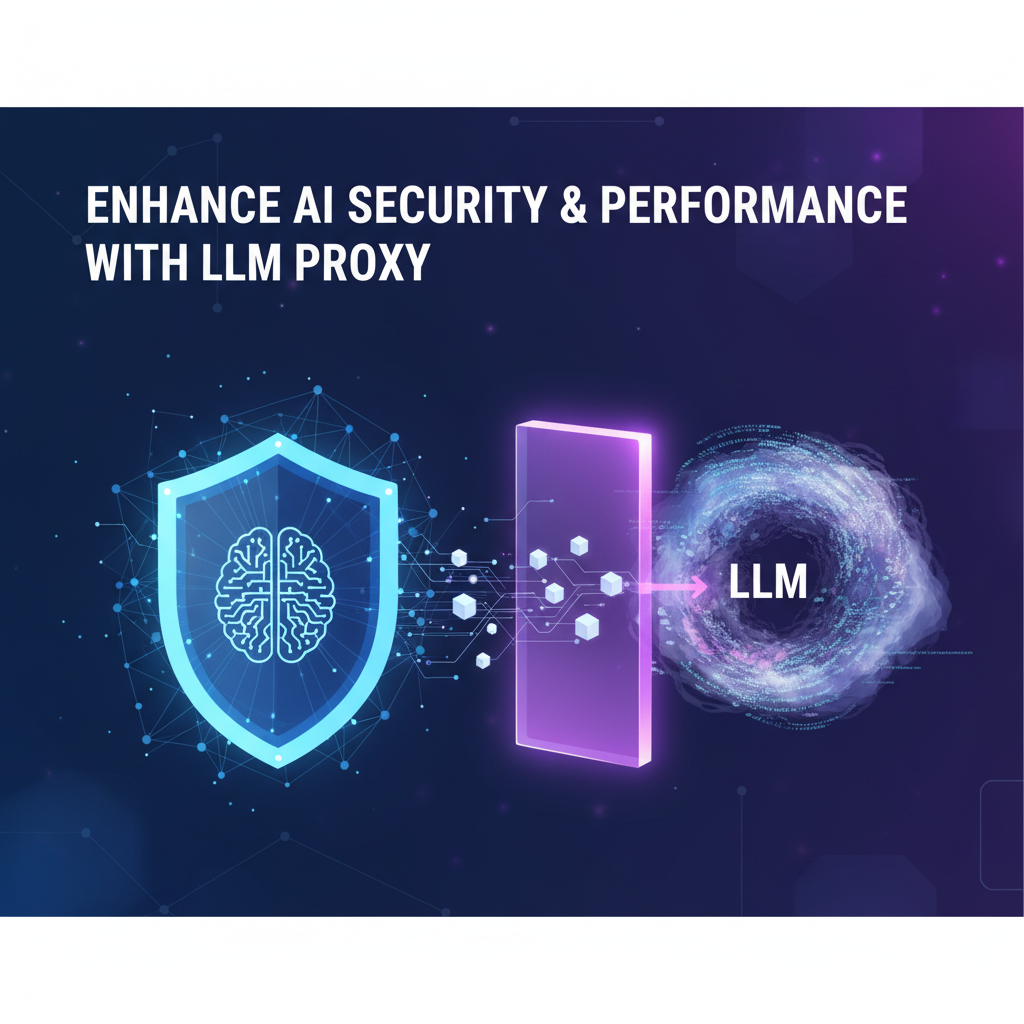
At its core, an LLM Proxy, LLM Gateway, or AI Gateway (terms often used interchangeably to describe a similar technological concept in this context) serves as an intelligent intermediary layer positioned strategically between client applications and the underlying large language models or AI services. Imagine it as a sophisticated control plane and traffic manager specifically designed for the unique demands of AI interactions, much like how traditional API Gateways manage microservices. Instead of applications directly communicating with multiple, disparate LLM APIs, they interact solely with the LLM Gateway, which then intelligently routes, transforms, secures, and optimizes these requests before forwarding them to the appropriate AI backend. This architectural pattern brings a host of benefits, abstracting away complexity and centralizing critical functionalities.
The fundamental purpose of an LLM Gateway is to provide a single, unified, and controlled point of access to all AI models an organization utilizes, regardless of their provider, deployment location, or underlying technology. This abstraction is incredibly powerful. For instance, developers don't need to worry about the nuances of OpenAI's API versus Google's Gemini API, or an internally fine-tuned open-source model like Llama 3. They simply send their requests to the AI Gateway, which then handles the intricate details of translation, authentication, and routing. This significantly simplifies application development, reduces integration time, and future-proofs applications against changes in the AI model landscape. If an organization decides to switch from one LLM provider to another, or even incorporate a new model, the client applications often require minimal to no changes, as long as the gateway maintains a consistent interface.
To fully grasp its significance, let's break down the key functions and components that typically comprise a robust LLM Proxy:
- Request Routing & Load Balancing: One of the primary functions is to intelligently route incoming requests to the most appropriate or available LLM backend. This could be based on various criteria, such as the type of query, the user's access permissions, the cost-effectiveness of a particular model, or the current load on different models. Load balancing capabilities ensure that requests are distributed efficiently across multiple instances of an LLM or even across different providers, preventing any single point of failure and maximizing throughput.
- Authentication & Authorization: The gateway acts as a central enforcer of access policies. It handles authentication, verifying the identity of the requesting application or user, and then authorization, determining what specific LLMs or functionalities that user/application is permitted to access. This centralizes security, making it easier to manage API keys, integrate with existing identity management systems (like OAuth, JWT, or enterprise SSO), and implement granular access controls.
- Rate Limiting & Throttling: To prevent abuse, manage costs, and protect backend LLMs from being overwhelmed by traffic spikes or malicious attacks (like Denial of Service), the gateway enforces configurable rate limits. This ensures fair usage across different applications or users and maintains the stability and responsiveness of the AI infrastructure.
- Caching: For frequently requested or idempotent queries, the LLM Gateway can cache responses. When a subsequent, identical (or semantically similar) request arrives, the gateway can serve the response directly from its cache, significantly reducing latency, offloading the backend LLMs, and saving on token costs.
- Security Policies (Input/Output Validation, Sanitization): This is a critical layer for mitigating AI-specific threats. The gateway can inspect and validate incoming prompts, filtering out potentially malicious content (e.g., prompt injection attempts, harmful language) or sensitive data (e.g., PII, PHI). It can also scrutinize LLM-generated responses before they reach the client, ensuring they adhere to safety guidelines and do not contain undesirable content or sensitive information inadvertently leaked by the model.
- Observability (Logging, Monitoring, Tracing): A comprehensive AI Gateway provides centralized visibility into all LLM interactions. It meticulously logs every request and response, collects performance metrics (latency, error rates, token usage), and supports distributed tracing. This wealth of data is invaluable for debugging, performance optimization, cost analysis, and ensuring compliance.
- Cost Optimization (Token Management, Multi-Provider Routing): By having a holistic view of all LLM traffic, the gateway can implement sophisticated cost-saving strategies. This includes routing requests to the most cost-effective model for a given task, optimizing token usage, or even implementing multi-tiered model access where cheaper, smaller models handle simple queries and more expensive, powerful models are reserved for complex ones.
- Data Transformation & Standardization: Different LLMs may expect different input formats or return responses in varying structures. The LLM Proxy can normalize these interactions, transforming incoming requests into the format expected by the target LLM and standardizing the LLM's response before sending it back to the client. This dramatically simplifies integration for developers and ensures a consistent experience.
- Fallbacks & Retries: In the event that a primary LLM fails to respond, returns an error, or exceeds its rate limits, the gateway can automatically implement retry mechanisms or fall back to an alternative, pre-configured LLM provider or model. This significantly enhances the resilience and fault tolerance of AI applications.
- Versioning: As LLMs evolve rapidly, the gateway can manage different versions of models and prompts, allowing organizations to deploy new iterations without disrupting existing applications, conduct A/B testing, or roll back to previous versions if issues arise.
- Prompt Management: Beyond simply forwarding prompts, an advanced LLM Gateway can offer centralized prompt management, allowing organizations to store, version, and inject prompts dynamically. This ensures consistency across applications, enables easier prompt experimentation, and decouples prompt logic from application code. For example, a platform like APIPark demonstrates this capability by allowing users to encapsulate AI models with custom prompts to create new APIs, such as sentiment analysis or translation services, thereby simplifying AI usage and maintenance.
In essence, the LLM Proxy transforms raw, often disparate LLM APIs into a manageable, secure, high-performing, and cost-optimized service that seamlessly integrates into enterprise architectures. It's the critical missing piece of infrastructure that allows organizations to transition from experimental AI projects to production-ready, scalable, and resilient AI-powered applications, unlocking the full potential of these groundbreaking technologies while mitigating the inherent risks.
Deep Dive into Security Enhancements with LLM Proxy
The integration of Large Language Models into enterprise applications introduces a unique and formidable array of security challenges. Traditional security perimeters and practices, while essential, are often insufficient to address the nuanced threats posed by generative AI. An LLM Proxy, functioning as an AI Gateway, stands as the foremost line of defense, purpose-built to fortify the security posture of AI deployments by implementing a comprehensive suite of protective measures. Its ability to intercept, inspect, and manipulate AI traffic before it reaches the backend models or client applications is what makes it an indispensable security asset.
Data Protection & Privacy: Guarding Sensitive Information
One of the most critical security concerns with LLMs is the handling of sensitive data, including Personally Identifiable Information (PII), Protected Health Information (PHI), or proprietary business secrets. Without proper controls, this data could inadvertently be sent to external LLM providers, processed in regions that don't comply with data residency laws, or even exposed in model outputs. An LLM Gateway provides robust mechanisms to mitigate these risks:
- Anonymization and Redaction: Before any prompt is forwarded to an LLM, the gateway can be configured to automatically identify and redact or anonymize sensitive data. Using advanced pattern matching, regular expressions, or even specialized NLP techniques, it can detect and mask credit card numbers, social security numbers, names, addresses, or medical records, ensuring that the core LLM only processes sanitized input. This proactive approach significantly reduces the risk of data leakage and strengthens compliance.
- Encryption in Transit and At Rest: While standard practice for modern web services, an AI Gateway reinforces end-to-end encryption. It ensures that all communication between client applications, the gateway itself, and the backend LLMs is encrypted using industry-standard protocols (e.g., TLS 1.2/1.3). Furthermore, if the gateway caches responses or logs data, it can enforce encryption at rest, protecting stored information from unauthorized access even if the underlying storage is compromised.
- Data Residency Enforcement: For organizations operating under strict data sovereignty laws (e.g., GDPR in Europe), ensuring that data remains within specific geographical boundaries is paramount. The LLM Gateway can enforce policies that route requests only to LLM providers or model instances hosted in compliant regions, preventing sensitive data from leaving designated territories, thus helping maintain regulatory compliance and trust.
Access Control & Authentication: Regulating Who Can Access What
Uncontrolled access to LLMs can lead to misuse, unauthorized data exposure, and inflated costs. The LLM Proxy centralizes and strengthens access management:
- API Key Management and Integration with IAM: The gateway acts as a single point for managing API keys, client secrets, and other credentials. Instead of individual applications managing keys for multiple LLMs, they simply authenticate with the gateway. The gateway can then integrate with existing Identity and Access Management (IAM) systems (e.g., OAuth 2.0, OpenID Connect, enterprise SSO solutions) to verify user or application identities, making credential rotation and revocation much simpler and more secure.
- Granular Permissions: Beyond simple authentication, the gateway enables fine-grained authorization policies. Different users, teams, or applications can be granted distinct permissions to access specific LLMs, perform certain types of queries, or operate within defined usage limits. For instance, a junior developer might only access a sandbox LLM, while a production application has access to a more powerful, costly model.
- Centralized Authentication: By centralizing authentication, the AI Gateway simplifies auditing and enhances security oversight. All authentication attempts and successful accesses are logged in one place, providing a clear audit trail of who accessed which LLM and when, which is crucial for incident response and compliance.
Threat Mitigation: Defending Against AI-Specific Attacks
LLMs are vulnerable to unique forms of attack, most notably prompt injection. The LLM Proxy is designed to provide a critical layer of defense against these sophisticated threats:
- Input Validation and Sanitization: The gateway can analyze incoming prompts for suspicious patterns or keywords indicative of prompt injection attacks. It can sanitize inputs, removing or neutralizing malicious commands, instructions, or data that aim to hijack the model's behavior, extract confidential information, or generate harmful content. This might involve stripping markdown, escaping special characters, or applying content filtering algorithms.
- Output Filtering: Just as important as validating inputs is filtering outputs. An LLM Gateway can inspect responses generated by the LLM before they are delivered to the client. This prevents the model from inadvertently revealing sensitive training data, generating biased or offensive content, or fulfilling malicious instructions from a successful prompt injection. Policy engines can be configured to detect and block specific types of content, ensuring that all AI outputs align with safety and ethical guidelines.
- Real-time Threat Detection: Advanced AI Gateway solutions can incorporate machine learning models specifically trained to detect anomalous behavior in prompt-response pairs. By analyzing patterns that deviate from normal usage or known attack signatures, these systems can identify and flag potential threats in real time, triggering alerts or automatically blocking suspicious interactions.
- Rate Limiting to Prevent DDoS and Abuse: Malicious actors might attempt to overwhelm an LLM with a flood of requests (Distributed Denial of Service - DDoS) to cause service disruption or exhaust a company's API quota. The gateway's robust rate-limiting capabilities prevent such attacks by blocking excessive requests from a single source or identified malicious IPs, ensuring service availability and protecting against unexpected cost escalations.
Compliance & Auditability: Meeting Regulatory Standards
For many industries, strict regulatory compliance is non-negotiable. An LLM Gateway significantly simplifies the process of meeting these obligations:
- Detailed Logging for Auditing: Every interaction—every prompt sent, every response received, every access attempt, and every policy enforcement—is meticulously logged by the gateway. These comprehensive, immutable audit logs provide an undeniable record of AI usage, which is invaluable for demonstrating compliance during audits, investigating security incidents, and ensuring accountability.
- Policy Enforcement for GDPR, HIPAA, etc.: The gateway can be configured with specific policies that align with various regulatory frameworks. For example, it can automatically redact PHI for HIPAA compliance, enforce data residency for GDPR, or ensure content moderation policies for COPPA. This programmatic enforcement ensures consistency and reduces manual compliance burdens.
- Immutable Logs: Ensuring that audit trails cannot be tampered with is crucial for forensic analysis and legal defensibility. Many AI Gateway solutions offer features like write-once, read-many (WORM) storage for logs or integration with blockchain-based logging solutions to guarantee the integrity and immutability of historical data.
Model Inversion & Data Leakage Prevention: Protecting Model IP and Training Data
While more advanced, an LLM Proxy can also play a role in mitigating risks like model inversion attacks (where an attacker tries to reconstruct training data from model outputs) or direct intellectual property leakage from models:
- Obfuscating Model Specifics: By acting as an intermediary, the gateway can abstract away the specific details of the backend LLM, making it harder for attackers to fingerprint the model or infer its architecture, thus hindering certain types of targeted attacks.
- Controlling Data Flow to and from Models: The gateway controls the precise data points that reach the model and what information is allowed to leave it. This allows organizations to implement strict data egress policies, preventing models from outputting sensitive data or information that could be used to reverse-engineer parts of the training dataset.
In summary, the LLM Proxy transforms from a mere traffic director into a sophisticated security fortress for AI. By centralizing authentication, rigorously validating inputs and outputs, enforcing data privacy policies, and maintaining comprehensive audit trails, an AI Gateway empowers organizations to deploy LLMs with confidence, knowing that their data, models, and intellectual property are robustly protected against an evolving landscape of threats. It's the essential component that enables secure, compliant, and responsible AI innovation at enterprise scale.
Deep Dive into Performance Enhancements with LLM Proxy
Beyond its pivotal role in security, an LLM Proxy or AI Gateway is equally critical for optimizing the performance and reliability of large language model deployments. The responsiveness and scalability of AI applications directly impact user experience, operational efficiency, and ultimately, the business value derived from these advanced technologies. By intelligently managing traffic, caching responses, and implementing sophisticated routing strategies, the LLM Gateway ensures that AI services are not only secure but also consistently fast, available, and cost-efficient.
Latency Reduction: Accelerating AI Responses
Latency is often the primary bottleneck in AI applications. Long response times from LLMs can lead to frustrated users and hinder the real-time capabilities of AI-powered systems. The LLM Proxy employs several strategies to minimize this delay:
- Proximity Routing: For organizations operating globally or with distributed user bases, the gateway can intelligently route requests to the nearest available LLM instance or data center. By minimizing geographical distance, it reduces network latency, ensuring that users receive responses as quickly as possible. This is particularly crucial for interactive AI applications like chatbots or real-time content generation tools.
- Optimized Connection Pooling: Establishing and tearing down network connections for every single LLM request can introduce significant overhead. An AI Gateway maintains persistent connection pools to backend LLMs. This means that once a connection is established, it can be reused for subsequent requests, eliminating the handshake overhead and significantly reducing the per-request latency. This optimization is particularly impactful for high-throughput scenarios.
- Streamlined Request Processing: The gateway itself is designed for high performance. It can strip unnecessary metadata, compress requests, and generally optimize the data packets sent to the LLM, reducing the amount of data transferred and thus accelerating the overall interaction time. Its architecture is often optimized to handle a large volume of concurrent connections with minimal internal processing delay.
Scalability & High Availability: Ensuring Uninterrupted AI Service
As AI applications gain traction, they inevitably face increasing traffic demands. The LLM Gateway is built to handle this growth gracefully, ensuring continuous service availability even under peak loads:
- Load Balancing Across Multiple Instances/Providers: A single LLM instance or provider can become a bottleneck. The gateway can distribute incoming requests across multiple identical LLM instances (horizontal scaling) or even across different LLM providers. If one instance becomes overloaded or fails, requests are automatically redirected to healthy instances, ensuring continuous service and preventing performance degradation.
- Automatic Failover and Retry Mechanisms: In the event of a backend LLM failure, an LLM Proxy doesn't simply return an error. It can be configured to automatically retry the request (potentially with exponential backoff) or to fail over to a pre-configured backup LLM. This inherent resilience mechanism significantly enhances the fault tolerance of AI applications, minimizing downtime and improving overall reliability.
- Horizontal Scaling of the Gateway Itself: To avoid becoming a bottleneck, the AI Gateway itself is designed to be highly scalable. It can be deployed in a cluster, allowing the gateway layer to scale horizontally to match the demands of the incoming AI traffic. This ensures that the control plane can handle massive throughput without introducing its own performance limitations. For instance, platforms like APIPark are engineered for high performance, rivalling Nginx, with capabilities to achieve over 20,000 TPS on modest hardware and support cluster deployment for large-scale traffic.
Caching Strategies: Reducing Redundancy and Cost
Caching is a powerful technique to improve performance and reduce operational costs, particularly for LLM interactions where generating responses can be computationally intensive and billed per token.
- Response Caching for Common Queries: Many AI applications encounter repetitive queries. For example, a customer service chatbot might frequently answer "What are your operating hours?" If the response is static or changes infrequently, the LLM Gateway can store the LLM's answer in a cache. Subsequent identical requests are then served directly from the cache, bypassing the LLM entirely. This drastically reduces response times, conserves LLM API usage (and thus cost), and reduces the load on backend models.
- Semantic Caching for Similar Queries: More advanced LLM Proxy solutions can implement semantic caching. This involves using embedding models or other NLP techniques within the gateway to determine if a new query is semantically similar to a previously cached query. If a sufficiently similar cached response exists, it can be returned, further expanding the benefits of caching beyond exact matches.
- Benefits: The dual benefits of caching are undeniable: significantly faster response times for users (often measured in milliseconds versus seconds) and substantial reductions in API costs, as fewer tokens are consumed from paid LLM services.
Rate Limiting & Throttling: Protecting and Prioritizing Resources
While also a security feature, intelligent rate limiting is crucial for performance and resource management.
- Protecting Backend Models from Overload: LLM providers often have their own rate limits to protect their infrastructure. An AI Gateway can mirror or even pre-empt these limits, preventing applications from hitting the provider's limits, which can result in errors or temporary service blocks. The gateway acts as a buffer, ensuring steady, controlled traffic.
- Ensuring Fair Usage Across Applications/Users: In a multi-tenant environment, the gateway can enforce specific rate limits for different applications, teams, or individual users. This prevents a single resource-hungry application from monopolizing LLM access and degrading performance for others, ensuring equitable distribution of AI resources.
- Configurable Policies: Rate limits can be configured with great flexibility—per minute, per hour, per day, based on IP address, API key, user ID, or even token consumption. This allows organizations to tailor policies to specific use cases and business needs, optimizing both performance and cost.
Cost Optimization through Intelligent Routing: Smart Spending on AI
The flexibility of an LLM Gateway to route requests offers significant opportunities for cost savings without compromising performance.
- Routing to the Most Cost-Effective Model: Different LLMs have varying price points and capabilities. For simple tasks (e.g., rephrasing a sentence, basic summarization), a cheaper, smaller model might suffice. For complex reasoning or highly creative tasks, a more expensive, powerful model might be necessary. The gateway can analyze the incoming prompt's complexity or content and intelligently route it to the most appropriate and cost-effective LLM. This strategy ensures that premium models are only used when truly needed.
- Tiered Model Usage: Organizations can define tiers of LLM access. For standard, high-volume queries, requests might be routed to a budget-friendly model. For high-priority or highly complex queries, they can be directed to a premium, high-performance (and higher-cost) model. The LLM Proxy manages this orchestration seamlessly, transparent to the end application.
- Dynamic Cost-Aware Routing: The gateway can even be designed to dynamically consider real-time pricing and availability across different LLM providers. If one provider temporarily offers a promotional rate or has lower usage costs for a specific type of query, the gateway can intelligently shift traffic to capitalize on these opportunities, driving down overall AI expenses.
In conclusion, the performance benefits derived from an LLM Proxy are multifaceted and profound. By intelligently managing latency, ensuring high availability through robust scaling and failover mechanisms, strategically caching responses, and optimizing resource allocation through advanced rate limiting and cost-aware routing, an AI Gateway transforms a collection of disparate LLM APIs into a unified, high-performing, resilient, and economically optimized AI service. It is the architectural linchpin that allows organizations to confidently scale their AI initiatives, delivering lightning-fast, reliable, and cost-effective AI experiences to their users.
Beyond Security and Performance: Operational Benefits of an AI Gateway
While security and performance are paramount, the strategic advantages of an LLM Proxy extend far beyond these core areas, profoundly impacting the operational efficiency, developer experience, and strategic management of AI initiatives within an enterprise. An AI Gateway acts as a central nervous system for all AI interactions, bringing order, visibility, and agility to what would otherwise be a chaotic and fragmented landscape. These operational benefits translate directly into reduced costs, accelerated development cycles, and enhanced decision-making capabilities.
Unified API Management: Streamlining AI Service Delivery
The proliferation of AI models, each with its own API, documentation, and authentication scheme, can quickly become a management nightmare. An LLM Gateway consolidates this complexity:
- Single Interface for All AI Services: Instead of developers needing to learn and integrate with dozens of different AI APIs, they interact with a single, standardized API exposed by the gateway. This unified interface drastically simplifies development, reduces cognitive load, and minimizes integration errors. It promotes consistency across all AI-powered applications.
- Simplifies Integration for Developers: By abstracting away the underlying complexities of LLMs—their specific request/response formats, authentication methods, and error handling—the gateway provides a clean, consistent API contract. This allows developers to focus on building innovative applications rather than wrestling with low-level AI API integrations, significantly accelerating development cycles.
- Version Management: As LLMs evolve rapidly with new versions and capabilities, managing these changes across an organization can be challenging. The AI Gateway facilitates seamless versioning of AI services. It allows different applications to use different model versions simultaneously, enables gradual rollouts of new models, and simplifies rollbacks, all without impacting existing integrations. This decoupling of application logic from model versions is crucial for continuous innovation.
- Centralized Prompt Encapsulation: A feature exemplified by platforms like APIPark, an AI Gateway can allow users to combine AI models with custom prompts and encapsulate them into new, domain-specific REST APIs. For instance, a complex prompt for sentiment analysis or legal document summarization can be defined once, versioned, and then exposed as a simple REST endpoint. This approach simplifies prompt management, ensures consistency, and allows non-AI specialists to leverage sophisticated AI functionalities through easy-to-use APIs.
Observability & Monitoring: Gaining Unprecedented Insights
Understanding the health, usage patterns, and behavior of AI systems is critical for proactive management and problem-solving. The LLM Proxy offers a centralized vantage point:
- Centralized Logging, Metrics, and Tracing: Every request and response passing through the gateway generates rich telemetry data. This includes detailed logs of prompts, responses, errors, and metadata; performance metrics such as latency, throughput, and error rates; and distributed tracing information that allows developers to follow a request's journey through the entire AI stack.
- Real-time Dashboards: This wealth of data can be fed into real-time monitoring dashboards, providing operations teams and business stakeholders with immediate insights into AI usage, model performance, costs, and potential issues. This proactive monitoring helps identify bottlenecks or anomalies before they escalate into major problems.
- Alerting for Anomalies: The gateway can be configured to trigger alerts based on predefined thresholds or detected anomalies—e.g., sudden spikes in error rates, unusual token consumption, or suspicious access patterns. This ensures that teams are immediately notified of critical events, enabling rapid response and issue resolution.
- Powerful Data Analysis: As highlighted by APIPark, the gateway can analyze historical call data to display long-term trends and performance changes, helping businesses with preventive maintenance and strategic capacity planning. This analytical capability transforms raw data into actionable intelligence, supporting both technical and business decisions.
Developer Experience: Empowering Innovation
A positive developer experience is a key driver of successful technology adoption. The AI Gateway significantly improves this experience for teams working with AI:
- Self-Service Portals: Advanced gateways, such as those provided by APIPark, offer developer portals where teams can browse available AI services, view documentation, generate API keys, and monitor their own usage. This self-service model empowers developers, reduces friction, and frees up operational teams from routine support tasks.
- Standardized API Interfaces: By providing a consistent API interface for all AI models, the gateway drastically reduces the learning curve for new developers. They don't need to master the intricacies of each LLM provider's API; instead, they work with a familiar and uniform interface.
- Simplified Access to Advanced AI Features: The gateway can expose advanced AI functionalities (like specific model parameters, fine-tuning options, or even prompt chain orchestration) through simplified APIs, making complex AI capabilities accessible to a broader range of developers.
Cost Management & Billing: Bringing Financial Clarity to AI
Managing and attributing LLM costs is a complex challenge. An LLM Proxy provides the tools for granular financial control:
- Detailed Cost Tracking per User/Application/Model: By logging every LLM interaction, the gateway can precisely track token usage and associated costs for each individual user, application, or specific LLM. This granular visibility is crucial for understanding where AI budgets are being spent and identifying areas for optimization.
- Budget Enforcement: Organizations can set spending limits at various levels—for specific projects, teams, or individual developers. The gateway can enforce these budgets, automatically alerting or even blocking requests once a predefined threshold is reached, preventing unexpected cost overruns.
- Chargeback Mechanisms: With accurate usage data, enterprises can implement internal chargeback or showback models, attributing AI costs directly to the departments or projects that consume them. This fosters greater accountability and encourages responsible AI resource utilization across the organization.
A/B Testing & Canary Deployments: Iterating with Confidence
Experimentation and continuous improvement are vital for AI development. The AI Gateway simplifies these processes:
- Gradual Rollout of New Models or Prompts: When deploying a new LLM version or an optimized prompt, the gateway allows for canary deployments, routing a small percentage of live traffic to the new version while the majority still uses the stable one. This minimizes risk and allows for real-world testing before a full rollout.
- Comparing Performance of Different Models: The gateway can split traffic between two different LLMs or prompt variations, collecting performance metrics (latency, error rates, even subjective quality scores) for each. This enables data-driven A/B testing to determine which model or prompt delivers the best results for specific use cases.
Prompt Engineering Management: Decoupling and Versioning Prompt Logic
Prompt engineering is an art and a science, and effective management of prompts is essential for consistent AI behavior.
- Centralized Prompt Library: An LLM Gateway can host a centralized library of approved, versioned prompts. This ensures consistency across applications, allows for easier collaboration among prompt engineers, and prevents 'prompt drift' where different parts of an application use slightly varied prompts for the same task.
- Version Control for Prompts: Just like code, prompts can be versioned, allowing organizations to track changes, experiment with variations, and roll back to previous, stable versions if a new prompt introduces unintended behavior or reduces model performance.
- Separation of Concerns: By managing prompts at the gateway level, the actual prompt logic is decoupled from the application code. This means prompt engineers can iterate on and optimize prompts without requiring application developers to redeploy their code, significantly accelerating the prompt optimization cycle.
In essence, an AI Gateway transforms the complex, resource-intensive, and often chaotic world of enterprise AI integration into a structured, manageable, and highly efficient ecosystem. It's the operational command center that empowers developers to build faster, enables operations teams to maintain stability with greater ease, and provides business leaders with the clarity and control needed to maximize the strategic value of their AI investments. This comprehensive governance and control are precisely what platforms like APIPark aim to deliver, providing an all-in-one AI gateway and API developer portal to manage, integrate, and deploy AI services with ease, ensuring both efficiency and scalability.
APIPark is a high-performance AI gateway that allows you to securely access the most comprehensive LLM APIs globally on the APIPark platform, including OpenAI, Anthropic, Mistral, Llama2, Google Gemini, and more.Try APIPark now! 👇👇👇
Implementing an LLM Proxy/AI Gateway: Key Considerations
Choosing and implementing an LLM Proxy or AI Gateway is a strategic decision that requires careful consideration of various factors to ensure it aligns with an organization's specific needs, existing infrastructure, and future AI ambitions. This critical piece of infrastructure will become the backbone of AI operations, so a thorough evaluation is essential.
Deployment Options: Tailoring to Infrastructure Needs
Organizations have diverse infrastructure preferences and regulatory constraints, influencing how an LLM Gateway can be deployed:
- On-Premise Deployment: For enterprises with stringent data residency requirements, strict compliance mandates, or a strong preference for maintaining full control over their infrastructure, an on-premise deployment of the gateway is often the preferred choice. This grants maximum control over data flow, security configurations, and integration with existing internal systems. It also reduces reliance on external cloud providers for sensitive AI workloads. However, it requires internal teams to manage hardware, software updates, and scaling.
- Cloud-Managed Service: Many vendors offer AI Gateway solutions as managed services in the cloud. This option significantly reduces the operational burden, as the vendor handles infrastructure, scaling, maintenance, and security updates. It offers quick deployment, high availability, and often integrates seamlessly with other cloud services. This is ideal for organizations that prioritize speed, ease of management, and leverage cloud-native architectures, though it introduces reliance on a third-party provider and potential concerns around data sovereignty for highly sensitive data.
- Hybrid Deployment: A hybrid approach combines the best of both worlds. Organizations might deploy the core gateway functionalities on-premise for sensitive data processing or specific LLM integrations, while leveraging cloud-managed components for less sensitive tasks, bursting capacity, or global distribution. This allows for flexibility and optimizes for both control and scalability. The gateway could also be deployed within a private cloud or Kubernetes environment, providing cloud-like agility within a controlled infrastructure.
Feature Set Evaluation: Matching Capabilities to Requirements
Not all LLM Proxy solutions are created equal. A thorough evaluation of the feature set against specific organizational needs is crucial:
- Core Gateway Functions: Ensure the solution provides essential functionalities like authentication, authorization, rate limiting, caching, and intelligent routing. These are non-negotiable for production-grade deployments.
- AI-Specific Security Features: Look for advanced capabilities like prompt injection detection, sensitive data redaction, output filtering, and robust auditing specific to LLM interactions. These are critical differentiators from generic API gateways.
- Performance Optimization Tools: Evaluate features such as advanced caching (e.g., semantic caching), intelligent load balancing across multiple LLMs, and automatic failover mechanisms to ensure your performance needs are met.
- Observability and Analytics: Comprehensive logging, real-time monitoring dashboards, alert capabilities, and powerful data analysis tools (like those in APIPark) are vital for understanding usage, costs, and troubleshooting.
- Developer Experience: Consider features like a developer portal, standardized API formats, and prompt management tools that simplify integration and accelerate development.
- Integration Ecosystem: The gateway should seamlessly integrate with your existing identity providers (e.g., Okta, Azure AD), monitoring tools (e.g., Prometheus, Grafana), and CI/CD pipelines.
Scalability Requirements: Future-Proofing AI Infrastructure
The gateway itself must be able to scale to handle projected AI traffic, both current and future:
- Traffic Volume: Estimate the number of AI requests per second, day, or month. The chosen gateway must demonstrate the ability to handle this volume without becoming a bottleneck. Solutions like APIPark, engineered for high performance and cluster deployment, can handle over 20,000 TPS, indicating suitability for large-scale enterprise needs.
- Concurrency: Evaluate how many simultaneous active connections the gateway can manage.
- Elasticity: Can the gateway automatically scale up or down based on demand? This is crucial for handling unpredictable spikes in AI usage.
- Resilience: How does the gateway perform under partial failures? Does it offer self-healing capabilities or automatic recovery?
Open Source vs. Commercial Solutions: Weighing the Trade-offs
The decision between open-source and commercial AI Gateway solutions involves trade-offs:
- Open Source: Offers flexibility, transparency, and no direct licensing costs. It allows for deep customization and community-driven innovation. Projects like APIPark, open-sourced under the Apache 2.0 license, provide a strong foundation for startups and organizations wanting full control. However, open-source solutions often require significant internal expertise for deployment, maintenance, support, and feature development.
- Commercial Solutions: Provide ready-to-use platforms, professional support, extensive documentation, and often advanced features out-of-the-box. They reduce the operational burden and offer SLAs. The downside is licensing costs and potential vendor lock-in. Many commercial solutions also have enterprise versions that build upon open-source foundations, offering advanced features and professional technical support for leading enterprises, as is the case with APIPark.
Security Best Practices for the Gateway Itself: Securing the Control Plane
Given that the LLM Proxy is the central point of control and potential failure for all AI interactions, its own security is paramount:
- Hardening: The gateway infrastructure (servers, containers) must be rigorously hardened, following security best practices. This includes minimizing the attack surface, disabling unnecessary services, and applying security patches promptly.
- Principle of Least Privilege: Configure the gateway and its underlying components with the minimum necessary permissions to perform their functions.
- Regular Security Audits: Conduct regular penetration testing and security audits of the gateway infrastructure and its configuration to identify and remediate vulnerabilities.
- Network Segmentation: Deploy the gateway in a properly segmented network zone, isolated from other sensitive internal systems and exposed only to necessary inbound and outbound connections.
- Secure Configuration Management: Ensure that all gateway configurations, especially those related to authentication, authorization, and sensitive data handling, are stored and managed securely, ideally using secrets management tools.
By carefully considering these factors, organizations can make an informed decision about the most appropriate LLM Proxy or AI Gateway solution that effectively addresses their security, performance, operational, and financial requirements, laying a robust foundation for their AI strategy.
Case Studies & Scenarios: AI Gateway in Action
To truly appreciate the transformative power of an LLM Proxy or AI Gateway, it's helpful to explore concrete scenarios where it delivers tangible benefits across different industries. These examples highlight how the gateway transitions from an abstract concept to a critical piece of infrastructure, solving real-world challenges in security, performance, and operational management.
Enterprise Customer Support: Ensuring PII Protection and Intelligent Routing
Consider a large financial institution implementing an AI-powered customer support chatbot to handle inquiries ranging from account balance checks to loan application status updates. This involves sensitive customer data (PII, financial details) and potentially routing to various LLMs—a general-purpose model for conversational flow, a specialized model for financial queries, and a third for sentiment analysis.
- Challenge: How to ensure PII is never exposed to external LLMs, manage access for different customer service agents, and efficiently route complex queries without compromising speed or privacy.
- AI Gateway Solution:
- Data Redaction: The LLM Gateway automatically scans incoming customer queries, redacting sensitive information like account numbers, social security numbers, or full names before forwarding the sanitized prompt to the LLM. This ensures compliance with financial regulations and customer privacy.
- Intelligent Routing: Based on the intent detected in the sanitized query (e.g., "account balance" vs. "reset password"), the gateway routes the request to the most appropriate backend LLM. Simple FAQs might go to a cheaper, internal model, while complex loan inquiries are directed to a specialized, perhaps more expensive, external LLM.
- Access Control: Customer service agents access the chatbot through applications authenticated by the gateway. The gateway ensures that only authorized agents can initiate certain types of queries (e.g., those requiring specific data access) and tracks all agent-LLM interactions for audit purposes.
- Performance: For common queries, the gateway's caching mechanism provides instant responses, reducing latency and improving customer satisfaction. For more complex queries, load balancing ensures that multiple LLM instances can handle the volume without delays.
Financial Services: Compliance and Auditing for AI-Driven Fraud Detection
A fintech company uses an LLM to analyze transaction data for suspicious patterns that might indicate fraud. The LLM needs to process large volumes of highly sensitive data, and every decision must be auditable for regulatory compliance.
- Challenge: How to securely process vast amounts of financial transaction data with an LLM, ensure regulatory compliance (e.g., Sarbanes-Oxley, GDPR), and provide an immutable audit trail for every AI-driven decision.
- AI Gateway Solution:
- Secure Data Ingress/Egress: The LLM Proxy encrypts all transaction data sent to the LLM and ensures that the LLM's responses (fraud scores, risk assessments) are similarly encrypted upon return. It acts as a secure conduit, controlling precisely what data goes in and what comes out.
- Compliance Enforcement: Policies configured in the AI Gateway dictate data residency, ensuring that transaction data and LLM processing occur within approved geographic regions. It can also enforce specific content filters on LLM outputs to prevent accidental disclosure of sensitive analytical insights.
- Comprehensive Audit Logs: Every single transaction processed by the LLM via the gateway is meticulously logged—including the input data (anonymized if required), the specific LLM model used, its version, the generated output, and the timestamp. These immutable logs serve as indisputable evidence for regulatory audits and forensic investigations, demonstrating due diligence in AI-driven fraud detection.
- Rate Limiting for Model Protection: The gateway protects the backend fraud detection LLM from being overwhelmed by sudden data influxes, ensuring its consistent availability and performance for critical, real-time analysis.
Healthcare: Data Anonymization and Secure Access for Diagnostic LLMs
A hospital system is developing an LLM-powered tool to assist radiologists in analyzing medical images and generating preliminary diagnostic reports. This involves processing patient records (PHI) and ensuring that only authorized medical professionals can access and use the tool, while maintaining strict HIPAA compliance.
- Challenge: Processing highly sensitive patient health information (PHI) with LLMs, ensuring strict anonymization, secure access for authorized personnel, and a robust audit trail.
- AI Gateway Solution:
- Advanced PHI Redaction: The LLM Gateway implements sophisticated redaction algorithms specifically designed for medical terminology, automatically identifying and removing or masking patient names, dates of birth, medical record numbers, and other PHI from clinical notes before they reach the LLM. This is crucial for HIPAA compliance.
- Strong Authentication and Authorization: Only healthcare professionals with verified credentials (integrated with the hospital's existing SSO) are authenticated by the gateway. The gateway then authorizes their access to specific diagnostic LLMs based on their roles and privileges (e.g., a radiologist vs. a medical student).
- Data Residency: The gateway ensures that all LLM processing for diagnostic reports occurs within the hospital's private cloud or approved data centers, strictly adhering to data residency requirements for patient data.
- Versioning and A/B Testing: The gateway allows the hospital to test new versions of diagnostic LLMs or prompt templates with a subset of non-critical cases, comparing their accuracy and performance against existing models before a full rollout, ensuring patient safety and diagnostic quality.
Developer Platforms: Simplifying AI Integration with Unified APIs
Consider a software development company building various applications that require diverse AI capabilities like text summarization, content generation, and code completion. They use multiple AI models from different providers (e.g., OpenAI, Hugging Face, custom fine-tuned models).
- Challenge: The developers face fragmentation, needing to learn multiple APIs, manage numerous keys, and handle different data formats. This slows down development and increases maintenance overhead.
- AI Gateway Solution (e.g., APIPark):
- Unified API Format: A platform like APIPark offers a unified API format for invoking over 100+ AI models. Developers simply call a single endpoint on the gateway, and the gateway handles the internal translation to the specific LLM's API, eliminating the need for bespoke integrations.
- Prompt Encapsulation into REST API: APIPark allows developers to define a custom prompt (e.g., for "summarize this article" or "generate code for X") and encapsulate it with an underlying AI model into a new, easily invokable REST API. This simplifies AI usage, makes complex prompt engineering accessible via a simple API call, and ensures prompt consistency across applications.
- End-to-End API Lifecycle Management: Developers and operations teams can use APIPark to manage the entire lifecycle of their AI-powered APIs, from design and publication to invocation and decommissioning. It streamlines traffic forwarding, load balancing, and versioning of these published APIs, centralizing control.
- API Service Sharing: The platform enables centralized display of all AI services, making it easy for different departments and teams to find and use the required API services, fostering collaboration and reuse.
- Performance and Scalability: As mentioned, APIPark can achieve high TPS, supporting cluster deployment to handle large-scale traffic, ensuring that applications scale seamlessly without performance bottlenecks.
These diverse scenarios vividly demonstrate how an LLM Proxy, functioning as an AI Gateway, is not just a technological luxury but a fundamental necessity for enterprises seeking to responsibly, securely, and efficiently integrate and scale AI into their core operations. It transforms potential liabilities into robust capabilities, empowering organizations to unlock the full potential of large language models.
The Future of LLM Proxy / AI Gateway: Evolving with AI
The landscape of Artificial Intelligence, particularly with Large Language Models, is characterized by its relentless pace of innovation. As LLMs become more sophisticated, multimodal, and deeply integrated into enterprise workflows, the LLM Proxy or AI Gateway must evolve in tandem to meet these emerging challenges and opportunities. The future of these gateways lies in becoming even more intelligent, autonomous, and proactive, transforming into dynamic AI governance and optimization platforms.
Advanced AI-Driven Security: Proactive Threat Intelligence
The next generation of AI Gateways will move beyond reactive threat detection to proactive, AI-driven security measures.
- Predictive Threat Intelligence: Future gateways will leverage advanced machine learning models (perhaps even smaller, specialized LLMs within the gateway itself) to analyze patterns of requests and responses, not just for known attack signatures, but to predict potential novel prompt injection vectors, data exfiltration attempts, or model manipulation strategies. This means identifying threats before they fully materialize.
- Context-Aware Security: Gateways will develop a deeper understanding of the context of each interaction—the user's role, the application's purpose, the sensitivity of the data involved—to dynamically apply security policies. For instance, a query from an unknown IP address asking about sensitive financial data would trigger a much stricter security posture than a routine query from an authorized internal application.
- Autonomous Incident Response: Upon detecting a high-severity threat, the gateway will not just alert but will be capable of autonomous, pre-approved responses, such as automatically blocking specific users/IPs, routing suspicious requests to honeypot models, or initiating immediate data sanitization procedures before human intervention.
Proactive Performance Optimization: Self-Tuning Gateways
Future LLM Proxies will not just manage traffic but will actively learn and adapt to optimize performance and cost in real time.
- Self-Tuning Routing Algorithms: Gateways will employ reinforcement learning or adaptive algorithms to continuously learn the optimal routing strategy across multiple LLMs and providers. This could involve dynamically adjusting routing based on real-time latency, cost fluctuations, model availability, and even the specific content of the prompt, without requiring manual configuration updates.
- Dynamic Caching Strategies: Beyond static and semantic caching, future gateways might implement predictive caching, anticipating common queries based on user behavior patterns or recent trends and pre-fetching responses or pre-computing embeddings.
- Cost-Benefit Analysis in Real-Time: Gateways will perform sophisticated cost-benefit analyses for each request, considering the query's complexity, the required response quality, and the real-time pricing of available models, to select the most economically viable yet performant option.
Enhanced Interoperability: Seamless Integration with New AI Modalities
As AI expands beyond text-based LLMs to multimodal models (handling images, audio, video alongside text), the AI Gateway will become crucial for unifying these diverse interactions.
- Multimodal Request Orchestration: Future gateways will be capable of orchestrating requests across multiple AI models and modalities. For example, a single user request might involve transcribing audio, analyzing an image, and then summarizing the combined context using an LLM, all seamlessly coordinated by the gateway.
- Unified API for All AI: The gateway will continue to abstract away complexity, providing a single, consistent API interface for interacting with any type of AI model—text, image generation, speech-to-text, video analysis—simplifying integration for developers regardless of the underlying AI technology.
- Standardization of AI Model Input/Output: As more models emerge, the gateway will play an even more vital role in standardizing the diverse input and output formats, ensuring seamless compatibility and interchangeability across AI services.
Ethical AI Governance: Gateways Enforcing Fairness and Transparency
The increasing focus on ethical AI and responsible development will see LLM Proxies playing a more direct role in enforcing ethical guidelines.
- Bias Detection and Mitigation: Future gateways could incorporate modules to detect and potentially mitigate biases in LLM outputs before they reach the user. This might involve re-ranking responses, injecting counter-narratives, or flagging potentially biased content for human review.
- Transparency and Explainability (XAI): While LLMs are often black boxes, the gateway can contribute to XAI by logging detailed information about the model chosen, the prompt transformations applied, and confidence scores, providing a more auditable trail for AI decisions.
- Policy Enforcement for Responsible AI: Gateways will be configurable to enforce an organization's responsible AI policies, such as preventing the generation of harmful content, ensuring compliance with fairness metrics, or flagging data usage that violates ethical guidelines. This transforms the gateway into an active guardian of ethical AI deployment.
APIPark in the Future Context
Platforms like APIPark are already laying the groundwork for many of these future capabilities. As an open-source AI gateway and API management platform, APIPark's extensible architecture and focus on unified API formats, prompt encapsulation, and comprehensive lifecycle management position it well to adapt to these evolving demands. Its commitment to quick integration of numerous AI models and detailed logging provides a strong foundation for future AI-driven security, performance, and ethical governance features. The ability to integrate 100+ AI models and offer a unified API format is a crucial step towards multimodal interoperability and simplifying the management of an increasingly diverse AI ecosystem.
In conclusion, the LLM Proxy or AI Gateway is not a static solution but a dynamically evolving piece of critical infrastructure. As AI itself advances, these gateways will become more intelligent, autonomous, and comprehensive, continuing to serve as the indispensable backbone that enables enterprises to harness the full, transformative potential of AI securely, efficiently, ethically, and at an unprecedented scale. They are the guardians and orchestrators of the AI era, ensuring that innovation can thrive responsibly.
Conclusion: The Indispensable Backbone of Modern AI Deployments
In the grand tapestry of technological advancement, the rise of Artificial Intelligence, particularly Large Language Models, marks a monumental shift. These powerful models promise to redefine industries, unlock unparalleled efficiencies, and spark unprecedented innovation. However, the path from promise to practical, enterprise-scale implementation is fraught with challenges—ranging from intricate security vulnerabilities and performance bottlenecks to complex management overheads and burgeoning costs. It is within this intricate landscape that the LLM Proxy, often known as the LLM Gateway or AI Gateway, emerges not merely as a beneficial addition but as an absolutely indispensable component of modern AI infrastructure.
Throughout this extensive exploration, we have delved into the multifaceted capabilities of an AI Gateway, revealing its critical role in shaping a robust, secure, and high-performing AI ecosystem. We have seen how it acts as a central command and control hub, meticulously safeguarding sensitive data through advanced anonymization and encryption, fortifying defenses against novel AI-specific threats like prompt injection, and ensuring strict compliance with evolving regulatory frameworks. By centralizing authentication and authorization, the gateway provides an impenetrable shield, guaranteeing that AI resources are accessed only by authorized entities under precisely defined conditions.
Beyond security, the AI Gateway stands as a beacon of performance optimization. Its intelligent request routing, dynamic load balancing, and sophisticated caching mechanisms dramatically reduce latency, enhance throughput, and ensure the unwavering availability of AI services, even under the most demanding loads. Furthermore, its ability to intelligently route requests to the most cost-effective models and meticulously track usage patterns transforms AI expenditure from an opaque cost center into a transparent, optimized investment.
The operational benefits of an AI Gateway are equally profound. It transforms a fragmented array of disparate LLM APIs into a unified, manageable, and developer-friendly service. By offering capabilities like prompt encapsulation into REST APIs, comprehensive logging and monitoring, and self-service developer portals—as exemplified by innovative platforms like APIPark—it significantly accelerates development cycles, streamlines management workflows, and empowers teams to innovate with agility and confidence. The gateway fosters clarity in cost attribution, facilitates robust A/B testing, and ensures consistent prompt management, thereby providing a holistic governance solution for the entire AI lifecycle.
In essence, an LLM Proxy is the architectural linchpin that transforms the complex, risky, and often chaotic integration of large language models into a controlled, secure, high-performing, and cost-efficient operational reality. It abstracts away the inherent complexities of AI models, empowers developers, protects organizational assets, and ensures that AI initiatives deliver maximum strategic value. As AI continues its relentless evolution, the AI Gateway will similarly advance, becoming more intelligent, autonomous, and proactive, constantly adapting to the new frontiers of AI development and deployment.
For any organization serious about harnessing the full potential of AI today and in the future, investing in a robust LLM Proxy is not just a strategic advantage—it is a foundational necessity. It is the invisible, yet indispensable, backbone that underpins secure, reliable, and scalable AI innovation, ensuring that enterprises can confidently navigate the transformative power of AI to build a smarter, more efficient, and more secure future.
Comparison of Key AI Gateway Features
To illustrate the multifaceted capabilities discussed, here's a comparative table of essential features typically found in a comprehensive AI Gateway:
| Feature Category | Specific Feature | Description | Key Benefit (Security/Performance/Operational) |
|---|---|---|---|
| Security | Data Redaction | Automatically identifies and masks sensitive data (PII, PHI) in prompts before sending to LLMs. | Security: Prevents data leakage, ensures privacy & compliance (GDPR, HIPAA). |
| Prompt Injection Detection | Analyzes incoming prompts for malicious patterns designed to manipulate model behavior. | Security: Protects against model hijacking, data extraction, and unauthorized actions. | |
| Access Control (AuthN/AuthZ) | Verifies user/application identity and grants granular permissions to specific LLMs or functions. | Security: Prevents unauthorized access, centralizes identity management. | |
| Output Filtering | Inspects LLM responses to prevent the generation of harmful, biased, or sensitive content. | Security: Ensures ethical AI outputs, prevents inadvertent data exposure. | |
| Audit Logging | Records every LLM interaction, including prompts, responses, errors, and metadata, for compliance. | Security/Operational: Provides immutable audit trails for compliance, debugging, and accountability. | |
| Performance | Caching (Response/Semantic) | Stores LLM responses for common or semantically similar queries to reduce latency and cost. | Performance: Faster response times, reduced LLM API calls & cost. |
| Load Balancing | Distributes requests across multiple LLM instances or providers to optimize throughput and availability. | Performance: Improves scalability, prevents bottlenecks, ensures high availability. | |
| Rate Limiting | Restricts the number of requests per user/app/IP to prevent overload, abuse, and manage costs. | Performance/Security/Cost: Protects LLMs, ensures fair usage, prevents DDoS, controls spend. | |
| Intelligent Routing | Directs requests to the most appropriate LLM based on criteria like cost, capability, or latency. | Performance/Cost: Optimizes resource usage, reduces costs by using right-sized models. | |
| Operational | Unified API Interface | Provides a single, consistent API endpoint for developers to access various LLMs and AI services. | Operational: Simplifies development, reduces integration time, improves developer experience. |
| Prompt Management | Centralizes storage, versioning, and dynamic injection of prompts, decoupling from application code. | Operational: Ensures prompt consistency, facilitates iteration & A/B testing, faster development. | |
| Monitoring & Analytics | Offers real-time dashboards and historical data analysis for usage, performance, errors, and costs. | Operational: Proactive issue detection, cost optimization, strategic planning, full visibility. | |
| Fallback & Retry Mechanisms | Automatically retries failed requests or switches to alternative LLMs in case of errors or outages. | Operational: Enhances resilience, minimizes downtime, improves reliability. | |
| API Lifecycle Management | Tools to design, publish, invoke, version, and decommission AI-powered APIs effectively. | Operational: Streamlines governance, fosters API reuse, reduces technical debt. |
5 Frequently Asked Questions (FAQs) about LLM Proxy / AI Gateway
1. What is an LLM Proxy, LLM Gateway, or AI Gateway, and why do I need one? An LLM Proxy (also known as an LLM Gateway or AI Gateway) is an intermediary layer positioned between your applications and various large language models (LLMs) or AI services. You need one because it acts as a central control point to enhance security, optimize performance, simplify management, and reduce costs associated with deploying LLMs at scale. It handles crucial tasks like authentication, data redaction, intelligent routing, caching, and monitoring, which are essential for robust and responsible AI integration in enterprise environments.
2. How does an LLM Gateway specifically improve security for AI applications? An LLM Gateway significantly enhances security by implementing several key features: * Data Protection: It can automatically redact sensitive information (PII, PHI) from prompts, encrypt data in transit and at rest, and enforce data residency policies. * Access Control: It centralizes authentication and authorization, allowing for granular permissions for users and applications, and integrates with existing identity management systems. * Threat Mitigation: It detects and prevents prompt injection attacks, filters potentially harmful or leaked content from LLM responses, and uses rate limiting to guard against DDoS attacks. * Compliance & Auditability: It provides comprehensive, immutable audit logs of all AI interactions, crucial for regulatory compliance and incident investigation.
3. Can an AI Gateway help reduce the cost of using LLMs? If so, how? Absolutely. An AI Gateway is a powerful tool for cost optimization: * Intelligent Routing: It can route requests to the most cost-effective LLM available based on the query's complexity, desired quality, or real-time pricing from different providers. * Caching: By caching responses for frequently asked or semantically similar queries, it bypasses the LLM for subsequent requests, saving on token usage. * Rate Limiting: It prevents accidental or malicious over-usage of LLM APIs that could lead to unexpected charges. * Detailed Cost Tracking: It provides granular visibility into token consumption and costs per user, application, or model, enabling better budget management and chargeback mechanisms.
4. What are the key performance benefits of using an LLM Proxy? Performance is a major advantage of an LLM Proxy: * Latency Reduction: Features like proximity routing, optimized connection pooling, and caching significantly speed up response times. * Scalability & High Availability: It uses load balancing across multiple LLM instances or providers, along with automatic failover and retry mechanisms, to ensure your AI services remain available and performant even under heavy load. * Resource Protection: Rate limiting prevents backend LLMs from being overwhelmed, maintaining consistent service quality. * Efficient Resource Utilization: Intelligent routing ensures that requests are sent to the best-suited model, optimizing resource consumption.
5. How does a platform like APIPark fit into the concept of an AI Gateway? APIPark is an excellent example of an open-source AI Gateway and API management platform that embodies many of the concepts discussed. It offers core AI Gateway functionalities like quick integration of 100+ AI models with a unified API format, enabling prompt encapsulation into REST APIs, and providing end-to-end API lifecycle management. APIPark enhances developer experience through a centralized portal and offers robust performance, detailed logging, and data analysis capabilities. It simplifies the secure and efficient management of AI services, making advanced AI more accessible and governable for enterprises.
🚀You can securely and efficiently call the OpenAI API on APIPark in just two steps:
Step 1: Deploy the APIPark AI gateway in 5 minutes.
APIPark is developed based on Golang, offering strong product performance and low development and maintenance costs. You can deploy APIPark with a single command line.
curl -sSO https://download.apipark.com/install/quick-start.sh; bash quick-start.sh

In my experience, you can see the successful deployment interface within 5 to 10 minutes. Then, you can log in to APIPark using your account.

Step 2: Call the OpenAI API.