EOSL RHEL 8: Risks, Solutions & Next Steps
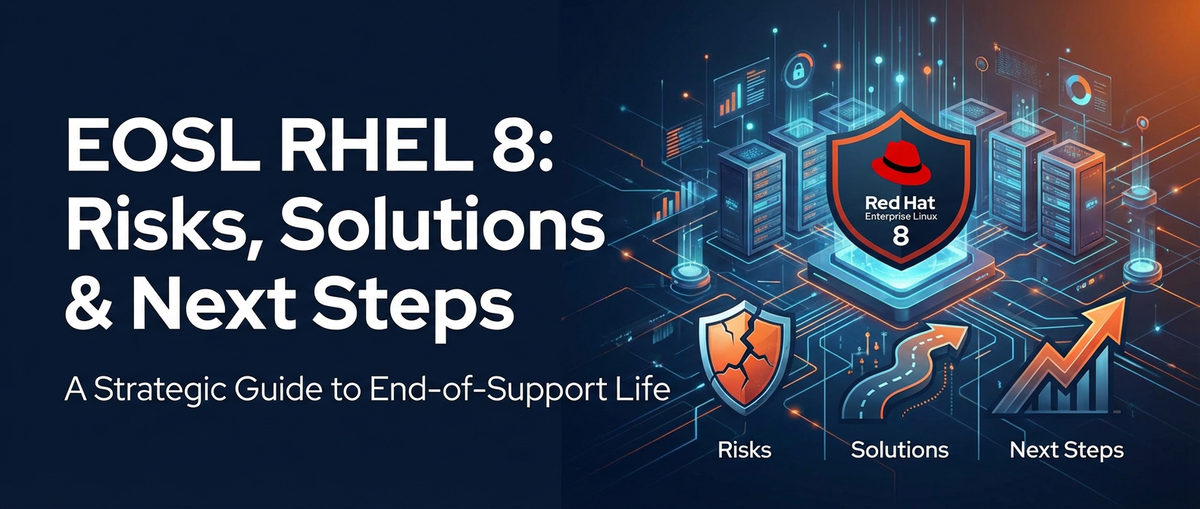


The relentless march of technology dictates that even the most robust and widely adopted operating systems eventually reach their End-of-Service-Life (EOSL). For Red Hat Enterprise Linux (RHEL) 8, a cornerstone for countless enterprise infrastructures globally, this critical juncture is rapidly approaching, or for some, has already arrived depending on specific lifecycle phases and purchased support agreements. RHEL 8 has served as a reliable and secure platform, empowering everything from critical databases to sophisticated application servers. However, the expiry of its supported lifecycle introduces a labyrinth of risks that can profoundly impact an organization's security posture, operational stability, and regulatory compliance. Navigating the EOSL of RHEL 8 is not merely a technical upgrade; it's a strategic imperative that demands a comprehensive understanding of these inherent risks, proactive planning for robust solutions, and a meticulously executed roadmap of next steps to ensure uninterrupted business continuity, bolster security, and pave the way for future innovation. This extensive guide delves deep into the multifaceted challenges posed by RHEL 8's EOSL, offering actionable insights and strategic pathways for a secure and seamless transition.
Understanding RHEL 8 and Its Lifecycle
Red Hat Enterprise Linux has, for decades, stood as a pillar of enterprise computing, renowned for its unparalleled stability, enterprise-grade security features, and a meticulously managed lifecycle that provides predictability for IT departments. RHEL 8, released in May 2019, represented a significant evolution, built on Fedora 28 and introducing notable enhancements such as the adoption of DNF as the default package manager, AppStreams for greater flexibility in developer tools and runtimes, and a refined security posture with technologies like OpenSSL 1.1.1 and system-wide cryptographic policies. Its robust performance, extensive hardware and software compatibility, and the comprehensive support ecosystem provided by Red Hat made it an indispensable choice for mission-critical workloads across diverse industries. From financial institutions managing colossal transaction volumes to healthcare providers safeguarding sensitive patient data, RHEL 8 has been the underlying engine, powering operations with its dependable infrastructure and consistent updates. The decision to deploy RHEL 8 was often driven by its promise of a stable, secure, and long-term supported platform, a promise that holds true throughout its active lifecycle but necessitates proactive planning as it approaches its inevitable end.
The Concept of End-of-Service-Life (EOSL)
End-of-Service-Life (EOSL), often used interchangeably with End-of-Life (EOL), marks the point at which a vendor ceases to provide support, updates, or maintenance for a particular product or software version. For operating systems like RHEL, this means the cessation of security patches, bug fixes, and technical assistance. The concept of a product lifecycle is fundamental to software development and maintenance, allowing vendors to focus resources on newer, more advanced versions while providing a predictable deprecation schedule for older ones. Red Hat, in particular, adheres to a well-defined lifecycle policy for RHEL, typically offering a minimum of 10 years of support from its general availability, which is further segmented into distinct phases.
The RHEL lifecycle comprises several key stages: * Full Support Phase: This initial phase offers full development support, including new features, hardware enablement, security errata, and bug fixes. * Maintenance Support Phase 1: During this stage, critical impact bug fixes and security errata are provided, but new features or hardware enablement are typically limited. * Maintenance Support Phase 2: Focus shifts primarily to critical impact security errata and select urgent bug fixes, with development resources further concentrated on newer releases. * Extended Life Cycle Support (ELS): This is an optional, paid add-on that provides limited, continued support for a defined period beyond the standard 10-year lifecycle, offering crucial security updates for a very restricted set of components and high-priority bug fixes. It acts as a bridge for organizations that require more time to migrate.
For RHEL 8, its standard lifecycle implies that while it enjoyed robust support for a substantial period, it is now transitioning into or nearing the later stages of its lifecycle, leading to its eventual EOSL. Understanding these phases is crucial for organizations to anticipate when their RHEL 8 deployments will cease to receive standard support, compelling them to initiate migration or upgrade strategies before they find themselves operating on an unsupported foundation. The strategic importance of acknowledging these lifecycle phases cannot be overstated, as delaying action until EOSL is fully reached can expose an organization to significant and avoidable risks across its entire IT landscape.
The Inherent Risks of Operating RHEL 8 Beyond EOSL
Operating any enterprise-grade software, especially a foundational operating system like RHEL, beyond its End-of-Service-Life is akin to navigating treacherous waters without a compass or a lifeline. The cessation of vendor support creates a cascade of interconnected risks that can severely compromise an organization's operational integrity, security posture, and legal standing. For RHEL 8, once it fully crosses the EOSL threshold, the implications are far-reaching and necessitate immediate attention from IT leadership and cybersecurity teams. The perceived cost savings of deferring an upgrade are almost invariably dwarfed by the potential financial, reputational, and operational damages that can arise from running unsupported systems.
Security Vulnerabilities: A Wide-Open Door
The most immediate and arguably the most critical risk associated with operating RHEL 8 beyond its EOSL is the complete absence of security patches. In today's hyper-connected and threat-rich digital landscape, new vulnerabilities are discovered and exploited with alarming frequency. Operating an unsupported RHEL 8 system means:
- Exposure to Zero-Day Exploits: Any newly discovered vulnerability, whether in the kernel, system libraries, or bundled applications, will remain unpatched, leaving systems wide open to sophisticated attacks. Attackers actively target unsupported software precisely because they know it lacks modern defenses.
- No Remediation for Known Flaws: Even for vulnerabilities that were discovered and patched in later RHEL versions, the RHEL 8 system will not receive these fixes. This creates a growing backlog of unaddressed security issues, making it a progressively easier target for threat actors leveraging publicly known exploits.
- Increased Attack Surface: As time progresses, the gap between the security posture of an unsupported RHEL 8 system and a currently supported version widens significantly. This expanded attack surface means more entry points for malware, ransomware, data breaches, and other malicious activities.
- Compliance Breaches: For organizations operating under stringent regulatory frameworks such as PCI DSS (Payment Card Industry Data Security Standard), HIPAA (Health Insurance Portability and Accountability Act), GDPR (General Data Protection Regulation), ISO 27001, or SOC 2, running unsupported software is a direct violation. These regulations explicitly mandate that systems receive regular security updates and patches. Failure to comply can result in substantial fines, legal penalties, loss of certifications, and severe reputational damage. An audit would swiftly flag unsupported RHEL 8 systems as a major non-compliance issue, potentially jeopardizing business operations that rely on these certifications.
The absence of a vendor-backed security safety net transforms RHEL 8 systems into ticking time bombs, making them irresistible targets for cybercriminals and significantly increasing the probability and impact of a successful breach. The cost of mitigating a single breach, including forensic investigations, legal fees, regulatory fines, and reputational repair, can astronomically exceed the expense of a timely upgrade or migration.
Operational Instability and Reliability Compromises
Beyond security, the operational stability and reliability of RHEL 8 systems drastically diminish post-EOSL. The cessation of support extends to bug fixes and performance enhancements, leading to a host of operational challenges:
- Unresolved System Errors: Over time, software accumulates bugs. Without vendor support, critical bugs that could lead to system crashes, memory leaks, or erratic behavior will go unaddressed. These issues can degrade performance, increase system downtime, and lead to data corruption.
- Compatibility Issues: As other components of the IT ecosystem evolve—newer hardware, updated drivers, modernized applications, or patched network devices—unsupported RHEL 8 systems will struggle to integrate seamlessly. They may exhibit compatibility conflicts, fail to recognize new peripherals, or be unable to run updated software versions, creating integration bottlenecks and hindering innovation.
- Performance Degradation: Unsupported systems often cannot take advantage of performance optimizations or hardware-specific enhancements developed for newer OS versions. This can lead to suboptimal performance, longer processing times, and an inability to scale efficiently, directly impacting business productivity and user experience.
- Increased Mean Time To Recovery (MTTR): When an issue arises on an unsupported RHEL 8 system, troubleshooting becomes significantly more complex and time-consuming. Without official documentation updates, vendor knowledge bases, or direct support channels, IT teams are left to rely on outdated information or community forums, dramatically increasing the time required to diagnose and resolve critical problems, leading to extended downtime and magnified business disruption.
The cumulative effect of these operational challenges is a brittle and unpredictable infrastructure that struggles to meet modern business demands. The ripple effect can impact customer satisfaction, employee productivity, and the overall efficiency of an organization's digital services.
Compliance and Regulatory Non-Adherence
As previously touched upon, regulatory compliance is a non-negotiable aspect of modern enterprise IT. Running RHEL 8 beyond its EOSL places an organization in direct violation of numerous industry standards and governmental regulations. This exposure to non-compliance is a multifaceted threat:
- Legal Repercussions and Fines: Many regulations, particularly those concerning data privacy and security (e.g., GDPR, HIPAA, CCPA), explicitly require systems to be adequately secured and regularly updated. Failure to maintain software with vendor-provided security patches constitutes a failure to meet these requirements. The resulting fines can range from thousands to millions of dollars, depending on the severity and scale of the breach or non-compliance.
- Reputational Damage: Beyond monetary penalties, public knowledge of an organization operating on unsupported, insecure systems can severely erode trust among customers, partners, and investors. A tarnished reputation can lead to lost business, decreased market share, and long-term brand damage that is exceedingly difficult and costly to repair.
- Loss of Certifications and Business Standing: Organizations that rely on certifications like ISO 27001 for information security management, or PCI DSS for processing credit card transactions, risk losing these critical credentials if their underlying infrastructure is found to be non-compliant due to outdated software. Such losses can halt business operations, disqualify the organization from partnerships, and sever access to vital revenue streams.
- Audit Failures: Regular internal and external audits are standard practice for maintaining compliance. Unsupported RHEL 8 systems are guaranteed to be flagged as critical deficiencies during such audits, necessitating costly remediation efforts under tight deadlines, often under the scrutiny of regulators.
The landscape of compliance is only becoming more complex and unforgiving. Proactively addressing the RHEL 8 EOSL is not just good practice; it is a fundamental requirement for maintaining an organization's legal, financial, and ethical standing in the global market.
Lack of Vendor Support and Expertise Drain
One of the primary benefits of using a commercial operating system like RHEL is access to Red Hat's world-class support and expertise. Post-EOSL, this invaluable resource evaporates:
- No Direct Technical Assistance: When a critical issue arises—a system crash, a performance bottleneck, or an obscure error message—there will be no Red Hat support engineers to consult. IT teams will be left to their own devices, attempting to diagnose and resolve complex problems without official guidance or escalation paths.
- Diminishing Community Support: While open-source communities often provide support for older software versions, the focus naturally shifts to newer releases. The pool of knowledgeable individuals actively supporting an EOSL version of RHEL will shrink over time, making it harder to find solutions to niche or complex problems.
- Impact on Critical Incident Resolution: In a crisis, timely resolution is paramount. The lack of vendor support significantly prolongs the Mean Time To Resolve (MTTR) for critical incidents, exacerbating the impact of outages and potentially leading to catastrophic business interruptions.
- Internal Knowledge Gaps: Relying solely on internal expertise for unsupported systems can lead to knowledge silos and a drain on internal resources. Instead of focusing on strategic initiatives, highly skilled engineers may be tied up trying to fix problems that would be trivial with vendor support. Furthermore, attracting and retaining talent for managing outdated systems becomes increasingly difficult as professionals seek opportunities to work with modern technologies.
The reliance on an unsupported RHEL 8 environment transforms every operational challenge into a potentially existential threat for IT departments, straining resources and diverting focus from innovation to mere survival.
Software Compatibility and Ecosystem Drift
The technology ecosystem is in constant flux, with new applications, frameworks, and tools emerging rapidly. Operating RHEL 8 beyond its EOSL creates significant compatibility hurdles:
- Inability to Run Modern Applications: New enterprise applications, databases, and middleware are developed and tested against current operating system versions. An unsupported RHEL 8 system may lack the necessary libraries, kernel features, or compilers to run these modern applications, effectively becoming a technological island.
- Dependency Hell: Integrating unsupported RHEL 8 systems with newer components often leads to "dependency hell," where conflicting library versions or unmet requirements prevent software from functioning correctly. This can create a fragile and complex environment that is difficult to maintain and prone to unexpected failures.
- Integration Challenges with Cloud and Containerization: Modern IT strategies heavily leverage cloud computing, containerization (Docker, Kubernetes), and microservices architectures. Unsupported RHEL 8 may not fully support the latest versions of container runtimes, orchestration tools, or cloud agents, hindering an organization's ability to adopt contemporary DevOps practices and cloud-native solutions.
- Vendor End-of-Life for Third-Party Software: It's not just the OS that reaches EOSL. Many third-party applications, databases, and development tools will also cease supporting RHEL 8 once it goes unsupported, forcing organizations into a difficult position where they might be running multiple layers of unsupported software. This creates a multiplicative effect on risk.
The drift of the technology ecosystem leaves unsupported RHEL 8 systems increasingly isolated and incompatible, stifling innovation and creating significant technical debt that becomes progressively harder and more expensive to repay.
Increased Total Cost of Ownership (TCO)
While the immediate reaction to an EOSL announcement might be to defer upgrades to save money, operating RHEL 8 beyond its supported lifecycle almost invariably leads to a higher Total Cost of Ownership (TCO) in the long run. The "savings" are illusory and quickly overshadowed by escalating hidden costs:
- Higher Operational Overhead: Managing unsupported systems requires more manual effort, custom workarounds, and increased staff time devoted to troubleshooting and patching, where possible. This translates to higher labor costs and less time for strategic initiatives.
- Cost of Security Incidents: As detailed, the risk of security breaches skyrockets. The financial impact of a breach—including downtime, data recovery, legal fees, regulatory fines, and reputational damage—can easily dwarf any perceived savings from delaying an upgrade.
- Lost Productivity Due to Downtime: Increased instability and the difficulty of resolving issues on unsupported systems lead to more frequent and prolonged outages. Each minute of downtime can translate to significant revenue loss, particularly for critical business applications.
- Opportunity Cost: Resources tied up in maintaining outdated, unsupported systems cannot be utilized for innovation, digital transformation, or improving competitive advantage. This represents a substantial opportunity cost, where the organization misses out on potential gains from adopting modern, efficient technologies.
- Potential for Extended Life Cycle Support (ELS) Costs: While ELS offers a temporary reprieve, it is an additional paid service and does not provide the full benefits of a current RHEL version. It is a stop-gap measure that adds to the TCO without solving the fundamental problem of an aging infrastructure.
The cumulative effect of these factors ensures that delaying an RHEL 8 EOSL migration is a false economy, ultimately costing the organization far more than a planned and proactive upgrade. The following table summarizes the key risks associated with operating RHEL 8 beyond its EOSL:
| Risk Category | Specific Risks & Implications APIPark’s strength lies not only in its features but also in its architectural flexibility. It's designed for rapid deployment, capable of being up and running with a single command line, highlighting its ease of adoption even for complex enterprise environments undergoing significant infrastructural shifts. The open-source nature under Apache 2.0 further ensures transparency, community engagement, and adaptability, allowing organizations to tailor the platform to their specific needs without vendor lock-in.
Finally, for organizations that require beyond the open-source offerings, APIPark provides a commercial version with advanced features and professional technical support. This layered approach ensures that whether an organization is a startup with basic API needs or a large enterprise with complex governance requirements, APIPark offers a viable and scalable API management solution.
By strategically implementing a robust API gateway like APIPark, enterprises can effectively decouple their client applications from the ever-changing backend infrastructure. This provides a stable, secure, and highly performant API layer, acting as an indispensable abstraction layer and a control point, ensuring that even as core operating systems like RHEL 8 transition to newer versions or entirely different platforms, business-critical services remain accessible, secure, and uninterrupted.
APIPark is a high-performance AI gateway that allows you to securely access the most comprehensive LLM APIs globally on the APIPark platform, including OpenAI, Anthropic, Mistral, Llama2, Google Gemini, and more.Try APIPark now! 👇👇👇
Next Steps and Long-Term Strategy
Successfully navigating the RHEL 8 EOSL requires more than just identifying risks and selecting solutions; it demands a meticulously planned and executed strategy. This involves not only addressing the immediate challenge but also establishing a framework for future-proofing the IT infrastructure. Proactive planning and a commitment to continuous improvement are paramount.
Formulate a Detailed Project Plan
A comprehensive project plan is the cornerstone of any successful migration. This plan must be granular, covering all aspects from initial assessment to post-migration review:
- Phased Approach: Break down the migration into manageable phases. Prioritize critical applications and systems for early migration to mitigate the highest risks first. A phased approach allows for learning, adjustments, and reduces the overall risk of a 'big bang' migration.
- Milestones and Timelines: Define clear, achievable milestones with realistic timelines. This helps in tracking progress, managing expectations, and holding teams accountable. Ensure buffer periods are included for unforeseen challenges.
- Responsibility Matrix (RACI): Clearly assign roles and responsibilities using a RACI matrix (Responsible, Accountable, Consulted, Informed). This ensures clarity, avoids duplication of effort, and improves communication within the project team and with stakeholders.
- Contingency and Rollback Plans: For every migration step, have a well-defined contingency plan in case of unexpected issues and a detailed rollback strategy. Thorough testing of rollback procedures in a non-production environment is critical to ensure data integrity and minimize downtime if a rollback becomes necessary.
- Communication Plan: Establish a clear communication strategy to keep all stakeholders—from executive leadership to end-users—informed about progress, potential impacts, and planned downtime. Transparency helps manage expectations and minimizes resistance.
Invest in Continuous Learning and Skill Development
Technology evolves rapidly, and an EOSL event serves as a stark reminder of the need for continuous skill development within IT teams. Investing in training and education for staff is crucial for a smooth transition and future agility:
- Training for RHEL 9 (or target OS): Ensure that system administrators, developers, and support staff are proficient with the new operating system version or alternative distribution. This includes training on new features, configuration differences, and updated best practices.
- Cloud Technologies: If cloud migration is part of the strategy, invest in certifications and training for public cloud platforms (AWS, Azure, GCP), covering areas like cloud architecture, security, cost management, and cloud-native services.
- Containerization and Orchestration: For organizations adopting containerization, provide extensive training on Docker, Kubernetes, and associated tools. This includes understanding container deployment, management, security, and integration within existing CI/CD pipelines.
- DevOps and Automation Tools: Upskill teams in DevOps methodologies and automation tools (e.g., Ansible, Terraform, Puppet, Chef, Git). This will be critical for managing infrastructure as code, automating deployments, and streamlining operations in the new environment.
Empowering staff with the latest skills reduces reliance on external consultants in the long term, fosters internal expertise, and accelerates the adoption of modern IT practices.
Embrace Automation
Automation is no longer a luxury but a necessity for managing complex enterprise IT environments and ensuring efficient, repeatable, and error-free operations. Leveraging automation significantly streamlines the migration process and improves ongoing management:
- Infrastructure as Code (IaC): Adopt IaC principles using tools like Terraform or Ansible to define, provision, and manage infrastructure resources. This ensures consistency, reduces manual errors, and makes infrastructure reproducible and auditable.
- Automated Testing: Implement robust automated testing frameworks for applications and infrastructure. This includes unit tests, integration tests, performance tests, and security scans that can be run automatically before and after migration to validate functionality and performance.
- CI/CD Pipelines: Integrate migration steps into Continuous Integration/Continuous Deployment (CI/CD) pipelines where feasible. Automating builds, tests, and deployments reduces human intervention, speeds up the process, and improves release quality.
- Configuration Management: Use configuration management tools (e.g., Ansible, Puppet, Chef) to automate the deployment and maintenance of operating system configurations and application settings. This ensures uniformity across environments and simplifies ongoing patching and updates.
Automation not only accelerates the migration but also forms the foundation for a more agile, resilient, and cost-effective IT infrastructure post-transition.
Regular Review and Optimization
The migration process doesn't end with the final system switchover. A commitment to ongoing review and optimization is essential to ensure the new environment performs optimally and remains secure:
- Post-Migration Review: Conduct a thorough post-migration review to assess the success of the project against defined metrics. Document lessons learned, identify areas for improvement, and celebrate successes.
- Performance Tuning: Continuously monitor the performance of applications and infrastructure in the new environment. Identify bottlenecks and perform tuning to optimize resource utilization, response times, and overall efficiency.
- Security Audits: Regular security audits, vulnerability scanning, and penetration testing of the new RHEL 9 (or alternative OS) environment are critical. This ensures that security configurations remain robust and any new vulnerabilities are promptly identified and remediated.
- Cost Optimization: For cloud migrations, continuously monitor cloud spending and optimize resource allocation to avoid unnecessary costs. Leverage cloud provider tools and best practices for cost management.
- Feedback Loops: Establish feedback mechanisms from developers, operations teams, and end-users to continuously refine and improve the new environment and processes.
This iterative approach to review and optimization ensures that the benefits of migration are fully realized and the infrastructure continues to meet evolving business needs.
Future-Proofing Infrastructure
The RHEL 8 EOSL event provides a valuable opportunity to not just upgrade but to fundamentally rethink and future-proof the organization's infrastructure strategy. This involves building resilience and agility into the core architecture to minimize the impact of future technology changes:
- Planning for Subsequent EOSL Events: Incorporate regular OS lifecycle management into annual IT planning. Establish processes and budgets for proactive upgrades and migrations, preventing future EOSL events from becoming crises.
- Adopting Hybrid and Multi-Cloud Strategies: Design infrastructure to be flexible and portable across on-premises and multiple cloud environments. This reduces vendor lock-in, improves disaster recovery capabilities, and offers greater choice for workload placement.
- Container-First Approaches: Where appropriate, prioritize containerization for new applications and modernize existing ones. This decouples applications from the underlying OS, making future OS migrations simpler and less disruptive.
- Microservices Architecture: Embrace microservices to break down monolithic applications into smaller, independently deployable services. This enhances agility, scalability, and resilience, and allows individual services to be updated or migrated without impacting the entire application.
- Strong Governance and Policy Enforcement: Implement robust IT governance frameworks, including policies for software lifecycle management, security, compliance, and cloud resource provisioning. This ensures consistency and reduces risk across the entire IT estate.
By adopting these long-term strategic initiatives, organizations can transform the RHEL 8 EOSL challenge into a catalyst for building a modern, resilient, and agile IT infrastructure that is well-prepared for the future.
Conclusion
The End-of-Service-Life for Red Hat Enterprise Linux 8 marks a critical inflection point for organizations worldwide. While RHEL 8 has undeniably served as a stable and secure workhorse for enterprise IT, operating it beyond its supported lifecycle introduces a gauntlet of severe risks, ranging from crippling security vulnerabilities and operational instability to profound compliance breaches and soaring hidden costs. The illusion of saving resources by deferring action is quickly shattered by the potential for catastrophic financial, reputational, and operational damages that an unsupported environment invites.
However, this imminent challenge also presents a powerful opportunity for strategic transformation. By understanding the gravity of the risks, organizations can embark on a proactive journey towards robust solutions. Whether opting for a direct upgrade to RHEL 9, migrating to a compatible Linux distribution, or embracing the transformative potential of containerization and cloud-native architectures, the core principle remains: action is imperative. A successful transition is predicated on meticulous planning, a deep understanding of application dependencies, rigorous compatibility testing, and a steadfast commitment to security throughout the migration process.
Crucially, in this era of complex, distributed architectures and rapid technological shifts, the role of modern IT tools cannot be overstated. The strategic deployment of an API gateway emerges as an indispensable component for abstracting backend complexities, ensuring seamless service continuity, and maintaining a strong security posture during and after such significant infrastructure changes. Platforms like APIPark, with their comprehensive API lifecycle management, robust traffic routing, and advanced security features, empower enterprises to effectively manage their diverse service landscape, safeguarding critical business operations even as the underlying operating system infrastructure evolves. By leveraging such powerful api management solutions, organizations can decouple their frontend applications from the backend chaos of a migration, providing a stable, secure, and performant api layer that truly future-proofs their digital services.
Ultimately, the RHEL 8 EOSL is not just a technical problem to be solved; it is a strategic moment to re-evaluate, modernize, and fortify the entire IT infrastructure. The time for deliberation is over; the time for decisive action, meticulous planning, and leveraging modern architectural solutions is now. By embracing these next steps with foresight and commitment, organizations can not only mitigate the impending risks but also emerge with a more resilient, secure, and agile foundation ready to drive future innovation and competitive advantage. Procrastination is no longer an option; the journey towards a secure and supported future for your RHEL 8 workloads must begin today.
5 Frequently Asked Questions (FAQs)
1. What does EOSL for RHEL 8 specifically mean for my organization?
EOSL (End-of-Service-Life) for RHEL 8 signifies that Red Hat will no longer provide standard security updates, bug fixes, or technical support for that version of the operating system. For your organization, this translates into immediate and significant risks, including heightened vulnerability to cyberattacks due to unpatched security flaws, increased operational instability from unresolved bugs, challenges with software and hardware compatibility as the broader ecosystem evolves, and potential non-compliance with industry regulations (e.g., PCI DSS, HIPAA, GDPR). Operating RHEL 8 beyond its EOSL will make your systems a prime target for exploits and can lead to costly downtime, data breaches, and legal penalties, ultimately resulting in a higher Total Cost of Ownership (TCO) than a planned upgrade.
2. What are my primary options for addressing RHEL 8 EOSL?
You have several strategic pathways to address the RHEL 8 EOSL, each with its own considerations: 1. Upgrade to RHEL 9 (or a later supported RHEL version): This is the most direct path, offering continued vendor support, the latest features, and improved security. This can be an in-place upgrade or a clean reinstallation and migration of applications. 2. Migrate to an alternative Linux distribution: Options like AlmaLinux, Rocky Linux (RHEL derivatives), or even Ubuntu/Debian, could be considered. This requires evaluating compatibility, support models (community vs. commercial), and the learning curve for your IT staff. 3. Containerization and Cloud Migration: Decouple applications from the underlying OS by containerizing them (e.g., Docker, Kubernetes) and deploying them on a supported OS or migrating workloads to cloud platforms (IaaS, PaaS), potentially leveraging managed services that abstract OS management. 4. Extended Life Cycle Support (ELS): As a temporary bridge, Red Hat offers ELS, providing limited security patches and critical bug fixes for a defined period beyond standard support. This is a short-term solution for systems that cannot be immediately migrated, but it comes at an additional cost and is not a substitute for a full upgrade.
3. How can an API Gateway help me during the RHEL 8 EOSL migration?
An API gateway plays a crucial role in mitigating disruption during an RHEL 8 EOSL migration by acting as an intelligent intermediary for all API traffic. It abstracts the underlying infrastructure, allowing you to: * Seamlessly Route Traffic: Direct traffic to either your old RHEL 8 systems or new RHEL 9/alternative OS environments without clients needing to know the backend changes. This enables blue/green or canary deployments. * Maintain Security: Centralize authentication, authorization, rate limiting, and threat protection at the gateway layer, ensuring a consistent security posture even if different backend systems have varied security configurations. * Manage API Versions: Effortlessly manage different API versions as you migrate and update applications on newer operating systems. * Monitor and Analyze Performance: Gain critical insights into API usage and performance, helping to validate the success of the migration and troubleshoot any issues proactively. By using an API gateway, such as APIPark, you can ensure business continuity, minimize downtime, and reduce the complexity of integrating services across disparate environments during a major OS transition.
4. What are the biggest challenges to expect during an RHEL 8 migration, and how can I prepare?
The biggest challenges during an RHEL 8 migration typically include: * Application Compatibility: Ensuring all your critical applications, custom scripts, and third-party software run correctly on the new OS version. * Dependency Management: Resolving conflicts or ensuring availability of necessary libraries and packages. * Data Migration: Securely and efficiently transferring data without loss or corruption. * Downtime Minimization: Planning the migration to reduce impact on business operations. * Resource Allocation: Securing sufficient budget, skilled personnel, and time for the project. To prepare, you should: * Conduct a comprehensive inventory of all RHEL 8 instances, applications, and their dependencies. * Perform rigorous compatibility testing in a dedicated staging environment for all applications. * Develop a detailed project plan with clear phases, milestones, rollback procedures, and a communication strategy. * Invest in staff training for the new OS version and relevant technologies. * Leverage automation tools (IaC, CI/CD) to streamline processes and reduce manual errors.
5. Is it safe to temporarily operate RHEL 8 beyond its EOSL while planning my migration?
While it might seem convenient to run RHEL 8 temporarily beyond its EOSL, it is inherently unsafe and strongly discouraged. Each day an unsupported system operates, it accumulates unpatched security vulnerabilities, making it an increasingly attractive and vulnerable target for cyberattacks. The risk of a major security breach, data loss, or operational disruption escalates significantly. If you absolutely cannot migrate immediately, subscribing to Red Hat's Extended Life Cycle Support (ELS) program can provide a temporary reprieve by offering limited security updates and critical bug fixes for a defined period. However, ELS is a short-term, stop-gap measure and not a long-term solution; it should only be used to buy your organization time to execute a full migration plan to a fully supported RHEL version or alternative platform. Proactive planning and rapid execution are always the safest and most cost-effective long-term strategies.
🚀You can securely and efficiently call the OpenAI API on APIPark in just two steps:
Step 1: Deploy the APIPark AI gateway in 5 minutes.
APIPark is developed based on Golang, offering strong product performance and low development and maintenance costs. You can deploy APIPark with a single command line.
curl -sSO https://download.apipark.com/install/quick-start.sh; bash quick-start.sh

In my experience, you can see the successful deployment interface within 5 to 10 minutes. Then, you can log in to APIPark using your account.

Step 2: Call the OpenAI API.