Essential API Gateway Security Policy Updates
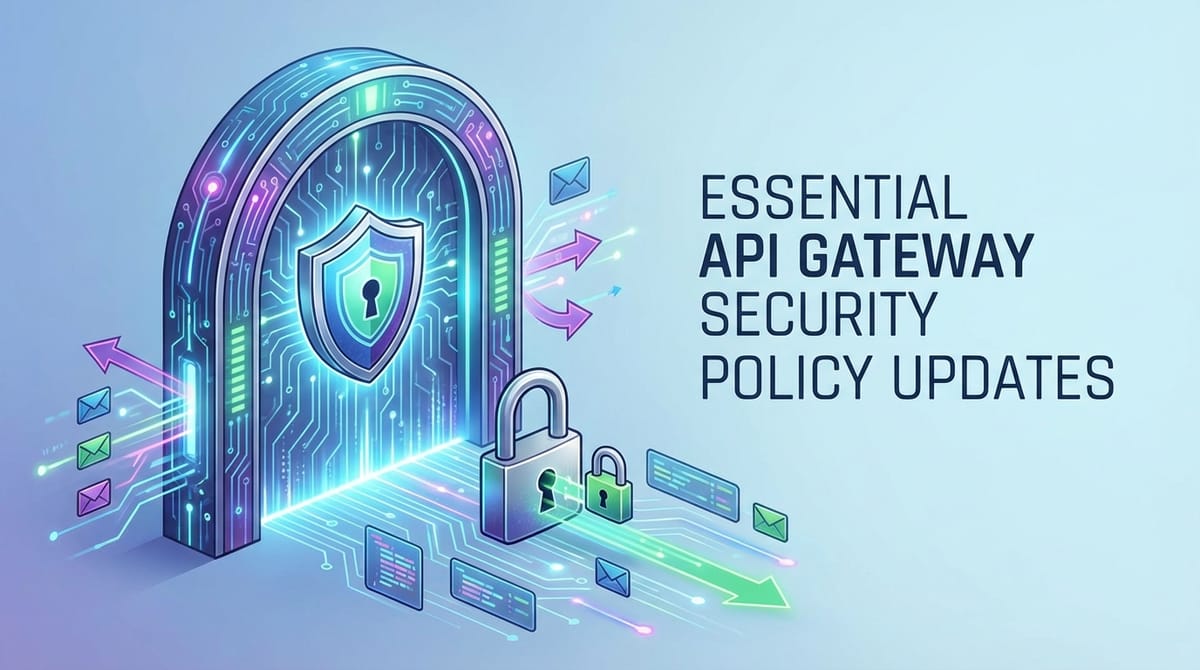


In the rapidly evolving digital ecosystem, where every application, service, and device increasingly communicates through Application Programming Interfaces (APIs), the security posture of an organization hinges significantly on the robustness of its API infrastructure. APIs have transitioned from mere integration points to the very fabric of modern enterprise architecture, powering everything from internal microservices to customer-facing mobile applications and partner integrations. This ubiquitous reliance on APIs, while fostering unprecedented innovation and agility, simultaneously presents a vast and ever-growing attack surface that demands meticulous attention. At the forefront of defending this intricate web of interactions stands the API Gateway – a critical control point acting as the primary entry point for all API traffic. It is the digital bouncer, the policy enforcer, and the traffic controller, all rolled into one. However, simply deploying an API Gateway is insufficient; its true protective power is unlocked only through a diligently crafted, continuously updated, and rigorously enforced set of security policies.
The imperative to constantly update API Gateway security policies is not merely a best practice; it is a fundamental requirement for survival in a threat landscape that shifts with alarming speed and sophistication. Attackers are no longer just targeting traditional web applications; they are increasingly focusing on API-specific vulnerabilities, understanding that a single compromised API can expose an organization's most valuable assets – its data, intellectual property, and operational integrity. From sophisticated authentication bypasses to subtle data leakage vulnerabilities and denial-of-service attempts, the spectrum of threats is broad and constantly expanding. Organizations that fail to prioritize and operationalize robust API Governance will inevitably find themselves lagging behind, vulnerable to exploits that could lead to catastrophic data breaches, regulatory fines, reputational damage, and significant operational disruption. This comprehensive guide delves into the crucial aspects of why and how organizations must embrace a proactive strategy for updating their api gateway security policies, ensuring a resilient and secure API ecosystem that can withstand the pressures of modern cyber warfare. We will explore the evolving threat landscape, the fundamental role of the API Gateway, key areas for policy refinement, the practical process of implementation, and the overarching importance of sound API Governance in safeguarding digital interactions.
The Evolving Threat Landscape: Why Stagnant API Security Policies are a Recipe for Disaster
The digital world is a dynamic battleground, and the past few years have witnessed a dramatic shift in how cyber threats manifest, particularly concerning APIs. What was considered robust security a mere few years ago can quickly become an Achilles' heel today. Understanding these shifts is the first critical step in formulating an effective strategy for updating api gateway security policies.
Firstly, the proliferation of microservices architectures has exploded. Enterprises are breaking down monolithic applications into smaller, independent services that communicate primarily through APIs. While this paradigm offers unparalleled agility, scalability, and resilience, it simultaneously multiplies the number of potential entry points for attackers. Each microservice, often developed and deployed by different teams using various technologies, represents a new API that needs to be secured. A single misconfigured api or an oversight in policy enforcement at the api gateway can cascade into widespread vulnerabilities across the entire application ecosystem. Attackers are well aware of this distributed nature and are actively looking for the weakest link among thousands of exposed APIs.
Secondly, API-specific attacks are becoming more targeted and sophisticated. The OWASP API Security Top 10, a crucial reference for developers and security professionals, is a testament to this trend. Vulnerabilities like Broken Object Level Authorization (BOLA), where an attacker can access resources they are not authorized for simply by changing an API request parameter, or Excessive Data Exposure (EDE), where APIs return more data than necessary, only for the client to filter it later, are common and often exploited. These are not merely theoretical flaws but represent real-world attack vectors that bypass traditional perimeter security measures. A simple SQL injection or Cross-Site Scripting (XSS) attack on a web application is still a concern, but API-centric attacks leverage the very design and functionality of APIs to achieve their objectives. Without specific policies at the api gateway designed to detect and prevent these nuanced threats, organizations are left exposed.
Thirdly, the regulatory environment is tightening globally. Laws such as the General Data Protection Regulation (GDPR) in Europe, the California Consumer Privacy Act (CCPA) in the United States, and countless other regional data privacy acts impose stringent requirements on how personal data is handled, stored, and accessed. A data breach stemming from a compromised api can lead to massive fines, legal repercussions, and severe reputational damage. Organizations are increasingly held accountable not just for preventing breaches but for demonstrating proactive measures to protect sensitive data. API Governance frameworks and their operationalization through api gateway policies are critical in proving due diligence and ensuring compliance. Policies must be regularly reviewed and updated to reflect changes in these complex legal landscapes, ensuring that data protection mechanisms are always aligned with the latest legal mandates.
Furthermore, the rise of serverless computing and hybrid cloud environments introduces additional layers of complexity. APIs are no longer confined to on-premise data centers but span multiple cloud providers, edge locations, and serverless functions. This distributed infrastructure makes it challenging to maintain a consistent security posture and to monitor traffic effectively. An api gateway operating in such an environment must be capable of enforcing policies across diverse deployment models, adapting to the ephemeral nature of serverless functions, and integrating seamlessly with cloud-native security tools. Stagnant policies struggle to keep pace with these architectural shifts, leaving gaps that attackers are quick to exploit.
Finally, the sheer volume and velocity of API traffic have grown exponentially. Organizations might manage thousands of APIs processing millions, or even billions, of requests daily. This massive scale creates both operational and security challenges. It becomes harder to detect anomalies manually, and even minor vulnerabilities can be exploited at scale. Moreover, sophisticated denial-of-service (DoS) and distributed denial-of-service (DDoS) attacks targeting APIs are becoming more common, aiming to overwhelm services, cause outages, and disrupt business operations. The api gateway is the first line of defense against these volumetric attacks, and its rate limiting and throttling policies must be constantly tuned to handle fluctuating traffic patterns and identify malicious surges.
In essence, the digital landscape is a moving target. Organizations that cling to outdated security policies are not merely standing still; they are actively regressing in their security posture relative to the evolving threat landscape. Proactive, continuous updates to api gateway security policies, driven by a robust API Governance strategy, are thus not optional but essential for building a resilient, secure, and compliant digital infrastructure.
Why API Gateway Security Policies are Paramount: The Unseen Shield of the Digital Frontier
An api gateway acts as a single, centralized entry point for all incoming API requests, sitting strategically between client applications and backend services. This architectural placement grants it unparalleled visibility and control over API traffic, making it an indispensable component for enforcing security policies. Its paramount importance stems from several critical functions it performs, effectively acting as the unseen shield defending the digital frontier.
Centralized Enforcement and Unified Policy Application
One of the primary benefits of an api gateway is its ability to centralize policy enforcement. In a microservices environment, where numerous services might be developed by different teams and potentially use varying technologies, ensuring consistent security across all api endpoints can be a monumental challenge. Without a gateway, each service would need to implement its own security mechanisms, leading to inconsistencies, potential omissions, and significant development overhead. The api gateway consolidates this effort, providing a single point where authentication, authorization, rate limiting, input validation, and other security policies can be uniformly applied across all managed APIs. This dramatically simplifies API Governance, reduces the risk of human error, and ensures that every api call is subjected to the same rigorous security checks before reaching the backend services. It acts as a standardized security layer, regardless of the underlying service implementation.
Comprehensive Threat Mitigation at the Edge
The api gateway is positioned at the network edge, making it an ideal first line of defense against a wide array of cyber threats. It can mitigate common attack vectors before they even reach the backend services, thereby protecting valuable resources and preventing potential exploits.
- DDoS and DoS Prevention: Through sophisticated rate limiting and throttling policies, an api gateway can detect and block malicious traffic surges, protecting backend services from being overwhelmed. It can identify patterns indicative of a DoS attack, such as an unusual number of requests from a single IP address or client, and take immediate action, such as temporarily blocking the source or dropping excessive requests.
- Injection Attacks: While robust backend coding practices are essential, an api gateway can provide an additional layer of defense against injection attacks (SQLi, XSS, command injection) by enforcing strict input validation policies, inspecting request payloads, and rejecting malformed or suspicious inputs.
- Credential Stuffing: By monitoring failed authentication attempts and applying IP blacklisting or temporary account lockouts, the gateway can help prevent credential stuffing attacks where attackers use stolen credentials to gain unauthorized access.
- Malicious Payload Filtering: Many gateways integrate with Web Application Firewalls (WAFs) or have built-in capabilities to inspect request bodies for known attack signatures, malicious content, or oversized payloads, blocking them preemptively.
Robust Access Control and Identity Management
Effective access control is fundamental to API security. The api gateway serves as the gatekeeper, verifying the identity of every caller and ensuring they possess the necessary permissions to access specific resources.
- Authentication: It handles various authentication mechanisms, including API keys, OAuth 2.0, OpenID Connect, and mutual TLS (mTLS). By offloading authentication from backend services, the gateway streamlines development and centralizes identity verification. It validates tokens, checks API keys, and can even integrate with external Identity Providers (IdPs).
- Authorization: Beyond just authentication, the gateway enforces authorization policies, determining what an authenticated user or application is allowed to do. This can range from simple role-based access control (RBAC) to more granular attribute-based access control (ABAC), ensuring that only authorized entities can perform specific operations (e.g., read, write, delete) on designated API endpoints. This prevents unauthorized resource access, a common API vulnerability.
Data Protection and Compliance Facilitation
APIs often handle sensitive data, making data protection a critical concern. The api gateway plays a significant role in securing data both in transit and by preventing its exposure.
- Encryption in Transit: It enforces the use of TLS/SSL, ensuring that all communications between clients and the gateway, and often between the gateway and backend services, are encrypted, protecting data from eavesdropping and tampering. Policies dictate minimum TLS versions and acceptable cipher suites.
- Sensitive Data Masking/Redaction: In scenarios where certain sensitive data (e.g., PII, payment card numbers) should not be logged or exposed to downstream systems that don't strictly require it, the api gateway can be configured to mask or redact this information from responses before they are forwarded.
- Compliance: By centralizing security policy enforcement, providing detailed audit logs, and enabling features like data masking, the api gateway significantly aids organizations in meeting stringent regulatory requirements such as GDPR, HIPAA, and PCI DSS. It offers auditable proof of controls in place to protect sensitive information.
Enhanced Observability, Monitoring, and Auditing
The api gateway is a rich source of operational and security intelligence. By channeling all API traffic through a single point, it can generate comprehensive logs of every API call, including caller identity, request details, response status, latency, and policy enforcement results.
- Detailed Logging: These logs are invaluable for troubleshooting, performance analysis, and, crucially, for security auditing and forensic investigations. They provide a clear audit trail of who accessed what, when, and with what outcome.
- Real-time Monitoring and Alerting: Integration with monitoring systems allows the gateway to provide real-time metrics on API usage, performance, and security events. Anomalies, policy violations, or suspicious activities can trigger immediate alerts, enabling security teams to respond swiftly to potential threats. This proactive monitoring is essential for identifying and mitigating attacks in progress.
- Data Analysis: Platforms capable of analyzing this historical call data, such as APIPark, can display long-term trends and performance changes, helping businesses with preventive maintenance before issues occur and identifying potential security blind spots.
In conclusion, the api gateway is far more than a simple traffic router; it is a sophisticated security enforcement point that is absolutely paramount for protecting modern API-driven architectures. Its ability to centralize policy application, mitigate diverse threats, manage access, safeguard data, and provide critical observability makes it the indispensable shield in the ongoing battle against cyber threats. Ignoring its security policy updates is akin to leaving the front door wide open in an increasingly dangerous neighborhood.
APIPark is a high-performance AI gateway that allows you to securely access the most comprehensive LLM APIs globally on the APIPark platform, including OpenAI, Anthropic, Mistral, Llama2, Google Gemini, and more.Try APIPark now! 👇👇👇
Key Areas for API Gateway Security Policy Updates: Crafting a Fortified Digital Perimeter
Updating api gateway security policies is not a one-time task but a continuous process that requires attention across multiple critical dimensions. Each policy area plays a distinct role in fortifying the digital perimeter and must be regularly reviewed, refined, and adapted to emerging threats and architectural changes.
a. Authentication and Authorization Policies: The Gatekeeper and the Bouncer
The foundational layer of API security involves definitively identifying who is making a request (authentication) and determining what actions they are permitted to take (authorization). These policies are the first line of defense at the api gateway.
Authentication Policies: The choice and configuration of authentication mechanisms are paramount. * API Keys: While simple, API keys are often misused. Policies should enforce regular key rotation, scope limitations (e.g., restricting a key to specific APIs or operations), and secure storage. The gateway must validate these keys against a secure store, ideally with rate limiting on key validation attempts to prevent brute-force attacks. Updates might involve transitioning from static keys to more dynamic, short-lived tokens. * OAuth 2.0 / OpenID Connect (OIDC): These open standards are widely adopted for securing access. Gateway policies must meticulously validate access tokens, refresh tokens, and ID tokens. This includes checking issuer (iss), audience (aud), expiry (exp), and signature (integrity). Policies should specify allowed OAuth flows (e.g., Authorization Code flow for web applications, Client Credentials for service-to-service), enforce strict scope validation, and integrate with trusted Identity Providers (IdPs). Regular updates might involve adopting newer OIDC features or strengthening token validation logic to counter novel bypass techniques. * Mutual TLS (mTLS): For enhanced security, especially in service-to-service communication within a microservices architecture, mTLS policies require both the client and the server to present and validate certificates. The api gateway must be configured to enforce mTLS, validating client certificates against a trusted Certificate Authority (CA) and rejecting connections from unverified clients. Policy updates could involve rotating CA certificates, enforcing stronger certificate requirements (e.g., minimum key length), or integrating with hardware security modules (HSMs) for key management. * Multi-Factor Authentication (MFA): While MFA is typically handled by the IdP, the gateway's integration with the IdP should confirm MFA status where applicable, especially for administrative APIs.
Authorization Policies: Once authenticated, the gateway determines access rights. * Role-Based Access Control (RBAC): Policies define roles (e.g., admin, user, guest) and assign permissions to these roles. The gateway maps an authenticated user or application to a role and then enforces the permissions associated with that role. Updates involve regularly reviewing and refining roles and their associated permissions to ensure they adhere to the principle of least privilege. For instance, if a new feature is added, ensure its API endpoints are appropriately restricted to specific roles, or if an old feature is deprecated, its permissions are removed. * Attribute-Based Access Control (ABAC): This offers more granular, context-aware authorization. Policies can be based on attributes of the user (e.g., department, location), the resource (e.g., sensitivity level), and the environment (e.g., time of day, IP address). The api gateway evaluates these attributes dynamically at runtime to make access decisions. Policy updates in ABAC are critical for reflecting changes in business logic, organizational structure, or regulatory requirements, allowing for very fine-grained control over each api call. * Fine-grained vs. Coarse-grained Authorization: Policies should be detailed enough to prevent over-permissioning but not so granular that they become unmanageable. The api gateway should be able to enforce policies at the API operation level (e.g., /users/{id} can be accessed, but /users/{id}/salary cannot, or POST /users is allowed, but DELETE /users is not). This is crucial for preventing common vulnerabilities like Broken Function Level Authorization. Updates require constant alignment with API Governance strategies and API design changes.
b. Rate Limiting and Throttling Policies: Preventing Overload and Abuse
These policies are crucial for maintaining API availability, preventing resource exhaustion, and mitigating denial-of-service (DoS) attacks.
- Purpose: Rate limiting prevents an excessive number of api requests from a single client or IP address within a defined time window, while throttling prioritizes certain requests or users over others.
- Granularity: Policies should be configurable per API endpoint, per user/client ID, per IP address, or globally. Different APIs may have different sensitivity levels and resource consumption, requiring tailored limits. For example, a "read data" api might have a higher limit than a "write data" api.
- Thresholds and Windows: Define the maximum number of requests allowed (e.g., 100 requests) within a specific time window (e.g., 60 seconds). Updates involve continuously tuning these thresholds based on observed traffic patterns, legitimate usage spikes, and historical attack data. What was a reasonable limit last quarter might be too high or too low today.
- Action on Overflow: Policies dictate what happens when a limit is exceeded:
- Reject: Immediately return an HTTP 429 (Too Many Requests) status code.
- Queue: Temporarily hold requests and process them when capacity becomes available.
- Throttle: Reduce the processing speed for specific clients.
- Blocklist: Temporarily or permanently block the source IP or client ID.
- Dynamic Adjustments: Advanced gateways allow for dynamic rate limiting, where thresholds can be adjusted in real-time based on backend service health, overall system load, or detected attack patterns. This allows for a more responsive and resilient defense.
- Fair Usage: Policies can be designed to ensure fair usage among different types of API consumers, preventing a single high-volume client from monopolizing resources.
c. Input Validation and Data Sanitization Policies: Battling Injection and Malformed Data
Robust input validation at the api gateway is a powerful defense against a wide array of attacks, especially injection vulnerabilities and malformed data issues.
- Schema Validation: Policies should enforce strict validation against API specifications (e.g., OpenAPI/Swagger definitions). This ensures that incoming requests conform to expected data types, formats, lengths, and required fields. Any deviation should be rejected immediately. Updates are essential whenever API schemas change or new API versions are released.
- Content Type Validation: Ensure that the
Content-Typeheader matches the actual payload type (e.g.,application/jsonfor JSON payloads). Disallow unexpected content types, especially for POST/PUT requests, to prevent potential bypasses or malicious data submission. - Parameter Validation: Policies should validate all input parameters – query parameters, path parameters, and request body fields – against predefined rules, including regular expressions for specific patterns (e.g., email addresses, UUIDs), character sets, and allowable values.
- Prevention of Injection Attacks: The gateway can be configured to scan request payloads and parameters for common injection patterns (e.g., SQL keywords, JavaScript tags, command line characters). While backend sanitization is still critical, the gateway provides an important first line of defense.
- URL Path Traversal Protection: Policies can prevent malicious attempts to access restricted directories or files by detecting and blocking sequences like
../in URL paths. - Oversized Payload Rejection: Policies should define maximum payload sizes to prevent buffer overflow attacks or resource exhaustion.
- Preventing Broken Object Level Authorization (BOLA) and Excessive Data Exposure (EDE): While primarily design flaws, a strong api gateway can mitigate these by:
- BOLA: Ensuring that authorization policies correctly check user ownership or permissions for the specific resource being accessed, based on object IDs in the URL or request body. This often requires integration with an external authorization service or context-aware policies.
- EDE: Implementing policies to filter out sensitive fields from api responses based on the caller's authorization level or the specific endpoint requested. For instance, a
/usersapi might expose only public profile information to unauthenticated users, but more detailed data to an authenticated administrator. This requires a deep understanding of the API's data models and potential data leakage points.
d. Traffic Management and Routing Security Policies: Guiding Traffic Safely
Beyond just allowing or blocking, secure traffic management ensures that legitimate requests reach their intended, secure destinations.
- IP Whitelisting/Blacklisting: Policies can explicitly allow or deny api access based on source IP addresses. Whitelisting is suitable for internal APIs or partner integrations from known IPs, while blacklisting can block known malicious actors or regions. Updates involve managing these lists, adding new legitimate sources, and blocking newly identified threats.
- Geo-blocking: Restricting api access based on the geographical location of the requesting client can be vital for compliance or to mitigate attacks originating from high-risk regions.
- HTTP/HTTPS Enforcement: All production APIs should strictly enforce HTTPS. The api gateway must redirect all HTTP requests to HTTPS and ensure that only strong, up-to-date TLS configurations are used (see encryption policies below).
- Secure Routing to Backend Services: The gateway acts as a reverse proxy, and its routing policies must ensure that internal services are not directly exposed to the internet. It should communicate with backend services over secure internal networks, often using mTLS for service-to-service authentication, and ideally within a service mesh for enhanced security and observability.
- Preventing Server-Side Request Forgery (SSRF): Policies should prevent the api gateway or backend services from making unauthorized requests to internal network resources based on malicious input from an external client. This involves careful validation of URLs provided in requests.
- DNS Resolution Security: Ensuring the gateway uses secure DNS resolution to prevent DNS-based attacks.
e. Encryption and Data Protection Policies: Safeguarding Data in Transit
Data encryption is non-negotiable for sensitive information. The api gateway is crucial in enforcing strong encryption standards.
- TLS/SSL Configuration:
- Minimum TLS Version: Policies must enforce a minimum TLS version (e.g., TLS 1.2 or ideally TLS 1.3) to prevent downgrade attacks to weaker, compromised versions.
- Strong Cipher Suites: Only allow modern, strong cipher suites that provide forward secrecy and are resistant to known cryptographic vulnerabilities. Regularly review and update the list of acceptable ciphers.
- Certificate Management: Policies for managing SSL/TLS certificates (issuance, renewal, revocation) must be robust. This includes using trusted Certificate Authorities and automating certificate rotation to prevent expiry issues.
- Data Masking / Redaction: As mentioned under input validation, policies can be implemented to identify sensitive data fields in API responses (e.g., credit card numbers, PII, national IDs) and mask or redact them before they leave the gateway, especially for logging or less privileged client applications. This is critical for data privacy and compliance.
- Key Management Policies: While the gateway itself doesn't typically manage application-level encryption keys, its policies can dictate how it integrates with key management services (KMS) or HSMs for TLS certificate private keys.
f. Logging, Monitoring, and Auditing Policies: The Eyes and Ears of Security
Visibility into API traffic and security events is paramount for detecting and responding to threats. The api gateway is a central point for collecting this crucial data.
- Comprehensive Logging: Policies must mandate detailed logging of every api call, including:
- Client IP address and user/application ID.
- Request method and URL.
- HTTP headers (carefully redacting sensitive ones).
- Request body (potentially redacted for sensitive data).
- Response status code and size.
- Latency and duration.
- Policy enforcement results (e.g., "rate limit exceeded," "authorization denied").
- Error messages.
- Integration with SIEM (Security Information and Event Management) Systems: Gateway logs should be securely forwarded to a centralized SIEM system for aggregation, correlation, and analysis. Policies define the log format, transport mechanism (e.g., syslog, Kafka), and retention periods.
- Real-time Anomaly Detection and Alerting: Policies should define thresholds and patterns that trigger security alerts. For example, a sudden spike in 401 Unauthorized errors, multiple failed login attempts from a single source, or an unusually high volume of data downloaded from a specific api. The api gateway should integrate with alerting systems (e.g., Slack, PagerDuty, email) to notify security teams immediately.
- Auditing and Forensics: The collected logs form an invaluable audit trail, critical for compliance checks, post-incident forensic analysis, and demonstrating adherence to security policies. Policies should specify log immutability and secure archiving.
- Powerful Data Analysis: Platforms that can process and analyze this vast amount of log data are crucial. For instance, APIPark, an open-source AI gateway and API management platform, provides comprehensive logging capabilities, recording every detail of each api call. This enables businesses to quickly trace and troubleshoot issues, ensuring system stability and data security. Furthermore, APIPark analyzes historical call data to display long-term trends and performance changes, helping businesses with preventive maintenance before issues occur and proactively identifying potential security vulnerabilities or misuse patterns. Leveraging such tools is essential for making sense of the data and transforming it into actionable security intelligence.
g. API Versioning and Lifecycle Management Security: Securing the Journey
APIs evolve, and managing their lifecycle securely, especially deprecation, is vital.
- Secure Deprecation: Policies must ensure that old, potentially vulnerable api versions are properly deprecated and eventually decommissioned. This involves communicating changes to consumers, migrating them to newer versions, and eventually blocking access to outdated endpoints at the api gateway level. An old, unpatched api version can be a significant attack vector if not retired gracefully and securely.
- Consistent Policy Application: As APIs evolve and new versions are introduced, policies must ensure that the same rigorous security standards are applied consistently across all versions. This prevents situations where a new api version might inadvertently be deployed with weaker security controls.
- Access Control for Different Versions: Policies might need to differentiate access to different API versions, especially during a transition period, allowing only specific clients or roles to access older versions. This is a key aspect of strong API Governance.
h. Web Application Firewall (WAF) Integration: A Complementary Layer
While an api gateway has its own security capabilities, integrating it with a WAF can provide an additional layer of defense.
- Signature-Based Protection: WAFs excel at detecting and blocking attacks based on known signatures, such as common SQL injection or cross-site scripting patterns. The api gateway can forward traffic to a WAF for this deeper inspection.
- Custom Rules: WAFs allow for custom rules to be defined to protect against application-specific vulnerabilities or zero-day exploits not yet covered by generic api gateway policies.
- Bot Protection: Many WAFs offer advanced bot detection and mitigation capabilities, which can complement the gateway's rate limiting, distinguishing between legitimate and malicious automated traffic.
- Advanced Threat Intelligence: WAFs often integrate with global threat intelligence feeds, allowing them to block traffic from known malicious IP addresses or botnets, enhancing the gateway's native blacklisting capabilities.
i. Continuous Security Testing and Vulnerability Management: Proactive Defense
Policies for the api gateway are only as effective as the processes that validate them and the APIs they protect.
- API Security Testing: Policies should mandate regular security testing of APIs, including:
- Static Application Security Testing (SAST): Analyzing source code for vulnerabilities.
- Dynamic Application Security Testing (DAST): Black-box testing of running APIs.
- Interactive Application Security Testing (IAST): Combining SAST and DAST for deeper analysis.
- API Penetration Testing: Manual, expert-driven testing to find exploitable flaws.
- Vulnerability Scanning: Regular automated scanning of the api gateway infrastructure itself for known vulnerabilities and misconfigurations.
- Security Policy Review Cycles: Establish policies for mandatory, periodic reviews of all api gateway security configurations and policies (e.g., quarterly or annually), involving security architects, developers, and compliance officers.
- Feedback Loop: Ensure a strong feedback loop from security testing and incident response to policy updates. If a vulnerability is discovered, a corresponding api gateway policy should be considered to prevent similar issues in the future.
j. API Governance Policies: The Overarching Strategic Imperative
While specific technical policies are crucial, they operate within the broader context of API Governance. This refers to the set of rules, processes, and standards that dictate how APIs are designed, developed, deployed, secured, and managed across an organization.
- Standardization: API Governance policies enforce standards for API design (e.g., RESTful principles, consistent naming conventions), documentation (e.g., OpenAPI definitions), and security best practices. The api gateway then operationalizes these standards by enforcing security policies that align with these design principles.
- Ownership and Accountability: Governance policies clearly define who is responsible for API security, who approves policy changes, and who is accountable for compliance. This ensures that security is not an afterthought but an integral part of the API lifecycle.
- Risk Management Framework: Integrating api gateway policy updates into a broader organizational risk management framework. Policies are reviewed and updated based on identified risks, threat intelligence, and business criticality.
- Policy as Code: Modern API Governance increasingly advocates for "policy as code," where security policies are defined in machine-readable formats and managed in version control systems. This allows for automated testing, deployment, and consistent application of policies across different environments (dev, staging, production). The api gateway configuration then consumes these codified policies.
- Continuous Improvement: API Governance fosters a culture of continuous improvement, where security policies are not static but evolve in response to new threats, technological advancements, and lessons learned from incidents. This iterative process ensures the organization's API security posture remains robust and adaptive.
- Platform Integration: Organizations leveraging comprehensive API management platforms, like APIPark, find it easier to implement robust API Governance. APIPark, as an open-source AI gateway and API management platform, provides end-to-end API lifecycle management, assisting with design, publication, invocation, and decommissioning. It helps regulate API management processes, manage traffic forwarding, load balancing, and versioning of published APIs, ensuring security policies are integrated at every stage. Furthermore, APIPark enables the creation of multiple teams (tenants) with independent security policies, supporting granular governance while sharing underlying infrastructure. This comprehensive approach ensures that security policies are not only enforced but also woven into the very fabric of API design and operation.
By meticulously addressing and continuously updating policies in each of these key areas, organizations can transform their api gateway from a passive traffic router into an active, intelligent, and highly effective security enforcement point, capable of defending against the most sophisticated threats in today's dynamic digital landscape.
Table: Common API Gateway Security Policies and Their Benefits
| Policy Category | Specific Policy Example | Primary Security Benefit | Related API Governance Aspect |
|---|---|---|---|
| Authentication | OAuth 2.0 Token Validation (JWT signature, expiry, audience) | Prevents unauthorized access, ensures caller identity | Standardized identity verification protocols |
| Authorization | Role-Based Access Control (RBAC) for API endpoints | Enforces least privilege, prevents unauthorized actions | Consistent permission models across APIs |
| Rate Limiting | 100 requests/minute per client IP | Protects against DDoS/DoS, ensures fair resource usage | API usage quotas, service level agreements |
| Input Validation | JSON Schema validation for request bodies | Prevents injection attacks (SQLi, XSS), ensures data integrity | API specification adherence, data quality standards |
| Traffic Management | IP Whitelisting for critical admin APIs | Restricts access to trusted sources, enhances perimeter security | Network segmentation, access control strategy |
| Encryption | Enforce TLS 1.3 with strong cipher suites | Protects data in transit from eavesdropping and tampering | Data privacy regulations, secure communication standards |
| Data Protection | Redact PII from API response logs | Prevents sensitive data leakage, ensures regulatory compliance | Data classification, logging and auditing requirements |
| Logging & Monitoring | Forward all 4xx/5xx API errors to SIEM in real-time | Enables rapid threat detection and incident response | Audit trail, compliance reporting, proactive threat intelligence |
| Lifecycle Management | Block access to /v1/legacy-api after migration period |
Eliminates vulnerable outdated endpoints, reduces attack surface | API versioning strategy, deprecation guidelines |
| WAF Integration | Apply ModSecurity ruleset for common web exploits | Adds an extra layer of defense against known attack patterns | Layered security architecture, threat mitigation strategy |
The Process of Updating API Gateway Security Policies: A Continuous Cycle of Vigilance
Updating api gateway security policies is not a reactive measure taken only after an incident, but rather a proactive and continuous lifecycle. A structured process ensures that policy updates are effective, minimize disruption, and align with the organization's broader security and API Governance objectives.
1. Assessment and Discovery: Understanding the Current State and Emerging Threats
The initial phase involves a thorough understanding of the existing environment and identifying areas for improvement.
- Review Existing Policies: Conduct a detailed audit of all currently deployed api gateway security policies. Document their configuration, rationale, and effectiveness. Identify any policies that are outdated, redundant, or no longer relevant.
- Analyze API Usage and Traffic Patterns: Examine API call logs, traffic volume, and performance metrics. Look for unusual patterns, spikes, or errors that might indicate an attack or a misconfiguration. Platforms like APIPark with powerful data analysis capabilities are invaluable here, helping to display long-term trends and highlight anomalies that could inform policy changes.
- Threat Modeling and Risk Assessment: Conduct regular threat modeling exercises for critical APIs and services. Identify potential attack vectors, assess the likelihood and impact of various threats, and prioritize vulnerabilities. This involves collaboration between security architects, developers, and business stakeholders.
- Vulnerability Scans and Penetration Testing: Perform periodic security scans of the API gateway infrastructure itself and comprehensive penetration testing against the APIs it protects. The findings from these tests are direct inputs for policy updates.
- Monitor Emerging Threats and Intelligence: Stay abreast of the latest cyber security threat intelligence, specifically focusing on API-specific vulnerabilities (e.g., OWASP API Security Top 10 updates, new CVEs related to API technologies). Participate in security communities and subscribe to threat intelligence feeds.
- Compliance Review: Review current regulatory requirements (GDPR, HIPAA, PCI DSS, etc.) and any internal compliance mandates. Ensure existing policies meet these requirements and identify any gaps that necessitate updates.
2. Policy Definition and Refinement: Crafting the Solution
Based on the assessment, the next step is to define or refine the necessary policy changes.
- Collaborative Design: This phase is inherently collaborative, involving security teams, API developers, operations personnel, and compliance officers. Each group brings a unique perspective: security identifies the 'what' and 'why,' developers address the 'how' in terms of implementation feasibility, and operations considers the impact on system stability and performance.
- Principle of Least Privilege: Policies should always adhere to the principle of least privilege, granting only the minimum necessary access and permissions. Any new policy should be designed to be as restrictive as possible while still allowing legitimate operations.
- Granularity and Specificity: Define policies with appropriate granularity. Avoid overly broad rules that might impact legitimate traffic, and instead aim for specific rules targeting identified threats or vulnerabilities. For example, instead of a generic "block all POST requests," specify "block POST requests to
/admin/usersfor non-admin roles." - Policy as Code: Where possible, define policies in a declarative, machine-readable format (e.g., YAML, JSON) and manage them in a version control system (e.g., Git). This "policy as code" approach enables automation, collaboration, and a clear audit trail of policy changes, which is a cornerstone of modern API Governance.
- Documentation: Document every new or updated policy, including its purpose, configuration details, expected behavior, potential impacts, and relevant stakeholders. Clear documentation is vital for maintainability and future audits.
3. Testing and Validation: Ensuring Effectiveness and Stability
Before deploying policies to production, rigorous testing is essential to ensure they function as intended without introducing new issues.
- Staging/Pre-production Environments: All policy updates must first be deployed and tested in dedicated staging or pre-production environments that closely mirror the production environment.
- Functional Testing: Verify that the updated policies correctly enforce security controls (e.g., blocking unauthorized requests, throttling excessive calls) while allowing legitimate traffic to pass unhindered.
- Performance Testing: Assess the impact of new policies on api gateway performance and overall API latency. Some security checks (e.g., deep payload inspection) can introduce overhead, which needs to be carefully monitored and optimized.
- Regression Testing: Ensure that new policies do not inadvertently break existing functionalities or security controls.
- Security Testing: Conduct targeted security tests against the updated policies to confirm their effectiveness in mitigating the specific threats they were designed to address. This might involve attempting to bypass the new controls.
- Rollback Plan: Develop a clear rollback plan in case issues are discovered during or after deployment. This includes knowing which previous policy configuration to revert to and how to execute the rollback swiftly.
4. Deployment and Implementation: Phased and Monitored Rollout
Deploying updated policies to production requires a controlled and measured approach.
- Phased Rollout / Canary Deployments: For significant policy changes, consider a phased rollout where the new policies are initially applied to a small subset of traffic or a specific group of users. This allows for real-world validation with minimal exposure to risk.
- Automation: Leverage CI/CD pipelines for automated deployment of policy changes. This minimizes human error and ensures consistency. For "policy as code" approaches, this step is straightforward.
- Minimal Downtime: Plan deployments during periods of low traffic or use techniques that allow for zero-downtime updates (e.g., blue/green deployments for the gateway itself).
- Communication: Clearly communicate upcoming policy changes to relevant teams (development, operations, support) and, if applicable, to external API consumers, especially if changes might affect their integration.
5. Monitoring, Review, and Iteration: The Cycle of Continuous Improvement
Deployment is not the end but the beginning of the next cycle.
- Continuous Monitoring: Immediately after deployment, intensely monitor the api gateway and backend services for any anomalies. This includes:
- Traffic volumes: Are they as expected?
- Error rates: Any unexpected spikes in 4xx or 5xx errors?
- Latency: Has performance been negatively impacted?
- Security events: Are new alerts being triggered, or have existing attack patterns changed?
- Audit logs: Review logs for policy enforcement decisions and any suspicious activity.
- Feedback Collection: Actively solicit feedback from developers, operations, and API consumers regarding the impact of the updated policies.
- Performance Metrics: Continuously collect and analyze performance metrics to ensure the policies do not introduce unacceptable overhead.
- Periodic Review: Establish a schedule for periodic reviews of all api gateway security policies (e.g., quarterly, semi-annually) to ensure they remain relevant and effective against the evolving threat landscape. This closes the loop back to the 'Assessment' phase.
- Incident Response Integration: Any security incidents detected through monitoring should feed directly back into the policy update process, informing the development of new or refined policies to prevent recurrence.
This continuous cycle of assessment, definition, testing, deployment, and monitoring, underpinned by strong API Governance, ensures that an organization's api gateway security policies remain adaptive, robust, and effective in protecting its critical API assets against an ever-changing array of threats. It transforms policy management from a chore into a strategic advantage, bolstering the entire digital perimeter.
Conclusion: The Unwavering Imperative of Dynamic API Gateway Security
The modern enterprise, woven from a myriad of interconnected services and applications, relies on APIs as its lifeblood. This fundamental shift towards an API-driven world has elevated the api gateway from a simple traffic manager to an indispensable bastion of digital security. It stands as the primary enforcement point for all API interactions, bearing the immense responsibility of safeguarding sensitive data, preserving system integrity, and ensuring the continuous operation of critical business functions. However, the protective capabilities of an api gateway are not inherent or static; they are directly proportional to the intelligence, comprehensiveness, and currency of its security policies.
As we have thoroughly explored, the threat landscape confronting APIs is in a state of perpetual flux. From the proliferation of microservices and the advent of sophisticated, API-specific attack vectors to the tightening grip of global regulatory mandates, the challenges are formidable and ceaseless. A static security posture, built upon outdated or neglected policies, is not merely a weakness but an open invitation for exploitation. Organizations that fail to proactively and systematically update their api gateway security policies are effectively leaving critical vulnerabilities exposed, risking devastating data breaches, crippling service disruptions, and severe reputational and financial repercussions.
The journey to a fortified API ecosystem begins with a deep understanding of the key policy areas that demand continuous attention. From the foundational layers of authentication and authorization, which act as the gatekeeper and bouncer of API access, to the intricate mechanisms of input validation, rate limiting, and traffic management, each policy category plays a vital role. Encryption ensures data privacy, while robust logging, monitoring, and auditing provide the critical visibility needed to detect and respond to threats in real-time. Moreover, the secure management of the API lifecycle, coupled with strategic WAF integration and relentless security testing, collectively contribute to a resilient defense.
Underpinning all these technical considerations is the overarching framework of API Governance. This strategic imperative dictates how APIs are designed, developed, secured, and managed across the entire organization, ensuring consistency, accountability, and a commitment to security by design. Platforms that offer comprehensive API Governance capabilities alongside robust API gateway functionalities, such as APIPark, become indispensable tools in this endeavor. APIPark's ability to facilitate end-to-end API lifecycle management, enforce granular access permissions, provide detailed call logging, and offer powerful data analysis, empowers organizations to not only deploy stringent security policies but also to continuously monitor, adapt, and optimize their API security posture effectively.
The process of updating these vital policies is a continuous cycle of vigilance: from diligent assessment and collaborative policy definition to rigorous testing, controlled deployment, and relentless monitoring. It is an iterative loop driven by threat intelligence, compliance requirements, architectural evolution, and lessons learned from every interaction. This dynamic approach, characterized by unwavering attention to detail and a commitment to continuous improvement, is the only sustainable path to securing an API-driven future.
In essence, investing in and constantly refining api gateway security policies is not just a technical task; it is a strategic business imperative. It is about building trust, ensuring operational continuity, and safeguarding the digital assets that power modern innovation. Organizations must embrace this unwavering imperative, transforming their API Gateways into active, intelligent, and highly adaptive guardians of their digital frontier.
Frequently Asked Questions (FAQ)
1. Why are API Gateway security policies considered more critical now than in the past?
API Gateway security policies are more critical now due to the exponential growth of APIs as the primary interface for applications and services, leading to a significantly expanded attack surface. The rise of microservices architectures, increased sophistication of API-specific attacks (like Broken Object Level Authorization and Excessive Data Exposure), and tightening data privacy regulations (e.g., GDPR, CCPA) demand a centralized, robust, and continuously updated security enforcement point like the API Gateway. Stagnant policies can no longer protect against the dynamic and evolving threat landscape.
2. What is the difference between authentication and authorization in the context of an API Gateway?
Authentication is the process of verifying the identity of an API consumer (e.g., a user or another application). The API Gateway confirms "who you are" by validating credentials like API keys, OAuth tokens, or client certificates. Authorization, on the other hand, determines what an authenticated consumer is allowed to do or access. It answers "what you are allowed to do" by enforcing policies (like Role-Based Access Control or Attribute-Based Access Control) to restrict access to specific API endpoints or operations based on the consumer's permissions. Both are critical and enforced by the API Gateway to prevent unauthorized access and actions.
3. How does API Governance relate to API Gateway security policy updates?
API Governance is the overarching framework that defines rules, standards, and processes for managing the entire API lifecycle, including design, development, deployment, and security. It provides the strategic direction and consistency for API security. API Gateway security policy updates are the operationalization of these governance principles. For example, API Governance might mandate OAuth 2.0 for all external APIs, and the API Gateway policies then implement the specific technical details of OAuth token validation, scope checking, and refresh token management, ensuring alignment with the broader strategy. Without strong API Governance, API Gateway policies can become ad-hoc and inconsistent.
4. What are some common challenges in updating API Gateway security policies, and how can they be addressed?
Common challenges include: * Complexity: Large number of APIs, diverse requirements, and complex policy configurations. * Risk of disruption: Changes can inadvertently break legitimate traffic or introduce new vulnerabilities. * Lack of visibility: Difficulty in understanding the impact of policy changes or detecting new threats. * Coordination: Challenges in coordinating between security, development, and operations teams.
These can be addressed by: * Policy as Code: Using declarative configurations in version control for automation and consistency. * Rigorous Testing: Employing staging environments, functional, performance, and security testing before production deployment. * Phased Rollouts: Gradually applying changes to minimize risk. * Comprehensive Monitoring: Utilizing tools (like APIPark) for real-time visibility, detailed logging, and anomaly detection. * Cross-functional Collaboration: Establishing clear processes and communication channels between all stakeholders.
5. Can an API Gateway entirely replace the need for security in backend services?
No, an API Gateway cannot entirely replace the need for security in backend services. While an API Gateway provides a crucial first line of defense, handling authentication, authorization, rate limiting, and input validation at the edge, it is part of a layered security strategy. Backend services must still implement their own robust security measures, including: * Input validation and sanitization: To prevent attacks that might bypass the gateway or exploit internal vulnerabilities. * Business logic validation: To ensure actions align with application rules. * Output encoding: To prevent XSS vulnerabilities in responses. * Secure coding practices: To prevent common software vulnerabilities. * Data access controls: To protect internal data stores. * Secure configuration: For databases, servers, and application frameworks. The API Gateway and backend security are complementary, forming a comprehensive defense-in-depth strategy.
🚀You can securely and efficiently call the OpenAI API on APIPark in just two steps:
Step 1: Deploy the APIPark AI gateway in 5 minutes.
APIPark is developed based on Golang, offering strong product performance and low development and maintenance costs. You can deploy APIPark with a single command line.
curl -sSO https://download.apipark.com/install/quick-start.sh; bash quick-start.sh

In my experience, you can see the successful deployment interface within 5 to 10 minutes. Then, you can log in to APIPark using your account.

Step 2: Call the OpenAI API.