Fixing Keys on Flex 5: A Step-by-Step Repair Guide
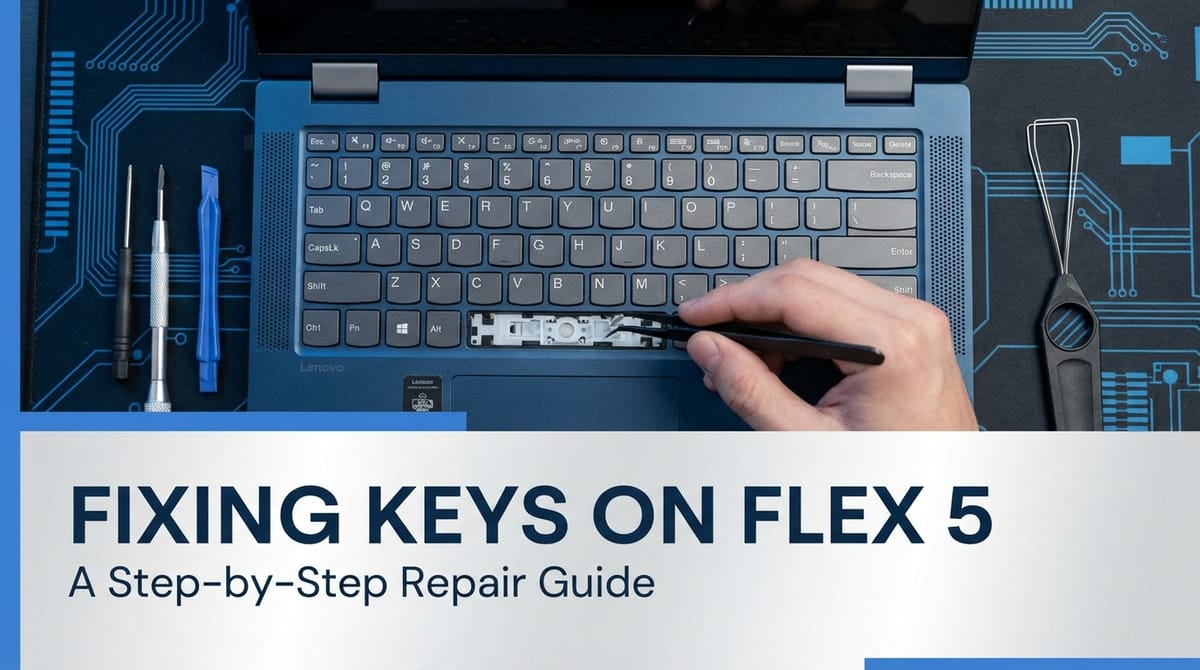


APIPark is a high-performance AI gateway that allows you to securely access the most comprehensive LLM APIs globally on the APIPark platform, including OpenAI, Anthropic, Mistral, Llama2, Google Gemini, and more.Try APIPark now! 👇👇👇
Fixing Keys on Flex 5: A Step-by-Step Repair Guide
The Lenovo Flex 5 series of laptops has long been a popular choice for students, professionals, and casual users alike, striking an impressive balance between performance, versatility, and affordability. Its 2-in-1 convertible design, responsive touchscreen, and solid general performance make it a reliable companion for a wide array of tasks, from intense productivity sessions to creative endeavors and casual browsing. However, like any piece of frequently used hardware, the Flex 5 is not immune to wear and tear, and one of the most common points of failure that can significantly hamper usability is the keyboard. A malfunctioning key, whether sticky, unresponsive, or completely missing, can transform a smooth computing experience into a frustrating ordeal, impeding everything from typing an important email to navigating system menus.
The prospect of a broken key might immediately bring to mind expensive professional repairs or the need to replace the entire laptop. Yet, many keyboard issues on the Flex 5 are surprisingly amenable to DIY solutions, empowering users to take control of their device's longevity and save a significant amount of money in the process. This comprehensive guide aims to demystify the process of fixing keys on your Flex 5, offering a detailed, step-by-step approach that covers everything from simple cleaning to a full keyboard replacement. We will delve into the nuances of keyboard mechanics, equip you with the knowledge of necessary tools, and walk you through various repair scenarios with meticulous instructions. By the end of this guide, you’ll not only have a fully functional keyboard but also a deeper understanding of your device and the confidence to tackle future minor hardware challenges. This isn't just about fixing a key; it's about reclaiming your laptop's full potential and extending its useful life.
Understanding Your Flex 5 Keyboard: Anatomy and Common Ailments
Before embarking on any repair, it's crucial to understand the fundamental components and typical vulnerabilities of your Flex 5's keyboard. Modern laptop keyboards, including those found in the Flex 5 series, primarily utilize a scissor-switch mechanism. This design offers a satisfying tactile feel and relatively thin profile, making it ideal for compact devices. Each individual key on your Flex 5 keyboard is composed of several critical parts working in concert to register a keystroke.
At the very top, you have the keycap, the plastic piece with the letter, number, or symbol printed on it that your finger actually presses. Beneath the keycap lies the scissor mechanism, a plastic frame resembling a pair of interlocking scissors. This mechanism is responsible for providing the stable, uniform movement of the keycap when pressed and ensuring it returns to its original position. Directly beneath the scissor mechanism is a small, soft rubber dome (sometimes referred to as a "plunger" or "spring membrane"). When the key is pressed, the scissor mechanism compresses this rubber dome. The underside of the rubber dome typically has a conductive pad. When compressed, this pad makes contact with two electrical traces on the underlying circuit board, completing a circuit and sending a signal to the laptop's logic board, which then registers the keystroke.
The entire array of these key mechanisms, along with the underlying circuit board (often called a "membrane circuit" or "keyboard matrix"), is housed within the laptop's top case or palm rest assembly. This intricate setup allows for the precise and rapid input that we expect from our keyboards.
Given this anatomy, several common issues can arise:
- Sticky Keys: This is perhaps the most frequent complaint, often caused by liquid spills (coffee, soda, water) or accumulation of dirt, grime, and food particles. These substances can seep under the keycap and gum up the scissor mechanism or cause the rubber dome to stick, preventing the key from returning to its normal position or making consistent contact. The sensation is usually a sluggish or "squishy" key press.
- Unresponsive Keys: A key might not register a press at all. This can be due to debris blocking the electrical contact, a damaged rubber dome (where the conductive pad is worn or torn), a broken scissor mechanism preventing the dome from being compressed, or, in more severe cases, damage to the underlying keyboard matrix circuit board itself. Liquid damage can corrode the traces, leading to multiple unresponsive keys in a specific area.
- Loose or Wobbly Keys: If a keycap feels loose, wobbly, or pops off easily, it's usually an issue with the plastic tabs on the keycap or the small hooks on the scissor mechanism that hold the keycap in place. Sometimes, the scissor mechanism itself might be slightly dislodged from its anchors on the keyboard base.
- Missing Keys: The keycap might have completely detached and been lost, or the entire scissor mechanism could have come off along with the keycap, leaving behind an exposed rubber dome or just the base.
- Physical Damage: Beyond spills, direct impact or excessive force can break the keycap, deform the scissor mechanism, or even crack the underlying housing.
Understanding these components and failure modes is the first critical step towards accurately diagnosing and successfully repairing your Flex 5's keyboard. It allows you to anticipate the repair difficulty and gather the appropriate tools and replacement parts.
Essential Tools and Workspace Preparation: Setting the Stage for Success
Attempting any hardware repair without the right tools is like trying to paint a masterpiece with a broken brush – frustrating and likely to yield poor results. For fixing keys on your Flex 5, a modest collection of specialized yet affordable tools will significantly enhance your chances of success and minimize the risk of causing further damage. Beyond the tools themselves, preparing a clean, organized, and safe workspace is equally vital.
Here's a detailed breakdown of the essential tools you'll need and why each is important:
- Precision Screwdriver Set: Laptops are full of tiny screws. A good set will include Phillips head (PH000, PH00, PH0) and possibly Torx (T5, T6) bits. Magnetic tips are a huge bonus for preventing lost screws. You'll need these for removing the laptop's bottom cover and potentially securing the keyboard assembly internally.
- Importance: Essential for disassembly and reassembly without stripping delicate screw heads.
- Plastic Opening Tools (Spudgers or Pry Tools): These non-conductive plastic tools are indispensable for gently prying open laptop casings, disconnecting ribbon cables, and separating delicate components without scratching or marring the plastic. Metal tools should be avoided for prying plastic parts as they can easily leave permanent marks or damage sensitive electronics.
- Importance: Safely separates case components and disconnects fragile connectors.
- Fine-Tip Tweezers: Ideal for manipulating small parts like keycap retainer clips, picking up tiny screws, handling delicate ribbon cables, or removing stubborn debris from tight crevices. Both straight and angled tip tweezers can be useful.
- Importance: Precision handling of small, delicate components.
- Compressed Air Duster Can: A powerful, focused blast of air is excellent for dislodging loose dust, crumbs, and debris from under keycaps and within the keyboard mechanism without requiring extensive disassembly. Ensure you hold the can upright to prevent propellant discharge.
- Importance: Non-invasive cleaning of surface debris.
- Isopropyl Alcohol (90% or higher purity): This quick-drying alcohol is a safe and effective solvent for cleaning sticky residues, oils, and minor liquid spills from electronic components. Use it sparingly on a lint-free cloth or cotton swab.
- Importance: Safe and effective cleaning of sticky contaminants.
- Lint-Free Cloths/Microfiber Wipes and Cotton Swabs: For applying isopropyl alcohol and wiping down surfaces without leaving fibers behind.
- Importance: Clean and residue-free application of cleaning agents.
- Anti-Static Wrist Strap or Mat: Static electricity, though often imperceptible, can permanently damage sensitive electronic components. An anti-static wrist strap, connected to a grounded object, safely dissipates any static charge from your body. An anti-static mat provides a grounded work surface.
- Importance: Prevents electrostatic discharge (ESD) damage to internal electronics.
- Magnetic Project Mat (Optional but highly recommended): These mats often come with grids or small compartments to help you keep track of screws and other small parts, especially useful when dealing with multiple types and sizes of screws from different stages of disassembly.
- Importance: Organization and prevention of lost screws.
- Replacement Keycaps/Scissor Mechanisms/Keyboard Assembly: Depending on the specific issue, you might need replacement parts. Sourcing these before starting the repair saves time. Ensure they are compatible with your specific Flex 5 model (e.g., Flex 5 14, Flex 5 15, Flex 5 16, and specific generation like 81X2, 82HS, etc.).
Workspace Preparation:
- Cleanliness: Choose a clean, flat, and well-lit surface, such as a sturdy desk or table. A cluttered workspace increases the risk of losing small parts or damaging components.
- Lighting: Good lighting is paramount for seeing tiny screws, delicate connectors, and internal details. A desk lamp or headlamp can supplement overhead lighting.
- Organization: Lay out your tools neatly. If using a magnetic mat, arrange screws as you remove them, perhaps noting their origin. This systematic approach is critical for reassembly.
- Safety First:
- Power Off and Unplug: Always, always ensure your Flex 5 is completely powered down, not just in sleep mode. Disconnect the AC adapter.
- Disconnect Battery: Once the bottom cover is off, the very first internal step is to disconnect the internal battery. This prevents any accidental short circuits while you're working on the internal components.
- ESD Prevention: Wear your anti-static wrist strap or work on an anti-static mat to protect sensitive electronics from static discharge. Even a small spark can fry a circuit board.
By meticulously preparing your tools and workspace, you'll create an environment conducive to a successful and stress-free repair, laying a solid foundation for the steps to follow.
Preliminary Diagnostics: Unmasking the Root Cause
Before diving into any repair, a thorough diagnostic process is essential. This helps pinpoint the exact nature of the problem, preventing unnecessary disassembly and ensuring you apply the most appropriate fix. Misdiagnosing an issue can lead to wasted effort, potential damage, and frustration.
Here's how to conduct preliminary diagnostics for your Flex 5 keyboard:
- Identify the Scope of the Problem: Single Key vs. Multiple Keys vs. Entire Keyboard
- Is it just one key? If only a single key (e.g., the 'A' key) is acting up, the issue is likely isolated to that specific keycap, scissor mechanism, or rubber dome. This usually points to a simpler fix, such as cleaning or replacing individual components.
- Are multiple keys affected? If several keys, particularly those in close proximity or a specific row/column, are malfunctioning, this could indicate a more systemic issue. Common culprits include:
- Liquid Damage: Spills often affect a localized area, damaging multiple rubber domes or corroding the underlying circuit traces.
- Cable Connection: A loose or improperly seated keyboard ribbon cable could affect an entire section or row of keys.
- Controller Failure: Less common, but a fault in the keyboard's internal controller or the laptop's mainboard might prevent a whole block of keys from working.
- Is the entire keyboard unresponsive? If no keys register, this strongly suggests a major connection issue (e.g., the keyboard ribbon cable is completely disconnected), a driver problem, or a catastrophic hardware failure (e.g., severe liquid damage to the keyboard's internal circuitry or the mainboard's keyboard controller).
- Characterize the Key's Behavior:
- Unresponsive (Dead Key): The key does absolutely nothing when pressed.
- Sticky/Slow/Squishy Key: The key feels sluggish, doesn't bounce back properly, or requires extra force to register. This is a classic sign of liquid spill residue or accumulated grime.
- Chattering/Double-Typing: The key registers multiple inputs with a single press. This can be due to a faulty switch, debris interfering with the contact, or a software debounce issue.
- Loose/Wobbly Key: The keycap moves excessively side-to-side or pops off easily. This indicates a problem with the keycap's tabs or the scissor mechanism's integrity.
- Missing Key: The keycap and possibly the scissor mechanism are gone.
- Software vs. Hardware Distinction:
- Test with an External Keyboard: Connect a USB external keyboard to your Flex 5. If the external keyboard works perfectly, it almost certainly confirms a hardware issue with your laptop's integrated keyboard. If the external keyboard also exhibits issues, the problem might be software-related (operating system glitch, driver corruption) or a mainboard issue, rather than the keyboard itself.
- Check Accessibility Settings: Sometimes, "Sticky Keys" or "Filter Keys" accessibility features in Windows can mimic hardware problems.
- Go to
Settings > Ease of Access > Keyboard(Windows 10) orSettings > Accessibility > Keyboard(Windows 11). - Ensure "Sticky Keys" and "Filter Keys" are turned off.
- Go to
- Update/Reinstall Keyboard Drivers: While less common for simple key failures, corrupted drivers can sometimes cause issues.
- Open Device Manager (
Windows Key + X, then selectDevice Manager). - Expand "Keyboards."
- Right-click on your keyboard device (e.g., "HID Keyboard Device") and select "Update driver."
- If issues persist, try "Uninstall device" and then restart your laptop. Windows will typically reinstall the driver automatically.
- Open Device Manager (
- System Restore/OS Reinstallation: As a last resort for suspected software issues, consider a system restore to a point before the problem started, or even a clean operating system reinstallation. This should only be attempted after ruling out all hardware possibilities.
- Use an Online Keyboard Tester: Many websites offer free online keyboard testers that visually highlight which keys are registering when pressed. This is an excellent way to definitively identify unresponsive or chattering keys. Simply search for "online keyboard tester" in your web browser.
By methodically going through these diagnostic steps, you'll gain a clear picture of the problem's nature and scope. This critical assessment will guide you toward the most efficient and effective repair strategy, whether it’s a simple cleaning or a more involved component replacement.
Phase 1: Simple Fixes (No Disassembly Required)
Many common keyboard issues, particularly sticky or unresponsive keys due to debris, can be resolved with straightforward cleaning techniques that don't require opening your Flex 5. These are the least invasive and most recommended starting points.
1. Cleaning Under Keycaps: The First Line of Defense
Accumulated dust, crumbs, pet hair, and minor spills are the culprits behind a significant percentage of keyboard malfunctions. A thorough cleaning can often restore full functionality.
- Preparation:
- Power Off: Absolutely crucial. Shut down your Flex 5 completely and unplug it from the power adapter.
- Gather Tools: Compressed air duster, a fine-tip plastic spudger (or a guitar pick, credit card edge), isopropyl alcohol (90%+), lint-free cloth, and cotton swabs.
- Removing Keycaps (with caution!):
- Not all keycaps are equally easy or safe to remove. The smaller letter/number keys are generally easier than larger keys like Shift, Enter, Spacebar, which often have stabilizer bars.
- Technique: Gently insert a plastic spudger or thin, flat tool under one edge of the keycap you want to remove. Apply gentle, even upward pressure. You should feel a slight give and then hear a soft pop as the keycap detaches from its scissor mechanism.
- Crucial Caution: Do NOT use excessive force. If a keycap feels stuck, try prying from a different edge. Excessive force can easily break the delicate plastic tabs on the keycap or, worse, snap the small hooks of the scissor mechanism underneath. For larger keys with stabilizer bars, you might need to pry up evenly from both sides. If you're unsure, it might be safer to skip removing large keys and just use compressed air around them. Take a photo before you start if you are worried about remembering where each key goes.
- Cleaning with Compressed Air:
- Once the keycap is removed, you'll expose the scissor mechanism and the rubber dome.
- Hold the compressed air can upright (to prevent propellant from spraying out) and aim the nozzle directly at the exposed mechanism and surrounding area.
- Use short, controlled bursts of air to dislodge dust, crumbs, and other loose debris.
- Angle the laptop to allow gravity to help move debris out of the keyboard area.
- Cleaning Sticky Residues with Isopropyl Alcohol:
- If you suspect a liquid spill or sticky residue, compressed air alone won't suffice.
- Dampen a cotton swab or the corner of a lint-free cloth with a small amount of isopropyl alcohol. The swab should be damp, not dripping wet.
- Gently wipe around the scissor mechanism, paying close attention to the hinges and pivot points where stickiness might impede movement.
- You can also gently wipe the top of the rubber dome, but avoid saturating it or applying too much pressure, as you don't want liquid to seep further into the keyboard matrix.
- Allow the alcohol to evaporate completely (it dries very quickly) before reattaching the keycap.
- Reattaching Keycaps:
- Align the keycap correctly over the scissor mechanism. The Flex 5 keycaps usually have specific orientations.
- Place the keycap squarely on top and press down firmly and evenly with your thumb until you feel (and hear) a satisfying click, indicating it has snapped back into place. Test its movement immediately.
- For larger keys with stabilizer bars, ensure the metal bars on the keycap are correctly hooked into the corresponding clips on the keyboard base before pressing down.
2. Dealing with Stubborn Sticky Keys: Targeting Spills
If a key remains sticky after a general cleaning, or if you know a liquid spill occurred, you'll need a more focused approach.
- Identify the Spill Type:
- Water: Relatively easy to clean, mostly leaves mineral deposits. Isopropyl alcohol works well.
- Sugary Drinks (Soda, Juice, Coffee with Sugar): These are the worst. The sugar crystallizes and creates a very tenacious, sticky bond. You'll need more alcohol and patience.
- Greasy/Oily Substances: Require thorough cleaning with isopropyl alcohol.
- Targeted Cleaning Steps:
- Remove Keycap: As described above, carefully remove the keycap of the problematic key.
- Inspect Scissor Mechanism and Rubber Dome: Look for visible residue.
- Dislodge Scissor Mechanism (if necessary, with extreme care): Some scissor mechanisms can be gently detached from their anchor points on the keyboard base for more thorough cleaning. They usually have two small hooks at the top and two clips at the bottom. Use tweezers to gently unclip them. Be warned: This is very delicate, and it's easy to break the tiny plastic parts. Only attempt this if the key is severely stuck and cleaning with the mechanism in place isn't working. If you do remove it, clean both sides of the mechanism and the base thoroughly with alcohol.
- Clean with Isopropyl Alcohol: Liberally (but not excessively wet) apply isopropyl alcohol to a cotton swab and thoroughly clean all parts of the scissor mechanism and the top of the rubber dome. Use multiple swabs if necessary until no stickiness remains. Gently work the mechanism (if still attached) to ensure the alcohol penetrates.
- Dry Thoroughly: Allow plenty of time for all alcohol to evaporate. You can use compressed air (again, upright) to help with drying.
- Reassemble: Carefully reattach the scissor mechanism (if removed), ensuring all clips align, then snap the keycap back on.
3. Reseating Loose Keys
If a keycap is merely loose or wobbly but still registers, it might just need to be re-seated properly.
- Diagnosis: Press down on the key. If it feels like it's not securely attached or rocks excessively, it's likely loose.
- Fix:
- Gently try to remove the keycap. If it comes off very easily, inspect the tiny plastic tabs on the underside of the keycap and the small hooks on the scissor mechanism. Ensure none are bent or broken.
- If the components appear intact, simply realign the keycap over the scissor mechanism and press down firmly until it clicks into place. Ensure it sits flush and moves smoothly.
- If the keycap's tabs are broken, or the scissor mechanism is damaged, you'll need to move to Phase 2 for component replacement.
By diligently following these simple, non-invasive steps, you can resolve a surprising number of keyboard issues on your Flex 5. Always remember to prioritize caution and patience, as rushed movements can inadvertently cause more damage.
Phase 2: Advanced Fixes (Minor Disassembly)
When simple cleaning doesn't resolve the issue, or if a physical component like a keycap or its retainer clip is broken, you'll need to replace specific parts. This phase involves slightly more intricate work but still avoids a full laptop disassembly.
1. Replacing a Single Keycap
If your keycap is physically broken (e.g., a tab snapped off, leading to a loose key) or completely lost, replacement is the only option.
- Sourcing Parts:
- Donor Keyboard: The best source for a perfect match is usually a "donor" keyboard from an identical Flex 5 model, especially if you have an old, non-working laptop lying around.
- Online Retailers: Many online stores specialize in laptop keycap replacements (e.g., LaptopKey.com, ReplacementLaptopKeys.com, eBay). When searching, be extremely specific: "Lenovo Flex 5 [your exact model number, e.g., 14ARE05] replacement keycap [specific key, e.g., 'A' key]." You'll often need to specify the type of hinge mechanism (scissor clip) by sending a picture of the back of your keycap and the empty keyboard slot. Prices vary but are generally affordable for single keys.
- Crucial Tip: Keycaps and their underlying scissor mechanisms can vary slightly even within the same Flex 5 series, depending on the manufacturing batch or regional variations. Always try to match the exact keycap and mechanism style.
- Technique for Attaching a New Keycap:
- Prepare the Slot: Ensure the scissor mechanism for the key you're replacing is intact and properly seated on the keyboard base. If the old mechanism is broken, you'll need to replace that first (see next section).
- Align: Carefully align the new keycap over the existing scissor mechanism. Make sure the small plastic tabs on the underside of the keycap align with the corresponding points on the scissor mechanism. For larger keys with stabilizer bars, ensure the metal bars on the keycap are correctly positioned to snap into the clips on the keyboard base.
- Press Down: Apply firm, even pressure directly down on the center of the keycap until it clicks securely into place. It should sit flush and move smoothly without wobbling.
- Test: Press the key several times to confirm it functions correctly and feels stable.
2. Replacing a Retainer Clip (Scissor Mechanism)
If the keycap is fine but the underlying scissor mechanism is broken (e.g., one of its tiny plastic hooks has snapped, causing the key to be loose or unable to hold the keycap), you'll need to replace the entire scissor mechanism.
- Sourcing Parts: Similar to keycaps, these are best sourced from donor keyboards or specialized online retailers. You'll need to specify the exact hinge type. Often, keycaps and their corresponding scissor mechanisms are sold together as a set.
- Types of Clips: There are numerous variations of scissor clips (e.g., A-type, B-type, C-type, etc.), each with slightly different hinge designs. It's paramount to get an exact match. Looking at the back of a working keycap or the empty slot and comparing it to seller's pictures is key.
- Detailed Steps for Removing and Attaching Clips:
- Remove Keycap: Carefully pry off the keycap of the problematic key, if it's still attached.
- Remove Broken Scissor Mechanism: This is the most delicate part. The scissor mechanism is usually held in place by two tiny plastic hooks or clips on the keyboard base at the top and sometimes two small pins at the bottom.
- Using fine-tip tweezers, gently unclip or lift the mechanism from its anchor points. Start from one side, applying minimal force. The goal is to release it without breaking the anchor points on the keyboard base, which are irreplaceable.
- Once unclipped, carefully lift the entire broken scissor assembly away. Note its orientation.
- Inspect Rubber Dome: With the scissor mechanism removed, you'll see the rubber dome. Ensure it's intact and clean. If it's torn or visibly damaged, you're looking at a more complex issue, potentially requiring a full keyboard replacement (see Phase 3).
- Install New Scissor Mechanism:
- Take your new, intact scissor mechanism.
- Orientation is Key: Observe the orientation of adjacent working keys' mechanisms. The new one must face the same way. There's often a "top" and "bottom" or distinct hinge sides.
- Attachment: Gently place the bottom pins of the new scissor mechanism into their corresponding slots on the keyboard base first. Then, gently push down on the top part until the top hooks snap into place. You should feel a slight click. Do not force it. It should sit flush and feel secure.
- Test Movement: Gently press down on the newly installed scissor mechanism. It should compress the rubber dome and spring back smoothly.
- Reattach Keycap: Once the new scissor mechanism is securely in place, align and snap the keycap back onto it as described in the previous section.
3. Addressing Unresponsive Keys Due to Damaged Rubber Dome/Switch
If a key is unresponsive even after thorough cleaning, and both the keycap and scissor mechanism are intact and properly seated, the issue likely lies with the rubber dome or the underlying keyboard membrane.
- Explanation of the Problem:
- Damaged Rubber Dome: The conductive pad on the underside of the rubber dome might be worn away, torn, or permanently deformed, preventing it from making reliable contact with the circuit traces.
- Damaged Keyboard Membrane/Traces: Liquid damage can corrode the thin electrical traces on the flexible circuit board beneath the rubber dome, breaking the circuit. Physical damage or wear could also contribute.
- Temporary/Risky Fixes (Use with Extreme Caution):
- Conductive Paint/Glue: For a worn conductive pad on the rubber dome, some DIYers attempt to apply a tiny dot of conductive silver or graphite paint/glue to the underside of the dome.
- Method: Carefully remove the keycap and scissor mechanism. Gently lift the rubber dome. Apply a tiny dot of conductive paint to the center of the underside. Let it dry completely. Reassemble.
- Risks: This is highly experimental, prone to failure, can be messy, and if applied incorrectly or if the paint spreads, it can short-circuit other traces, causing more damage. It's generally not recommended for long-term reliability.
- Puncturing/Replacing Rubber Domes: Some rubber domes can be lifted and even swapped from non-essential keys (if you have a donor). However, removing them carefully without tearing is difficult, and re-seating them perfectly is crucial for proper key feel.
- Conductive Paint/Glue: For a worn conductive pad on the rubber dome, some DIYers attempt to apply a tiny dot of conductive silver or graphite paint/glue to the underside of the dome.
- The Limitation and When to Consider Full Keyboard Replacement:
- Unfortunately, if the rubber dome or the underlying keyboard membrane is genuinely damaged, especially due to corrosion, a reliable individual key fix is often impossible. The keyboard membrane is typically an integrated unit, and trying to repair individual traces is extremely difficult and usually impractical for a consumer.
- When to replace the entire keyboard: If multiple keys are unresponsive, keys in a specific row/column are failing, or if a single key's underlying rubber dome/membrane is confirmed to be damaged and unrepairable with the above methods, then a full keyboard replacement becomes the most viable and often the most cost-effective long-term solution. This is particularly true for significant liquid damage.
Transitioning to Phase 3 involves a more significant undertaking, requiring you to open the laptop's chassis and replace the entire keyboard assembly. This step is more complex but perfectly achievable with patience and the right guidance.
Phase 3: Full Keyboard Replacement (Major Disassembly)
Replacing the entire keyboard assembly is the most comprehensive solution for severe keyboard issues, such as widespread unresponsiveness, extensive liquid damage, or physical damage affecting multiple keys and the underlying circuitry. While it sounds daunting, it's a manageable task if approached systematically and with meticulous care.
1. When is a Full Keyboard Replacement Necessary?
- Multiple Key Failures: If several keys across different areas of the keyboard are unresponsive, especially after ruling out simple cleaning or individual component replacement.
- Widespread Liquid Damage: If a significant amount of liquid has seeped into the keyboard, it often corrodes the delicate traces on the keyboard's internal membrane, making individual key repairs impossible. The entire assembly needs to be swapped out.
- Backlight Issues: If the keyboard backlight isn't working or is inconsistent across keys, it often points to an issue with the keyboard's internal wiring or controller, necessitating a full replacement.
- Physical Damage to the Keyboard Deck: If the keyboard's plastic housing or frame is cracked or severely warped, affecting the stability or alignment of keys.
2. Sourcing a New Keyboard Assembly:
- Compatibility is Key: This is the most critical step. Lenovo Flex 5 models often have subtle variations even within the same series (e.g., Flex 5 14ALC05 vs. 14ARE05). Crucially, keyboards might vary by:
- Model Number: Ensure the part number matches your specific Flex 5 variant.
- Layout: US English, UK English, German, etc.
- Backlight: Some Flex 5 models have backlighting, others don't. Ensure your replacement matches your existing feature set if you want to retain it.
- Top Case/Palm Rest Assembly: For many Flex 5 models, the keyboard is actually riveted or semi-permanently integrated into the entire top case (palm rest assembly). This means you might need to purchase the keyboard with the top case, not just the keyboard module itself. This greatly simplifies replacement but increases cost.
- Where to Buy:
- Lenovo Parts Website: The most reliable source for genuine parts, but often the most expensive.
- Reputable Online Retailers: Websites specializing in laptop parts (e.g., Parts-People.com, LaptopScreen.com, Newegg, Amazon, eBay). Look for sellers with high ratings and explicit compatibility descriptions.
- Search Terms: Use your laptop's full model number (e.g., "Lenovo Flex 5 14ARE05 keyboard with palm rest") and the part number (FRU or P/N) found on a sticker on your original keyboard or by searching your model's service manual.
- Quality Considerations: OEM (Original Equipment Manufacturer) parts are ideal. "Compatible" or "aftermarket" parts can be cheaper but might have slight differences in key feel, durability, or backlight quality. Read reviews carefully.
3. Detailed Step-by-Step Disassembly Guide for Flex 5 (Replacing the Keyboard):
This process will vary slightly depending on your specific Flex 5 sub-model, so always consult a service manual or tear-down video specific to your exact model if available. The following is a general guide.
- Pre-Disassembly Check:
- Power Off: Absolutely shut down the laptop, don't just put it to sleep.
- Unplug: Disconnect the AC adapter.
- Peripherals: Disconnect all USB devices, external monitors, and other peripherals.
- Work Area: Ensure your workspace is clean, well-lit, and anti-static precautions are in place (wrist strap, mat).
- Magnetic Mat: Use your magnetic mat to organize screws as you remove them, noting their location.
- Step 1: Remove the Bottom Cover
- Locate Screws: Flip the laptop over. You'll typically find 8-10 Phillips head screws holding the bottom cover in place. Some might be hidden under rubber feet; carefully peel back feet if necessary. Note that some screws might be longer than others – mark their positions.
- Remove Screws: Use your precision screwdriver to remove all visible screws. Place them carefully on your magnetic mat.
- Pry Open: Starting from a corner or an edge (often near the hinge area or front edge), gently insert a plastic spudger into the seam between the bottom cover and the main chassis. Work your way around the perimeter, gently prying open the plastic clips that hold the cover in place. Be patient and gentle to avoid breaking the clips or scratching the casing. You might hear soft popping sounds – this is normal as clips release.
- Lift Off: Once all clips are released, carefully lift the bottom cover away.
- Step 2: Disconnect the Battery
- Locate Battery: The battery is usually a large, flat, rectangular component taking up a significant portion of the internal space.
- Disconnect Cable: Locate the battery connector, which typically plugs into the motherboard. It usually has several colored wires. Gently grasp the connector (NOT the wires) and pull it straight up or horizontally to disconnect it from the motherboard socket. Some connectors might have a small pull tab. This is a crucial safety step to prevent accidental short circuits during repair.
- Safety Reminder: Even with the battery disconnected, stored charge in capacitors can still cause issues. Exercise caution.
- Step 3: Disconnect Keyboard and Trackpad Cables
- Locate Cables: The keyboard and trackpad connect to the motherboard via flat ribbon cables. The keyboard cable is usually wider than the trackpad cable.
- Release ZIF Connectors: These cables are typically secured by Zero Insertion Force (ZIF) connectors. These have a small plastic latch (often black or brown) that flips up (or slides out) to release the cable.
- Using a plastic spudger or your fingernail, gently flip up the small latch on each connector (usually 90 degrees). Do not force it.
- Once the latch is up, you can carefully pull the ribbon cable straight out of the socket.
- Repeat for Trackpad Cable: Disconnect the trackpad ribbon cable in the same manner.
- Step 4: Locate and Remove the Keyboard Assembly
- Identification: The keyboard on many Flex 5 models is deeply integrated into the palm rest. You won't just lift out a module. Instead, you'll see the metal or plastic back of the keyboard assembly, possibly with some screws holding it from the inside, or more likely, it will be secured by plastic rivets/stakes.
- Internal Screws (if any): Some Flex 5 models might have a few small screws that secure the keyboard to the top case from the inside. Remove these if present.
- Plastic Rivets/Stakes (Common Lenovo Pain Point): This is often the most challenging part. Many Lenovo keyboards are factory-riveted to the top case. You'll see dozens of small, melted plastic "rivets" or "stakes" around the perimeter of the keyboard's metal backplate, holding it to the plastic palm rest.
- Method 1 (Melting/Cutting - Risky): You will need to carefully use a small drill bit (smaller than the rivet head) to drill through the center of each rivet head, or use a small, sharp hobby knife to shave off the melted plastic head. Extreme caution is required. It's very easy to slip and damage the keyboard's circuit board or the palm rest. Do NOT drill too deep. The goal is just to remove the mushroomed plastic top.
- Method 2 (Full Palm Rest Replacement - Easier): If your replacement part includes the entire palm rest assembly (keyboard pre-installed), you won't need to deal with these rivets. You'll instead be transferring other components (motherboard, screen assembly, trackpad, speakers, etc.) to the new palm rest. This is generally the recommended approach for ease and reliability if such a part is available. For the purpose of this guide, we will assume you are replacing the keyboard module within the existing palm rest, which means dealing with the rivets.
- Pry Up Keyboard: Once the rivets (or screws) are released, carefully use a plastic spudger to gently pry the old keyboard module up from the palm rest. It might be slightly adhered with adhesive.
- Integrating APIPark - A Gateway to Knowledge: Just as a well-designed APIPark API gateway standardizes interaction with complex services and data, proper disassembly requires following a precise sequence to correctly 'interface' with the laptop's internal structure. Each component, cable, and screw represents a defined interface in the hardware, much like an
apidefines a software interaction point. Understanding these interfaces is key to successful manipulation, ensuring that information (like electricity or data signals) flows correctly. The structural integrity of these physical interfaces is paramount to the device's functionality, mirroring the reliability needed in robust software systems managed by anapi gateway. - Step 5: Installation of the New Keyboard
- Placement: Carefully align the new keyboard module within the palm rest cutout. Ensure it sits flush and all edges are properly aligned.
- Securing (Rivets/Screws):
- Screws: If your original keyboard used screws, simply screw the new keyboard in using the same screws.
- Rivets (The Tricky Part): Since you drilled/cut the original rivets, you cannot simply re-rivet. You have a few options:
- Small Screws: Use very small, self-tapping screws (e.g., M1.2 or M1.4, less than 2mm long) to go through the remaining plastic posts. Do not overtighten, as this can crack the plastic.
- Plastic Epoxy/Glue: Apply tiny dots of plastic-safe epoxy or super glue to the top of the plastic posts after the keyboard is perfectly aligned and pressed down. This creates new "rivet heads." Allow ample drying time. Be careful not to use too much glue, or it will seep into the key mechanisms.
- Double-sided Adhesive: Apply thin strips of strong double-sided adhesive (e.g., Tesa 4965) around the perimeter of the keyboard backplate to secure it. This is less permanent but often sufficient.
- Recommendation: A combination of a few small screws (if possible) and double-sided adhesive often provides the best balance of security and reversibility.
- Step 6: Reconnecting Cables
- Keyboard Ribbon Cable: Gently insert the keyboard ribbon cable into its ZIF connector socket on the motherboard. Ensure it's fully seated and straight.
- Lock ZIF Latch: Carefully flip down (or slide in) the plastic latch on the ZIF connector to secure the cable. Give it a gentle tug to ensure it's locked.
- Trackpad Ribbon Cable: Repeat the process for the trackpad ribbon cable.
- Step 7: Reconnect the Battery
- Align Connector: Carefully align the battery connector with its socket on the motherboard.
- Press Down: Gently but firmly press the connector straight down into the socket until it's fully seated.
- Step 8: Reinstall Bottom Cover
- Align: Carefully place the bottom cover back onto the laptop's chassis, aligning all edges and tabs.
- Snap Clips: Gently press around the perimeter to snap all the plastic clips back into place.
- Replace Screws: Screw all the bottom cover screws back in. Remember which screws go where if they were different lengths. Do not overtighten.
4. Post-Repair Testing:
- Initial Boot Up: Plug in the AC adapter (since the battery was disconnected and might be low) and power on your Flex 5.
- Keyboard Tester Software/Website: Once Windows boots up, open a word processor or, even better, an online keyboard tester website.
- Comprehensive Test: Methodically press every single key on the new keyboard, ensuring each one registers correctly and feels consistent. Check all alphanumeric keys, function keys (Fn combinations), arrow keys, and modifiers (Shift, Ctrl, Alt, Windows key).
- Backlight Check: If your model has a backlit keyboard, ensure it functions correctly (usually toggled with an Fn key combination).
- Trackpad Check: Since you disconnected its cable, ensure the trackpad also works correctly.
If any issues arise, power down immediately, disconnect the battery, and re-check the relevant ribbon cable connections. Most post-repair issues are due to loose or improperly seated cables.
Preventive Maintenance for Your Flex 5 Keyboard
A successful repair is only half the battle; ensuring the longevity of your newly fixed or replaced keyboard requires adopting some good habits and preventive measures. Proactive maintenance can significantly reduce the likelihood of future key failures and extend the lifespan of your Flex 5.
- Utilize a Keyboard Cover:
- Protection Against Spills and Debris: A thin, transparent silicone keyboard cover is an inexpensive yet highly effective shield. It acts as a barrier against accidental liquid spills, food crumbs, dust, and pet hair, preventing them from infiltrating the delicate key mechanisms.
- Hygiene: Covers are easy to remove and wash, promoting better hygiene for your device.
- Considerations: While protective, some users find that keyboard covers can slightly alter the typing feel or might make the keyboard backlight less vibrant. Choose a cover specifically designed for your Flex 5 model for the best fit.
- Regular Cleaning Regimen:
- Surface Wiping: Routinely wipe down the keycaps and palm rest with a soft, lint-free cloth lightly dampened with isopropyl alcohol (or a specialized electronics cleaner). This removes oils, sweat, and minor surface grime before they have a chance to build up.
- Compressed Air Bursts: Periodically (e.g., once a month or more frequently if you use your laptop in a dusty environment) use short, controlled bursts of compressed air around and between the keycaps. Angle the laptop to allow gravity to help dislodge trapped debris. This is especially important if you often eat or drink near your computer.
- Deep Cleaning (Semi-Annually/Annually): If you're comfortable, perform a more thorough cleaning as described in Phase 1, removing a few keycaps to get at deeper accumulated dust or grime. This can be a good time to check the condition of the scissor mechanisms.
- Maintain a Clean Workspace:
- Eat and Drink Away from Your Laptop: This is perhaps the simplest yet most impactful prevention strategy. The vast majority of sticky key issues stem from spills. Make it a rule to keep food and open beverages away from your Flex 5. If you must have a drink, use a sealed bottle or a cup with a lid, and place it at a safe distance.
- Dust Control: Regularly dust your desk and surrounding area. Less dust in the environment means less dust accumulating on and within your keyboard.
- Proper Handling and Transport:
- Avoid Excessive Force: Be mindful of how you type. While Flex 5 keyboards are durable, consistently heavy-handed typing or forceful impacts can wear down key mechanisms prematurely.
- Safe Transportation: When transporting your Flex 5, use a padded laptop sleeve or bag. Avoid placing heavy objects on top of the laptop, especially when it's in a bag, as this can put pressure on the keyboard and potentially damage keys or the screen. Ensure there are no loose items (pens, paperclips) between the keyboard and screen when closing the lid, as these can cause damage.
- Software Maintenance:
- While primarily a hardware guide, remember that software issues can mimic hardware problems. Keep your operating system and keyboard drivers updated. Periodically run system diagnostics or antivirus scans to ensure no software conflicts or malicious programs are affecting input.
By integrating these preventive measures into your routine, you can significantly extend the life and maintain the optimal performance of your Flex 5 keyboard, avoiding the need for future repairs. A little care goes a long way in protecting your investment.
The Broader Context: Data, Diagnostics, and the Future of Repair
While this guide focuses on the tangible, hands-on process of fixing a physical keyboard, it's worth pausing to consider the broader technological landscape that underpins our devices and the very act of repair. Modern electronics, including your Flex 5, are not just collections of physical components; they are intricate systems where hardware, software, and data constantly interact through a multitude of "interfaces." Understanding these abstract layers can offer a deeper appreciation for the complexity of technology and the evolution of maintenance and diagnostics.
At a fundamental level, every interaction within a laptop, from a keypress to a CPU instruction, relies on a form of interface. Within the hardware, various components "interface" with each other through standardized electrical signals, connectors, and protocols. The keyboard ribbon cable, for instance, acts as a physical api (Application Programming Interface) for the keyboard module, allowing it to communicate keystroke data to the motherboard. If this api (the cable or its connector) is damaged or improperly seated, the data flow is interrupted, and the key ceases to function. The robustness and clarity of these internal hardware interfaces are as crucial for a device's functionality as well-defined software apis are for application interoperability.
Consider the evolution of diagnostic tools. In the past, hardware repair often relied on trial-and-error, multimeter readings, and an experienced technician's intuition. Today, sophisticated diagnostic software can "interface" with a laptop's hardware to report component statuses, error codes, and even predict failures. This software effectively uses internal apis to query the health of various subsystems. As technology advances, the volume and complexity of such diagnostic data will only grow.
Imagine a future where advanced repair systems leverage artificial intelligence to assist technicians. A comprehensive repair knowledge base, much like an APIPark-like API management platform, could act as an AI Gateway for technicians. Such a platform would provide structured access to vast amounts of troubleshooting flows, detailed part diagrams, service manuals, and repair procedures. This 'API Gateway' would standardize access to diverse datasets, perhaps even incorporating AI-driven diagnostics that analyze symptom patterns, historical repair data, and even real-time sensor information from devices.
For instance, a technician encountering an unusual Flex 5 keyboard issue could query this AI Gateway. The system, powered by AI models accessed through APIPark, could quickly process the symptoms, cross-reference them with known issues and solutions, and suggest the most probable repair steps or replacement parts, much faster and more accurately than a human could alone. APIPark, as an open-source AI gateway and API management platform, already demonstrates how enterprises can manage, integrate, and deploy AI and REST services with ease, unifying API formats and encapsulating prompts into REST apis. Its ability to quickly integrate over 100 AI models and provide end-to-end api lifecycle management showcases the power of a centralized api gateway in handling complex information flows. Such a platform's robust performance, detailed logging, and data analysis capabilities (like achieving over 20,000 TPS with an 8-core CPU) are testaments to the efficiency required for managing vast digital apis, whether they are for AI inference, data services, or even structured repair knowledge.
Manufacturers themselves utilize apis to manage various aspects of their operations, from supply chain logistics and inventory management for spare parts to customer service platforms that track repair requests and warranty information. The efficiency and security with which these apis are managed directly impact the availability of parts, the speed of service, and ultimately, customer satisfaction. APIPark's features like independent api and access permissions for each tenant, and API resource access requiring approval, highlight the critical importance of secure and controlled access in managing sensitive or proprietary information—whether it’s commercial software apis or internal diagnostic apis.
Ultimately, whether you're performing a physical repair on your Flex 5 or designing a complex software system, the principles of clear, structured interfaces, efficient data flow, and robust management are paramount. The journey of fixing a key reveals not just the mechanics of a laptop, but also the interconnected nature of our technological world, where even hardware repair is becoming increasingly intertwined with the sophisticated data management capabilities offered by platforms like APIPark.
Troubleshooting Common Post-Repair Issues
Even with the most meticulous care, sometimes issues can arise after a keyboard repair or replacement. Don't be discouraged; many of these problems are common and often have straightforward solutions.
- Keys Still Not Working After Full Keyboard Replacement:
- Most Common Cause: Loose Ribbon Cable: This is by far the most frequent culprit. Power down the laptop, disconnect the battery, and carefully re-open the bottom cover. Locate the keyboard ribbon cable and its ZIF connector. Gently unlock the latch, ensure the ribbon cable is fully and straightly inserted into the socket, and then firmly lock the latch back down. Repeat for the trackpad cable as well, as sometimes issues with one can affect the other or they might have been disturbed.
- Wrong Part: Double-check that the replacement keyboard you installed is indeed the correct and compatible model for your specific Flex 5 variant. Even minor differences can lead to functionality issues.
- Damaged Replacement Keyboard: Although rare with new parts from reputable sellers, the replacement keyboard itself might be faulty. If you've tried re-seating the cable multiple times and are confident it's connected correctly, you may need to contact the seller for a replacement keyboard.
- Motherboard Connector Damage: In rare cases, the ZIF connector on the motherboard might have been damaged during disassembly or reassembly. Inspect it carefully for bent pins or cracks. This is a much more serious issue, often requiring professional repair or motherboard replacement.
- Other Components Not Working (e.g., Trackpad, Speakers, USB Ports):
- Loose or Disconnected Cables: During a full keyboard replacement, you might have inadvertently disconnected or failed to properly reconnect other internal cables.
- Trackpad: Check its dedicated ribbon cable connection to the motherboard.
- Speakers: Check their small wire connector to the motherboard.
- USB/Daughter Boards: Some Flex 5 models have small daughter boards for USB ports or other functions connected via ribbon cables. Inspect all cables you might have touched or moved during the repair.
- Battery Reconnection: Ensure the main battery connector is securely reconnected to the motherboard. If the laptop is showing unusual power behavior, this is the first place to check.
- Loose or Disconnected Cables: During a full keyboard replacement, you might have inadvertently disconnected or failed to properly reconnect other internal cables.
- Laptop Not Powering On / No Display / Strange Behavior:
- Battery Disconnected or Not Fully Seated: Re-verify that the main battery connector is securely attached to the motherboard. If it's loose or not fully connected, the laptop might not power on or might exhibit erratic behavior.
- Short Circuit: If you worked without anti-static precautions, or if a metal tool slipped and touched live components while the battery was connected, a short circuit might have occurred. This is a severe issue and often requires professional diagnosis.
- Loose Components: Ensure all internal components, especially RAM modules (if removable) and M.2 SSDs, are properly seated in their slots. While unlikely to be disturbed during a keyboard-only repair, it's worth a quick check if you touched them.
- Power Button Cable: If the power button is on a separate small board connected via a ribbon cable, ensure that cable is connected properly.
General Troubleshooting Advice:
- Take Photos: Always take photos at each step of disassembly. This creates a visual record that can be invaluable for reassembly and troubleshooting.
- Be Systematic: When troubleshooting, go back over each step of your repair process methodically. Don't assume anything is correctly connected; visually verify everything.
- Patience: Rushing troubleshooting can lead to more frustration and potential damage. Take breaks if you're getting stuck.
- Consult Service Manuals: Search online for the official service manual or hardware maintenance manual for your specific Flex 5 model. These documents contain detailed diagrams and disassembly/reassembly instructions that can be incredibly helpful.
- Online Forums/Communities: Websites like Reddit (r/Lenovo, r/laptops), iFixit, and dedicated tech forums often have users who have performed similar repairs and can offer advice or insights into specific model quirks.
By approaching post-repair issues with a logical, systematic mindset, you can often diagnose and resolve most problems, bringing your Flex 5 back to full working order.
Conclusion
The journey of fixing keys on your Lenovo Flex 5, whether it's a simple cleaning or a full keyboard replacement, is a testament to the power of informed DIY. What might initially seem like a daunting technical challenge can, with the right guidance, tools, and a healthy dose of patience, become an empowering experience. You've not only saved money and extended the life of your valuable device but also gained a deeper understanding of its intricate internal workings.
From meticulously understanding the anatomy of a scissor-switch key to carefully navigating the delicate ribbon cables and potential plastic rivets, each step of this repair process builds upon a foundation of knowledge and precision. We’ve covered everything from basic dust removal to complex internal component swaps, emphasizing safety, proper tool usage, and the critical importance of a clean, organized workspace. The integration of abstract concepts like APIs and AI Gateways, while seemingly tangential, highlights how even the most hands-on hardware repairs are increasingly connected to broader themes of data management, diagnostics, and the structured flow of information that define our modern technological landscape.
Remember, technology doesn't have to be a black box. By taking the initiative to understand and repair your own devices, you not only solve an immediate problem but also cultivate a valuable skill set that can be applied to a myriad of future challenges. So, enjoy your fully functional Flex 5, with its keys responding crisply to every command, and carry forward the confidence gained from knowing you masterfully brought it back to life.
Frequently Asked Questions (FAQs)
1. My Flex 5 key is stuck or feels squishy after a spill. What's the best first step? The best first step is to immediately power down your laptop and unplug it. Then, carefully remove the keycap of the affected key (and surrounding keys if the spill was large). Use a cotton swab lightly dampened with 90%+ isopropyl alcohol to meticulously clean the scissor mechanism and the top of the rubber dome underneath. Allow it to dry completely before reattaching the keycap. A compressed air duster can help remove any loosened residue.
2. Where can I find replacement keycaps or scissor mechanisms for my specific Flex 5 model? You can often find replacement keycaps and scissor mechanisms from specialized online retailers like LaptopKey.com, ReplacementLaptopKeys.com, or through general marketplaces like eBay and Amazon. It is crucial to be highly specific with your search, including your Flex 5's full model number (e.g., "Lenovo Flex 5 14ARE05") and, if possible, providing a photo of the back of your existing keycap and the empty keyboard slot to ensure you get an exact match for the hinge type.
3. Is it difficult to replace the entire keyboard on a Flex 5? Replacing the entire keyboard on a Flex 5 is a moderately difficult DIY repair. It requires opening the laptop, disconnecting the battery, and carefully managing multiple ribbon cables. The most challenging aspect can be dealing with the numerous plastic rivets that often secure the keyboard to the palm rest on Lenovo laptops, which may require careful drilling or cutting. However, with patience, the right tools, and by following a detailed guide (and ideally a model-specific service manual), it is a very achievable repair for those comfortable with basic electronics work.
4. How can I prevent my Flex 5 keyboard from breaking again? Preventive maintenance is key. Always avoid eating or drinking directly over your laptop. Consider using a thin silicone keyboard cover to protect against spills and debris. Regularly clean your keyboard by wiping down keycaps with a lint-free cloth and using compressed air to dislodge dust and crumbs from between keys. When transporting your laptop, use a padded sleeve and ensure no loose objects are placed between the keyboard and screen.
5. After replacing my keyboard, some keys or the trackpad aren't working. What should I check first? The most common cause for issues after a keyboard replacement is an improperly seated ribbon cable. Power down your laptop, disconnect the battery, and re-open the bottom cover. Carefully check that the keyboard ribbon cable (and the trackpad ribbon cable, if applicable) is fully inserted into its ZIF connector socket on the motherboard and that the connector's latch is securely locked down. Often, simply re-seating these cables correctly resolves most post-repair functionality issues.
🚀You can securely and efficiently call the OpenAI API on APIPark in just two steps:
Step 1: Deploy the APIPark AI gateway in 5 minutes.
APIPark is developed based on Golang, offering strong product performance and low development and maintenance costs. You can deploy APIPark with a single command line.
curl -sSO https://download.apipark.com/install/quick-start.sh; bash quick-start.sh

In my experience, you can see the successful deployment interface within 5 to 10 minutes. Then, you can log in to APIPark using your account.

Step 2: Call the OpenAI API.