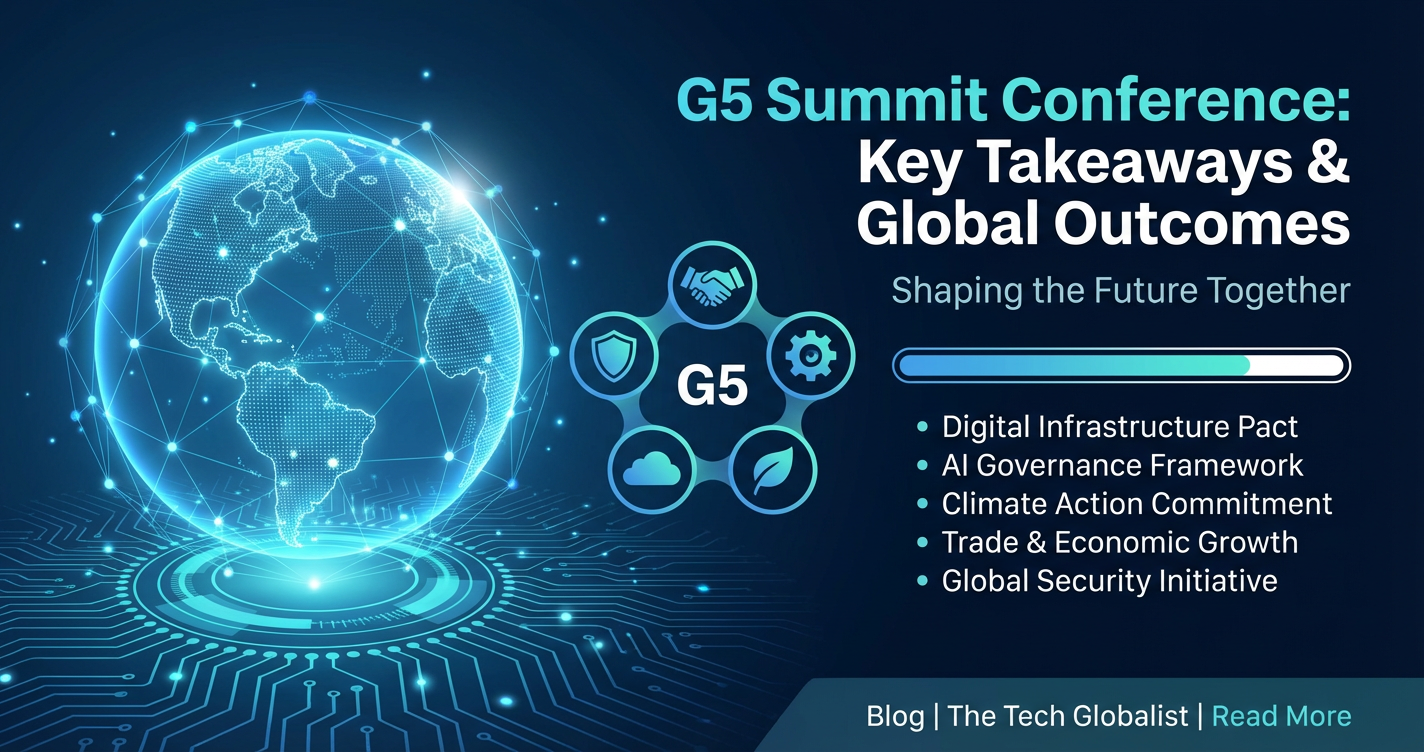
G5 Summit Conference: Key Takeaways & Global Outcomes



The global stage is a perpetually shifting tapestry, interwoven with intricate threads of economic ambition, geopolitical tension, technological revolution, and the undeniable imperative of environmental stewardship. In this complex and often volatile landscape, multilateral forums serve as critical crucibles where nations can coalesce around shared challenges, forge common understandings, and chart a collective course forward. Among these vital gatherings, the G5 Summit Conference stands as a pivotal event, bringing together the leaders of five economically and politically influential nations to deliberate on the most pressing issues confronting humanity. The recent convening of the G5 Summit, held against a backdrop of unprecedented global transformations, was not merely a ceremonial gathering; it was a deeply consequential dialogue poised to shape international relations, economic trajectories, and the very fabric of our interconnected future. This article delves into the profound discussions, the crucial key takeaways, and the far-reaching global outcomes that emerged from this significant confluence of world leaders, examining how their collective vision aims to navigate the multifaceted challenges of our time.
The summit's agenda was deliberately expansive, reflecting the multifaceted nature of contemporary global crises. From the simmering embers of geopolitical conflicts and the inflationary pressures threatening global economic stability to the accelerating urgency of climate change and the transformative, yet often perplexing, rise of artificial intelligence, no stone was left unturned. Each head of state arrived with a mandate to represent national interests while simultaneously seeking common ground for universal progress. The very act of convening, fostering direct dialogue and candid exchange among leaders, served as a testament to the enduring belief in multilateralism as the most effective mechanism for addressing problems that transcend national borders. The ensuing deliberations and subsequent declarations are expected to reverberate across continents, influencing policy decisions, stimulating investment, and hopefully, fostering a more stable, prosperous, and equitable world.
Setting the Stage: The Geopolitical and Economic Landscape Pre-Summit
To truly appreciate the gravitas and urgency of the G5 Summit, it is imperative to first understand the tumultuous global context in which it took place. The months leading up to the conference were characterized by a confluence of intertwined crises, each demanding immediate attention and long-term strategic thinking. Economically, the world was grappling with a stubborn inflationary spiral, fueled by lingering supply chain disruptions from the recent pandemic, exacerbated by geopolitical conflicts impacting energy and food markets. Central banks across major economies were engaged in a delicate balancing act, tightening monetary policy to curb inflation without inadvertently tipping fragile economies into recession. The specter of global stagflation, a period of high inflation coupled with stagnant economic growth, loomed large, casting a pall of uncertainty over businesses and households worldwide. Furthermore, the burgeoning national debts in many developing and even some developed nations presented a significant fiscal challenge, limiting governments' capacity to respond to crises and invest in future growth.
Geopolitically, the international order was under immense strain. Regional conflicts persisted and, in some instances, intensified, leading to immense humanitarian suffering and mass displacement. The delicate balance of power was shifting, with rising geopolitical competition creating new fault lines and challenging established norms of international law and diplomacy. Trade relations, once seen as a unifying force, had become increasingly weaponized, with tariffs, sanctions, and export controls being deployed as tools of foreign policy. The global community also confronted a deepening trust deficit, making consensus-building on critical issues increasingly difficult. This fragmentation underscored the urgent need for renewed diplomatic efforts and a recommitment to the principles of peaceful conflict resolution and mutual respect, principles that the G5 leaders aimed to reinforce through their collective discussions.
Simultaneously, the world stood at the precipice of a profound technological revolution, driven primarily by the rapid advancements in artificial intelligence. While offering unparalleled opportunities for innovation, productivity gains, and solving complex societal problems, AI also presented a host of ethical dilemmas, security risks, and socio-economic dislocations. Concerns about job displacement, algorithmic bias, the potential for autonomous weapons, and the misuse of AI for surveillance or disinformation campaigns weighed heavily on policymakers' minds. The need for international cooperation on AI governance, ensuring its responsible development and deployment, became an increasingly prominent topic of discussion among global leaders, setting the stage for significant deliberations at the summit.
Underpinning these economic and geopolitical anxieties was the ever-present, escalating threat of climate change. Extreme weather events – from devastating floods and prolonged droughts to intense heatwaves and raging wildfires – had become more frequent and severe, impacting communities and economies across the globe. The urgency of transitioning to a low-carbon economy, investing in renewable energy, and adapting to the unavoidable impacts of a warming planet was undeniable. However, the path to achieving these goals was fraught with challenges, including securing adequate climate finance for developing nations, overcoming political resistance to policy changes, and fostering technological innovation at an unprecedented scale. Finally, lessons from recent global health crises underscored the critical importance of pandemic preparedness, equitable access to healthcare resources, and strengthening global health infrastructure, ensuring that humanity is better equipped to respond to future public health emergencies. It was against this backdrop of complex, interconnected challenges that the G5 leaders converged, tasked with the immense responsibility of charting a path towards a more stable, prosperous, and sustainable future.
Core Discussions and Key Takeaways – Thematic Deep Dive
The G5 Summit's agenda was meticulously crafted to address the most pressing global issues, fostering in-depth discussions that traversed economic, geopolitical, environmental, and technological domains. The resulting key takeaways reflect a collective understanding of these challenges and a commitment to collaborative solutions, even amidst differing national perspectives.
A. Economic Stability and Growth Strategies
The global economy's precarious state formed a central pillar of the G5 deliberations. Leaders grappled with the complex interplay of inflation, interest rates, and the imperative for sustainable growth. A significant takeaway was the renewed commitment to enhanced macroeconomic coordination. Discussions focused on harmonizing fiscal policies to temper inflationary pressures without stifling economic activity, a delicate balancing act requiring nuanced approaches from individual central banks and finance ministries. There was a strong consensus on the need for targeted fiscal support measures to protect vulnerable populations from the brunt of rising living costs, ensuring that economic adjustments do not disproportionately impact lower-income households.
Furthermore, the summit emphasized the critical importance of building more resilient global supply chains. The disruptions experienced during the pandemic and exacerbated by geopolitical events exposed severe vulnerabilities in the 'just-in-time' manufacturing model. Leaders explored strategies for diversification of sourcing, promoting near-shoring and friend-shoring initiatives, and investing in strategic reserves of critical goods and raw materials. This shift aims to reduce reliance on single points of failure and enhance the stability of essential goods' flow, from semiconductors to pharmaceuticals. The conversation also delved into the perennial debate between trade liberalization and protectionism. While acknowledging legitimate national security and economic sovereignty concerns, the G5 leaders reiterated the benefits of an open, rules-based multilateral trading system, emphasizing that protectionist measures, if not carefully calibrated, could exacerbate global economic fragmentation and hinder collective recovery.
A significant portion of the economic discussions also centered on supporting developing nations, particularly those burdened by unsustainable debt levels. The G5 committed to exploring innovative mechanisms for debt relief and increasing development aid, recognizing that global prosperity is inextricably linked to the economic stability of all nations. Initiatives to boost foreign direct investment in emerging markets, coupled with capacity-building programs, were identified as crucial for fostering self-sustaining growth. Moreover, the leaders underscored the transformative role of innovation in driving long-term economic prosperity. Investments in research and development, particularly in green technologies and digital infrastructure, were highlighted as essential for creating future-proof economies, enhancing productivity, and addressing societal challenges. The summit concluded with a robust framework for ongoing economic dialogue, ensuring that these strategies are not merely aspirational but are actively pursued through coordinated international efforts.
B. Geopolitical Security and Diplomacy
The G5 Summit served as a critical platform for leaders to address the escalating geopolitical tensions and reaffirm their commitment to international peace and security. Discussions focused intently on conflict resolution and prevention, with an emphasis on reinvigorating diplomatic channels and supporting mediation efforts in ongoing conflicts. The leaders collectively condemned acts of aggression and called for strict adherence to international law and the principles of national sovereignty and territorial integrity. There was a strong consensus on the judicious application of sanctions, ensuring they are targeted and effective in deterring aggression while minimizing unintended humanitarian consequences. Furthermore, the G5 pledged increased humanitarian aid to conflict-affected regions, acknowledging the severe human toll of protracted instability.
A significant takeaway from this segment was the reaffirmation of multilateralism as the cornerstone of global security. Leaders committed to strengthening international institutions, including the United Nations, and enhancing their capacity to respond to crises. The importance of reinforcing global norms and agreements, from nuclear non-proliferation treaties to conventions on human rights, was heavily emphasized. The summit also dedicated substantial time to the rapidly evolving threat of cyber security. With state-sponsored cyber-attacks becoming more sophisticated and frequent, targeting critical infrastructure, democratic processes, and economic stability, the G5 agreed on the urgent need for enhanced international cooperation to counter these threats. This includes sharing intelligence, developing common standards for cyber hygiene, and establishing clear norms for responsible state behavior in cyberspace to prevent escalation and maintain digital peace.
Moreover, leaders engaged in candid discussions about regional stability, addressing specific hotspots and outlining collaborative strategies to foster peace and de-escalation. The evolving role of traditional alliances and the emergence of new partnerships in a multipolar world were also key themes. The G5 recognized the need for flexible and inclusive security frameworks that can adapt to changing geopolitical realities while upholding fundamental principles of peace and cooperation. The dialogue underscored that true security extends beyond military might, encompassing economic stability, social cohesion, and environmental resilience, thereby framing geopolitical challenges within a broader, more holistic understanding of global well-being. The summit concluded with a shared understanding that sustained diplomatic engagement and collective action remain the most potent tools for navigating a complex and often perilous geopolitical landscape.
C. Climate Action and Sustainable Development
The existential threat of climate change featured prominently in the G5 Summit discussions, reflecting the growing global urgency to transition towards a sustainable future. Leaders acknowledged the scientific consensus on anthropogenic climate change and reiterated their commitments under the Paris Agreement, emphasizing the need for accelerated action to meet and exceed national determined contributions (NDCs). A major key takeaway was the strong push for rapid decarbonization pathways, with a focus on scaling up investments in renewable energy sources like solar, wind, and geothermal power. Discussions revolved around policies to phase out fossil fuel subsidies, implement robust carbon pricing mechanisms, and stimulate innovation in green technologies such as carbon capture and storage, and sustainable aviation fuels.
A critical aspect of the climate dialogue was climate finance. The G5 recognized the historical responsibility of developed nations and the disproportionate vulnerability of developing countries to climate impacts. There was a renewed commitment to mobilize and deliver increased climate finance, not only for mitigation efforts but also crucially for adaptation and resilience-building measures in vulnerable regions. Leaders explored innovative financial instruments and partnerships, including public-private collaborations, to unlock the trillions of dollars needed to fund the global energy transition and protect communities from extreme weather events. The concept of "loss and damage" also gained significant traction, underscoring the need to address the irreversible impacts of climate change on the most affected nations.
Beyond energy transition, the summit also addressed broader sustainable development goals. Biodiversity protection emerged as a vital component of climate action, with pledges to halt and reverse deforestation, protect marine ecosystems, and combat illegal wildlife trade. The G5 emphasized the importance of circular economy principles, advocating for policies that promote waste reduction, resource efficiency, and the reuse and recycling of materials across industrial and consumer sectors. Furthermore, discussions included the imperative of green technology transfer, ensuring that innovative solutions developed in advanced economies are accessible and affordable for developing nations, facilitating a truly global shift towards sustainability. The leaders concluded with a clear message: climate action is not merely an environmental imperative but also an economic opportunity, capable of driving job creation, fostering innovation, and enhancing long-term global stability, provided there is collective will and coordinated effort.
D. The Digital Frontier: AI, Technology, and Governance
Perhaps one of the most forward-looking and critically important segments of the G5 Summit focused on the digital frontier, particularly the explosive growth of artificial intelligence and the complex challenges it presents for governance, ethics, and global equity. The discussions highlighted the dual nature of AI: an immense force for good, capable of revolutionizing industries, healthcare, and scientific discovery, yet simultaneously a source of profound ethical dilemmas and potential societal disruption.
In this rapidly evolving digital landscape, the concept of an AI Gateway has become paramount for nations and multinational corporations alike. An AI gateway acts as a crucial intermediary, managing, securing, and optimizing the flow of data and requests to and from various AI models. It addresses critical concerns such as authentication, access control, cost tracking, and standardizing diverse AI services, allowing for seamless integration into existing applications and infrastructure. The G5 leaders underscored that without such controlled access points, the proliferation of AI models could lead to unmanageable complexity, security vulnerabilities, and a lack of transparency. Solutions like ApiPark, an open-source AI gateway and API management platform, exemplify how such a technology can facilitate the quick integration of over 100 AI models and provide a unified API format for AI invocation, simplifying complex AI deployments for enterprises and developers. This kind of robust infrastructure is vital for controlling the immense power of AI and ensuring its responsible deployment across borders, serving as a critical layer in national digital strategies and international cooperation frameworks.
A major takeaway was the urgent need for international cooperation on ethical AI development. Leaders acknowledged the potential for algorithmic bias, the challenges of explainability, and the risks associated with autonomous decision-making. Commitments were made to develop shared principles for responsible AI, focusing on fairness, transparency, accountability, and human oversight. Discussions also covered the complex issue of data governance and privacy, particularly in an era of cross-border data flows. The G5 recognized the need for harmonized regulatory frameworks that protect individual privacy while facilitating legitimate data exchange for innovation and public good. This involves exploring interoperable standards and fostering mutual recognition of data protection regimes, drawing lessons from existing models like the GDPR.
Furthermore, the G5 discussions underscored the need for an Open Platform approach to technological development. By fostering environments where AI tools and digital solutions are built on open standards and collaborative ecosystems, smaller nations, startups, and academic institutions can leverage advanced technologies without proprietary lock-ins. This philosophy encourages shared innovation, accelerates progress for all, and helps bridge the global digital divide. Platforms like APIPark, being open-source under the Apache 2.0 license, embody this spirit, providing an accessible foundation for managing and deploying AI and REST services, thus contributing to a more inclusive and equitable digital economy. The leaders recognized that an open platform strategy is crucial for democratizing access to cutting-edge technology, preventing technological monopolies, and fostering a vibrant global ecosystem of innovation.
Beyond mere access and development, effective API Governance emerged as a non-negotiable requirement for the digital age. As digital economies become increasingly interconnected through APIs (Application Programming Interfaces), rigorous governance frameworks are essential to manage how these different systems, especially AI systems, communicate and interact. This ensures security, interoperability, scalability, and compliance, preventing fragmentation and promoting controlled access to critical digital services. The G5 emphasized the importance of establishing clear standards for API design, documentation, security protocols, and lifecycle management to prevent vulnerabilities and ensure seamless integration across diverse applications and services, both within national borders and internationally. APIPark, for instance, offers end-to-end API lifecycle management, assisting with design, publication, invocation, and decommission, thereby regulating management processes and ensuring secure and efficient API operations. This comprehensive approach to API governance is not just a technical necessity but a strategic imperative for building resilient and trustworthy digital infrastructures capable of supporting future AI-driven economies and services. The leaders also touched upon the broader implications of emerging technologies like quantum computing and biotechnology, underscoring the need for proactive regulatory foresight and international dialogue to harness their potential benefits while mitigating their risks. The G5 expressed a collective ambition to lead in shaping a digital future that is innovative, secure, ethical, and inclusive for all.
E. Public Health and Social Resilience
The G5 Summit also placed a significant emphasis on public health and social resilience, drawing critical lessons from recent global health crises and addressing persistent inequalities. A central takeaway was the renewed commitment to global pandemic preparedness. Leaders recognized that future pandemics are not a matter of 'if,' but 'when,' and pledged to invest in robust early warning systems, strengthen global surveillance networks, and enhance collaborative research into vaccines, diagnostics, and therapeutics. Discussions revolved around establishing mechanisms for equitable distribution of medical countermeasures, ensuring that all nations, regardless of economic status, have timely access to life-saving tools during a public health emergency. This includes supporting initiatives like the WHO's global vaccine equity programs and fostering regional manufacturing capabilities.
Strengthening healthcare systems globally was another key theme. The G5 committed to supporting initiatives that bolster primary care access, invest in health workforce development, and leverage digital health solutions to improve service delivery and efficiency. The importance of resilient health supply chains, capable of withstanding disruptions, was also highlighted. Leaders acknowledged the need for comprehensive health coverage that includes preventive care, ensuring populations are healthier and better equipped to resist disease.
Beyond physical health, the summit brought to the forefront the growing global concern surrounding mental health awareness. The G5 recognized the increasing prevalence of mental health conditions and their profound societal and economic impacts. Commitments were made to destigmatize mental illness, integrate mental health services into primary care, and launch global initiatives to promote well-being and provide support for individuals struggling with mental health challenges. This signals a crucial shift towards a more holistic understanding of public health that encompasses both physical and psychological well-being.
Finally, the leaders addressed broader aspects of social resilience, including strategies for addressing inequality and poverty reduction. Discussions focused on strengthening social safety nets, ensuring access to quality education, and promoting inclusive labor markets that provide opportunities for all segments of society. The demographic shifts occurring globally, such as aging populations and migration patterns, were also explored, with leaders committing to developing policies that leverage these changes for economic and social benefit while mitigating potential challenges. The summit concluded with a powerful message: investing in public health and social resilience is not just a moral imperative but a fundamental prerequisite for stable, prosperous, and secure societies capable of withstanding future shocks and thriving in an increasingly complex world.
APIPark is a high-performance AI gateway that allows you to securely access the most comprehensive LLM APIs globally on the APIPark platform, including OpenAI, Anthropic, Mistral, Llama2, Google Gemini, and more.Try APIPark now! 👇👇👇
Global Outcomes and Future Implications
The G5 Summit concluded with a comprehensive set of declarations and commitments, reflecting a concerted effort to forge a path forward amidst the multifaceted global crises. The outcomes are expected to have significant short-term impacts on immediate challenges and set the stage for long-term transformations across various sectors, influencing international relations, economic trajectories, technological advancement, and the global climate agenda.
In terms of economic stability, the consolidated commitments included pledges for enhanced fiscal coordination among member states to specifically target inflation and manage debt burdens. This is projected to lead to a gradual stabilization of global financial markets, potentially reducing economic volatility and fostering a more predictable environment for investment and trade. The emphasis on diversifying supply chains and investing in strategic reserves is anticipated to mitigate future disruptions, improving the resilience of critical sectors and buffering economies against external shocks. While immediate results might vary, the long-term impact is a more robust and secure global economy less susceptible to single points of failure.
On the geopolitical front, the summit strengthened diplomatic channels and reaffirmed the G5's commitment to multilateralism as the primary mechanism for conflict resolution. This is likely to lead to a de-escalation of certain regional tensions through sustained dialogue and mediation efforts, although complex conflicts require protracted engagement. The joint initiatives against cyber threats, including intelligence sharing and the development of common cybersecurity standards, are expected to enhance digital security across critical infrastructure, protecting national interests and global data flows. The G5's unified stance on international law serves to reinforce norms and potentially deter future acts of aggression, bolstering the overall framework of global security.
The climate trajectory received a significant boost from the summit's outcomes. Commitments to accelerate the transition to renewable energy sources, coupled with increased climate finance for developing nations, are projected to reduce global carbon emissions and enhance climate resilience in vulnerable regions. While the path to net-zero remains challenging, these pledges represent tangible steps towards achieving targets and fostering green innovation. The focus on green technology transfer is crucial for ensuring that these advancements are accessible globally, accelerating the collective effort to combat climate change.
The digital governance outcomes are particularly forward-looking. The agreement on developing frameworks for ethical AI and data privacy will foster responsible AI deployment, safeguarding individual rights and data security across borders. The promotion of Open Platform standards and API Governance is a significant step towards enabling seamless integration of digital services and improving cross-border data management. This is expected to drive innovation, facilitate digital trade, and create a more interconnected yet secure global digital ecosystem, providing a foundational architecture for future AI-driven services.
In the realm of public health, the G5's investment in global pandemic preparedness mechanisms is poised to improve response capabilities to future health crises, ensuring more equitable access to medical resources worldwide. The support for mental health initiatives will contribute to enhanced public well-being and help reduce the societal burden of mental health issues. These outcomes reflect a comprehensive approach to human security, recognizing health as a global common good.
However, the path ahead is not without its challenges. Implementation gaps, ongoing geopolitical crises, and unforeseen events could test the resolve and unity of the G5 nations. The true measure of the summit's success will lie in the consistent follow-through on commitments and the ability to adapt strategies to evolving global dynamics. Nevertheless, the G5 Summit unequivocally underscored the enduring relevance of multilateral forums in shaping the global agenda and fostering collective action. It presented a united front, demonstrating that even in an era of profound complexity, collaboration, dialogue, and a shared vision remain the most potent tools for navigating humanity's collective destiny.
| Sector | Key Commitments/Outcomes | Projected Impact |
|---|---|---|
| Economic Stability | - Enhanced fiscal coordination to combat inflation | - Stabilized global markets, reduced economic volatility |
| - Investment in resilient supply chains | - Mitigated future supply disruptions, improved economic security | |
| Geopolitical Security | - Strengthened diplomatic channels for conflict resolution | - De-escalation of regional tensions, promotion of peaceful dialogue |
| - Joint initiatives against cyber threats | - Enhanced digital security, protection of critical infrastructure | |
| Climate Action | - Accelerated transition to renewable energy sources | - Reduced carbon emissions, progress towards net-zero goals |
| - Increased climate finance for developing nations | - Enhanced climate resilience and adaptation capabilities in vulnerable regions | |
| Digital Governance | - Frameworks for ethical AI development and data privacy | - Responsible AI deployment, safeguarding individual rights and data security |
| - Promotion of Open Platform standards and API Governance for interoperability | - Fostered innovation, seamless integration of digital services, improved cross-border data management | |
| Public Health | - Investment in global pandemic preparedness mechanisms | - Improved response capabilities to future health crises, equitable access to medical resources |
| - Support for mental health initiatives | - Enhanced public well-being, reduced societal burden of mental health issues |
Conclusion
The recent G5 Summit Conference served as a potent reminder of the indispensable role that multilateral diplomacy plays in navigating the intricate web of global challenges that define our modern era. Convening against a backdrop of unparalleled economic turbulence, geopolitical volatility, technological acceleration, and environmental urgency, the leaders of the G5 nations engaged in extensive and often challenging deliberations aimed at forging a collective response to these pressing issues. The depth and breadth of their discussions, spanning macroeconomic stabilization, conflict prevention, climate action, digital governance, and public health, underscored the interconnectedness of these global phenomena and the absolute necessity of a unified, comprehensive approach.
The key takeaways from the summit reveal a clear commitment to fostering a more stable, equitable, and sustainable world. From pledges to enhance macroeconomic coordination and build resilient supply chains to agreements on reinforcing international law and strengthening cybersecurity defenses, the G5 demonstrated a shared understanding of the immediate priorities. Crucially, the summit advanced critical discussions around the responsible development and deployment of emerging technologies, particularly artificial intelligence, emphasizing the need for robust AI Gateway solutions, the benefits of Open Platform initiatives, and the foundational importance of sound API Governance. These technological considerations are not peripheral; they are central to shaping the future of global commerce, security, and societal interaction.
While the declarations and agreements signal significant progress and a renewed spirit of collaboration, the true impact of the G5 Summit will ultimately be measured by the fidelity of their implementation. The path ahead remains fraught with complexities, requiring sustained political will, continuous diplomatic engagement, and the capacity to adapt to unforeseen circumstances. Yet, the consensus achieved, the frameworks established, and the spirit of shared responsibility articulated at the summit provide a crucial roadmap for confronting the challenges of the 21st century. The G5's commitment to multilateralism, underscored by tangible actions and forward-looking strategies, reinforces the enduring belief that through collective effort, humanity can overcome its greatest hurdles and build a future defined by peace, prosperity, and shared well-being for all.
Frequently Asked Questions (FAQ)
1. What is the primary purpose of the G5 Summit Conference? The G5 Summit Conference brings together leaders from five economically and politically influential nations to discuss and coordinate responses to the most pressing global challenges. Its primary purpose is to foster multilateral dialogue, build consensus on critical issues such as economic stability, geopolitical security, climate action, and technological governance, and ultimately to formulate collective strategies to achieve a more stable, prosperous, and sustainable world.
2. How did the G5 Summit address the global economic challenges like inflation and supply chain disruptions? The summit addressed these challenges by committing to enhanced macroeconomic coordination among member states to combat inflation and manage debt. Leaders also focused on building more resilient global supply chains through diversification, promoting near-shoring, and investing in strategic reserves of critical goods. The goal is to stabilize global markets and mitigate future economic volatility.
3. What role did Artificial Intelligence (AI) and digital governance play in the summit's discussions? AI and digital governance were central themes. Leaders discussed the ethical development of AI, data privacy, and the need for international cooperation on AI governance. Key takeaways included the importance of robust AI Gateway solutions for managing AI access and security, the benefits of Open Platform approaches for inclusive innovation, and the critical role of API Governance in ensuring secure and interoperable digital ecosystems.
4. What were the key outcomes regarding climate action and sustainable development? The G5 leaders reinforced their commitments under the Paris Agreement, pledging to accelerate decarbonization pathways, scale up investments in renewable energy, and phase out fossil fuel subsidies. They also committed to increasing climate finance for developing nations, supporting adaptation and resilience measures, and promoting green technology transfer to achieve global sustainability goals.
5. What are the long-term implications of the G5 Summit's decisions on global stability? The long-term implications are significant, aiming for enhanced global stability across multiple dimensions. Economically, the coordinated strategies seek a more resilient and less volatile global market. Geopolitically, strengthened diplomatic channels and cybersecurity initiatives aim to foster peace and secure digital infrastructure. In terms of technology and climate, the summit's outcomes are expected to drive responsible innovation and accelerate the transition to a sustainable future, contributing to a more predictable and secure international environment.
🚀You can securely and efficiently call the OpenAI API on APIPark in just two steps:
Step 1: Deploy the APIPark AI gateway in 5 minutes.
APIPark is developed based on Golang, offering strong product performance and low development and maintenance costs. You can deploy APIPark with a single command line.
curl -sSO https://download.apipark.com/install/quick-start.sh; bash quick-start.sh

In my experience, you can see the successful deployment interface within 5 to 10 minutes. Then, you can log in to APIPark using your account.

Step 2: Call the OpenAI API.