Gartner Magic Quadrant Companies: An Essential Guide


In the vast and ever-evolving landscape of enterprise technology, making informed decisions about which vendors and solutions to trust can be an overwhelming challenge. Businesses are constantly seeking reliable benchmarks to guide their strategic investments, avoid costly pitfalls, and ensure they are partnering with innovators who can truly deliver on their promises. This is where the Gartner Magic Quadrant emerges as an indispensable tool, offering a comprehensive and rigorously researched evaluation of technology providers across various critical market segments. Far from being a mere popularity contest, the Magic Quadrant is a deep dive into the capabilities, vision, and execution prowess of companies that are shaping the future of IT.
This extensive guide aims to demystify the Gartner Magic Quadrant, exploring its intricate methodology, the significance of its classifications, and how businesses can strategically leverage its insights. We will delve into key technology areas frequently featured, from cloud infrastructure and data analytics to the increasingly crucial domains of API management and artificial intelligence. Special attention will be paid to understanding the vital role of API Gateway, LLM Gateway, and AI Gateway technologies, which are rapidly becoming the backbone of modern, interconnected, and intelligent enterprise architectures. By the end of this journey, readers will possess a profound understanding of how to navigate the Magic Quadrant effectively, interpret vendor positions, and ultimately make confident technology decisions that drive business growth and innovation.
Understanding the Gartner Magic Quadrant: A Beacon in the Tech Fog
The Gartner Magic Quadrant stands as one of the most respected and widely referenced analytical tools in the technology industry. Published annually for numerous technology markets, it provides a graphical representation of a market’s competitive landscape and the positioning of its various vendors. For IT leaders, strategists, and business decision-makers, it serves as a critical guidepost, helping them understand market dynamics, identify suitable technology partners, and mitigate risks associated with technology adoption. Its influence stems from Gartner’s reputation for independent, thorough research, grounded in extensive data collection, vendor interviews, and customer feedback.
The Rigorous Methodology Behind the Magic
At the heart of the Magic Quadrant's credibility is its meticulous and transparent methodology. Gartner analysts, specialists in their respective fields, spend months gathering data, engaging with vendors, and soliciting input from thousands of customers. This process involves a comprehensive evaluation based on two primary criteria: Completeness of Vision and Ability to Execute.
Completeness of Vision assesses a vendor's understanding of market needs, its innovation, and its future strategic direction. This criterion looks beyond current product offerings to gauge a company's ability to anticipate and influence market trends. Factors considered include:
- Market Understanding: How well does the vendor understand buyer needs and market shifts? Are they proactive in addressing emerging challenges?
- Marketing Strategy: Does the vendor have a clear and effective plan to reach its target audience and communicate its value proposition?
- Sales Strategy: Is the vendor’s approach to selling its products and services well-defined and successful?
- Offering (Product) Strategy: What are the vendor’s plans for product development, innovation, and feature roadmap? Is it aligned with future market demands?
- Business Model: Does the vendor have a viable and sustainable business model that supports its long-term growth and market position?
- Vertical/Industry Strategy: Does the vendor demonstrate specific solutions or strategies for key vertical markets?
- Innovation: How much does the vendor invest in R&D and intellectual property? Are they recognized as a leader in pioneering new technologies?
- Geographic Strategy: How well does the vendor cater to different regional markets and global expansion?
Ability to Execute evaluates a vendor's capacity to deliver on its vision. This is a measure of the vendor's current operational capabilities, market presence, and overall success. Key factors include:
- Product/Service: The quality, functionality, usability, and breadth of the products and services offered. Does the current offering meet the stated market needs effectively?
- Overall Viability: The vendor's financial health, management team, and overall stability. Can the company sustain its operations and continue to invest in its products?
- Sales Execution/Pricing: The effectiveness of the vendor's sales channels, its pricing competitiveness, and its success in closing deals.
- Market Responsiveness/Record: The vendor’s ability to respond to changing market conditions and its track record of delivering successful products and projects.
- Customer Experience: The quality of technical support, professional services, training, and overall customer satisfaction. Are customers generally happy with the vendor?
- Operations: The efficiency of the vendor’s organizational structure, processes, and infrastructure in supporting its business operations and customer base.
Each vendor is scored against these criteria, and their position in the Magic Quadrant is determined by these composite scores, placing them into one of four distinct quadrants.
The Four Quadrants: Leaders, Challengers, Visionaries, and Niche Players
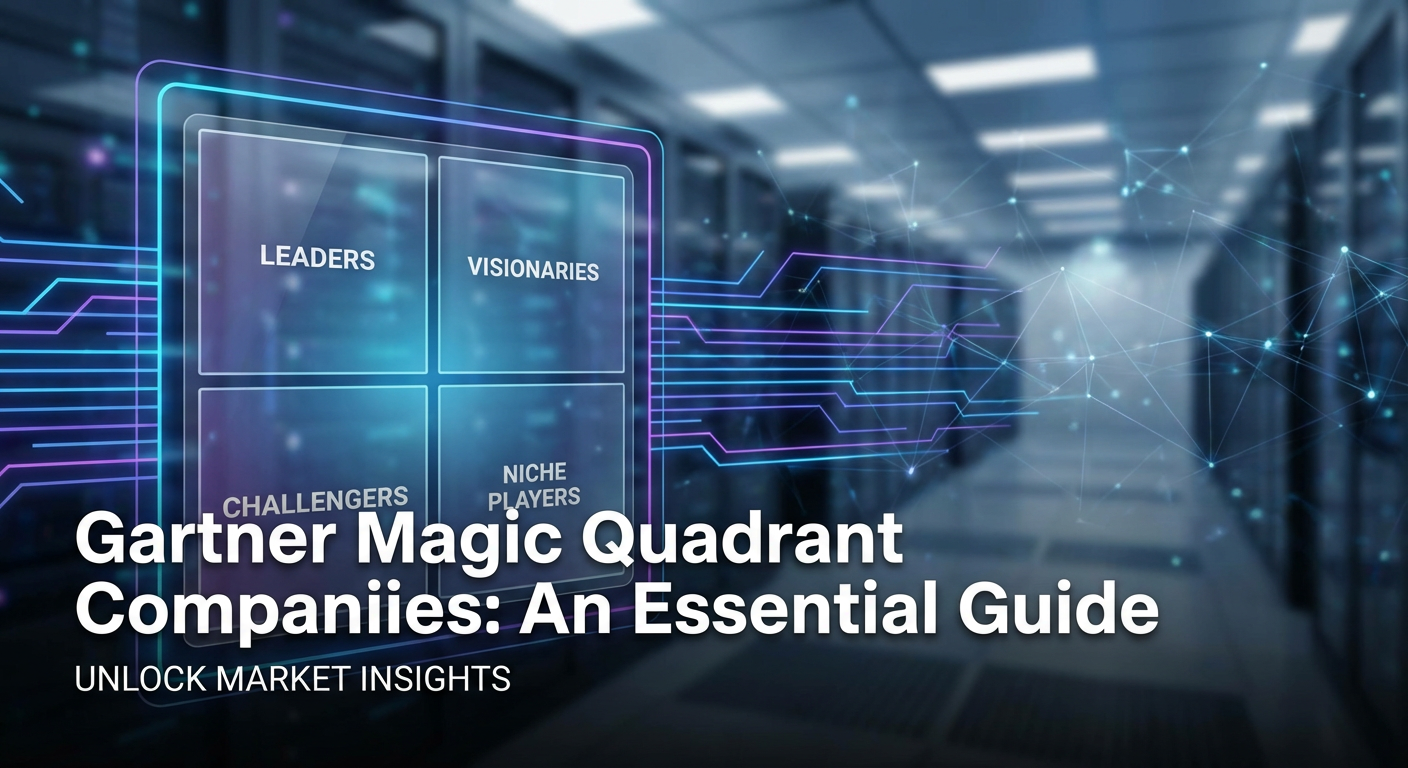
The graphical representation of the Magic Quadrant is divided into four distinct sections, each signifying a particular market position and strategic outlook for the vendors within it:
- Leaders: Located in the upper-right quadrant, Leaders possess a high Ability to Execute and a high Completeness of Vision. These vendors are typically well-established, have a significant market share, and consistently demonstrate superior performance in product functionality, customer support, and strategic foresight. They are often seen as safe choices for most organizations, offering proven solutions and a clear path for future innovation. Companies in this quadrant are generally reliable, provide comprehensive offerings, and influence market direction.
- Challengers: Situated in the upper-left quadrant, Challengers have a strong Ability to Execute but may have a less defined or nascent Completeness of Vision. These vendors often have a large customer base and a robust product offering but might not yet demonstrate the strategic innovation or broad market understanding of a Leader. They are capable of executing on their promises and are typically strong competitors, often focusing on operational excellence or specific market segments where they dominate. They might be aggressive on price or offer robust, proven solutions without necessarily pushing the boundaries of future innovation.
- Visionaries: Found in the lower-right quadrant, Visionaries exhibit a high Completeness of Vision but may have a lower Ability to Execute. These vendors are often innovative, understand emerging technology trends, and possess a strong product roadmap that aligns with future market needs. However, their execution might be limited by factors such as market share, financial stability, or the breadth of their product portfolio. They are typically smaller, agile companies or those introducing disruptive technologies that have not yet achieved widespread adoption. Partnering with a Visionary can bring cutting-edge solutions but may involve a higher degree of risk.
- Niche Players: Occupying the lower-left quadrant, Niche Players have a lower Ability to Execute and a lower Completeness of Vision. These vendors typically focus on a specific segment of the market, a particular geographic region, or a narrow set of functionalities. While they might excel in their specialized area, they often lack the breadth of offering or the strategic vision to appeal to a broader market. They can be excellent choices for organizations with very specific requirements that align perfectly with the vendor's niche expertise, but they may not be suitable for general enterprise needs.
Understanding these distinctions is crucial for businesses. A Leader might be the default choice for stability, but a Visionary could offer the innovative edge needed for digital transformation, while a Niche Player might provide a perfect fit for a specialized problem.
Benefits for Buyers: Informed Decisions and Risk Mitigation
For technology buyers, the Gartner Magic Quadrant offers several invaluable benefits:
- Accelerated Vendor Selection: By pre-screening vendors and categorizing them, the Magic Quadrant significantly reduces the time and effort required for initial vendor research. It provides a shortlist of credible players, allowing organizations to focus their due diligence on a manageable number of candidates.
- Informed Decision-Making: Beyond just listing vendors, the detailed analysis accompanying each Magic Quadrant report offers deep insights into each vendor's strengths, weaknesses, and strategic roadmap. This empowers buyers to make decisions based on a holistic understanding rather than just marketing claims.
- Risk Reduction: Partnering with a vendor in a strong position within the Magic Quadrant often implies a certain level of financial stability, market acceptance, and proven product capabilities. This inherently reduces the risk associated with technology investments, ensuring that a chosen solution is likely to be supported and evolve.
- Understanding Market Trends: The Magic Quadrant reports often highlight key market drivers, emerging technologies, and shifts in customer demand. This helps organizations stay abreast of industry trends and position themselves for future innovation.
- Benchmarking and Negotiation Leverage: Buyers can use the Magic Quadrant to benchmark potential vendors against industry leaders and visionaries. This knowledge can also be leveraged during contract negotiations, armed with an understanding of where a vendor truly stands relative to its competitors.
Benefits for Vendors: Validation and Competitive Advantage
For technology vendors, achieving a favorable position in a Gartner Magic Quadrant is a significant accomplishment that brings a multitude of strategic advantages:
- Third-Party Validation: Inclusion in the Magic Quadrant, particularly in the Leader or Visionary quadrant, provides powerful third-party validation of a vendor's capabilities and strategic direction. This objective endorsement can be far more convincing than self-promotion.
- Enhanced Market Visibility: A prominent position significantly boosts a vendor's visibility within the market, attracting attention from potential customers, investors, and talent. It places them on the radar of decision-makers who rely on Gartner's research.
- Competitive Differentiation: The Magic Quadrant helps vendors articulate their unique strengths and differentiate themselves from competitors. It provides a common framework for discussing market position and competitive advantages.
- Sales Enablement: Sales teams can use the Magic Quadrant as a powerful tool to educate prospects, build trust, and overcome objections. "We are a Leader in the Gartner Magic Quadrant" is a strong statement that resonates with enterprise buyers.
- Investor Confidence: A strong showing in the Magic Quadrant can signal stability, growth potential, and market leadership to investors, potentially attracting capital and increasing valuation.
- Internal Alignment: The rigorous process of participating in the Magic Quadrant can help vendors internally align their product development, marketing, and sales strategies, ensuring a cohesive vision and execution plan.
In essence, the Gartner Magic Quadrant acts as a crucial bridge between the complex world of technology vendors and the demanding needs of enterprise buyers, fostering transparency, accelerating decision-making, and driving innovation across the industry.
Navigating Key Technology Areas in the MQ
The Gartner Magic Quadrant covers an incredibly diverse range of technology markets, reflecting the multifaceted nature of modern enterprise IT. Each report delves into specific segments, offering tailored insights into the vendors and trends shaping that particular domain. Let's explore some of the most frequently featured and strategically important technology areas.
Cloud Infrastructure & Platform Services (CIPS)
The shift to cloud computing has been one of the most profound transformations in enterprise IT over the past two decades. The Magic Quadrant for Cloud Infrastructure and Platform Services (CIPS) is perhaps one of the most closely watched, as it evaluates the foundational providers upon which countless businesses build and run their digital operations. Leaders in this space, such as Amazon Web Services (AWS), Microsoft Azure, and Google Cloud Platform (GCP), consistently demonstrate unparalleled breadth of services, global reach, robust ecosystems, and continuous innovation.
These platforms offer everything from compute (virtual machines, containers, serverless functions) and storage (object, block, file) to advanced networking, databases, and a sprawling array of managed services. Their vision involves not just hosting infrastructure but providing comprehensive platforms for application development, data analytics, machine learning, and hybrid cloud integration. The ability to execute is measured by their massive scale, reliability, security, developer tooling, and the sheer volume of customers they serve, ranging from startups to the largest global enterprises. For companies seeking to modernize their IT, migrate legacy applications, or build new cloud-native solutions, the CIPS Magic Quadrant provides essential guidance on the market's most capable and visionary players, highlighting their strengths in areas like cost optimization, operational efficiency, and rapid deployment of resources.
Data & Analytics Platforms
In the age of big data, the ability to collect, process, analyze, and derive insights from vast amounts of information is a critical differentiator for businesses. The Magic Quadrants for Data Management Solutions for Analytics, Cloud Database Management Systems, Data Science and Machine Learning Platforms, and Business Intelligence and Analytics Platforms are therefore highly influential. These reports assess vendors providing solutions for data warehousing, data lakes, streaming analytics, data integration, and advanced analytical tools.
Leaders in this domain empower organizations to turn raw data into actionable intelligence, supporting everything from predictive modeling and customer segmentation to operational dashboards and compliance reporting. Their vision often includes democratizing data access, simplifying complex analytical workflows, and embedding AI-driven insights directly into business processes. Execution is judged on factors such as scalability, performance, data governance capabilities, ease of use for data scientists and business users alike, and the ability to integrate with diverse data sources and analytical tools. For any enterprise striving to become data-driven, understanding the strengths of providers in areas like real-time analytics, machine learning operationalization, and secure data sharing, as assessed by Gartner, is paramount.
Cybersecurity: Protecting the Digital Frontier
As cyber threats grow in sophistication and volume, cybersecurity remains a top priority for every organization. Gartner publishes numerous Magic Quadrants dedicated to different aspects of cybersecurity, including Security Information and Event Management (SIEM), Endpoint Protection Platforms (EPP), Identity and Access Management (IAM), Network Firewalls, and Cloud Access Security Brokers (CASB), among others. These reports are vital for businesses looking to build resilient security postures against an ever-evolving threat landscape.
Vendors in these quadrants are evaluated on their ability to detect, prevent, and respond to security incidents, manage identities, secure network perimeters, and protect cloud environments. A strong vision in cybersecurity involves anticipating future threats, integrating threat intelligence, and offering unified platforms that simplify security management. Execution is measured by the efficacy of their detection engines, the breadth of their protection capabilities, the ease of deployment and management, and their responsiveness to new vulnerabilities. For CISOs and security teams, these Magic Quadrants are indispensable for selecting solutions that can provide comprehensive, adaptive, and scalable protection, ensuring business continuity and data integrity in an increasingly hostile digital world.
Enterprise Applications: ERP, CRM, and SCM
Core business functions are managed by a suite of enterprise applications that form the operational backbone of any large organization. The Magic Quadrants for Enterprise Resource Planning (ERP), Customer Relationship Management (CRM), and Supply Chain Management (SCM) are crucial for companies looking to optimize their core processes, enhance customer engagement, and streamline their supply chains. These reports assess integrated suites that cover financials, HR, procurement, manufacturing, sales, marketing, customer service, and logistics.
Leaders in this space provide highly configurable, industry-specific solutions that support end-to-end business processes, often leveraging cloud-native architectures and embedded AI. Their vision typically includes enabling digital transformation, fostering greater agility, and providing a unified view of operations and customers. Execution is judged on factors such as the breadth and depth of functionality, scalability to support global operations, ease of integration with other systems, user experience, and the ability to deliver tangible business value through process automation and optimization. For companies undertaking significant digital transformation initiatives or looking to consolidate disparate systems, these Magic Quadrants offer critical insights into the market's most capable application providers.
AI & Machine Learning Platforms: The Dawn of Intelligent Systems
The rapid advancements in Artificial Intelligence and Machine Learning are revolutionizing industries, empowering businesses with unprecedented capabilities for automation, prediction, and personalized experiences. The Magic Quadrants related to AI, such as Data Science and Machine Learning Platforms or Cloud AI Developer Services, assess vendors providing tools and platforms for building, deploying, and managing AI models. As organizations increasingly embed AI into their products and operations, the complexity of managing diverse AI models, their lifecycle, and their interactions grows exponentially. This is where specialized platforms become indispensable.
The challenges in managing AI services are multifaceted. Enterprises often work with a myriad of AI models, from various providers or internal development, each with its unique API, data format, and deployment requirements. Ensuring consistent authentication, tracking usage costs, maintaining security, and even managing different versions of prompts for Large Language Models (LLMs) can become a significant operational burden. This necessitates a new class of technology solutions, evolving from traditional API management to more specialized interfaces.
This is precisely where the concepts of an AI Gateway and an LLM Gateway come into play. These are not merely theoretical constructs but essential infrastructure components for modern AI-driven enterprises. An AI Gateway acts as a central control plane for all AI service invocations, abstracting away the underlying complexity of different AI models and providers. It can standardize API calls, handle authentication, perform load balancing across multiple model instances, and enforce policies. Similarly, an LLM Gateway is a specialized form of AI Gateway tailored for Large Language Models, which brings additional capabilities such as prompt versioning, prompt optimization, and contextual routing of requests to specific LLMs based on cost, performance, or domain expertise.
For instance, platforms like ApiPark exemplify this evolution, providing an open-source AI Gateway and API Management Platform. It allows for the quick integration of over 100 AI models under a unified management system, standardizing the request data format. This means that changes in an underlying AI model or prompt do not necessitate modifications in the consuming application or microservice, significantly simplifying AI usage and reducing maintenance costs. APIPark enables users to encapsulate AI models with custom prompts into new REST APIs, making it easy to create specialized services like sentiment analysis or translation. Such platforms are vital for enterprises looking to scale their AI initiatives effectively and securely, providing the necessary abstraction and control over a diverse and rapidly changing AI landscape. Their inclusion in future Magic Quadrants or their emergence as critical supporting technologies highlights the dynamic nature of enterprise IT and the continuous need for specialized solutions.
Integration & API Management: The Digital Connective Tissue
In today's highly interconnected world, applications rarely operate in isolation. Data and functionality flow between countless systems, both within and outside the enterprise boundaries. This makes integration a foundational pillar of digital transformation, and API Gateway technology is its critical enabler. Gartner's Magic Quadrant for API Management provides a comprehensive overview of vendors offering solutions that help organizations design, publish, secure, monitor, and scale APIs (Application Programming Interfaces).
An API Gateway serves as the single entry point for all API calls, acting as a traffic cop, bouncer, and accountant for your digital services. It is strategically positioned between the client and a collection of backend services, whether they are microservices, legacy systems, or cloud functions. Its role extends far beyond simple routing; it's a vital component for ensuring security, performance, and manageability across an organization's entire API ecosystem.
The vision for leaders in API management often involves enabling a "composable enterprise," where business capabilities are exposed as reusable services, facilitating rapid innovation and partner integration. They aim to simplify API lifecycle management, from design and testing to deployment and deprecation, while providing robust security and insightful analytics. Their ability to execute is judged on the comprehensiveness of their feature set, scalability, ease of use for API developers and consumers, support for diverse deployment models (on-premises, cloud, hybrid), and overall market adoption. For any enterprise building a modern digital platform, a robust API Gateway is non-negotiable, and understanding the leaders in this Magic Quadrant is essential for building a resilient, secure, and high-performing API infrastructure.
The significance of these distinct, yet often interconnected, technology areas within the Gartner Magic Quadrant underscores its value as a strategic compass. By understanding the leaders, challengers, visionaries, and niche players in each segment, businesses can make more informed decisions, mitigate risks, and position themselves for long-term success in a rapidly evolving technological landscape.
Deep Dive into API Gateway Technology: The Digital Nexus
The proliferation of microservices architectures, the drive towards digital transformation, and the increasing demand for seamless application integration have elevated the API Gateway from a niche component to an indispensable element of modern IT infrastructure. It serves as the digital nexus, orchestrating communication, ensuring security, and optimizing the performance of an organization's entire API ecosystem. Understanding its core functions, benefits, and evolving capabilities, particularly in the context of AI, is crucial for any enterprise.
What is an API Gateway? Core Functions Unpacked
At its essence, an API Gateway is a server that acts as a single entry point for a group of APIs. It sits in front of backend services (which could be anything from microservices, serverless functions, or legacy systems) and intercepts all API requests. Instead of clients making requests directly to individual backend services, they make requests to the API Gateway, which then intelligently routes them to the appropriate service. This aggregation and routing are just the beginning of its capabilities.
Its core functions typically include:
- Routing and Load Balancing: Directing incoming API requests to the correct backend service instance and distributing traffic efficiently across multiple instances to ensure high availability and optimal performance.
- Authentication and Authorization: Verifying the identity of API callers (authentication) and determining if they have the necessary permissions to access a particular resource (authorization). This is often achieved through API keys, OAuth tokens, JWTs, or other security protocols.
- Rate Limiting and Throttling: Controlling the number of requests an individual client can make over a period of time to prevent abuse, ensure fair usage, and protect backend services from overload.
- Request/Response Transformation: Modifying incoming requests before they reach the backend service (e.g., header manipulation, data format conversion) and modifying responses before they are sent back to the client. This allows for standardization and backward compatibility.
- Monitoring and Logging: Collecting metrics on API usage, performance, and errors. Comprehensive logging helps in troubleshooting, auditing, and understanding API consumption patterns.
- Caching: Storing responses from backend services temporarily to reduce latency for subsequent identical requests and decrease the load on backend systems.
- Protocol Translation: Allowing clients to interact with backend services using different communication protocols. For example, a REST API Gateway might expose a simple HTTP endpoint but communicate with a backend using gRPC or a message queue.
- Developer Portal: Many API Gateways are accompanied by developer portals, which provide documentation, tutorials, and tools for API consumers to discover, test, and integrate with published APIs.
Why API Gateways are Essential: Driving Modern Architectures
The necessity of an API Gateway has grown exponentially with the adoption of modern software architectures and business strategies:
- Microservices Architecture: In a microservices paradigm, applications are broken down into small, independent services. Without an API Gateway, clients would need to manage connections to dozens or hundreds of services, handle their individual authentication, and track their changing network locations. The Gateway centralizes this, simplifying client-side complexity and providing a stable interface.
- Digital Transformation: As businesses expose more of their core functionalities as APIs to partners, mobile apps, and IoT devices, a centralized management point becomes critical. The Gateway enables secure, controlled access to these digital assets.
- Enhanced Security Posture: By enforcing security policies at the edge, the API Gateway acts as the first line of defense against malicious attacks, unauthorized access, and data breaches. It provides a single point for applying authentication, authorization, and threat protection policies.
- Performance Optimization: Features like caching, load balancing, and request aggregation (reducing multiple backend calls into one client call) significantly improve API response times and overall application performance.
- Observability and Analytics: Centralized logging and monitoring provide a holistic view of API traffic, helping identify bottlenecks, usage trends, and potential issues across the entire distributed system. This is invaluable for operations teams and business stakeholders.
- Version Management: An API Gateway can manage different versions of an API, allowing developers to deploy new versions without breaking existing client integrations, supporting seamless evolution of services.
Key Features of a Robust API Gateway
A truly robust API Gateway goes beyond the basic routing and security functions, offering a comprehensive suite of features that support the entire API lifecycle and cater to complex enterprise needs:
- Advanced Authentication & Authorization: Support for a wide range of security standards (OAuth 2.0, OpenID Connect, SAML), granular role-based access control (RBAC), and integration with enterprise identity providers.
- Traffic Management Policies: Fine-grained control over traffic, including circuit breakers, retry mechanisms, custom load balancing algorithms, and advanced routing based on headers, query parameters, or even content.
- Comprehensive Monitoring & Logging: Real-time dashboards, integration with external logging and monitoring systems (Splunk, ELK stack, Prometheus, Grafana), and detailed API call analytics.
- Dynamic Configuration: Ability to update routing rules, security policies, and other configurations without requiring a gateway restart, ensuring continuous availability.
- Policy Engine: A flexible policy engine that allows administrators to define and apply custom rules for request transformation, data validation, security, and more.
- Extensibility: Support for custom plugins or extensions to tailor the gateway's functionality to specific organizational requirements.
- Automated Deployment & CI/CD Integration: Tools and APIs for integrating the API Gateway into automated deployment pipelines, facilitating GitOps and DevOps practices.
- Developer Portal Customization: The ability to brand and customize the developer portal to match corporate identity and provide a tailored experience for API consumers.
Selecting an API Gateway: Criteria for Success
Choosing the right API Gateway is a strategic decision that can impact an organization's agility, security, and scalability for years to come. Key considerations include:
- Scalability and Performance: Can the gateway handle projected traffic volumes and maintain low latency under peak loads? Does it support horizontal scaling and distributed deployment?
- Flexibility and Customization: How easily can the gateway be configured and extended to meet specific architectural patterns or business logic? Does it support custom policies or plugins?
- Ease of Use and Developer Experience: Is it straightforward for API developers to publish, manage, and consume APIs through the gateway? Is the documentation clear and comprehensive?
- Ecosystem Integration: How well does it integrate with existing infrastructure components such as identity providers, monitoring tools, CI/CD pipelines, and cloud platforms?
- Deployment Models: Does it support various deployment options (on-premises, public cloud, hybrid, Kubernetes) that align with the organization's infrastructure strategy?
- Open-Source vs. Commercial: Open-source solutions offer flexibility and community support but may require more internal expertise. Commercial solutions often provide enterprise-grade features, professional support, and SLAs. A hybrid approach, where open-source foundations are extended with commercial support, can offer the best of both worlds.
- Security Features: Beyond basic authentication, does it offer advanced threat protection, WAF capabilities, and compliance features?
The Evolution to AI Gateway and LLM Gateway: Orchestrating Intelligence
The explosive growth of Artificial Intelligence, particularly the rise of Large Language Models (LLMs), has introduced a new layer of complexity and opportunity that traditional API Gateways, while powerful, were not specifically designed to handle. This has led to the emergence and increased importance of specialized AI Gateway and LLM Gateway solutions. These are not merely enhancements but represent a fundamental evolution in how enterprises manage and operationalize their intelligent services.
An AI Gateway extends the capabilities of a traditional API Gateway by focusing on the unique requirements of AI/ML services. These requirements include:
- Model Versioning and Lifecycle Management: AI models are constantly iterated upon. An
AI Gatewaycan manage different versions of a model, route traffic to specific versions for A/B testing, or ensure smooth transitions between model updates without breaking consumer applications. - Prompt Management and Optimization (for LLMs): For LLMs, the prompt is critical. An
LLM Gatewaycan store, version, and optimize prompts, allowing developers to experiment with different prompts centrally without modifying application code. It can also perform prompt engineering, adding context or system instructions to user input before forwarding it to the LLM. - Unified API for Diverse Models: AI services come from various providers (OpenAI, Google, Anthropic, Hugging Face, custom models). Each may have a different API signature. An
AI Gatewaycan normalize these disparate APIs into a single, consistent interface for application developers, significantly reducing integration effort and providing vendor lock-in mitigation. - Cost Tracking and Budget Management: AI model inference can be expensive. An
AI Gatewaycan provide detailed cost tracking per model, per user, or per application, allowing organizations to monitor and manage their AI expenditure effectively. - Load Balancing Across Models/Providers: Beyond just balancing traffic across instances of the same model, an
AI Gatewaycan intelligently route requests to different AI models or even different providers based on factors like performance, cost, availability, or specific model capabilities (e.g., routing a translation request to a specialized translation model, or a code generation request to a different LLM). - Data Security and Compliance for AI: Ensuring that sensitive data sent to AI models is handled securely, potentially with data masking or anonymization, and that AI usage complies with privacy regulations.
- Observability for AI: Monitoring not just API calls but also model-specific metrics like inference latency, token usage, and even subjective quality scores (if feedback loops are integrated).
Consider the example of ApiPark, an open-source AI Gateway and API Management Platform. It stands out by addressing these modern challenges head-on. With features like "Quick Integration of 100+ AI Models," it simplifies the adoption of diverse AI capabilities. Its "Unified API Format for AI Invocation" directly tackles the problem of disparate model interfaces, ensuring that changes to underlying AI models or prompts don't ripple through dependent applications. Furthermore, the "Prompt Encapsulation into REST API" feature allows users to combine AI models with custom prompts to create highly specialized, reusable APIs for tasks like sentiment analysis or data extraction, accelerating development and promoting modularity. APIPark's end-to-end API lifecycle management, robust performance, and detailed logging and data analysis capabilities further underscore its role as a comprehensive solution for managing not just traditional APIs, but the complex and dynamic world of AI services.
The evolution from API Gateway to AI Gateway and LLM Gateway signifies a crucial step in operationalizing intelligence at scale. These specialized gateways are becoming critical components for enterprises looking to harness the full potential of AI by providing the necessary infrastructure for seamless integration, robust security, efficient management, and cost-effective scaling of intelligent services.
To illustrate the distinctions and shared functionalities, consider the following comparative table:
| Feature Category | Traditional API Gateway | Modern AI/LLM Gateway (e.g., APIPark) | Importance in Modern Enterprise |
|---|---|---|---|
| Core Routing & Proxying | Basic request routing, reverse proxy | Advanced intelligent routing based on model load, cost, or capability | Foundation for microservices and API exposure. |
| Security | AuthN/AuthZ (API keys, OAuth), Rate Limiting, WAF | Enhanced AuthN/AuthZ for specific models, data masking, AI-specific threat protection | Protects digital assets, ensures compliance, prevents abuse. |
| Traffic Management | Load balancing, circuit breakers, caching | Dynamic load balancing across different AI models/providers, conditional routing | Ensures service availability, optimizes resource utilization, manages costs. |
| API Transformation | Request/response header/body modification | Unified API format for diverse AI models, prompt engineering/encapsulation | Simplifies integration, accelerates development, reduces maintenance. |
| Monitoring & Analytics | Request/response logs, performance metrics | Model-specific metrics (token usage, inference time), cost tracking, AI health monitoring | Optimizes performance, manages AI spend, aids in troubleshooting & strategic planning. |
| Developer Experience | Developer portal, API documentation, sandboxing | Unified invocation interface, prompt libraries, easy API creation from AI models | Speeds up development, fosters adoption, enables rapid innovation. |
| AI/ML Specifics | Limited to none | Model versioning, prompt management, multi-model/provider orchestration, ethical AI governance | Essential for operationalizing AI at scale, managing complexity, ensuring responsible AI. |
This table clearly delineates how modern AI Gateway solutions, like APIPark, build upon the robust foundations of traditional API Gateway technology to address the specialized and rapidly evolving demands of artificial intelligence and machine learning.
APIPark is a high-performance AI gateway that allows you to securely access the most comprehensive LLM APIs globally on the APIPark platform, including OpenAI, Anthropic, Mistral, Llama2, Google Gemini, and more.Try APIPark now! 👇👇👇
The Vendor Landscape: Leaders, Challengers, Visionaries, Niche Players in MQ
Understanding where a vendor sits within the Gartner Magic Quadrant is more than just a label; it’s an insight into their strategic position, their current market impact, and their potential for future growth. Each quadrant signifies a distinct profile, offering different value propositions to potential buyers. Evaluating these positions carefully, alongside a company’s specific needs, is key to making sound technology investments.
Leaders: The Apex of Vision and Execution
Companies in the Leaders quadrant represent the cream of the crop. They demonstrate strong execution capabilities, delivering reliable, high-performing products and services that meet current market demands exceptionally well. Simultaneously, they possess a compelling vision for the future, understanding emerging trends and actively shaping the direction of the market. These vendors typically have a significant market share, a global presence, robust financial health, and a track record of innovation.
Why they are Leaders: They consistently excel in both product functionality and customer satisfaction, often setting the industry standard. Their solutions are comprehensive, scalable, and adaptable, making them suitable for a wide range of enterprise needs. They also invest heavily in research and development, ensuring their offerings remain cutting-edge. Examples often include the giants of the tech world, such as AWS, Microsoft, and Salesforce, who consistently appear as Leaders in their respective cloud, enterprise application, and data management MQs. For critical infrastructure or core business processes, choosing a Leader often provides the greatest assurance of stability, long-term support, and access to a broad ecosystem of integrated solutions.
Challengers: Strong Performers, Strategic Focus
Challengers are powerful contenders with a proven ability to execute. They have established products, a solid customer base, and often a strong market presence. What distinguishes them from Leaders is often a more focused vision, perhaps concentrating on specific geographies, industries, or a narrower set of product capabilities. They might not be as innovative across the board as a Leader, or their strategic roadmap may not yet encompass the full breadth of market evolution.
Why they are Challengers: They are often very competitive on price, deliver highly reliable solutions, and can be excellent choices for organizations whose requirements align perfectly with the Challengers' core strengths. They demonstrate that they can get things done, but their future direction might be less clearly defined or less ambitious than a Leader's. Examples might include a company with a dominant share in a particular regional market or a vendor that provides an exceptionally robust point solution for a specific problem but lacks a broader, integrated platform. For buyers, a Challenger can offer excellent value and strong execution, particularly if their defined strengths match precise organizational needs.
Visionaries: Innovators on the Horizon
Visionaries are the innovators and disruptors. They possess a keen understanding of where the market is headed, often anticipating future needs and developing cutting-edge technologies that redefine the landscape. Their products might be highly innovative, addressing emerging problems or introducing novel approaches. However, their Ability to Execute might not yet match their bold vision. This could be due to factors such as a smaller market share, limited financial resources, a nascent go-to-market strategy, or product offerings that are still maturing.
Why they are Visionaries: They are often at the forefront of technological advancements, providing solutions that could become mainstream in the future. Partnering with a Visionary can give an organization a competitive edge through early adoption of disruptive technology. However, it can also entail a higher degree of risk, as their solutions might be less proven, their support ecosystem less developed, or their long-term viability less certain than a Leader's. For example, a startup pioneering a new AI-driven analytics platform might be a Visionary if their technology is groundbreaking but their market penetration is still low. Enterprises seeking to innovate rapidly and are willing to accept some level of risk often look to Visionaries.
Niche Players: Specialized Expertise
Niche Players occupy a specific corner of the market, focusing on particular segments, industries, or functional areas. They might have excellent products or services for their target audience, but they typically lack the breadth of vision or the execution scale to compete across the entire market. They might serve a highly specialized industry, cater to a particular company size, or offer a solution that solves a very specific, narrow problem.
Why they are Niche Players: For organizations with highly specific requirements that align perfectly with a Niche Player's expertise, they can be an ideal choice. They often provide deep specialization, personalized support, and solutions that are perfectly tailored to their chosen segment. However, they may not be suitable for broader enterprise-wide deployments due to limited feature sets, smaller support ecosystems, or less ambitious roadmaps. For example, a company providing highly specialized cybersecurity solutions for industrial control systems (ICS) might be a Niche Player if their focus is exclusively on that domain.
How to Interpret a Vendor's Position
Interpreting a vendor's position in the Magic Quadrant requires nuance. It's not simply a matter of picking a Leader. The "best" vendor depends entirely on an organization's specific context, strategic goals, risk tolerance, and existing IT landscape.
- Don't chase the Leader blindly: While Leaders are often safe bets, their comprehensive solutions might be overkill and over-budget for smaller needs. They might also be less agile or responsive to highly specialized requests.
- Consider your unique needs: A Niche Player might be the perfect fit if your requirements are very specific. A Challenger could offer great value if you need robust execution for a well-understood problem. A Visionary could be the right partner for groundbreaking innovation.
- Look at the accompanying report: The graphical quadrant is just the summary. The detailed report provides critical insights into each vendor's strengths, cautions, and market context. Read these carefully to understand the "why" behind their placement.
- Understand market dynamics: Some markets are mature with clear Leaders, while others are nascent with many Visionaries vying for position. This impacts the meaning of a vendor's placement.
- Future-proof your choices: Evaluate a vendor's roadmap and strategic vision. Will their solution evolve to meet your future needs? This is particularly relevant when considering rapidly changing domains like AI.
Ultimately, the Magic Quadrant is a powerful starting point for due diligence, providing a structured, expert-driven overview of complex technology markets. It helps frame discussions, narrow down choices, and inform strategic decisions, but it should always be complemented by an organization's internal analysis, proof-of-concept testing, and reference checks.
Strategic Considerations for Enterprises
Navigating the complex world of enterprise technology, especially with the guidance of resources like the Gartner Magic Quadrant, requires a strategic mindset. It's not just about picking the highest-ranked vendor; it's about aligning technology choices with overarching business objectives, understanding the broader market context, and preparing for future shifts.
Aligning Business Needs with MQ Insights
The most critical strategic consideration is always the alignment of technology choices with specific business needs and outcomes. The Gartner Magic Quadrant provides a macro-level view of vendor capabilities, but an enterprise must overlay this with its unique operational requirements, strategic priorities, and budget constraints.
- Define Your Requirements Clearly: Before even looking at the MQ, comprehensively define your functional and non-functional requirements. What problem are you trying to solve? What are your performance, security, scalability, and integration needs? What is your budget and timeline? This internal clarity is paramount.
- Prioritize Business Goals: Is your primary goal cost reduction, increased agility, market differentiation through innovation, or enhanced security? A Leader might excel in overall stability, but a Visionary could be better for bleeding-edge innovation, or a Challenger might offer the best value for a specific feature set.
- Consider Your Ecosystem: How well does a potential solution integrate with your existing IT infrastructure, applications, and data sources? Vendor lock-in is a perennial concern, and flexibility in integration (often facilitated by robust API management) is key.
- Future Growth and Scalability: Will the chosen solution scale with your anticipated business growth? Does the vendor's roadmap align with your long-term strategic vision? This is particularly crucial in rapidly evolving areas like AI, where today’s cutting-edge might be tomorrow’s legacy.
Beyond the Quadrant: Due Diligence, POCs, and Cultural Fit
While the Magic Quadrant provides an excellent starting point, it is never the sole basis for a purchasing decision. A thorough due diligence process is indispensable:
- Deep Dive into Vendor Reports: Read the full Magic Quadrant report for your chosen market. Understand the detailed strengths and cautions for each vendor. Gartner's reports are rich with specific analyses that go far beyond the quadrant graphic.
- Request RFPs and Demos: Engage directly with shortlisted vendors. Request detailed proposals (RFPs) that address your specific requirements. Insist on comprehensive product demonstrations that showcase how their solution handles your real-world use cases.
- Conduct Proofs of Concept (POCs): For mission-critical or complex technologies, a POC is invaluable. Implement a small-scale version of the solution in your environment with your data. This validates technical feasibility, performance, and integration capabilities, and provides hands-on experience for your technical teams.
- Reference Checks: Speak to existing customers of the vendor, especially those with similar industry profiles or use cases. Inquire about their experience with product reliability, customer support, implementation challenges, and overall satisfaction.
- Assess Cultural Fit and Partnership Potential: Technology partnerships are long-term commitments. Evaluate the vendor's responsiveness, transparency, and willingness to collaborate. A strong cultural fit can be as important as technical capabilities for project success. Do their values align with yours? Do they prioritize customer success?
- Understand Total Cost of Ownership (TCO): Beyond initial licensing or subscription fees, consider implementation costs, training, ongoing support, maintenance, and potential integration expenses. A seemingly cheaper solution might incur higher TCO in the long run.
The Importance of Open-Source Solutions and Flexibility
In an era of rapid technological change, flexibility and avoiding vendor lock-in are increasingly important strategic imperatives. This is where open-source solutions play a vital role, often offering a compelling alternative or complement to purely commercial offerings.
- Open-Source Advantages: Open-source projects typically provide greater transparency, community-driven innovation, and the ability to customize solutions to a very granular level. They can also offer cost advantages, particularly for initial deployment or for organizations with strong internal technical expertise. The Apache 2.0 license, under which platforms like APIPark are released, allows for significant freedom in use, modification, and distribution.
- Hybrid Approaches: Many enterprises adopt a hybrid strategy, leveraging the robust foundations of open-source projects while opting for commercial support or enterprise versions for advanced features, SLAs, and professional technical assistance. This approach balances flexibility with the need for stability and expert backing.
- Future-Proofing through Modularity: Open-source API Gateways,
AI Gatewaysolutions, andLLM Gatewayplatforms, by their nature, promote modularity and interoperability. This allows organizations to swap out components, integrate with diverse systems, and adapt to new technologies without being tied to a single vendor's proprietary stack. This flexibility is crucial in dynamic domains like AI, where the landscape of models and providers is constantly shifting. - Ecosystem and Community: A vibrant open-source community around a project signals its long-term viability and continuous improvement. It provides access to a wealth of knowledge, shared experiences, and collaborative problem-solving.
Platforms like ApiPark exemplify this strategic value. As an open-source AI Gateway and API Management Platform, it provides enterprise-grade features for managing diverse AI and REST services, from quick integration of 100+ AI models to end-to-end API lifecycle management and robust analytics. Its open-source nature provides flexibility and transparency, while the availability of a commercial version with advanced features and professional technical support from Eolink addresses the needs of larger enterprises requiring higher levels of assurance and specialized capabilities. This dual approach offers businesses a pathway to leverage cutting-edge technology with appropriate levels of control and support.
Future Trends Influencing MQ Categories
The technology landscape is never static, and the Gartner Magic Quadrant continually evolves to reflect new paradigms and emerging trends. Strategic decision-makers must keep an eye on these shifts:
- Composable Enterprise: The idea of building business capabilities from modular, interchangeable blocks (often exposed as APIs) will continue to drive demand for robust API management and integration platforms.
- AI Everywhere: AI will become deeply embedded in every layer of the technology stack, from infrastructure optimization to intelligent business applications. This will heighten the need for specialized
AI GatewayandLLM Gatewaysolutions to manage, secure, and scale AI models. - Hyperautomation: The convergence of RPA, AI, machine learning, and process mining will demand integrated platforms that can orchestrate complex automated workflows.
- Distributed Cloud/Edge Computing: As data generation moves to the edge, the need for API management and security will extend to distributed environments, influencing the capabilities required from gateway solutions.
- Cybersecurity Mesh Architecture (CSMA): A more distributed, modular approach to security that integrates disparate security services, requiring advanced API security and identity management.
- Sustainability in IT: Increasing focus on energy efficiency and environmental impact will influence vendor evaluations, favoring solutions that offer sustainable cloud operations and resource optimization.
By understanding these strategic considerations, from meticulous due diligence to embracing the flexibility of open-source and anticipating future trends, enterprises can effectively leverage the insights of the Gartner Magic Quadrant to build resilient, innovative, and future-ready IT landscapes.
Case Studies and Illustrative Examples (Brief)
To solidify the understanding of how the Gartner Magic Quadrant and related technologies translate into real-world strategic decisions, let's consider a few illustrative scenarios. These brief examples highlight the diverse ways companies leverage market analysis and specific technology solutions.
Scenario 1: A Global Retailer Modernizing its E-commerce Platform with a Leader in API Management
A multinational retail corporation, facing increasing competition from online pure-plays, decided to overhaul its monolithic e-commerce platform into a set of interconnected microservices. Their primary goal was to improve agility, enable faster feature releases, and seamlessly integrate with numerous third-party logistics, payment, and marketing partners. Recognizing the complexity of managing hundreds of internal and external APIs, they turned to the Gartner Magic Quadrant for API Management.
Their evaluation process focused heavily on Leaders in the quadrant, prioritizing vendors with proven scalability, robust security features, and a comprehensive developer portal. They needed a solution that could handle massive transaction volumes during peak shopping seasons, enforce strict security policies across diverse partner ecosystems, and provide an intuitive experience for both internal and external developers consuming their APIs. After a thorough POC phase, they selected a leading API Gateway provider that offered a hybrid deployment model, allowing them to manage APIs both on-premises and in their public cloud environment. This strategic choice enabled them to rapidly expose new microservices, onboard partners efficiently, and maintain high performance and security, ultimately contributing to a significant boost in their online sales and customer satisfaction. The API Gateway became the critical orchestration layer for their entire digital retail strategy.
Scenario 2: A FinTech Startup Innovating with a Visionary in AI and an LLM Gateway
A nimble FinTech startup aimed to disrupt the personal finance market by offering AI-powered personalized investment advice and hyper-responsive customer service through chatbots. Their core innovation relied heavily on leveraging advanced AI models, including large language models (LLMs) for natural language understanding and generation, alongside proprietary financial models. They faced the challenge of integrating various cutting-edge AI services from different providers, managing prompt versions, and ensuring cost-effectiveness without sacrificing innovation speed.
Instead of opting for an established Leader with a broad but potentially less specialized AI offering, they consulted Magic Quadrant reports that highlighted Visionaries in AI Developer Services and emerging specialized gateways. Their focus was on vendors or open-source solutions that demonstrated a strong vision for simplifying AI model integration and management. They ultimately decided to implement an LLM Gateway solution, similar in functionality to platforms like APIPark. This choice allowed them to unify the invocation of diverse LLMs and AI models through a single API, manage and version their conversational prompts centrally, and track API usage and costs meticulously. The LLM Gateway served as a crucial abstraction layer, enabling their developers to experiment rapidly with new AI models and prompts without rewriting application code, thus accelerating their product development cycle and maintaining their competitive edge in a fast-moving market. The flexibility and specialized features of the LLM Gateway were critical to operationalizing their AI strategy.
Scenario 3: A Regional Healthcare Provider Securing Data with a Niche Player in Identity & Access Management
A regional healthcare provider was grappling with the stringent compliance requirements of patient data privacy (e.g., HIPAA) and the need to securely manage access for a diverse user base, including doctors, administrative staff, and third-party vendors, across disparate legacy systems and new cloud applications. While broad IAM Leaders offered comprehensive solutions, their complexity and cost were prohibitive for the provider's specific needs and budget.
Their search led them to the Gartner Magic Quadrant for Identity and Access Management, where they identified a Niche Player specializing in IAM solutions tailored for the healthcare sector. This vendor understood the unique regulatory landscape, offered pre-built integrations with common healthcare systems, and provided granular access control features essential for patient data protection. Despite being a Niche Player, their deep industry expertise and focused product offering made them an ideal fit. The healthcare provider successfully implemented the specialized IAM solution, which, integrated through their existing API Gateway for exposing data securely, significantly enhanced their security posture, streamlined user provisioning, and ensured robust compliance with healthcare regulations. This case demonstrates that for highly specific industry or functional requirements, a Niche Player can often provide the most effective and efficient solution.
These examples underscore the principle that the "best" choice from the Magic Quadrant is always contextual. It depends on an organization's specific challenges, strategic goals, risk appetite, and the unique dynamics of the technology market in question. The Magic Quadrant serves as an invaluable guide, but it is the thoughtful application of its insights, coupled with thorough due diligence, that truly leads to successful technology adoption.
Conclusion
The Gartner Magic Quadrant stands as an invaluable compass in the often-turbulent seas of enterprise technology, offering clarity and strategic direction to organizations grappling with complex investment decisions. Through its rigorous methodology, which meticulously assesses vendors based on their Completeness of Vision and Ability to Execute, it distills intricate market landscapes into easily digestible, yet profoundly insightful, graphical representations. Whether a company seeks the stability of a Leader, the focused execution of a Challenger, the innovative edge of a Visionary, or the specialized expertise of a Niche Player, the Magic Quadrant provides a robust framework for initial vendor evaluation.
As enterprises continue their relentless pursuit of digital transformation, the importance of robust integration and intelligent automation has never been more pronounced. Technologies such as the API Gateway have evolved from mere routing proxies to critical command centers, orchestrating the flow of data and services across increasingly distributed architectures. The exponential growth of Artificial Intelligence, particularly Large Language Models, has further propelled this evolution, necessitating the emergence of specialized AI Gateway and LLM Gateway solutions. These next-generation gateways, exemplified by innovative platforms like ApiPark, are not just facilitating seamless integration of diverse AI models but are also empowering organizations to manage prompts, track costs, ensure security, and unify the invocation of intelligent services with unprecedented efficiency.
Ultimately, while the Gartner Magic Quadrant serves as an indispensable guide, strategic technology adoption transcends merely identifying a position on a chart. It demands a holistic approach that aligns vendor selection with precise business needs, rigorous due diligence through proofs of concept and reference checks, and a keen understanding of both immediate challenges and future trends. Embracing flexibility, often through open-source solutions, and fostering a culture of continuous innovation are paramount. By intelligently leveraging the insights from the Magic Quadrant and adapting to the dynamic interplay of market forces, enterprises can make confident technology choices that not only solve today's problems but also pave the way for sustainable growth and a truly intelligent, interconnected future.
Frequently Asked Questions (FAQs)
1. What is the Gartner Magic Quadrant and why is it important for businesses? The Gartner Magic Quadrant is an annual research report that visually represents the competitive landscape of specific technology markets. It evaluates vendors based on their "Completeness of Vision" and "Ability to Execute," categorizing them into Leaders, Challengers, Visionaries, and Niche Players. It's crucial for businesses as it helps them make informed technology investment decisions, identify suitable vendors, understand market trends, and reduce risk by providing an unbiased, expert-driven assessment of the industry.
2. How do "API Gateway," "AI Gateway," and "LLM Gateway" differ? An API Gateway acts as a single entry point for all API calls, handling routing, security, rate limiting, and other core API management functions for general services. An AI Gateway builds upon this by specializing in managing and orchestrating various AI/ML services, offering features like model versioning, cost tracking, and unified API formats for different AI models. An LLM Gateway is a specialized type of AI Gateway designed specifically for Large Language Models, adding capabilities such as prompt management, prompt optimization, and intelligent routing across different LLM providers to maximize performance and minimize cost.
3. Should an enterprise always choose a "Leader" in the Magic Quadrant? Not necessarily. While Leaders offer comprehensive solutions and strong execution, the "best" vendor depends on your specific business needs, budget, risk tolerance, and unique requirements. A "Visionary" might be better for cutting-edge innovation, a "Challenger" for strong execution in a specific area, or a "Niche Player" for highly specialized needs. It's essential to conduct thorough due diligence beyond the quadrant position.
4. How does a platform like APIPark contribute to API and AI management? ApiPark is an open-source AI Gateway and API Management Platform that provides an all-in-one solution for managing both traditional REST APIs and advanced AI services. It unifies the invocation of over 100 AI models, standardizes API formats, enables prompt encapsulation into new REST APIs, and offers end-to-end API lifecycle management. Its features like performance rivaling Nginx, detailed logging, and powerful data analysis make it an efficient and secure choice for integrating and scaling AI capabilities within an enterprise.
5. What are the key considerations for selecting an API/AI Gateway solution? Key considerations include the solution's scalability and performance, flexibility and extensibility (e.g., supporting custom plugins), ease of use and developer experience, integration capabilities with your existing ecosystem, deployment options (on-premises, cloud, hybrid), comprehensive security features (including AI-specific protections), and whether an open-source or commercial model (or a hybrid) best suits your organization's resources and support needs.
🚀You can securely and efficiently call the OpenAI API on APIPark in just two steps:
Step 1: Deploy the APIPark AI gateway in 5 minutes.
APIPark is developed based on Golang, offering strong product performance and low development and maintenance costs. You can deploy APIPark with a single command line.
curl -sSO https://download.apipark.com/install/quick-start.sh; bash quick-start.sh

In my experience, you can see the successful deployment interface within 5 to 10 minutes. Then, you can log in to APIPark using your account.

Step 2: Call the OpenAI API.