Gartner Magic Quadrant Companies: What You Need to Know


In the sprawling, intricate landscape of enterprise technology, making informed decisions about vendors and solutions can feel like navigating a dense jungle. CIOs, IT managers, and business leaders constantly seek reliable benchmarks to guide their investments and strategic planning. This is precisely where the Gartner Magic Quadrant steps in, serving as a beacon for many, offering a graphical representation and analytical perspective on a market's direction, maturity, and participants. Far more than just a ranking system, the Magic Quadrant provides a nuanced evaluation of technology providers, dissecting their "ability to execute" and "completeness of vision" within specific market segments. Understanding what it means to be a Gartner Magic Quadrant company, how these evaluations are conducted, and crucially, how to interpret them, is fundamental for anyone looking to harness the power of cutting-edge technology effectively. This comprehensive guide will delve into the profound impact of the Magic Quadrant, exploring the key technologies that often shape its assessments, such as the pivotal role of api gateway solutions, the burgeoning importance of AI Gateway technologies, and the foundational necessity of robust API Governance.
The Genesis and Grandeur of the Gartner Magic Quadrant
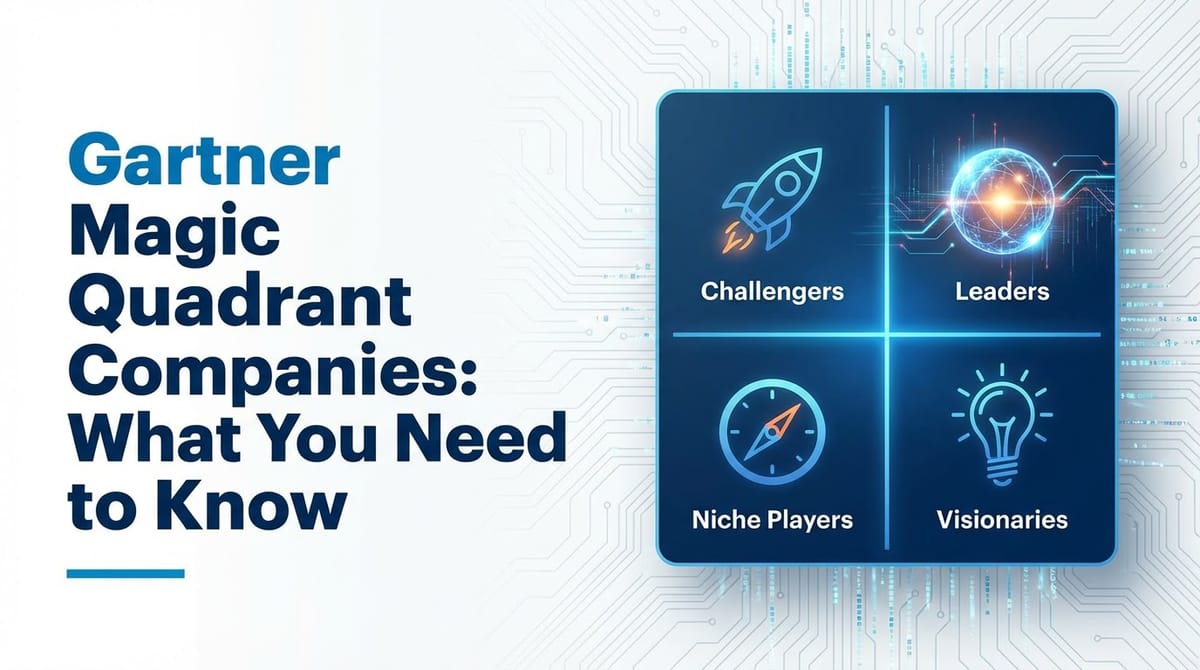
The Gartner Magic Quadrant is not merely a list; it is a meticulously researched market analysis tool that provides a broad overview of technology vendors in specific markets. Conceived by the renowned research and advisory firm Gartner, it has evolved over decades to become one of the most respected and influential benchmarks in the global IT industry. At its core, the Magic Quadrant aims to help technology buyers understand the competitive positioning of various players and discern how well technology providers are performing against Gartner's market view. This involves an extensive process of data collection, expert analysis, and customer feedback aggregation, culminating in a visual representation that categorizes vendors into four distinct quadrants: Leaders, Challengers, Visionaries, and Niche Players.
The methodology behind the Magic Quadrant is rigorous and multifaceted. Gartner analysts employ a proprietary set of criteria that fall under two main axes: "Ability to Execute" and "Completeness of Vision." The "Ability to Execute" axis evaluates vendors on factors such as product/service capabilities, overall viability, sales execution/pricing, market responsiveness/track record, marketing execution, customer experience, and operations. Essentially, this dimension assesses how well a company can deliver on its promises and meet current market demands. The "Completeness of Vision" axis, on the other hand, scrutinizes a vendor's market understanding, marketing strategy, sales strategy, product strategy, business model, vertical/industry strategy, innovation, and geographic strategy. This dimension focuses on a company's foresight, its ability to anticipate future market needs, and its strategic direction.
Companies featured in the Magic Quadrant undergo a comprehensive evaluation, which often includes detailed questionnaires, product demonstrations, customer reference calls, and interviews with company executives. The resulting report is not static; it is updated annually, reflecting the dynamic nature of technology markets, the rapid pace of innovation, and the evolving competitive landscape. For many enterprises, the Magic Quadrant serves as a crucial starting point for vendor shortlisting, providing a trusted, independent assessment that complements their internal due diligence. However, it's vital to recognize that while incredibly valuable, the Magic Quadrant is a snapshot in time and represents Gartner's opinion, not an endorsement of any specific vendor. A deep dive into its implications and how it intertwines with critical technological advancements is essential for truly leveraging its insights.
The Evolutionary Tide: How Enterprise Technology Shapes the MQ
The technology landscape is in a constant state of flux, characterized by disruptive innovations and paradigm shifts that continuously reshape enterprise IT strategies. Over the years, the Gartner Magic Quadrant has mirrored these evolutionary tides, adapting its categories and evaluation criteria to reflect the most pressing technological advancements. From the rise of the internet and client-server architectures to the widespread adoption of cloud computing, mobile technologies, and the burgeoning era of artificial intelligence, each wave of innovation has introduced new market segments and redefined the capabilities expected of leading vendors.
Cloud computing, for instance, fundamentally altered how enterprises provision and consume IT resources, giving rise to new Magic Quadrants focused on Infrastructure as a Service (IaaS), Platform as a Service (PaaS), and Software as a Service (SaaS). Similarly, the proliferation of mobile devices necessitated the evaluation of mobile application development platforms and enterprise mobility management solutions. These shifts aren't just about new tools; they represent fundamental changes in business models, operational efficiencies, and customer engagement strategies.
Today, the most impactful trends include artificial intelligence (AI), machine learning (ML), Internet of Things (IoT), blockchain, and advanced analytics. These technologies are not merely augmenting existing systems; they are driving a complete reimagining of enterprise capabilities, from automating complex processes and extracting actionable insights from vast datasets to creating entirely new customer experiences. Vendors that demonstrate a profound understanding of these trends, invest heavily in research and development, and successfully integrate these capabilities into their offerings are the ones most likely to ascend within the Magic Quadrant. Their "completeness of vision" is judged by their ability to anticipate how these technologies will reshape industries and provide solutions that not only meet current demands but also prepare organizations for future challenges. Conversely, their "ability to execute" is measured by their success in delivering these innovative solutions reliably, securely, and at scale, proving their tangible value to enterprise customers. The constant interplay between technological innovation and market evaluation ensures that the Magic Quadrant remains a relevant and dynamic indicator of leadership in the tech world.
The Pillars of Modern Enterprise Architecture: API Gateway, AI Gateway, and API Governance
Modern enterprise architecture is increasingly modular, distributed, and interconnected, driven by the principles of microservices and digital transformation. In this intricate ecosystem, three technological pillars stand out as absolutely critical for success and are heavily scrutinized in relevant Gartner Magic Quadrants: the api gateway, the emerging AI Gateway, and comprehensive API Governance. Understanding these components is key to appreciating what makes a technology vendor a leader in today's market.
The Indispensable Role of the API Gateway
At the heart of any modern, interconnected enterprise lies the API (Application Programming Interface), serving as the digital glue that binds disparate systems, applications, and services. As organizations embrace microservices architectures and open up their data and functionalities to partners and developers, the volume and complexity of API traffic surge exponentially. This is where the api gateway becomes indispensable.
An api gateway acts as a single entry point for all API calls, sitting between the client applications and the backend services. Its functions are multifaceted and critical:
- Traffic Management: It handles request routing, load balancing, rate limiting, and caching, ensuring optimal performance and resilience of backend services. Without a robust gateway, an influx of requests could overwhelm individual services, leading to outages and poor user experiences.
- Security Enforcement: The gateway is the first line of defense for APIs. It enforces authentication, authorization, threat protection (e.g., against SQL injection, DDoS attacks), and data encryption, safeguarding sensitive data and preventing unauthorized access. This is paramount in a world rife with cyber threats.
- Policy Enforcement: It applies various policies such as quality of service, auditing, and logging, ensuring compliance with internal standards and regulatory requirements. This allows for centralized control over how APIs are consumed and by whom.
- Transformation and Orchestration: Gateways can transform request and response messages between different formats (e.g., SOAP to REST) and orchestrate multiple backend service calls into a single client request, simplifying consumption for developers and reducing chatty communication.
- Monitoring and Analytics: By centralizing API traffic, the gateway provides invaluable insights into API usage patterns, performance metrics, and potential errors, which are crucial for troubleshooting, capacity planning, and business intelligence.
For companies aiming for leadership in the Gartner Magic Quadrant for API Management, a sophisticated api gateway is not just a feature; it's the foundational component that underpins their ability to execute. It demonstrates a vendor's capacity to deliver high-performance, secure, and scalable API infrastructure, which is a non-negotiable requirement for enterprises undergoing digital transformation. While many established players dominate the traditional API gateway space, innovative solutions are emerging, particularly with the rise of AI. For instance, platforms like APIPark are designed as an open-source AI gateway and API management platform, aiming to streamline the integration and deployment of both AI and REST services, showcasing a forward-looking approach to API infrastructure that anticipates future enterprise needs. The ability to integrate and manage both traditional and AI-driven APIs through a unified gateway is becoming a significant differentiator.
The Dawn of the AI Gateway
As artificial intelligence rapidly moves from niche applications to becoming a core component of enterprise operations, the management and integration of AI models present new challenges that traditional api gateway solutions are not fully equipped to handle. This has given rise to the concept and increasing necessity of the AI Gateway.
An AI Gateway extends the functionalities of a traditional gateway by specifically addressing the unique requirements of AI services. Its distinct features include:
- Unified AI Model Integration: It provides a single point of access and management for a diverse array of AI models, whether they are hosted internally, consumed from third-party providers (e.g., OpenAI, Google AI, Azure AI), or deployed across various cloud environments. This simplifies the complexity of interacting with multiple AI endpoints, each potentially having different APIs and authentication mechanisms.
- Prompt Management and Encapsulation: A key aspect of interacting with generative AI models is prompt engineering. An
AI Gatewaycan encapsulate complex prompts into simple, reusable REST APIs, abstracting the underlying AI model and prompt logic from the consuming application. This means developers don't need to be experts in prompt engineering for every AI model, and changes to prompts or models don't necessitate application code changes. - Standardized AI Invocation Format: It unifies the request and response data formats across different AI models, ensuring consistency and ease of use. This standardization is critical for building resilient applications that can seamlessly switch between AI models without requiring significant refactoring.
- Cost Tracking and Optimization for AI: AI model inference can be expensive. An
AI Gatewaycan provide granular cost tracking per API call, user, or application, enabling enterprises to monitor, control, and optimize their AI spending effectively. - Security and Compliance for AI: Beyond traditional API security, an
AI Gatewaymust also address AI-specific security concerns, such as protecting proprietary prompts, managing access to sensitive AI models, and ensuring data privacy compliance when AI models process user data.
The emergence of the AI Gateway is a testament to the transformative power of AI and the enterprise's need for specialized infrastructure to manage it effectively. For vendors hoping to demonstrate "completeness of vision" in relevant Gartner Magic Quadrants, offering robust AI Gateway capabilities is becoming increasingly important. It signals an understanding of future market needs and a proactive approach to enabling AI adoption at scale. As AI adoption accelerates, specialized AI Gateway solutions become critical. Platforms like APIPark, for example, address this need by offering quick integration of over 100 AI models and providing a unified API format for AI invocation, simplifying AI usage and maintenance for enterprises. Their ability to encapsulate prompts into REST APIs and manage end-to-end API lifecycles for both traditional and AI services showcases the kind of forward-thinking integration that defines leaders in the evolving tech landscape.
The Foundation: API Governance
While api gateway solutions facilitate connectivity and AI Gateway solutions specialize in AI integration, neither can truly succeed without the overarching framework of API Governance. This refers to the comprehensive set of policies, processes, and tools that define how APIs are designed, developed, deployed, managed, and consumed across an organization. It's the unsung hero that ensures scalability, security, consistency, and long-term viability of an enterprise's API ecosystem.
Key aspects of API Governance include:
- Design Standards and Best Practices: Establishing clear guidelines for API design (e.g., RESTful principles, naming conventions, data formats) to ensure consistency, usability, and maintainability across all APIs.
- Security Policies and Compliance: Implementing robust security policies for authentication, authorization, data encryption, and vulnerability management, and ensuring adherence to regulatory requirements like GDPR, HIPAA, or CCPA.
- Lifecycle Management: Managing APIs from their inception (design and development) through publication, versioning, retirement, and deprecation. This ensures that changes are managed gracefully and consumers are always aware of API availability and updates.
- Access Control and Monetization: Defining who can access which APIs, under what conditions, and potentially how they are charged for usage. This involves subscriber management, approval workflows, and usage analytics.
- Documentation and Discovery: Providing comprehensive, up-to-date documentation and facilitating easy discovery of available APIs through developer portals, which are crucial for promoting adoption and reducing integration friction.
- Monitoring and Analytics: Continuous monitoring of API performance, availability, and security metrics, coupled with robust analytics to identify trends, troubleshoot issues, and inform strategic decisions.
Effective API Governance is paramount for large-scale operations. APIPark is a robust platform that goes beyond mere connectivity, assisting with end-to-end API lifecycle management, regulating processes, and facilitating API service sharing within teams, thereby strengthening an enterprise's overall API governance posture. It also includes features like independent API and access permissions for each tenant and approval workflows for API resource access, which are critical elements of strong governance. For companies to demonstrate "ability to execute" in the Gartner Magic Quadrant, particularly in categories like API Management or Application Integration, they must exhibit strong capabilities in API Governance. It signifies an organization's maturity in managing its digital assets, mitigating risks, fostering innovation, and ensuring that its API strategy aligns with broader business objectives. Without proper governance, even the most advanced api gateway or AI Gateway solutions can become chaotic, insecure, and unsustainable.
The interplay of these three pillars—a solid api gateway for traffic management and security, an agile AI Gateway for intelligent service integration, and comprehensive API Governance for overall control and strategy—forms the bedrock of a resilient and future-proof enterprise architecture. Vendors that excel in delivering solutions that address these areas holistically are the ones best positioned for leadership recognition in the Gartner Magic Quadrant.
Unpacking the Quadrants: Leaders, Challengers, Visionaries, and Niche Players
The graphical representation of the Gartner Magic Quadrant places vendors into one of four distinct categories, each with specific characteristics that offer valuable insights for technology buyers. Understanding what each quadrant signifies is crucial for interpreting the report effectively and matching vendor capabilities to specific organizational needs.
Leaders
Companies positioned in the "Leaders" quadrant are characterized by their strong "Ability to Execute" and comprehensive "Completeness of Vision." These are the vendors that Gartner believes are well-positioned for the future, demonstrating consistent performance in the market, a clear understanding of customer needs, and a strategic roadmap that anticipates future trends.
Characteristics of Leaders: * Proven Track Record: They have a strong history of delivering successful solutions and consistently meeting customer expectations. * Market Share and Influence: Leaders typically hold significant market share and are often the benchmarks against which others are measured. * Robust Product Offerings: Their products or services are mature, feature-rich, and meet the needs of a broad range of enterprise customers, often incorporating advanced capabilities like sophisticated api gateway functionalities, early integration of AI Gateway features, and mature API Governance frameworks. * Strong Financial Health: They possess the financial resources to invest in R&D, market expansion, and customer support. * Global Reach and Support: Leaders often have a global presence and provide extensive support, consulting, and partner ecosystems. * Innovation with Execution: They not only envision the future but also have the operational excellence to deliver on that vision, turning innovative ideas into tangible, reliable products.
For buyers, choosing a Leader often means opting for a safe, reliable, and comprehensive solution that is likely to evolve with the market. However, it might also mean higher costs or less flexibility for highly specialized needs compared to niche players.
Challengers
Vendors in the "Challengers" quadrant have a strong "Ability to Execute" but may lack the "Completeness of Vision" of the Leaders. These companies are typically large, well-established players with solid market presence and product capabilities, but they might be less focused on innovation or anticipating future market shifts.
Characteristics of Challengers: * Solid Market Presence: They often have a significant customer base and a strong reputation for reliability. * Effective Execution: Challengers are adept at delivering their current offerings and meeting existing market demands. Their api gateway solutions, for instance, might be highly performant and secure for traditional use cases. * Product Maturity: Their products are often mature and stable, providing dependable performance for current needs. * Less Visionary: They might be slower to adopt emerging technologies (like advanced AI Gateway features) or their strategic roadmap might be less clearly defined compared to Leaders. Their API Governance might be strong for existing systems but less adaptable to new paradigms. * Competitive Pricing: They might offer competitive pricing or specific advantages that appeal to cost-sensitive buyers.
Challengers can be an excellent choice for organizations seeking proven, reliable solutions for current operational needs, especially if they value stability over cutting-edge innovation. They often represent a strong value proposition, particularly if their vision aligns with an organization's specific requirements.
Visionaries
"Visionaries" demonstrate a strong "Completeness of Vision" but may have a lower "Ability to Execute" compared to Leaders. These vendors are often innovative, forward-thinking companies that are developing groundbreaking technologies or approaches that could reshape the market in the future.
Characteristics of Visionaries: * Innovative Solutions: They are at the forefront of introducing new concepts, technologies, or business models. Their AI Gateway solutions, for example, might be pioneering new ways to manage and integrate AI models, even if their market reach isn't yet global. * Deep Market Understanding: Visionaries possess a profound insight into future market directions and customer needs. They often anticipate trends before they become mainstream. * Potential for Disruption: Their offerings have the potential to significantly impact the market and challenge established players. * Execution Challenges: They might face challenges in scaling their operations, expanding market share, achieving consistent customer experience, or fully commercializing their innovations. Their API Governance tools might be innovative but still maturing in terms of enterprise readiness. * Often Smaller or Newer: Visionaries can sometimes be smaller, newer companies or startups that are still building their market presence and operational maturity.
For buyers, engaging with a Visionary can mean early access to disruptive technologies and the potential for significant competitive advantage. However, it also carries a higher risk due to their less proven execution capabilities or nascent market position. These vendors are suitable for organizations willing to take calculated risks for potential future gains and who have the internal capabilities to support a maturing solution.
Niche Players
"Niche Players" typically focus on a specific market segment, a particular geographic region, or a specialized set of functionalities. They might have a strong "Ability to Execute" and "Completeness of Vision" within their niche, but they lack the broad capabilities or market reach of other quadrants.
Characteristics of Niche Players: * Specialized Focus: They excel in addressing specific, narrow requirements or serving a particular industry Vertical. Their api gateway might be highly optimized for a certain cloud environment, or their API Governance tool might be tailored for a specific regulatory framework. * Strong Within Their Niche: Niche players can offer highly effective solutions for their target audience, often providing deep expertise and superior customer service within that specific segment. * Limited Scope: Their offerings may not be suitable for broader enterprise requirements, or they might lack the scale, global presence, or comprehensive feature set of larger vendors. * Potential for Acquisition: They are often targets for acquisition by larger companies looking to expand their capabilities or market presence.
Niche Players are an excellent fit for organizations with very specific requirements that align perfectly with the vendor's specialized focus. They can offer tailored solutions that might not be available from broader market leaders, often with more personalized support. However, buyers should ensure that the niche player's roadmap and longevity align with their long-term strategic plans.
| Quadrant | Primary Strength | Key Characteristics | Best Suited For | Considerations |
|---|---|---|---|---|
| Leaders | Execution & Vision | Proven track record, strong market share, comprehensive offerings, robust api gateway, future-proof AI Gateway vision, mature API Governance. |
Organizations seeking comprehensive, reliable, and strategically sound solutions for broad enterprise needs, valuing stability and long-term partnership. | Might be higher cost; less flexibility for highly niche requirements. |
| Challengers | Strong Execution | Solid market presence, dependable products, good for current needs, effective delivery. | Enterprises prioritizing stability, proven performance, and strong existing solutions for current operational requirements, often with competitive pricing. | May lack cutting-edge innovation; slower to adapt to emerging trends like advanced AI Gateway or evolving API Governance. |
| Visionaries | Completeness of Vision | Innovative, forward-thinking, potential for market disruption, deep market understanding, pioneering new technologies like AI Gateway. |
Organizations willing to embrace new technologies, seek competitive advantage through innovation, and can manage potential risks associated with less mature execution or market position. | Higher risk due to less proven execution or market presence; solutions might still be maturing. |
| Niche Players | Specialized Focus | Highly effective in specific segments, deep expertise, tailored solutions, strong for particular use cases or geographies. | Buyers with very specific requirements that align perfectly with the vendor's specialized offering, seeking deep expertise and personalized support within that niche. | Limited scope; may not scale for broader enterprise needs; potential for vendor lock-in within the niche. |
APIPark is a high-performance AI gateway that allows you to securely access the most comprehensive LLM APIs globally on the APIPark platform, including OpenAI, Anthropic, Mistral, Llama2, Google Gemini, and more.Try APIPark now! 👇👇👇
How Companies Ascend and Sustain in the Magic Quadrant
Achieving a coveted spot in the Gartner Magic Quadrant, especially in the Leaders quadrant, is no small feat. It requires a strategic blend of technological prowess, market acumen, and operational excellence. Moreover, sustaining that position in a rapidly evolving market demands continuous innovation and adaptability.
Innovation and Research & Development Investment
At the core of any successful technology vendor is a relentless commitment to innovation. This involves substantial investment in Research and Development (R&D) to anticipate future market needs and develop solutions that address emerging challenges. For instance, in the realm of API management, this means not just refining api gateway performance but also pioneering advanced features like intelligent traffic routing, adaptive security, and predictive analytics. The rapid acceleration of AI integration into enterprise applications necessitates significant R&D into AI Gateway technologies that can handle diverse AI models, manage prompts effectively, and provide unified access patterns. Companies that actively push the boundaries of what's possible, rather than merely reacting to market demands, are the ones that garner "Completeness of Vision" accolades. This forward-thinking approach ensures their offerings remain relevant and competitive, even as the technological landscape shifts.
Customer Success and Satisfaction
Gartner's evaluation heavily weighs customer feedback and satisfaction. Vendors that consistently deliver value, provide exceptional support, and foster strong customer relationships are more likely to perform well. This isn't just about the product itself, but the entire customer journey—from initial sales engagement to implementation, ongoing support, and successful outcomes. Robust customer success programs, detailed onboarding, and responsive technical assistance contribute significantly to a vendor's "Ability to Execute." For example, a company might have the most advanced api gateway, but if customers struggle with deployment or support, its execution score will suffer. Providing comprehensive documentation, an active community forum, and transparent communication channels are all part of building a strong customer-centric approach that resonates positively in Gartner's assessments. Platforms that provide detailed API call logging and powerful data analysis, such as APIPark, enhance customer success by enabling quicker troubleshooting and preventive maintenance, directly contributing to user satisfaction and operational stability.
Market Presence and Execution Excellence
A strong market presence, characterized by consistent sales growth, expanding geographical reach, and effective marketing strategies, is another critical factor. This demonstrates a vendor's ability to effectively sell, deploy, and support their solutions across a broad customer base. Execution excellence encompasses not just sales, but also operational efficiency, reliable product delivery, and a healthy financial standing that assures long-term viability. This means ensuring that their api gateway can be deployed reliably in various environments, their AI Gateway integrates seamlessly with different cloud providers, and their API Governance tools are scalable for large enterprises. A vendor might have a brilliant vision, but if they cannot execute their sales strategy, provide timely deployments, or maintain high product quality, their position in the Magic Quadrant will reflect these shortcomings. The ability to rapidly deploy, exemplified by solutions like APIPark with its quick 5-minute deployment, showcases a commitment to execution that resonates with enterprises seeking immediate value.
Strategic Vision and Adaptability
The technology market is rarely static. Companies that thrive in the Magic Quadrant possess a clear, adaptable strategic vision. This means not only understanding current trends but also anticipating future shifts and adjusting their product roadmap and business model accordingly. The evolution from traditional API management to embracing AI Gateway functionalities is a prime example of such adaptability. Vendors that quickly pivot to integrate new paradigms, such as serverless computing, edge AI, or advanced security protocols, demonstrate a high degree of strategic acumen. This continuous adaptation ensures that their "Completeness of Vision" remains robust, allowing them to lead the market rather than merely follow it.
Comprehensive API Governance
Finally, underpinning all these elements is a deep commitment to API Governance. A vendor’s ability to provide comprehensive tools and frameworks for managing the entire API lifecycle, from design to deprecation, is crucial. This includes robust security features, detailed access control, versioning strategies, and monitoring capabilities. Effective governance demonstrates maturity and responsibility, reassuring enterprises that their digital assets are managed securely and efficiently. Vendors that offer strong API Governance solutions, whether as part of a broader platform or as specialized tools, enable their customers to achieve digital transformation safely and sustainably, directly influencing their "Ability to Execute" score in the Magic Quadrant. For instance, APIPark's features like independent API and access permissions for each tenant and subscription approval features are direct enablers of robust API governance, ensuring control and preventing unauthorized access.
In essence, ascending and staying relevant in the Gartner Magic Quadrant is a continuous journey of innovation, execution, customer focus, and strategic foresight. It requires a holistic approach to product development, market engagement, and operational excellence, all guided by a clear understanding of the evolving technological landscape.
The Tangible Impact of Being a Magic Quadrant Company
For technology vendors, being featured in the Gartner Magic Quadrant carries significant weight and can have a profound impact across various aspects of their business. The prestige associated with a favorable position, particularly in the Leaders quadrant, translates into numerous tangible benefits that can accelerate growth and solidify market standing.
Enhanced Credibility and Brand Recognition
One of the most immediate and significant impacts is the boost in credibility and brand recognition. Gartner is a trusted authority in the IT industry, and its independent, rigorous evaluations lend immense credibility to the vendors it features. Being recognized as a Leader, Challenger, or Visionary signals to the market that a company has undergone extensive scrutiny and met high standards. This endorsement can significantly reduce the perceived risk for potential buyers, making it easier for sales teams to initiate conversations and build trust. The widespread dissemination of Magic Quadrant reports ensures that featured companies gain exposure to a global audience of IT decision-makers, amplifying their brand presence and positioning them as serious contenders in their respective markets. This is particularly valuable for smaller or emerging companies, where a strong showing can rapidly elevate their status and open doors to larger enterprise accounts they might otherwise struggle to access.
Market Share Growth and Competitive Advantage
A favorable Magic Quadrant position often correlates directly with increased market share. IT buyers frequently use the Magic Quadrant as a primary tool for vendor shortlisting, and companies positioned higher in the quadrants are more likely to be considered. This advantage can lead to a direct increase in sales leads, higher conversion rates, and ultimately, greater market penetration. Furthermore, it provides a powerful competitive advantage. When a vendor is recognized as a Leader for its api gateway or AI Gateway capabilities, it sets them apart from competitors who may not have achieved such recognition. This can be a deciding factor for customers comparing similar solutions, giving the recognized vendor an edge in fiercely contested markets. The ability to leverage the Gartner logo and quote the report in marketing materials further reinforces this advantage, providing a third-party validation that resonates strongly with buyers.
Attracting Top Talent
In the highly competitive technology sector, attracting and retaining top talent is crucial for sustained growth and innovation. Being a Gartner Magic Quadrant company, especially a Leader, significantly enhances a firm's employer brand. High-caliber professionals are often drawn to companies recognized for their market leadership, innovative vision, and strong execution. They perceive these companies as having stable futures, exciting technical challenges, and opportunities for professional growth. This translates into a broader and deeper talent pool, enabling the company to hire the best engineers, product managers, sales executives, and strategists, which in turn fuels further innovation and strengthens its market position. The prestige associated with working for a Magic Quadrant Leader can be a powerful motivator and differentiator in recruitment efforts.
Investor Confidence and Valuation
For publicly traded companies, a strong showing in the Magic Quadrant can positively influence investor confidence and stock valuation. Analysts and investors closely follow Gartner's reports as indicators of a company's market health, competitive standing, and future growth potential. A consistent presence in the Leaders quadrant, for example, can signal long-term stability and innovation, making the company a more attractive investment. Similarly, for privately held companies and startups, a strong Magic Quadrant position can be instrumental in securing venture capital funding, attracting strategic partners, or even becoming an attractive acquisition target. It provides external validation of the company's vision and execution, which is invaluable in the investment community. This is especially true for companies pioneering new market segments like AI Gateway technology, where external validation can significantly de-risk investment.
Strategic Roadmap Validation and Internal Alignment
Beyond external benefits, the Magic Quadrant process itself can be highly beneficial internally. The rigorous evaluation forces companies to critically assess their strengths, weaknesses, product roadmap, and market strategy. The feedback and insights provided by Gartner analysts can validate a company's strategic direction or highlight areas for improvement, helping to refine their API Governance strategies or accelerate the development of key api gateway features. It can also serve as a powerful tool for internal alignment, rallying teams around common goals and inspiring employees to strive for excellence, knowing their efforts contribute to external recognition.
In summary, the impact of being a Gartner Magic Quadrant company extends far beyond a mere badge of honor. It is a catalyst for growth, a validator of strategy, a magnet for talent and investment, and a powerful instrument for shaping market perception and competitive dynamics.
Navigating the Quadrant: A Buyer's Prudent Approach
While the Gartner Magic Quadrant is an invaluable resource, prudent buyers understand that it is a starting point, not the definitive answer. A thoughtful and comprehensive approach is essential to leverage its insights effectively and make the best vendor selection for specific organizational needs.
It's a Starting Point, Not the Sole Decision Factor
The Magic Quadrant provides a high-level overview of the market and its key players, offering a directional guide. However, it's critical to remember that Gartner's evaluation is based on its specific research methodology and criteria, which may not perfectly align with every organization's unique requirements, priorities, or strategic objectives. Therefore, buyers should use the Magic Quadrant to generate a shortlist of potential vendors, but then embark on their own thorough due diligence process. This involves deeper research into each shortlisted vendor, including detailed product demonstrations, technical deep dives, reference calls with existing customers, and proof-of-concept (POC) deployments. Relying solely on the Magic Quadrant without further investigation risks overlooking a potentially better fit or misinterpreting a vendor's capabilities in the context of specific needs.
Consider Specific Needs, Budget, and Existing Infrastructure
Every organization has a unique set of challenges, existing technological infrastructure, budgetary constraints, and strategic goals. A Leader in the Magic Quadrant might offer the most comprehensive solution with all the bells and whistles, but it might be overkill or prohibitively expensive for a smaller organization with simpler needs. Conversely, a Niche Player, though less prominent overall, might offer a highly specialized solution that perfectly addresses a very specific problem that no other vendor can match.
For instance, when evaluating an api gateway solution, an organization already heavily invested in a particular cloud ecosystem might prioritize a gateway that offers deep native integration with that cloud provider, even if it's from a Challenger or Niche Player, over a more generalized Leader. Similarly, for a company rapidly expanding its AI capabilities, a Visionary with a cutting-edge AI Gateway might be a better fit, despite its potential for less mature execution, if their roadmap aligns perfectly with the company's future AI strategy. The key is to match the vendor's strengths and positioning to the organization's specific context, rather than simply defaulting to the top-left quadrant.
Look Beyond the "Leaders" for Best Fit
While Leaders are often seen as the safest choice, the other quadrants offer compelling alternatives that might be a better fit depending on the situation.
- Challengers: If your organization prioritizes stability, proven execution for current needs, and a strong value proposition over being on the bleeding edge, a Challenger might be an excellent choice. They typically offer mature products and reliable support.
- Visionaries: If innovation, a forward-looking product roadmap, and the potential for disruptive technology are paramount (e.g., in a rapidly evolving area like
AI Gateway), then a Visionary could provide a significant competitive advantage, provided your organization has the capacity to partner with a potentially less established vendor. - Niche Players: For highly specialized requirements or industry-specific solutions, Niche Players can often provide unparalleled expertise and tailored offerings that are precisely what your organization needs, often with more personalized service.
A balanced approach involves considering vendors from all quadrants that show potential, then filtering them through a comprehensive internal evaluation process.
The Importance of Evaluating API Governance, API Gateway, and AI Gateway Capabilities
Irrespective of a vendor's position in the Magic Quadrant, certain foundational capabilities are non-negotiable in today's digital landscape. When making a vendor selection, particular attention must be paid to:
- API Governance: Assess the vendor's capabilities in
API Governancethoroughly. Does their platform support comprehensive lifecycle management, robust security policies, granular access control (like APIPark's tenant-specific permissions and approval features), versioning, and detailed auditing? Poor governance can lead to security vulnerabilities, operational chaos, and compliance risks, regardless of how good other features are. - API Gateway: Scrutinize the performance, scalability, security features, and ease of management of their
api gateway. Can it handle your projected traffic loads? Does it offer advanced threat protection, rate limiting, and intelligent routing? How well does it integrate with your existing infrastructure and identity management systems? - AI Gateway: For any organization leveraging or planning to leverage AI extensively, the presence and maturity of an
AI Gatewaysolution are critical. Does it support multi-model integration, prompt management, cost tracking, and a unified API for AI invocation? Solutions like APIPark highlight the increasing importance of dedicated AI gateway capabilities for simplifying AI deployment and management. The foresight and capabilities in this area can distinguish a future-proof solution from one that will soon become obsolete.
Ultimately, the Gartner Magic Quadrant is a powerful market intelligence tool. However, its true value is unlocked when buyers combine its strategic insights with a deep understanding of their own organizational context, a rigorous evaluation process, and a keen eye for the foundational technologies that drive modern enterprise success.
Future Trends and the Evolving Magic Quadrant Landscape
The technology world is in a perpetual state of evolution, and the Gartner Magic Quadrant faithfully reflects these shifts. Looking ahead, several macro trends are poised to continuously reshape enterprise IT and, by extension, the criteria and positioning within future Magic Quadrants. Understanding these trends is crucial for both vendors striving for leadership and buyers seeking future-proof solutions.
The Deepening Impact of AI and Machine Learning
Artificial intelligence and machine learning are no longer nascent technologies; they are becoming foundational elements of enterprise operations. Future Magic Quadrants will likely feature even more specialized categories for AI-driven solutions across various domains, such as AI development platforms, intelligent automation, conversational AI, and advanced analytics augmented by AI. The sophistication of AI Gateway solutions will become a critical differentiator, moving beyond basic model integration to include advanced features like ethical AI monitoring, explainable AI (XAI) capabilities, and robust MLOps (Machine Learning Operations) integration. Vendors will be evaluated on their ability to not only deploy AI models but to manage their entire lifecycle securely, ethically, and at scale. Solutions that can abstract AI complexity, standardize AI interactions, and provide granular cost controls for AI inference, much like APIPark aims to do, will likely gain significant traction. The "Completeness of Vision" for AI will increasingly require a strong stance on responsible AI development and deployment.
Edge Computing and Distributed Architectures
As IoT devices proliferate and real-time data processing becomes paramount, edge computing is gaining momentum. This involves processing data closer to its source, reducing latency and bandwidth usage. Future Magic Quadrants will undoubtedly evaluate vendors on their ability to extend their core offerings, such as api gateway and AI Gateway functionalities, to the edge. This means secure, lightweight gateways capable of operating in resource-constrained environments, with robust synchronization and management capabilities that integrate seamlessly with central cloud or data center infrastructures. Distributed API Governance will also become critical, ensuring consistent policies and security across highly dispersed deployments. The ability to manage APIs and AI inference at the edge will be a key differentiator in areas like industrial IoT, smart cities, and autonomous systems.
Serverless Architectures and Function-as-a-Service (FaaS)
The adoption of serverless computing continues to grow, allowing developers to focus purely on code without managing underlying infrastructure. This paradigm shift impacts how APIs are built and consumed. Future Magic Quadrants for application development and integration will assess vendors on their support for serverless functions, including serverless api gateway implementations and the ability to trigger AI models directly from FaaS platforms. The efficiency of API Governance in a serverless world, where hundreds or thousands of ephemeral functions might generate APIs, will be a major challenge and a key area for innovation. Vendors providing tools that simplify development, deployment, and governance in serverless environments will be well-positioned.
Enhanced Data Privacy and Security Regulations
With an increasing focus on data privacy (e.g., new iterations of GDPR, CCPA, or country-specific regulations) and the constant threat of cyberattacks, security and compliance will remain paramount. Future Magic Quadrants will intensify their scrutiny of vendors' security postures, particularly for critical components like the api gateway and AI Gateway. This includes advanced threat detection, granular access control, data encryption, and robust auditing capabilities. Moreover, the ability of API Governance solutions to enforce privacy-by-design principles and facilitate compliance audits will be crucial. Vendors demonstrating proactive approaches to data sovereignty, zero-trust architectures, and robust incident response capabilities will be highly valued.
The API Economy and Ecosystem Orchestration
The API economy continues to mature, moving beyond basic integration to sophisticated ecosystem orchestration. Future Magic Quadrants for API management will focus on vendors' abilities to facilitate API monetization, cultivate developer communities, and provide advanced tools for B2B integration and partner onboarding. The integration of api gateway with advanced analytics and billing systems will be key. The role of API Governance will extend to managing the relationships and contracts within these complex ecosystems, ensuring fair usage, data sharing agreements, and compliance across multiple stakeholders. Solutions that empower enterprises to become platforms, facilitating broad innovation and collaboration through well-governed APIs, will define the leaders of tomorrow.
In conclusion, the Gartner Magic Quadrant is a dynamic entity, continuously adapting to the whirlwind of technological progress. For technology leaders, understanding these evolving trends and how they shape future evaluations is not just an academic exercise; it's a strategic imperative. It guides product development, market positioning, and ultimately, the ability to deliver relevant and impactful solutions to the global enterprise market.
Conclusion
The Gartner Magic Quadrant stands as an enduring testament to the complexity and dynamism of the enterprise technology market. Far more than a simple ranking, it provides a meticulously researched, expert-driven analysis that helps organizations navigate the intricate landscape of vendors and solutions. Understanding its methodology, the nuances of its quadrants, and the pivotal role of foundational technologies like the api gateway, the emerging AI Gateway, and comprehensive API Governance is indispensable for any IT decision-maker.
We've explored how vendors are evaluated on their "Ability to Execute" and "Completeness of Vision," dissecting what it means to be a Leader, Challenger, Visionary, or Niche Player. We’ve seen how the relentless pace of innovation—from cloud computing to artificial intelligence—continuously reshapes these evaluations, demanding that vendors not only deliver on current promises but also anticipate and build for future needs. The critical interplay between robust api gateway solutions for secure and scalable connectivity, forward-thinking AI Gateway capabilities for efficient AI integration, and the overarching framework of API Governance for control and consistency, forms the bedrock of modern enterprise architecture and dictates success in the eyes of Gartner.
For vendors, a strong showing in the Magic Quadrant translates into undeniable benefits: enhanced credibility, increased market share, a stronger talent magnet, and bolstered investor confidence. For buyers, the Magic Quadrant serves as a powerful initial filter, guiding them towards a shortlist of potential partners. However, astute buyers recognize that this is merely a starting point, necessitating further, in-depth evaluation tailored to their specific organizational context, budget, existing infrastructure, and strategic priorities. The importance of scrutinizing a vendor's true capabilities in API Governance, the robustness of their api gateway, and their foresight in AI Gateway technologies cannot be overstated.
Looking ahead, the technological currents of AI, edge computing, serverless architectures, and stringent data privacy regulations will continue to sculpt the Magic Quadrant landscape. Companies that embody a continuous spirit of innovation, uphold rigorous execution standards, remain customer-centric, and maintain an adaptable strategic vision will be the ones that not only ascend but also sustain their positions of leadership. By understanding these dynamics, both technology providers and consumers can make more informed decisions, fostering an ecosystem where innovation thrives and enterprises achieve their digital aspirations with greater efficiency, security, and strategic foresight.
Frequently Asked Questions (FAQs)
1. What is the Gartner Magic Quadrant and why is it important for enterprises? The Gartner Magic Quadrant is a series of market research reports published by Gartner, Inc., that provides a graphical representation and analysis of technology vendors in specific markets. It evaluates vendors based on two main criteria: "Ability to Execute" and "Completeness of Vision." It's important for enterprises because it offers a trusted, independent assessment that helps IT decision-makers identify suitable vendors, understand market trends, and short-list potential technology partners, thereby reducing risk and streamlining the vendor selection process.
2. How do "API Gateway" solutions influence a company's position in the Magic Quadrant? API Gateway solutions are foundational for modern enterprise architecture, especially in API Management or Application Integration Magic Quadrants. A robust api gateway demonstrates a vendor's ability to execute by providing high-performance, secure, and scalable API traffic management, security enforcement, and policy application. Companies with advanced api gateway capabilities, which are essential for digital transformation and microservices adoption, are more likely to be positioned favorably, particularly in the "Ability to Execute" axis.
3. What is an "AI Gateway" and why is it becoming relevant in Gartner's evaluations? An AI Gateway is a specialized type of API gateway designed to manage and integrate artificial intelligence (AI) models and services. It handles unique AI-specific requirements such as unified AI model integration, prompt management, standardized AI invocation formats, and AI cost tracking. It's becoming relevant because as AI adoption grows, enterprises need dedicated infrastructure to manage the complexity of multiple AI models. Vendors that offer comprehensive AI Gateway solutions demonstrate "Completeness of Vision" by addressing future market needs and enabling scalable AI integration, thereby enhancing their standing in relevant Magic Quadrants.
4. Why is "API Governance" so crucial for companies featured in the Magic Quadrant? API Governance refers to the comprehensive policies, processes, and tools that ensure APIs are designed, developed, deployed, and consumed consistently, securely, and compliantly. It is crucial because it underpins an organization's "Ability to Execute" at scale. Strong API Governance mitigates security risks, ensures operational efficiency, facilitates regulatory compliance, and promotes API adoption. Companies that provide robust API Governance capabilities, including lifecycle management, access control, and security policies, demonstrate maturity and reliability, which are key factors in Gartner's evaluations for categories like API Management.
5. How should a buyer use the Gartner Magic Quadrant effectively for vendor selection? Buyers should use the Magic Quadrant as a starting point for vendor shortlisting, rather than the sole decision-making factor. It's crucial to understand Gartner's specific criteria and then conduct internal due diligence that considers your organization's unique needs, budget, existing infrastructure, and strategic goals. Look beyond just the "Leaders" quadrant, as Challengers, Visionaries, and Niche Players might offer a better fit for specific requirements. Always thoroughly evaluate a vendor's core capabilities in essential areas like API Governance, api gateway performance, and their vision for AI Gateway solutions to ensure long-term compatibility and strategic alignment.
🚀You can securely and efficiently call the OpenAI API on APIPark in just two steps:
Step 1: Deploy the APIPark AI gateway in 5 minutes.
APIPark is developed based on Golang, offering strong product performance and low development and maintenance costs. You can deploy APIPark with a single command line.
curl -sSO https://download.apipark.com/install/quick-start.sh; bash quick-start.sh

In my experience, you can see the successful deployment interface within 5 to 10 minutes. Then, you can log in to APIPark using your account.

Step 2: Call the OpenAI API.