Gateway AI: Unlocking the Future of Connected Intelligence


In an era increasingly defined by the pervasive influence of artificial intelligence, the landscape of technology is undergoing a profound transformation. From augmenting human creativity and automating mundane tasks to powering groundbreaking scientific discoveries and revolutionizing industries, AI's trajectory is nothing short of exponential. Yet, as the number and diversity of AI models proliferate—spanning specialized tools for image recognition, natural language understanding, predictive analytics, and the burgeoning field of large language models (LLMs)—organizations and developers face a mounting challenge: how to effectively manage, integrate, secure, and scale these disparate AI capabilities without succumbing to overwhelming complexity. The promise of interconnected intelligence, where AI services seamlessly communicate and collaborate, often clashes with the reality of fragmented ecosystems, proprietary interfaces, and a labyrinth of management headaches.
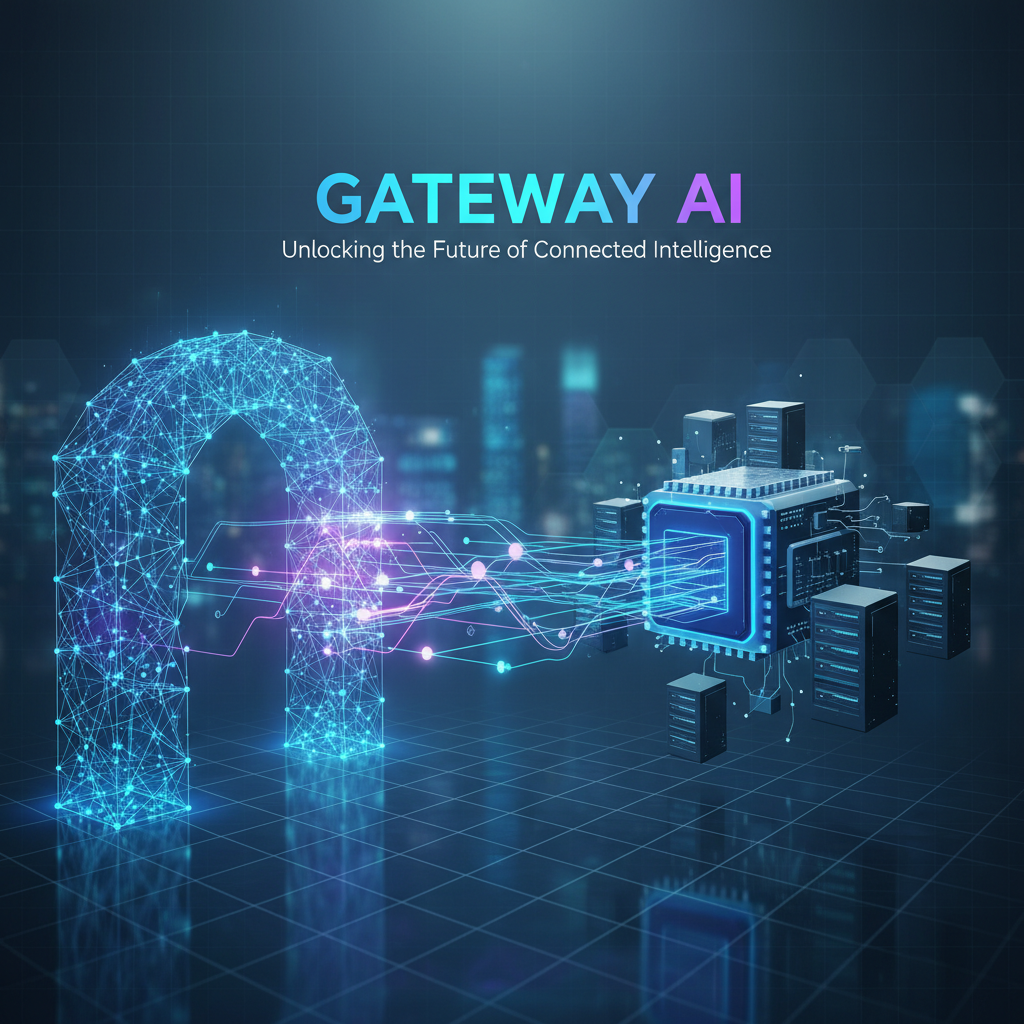
This burgeoning complexity necessitates a paradigm shift in how we interact with and deploy AI. Direct, point-to-point integrations with every new AI model or service quickly become unmanageable, leading to technical debt, security vulnerabilities, and prohibitive operational costs. Moreover, the dynamic nature of AI, with models constantly evolving and new ones emerging, demands an agile and resilient infrastructure capable of abstracting away this inherent volatility. It is within this crucible of innovation and complexity that the concept of Gateway AI emerges not merely as a convenience but as an indispensable architectural component. An AI Gateway acts as the crucial intermediary, a sophisticated control plane that orchestrates interactions between applications and a myriad of AI services. It is the intelligent nexus that standardizes communication, enforces security policies, optimizes performance, and provides a unified point of access to the vast and growing universe of artificial intelligence.
At its core, Gateway AI is about intelligent abstraction. It abstracts away the specific APIs, authentication mechanisms, data formats, and idiosyncrasies of individual AI models, presenting a consistent interface to client applications. This abstraction layer is particularly vital for LLM Gateway solutions, which address the unique challenges posed by large language models—models that are resource-intensive, often context-dependent, and whose outputs require careful management and orchestration. By centralizing these interactions, an AI Gateway not only simplifies development and deployment but also unlocks unprecedented levels of scalability, security, and operational efficiency. It provides the foundational infrastructure upon which truly connected intelligence can be built, ensuring that AI resources are not just accessible but also governable, performant, and aligned with organizational objectives. Furthermore, the development of robust Model Context Protocol mechanisms within these gateways is essential for maintaining state and coherence across complex AI interactions, elevating AI applications from simple request-response cycles to deeply intelligent, context-aware systems. This article will delve into the multifaceted role of Gateway AI, exploring its foundational principles, its specialized applications, the critical importance of context management, and its transformative impact on unlocking the future of connected intelligence.
The Emergence of AI Gateways in a Complex AI Landscape
The rapid proliferation of artificial intelligence models has irrevocably altered the technological landscape, presenting both immense opportunities and significant architectural challenges. Today, organizations can choose from an astounding array of AI solutions: highly specialized models trained for specific tasks like medical image analysis or financial fraud detection; general-purpose models offering broad capabilities such as natural language generation or computer vision; and an increasingly diverse mix of cloud-based AI-as-a-Service offerings, open-source models deployed on-premise, and proprietary solutions developed in-house. This rich ecosystem, while empowering, simultaneously introduces a labyrinthine complexity for developers and enterprises seeking to integrate AI capabilities into their products and workflows.
One of the foremost challenges stems from the sheer heterogeneity of these AI models. Each model, whether it’s a vision API from one provider or a speech-to-text service from another, often comes with its own unique API endpoints, data formats, authentication schemes, rate limits, and versioning protocols. Directly integrating applications with dozens or hundreds of these disparate AI services quickly escalates into a maintenance nightmare. Developers spend disproportionate amounts of time writing custom connectors, adapting data schemas, and managing multiple authentication tokens. This fragmented approach not only slows down development cycles but also introduces significant technical debt, making future updates, migrations, or the adoption of new AI models an arduous and error-prone process. Imagine a modern city without a centralized traffic management system; each car, pedestrian, and public transport vehicle would navigate independently, leading to chaos and gridlock. In the same vein, direct integration without a central orchestrator creates a digital gridlock for AI services.
Beyond mere integration challenges, security and governance loom large as critical concerns. Without a centralized point of control, managing access to various AI models becomes a distributed and often inconsistent effort. How do organizations ensure that only authorized applications and users can invoke sensitive AI services? How are data privacy regulations (like GDPR or CCPA) enforced when data flows directly between applications and numerous third-party AI providers? How can an organization track and audit AI usage, detect anomalies, or enforce compliance policies across a sprawling AI estate? The absence of a unified security layer exposes organizations to increased risks, from unauthorized data access and model abuse to compliance failures and reputational damage.
Furthermore, operational efficiency and cost management are often overlooked until they become critical bottlenecks. Direct integrations typically lack sophisticated mechanisms for traffic management, load balancing, or caching. This can lead to inefficient resource utilization, inconsistent performance, and escalating operational costs as each application independently manages its connections and calls to AI services. What happens when a particular AI model experiences high demand or a temporary outage? Without intelligent routing and fallback strategies, applications might fail catastrophically or experience significant performance degradation. Monitoring and observability also suffer; gaining a holistic view of AI service health, usage patterns, and potential issues becomes exceedingly difficult when interactions are scattered across numerous direct integrations.
It is precisely to address these multifaceted challenges that the concept of an AI Gateway has emerged as a fundamental architectural pattern. An AI Gateway acts as a single, intelligent entry point for all AI service requests, effectively becoming the "air traffic controller" for an organization's AI ecosystem. Instead of applications directly calling various AI models, they communicate with the AI Gateway, which then intelligently routes, transforms, secures, and manages these requests to the appropriate backend AI service. This architectural shift immediately tackles the issues of heterogeneity by providing a unified API interface, abstracting away the underlying complexities of individual models. It centralizes authentication and authorization, establishing a strong security perimeter around AI resources. Moreover, an AI Gateway enhances operational efficiency through features like load balancing, caching, and comprehensive monitoring, ensuring optimal performance and cost-effective utilization of AI assets. In essence, the AI Gateway transforms a chaotic, fragmented AI landscape into a streamlined, secure, and highly manageable environment, laying the groundwork for scalable and resilient AI-powered applications.
Deep Dive into LLM Gateways: Bridging the Generative AI Divide
While the general principles of an AI Gateway apply broadly to all types of artificial intelligence models, the advent of Large Language Models (LLMs) has introduced a new layer of complexity and specific requirements that necessitate specialized LLM Gateway solutions. Generative AI, spearheaded by models like OpenAI's GPT series, Anthropic's Claude, Google's Gemini, and a host of open-source alternatives, has captivated the world with its unprecedented capabilities in natural language understanding, generation, summarization, and more. However, integrating these powerful models into enterprise applications brings forth a unique set of challenges that go beyond those encountered with traditional, task-specific AI.
One of the most prominent challenges with LLMs is their inherent computational cost and latency. Generating human-quality text or engaging in complex reasoning requires significant computational resources, often leading to higher inference costs and slower response times compared to simpler AI tasks. Directly managing calls to multiple LLM providers, each with its own pricing structure and performance characteristics, can quickly become a financial and operational burden. An LLM Gateway addresses this by enabling intelligent routing based on cost, latency, or specific model capabilities, allowing organizations to optimize resource utilization and manage expenditures effectively. For instance, less critical requests might be routed to a more cost-effective model, while high-priority, low-latency tasks go to a premium, faster service.
Another critical aspect is the sophistication required for prompt engineering and management. Unlike traditional APIs where inputs are often structured data, LLMs rely heavily on the quality and specificity of the "prompt"—the natural language instruction or context provided to the model. Crafting effective prompts, experimenting with different phrasing, and iterating on prompt designs is an art and science in itself. Without an LLM Gateway, managing multiple versions of prompts across various applications, sharing best practices, and enforcing prompt quality standards becomes chaotic. An LLM Gateway provides a centralized repository for prompt templates, allowing for version control, A/B testing of prompts, and the ability to dynamically inject variables, ensuring consistency and efficiency in how applications interact with LLMs. This prompt orchestration layer is vital for maximizing the utility and consistency of LLM outputs.
The concept of "context window limitations" is also unique to LLMs and presents a significant hurdle. LLMs can only process a finite amount of text at any given time, known as their context window. For multi-turn conversations or complex tasks requiring extensive background information, managing this context effectively is crucial. Applications must intelligently summarize previous turns, retrieve relevant external information (e.g., from a database or knowledge base), and inject it into the prompt to keep the conversation coherent and relevant. An LLM Gateway can play a pivotal role here, offering mechanisms for context caching, summarization, and retrieval-augmented generation (RAG) orchestration, ensuring that LLMs always receive the most pertinent information without exceeding their token limits. This directly feeds into the broader discussion of the Model Context Protocol, which will be explored in the next section.
Ethical considerations also weigh heavily on LLM deployment. The potential for LLMs to generate biased, inaccurate, or even harmful content—a phenomenon often referred to as "hallucination"—requires robust mitigation strategies. An LLM Gateway can serve as a critical control point for implementing content moderation, safety filters, and ethical guardrails. By inspecting both input prompts and output responses, the gateway can detect and filter out inappropriate content, enforce brand safety guidelines, and log potential issues for review, thereby providing a necessary layer of oversight that is often absent in direct integrations.
Finally, the sheer diversity of LLM providers adds another layer of complexity. With OpenAI, Anthropic, Google, and a growing ecosystem of specialized LLMs, organizations need the flexibility to switch between models, leverage the strengths of different providers, or even deploy their own fine-tuned models. An LLM Gateway provides the essential abstraction layer, allowing applications to interact with a unified interface regardless of the underlying LLM provider. This "model agnosticism" protects applications from vendor lock-in, facilitates seamless model upgrades or replacements, and enables experimentation with new LLMs without requiring significant code changes at the application level. By centralizing management of these powerful generative AI models, an LLM Gateway effectively bridges the divide between the immense potential of LLMs and the practical realities of enterprise-scale integration, ensuring secure, efficient, and ethical deployment of this transformative technology.
The Critical Role of Model Context Protocol
In the realm of advanced AI applications, particularly those powered by Large Language Models (LLMs) and conversational agents, the concept of "context" transcends simple input data; it becomes the very fabric that weaves together disparate interactions into a coherent, intelligent experience. Context encompasses a wide array of information: the current input from a user, the history of previous conversational turns, user preferences, environmental variables (like time of day or location), domain-specific knowledge, and even system state. For AI models to deliver truly personalized, relevant, and sophisticated responses, they must have access to and intelligently utilize this rich contextual tapestry. Without it, even the most powerful LLM would appear to have a short-term memory loss, generating generic or nonsensical replies that disregard past interactions.
Consider a customer service chatbot that fails to remember your previous query or account details, forcing you to repeat information in every interaction. Or a personalized recommendation engine that suggests items you’ve already purchased or explicitly disliked. These frustrating experiences are direct consequences of inadequate context management. The ability of an AI system to maintain state, understand user intent over time, and adapt its behavior based on a cumulative understanding is what distinguishes a truly intelligent application from a rudimentary one. For LLMs, this is especially critical because their effectiveness—their capacity for coherent dialogue, complex reasoning, and nuanced understanding—is directly proportional to the quality and depth of the context they are provided within their finite context window.
This is where the Model Context Protocol emerges as a paramount architectural necessity, particularly when orchestrated through an AI Gateway. A Model Context Protocol defines standardized mechanisms for transmitting, managing, storing, and retrieving contextual information between client applications, the AI Gateway, and the underlying AI models. It’s not just about passing a string of text; it's about structuring and enriching that text, along with other metadata, in a way that is universally understood and optimally leveraged by the AI system.
The benefits of a well-defined Model Context Protocol, facilitated by an AI Gateway, are profound:
- Improved Accuracy and Relevance: By ensuring that LLMs receive all necessary prior information, user preferences, and domain-specific facts, the protocol drastically improves the accuracy and relevance of AI-generated responses. This leads to more precise answers, better recommendations, and more satisfying conversational experiences. For example, in a medical diagnostic AI, the protocol would ensure that the model receives the patient's full medical history, current symptoms, and relevant test results, leading to more informed diagnostic assistance.
- Enhanced Conversational Coherence: For conversational AI, the protocol enables the AI Gateway to manage the turn-by-turn dialogue history, summarizing or selecting the most salient parts to inject into subsequent prompts. This maintains conversational flow, allowing LLMs to build on previous exchanges without exceeding their context window limitations, creating a more natural and engaging interaction.
- Reduced Redundant Data Transmission and Cost Optimization: Instead of repeatedly sending large chunks of historical data with every request, a Model Context Protocol can leverage the AI Gateway's caching mechanisms and intelligent context storage. The gateway might store conversational state, user profiles, or recently accessed data, only sending incremental updates or relevant summaries to the LLM, thereby reducing API call costs and latency.
- Personalization at Scale: By centralizing user profiles, preferences, and interaction histories within the context management layer of the gateway, applications can easily tap into this rich data to deliver hyper-personalized AI experiences across different services and sessions. This moves beyond generic AI responses to truly individualized interactions.
- Simplified Application Development: Developers no longer need to implement complex context management logic within each application. They simply interact with the AI Gateway using the Model Context Protocol, allowing the gateway to handle the intricacies of storing, retrieving, and preparing context for various AI models. This abstracts complexity and accelerates development.
Architecturally, the AI Gateway serves as the ideal hub for implementing a robust Model Context Protocol. It can: * Store and Manage Session State: Maintain an ongoing record of user interactions, dialogue history, and other ephemeral data. * Integrate with External Knowledge Bases: Fetch relevant information from databases, CRM systems, or internal documents to augment the prompt with factual context (e.g., using Retrieval-Augmented Generation, RAG). * Pre-process and Post-process Context: Summarize long texts, filter sensitive information, or transform data formats to optimize them for specific AI models. * Enforce Contextual Policies: Apply rules about what context can be shared with which models, ensuring data privacy and compliance.
For instance, consider a complex task automation scenario where an AI is asked to "book a flight for my next business trip to London, considering my usual preferences and ensuring it's within company policy." The Model Context Protocol would enable the AI Gateway to: 1. Retrieve the user's "usual preferences" (e.g., window seat, specific airline alliance, preferred departure times) from a user profile service. 2. Access "company policy" details (e.g., budget limits, approved travel vendors) from an enterprise policy engine. 3. Inject the "London business trip" request and these retrieved contextual elements into the prompt for the LLM. 4. Manage subsequent turns of clarification (e.g., "Which dates are you considering?") while maintaining the core context.
Without a well-defined and executed Model Context Protocol, AI applications would remain largely reactive and stateless, failing to harness the true potential of intelligent systems. By standardizing how context is handled, an AI Gateway equipped with such a protocol elevates AI from a collection of powerful but isolated models to a seamlessly integrated, context-aware, and highly intelligent ecosystem that can genuinely understand and respond to the nuances of human interaction and complex operational demands.
APIPark is a high-performance AI gateway that allows you to securely access the most comprehensive LLM APIs globally on the APIPark platform, including OpenAI, Anthropic, Mistral, Llama2, Google Gemini, and more.Try APIPark now! 👇👇👇
Key Features and Benefits of a Robust AI Gateway
The strategic deployment of a robust AI Gateway transforms an organization's approach to AI integration from a patchwork of direct connections into a cohesive, secure, and scalable ecosystem. It acts as the intelligent orchestration layer that sits between client applications and a diverse array of AI models, bringing a multitude of essential features and delivering significant benefits across the entire AI lifecycle. Understanding these capabilities is key to appreciating the transformative power an AI Gateway wields.
One of the most fundamental features is providing a Unified API Interface. Regardless of whether an application needs to interact with a cloud-based LLM, an on-premise computer vision model, or a specialized machine learning service, the AI Gateway presents a single, consistent API endpoint. This abstracts away the disparate data formats, authentication methods, and specific API calls of individual models. Developers write code once against the gateway's standardized interface, dramatically simplifying integration, reducing development time, and minimizing technical debt when new models are introduced or existing ones are updated.
Centralized Authentication and Authorization is another critical capability. Rather than managing API keys, tokens, and access policies for each individual AI service, the AI Gateway provides a single point of control. It authenticates incoming requests from client applications and authorizes them based on predefined roles and permissions, ensuring that only legitimate users and applications can access specific AI models or perform certain operations. This significantly enhances the security posture, streamlines compliance efforts, and simplifies identity and access management across the entire AI estate.
For mission-critical applications, Traffic Management and Load Balancing are indispensable. An AI Gateway intelligently distributes incoming requests across multiple instances of an AI model or even across different AI providers. This prevents any single model from becoming a bottleneck, improves overall throughput, and ensures high availability and responsiveness. If one AI service experiences an outage or performance degradation, the gateway can automatically reroute traffic to healthy alternatives, guaranteeing service continuity. This is particularly vital for LLMs, where high demand can quickly overwhelm a single endpoint.
Caching and Performance Optimization features within an AI Gateway further enhance efficiency. For frequently repeated queries or common patterns, the gateway can cache responses, serving them directly without invoking the underlying AI model. This significantly reduces latency, conserves computational resources, and lowers operational costs, especially for expensive LLM inferences. Beyond caching, the gateway can apply optimization techniques like request batching or compression to improve overall data transfer efficiency.
Comprehensive Monitoring, Logging, and Analytics capabilities provide invaluable visibility into AI operations. An AI Gateway records every API call, including request details, responses, latency, and error codes. This granular logging is crucial for troubleshooting issues, auditing AI usage, tracking performance metrics over time, and identifying patterns or anomalies. Detailed analytics dashboards can offer insights into popular models, peak usage times, cost breakdowns, and potential areas for optimization, empowering operations teams and business leaders with actionable intelligence.
Effective Cost Management and Optimization is a direct benefit of the gateway's centralized control. By tracking usage metrics for each AI model and each client application, the AI Gateway enables organizations to set quotas, implement rate limits, and enforce budget caps. It can provide detailed cost breakdowns, allowing for accurate chargebacks to different departments or projects. This helps prevent unexpected expenditure spikes and ensures that AI resources are consumed efficiently and within budgetary constraints.
Security and Compliance are paramount, and the AI Gateway strengthens both. In addition to centralized authentication, it can implement various security policies, such as input validation to prevent prompt injection attacks, data masking for sensitive information, and content moderation filters to ensure outputs are safe and compliant with ethical guidelines. The gateway can act as a data governance enforcement point, controlling where data goes and ensuring adherence to regulatory requirements like data residency.
For the increasingly sophisticated demands of generative AI, Prompt Engineering and Versioning are critical. An AI Gateway can store, manage, and version prompt templates, allowing developers to experiment with different prompts, conduct A/B tests, and roll back to previous versions without modifying application code. It can also support dynamic prompt injection, where contextual information is programmatically inserted into templates, ensuring consistency and quality of LLM interactions.
Finally, a well-designed Developer Portal and Documentation provided by the AI Gateway significantly improves the developer experience. It offers a self-service portal where developers can discover available AI services, access API documentation, manage their API keys, and track their usage. This fosters widespread adoption of AI capabilities within the organization by making integration simple, intuitive, and well-supported.
Platforms like APIPark, an open-source AI gateway and API management platform, embody many of these critical features, offering robust solutions for managing AI and REST services. With its capability to quickly integrate 100+ AI models, provide a unified API format for AI invocation, and enable prompt encapsulation into REST APIs, APIPark demonstrates the comprehensive power an AI gateway brings to the development and deployment ecosystem. Its emphasis on end-to-end API lifecycle management, performance rivaling high-throughput systems (achieving over 20,000 TPS with modest resources), and detailed logging and data analysis further underscore the value proposition for enterprises navigating the complexities of modern AI integration. Such platforms not only simplify the technical challenges but also empower organizations to leverage AI more strategically, securely, and cost-effectively.
The following table summarizes the stark contrast between direct AI integration and leveraging a robust AI Gateway:
| Feature/Aspect | Direct AI Integration | AI Gateway Integration |
|---|---|---|
| Integration Complexity | High: Custom code for each AI model, varied APIs, auth | Low: Unified API interface, single integration point |
| Security | Fragmented: Multiple auth points, difficult to audit | Centralized: Unified auth/authz, security policies |
| Performance | Inconsistent: No caching, basic load balancing | Optimized: Caching, intelligent load balancing, failover |
| Cost Management | Difficult to track and control per model/app | Granular tracking, quotas, cost optimization |
| Scalability | Limited: Manual scaling, prone to bottlenecks | High: Automated scaling, traffic management |
| Observability | Siloed logs, challenging to get holistic view | Centralized logging, monitoring, analytics dashboards |
| Prompt Management | Ad-hoc, hard to version or share | Centralized prompt repository, versioning, A/B testing |
| Vendor Lock-in | High: Deep ties to specific model APIs | Low: Model abstraction, easy to switch providers |
| Development Speed | Slowed by integration overhead | Accelerated by simplified APIs and tooling |
| Compliance | Challenging to enforce consistently | Centralized policy enforcement, audit trails |
This comparison clearly illustrates that while direct integration might seem simpler for a single, isolated AI model, it quickly becomes unmanageable and risky as an organization's AI footprint expands. An AI Gateway provides the essential infrastructure to move beyond ad-hoc AI usage towards a strategically managed, enterprise-grade AI ecosystem.
Use Cases and Real-World Applications
The impact of Gateway AI extends across virtually every industry, transforming how organizations leverage artificial intelligence to drive innovation, enhance efficiency, and create new value. By simplifying integration, bolstering security, and optimizing performance, AI Gateways enable the widespread adoption of advanced AI capabilities that would otherwise be prohibitively complex or costly. Let's explore some key use cases and real-world applications where Gateway AI proves indispensable.
Enterprise AI Integration
For large enterprises, the challenge of integrating AI extends beyond a single application to a myriad of internal systems. Enterprise AI Integration involves embedding AI capabilities into core operational systems such as Enterprise Resource Planning (ERP), Customer Relationship Management (CRM), Supply Chain Management (SCM), and various internal tools. An AI Gateway acts as the central nervous system, allowing these legacy systems and modern microservices to seamlessly consume diverse AI services without extensive rework. For instance, a sales CRM can use an LLM-powered sentiment analysis tool (accessed via the gateway) to analyze customer emails, flagging high-priority or negative sentiment interactions for immediate follow-up. An ERP system might leverage a predictive analytics model (also through the gateway) to forecast demand, optimizing inventory and production schedules. The gateway ensures that all these interactions are secure, managed, and compliant with enterprise policies, abstracting the complexities of interacting with multiple AI vendors or internal AI models.
Customer Service and Support
The customer service domain has been revolutionized by AI, and Gateway AI plays a pivotal role in enabling sophisticated solutions. Chatbots and virtual assistants, powered by LLMs, can handle a significant volume of customer inquiries, providing instant support 24/7. An AI Gateway facilitates the integration of these LLMs with various knowledge bases, CRM systems, and other backend services to provide context-aware and personalized responses. For example, when a customer asks about an order status, the gateway can route the query to an LLM, simultaneously fetching order details from an internal database using the Model Context Protocol, and then synthesize a coherent response. Furthermore, AI Gateways can route customer queries to specialized AI models for sentiment analysis (to gauge customer mood), intent recognition (to understand the purpose of their query), or voice-to-text transcription before passing them to an LLM, ensuring that agents receive pre-processed, actionable insights. This multi-model orchestration, managed by the gateway, significantly improves customer satisfaction and reduces operational costs.
Content Generation and Curation
In industries like marketing, media, and education, Content Generation and Curation are undergoing a seismic shift with generative AI. Marketing teams can leverage LLMs to quickly draft compelling ad copy, personalize email campaigns, or generate social media content tailored to specific demographics. Media companies can automate the summarization of long articles, generate news headlines, or even create initial drafts of reports. Education platforms can create personalized learning materials or generate quizzes. An AI Gateway provides the essential abstraction layer to integrate these diverse LLM capabilities into content management systems, marketing automation platforms, and publishing tools. It enables organizations to manage prompts for brand consistency, control costs associated with LLM usage, and monitor the quality and safety of generated content, ensuring that the AI-powered content aligns with organizational standards and ethical guidelines.
Data Analysis and Business Intelligence
AI Gateways are critical enablers for advanced Data Analysis and Business Intelligence. They facilitate the integration of machine learning models for predictive analytics, anomaly detection, and pattern recognition into existing BI dashboards and data pipelines. For instance, a financial institution can use a fraud detection model (accessed via the gateway) to continuously monitor transactions, alerting analysts to suspicious activities in real-time. A manufacturing firm can employ predictive maintenance models to anticipate equipment failures, optimizing maintenance schedules and reducing downtime. Furthermore, LLM Gateways are increasingly used to enable "natural language querying" of data, allowing business users to ask questions in plain English and receive insights without needing to write complex SQL queries. The gateway translates these natural language queries into structured data requests, processes them through the relevant analytics models, and then translates the results back into human-readable language, democratizing access to data insights.
Healthcare and Life Sciences
The healthcare and life sciences sectors are ripe for AI transformation, and AI Gateways are foundational. In Healthcare, AI can assist with diagnostics (e.g., image analysis for pathology), drug discovery (e.g., predicting molecular interactions), and personalized medicine (e.g., tailoring treatments based on genetic profiles). An AI Gateway ensures that sensitive patient data is securely transmitted and processed by specialized AI models, maintaining compliance with strict regulations like HIPAA. It allows researchers to integrate various public and proprietary AI models for literature review, hypothesis generation, and experimental design. For instance, a research institution might use an LLM Gateway to summarize vast scientific literature, while simultaneously routing specific data points to a specialized bioinformatics model—all orchestrated and secured by the gateway—to accelerate drug development cycles.
Financial Services
In Financial Services, AI Gateways power critical applications for fraud detection, risk assessment, and personalized financial advice. Banks use AI models (accessed via gateways) to analyze transaction patterns, identify suspicious activities, and prevent financial crimes. Investment firms deploy AI for algorithmic trading, market prediction, and portfolio optimization. An AI Gateway ensures that these high-stakes AI interactions are performed with low latency, high reliability, and stringent security. For example, a bank offering personalized financial advice could use an LLM Gateway to interact with customers, retrieving their financial history and risk profile via the Model Context Protocol from internal systems, and then feeding this context to an LLM to generate tailored investment recommendations, all while ensuring data privacy and regulatory compliance.
In each of these diverse use cases, the AI Gateway serves as more than just a technical connector; it is an enabler of strategic AI initiatives. By providing a secure, scalable, and manageable layer for AI consumption, it allows organizations to experiment, deploy, and scale AI-powered solutions across their entire operations, unlocking new levels of efficiency, intelligence, and competitive advantage.
The Future Landscape: Challenges and Opportunities for Connected Intelligence
As artificial intelligence continues its relentless march of progress, the role of Gateway AI will only become more pronounced and critical. The future landscape of connected intelligence, while brimming with unprecedented opportunities, is also fraught with significant challenges that will shape the evolution of AI Gateways. Navigating this dynamic environment requires foresight, adaptability, and a continuous commitment to innovation.
Emerging Challenges
One of the most persistent challenges is the Evolving Nature of AI Models and Standards. The pace of innovation in AI is staggering. New models, architectures, and capabilities emerge constantly, often with proprietary interfaces or rapidly changing APIs. An AI Gateway must be highly adaptable, designed with an extensible architecture that can quickly integrate new types of models, adapt to evolving communication protocols, and support emerging standards. Maintaining this agility will be crucial to prevent the gateway itself from becoming a bottleneck to innovation. This includes supporting the transition from monolithic LLMs to more modular, agent-based AI systems or specialized smaller models that excel at specific tasks.
Security Threats are also becoming increasingly sophisticated. Beyond traditional API security concerns, AI introduces new attack vectors like prompt injection (where malicious input manipulates an LLM), data poisoning (where training data is corrupted), and model inversion (where an attacker attempts to reconstruct training data from model outputs). Future AI Gateways must incorporate advanced threat detection mechanisms, robust input/output validation, and sophisticated content moderation capabilities to safeguard against these AI-specific vulnerabilities, ensuring data integrity and model trustworthiness. The Model Context Protocol, while enabling rich interactions, also creates new attack surfaces if not rigorously secured.
Scalability for Hyper-Growth remains a perennial concern. As AI adoption becomes ubiquitous, the volume of requests hitting AI Gateways will skyrocket. Handling millions or billions of daily requests with low latency and high reliability will require distributed architectures, intelligent caching at multiple layers, and efficient resource management. AI Gateways must be capable of seamless horizontal scaling, potentially leveraging edge computing closer to data sources to reduce latency and bandwidth costs, especially for real-time AI applications.
Ethical AI Governance and Transparency are growing imperatives. As AI becomes more autonomous and makes increasingly impactful decisions, organizations need mechanisms to ensure fairness, accountability, and transparency. AI Gateways will play a role in enforcing ethical guidelines by logging model decisions, flagging potentially biased outputs, and enabling audit trails of AI interactions. They will need to support explainable AI (XAI) initiatives by facilitating the capture and presentation of model reasoning, helping to build trust and ensure compliance with emerging AI ethics regulations.
Finally, Integration with Multi-Cloud and Edge Environments adds another layer of complexity. Organizations are increasingly deploying AI models across hybrid cloud infrastructures, on-premise data centers, and at the edge to process data closer to its source. Future AI Gateways must seamlessly operate across these diverse environments, providing unified management and orchestration capabilities regardless of where the AI models reside, while optimizing data movement and respecting data sovereignty requirements.
Emerging Opportunities
Despite these challenges, the future presents immense Opportunities for Gateway AI to unlock unprecedented levels of connected intelligence.
The most exciting opportunity lies in enabling Hyper-Personalized AI Experiences. With enhanced Model Context Protocol capabilities, AI Gateways can aggregate user data, preferences, and interaction history across multiple applications and services. This unified context allows AI models to deliver truly individualized responses, recommendations, and assistance that adapt dynamically to each user's unique needs and evolving state, creating deeply engaging and intelligent interactions.
The evolution towards Autonomous AI Systems will heavily rely on robust AI Gateways. As AI agents gain the ability to chain together multiple models, make decisions, and act autonomously, the gateway will be the orchestrator of these complex workflows. It will manage the invocation sequence of various AI services, handle inter-agent communication, and ensure the secure and reliable execution of autonomous tasks, from intelligent process automation to self-optimizing operational systems.
Democratization of Advanced AI Capabilities is another significant opportunity. By abstracting complexity, AI Gateways lower the barrier to entry for developers and organizations, allowing a broader range of users to tap into powerful AI models, including advanced LLMs, without requiring deep AI expertise. This widespread accessibility will accelerate innovation across all sectors, empowering smaller businesses and individual developers to build sophisticated AI-powered applications.
Finally, AI Gateways will foster the creation of New Business Models Built on AI Services. By providing a secure, scalable, and manageable platform for AI consumption, gateways enable organizations to productize their internal AI models or externalize AI capabilities as services. This can lead to new revenue streams, foster collaboration within ecosystems, and create platforms where AI models are not just consumed but also shared and monetized, much like traditional APIs have fueled the platform economy.
In conclusion, the journey of Gateway AI is intimately tied to the broader evolution of artificial intelligence. As AI becomes more intelligent, autonomous, and pervasive, the need for a sophisticated orchestration layer that manages, secures, and optimizes these interactions will become even more critical. The future AI Gateway will be a dynamic, intelligent, and ethical control plane, not merely facilitating the future of connected intelligence but actively shaping its architecture, capabilities, and societal impact.
Conclusion
The journey through the intricate landscape of modern artificial intelligence reveals a central truth: the boundless potential of AI can only be fully realized through intelligent, robust, and scalable integration. As we navigate an ecosystem teeming with diverse models, from specialized deep learning algorithms to the powerful, context-hungry Large Language Models, the challenge of harnessing this collective intelligence has become increasingly complex. Direct, point-to-point integrations, once a viable approach for isolated AI tasks, are now unequivocally proving to be unsustainable, leading to fragmentation, security vulnerabilities, and operational inefficiencies that stifle innovation.
It is within this context that Gateway AI emerges not as a mere optional component, but as the indispensable architectural linchpin for unlocking the future of connected intelligence. By serving as a sophisticated intermediary, an AI Gateway abstracts away the inherent complexities of disparate AI models, presenting a unified, secure, and performant interface to client applications. It is the intelligent conductor orchestrating a symphony of AI services, ensuring that each interaction is optimized for security, cost, and efficiency.
We have delved into the specialized needs addressed by LLM Gateway solutions, acknowledging the unique demands of generative AI regarding computational cost, prompt management, context window limitations, and ethical considerations. The LLM Gateway stands as a testament to the gateway's adaptability, providing critical layers of abstraction, optimization, and safety specifically tailored for the burgeoning world of large language models.
Furthermore, we've highlighted the paramount importance of the Model Context Protocol, revealing how intelligent context management is the bedrock of truly sophisticated and coherent AI interactions. By standardizing the transmission and management of contextual information, the AI Gateway enables applications to move beyond stateless requests to build deeply personalized, consistent, and context-aware AI experiences, crucial for everything from seamless conversational agents to accurate predictive systems.
From centralizing authentication and authorization to enabling advanced traffic management, caching, and comprehensive observability, the features of a robust AI Gateway collectively transform a chaotic AI environment into a streamlined, enterprise-grade ecosystem. Platforms like APIPark exemplify this shift, offering developers and enterprises the tools to manage, integrate, and deploy AI services with unparalleled ease and efficiency, proving that open-source solutions can deliver powerful, high-performance API governance capabilities.
The transformative impact of Gateway AI is evident across a myriad of real-world applications—from enhancing customer service and personalizing content generation to fortifying financial services and accelerating scientific discovery. It enables enterprises to confidently embed AI into their core operations, driving innovation and gaining a competitive edge.
Looking ahead, while challenges such as rapidly evolving AI standards, emerging security threats, and the demands of multi-cloud environments persist, they also present fertile ground for continued innovation within the Gateway AI domain. The opportunities are immense: enabling hyper-personalized AI, paving the way for autonomous AI systems, democratizing access to advanced AI capabilities, and fostering new AI-driven business models.
In essence, Gateway AI is more than just a technological solution; it is the strategic foundation upon which the next generation of intelligent, interconnected applications will be built. It simplifies complexity, enhances security, optimizes performance, and fosters innovation, ultimately empowering organizations to fully embrace the transformative power of artificial intelligence and unlock a future where connected intelligence is not just a vision, but a tangible reality.
Frequently Asked Questions (FAQs)
1. What is an AI Gateway and why is it essential for modern AI integration? An AI Gateway is an intelligent intermediary that sits between client applications and various AI models (like LLMs, computer vision, etc.). It acts as a single entry point, abstracting away the complexities of different model APIs, managing authentication, optimizing performance, and enforcing security policies. It's essential because it simplifies integration, centralizes control, enhances security, and provides scalability and observability for a diverse and rapidly evolving AI ecosystem, preventing the technical debt and security risks associated with direct, point-to-point integrations.
2. How does an LLM Gateway specifically address the challenges of Large Language Models? An LLM Gateway provides specialized capabilities for managing Large Language Models. It helps optimize costs by intelligent routing across multiple LLM providers, manages prompt templates and versions, handles context window limitations by orchestrating conversational state and context injection (via Model Context Protocol), implements content moderation and safety filters, and offers model agnosticism, allowing applications to switch between different LLMs without significant code changes. This makes deploying and scaling LLMs more efficient, secure, and consistent.
3. What is the Model Context Protocol and why is it critical for advanced AI applications? The Model Context Protocol defines standardized ways for an AI Gateway to transmit, manage, and retrieve contextual information (e.g., user history, preferences, real-time data) between applications and AI models. It's critical because it enables AI models, especially LLMs, to maintain state, understand nuanced user intent over time, and provide personalized, coherent, and relevant responses. Without it, AI applications would lack memory and consistency, delivering generic and less effective interactions.
4. Can an AI Gateway help manage costs associated with AI model usage? Yes, absolutely. An AI Gateway is instrumental in cost management. It can track detailed usage metrics for each AI model and client application, allowing organizations to set quotas, implement rate limits, and enforce budget caps. Features like caching reduce the number of expensive inference calls, and intelligent load balancing can route requests to more cost-effective models when appropriate, helping prevent unexpected expenditure spikes and optimize AI resource utilization.
5. How does an AI Gateway improve the security and compliance of AI deployments? An AI Gateway significantly enhances security and compliance by centralizing authentication and authorization for all AI services. It acts as a security perimeter, enforcing access controls, detecting and mitigating AI-specific threats like prompt injection, and ensuring data privacy through features like data masking. It also provides comprehensive logging and audit trails, making it easier to monitor AI usage, enforce ethical AI guidelines, and demonstrate compliance with industry regulations and internal policies.
🚀You can securely and efficiently call the OpenAI API on APIPark in just two steps:
Step 1: Deploy the APIPark AI gateway in 5 minutes.
APIPark is developed based on Golang, offering strong product performance and low development and maintenance costs. You can deploy APIPark with a single command line.
curl -sSO https://download.apipark.com/install/quick-start.sh; bash quick-start.sh

In my experience, you can see the successful deployment interface within 5 to 10 minutes. Then, you can log in to APIPark using your account.

Step 2: Call the OpenAI API.