Generative AI Gateway: Unlock Scalable & Secure AI
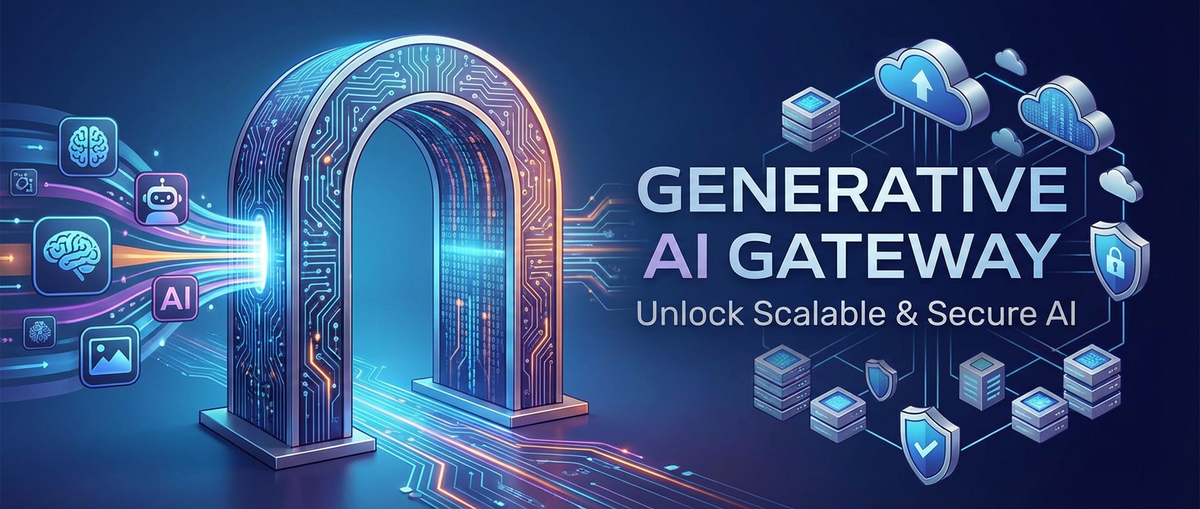


The landscape of artificial intelligence is undergoing a profound transformation, ushered in by the advent of generative AI. Large Language Models (LLMs), sophisticated image synthesis engines, and code generation tools are no longer mere research curiosities but powerful instruments poised to redefine industries, streamline operations, and ignite unprecedented innovation. From automating customer service interactions to accelerating software development cycles, the potential applications of generative AI are vast and compelling. Yet, as enterprises eagerly embrace this new frontier, they encounter a complex web of challenges: ensuring scalability, safeguarding sensitive data, managing diverse models, and controlling spiraling costs. Navigating this intricate environment requires more than just integrating models; it demands a strategic architectural component designed to harmonize these advanced capabilities with existing enterprise infrastructure. This is precisely where the Generative AI Gateway emerges as an indispensable solution, serving as the central nervous system that orchestrates secure, scalable, and efficient access to the future of artificial intelligence.
Chapter 1: The Transformative Power of Generative AI – Setting the Stage for Disruption
The digital era has been punctuated by technological leaps, each reshaping the contours of business and daily life. Few, however, have held the promise and immediate impact of generative AI. At its core, generative AI refers to a class of artificial intelligence models capable of producing novel content—be it text, images, audio, video, or even complex code—that is often indistinguishable from human-created output. This capability stems from their training on vast datasets, allowing them to learn intricate patterns and structures, and then apply this understanding to create entirely new instances.
The most prominent examples of this revolution are Large Language Models (LLMs), such as OpenAI's GPT series, Google's Bard/Gemini, and Meta's Llama. These models, with their billions of parameters, have demonstrated an astonishing ability to understand context, generate coherent and contextually relevant text, translate languages, summarize documents, answer complex questions, and even engage in creative writing. Beyond text, generative AI extends to models like DALL-E, Midjourney, and Stable Diffusion, which can transform textual prompts into stunning visual art, hyper-realistic images, or intricate designs. Furthermore, the ability to generate code snippets, assist in debugging, and even entire software functions is rapidly changing the paradigm of software development.
The impact of these capabilities is reverberating across every sector imaginable. In healthcare, generative AI can accelerate drug discovery by proposing novel molecular structures, assist in diagnostic imaging analysis, and personalize patient care plans. Financial institutions are leveraging it for fraud detection, market analysis, and the generation of personalized financial advice. The entertainment industry is exploring AI for scriptwriting, character design, and even creating synthetic media. Customer service is being revolutionized by AI-powered chatbots that offer more nuanced and helpful interactions, while marketing departments are using it to craft compelling ad copy and personalized campaigns at scale. Education benefits from AI tutors and personalized learning content, and even manufacturing sees applications in design optimization and predictive maintenance.
This widespread adoption is fueled by the palpable desire for automation, personalization, and efficiency. Businesses are no longer asking if they should integrate AI, but how quickly and effectively they can do so to maintain a competitive edge. However, this fervent pursuit of AI integration unearths a myriad of complexities. Generative AI models are not simple plug-and-play components. They often reside in various cloud environments, come with diverse API specifications, demand significant computational resources, and, most critically, handle sensitive information. The increasing demand for integrating these diverse and powerful AI capabilities into existing enterprise systems creates an urgent need for a robust, centralized management layer that can abstract away these underlying complexities and standardize access—a role perfectly suited for the Generative AI Gateway.
Chapter 2: Unpacking the Challenges of Enterprise AI Integration
While the allure of generative AI is undeniable, the journey from proof-of-concept to production-grade deployment within an enterprise environment is fraught with significant hurdles. These challenges span technical, operational, financial, and security domains, often requiring specialized solutions that go beyond traditional IT infrastructure management. Understanding these pain points is crucial to appreciating the transformative value of an AI Gateway.
Complexity of Model Management
Enterprises rarely commit to a single AI model or provider. The optimal choice often varies based on task, cost, performance, and ethical considerations. One team might prefer a specific LLM for code generation, another for creative writing, and yet another for multilingual translation. These models come from different vendors (OpenAI, Google, Anthropic, open-source communities), operate on various frameworks (PyTorch, TensorFlow), and are updated frequently, leading to versioning challenges. Managing this heterogeneous landscape means dealing with disparate APIs, authentication mechanisms, data formats, and rate limits for each individual model. Without a unified layer, developers are forced to write bespoke integration code for every model, leading to increased development time, maintenance overhead, and a steep learning curve. The sheer effort of keeping track of which model version performs best for a particular task, or which API endpoint to call, quickly becomes overwhelming, hindering rapid innovation and experimentation.
Scalability Concerns and Performance Bottlenecks
Integrating generative AI means anticipating fluctuating demand. A viral marketing campaign might suddenly drive a massive surge in requests for an image generation model, or a new product launch could drastically increase calls to a customer service LLM. Traditional infrastructure struggles to dynamically scale resources (especially GPUs) to meet these unpredictable spikes without over-provisioning and incurring unnecessary costs. Each model inference can be computationally intensive, leading to potential latency issues if not properly managed. Ensuring low-latency responses for real-time applications, such as live customer interactions or dynamic content generation, requires efficient request routing, load balancing across multiple model instances, and potentially geographically distributed deployments. Without a centralized LLM Gateway capable of orchestrating these resources, organizations risk poor user experience, system instability, and missed opportunities.
Security Vulnerabilities and Compliance Risks
The data flowing through generative AI models is often highly sensitive, encompassing proprietary business information, personally identifiable information (PII), or confidential customer data. This makes AI integrations a prime target for security breaches. Specific threats include:
- Prompt Injection: Malicious inputs designed to manipulate the model's behavior, making it ignore instructions, reveal sensitive training data, or generate harmful content.
- Data Exfiltration: Models inadvertently or maliciously leaking sensitive information present in prompts or fine-tuning data.
- Unauthorized Access: Without robust authentication and authorization, bad actors could gain access to models, consume resources, or tamper with outputs.
- Model Poisoning: Adversarial attacks during fine-tuning that subtly alter a model's behavior to introduce biases or backdoors.
- Compliance: Adhering to regulations like GDPR, HIPAA, CCPA, or industry-specific standards becomes complex when data is processed by third-party AI services or internal models without proper auditing and data governance.
A dedicated AI Gateway is critical for enforcing security policies, managing access, redacting sensitive information, and auditing every interaction to mitigate these severe risks.
Cost Management and Optimization
Generative AI, particularly with large foundation models, can be incredibly expensive. Costs are typically incurred per token (for LLMs), per image, or per compute hour. Without effective oversight, these expenses can quickly spiral out of control. Development teams might inadvertently use expensive models for trivial tasks, or runaway loops could generate thousands of unnecessary inferences. Tracking usage across different departments, projects, and models, setting quotas, and optimizing routing to the most cost-effective model for a given task are monumental challenges. The lack of granular visibility into AI spend often leads to budget overruns and difficulty in attributing costs. An AI Gateway can provide the necessary tooling to monitor, control, and optimize these expenditures.
Integration Headaches and Developer Experience
Integrating AI models directly into applications can be a cumbersome process. Each model may have its unique API endpoints, data formats (JSON, Protobuf), headers, and authentication methods. Developers face the burden of learning and implementing these distinct interfaces for every AI service they wish to utilize. This fragmentation leads to inconsistent development practices, increased integration complexity, and slower iteration cycles. Furthermore, managing API keys, handling retries, implementing circuit breakers, and ensuring data consistency across various AI services adds to the development overhead. The absence of a unified interface and a streamlined developer experience can significantly impede an organization's ability to rapidly innovate with AI.
Observability and Monitoring Gaps
Unlike traditional APIs where HTTP status codes and response times are often sufficient, monitoring AI models requires deeper insights. Understanding why a model generated a particular output, tracking prompt variations, analyzing token usage, or detecting subtle performance degradations requires specialized logging, tracing, and metrics. Without a centralized mechanism to capture and analyze every AI call, debugging issues becomes a nightmare, performance optimization is guesswork, and auditing for compliance or security becomes impossible. Enterprises need granular visibility into model invocations, inputs, outputs, latency, and resource consumption, which individual model APIs typically do not provide in a unified manner.
In summary, the journey to harness generative AI effectively is paved with complexities. Each of these challenges, if left unaddressed, can derail AI initiatives, erode trust, and lead to significant financial and operational burdens. This intricate landscape underscores the absolute necessity of a specialized architectural layer—the Generative AI Gateway—to act as the orchestrator, guardian, and accelerator for enterprise AI adoption.
Chapter 3: Introducing the Generative AI Gateway: A Unified Solution
In the face of the multifaceted challenges associated with integrating and managing generative AI at an enterprise scale, a new architectural paradigm has emerged: the Generative AI Gateway. This sophisticated intermediary layer is much more than a simple proxy; it is a critical infrastructure component designed specifically to address the unique complexities inherent in AI workloads, standing between consuming applications and a diverse array of AI models.
At its core, a Generative AI Gateway acts as a single, unified entry point for all AI service requests within an organization. Imagine it as a grand central station for AI, where all trains (requests) arrive at one platform, and the station master (the gateway) intelligently routes them to the correct tracks (AI models), ensuring smooth transitions, optimal performance, and robust security. It abstracts away the heterogeneity of individual AI models—whether they are proprietary LLMs from cloud vendors, open-source models deployed internally, or specialized machine learning services—presenting a consistent and standardized interface to developers.
While the concept of an API Gateway has been a cornerstone of microservices architectures for years, providing capabilities like routing, authentication, and rate limiting for traditional RESTful APIs, a Generative AI Gateway extends these functionalities with AI-specific intelligence. It doesn't just pass requests; it understands the nature of AI calls, the nuances of prompt engineering, the implications of token usage, and the unique security risks associated with generative models. This distinction is vital: a traditional API Gateway might route a request to an /analyze endpoint, but an AI Gateway might route a prompt to an /llm/summarize endpoint, understanding that the prompt itself is a critical piece of the payload that needs management, security, and versioning.
Core Functions and Principles of a Generative AI Gateway:
- Unified Abstraction Layer: The primary principle is to provide a single, consistent API for interacting with any underlying AI model. This means abstracting away differences in vendor-specific APIs, data formats, and authentication schemes. Developers write to one interface, and the gateway translates those requests into the specific format required by the target model. This significantly reduces developer burden and accelerates integration cycles.
- Intelligent Routing and Orchestration: Beyond simple path-based routing, an LLM Gateway (a specific type of AI Gateway focusing on Large Language Models) intelligently directs requests based on various criteria. This could include model performance, cost, availability, specific prompt characteristics, or even predefined business logic. For instance, a basic query might go to a cheaper, smaller LLM, while a complex, sensitive query is routed to a more powerful, secure, or internally hosted model.
- Security and Governance Enforcement: The gateway is the ideal choke point for implementing robust security policies. It enforces authentication (who can access which model), authorization (what they can do), data masking/redaction (protecting sensitive information in prompts and responses), and prompt injection detection. It also serves as the control plane for AI governance, ensuring models are used ethically and in compliance with regulations.
- Performance and Scalability Optimization: By centralizing traffic, the gateway can apply strategies like load balancing across multiple model instances, caching frequent requests, implementing intelligent retries, and rate limiting to protect models from overload. This ensures high availability, optimal response times, and efficient resource utilization, crucial for handling unpredictable AI workloads.
- Observability and Cost Management: Every interaction with an AI model passes through the gateway, making it the perfect vantage point for comprehensive logging, monitoring, and tracing. It tracks metrics like token usage, latency, error rates, and costs associated with each call, providing invaluable insights for debugging, performance tuning, and accurate cost allocation. This granular data enables organizations to proactively manage budgets and optimize AI spend.
In essence, a Generative AI Gateway transforms a disparate collection of powerful but complex AI models into a cohesive, manageable, and secure enterprise asset. It empowers developers to leverage cutting-edge AI without getting bogged down in low-level integration details, provides operations teams with the tools to manage and monitor AI infrastructure effectively, and gives business leaders the confidence that their AI initiatives are secure, compliant, and cost-efficient. It is the architectural linchpin that truly unlocks the scalable and secure adoption of generative AI within any forward-thinking organization.
Chapter 4: Key Features and Benefits of a Robust AI Gateway
A well-designed Generative AI Gateway is not merely a traffic cop; it's a sophisticated management and optimization engine tailored for the intricacies of artificial intelligence. Its comprehensive suite of features extends far beyond what a traditional API Gateway offers, specifically addressing the unique demands of AI workloads. Understanding these capabilities illuminates why such a gateway is indispensable for any enterprise serious about integrating generative AI securely and at scale.
1. Unified API Abstraction and Standardization
One of the most immediate and significant benefits of an AI Gateway is its ability to provide a unified API endpoint for diverse AI models. Instead of developers needing to learn and implement separate API specifications for OpenAI's GPT, Google's Gemini, Anthropic's Claude, and perhaps an internal fine-tuned Llama model, they interact with a single, consistent interface exposed by the gateway. This gateway then translates the standardized request into the specific format, authentication scheme, and endpoint required by the chosen backend model.
- Benefit: This dramatically simplifies development, reduces integration time, and minimizes the learning curve for new AI models. It future-proofs applications, as backend models can be swapped or updated without requiring changes to the consuming applications, thereby reducing model lock-in and allowing for greater flexibility in choosing the best model for a task. APIPark, for instance, highlights its "Unified API Format for AI Invocation," which directly addresses this challenge by ensuring that changes in AI models or prompts do not affect the application or microservices, simplifying AI usage and maintenance costs.
2. Advanced Authentication and Authorization
Security is paramount when dealing with AI, especially with models that process sensitive or proprietary data. An AI Gateway centralizes authentication and authorization, serving as the single point of entry where access policies are uniformly enforced. It can integrate with existing identity providers (e.g., OAuth2, JWT, API keys, LDAP) and apply role-based access control (RBAC) to determine which users or applications can access specific models or even specific functionalities within a model.
- Benefit: Enhanced security posture by preventing unauthorized access, reducing the attack surface, and ensuring that only legitimate users and applications can invoke AI services. This also simplifies security audits and compliance efforts. APIPark further enhances this with "API Resource Access Requires Approval," where callers must subscribe to an API and await administrator approval, adding an extra layer of control against unauthorized calls and data breaches.
3. Rate Limiting and Throttling
AI models, particularly commercial ones, often have strict rate limits on the number of requests they can handle per minute or per second. An LLM Gateway can enforce these limits or even custom enterprise-defined limits at a global, per-user, or per-application level. It can queue requests, introduce delays, or return appropriate error messages when limits are exceeded, protecting both the backend AI models and the enterprise's budget.
- Benefit: Prevents abuse, ensures fair usage across different consuming applications, protects backend AI services from overload, and helps manage costs by preventing runaway requests that could lead to unexpected billing.
4. Load Balancing and Intelligent Routing
For internal models or when integrating with multiple instances of a cloud model (e.g., across different regions), the gateway intelligently distributes incoming requests. This load balancing can be based on various algorithms (round-robin, least connections) or more sophisticated metrics like model latency, cost, or current utilization. Intelligent routing can also direct specific types of queries to the most appropriate model—for example, routing creative writing prompts to one LLM and factual data extraction to another.
- Benefit: Maximizes throughput, minimizes latency, improves fault tolerance, ensures high availability, and optimizes resource utilization across the AI infrastructure, leading to better performance and lower operational costs.
5. Caching for Performance and Cost Optimization
Many AI inference tasks, especially for frequently asked questions or common content generation requests, produce consistent outputs. An AI Gateway can implement caching mechanisms to store responses for specific prompts or model invocations. If a subsequent identical request arrives within a configured time frame, the gateway can serve the cached response directly without re-invoking the backend AI model.
- Benefit: Significantly reduces latency for repeated requests, improves overall application responsiveness, and, crucially, saves costs by reducing the number of billable inferences from expensive AI models.
6. Comprehensive Observability: Logging, Monitoring, and Tracing
The gateway serves as the central point for capturing every detail of an AI interaction. It logs request payloads (prompts), response payloads (generated content), latency, token usage, error codes, and caller information. This rich telemetry data is invaluable for debugging, performance analysis, security auditing, and compliance.
- Benefit: Provides unparalleled visibility into AI model usage and performance. This capability, exemplified by APIPark's "Detailed API Call Logging" and "Powerful Data Analysis" features, allows businesses to quickly trace and troubleshoot issues, understand long-term trends, anticipate problems through preventive maintenance, and ensure system stability and data security.
7. Cost Optimization and Quota Management
Given the variable and often high costs associated with generative AI, granular cost control is essential. An AI Gateway can track token consumption for LLMs, image generation counts, and other usage metrics per user, application, or department. It can then enforce quotas, set budget alerts, and even intelligently route requests to more cost-effective models when a budget threshold is approached.
- Benefit: Provides financial governance, prevents unexpected budget overruns, allows for accurate cost attribution, and enables strategic cost-saving decisions by optimizing model selection based on price-performance ratios. APIPark integrates cost tracking into its unified management system for authentication and cost tracking.
8. Prompt Management and Versioning
Prompts are the new code for generative AI. Managing them effectively is critical for consistent output, security, and reproducibility. An AI Gateway can act as a repository for validated prompts, allowing for version control, A/B testing of different prompt variations, and secure storage to prevent unauthorized modification. It can also be configured to preprocess prompts, adding system instructions or guardrails before forwarding them to the LLM.
- Benefit: Ensures consistency in AI outputs, facilitates prompt engineering best practices, enables rapid experimentation, and provides a crucial layer of defense against prompt injection attacks. APIPark's "Prompt Encapsulation into REST API" feature allows users to quickly combine AI models with custom prompts to create new, specialized APIs (e.g., sentiment analysis), showcasing effective prompt management.
9. Data Masking and Redaction
To comply with data privacy regulations and protect sensitive information, an AI Gateway can be configured to automatically identify and redact or mask specific patterns (e.g., credit card numbers, PII, email addresses) in both incoming prompts and outgoing model responses. This ensures that sensitive data never leaves the secure perimeter or is processed by third-party models in an unencrypted or identifiable form.
- Benefit: Significantly enhances data privacy and compliance (e.g., GDPR, HIPAA), reduces the risk of data breaches, and builds trust with users and regulators.
10. Security Policies and Threat Protection
Beyond basic authentication, a sophisticated AI Gateway can incorporate Web Application Firewall (WAF)-like capabilities tailored for AI traffic. This includes detecting known prompt injection patterns, anomalous request behaviors, or attempts to exploit model vulnerabilities. It can also enforce strict input/output sanitization.
- Benefit: Provides a robust, proactive defense against AI-specific security threats, safeguarding both the models and the data they process from malicious actors.
11. Multi-Tenancy Support
For larger organizations or managed service providers, the ability to support multiple independent teams or clients on a shared infrastructure is vital. An AI Gateway can provide logical isolation, allowing each tenant to have their own set of applications, API keys, access controls, and usage quotas, all while leveraging the same underlying gateway and AI models.
- Benefit: Enables efficient resource utilization, reduces operational costs by sharing infrastructure, and ensures secure separation of concerns for different departments or customer bases. APIPark offers "Independent API and Access Permissions for Each Tenant," allowing the creation of multiple teams (tenants) each with independent configurations, while sharing underlying applications and infrastructure to improve resource utilization and reduce operational costs.
12. End-to-End API Lifecycle Management
An API Gateway (and by extension, an AI Gateway) is central to managing the entire lifecycle of an API, from its initial design and publication to invocation, versioning, and eventual decommissioning. This includes managing traffic forwarding rules, applying policies consistently, and providing a framework for API evolution.
- Benefit: Professionalizes API management processes, ensures consistency, reduces operational friction, and helps maintain a clean and well-governed API ecosystem. APIPark explicitly aids in "End-to-End API Lifecycle Management," regulating processes, managing traffic, load balancing, and versioning.
13. Developer Portal and Collaboration
To maximize AI adoption within an enterprise, developers need easy access to AI services. An AI Gateway often includes or integrates with a developer portal that provides self-service capabilities: browsing available AI models, accessing documentation, generating API keys, and testing endpoints. This fosters collaboration and speeds up development.
- Benefit: Improves developer experience, accelerates time-to-market for AI-powered applications, and facilitates internal sharing and reuse of AI services. APIPark's "API Service Sharing within Teams" capability aligns with this, allowing for the centralized display of all API services, making it easy for different departments and teams to find and use required APIs.
In conclusion, the features of a robust Generative AI Gateway are meticulously designed to address the specific pain points of enterprise AI integration. By consolidating these critical functionalities, the gateway transforms the complex, disparate world of AI models into a harmonized, secure, scalable, and cost-effective resource, truly unlocking the full potential of artificial intelligence for the modern enterprise.
APIPark is a high-performance AI gateway that allows you to securely access the most comprehensive LLM APIs globally on the APIPark platform, including OpenAI, Anthropic, Mistral, Llama2, Google Gemini, and more.Try APIPark now! 👇👇👇
Chapter 5: Implementing an AI Gateway: Strategic Considerations
The decision to implement a Generative AI Gateway marks a significant strategic step for any organization aiming to fully leverage AI. However, the success of this implementation hinges on careful planning and consideration of various factors, from initial acquisition strategy to deployment and ongoing management. This chapter delves into the critical decisions and best practices that guide a successful AI Gateway adoption.
Build vs. Buy: Evaluating the Core Strategy
One of the foundational decisions is whether to develop an AI Gateway internally ("build") or to acquire a commercially available or open-source solution ("buy"). Each approach has its merits and drawbacks:
- Building an AI Gateway:
- Pros: Complete control over features, customization to exact business needs, potential for competitive advantage if proprietary AI models are involved.
- Cons: High initial development cost, significant ongoing maintenance burden, requires specialized expertise (distributed systems, security, AI model APIs), slower time-to-market, risk of feature lag compared to dedicated products. This path is generally only viable for very large enterprises with unique requirements and substantial engineering resources.
- Buying/Adopting an AI Gateway (Open Source or Commercial):
- Pros: Faster deployment, lower upfront costs, access to battle-tested features, ongoing updates and support (for commercial), community support (for open source), benefits from collective expertise.
- Cons: Less customization flexibility, potential vendor lock-in (for commercial), reliance on third-party roadmap, may require adaptation to existing infrastructure.
For most enterprises, particularly those new to enterprise-scale AI integration, adopting an existing solution, especially an open-source one with strong community backing and commercial support options, offers the best balance of flexibility, cost-effectiveness, and speed.
Key Selection Criteria for an AI Gateway
When evaluating available AI Gateway solutions, several factors should guide the decision-making process:
- Performance and Scalability: Can the gateway handle anticipated peak loads? What's its throughput (e.g., TPS)? Does it support horizontal scaling (clustering) to meet future demands? APIPark, for instance, boasts performance rivaling Nginx, capable of over 20,000 TPS with modest resources and supporting cluster deployment.
- Feature Set: Does it offer the critical functionalities discussed in Chapter 4 (unified API, authentication, rate limiting, caching, observability, prompt management, cost tracking, security features)? The breadth and depth of features are crucial.
- Model Compatibility: How many and which AI models (LLMs, vision models, etc.) does it support out-of-the-box? Can it be easily extended to support new models or custom internal models? APIPark highlights its capability for "Quick Integration of 100+ AI Models," a strong indicator of its compatibility.
- Deployment Flexibility: Can it be deployed in your preferred environment (on-premises, public cloud, Kubernetes, hybrid)? Is it containerized for easy orchestration?
- Security and Compliance: What security mechanisms are built-in? Does it align with your enterprise's compliance requirements (e.g., data residency, encryption)?
- Observability and Analytics: What logging, monitoring, and tracing capabilities are provided? How easily can it integrate with your existing observability stack (e.g., Prometheus, Grafana, Splunk)? APIPark explicitly offers "Detailed API Call Logging" and "Powerful Data Analysis."
- Developer Experience: Is the API easy to use? Is the documentation comprehensive? Is there a developer portal or tools to streamline API consumption?
- Ecosystem and Community (for Open Source): Is there an active community, good documentation, and frequent updates? This indicates a vibrant project with ongoing development.
- Commercial Support (for Open Source/Commercial): What level of professional support is available? This is critical for enterprise deployments where stability and quick issue resolution are paramount.
Deployment Strategies
The chosen deployment strategy for your AI Gateway will largely depend on your existing infrastructure, security requirements, and regulatory landscape:
- Cloud-Native: Deploying the gateway directly within a public cloud environment (AWS, Azure, GCP). This leverages the scalability and managed services of the cloud, offering high availability and elasticity. Ideal for organizations with a cloud-first strategy.
- On-Premises: Deploying the gateway within your own data centers. This is often preferred for strict data residency requirements, highly sensitive data, or when leveraging existing on-premises compute resources. Requires more manual infrastructure management.
- Hybrid Cloud: A combination of both, where the gateway might run in the cloud but connect to internal AI models or sensitive data stores on-premises. This offers flexibility but adds complexity in networking and security.
- Kubernetes/Containerized: A popular approach for modern applications, deploying the gateway as a set of containers orchestrated by Kubernetes. This provides portability, scalability, and resilience across various environments. APIPark's quick-start script suggests a containerized deployment, indicating ease of deployment in modern environments.
Integration with Existing Infrastructure
A successful AI Gateway implementation doesn't exist in a vacuum. It must seamlessly integrate with your broader enterprise ecosystem:
- CI/CD Pipelines: Automate the deployment, configuration, and versioning of the gateway itself and the APIs it exposes.
- Identity Providers: Connect to your existing SSO, LDAP, or OAuth2 systems for centralized user authentication and authorization.
- Security Information and Event Management (SIEM): Forward audit logs and security events from the gateway to your SIEM system for centralized security monitoring and incident response.
- Observability Stack: Integrate gateway metrics, logs, and traces into your existing monitoring tools (e.g., Prometheus, Grafana, ELK Stack, Datadog) for a unified view of system health and performance.
Security Best Practices
Even with a secure AI Gateway, continuous vigilance is required:
- Least Privilege: Grant only the necessary permissions to applications and users accessing AI models through the gateway.
- Zero Trust Architecture: Assume no user or service is inherently trustworthy, even within the network perimeter. Authenticate and authorize every request.
- Regular Audits: Periodically review gateway configurations, access policies, and logs to identify potential vulnerabilities or unauthorized activity.
- Input/Output Validation: Implement strict validation and sanitization on all data passing through the gateway to prevent malicious inputs and unexpected outputs.
- Secret Management: Securely store API keys, credentials, and sensitive configurations using dedicated secret management solutions.
By carefully considering these strategic points, organizations can ensure that their Generative AI Gateway implementation is not just a technical endeavor but a foundational element that drives secure, scalable, and impactful AI adoption across the enterprise. The choice and configuration of the gateway will significantly influence the agility, resilience, and security posture of your entire AI initiative.
Chapter 6: APIPark: A Concrete Example of an Open Source AI Gateway
Having explored the theoretical underpinnings and critical features of a Generative AI Gateway, it’s beneficial to examine a real-world solution that embodies these principles. APIPark stands out as a compelling open-source AI Gateway and API management platform, demonstrating how these advanced concepts translate into practical, deployable software. It offers a tangible example for enterprises seeking to harness the power of AI while maintaining control, security, and scalability.
APIPark - Open Source AI Gateway & API Management Platform (ApiPark) is an all-in-one solution that addresses many of the challenges discussed in preceding chapters. Released under the permissive Apache 2.0 license, it provides a flexible and powerful foundation for developers and enterprises to manage, integrate, and deploy both AI and traditional REST services with remarkable ease. This open-source nature means that organizations can inspect the code, contribute to its development, and customize it to their specific needs, while also benefiting from a robust community and optional commercial support.
One of the most immediate advantages of APIPark is its commitment to Quick Integration of 100+ AI Models. In an ecosystem overflowing with diverse generative AI models, the ability to rapidly onboard and manage a wide array of options—from leading LLMs to specialized vision or speech models—under a single roof is invaluable. This unification extends to management, authentication, and cost tracking, providing a centralized control plane that prevents the fragmentation common in unmanaged AI deployments. Instead of building bespoke connectors for each new model, developers can leverage APIPark’s inherent capabilities.
Crucially, APIPark introduces a Unified API Format for AI Invocation. This feature is a cornerstone of any effective LLM Gateway or AI Gateway, as it standardizes the request data format across all integrated AI models. This means developers interact with a consistent API, abstracting away the idiosyncrasies of different model providers. The profound implication is that changes in backend AI models or prompt strategies do not necessitate modifications to the consuming applications or microservices. This drastically simplifies maintenance, reduces the risk of breaking changes, and future-proofs AI integrations, making it easier to swap models for better performance or cost-efficiency without a major refactor.
Furthermore, APIPark empowers users through Prompt Encapsulation into REST API. This innovative feature allows users to combine a chosen AI model with custom, pre-defined prompts and expose this combination as a new, specialized REST API. For instance, an enterprise could define a prompt for sentiment analysis, translation, or data extraction, encapsulate it, and then make it available as a simple, consumable API. This not only standardizes prompt usage but also makes complex AI capabilities accessible to developers who may not have deep expertise in prompt engineering, accelerating the creation of valuable AI-powered microservices.
APIPark doesn't stop at AI-specific features; it also provides comprehensive End-to-End API Lifecycle Management. This means it assists with every stage of an API's existence, from its initial design and publication to its invocation and eventual decommissioning. It helps regulate API management processes, offering capabilities for managing traffic forwarding, load balancing, and versioning of published APIs. This holistic approach ensures that AI services, just like traditional REST services, are governed, scalable, and maintainable throughout their lifespan.
In large organizations, sharing AI resources efficiently is a common challenge. APIPark addresses this through API Service Sharing within Teams. By providing a centralized display of all API services, it simplifies discovery and reuse, enabling different departments and teams to easily find and utilize the AI capabilities they need. This fosters internal collaboration and reduces redundant development efforts. Complementing this is the provision for Independent API and Access Permissions for Each Tenant. This multi-tenancy support allows for the creation of multiple teams or "tenants," each with their independent applications, data, user configurations, and security policies, all while sharing the underlying infrastructure. This improves resource utilization and reduces operational costs, a vital consideration for scaling AI initiatives.
Security and control are reinforced by APIPark's API Resource Access Requires Approval feature. This allows administrators to activate subscription approval, ensuring that callers must explicitly subscribe to an API and await administrator authorization before they can invoke it. This preemptive measure prevents unauthorized API calls and significantly mitigates the risk of potential data breaches or resource misuse.
Performance is a non-negotiable requirement for any API Gateway or AI Gateway. APIPark impresses with Performance Rivaling Nginx, boasting the ability to achieve over 20,000 TPS (transactions per second) with just an 8-core CPU and 8GB of memory. Its support for cluster deployment ensures it can handle large-scale traffic and demanding enterprise workloads with ease, providing the necessary horsepower for real-time AI applications.
Finally, the importance of visibility cannot be overstated. APIPark offers Detailed API Call Logging, recording every granular detail of each API call. This comprehensive logging is critical for quickly tracing and troubleshooting issues, ensuring system stability and data security. Building on this data, its Powerful Data Analysis capabilities provide insights into historical call data, displaying long-term trends and performance changes. This predictive analytics helps businesses with preventive maintenance, identifying potential issues before they impact operations.
Deployment of APIPark is designed to be straightforward, emphasizing speed and ease with a single command line for a quick-start installation, getting users up and running in minutes. While the open-source product caters effectively to the basic and advanced needs of many startups and organizations, APIPark also offers a commercial version with even more advanced features and professional technical support for leading enterprises, providing a clear upgrade path as organizational needs evolve.
As a product launched by Eolink, a leading API lifecycle governance solution company, APIPark benefits from extensive industry expertise, serving over 100,000 companies and millions of developers worldwide. This pedigree underscores its reliability and its alignment with best practices in API and AI management. In essence, APIPark serves as an excellent practical demonstration of how a dedicated Generative AI Gateway can enhance efficiency, security, and data optimization across the entire AI development and operation lifecycle, providing tangible value to developers, operations personnel, and business managers alike.
Chapter 7: The Future Landscape of Generative AI Gateways
The rapid evolution of generative AI ensures that the role and capabilities of an AI Gateway will continue to expand and adapt. Far from being a static piece of infrastructure, the Generative AI Gateway is poised to become even more intelligent, autonomous, and integral to the ethical and efficient deployment of future AI systems. Looking ahead, several key trends and innovations will define the next generation of these essential platforms.
1. Advanced AI Security and Proactive Threat Detection
While current AI Gateways offer robust security features, future iterations will embed even more sophisticated, AI-powered security mechanisms. This will include proactive threat detection that can analyze prompt patterns and generated responses in real-time to identify and mitigate novel prompt injection attacks, adversarial attacks against models (e.g., data poisoning attempts), and attempts at data exfiltration. The gateway will evolve into an intelligent security agent, learning from new attack vectors and dynamically updating its defense strategies. This might involve using smaller, specialized AI models within the gateway itself to monitor and secure the larger generative models it manages.
2. Hybrid and Multi-Cloud AI Deployments
As enterprises leverage a mix of proprietary cloud-based models, open-source models hosted in different cloud providers, and internally fine-tuned models on-premises, the AI Gateway will become even more crucial for seamlessly managing this hybrid and multi-cloud landscape. Future gateways will offer advanced capabilities for unified management across these disparate environments, optimizing traffic routing based not just on performance or cost, but also on data residency requirements, regulatory compliance, and specific contractual obligations with cloud vendors. This will enable true vendor agnosticism and maximum flexibility.
3. Edge AI Integration
The trend towards pushing AI inference closer to the data source—at the "edge" (e.g., IoT devices, smart factories, autonomous vehicles)—will see the AI Gateway extend its reach. Future gateways will be designed to manage and orchestrate AI models deployed on edge devices, enabling centralized control over model updates, security policies, and data collection, even in environments with intermittent connectivity. This will require lighter-weight gateway implementations optimized for constrained resources, bridging the gap between centralized cloud AI and distributed edge intelligence.
4. AI Governance and Ethical AI Guardrails
As generative AI becomes more powerful, concerns around ethical use, bias, fairness, and accountability are intensifying. Future AI Gateways will incorporate built-in governance features to ensure responsible AI deployment. This could include policy engines that enforce content moderation rules on model outputs, detect and flag biased responses, ensure transparency by logging model provenance and confidence scores, and even implement "kill switches" for models exhibiting undesirable behaviors. The gateway will act as a critical control point for operationalizing ethical AI principles, providing audit trails for compliance with emerging AI regulations.
5. Serverless AI Inference and Function-as-a-Service (FaaS) Abstraction
The rise of serverless computing for AI inference will further simplify the deployment model. Future AI Gateways will offer even tighter integration with serverless platforms, allowing developers to invoke AI models as serverless functions without managing underlying infrastructure. The gateway will abstract away the complexities of function invocation, scaling, and cold starts, providing a seamless FaaS experience for AI consumers. This will further reduce operational overhead and optimize resource consumption, as compute resources are only utilized during active inference.
6. Intelligent Routing and Adaptive Model Selection
Beyond simple cost and performance routing, future LLM Gateways will employ advanced AI itself to make real-time, adaptive decisions about model selection. This could involve dynamically choosing the best model based on the complexity of the prompt, the user's historical preferences, the real-time context of the application, or even the emotional tone detected in the input. For example, a conversational AI might switch from a general-purpose LLM to a specialized domain-specific model for a particular query, optimizing for accuracy, speed, and cost simultaneously.
7. Federated Learning and Collaborative AI Management
For sensitive data or competitive reasons, models are increasingly trained using federated learning approaches, where data remains decentralized. Future AI Gateways could play a role in managing and coordinating federated learning processes, ensuring secure communication between distributed model fragments, orchestrating model updates, and enforcing privacy-preserving techniques across different data silos. This would enable collaborative AI development without compromising data sovereignty.
In conclusion, the Generative AI Gateway is not just a temporary solution for current challenges; it is an evolving, intelligent piece of infrastructure that will grow in sophistication alongside AI itself. As generative AI becomes more pervasive, complex, and critical to business operations, the gateway will remain the indispensable orchestrator—a secure, scalable, and intelligent control plane—that allows enterprises to responsibly and effectively unlock the full, transformative potential of artificial intelligence. Its future is intricately linked to the future of AI, promising even greater automation, security, and strategic value.
Conclusion
The era of generative AI has unequivocally dawned, presenting enterprises with unprecedented opportunities for innovation, efficiency, and competitive advantage. Yet, beneath the surface of this immense potential lie formidable challenges: the inherent complexity of managing diverse AI models, the critical need for robust security and data privacy, the imperative for scalable and cost-effective operations, and the desire for a streamlined developer experience. These challenges, if left unaddressed, can hinder adoption, expose organizations to significant risks, and ultimately prevent the realization of generative AI's full promise.
This is precisely where the Generative AI Gateway emerges not merely as an optional add-on, but as an indispensable architectural component. It acts as the intelligent intermediary, a single point of entry that abstracts away the underlying heterogeneity and complexity of disparate AI models. By centralizing core functionalities such as unified API abstraction, advanced authentication and authorization, intelligent routing and load balancing, comprehensive observability, and granular cost management, the gateway transforms a fragmented AI landscape into a cohesive, secure, and highly manageable ecosystem. It specifically extends the capabilities of a traditional API Gateway to address the unique demands of AI workloads, truly establishing itself as an LLM Gateway or a broader AI Gateway.
Solutions like ApiPark exemplify how an open-source AI Gateway can deliver these critical capabilities, from quick integration of numerous AI models and standardized invocation formats to robust security, performance, and detailed analytics. By providing a structured framework for prompt management, multi-tenancy support, and end-to-end API lifecycle governance, APIPark demonstrates the tangible value an AI Gateway brings to an enterprise—enhancing developer efficiency, bolstering operational control, and fortifying security postures.
As generative AI continues its relentless evolution, pushing the boundaries of what's possible, the role of the AI Gateway will only intensify. Future iterations promise even more intelligent security, seamless hybrid deployments, integration with edge AI, and advanced governance features that align with ethical AI principles. By strategically implementing a robust Generative AI Gateway, organizations are not just adopting a piece of technology; they are investing in the foundational infrastructure that will unlock scalable, secure, and truly transformative AI capabilities for years to come, ensuring they remain at the forefront of this technological revolution.
Frequently Asked Questions (FAQ)
1. What is a Generative AI Gateway and how does it differ from a traditional API Gateway?
A Generative AI Gateway is an advanced intermediary layer that sits between consuming applications and various AI models (especially generative ones like LLMs). While a traditional API Gateway focuses on routing, authentication, and rate limiting for generic REST APIs, an AI Gateway extends these functions with AI-specific intelligence. This includes unified API abstraction for diverse AI models, prompt management, token usage tracking, AI-specific security policies (like prompt injection prevention), intelligent routing based on model cost or performance, and specialized observability for AI inferences. Essentially, it understands and manages the unique complexities of AI workloads beyond simple HTTP requests.
2. Why is an AI Gateway crucial for enterprises adopting Large Language Models (LLMs)?
For enterprises, an LLM Gateway (a specialized AI Gateway for LLMs) is crucial because LLMs introduce unique challenges: managing multiple LLM providers (OpenAI, Google, custom models) with disparate APIs, controlling high and unpredictable token-based costs, ensuring data privacy and security (prompt injection, data exfiltration), optimizing performance and latency, and providing a consistent developer experience. The gateway centralizes these controls, offering a unified interface, granular cost management, robust security enforcement, and comprehensive monitoring, which are all vital for scalable, secure, and cost-effective LLM deployment.
3. What specific security benefits does an AI Gateway provide?
An AI Gateway significantly enhances AI security by acting as a central enforcement point. It provides centralized authentication and authorization (e.g., API keys, OAuth2, RBAC), data masking and redaction to protect sensitive information in prompts and responses, prompt injection detection and prevention, and general threat protection against malicious inputs. It also offers detailed logging for auditing and compliance, helping organizations meet regulatory requirements and maintain a strong security posture against AI-specific vulnerabilities.
4. How does an AI Gateway help in managing the costs associated with generative AI?
Generative AI can be expensive, with costs often tied to token usage or inference calls. An AI Gateway provides granular visibility into these costs by tracking usage per user, application, or model. It enables organizations to set quotas, implement rate limits, and enforce budget alerts to prevent unexpected spending. Moreover, it can intelligently route requests to the most cost-effective models for specific tasks and leverage caching for frequently asked prompts, thereby reducing the number of billable inferences and optimizing overall AI expenditure.
5. Can an AI Gateway integrate with both cloud-based and on-premises AI models?
Yes, a robust AI Gateway is designed for flexibility and can seamlessly integrate with a hybrid array of AI models. This includes connecting to cloud-based AI services from major providers (like OpenAI, Google AI, AWS AI services) as well as managing internally deployed or fine-tuned AI models running on-premises or in private cloud infrastructure. The gateway's unified abstraction layer ensures that consuming applications interact with a consistent interface, regardless of where the underlying AI model is hosted, providing a cohesive management experience across distributed AI resources.
🚀You can securely and efficiently call the OpenAI API on APIPark in just two steps:
Step 1: Deploy the APIPark AI gateway in 5 minutes.
APIPark is developed based on Golang, offering strong product performance and low development and maintenance costs. You can deploy APIPark with a single command line.
curl -sSO https://download.apipark.com/install/quick-start.sh; bash quick-start.sh

In my experience, you can see the successful deployment interface within 5 to 10 minutes. Then, you can log in to APIPark using your account.

Step 2: Call the OpenAI API.