GitLab AI Gateway: Powering Intelligent Development
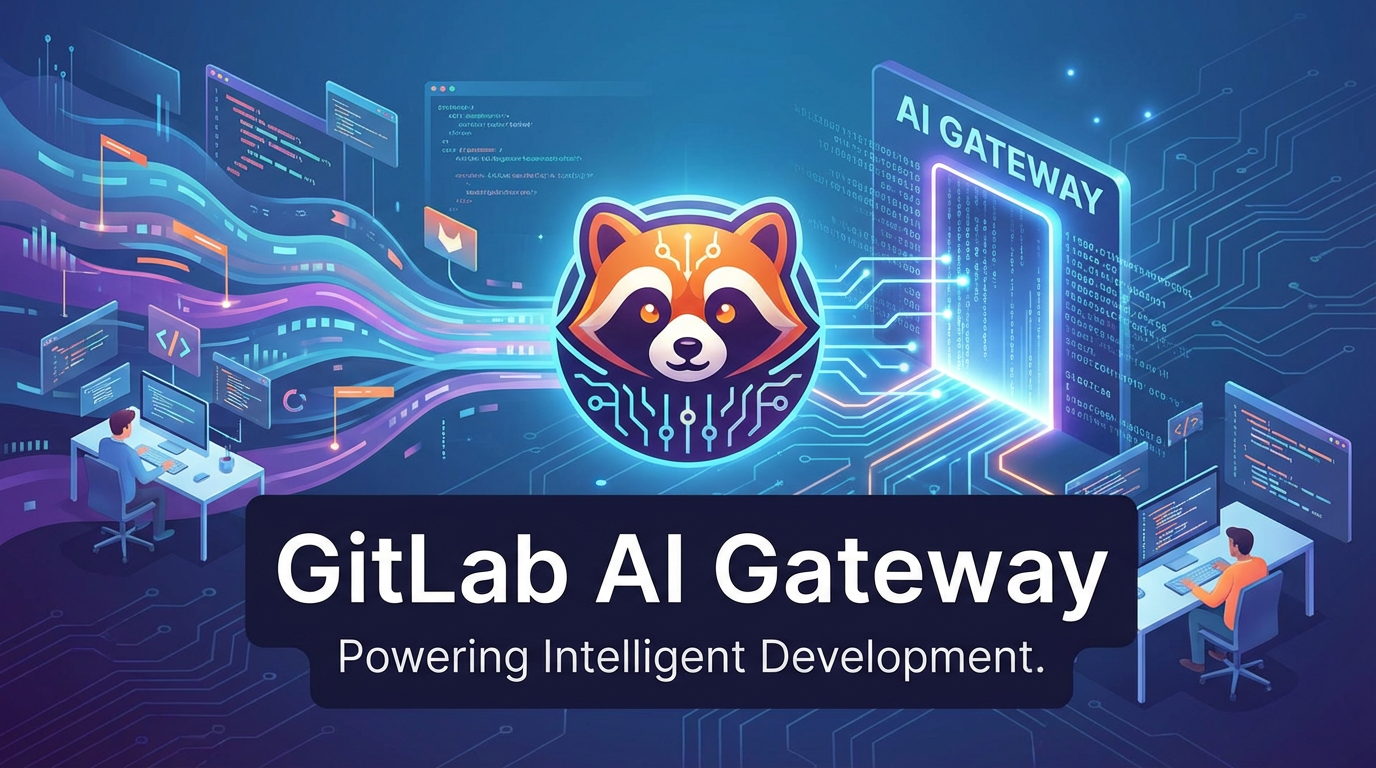


In the rapidly evolving landscape of software development, the integration of Artificial Intelligence (AI) is no longer a futuristic concept but a present-day imperative. As organizations strive for unprecedented levels of efficiency, security, and innovation, the synergy between development platforms and advanced AI capabilities becomes paramount. GitLab, a comprehensive DevSecOps platform, stands at the forefront of this transformation, recognizing the immense potential of AI to revolutionize every stage of the software development lifecycle (SDLC). At the heart of this revolution lies the concept of an AI Gateway, a critical architectural component designed to orchestrate, secure, and optimize the interaction between development tools and a myriad of intelligent services. This article delves into the transformative power of a GitLab AI Gateway, exploring its functionalities, use cases, architectural considerations, and the profound impact it has on fostering intelligent development within the enterprise.
The Dawn of Intelligent Development: Understanding the Need for AI and LLM Gateways
The digital age has ushered in an era where data is abundant, and the ability to derive meaningful insights from it dictates competitive advantage. Software development, traditionally a highly manual and cognitively demanding process, is ripe for disruption through AI. From automating mundane tasks to providing sophisticated analytical capabilities, AI promises to augment human developers, allowing them to focus on higher-value creative and strategic work. However, the sheer diversity and complexity of AI models, particularly Large Language Models (LLMs), present significant integration challenges. This is precisely where the AI Gateway and its specialized counterpart, the LLM Gateway, emerge as indispensable architectural patterns.
What is an AI Gateway? A Foundation for Intelligent Operations
At its core, an AI Gateway serves as an intelligent intermediary between an application or development platform and various AI services. Much like a traditional api gateway manages and routes API traffic, an AI Gateway extends this functionality to cater specifically to the unique demands of artificial intelligence interactions. It acts as a single point of entry for accessing diverse AI models, abstracting away their underlying complexities and providing a unified, managed interface.
The necessity for an AI Gateway stems from several critical factors:
- Complexity Abstraction: The AI ecosystem is fragmented, with models from different providers (e.g., OpenAI, Google AI, custom on-premise models) often having distinct APIs, authentication mechanisms, and data formats. An AI Gateway normalizes these interactions, allowing developers to consume AI capabilities without needing to understand the intricacies of each individual model. This significantly reduces integration overhead and accelerates development cycles.
- Centralized Control and Management: Without a gateway, managing access to multiple AI services across various teams and projects can become chaotic. An AI Gateway offers centralized control over security, access policies, rate limiting, and cost tracking. This ensures that AI resources are consumed efficiently, securely, and within organizational budgets.
- Security and Compliance: AI services, especially those processing sensitive code or data, require stringent security measures. An AI Gateway can enforce robust authentication and authorization protocols, encrypt data in transit and at rest, and implement data governance policies to ensure compliance with regulatory standards (e.g., GDPR, HIPAA). It can also perform input sanitization and output validation to mitigate risks associated with adversarial prompts or generated content.
- Observability and Monitoring: Understanding how AI services are being utilized, their performance metrics (latency, error rates), and their associated costs is crucial for optimization. An AI Gateway provides comprehensive logging and monitoring capabilities, offering a holistic view of AI interactions across the entire platform. This data is invaluable for troubleshooting, performance tuning, and making informed decisions about AI resource allocation.
- Model Management and Orchestration: An advanced AI Gateway can facilitate intelligent routing of requests to different AI models based on factors like cost, performance, availability, or specific task requirements. It can also support model versioning, allowing developers to experiment with new models or roll back to previous versions without impacting dependent applications.
The Specialized Role of an LLM Gateway
While an AI Gateway encompasses a broad spectrum of AI services, an LLM Gateway specifically focuses on managing interactions with Large Language Models. LLMs, with their immense capabilities in understanding, generating, and transforming human language, present their own set of unique challenges and opportunities. An LLM Gateway builds upon the foundational capabilities of an AI Gateway by adding specialized features tailored for linguistic AI:
- Prompt Engineering and Management: Prompts are the key to unlocking an LLM's power. An LLM Gateway allows for the centralized storage, versioning, and A/B testing of prompts. This ensures consistency, reproducibility, and allows for iterative refinement of prompt strategies to achieve optimal results. It can also abstract prompt complexity, offering simpler interfaces for developers.
- Context Management: LLMs often require conversational history or external data as context to generate relevant responses. An LLM Gateway can manage this context, ensuring that conversations flow naturally and efficiently without redundant information being sent to the LLM.
- Response Parsing and Transformation: LLM outputs can be diverse. An LLM Gateway can parse, validate, and transform LLM responses into structured formats suitable for downstream applications, enhancing reliability and ease of use.
- Guardrails and Content Moderation: Given the potential for LLMs to generate biased, inaccurate, or harmful content, an LLM Gateway can implement guardrails for content moderation, ensuring outputs align with ethical guidelines and organizational policies before reaching end-users.
- Multi-Model Routing for LLMs: With multiple LLMs available (e.g., GPT-4, Claude, Llama 2), an LLM Gateway can intelligently route requests based on specific task requirements, cost-effectiveness, or performance characteristics of each model, optimizing resource utilization.
The integration of these specialized gateway functionalities within a comprehensive platform like GitLab transforms how developers interact with AI, moving from ad-hoc integrations to a systematic, governed, and highly efficient approach to intelligent development.
The Vision of GitLab AI Gateway: Seamlessly Integrating Intelligence into DevSecOps
GitLab's mission is to empower everyone to contribute. As AI technologies mature, GitLab recognizes that integrating AI throughout the entire DevSecOps lifecycle is crucial to achieving this vision. The concept of a GitLab AI Gateway is not merely about adding a few AI features; it's about fundamentally rethinking how software is built, secured, and operated. By establishing a robust AI Gateway, GitLab aims to:
- Democratize AI for Developers: Lower the barrier to entry for developers to leverage cutting-edge AI capabilities within their daily workflows, without needing to become AI experts themselves.
- Enhance Developer Productivity: Automate repetitive tasks, provide intelligent suggestions, and streamline complex processes, allowing developers to focus more on innovation and problem-solving.
- Improve Code Quality and Security: Infuse AI into code review, testing, and security scanning to proactively identify issues, suggest fixes, and maintain high standards of quality and security across the codebase.
- Foster a Culture of Continuous Innovation: Provide a flexible and scalable framework for integrating new AI models and experimenting with AI-driven workflows, enabling organizations to stay at the forefront of technological advancements.
- Ensure Governance and Compliance: Offer enterprise-grade controls for managing AI usage, costs, security, and data privacy, aligning AI adoption with organizational policies and regulatory requirements.
The GitLab AI Gateway acts as the connective tissue that weaves AI intelligence into every thread of the DevSecOps fabric, making the platform truly intelligent and anticipatory. It extends the traditional api gateway concept by adding layers of AI-specific intelligence, control, and optimization, creating a powerful engine for modern software delivery.
Core Components and Functionalities of a GitLab AI Gateway
A sophisticated GitLab AI Gateway needs to encompass a comprehensive set of features to fulfill its role as the central nervous system for intelligent development. These functionalities span model orchestration, security, observability, and specialized AI interaction management.
1. Model Orchestration and Intelligent Routing
One of the primary functions of a GitLab AI Gateway is to manage interactions with a diverse ecosystem of AI models. This includes:
- Multi-Provider Integration: Seamlessly connect to and abstract APIs from various external AI providers (e.g., OpenAI, Anthropic, Google Gemini, Azure AI) as well as internal, self-hosted models. The gateway handles the nuances of each provider's authentication, request/response formats, and rate limits.
- Intelligent Routing Strategies: Implement dynamic routing logic to direct AI requests to the most appropriate model based on a variety of criteria:
- Cost Optimization: Route requests to the cheapest available model that meets performance requirements.
- Performance (Latency/Throughput): Prioritize models with lower latency or higher throughput for time-sensitive tasks.
- Availability/Reliability: Failover to alternative models if a primary model becomes unavailable or experiences high error rates.
- Feature Set: Route to specific models known for excelling at particular tasks (e.g., code generation vs. natural language summarization).
- Data Residency: Ensure data is processed by models hosted in specific geographical regions to comply with data residency requirements.
- Load Balancing: Distribute requests across multiple instances of the same model or different models to prevent bottlenecks and ensure high availability.
2. Robust Security and Access Control
Given the sensitive nature of code and intellectual property, security is paramount for an AI Gateway within a DevSecOps platform.
- Authentication and Authorization: Integrate with GitLab's existing identity and access management (IAM) systems (e.g., OAuth, JWT, SAML) to authenticate users and applications making AI requests. Implement granular authorization policies based on project, group, or user roles, ensuring only authorized entities can access specific AI capabilities.
- Data Privacy and Confidentiality: Implement mechanisms to prevent sensitive data from being inadvertently exposed to external AI models. This might include:
- Data Masking/Redaction: Automatically identify and redact sensitive information (e.g., PII, secrets) from prompts or inputs before sending them to external AI services.
- Secure Data Transit: Enforce end-to-end encryption (TLS) for all communications between the GitLab platform, the AI Gateway, and AI models.
- Controlled Data Retention: Define policies for how long input and output data can be stored by the gateway or AI providers.
- Vulnerability Protection: Implement security measures against common API threats, such as injection attacks (e.g., prompt injection for LLMs), denial-of-service (DoS), and unauthorized access attempts.
3. Rate Limiting and Quota Management
Managing AI resource consumption is crucial for cost control and ensuring fair usage across large organizations.
- Global and Granular Rate Limiting: Enforce limits on the number of requests per minute/hour, either globally or per project, user, or API key, to prevent abuse and manage consumption.
- Cost Quota Enforcement: Set monetary or token-based quotas for AI usage, alerting or blocking requests once limits are reached. This helps prevent unexpected cost overruns.
- Tiered Access: Offer different tiers of AI access based on subscription level or project priority, each with varying rate limits and quotas.
4. Comprehensive Observability and Monitoring
Understanding the performance, usage, and cost of AI services is vital for effective management and optimization.
- Detailed Logging: Capture every AI interaction, including request parameters, response data (or summaries), latency, status codes, and associated costs. These logs are crucial for debugging, auditing, and compliance.
- Performance Metrics: Collect and expose metrics such as request volume, latency distribution, error rates, and model-specific performance indicators.
- Cost Tracking and Reporting: Accurately track costs associated with each AI model invocation, attributing them to specific projects or teams. Generate reports to provide insights into AI expenditure and identify areas for optimization.
- Alerting: Configure alerts for abnormal behavior, such as high error rates, exceeding rate limits, or unexpected cost spikes.
- Integration with Existing Monitoring Tools: Forward logs and metrics to GitLab's existing monitoring and analytics dashboards for a unified view of system health.
5. Prompt Management and Versioning (LLM Gateway Specific)
For LLMs, the quality of the prompt directly dictates the quality of the output.
- Centralized Prompt Repository: Store and manage prompts as first-class citizens, allowing developers to discover, reuse, and contribute to a shared library of effective prompts.
- Prompt Versioning and Rollback: Track changes to prompts, allowing for A/B testing of different prompt strategies and the ability to roll back to previous versions if performance degrades.
- Prompt Templating: Support dynamic prompt generation through templating engines, allowing for flexible and context-aware prompts without hardcoding values.
- Prompt Chaining/Orchestration: Enable the creation of complex workflows by chaining multiple prompts or AI model calls together, where the output of one serves as the input for the next.
6. Caching and Response Optimization
Improving response times and reducing redundant API calls significantly enhances developer experience and controls costs.
- Intelligent Caching: Cache common AI model responses for a defined period, serving cached results for identical requests instead of calling the external AI service again. This reduces latency and API costs.
- Content Compression: Automatically compress AI responses to reduce network bandwidth usage and improve transfer speeds.
7. Data Governance and Compliance
Ensuring that AI interactions adhere to legal, ethical, and organizational standards is critical.
- Compliance with Data Residency Rules: Enforce routing rules that ensure data processing occurs in specific geographical regions as required by regulations.
- Ethical AI Guardrails: Implement filters or post-processing steps to ensure AI-generated content adheres to ethical guidelines, preventing the generation of biased, offensive, or harmful material.
- Audit Trails: Maintain detailed audit trails of all AI interactions for regulatory compliance and internal accountability.
8. Seamless Integration with GitLab's Existing Features
The true power of a GitLab AI Gateway comes from its deep integration into the platform's core functionalities.
- CI/CD Pipelines: AI-driven tasks can be easily incorporated into CI/CD, such as automated code review, security scanning, or test generation.
- Code Review: AI suggestions appear directly within merge requests, enhancing the code review process.
- Issue Tracking: AI assists with issue categorization, linking, and solution suggestions.
- Security Scanning: AI augments existing security tools with intelligent vulnerability detection and remediation suggestions.
- User Interface: AI-powered features are seamlessly embedded within the GitLab UI, providing an intuitive experience for developers.
For organizations seeking robust, open-source solutions to manage their AI and REST services, particularly an AI Gateway or LLM Gateway, platforms like APIPark offer comprehensive capabilities. APIPark, for instance, provides quick integration of over 100 AI models, unified API formats, prompt encapsulation into REST APIs, and end-to-end API lifecycle management, which are all critical features for any sophisticated API management strategy, including those within a larger DevSecOps platform like GitLab. Its ability to standardize AI invocation, manage the full API lifecycle, and offer high-performance traffic handling positions it as a valuable tool for modern enterprises looking to harness the full potential of AI-driven development.
How GitLab Leverages AI Gateway for Intelligent Development: Detailed Use Cases
The integration of an AI Gateway within GitLab unleashes a multitude of intelligent features that permeate every stage of the DevSecOps lifecycle, fundamentally changing how teams build, secure, and deliver software.
1. Code Generation and Completion: Augmenting Developer Creativity
The most visible and immediate impact of AI in development is often seen in code generation. With the GitLab AI Gateway facilitating access to advanced LLMs, developers gain powerful assistants right within their IDE or GitLab interface.
- Intelligent Code Suggestions: As a developer types, the AI Gateway feeds context (current file, related files, project patterns) to an LLM, which then suggests relevant code snippets, function calls, or even entire blocks of code. These suggestions can be highly contextual and predictive, significantly speeding up the coding process and reducing syntax errors. For example, if a developer starts writing a database query, the AI could suggest the appropriate ORM syntax based on the project's configuration.
- Boilerplate Code Generation: For common patterns or new file creation, developers can provide a high-level description, and the AI Gateway orchestrates an LLM to generate the initial structure, class definitions, or test stubs. This eliminates the repetitive task of writing boilerplate, allowing developers to jump straight into implementing core logic.
- Code Transformation and Refactoring Suggestions: The AI can analyze existing code and suggest ways to refactor it for better readability, performance, or adherence to coding standards. This goes beyond simple linting, offering intelligent restructuring advice. For instance, it might suggest consolidating redundant logic into a new helper function or replacing a complex loop with a more idiomatic stream operation.
- Bridging Language Gaps: For polyglot teams, the AI Gateway can facilitate code generation in different languages, allowing a developer familiar with Python to receive suggestions for a JavaScript frontend component or vice-versa, significantly reducing the learning curve and enabling cross-functional contributions.
2. Automated Code Review and Refactoring: Enhancing Quality and Consistency
Code review is a cornerstone of quality assurance, but it can be time-consuming and prone to human oversight. AI, powered by the AI Gateway, transforms this process.
- Proactive Bug Detection: The LLM, integrated via the gateway, can analyze merge request diffs not just for syntax, but for logical inconsistencies, potential edge cases, and common programming pitfalls that might escape human review. It can identify off-by-one errors, resource leaks, or inefficient algorithms based on learned patterns from vast code corpuses.
- Security Vulnerability Identification: Beyond static analysis tools, an AI Gateway can direct code snippets to specialized security LLMs or models that are trained to identify subtle security vulnerabilities, such as insecure deserialization, privilege escalation opportunities, or authentication flaws. It can provide context-aware suggestions for remediation, explaining why a particular pattern is risky.
- Coding Style and Best Practice Enforcement: The AI can ensure adherence to project-specific coding standards, architectural patterns, and best practices. If a developer deviates from established conventions (e.g., naming conventions, error handling patterns), the AI can flag it and suggest corrections, promoting consistency across the codebase without rigid linters.
- Automated Code Explanations: For complex code changes or unfamiliar areas, the AI can generate concise explanations of the code's intent, helping reviewers understand the logic faster. This is particularly valuable for onboarding new team members or reviewing contributions from external collaborators.
3. Intelligent Testing and Quality Assurance: Smarter, Faster, More Robust
Testing is critical but often resource-intensive. An AI Gateway can inject intelligence into the testing phase, making it more efficient and comprehensive.
- Automated Test Case Generation: Based on code changes, requirements, or existing functionality, the LLM can generate unit tests, integration tests, or even UI test scripts. For example, given a new function, it can propose a suite of test cases covering positive, negative, and edge scenarios, including mock data generation.
- Identification of Flaky Tests: By analyzing test execution history and patterns of failure, the AI can identify "flaky" tests that intermittently pass or fail without underlying code changes. It can suggest potential causes (e.g., race conditions, external dependencies) or recommend refactoring.
- Test Coverage Gap Analysis: The AI can analyze code coverage reports and suggest specific areas of the codebase that are under-tested, proposing new tests to fill these gaps and improve overall test suite robustness.
- Test Data Generation: For complex applications, generating realistic and diverse test data can be a bottleneck. The AI Gateway can orchestrate LLMs to generate synthetic test data that mimics real-world scenarios, including sensitive data that can be anonymized or perturbed for privacy.
4. Smart Issue Triage and Management: Streamlining Project Workflow
Issue tracking is central to project management. AI can make issue management more efficient and insightful within GitLab.
- Automated Issue Categorization and Tagging: When a new issue is created, the AI can analyze its description, title, and attached logs to automatically assign relevant labels (e.g., "bug," "feature request," "performance," "backend," "frontend"). This reduces manual triage effort and ensures issues are routed correctly.
- Duplicate Issue Detection: The AI Gateway can enable LLMs to compare new issues against historical ones, identifying potential duplicates or closely related issues, helping to maintain a clean issue backlog and consolidate efforts.
- Solution Suggestion and Knowledge Base Linking: Based on the issue description, the AI can suggest potential solutions from a knowledge base, link to relevant documentation, or even point to previously resolved issues that might offer a workaround.
- Priority and Severity Prediction: By analyzing patterns from past issues (e.g., keywords, reported symptoms, affected components), the AI can help predict the urgency and impact of new issues, assisting project managers in prioritizing the backlog.
- Automated Issue Summarization: For long threads of comments, the AI can generate concise summaries of discussions and decisions, making it easier for new contributors or busy stakeholders to quickly grasp the context.
5. Enhanced Security Scanning and Vulnerability Remediation: Proactive Protection
Security is a paramount concern in DevSecOps. The GitLab AI Gateway strengthens security posture by infusing intelligence into scanning and remediation efforts.
- Advanced Static Application Security Testing (SAST): Beyond traditional SAST, AI-powered analysis can identify more complex and subtle vulnerabilities by understanding the context and flow of the code, not just individual patterns. It can spot business logic flaws or chained vulnerabilities.
- Intelligent Dependency Scanning: The AI can analyze the project's dependency tree for known vulnerabilities and also predict potential future vulnerabilities based on upstream project activity or maintainer reputation, providing proactive warnings.
- Automated Remediation Suggestions: When a vulnerability is detected, the AI can provide not just an alert but also concrete code suggestions for how to fix it, potentially even generating a merge request with the proposed patch.
- Secrets Detection and Prevention: The AI can scan code, configuration files, and commit history for inadvertently committed secrets (API keys, passwords), and suggest immediate remediation steps. The AI Gateway itself can be configured to redact such secrets from prompts sent to external LLMs.
- Policy Compliance Auditing: The AI can assist in auditing code and configurations against internal security policies or industry standards (e.g., PCI DSS, SOC 2), flagging non-compliant elements.
6. Automated Documentation Generation: Keeping Knowledge Up-to-Date
Documentation is often neglected but vital. AI can automate much of this critical task.
- Code Documentation Generation: Based on source code, function signatures, and comments, the LLM can generate high-quality docstrings, API reference documentation, or even user manuals, keeping documentation in sync with the codebase.
- README and Project Overview Generation: For new projects or modules, the AI can draft initial README files, project descriptions, and contribution guidelines based on the code's purpose and structure.
- Release Notes Summarization: From commit messages, issue closures, and merge requests, the AI can automatically generate concise and informative release notes, saving significant manual effort.
- Technical Specification Drafting: For planning new features, the AI can assist in drafting technical specifications based on high-level requirements, outlining components, APIs, and implementation details.
7. CI/CD Pipeline Optimization: Predictive and Adaptive Pipelines
AI can make CI/CD pipelines more efficient, reliable, and intelligent.
- Predictive Build Failures: By analyzing historical build data, test outcomes, and code changes, the AI can predict the likelihood of a pipeline failure before it even runs, allowing developers to address potential issues proactively.
- Optimized Test Execution: The AI can intelligently select which tests to run based on the changed code and the probability of relevant failures, speeding up feedback loops by avoiding unnecessary full test suites.
- Resource Allocation Optimization: For complex pipelines, the AI can suggest optimal resource allocation (e.g., number of parallel jobs, compute instance types) to balance speed and cost efficiency.
- Anomaly Detection in Deployments: During continuous deployment, the AI can monitor key metrics (e.g., error rates, latency, resource utilization) and detect anomalies that might indicate a problematic deployment, potentially triggering automated rollbacks.
8. Developer Experience (DX) Improvement: Personalized and Intuitive Interactions
Beyond specific tasks, the AI Gateway enhances the overall developer experience.
- Intelligent Search and Discovery: AI-powered search within GitLab can help developers quickly find relevant code, issues, documentation, or team members, even with vague queries.
- Personalized Recommendations: Based on a developer's work patterns, interests, and project context, the AI can recommend relevant issues, code to review, or internal knowledge base articles.
- Contextual Help and Support: When a developer encounters an error or gets stuck, the AI can provide immediate, context-aware assistance, explaining error messages, suggesting debugging steps, or pointing to relevant resources.
- Code Understanding and Explanation: For unfamiliar codebases or legacy systems, the AI can provide high-level summaries or detailed explanations of code sections, making it easier for developers to onboard or work in new areas.
These detailed use cases illustrate how a well-implemented GitLab AI Gateway transforms the DevSecOps process from a series of manual steps into a highly intelligent, automated, and human-augmented workflow.
APIPark is a high-performance AI gateway that allows you to securely access the most comprehensive LLM APIs globally on the APIPark platform, including OpenAI, Anthropic, Mistral, Llama2, Google Gemini, and more.Try APIPark now! 👇👇👇
Architecture and Implementation Considerations for a GitLab AI Gateway
Building and integrating an AI Gateway into a platform as comprehensive as GitLab requires careful architectural planning to ensure scalability, security, performance, and extensibility.
1. Deployment Models: Flexibility for Diverse Enterprises
An AI Gateway needs to support various deployment models to cater to different organizational needs and compliance requirements.
- Cloud-Native Deployment: Deploying the gateway as containerized microservices on Kubernetes (which GitLab itself can manage) offers scalability, resilience, and ease of management. This model is ideal for leveraging public cloud AI services.
- On-Premise/Hybrid Deployment: For organizations with strict data residency requirements or those using proprietary AI models, the AI Gateway must support on-premise deployment. A hybrid approach allows routing to local models for sensitive data and cloud models for less sensitive or public data.
- Edge Deployment: In scenarios requiring extremely low latency or offline capabilities, parts of the AI Gateway logic (e.g., caching, basic routing) could be deployed closer to the developers' machines or within specific network segments.
2. Scalability and Performance: Handling Demanding AI Workloads
AI workloads, especially those involving LLMs, can be compute-intensive and generate high volumes of traffic.
- Distributed Architecture: The AI Gateway should be designed as a set of decoupled services, allowing individual components (e.g., routing, caching, logging) to scale independently.
- Asynchronous Processing: Utilize message queues and asynchronous processing patterns for non-real-time AI tasks to prevent blocking operations and improve throughput.
- Resource Pooling: Efficiently manage connections and resources to AI providers to minimize overhead.
- High-Performance Proxying: Leverage optimized proxy technologies (e.g., Envoy, Nginx) for efficient request routing and load balancing within the gateway itself.
3. Extensibility: Adapting to a Changing AI Landscape
The AI landscape is constantly evolving. The AI Gateway must be designed for easy integration of new models and custom capabilities.
- Pluggable Architecture: Support a plugin-based system for integrating new AI providers, custom prompt transformations, or specialized security filters. This allows organizations to adapt to emerging AI technologies without rebuilding the entire gateway.
- Open Standards: Adhere to open standards for API definitions (e.g., OpenAPI Specification) and data formats to simplify integration with various AI services and internal systems.
- Custom Logic Injection: Provide mechanisms for developers to inject custom logic (e.g., WebAssembly, scripting) at different stages of the request/response lifecycle within the gateway, enabling bespoke functionalities like advanced data preprocessing or specialized content moderation.
4. Integration with Broader Enterprise IT Landscape
The GitLab AI Gateway doesn't operate in a vacuum; it must integrate seamlessly with other enterprise systems.
- Observability Stack: Export logs and metrics to enterprise monitoring solutions (e.g., Prometheus, Grafana, ELK Stack) for unified operational visibility.
- Security Information and Event Management (SIEM): Integrate with SIEM systems to feed security events and audit trails for centralized security monitoring and incident response.
- Identity Providers: Leverage existing enterprise identity providers (e.g., Okta, Azure AD) for single sign-on and centralized user management.
- Cost Management Systems: Provide detailed cost data to enterprise financial reporting and chargeback systems.
5. Data Handling and Context Management
Efficiently managing data, especially conversational context for LLMs, is crucial.
- Context Storage: Determine appropriate strategies for storing and retrieving conversational context, whether in-memory, distributed caches, or persistent storage, balancing performance with consistency and scalability.
- Data Masking/Transformation: Implement robust, configurable pipelines within the gateway for data masking, anonymization, or transformation to ensure data privacy and compliance before sending data to external AI services.
- Schema Validation: Validate input and output schemas against defined specifications to ensure data integrity and prevent malformed requests or responses.
6. Developer Experience within the Gateway
While the gateway abstracts complexity for end-developers using GitLab's AI features, it must also provide a good experience for those managing or extending the gateway itself.
- Intuitive Configuration: Offer clear and manageable configuration options for routing rules, security policies, rate limits, and model integrations.
- API for Gateway Management: Provide a well-documented API for programmatic management of the AI Gateway, enabling automation of its configuration and deployment.
- Monitoring Dashboards: Offer dedicated dashboards within GitLab for monitoring AI Gateway health, usage, costs, and performance.
By carefully considering these architectural and implementation aspects, GitLab can build an AI Gateway that is not only powerful and feature-rich but also resilient, scalable, secure, and adaptable to the ever-changing demands of intelligent development.
| Feature Area | Traditional API Gateway Functionality | AI Gateway Specific Functionality (or even specific parts of them) for different purposes in development environments. For example, specific AI for code generation in sandbox, but LLM for review.
Challenges and Future Outlook for GitLab AI Gateway
While the AI Gateway promises significant advancements, its implementation and ongoing management come with inherent challenges and considerations. The future of intelligent development within GitLab will depend on how effectively these challenges are addressed.
1. Ethical AI and Bias Mitigation
The core challenge of any AI system is ensuring it is fair, unbiased, and aligned with human values.
- Bias in Training Data: LLMs are trained on vast datasets, which often reflect societal biases. This can lead to AI suggestions or analyses that are discriminatory or unfair. The AI Gateway needs to implement mechanisms to detect and filter out biased outputs, and ideally, provide tools for bias assessment and mitigation strategies.
- Transparency and Explainability (XAI): Understanding why an AI made a particular suggestion or decision is crucial for developer trust and accountability. The gateway should strive to provide insights into the AI's reasoning, even if it's a simplified explanation.
- Responsible AI Usage: GitLab needs to establish guidelines and best practices for the ethical use of AI features, educating developers on their limitations and potential pitfalls.
2. Data Privacy and Security: Safeguarding Intellectual Property
The very nature of software development involves highly sensitive intellectual property.
- Prompt Leakage and Data Exposure: Sending proprietary code snippets or project details to external AI services raises significant privacy concerns. The AI Gateway must act as a strong guardian, employing techniques like differential privacy, federated learning (if applicable), or robust data masking/redaction to prevent leakage.
- Intellectual Property Rights: The legal implications of AI-generated code (e.g., copyright ownership, licensing) are still evolving. The AI Gateway needs to provide visibility into which models were used and potentially track provenance of AI-generated content to help organizations navigate these complexities.
- Securing the Gateway Itself: As a central point of access, the AI Gateway becomes a high-value target for attackers. It must be fortified with the strongest security measures, including regular penetration testing, vulnerability assessments, and adherence to zero-trust principles.
3. Cost Management and Optimization: Balancing Innovation with Expense
AI services, especially large-scale LLMs, can be expensive.
- Predictable Pricing Models: Organizations need clear visibility into AI consumption and cost attribution. The AI Gateway's detailed cost tracking is essential for chargeback to projects or teams.
- Optimization Strategies: Implement cost-saving measures such as intelligent model routing (e.g., favoring cheaper, smaller models for simpler tasks), caching, and request batching.
- Resource Forecasting: Leverage historical usage data to forecast future AI resource needs and budgets, preventing unexpected expenses.
4. Model Drift and Maintenance: Keeping AI Relevant and Performant
AI models are not static; their performance can degrade over time due to changes in data patterns or real-world usage.
- Performance Monitoring and Alerting: The AI Gateway needs to continuously monitor AI model performance (e.g., accuracy, latency, output quality) and alert administrators to any significant degradation, indicating model drift.
- Automated Model Retraining/Updating: While the gateway doesn't directly retrain models, it can facilitate the process by providing data for fine-tuning or easily switching to updated model versions from providers.
- Version Control for Prompts and Models: Just as code is versioned, so too should prompts and the specific AI model versions they interact with, allowing for reproducibility and rollback in case of issues.
5. The "Human in the Loop": Augmentation, Not Replacement
A crucial aspect of intelligent development is recognizing that AI is a powerful tool to augment human capabilities, not replace them entirely.
- Developer Oversight: AI suggestions and generated code should always be presented in a way that encourages developer review and modification, ensuring human control and accountability.
- Skill Evolution: Developers will need to adapt their skills to effectively collaborate with AI, learning how to prompt effectively, evaluate AI outputs, and leverage AI tools efficiently. The GitLab AI Gateway should facilitate this learning curve through intuitive design.
- Cognitive Load Management: While AI aims to reduce cognitive load, poorly integrated AI features can add to it. The gateway should strive for seamless, unobtrusive integration that truly simplifies workflows.
6. Future: Beyond Code - Project Management, Security Operations, and More
The scope of the GitLab AI Gateway will undoubtedly expand beyond core code development.
- Intelligent Project Management: AI could assist in resource allocation, risk assessment, and dependency management across complex projects.
- Advanced Security Operations: AI can power more sophisticated threat hunting, anomaly detection in logs, and automated incident response within the broader DevSecOps platform.
- Personalized Learning and Development: AI could recommend relevant training modules or resources to developers based on their work and skill gaps.
- Cross-Functional AI Collaboration: Enable AI features that span engineering, operations, and business functions, fostering a more interconnected and intelligent enterprise.
The path to fully intelligent development is complex, but with a well-designed and continually evolving AI Gateway, GitLab is strategically positioned to navigate these challenges, unlock unprecedented efficiencies, and empower developers to build the future.
Strategic Importance for Enterprises: Unlocking Transformative Value
For enterprises operating in today's fiercely competitive landscape, the strategic adoption of AI within their development workflows, facilitated by a robust AI Gateway, is not merely an optional upgrade; it's a fundamental competitive differentiator. GitLab's embrace of this intelligent infrastructure promises profound benefits across multiple dimensions:
1. Exponential Increase in Developer Productivity
The most immediate and tangible benefit is the significant boost in developer productivity. By automating mundane, repetitive tasks such as boilerplate generation, basic bug detection, and documentation creation, developers are liberated from tedious work. This allows them to allocate their cognitive energy to more complex problem-solving, architectural design, and innovative feature development. Intelligent code completion, refactoring suggestions, and smart issue triage drastically reduce the time spent on each development cycle, leading to faster feature delivery and a more engaged, less fatigued developer workforce.
2. Drastic Improvement in Code Quality and Security Posture
Integrating AI-powered analysis at every stage through the AI Gateway ensures a proactive approach to quality and security. The AI's ability to identify subtle bugs, potential performance bottlenecks, and sophisticated security vulnerabilities that human reviewers or traditional static analysis might miss elevates the overall integrity and resilience of the codebase. By shifting security left and embedding AI-driven checks directly into the development workflow, enterprises can detect and remediate issues earlier, where they are far less costly to fix, thereby significantly reducing technical debt and mitigating costly security breaches. This intelligent layer means fewer defects reaching production and a stronger, more secure software product.
3. Accelerated Time to Market and Enhanced Agility
In a fast-paced market, the ability to rapidly iterate, innovate, and deploy new features is crucial. The efficiency gains across the SDLC – from accelerated coding and intelligent testing to streamlined code reviews and automated deployments – all contribute to a dramatically reduced time to market. Enterprises can respond more swiftly to customer feedback, adapt to market changes, and outpace competitors by delivering high-quality software with unprecedented speed. The AI Gateway facilitates this agility by making AI services readily available and seamlessly integrated, removing friction from the development pipeline.
4. Cultivation of Innovation and Competitive Advantage
By empowering developers with advanced AI tools, enterprises foster an environment where innovation can flourish. Developers can experiment with new ideas faster, prototype solutions more efficiently, and leverage AI's analytical capabilities to explore novel approaches to complex problems. This continuous cycle of AI-augmented innovation directly translates into a sustainable competitive advantage, enabling companies to build cutting-edge products and services that redefine industry standards and capture market share. The ability to integrate and orchestrate various AI models via the LLM Gateway component ensures that the organization can always tap into the latest and most powerful intelligent capabilities available.
5. Significant Cost Savings and Resource Optimization
While AI services themselves incur costs, the overall operational savings can be substantial. Reduced manual effort in testing and code review, fewer post-release bug fixes, optimized CI/CD pipeline resource usage, and efficient allocation of AI services through the gateway's cost management features contribute to a healthier bottom line. Furthermore, by making developers more productive, enterprises can achieve more with their existing talent, or reallocate human resources to higher-value strategic initiatives rather than expanding headcount for repetitive tasks. The centralized management offered by an api gateway specifically designed for AI also prevents fragmented, inefficient, and costly individual team integrations.
In essence, a GitLab AI Gateway transforms the entire calculus of software development. It moves beyond incremental improvements to offer a paradigm shift, enabling enterprises to build better software, faster, more securely, and with greater efficiency, ultimately driving business growth and sustained success in the intelligent era.
Conclusion: Charting the Course for Intelligent Development with GitLab AI Gateway
The journey towards fully intelligent development is an ambitious one, but with the strategic integration of an AI Gateway into its comprehensive DevSecOps platform, GitLab is charting a clear and compelling course. This architectural innovation represents far more than just adding AI features; it signifies a fundamental reimagining of how software is conceived, created, secured, and operated. By providing a unified, secure, and observable conduit to a vast ecosystem of AI models, particularly the sophisticated capabilities offered by Large Language Models, the GitLab AI Gateway empowers developers, streamlines workflows, and significantly elevates the quality and security of software.
We have explored how this intelligent intermediary, acting as a specialized api gateway, handles complex challenges such as multi-model orchestration, stringent security requirements, precise cost management, and the nuanced demands of prompt engineering via an LLM Gateway. From accelerating code generation and automating rigorous code reviews to enhancing security scanning and intelligent issue management, the impact reverberates across the entire software development lifecycle. The strategic importance for enterprises is undeniable, promising exponential gains in developer productivity, superior code quality, faster time to market, and a powerful competitive edge fueled by continuous innovation.
As AI continues its relentless advancement, the GitLab AI Gateway stands as a foundational pillar, ensuring that organizations can seamlessly adopt cutting-edge intelligent capabilities while maintaining control, governance, and a steadfast focus on ethical AI practices. This intelligent evolution within GitLab not only simplifies the integration of AI but fundamentally transforms the very act of creation, leading us into an era where software development is not just faster and more secure, but truly intelligent. The future of software is intelligent, and the GitLab AI Gateway is at the vanguard of powering this transformative journey.
Frequently Asked Questions (FAQ)
1. What is an AI Gateway and why is it essential for modern software development? An AI Gateway is a critical architectural component that acts as an intelligent intermediary between a development platform or application and various AI services. It is essential because it abstracts the complexity of integrating diverse AI models, provides centralized management for security, access control, rate limiting, and cost tracking, and enables intelligent routing and orchestration of AI requests. For modern software development, it ensures efficient, secure, and scalable consumption of AI capabilities, making AI accessible to developers without deep AI expertise.
2. How does an LLM Gateway differ from a general AI Gateway? An LLM Gateway is a specialized form of an AI Gateway specifically tailored for managing interactions with Large Language Models (LLMs). While a general AI Gateway handles a broad spectrum of AI services (e.g., computer vision, predictive analytics), an LLM Gateway includes additional functionalities critical for LLMs, such as prompt engineering and versioning, context management for conversational AI, content moderation, and multi-model routing optimized for language tasks. It addresses the unique challenges and opportunities presented by LLMs in a more granular way.
3. What are the key benefits of integrating an AI Gateway into a platform like GitLab? Integrating an AI Gateway into GitLab offers numerous benefits, including significantly increased developer productivity through intelligent code suggestions and automation, improved code quality and security via AI-powered reviews and vulnerability detection, faster time to market due to streamlined development cycles, enhanced innovation capabilities by democratizing AI access, and robust cost management and compliance. It transforms GitLab into a truly intelligent DevSecOps platform, fostering a more efficient and secure development ecosystem.
4. What security considerations are paramount for a GitLab AI Gateway? Security is paramount for an AI Gateway, especially when handling sensitive code and intellectual property. Key considerations include robust authentication and authorization integrated with GitLab's IAM, stringent data privacy measures such as data masking and secure data transit, protection against prompt injection attacks and other API threats, and adherence to data residency and compliance regulations. The gateway must also maintain detailed audit trails and be continuously monitored for security vulnerabilities.
5. How does an AI Gateway help manage the cost of using AI models? An AI Gateway plays a crucial role in managing AI model costs through several mechanisms. It enables global and granular rate limiting and quota enforcement to prevent overconsumption. It can implement intelligent routing strategies that prioritize cheaper models for less demanding tasks. Additionally, it offers comprehensive cost tracking and reporting, allowing organizations to monitor AI expenditure, attribute costs to specific projects or teams, and identify areas for optimization, ensuring that AI adoption remains budget-friendly.
🚀You can securely and efficiently call the OpenAI API on APIPark in just two steps:
Step 1: Deploy the APIPark AI gateway in 5 minutes.
APIPark is developed based on Golang, offering strong product performance and low development and maintenance costs. You can deploy APIPark with a single command line.
curl -sSO https://download.apipark.com/install/quick-start.sh; bash quick-start.sh

In my experience, you can see the successful deployment interface within 5 to 10 minutes. Then, you can log in to APIPark using your account.

Step 2: Call the OpenAI API.