GQL Fragment On: Master GraphQL's Powerful Feature


In the ever-evolving landscape of modern web and mobile application development, the efficiency and precision of data fetching stand as paramount challenges. Developers grapple with the intricate dance of requesting just the right amount of information from disparate sources without incurring the penalties of over-fetching, under-fetching, or an excessive number of round trips. For years, RESTful APIs, while foundational, often presented developers with these exact dilemmas, forcing them into compromises between backend simplicity and frontend agility. Then came GraphQL, a revolutionary query language for your API, promising to reshape how applications interact with their data by providing clients with the power to ask for exactly what they need and nothing more.
While GraphQL inherently offers significant improvements over traditional API paradigms, its true power and elegance are fully unleashed when developers master its more sophisticated features. Among these, GraphQL Fragments, particularly when combined with the ...on type condition, represent a cornerstone of building robust, maintainable, and highly efficient GraphQL applications. Fragments enable the creation of reusable units of query logic, transforming complex, repetitive data requests into modular, organized, and comprehensible structures. The ...on syntax further refines this capability, allowing for conditional data fetching based on the concrete type of an interface or union, thereby embracing polymorphism directly within the query.
This comprehensive guide delves deep into the world of GraphQL Fragments and the ...on type condition. We will embark on a journey from understanding the fundamental necessity of GraphQL in the modern API ecosystem to dissecting the intricate syntax and profound benefits of fragments. We will explore advanced patterns, best practices, and real-world scenarios, illustrating how mastering this powerful feature can significantly enhance developer experience, improve code maintainability, and ultimately lead to more performant and scalable applications. By the end of this exploration, you will possess a profound understanding of how to leverage fragments to their fullest potential, solidifying your expertise in GraphQL development and equipping you to tackle the most demanding data fetching challenges.
Chapter 1: The Landscape of Data Fetching: Why GraphQL Emerged
The internet's rapid expansion and the proliferation of complex applications across diverse platforms have fundamentally altered the requirements for data exchange between clients and servers. For decades, REST (Representational State Transfer) served as the de facto standard for building APIs, offering a stateless, client-server architecture with uniform interfaces. Its simplicity and widespread adoption made it the backbone of countless applications, but as demands grew, so did its inherent limitations.
Traditional RESTful APIs are typically organized around resources, with each resource having a distinct endpoint. For instance, /users might return a list of users, and /users/{id} might return a single user's details. While straightforward for simple data models, this approach quickly introduces inefficiencies for applications with rich, interconnected data requirements. A common issue is over-fetching, where the client receives more data than it actually needs. Imagine fetching a user's full profile when only their name and avatar URL are required for a display list; the excess data consumes unnecessary bandwidth and processing power on both client and server. Conversely, under-fetching necessitates multiple round trips to the server. If a client needs a user's details, their posts, and comments on those posts, it might require calls to /users/{id}, /users/{id}/posts, and then /posts/{id}/comments for each post. This cascade of requests significantly increases latency, particularly detrimental for mobile api clients operating on constrained networks.
The rise of single-page applications (SPAs) and mobile apps, characterized by dynamic UIs and highly interactive user experiences, exacerbated these problems. Developers found themselves struggling to stitch together data from various REST endpoints, often resorting to complex client-side logic to merge, filter, and transform the received data. This not only added to client-side complexity but also made maintaining the application more challenging as data requirements evolved. The tightly coupled nature of REST endpoints and their data payloads meant that even minor UI changes could necessitate significant backend modifications or the creation of new, highly specific endpoints, leading to API proliferation and increased development overhead.
It was against this backdrop that GraphQL emerged in 2012, open-sourced by Facebook in 2015, as a paradigm-shifting solution. GraphQL is not a database technology, nor is it a programming language; rather, it's a query language for your API and a runtime for fulfilling those queries with your existing data. It fundamentally redefines the contract between client and server, placing the power directly in the hands of the client. Instead of rigid endpoints, GraphQL exposes a single endpoint that clients can query, asking for precisely the data they need, structured exactly as they desire.
The core principle of GraphQL is its schema, which describes all the data and operations (queries, mutations, subscriptions) available through the API. This schema serves as a strongly typed contract, enabling powerful client-side tooling, validation, and auto-completion. Clients send queries to this single endpoint, describing the shape of the data they want, and the server responds with a JSON object that exactly matches that shape. This eliminates both over-fetching and under-fetching. A single GraphQL query can replace multiple REST requests, drastically reducing the number of network round trips and improving application performance, especially in environments with high latency or limited bandwidth.
For instance, to retrieve a user's name, avatar, and the titles of their last three posts, a single GraphQL query can achieve this, unlike multiple REST calls. This flexibility empowers frontend developers to iterate faster, decoupling frontend data requirements from backend implementation details. The backend team can evolve the schema without breaking existing clients, as clients only consume the fields they explicitly request. In essence, GraphQL transforms the API from a collection of fixed resources into a dynamic, queryable graph of data, offering unprecedented control and efficiency for modern application development. This fundamental shift laid the groundwork for advanced features like Fragments, which further refine the art of data fetching.
Chapter 2: Deciphering GraphQL Fragments: The Core Concept
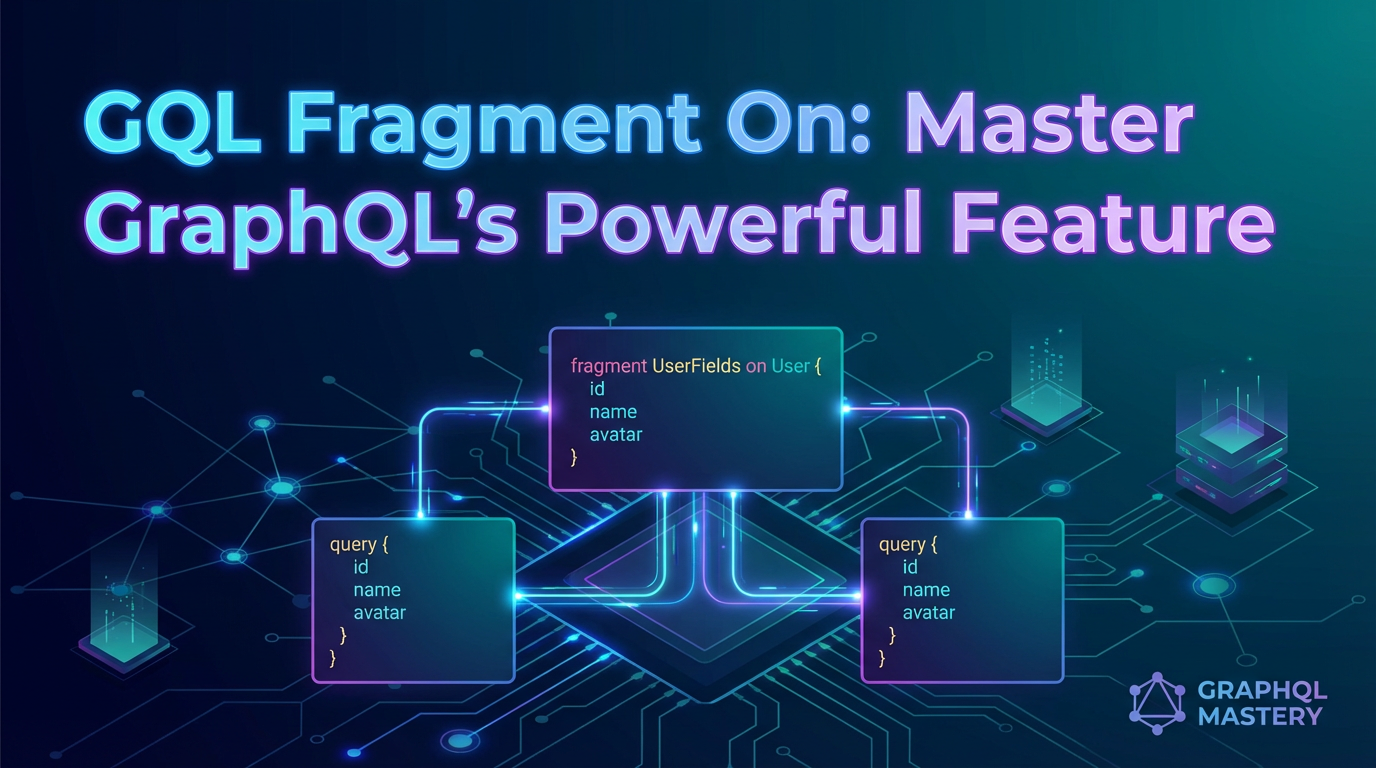
Having understood the foundational advantages GraphQL offers over traditional RESTful APIs, we can now delve into one of its most powerful and often underutilized features: Fragments. At its heart, a GraphQL Fragment is a reusable unit of GraphQL query logic. Imagine you're building a user interface where various components display similar pieces of information about an entity – for example, a UserCard component displays a user's id, name, and email, while a UserProfileHeader might also display id, name, and email alongside other fields like bio and avatarUrl. Without fragments, you would be forced to duplicate the id, name, and email fields in every query that needs them, leading to verbose, repetitive, and difficult-to-maintain code.
This redundancy quickly becomes a significant problem as your application scales and your data requirements grow more complex. Any change to the common set of fields (e.g., deciding to fetch fullName instead of name and lastName separately) would necessitate updates across multiple queries, introducing the risk of inconsistencies and errors. This is precisely the problem fragments are designed to solve. They encapsulate a specific set of fields for a particular type, allowing you to define this selection once and then "spread" it into any query or mutation that operates on that type.
Think of fragments as akin to functions or components in programming languages. Just as a function encapsulates a block of reusable code, a fragment encapsulates a block of reusable field selections. This adheres directly to the DRY (Don't Repeat Yourself) principle, a cornerstone of good software engineering. By extracting common field sets into named fragments, you modularize your queries, making them cleaner, more readable, and significantly easier to maintain.
The basic syntax for defining a GraphQL fragment is straightforward:
fragment MyFragmentName on TypeName {
  field1
  field2
  nestedObject {
    nestedField1
  }
}
Let's break down this syntax:
fragment: This keyword declares that you are defining a fragment.MyFragmentName: This is the unique name you give to your fragment. It should be descriptive and reflect the purpose of the fragment or the component it serves.on TypeName: This is crucial. It specifies the GraphQL type that this fragment operates on. The fields defined within the fragment must belong toTypeName. For instance, if you define a fragmenton User, you can only select fields that exist on theUsertype in your GraphQL schema. ThisTypeNamecan be an object type, an interface, or a union.{ ... }: Inside the curly braces, you list all the fields that this fragment will select. This can include scalar fields, object fields, and even nested selections.
Once defined, you can use (or "spread") this fragment into any query, mutation, or even another fragment that operates on the same or a compatible type, using the spread syntax ...MyFragmentName.
Consider a practical example. Suppose we have a User type in our schema:
type User {
  id: ID!
  firstName: String!
  lastName: String!
  email: String
  avatarUrl: String
  bio: String
  posts: [Post!]!
}
Now, let's define a fragment for a "UserBasicInfo":
fragment UserBasicInfo on User {
  id
  firstName
  lastName
  avatarUrl
}
This UserBasicInfo fragment can then be reused in various queries:
query GetCurrentUserProfile {
  currentUser {
    ...UserBasicInfo
    email
    bio
  }
}

query GetTeamMembers {
  team(id: "team123") {
    members {
      ...UserBasicInfo
      # Maybe fetch some team-specific role here, but not other user details
      role
    }
  }
}
In GetCurrentUserProfile, we're fetching the basic info defined in UserBasicInfo along with email and bio specific to the full profile view. In GetTeamMembers, we're reusing the same basic info for each member, alongside a role field. Notice how ...UserBasicInfo effectively expands into id, firstName, lastName, and avatarUrl at query execution time.
This modularity immediately enhances readability. Instead of seeing a long list of fields duplicated across queries, you see a concise ...UserBasicInfo, indicating that a standard set of user details is being fetched. More importantly, if the definition of "basic user info" ever changes – for example, if we decide to include email in UserBasicInfo – you only need to update the fragment definition in one place, and all queries using ...UserBasicInfo will automatically reflect that change. This drastically reduces the effort and risk associated with refactoring, making fragments an indispensable tool for building scalable and maintainable GraphQL applications.
Chapter 3: The ...on Type Condition: Precision and Polymorphism with Fragments
While basic fragments provide invaluable reusability for concrete types, GraphQL's schema can become significantly more powerful through the use of interfaces and unions. These advanced type systems allow for polymorphism, where a field can return different concrete types that share a common set of fields (interfaces) or are entirely distinct but belong to a defined set (unions). To effectively query data when dealing with such polymorphic fields, GraphQL introduces the ...on type condition within fragments. This syntax is not just an arbitrary addition; it's a fundamental mechanism for achieving precise and conditional data fetching, allowing clients to ask for type-specific fields that are only available on certain concrete implementations of an interface or members of a union.
Understanding Interfaces and Unions in GraphQL
Before diving into ...on, let's quickly recap interfaces and unions:
- Interfaces: An interface in GraphQL defines a set of fields that a type must include. For example,
Charactercould be an interface withnameandappearsInfields. BothHumanandDroidtypes could implementCharacter, meaning they must havenameandappearsIn. However,Humanmight have an additionalhomePlanetfield, andDroidmight have aprimaryFunctionfield, which are specific to their respective types. - Unions: A union is a type that can return one of several different object types, but it doesn't specify any common fields between them. For instance,
SearchResultcould be a union ofUser,Post, andComment. When you query aSearchResult, the server could return an instance of any of these three types, but there's no guarantee they share any specific fields beyond the implicit__typename.
The Necessity of ...on for Polymorphic Data
When you query a field that returns an interface or a union, you can only select fields that are common to all possible concrete types (in the case of interfaces) or fields that are available on the __typename meta-field (for both). To access the type-specific fields – like homePlanet on a Human or primaryFunction on a Droid – you need a mechanism to conditionally select them. This is where the ...on type condition comes into play.
The ...on syntax allows you to define a "type-specific" fragment or an inline fragment that only applies when the resolved object is of a particular concrete type.
The syntax for an inline fragment with a type condition is:
... on TypeName {
  field1SpecificToTypeName
  field2SpecificToTypeName
}
Or, you can define a named fragment that uses ...on:
fragment HumanDetails on Human {
  homePlanet
}

query GetCharacters {
  characters {
    name
    # General fields available on the Character interface
    ... on Human {
      # Fields specific to Human type
      ...HumanDetails
      # Or directly include fields
      age
    }
    ... on Droid {
      # Fields specific to Droid type
      primaryFunction
    }
  }
}
Let's illustrate with a detailed example. Imagine an e-commerce platform where you have a Product interface:
interface Product {
  id: ID!
  name: String!
  price: Float!
  description: String
}

type Book implements Product {
  id: ID!
  name: String!
  price: Float!
  description: String
  author: String!
  isbn: String!
}

type Electronic implements Product {
  id: ID!
  name: String!
  price: Float!
  description: String
  brand: String!
  warrantyMonths: Int!
}

type Apparel implements Product {
  id: ID!
  name: String!
  price: Float!
  description: String
  size: String!
  color: String!
  material: String!
}
Now, suppose you want to fetch a list of products, and for each product, you want its common fields (id, name, price), but also specific details if it's a Book (author, isbn), Electronic (brand, warranty), or Apparel (size, color, material).
Here's how you'd use ...on to achieve this:
fragment ProductCommonFields on Product {
  id
  name
  price
}

fragment BookDetails on Book {
  author
  isbn
}

fragment ElectronicDetails on Electronic {
  brand
  warrantyMonths
}

fragment ApparelDetails on Apparel {
  size
  color
  material
}

query GetProductsList {
  products {
    ...ProductCommonFields # Spreading common fields from the interface
    __typename # Always useful for debugging and client-side logic
    ... on Book {
      ...BookDetails
    }
    ... on Electronic {
      ...ElectronicDetails
    }
    ... on Apparel {
      ...ApparelDetails
    }
  }
}
In this query:
...ProductCommonFieldsensures thatid,name, andpriceare always fetched, as they are part of theProductinterface which all concrete types implement.__typenameis a meta-field that GraphQL provides, telling the client the actual concrete type of the object at runtime (e.g., "Book", "Electronic", "Apparel"). This is incredibly useful for client-side rendering logic.- The
... on Book,... on Electronic, and... on Apparelblocks are inline fragments with type conditions. When the server resolves aProductthat is specifically aBook, it will include the fields fromBookDetails(i.e.,authorandisbn) in the response. If it's anElectronic, it will includebrandandwarrantyMonths, and so on. If it's another type that implementsProductbut isn't explicitly handled (e.g., aDigitalGood), onlyProductCommonFieldswould be fetched.
Benefits of ...on
- Precision in Data Fetching: Clients receive only the data relevant to the concrete type, avoiding over-fetching specific fields that don't exist on all types.
- Reduced Client-Side Logic: Eliminates the need for clients to perform conditional checks or make subsequent requests to fetch type-specific data. The GraphQL response already provides the correctly shaped data.
- Strong Typing and Validation: The GraphQL schema and client-side tooling (like Apollo Client) can validate these type conditions at build time, catching errors before deployment.
- Enhanced Readability and Maintainability: By defining specific fragments for each concrete type, your queries remain modular and easy to understand, especially when dealing with deeply nested polymorphic structures. This makes it significantly easier for new developers to grasp the data requirements of different UI components.
- Embracing Polymorphism: It allows GraphQL to fully support the polymorphic nature of modern data models, reflecting complex relationships and variations directly in the API contract.
Mastering the ...on type condition is crucial for any developer building sophisticated GraphQL apis. It's the key to unlocking the full potential of GraphQL's type system, enabling clients to efficiently and accurately query diverse data structures without compromising on performance or developer experience.
Chapter 4: Benefits of Mastering GraphQL Fragments
The adoption of GraphQL itself brings a multitude of advantages, but the true craft of building robust and scalable GraphQL applications lies in the judicious use of its advanced features. Among these, mastering GraphQL Fragments is paramount, offering a suite of benefits that profoundly impact the development lifecycle, application performance, and long-term maintainability. These advantages extend beyond mere syntax, touching upon core principles of software engineering.
1. DRY Principle (Don't Repeat Yourself)
Perhaps the most immediate and tangible benefit of fragments is their ability to enforce the DRY principle. In any moderately complex application, certain sets of fields will be consistently required across different parts of the user interface or different data operations. Without fragments, developers would inevitably copy and paste these field selections into every relevant query or mutation.
Consider an Author type with fields id, name, biography, and email. If both an Article component and a Comment component need to display the author's id and name, defining an AuthorBasicInfo fragment like:
fragment AuthorBasicInfo on Author {
  id
  name
}
Allows both components to simply spread ...AuthorBasicInfo into their respective queries. This eliminates duplication, significantly reduces the likelihood of inconsistencies, and ensures that any change to the "basic author info" definition only requires an update in one central location – the fragment definition itself. This is a critical factor in reducing technical debt and streamlining the development process, especially within large teams.
2. Improved Readability and Maintainability
Fragments act as named, logical units within your GraphQL queries, vastly improving their readability. Instead of confronting a monolithic query spanning hundreds of lines with deeply nested field selections, you encounter concise fragment spreads. Each spread acts as a semantic label, indicating that a specific, predefined block of data is being requested.
For example, comparing a query with inline fields to one utilizing fragments:
Without Fragments:
query GetProductWithReviews {
  product(id: "prod123") {
    id
    name
    description
    price
    reviews {
      id
      rating
      comment
      reviewer {
        id
        firstName
        lastName
      }
    }
  }
}
With Fragments:
fragment ProductDetails on Product {
  id
  name
  description
  price
}

fragment ReviewFields on Review {
  id
  rating
  comment
  reviewer {
    ...UserBasicName
  }
}

fragment UserBasicName on User {
  id
  firstName
  lastName
}

query GetProductWithReviews {
  product(id: "prod123") {
    ...ProductDetails
    reviews {
      ...ReviewFields
    }
  }
}
The fragment-based query is much easier to parse. You immediately understand that ProductDetails and ReviewFields are distinct logical units of data. This modularity not only makes the queries easier to write but also significantly simplifies debugging and understanding the data requirements of different application components, fostering a better collaborative environment.
3. Enhanced Co-location of Data Requirements
One of GraphQL's most celebrated benefits, especially when paired with client-side frameworks like React, is the ability to co-locate data requirements directly with the UI components that consume them. Fragments are the natural mechanism for achieving this. A component can define the exact data it needs within a fragment, which is then passed up to its parent component or a query root.
For instance, a ProductCard component in a React application might define a ProductCard_product fragment that specifies the id, name, imageUrl, and price fields it requires. The parent ProductList component then includes this fragment in its query. This pattern ensures that each component explicitly declares its data dependencies, making components more self-contained, reusable, and easier to reason about. When the ProductCard component is moved or reused elsewhere, its data requirements travel with it, drastically reducing errors related to missing data.
4. Refactoring Ease
The modular nature of fragments makes large-scale refactoring significantly less daunting. If your application's data model evolves, or if you decide to change the set of fields that define a "basic user profile," you only need to modify the corresponding fragment definition. All queries and mutations that spread this fragment will automatically inherit the updated field selection. This centralized management of data requirements dramatically reduces the risk of introducing regressions during refactoring and accelerates the pace of development. Without fragments, such changes would involve painstakingly searching for and updating every instance of duplicated field selections, a process that is both tedious and error-prone.
5. Client-Side Caching Optimization
While fragments don't directly alter the network payload, they can significantly aid in optimizing client-side caching strategies, particularly in advanced GraphQL clients like Apollo Client or Relay. By ensuring that components consistently request the same set of fields for a given type, fragments contribute to a more uniform cache structure. When a fragment defines a specific set of fields for a User type, any subsequent query that uses that same fragment for a User will likely find the data already present in the cache, reducing redundant network requests and improving application responsiveness. This consistency in data shape, enforced by fragments, allows caching layers to more efficiently normalize data and serve cached responses, thus enhancing the overall user experience.
6. Performance Implications (Indirect)
While fragments don't directly make network requests faster, their architectural benefits lead to indirect performance improvements:
- Reduced Development Time: Faster development cycles mean features reach users quicker.
- Fewer Bugs: Less repetitive code and clearer data requirements lead to fewer data-fetching related bugs.
- Optimized Client-Side Rendering: By co-locating data with components, components can render immediately upon receiving their specific data, avoiding "flicker" or loading states for data already available.
- Efficient Backend Resolution: A well-structured GraphQL query with fragments, especially when processed by an efficient api gateway or GraphQL server, can be more effectively optimized on the backend. An API gateway, like APIPark, an open-source AI gateway and API management platform, plays a crucial role in managing the entire API lifecycle, including handling complex queries efficiently. While APIPark is primarily focused on AI APIs and general API management, the principles of efficient query processing and management apply broadly to any complex API landscape, including GraphQL. By standardizing and streamlining API invocation, such platforms ensure that even intricate data requests, whether they leverage GraphQL fragments or not, are handled with optimal performance and security.
In summary, mastering GraphQL Fragments is not just about writing more concise queries; it's about adopting a more disciplined, modular, and efficient approach to data fetching. It empowers developers to build applications that are not only performant but also highly maintainable and adaptable to future changes, embodying the true spirit of modern api development.
APIPark is a high-performance AI gateway that allows you to securely access the most comprehensive LLM APIs globally on the APIPark platform, including OpenAI, Anthropic, Mistral, Llama2, Google Gemini, and more.Try APIPark now! 👇👇👇
Chapter 5: Advanced Fragment Patterns and Use Cases
Beyond the basic reusability, GraphQL Fragments unlock a realm of advanced patterns that address complex data fetching scenarios, integrate seamlessly with modern frontend frameworks, and significantly enhance the robustness of your GraphQL client applications. Understanding these advanced techniques is crucial for leveraging fragments to their full potential.
1. Nested Fragments
Fragments are not restricted to top-level fields; they can be nested within other fragments or query selections, allowing for the decomposition of deeply structured data into smaller, more manageable units. This greatly improves modularity, especially when dealing with complex object relationships.
Consider an e-commerce scenario where a Product has Reviews, and each Review has an Author.
# Fragment for basic user details, used for the author of a review
fragment UserBasicDetails on User {
  id
  username
  avatarUrl
}

# Fragment for review details, which includes the author
fragment ReviewDetails on Review {
  id
  rating
  comment
  createdAt
  author {
    ...UserBasicDetails # Nested fragment spread
  }
}

# Fragment for product details, including a list of reviews
fragment ProductFullDetails on Product {
  id
  name
  description
  price
  images {
    url
    altText
  }
  reviews {
    ...ReviewDetails # Nested fragment spread
  }
}

query GetSingleProduct($productId: ID!) {
  product(id: $productId) {
    ...ProductFullDetails
  }
}
Here, UserBasicDetails is nested inside ReviewDetails, which is then nested inside ProductFullDetails. This pattern keeps each fragment focused on a specific data shape, making it easier to reason about and modify. If the User details needed within a Review change, only UserBasicDetails needs modification.
2. Fragment Spreads in Mutations
While fragments are most commonly associated with queries, they are equally powerful when used within mutations to specify the desired return payload. After performing an action (like creating, updating, or deleting data), it's often necessary to refetch certain parts of the data graph to update the client's cache and UI. Fragments ensure that the response payload of a mutation matches the data structure expected by the UI components that will display the updated information.
Suppose you have a mutation to update a user's profile:
fragment UserProfileFields on User {
  id
  firstName
  lastName
  email
  bio
  updatedAt
}

mutation UpdateMyProfile($input: UpdateUserInput!) {
  updateUser(input: $input) {
    user {
      ...UserProfileFields # Use fragment to specify the shape of the returned user
    }
  }
}
This ensures that upon a successful updateUser operation, the client receives the User object with all the UserProfileFields, which can then be used to update the local cache, preventing the need for a separate query to refresh the UI. This is particularly important for optimistic UI updates.
3. Fragments in Apollo Client and Other Libraries: Component-Level Data Requirements
Modern GraphQL client libraries like Apollo Client or Relay Modern heavily leverage fragments for their component-based data fetching architectures.
Apollo Client: While Apollo Client uses the concept of "co-location" where fragments are defined alongside the React component that uses them, it's often combined with a higher-order component (HOC) or hook (e.g., useFragment in Apollo Client 3.x with @apollo/client/react/production-fragment-ssr) or graphql-tag with gql utility to define fragments.
Example with Apollo Client (conceptual):
// components/UserCard.jsx
import { gql } from '@apollo/client';

export const USER_CARD_FRAGMENT = gql`
  fragment UserCard_user on User {
    id
    firstName
    lastName
    avatarUrl
  }
`;

function UserCard({ user }) {
  // Use user data
  return (
    <div>
      <img src={user.avatarUrl} alt={user.firstName} />
      <h3>{user.firstName} {user.lastName}</h3>
    </div>
  );
}

export default UserCard;

// containers/UserListPage.jsx
import { gql, useQuery } from '@apollo/client';
import UserCard, { USER_CARD_FRAGMENT } from '../components/UserCard';

const GET_ALL_USERS_QUERY = gql`
  query GetAllUsers {
    users {
      ...UserCard_user
    }
  }
  ${USER_CARD_FRAGMENT} # Important: Spread the fragment definition here
`;

function UserListPage() {
  const { loading, error, data } = useQuery(GET_ALL_USERS_QUERY);

  if (loading) return <p>Loading...</p>;
  if (error) return <p>Error: {error.message}</p>;

  return (
    <div>
      {data.users.map(user => (
        <UserCard key={user.id} user={user} />
      ))}
    </div>
  );
}
This approach allows UserCard to declare its data dependencies explicitly. The parent component then "includes" these dependencies in its main query by spreading the fragment, ensuring UserCard always receives the data it expects.
Relay Modern and Container Components: Relay Modern, another popular GraphQL client (also by Facebook), takes fragment co-location to an even more integrated level. It builds its entire data fetching paradigm around fragments, using "container components" that explicitly declare their data requirements via fragments. Relay's compiler processes these fragments at build time, generating optimized queries and ensuring a tight coupling between components and their data. This system virtually eliminates the problem of over-fetching or under-fetching from a component's perspective, making data management highly predictable and efficient.
4. Fragment Colocation in Practice
The practice of co-locating fragments with their respective UI components is a powerful organizational strategy. Instead of having a single fragments.js file with hundreds of fragment definitions, each component (e.g., UserAvatar.jsx, ProductPrice.jsx, ReviewItem.jsx) exports its own fragment definition alongside its UI logic.
This offers several advantages:
- Discoverability: When you're working on a component, its data requirements are immediately visible in the same file.
- Encapsulation: Components become truly self-contained, owning both their rendering logic and their data dependencies.
- Reduced Prop Drilling: Parent components don't need to know the specific fields required by their children; they just need to spread the child's fragment.
While this pattern can lead to more files, the benefits in terms of maintainability and developer experience, especially in large, complex applications, far outweigh the minor overhead.
5. Dynamic Fragments (Cautionary Note)
While GraphQL queries are generally static (defined at build time), there might be rare scenarios where developers consider "dynamic" fragments – essentially, programmatically selecting which fragment to include based on runtime conditions. However, this practice is generally discouraged in statically typed GraphQL environments.
- Loss of Static Analysis: GraphQL's strength lies in its strong type system and static query validation. Dynamic fragments undermine this, making it harder for tools (like IDEs, linters, and the GraphQL server itself) to validate queries at build time, potentially leading to runtime errors.
- Cache Invalidation: Dynamically constructed queries can make client-side caching more complex, as the cache relies on consistent query shapes.
- Security Risks: While not a direct security vulnerability of GraphQL itself, dynamically constructing queries from untrusted input can be risky if not handled with extreme care, similar to SQL injection concerns.
Instead of truly dynamic fragments, developers typically achieve conditional data fetching through ...on type conditions for known polymorphic types, or by conditionally rendering different components that each use their own static fragments. For scenarios involving highly customizable data views, it's often better to design a more flexible GraphQL schema or use a declarative approach with a set of predefined fragments.
These advanced patterns demonstrate that GraphQL Fragments are far more than a syntactic sugar for code reuse. They are a fundamental building block for designing modular, scalable, and maintainable GraphQL applications, enabling developers to build sophisticated user interfaces with highly optimized data fetching strategies.
Chapter 6: Best Practices for Working with Fragments
Mastering GraphQL Fragments goes beyond understanding their syntax; it involves adopting a set of best practices that enhance code quality, improve team collaboration, and ensure the long-term maintainability of your GraphQL applications. Adhering to these guidelines will help you unlock the full potential of fragments and avoid common pitfalls.
1. Naming Conventions: Clear and Descriptive
Consistent and descriptive naming conventions are crucial for any codebase, and fragments are no exception. A well-named fragment immediately conveys its purpose and the type it operates on, making your queries self-documenting and easier to understand for other developers (or your future self).
Recommended Convention: ComponentName_TypeName or FeatureName_TypeName
UserCard_user: Indicates this fragment is used by theUserCardcomponent and operates on theUsertype.ProductDetailsPage_product: For a fragment representing the full details of a product on its dedicated page.AuthHeader_viewer: A fragment used by an authentication header component, operating on aviewerorcurrentUsertype.CommentList_comment: A fragment used for items in a comment list, operating on theCommenttype.
This convention clearly links fragments to the parts of the UI or specific features they serve, making it easy to locate and understand their context. Avoid generic names like MyFragment or CommonFields as they quickly lose meaning in a large codebase.
2. Fragment Definition Location: Co-locate or Centralize?
There are two primary strategies for where to define your fragments:
- Co-location with Components (Recommended for most cases): This involves defining a fragment in the same file as the UI component that uses it. The component then exports its fragment, which can be imported and spread by parent components or query definitions.
- Pros: Strong encapsulation, component's data requirements are immediately visible, easier refactoring (moving/deleting a component automatically moves/deletes its fragment), better discoverability.
- Cons: Can lead to a proliferation of small files, might feel slightly verbose for very simple fragments.
- Centralized Definitions: Storing all fragments in a single directory or a few dedicated files (e.g.,
src/graphql/fragments.js).- Pros: Easy to find all fragments, useful for very generic fragments used across many disparate parts of the app (though these are often better defined closer to their general data models).
- Cons: Breaks encapsulation, makes it harder to understand which component uses which fragment, refactoring is harder (changes to a component might require searching a central file for its fragment), potential for fragment files to become very large and unwieldy.
For most modern frontend applications, especially those built with component-driven frameworks like React, the co-location strategy is generally preferred. It aligns with the principle of component-based architecture, where each component is a self-contained unit responsible for its own UI and data needs.
3. Avoiding Over-fragmentation: When to Use a Fragment vs. Inline Fields
While fragments are powerful, it's possible to overdo it. Not every small group of fields necessarily warrants its own fragment. Over-fragmentation can sometimes make queries harder to read by introducing too many levels of indirection.
- When to Use a Fragment:
- When the same set of fields is used in two or more distinct queries or components.
- When dealing with polymorphic types (
...onconditions). - When a set of fields logically belongs together and represents a coherent concept (e.g.,
UserBasicInfo,ProductPricing). - To enable co-location and component-driven data fetching.
- When to Use Inline Fields:
- For fields that are only ever used in a single, specific query and are unlikely to be reused.
- For very simple, top-level fields in a query that don't warrant abstracting into a fragment.
- For fields that are transient or highly specific to a single interaction.
The key is to strike a balance. Use fragments to improve modularity and reduce repetition, but avoid creating fragments for every minor field selection if it doesn't offer a clear readability or reusability benefit.
4. Version Control and Collaboration: Managing Fragments in Teams
In a team environment, consistent fragment usage is vital.
- Code Review: Ensure fragment usage is part of your code review process. Check for adherence to naming conventions, appropriate use of fragments vs. inline fields, and correct
on TypeNamedeclarations. - Shared Understanding: Document your team's fragment strategy. Where should fragments live? What are the naming conventions? How should polymorphic queries be handled?
- Schema First Development: Maintain a strong, well-documented GraphQL schema. Fragments rely heavily on the schema's type definitions. A clear schema simplifies fragment creation and usage.
- IDE Support: Leverage IDEs with GraphQL language support (e.g., VS Code extensions like Apollo GraphQL, GraphQL for VSCode). These tools provide auto-completion, validation, and navigation for fragments, making development much smoother.
5. Testing Strategies for Fragment-Dependent Components
Testing components that rely on GraphQL fragments requires a thoughtful approach.
- Unit Testing Components: When unit testing a component that uses a fragment (e.g.,
UserCard), you'll typically mock the data it receives as props. The mock data should conform to the shape expected by the component as defined by its fragment. This ensures the component renders correctly with the data it expects. - Integration Testing (Query Layer): For integration tests of your data fetching layer, you might construct actual GraphQL queries that include your fragments and execute them against a mock or live GraphQL server. This verifies that the full query, including all fragment spreads, correctly fetches the expected data shape. Tools like Mock Service Worker (MSW) or
@apollo/client/testingcan be invaluable here.
6. Security Considerations (General GraphQL Context)
While fragments themselves don't introduce unique security vulnerabilities, it's important to consider general GraphQL security best practices:
- Authentication and Authorization: Ensure that your GraphQL server properly authenticates users and authorizes access to fields. Fragments allow clients to ask for specific data; the server's job is to ensure they are permitted to see that data.
- Rate Limiting: Implement rate limiting on your GraphQL endpoint to prevent abuse and denial-of-service attacks.
- Query Depth and Complexity Limiting: Complex queries (especially with deep nesting or many fragment spreads) can be resource-intensive. Your GraphQL server should have mechanisms to limit query depth, breadth, or overall complexity to prevent malicious or accidental resource exhaustion.
API Management and the Broader API Ecosystem
Effective management of any API, whether it's GraphQL, REST, or an AI service, is critical for enterprise success. This is where platforms like APIPark come into play. APIPark is an open-source AI gateway and API management platform that helps developers and enterprises manage, integrate, and deploy various services with ease. For instance, in an environment where you might have a GraphQL API serving core application data, and separate AI services (managed via APIPark) providing features like sentiment analysis or content generation, a unified management system becomes essential.
APIPark's features, such as end-to-end API lifecycle management, performance rivaling Nginx, and detailed API call logging, ensure that all your APIs, regardless of their underlying technology, are governed efficiently and securely. This capability to centralize and standardize API management across diverse services is crucial for modern, composite applications. Whether you're dealing with the intricate data fetching of GraphQL fragments or the specialized invocations of an AI model, a robust api gateway like APIPark provides the necessary infrastructure to ensure reliability, scalability, and controlled access. It helps in maintaining a coherent OpenAPI specification for REST services, and similarly, provides a robust framework for managing other API paradigms, contributing to an overall healthy API ecosystem within an organization.
By integrating robust API management with thoughtful GraphQL fragment usage, developers can build applications that are not only powerful and flexible but also secure and manageable throughout their entire lifecycle.
Chapter 7: GraphQL Fragments vs. Other API Abstractions (OpenAPI, REST)
To fully appreciate the unique value of GraphQL Fragments, it's helpful to contrast them with abstractions found in other API paradigms, particularly traditional REST and its accompanying OpenAPI (formerly Swagger) specifications. While all these technologies aim to facilitate data exchange, they operate on fundamentally different principles and offer distinct levels of granularity and flexibility.
Granularity and Reusability: GraphQL Fragments vs. REST Endpoints
Traditional RESTful APIs are inherently resource-centric. Each endpoint typically represents a specific resource or a collection of resources, and the data payload returned is predefined by the server. For example, /users/{id} returns a user object, and /products/{id} returns a product object. If a client needs a subset of fields from a user, it still receives the full object, leading to over-fetching. If it needs related data, it often has to make multiple calls to different endpoints.
GraphQL, on the other hand, operates on a single endpoint, allowing clients to define the exact shape of the data they need. This shift in control from server to client is where fragments shine. Fragments allow for the creation of reusable portions of data shapes, not entire resources.
Comparison:
- REST Endpoint: A coarse-grained, server-defined data contract for an entire resource. Reusability means calling the same endpoint, but the data shape is fixed.
- GraphQL Fragment: A fine-grained, client-defined (but schema-validated) reusable component of a data shape. Reusability means defining a specific set of fields once and including it in various queries or mutations, on various objects that conform to the fragment's
on TypeName.
The reusability offered by fragments is at the field selection level, whereas REST's reusability is at the resource level. This difference in granularity is profound. With fragments, you can compose highly specific and efficient queries by combining smaller, atomic units of field selections, something not natively possible or elegantly achievable with REST without resorting to complex client-side transformations or custom, granular endpoints (which then defeats the "uniform interface" principle of REST and leads to endpoint sprawl).
Documentation and Contract: GraphQL Schema + Fragments vs. OpenAPI Specification
Both GraphQL and REST, particularly when formalized with OpenAPI, offer mechanisms for documenting and specifying API contracts, but their approaches reflect their underlying paradigms.
- OpenAPI Specification (formerly Swagger): This is a language-agnostic, human-readable description format for RESTful APIs. It defines endpoints, HTTP methods, request parameters, response structures (schemas), authentication mechanisms, and more. An
OpenAPIdocument essentially provides a static map of available resources and operations. It's excellent for describing the static boundaries of a REST API, enabling tooling for code generation, validation, and interactive documentation (like Swagger UI). However, it describes what can be fetched from each endpoint, not what a specific client will fetch or the combinations thereof. - GraphQL Schema + Fragments: The GraphQL schema is the core contract. It describes a graph of types, fields, relationships, and operations. It is dynamic in the sense that clients query against this graph, requesting only what they need. Fragments operate within the bounds of this schema, defining reusable sub-selections. While GraphQL doesn't have an equivalent to an
OpenAPIdocument that lists "all possible combinations" (because they are infinite!), its schema itself is a live, queryable documentation of the entire data graph. Tools like GraphQL Playground or GraphiQL allow developers to explore the schema and build queries dynamically. Fragments then become a way to modularize the specific "views" or "subgraphs" that different parts of an application require.
The key distinction is that OpenAPI describes fixed endpoints and their potential responses, while a GraphQL schema describes a flexible data graph from which clients compose their desired responses, with fragments facilitating that composition.
The Role of an API Gateway
Regardless of whether an organization uses REST, GraphQL, or a hybrid approach, an API Gateway plays a critical role in managing and securing the overall API ecosystem. An api gateway acts as a single entry point for all API requests, providing capabilities such as:
- Request Routing: Directing requests to the appropriate backend service (e.g., a REST service for authentication, a GraphQL service for data fetching, an AI service for content generation).
- Authentication and Authorization: Centralized security policies.
- Rate Limiting and Throttling: Protecting backend services from overload.
- Caching: Improving performance by storing and serving frequently requested data.
- Traffic Management: Load balancing, circuit breaking, retries.
- Monitoring and Analytics: Providing insights into
APIusage and performance.
For instance, APIPark is an excellent example of an open-source AI gateway and API management platform that can manage diverse API styles. It offers unified API format for AI invocation, meaning it can standardize how different AI models are called, simplifying their use. This is crucial for environments where various backend services, including GraphQL and specialized AI models, need to be exposed and governed under a consistent management layer. APIPark's ability to handle end-to-end API lifecycle management, including design, publication, invocation, and decommissioning, demonstrates how it provides a holistic solution for enterprises, regardless of the underlying API technology. It can sit in front of a GraphQL server, adding a layer of security, monitoring, and traffic management, just as it would for a collection of RESTful services defined by OpenAPI.
The choice between GraphQL, REST, or a hybrid architecture depends on specific project requirements, team expertise, and data complexity. GraphQL excels in scenarios requiring highly flexible data fetching, especially for complex UIs. REST remains a strong choice for simpler resource-oriented services and public APIs where explicit, fixed contracts are beneficial. In many modern enterprises, a hybrid approach, orchestrated by a powerful api gateway like APIPark, becomes the most pragmatic solution, allowing teams to leverage the strengths of each paradigm while maintaining a unified and manageable API landscape.
Chapter 8: Real-World Scenarios and Case Studies
GraphQL Fragments truly shine in real-world applications, simplifying complex data fetching patterns and contributing to more robust and maintainable codebases. Let's explore several practical scenarios across different domains to illustrate their indispensable value.
1. E-commerce Applications: Product Details, User Profiles, Order History
E-commerce platforms are inherently data-intensive, dealing with products, users, orders, reviews, categories, and more. These entities often have deep relationships and require varied field selections across different pages and components.
Scenario: Displaying a Product Page.
A product page typically displays comprehensive details: basic info (name, price, images), specifications, related products, and customer reviews, each potentially containing author details.
ProductHeader_productFragment: For the product's title, price, and primary image.ProductSpecs_productFragment: For technical specifications (if it's anElectronicproduct, using...on Electronicwith specific fields likeprocessor,RAM; if it'sApparel, using...on Apparelwithmaterial,size_chart).ReviewItem_reviewFragment: For individual customer reviews, including therating,comment, andUserBasicInfo_user(nested fragment for the reviewer's name and avatar).RelatedProductCard_productFragment: A simpler fragment for displaying a small card of related products (justid,name,thumbnail).
The main ProductPage query would then compose these fragments:
query GetProductPageDetails($id: ID!) {
  product(id: $id) {
    ...ProductHeader_product
    ...ProductSpecs_product # This would internally use ...on for specific types
    relatedProducts {
      ...RelatedProductCard_product
    }
    reviews {
      ...ReviewItem_review
    }
  }
}
This modular approach means that if the ReviewItem component needs an additional field (e.g., reviewerLocation), only ReviewItem_review and UserBasicInfo_user need to be updated, not the overarching product query. This drastically reduces the surface area for errors and speeds up development.
2. Social Media Feeds: Different Types of Posts, Comments, User Interactions
Social media applications are prime candidates for GraphQL's polymorphic capabilities, as a "feed item" can be a photo post, a text update, a video, a shared link, or an event, each with unique fields.
Scenario: A User's News Feed.
A news feed displays various types of Post objects, each potentially from different Author types (e.g., a User or a Page).
FeedItem_postInterface Fragment: For common fields likeid,timestamp,likeCount,commentCount.TextPostContent_postFragment (...on TextPost): For fields specific to text posts (textBody).ImagePostContent_postFragment (...on ImagePost): For fields specific to image posts (imageUrl,caption).VideoPostContent_postFragment (...on VideoPost): For fields specific to video posts (videoUrl,duration).AuthorProfile_actorFragment: A fragment for the post's author, which might be aUseror aPage, using...on Userand...on Pageto fetch type-specific details likefollowerCountfor aPageorfriendCountfor aUser.
The Feed query would look something like this:
query GetUserFeed($limit: Int) {
  feed(limit: $limit) {
    id
    timestamp
    author {
      __typename
      ...AuthorProfile_actor # Utilizes ...on for User/Page types
    }
    # Polymorphic content based on post type
    ... on TextPost {
      textBody
      ...TextPostContent_post
    }
    ... on ImagePost {
      imageUrl
      caption
      ...ImagePostContent_post
    }
    # ... other post types
    comments {
      id
      text
      author {
        ...UserBasicInfo_user # Simple user details for comments
      }
    }
  }
}
This structure makes the feed highly dynamic yet strongly typed. Each component responsible for rendering a specific post type can declare its data needs via its own fragment, ensuring data consistency and simplifying the rendering logic.
3. Content Management Systems (CMS): Pages, Articles, Authors, Categories
CMS platforms often manage hierarchical data, content blocks, and different content types (articles, pages, blog posts). Fragments are ideal for maintaining consistency across these varied content structures.
Scenario: Building a Page Builder.
A modern CMS might allow pages to be composed of various "content blocks" (e.g., HeroBlock, TextBlock, ImageGalleryBlock, CallToActionBlock), which are all part of a ContentBlock union.
ContentBlockCommon_blockFragment: For common fields likeid,order.HeroBlockDetails_blockFragment (...on HeroBlock): For hero-specific fields (headline,subheadline,backgroundImage).TextBlockDetails_blockFragment (...on TextBlock): For text-specific fields (bodyHtml,editorVersion).ImageGalleryDetails_blockFragment (...on ImageGalleryBlock): For gallery-specific fields (images: [Image!]).
A Page query would fetch its content blocks:
query GetPageContent($slug: String!) {
  page(slug: $slug) {
    id
    title
    seoMeta {
      title
      description
    }
    contentBlocks {
      __typename
      ...ContentBlockCommon_block
      ... on HeroBlock {
        ...HeroBlockDetails_block
      }
      ... on TextBlock {
        ...TextBlockDetails_block
      }
      ... on ImageGalleryBlock {
        ...ImageGalleryDetails_block
      }
      # ... other block types
    }
  }
}
This pattern enables a flexible page builder where content blocks can be added, reordered, and rendered dynamically on the client, all while fetching precisely the data needed for each specific block type using fragments.
The Scalability Aspect
In all these scenarios, fragments contribute significantly to the scalability of the application. As the GraphQL schema grows larger and more complex, maintaining queries without fragments becomes a monumental task. Fragments help break down this complexity into manageable, component-level concerns. They allow different teams or developers to work on distinct parts of the application, each defining their own data requirements through fragments, without stepping on each other's toes or introducing unintended side effects into other parts of the application's data fetching logic. This level of modularity is crucial for large-scale enterprise applications where multiple teams contribute to a single, unified API layer.
Furthermore, integrating a robust API Gateway like APIPark in such an ecosystem reinforces the scalability and manageability of the entire API landscape. While GraphQL fragments optimize client-server communication for data fetching, APIPark provides the overarching infrastructure for managing the apis themselves. For example, if your e-commerce platform uses an OpenAPI-defined REST API for payment processing, a GraphQL API for product catalog, and an AI service (managed by APIPark) for personalized recommendations, APIPark can unify their governance. Its capabilities for load balancing, traffic management, and detailed logging ensure that even complex, multi-API architectures remain performant and traceable, regardless of the individual API's internal data fetching mechanisms like GraphQL fragments. This holistic view of API management is vital for the continued growth and evolution of any large-scale digital product.
Conclusion
The journey through the intricacies of GraphQL Fragments, particularly with the powerful ...on type condition, reveals a feature that is far more than a mere syntactic convenience. It stands as a cornerstone for building sophisticated, maintainable, and highly efficient GraphQL applications in today's demanding digital landscape. We began by acknowledging the limitations of traditional RESTful APIs in the face of modern application requirements, setting the stage for GraphQL's emergence as a solution to over-fetching, under-fetching, and the challenges of managing diverse data needs.
Fragments, as reusable units of query logic, directly address the DRY principle, eliminating repetitive field selections and fostering a more modular approach to data fetching. Their ability to encapsulate specific data shapes vastly improves the readability and maintainability of your queries, transforming what could be sprawling, monolithic requests into well-structured, comprehensible components. The ...on type condition extends this power to polymorphic types (interfaces and unions), allowing for precise, conditional data fetching that respects the underlying type system. This not only optimizes data transfer by ensuring clients receive only the data relevant to the concrete type but also significantly reduces the complexity of client-side data handling.
We delved into advanced patterns, from nested fragments for deep data structures to their pivotal role in modern client-side frameworks like Apollo Client and Relay, where they enable powerful co-location of data requirements directly with UI components. Best practices, including rigorous naming conventions, thoughtful placement of fragment definitions, and discerning when to use fragments versus inline fields, were explored as essential guidelines for maximizing their benefits in team environments. Furthermore, we contrasted GraphQL Fragments with other API abstractions like OpenAPI for REST, highlighting how fragments offer a unique level of granularity and client-driven data composition that is unparalleled.
Throughout this discussion, we emphasized that effective API management is paramount, irrespective of the chosen API paradigm. Platforms like APIPark, an open-source AI gateway and API management platform, play a crucial role in providing a unified, secure, and performant layer for managing diverse APIs, from GraphQL to OpenAPI-specified REST services and specialized AI models. The synergy between finely-tuned GraphQL data fetching through fragments and robust API governance ensures that applications are not only flexible and efficient but also scalable, secure, and well-managed across their entire lifecycle.
In mastering GraphQL Fragments, developers equip themselves with a potent tool for navigating the complexities of modern data architectures. They gain the ability to craft applications that are more resilient to change, easier to collaborate on, and ultimately deliver superior performance and user experiences. The declarative nature of GraphQL, amplified by fragments, empowers clients to articulate their precise data needs, fostering a symbiotic relationship between frontend and backend. As the API landscape continues to evolve, embracing and expertly applying features like GraphQL Fragments will remain a hallmark of forward-thinking and effective API development.
Frequently Asked Questions (FAQ)
1. What is a GraphQL Fragment and why should I use it?
A GraphQL Fragment is a reusable piece of GraphQL query logic that defines a specific set of fields for a particular GraphQL type. You should use fragments to avoid duplicating field selections across multiple queries or components, adhering to the DRY (Don't Repeat Yourself) principle. This improves query readability, maintainability, and makes refactoring much easier. For example, if you consistently need id, name, and email for a User in various parts of your application, you can define a UserBasicInfo fragment and reuse it wherever needed.
2. What is the ...on syntax used for in GraphQL Fragments?
The ...on syntax is known as a "type condition" and is used within fragments (or inline fragments) to conditionally select fields that are specific to a particular concrete type when querying an interface or a union type. For instance, if you have a Product interface implemented by Book and Electronic types, ...on Book { author, isbn } allows you to fetch author and isbn only when the Product being resolved is actually a Book. This enables polymorphic data fetching, ensuring you only retrieve type-specific fields when they are relevant, thereby preventing over-fetching and simplifying client-side logic.
3. How do GraphQL Fragments improve application performance?
While fragments don't directly make network requests faster (that's largely dependent on network conditions and server efficiency), they contribute to performance indirectly in several significant ways: * Reduced Over-fetching: By enabling precise field selection, fragments ensure clients only request necessary data. * Optimized Client-Side Caching: Consistent data shapes defined by fragments allow GraphQL clients (like Apollo) to more efficiently normalize and cache data, reducing redundant network requests for already fetched information. * Improved Developer Experience: Fragments lead to more modular and maintainable code, accelerating development and reducing bugs, which contributes to faster feature delivery. * Efficient Backend Resolution: Well-structured queries with fragments can sometimes be more efficiently processed by GraphQL servers and API Gateways.
4. Can I use GraphQL Fragments with mutations?
Yes, absolutely! While commonly associated with queries, fragments are equally useful within mutations. After performing a mutation (e.g., creating a new user or updating a product), you often want to retrieve the updated data to reflect changes in the UI or update your client-side cache. You can spread a fragment within a mutation's payload selection to specify the exact shape of the data you want returned. This ensures consistency and prevents the need for a separate query to fetch the updated entity.
5. What is the relationship between GraphQL, Fragments, and an API Gateway like APIPark?
GraphQL defines a flexible query language for your API, allowing clients to request specific data. Fragments enhance this by enabling reusable, modular data selections within GraphQL queries. An API Gateway, such as APIPark, operates at a higher level, providing a centralized entry point and management layer for all your APIs, regardless of their underlying technology (GraphQL, REST, AI services, etc.). APIPark helps in securing, monitoring, and managing the entire API lifecycle, including traffic management, access control, and performance. So, while GraphQL fragments optimize the client-server data fetching for a GraphQL API, an API Gateway like APIPark ensures that this GraphQL API, along with other APIs (like those adhering to OpenAPI specifications or proprietary AI services), is reliably and securely exposed and governed within an enterprise ecosystem.
🚀You can securely and efficiently call the OpenAI API on APIPark in just two steps:
Step 1: Deploy the APIPark AI gateway in 5 minutes.
APIPark is developed based on Golang, offering strong product performance and low development and maintenance costs. You can deploy APIPark with a single command line.
curl -sSO https://download.apipark.com/install/quick-start.sh; bash quick-start.sh

In my experience, you can see the successful deployment interface within 5 to 10 minutes. Then, you can log in to APIPark using your account.

Step 2: Call the OpenAI API.