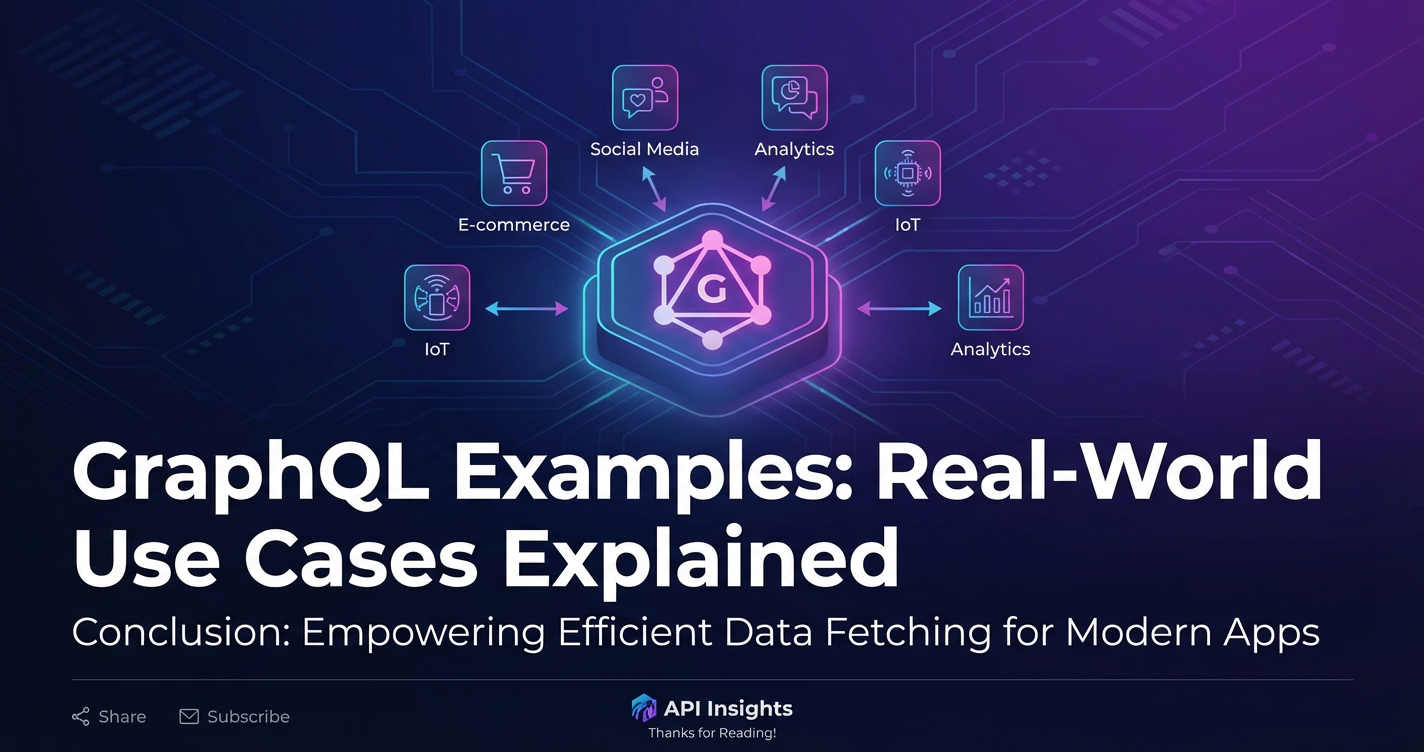
GraphQL Examples: Real-World Use Cases Explained
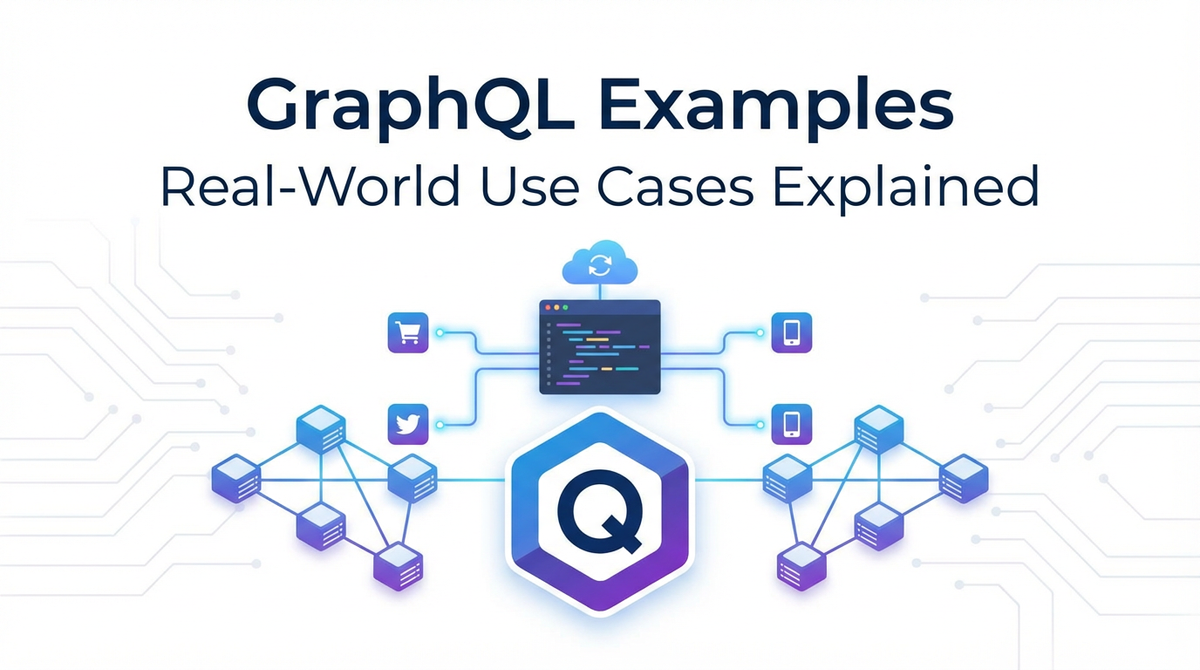


In the ever-evolving landscape of modern web development, the way applications communicate and exchange data is paramount to their success. For decades, REST (Representational State Transfer) has been the dominant architectural style for building APIs, offering a clear, stateless approach to interacting with resources. However, as applications grew more complex, user expectations for dynamic experiences soared, and the need for data efficiency became critical, the limitations of traditional RESTful APIs began to surface. Enter GraphQL: a powerful query language for your API, and a server-side runtime for executing those queries by using a type system you define for your data.
GraphQL was developed by Facebook in 2012 and open-sourced in 2015, fundamentally changing how clients request data. Instead of multiple endpoints, each serving a fixed data structure, GraphQL provides a single, unified endpoint through which clients can ask for exactly what they need, no more and no less. This paradigm shift offers immense flexibility, performance gains, and a significantly improved developer experience, making it an increasingly attractive option for a vast array of real-world applications.
This comprehensive exploration delves deep into GraphQL's capabilities, dissecting its core concepts, highlighting its profound advantages, and, most importantly, illustrating its practical utility through a rich collection of real-world use cases. We will examine how companies across diverse industries are leveraging GraphQL to overcome data fetching challenges, streamline development workflows, and deliver unparalleled user experiences. From the intricate web of e-commerce platforms to the dynamic feeds of social media, from the resource-constrained environments of mobile applications to the sophisticated orchestration of microservices, GraphQL is proving to be a transformative force in the modern digital ecosystem.
Understanding the Foundation: Core Concepts of GraphQL
Before we plunge into the real-world applications, a solid grasp of GraphQL's foundational principles is essential. Unlike REST, which is built around resources and HTTP verbs, GraphQL operates on a type system, enabling clients to express their data requirements precisely.
The Schema: The Blueprint of Your Data
At the heart of every GraphQL service is its schema. This is a robust, strongly typed definition of all the data that clients can query, mutate, or subscribe to. Written in GraphQL Schema Definition Language (SDL), the schema acts as a contract between the client and the server. It specifies: * Object Types: These represent the types of objects you can fetch from your service, along with their fields. For instance, a User type might have fields like id, name, email, and posts. Each field has a specific type, such as ID!, String, String!, and [Post!], where ! denotes a non-nullable field and [] indicates a list. * Query Type: This special object type defines all the entry points for reading data from your graph. For example, query { user(id: ID!): User } would allow fetching a user by their ID. * Mutation Type: This object type defines all the entry points for writing or modifying data. For instance, mutation { createUser(name: String!, email: String!): User } would allow creating a new user. * Subscription Type: For real-time data updates, the Subscription type allows clients to subscribe to events. When a specific event occurs on the server (e.g., a new comment is posted), the server pushes the relevant data to all subscribed clients. * Scalar Types: These are the primitive parts of your schema, representing a single unit of data. GraphQL comes with built-in scalars like ID, String, Int, Float, and Boolean. You can also define custom scalar types for more complex data structures like Date or JSON. * Enums: Enumerated types allow you to define a set of specific allowed values for a field, providing clear choices and preventing invalid data. * Interfaces & Unions: These allow for polymorphism, enabling a field to return one of several object types that share a common set of fields (interfaces) or are completely distinct (unions).
The schema acts as a universal single source of truth, enforced by the GraphQL runtime, ensuring consistency and predictability across the entire API. Any request made by a client must conform to the schema, making it an invaluable tool for validation and documentation.
Queries: Asking for Exactly What You Need
Queries are how clients request data from the GraphQL server. The most striking feature of GraphQL queries is their declarative nature: clients specify the data they need in a tree-like structure, mirroring the shape of the desired response. Consider a scenario where a client needs to fetch a user's name and their posts' titles, but not their email or other details. A REST API might require two separate calls (one for user details, another for posts) or a single endpoint that over-fetches user data. With GraphQL, a single query achieves this precisely:
query GetUserAndPostsTitles {
  user(id: "123") {
    name
    posts {
      title
    }
  }
}
The server then returns JSON data that exactly matches this structure, preventing both over-fetching (retrieving more data than necessary) and under-fetching (requiring multiple round trips to get all needed data). This fine-grained control over data fetching is one of GraphQL's most significant advantages, particularly for applications with varying data requirements.
Mutations: Changing Data on the Server
Just as queries are for reading data, mutations are for writing, updating, or deleting data. While syntactically similar to queries, mutations are distinct in their intent and execution. Crucially, mutations are executed serially, one after another, ensuring that data changes occur in a predictable order, preventing race conditions. A typical mutation might look like this:
mutation CreateNewPost($title: String!, $content: String!, $authorId: ID!) {
  createPost(title: $title, content: $content, authorId: $authorId) {
    id
    title
    createdAt
  }
}
Variables ($title, $content, $authorId) are commonly used with mutations to separate the query definition from the actual input data, making them reusable and secure. The server can then return the updated object or relevant status information, confirming the change.
Subscriptions: Real-time Data Flow
Subscriptions are a powerful feature that allows clients to receive real-time updates from the server when specific events occur. They are particularly useful for applications requiring live data feeds, such as chat applications, live dashboards, or notification systems. Subscriptions typically use WebSockets to maintain a persistent connection between the client and the server. When a subscribed event is triggered, the server pushes the relevant data payload to all connected clients. For example, a subscription for new comments on a post:
subscription NewCommentOnPost($postId: ID!) {
  commentAdded(postId: $postId) {
    id
    content
    author {
      name
    }
  }
}
When a new comment is added to the specified postId, all clients subscribed to NewCommentOnPost will receive the commentAdded payload containing the new comment's details.
Resolvers: The Bridge to Your Data Sources
While the schema defines what data can be fetched, resolvers are the functions that actually fetch that data. For every field in your schema, there's a corresponding resolver function on the server. When a client sends a query, the GraphQL execution engine traverses the query's fields, calling the respective resolver functions to retrieve the data. Resolvers can interact with various backend data sources: databases (SQL, NoSQL), other RESTful APIs, microservices, third-party services, or even in-memory data. This flexibility is what allows GraphQL to act as a powerful aggregation layer, unifying disparate data sources under a single, coherent graph API. For instance, a User resolver might fetch data from a SQL database, while a Post resolver might fetch data from a NoSQL database, and an Image resolver might call an external image hosting API. The client remains blissfully unaware of these underlying complexities, interacting solely with the unified GraphQL schema.
The Distinct Advantages of GraphQL
The architectural shift introduced by GraphQL brings forth a suite of compelling benefits that address many pain points inherent in traditional API design.
Eliminating Over-fetching and Under-fetching
This is arguably GraphQL's most celebrated advantage. In REST, endpoints typically return fixed data structures. If a client only needs a few fields from a large resource, the entire resource is still transmitted (over-fetching), wasting bandwidth and processing power. Conversely, if a client needs data from multiple related resources, it often requires several separate HTTP requests (under-fetching), leading to increased latency due to multiple round trips. GraphQL's declarative querying solves this by allowing clients to specify precisely the fields they require from any part of the graph, ensuring that only necessary data is fetched and delivered in a single request. This is particularly crucial for mobile applications operating on constrained networks, where minimizing data transfer is paramount.
A Single, Unified Endpoint
Unlike REST, which often scatters related data across numerous endpoints (e.g., /users, /users/{id}, /posts, /users/{id}/posts), GraphQL typically exposes a single API endpoint (e.g., /graphql). All data interactions—queries, mutations, and subscriptions—flow through this one gateway. This simplifies client-side logic, as developers no longer need to manage multiple URLs and construct complex request chains. It also streamlines API discovery and consumption, as the entire data graph is available from a single access point. For an API gateway solution, this means less configuration for routing to various backend services if GraphQL itself is acting as an aggregation layer.
Strong Typing and Introspection
The schema-driven nature of GraphQL provides strong typing for all data. This means that every field's type is explicitly defined, offering several benefits: * Data Validation: The GraphQL server automatically validates incoming queries against the schema, catching errors before they hit your backend logic. * Self-Documentation: The schema is a living, up-to-date documentation of your API. Developers can use introspection queries to programmatically explore the schema, understand available types, fields, arguments, and their relationships. This significantly improves developer onboarding and productivity. Tools like GraphiQL or Apollo Studio leverage introspection to provide interactive API explorers and auto-completion. * Tooling Ecosystem: Strong typing enables a rich ecosystem of development tools, including code generators for client-side libraries (e.g., TypeScript types from GraphQL schema), sophisticated IDE extensions, and powerful testing frameworks.
Real-time Capabilities with Subscriptions
The native support for subscriptions allows for building highly interactive, real-time applications with relative ease. Without GraphQL, implementing real-time features often involves complex WebSocket implementations, custom messaging protocols, or polling mechanisms, which can be inefficient. GraphQL subscriptions abstract away much of this complexity, providing a standardized and elegant solution for pushing data from the server to subscribed clients.
Versioning Simplicity
Versioning REST APIs can be a headache. Changes often require creating new endpoints (e.g., /v2/users) or managing conditional logic within existing ones, leading to client-side breaking changes or maintenance overhead. GraphQL offers a more flexible approach to evolution. Since clients specify exactly what data they need, new fields can be added to existing types without affecting older clients. Deprecated fields can be marked as such in the schema, allowing clients to gradually migrate without immediate breakage. Only when fields are completely removed does it become a breaking change, which can often be mitigated by adding new, better-named fields first and deprecating the old ones, giving clients ample time to adapt.
An Aggregation Layer for Microservices
In a microservices architecture, data is often fragmented across many independent services. A client application might need to combine data from a user service, a product service, an order service, and a payment service to display a single view. Traditionally, this would involve the client making multiple requests or the introduction of a backend-for-frontend (BFF) layer. GraphQL excels as an aggregation layer or a facade API gateway for these distributed systems. A single GraphQL server can sit in front of numerous microservices, fetching data from each of them through its resolvers and stitching it together into a unified response. This simplifies the client's interaction, as it only talks to the GraphQL gateway, and abstracts away the underlying microservice complexity. This allows microservices to evolve independently while maintaining a stable, unified API for consumers.
Navigating the Challenges: Disadvantages and Considerations
While GraphQL offers numerous compelling advantages, it's not a silver bullet. Understanding its potential drawbacks and how to mitigate them is crucial for successful adoption.
Caching Complexity
RESTful APIs inherently leverage HTTP caching mechanisms, as resources are identified by URLs. When a client requests /users/123, the response can be cached by browsers, CDNs, or proxies. GraphQL, with its single endpoint and flexible queries, complicates traditional HTTP caching. Since every query is a POST request to the same URL, and each query can be unique, caching at the network level becomes difficult. Client-side caching libraries (like Apollo Client) address this by implementing normalized caches, which store data by ID and update graph fragments. However, this is application-level caching, which is different from and often more complex than standard HTTP caching. Server-side caching strategies also need to be carefully designed, perhaps by caching resolver results or entire query responses based on query hash.
N+1 Problem
The N+1 problem is a common performance pitfall in both REST and GraphQL, but it can be more prevalent in GraphQL due to the nested nature of queries. It occurs when fetching a list of items (N) and then, for each item, making an additional query to fetch related data. For example, fetching 10 users, and then for each user, making a separate query to fetch their posts. This results in 1 (for users) + N (for posts) database queries. Solutions include: * Dataloaders: A crucial library that batches requests to backend data sources and caches results, preventing redundant calls within a single request. Dataloaders effectively turn N+1 queries into 1+1 (or 1+batch) queries by collecting all requests for a specific data type over a short period and then executing them in a single batch. * Proper Database Indexing: Ensuring your database is optimized for the queries your resolvers execute. * Query Optimization: Encouraging clients to write efficient queries and potentially limiting complex nested queries.
File Uploads
Traditional file uploads using multipart/form-data are straightforward with REST. In GraphQL, native support for file uploads wasn't initially present and required workarounds. While a standardized approach using graphql-multipart-request-spec has emerged, it still adds a layer of complexity compared to direct REST uploads. Often, for large file uploads, a hybrid approach is adopted: use GraphQL for metadata and signed URLs, then upload the file directly to an object storage service (like S3) using a separate REST endpoint or direct upload.
Operational Complexity
Managing a GraphQL server can introduce new operational complexities. * Monitoring and Logging: Since all requests hit a single endpoint, differentiating between various "operations" (queries, mutations) for monitoring, rate limiting, and logging requires introspection into the query payload itself. Traditional API gateway metrics based solely on URL paths become less effective. * Rate Limiting: Implementing effective rate limiting for GraphQL can be challenging because a single, complex query can be far more resource-intensive than many simple queries. Strategies often involve analyzing query depth, complexity scores, or per-field limits rather than simple request counts. * Security: While GraphQL's strong typing helps prevent certain types of attacks, complex or deeply nested queries can still be used to launch Denial-of-Service (DoS) attacks. Implementing query depth limiting, query complexity analysis, and strict authorization rules at the resolver level is crucial. * Schema Evolution: While easier than REST versioning, managing schema changes, especially deprecations, still requires careful planning and communication with client teams.
Learning Curve
For teams deeply entrenched in RESTful paradigms, adopting GraphQL requires a shift in mindset and a new set of skills. Developers need to learn SDL, how to design schemas, write resolvers, and understand concepts like Dataloaders. Client-side developers also need to learn how to construct queries, use client libraries, and manage client-side caches. This initial learning curve can be a barrier to entry for some teams.
Real-World Use Cases Explained: Where GraphQL Truly Shines
Now, let's explore specific real-world scenarios where GraphQL provides significant advantages and solves complex data fetching challenges.
1. E-commerce Platforms: Dynamic Product Displays and User Experiences
E-commerce websites are inherently data-rich, requiring a vast array of information to be presented to users in highly customizable and dynamic ways. From product details and availability to customer reviews, recommendations, and personalized offers, the complexity of data relationships can quickly overwhelm traditional RESTful APIs.
The Challenge: Consider a product page. It needs: * Product basic information (name, description, price, images). * Product variations (sizes, colors, materials) and their availability. * Related products or recommendations. * Customer reviews and ratings. * Seller information. * Shipping details. * Personalized pricing or discounts based on the logged-in user.
A REST API approach would likely involve numerous requests: one for the product, another for reviews, another for recommendations, and so on. This leads to high latency, especially on mobile, and complex client-side orchestration. Over-fetching is also common; for instance, a product listing page might only need product names and images, while a detail page needs everything.
How GraphQL Solves It: GraphQL consolidates all these disparate data requirements into a single query. A client can precisely request all the necessary details for a product page in one go, tailored to the specific context (e.g., a full detail view vs. a quick-view modal).
Example Query:
query GetProductDetails($productId: ID!, $userId: ID) {
  product(id: $productId) {
    id
    name
    description
    price {
      amount
      currency
      discount(userId: $userId) # Personalized discount
    }
    images {
      url
      altText
    }
    variants {
      size
      color
      stock
    }
    reviews(first: 5) { # Only top 5 reviews
      id
      rating
      comment
      author {
        name
      }
    }
    relatedProducts(limit: 3) { # 3 recommended products
      id
      name
      price {
        amount
      }
      images(first: 1) {
        url
      }
    }
  }
}
Benefits: * Reduced Latency: Fewer network requests mean faster page loads and a smoother user experience, crucial for conversion rates. * Flexible UI Development: Frontend teams can rapidly iterate on UI designs, adding or removing data fields without requiring backend API changes. This accelerates feature development. * Personalization: Easily integrate personalized data (like discounts, recent views, or cart contents) into the main product data graph, ensuring a seamless user journey. * Optimized Mobile Experience: By fetching only essential data, mobile applications consume less bandwidth and perform better, especially on unreliable networks.
Companies like Shopify have adopted GraphQL to power their storefronts and APIs, recognizing its ability to handle complex, evolving data needs with efficiency.
2. Social Media Feeds: Real-time, Complex Data Graphs
Social media platforms are epitomes of complex, interconnected data. User profiles, posts, comments, likes, shares, notifications, and friendships form an intricate graph. Delivering these feeds efficiently and in real-time is a monumental task.
The Challenge: A typical social media feed needs to display: * Posts from friends/followed accounts. * Comments on those posts. * Likes count. * Author details for each post and comment. * Media attachments (images, videos). * Ads, trending topics, or suggested content. * All of this needs to be paginated and updated in real-time.
REST APIs would struggle immensely here, requiring dozens of endpoints and complicated client-side aggregation. Imagine fetching /feed and then for each post, fetching /posts/{id}/comments, /posts/{id}/likes, /users/{id} for the author, etc. This is the classic N+1 problem on a massive scale.
How GraphQL Solves It: GraphQL's graph-centric nature is a perfect match for social media data. The entire social graph can be modeled within the schema, allowing clients to traverse relationships and fetch deeply nested data in a single request. Subscriptions provide the real-time updates.
Example Query:
query GetUserFeed($limit: Int, $cursor: String) {
  feed(limit: $limit, after: $cursor) {
    pageInfo {
      hasNextPage
      endCursor
    }
    edges {
      node {
        id
        content
        timestamp
        author {
          id
          username
          profilePicture
        }
        media {
          url
          type
        }
        likes {
          totalCount
          # Optionally include a few likers:
          edges(first: 3) {
            node {
              user {
                username
              }
            }
          }
        }
        comments(first: 2) { # Show top 2 comments directly
          id
          text
          author {
            username
          }
        }
      }
    }
  }
}
Benefits: * Unified Data Retrieval: A single query fetches posts, authors, comments, likes, and media, dramatically reducing network round trips. * Optimized Feeds: Clients can request only the data needed for a specific feed view (e.g., summary view vs. detailed view), saving bandwidth. * Real-time Interaction: Subscriptions enable instant updates for new posts, comments, or likes, enhancing user engagement. * Schema Evolution: As new features like "stories" or "reels" are introduced, they can be added to the existing graph without breaking older clients, simplifying API management.
Many modern social platforms and content-heavy applications leverage GraphQL to manage their intricate data relationships and deliver responsive, real-time experiences.
3. Mobile Applications: Efficiency in Constrained Environments
Mobile applications, whether native or hybrid, often operate under challenging conditions: varying network speeds, limited data plans, and device resource constraints. Data efficiency and minimal battery consumption are critical for a positive user experience.
The Challenge: Traditional REST APIs often lead to: * Over-fetching: Sending unnecessary data, consuming precious mobile data and slowing down response times. * Under-fetching: Requiring multiple requests for related data, increasing latency and battery usage. * Rigid Data Structures: Making it difficult to adapt data consumption for different screen sizes, orientations, or device capabilities without complex client-side logic or multiple backend endpoints.
How GraphQL Solves It: GraphQL is exceptionally well-suited for mobile applications due to its core strength of fetching "exactly what you need."
Example Scenario: An e-commerce app's product listing page might only need productName, thumbnailUrl, and price. The product detail page would then require description, reviews, variants, etc.
GraphQL Query for Listing:
query GetProductListings($categoryId: ID!) {
  products(categoryId: $categoryId, first: 20) {
    edges {
      node {
        id
        name
        thumbnailUrl
        price {
          amount
          currency
        }
      }
    }
  }
}
Benefits: * Minimized Data Transfer: Reduces cellular data consumption and improves loading times, especially in areas with poor network coverage. * Faster UI Rendering: Less data to process on the client means faster rendering and a more fluid user interface. * Reduced Battery Drain: Fewer network requests and less data processing save battery life. * Offline First Development: GraphQL responses, being highly predictable and structured, are easier to cache locally on the device, facilitating robust offline capabilities and a consistent user experience even without connectivity. * Adaptive UIs: A single GraphQL API can serve diverse UI components (e.g., tablet vs. phone layouts) by simply requesting different fields, eliminating the need for separate API endpoints for each view.
Companies like Airbnb have publicly shared their positive experiences migrating to GraphQL for their mobile clients, citing improved performance and developer velocity.
4. Microservices Architecture: A Unified Façade
The adoption of microservices has revolutionized backend development, enabling independent deployment, scalability, and technological diversity. However, it also introduces complexity for clients, who might need to consume data from numerous independent services to construct a single view.
The Challenge: Imagine a customer dashboard that needs to display: * Customer profile from UserService. * Recent orders from OrderService. * Support tickets from SupportService. * Billing details from BillingService.
A client would typically have to make multiple HTTP requests to different microservices, aggregate the data, and handle potential failures or inconsistencies. This tightly couples the client to the backend architecture and adds significant complexity to client-side data orchestration. Furthermore, managing cross-cutting concerns like authentication, authorization, and rate limiting across many individual microservice APIs can be challenging. This is where an API gateway often comes into play.
How GraphQL Solves It: GraphQL can act as an API gateway or a "facade" layer, sitting in front of your microservices. The GraphQL server's resolvers are responsible for knowing which microservice owns which piece of data and how to fetch it.
Architecture: Client App -> GraphQL Server (API Gateway) -> [User Service, Order Service, Support Service, Billing Service]
The GraphQL server defines a unified schema that combines the data models of all underlying microservices. When a client sends a query, the GraphQL server intelligently dispatches requests to the appropriate microservices, aggregates their responses, and shapes the data according to the client's query.
Example Query (for a customer dashboard):
query GetCustomerDashboard($customerId: ID!) {
  customer(id: $customerId) {
    id
    name
    email
    address
    recentOrders(last: 5) { # Fetched from OrderService
      id
      orderDate
      totalAmount
      status
    }
    supportTickets(status: OPEN) { # Fetched from SupportService
      id
      subject
      status
      lastUpdate
    }
    billingInfo { # Fetched from BillingService
      cardNumberSuffix
      lastPaymentDate
      nextBillingDate
    }
  }
}
Here, the customer resolver might fetch initial data from UserService, and then its nested fields like recentOrders would trigger calls to OrderService, supportTickets to SupportService, and billingInfo to BillingService.
Benefits: * Simplified Client-Side: Clients interact with a single, coherent API through one gateway, oblivious to the underlying microservice sprawl. * Decoupling: Changes in microservice implementations (e.g., database changes, new internal APIs) don't necessarily impact the client, as long as the GraphQL schema remains stable. * Improved Performance: The GraphQL gateway can optimize backend calls (e.g., using Dataloaders to batch requests to microservices), preventing N+1 problems even across service boundaries. * Centralized API Management: The GraphQL server itself acts as an API gateway, offering a single point for authentication, authorization, caching, and rate limiting relevant to the GraphQL operations. For more advanced features, it can also sit behind a traditional API gateway that handles broader concerns like routing, traffic management, and analytics across all services, including REST and GraphQL. * Polyglot Backend Support: Different microservices can be built with different technologies and languages, but the GraphQL layer unifies their exposure.
For organizations managing a complex landscape of services, the need for robust API gateway and management solutions becomes even more critical. Here, products like APIPark can play a pivotal role. APIPark serves as an open-source AI gateway and API management platform, designed to simplify the integration and deployment of both AI and REST services. It offers features like quick integration of 100+ AI models, unified API format for AI invocation, and end-to-end API lifecycle management. Even if your primary backend is a GraphQL gateway orchestrating microservices, a platform like APIPark can provide an overarching layer for managing the entire ecosystem of APIs, including authentication, authorization, rate limiting, and detailed logging across various API types, ensuring consistency and security at scale. It extends the concept of a "gateway" beyond just data aggregation to comprehensive enterprise-grade API management.
5. Content Management Systems (CMS): Flexible Content Delivery
Modern CMS platforms are no longer just about static pages. They need to deliver dynamic content across a multitude of channels (web, mobile, smart displays, voice assistants), often requiring highly customizable content structures and flexible querying capabilities.
The Challenge: Traditional CMS APIs often expose content via fixed REST endpoints, which can lead to: * Over-fetching: Retrieving full content objects when only titles and excerpts are needed for a listing. * Under-fetching: Needing multiple calls to get related content (e.g., an article and its author's bio and related categories). * Rigid Schemas: Difficulty adapting to evolving content models or creating custom content types without significant backend changes.
How GraphQL Solves It: GraphQL's schema-driven approach and flexible querying are a natural fit for CMS. It allows content to be modeled as a graph, where different content types (articles, pages, authors, tags, categories) are nodes and their relationships are edges.
Example Query:
query GetArticleAndRelatedContent($slug: String!) {
  article(slug: $slug) {
    id
    title
    body {
      html
      markdown
    }
    author {
      name
      bio
      profilePicture
    }
    tags {
      name
      slug
    }
    relatedArticles(limit: 3) { # Get 3 related articles
      id
      title
      slug
      thumbnailUrl
    }
  }
}
Benefits: * Headless CMS Power: GraphQL is a key enabler for headless CMS architectures, where the backend CMS focuses solely on content management, and GraphQL serves as a flexible content delivery layer to any frontend. * Dynamic Content Structuring: Frontend developers can compose complex content layouts by precisely selecting the required fields and relationships, without waiting for backend modifications. * Multi-Channel Delivery: A single GraphQL API can serve tailored content to websites, mobile apps, smart devices, or even voice interfaces, optimizing data for each platform's unique needs. * Content Graph Exploration: Developers can easily explore the entire content graph, understand relationships, and build powerful, interconnected content experiences. * Version Control & Previews: GraphQL can be integrated with CMS workflows to fetch specific content versions or preview changes before publication.
Contentful, Strapi, and other modern headless CMS platforms have embraced GraphQL as a primary means of content delivery, empowering developers with unparalleled flexibility.
6. Data Dashboards and Analytics: Aggregating and Visualizing Complex Metrics
Business intelligence and analytics dashboards require aggregating vast amounts of data from disparate sources, often needing real-time updates and granular control over what metrics are displayed.
The Challenge: * Data Silos: Data for a dashboard might reside in various systems: a CRM, an ERP, a marketing automation platform, a database of custom events. * Complex Aggregations: Displaying KPIs, trends, and charts requires specific aggregations and filtering. * Real-time Requirements: Many dashboards benefit from live updates as new data streams in. * Customizable Views: Different users or teams may need different sets of metrics and visualizations.
How GraphQL Solves It: GraphQL's ability to act as an aggregation layer across multiple backend services is invaluable here. It can pull data from various data stores, apply necessary filters and transformations via resolvers, and deliver precisely the data needed for each widget on a dashboard. Subscriptions handle real-time updates.
Example Query:
query GetSalesDashboardData($startDate: String!, $endDate: String!) {
  sales(startDate: $startDate, endDate: $endDate) {
    totalRevenue
    newCustomers
    conversionRate
    revenueByProductCategory {
      category
      amount
    }
    dailyRevenue(interval: DAY) {
      date
      amount
    }
  }
  websiteTraffic(startDate: $startDate, endDate: $endDate) {
    totalViews
    uniqueVisitors
    bounceRate
    trafficBySource {
      source
      count
    }
  }
  supportTickets(status: OPEN) {
    totalOpen
    averageResponseTime
    highPriorityCount
  }
}
Benefits: * Unified Data Access: Consolidate data from CRM, analytics platforms, databases, and other APIs into a single, queryable graph for the dashboard. * Tailored Dashboards: Each dashboard component (e.g., a chart, a KPI card) can fetch exactly the data it needs, preventing over-fetching and optimizing rendering. * Real-time Insights: Subscriptions can power live updates for critical metrics, allowing stakeholders to react quickly to changing business conditions. * Reduced Backend Load: By fetching only relevant aggregated data, the GraphQL layer can reduce the computational burden on individual backend data sources. * Flexible Reporting: Users can customize their dashboards or reports by adding/removing specific metrics, empowering self-service analytics.
Companies building internal tools, monitoring systems, and external analytics products often turn to GraphQL to manage their complex data visualization needs.
7. IoT Applications: Managing Sensor Data and Device States
The Internet of Things (IoT) involves a vast network of devices generating continuous streams of data. Managing device configurations, querying sensor data, and receiving real-time alerts from these devices can be highly complex.
The Challenge: * Heterogeneous Devices: A wide variety of devices, each with its own data format and communication protocol. * Continuous Data Streams: Sensors generate a constant flow of data (temperature, humidity, location, device status). * Real-time Monitoring: The need to monitor device states and receive immediate alerts for anomalies. * Device Management: Configuring devices, updating firmware, and managing device groups. * Scalability: Handling millions of devices and billions of data points.
How GraphQL Solves It: GraphQL can serve as a robust API gateway for IoT backends, abstracting away the diversity of devices and communication protocols. Its schema provides a unified view of all device data and management operations, while subscriptions are perfectly suited for real-time monitoring.
Example Query/Subscription:
# Query for device status
query GetDeviceStatus($deviceId: ID!) {
  device(id: $deviceId) {
    id
    name
    status
    lastHeartbeat
    sensors {
      type
      currentValue
      unit
    }
  }
}

# Subscription for real-time sensor updates
subscription OnSensorDataUpdate($deviceId: ID!) {
  sensorDataUpdated(deviceId: $deviceId) {
    sensorId
    type
    value
    timestamp
  }
}

# Mutation for device configuration
mutation UpdateDeviceConfig($deviceId: ID!, $config: DeviceConfigInput!) {
  updateDeviceConfiguration(deviceId: $deviceId, config: $config) {
    id
    status
    lastConfigUpdate
  }
}
Benefits: * Unified Device API: Provides a single, consistent API for interacting with all types of IoT devices, abstracting away underlying protocols (MQTT, CoAP, etc.). * Real-time Monitoring & Alerts: Subscriptions enable immediate push notifications for critical sensor readings, device status changes, or alerts (e.g., temperature threshold exceeded). * Flexible Data Access: Allows client applications (dashboards, mobile apps) to fetch specific sensor data or device metadata without over-fetching. * Simplified Device Management: Mutations can be used to send commands to devices, update firmware, or change configurations through a consistent API. * Scalability: While GraphQL itself isn't a message broker, it can easily integrate with existing IoT platforms and message queues, acting as the presentation layer.
GraphQL's structured approach makes it easier to manage the complexity inherent in large-scale IoT deployments, providing a flexible gateway for data and control.
8. SaaS Applications: Customizable User Experiences and Multi-Tenancy
Software-as-a-Service (SaaS) platforms often need to provide highly customizable experiences for different users or tenants, while maintaining a single, scalable codebase. GraphQL's flexibility and schema evolution capabilities are highly advantageous here.
The Challenge: * Customization: Different customers or user roles might require different data fields, dashboards, or workflow options. * Multi-Tenancy: Each tenant (organization) needs its own isolated data and configurations, but often shares the underlying application infrastructure. * Rapid Feature Development: SaaS platforms are constantly evolving, requiring frequent API updates without breaking existing clients. * Integrations: Integrating with third-party services often means handling diverse external APIs.
How GraphQL Solves It: GraphQL allows the SaaS platform to expose a rich, flexible API that clients can tailor to their specific needs. Resolver logic can be used to enforce multi-tenancy rules and personalize data based on the authenticated user or tenant.
Example Scenario: A project management SaaS platform. Different users (admin, project manager, team member) might see different fields or have different permissions on a Task object.
GraphQL Query:
query GetProjectTasks($projectId: ID!) {
  project(id: $projectId) {
    id
    name
    description
    tasks {
      id
      title
      status
      dueDate
      assignee {
        name
        email # Only visible to project managers/admins
      }
      # Other fields conditionally visible based on user role via resolver logic
    }
  }
}
Benefits: * Personalized User Experiences: Clients can request only the data relevant to their role or configuration, enabling highly customizable UIs without multiple API versions. * Simplified Multi-Tenancy: Resolver functions can transparently apply tenant-specific filtering and authorization rules, ensuring data isolation while maintaining a unified schema. * Accelerated Feature Delivery: New features or data fields can be added to the schema without breaking older clients, facilitating continuous deployment. * Robust Integrations: GraphQL can serve as an integration gateway, unifying data from various internal services and external third-party APIs that the SaaS platform uses. * Self-Service for Partners/Developers: By exposing a well-documented GraphQL API with introspection, SaaS providers can empower partners and customers to build their own integrations and extensions more easily.
Many modern SaaS companies, from project management tools to marketing automation platforms, are increasingly adopting GraphQL to deliver dynamic, personalized, and scalable services.
APIPark is a high-performance AI gateway that allows you to securely access the most comprehensive LLM APIs globally on the APIPark platform, including OpenAI, Anthropic, Mistral, Llama2, Google Gemini, and more.Try APIPark now! 👇👇👇
A Comparative Glance: GraphQL vs. REST in Key Areas
To further solidify our understanding, let's briefly compare GraphQL with its predecessor, REST, across several critical dimensions.
| Feature / Aspect | RESTful API | GraphQL API |
|---|---|---|
| Data Fetching | Multiple endpoints, fixed data structures | Single endpoint, client-driven queries |
| Over/Under-fetching | Common issues | Eliminated by design (fetches precisely what's needed) |
| Network Requests | Often many requests for complex UIs (under-fetching) | Typically a single request per UI view (or less) |
| API Endpoint | Many URLs (e.g., /users, /users/{id}/posts) |
Single URL (e.g., /graphql) acting as a gateway |
| Schema/Types | Less formal, often relies on documentation | Strongly typed schema (SDL) as a contract, self-documenting |
| Versioning | Often requires URL versioning (/v1/users, /v2/users) |
Schema evolution (add fields, deprecate old ones) |
| Real-time | Not native; requires WebSockets/polling workarounds | Native support with Subscriptions |
| Caching | Leverages HTTP caching mechanisms | More complex, requires client-side libraries and server-side strategies |
| Learning Curve | Generally lower for new developers | Higher initial learning curve for new paradigms |
| File Uploads | Standard and straightforward with multipart/form-data |
Requires specific protocol extensions or hybrid approaches |
| Tooling | Mature, widely available | Rapidly maturing, excellent introspection and dev tools |
| API Gateway Integration | Easily integrates with traditional API gateway for routing, policies. | Can act as an aggregation gateway itself; also integrates with external API gateway for broader governance. |
This table highlights that while REST is well-established and perfectly suitable for many scenarios, GraphQL addresses specific modern application needs more effectively, particularly those involving complex UIs, mobile clients, and distributed data sources.
Implementing GraphQL: Tools, Libraries, and Best Practices
Adopting GraphQL involves more than just understanding its concepts; it requires choosing the right tools and following best practices to ensure a robust and scalable implementation.
Key Tools and Libraries
- Apollo Platform: A comprehensive suite of tools for building, deploying, and consuming GraphQL. Includes Apollo Server (for backend), Apollo Client (for frontend), and Apollo Studio (for managing and monitoring).
- Relay: Facebook's own GraphQL client, highly optimized for performance and data consistency, often used in React applications.
- GraphQL.js: The reference implementation of GraphQL in JavaScript, forming the foundation for many other libraries.
- Prisma: An open-source ORM that turns your database into a GraphQL API, simplifying database interactions.
- Hasura: A GraphQL engine that provides instant, real-time GraphQL APIs over your databases.
- GraphiQL/GraphQL Playground: Interactive in-browser IDEs for exploring GraphQL schemas and testing queries.
Best Practices for Building GraphQL APIs
- Design a Business-Domain-Centric Schema: Focus on how your clients consume data, not just how it's stored in your database. Model your types around business entities (e.g.,
Product,Order,User) and their relationships. - Use Dataloaders Religiously: This is paramount for preventing the N+1 problem, especially when fetching data from databases or other APIs. Dataloaders batch and cache requests, drastically improving performance.
- Implement Robust Authorization: Every field and argument in your schema should have appropriate authorization logic in its resolver to ensure users only access data they are permitted to see. This is often integrated with your existing authentication system.
- Manage Complexity and Depth: Protect your server from malicious or overly complex queries by implementing query depth limiting and query complexity analysis. This prevents DoS attacks.
- Paginating with Connections: For lists of data, use the Relay-style Connection specification for pagination. This provides a standardized way to handle pagination, cursors, and metadata about the list.
- Error Handling: Provide informative and structured error messages to clients. GraphQL's error format allows for custom error codes and extensions that can be more useful than generic HTTP error codes.
- Monitor and Log: Implement comprehensive monitoring and logging for your GraphQL server. Track query performance, error rates, and resource utilization. Tools that understand GraphQL queries (e.g., Apollo Studio) can provide richer insights than generic API gateway logs.
- Leverage Introspection: Utilize introspection capabilities for auto-generating documentation, client-side code, and integrating with developer tooling.
- Schema Stitching/Federation: For large, distributed GraphQL APIs (e.g., across multiple teams or microservices), consider schema stitching or Apollo Federation to combine multiple GraphQL services into a single, unified graph. This is where GraphQL truly shines as a meta-gateway.
The Future of GraphQL
GraphQL continues to evolve rapidly, driven by a vibrant open-source community and increasing enterprise adoption. Key trends include: * Further Simplification of Backend Development: Tools like Hasura, Prisma, and PostGraphile are making it easier to expose databases as GraphQL APIs with minimal coding. * Enhanced Federation and Gateway Solutions: As organizations scale their GraphQL usage, solutions for combining multiple independent GraphQL services into a cohesive supergraph (like Apollo Federation) will become even more critical, effectively making GraphQL itself a powerful API gateway for distributed systems. * Improved Caching Strategies: Research and development into more efficient and developer-friendly caching mechanisms, both client-side and server-side, will continue. * Edge Computing Integration: GraphQL's ability to fetch precisely what's needed makes it ideal for edge environments, reducing data transfer and latency by bringing computations closer to the user. * Expanding Ecosystem: Growth in GraphQL tooling, libraries, and frameworks across various programming languages and platforms will further solidify its position in the modern tech stack.
GraphQL is not just a passing trend; it represents a fundamental shift in how APIs are designed and consumed, moving towards a more efficient, flexible, and developer-friendly paradigm. Its ability to solve complex data fetching problems in diverse real-world scenarios ensures its continued relevance and growth in the years to come.
Conclusion
GraphQL has emerged as a compelling alternative to traditional RESTful APIs, particularly for applications characterized by complex data relationships, dynamic UI requirements, and the need for efficient data fetching across various client types. We've explored its core tenets – the declarative schema, powerful queries, data-modifying mutations, and real-time subscriptions – and seen how these features coalesce to offer a superior developer and user experience.
Through a detailed examination of its real-world applications in e-commerce, social media, mobile development, microservices, content management, data analytics, IoT, and SaaS, it becomes evident that GraphQL excels in environments where flexibility, performance, and rapid iteration are paramount. It acts as an intelligent gateway for data, allowing clients to articulate their precise needs and receive tailored responses, thereby eliminating the inefficiencies of over-fetching and under-fetching that plague many traditional APIs. While it introduces new considerations around caching, N+1 problems, and operational complexities, the robust ecosystem of tools, libraries, and best practices available today offers effective mitigation strategies.
As the digital landscape continues to demand ever more responsive, personalized, and data-intensive applications, GraphQL stands ready to empower developers and organizations to build the next generation of digital experiences. Its evolution, particularly in areas like federation and sophisticated API management solutions (such as APIPark), suggests a future where unified, efficient, and scalable data APIs become the norm, driving innovation across every industry.
5 Frequently Asked Questions (FAQs)
Q1: What is the main difference between GraphQL and REST APIs? A1: The primary difference lies in how clients request data. REST APIs typically have multiple endpoints, each returning a fixed data structure for a specific resource. Clients often have to make multiple requests or receive more data than needed (over-fetching). GraphQL, on the other hand, uses a single endpoint where clients send queries specifying exactly what data fields they need, across multiple related resources, in a single request. This eliminates over-fetching and under-fetching, making it highly efficient for complex data needs.
Q2: Is GraphQL a replacement for REST, or can they be used together? A2: GraphQL is not a direct replacement for REST in all scenarios. While it offers significant advantages for complex data fetching, REST remains suitable for simpler APIs, internal microservice communication, or file uploads where HTTP caching is beneficial. In many real-world applications, GraphQL and REST coexist effectively. A common pattern is to use a GraphQL server as an aggregation layer (a "gateway") that sits in front of multiple REST microservices, providing a unified API for client applications.
Q3: What are the biggest challenges when adopting GraphQL? A3: Key challenges include: 1. Caching: Traditional HTTP caching is harder with GraphQL due to its single endpoint and dynamic queries, requiring more sophisticated client-side and server-side caching strategies. 2. N+1 Problem: If not managed with tools like Dataloaders, fetching nested data can lead to many redundant database or API calls. 3. Complexity Management: Controlling query depth and complexity is crucial to prevent resource exhaustion and Denial-of-Service attacks. 4. Operational Overhead: Monitoring, rate limiting, and security require GraphQL-specific tooling and strategies, as generic API gateway solutions might not provide sufficient insights into individual GraphQL operations. Despite these challenges, a robust ecosystem of tools and best practices exists to mitigate them.
Q4: How does GraphQL handle real-time data updates? A4: GraphQL has built-in support for real-time data updates through "Subscriptions." Subscriptions allow clients to subscribe to specific events on the server. When an event occurs (e.g., a new message in a chat app), the server pushes the relevant data to all subscribed clients, typically over a persistent WebSocket connection. This provides a standardized and efficient way to build live, interactive features into applications.
Q5: Can GraphQL be used with any programming language or database? A5: Yes, absolutely. GraphQL is language-agnostic. While its reference implementation is in JavaScript, there are robust GraphQL libraries and frameworks available for almost every popular programming language (e.g., Python, Java, Ruby, Go, C#). Similarly, GraphQL is database-agnostic. Its resolvers can fetch data from any data source—SQL databases, NoSQL databases, other REST APIs, third-party services, or even in-memory data. This flexibility allows GraphQL to act as a powerful "gateway" to a diverse set of backend technologies.
🚀You can securely and efficiently call the OpenAI API on APIPark in just two steps:
Step 1: Deploy the APIPark AI gateway in 5 minutes.
APIPark is developed based on Golang, offering strong product performance and low development and maintenance costs. You can deploy APIPark with a single command line.
curl -sSO https://download.apipark.com/install/quick-start.sh; bash quick-start.sh

In my experience, you can see the successful deployment interface within 5 to 10 minutes. Then, you can log in to APIPark using your account.

Step 2: Call the OpenAI API.