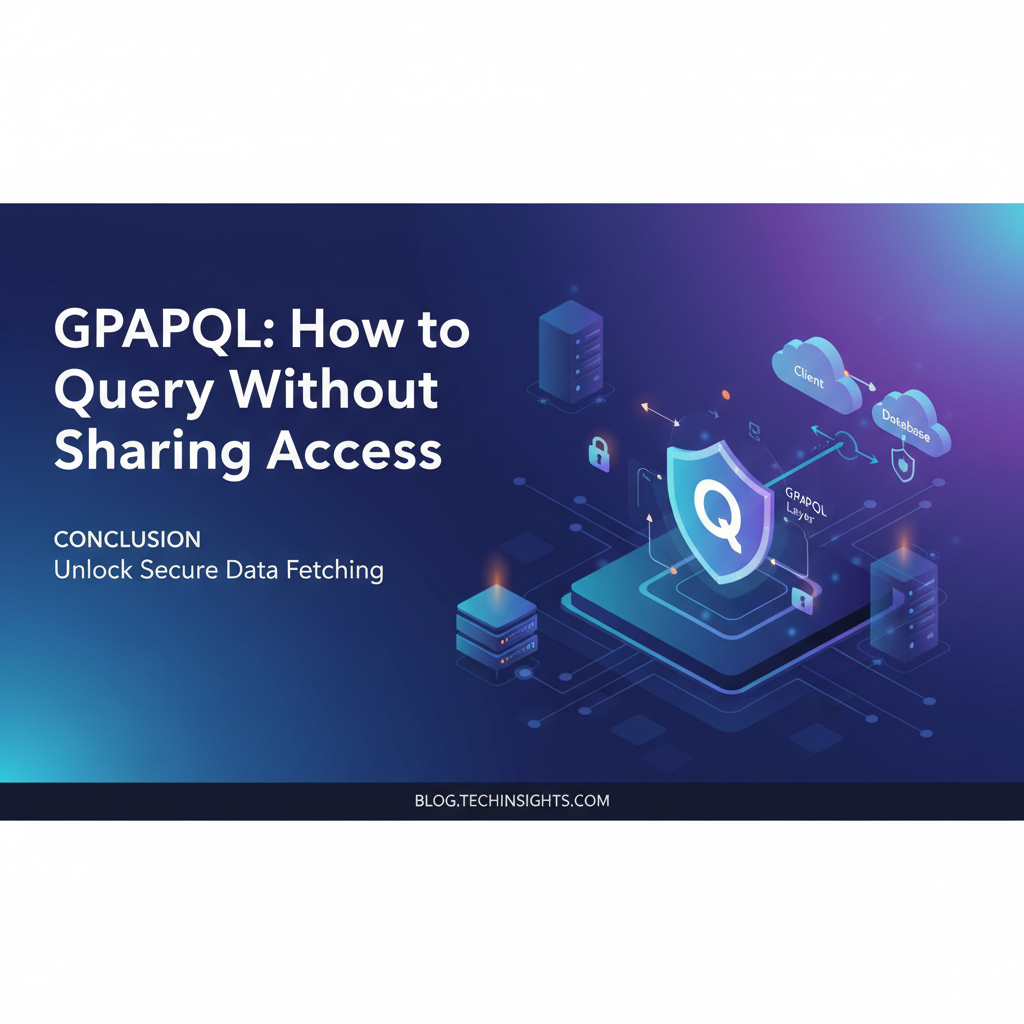
GraphQL: How to Query Without Sharing Access


In the rapidly evolving landscape of modern software development, Application Programming Interfaces (APIs) serve as the fundamental backbone, enabling diverse applications and services to communicate and exchange data seamlessly. From mobile apps and web platforms to intricate microservices architectures, APIs dictate how digital ecosystems interact. However, with the increasing complexity of data and the imperative for robust security, traditional API paradigms have begun to show their limitations, particularly when it comes to granting clients precise control over the data they receive without inadvertently exposing more than necessary. This challenge – how to allow clients to query data efficiently and flexibly without sharing broad, unrestricted access to underlying data structures – has become a pivotal concern for developers, security architects, and API Governance strategists alike.
For years, REST (Representational State Transfer) has been the dominant architectural style for web services, celebrated for its simplicity, statelessness, and use of standard HTTP methods. While REST has undeniably propelled the growth of the internet and countless applications, its resource-centric approach often leads to two common yet significant issues: over-fetching and under-fetching. Over-fetching occurs when a client receives more data than it actually needs, leading to wasted bandwidth, slower response times, and increased processing overhead on both the client and server sides. Conversely, under-fetching necessitates multiple requests to gather all required information for a single view, creating network chattiness and increased latency. More critically, from a security standpoint, traditional REST endpoints often expose entire resource representations, relying heavily on server-side filtering and authorization rules to strip away sensitive fields before transmission. This approach, while functional, can be prone to misconfigurations and makes fine-grained control over data exposure a constant architectural challenge.
Enter GraphQL, a query language for APIs and a runtime for fulfilling those queries with your existing data. Developed by Facebook in 2012 and open-sourced in 2015, GraphQL was specifically designed to address the inefficiencies and inflexibilities of traditional REST APIs. Its core philosophy revolves around empowering clients to declare exactly what data they need, and nothing more. This client-driven approach fundamentally shifts the paradigm of data access, offering a powerful mechanism for querying without sharing access to unnecessary data, thus significantly enhancing both performance and security postures. By providing a unified endpoint that clients can use to compose complex queries across multiple resources, GraphQL eliminates the need for numerous round trips and allows for tailored responses, a stark contrast to the fixed data structures returned by many REST endpoints. This capability is not just a convenience; it is a critical enabler for robust API Governance, allowing organizations to define and enforce granular access policies with unprecedented precision.
The central thesis of this discussion is that GraphQL's design inherently supports granular control over data exposure, making it an ideal choice for scenarios where allowing clients to query information flexibly must be balanced with stringent security requirements. We will delve deep into how GraphQL achieves this, exploring its fundamental components, sophisticated authorization mechanisms, and how it synergizes with modern api gateway solutions to establish comprehensive API Governance. We will also examine best practices for secure GraphQL implementations and discuss the challenges and considerations developers might face when adopting this powerful technology. Understanding GraphQL's capabilities in this context is crucial for anyone looking to build scalable, performant, and secure APIs in today's data-intensive world.
Understanding GraphQL Fundamentals: A Paradigm Shift in API Design
To truly grasp how GraphQL enables querying without sharing access, it's essential to first understand its foundational principles and architectural components. GraphQL represents a significant departure from traditional API design, offering a more efficient, powerful, and flexible alternative to the prevailing REST model. At its heart, GraphQL is not just a query language; it's a complete ecosystem designed to facilitate client-server communication with unparalleled precision regarding data requirements. This shift empowers clients to articulate their data needs explicitly, moving away from the server-dictated data structures common in REST.
The GraphQL Schema: The Contract of Capabilities
The cornerstone of any GraphQL api is its schema. Defined using the Schema Definition Language (SDL), the schema acts as a formal contract between the client and the server, outlining all the data types, fields, and operations (queries, mutations, subscriptions) that clients can interact with. Unlike REST, where the API's capabilities are often inferred from documentation or discovered through hypermedia, GraphQL's schema is self-documenting and strictly enforced by the server. This explicit definition is critical for "not sharing access" because it dictates precisely what data can be queried, rather than exposing all data that is available internally. If a field or type is not defined in the schema, clients simply cannot request it, regardless of its existence in the underlying database.
Within the schema, several key type categories are used to construct this contract:
- Object Types: These are the most fundamental building blocks, representing the kinds of objects you can fetch from your service and what fields they have. For example, a
Usertype might have fields likeid,name,email, andposts. Each field has a specific type, which can be a scalar type, another object type, or a list of types. - Scalar Types: These are primitive types that resolve to a single value, forming the leaves of a GraphQL query. Built-in scalar types include
ID,String,Int,Float, andBoolean. Custom scalar types (likeDateorJSON) can also be defined for more complex data formats. - Enum Types: Enumeration types are special scalar types that are restricted to a particular set of allowed values. They are useful for representing a finite set of options, such as
OrderStatus(e.g.,PENDING,SHIPPED,DELIVERED). - Input Types: Used primarily in mutations, input types allow you to pass complex objects as arguments to fields. They are similar to object types but are explicitly designed for input values.
- Interface Types: An interface type defines a set of fields that multiple object types must include. This is useful for polymorphic data structures, allowing you to query fields that are common to several different types. For instance, an
Animalinterface could definenameandspecies, whichDogandCatobject types would then implement. - Union Types: Union types are similar to interfaces, but they allow an object to be one of several types without requiring those types to share any common fields. For example, a
SearchResultunion could be either aPostor aUser.
The rigid structure of the GraphQL schema ensures that clients are always operating within a defined boundary, making unauthorized data access through unexpected query paths virtually impossible at the schema definition level. This explicit contract is the first layer of defense in preventing over-sharing.
Queries: Client-Driven Data Fetching
The most distinguishing feature of GraphQL is its powerful query language, which allows clients to specify exactly what data they need, in a single request, and receive exactly that data back. This eliminates the twin problems of over-fetching and under-fetching that plague REST APIs. Instead of being constrained by fixed endpoints that return a predefined set of fields, a GraphQL client constructs a query that precisely mirrors its data requirements.
Consider a scenario where you need to display a user's name and their five most recent post titles. In a RESTful api, you might first request the user data (potentially getting their email, address, phone, etc., which you don't need), then make a separate request to a /users/{id}/posts endpoint, and then process the results to pick out just the titles. This involves multiple requests and unnecessary data transfer. With GraphQL, a single query achieves this:
query GetUserNameAndPosts {
  user(id: "123") {
    name
    posts(first: 5) {
      title
    }
  }
}
This query clearly demonstrates the "ask for what you need, get exactly that" principle. The client specifies name and title within posts, and the server responds with only those fields. This fine-grained control over data selection is fundamental to the concept of "querying without sharing access." The server, guided by its schema and resolver logic, only provides the requested fields, even if the underlying database record contains many more attributes.
Mutations: Structured Data Manipulation
While queries are for fetching data, mutations are the GraphQL equivalent of methods that modify data. They are used for creating, updating, or deleting records on the server. Just like queries, mutations are explicitly defined in the schema, ensuring that clients can only perform predefined operations. This structured approach to data manipulation is crucial for maintaining data integrity and security.
A typical mutation might look like this:
mutation CreateNewPost {
  createPost(title: "My First GraphQL Post", content: "Learning about GraphQL!") {
    id
    title
    author {
      name
    }
  }
}
After executing a createPost mutation, the client can specify which fields of the newly created post it wants returned, confirming the operation's success and getting immediate feedback. This ability to request specific return data even after a write operation further reinforces the "querying without sharing access" paradigm, as the server only returns the relevant confirmation fields, not the entire created object unless explicitly requested. The structured nature of mutations, coupled with resolver-level authorization, ensures that only authorized users can perform specific write operations on specific data points, adding another layer to API Governance.
Subscriptions: Real-time Data Streams
Subscriptions extend GraphQL's capabilities to real-time scenarios, allowing clients to receive event-driven data updates from the server. Once a client subscribes to a particular event, the server will push data to that client whenever the event occurs. This is particularly useful for applications requiring live updates, such as chat applications, stock tickers, or real-time dashboards.
A subscription might look like:
subscription NewPostAlert {
  postAdded {
    id
    title
    author {
      name
    }
  }
}
When a new post is added, the server pushes the id, title, and author's name to all subscribed clients. Maintaining controlled access in a real-time context is paramount. Just as with queries and mutations, subscriptions are defined in the schema, and resolvers handle the logic for determining who can subscribe to what and what data fields are sent, ensuring that real-time data flows are also subject to granular access controls. This is a powerful feature for applications that demand immediate data synchronization, while still adhering to strict API Governance principles.
Resolvers: The Logic Behind the Data
While the schema defines what data can be queried, the resolvers define how that data is retrieved and processed. A resolver is a function responsible for fetching the data for a single field in the schema. When a client sends a GraphQL query, the GraphQL execution engine traverses the query's fields, invoking the corresponding resolver for each field. This is where the actual connection to databases, microservices, or external apis happens.
Every field in the schema (except for scalar leaves) needs a resolver function. For example, if you have a User type with a posts field, there would be a posts resolver that knows how to fetch the posts associated with a given user ID.
Resolver functions typically receive three arguments:
parent(orroot): The result from the parent field's resolver. For a top-level query likeuser(id: "123"), theparentis often an empty object or the root value. Foruser.posts,parentwould be theUserobject resolved in the previous step.args: An object containing all the arguments provided to the field in the query (e.g.,id: "123",first: 5).context: A globally available object that is passed down through the entire query execution. This object is exceptionally important for security, as it typically carries authentication and authorization information about the requesting user.
The pivotal role of resolvers in implementing access control logic cannot be overstated. Because a resolver is invoked for every field, it provides the perfect hook to implement granular permission checks. Before returning data for a specific field, the resolver can consult the context object to determine the requesting user's identity and roles, then decide whether that user is authorized to view that particular piece of data. If not, the resolver can return null or throw an authorization error, effectively preventing the sensitive data from ever leaving the server. This precise control at the field level is the essence of GraphQL's ability to facilitate "querying without sharing access."
The Core Principle: Querying Without Sharing Access in GraphQL
The true power of GraphQL, particularly in the context of security and efficient data delivery, lies in its intrinsic ability to allow clients to query data with extreme precision, thereby preventing the unnecessary exposure of information. This concept, "querying without sharing access," is not merely a feature but an architectural cornerstone baked into GraphQL's design. It represents a fundamental shift from traditional API paradigms, where server-side filtering often acts as a reactive measure to strip out unwanted data, to a proactive, client-driven model where only explicitly requested and authorized data is ever transmitted.
Schema as the Gatekeeper
As discussed, the GraphQL schema serves as the definitive contract of what data can be queried from the api. This is the first and most critical layer of access control. If a field or even an entire type is not explicitly defined in the schema, it simply does not exist from the client's perspective. This is a stark contrast to many REST APIs, which might expose broad resource URLs (e.g., /users/{id}), often returning a comprehensive representation of that resource, and then rely on subsequent server-side logic to filter out sensitive attributes before sending the response.
With GraphQL, the schema acts as an implicit gatekeeper. Developers must consciously decide which data points to expose to the api layer. Any sensitive internal data that should never be accessed by clients can simply be omitted from the schema definition entirely. This upfront design choice ensures that the surface area for potential data exposure is minimized from the very beginning. For example, an internal User object in a database might have fields like salary, SSN, and internal_notes. However, the GraphQL schema for a User type might only expose id, name, email, and profilePicture. The sensitive fields are never even part of the public api contract, making them impossible for clients to query directly. This principle significantly contributes to a robust API Governance strategy, establishing clear boundaries of data accessibility at the design phase.
Field-Level Granularity: The Heart of Control
The ability of clients to specify exactly which fields they want in their query is the most powerful mechanism GraphQL offers for "not sharing access" to parts of an object. Unlike REST, where an endpoint typically returns a predefined payload, GraphQL queries are composed of nested fields, allowing clients to drill down to precisely the data points they require.
This field-level granularity is transformative for several reasons:
- Eliminates Over-fetching: Clients only receive the data they ask for. If a
Userobject has 20 fields but the client only needsnameandemail, the GraphQL server will only fetch and transmit those two fields. This is inherently more secure as less data is transferred, reducing the risk of sensitive information being exposed inadvertently. - Reduces Data Exposure Surface: By default, if a field is not explicitly requested, it is not sent. This means that a client cannot accidentally or intentionally "discover" sensitive fields by simply requesting a broader resource. They must know the exact field name and have the authorization to access it.
- Facilitates Dynamic Data Presentation: Different client applications might require different subsets of data from the same underlying resource. A mobile app might need a user's
nameandprofilePicture, while an admin dashboard might needname,email,lastLoginDate, androle. GraphQL allows both clients to fetch precisely what they need from a single endpoint, using tailored queries, without any over-sharing or under-sharing.
The true magic happens when this field-level granularity is combined with server-side authorization logic, as we will explore in the next section. It's not just about what the client requests, but also about what the server allows them to see for that specific request.
Deep Diving into Authorization with GraphQL
While authentication verifies the identity of a user, authorization determines what that authenticated user is permitted to do or access. In GraphQL, the mechanisms for authorization are incredibly flexible and powerful, enabling fine-grained control down to individual fields and arguments. This is where the promise of "querying without sharing access" is fully realized.
Authentication vs. Authorization: Clear Definitions
Before diving into the implementation details, it's crucial to distinguish between these two concepts:
- Authentication: The process of verifying a user's identity. This typically involves users providing credentials (username/password, token), which are then verified by the server. Once authenticated, the server knows who the user is.
- Authorization: The process of determining what an authenticated user is allowed to access or perform. This involves checking the user's roles, permissions, or attributes against the requested resource or operation.
In a GraphQL setup, authentication usually happens before the GraphQL query is even processed by the GraphQL server. This is often handled by an api gateway or middleware layer that intercepts incoming requests, validates tokens (like JWTs or OAuth tokens), and attaches the authenticated user's identity information to the request context.
Context Object: The User's Identity
The context object is a crucial component in GraphQL's authorization strategy. It's a plain JavaScript/TypeScript object that is created once per request and passed down to every resolver during the query execution. This context object is the ideal place to store information about the requesting user, such as their ID, roles, permissions, or any other attributes relevant for authorization decisions.
Typically, after an api gateway or middleware authenticates a user (e.g., by validating a JWT and decoding its payload), the user's identity and permissions are extracted and attached to the context object. So, for any resolver function throughout the query execution, context.user (or similar) will contain the authenticated user's details. This makes the user's identity readily available at every point where an authorization decision might be needed.
Resolver-Level Authorization: The Granular Gatekeeper
The most direct and powerful way to implement authorization in GraphQL is within the resolvers themselves. Since a resolver is invoked for every field, it provides a perfect opportunity to perform a permission check just before fetching and returning the data for that specific field.
Here's how resolver-level authorization reinforces "querying without sharing access":
- Dynamic Access Control: A resolver can inspect the
context.userobject to determine if the user has the necessary permissions to view or interact with the data for that particular field. - Field-Specific Logic: This allows for highly granular authorization. For example:
- A
Userobject might have anemailfield. Theemailresolver could check ifcontext.user.id === parent.id(meaning the user is querying their own email) or ifcontext.user.role === 'ADMIN'. If neither is true, the resolver can returnnullfor theemailfield, effectively hiding it from unauthorized users. - A
Postobject might have astatusfield (e.g.,DRAFT,PUBLISHED). Thestatusresolver could ensure that only theauthoror anADMINcan see aDRAFTstatus, whilePUBLISHEDis visible to all. - For a
Productobject with acostPricefield, the resolver might only return this field if the user has aFINANCErole. Other users querying theProductwould simply not receive thecostPricefield.
- A
This approach ensures that even if a client requests a field, they will only receive it if they are authorized. This is a significant enhancement over simply removing fields from a REST response post-fetch; in GraphQL, the unauthorized data often isn't even fetched from the database if the resolver logic prevents it. This drastically reduces the risk of accidental data leakage and ensures that only the intended, permitted data is ever shared.
Authorization Directives: Abstracting Security Logic
While resolver-level authorization is powerful, repeating the same authorization logic across many resolvers can lead to code duplication and make the schema harder to read. GraphQL addresses this with custom schema directives. Directives are annotations that can be applied to schema definitions (types, fields, arguments) or query elements, allowing you to attach metadata or execute specific logic.
By creating a custom authorization directive, such as @auth or @hasRole, you can abstract common authorization checks. For instance:
type User {
  id: ID!
  name: String!
  email: String @auth(requires: ADMIN)
  salary: Float @auth(requires: [ADMIN, HR])
}

type Query {
  users: [User!]! @auth(requires: ADMIN)
  me: User! @auth
}
In this example, the @auth directive would be implemented as a server-side function that intercepts requests to the annotated fields or types. Before the actual resolver for email or salary is called, the directive would check if the context.user has the ADMIN or HR role, respectively. If the check fails, the directive can prevent the resolver from executing, throw an error, or return null.
Benefits of authorization directives:
- Reusability: Define authorization logic once and apply it across multiple fields or types.
- Declarative Security: The schema itself clearly indicates the security requirements for each field, improving readability and maintainability.
- Cleaner Resolver Code: Resolvers can focus purely on data fetching, as authorization is handled by the directive.
- Consistency: Ensures that authorization rules are applied uniformly across the
api.
Attribute-Based Access Control (ABAC) in GraphQL
For even finer-grained control, Attribute-Based Access Control (ABAC) can be integrated into GraphQL. ABAC evaluates a set of attributes associated with the user, the resource, the environment, and the action being requested to make a dynamic authorization decision.
In a GraphQL context, ABAC can be implemented within resolvers or custom directives. For example:
- User Attributes:
context.user.department,context.user.location,context.user.clearanceLevel. - Resource Attributes:
parent.status,parent.ownerId,parent.sensitivityLabel. - Environmental Attributes:
request.ipAddress,request.timeOfDay.
A resolver for a documentContent field might check: "Is the user's department the same as the document's department AND is the document's sensitivityLabel 'PUBLIC' OR is the user's clearanceLevel 'TOP_SECRET'?" This allows for incredibly flexible and dynamic authorization policies that adapt to changing conditions and requirements, going beyond simple role checks.
The combination of the schema as a contract, field-level granularity, resolver-level authorization, and the power of directives makes GraphQL an exceptionally robust framework for "querying without sharing access." It empowers developers to build APIs where clients can efficiently retrieve precisely what they need, while simultaneously providing server-side mechanisms to enforce stringent access controls down to the most granular data points. This robust security model is a cornerstone for effective API Governance in any modern enterprise.
GraphQL and the API Gateway: A Synergy for Enhanced API Governance
While GraphQL's intrinsic design offers powerful mechanisms for granular data access and authorization at the application layer, integrating it with an api gateway provides a critical outer layer of security, performance, and management. An api gateway acts as a single entry point for all api traffic, serving as a powerful orchestrator that intercepts incoming requests, applies various policies, and routes them to the appropriate backend services. This layered approach is not redundant; rather, it creates a robust, multi-faceted security posture and a comprehensive framework for API Governance.
The Role of an API Gateway in a GraphQL Ecosystem
An api gateway sits in front of your GraphQL server (or any api endpoint), providing a host of cross-cutting concerns that would otherwise need to be implemented within each individual service. For a GraphQL api, an api gateway can provide several crucial functions:
- Centralized Authentication and Authorization (Pre-Resolver Checks): Before a request even reaches your GraphQL server's resolvers, the
api gatewaycan perform initial authentication (e.g., validating JWTs, OAuth tokens, API keys) and coarse-grained authorization checks (e.g., ensuring a client has access to the overall GraphQLapi, or blocking requests from unapproved IP addresses). This offloads authentication logic from the GraphQL service and acts as an early deterrent against unauthorized access, reducing the load on the backend. The validated user identity can then be passed to the GraphQL server via thecontextobject, as discussed earlier. - Rate Limiting and Throttling: To protect your GraphQL service from abuse, DoS attacks, or simply excessive usage, an
api gatewaycan enforce rate limits (e.g., "100 requests per minute per IP address/user"). This prevents a single client from overwhelming your backend and ensures fair usage across all consumers. This is particularly important for GraphQL where complex queries can be resource-intensive. - Caching: For frequently accessed but less dynamic data, an
api gatewaycan implement caching strategies. While GraphQL's client-driven nature can complicate caching at the gateway level (due to highly variable query structures), smart gateways can cache responses for specific, common queries or act as a caching layer for underlying REST or database requests that are aggregated by GraphQL resolvers. - Monitoring and Logging: The
api gatewayserves as a central point for observing allapitraffic. It can collect detailed logs of every request and response, providing invaluable insights into API usage patterns, performance metrics, and potential security threats. This centralized logging is vital for auditing, troubleshooting, and proactiveAPI Governance. - Traffic Management: Gateways can intelligently route requests to different versions of your GraphQL service, perform load balancing across multiple instances, or implement circuit breakers to prevent cascading failures to your backend services in case of an outage. This ensures high availability and resilience for your GraphQL
api. - Protocol Translation/Transformation: While less common for pure GraphQL (which typically uses HTTP POST), a gateway can potentially bridge different protocols or transform requests/responses if your GraphQL service needs to interact with legacy systems or specialized clients.
- Auditing and Compliance: The comprehensive logs and policy enforcement capabilities of an
api gatewayare indispensable for meeting regulatory compliance requirements and conducting thorough security audits.
How an API Gateway Complements GraphQL's Access Control
It's crucial to understand that the api gateway doesn't replace GraphQL's intrinsic authorization mechanisms; rather, it complements them, creating a layered defense strategy. Think of it as concentric circles of security:
- Outer Layer (API Gateway): Provides coarse-grained security. It's like the bouncer at the club entrance, checking IDs (authentication) and making sure you're on the guest list (basic authorization, rate limiting). If you don't pass these initial checks, you don't even get inside the building (your request doesn't reach the GraphQL server).
- Inner Layer (GraphQL Server & Resolvers): Provides fine-grained security. Once inside, the GraphQL server (with its schema and resolvers) acts like the club manager, deciding which specific rooms you can enter and what you can touch (field-level authorization, attribute-based access control). Even if you're an authenticated user, you still only get to query the data you're specifically authorized for.
This layered approach ensures robust security: The api gateway protects the overall service from common attacks and manages broad access, while GraphQL's resolvers handle the intricate, field-specific permissions. This division of responsibility not only enhances security but also improves the maintainability and scalability of your api architecture. It encapsulates common security and operational concerns at the gateway, allowing your GraphQL service to focus on its core logic.
Introducing APIPark for Comprehensive API Governance
For enterprises navigating the complexities of managing a diverse array of APIs, including sophisticated GraphQL endpoints, robust API Governance is not merely an option but a strategic imperative. This is precisely where platforms like APIPark come into play, offering a comprehensive solution to streamline API management and bolster security.
APIPark, an open-source AI gateway and API management platform, presents an all-in-one ecosystem designed to simplify the management, integration, and deployment of both AI and REST services. Importantly, its capabilities extend seamlessly to governing GraphQL APIs, providing the critical infrastructure needed to ensure security, performance, and compliance. By integrating APIPark, organizations can benefit from a centralized system that complements GraphQL's internal access control mechanisms with powerful external API Governance features.
APIPark facilitates robust API Governance by offering:
- End-to-End API Lifecycle Management: From design and publication to invocation and decommissioning, APIPark assists in managing every stage of an API's existence. This holistic approach ensures that GraphQL APIs are not only built securely but also managed throughout their lifespan with consistent policies and oversight.
- Traffic Management and Security: Like a powerful
api gateway, APIPark manages traffic forwarding, load balancing, and versioning for published APIs. This includes enforcing security policies such as rate limiting and access control at the gateway level, providing an essential shield for your GraphQL services against malicious or excessive requests. - Independent API and Access Permissions for Each Tenant: For multi-team or multi-tenant environments, APIPark enables the creation of distinct teams, each with independent applications, data, user configurations, and security policies. This segmentation is vital for ensuring that different departments or external partners can only access the GraphQL data relevant to them, reinforcing the "querying without sharing access" principle at an organizational level.
- API Resource Access Requires Approval: APIPark allows for the activation of subscription approval features, meaning callers must subscribe to an API and await administrator approval before they can invoke it. This preemptive control prevents unauthorized API calls and potential data breaches, adding a crucial layer of manual oversight to your
API Governancestrategy. - Detailed API Call Logging and Data Analysis: Comprehensive logging capabilities in APIPark record every detail of each API call. This feature is invaluable for quickly tracing and troubleshooting issues, conducting security audits, and gaining insights into API usage patterns. The powerful data analysis tools further help businesses identify long-term trends and performance changes, enabling preventive maintenance before issues escalate. This deep visibility is fundamental to effective
API Governance, providing the data necessary to enforce policies and ensure accountability.
By deploying APIPark alongside your GraphQL implementation, you create a powerful synergy: GraphQL handles the granular, field-level access control, while APIPark provides the overarching API Governance, security, and management capabilities at the network edge. This integrated approach ensures that your APIs are not only flexible and efficient but also secure, compliant, and well-managed across their entire lifecycle. To explore how APIPark can enhance your API management strategy and reinforce your API Governance, visit ApiPark.
Table: Comparison of Access Control Layers in a GraphQL Ecosystem
To better illustrate the distinct yet complementary roles of GraphQL and an API Gateway in access control, let's examine their respective areas of responsibility:
| Feature/Aspect | API Gateway (External Layer) | GraphQL Server (Internal Layer) |
|---|---|---|
| Primary Focus | Network-level security, traffic management, infrastructure. | Application-level data access, query execution, data shape. |
| Authentication | Validates tokens (JWT, OAuth), API keys, IP whitelisting. | Receives authenticated user context from gateway/middleware. |
| Authorization Type | Coarse-grained (e.g., access to entire API, role-based). | Fine-grained (e.g., field-level, record-level, attribute-based). |
| Data Scope | All API requests/responses, network headers. | Specific fields and types defined in the GraphQL schema. |
| Policy Enforcement | Rate limiting, IP blocking, basic request validation. | Resolver logic, schema directives, custom authorization rules. |
| Visibility | Centralized logging of all incoming/outgoing API calls. | Logging of query execution details, resolver performance. |
| Benefit for "Query Without Sharing Access" | Blocks unauthorized requests at the edge, reduces load on backend. | Ensures only requested and authorized data fields are returned, even for valid queries. |
| Implementation | Configuration, plugins, separate service. | Code within resolvers, schema SDL, server-side logic. |
| Example | Blocks request if Authorization header is missing. |
Returns null for User.email if user is not an Admin. |
This table underscores that neither an api gateway nor a GraphQL server's internal authorization mechanisms are sufficient on their own for comprehensive API Governance. They are designed to work in tandem, providing a robust, multi-layered security framework that allows organizations to offer flexible data access while maintaining strict control over information exposure.
APIPark is a high-performance AI gateway that allows you to securely access the most comprehensive LLM APIs globally on the APIPark platform, including OpenAI, Anthropic, Mistral, Llama2, Google Gemini, and more.Try APIPark now! 👇👇👇
Best Practices for Secure GraphQL Implementations and Robust API Governance
Implementing GraphQL offers significant advantages in flexibility and efficiency, but like any powerful technology, it demands careful attention to security. The ability to "query without sharing access" is a core strength, but realizing this potential requires adherence to best practices that go beyond basic schema definition and resolver logic. Robust API Governance dictates that security considerations are woven into every layer of your GraphQL api, from design to deployment and ongoing operations.
Input Validation and Data Sanitization
Even with GraphQL's strong typing, it's paramount to validate and sanitize all input data, especially for mutations and query arguments. While the schema ensures that arguments conform to their defined types (e.g., Int must be an integer), it doesn't prevent malicious payloads within a valid type or excessively large inputs.
- Schema-based Validation: Leverage GraphQL's type system. For instance, using custom scalar types (e.g.,
EmailAddress,PositiveInt) that have custom serialization/deserialization logic can enforce stricter formats. - Custom Validators in Resolvers: Before performing any database operations in a mutation resolver, validate the input's content, length, and format. For example, ensure a password meets complexity requirements or a username doesn't contain forbidden characters.
- Preventing Injection Attacks: Always use parameterized queries when interacting with databases from your resolvers. Never concatenate user input directly into SQL queries or other backend commands to prevent SQL injection or command injection attacks. Sanitize HTML content to prevent XSS (Cross-Site Scripting) if you're returning user-generated content.
Thorough input validation is the first line of defense against many common web vulnerabilities and is a fundamental aspect of secure API Governance.
Query Complexity and Depth Limiting
GraphQL's power to allow complex, nested queries can inadvertently lead to Denial-of-Service (DoS) attacks if not properly managed. A malicious or even poorly written client could craft a query that requests deeply nested data or a large number of items in a list, forcing the server to perform extensive database lookups and exhausting its resources.
To mitigate this, implement query complexity and depth limiting:
- Query Depth Limiting: Restrict the maximum nesting level of a query. For instance, allow a maximum depth of 10. If a query exceeds this, reject it.
- Query Complexity Analysis: Assign a "cost" to each field in your schema (e.g., a simple scalar might cost 1, a list of objects might cost 10 + (number of items * object cost)). Before executing a query, calculate its total complexity cost. If it exceeds a predefined threshold, reject the query. This is a more sophisticated approach than depth limiting alone, as it accounts for the actual resource intensity.
- Rate Limiting on Complexity: Combine complexity analysis with rate limiting (e.g., a user can only accrue 10,000 complexity points per minute).
These measures are crucial for maintaining the stability and performance of your GraphQL api, ensuring that client flexibility doesn't come at the cost of server resilience.
Pagination and Data Windowing
Preventing clients from requesting excessively large datasets is another critical security and performance concern. Even with field-level control, a query like allUsers { id name } could return millions of records if not properly constrained, leading to memory exhaustion on the server and slow network transfers.
Always implement pagination for fields that return lists of objects:
- Cursor-based Pagination (Recommended): Uses an opaque "cursor" to point to a specific item in a list, allowing clients to request items "after" or "before" that cursor. This is more robust for dynamic lists and avoids issues with skipped or duplicated items.
- Offset-based Pagination: Uses
limit(how many items) andoffset(how many items to skip) arguments. While simpler, it can be problematic with frequently changing data.
Additionally, consider imposing maximum first/last limits (e.g., a client can request a maximum of 100 items at a time). If they need more, they must make multiple paginated requests. This ensures predictable data transfer sizes and prevents resource exhaustion.
Error Handling and Information Disclosure
How your GraphQL api handles and exposes errors is a significant security consideration. Default error messages from underlying frameworks or databases can often leak sensitive implementation details (e.g., stack traces, database schema names, internal file paths, specific vulnerability findings) that attackers can exploit.
- Generic Error Messages: For production environments, strip down error messages to be as generic and uninformative as possible to the client. Instead of "SQLSTATE[23505]: Unique violation: 7 ERROR: duplicate key value violates unique constraint 'users_email_key'", return a generic "Internal Server Error" or "Invalid Input."
- Internal Logging: Log detailed error information (including stack traces and internal identifiers) on the server side for debugging and monitoring purposes. This allows operations teams to diagnose issues without exposing sensitive data to clients.
- Controlled Error Objects: GraphQL allows for structured error responses. Leverage this by returning an array of error objects, each containing a
message,code, and potentiallypath(the field where the error occurred), but avoid including raw exception details.
Proper error handling is a cornerstone of a secure api, balancing the need for debugging information with the imperative to protect sensitive backend details.
Rate Limiting
As mentioned in the api gateway section, rate limiting is essential to protect your GraphQL service from various forms of attack and resource exhaustion.
- Gateway-level Rate Limiting: Implement rate limits at the
api gateway(e.g., 100 requests/minute per IP, or 1000 requests/minute per authenticated user). This is the first line of defense. - GraphQL Server-level Rate Limiting: For more granular control, you might implement rate limiting within your GraphQL server, potentially applying different limits based on the type of operation (e.g., mutations might have stricter limits than queries) or the complexity of the query.
- Distinguish Authenticated vs. Unauthenticated Limits: Unauthenticated users should typically have much stricter rate limits than authenticated users.
Consistent and well-configured rate limiting is crucial for the stability and availability of your api.
Persisted Queries
Persisted queries are a powerful technique to enhance both security and performance in GraphQL. With persisted queries, clients only send a unique identifier (hash or ID) for a pre-registered query, rather than the full GraphQL query string.
- Security Benefits:
- Whitelisting: Only queries that have been explicitly registered and approved can be executed. This effectively creates a whitelist of allowed operations, drastically reducing the attack surface. Any unknown query ID is rejected.
- Prevents Malicious Query Crafting: Clients cannot dynamically craft arbitrary or malicious queries, even if they bypass other security checks.
- Performance Benefits:
- Smaller network payloads (sending a short ID instead of a long query string).
- Server-side caching of parsed queries, reducing parsing overhead.
While requiring an additional build step or management process, persisted queries offer a significant boost to security, particularly for public-facing or sensitive APIs, reinforcing proactive API Governance.
Monitoring and Logging
Comprehensive monitoring and logging are not just for debugging; they are fundamental for security and API Governance. Without visibility into how your GraphQL api is being used, detecting anomalies, potential attacks, or unauthorized access attempts becomes exceedingly difficult.
- Request/Response Logging: Log every incoming GraphQL request (including the query string, variables, and headers) and the corresponding response. Be cautious about logging sensitive data in production; consider redacting or encrypting it.
- Performance Metrics: Monitor resolver execution times, database query times, and overall GraphQL server latency. This helps identify performance bottlenecks and potential DoS vectors.
- Error Logging: Log all errors, especially authorization failures, validation errors, and server-side exceptions, with sufficient detail for investigation.
- Anomaly Detection: Use monitoring tools to detect unusual patterns in
apiusage (e.g., sudden spikes in queries from a single IP, an unusual number of authorization failures, queries targeting specific sensitive fields). - Audit Trails: Maintain audit trails for all critical operations (e.g., successful mutations, administrator actions).
Effective monitoring and logging provide the data necessary to enforce API Governance policies, respond to incidents promptly, and continuously improve the security posture of your GraphQL api.
The Broader Context of API Governance with GraphQL
API Governance encompasses the strategies, processes, and tools an organization uses to manage its APIs effectively throughout their lifecycle. This includes aspects like design standards, security policies, documentation, versioning, and compliance. GraphQL, with its unique characteristics, profoundly impacts how API Governance is approached and executed. Its structured nature and client-driven philosophy can significantly enhance governance practices, particularly concerning consistency, discoverability, and controlled evolution.
Version Management: Evolving APIs Gracefully
One of the notorious challenges with traditional REST APIs is versioning. When an API needs to change (e.g., add or remove a field), developers often resort to URL versioning (e.g., /v1/users, /v2/users) or header versioning, which can lead to "versioning hell" – maintaining multiple API versions, each with its own documentation and codebase, for extended periods.
GraphQL offers a more elegant approach: extensibility and deprecation.
- Adding Fields: Because clients only ask for what they need, adding new fields to an existing type in the schema is a non-breaking change. Existing clients that don't request the new fields will continue to function normally.
- Deprecating Fields: If a field becomes obsolete or needs to be replaced, GraphQL's SDL allows you to mark it as
@deprecatedwith areason. This signal is picked up by introspection tools and documentation generators, alerting clients to switch to newer fields. The deprecated field can remain in the schema for a transitional period, allowing clients to migrate gradually without immediate breakage.
This approach significantly simplifies API Governance by reducing the need for hard versioning. It allows APIs to evolve gracefully, minimizing the burden on both API providers and consumers. This continuous evolution model ensures that the api remains agile and responsive to changing business needs, while carefully managing client impact.
Documentation and Discoverability: Self-Serving Information
Another significant benefit of GraphQL for API Governance is its inherent self-documenting nature. The GraphQL schema itself acts as a source of truth for the api's capabilities.
- Introspection: GraphQL
apis support introspection, a powerful feature that allows clients to query the schema itself to discover what types, fields, and operations are available. Tools like GraphiQL or Apollo Studio leverage introspection to provide an interactive, browser-basedapiexplorer and documentation. - Clear, Up-to-Date Documentation: Because tools can automatically generate documentation directly from the schema, API documentation is always consistent with the actual
api. This eliminates the common problem of outdated or inaccurate documentation, which is a major pain point inAPI Governance.
This self-serving documentation greatly improves developer experience and reduces the effort required to onboard new API consumers. It ensures that consumers always have access to accurate information, which is critical for preventing misinterpretations and ensuring correct API usage.
API Design Standards: Ensuring Consistency
For effective API Governance, establishing clear design standards is crucial. While GraphQL provides a flexible framework, consistent naming conventions, field design, and error handling patterns across your GraphQL api are essential for maintainability and usability.
- Naming Conventions: Define consistent naming for types, fields, arguments (e.g., camelCase for fields, PascalCase for types).
- Pagination Standards: Standardize on a single pagination approach (e.g., Relay-style connections) across all list fields.
- Error Handling Uniformity: Ensure that custom error codes and formats are consistent across the
api. - Schema Federation/Stitching: For large organizations with multiple GraphQL services,
API Governancemight involve strategies for federating or stitching schemas from different teams to present a unifiedapito clients. This requires careful design to avoid conflicts and ensure seamless integration.
By establishing and enforcing these design standards, organizations can ensure that their GraphQL APIs are consistent, predictable, and easy for developers to understand and use, thereby enhancing overall API Governance.
Compliance and Regulatory Requirements: Granular Control for Sensitive Data
In industries with strict regulatory requirements (e.g., GDPR, HIPAA, PCI DSS), controlling access to sensitive data is paramount. GraphQL's granular, field-level authorization capabilities are a significant asset in meeting these compliance standards.
- Controlled Data Exposure: As discussed, GraphQL inherently allows for "querying without sharing access" by only returning requested fields and applying authorization at the resolver level. This means you can ensure that personally identifiable information (PII), health information (PHI), or financial data is only exposed to authorized users who explicitly request it.
- Auditable Access: Combining GraphQL's detailed internal logic with
api gatewaylogging (like that offered by APIPark), provides a comprehensive audit trail. You can precisely track which user accessed which specific data fields at what time, which is invaluable for demonstrating compliance during audits. - Data Minimization: GraphQL encourages data minimization by design; clients are prompted to only ask for the data they truly need. This inherently aligns with privacy principles that advocate for collecting and processing only necessary data.
GraphQL empowers organizations to build APIs that are not only powerful and flexible but also inherently designed to respect privacy and security regulations, making it a strong tool in a comprehensive API Governance strategy.
Challenges and Considerations in Adopting GraphQL for Secure Data Access
While GraphQL offers compelling advantages for controlled and efficient data access, its adoption is not without challenges. Understanding these considerations is crucial for a successful and secure implementation, ensuring that the benefits outweigh the complexities. Effective API Governance requires acknowledging and planning for these hurdles.
Learning Curve for Developers and Operations Teams
GraphQL introduces a new paradigm for API interaction, which can entail a learning curve for teams accustomed to traditional RESTful architectures.
- Developer Mindset Shift: Front-end developers need to learn GraphQL query syntax, fragment composition, and how to use client libraries (e.g., Apollo Client, Relay). Backend developers need to master schema design, resolver implementation, and how to connect GraphQL to various data sources.
- Tooling and Ecosystem: While the GraphQL ecosystem is rich and maturing rapidly, teams need to invest time in understanding and adopting new tools for schema management, testing, and client-side data management.
- Operations and Monitoring: DevOps and SRE teams need to adapt their monitoring, logging, and performance profiling strategies for GraphQL, which differs from standard HTTP request/response logging for REST. Complexity analysis and depth limiting, for instance, are new operational concerns specific to GraphQL. This also highlights where an
api gatewaylike APIPark can provide standardized observability layers.
Complexity of Authorization Logic
While GraphQL enables highly granular authorization, implementing and managing this logic can become complex, especially in large-scale applications with intricate permission models.
- Distributed Authorization: If your GraphQL server aggregates data from multiple microservices (each with its own authorization rules), coordinating these permissions can be challenging. You might need to implement a centralized authorization service that resolvers can query.
- Maintaining Consistency: Ensuring that authorization rules are applied consistently across all relevant resolvers and directives requires meticulous design and rigorous testing.
- Performance Impact: Extremely complex authorization logic within every resolver can introduce overhead, potentially impacting query performance. Careful optimization and caching of permission checks may be necessary.
Performance Optimization: The N+1 Problem
A common performance pitfall in GraphQL is the "N+1 problem," where fetching a list of items and then a related child item for each of them results in N+1 database queries (one for the list, N for each child).
For example, fetching a list of users and then each user's profile picture: 1. Query for users (1 database query). 2. For each of the N users, query for their profilePicture (N database queries). Total: N+1 queries.
- DataLoader Pattern: The standard solution to the N+1 problem is to use a library like Facebook's DataLoader (or similar implementations in other languages). DataLoader batches and caches requests, ensuring that only one database query is made per unique set of IDs within a single request cycle, significantly improving performance. This is a critical optimization for any production GraphQL
api.
Caching Challenges
Caching strategies, especially at the HTTP level, can be more complex with GraphQL compared to REST due to the dynamic nature of queries. Since clients can request arbitrary combinations of fields, traditional HTTP caching based on URLs is often ineffective.
- Fragment Caching: Caching common fragments of data is possible, but requires client-side intelligence.
- Server-Side Caching: Caching at the resolver level (e.g., caching results from database calls or external
apis) is crucial. - GraphQL-aware Caching: Some
api gatewaysolutions or GraphQL-specific caching layers are emerging that can parse GraphQL queries and cache based on query hashes or data normalization. - Client-Side Caching: Modern GraphQL client libraries (e.g., Apollo Client) provide sophisticated in-memory caching mechanisms that normalize data, significantly reducing the need for redundant network requests.
Addressing caching effectively is vital for ensuring your GraphQL api remains performant under heavy load.
Tooling Maturity and Ecosystem Evolution
While the GraphQL ecosystem has matured considerably, it is still evolving compared to the decades-old REST ecosystem.
- Monitoring and Observability Tools: Specialized tools for GraphQL monitoring, tracing, and error tracking are available but might require more integration effort than generic HTTP monitoring.
- Schema Management Tools: Managing large and complex schemas, especially in a federated environment, requires robust tooling for schema linting, diffing, and registry management.
- Gateway Integration: Integrating GraphQL services behind an
api gatewaymay require specific configurations or plugins, although platforms like APIPark are designed to offer seamless management for various API types.
Despite these challenges, the benefits of GraphQL, particularly in enabling efficient and secure data access without over-sharing, often outweigh the initial investment in overcoming these hurdles. Proactive planning, leveraging robust tools, and adopting best practices are key to a successful GraphQL implementation and sound API Governance.
Conclusion: GraphQL as the Future of Controlled Data Access
In the dynamic and security-conscious world of modern software development, the imperative to provide clients with flexible data access while simultaneously safeguarding sensitive information has never been more critical. Traditional API paradigms, while historically significant, often struggle to strike this delicate balance, frequently leading to inefficiencies like over-fetching and under-fetching, and more importantly, posing persistent challenges for granular access control. GraphQL emerges as a powerful and elegant solution to these problems, fundamentally altering how we design, interact with, and govern our APIs.
We have explored how GraphQL’s client-driven query language empowers consumers to precisely declare their data needs, receiving exactly what they request and nothing more. This core principle, "querying without sharing access," is not an afterthought but is deeply embedded in GraphQL's architecture. The robust schema acts as an explicit contract, defining the boundaries of what data can be accessed, while sophisticated resolver-level authorization and custom directives provide the granular control necessary to enforce access policies down to individual fields. This means that even if an underlying database holds a wealth of information, a GraphQL api ensures that only the authorized and explicitly requested subset ever leaves the server.
Furthermore, we've highlighted the crucial, synergistic relationship between GraphQL and modern api gateway solutions. While GraphQL excels at fine-grained, application-level authorization, an api gateway provides an essential outer layer of security and management, handling critical cross-cutting concerns like centralized authentication, rate limiting, caching, and comprehensive monitoring. This layered approach creates a formidable defense strategy, allowing organizations to maintain control and visibility over their api landscape. In this context, platforms like APIPark stand out as comprehensive solutions for API Governance. By offering end-to-end API lifecycle management, robust traffic and security features, tenant isolation, and detailed logging, APIPark complements GraphQL's intrinsic capabilities, ensuring that your APIs are not only performant and flexible but also secure, compliant, and well-managed across their entire lifecycle.
Adopting GraphQL, while presenting challenges such as a learning curve, authorization complexity, and performance optimizations like the N+1 problem, is a strategic investment. By adhering to best practices—including stringent input validation, query complexity limiting, proper pagination, intelligent error handling, and diligent monitoring—organizations can mitigate these challenges and unlock the full potential of GraphQL. Its inherent advantages in graceful version management, self-documenting capabilities, and alignment with regulatory compliance make it an indispensable tool for robust API Governance.
In conclusion, GraphQL is more than just a query language; it represents a paradigm shift towards empowering clients with unprecedented control over data fetching while maintaining stringent server-side authority. It enables the creation of APIs that are both highly efficient and inherently secure, allowing businesses to innovate faster, improve developer experience, and confidently manage their digital assets. As the digital landscape continues to evolve, GraphQL, bolstered by comprehensive API Governance strategies and powerful api gateway platforms, stands poised as a cornerstone for the future of controlled, flexible, and secure data access.
Frequently Asked Questions (FAQ)
1. What is GraphQL, and how does it differ from REST APIs regarding data access?
GraphQL is a query language for APIs and a runtime for fulfilling those queries with your existing data. Unlike REST, which typically relies on multiple endpoints that return fixed data structures, GraphQL allows clients to specify exactly what data they need from a single endpoint. This client-driven approach eliminates over-fetching (getting more data than needed) and under-fetching (needing multiple requests for all required data), giving clients precise control over data retrieval. From an access perspective, this means clients only receive the data fields they explicitly request and are authorized to view, rather than receiving a broad resource representation from which sensitive data must then be stripped.
2. How does GraphQL enable "Querying Without Sharing Access"?
GraphQL achieves "querying without sharing access" primarily through its schema and resolver-level authorization. The schema acts as a contract, defining only what data types and fields are publicly available. If a field isn't in the schema, it cannot be queried. Crucially, authorization logic can be embedded directly into individual field resolvers. This means that even if a field is requested by a client, the resolver can check the user's permissions and return null or an error if the user is not authorized for that specific piece of data. This granular, field-level control ensures that only authorized and explicitly requested data ever leaves the server, preventing accidental exposure of sensitive information.
3. What role does an API Gateway play in a GraphQL ecosystem, especially for API Governance?
An API Gateway acts as a crucial outer layer of security and management for a GraphQL service. While GraphQL provides fine-grained, application-level authorization within its resolvers, an api gateway handles coarse-grained, network-level concerns. This includes centralized authentication (validating tokens before requests reach the GraphQL server), rate limiting (to prevent DoS attacks), caching, logging, and traffic management. For API Governance, an api gateway provides a centralized control point for policy enforcement, auditing, and monitoring across all API traffic, complementing GraphQL's internal security with external, infrastructure-level safeguards. Platforms like APIPark specifically cater to these API Governance needs, offering comprehensive management and security features for various API types, including GraphQL.
4. What are some key security best practices for GraphQL APIs?
Key security best practices for GraphQL APIs include: * Input Validation: Thoroughly validate and sanitize all incoming data, especially for mutations, to prevent injection attacks. * Query Complexity & Depth Limiting: Implement measures to prevent overly complex or deeply nested queries that could lead to Denial-of-Service (DoS) attacks. * Pagination: Always use pagination for list fields to prevent clients from requesting excessively large datasets. * Error Handling: Provide generic error messages to clients while logging detailed errors internally to avoid information disclosure. * Rate Limiting: Enforce rate limits at both the api gateway and GraphQL server levels to protect against abuse. * Persisted Queries: Consider using persisted queries to whitelist allowed operations, enhancing security by preventing arbitrary query execution. * Comprehensive Monitoring and Logging: Actively monitor API usage patterns and log all requests, responses, and errors for audit and anomaly detection.
5. How does GraphQL contribute to API Governance beyond security?
Beyond security, GraphQL significantly contributes to API Governance in several ways: * Graceful Versioning: GraphQL's extensibility allows for adding new fields without breaking existing clients and deprecating old fields gracefully, simplifying version management compared to traditional APIs. * Self-Documenting Nature: Its strong type system and introspection capabilities allow for automatically generated, always up-to-date API documentation, improving discoverability and reducing developer onboarding time. * Consistency: Encourages consistent API design patterns and data models across different services or teams, leading to more maintainable and predictable APIs. * Compliance: Its granular access control features assist organizations in meeting strict regulatory compliance requirements (e.g., GDPR, HIPAA) by providing precise control and auditable access to sensitive data fields.
🚀You can securely and efficiently call the OpenAI API on APIPark in just two steps:
Step 1: Deploy the APIPark AI gateway in 5 minutes.
APIPark is developed based on Golang, offering strong product performance and low development and maintenance costs. You can deploy APIPark with a single command line.
curl -sSO https://download.apipark.com/install/quick-start.sh; bash quick-start.sh

In my experience, you can see the successful deployment interface within 5 to 10 minutes. Then, you can log in to APIPark using your account.

Step 2: Call the OpenAI API.