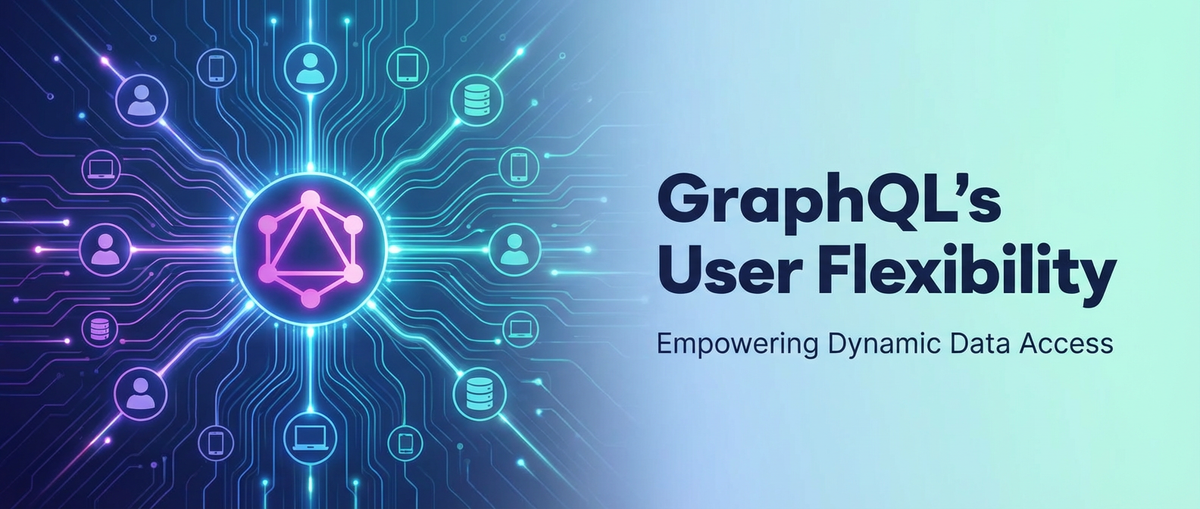
GraphQL's User Flexibility: Empowering Dynamic Data Access


In the rapidly evolving landscape of digital information, the way applications access and manipulate data is paramount to their success. For decades, Representational State Transfer (REST) has been the dominant architectural style for building web services, offering a robust and widely understood approach to api design. However, as applications become increasingly complex, demanding more intricate data relationships and real-time responsiveness, the limitations of traditional RESTful apis have become more apparent. The need for a more flexible, efficient, and user-centric approach to data interaction has never been greater.
This is where GraphQL emerges as a transformative technology, fundamentally reshaping how developers interact with data. GraphQL is not merely a query language; it's a powerful specification that provides a declarative way for clients to describe their precise data requirements from an api, receiving exactly what they ask for, no more and no less. This inherent flexibility empowers developers to build dynamic applications with unparalleled efficiency, drastically reducing over-fetching and under-fetching issues common in REST. By allowing clients to dictate the structure and content of their data responses, GraphQL fosters a more agile development workflow, enabling rapid iteration and a superior user experience. This article will delve deep into the multifaceted ways GraphQL enhances user flexibility, from its core architectural principles to its sophisticated schema design, and how a comprehensive api gateway and API Developer Portal become indispensable tools in managing and scaling such dynamic data environments. We will explore how this powerful api technology is not just changing the way we fetch data, but fundamentally redefining the developer-api contract, pushing the boundaries of what's possible in modern application development.
The Paradigm Shift from REST to GraphQL: A Foundation for Flexibility
To truly appreciate GraphQL's impact on flexibility, it's essential to first understand the strengths and, crucially, the inherent limitations of its predecessor, REST. For many years, REST has served as the bedrock of web api design, promoting a standardized, stateless, and cacheable approach to interacting with resources. Its simplicity and widespread adoption made it the go-to choice for exposing data over HTTP, but the burgeoning complexity of modern applications often pushes REST to its limits, revealing a need for a more dynamic and less rigid api structure.
REST's Strengths and the Unfolding Limitations
REST's architectural style is built around resources, each identified by a unique URL. Clients interact with these resources using standard HTTP methods like GET, POST, PUT, and DELETE. This approach offers several undeniable advantages. Firstly, its simplicity and widespread understanding mean a lower barrier to entry for developers. Secondly, RESTful apis are inherently stateless, meaning each request from a client to a server contains all the information needed to understand the request, simplifying server design and improving scalability. Thirdly, the concept of cacheability allows responses to be cached at various layers, significantly improving performance and reducing server load. Finally, its uniform interface allows for independent evolution of client and server.
However, as application requirements grew, several challenges emerged. The most prominent issues are over-fetching and under-fetching. Over-fetching occurs when a client requests data from an endpoint that returns more information than the application actually needs. For example, an api endpoint for user data might return fields like id, name, email, address, phone_number, and profile_picture_url, even if the client only needs the name and email for a specific UI component. This wastes bandwidth, increases processing time on both client and server, and can impact performance, especially for mobile devices with limited data plans. Conversely, under-fetching happens when a single api call doesn't provide all the necessary data, forcing the client to make multiple sequential requests to different endpoints to assemble the complete dataset. Imagine displaying a list of authors and their latest five articles; a REST client might first fetch the authors, then iterate through each author to fetch their articles, resulting in an "N+1 problem" where N additional requests are made for each item in the initial list. This leads to increased latency and a more complex client-side data orchestration layer.
Furthermore, RESTful apis often struggle with rigid resource definitions. If a new requirement arises for a slightly different data combination, developers are often faced with a choice: either create a new, dedicated endpoint (leading to api proliferation and maintenance overhead) or modify an existing one (potentially breaking existing clients). This rigidity complicates api versioning and forces clients to adapt to server-driven data structures, rather than allowing clients to define their needs. The sheer number of endpoints can also become overwhelming in large microservices architectures, making api discovery and consumption challenging, even with the aid of an API Developer Portal.
GraphQL's Fundamental Principles: Crafting a Flexible api
GraphQL was developed at Facebook to address these very issues, providing a declarative and flexible alternative to REST. Its core philosophy revolves around empowering the client to ask for exactly what it needs and nothing more. This client-driven approach profoundly changes the api interaction model.
At the heart of GraphQL lies the concept of a single endpoint. Unlike REST, which typically exposes numerous resource-specific URLs, a GraphQL api exposes a single HTTP endpoint, usually /graphql. All client requests, whether for fetching data, modifying it, or subscribing to real-time updates, are sent to this one endpoint. This significantly simplifies client-side api integration and reduces the mental overhead of navigating a multitude of URLs.
The most distinctive feature is declarative data fetching. Clients formulate queries using GraphQL's intuitive query language, specifying precisely the data fields and relationships they require. The server, based on its defined schema, then responds with a JSON object that mirrors the shape of the client's query. This eliminates both over-fetching and under-fetching because the client literally declares its data needs, and the server fulfills that exact contract. This direct mapping between client request and server response drastically improves network efficiency and client performance.
Central to GraphQL's robustness is its strongly typed schema. Every GraphQL api is defined by a schema, written in GraphQL Schema Definition Language (SDL), which acts as a contract between the client and the server. This schema explicitly defines all the types of data that can be queried or mutated, their fields, and the relationships between them. This strong typing provides numerous benefits: it enables powerful introspection capabilities (clients can ask the api what operations it supports), facilitates robust tooling (auto-completion, validation), and ensures that both frontend and backend teams have a clear, unambiguous understanding of the api's capabilities.
Finally, GraphQL inherently supports real-time capabilities through subscriptions. While queries fetch data and mutations modify it, subscriptions allow clients to subscribe to specific events and receive live updates from the server as those events occur. This is incredibly powerful for applications requiring real-time interaction, such as chat applications, live dashboards, or collaborative editing tools, extending the flexibility beyond static data retrieval.
By embracing these principles, GraphQL establishes a more dynamic, efficient, and client-centric api paradigm. It shifts the power from the server dictating the data structure to the client defining its exact requirements, thereby laying a robust foundation for unprecedented user flexibility in data access.
The Core of Flexibility: GraphQL Schema and Types
The true engine of GraphQL's flexibility lies within its schema. More than just a definition, the GraphQL schema serves as the unambiguous contract between client and server, a blueprint of all possible data interactions. It's the central nervous system of any GraphQL api, defining not only what data is available but also how it can be accessed and manipulated. Understanding the schema and its type system is crucial to unlocking the full potential of dynamic data access.
Schema Definition Language (SDL): The Universal Contract
The Schema Definition Language (SDL) is the human-readable language used to define a GraphQL schema. It's a powerful and concise way to describe the structure of your data and the operations clients can perform. At its core, SDL revolves around defining types.
The three primary root types in any GraphQL schema that define the entry points for operations are:
type Query: This defines all the possible read operations (data fetching) that clients can perform. For instance,query { user(id: "123") { name email } }would typically originate from a field defined underQuery.type Mutation: This defines all the possible write operations (data modification) that clients can perform, such as creating new records, updating existing ones, or deleting data. An example would bemutation { createUser(input: { name: "Alice" }) { id name } }.type Subscription: This defines all the real-time operations, allowing clients to subscribe to events and receive push notifications from the server when specific data changes. A typical use case might besubscription { newMessage(roomId: "general") { sender message } }.
Beyond these root types, the SDL allows for the definition of custom object types, scalar types, interfaces, unions, and enums, each contributing to the granular control and expressive power of the api. The schema effectively becomes the single source of truth for the entire api, providing clear documentation and enabling powerful introspection tools. This clarity benefits both frontend and backend developers immensely. Frontend developers can precisely understand what data is available and how to query it, leading to faster development cycles and fewer integration issues. Backend developers, on the other hand, have a clear guideline for implementing resolvers, ensuring consistency and maintainability of the data layer.
Custom Types and Fields: Sculpting Data with Precision
The real magic of GraphQL's flexibility unfolds when defining custom types and their associated fields. The type system allows developers to model their domain data with remarkable precision and expressiveness.
- Scalar Types: These are the primitive parts of a GraphQL schema:
Int,Float,String,Boolean, andID(a unique identifier). GraphQL also allows for custom scalar types, such asDateorEmail, enhancing semantic meaning and validation. - Object Types: These are the most common types in a schema, representing a collection of fields. For example: ```graphql type User { id: ID! name: String! email: String posts: [Post!]! address: Address }type Post { id: ID! title: String! content: String author: User! comments: [Comment!]! }
`` Here,UserandPostare object types, andpostsis a field onUserthat returns a list ofPostobjects. The!denotes a non-nullable field, ensuring data integrity. This nesting capability is crucial, as it allows clients to fetch deeply related data in a single request, eliminating the N+1 problem inherent in REST. * **Interfaces**: Similar to interfaces in object-oriented programming, a GraphQL interface defines a set of fields that an object type must implement. This is powerful for polymorphic data structures, where different types might share common characteristics. For instance, anAnimalinterface could definenameandspeciesfields, which bothDogandCattypes would then implement, but each could also have their own specific fields (e.g.,barkVolumeforDog,meowFrequencyforCat). * **Unions**: Union types are similar to interfaces but allow an object to be one of several types without requiring shared fields. For example, aSearchResultunion type could represent either aPostor aUser, allowing clients to query for diverse search results in a single field. * **Enums**: Enumeration types restrict a field to a specific set of allowed values. For instance,enum UserStatus { ACTIVE, PENDING, DEACTIVATED }ensures that astatusfield for aUser` can only take one of these predefined values, improving data consistency and validation.
The power of nesting and defining relationships directly within the schema is a cornerstone of GraphQL's flexibility. Instead of clients having to piece together data from multiple disconnected REST endpoints, they can traverse relationships defined in the schema with a single query. This direct, graph-like access to data allows frontend developers to build UIs that precisely reflect their data needs, adapting to different layouts or information requirements without requiring backend api changes. This granular control over data structures at the schema level is what truly empowers dynamic data access, making the api highly adaptable to changing client demands.
Empowering Clients: Dynamic Data Fetching with Queries
The real-world manifestation of GraphQL's schema flexibility is seen in its query language, which empowers clients to dynamically specify their data requirements with unprecedented precision. This capability directly addresses the inefficiencies of traditional apis, offering a streamlined and highly optimized data retrieval mechanism.
Precision and Efficiency: The Hallmarks of GraphQL Queries
One of GraphQL's most celebrated features is its ability to eliminate the twin scourges of over-fetching and under-fetching. By allowing clients to declare precisely which fields they need, GraphQL servers return only that requested data, nothing more, nothing less.
Consider a scenario where an application needs to display a list of users, showing only their names and a count of their posts. In a RESTful api, you might have an endpoint like /users which returns all fields for every user (id, name, email, address, etc.), and then for each user, you'd likely need another call to /users/{id}/posts to get their posts and count them client-side. This results in significant over-fetching of user data and under-fetching (N+1 problem) for post counts.
With GraphQL, a single, concise query solves this problem elegantly:
query GetUserNamesAndPostCounts {
  users {
    id
    name
    posts {
      id
    }
  }
}
The server would respond with a JSON object mirroring this structure, providing only the id and name for each user, and an array of post objects (only their ids are requested, to facilitate client-side counting if needed, or the schema could expose a postCount field directly for even greater efficiency). This precision drastically reduces the network payload, especially beneficial for mobile applications operating on constrained bandwidth and intermittent connectivity. The single request for related data also means fewer round-trips to the server, resulting in lower latency and a more responsive user experience. This network efficiency is a critical factor in building high-performance applications.
Arguments and Variables: Tailoring Data on Demand
GraphQL queries are not static; they are highly dynamic, thanks to the robust support for arguments and variables. Arguments allow clients to pass parameters to fields, enabling powerful filtering, sorting, pagination, and data selection directly within the query.
For instance, to fetch a specific user by ID:
query GetUserById($userId: ID!) {
  user(id: $userId) {
    name
    email
    posts(limit: 5, sortBy: CREATED_AT_DESC) {
      title
      createdAt
    }
  }
}
Here, id: $userId is an argument passed to the user field, and limit: 5, sortBy: CREATED_AT_DESC are arguments passed to the posts field. This allows clients to tailor the data they receive based on specific criteria without requiring the server to expose separate endpoints for each filtering or sorting permutation. The ID! in $userId: ID! indicates that $userId is a non-nullable variable of type ID. Variables are typically passed separately from the query string, which helps prevent api injection attacks, improves readability, and allows for query caching on the api gateway or server.
This dynamic query construction capability is incredibly powerful. It means frontend developers can build complex UI components that need to fetch data based on user input (e.g., search filters, pagination controls) by simply adjusting the arguments in their GraphQL queries, rather than waiting for backend developers to implement new REST endpoints. This significantly speeds up development and iteration cycles.
Aliases and Fragments: Enhancing Query Readability and Reusability
For more complex queries, GraphQL provides features like aliases and fragments to enhance readability and promote reusability.
Aliases allow you to rename the result of a field in the response. This is particularly useful when you need to query the same field multiple times with different arguments and want to avoid field name collisions in the response.
query GetMultipleUsers {
  adminUser: user(id: "admin123") {
    name
    email
  }
  guestUser: user(id: "guest456") {
    name
  }
}
In this query, adminUser and guestUser are aliases. The response will contain adminUser and guestUser as top-level keys, each containing the requested data for the respective user. This simple feature makes it easy to fetch diverse but related data sets in a single, coherent request.
Fragments are reusable units of a GraphQL query. They allow you to define a set of fields once and then include them in multiple queries or within different parts of the same query. This is invaluable for components that consistently require the same subset of data.
fragment UserDetails on User {
  id
  name
  email
}

query GetUsersWithDetails {
  users {
    ...UserDetails
    posts {
      id
      title
    }
  }
  currentUser {
    ...UserDetails
  }
}
Here, UserDetails is a fragment defined on the User type. It's then reused in GetUsersWithDetails for both the users list and the currentUser. Fragments promote modularity, reduce redundancy, and make complex queries more manageable and readable. They are especially useful in component-driven frontend frameworks where different components might need the same basic data for a specific type.
The combination of precise field selection, dynamic arguments, variables, aliases, and fragments provides a robust toolkit for clients to interact with apis in an incredibly flexible and efficient manner. This client-driven approach to data fetching is a cornerstone of GraphQL's power, empowering developers to build highly dynamic and performant applications that truly cater to user needs.
Modifying Data with Control: Mutations
While queries are for fetching data, GraphQL's Mutations are dedicated to modifying data on the server. Just as queries provide a flexible way to request information, mutations offer a structured and controlled mechanism for creating, updating, or deleting data, ensuring integrity and providing immediate, relevant feedback to the client. This structured approach to data manipulation is another facet of GraphQL's inherent flexibility.
Structured Data Manipulation and Atomic Operations
Unlike the various HTTP methods (POST, PUT, DELETE, PATCH) used in REST to signify different types of data changes, GraphQL centralizes all data modification operations under the Mutation root type. Each mutation is typically defined as a field on the Mutation type, clearly indicating its purpose and the input it expects. This uniformity simplifies the client-server contract for data modification.
Consider an example for creating a new user:
type Mutation {
  createUser(input: CreateUserInput!): User!
  updateUser(id: ID!, input: UpdateUserInput!): User
  deleteUser(id: ID!): Boolean!
}

input CreateUserInput {
  name: String!
  email: String!
  password: String!
}

input UpdateUserInput {
  name: String
  email: String
  # ... other fields
}
In this schema snippet, createUser, updateUser, and deleteUser are mutation fields. They all define specific input types (CreateUserInput, UpdateUserInput), which are strongly typed objects. This explicit input typing ensures that clients provide the correct data shape and prevents common api errors caused by malformed requests. The server can then perform robust validation based on these input types before attempting to persist any data.
Furthermore, GraphQL mutations are designed to be atomic operations. A single mutation typically represents a single logical operation on the backend. This helps in maintaining data consistency and makes error handling more straightforward. If an error occurs during a mutation, the server can provide precise error messages, often structured with specific extensions or error codes, allowing clients to react intelligently. This level of control over data manipulation is a significant improvement over less structured approaches, providing both flexibility in defining operations and robustness in their execution.
Returning Specific Data After Mutation: Immediate Feedback
One of the most powerful and flexible aspects of GraphQL mutations is the ability to return any selected fields of the modified data immediately after the operation is completed. This stands in stark contrast to many RESTful api designs where a POST request might return only the ID of the newly created resource, requiring a subsequent GET request to fetch the complete, updated object.
With GraphQL, the client can specify exactly what data it wants back from the server as part of the mutation itself. This provides immediate, relevant feedback and significantly streamlines client-side logic.
For example, when creating a user, the client might want to immediately display the new user's id, name, and email on the UI:
mutation CreateNewUser($input: CreateUserInput!) {
  createUser(input: $input) {
    id
    name
    email
    createdAt
  }
}
Upon successful execution, the server would respond with a JSON object containing the id, name, email, and createdAt of the newly created user. This eliminates the need for an extra network round-trip to fetch the data, improving perceived performance and simplifying state management on the client. If the mutation updates an existing resource, the client can similarly request any updated fields to reflect changes in the UI instantly. This flexibility in post-mutation data retrieval is a game-changer for building dynamic and responsive user interfaces, empowering developers to create more seamless and efficient user experiences without complex client-side caching or subsequent api calls.
Real-time Dynamics: Subscriptions
Beyond fetching and modifying data, GraphQL extends its flexibility to real-time communication through Subscriptions. This powerful feature allows clients to subscribe to specific events occurring on the server and receive live, push-based updates as those events happen. Subscriptions bridge the gap between traditional request-response api models and the increasingly common need for instantaneous data synchronization in modern applications.
Event-Driven Architectures and Live Updates
GraphQL subscriptions are typically implemented over a WebSocket connection, providing a persistent, bidirectional communication channel between the client and the server. When a client executes a subscription query, the server establishes this connection and pushes data to the client whenever the specified event occurs. This shifts the paradigm from polling (where clients repeatedly ask the server for updates) to an event-driven model, which is far more efficient and responsive.
Consider applications that thrive on real-time data:
- Chat Applications: Users receive new messages as soon as they are sent, without having to refresh or poll.
- Live Dashboards: Metrics and data visualizations update dynamically as underlying data changes.
- Collaborative Editing Tools: Changes made by one user are instantly visible to others working on the same document.
- Stock Market Tickers: Real-time price fluctuations are pushed to traders.
A typical subscription query might look like this:
subscription NewMessageInRoom($roomId: ID!) {
  newMessage(roomId: $roomId) {
    id
    content
    sender {
      id
      name
    }
    timestamp
  }
}
Here, the client subscribes to new messages within a specific chat room identified by $roomId. Whenever a new message is posted in that room on the server, the server pushes the id, content, sender details, and timestamp of the new message directly to all subscribed clients. The data structure of the pushed update mirrors the requested fields in the subscription query, maintaining GraphQL's principle of asking for exactly what's needed.
This mechanism enables the creation of highly interactive and dynamic user interfaces that respond instantly to changes, enhancing the user experience significantly. Developers gain the flexibility to build features that would otherwise require complex and often inefficient workarounds using traditional REST apis (e.g., long polling).
Scalability Considerations for Real-time Data
While subscriptions offer immense flexibility, their implementation and scaling require careful consideration. Managing persistent WebSocket connections and broadcasting events to potentially thousands or millions of subscribers can be resource-intensive.
Key considerations include:
- Pub/Sub Mechanism: Servers typically integrate with a publish-subscribe system (like Redis Pub/Sub, Apache Kafka, RabbitMQ, or dedicated messaging queues) to efficiently manage and distribute events to relevant subscribers across multiple
apiserver instances. When an event occurs (e.g., a new message is saved to the database), theapiserver publishes it to the pub/sub system, which then notifies all relevant GraphQL servers responsible for maintaining active subscriptions. - Connection Management: Managing a large number of open WebSocket connections requires robust server infrastructure. Load balancing, connection pooling, and efficient resource allocation are crucial to prevent server overload.
- Authorization: Just like queries and mutations, subscriptions require robust authorization. A client should only be able to subscribe to events for which they have appropriate permissions (e.g., only join a chat room they are authorized for). This needs to be implemented at the resolver level to ensure data security.
- Scalability of the Data Layer: The underlying data sources must also be able to handle the increased load from real-time updates and potentially frequent data changes that trigger events.
Despite these considerations, the immense value and flexibility that GraphQL subscriptions bring to real-time data access make them an indispensable tool for modern, dynamic applications. They extend GraphQL's promise of precise data fetching to the realm of continuous updates, empowering developers to build truly reactive and engaging user experiences.
APIPark is a high-performance AI gateway that allows you to securely access the most comprehensive LLM APIs globally on the APIPark platform, including OpenAI, Anthropic, Mistral, Llama2, Google Gemini, and more.Try APIPark now! 👇👇👇
The Operational Layer: API Gateways and Developer Portals in a GraphQL Ecosystem
While GraphQL provides unparalleled flexibility in data access and manipulation at the api layer, the operational realities of deploying, securing, managing, and scaling a GraphQL api are just as critical. This is where an api gateway and an API Developer Portal become not just beneficial, but essential components of a robust GraphQL ecosystem. They provide the necessary infrastructure to manage the complexities of modern api landscapes, ensuring security, performance, and a superior developer experience.
Why API Gateways are Crucial for GraphQL
An api gateway acts as a single entry point for all client requests, routing them to the appropriate backend services. In a GraphQL context, where there's often a single /graphql endpoint, the gateway plays an even more crucial role, centralizing cross-cutting concerns that would otherwise need to be implemented within the GraphQL server itself or in each underlying microservice.
1. Authentication and Authorization: Centralizing security at the api gateway is a major benefit. The gateway can handle authentication (e.g., validating JWTs, api keys) before requests even reach the GraphQL server. It can also enforce coarse-grained authorization policies (e.g., "only authenticated users can access any GraphQL operation"). This offloads security logic from the GraphQL service, allowing it to focus purely on data resolution. For more granular, field-level authorization, GraphQL resolvers would still be responsible, but the gateway provides the first line of defense.
2. Rate Limiting and Throttling: To protect the backend GraphQL service from abuse, denial-of-service attacks, or simply runaway client queries, api gateways can enforce rate limits (e.g., 100 requests per minute per user) and throttling. This is particularly important for GraphQL, where complex queries can be resource-intensive. The gateway can analyze incoming requests and prevent them from overwhelming the system, ensuring stability for all users.
3. Caching: While GraphQL offers efficiency through precise data fetching, caching remains vital for frequently accessed data. An api gateway can implement intelligent caching strategies, caching full GraphQL responses or specific query fragments. This reduces the load on the GraphQL server and its underlying data sources, significantly improving response times for repeated queries.
4. Logging, Monitoring, and Analytics: A robust api gateway provides comprehensive logging of all incoming and outgoing api traffic. This log data is invaluable for monitoring api health, troubleshooting issues, and gaining insights into api usage patterns. By centralizing logs, operations teams can quickly identify performance bottlenecks or security incidents related to GraphQL queries and mutations.
5. Transformation and Federation (for complex architectures): In advanced microservices architectures, a GraphQL api might act as a federation layer, stitching together data from multiple backend services. An api gateway can further enhance this by providing transformations (e.g., converting between different data formats or protocols) or routing queries to different GraphQL subgraphs, abstracting the complexity from the client.
A powerful tool like APIPark, an open-source AI gateway and API Management Platform, exemplifies how such a system can effectively manage modern api ecosystems, including those leveraging GraphQL. APIPark offers end-to-end api lifecycle management, from design and publication to invocation and decommissioning. It helps regulate api management processes, manage traffic forwarding, load balancing, and versioning of published apis. Such a platform is adept at handling the security, performance, and operational needs of a GraphQL api, ensuring it runs efficiently and reliably, while also offering advanced features for AI model integration. With its robust capabilities, APIPark can act as a central control plane, overseeing all api interactions, including the dynamic requests flowing through a GraphQL service, ensuring that even complex api environments are well-governed and performant.
The Role of an API Developer Portal
Beyond the operational concerns handled by an api gateway, a successful GraphQL api strategy also requires a robust API Developer Portal. This portal serves as the primary interface for developers (both internal and external) to discover, understand, and integrate with your apis. For GraphQL, its role is even more pronounced due to GraphQL's unique introspection capabilities and client-driven nature.
1. Discovery and Documentation: An API Developer Portal provides a centralized catalog where developers can find all available apis, including your GraphQL api. For GraphQL specifically, the portal can host interactive playgrounds like GraphiQL or GraphQL Playground. These tools, powered by GraphQL's introspection, allow developers to explore the schema, build and test queries, mutations, and subscriptions directly within the browser, providing real-time validation and documentation. This self-documenting nature is a huge flexibility advantage for GraphQL.
2. Onboarding and Access Management: A portal streamlines the developer onboarding process. Developers can register, create applications, generate api keys, and subscribe to apis. For a GraphQL api, the portal can guide developers through the nuances of constructing effective queries and understanding the schema. APIPark, for instance, allows for independent apis and access permissions for each tenant (team), enabling granular control over who can access which api resources and requiring approval for api resource access, ensuring a secure onboarding process.
3. Version Management: While GraphQL often prides itself on backward compatibility (by adding fields rather than removing them), schema evolution still needs to be communicated. An API Developer Portal is the ideal place to announce schema changes, deprecations, and provide migration guides, ensuring that client applications can adapt smoothly.
4. Community and Support: A portal can foster a community around your apis, providing forums, FAQs, and support channels. Developers can share best practices, ask questions, and troubleshoot issues, accelerating adoption and improving the overall developer experience.
By integrating a GraphQL api with a comprehensive api gateway and a user-friendly API Developer Portal, organizations can provide a secure, high-performing, and exceptionally flexible data access layer to their clients. These tools transform a powerful api specification into a robust, manageable, and highly consumable ecosystem, ensuring that the promise of dynamic data access is met with operational excellence.
Advanced Flexibility Features
GraphQL's design incorporates several advanced features that further enhance its flexibility, providing sophisticated tools for introspection, extensibility, and performance optimization. These capabilities empower developers to build even more dynamic, self-aware, and efficient apis.
Introspection: The Self-Documenting API
One of GraphQL's most innovative features is introspection. An introspection query allows clients to ask a GraphQL server for information about its own schema. Essentially, the api can tell you what apis it has. This capability is foundational to many aspects of GraphQL's flexibility and developer experience.
With an introspection query, a client can discover: * All available types (objects, scalars, interfaces, unions, enums). * The fields on each type, including their arguments and return types. * Which fields are nullable or non-nullable. * All available queries, mutations, and subscriptions. * Descriptions for types and fields, if provided in the schema.
This self-documenting nature makes GraphQL apis incredibly discoverable. It's what powers interactive GraphQL tools like GraphiQL, GraphQL Playground, and Apollo Studio. These tools use introspection to: * Auto-complete queries: As a developer types, the tool suggests available fields and arguments. * Validate queries in real-time: It checks if a query conforms to the schema before sending it to the server. * Generate api documentation: The tools can automatically render browsable documentation directly from the schema.
For developers, introspection significantly reduces the learning curve and eliminates the need for constantly referring to external documentation. It ensures that the documentation is always up-to-date with the deployed api schema, thereby reducing discrepancies and accelerating development. This inherent flexibility of being able to "query the query language itself" is a powerful differentiator for GraphQL.
Directives: Extending Schema Functionality
Directives are a powerful mechanism to extend the functionality of a GraphQL schema without changing the core query language. They are annotations (prefixed with @) that can be attached to fields, types, or operations, providing instructions to the GraphQL server or client.
GraphQL has a few built-in directives: * @deprecated(reason: String): Marks a field or enum value as deprecated, indicating that it should no longer be used. This is crucial for managing schema evolution and communicating breaking changes. Tools can then warn developers about using deprecated fields. * @skip(if: Boolean!): Skips a field or fragment if the if argument is true. * @include(if: Boolean!): Includes a field or fragment only if the if argument is true.
These built-in directives provide client-side query flexibility, allowing a single query to serve multiple UI states by conditionally including or skipping parts of the query based on dynamic variables.
Beyond built-in directives, GraphQL allows for custom directives. Developers can define their own directives to implement specific cross-cutting concerns or custom logic directly within the schema. For example: * @auth(requires: [Role!]): A custom directive that could be placed on a field or type to enforce authorization checks at the resolver level, ensuring that only users with specific roles can access that data. * @format(type: String): A directive to specify how a field should be formatted (e.g., @format(type: "currency") on a Float field) before being returned to the client. * @rateLimit(limit: Int!, duration: Int!): A directive to apply specific rate limiting to a particular field or argument.
Custom directives enable an incredibly flexible and declarative way to add behavior to the GraphQL schema, centralizing concerns that might otherwise be scattered across resolvers or middleware. They promote reusability and simplify the implementation of complex business logic, making the schema itself a more expressive and powerful tool.
Batching and DataLoader: Optimizing Performance
While GraphQL's single-request data fetching is efficient, it can inadvertently lead to the "N+1 problem" at the backend data source level if not handled carefully. This occurs when a resolver for a list of items then makes a separate database query or api call for each item in that list to fetch related data.
For example, if you query for 100 users and each user has a posts field that needs to fetch their posts from a database, a naive implementation would make 1 (for users) + 100 (for each user's posts) = 101 database calls. This is inefficient.
Batching and DataLoader (a popular open-source library developed by Facebook) are solutions to this problem, significantly optimizing performance and enhancing api efficiency.
DataLoader works by: 1. Batching: It collects all individual data requests that occur within a single tick of the event loop (i.e., multiple requests for the same type of data, like user(id: 1), user(id: 2), etc.) and then sends them as a single, batched request to the underlying data source. For instance, instead of 100 individual queries for posts, it might issue one query like SELECT * FROM posts WHERE userId IN (1, 2, ..., 100). 2. Caching: It caches the results of previously loaded requests within a single GraphQL query execution. If multiple parts of the same query request the same object (e.g., user(id: 1) is queried twice), DataLoader will ensure it's fetched only once.
By intelligently batching and caching data requests, DataLoader drastically reduces the number of calls made to databases, microservices, or external apis, thereby improving query performance and reducing the load on backend systems. This internal optimization ensures that GraphQL's external flexibility for clients doesn't come at the cost of backend inefficiency, making it a truly powerful and performant api solution for dynamic data access.
Implementing GraphQL: Best Practices and Considerations
Adopting GraphQL is not merely about replacing REST endpoints; it requires a thoughtful approach to schema design, performance optimization, security, and error handling. Implementing GraphQL effectively to harness its full flexibility demands adherence to certain best practices and a deep understanding of its architectural nuances.
Designing a Robust Schema: The Foundation of Flexibility
The GraphQL schema is the core of your api, and its design profoundly impacts the api's usability, performance, and maintainability. A well-designed schema is intuitive, consistent, and reflective of your domain.
- Think in Graphs, Not Endpoints: Shift your mindset from discrete REST resources to a connected graph of data. Design your schema around business objects and their relationships, rather than individual CRUD operations. For example, instead of separate endpoints for
GET /usersandGET /posts, defineUserandPosttypes with fields that link them (User.posts,Post.author). - Domain-Driven Design: Let your business domain guide the schema. Use meaningful names for types and fields that reflect the ubiquitous language of your business. Avoid anemic types that simply mirror database tables; instead, create rich object types that encapsulate relevant data and behavior.
- Consistency is Key: Maintain consistent naming conventions (e.g.,
camelCasefor fields,PascalCasefor types), argument patterns (e.g.,id: ID!), and error structures across your entire schema. This predictability makes theapieasier to learn and use. - Plan for Evolution: Design the schema for backward compatibility. GraphQL generally encourages additive changes (adding new fields or types) rather than destructive ones (removing or renaming existing fields). Use the
@deprecateddirective to signal upcoming changes gracefully, giving clients time to adapt. - Use Input Types for Mutations: Always use
inputtypes for mutation arguments. This clearly defines the data structure expected for modifications, enhances type safety, and promotes reusability. - Include Descriptions: Leverage the SDL's description feature to document types, fields, arguments, and enum values. This vastly improves the self-documenting nature of your
apifor introspection tools and developers.
Performance Optimization: Ensuring Speed and Responsiveness
While GraphQL's flexibility is a boon for clients, complex queries can inadvertently lead to performance issues on the server if not optimized.
- Efficient Resolver Design: Resolvers are the functions that fetch the data for each field in your schema. They are critical for performance.
- Use
DataLoader: As discussed,DataLoaderis indispensable for solving the N+1 problem by batching and caching requests to backend data sources (databases, microservices). - Minimize Database Calls: Structure resolvers to fetch data efficiently. For example, when fetching a list of items, try to retrieve all necessary related data in a single optimized query rather than making separate calls for each item.
- Asynchronous Operations: Leverage asynchronous programming (e.g.,
async/awaitin JavaScript) to handle I/O-bound operations efficiently without blocking the event loop.
- Use
- Caching Strategies:
- Server-Side Caching: Implement caching at various levels:
- Response Caching: Cache entire GraphQL query responses, especially for frequently accessed, non-personalized data.
- Fragment Caching: Cache specific parts of a query response.
- Data Source Caching: Cache results from databases or external
apis at the resolver level.
- Client-Side Caching: Encourage or provide client-side caching solutions (like Apollo Client or Relay) that store fetched data in a normalized cache, allowing subsequent queries for the same data to be resolved instantly without a network request.
- Server-Side Caching: Implement caching at various levels:
- Persistent Queries: For critical or highly repetitive queries, consider using persistent queries. Instead of sending the full query string over the network, clients send a short ID. The server maps this ID to a predefined, optimized query. This reduces network payload and allows for pre-validation and pre-optimization of queries.
- Query Depth and Complexity Limiting: Implement safeguards to prevent malicious or accidental complex queries that could overload your server.
- Depth Limiting: Restrict the maximum nesting depth of a query (e.g., allow queries up to 10 levels deep).
- Complexity Analysis: Assign a complexity score to each field in your schema and calculate the total complexity of an incoming query. Reject queries that exceed a predefined threshold. This is often handled by an
api gatewayor specific GraphQL middleware.
Security Best Practices: Protecting Your Data
GraphQL's power and flexibility also introduce unique security considerations that must be addressed diligently.
- Deep Authorization: Implement authorization checks at the resolver level for every field. While an
api gatewaycan handle coarse-grained authentication, resolvers must ensure that the authenticated user has permission to access each specific piece of data they are requesting. For example, a user might be able to fetch their own profile but not the salary field of another user's profile. - Input Validation: Rigorously validate all input arguments for mutations and queries. While GraphQL's type system provides basic validation, custom scalar types and resolver-level validation are crucial to prevent invalid data from reaching your backend systems.
- Rate Limiting and Throttling: Essential to protect against abuse. Implement these at the
api gatewaylevel and potentially also within the GraphQL server for specific, expensive operations. - Query Whitelisting / Persistent Queries: For highly secure environments, consider only allowing predefined, whitelisted queries to be executed. This mitigates the risk of arbitrary query execution.
- Error Handling: Avoid exposing sensitive internal server details in error messages. Provide generic but actionable error responses.
- Authentication: Integrate with robust authentication mechanisms (e.g., JWT, OAuth 2.0). The
api gatewayis the ideal place to handle token validation. - CORS Configuration: Properly configure Cross-Origin Resource Sharing (CORS) headers to control which domains are allowed to make requests to your GraphQL
api.
Error Handling: Providing Actionable Feedback
Effective error handling is crucial for a flexible api and a good developer experience. GraphQL provides a structured way to return errors.
- Structured Error Responses: GraphQL errors are typically returned in the
errorsarray in the response, separate from thedatafield. Each error object usually contains:message: A human-readable description of the error.locations: The line and column in the query where the error occurred.path: The path within the query that led to the error (e.g.,["user", "email"]).extensions: A place for custom, machine-readable error codes or additional context that clients can use to handle specific error types (e.g.,code: "UNAUTHENTICATED",validationErrors: [{ field: "email", message: "Invalid format" }]).
- Don't Hide Data When Possible: Unlike REST, where a 400 or 500 status code often means no data is returned, GraphQL allows for partial success. If part of a query fails, the
datafield can still contain the successfully fetched parts, alongside theerrorsarray detailing the failures. This partial fetching can significantly improve user experience by allowing applications to display as much information as possible. - Logging and Monitoring: Ensure that errors are properly logged on the server side for debugging and monitoring, as provided by platforms like APIPark.
By carefully considering and implementing these best practices, organizations can build GraphQL apis that are not only highly flexible and dynamic but also performant, secure, and maintainable, ultimately delivering superior value to both developers and end-users.
Real-World Applications and Use Cases
GraphQL's inherent flexibility makes it an exceptionally versatile technology, finding significant traction across a wide array of real-world applications. Its ability to empower dynamic data access allows developers to build more efficient, responsive, and sophisticated user experiences, particularly in environments with complex data needs and diverse client requirements.
Single-Page Applications (SPAs) and Mobile Apps: Tailored Data for Diverse UIs
One of the most impactful use cases for GraphQL is in the development of Single-Page Applications (SPAs) and mobile applications. These modern client types often present unique challenges for data fetching due to their dynamic UIs, varying screen sizes, and diverse data requirements.
- Tailored Data for Diverse UIs: SPAs and mobile apps frequently display the same core data in many different contexts. A user profile, for instance, might appear as a small avatar and name in a comment section, a slightly larger card in a user list, and a full-fledged detailed view on a profile page. With REST, each of these UI components might require a different endpoint or involve fetching excessive data that's then filtered client-side. GraphQL elegantly solves this by allowing each component to declare its exact data needs. The comment component queries for
user { id name avatarUrl }, while the profile page queries foruser { id name email bio profilePictureUrl address { street city } posts { id title } }. This eliminates over-fetching and ensures each UI piece gets precisely what it needs. - Reduced Network Payloads and Fewer Round-Trips: Mobile applications, in particular, benefit immensely from GraphQL's efficiency. Cellular networks can be slow, expensive, and unreliable. By consolidating multiple data fetches into a single GraphQL request and returning only the necessary fields, network payloads are drastically reduced. This leads to faster loading times, lower data consumption for users, and improved application responsiveness, especially in areas with poor network connectivity. A single network request for complex, related data is far more efficient than multiple sequential HTTP calls to various REST endpoints.
- Accelerated Development for Frontend Teams: With a strongly typed schema and tools like GraphiQL, frontend developers can work more independently from backend teams. They can mock data or construct queries even before the backend resolvers are fully implemented, leading to parallel development tracks and faster iteration cycles. Any changes to UI requirements can often be accommodated by simply adjusting the GraphQL query, without requiring backend
apimodifications.
Microservices Architectures: API Gateway as a Federation Layer
In the era of microservices, where applications are composed of many small, independently deployable services, managing data access can become incredibly complex. Clients often need to fetch data that spans across multiple microservices. GraphQL, especially when combined with an api gateway or federation layer, provides a powerful solution.
- Unifying Distributed Services: A GraphQL
apican sit in front of a microservices architecture, acting as anapi gatewayfederation layer. Instead of clients having to know about and integrate with dozens of different microservice RESTapis, they interact with a single GraphQLapi. This GraphQL layer then transparently resolves fields by calling the appropriate underlying microservices. For example, aUsertype might have itsid,name, andemailresolved by a "User Service," while itspostsfield is resolved by a "Post Service." - Simplifying Client-Side Consumption: This approach drastically simplifies client-side development. Clients don't need to perform complex data orchestration or aggregation; they just query the unified GraphQL
apias if all data originated from a single source. This abstraction layer hides the complexity of the microservices architecture from client applications, making them simpler and more maintainable. - Evolving Microservices Independently: GraphQL federation also allows individual microservices (often called "subgraphs" in federation terminology) to evolve independently. As long as the public contract of their exposed GraphQL schema remains compatible with the supergraph, changes within a microservice do not break downstream clients. This enhances agility and reduces coordination overhead in large, distributed teams.
Data Aggregation and Integration: Building Powerful Data Dashboards
Beyond client-facing applications, GraphQL is also a highly effective tool for data aggregation and integration, particularly when dealing with disparate data sources.
- Unifying Disparate Data Sources: Many enterprises operate with legacy systems, multiple databases, and various third-party
apis. Building a unified view of data across these diverse sources can be a daunting task. A GraphQLapican serve as an aggregation layer, integrating data from SQL databases, NoSQL stores, RESTapis, and even older SOAP services. The GraphQL server's resolvers abstract away the complexity of these different backends, presenting a consistent, unified graph model to the clients. - Building Powerful Data Dashboards and Analytics: Data scientists, business analysts, and internal tools often require highly customized views of aggregated data for dashboards, reporting, and analytics. Instead of maintaining numerous custom scripts or ETL processes for each new report, a GraphQL
apiallows users or internal tools to dynamically query for the exact combination of data points they need from across the enterprise, in a single, efficient request. This empowers non-developers or less technical users to retrieve data insights without needing deep knowledge of the underlying data infrastructure. - Internal API Layers: Many companies use GraphQL as an internal
apilayer to expose data to other internal teams or services, particularly when migrating from a monolithic architecture to microservices. It provides a flexible interface that can adapt to the needs of various internal consumers, fostering reuse and standardization.
In essence, GraphQL's user flexibility extends far beyond simple data fetching. It provides a robust and adaptable framework that empowers developers to tackle complex data challenges across different application types and architectural patterns, ensuring that dynamic data access is not just a feature, but a core capability driving modern software development.
Conclusion: The Unfolding Power of GraphQL's User Flexibility
The journey through GraphQL's architectural landscape reveals a profound shift in how we approach api design and data access. Far from being a mere alternative to REST, GraphQL represents a paradigm change, placing unparalleled flexibility directly into the hands of the client. By enabling dynamic data access, it empowers developers to build applications that are not only more efficient and performant but also incredibly adaptable to the ever-changing demands of modern user interfaces and complex data ecosystems.
We've explored how GraphQL's core principles — a single endpoint, declarative data fetching, and a strongly typed schema — lay the foundation for this flexibility, directly addressing the inefficiencies of over-fetching and under-fetching. The power of its Schema Definition Language and rich type system allows developers to model complex domain data as a unified, interconnected graph, providing an intuitive and precise contract between client and server. Through dynamic queries, complete with arguments, variables, aliases, and fragments, clients gain granular control over their data needs, reducing network payloads and streamlining client-side logic. Mutations offer a structured yet flexible approach to data modification, providing immediate feedback, while subscriptions extend this flexibility into the realm of real-time event-driven architectures.
Moreover, the operational realities of deploying and managing a GraphQL api highlight the indispensable role of a comprehensive api gateway and a sophisticated API Developer Portal. These tools, like APIPark, are crucial for centralizing concerns such as security, rate limiting, caching, and monitoring, ensuring that the inherent flexibility of GraphQL is delivered within a robust, scalable, and manageable infrastructure. The API Developer Portal further democratizes data access by offering self-documenting capabilities and streamlined onboarding, fostering a vibrant developer ecosystem. Advanced features such as introspection, custom directives, and DataLoader for performance optimization further solidify GraphQL's position as a powerful, future-proof api technology.
In an era where data is king and user experience is paramount, GraphQL's commitment to user flexibility is not just a feature; it's a fundamental competitive advantage. It empowers teams to iterate faster, build more responsive applications, and ultimately deliver richer, more personalized experiences to end-users. As the digital world continues its rapid expansion, the ability to dynamically access, manipulate, and subscribe to data will remain a critical differentiator. GraphQL, supported by intelligent api management solutions, stands ready to meet this challenge, transforming how we interact with the boundless possibilities of connected data. The future of dynamic data access is here, and it is profoundly flexible.
Frequently Asked Questions (FAQs)
1. What is the primary difference between GraphQL and REST for data fetching? The primary difference lies in how clients request data. With REST, clients typically hit multiple endpoints that return fixed data structures defined by the server, often leading to over-fetching (getting more data than needed) or under-fetching (needing multiple requests to get all required data). GraphQL, on the other hand, allows clients to query a single endpoint and explicitly declare exactly what data fields and relationships they need, receiving precisely that data in a single request, thereby eliminating over-fetching and under-fetching.
2. Is GraphQL a replacement for all RESTful apis? Not necessarily. While GraphQL offers significant advantages in flexibility and efficiency for complex, dynamic data requirements (especially for SPAs and mobile apps), REST remains a viable and often simpler choice for apis with straightforward, resource-centric interactions or when building public apis where the client's data needs are well-defined and stable. The choice often depends on the specific project requirements, team expertise, and data complexity. GraphQL is particularly strong for internal apis, client-facing apis for rich applications, and data aggregation layers over microservices.
3. How does an api gateway enhance a GraphQL implementation? An api gateway significantly enhances a GraphQL implementation by centralizing cross-cutting concerns that are critical for any production api. It can handle authentication, authorization (especially coarse-grained policies), rate limiting, caching, logging, and monitoring. By offloading these responsibilities from the GraphQL server, the gateway ensures better security, improved performance, and more efficient resource management. For complex architectures, it can also facilitate GraphQL federation, stitching together data from multiple backend services.
4. What are GraphQL Subscriptions used for? GraphQL Subscriptions are used for real-time data updates. They allow clients to subscribe to specific events on the server and receive live, push-based notifications whenever those events occur. This is incredibly useful for applications requiring instantaneous data synchronization, such as chat applications, live dashboards, collaborative editing tools, or real-time gaming, moving beyond the traditional request-response model to an event-driven paradigm.
5. What is the importance of an API Developer Portal for a GraphQL api? An API Developer Portal is crucial for a GraphQL api because it serves as the central hub for developers to discover, understand, and integrate with the api. For GraphQL, its importance is amplified by features like introspection: the portal can host interactive GraphQL playgrounds (like GraphiQL) that leverage introspection to provide auto-complete, real-time validation, and dynamic documentation. This self-service capability greatly improves the developer experience, streamlines onboarding, and ensures api adoption and proper usage.
🚀You can securely and efficiently call the OpenAI API on APIPark in just two steps:
Step 1: Deploy the APIPark AI gateway in 5 minutes.
APIPark is developed based on Golang, offering strong product performance and low development and maintenance costs. You can deploy APIPark with a single command line.
curl -sSO https://download.apipark.com/install/quick-start.sh; bash quick-start.sh

In my experience, you can see the successful deployment interface within 5 to 10 minutes. Then, you can log in to APIPark using your account.

Step 2: Call the OpenAI API.