How Fast Can a Gorilla Run? Unveiling Their Surprising Speed
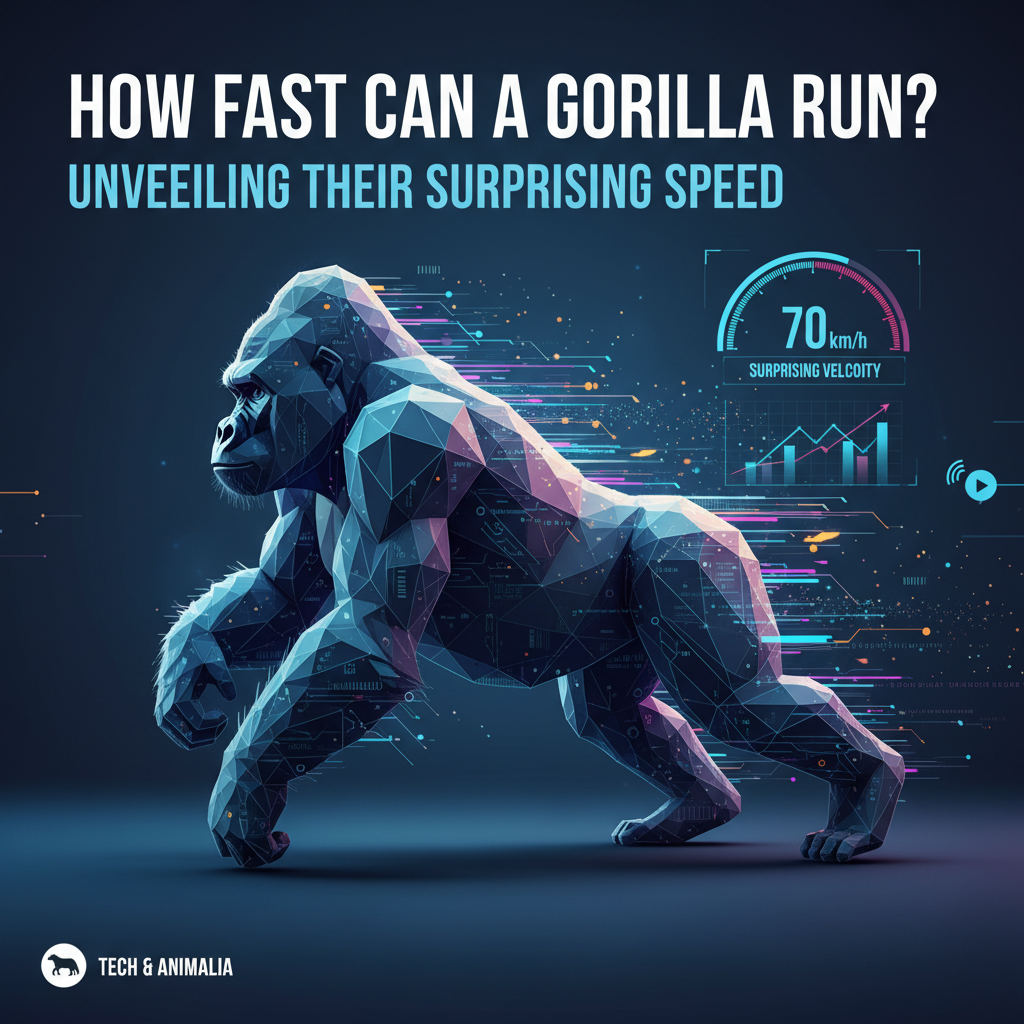


The dense, emerald forests of Central Africa hold many secrets, none more captivating than the majestic gorilla. Often portrayed in popular culture as lumbering, slow-moving giants, these magnificent primates possess an agility and power that frequently defies common perception. While their imposing stature and deliberate knuckle-walking gait might suggest a lack of speed, such an assumption would be a grave underestimation of their athletic capabilities. Far from being perpetually slow, gorillas, when motivated by threat, defense, or even play, can unleash astonishing bursts of speed, showcasing a dynamic prowess that demands respect and a deeper understanding. This article embarks on an extensive journey to peel back the layers of misconception surrounding gorilla locomotion, delving into their unique physical attributes, behavioral contexts, and the scientific observations that reveal the true extent of their surprising swiftness.
Our exploration will not merely quantify their maximum velocity but will also examine the intricate interplay of their formidable physique, complex social structures, and the challenging environments they inhabit, all of which contribute to their unique movement repertoire. From the dense undergrowth of tropical rainforests to the rugged slopes of volcanic mountains, gorillas navigate their world with a grace and power that is truly remarkable. By the end of this comprehensive analysis, the image of a 'slow giant' will undoubtedly be replaced by a more accurate, and perhaps more awe-inspiring, appreciation of the gorilla's genuine athletic potential.
The Majestic Architects of the Forest: An Introduction to Gorillas
To truly appreciate a gorilla's speed, one must first understand the animal itself – a creature of immense power, intelligence, and surprisingly nuanced behavior. Gorillas are the largest living primates, belonging to the genus Gorilla, which is divided into two main species: the Eastern Gorilla (Gorilla beringei) and the Western Gorilla (Gorilla gorilla). Each of these species further branches into subspecies, each with distinct characteristics and habitats, yet all sharing the fundamental traits of strength and adaptability.
The Western Gorillas encompass the Western Lowland Gorilla (Gorilla gorilla gorilla) and the Cross River Gorilla (Gorilla gorilla diehli). Western Lowland Gorillas are the most numerous and widespread, inhabiting the lowland rainforests across countries like Cameroon, Central African Republic, Congo, Gabon, and Equatorial Guinea. They possess a reddish-brown cap and are generally lighter in build compared to their eastern cousins, though still extraordinarily powerful. The Cross River Gorilla, critically endangered, occupies a small, fragmented region on the border of Nigeria and Cameroon, known for their slightly smaller stature and unique skull morphology.
Eastern Gorillas include the Mountain Gorilla (Gorilla beringei beringei) and the Eastern Lowland Gorilla (or Grauer's Gorilla, Gorilla beringei graueri). Mountain Gorillas, perhaps the most famous due to conservation efforts and media portrayal, reside in the cloud forests of the Virunga Volcanoes and Bwindi Impenetrable National Park. They are characterized by their thick, long fur, which provides insulation against the cold, high-altitude environments they call home. Grauer's Gorillas are the largest of all gorilla subspecies, found in the lowland and montane forests of eastern Democratic Republic of Congo, distinguished by their shorter, darker fur and robust build.
Despite these distinctions, all gorillas share a common evolutionary heritage, shaped by millions of years of adaptation to their forest ecosystems. They are primarily herbivorous, consuming vast quantities of leaves, stems, bamboo shoots, and fruits, which necessitates extensive daily foraging. This dietary requirement, coupled with their social structure, dictates much of their daily movement and energy expenditure, often involving slow, deliberate travel to new feeding grounds rather than sustained bursts of speed. Yet, the underlying capacity for rapid movement remains an integral part of their survival toolkit, activated under specific circumstances.
The Anatomy of Power: Unpacking Gorilla Physiology and Locomotion
Understanding how fast a gorilla can run requires a deep dive into its incredible physiology. Gorillas are built for strength and endurance, with a muscular frame designed for navigating dense forest terrain, climbing trees, and engaging in powerful defensive displays. Their sheer size is often the first thing people notice, with adult male gorillas (silverbacks) standing up to 6 feet tall and weighing anywhere from 300 to over 500 pounds, while females are generally smaller. This mass, far from being a hindrance, is distributed to maximize power and stability.
The gorilla's skeletal structure is robust, featuring dense bones and powerful joints capable of withstanding immense forces. Their arms are notably long and powerful, often longer than their legs, a key adaptation for their primary mode of terrestrial locomotion: knuckle-walking. In knuckle-walking, gorillas support their upper body weight on the knuckles of their forehands, with their fingers curled inwards. This unique gait provides stability and helps protect their sensitive palms from rough terrain, thorns, and sharp objects, allowing them to traverse varied forest floors with relative ease. The musculature supporting this movement is extraordinary, particularly in the shoulders, back, and arms, which bear a significant portion of their body weight during locomotion.
While knuckle-walking is their default, gorillas are also capable of bipedalism – walking on two legs. This is typically observed for short distances, when carrying food, displaying dominance, or simply gaining a better vantage point. Their bipedal stride, though powerful, is not as efficient for sustained speed as it is for humans, whose skeletal structure and musculature are specifically adapted for upright running. For gorillas, bipedalism is more of a temporary maneuver than a primary mode of rapid transit.
Their feet are also highly adapted. Unlike human feet, gorilla feet possess an opposable big toe, making them more hand-like in function. This adaptation is incredibly useful for gripping branches when climbing and for navigating uneven forest floors, providing superior traction and balance. However, this foot structure, while excellent for climbing and stability, is not optimized for generating the propulsive force required for high-speed running on flat, open ground in the same way a human foot is.
The sheer musculature of a gorilla is a testament to their strength. Their entire body is a dense network of powerful muscles, from their massive chest and shoulders to their strong legs. This muscle mass allows for incredible feats of strength – they can rip apart bamboo stalks, tear bark from trees, and easily climb massive trunks. This explosive power is directly linked to their capacity for sudden, rapid movement. When threatened or displaying aggression, a silverback can leverage this immense strength to launch itself forward in a charging display that is both terrifying and remarkably swift, utilizing every ounce of its physical prowess. This anatomical marvel sets the stage for their surprising bursts of speed, a capability far beyond what their 'lumbering' reputation suggests.
The Social and Ecological Rhythms: Movement within the Group and Habitat
Gorillas live in highly structured family groups, typically led by an dominant adult male known as a silverback, accompanied by several females and their offspring. The dynamics within these groups significantly influence their daily movement patterns and the contexts in which speed becomes relevant. Foraging, vigilance, and group cohesion are paramount, shaping their journey through the forest.
Daily life for a gorilla group revolves around finding food. As herbivores, they require vast quantities of vegetation, often needing to move several kilometers each day to new feeding grounds. This travel is usually a deliberate, unhurried affair, characterized by the steady pace of knuckle-walking. The silverback leads the group, deciding the route based on his extensive knowledge of the territory and the availability of preferred food sources. The pace is set to accommodate the youngest and slowest members, ensuring no one is left behind. This sustained, slow travel minimizes energy expenditure, which is crucial given their bulky bodies and the energy demands of digesting tough plant material.
However, the need for speed can arise swiftly within these social units. If the group senses a threat—be it a leopard, a human poacher, or an aggressive encounter with another gorilla group—the silverback will often position himself as a protector, allowing the females and juveniles to retreat into denser cover or climb trees. In such scenarios, the silverback’s defensive charge is a powerful and rapid display, designed to intimidate and deter danger. The females and younger gorillas, though generally less imposing, can also exhibit remarkable agility when fleeing to safety, demonstrating that speed is not just a silverback's prerogative but a group-wide survival mechanism.
The gorilla's habitat itself also plays a critical role in their movement. Dense rainforests, with their thick undergrowth, tangled vines, and uneven terrain, are not conducive to sustained high-speed running. Navigating fallen logs, steep inclines, and muddy paths requires agility, strength, and careful placement, rather than outright velocity. In such environments, the gorilla's powerful build and knuckle-walking gait are perfectly adapted for efficient, though not necessarily fast, travel. They are masters of their domain, able to weave through vegetation with surprising grace, utilizing their strength to push through obstacles or their climbing skills to bypass them.
Despite the challenges of their habitat, there are moments when the terrain allows for faster movement. On relatively flat, open patches within the forest or when descending a slope, a gorilla can pick up considerable speed. Playful interactions among juveniles often involve energetic chases and mock charges, giving observers a glimpse into their latent athletic potential. Thus, the gorilla's pace is a dynamic interplay of social responsibilities, ecological necessity, and situational demands, showcasing a fascinating balance between deliberate movement and bursts of explosive agility.
Quantifying the Unseen: Unveiling Actual Gorilla Speeds
The enduring myth of the slow, lumbering gorilla is deeply ingrained in popular imagination, perhaps fueled by early cinematic portrayals or a simple misinterpretation of their often-placid demeanor. However, scientific observation and anecdotal accounts from field researchers paint a very different picture. When circumstances demand it, gorillas can achieve speeds that are genuinely surprising, shattering the stereotype and highlighting their formidable athleticism.
So, how fast can a gorilla run? While exact, consistently measured figures are challenging to obtain due to their elusive nature and dense habitats, credible estimates and observations suggest that gorillas, particularly silverbacks, can reach speeds of approximately 20 to 25 miles per hour (32 to 40 kilometers per hour) in short bursts. This speed is typically achieved over relatively short distances, during charges, defensive maneuvers, or when quickly escaping a perceived threat. It's a burst of explosive power, rather than sustained endurance running.
To put this into perspective, consider human capabilities. The fastest human sprinters, like Usain Bolt, can reach peak speeds of around 27-28 mph (43-45 km/h). An average fit human might run at 10-15 mph (16-24 km/h) over short distances. This means that a charging gorilla can be as fast as, or even faster than, many highly athletic humans, and certainly faster than the average person. The sheer force behind a gorilla moving at this speed is immense, making such encounters incredibly dangerous for any perceived aggressor.
Several factors influence a gorilla's maximum speed:
- Motivation: The primary driver for rapid movement is almost always a strong motivator, such as defending its group, escaping danger, or engaging in territorial disputes. A gorilla is unlikely to run at full speed without a compelling reason.
- Terrain: As previously discussed, dense forest undergrowth impedes rapid movement. However, on more open ground, such as forest clearings, worn animal trails, or descending slopes, they can achieve higher velocities.
- Age and Sex: Young, healthy adults, particularly silverbacks, possess the most powerful musculature and agility to reach peak speeds. Juveniles are also surprisingly nimble during play.
- Species/Subspecies: While all gorillas are capable of impressive speed, slight anatomical differences between the Western and Eastern gorillas, or even within subspecies, might lead to minor variations in their top potential. The heavily muscled Eastern Lowland Gorillas, for example, are formidable in their charges.
It is crucial to differentiate between burst speed and sustained speed. Gorillas are not built for long-distance running. Their physiology is optimized for power, strength, and navigating complex terrain with agility and stability. Their cardiovascular system and muscle composition are geared more towards explosive, anaerobic activity rather than prolonged aerobic exertion. Therefore, while they can accelerate astonishingly quickly, they cannot maintain top speeds for extended periods like a cheetah or even a human marathon runner. Their energy is better spent conserving resources through deliberate travel and expending it in short, decisive bursts when necessary.
This revelation about their speed serves as a powerful reminder of the gorilla's true nature: not merely a gentle giant, but a creature of profound power and surprising agility, perfectly adapted to its challenging forest home. Their ability to switch from calm, deliberate movement to a thunderous, rapid charge is a testament to their evolutionary success and their position as apex figures in their ecosystem.
Behavioral Contexts: When and Why Gorillas Expedite Their Pace
The moments when a gorilla truly unleashes its speed are always rooted in specific behavioral contexts, reflecting their innate survival instincts, social dynamics, and territorial imperatives. These are not random acts of athleticism but calculated responses to the environment and other living beings within it.
One of the most dramatic instances of rapid gorilla movement is the defensive charge. This behavior is predominantly exhibited by silverbacks, who act as the protectors of their family group. If a silverback perceives a threat – whether from a rival male, a predator like a leopard (though adult gorillas are rarely preyed upon), or an intruding human – it will initiate a formidable display. This display often begins with hooting and chest-beating, escalating to breaking vegetation and mock charges. If the threat persists or if the silverback decides an immediate response is necessary, it will engage in a full-blown charge. During such a charge, a silverback can cover ground with incredible swiftness, often transitioning from knuckle-walking to a more upright, powerful run. The intent is not necessarily to make physical contact, but to intimidate and drive away the perceived danger, using its sheer speed, mass, and ferocity as primary weapons. The speed achieved in these charges is what truly shatters the myth of the slow gorilla.
Territorial disputes between rival gorilla groups or lone silverbacks can also trigger rapid movements. While direct physical combat is rare, encounters between groups often involve intense vocalizations, displays, and rapid movements as individuals jockey for position, assert dominance, or attempt to drive off intruders. A silverback might rapidly approach a boundary or a rival male to reinforce his presence and power, leveraging his speed to create an imposing visual effect.
Escape from danger is another clear motivator for gorillas to move quickly. While adult gorillas have few natural predators other than humans, younger and smaller individuals might occasionally face threats from leopards. If a group is suddenly surprised or ambushed, the immediate response is often a rapid dash for cover, climbing trees, or seeking the protection of the silverback. Even large adults will move quickly to put distance between themselves and perceived threats, particularly human poachers, showcasing an urgency that overrides their usual unhurried pace.
Beyond the serious matters of defense and survival, gorillas also demonstrate speed during play. Juvenile gorillas, much like human children, engage in boisterous games that often involve chasing, tumbling, and mock fighting. These playful interactions are crucial for developing motor skills, social bonds, and understanding their physical capabilities. During these bouts of play, young gorillas can be remarkably agile and quick, darting through undergrowth with surprising dexterity, reflecting their innate capacity for rapid movement even before they reach their full adult size and power.
Finally, while daily foraging is usually slow, there might be instances where accessing a specific, highly desired food source quickly could lead to a burst of speed. For example, if a prized fruit tree is discovered, individuals might move faster to reach it before others, though this is less common than the defensive and playful contexts. In essence, the gorilla's speed is a tool, deployed strategically and powerfully, demonstrating their profound adaptation to the challenges and opportunities of their intricate forest lives.
The Scientific Pursuit: Challenges in Measuring Gorilla Speed
Accurately measuring the top speed of a wild gorilla is a formidable challenge, fraught with logistical, ethical, and environmental complexities. Unlike laboratory settings or open savanna environments where animals can be observed and clocked with relative ease, the gorilla's natural habitat makes precise measurement incredibly difficult.
Firstly, the dense vegetation of their rainforest and montane forest homes is a primary obstacle. Thick undergrowth, tangled vines, and a canopy that often blocks direct line of sight mean that observing a gorilla, let alone timing its movement over a specific distance, is exceptionally rare. Animals are constantly moving behind trees and bushes, making continuous tracking and speed calculation almost impossible without disturbing them.
Secondly, ethical considerations are paramount in gorilla research. Researchers are committed to observing gorillas in their natural state, minimizing any disturbance or stress. Deliberately provoking a gorilla to charge to measure its speed would be unethical and extremely dangerous for both the researchers and the gorillas. Therefore, observations of maximum speed are typically opportunistic, occurring when a gorilla spontaneously reacts to a perceived threat or engages in vigorous play, which are not controlled environments for precise scientific measurement.
Thirdly, the methodologies available for measuring speed in such environments are limited. * Direct observation with stopwatches: This is the most basic method but is highly unreliable in dense forests. It's difficult to mark a precise start and end point, and the visual obstruction makes accurate timing nearly impossible. * Camera traps: While invaluable for documenting presence, behavior, and movement patterns, camera traps are generally static. While they can capture glimpses of rapid movement, they rarely cover a sufficient distance or provide the precise calibration needed for accurate speed calculation, unless specifically set up for that purpose, which is rare due to the sheer cost and effort involved in a dense, inaccessible habitat. * GPS tracking: Advanced GPS collars can track an animal's movement over time, providing data on daily travel distances and average speeds. However, these devices are usually too large and intrusive for gorillas, and ethically, attaching them is highly contentious. Moreover, even with GPS, pinpointing a split-second burst of speed over a short distance with high accuracy can be challenging due to signal latency and precision limitations in dense canopy. * Motion-sensing technologies: While theoretically possible, deploying advanced radar or lidar systems in remote forest environments to capture precise animal speeds is impractical and not typically part of standard primate research.
Because of these challenges, much of what we know about gorilla top speeds comes from a combination of eyewitness accounts from experienced field researchers, extrapolations from powerful physical displays, and comparisons with other large primates and terrestrial mammals. These estimates, while robust, are not derived from controlled, scientific experiments designed solely to measure maximum velocity. They represent the best available data, carefully interpreted from years of living among and observing these magnificent creatures in their natural, wild state. The scarcity of precise data underscores the gorilla's elusiveness and the respect with which researchers approach their subjects.
The Digital Frontier: Technology in Gorilla Conservation and Research
While direct speed measurements of wild gorillas remain challenging, modern technology is revolutionizing how we understand and protect these endangered primates. From tracking population dynamics to monitoring health and even analyzing complex behavioral patterns, digital tools are providing unprecedented insights. This is an area where advanced data management, artificial intelligence, and robust API infrastructure are becoming increasingly relevant, even if not directly applied to timing a gorilla’s sprint.
Conservation efforts are fundamentally data-driven. To protect gorillas effectively, scientists need to know where they are, how many there are, their health status, and the threats they face. This involves collecting vast amounts of data: * Field surveys: Recording signs of gorilla presence, such as nests, droppings, and feeding trails. * Camera trap data: Capturing images and videos of gorillas and other wildlife, which can reveal population densities, individual identification, and behavioral patterns. * Genetic samples: Analyzing DNA from fecal matter to understand population connectivity and health. * Environmental monitoring: Tracking deforestation, climate change impacts, and resource availability.
Managing and making sense of this deluge of information is a monumental task. Researchers often work with disparate datasets originating from different teams, methodologies, and geographical locations. Integrating these various data streams, ensuring their consistency, and making them accessible for analysis requires sophisticated digital infrastructure. For instance, when combining real-time environmental sensor data with historical population figures and predictive models for habitat loss, scientists confront challenges analogous to those faced in enterprise data management.
This is where the concepts of API Gateway, LLM Gateway, and Model Context Protocol become relevant in a broader, conceptual sense, even within the context of scientific and conservation research. As conservation efforts become increasingly reliant on computational analysis, particularly with the advent of advanced AI:
- API Gateway solutions provide a crucial layer for managing and routing requests to various backend services and data sources. In a scientific context, imagine researchers needing to access different databases for genetic data, environmental sensor readings, and satellite imagery. An API Gateway could streamline these interactions, providing a unified access point, managing authentication, and ensuring efficient data flow from diverse sources to analytical platforms. This kind of robust architectural layer is essential when integrating data from disparate field sensors with sophisticated analytical models.
- The proliferation of powerful AI tools, particularly large language models (LLMs), is also beginning to impact scientific data interpretation. For example, LLMs could assist in processing and summarizing vast amounts of textual data from field notes, research papers, or even automatically generated reports from monitoring systems. Managing access to and consistent interaction with these advanced AI models, ensuring that data is fed to them in a standardized, efficient manner, would conceptually benefit from an LLM Gateway. Such a gateway would abstract away the complexities of interacting with different AI models, standardizing input and output, thereby simplifying their use for specific research tasks like pattern recognition in ecological information or generating summaries of behavioral observations.
- Furthermore, when integrating complex data with AI models, ensuring that the AI correctly understands the context and meaning of the scientific data is critical. A Model Context Protocol would define the rules and formats for how environmental data, behavioral observations, or genetic markers are presented to an AI model. This protocol ensures consistency and relevance, dictating how information is structured and interpreted by the AI to maintain accuracy and avoid misinterpretation, especially when different AI applications are drawing from the same data pool. It establishes the "ground rules" for how the AI interacts with the specific domain knowledge of gorilla conservation.
These advanced digital concepts are not just for tech companies; they represent fundamental architectural principles for managing complex data ecosystems in any field that relies heavily on digital information, including cutting-edge scientific research and conservation.
In this spirit of leveraging technology for complex data management, platforms like APIPark offer a powerful, open-source solution. While primarily designed as an AI gateway and API management platform for enterprises managing AI and REST services, its core functionalities resonate conceptually with the challenges faced in scientific data integration. APIPark helps manage the entire lifecycle of APIs, from design to publication and invocation, standardizing API formats, and providing robust features for performance, security, and data analysis. Its capabilities – such as quick integration of 100+ AI models, unified API invocation formats, and end-to-end API lifecycle management – exemplify the kind of comprehensive tooling that, if adapted or used as a conceptual framework, could greatly benefit research teams dealing with diverse data sources and advanced analytical models in fields as varied as environmental science and wildlife conservation. By streamlining the management of data flows and computational resources, such platforms underscore the critical role of robust API management in handling the intricate data flows that support cutting-edge scientific endeavors, ultimately aiding in the protection of species like the majestic gorilla.
This integration of technology, whether through explicit tools like APIPark or the underlying architectural principles it represents, is crucial for addressing the increasing complexity of conservation challenges. It enables researchers to process more data, derive deeper insights, and respond more effectively to the threats facing gorillas and their habitats, moving beyond simple observation to proactive, data-informed action.
The Significance of Understanding Gorilla Speed for Conservation and Respect
Understanding the true speed and athletic capabilities of gorillas extends far beyond mere scientific curiosity; it holds profound implications for conservation, human-wildlife coexistence, and fostering a deeper respect for these magnificent creatures.
For conservation efforts, a nuanced understanding of gorilla movement and behavior is vital. Knowledge of their capacity for speed reinforces the importance of maintaining safe distances for both researchers and tourists. It informs park rangers and anti-poaching units about the potential dangers when confronting these animals, emphasizing the need for caution and non-aggression. Furthermore, understanding why and when gorillas move quickly can provide insights into their stress levels, perceived threats in their environment, and the efficacy of protective measures. For example, if gorillas are frequently observed moving at high speeds due to perceived human presence, it indicates a need for stricter regulations on tourism or anti-poaching patrols to minimize disturbance.
The awareness of their speed also contributes to dispelling harmful myths and fostering greater respect. The image of a slow, docile giant can lead to complacency or, conversely, to sensationalized fear. Recognizing their powerful bursts of speed allows the public to appreciate their full physical prowess, viewing them not just as gentle herbivores but as formidable wild animals capable of defending themselves and their families with astonishing effectiveness. This deeper respect can translate into greater support for conservation initiatives, funding for protected areas, and a more responsible approach to gorilla tourism.
For tourism, which is a significant source of revenue for conservation in some regions, this knowledge is critical. Guides can educate tourists about gorilla behavior, emphasizing the importance of following rules, maintaining distance, and remaining calm. Understanding that a gorilla can cover ground rapidly underscores why sudden movements or loud noises are to be avoided, as they could trigger a defensive charge. This enhances both visitor safety and the gorillas' well-being, ensuring that human encounters are peaceful and respectful.
Moreover, studying their movement patterns, including periods of rapid transit, helps researchers understand their ecological needs. Where do they need to move quickly? What resources are they accessing that require swift travel? These questions can inform habitat management, identifying crucial corridors for movement, and ensuring that protected areas are large enough and sufficiently connected to support their natural behavioral repertoire, including the space to move quickly when necessary.
Ultimately, the revelation of a gorilla's surprising speed reinforces their status as an apex primate, perfectly adapted to their challenging environment. It humanizes them in a way, showing that like us, they have moments of intense urgency and bursts of physical exertion. By celebrating their dynamism and challenging outdated perceptions, we can cultivate a more informed and empathetic relationship with these extraordinary beings, strengthening our collective resolve to ensure their survival for generations to come. Their silent strength and hidden agility are a testament to the wild's enduring mysteries and the wonders yet to be fully understood.
Conclusion: The Agile Majesty of the Gorilla
Our journey into the world of gorilla locomotion has revealed a creature far more dynamic and athletic than popular culture often portrays. Dispelling the myth of the perpetually slow, lumbering giant, we've uncovered that these magnificent primates, when driven by instinct, defense, or play, can unleash astonishing bursts of speed, capable of reaching velocities of 20 to 25 miles per hour (32 to 40 kilometers per hour) over short distances. This explosive power is a direct consequence of their formidable physique, characterized by a robust skeletal structure, dense musculature, and powerful limbs perfectly adapted for their unique knuckle-walking gait and occasional bipedalism.
We have explored how their social structures and the challenging, dense forest environments they inhabit dictate their daily movements, typically characterized by deliberate foraging and unhurried travel. Yet, within this rhythm, the capacity for rapid acceleration remains a vital survival tool, activated during defensive charges, territorial disputes, escape from danger, and even in the joyous antics of juvenile play. The scientific challenges in precisely quantifying these speeds in the wild underscore their elusive nature and the ethical considerations paramount in gorilla research, leading to estimates derived from invaluable field observations and expert insights.
Furthermore, we've examined how modern technology, including the conceptual application of API Gateways, LLM Gateways, and Model Context Protocols, is playing an increasingly critical role in managing the complex data streams generated by conservation efforts. Platforms like APIPark, while designed for enterprise API management, conceptually exemplify the robust infrastructure needed to integrate, manage, and analyze vast scientific data, thereby supporting more effective strategies for protecting gorillas. This convergence of scientific understanding and technological innovation highlights a holistic approach to conservation.
Ultimately, understanding the true extent of a gorilla's speed is not just about a numerical value; it's about gaining a more profound respect for their adaptability, their power, and their complex lives. It underscores the importance of maintaining safe distances, informs conservation strategies, and enriches our appreciation for one of Earth's most intelligent and awe-inspiring creatures. The gorilla, with its silent strength and surprising agility, remains a symbol of the wild's enduring majesty and a powerful reminder of our shared responsibility to protect it.
APIPark is a high-performance AI gateway that allows you to securely access the most comprehensive LLM APIs globally on the APIPark platform, including OpenAI, Anthropic, Mistral, Llama2, Google Gemini, and more.Try APIPark now! 👇👇👇
Frequently Asked Questions (FAQs)
1. How fast can a gorilla run compared to a human? A gorilla can run at speeds of approximately 20 to 25 miles per hour (32 to 40 kilometers per hour) in short bursts. While this is slightly slower than the fastest human sprinters (like Usain Bolt, who reaches around 27-28 mph), it is faster than most average humans and comparable to or even faster than many athletic individuals. It's important to remember that gorillas achieve this speed in powerful, short bursts, primarily for defense or intimidation, not sustained long-distance running.
2. Why do gorillas knuckle-walk instead of running on all fours like other animals? Gorillas primarily knuckle-walk, supporting their weight on the knuckles of their hands, as an adaptation that protects their sensitive palms from rough terrain and allows them to navigate dense forest environments efficiently. This gait provides stability and leverage for climbing, and their skeletal structure and musculature are highly adapted for it. While they can stand and move bipedally for short distances, and even run in a powerful, low posture when charging, knuckle-walking is their most common and energy-efficient mode of travel for daily activities.
3. Do gorillas run for long distances? No, gorillas are not built for long-distance running. Their physiology is optimized for immense strength, power, and agility over short distances, rather than sustained endurance. Their cardiovascular system and muscle composition are geared towards explosive, anaerobic bursts of energy. Daily travel for foraging is typically slow and deliberate, conserving energy.
4. What makes a gorilla run fast? The primary motivators for a gorilla to run at high speed are usually related to survival and social dynamics. This includes defending its family group from perceived threats (e.g., rival gorillas, predators, or humans), escaping danger, or engaging in territorial displays. Juvenile gorillas also exhibit bursts of speed during playful interactions. They will rarely run at top speed without a compelling reason.
5. How does a gorilla's habitat affect its speed? The dense rainforests and montane forests that gorillas inhabit often present challenging terrain with thick undergrowth, tangled vines, and uneven ground. This environment naturally impedes sustained high-speed running. While gorillas are incredibly agile in these conditions, their maximum speeds are more likely to be achieved in relatively clearings, on worn trails, or when descending slopes, where obstacles are fewer. Their powerful build allows them to push through vegetation, but it's not conducive to the kind of open-field sprinting seen in savanna animals.
🚀You can securely and efficiently call the OpenAI API on APIPark in just two steps:
Step 1: Deploy the APIPark AI gateway in 5 minutes.
APIPark is developed based on Golang, offering strong product performance and low development and maintenance costs. You can deploy APIPark with a single command line.
curl -sSO https://download.apipark.com/install/quick-start.sh; bash quick-start.sh

In my experience, you can see the successful deployment interface within 5 to 10 minutes. Then, you can log in to APIPark using your account.

Step 2: Call the OpenAI API.