How Fast Can a Gorilla Run: Unveiling Their True Speed


The image of a gorilla, particularly a magnificent silverback, is one steeped in raw power and formidable presence. These majestic primates, with their immense musculature and commanding stature, often conjure visions of incredible strength and, perhaps, surprising speed. From popular culture depictions to casual observations, the question of "How fast can a gorilla run?" sparks curiosity, often leading to a mix of awe and misunderstanding about their true locomotive capabilities. This comprehensive exploration delves deep into the world of gorillas, dissecting their unique biology, behavior, and the environmental factors that dictate their movement, ultimately unveiling the reality behind their speed and debunking common myths.
Our journey will transcend mere numbers, seeking to understand the biomechanics of their movement, the ecological context that shapes their locomotion, and the profound implications of their physical prowess within their natural habitats. We will examine the various gaits they employ, from the characteristic knuckle-walk to moments of bipedalism and bursts of quadrupedal running, each serving a specific purpose in their daily lives. By the end of this extensive analysis, readers will gain a nuanced appreciation for the gorilla's athleticism, recognizing that their speed is not just a metric, but an integral part of their survival and social dynamics.
The World of Gorillas: An Introduction to Nature's Giants
Before we dissect the intricacies of gorilla speed, it is crucial to establish a foundational understanding of these remarkable creatures. Gorillas are the largest living primates, native to the forests of central and eastern Africa. They are broadly classified into two main species: the Eastern Gorilla (Gorilla beringei) and the Western Gorilla (Gorilla gorilla), each further divided into two subspecies.
Eastern Gorillas include the critically endangered Mountain Gorilla (Gorilla beringei beringei) found in the Virunga volcanic mountains and Bwindi Impenetrable National Park, and the Eastern Lowland Gorilla or Grauer's Gorilla (Gorilla beringei graueri) inhabiting the lowland tropical rainforests of eastern Democratic Republic of Congo. Mountain Gorillas are known for their thicker fur, adapted to colder, higher altitudes, while Eastern Lowland Gorillas are slightly larger in stature.
Western Gorillas comprise the Western Lowland Gorilla (Gorilla gorilla gorilla), the most numerous and widespread subspecies, found across Cameroon, Central African Republic, Congo, Gabon, Equatorial Guinea, Angola, and Nigeria, and the Cross River Gorilla (Gorilla gorilla diehli), the most critically endangered subspecies, with a tiny population confined to a small region on the border of Cameroon and Nigeria. Western Lowland Gorillas tend to be lighter in color and have shorter hair compared to their eastern cousins.
Despite these distinctions, all gorillas share fundamental characteristics: immense strength, primarily herbivorous diets, complex social structures led by dominant silverback males, and an intrinsically shy, peaceful disposition unless provoked. Their habitats range from dense tropical and subtropical forests to montane cloud forests, each presenting unique challenges and opportunities for movement and survival. Understanding these geographical and behavioral contexts is paramount when considering how a gorilla moves and, by extension, how fast can a gorilla run. The type of terrain, the density of vegetation, and the need to navigate their environment all play significant roles in shaping their locomotive patterns and potential burst speeds.
Debunking the Myths: Separating Fact from Fiction on Gorilla Speed
The popular imagination often paints gorillas as rampaging beasts capable of incredible, almost superhuman, speeds, fueled by adrenaline and aggression. This perception is largely influenced by cinema and sensationalized narratives, which frequently depict gorillas charging at astonishing velocities, effortlessly tearing through dense jungle. However, these portrayals often diverge significantly from scientific reality and observed behaviors in the wild. As an SEO optimization expert, I recognize that the phrase "how fast can a gorilla run" is often searched with these dramatic images in mind, and it's our duty to provide accurate, detailed information.
One common myth suggests that gorillas are as fast, or even faster, than Olympic sprinters. While the sheer power of a gorilla is undeniable, their anatomy and typical locomotion are not optimized for sustained high-speed running over open ground in the same way a human athlete is. Their primary mode of travel, the knuckle-walk, is efficient for navigating complex forest environments but not built for sheer velocity. Another misconception is that every gorilla can achieve the same top speed. In reality, factors such as age, sex, individual fitness, and immediate environmental context significantly influence a gorilla's potential speed. A juvenile gorilla, for instance, may be more agile and quicker over short distances than a massive, elderly silverback, despite the latter's intimidating presence.
The purpose of speed for a gorilla is also often misunderstood. Unlike predators that rely on bursts of speed to catch prey, gorillas are herbivores. Their speed is primarily employed for defense, short charges to intimidate rivals or perceived threats, or rapid retreat from danger. It's a tool for survival, not for hunting. Therefore, their anatomical adaptations lean more towards power, stability, and navigating complex terrain rather than outright straight-line velocity. By dispelling these popular misconceptions, we can begin to appreciate the gorilla's true athleticism within its ecological niche, understanding that its speed, while formidable, is a specialized aspect of its overall incredible physical capabilities, not a generic, universally high metric.
The Biomechanics of Gorilla Locomotion: Anatomy, Gaits, and Purpose
To truly understand how fast can a gorilla run, we must delve into the intricate biomechanics of their movement. Gorillas possess an anatomy perfectly adapted to their arboreal and terrestrial existence, providing a unique blend of strength, agility, and deliberate movement.
Anatomical Adaptations for Movement
The gorilla's physique is a testament to natural selection, designed for traversing dense forests and supporting their substantial body mass.
- Massive Musculature: Gorillas are exceptionally muscular, particularly in their upper bodies. Their broad shoulders, deep chests, and powerful arms are heavily muscled, providing the strength necessary for climbing, tearing vegetation, and engaging in impressive displays of power. While these muscles contribute to powerful bursts of movement, they also add significant bulk, which can limit agility and sustained high speeds compared to more gracile, cursorial animals.
- Long, Powerful Arms: Gorillas have relatively long arms compared to their legs, a characteristic often associated with their arboreal ancestry and knuckle-walking gait. These robust limbs bear a significant portion of their weight during locomotion, acting as powerful levers that propel them forward. The large hands, with strong fingers and robust knuckles, are specifically adapted for weight-bearing, providing stability and grip on uneven forest floors.
- Skeletal Structure: Their robust skeletal framework provides the necessary support for their heavy build. The strong vertebral column, wide pelvis, and thick limb bones are built to withstand immense forces, particularly during aggressive charges or when navigating challenging terrain. Their bone density and joint structure are optimized for stability and power rather than the lightweight design often seen in animals specialized for extreme speed.
- Center of Gravity: Gorillas have a lower center of gravity compared to humans, which enhances their stability, especially when moving quadrupedally or when standing bipedally for short periods. This stability is crucial in their often-unpredictable forest environments, where uneven ground, slippery leaves, and obstacles are common.
Diverse Gaits: Knuckle-walking, Bipedalism, and Quadrupedal Running
Gorillas employ a variety of gaits, each suited to different situations and terrains.
- Knuckle-walking: This is the most characteristic and primary mode of terrestrial locomotion for gorillas. In knuckle-walking, gorillas support their upper body weight on the knuckles of their forehands (specifically the dorsal surface of the middle phalanges), rather than the flat palms. This unique adaptation protects the delicate palms, which are essential for grasping food and manipulating objects, from wear and tear on the forest floor.
- Efficiency: Knuckle-walking is remarkably efficient for navigating uneven, often obstructed forest environments. It provides a stable, four-point contact with the ground, allowing for careful placement of limbs and superior balance. This gait, while not designed for high speed, is excellent for energy conservation during foraging and long-distance travel within their home range.
- Speed in Knuckle-walking: While primarily for efficiency, a gorilla can move surprisingly quickly with an accelerated knuckle-walk, especially when startled or needing to cover short distances rapidly. It provides a powerful, ground-hugging movement that can accelerate faster than many might expect.
- Bipedalism: Gorillas can stand and walk bipedally for short durations, particularly when reaching for food, carrying objects (like food or infants), or during aggressive displays. When standing upright, a silverback looks even more imposing, a clear signal of dominance and threat. However, sustained bipedal running is not their natural forte; their anatomy is not optimized for it, and it is less energy-efficient for them over longer distances than knuckle-walking. Their gait when bipedal is typically a waddle, prioritizing balance over speed.
- Quadrupedal Running: When referring to "how fast can a gorilla run," this usually implies a more rapid, powerful quadrupedal gait. While knuckle-walking is their default, under extreme circumstances – such as a sudden threat, an aggressive charge, or escaping danger – gorillas can transition into a faster, more extended quadrupedal run. In this gait, their strides lengthen, and their powerful limb muscles propel them forward with considerable force. This is where their true burst speed manifests. It's less about a graceful, long-distance run and more about a powerful, explosive sprint designed to cover ground quickly and decisively. The biomechanics involve a powerful push-off from both hind and forelimbs, with a significant amount of power generated by their massive hindquarters and shoulders.
The Purpose of Speed in a Gorilla's Life
Gorilla speed is not an abstract concept; it is deeply intertwined with their survival and social interactions.
- Defense: The primary driver for rapid movement is defense. When faced with a perceived threat – be it a predator (leopards are their main natural threat, though rare), rival gorilla groups, or human encroachment – gorillas will first try to intimidate with vocalizations, chest-beating, and mock charges. If these fail, a genuine charge or a rapid retreat into dense undergrowth becomes necessary. The sudden burst of speed in a charge is designed to overwhelm and deter.
- Intimidation: Silverbacks, in particular, use rapid, short charges as a display of dominance and aggression to resolve disputes within their group or ward off external threats. These charges, accompanied by roaring and chest-beating, are incredibly effective and terrifying, relying on the sheer force and unexpected speed of the animal to make an impact.
- Play: Younger gorillas, like many primates, engage in playful chases and rough-and-tumble games. These interactions, while not life-or-death, provide opportunities for them to develop agility, coordination, and burst speed in a low-stakes environment.
- Environmental Navigation: Sometimes, a quick burst of speed is needed to cross a small clearing, ascend a steep incline rapidly, or navigate a patch of unstable ground to reach a safer position. This is less about escaping danger and more about efficient movement within their complex habitat.
Understanding these intertwined aspects of anatomy, gait, and purpose provides a comprehensive framework for appreciating the gorilla's locomotive abilities. Their speed, while perhaps not matching the sustained velocity of a cheetah or a racehorse, is perfectly calibrated for the challenges and demands of their forest world.
Estimating Gorilla Top Speed: Challenges, Observations, and Scientific Insights
Pinpointing an exact, universally accepted top speed for a gorilla is surprisingly challenging, largely due to the nature of their habitat and behavior. Unlike animals that inhabit open plains, making them easier to observe and clock, gorillas live in dense, often mountainous, forests. This environment makes systematic speed measurement incredibly difficult for researchers. Nevertheless, through a combination of anecdotal evidence, observational data from field researchers, and comparative analyses, we can arrive at a well-informed estimate of "how fast can a gorilla run."
Challenges in Measuring Wildlife Speed
The inherent difficulties in scientifically quantifying gorilla speed are manifold:
- Dense Habitat: Gorillas inhabit dense forests with thick undergrowth, uneven terrain, and numerous obstacles. This environment impedes straight-line running, making it nearly impossible to set up controlled measurement courses. Any attempt to chase or prod a gorilla into a full-speed run over a measured distance would be unethical, dangerous, and likely yield unreliable results.
- Elusive Nature: Despite their size, gorillas are masters of stealth within their environment. They can move silently and disappear into the vegetation with remarkable speed when they choose, making prolonged observation of their maximum velocity rare and opportunistic.
- Variability: As discussed, speed can vary significantly based on the individual's age, sex, health, and motivation. A silverback performing a mock charge is likely moving at a different speed than a juvenile playing or a female retreating from a perceived threat.
- Brief Bursts: Gorillas do not engage in sustained high-speed running. Their fast movements are almost exclusively short, powerful bursts. Measuring the peak velocity of such a brief, explosive movement accurately in the wild without sophisticated tracking equipment (which can be intrusive) is a logistical nightmare.
Observational Data and Anecdotal Evidence
Despite the challenges, field researchers and wildlife observers have gathered valuable insights over decades. The consensus among primatologists is that gorillas are capable of impressive bursts of speed over short distances.
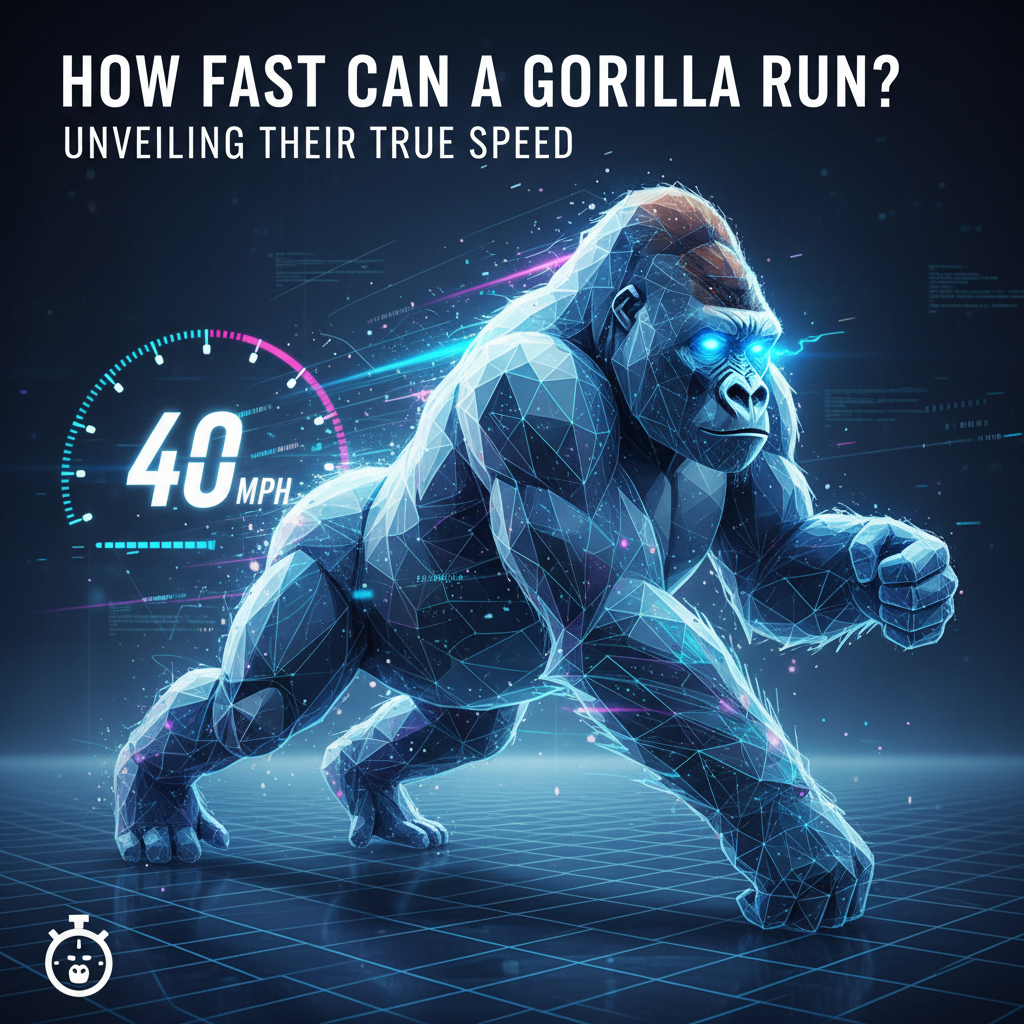
- Estimates: Most credible estimates place a gorilla's top speed in a full charge or sprint between 20 to 25 miles per hour (approximately 32 to 40 kilometers per hour). Some reports push this closer to 30 mph (48 km/h) for exceptionally motivated individuals, though these higher figures are less commonly cited across scientific literature.
- Context of Speed: These speeds are typically observed during aggressive displays, where a silverback charges to defend its group, or when an individual is fleeing a perceived threat. These are not speeds maintained over long distances but rather explosive accelerations designed to create a powerful impact or rapid escape. The speed is more about raw power and suddenness than endurance.
- Comparison to Humans: To put this into perspective, the fastest human sprinters can reach speeds of around 27-28 mph (43-45 km/h) over very short distances. However, the average fit human cannot sustain such speeds, and a typical person might sprint at 10-15 mph (16-24 km/h). This suggests that a gorilla's burst speed is comparable to, or even slightly exceeds, that of a very fast human sprinter over short distances, especially given the gorilla's ability to navigate obstacles simultaneously. This comparison is fascinating because while humans are bipedal specialists, gorillas demonstrate comparable or superior power in their quadrupedal sprints.
Scientific Insights and Comparative Analysis
While direct scientific measurements of top speed in wild gorillas are rare, comparative biomechanics provides additional context.
- Muscle Fiber Type: The powerful muscles of gorillas, particularly in their hind limbs and shoulders, likely contain a high proportion of fast-twitch muscle fibers. These fibers are crucial for generating rapid, powerful contractions necessary for explosive movements and short bursts of speed, even at the cost of endurance. This aligns with their observed behavior of short, intense accelerations.
- Stride Length and Frequency: When in a full quadrupedal run, a gorilla's stride length can be considerable, propelled by their long arms and powerful legs. The frequency of these strides, combined with their sheer power, allows for rapid ground coverage. However, the energy cost of moving such a large body mass at high speed is substantial, limiting the duration of these sprints.
- Ecological Niche: Gorillas are not cursorial animals (adapted for running). Their speed is a secondary adaptation to their primary needs for foraging, climbing, and defending territory. Their powerful build and knuckle-walking gait are optimized for energy-efficient travel through challenging terrain, with speed reserved for critical moments. This contrasts sharply with savanna animals like gazelles or cheetahs, whose entire anatomies are evolved for extreme speed and endurance running.
In summary, while precise scientific data remains elusive due to methodological challenges, observational evidence strongly suggests that a gorilla can achieve impressive burst speeds, likely in the range of 20-25 mph (32-40 km/h), with anecdotal peaks potentially higher. This speed is formidable, perfectly adequate for defense and intimidation within their dense forest environment, and certainly sufficient to outpace most humans over short, unpredictable distances. Their speed is not just a number, but a critical survival mechanism, deeply integrated into their robust physical capabilities.
The Terror of a Silverback Charge: Speed Meets Intimidation
Few experiences in the wild are as profoundly terrifying as being on the receiving end, or even witnessing, the charge of an adult silverback gorilla. This spectacle is not merely a display of speed; it's a meticulously orchestrated combination of raw power, psychological intimidation, and surprising velocity. Understanding the dynamics of a silverback charge is crucial to appreciating the true impact of "how fast can a gorilla run" when combined with intent and the animal's formidable presence.
The Buildup to a Charge: A Phased Escalation
A silverback charge is rarely an unprovoked, sudden event. Gorillas, being generally peaceful and shy, prefer to avoid conflict. A charge is typically the culmination of a series of escalating warning behaviors designed to deter a perceived threat without physical confrontation. These phases are critical in managing potential danger and asserting dominance:
- Hooting and Vocalizations: The initial warning often begins with a series of loud hoots, grunts, and roars. These vocalizations serve as an auditory signal, communicating alarm or displeasure over significant distances.
- Mock Feeding: Sometimes, a silverback will appear to calmly feed, deliberately ignoring the perceived threat, but subtly repositioning itself to keep an eye on the intruder. This can be a form of passive-aggressive posturing.
- Standing Bipedally: The silverback may rise to its full height, standing on two legs, making itself appear even larger and more imposing. This erect posture, combined with its immense size, is a powerful visual threat.
- Chest-Beating: This iconic display involves the gorilla cupping its hands and beating its chest rapidly, producing a resonant, thumping sound that amplifies its size and power. It’s a loud, dramatic declaration of strength and intent, meant to intimidate without actual physical contact.
- Ground Slapping and Vegetation Tossing: The silverback may slap the ground with its hands, tear at vegetation, or even toss branches and leaves. These actions further emphasize its agitation and readiness to escalate.
- The Mock Charge: Before a full-blown attack, a silverback often initiates a "mock charge." This involves running rapidly towards the perceived threat, stopping abruptly just short of contact, perhaps swerving at the last moment. This is a final warning, testing the resolve of the intruder and giving them a chance to retreat. It demonstrates the gorilla's speed and power without commitment to actual aggression.
The Full Charge: Speed, Power, and Psychological Impact
If the warning signals are ignored, or if the threat is perceived as immediate and severe, a silverback will commit to a full charge. This is where their speed becomes truly evident and terrifying.
- Explosive Acceleration: A charging silverback exhibits an explosive acceleration from a standing start or a rapid knuckle-walk. It transitions into a powerful quadrupedal sprint, covering ground with astonishing rapidity. The speed itself, estimated to be in the 20-25 mph range, is augmented by the sheer momentum of a creature weighing up to 400 pounds (180 kg) or more.
- Unstoppable Momentum: The bulk and muscle of a charging gorilla create incredible momentum. It can tear through dense undergrowth that would impede a human, seemingly unhindered by obstacles. This gives the impression of an unstoppable force.
- Psychological Warfare: Beyond the physical speed and power, the psychological impact of a charging gorilla is immense. The combination of roaring, ground-shaking thuds, and the sight of such a massive, powerful animal bearing down creates an overwhelming sense of fear and urgency. This psychological element is often as effective, if not more so, than any physical contact in deterring threats. The perceived speed, amplified by fear, often feels faster than the actual measured velocity.
- Purpose: The purpose of a full charge is typically to repel, not necessarily to kill. While a silverback is capable of inflicting severe injury or death, their primary goal is to neutralize the threat and ensure the safety of their group. The charge is a defensive maneuver, a last resort in protecting their family.
Understanding the silverback charge illuminates that "how fast can a gorilla run" is more than just a metric of velocity; it's a component of a complex behavioral defense strategy. The speed, when unleashed with intent, becomes a formidable weapon, serving as a powerful deterrent that protects their species and maintains the delicate balance of their forest ecosystem. It underscores the fact that while gorillas are generally gentle, their capacity for swift, decisive action is an integral part of their survival toolkit.
APIPark is a high-performance AI gateway that allows you to securely access the most comprehensive LLM APIs globally on the APIPark platform, including OpenAI, Anthropic, Mistral, Llama2, Google Gemini, and more.Try APIPark now! 👇👇👇
Gorilla Agility and Climbing: Beyond Straight-Line Speed
While the question of "how fast can a gorilla run" often focuses on terrestrial speed, it's crucial to acknowledge that gorillas are not just ground-dwellers. Their incredible physical prowess extends far beyond straight-line sprints, encompassing remarkable agility and climbing abilities that are equally vital for their survival in complex forest environments. These often-overlooked aspects further round out our understanding of their locomotive capabilities.
Agility in Dense Undergrowth
Gorillas, particularly younger individuals, exhibit surprising agility within their dense habitats. This isn't the agility of a gazelle bounding across plains, but rather a mastery of navigating chaotic, three-dimensional spaces.
- Obstacle Negotiation: The forest floor is rarely flat or open. It's a labyrinth of fallen logs, tangled roots, thorny bushes, steep inclines, and slippery mud. Gorillas demonstrate exceptional coordination and balance in moving through this challenging terrain. Their strong grip, powerful limbs, and keen spatial awareness allow them to step over, around, or even through obstacles with remarkable ease and fluidity.
- Rapid Direction Changes: While they may not be able to execute sharp, high-speed turns like a cheetah, gorillas can make surprisingly quick directional changes when necessary, especially during play or when trying to evade a perceived threat by darting into cover. This involves powerful pushes from their limbs and a rapid shift of their body weight.
- Tactical Retreats: Agility is key to their defensive strategies. Instead of just running in a straight line, a gorilla often utilizes the dense vegetation to its advantage, quickly disappearing into thickets where its large size becomes a hindrance to pursuers. This requires quick decisions and precise movements through constricted spaces.
Arboreal Acumen: Climbing and Brachiation (Limited)
Despite their large size, gorillas are skilled climbers, especially younger and lighter individuals. While adults, particularly silverbacks, spend more time on the ground due to their weight, they are still capable of ascending trees for various purposes.
- Access to Food: Many of their preferred food sources, such as leaves, fruits, and shoots, are found in trees. Gorillas will climb to access these resources, demonstrating powerful grips and coordinated limb movements. Their long arms and strong hands are well-suited for grasping branches and pulling themselves upwards.
- Nest Building: Gorillas build nests for sleeping, often in trees or dense ground vegetation. Constructing a sturdy arboreal nest requires significant climbing ability, balance, and spatial reasoning.
- Safety and Observation: Climbing can also serve as a means of escaping ground predators, though this is less common for large adults. From the vantage point of a tree, they can also observe their surroundings more effectively.
- Brachiation (Limited): While not as adept at brachiation (swinging arm-over-arm) as smaller, more arboreal primates like gibbons, gorillas can use their powerful arms to pull themselves along sturdy branches or vines, demonstrating their incredible upper body strength and flexibility. Their broad shoulders and strong deltoids are prime movers for these types of movements.
The ability to move effectively both on the ground and within the canopy highlights the gorilla's versatile athleticism. Their agility in navigating complex ground terrain complements their burst speed, allowing them to make the most of their environment for defense, foraging, and social interaction. Similarly, their climbing skills ensure access to vital resources and offer alternative escape routes. Therefore, when we ponder "how fast can a gorilla run," we must broaden our perspective to include their holistic movement capabilities, recognizing that their mastery of their three-dimensional world is as impressive as any straight-line sprint.
Comparing Gorillas to Humans and Other Animals: A Relative Perspective on Speed
To truly contextualize "how fast can a gorilla run," it's helpful to compare their speed to that of humans and a range of other animals. This comparative analysis highlights their unique evolutionary adaptations and places their velocity within a broader spectrum of the animal kingdom.
Gorilla vs. Human Speed
This is a frequently asked comparison, driven by our inherent human perspective.
- Sprint Speed: As established, a gorilla's top sprint speed is estimated between 20-25 mph (32-40 km/h). The fastest human sprinters (like Usain Bolt) can reach about 27-28 mph (43-45 km/h) over very short distances (e.g., 100 meters). However, the average fit human might sprint at 10-15 mph (16-24 km/h).
- Acceleration: Gorillas, with their immense power-to-weight ratio for short bursts, can likely accelerate incredibly quickly, especially over uneven terrain. Their low center of gravity and quadrupedal stance give them a powerful initial push.
- Endurance: Humans, particularly trained runners, far surpass gorillas in endurance running. Gorillas are not built for sustained high-speed travel; their physiology is optimized for power, strength, and efficient navigation of complex environments, not long-distance running.
- Terrain Adaptability: A key difference lies in terrain. A human sprinter needs a flat, clear track to achieve top speed. A gorilla can achieve formidable speeds through dense jungle, overcoming obstacles that would utterly halt a human. This context is critical when comparing their practical speed in their natural environment.
Conclusion: Over a very short, clear distance, a top human sprinter might be marginally faster than a gorilla. However, in the gorilla's natural habitat, through dense vegetation, a charging gorilla would undoubtedly outpace and outmaneuver the vast majority of humans, making any direct race on "even" ground a moot point.
Gorilla vs. Other Primates
- Chimpanzees: Chimpanzees are lighter and more arboreal than gorillas. They are incredibly agile and can move very quickly both on the ground (knuckle-walking) and in trees. Their top speed is often estimated to be similar to gorillas, around 25 mph (40 km/h), but with arguably greater agility due to their smaller size.
- Baboons: Many baboon species are highly terrestrial and known for their speed and agility in open landscapes and rocky areas. They can run at speeds comparable to, or even exceeding, a gorilla's sprint, perhaps up to 30 mph (48 km/h), due to their more cursorial adaptations and lighter build. However, their physical power is significantly less than a gorilla's.
Gorilla vs. Other African Wildlife
To provide further perspective, here's how a gorilla's speed compares to some other iconic African animals:
| Animal | Top Speed (Approximate) | Primary Locomotion | Specialization |
|---|---|---|---|
| Cheetah | 70 mph (112 km/h) | Quadrupedal running | Extreme sprint speed, hunting |
| Lion | 50 mph (80 km/h) | Quadrupedal running | Hunting, powerful burst |
| Wildebeest | 50 mph (80 km/h) | Quadrupedal running | Escaping predators, endurance |
| Leopard | 36 mph (58 km/h) | Quadrupedal running | Agility, climbing, ambush hunting |
| Human (Sprinter) | 27-28 mph (43-45 km/h) | Bipedal running | Specialized endurance & sprint on flat terrain |
| Gorilla | 20-25 mph (32-40 km/h) | Knuckle-walking/Quadrupedal running | Power, strength, navigation in dense forest |
| Elephant | 25 mph (40 km/h) | Quadrupedal walking | Endurance, crushing force |
| Hippopotamus | 18 mph (29 km/h) | Quadrupedal running | Suprising speed for bulk, aggressive |
Source: Various wildlife databases and field observations.
This table clearly illustrates that while a gorilla is not among the fastest animals on the African continent in absolute terms, its speed is still incredibly respectable, especially when considering its immense size and the challenging environment it navigates. It's faster than many might initially assume, placing it in a category of animals capable of outrunning humans and possessing formidable defensive capabilities. The elephant comparison is particularly interesting, as two massive herbivores achieve similar top speeds, albeit with very different gaits and physical builds. The gorilla’s speed is a powerful asset, but it is always contextualized by its role as a powerful, forest-dwelling primate, not a plains-dwelling predator or prey.
Conservation Implications: Understanding Movement for Protection
The study of "how fast can a gorilla run" and, more broadly, how they move through their environment, is far from a mere academic exercise in curiosity. It holds profound implications for their conservation. Understanding the nuances of gorilla locomotion, their preferred gaits, their speed in various contexts, and how they navigate their complex habitats provides critical data for effective protection strategies. In an age where data-driven insights are paramount, even in wildlife research, the ability to integrate diverse data streams, from GPS tracking of tagged individuals to environmental sensor data, is crucial. Technologies that facilitate the seamless management and exchange of these data points, like robust API management platforms, are becoming increasingly vital for researchers striving to synthesize complex information, allowing for deeper understanding of species like gorillas. For instance, tools that allow researchers to encapsulate complex data retrieval or AI model invocations into simple APIs can streamline their workflows, enhancing the efficiency of data collection and analysis. This is where platforms like ApiPark - an open-source AI gateway and API management platform - can play a conceptual role by enabling researchers to integrate various data sources and AI models for advanced analysis, pushing the boundaries of what we understand about the natural world and how to protect it.
Informing Habitat Management and Protected Area Design
- Corridor Planning: Knowledge of gorilla movement patterns, including the speeds and paths they utilize when dispersing or traveling between sub-populations, is essential for designing effective wildlife corridors. If conservationists understand how quickly and through what type of terrain gorillas are willing to travel, they can plan corridors that are both functional and safe, reducing isolation and promoting genetic diversity.
- Protected Area Sizing: Understanding the range and movement requirements of gorilla groups helps determine the optimal size and boundaries of protected areas. If gorillas need to cover significant distances daily or weekly for foraging, or if they need to be able to flee quickly from poaching threats, then protected zones must be large enough to accommodate these natural behaviors without forcing them into conflicts with human settlements.
- Threat Mapping: By tracking gorilla movement and speed, researchers can identify "hotspots" where gorillas might be more vulnerable due to proximity to human activity, snares, or areas with increased poaching pressure. For example, if gorillas exhibit faster, more erratic movements in certain zones, it could indicate stress or perceived threats, prompting targeted conservation efforts in those areas.
Anti-Poaching and Patrolling Strategies
- Predicting Encounter Zones: Understanding how fast a gorilla can move, and their typical escape routes, can aid anti-poaching patrols. If patrollers know that gorillas will quickly retreat into dense, inaccessible areas when startled, they can anticipate these movements and plan their interventions or monitoring strategies accordingly.
- Minimizing Disturbance: By knowing how gorillas react to human presence (e.g., how quickly they flee), tourist operators and researchers can develop protocols that minimize disturbance. This ensures that human encounters, while necessary for ecotourism or study, do not unduly stress the animals or disrupt their natural behaviors, including their critical movement patterns.
- Emergency Response: In cases of injury or illness requiring intervention, knowing how to safely approach and potentially contain or guide a gorilla involves understanding its potential for rapid movement and powerful defensive charges. This knowledge is paramount for the safety of both the animal and the human rescuers.
Monitoring Health and Behavior
- Assessing Fitness: The observed speed and efficiency of a gorilla's movement can be an indicator of its health and fitness. A gorilla moving sluggishly or showing reduced bursts of speed might be ill or injured, prompting closer observation or intervention by veterinary teams.
- Behavioral Studies: Changes in movement patterns, including an increase in rapid travel or charges, can signal stress within a group, territorial disputes, or responses to environmental changes. Understanding "normal" speed and movement allows researchers to identify anomalies that require further investigation.
In essence, every piece of data collected on gorilla locomotion, from their average knuckle-walking speed to their peak sprint capabilities, contributes to a more holistic understanding of their lives. This understanding is the cornerstone of effective conservation, allowing us to protect these magnificent creatures by creating environments where they can thrive, move freely, and exert their impressive physical abilities without constant threat. The scientific rigor applied to studying their speed, therefore, is not just about satisfying curiosity but about ensuring the survival of one of our closest relatives in the animal kingdom.
The Future of Primate Research: Leveraging Technology for Deeper Insights
The quest to understand primates, including gorillas, is an ongoing endeavor that increasingly relies on cutting-edge technology. While field observations remain irreplaceable, the integration of advanced tools and methodologies is revolutionizing how researchers collect, process, and analyze complex behavioral and ecological data. This section explores how technology is enhancing our ability to answer intricate questions about primate life, including nuances of their movement and speed, thereby providing deeper insights for conservation and scientific understanding.
Advanced Tracking and Monitoring Systems
- GPS and Satellite Tagging: For habituated or temporarily captured individuals, GPS and satellite collars can provide continuous data on their movement patterns, home ranges, and travel speeds over time. This data is invaluable for understanding daily foraging routes, dispersal patterns, and how individuals navigate their habitat, allowing researchers to track average travel speeds and identify areas where they might move faster or slower. The granularity of this data can even provide insights into burst speeds if sampling rates are high enough.
- Drone Technology: Drones equipped with high-resolution cameras, thermal imaging, and even Lidar (Light Detection and Ranging) can survey dense forest environments from above. While direct gorilla speed measurement from drones is challenging due to canopy cover, they can map terrain, identify clearings, and potentially track groups, providing environmental context that influences movement. They can also assist in locating groups for ground observation.
- Acoustic Monitoring: Automated acoustic recorders deployed in gorilla habitats can capture vocalizations, allowing researchers to study communication patterns, group locations, and potentially even stress levels that might influence their movement or propensity for rapid actions like charges. Analyzing shifts in vocalizations prior to or during rapid movement can provide valuable behavioral context.
Data Analysis and Artificial Intelligence (AI)
The sheer volume of data generated by modern tracking, camera traps, and environmental sensors requires sophisticated tools for processing and interpretation. This is where AI and advanced data analysis come into play.
- Automated Image and Video Analysis: AI-powered computer vision algorithms can sift through thousands of camera trap images and video footage, automatically identifying individual gorillas, logging their presence, and even analyzing their gaits or behaviors. This greatly accelerates data collection that would be impossible for human observers alone. For example, AI could potentially identify and log instances of rapid quadrupedal movement or bipedal displays, contributing to a more comprehensive understanding of how fast can a gorilla run in natural, undisturbed contexts.
- Machine Learning for Pattern Recognition: Machine learning models can analyze large datasets of movement, environmental, and behavioral data to identify subtle patterns that might otherwise be missed. This could include correlating specific weather conditions or the presence of certain vegetation types with changes in gorilla travel speed or the frequency of bipedalism. Predictive models could even forecast areas of high gorilla activity or potential human-wildlife conflict.
- Bio-logging and Sensor Data: Miniaturized sensors attached to gorillas (if ethically feasible and non-intrusive) could potentially measure physiological parameters like heart rate, energy expenditure, or muscle activity during different gaits and speeds. This kind of bio-logging would provide direct, quantifiable data on the physical demands and capabilities associated with various forms of gorilla locomotion.
The Role of Data Integration and Management Platforms
As research becomes increasingly interdisciplinary, involving diverse data types from various sources, the need for robust data integration and API management platforms becomes critical. Researchers might be combining GPS data with weather station readings, genomic data, behavioral observations, and AI model outputs.
- Streamlining Workflows: Platforms that allow researchers to consolidate disparate data streams and make them accessible through standardized interfaces (APIs) can significantly streamline research workflows. This enables different teams or even different AI models to access and share data seamlessly, avoiding data silos and promoting collaboration.
- Empowering AI Applications: For example, if a researcher develops an AI model to analyze gorilla vocalizations, they need an easy way to feed audio data into that model and retrieve the analyzed output. API management platforms can facilitate this by encapsulating complex AI model invocations into simple, reusable APIs, abstracting away the underlying technical complexities. This allows researchers to focus on biological questions rather than infrastructure.
- Data Security and Access Control: Robust platforms also provide essential features for data security, access control, and versioning, ensuring that sensitive research data is protected and managed responsibly across various projects and collaborators.
The future of primate research is undoubtedly intertwined with technological advancements. By leveraging sophisticated tracking, AI, and robust data management solutions, researchers are gaining unprecedented insights into the lives of gorillas. This technological integration not only enhances our ability to answer specific questions like "how fast can a gorilla run" with greater precision but also empowers a more holistic understanding of these magnificent creatures, ultimately strengthening our conservation efforts and ensuring their survival for generations to come.
Conclusion: The Majestic Speed of the Forest Giants
Our extensive journey into the world of gorilla locomotion has revealed a creature of immense power, incredible adaptability, and surprising speed, perfectly calibrated for its unique ecological niche. We set out to answer the question, "How fast can a gorilla run?", and in doing so, we have unearthed a much richer narrative than a simple numerical figure.
We've learned that gorillas are not built for sustained, open-plain sprints like cursorial animals. Instead, their anatomy is a testament to strength, stability, and efficient navigation through complex, three-dimensional forest environments. Their primary mode of travel, the characteristic knuckle-walk, is a marvel of energy conservation and obstacle negotiation, while their bursts of speed are explosive and potent. When driven by defense or intimidation, a gorilla, particularly a silverback, can unleash a formidable charge, reaching estimated top speeds of 20-25 miles per hour (32-40 kilometers per hour). This velocity, combined with their sheer mass and intimidating displays, makes them incredibly effective at deterring threats and protecting their family groups.
Beyond pure velocity, we've explored their remarkable agility in dense undergrowth, their climbing prowess, and the nuanced ways in which their speed serves a vital purpose in their daily lives – from foraging to play to critical defensive maneuvers. Comparing their speed to humans and other animals highlights that while they may not be the fastest creatures on Earth, their unique blend of power and short-burst speed is more than sufficient for survival in their challenging habitats.
Crucially, our understanding of gorilla movement extends beyond mere curiosity; it forms a bedrock for effective conservation. By leveraging advanced technologies for tracking, data analysis, and even API management for integrating complex datasets, researchers are continuously gaining deeper insights into these magnificent primates. This knowledge is instrumental in designing protected areas, refining anti-poaching strategies, and ensuring that future generations can continue to marvel at the strength, intelligence, and yes, the impressive, contextualized speed of gorillas.
The gorilla's speed is not just a statistic; it's a dynamic expression of their resilience, their power, and their integral role in the rich tapestry of African biodiversity. It's a powerful reminder of nature's intricate designs, where every adaptation, including the ability to run with such formidable force, is honed for survival in the wild.
Frequently Asked Questions (FAQs) About Gorilla Speed
1. How fast can a gorilla run in miles per hour (mph) or kilometers per hour (km/h)?
A gorilla's top speed in a full charge or sprint is generally estimated to be between 20 to 25 miles per hour (approximately 32 to 40 kilometers per hour). Some reports suggest slightly higher speeds for exceptionally motivated individuals, but these are typically short bursts over very short distances.
2. Are gorillas faster than humans?
Over short distances, a gorilla's top sprint speed (20-25 mph) can be comparable to, or even slightly exceed, that of an average fit human (10-15 mph). A top human sprinter might be marginally faster (27-28 mph) on a perfectly clear, flat surface. However, in their natural, dense forest habitat, a charging gorilla's ability to navigate obstacles and its sheer power would make it significantly faster and more effective than most humans. Humans, conversely, are built for much greater endurance over long distances.
3. What is the primary purpose of a gorilla's speed?
A gorilla's speed is primarily used for defense and intimidation. As herbivores, they don't use speed for hunting prey. Instead, fast movements, especially powerful charges by a silverback, are employed to repel predators (like leopards, though rare), deter rival gorilla groups, or ward off perceived threats, including humans, to protect their family. Younger gorillas also use bursts of speed during play.
4. What is knuckle-walking, and how does it relate to gorilla speed?
Knuckle-walking is the primary mode of terrestrial locomotion for gorillas, where they support their upper body weight on the knuckles of their hands. This gait is highly efficient for navigating dense, uneven forest terrain, providing stability and protecting their palms. While not designed for top speeds, it allows for surprisingly rapid movement when accelerated and is crucial for energy conservation during daily foraging. When a gorilla "runs" at its fastest, it typically transitions to a more powerful, extended quadrupedal gait.
5. What factors influence how fast a gorilla can run?
Several factors influence a gorilla's running speed. These include: * Age and Sex: Younger, more agile gorillas might be quicker over short distances than heavier, older silverbacks. * Motivation: Speed is highly dependent on the situation – a charge driven by a severe threat will be faster than casual movement. * Terrain: Dense vegetation, steep inclines, or slippery surfaces can impede maximum speed. * Individual Fitness: Just like humans, individual gorillas will have varying levels of physical fitness and strength, affecting their maximum velocity.
🚀You can securely and efficiently call the OpenAI API on APIPark in just two steps:
Step 1: Deploy the APIPark AI gateway in 5 minutes.
APIPark is developed based on Golang, offering strong product performance and low development and maintenance costs. You can deploy APIPark with a single command line.
curl -sSO https://download.apipark.com/install/quick-start.sh; bash quick-start.sh

In my experience, you can see the successful deployment interface within 5 to 10 minutes. Then, you can log in to APIPark using your account.

Step 2: Call the OpenAI API.