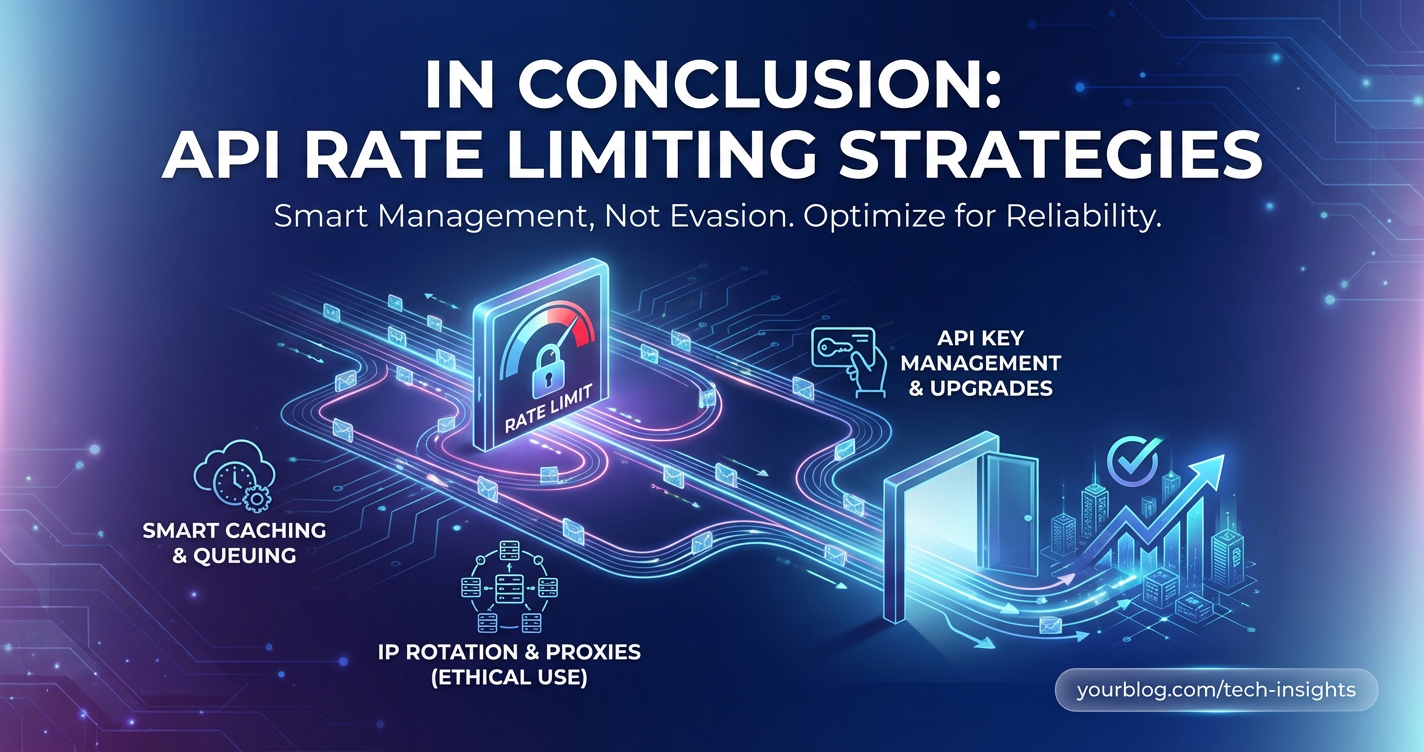
How to Circumvent API Rate Limiting: Top Strategies



In the intricate tapestry of modern software, Application Programming Interfaces (APIs) serve as the crucial threads that connect disparate systems, enabling seamless communication and functionality. From mobile applications fetching real-time data to intricate microservices orchestrating complex business processes, the API has become the fundamental building block of the digital economy. However, as reliance on these programmatic interfaces grows, so too does the challenge of managing their consumption effectively. Enter API rate limiting—a ubiquitous yet often misunderstood mechanism designed to protect servers, ensure fair usage, and prevent abuse. While indispensable for stability, hitting these limits prematurely can grind applications to a halt, leading to frustrating errors, degraded user experiences, and significant operational headaches.
The consequences of failing to properly manage API interactions within prescribed rate limits can cascade throughout an entire application ecosystem. Imagine an e-commerce platform that suddenly cannot process payments because its payment API integration is throttled, or a social media aggregator failing to retrieve updates, leaving users with stale information. These scenarios underscore a critical truth: understanding and effectively circumventing API rate limits is not merely a technical detail; it is a foundational pillar of robust, scalable, and resilient application design. Developers and architects must move beyond simply reacting to rate limit errors and instead adopt proactive, strategic approaches to ensure their applications can gracefully navigate the constraints imposed by external services.
This comprehensive guide delves deep into the multifaceted world of API rate limiting, offering a spectrum of strategies ranging from fundamental client-side adjustments to sophisticated infrastructure-level deployments involving an API gateway. Our exploration will arm you with the knowledge and tools necessary to design systems that not only respect API limits but also optimize resource utilization, enhance performance, and deliver an uninterrupted service experience. By embracing these top strategies, you can transform the challenge of API rate limiting from a potential bottleneck into an opportunity for architectural elegance and operational efficiency.
Understanding the Landscape: The Rationale and Mechanics of API Rate Limiting
Before we embark on discussing circumvention strategies, it is imperative to possess a clear and thorough understanding of what API rate limiting entails, why it exists, and how it is typically implemented. This foundational knowledge will inform the effectiveness of any subsequent mitigation efforts, allowing for tailored and precise solutions rather than generic, inefficient fixes.
What is API Rate Limiting, and Why Is It Necessary?
At its core, API rate limiting is a control mechanism employed by API providers to restrict the number of requests a user or client can make to an API within a specified timeframe. This restriction is crucial for several compelling reasons:
- Server Protection and Resource Management: Uncontrolled requests can overwhelm an API server, consuming excessive CPU, memory, and network bandwidth. A sudden surge or a sustained high volume of requests, whether malicious or accidental, can lead to service degradation, latency spikes, or even outright server crashes. Rate limiting acts as a protective barrier, preventing denial-of-service (DoS) attacks and ensuring the stability and availability of the API for all legitimate users. By capping the request rate, the API provider can manage their infrastructure resources more efficiently and maintain a consistent quality of service.
- Fair Usage and Preventing Monopolization: Without rate limits, a single, aggressive client could potentially monopolize the API's resources, leaving other users with slow or unresponsive service. Rate limiting promotes fair usage by distributing access capacity equitably among all consumers. This is particularly important for public APIs where diverse applications and user bases compete for the same limited resources. It prevents one application from consuming a disproportionate share, ensuring that the API remains usable for its intended audience.
- Cost Control for API Providers: Running and scaling API infrastructure incurs significant costs. Every request processed consumes computing resources. By imposing rate limits, providers can better predict and manage their operational expenses. This also allows them to offer tiered services, where higher limits might be available to paying customers, aligning usage with revenue and sustainable business models. For many cloud-based services, exceeding predefined limits often results in additional charges, highlighting the economic implications of uncontrolled API consumption.
- Preventing Abuse and Data Scraping: Rate limits serve as a deterrent against malicious activities such as data scraping, where bots attempt to download large volumes of data illicitly, or brute-force attacks aimed at discovering sensitive information. By slowing down the rate at which such attempts can be made, rate limits make these attacks less feasible and more time-consuming, increasing the likelihood of detection and mitigation before significant harm occurs. They add a layer of defense against automated attacks that exploit the speed of programmatic access.
Common Rate Limiting Schemes
API providers employ various algorithms to implement rate limiting, each with its own characteristics regarding burst handling, fairness, and complexity. Understanding these schemes is vital for designing effective circumvention strategies.
- Fixed Window Counter:
- Mechanism: This is the simplest scheme. The server maintains a counter for each user/client that resets at fixed intervals (e.g., 60 seconds). All requests within that window increment the counter. Once the counter reaches the predefined limit, subsequent requests are rejected until the next window begins.
- Characteristics: Easy to implement. However, it suffers from the "burst problem" at the edges of the window. A client could make a full burst of requests just before the window resets and another full burst immediately after, effectively doubling the allowed rate in a short period. This can still lead to temporary server overload.
- Sliding Window Log:
- Mechanism: This is a more precise but resource-intensive method. The server records a timestamp for every request made by a client. To determine if a new request should be allowed, it counts how many requests in the log occurred within the past window duration (e.g., the last 60 seconds).
- Characteristics: Highly accurate and avoids the burst problem of the fixed window. However, storing and querying a log of timestamps for potentially millions of requests can be memory-intensive and computationally expensive, especially at scale.
- Sliding Window Counter:
- Mechanism: This scheme attempts to combine the efficiency of the fixed window with better burst handling. It typically uses two fixed windows: the current window and the previous window. A weighted average of the counts from both windows is used to approximate the requests in the "sliding" window. For example, if the window is 60 seconds, and 30 seconds have passed in the current window, the algorithm might count all requests in the current window plus 50% of the requests from the previous window.
- Characteristics: A good compromise between accuracy and performance. It mitigates the "burst problem" significantly compared to the fixed window counter while being less resource-intensive than the sliding window log.
- Token Bucket:
- Mechanism: Imagine a bucket that holds "tokens." Tokens are added to the bucket at a constant rate. Each API request consumes one token. If the bucket is empty, the request is rejected or queued. The bucket has a maximum capacity, meaning it can store a limited number of tokens, allowing for bursts of activity up to the bucket's capacity.
- Characteristics: Excellent for handling bursts. Requests can be processed quickly as long as there are tokens available. It provides a smooth average rate over time but allows for temporary spikes in usage. The bucket size determines the maximum burst size.
- Leaky Bucket:
- Mechanism: This metaphor uses a bucket with a hole at the bottom, which allows "water" (requests) to leak out at a constant rate. Incoming requests "fill" the bucket. If the bucket overflows, new requests are rejected.
- Characteristics: Primarily used for traffic shaping rather than strict rate limiting. It smooths out bursty traffic, ensuring a constant output rate of requests. This is useful for protecting backend services that cannot handle sudden spikes but can process a steady stream.
Communicating Rate Limits: HTTP Headers
Most well-designed APIs communicate their rate limiting status through standard HTTP response headers. These headers are crucial for clients to understand their current standing and react appropriately:
X-RateLimit-Limit: The maximum number of requests allowed within the current window.X-RateLimit-Remaining: The number of requests remaining in the current window.X-RateLimit-Reset: The time (often in Unix epoch seconds) when the current rate limit window will reset. This indicates when more requests will be allowed.Retry-After: Sent with a429 Too Many RequestsHTTP status code, indicating how long the client should wait before making another request (either in seconds or a specific date/time).
Ignoring these headers is a common pitfall that leads to repeated 429 errors. Robust client applications must parse and respect these signals, integrating them into their API call logic.
In summary, understanding the "why" and "how" of API rate limiting is the bedrock upon which all effective circumvention strategies are built. It allows developers to not only avoid hitting limits but also to design applications that are inherently more resilient, efficient, and considerate of the shared API ecosystem.
Fundamental Strategies for Proactive Rate Limit Avoidance
While an API gateway can handle many aspects of rate limiting at an infrastructure level, the first line of defense often lies within the application code itself. Adopting intelligent client-side practices and optimizing API call patterns can significantly reduce the likelihood of encountering rate limits, fostering a more harmonious relationship with the API provider. These strategies are foundational and should be considered in almost any API integration scenario.
1. Intelligent Caching: Reducing Unnecessary API Calls
One of the most effective ways to avoid hitting rate limits is simply to make fewer API calls. Caching plays a pivotal role in achieving this by storing frequently accessed data locally, thereby reducing the need to fetch it repeatedly from the API.
Client-Side Caching
Client-side caching involves storing API responses directly within the application or on the user's device. * Mechanism: When an application needs specific data, it first checks its local cache. If the data is present and considered fresh (not expired), it uses the cached version instead of making a new API request. Only if the data is not found or is stale does the application proceed to call the API. * Implementation: This can range from simple in-memory caches (e.g., using LRU caches in programming languages) for data valid for a short duration, to persistent storage solutions on mobile devices or web browsers' localStorage/IndexedDB for longer-term data. * Benefits: Dramatically reduces the number of duplicate API calls, significantly lowering the chance of hitting rate limits. It also improves application responsiveness and reduces network bandwidth consumption. * Considerations: Cache invalidation is the primary challenge. Determining when cached data becomes obsolete and needs to be re-fetched is critical. Strategies include time-based expiration (TTL - Time To Live), event-driven invalidation (e.g., webhook notifications), or using conditional requests.
Server-Side Caching
For server-side applications, a more robust caching layer can be implemented using dedicated caching services. * Mechanism: A proxy or dedicated cache server (like Redis, Memcached, or even a Content Delivery Network (CDN) for static API responses) sits between your application and the external API. It intercepts requests, serves cached responses when available, and only forwards requests to the external API if the data is not in cache. * Benefits: Scales well for multiple client applications consuming the same external API. Improves performance for all downstream consumers. Centralizes cache management and can be integrated with advanced cache invalidation strategies. * Considerations: Requires careful setup and management of the caching infrastructure. Distributed caching systems add complexity but offer high availability and scalability. For highly dynamic data, the cache hit rate might be low, limiting its effectiveness.
Conditional Requests (ETags and If-Modified-Since)
Many APIs support HTTP conditional requests, which are a form of caching at the protocol level. * Mechanism: When fetching resources, the API provider can include ETag (Entity Tag) or Last-Modified headers in the response. On subsequent requests for the same resource, the client can include If-None-Match (with the ETag value) or If-Modified-Since (with the Last-Modified date) headers. If the resource on the server hasn't changed, the API will respond with a 304 Not Modified status code, indicating the client can use its cached version, without sending the full resource body. * Benefits: This technique still counts as an api call, but it's often counted differently by rate limiters (or may have a higher allowance) since it uses fewer server resources than a full data transfer. It saves bandwidth and processing power for both client and server. * Considerations: Requires API provider support for these headers. Clients must correctly store and send these headers with each subsequent request.
2. Optimizing API Call Patterns: Making Every Request Count
Beyond caching, how your application structures and sends its API requests can significantly impact rate limit consumption. Efficient call patterns minimize the total number of requests while maximizing the data retrieved per request.
Batching Requests
- Mechanism: Instead of making multiple individual API calls for related operations, batching combines several discrete requests into a single, larger API call. For example, updating 10 user profiles might typically require 10 separate
PATCHrequests. A batch endpoint would allow you to send all 10 updates in one request. - Benefits: Reduces the number of distinct API calls, directly lowering the count against rate limits. Can also improve network efficiency by reducing overhead per request.
- Considerations: Requires API provider support for batching endpoints. The design of batch operations needs to handle partial failures gracefully (e.g., if one of 10 updates fails, how should the client respond?). The size of a batch also often has its own limits.
Request Pagination
- Mechanism: When dealing with large datasets, APIs typically implement pagination, allowing clients to fetch data in smaller, manageable "pages" or "chunks" rather than a single, massive response. Common pagination methods include offset-based (e.g.,
skipandlimitparameters) or cursor-based (e.g.,next_cursororaftertokens). - Benefits: Prevents single requests from overwhelming the server with large data payloads. Ensures predictable response times and manageable data sizes for the client.
- Circumvention Strategy: While not directly reducing the number of calls needed to fetch all data, intelligent pagination helps in avoiding errors due to excessively large responses and allows for controlled fetching, spreading out the API load over time rather than attempting to download everything at once, which could lead to a burst that triggers rate limits. Clients should only fetch the data they immediately need for display or processing.
Reducing Unnecessary Data Fetches
- Mechanism: Many APIs allow clients to specify which fields or attributes of a resource they want to retrieve (e.g., using
fieldsorselectparameters in the query string). - Benefits: By requesting only the data truly required for the application's current functionality, clients reduce the size of the API response, saving bandwidth and processing time. While this doesn't reduce the number of API calls, it optimizes the quality of each call, potentially making the system more efficient overall and less likely to incur resource-based limits if the provider has such metrics.
- Considerations: Requires API provider support for field selection. Clients need to be aware of their precise data requirements to avoid over-fetching.
3. Implementing Robust Backoff and Retry Mechanisms
Even with the best optimization strategies, transient network issues, temporary server overloads, or hitting an unforeseen rate limit are inevitable. A robust application must be prepared to handle these situations gracefully through intelligent retry logic.
Exponential Backoff with Jitter
- Mechanism: When an API request fails due to a
429 Too Many Requestsstatus, a5xxserver error, or network timeout, the client should not immediately retry the request. Instead, it should wait for a progressively longer period before each subsequent retry attempt. Exponential backoff involves multiplying the wait time by a factor (e.g., 2) for each successive retry. Jitter adds a small, random delay to this wait time. - Example: First retry after 1 second, second after 2 seconds, third after 4 seconds, etc. With jitter, the actual wait time might be
1s + random(0-0.5s),2s + random(0-1s), etc. - Benefits: Prevents overwhelming the API with a flood of retries from multiple clients experiencing the same issue (the "thundering herd" problem). It allows the server time to recover or the rate limit window to reset. Jitter helps prevent all clients from retrying at precisely the same moment after a backoff period.
- Considerations: Implement a maximum number of retries and a maximum backoff duration to prevent infinite loops. Also, implement circuit breakers to avoid continuously trying a service that is clearly down.
Idempotency for Safe Retries
- Mechanism: An idempotent operation is one that can be applied multiple times without changing the result beyond the initial application. For
GETrequests, idempotency is inherent. ForPOST,PUT, orDELETErequests, it's a design consideration. For example, aPOSTrequest to create a new resource is typically not idempotent, as repeated calls would create multiple resources. However, if thePOSTincludes a uniqueidempotency_key, the server can ensure that even if the request is received multiple times, the operation is only executed once. - Benefits: Crucial for safely implementing retry logic, especially for write operations. It prevents unintended side effects like duplicate orders, charges, or data entries if a retry occurs after the original request was successfully processed but the client didn't receive the confirmation.
- Considerations: Requires API provider support for idempotency keys or the careful design of APIs to ensure that repeated calls for
PUT(full updates) orDELETEhave the same effect.
4. Leveraging Webhooks Instead of Polling
For scenarios where applications need to react to changes or events in an external system, webhooks offer a significantly more efficient and rate-limit-friendly alternative to traditional polling.
- Mechanism: Polling involves the client repeatedly making API requests to check for new data or status updates. This can be highly inefficient and quickly consume rate limits if done frequently. Webhooks, on the other hand, are event-driven. The client registers a callback URL with the API provider. When a relevant event occurs (e.g., a new order, a status change), the API provider sends an automated HTTP
POSTrequest to the client's registered URL, notifying it of the change. - Benefits: Drastically reduces the number of API calls. The client only receives notifications when something relevant happens, eliminating the need for constant checking. This frees up rate limit quota for other essential interactive
apicalls. It also provides near real-time updates. - Considerations: Requires API provider support for webhooks. The client must expose a publicly accessible endpoint to receive
webhooknotifications and secure it properly (e.g., by verifying signatures to ensure thewebhookoriginates from the legitimate provider). Handlingwebhookpayloads and processing them asynchronously is also important to prevent delays.
By meticulously applying these fundamental strategies—intelligent caching, optimizing api call patterns, implementing robust retry mechanisms, and embracing event-driven architectures where possible—developers can build applications that are inherently more resilient to api rate limits. These proactive measures not only reduce the frequency of 429 errors but also contribute to a more efficient, cost-effective, and performant application overall.
Advanced Strategies: Leveraging API Gateways and Infrastructure for Superior Control
While client-side optimizations are crucial, managing API rate limiting at scale, across numerous microservices, or for a diverse set of client applications often necessitates a more centralized and robust approach. This is where an API gateway comes into its own, providing a powerful layer of control and resilience. Furthermore, advanced infrastructure patterns and quota management strategies can provide even finer-grained control and enhance the overall API ecosystem's stability.
The Indispensable Role of an API Gateway
An API gateway acts as a single entry point for all client requests to your backend services. It's a critical component in modern microservices architectures, offering a multitude of functionalities that are highly relevant to circumventing API rate limiting.
Centralized Rate Limiting and Throttling
- Mechanism: One of the primary functions of an API gateway is to enforce rate limits before requests ever reach your backend services. Instead of each microservice implementing its own rate limiting logic, the gateway handles it uniformly for all incoming traffic. This allows for consistent policies across your entire API landscape. It can apply limits based on IP address, API key, user ID, endpoint, or a combination thereof. Throttling then manages the flow of requests, queuing or rejecting those that exceed the predefined limits.
- Benefits: Protects backend services from being overwhelmed, even if a client application misbehaves or experiences a sudden surge in traffic. Ensures fair usage across all consumers. Simplifies the implementation of rate limiting, as it's configured once at the gateway rather than repeatedly in each service. It acts as a crucial buffer.
- Example: A
gatewaycan limit a specificapikey to 100 requests per minute to/api/v1/products, while allowing another premiumapikey 1000 requests per minute to the same endpoint.
Traffic Shaping and Load Balancing
- Traffic Shaping: The API gateway can implement algorithms to smooth out bursty traffic, ensuring a more consistent flow of requests to backend services. This is akin to the "leaky bucket" algorithm, where spikes are buffered and released at a steady rate. This protects downstream services that might be sensitive to sudden, high-volume loads.
- Load Balancing: When multiple instances of a backend service are running, the gateway intelligently distributes incoming requests across these instances. This prevents any single instance from becoming a bottleneck and helps to distribute the load evenly, which indirectly helps with rate limiting by ensuring that no one service instance is disproportionately burdened, making it less likely to hit its internal capacity limits.
- Benefits: Enhances overall system stability and responsiveness. Maximizes the utilization of backend resources by distributing load efficiently. Provides a robust layer for managing request flow and preventing overloads.
Caching at the Gateway Level
- Mechanism: Just as client applications can cache, an API gateway can implement a shared cache for responses from backend services. If multiple clients request the same data, the gateway can serve the cached response without forwarding the request to the original backend service.
- Benefits: Reduces the load on backend services, allowing them to handle more unique or complex requests. Decreases latency for frequently accessed data. Conserves computational resources across the entire system.
- Considerations: Cache invalidation strategies become critical at this shared layer to ensure data consistency.
For organizations seeking a robust, open-source solution for comprehensive API management, including sophisticated rate limiting and traffic control, APIPark - Open Source AI Gateway & API Management Platform provides an excellent framework. It allows developers to centralize control over their API landscape, offering features like unified API formats, prompt encapsulation, and end-to-end API lifecycle management, which are crucial for managing requests effectively and preventing rate limit breaches. A powerful API gateway like APIPark can abstract away much of the complexity, ensuring that your backend services are protected and your client applications run smoothly. APIPark's capabilities, such as quick integration of 100+ AI models and the ability to encapsulate prompts into REST APIs, further underscore its utility in managing diverse and potentially high-volume API interactions. Its performance, rivaling Nginx with over 20,000 TPS on modest hardware, demonstrates its capacity to handle large-scale traffic, making it a powerful ally in the fight against rate limiting challenges.
Distributed Rate Limiting
In highly distributed or cloud-native environments, a single API gateway instance might not be sufficient, or the gateway itself might be deployed across multiple regions. This necessitates distributed rate limiting.
- Mechanism: Instead of each gateway instance maintaining its own independent counter, a shared, distributed data store (like Redis, Apache Cassandra, or a managed cloud cache service) is used to track rate limit consumption across all gateway instances. When a request comes in, the gateway instance consults this central store to check the remaining quota before processing the request.
- Benefits: Ensures consistent rate limiting enforcement across a horizontally scaled gateway layer. Prevents individual gateway instances from independently allowing bursts that collectively overwhelm backend services. Essential for high-availability and fault-tolerant architectures.
- Challenges: Introducing a distributed data store adds complexity and potential points of failure. Network latency to the central store needs to be considered. Consistency models (eventual vs. strong) must be chosen carefully depending on the strictness required for rate limits.
Quota Management and Service Tiers
Advanced API providers and platforms often go beyond simple rate limiting by implementing a more sophisticated quota management system, often tied to different service tiers.
- Mechanism: Users or applications are assigned specific quotas (e.g., 1000 requests per day, 10,000 requests per month) based on their subscription level (free, basic, premium, enterprise). The API gateway or a dedicated quota service tracks usage against these allocated quotas. Once a quota is consumed, further requests are blocked or subject to overage charges until the next billing cycle or quota reset period.
- Benefits: Allows API providers to monetize their services effectively and offer differentiated features. Encourages fair usage by aligning consumption with payment. Provides a clear framework for users to understand their allowed usage.
- Implementation: Requires a robust billing and subscription management system integrated with the API gateway's authorization and usage tracking capabilities.
Dedicated Infrastructure and IP Whitelisting
For extremely high-volume partners or internal applications, providers might offer dedicated channels or whitelisted access.
- Mechanism: Instead of sharing general-purpose API endpoints, certain partners might be given access to dedicated API gateway instances, specific API keys with higher limits, or even direct, private network connections to bypass public gateway infrastructure for trusted, high-throughput use cases. IP whitelisting allows traffic only from known, pre-approved IP addresses, often associated with higher trust and potentially different rate limits.
- Benefits: Guarantees performance and uptime for critical integrations, as these partners are isolated from the general public's traffic. Bypasses standard rate limits, offering maximum throughput.
- Considerations: Increases infrastructure cost and management complexity for the API provider. Requires careful security considerations for direct connections.
By strategically implementing an API gateway with its comprehensive features, alongside distributed rate limiting, intelligent quota management, and tailored infrastructure solutions, organizations can elevate their API consumption and provision capabilities to an advanced level. These infrastructure-centric approaches provide granular control, enhanced security, and the scalability necessary to handle the most demanding API workloads while effectively circumventing the challenges posed by rate limits.
APIPark is a high-performance AI gateway that allows you to securely access the most comprehensive LLM APIs globally on the APIPark platform, including OpenAI, Anthropic, Mistral, Llama2, Google Gemini, and more.Try APIPark now! 👇👇👇
Monitoring, Alerting, and Analytics: The Eyes and Ears of Rate Limit Management
Even with the most meticulously designed API integration strategies, anticipating every scenario and perfectly predicting API usage is impossible. This is why robust monitoring, timely alerting, and insightful analytics are not just good practices, but essential tools in the continuous battle against API rate limiting. They provide the visibility needed to understand current usage, predict potential issues, and react proactively before rate limits cause significant service disruption.
Real-time Monitoring of API Consumption
The first step in effective rate limit management is to have clear, real-time visibility into your API usage. This involves tracking key metrics that indicate your proximity to imposed limits.
- Tracking
X-RateLimitHeaders: As discussed, API providers communicate their rate limit status via HTTP headers likeX-RateLimit-Limit,X-RateLimit-Remaining, andX-RateLimit-Reset. Your application's logging and monitoring infrastructure should be configured to parse and ingest these headers from every API response.- Implementation: Client-side libraries or custom middleware should extract these headers and push them to a centralized monitoring system. This can be done by enriching log entries with these values or by sending them as dedicated metrics to a time-series database.
- Dashboarding Key Metrics: Once this data is collected, it needs to be visualized in an easily digestible format.
- Metrics to Monitor:
- Current Usage vs. Limit: A graph showing the number of requests made in the current window versus the maximum allowed limit.
- Remaining Requests: A clear display of
X-RateLimit-Remainingto quickly gauge available quota. - Time to Reset: A countdown or timestamp of
X-RateLimit-Resetto understand when the next window begins. 429Error Rates: The frequency and percentage of429 Too Many Requestsresponses received. A sudden spike here is an immediate red flag.- Latency: Monitoring API response times can sometimes indirectly signal an approaching rate limit, as throttled APIs might respond slower before outright rejecting requests.
- Tools: Platforms like Grafana, Kibana (Elastic Stack), Datadog, or New Relic are excellent for creating custom dashboards that pull data from various sources (application logs, API gateway metrics, infrastructure monitoring) and present it visually.
- Metrics to Monitor:
- Benefits: Provides an immediate snapshot of API health and usage patterns. Allows operations teams and developers to quickly identify when an application is approaching or exceeding its limits, enabling rapid intervention.
Proactive Alerting for Impending Limits
Monitoring data is only useful if it triggers action when necessary. Proactive alerting transforms raw data into actionable insights, notifying relevant teams before a critical threshold is crossed.
- Setting Threshold-Based Alerts: Configure alerts to trigger when specific conditions are met, indicating an impending rate limit breach.
- Common Alert Conditions:
X-RateLimit-Remainingdrops below a certain percentage (e.g., 20% or 10% of the limit).- The rate of
429errors crosses a predefined threshold (e.g., more than 5429s in 1 minute, or 1% of total requests are429). - The average API response latency significantly increases.
- Notification Channels: Alerts should be sent to appropriate channels depending on severity and urgency. This could include Slack, Microsoft Teams, email, PagerDuty (for on-call rotations), or even automated system calls to scale resources or adjust API gateway policies.
- Common Alert Conditions:
- Automated Response Triggers: In advanced setups, alerts can even trigger automated responses. For instance, if
X-RateLimit-Remainingconsistently stays low for a prolonged period, it might trigger an automated system to temporarily pause certain non-critical API calls, switch to a backup API key (if available with higher limits), or initiate a scale-out event for internal services dependent on the external API. - Benefits: Allows teams to intervene proactively, often preventing actual service disruptions. Reduces the mean time to resolution (MTTR) for rate limit-related issues. Shifts the operational model from reactive firefighting to proactive prevention.
Historical Data Analysis and Capacity Planning
Beyond real-time monitoring, analyzing historical API usage data provides invaluable insights for strategic planning, capacity forecasting, and long-term optimization.
- Identifying Usage Patterns: Reviewing historical data over weeks, months, or even years can reveal recurring patterns in API usage.
- Trends: Are there specific days of the week, times of the day, or seasonal periods when API usage spikes? (e.g., end-of-month reporting, holiday shopping seasons).
- Growth: Is your application's API consumption steadily increasing? At what rate? This is crucial for anticipating future needs.
- Anomalies: Can you identify any unusual spikes or dips that might indicate a bug, a new feature deployment, or an external event impacting usage?
- Capacity Planning: With a clear understanding of historical trends and growth, you can better estimate future API requirements.
- Negotiating Higher Limits: Armed with concrete data, you can approach API providers to negotiate higher rate limits or explore dedicated enterprise plans, justifying your request with actual usage statistics.
- Infrastructure Sizing: For internal APIs, historical data informs decisions about scaling your own backend services and the capacity of your API gateway or other infrastructure components.
- Budgeting: Understanding usage patterns helps in budgeting for tiered API services or potential overage charges.
- Root Cause Analysis: When
429errors do occur, historical data is essential for performing a root cause analysis. You can correlate the error spike with specific code deployments, traffic events, or changes in application behavior to pinpoint the source of the issue.
Platforms like APIPark - Open Source AI Gateway & API Management Platform offer detailed API call logging and powerful data analysis capabilities, which are invaluable for understanding usage patterns, identifying potential bottlenecks, and proactively addressing rate limiting issues before they impact users. APIPark's comprehensive logging records every detail of each API call, allowing businesses to quickly trace and troubleshoot issues. Furthermore, its powerful data analysis features display long-term trends and performance changes, helping with preventive maintenance and optimizing API gateway configurations to avoid future rate limit problems. The ability to track not just volume but also latency and error rates across all managed APIs makes it a powerful tool for maintaining API health.
Leveraging API Gateway Analytics
Many API gateway solutions come with built-in analytics dashboards and reporting tools.
- Unified View: An API gateway processes all traffic, providing a centralized and holistic view of API consumption across all your services and clients. This includes not just successful calls but also errors (including
429s), latency, and data transfer volumes. - Identifying Misbehaving Clients: Gateway analytics can often pinpoint which specific API keys, IP addresses, or client applications are making the most requests, or are disproportionately hitting rate limits. This is crucial for educating misbehaving clients or adjusting specific rate limits.
- Optimizing Gateway Policies: Insights from
gatewayanalytics can inform adjustments togateway-level caching rules, load balancing algorithms, and most importantly, the rate limiting policies themselves. Fine-tuning these configurations can significantly improve efficiency and prevent overloads.
In essence, monitoring, alerting, and analytics form the feedback loop that completes the API rate limit management strategy. Without these capabilities, even the most advanced API integrations operate in the dark, vulnerable to unforeseen disruptions. By illuminating API usage and behavior, these tools empower developers and operations teams to maintain resilient systems that gracefully handle the demands of the modern API economy.
Best Practices and Architectural Considerations for Enduring Resilience
Effectively circumventing API rate limits is not a one-time fix but an ongoing commitment to best practices and resilient architectural design. It requires a holistic approach that encompasses both the development workflow and the underlying infrastructure, fostering a culture of mindful API consumption.
Client-Side Best Practices for Developers
The developers consuming APIs bear significant responsibility in respecting rate limits and building applications that can gracefully handle them.
- Thorough Understanding of API Documentation: Before writing a single line of code, developers must meticulously read and understand the API provider's rate limiting policies,
X-RateLimitheaders, retry guidance, and any specific behaviors likewebhookavailability or batching capabilities. Ignorance of these policies is not an excuse for abuse. - Providing SDKs with Built-in Rate Limit Handling: For internal or widely used APIs, providing client-side SDKs that abstract away the complexity of rate limit handling is a massive boon. These SDKs should automatically incorporate exponential backoff with jitter, respect
Retry-Afterheaders, and ideally, implement client-side caching by default. This reduces the burden on individual application developers and ensures consistent, robust behavior. - Graceful Degradation Strategies: Design your application to function, albeit with reduced functionality, when API limits are hit. Instead of crashing or showing a blank screen, consider:
- Displaying cached data (even if slightly stale).
- Showing a user-friendly message explaining the temporary limitation.
- Disabling certain features temporarily that heavily rely on the throttled API.
- Prioritizing critical API calls over less essential ones during a rate limit event.
- Testing Rate Limit Scenarios: Actively test how your application behaves when rate limits are imposed. This involves simulating
429responses or intentionally exceeding limits in development/staging environments. This proactive testing reveals weaknesses in retry logic, error handling, and user experience before production incidents occur.
API Provider Best Practices
While this guide primarily focuses on the consumer side, it's worth noting that API providers also have a critical role in facilitating fair and manageable API consumption. Well-designed APIs make it easier for consumers to respect limits.
- Clear and Consistent Documentation: Rate limiting policies should be prominently documented, detailing the limits, the algorithms used, the meaning of
X-RateLimitheaders, and the expected behavior for clients. Ambiguity leads to confusion and unintended limit breaches. - Predictable
X-RateLimitHeaders: Always include accurate and consistentX-RateLimitheaders in every response, even successful ones. This empowers clients to make informed decisions about their API call pace. - Offering Bulk Endpoints or Webhooks: Where appropriate, providing mechanisms like batching endpoints or webhooks significantly helps consumers reduce their overall API call count, leading to a more efficient ecosystem for both parties.
- Communicating Changes Proactively: Any changes to rate limit policies should be communicated well in advance, through developer portals, email newsletters, or dedicated API status pages. Surprising developers with new, stricter limits can break applications and erode trust.
Architectural Resilience: Beyond Rate Limiting
Effective rate limit circumvention is part of a larger strategy for building resilient, fault-tolerant systems. Several architectural patterns contribute to this resilience, many of which can be managed or enforced by an API gateway.
Decoupling Services
- Mechanism: Design your microservices such that they are loosely coupled, meaning they can operate independently without heavy reliance on immediate responses from other services, especially external ones. Asynchronous communication patterns (e.g., message queues) are key here.
- Benefits: If an external API becomes unavailable or throttled, it doesn't bring down your entire application. The affected service can continue to function with potentially stale data or queue requests for later processing, allowing the application to degrade gracefully rather than fail catastrophically.
Circuit Breaker Pattern
- Mechanism: Inspired by electrical circuit breakers, this pattern involves wrapping external API calls (or any potentially failing operation) in a "circuit." If a defined number of consecutive calls to that API fail (e.g., due to
429errors or timeouts), the circuit "trips" open. During this open state, all subsequent calls to that API fail immediately without even attempting to hit the external service, typically for a configured duration. After a timeout, the circuit enters a "half-open" state, allowing a few test requests to pass through. If these succeed, the circuit closes; if they fail, it re-opens. - Benefits: Prevents your application from repeatedly making requests to a failing or throttled API, which conserves resources for both your application and the external service. It gives the external API time to recover and prevents a cascading failure within your own system.
- Implementation: Libraries like Hystrix (Java) or Polly (.NET) provide robust circuit breaker implementations. Many API gateways also offer built-in circuit breaker functionalities.
Bulkhead Pattern
- Mechanism: The bulkhead pattern isolates elements of an application into separate pools so that if one fails, the others can continue to function. Think of the watertight compartments in a ship. For APIs, this means dedicating separate thread pools, connection pools, or even container instances for different external API integrations or different types of requests.
- Benefits: Prevents a failure or slowdown in one API integration from consuming all available resources (e.g., threads, memory) and impacting other, unrelated API calls or parts of your application. If a specific external API starts rate limiting you heavily, only the resources dedicated to that integration will be affected, not your entire application.
- Implementation: Can be done at the application level (e.g., separate thread pools for different
apiclients) or at the infrastructure level (e.g., using Kubernetes resource quotas for different services).
TABLE: Overview of Key Rate Limiting Strategies and Their Applications
| Strategy | Description | Best Suited For | Impact on Rate Limits | Implementation Level |
|---|---|---|---|---|
| Intelligent Caching | Storing frequently accessed data locally (client/server) or at the API gateway to avoid redundant calls. | Static or semi-static data; high-read, low-write APIs. | Significant reduction in total API calls. | Client, Server, API Gateway |
| Batching Requests | Combining multiple related operations into a single API call. | Operations on multiple resources of the same type (e.g., bulk updates, multiple reads). | Direct reduction in number of distinct API calls. | Client (requires API provider support) |
| Exponential Backoff | Increasing wait times between retries after a failed API request, often with added jitter. | Handling transient errors (429, 5xx, network issues). |
Mitigates hammering the API during outages/throttling, preventing further 429s. |
Client |
| Webhooks | Event-driven notifications from API provider to client instead of continuous polling. | Real-time updates where the client needs to react to changes in the external system. | Drastically reduces polling API calls. | Client (requires API provider support) |
| API Gateway Rate Limiting | Centralized enforcement of limits at the gateway before requests reach backend services. | Protecting backend services; consistent policy enforcement across multiple microservices/clients; handling external client requests. | Protects backend from overload; ensures fair usage; centralizes limit management. | Infrastructure (API Gateway) |
| Quota Management | Assigning specific usage allowances (e.g., requests per day/month) based on subscription tiers. | Monetizing APIs; differentiating service levels; internal cost allocation. | Controls long-term usage and prevents budget overruns. | Infrastructure (API Gateway, Billing System) |
| Circuit Breakers | Temporarily blocking calls to a failing API after multiple failures, allowing it to recover. | Protecting your application from cascading failures when an external API is unresponsive or heavily throttled. | Prevents wasteful calls to a failing API, preserving your own resources and theirs. | Client, API Gateway |
| Monitoring & Alerting | Tracking API usage (X-RateLimit headers, 429 errors) in real-time and setting up notifications for thresholds. |
Continuous operational awareness; proactive problem identification. | Enables proactive intervention to avoid hitting limits or mitigate impact. | Observability Stack (Logs, Metrics, Dashboards, Alerts) |
By integrating these best practices and architectural considerations, organizations can build API integrations that are not only efficient in their consumption but also resilient to the inevitable challenges of distributed systems. It's about designing for failure, optimizing for performance, and continuously adapting to the dynamic landscape of API consumption.
Conclusion
The journey through the intricate world of API rate limiting reveals that while it presents a significant challenge, it is by no means an insurmountable obstacle. Instead, it serves as a crucial catalyst for designing more robust, efficient, and considerate applications. From the foundational wisdom of intelligent caching and optimized API call patterns at the client level to the sophisticated, centralized control offered by an API gateway and advanced infrastructure strategies, a comprehensive arsenal of techniques exists to ensure uninterrupted service.
At its core, circumventing API rate limits boils down to a multi-faceted approach. It demands that developers meticulously understand the policies of the APIs they consume, implement proactive measures like exponential backoff and webhooks, and continually monitor their usage with vigilant alerting and insightful analytics. Furthermore, for complex ecosystems, the strategic deployment of an API gateway becomes paramount, providing a critical layer for centralized rate limiting, traffic shaping, caching, and overall API lifecycle management. Platforms like APIPark exemplify how a well-designed API gateway can empower organizations to achieve this level of control and resilience, streamlining management and ensuring high performance even under heavy loads.
Ultimately, the goal is not merely to avoid 429 Too Many Requests errors, but to foster an environment where API consumption is predictable, scalable, and harmonious with the resources of the API provider. By embracing the strategies outlined in this guide—combining smart client-side logic with robust gateway management and proactive observability—you can transform the potential bottleneck of rate limiting into a testament to architectural elegance and operational excellence, ensuring your applications remain reliable, performant, and ready for the demands of the future digital landscape. Continuous optimization, driven by data and guided by best practices, is the compass that will navigate your applications toward enduring API resilience.
5 Frequently Asked Questions (FAQs)
Q1: What is API rate limiting, and why do providers implement it?
A1: API rate limiting is a control mechanism that restricts the number of requests a user or client can make to an API within a specific time frame (e.g., 100 requests per minute). Providers implement it for several crucial reasons: to protect their servers from overload and denial-of-service (DoS) attacks, ensure fair usage among all consumers, manage and control their operational costs, and prevent malicious activities like data scraping or brute-force attacks. It's a necessary measure to maintain the stability, availability, and security of the API service for everyone.
Q2: What are the immediate signs that my application is hitting an API rate limit?
A2: The most immediate and common sign is receiving an HTTP 429 Too Many Requests status code in response to your API calls. Additionally, API providers typically include special headers in their responses, even successful ones, to communicate your current rate limit status. These are usually X-RateLimit-Limit (the maximum allowed requests), X-RateLimit-Remaining (how many requests you have left), and X-RateLimit-Reset (when the limit window resets). A rapid decrease in X-RateLimit-Remaining or consistent 429 errors indicates you are hitting the limits.
Q3: How can an API gateway help manage rate limiting more effectively?
A3: An API gateway acts as a central control point for all API traffic, allowing you to implement rate limiting policies uniformly across all your backend services and clients. It can enforce limits based on IP address, API key, user ID, or endpoint, protecting your services from overload. Beyond basic rate limiting, an API gateway can also perform traffic shaping, caching, load balancing, and authentication, all of which indirectly help in managing API consumption and preventing unnecessary calls to backend services. For example, a robust API gateway like APIPark can centralize these controls, offering a comprehensive solution for managing complex API ecosystems.
Q4: What is exponential backoff with jitter, and why is it important for API interactions?
A4: Exponential backoff is a strategy where, after an API request fails (e.g., due to a rate limit or server error), the client waits for a progressively longer period before retrying. For example, it might wait 1 second, then 2 seconds, then 4 seconds, and so on. "Jitter" adds a small, random delay to each wait period. This strategy is critical because it prevents a "thundering herd" problem, where many clients simultaneously retry a failing API at the exact same time, further overwhelming it. It gives the API server time to recover or the rate limit window to reset, leading to more resilient and efficient retry behavior from your application.
Q5: Can caching really help circumvent API rate limits?
A5: Yes, caching is one of the most effective strategies for circumventing API rate limits. By storing frequently accessed API responses locally (either on the client side, your server side, or at an API gateway), you significantly reduce the number of requests that need to be made to the actual API provider. If an application can retrieve data from a fast, local cache instead of making a network call, it directly lowers the count against your rate limits. This is particularly effective for data that doesn't change frequently or for read-heavy APIs, preserving your quota for more dynamic or critical operations.
🚀You can securely and efficiently call the OpenAI API on APIPark in just two steps:
Step 1: Deploy the APIPark AI gateway in 5 minutes.
APIPark is developed based on Golang, offering strong product performance and low development and maintenance costs. You can deploy APIPark with a single command line.
curl -sSO https://download.apipark.com/install/quick-start.sh; bash quick-start.sh

In my experience, you can see the successful deployment interface within 5 to 10 minutes. Then, you can log in to APIPark using your account.

Step 2: Call the OpenAI API.