Inside OpenAI HQ: Exploring the Hub of AI Innovation


San Francisco, a city synonymous with technological revolution, harbors countless innovative enterprises, yet few capture the global imagination quite like OpenAI. Tucked away within its urban sprawl, the headquarters of OpenAI stands not as a flamboyant monument, but as a crucible where the very fabric of our digital future is being forged. It is here, amidst a vibrant tapestry of human intellect and relentless computation, that researchers and engineers are pushing the boundaries of what artificial intelligence can achieve, transforming abstract mathematical concepts into tangible tools that redefine our interactions with information, creativity, and the world itself. To step inside OpenAI HQ is to embark on a journey through the nerve center of a revolution, a place where the pursuit of artificial general intelligence (AGI) is not merely a theoretical aspiration but a daily, palpable endeavor. This article aims to peel back the layers of this enigmatic institution, exploring its physical environment, the brilliant minds that inhabit it, the groundbreaking work they undertake, and the broader ecosystem of innovation it fosters, all while navigating the profound implications of its relentless quest.
The Architectural Canvas: Shaping Innovation Through Design
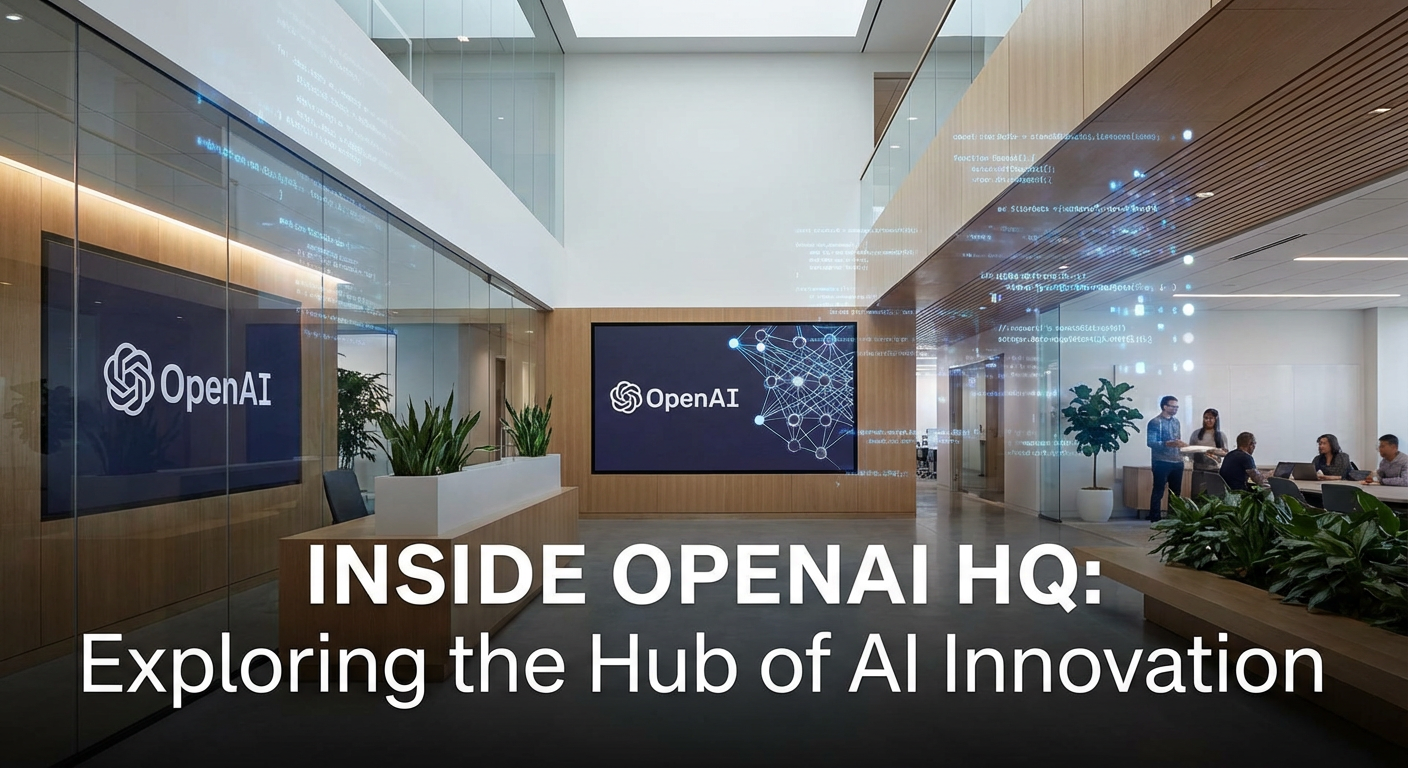
The physical space of OpenAI’s headquarters, while not ostentatious from the outside, is meticulously designed to foster the kind of intense collaboration, deep focus, and serendipitous discovery essential for pioneering AI research. Located in the bustling heart of San Francisco, the building itself exudes a subtle confidence rather than overt grandeur, a reflection perhaps of the profound, often quiet, work happening within its walls. Upon entering, visitors are immediately struck by an atmosphere of understated purpose. Unlike many Silicon Valley giants that prioritize elaborate, campus-like amenities, OpenAI’s focus appears squarely on optimizing the environment for cognitive labor and human interaction.
The interior architecture embraces a philosophy of transparent functionality and fluid movement. Expansive open-plan areas, bathed in natural light, are interspersed with strategically placed private offices and smaller, enclosed meeting rooms. This design choice is deliberate, aiming to strike a delicate balance between fostering spontaneous conversations and providing zones for intense, uninterrupted concentration. Researchers often require deep immersion in complex mathematical proofs or intricate coding tasks, necessitating quiet sanctuaries. Conversely, the interdisciplinary nature of AI development—merging fields like linguistics, computer science, ethics, and philosophy—demands constant cross-pollination of ideas. Whiteboards, ubiquitous throughout the office, serve as dynamic canvases for brainstorming, problem-solving, and visualizing intricate AI architectures, often adorned with equations, diagrams, and flowcharts that track the evolution of a new model or an ethical framework.
Beyond the immediate workspaces, the headquarters integrates a range of amenities designed to support the holistic well-being of its high-performing teams. A well-stocked cafeteria provides nutritious meals, encouraging employees to dine together, further facilitating informal exchanges that can spark new ideas. Relaxation areas, complete with comfortable seating and recreational diversions, offer crucial opportunities for mental respite, recognizing that breakthroughs often emerge from moments of decompression. There might be a small gym or fitness corner, underscoring the understanding that physical health is inextricably linked to mental acuity. These elements are not mere perks; they are integral components of a design strategy that understands human factors are paramount in sustaining the relentless intellectual marathon of AGI research. The aesthetics often lean towards minimalist functionality, eschewing excessive ornamentation in favor of clean lines, comfortable furnishings, and subtle artistic touches that might, for instance, subtly reference mathematical concepts or neural network structures, serving as quiet reminders of the mission. The intention is to create an environment that inspires deep thought without distraction, a sanctuary where some of the world's most complex problems are being systematically deconstructed and solved.
However, the balance of openness with confidentiality is a critical consideration. While the internal environment fosters collaboration, the nature of cutting-edge AI research often involves proprietary techniques, sensitive data, and monumental intellectual property. Consequently, security protocols are robust, implemented discreetly but effectively to safeguard against unauthorized access or information leaks. Access control systems, secure networks, and strict data handling policies are woven into the operational fabric, ensuring that while the intellectual doors are often open within the team, the perimeter remains secure. This dual emphasis on fostering an open, collaborative internal culture while maintaining stringent external security measures underscores the unique challenges and responsibilities inherent in operating at the forefront of AI innovation, where the next major breakthrough could have profound global implications. The architectural canvas of OpenAI HQ is therefore more than just a building; it is a carefully calibrated instrument, finely tuned to facilitate the specific demands of pushing the boundaries of artificial intelligence.
The Human Element: Minds Orchestrating the Revolution
While the infrastructure of OpenAI HQ provides the stage, it is the extraordinary collective of human minds that truly orchestrates the ongoing AI revolution. The culture within OpenAI is notoriously intense, driven by a profound sense of mission: to ensure that artificial general intelligence benefits all of humanity. This overarching goal permeates every interaction, every brainstorming session, and every line of code written. The atmosphere is one of intellectual curiosity fused with a high-stakes problem-solving mentality, where individuals are not merely employees but active participants in shaping a future of unprecedented complexity and potential. Collaboration is not just encouraged; it is a fundamental pillar, manifesting in daily stand-ups, ad-hoc whiteboarding sessions, and extensive code reviews, where diverse perspectives converge to tackle monumental challenges.
The team structure at OpenAI is remarkably multidisciplinary, a necessity for grappling with the multifaceted nature of AI. It comprises a constellation of world-class researchers, whose expertise spans deep learning, reinforcement learning, natural language processing, computer vision, and cognitive science. These researchers are often theoretical pioneers, working on novel algorithms and fundamental principles. Complementing them are highly skilled engineers, who translate these theoretical breakthroughs into scalable, robust, and efficient software systems. This includes machine learning engineers focused on model training and deployment, software engineers building the underlying infrastructure, and data engineers managing the vast datasets crucial for AI development. Beyond these core technical roles, OpenAI also thoughtfully integrates ethicists, policy experts, and legal counsel. Their presence is not an afterthought but a proactive measure to address the profound societal implications of their work, ensuring that ethical considerations, safety protocols, and responsible deployment strategies are baked into the development process from its earliest stages. This integrated approach to talent acquisition reflects a holistic understanding of AI's societal impact, positioning OpenAI not just as a technological powerhouse but as a responsible steward of powerful new capabilities.
Recruitment at OpenAI is exceptionally rigorous, attracting top talent from leading universities, research institutions, and tech giants globally. The organization seeks not just technical brilliance but also individuals who possess a deep alignment with its mission, an insatiable curiosity, exceptional problem-solving acumen, and a collaborative spirit. Candidates often undergo extensive technical interviews, coding challenges, and in-depth discussions about their research philosophies and ethical perspectives. The company values self-starters who are comfortable navigating ambiguity and charting new intellectual territory. Leadership, epitomized by figures like CEO Sam Altman, Chief Scientist Ilya Sutskever, and CTO Mira Murati, plays a pivotal role in shaping this culture and directing the strategic vision. Altman’s entrepreneurial drive and emphasis on productization, Sutskever’s profound theoretical insights and pursuit of AGI, and Murati’s operational prowess in translating research into tangible products collectively define OpenAI’s trajectory. Their leadership ensures a dynamic interplay between foundational research, practical application, and thoughtful governance.
A typical day for an OpenAI team member is rarely monotonous. It might involve intense coding sessions, debugging complex neural networks, analyzing vast quantities of data, or engaging in spirited debates during research seminars. Whiteboards are in constant use, capturing fleeting insights and evolving problem statements. Collaboration tools facilitate seamless communication across different projects and teams, ensuring that discoveries in one area can quickly inform others. Lunch breaks and coffee conversations often morph into impromptu discussions about algorithmic nuances or the latest ethical paper. There’s a palpable sense of shared purpose and collective intelligence, where individuals are constantly learning from and challenging one another. This environment fosters an intellectual dynamism that is difficult to replicate. Furthermore, OpenAI actively champions diversity and inclusion, recognizing that the development of AI systems that are fair, robust, and universally beneficial necessitates a multitude of perspectives. Teams comprise individuals from various cultural backgrounds, genders, and academic disciplines, ensuring that a broad spectrum of human experience informs the creation of technologies designed to serve humanity as a whole. This commitment to a diverse workforce is not merely a corporate ideal but a strategic imperative, acknowledging that homogeneous teams are more likely to inadvertently embed biases into AI systems, thereby undermining the very goal of universal benefit. The human element at OpenAI is thus a complex, highly curated ecosystem of brilliance, driven by a shared, ambitious vision for the future of intelligence.
The Forge of Progress: Cutting-Edge Research and Development
At the heart of OpenAI’s operations lies a relentless pursuit of cutting-edge research and development, a forge where the raw materials of computational power and human ingenuity are transformed into revolutionary AI capabilities. The organization's reputation is largely built upon a series of groundbreaking projects that have reshaped our understanding of what AI can achieve. The GPT series (Generative Pre-trained Transformer), including models like GPT-3, GPT-3.5, and the highly anticipated GPT-4, stands as a testament to their prowess in large language models (LLMs). These models have demonstrated an unprecedented ability to generate human-like text, answer complex questions, summarize documents, and even write code, thereby revolutionizing fields from content creation to customer service. Beyond language, projects like DALL-E have pushed the frontiers of image generation, allowing users to create stunning visual art from simple text prompts, blurring the lines between human imagination and machine execution. More recently, Sora showcased the potential for generating high-quality, complex video clips from text, signaling a profound leap in AI’s understanding and synthesis of temporal dynamics and physical interactions within a scene. Each of these projects represents not just an incremental improvement but often a paradigm shift in AI capabilities, marking new milestones on the path to AGI.
The research methodology at OpenAI is characterized by a blend of foundational theoretical exploration and empirical, large-scale experimentation. Researchers often begin with abstract concepts, pushing the boundaries of existing algorithms and neural network architectures. This theoretical work is then rigorously tested through massive computational experiments, leveraging immense datasets and formidable computing resources. The transition from theoretical breakthroughs to practical applications is a core strength. The goal is not merely to publish papers but to create deployable systems that demonstrate real-world utility and impact. This involves an iterative process of model design, training, evaluation, and refinement, often spanning months or even years for major projects. The organization also adheres to principles of an Open Platform where appropriate, sharing research insights, models, and tools with the broader scientific community, fostering collective progress and accelerating the pace of innovation across the entire AI ecosystem. This commitment to openness, balanced with strategic proprietary development, allows OpenAI to both lead and contribute significantly to the global AI discourse.
The sheer scale of their ambition necessitates an equally formidable hardware and infrastructure backbone. OpenAI operates some of the most powerful supercomputing clusters dedicated to AI training. These clusters are comprised of tens of thousands of Graphics Processing Units (GPUs), specialized hardware highly optimized for parallel processing tasks essential for training neural networks. The raw computational power required to train models like GPT-4 is staggering, consuming energy equivalent to a small town. This infrastructure is not just about raw power; it involves sophisticated data centers, high-bandwidth interconnections, and advanced cooling systems to maintain optimal operating conditions. The engineering teams work tirelessly to optimize these resources, ensuring maximum efficiency and uptime for ongoing research and development efforts, understanding that even minor improvements in infrastructure can translate into significant gains in research velocity.
Data acquisition and curation are equally critical, forming the lifeblood of modern AI. Training large language models, for instance, requires petabytes of text data harvested from the internet, books, and various digital sources. For image and video models, vast collections of visual media are painstakingly assembled and annotated. This process involves not just gathering data but also rigorously cleaning, filtering, and preparing it to ensure quality, relevance, and representativeness, minimizing biases that could inadvertently be embedded in the models. The scale and meticulousness of data management at OpenAI are monumental, directly impacting the capabilities and fairness of the AI systems they develop.
Crucially, ethical AI development is not an afterthought but a foundational pillar of OpenAI's research agenda. Safety, alignment, and bias mitigation are central concerns woven into every stage of the development lifecycle. Researchers actively explore methods to make AI systems more transparent, interpretable, and controllable. Significant resources are dedicated to understanding and mitigating potential harms, such as the generation of misinformation, the perpetuation of societal biases, or the misuse of powerful AI technologies. Teams work on "alignment research," ensuring that AI systems' objectives are aligned with human values and intentions, a complex challenge particularly as models become more autonomous and capable. This ethical framework guides not only what they build but how they build it, reflecting a deep sense of responsibility towards the profound societal implications of their creations. The deployment and impact of their research are carefully considered, with gradual rollouts, API access controls, and extensive safety evaluations preceding widespread public availability, ensuring that powerful AI capabilities are introduced responsibly and beneficially.
| OpenAI Key Models/Milestones | Year of Initial Release/Announcement | Primary Focus | Key Breakthroughs/Impact |
|---|---|---|---|
| GPT-2 | 2019 | Language Generation | Demonstrated unprecedented text generation coherence, initially withheld full model due to safety concerns. |
| DALL-E | 2021 | Image Generation | Generated diverse images from text descriptions, showing multimodal AI capabilities. |
| GPT-3 | 2020 | Language Generation | Achieved impressive few-shot learning, capable of many tasks with minimal examples, massive scale. |
| Codex (GPT-3 based) | 2021 | Code Generation | Translated natural language into code across multiple programming languages, powering GitHub Copilot. |
| DALL-E 2 | 2022 | Image Generation | Improved image quality, resolution, and introduced in-painting/out-painting. |
| ChatGPT | 2022 | Conversational AI | Democratized access to powerful LLMs, sparking widespread public awareness and adoption. |
| GPT-4 | 2023 | Multimodal LLM | Enhanced reasoning, longer context window, and multimodal input (text/image) capabilities. |
| Sora | 2024 | Video Generation | Generated realistic and imaginative videos from text instructions, demonstrating advanced understanding of the physical world. |
APIPark is a high-performance AI gateway that allows you to securely access the most comprehensive LLM APIs globally on the APIPark platform, including OpenAI, Anthropic, Mistral, Llama2, Google Gemini, and more.Try APIPark now! 👇👇👇
Beyond the Walls: OpenAI's Expanding Ecosystem
OpenAI's influence extends far beyond the physical confines of its San Francisco headquarters, shaping a burgeoning ecosystem of collaboration, policy, and innovation that reverberates globally. Recognizing that the journey towards AGI is too vast and complex for any single entity, OpenAI actively engages with a diverse array of stakeholders, fostering a collaborative environment that transcends competitive boundaries. Partnerships with academia are crucial, allowing for the exchange of cutting-edge research, joint publications, and the nurturing of future AI talent. These collaborations often involve sharing computational resources, providing access to proprietary models for research purposes, and sponsoring academic projects that align with OpenAI's mission. Similarly, engagement with industry leaders, both within and outside the tech sector, helps to understand real-world application needs, integrate AI solutions into various verticals, and gather crucial feedback for model refinement and ethical deployment. This feedback loop is vital for ensuring that OpenAI's advancements are not just theoretically sound but practically impactful and responsibly applied.
Open source contributions are another significant aspect of OpenAI's broader ecosystem strategy. Despite the necessity of protecting some proprietary advancements, OpenAI has historically released various tools, libraries, and research papers under open-source licenses. Projects like Gymnasium (a toolkit for reinforcement learning research) and early versions of their models have allowed researchers worldwide to build upon their work, experiment with new ideas, and accelerate the collective pace of AI discovery. This commitment to an Open Platform philosophy, where applicable, helps democratize access to powerful AI tools and fosters a robust, innovative community. It acknowledges that collective intelligence and shared infrastructure can drive progress faster than isolated development. By providing these foundational components, OpenAI empowers countless developers and smaller research groups to contribute to the broader AI landscape, ensuring that innovation is not monopolized but broadly distributed.
The profound societal implications of AI necessitate active engagement with policy and regulation. OpenAI proactively collaborates with governments, policymakers, and international organizations to help shape the future of AI governance. This involves participating in legislative discussions, offering expert testimony, and contributing to the development of ethical guidelines and regulatory frameworks. The goal is to ensure that as AI technologies become more powerful, they are guided by sensible policies that promote safety, fairness, and transparency, mitigating potential risks while maximizing societal benefits. This proactive stance reflects a deep understanding that technological advancement must be coupled with responsible stewardship, influencing global discourse on topics ranging from data privacy to the responsible use of autonomous systems.
Furthermore, OpenAI's breakthroughs have significantly energized the startup ecosystem. The public release of models like ChatGPT, and access to the GPT API, has inspired countless entrepreneurs to build new applications and businesses leveraging OpenAI's foundational models. This has led to an explosion of innovation in areas such as intelligent automation, personalized content generation, educational tools, and advanced analytics. Many startups now operate as extensions of OpenAI's capabilities, demonstrating the power of a strong foundational AI layer to enable a vast array of downstream applications. This entrepreneurial ripple effect showcases the profound economic and creative impact of OpenAI's work, creating new markets and opportunities.
Finally, OpenAI is deeply committed to addressing global challenges through AI for good initiatives. This often involves applying their cutting-edge AI research to pressing humanitarian, environmental, and social issues. Examples might include leveraging AI for climate modeling, disease diagnosis, disaster response, or enhancing accessibility for individuals with disabilities. By dedicating resources and expertise to these areas, OpenAI seeks to demonstrate the beneficial potential of advanced AI, aligning its technical prowess with a broader humanitarian mission. This commitment underscores their vision that AGI should ultimately serve as a tool for universal human betterment, transforming the very definition of what is possible in tackling humanity’s most intractable problems. This expansive ecosystem, radiating from OpenAI HQ, positions the organization not just as a developer of technology but as a central catalyst in a global movement to responsibly advance artificial intelligence for the benefit of all.
Navigating the AI Frontier: Challenges and Future Directions
The journey to artificial general intelligence (AGI) is fraught with immense technical hurdles and profound ethical dilemmas, challenges that OpenAI confronts daily within its walls and projects onto the global stage. Technically, scaling AI models to ever-greater sizes and capabilities presents ongoing formidable difficulties. While models like GPT-4 are astonishingly powerful, they still require vast computational resources, making them expensive to train and operate. Future models will likely demand even greater efficiency in terms of energy consumption and data utilization. Achieving true interpretability in complex neural networks remains an active research area; understanding why an AI makes a particular decision, rather than just what decision it makes, is crucial for building trust, debugging errors, and ensuring safety in critical applications. This challenge is central to moving beyond a "black box" approach to AI.
Ethical dilemmas are perhaps even more daunting. The proliferation of powerful generative AI models, while revolutionary, raises concerns about the spread of misinformation and disinformation, as AI can generate highly convincing but fabricated content at scale. The potential for job displacement across various industries as AI automates tasks previously performed by humans necessitates careful societal planning and robust support systems. Furthermore, ensuring that autonomous AI systems operate safely and align perfectly with human values, especially in dynamic and unpredictable environments, is a monumental philosophical and engineering challenge. OpenAI's commitment to safety research and alignment is a direct response to these concerns, reflecting a proactive stance on responsible development.
The competitive landscape in AI is also incredibly dynamic, with major players like Google DeepMind, Anthropic, Meta AI, and a myriad of well-funded startups constantly pushing boundaries. This competitive drive accelerates innovation but also adds pressure to balance rapid development with rigorous safety protocols. Each entity brings its unique research focus and strategic approach, contributing to a vibrant but intense global race for AI supremacy. This environment underscores the need for robust and adaptable infrastructure to manage the output and integration of these diverse models.
Looking towards the future, OpenAI envisions a world where AGI is a reality, not just a theoretical concept. Their ultimate aim is to create highly capable AI that can learn and perform any intellectual task a human can, doing so broadly and beneficially. This vision includes democratizing access to these powerful tools, ensuring that the benefits of AGI are widely distributed, rather than concentrated in the hands of a few. However, achieving this widespread beneficial deployment requires sophisticated tools for managing and integrating AI. As AI models proliferate across enterprises and applications, a critical need arises for robust platforms that can simplify their invocation, standardize their usage, and manage their lifecycle. This is where the concept of an AI Gateway becomes indispensable.
In this future, managing a multitude of specialized AI models—from natural language processing to computer vision to predictive analytics—will become a complex orchestration challenge. Enterprises will need a unified system to integrate diverse AI services seamlessly into their existing applications, handle authentication, manage traffic, and monitor performance. Such a system would effectively act as an LLM Gateway for language models and a comprehensive AI Gateway for all other types of AI, abstracting away the underlying complexities of different AI providers and model versions.
For instance, consider an organization deploying various AI services: one for customer sentiment analysis (using a large language model), another for fraud detection (a predictive model), and a third for image recognition. Without a unified management layer, each service would require separate integration, authentication, and monitoring mechanisms, leading to increased complexity, security vulnerabilities, and operational overhead. This is precisely the kind of challenge that innovative solutions like APIPark are designed to address. APIPark functions as an open-source AI gateway and API management platform, simplifying the integration and deployment of a hundred or more AI models. It provides a unified API format for AI invocation, meaning that changes in underlying AI models or prompts don't break applications, thereby drastically reducing maintenance costs. Businesses can encapsulate custom prompts and AI models into new, specialized REST APIs, offering powerful capabilities like sentiment analysis or data extraction as easily consumable services. APIPark also ensures end-to-end API lifecycle management, traffic forwarding, load balancing, and comprehensive logging, providing businesses with the agility and control needed to navigate a future dominated by diverse AI solutions. This capability to centralize, secure, and manage AI services is paramount for turning the vision of widespread beneficial AI into a practical reality. As AI continues to evolve, the distinction between research and production blurs, making platforms that can bridge this gap with efficiency and security ever more crucial. OpenAI's frontier exploration not only defines new AI capabilities but also illuminates the practical infrastructure required to deploy them responsibly at scale.
Conclusion: The Unfolding Odyssey of Intelligence
OpenAI’s headquarters, a hub of intellectual fervor in the heart of San Francisco, represents more than just a physical location; it is a symbol of humanity’s unfolding odyssey into the uncharted territories of artificial intelligence. From the carefully designed workspaces that foster both profound concentration and serendipitous collaboration, to the extraordinary individuals whose diverse expertise fuels groundbreaking research, every aspect of OpenAI is geared towards a singular, monumental mission: to ensure that artificial general intelligence benefits all of humanity. We’ve explored how its architectural canvas subtly shapes innovation, how the brilliant minds within its walls orchestrate a revolution, and how the rigorous forge of research yields models that continuously redefine the boundaries of what machines can achieve.
Beyond its physical boundaries, OpenAI actively cultivates a vibrant ecosystem through collaborations, open-source contributions, and proactive engagement with policy makers, demonstrating a deep commitment to responsible development and widespread impact. Its role as an Open Platform for certain advancements ensures that its innovations ripple through the global scientific and entrepreneurial communities, accelerating collective progress.
Yet, the journey is far from over. The path to AGI is paved with complex technical hurdles, profound ethical dilemmas, and an ever-evolving competitive landscape. The need for robust infrastructure to manage, secure, and deploy increasingly sophisticated AI models—acting as a universal AI Gateway or a specialized LLM Gateway—becomes paramount in this future. Solutions like APIPark exemplify the critical importance of such platforms in bridging the gap between cutting-edge research and practical, scalable applications.
OpenAI stands at the vanguard of a technological transformation with profound implications for every facet of human existence. The work being done within its walls is not merely about building smarter machines; it is about redefining intelligence itself, shaping the future of work, creativity, and human potential. As AI continues its relentless march, driven by the vision and dedication housed within OpenAI HQ, humanity steps closer to a future where intelligence is amplified, challenges are systematically addressed, and the very fabric of our world is re-imagined. The unfolding odyssey of intelligence, spearheaded by OpenAI, promises a future both awe-inspiring and immensely challenging, demanding continued vigilance, profound ethical consideration, and an unwavering commitment to its beneficial deployment for generations to come.
Frequently Asked Questions (FAQs)
1. What is OpenAI's primary mission? OpenAI's primary mission is to ensure that artificial general intelligence (AGI)—highly autonomous systems that outperform humans at most economically valuable work—benefits all of humanity. This mission guides their research, development, and deployment strategies, prioritizing safety, responsible innovation, and broad distribution of AI's benefits.
2. What are some of OpenAI's most notable achievements or products? OpenAI is renowned for its series of large language models (LLMs) such as GPT-3, GPT-4, and the widely adopted conversational AI, ChatGPT. They have also made significant strides in image generation with DALL-E and DALL-E 2, and more recently, in video generation with Sora, showcasing advanced capabilities in multimodal AI. These products have revolutionized various industries and captured global attention.
3. How does OpenAI address ethical concerns and AI safety? OpenAI places a strong emphasis on ethical AI development and safety. They have dedicated research teams focused on "alignment research" to ensure AI systems' objectives are aligned with human values, and they actively work on mitigating biases, preventing misuse, and ensuring the interpretability and robustness of their models. They also engage with policymakers and the public to shape responsible AI governance.
4. Does OpenAI contribute to open-source projects or an Open Platform philosophy? While OpenAI also develops proprietary technologies, it has historically made significant contributions to the open-source community. They have released various research papers, tools, and even models under open-source licenses, such as Gymnasium for reinforcement learning. This commitment, where appropriate, fosters an "Open Platform" approach, encouraging collaborative innovation across the global AI ecosystem.
5. How does OpenAI envision the future with AGI? OpenAI envisions a future where AGI is a reality and is widely accessible, serving as a powerful tool to solve humanity's most pressing challenges. They believe that AGI, if developed and deployed responsibly, can amplify human creativity, productivity, and well-being, leading to unprecedented advancements in various fields. Their vision focuses on democratizing access to these powerful tools and ensuring their benefits are broadly shared, addressing global challenges, and enhancing human potential.
🚀You can securely and efficiently call the OpenAI API on APIPark in just two steps:
Step 1: Deploy the APIPark AI gateway in 5 minutes.
APIPark is developed based on Golang, offering strong product performance and low development and maintenance costs. You can deploy APIPark with a single command line.
curl -sSO https://download.apipark.com/install/quick-start.sh; bash quick-start.sh

In my experience, you can see the successful deployment interface within 5 to 10 minutes. Then, you can log in to APIPark using your account.

Step 2: Call the OpenAI API.