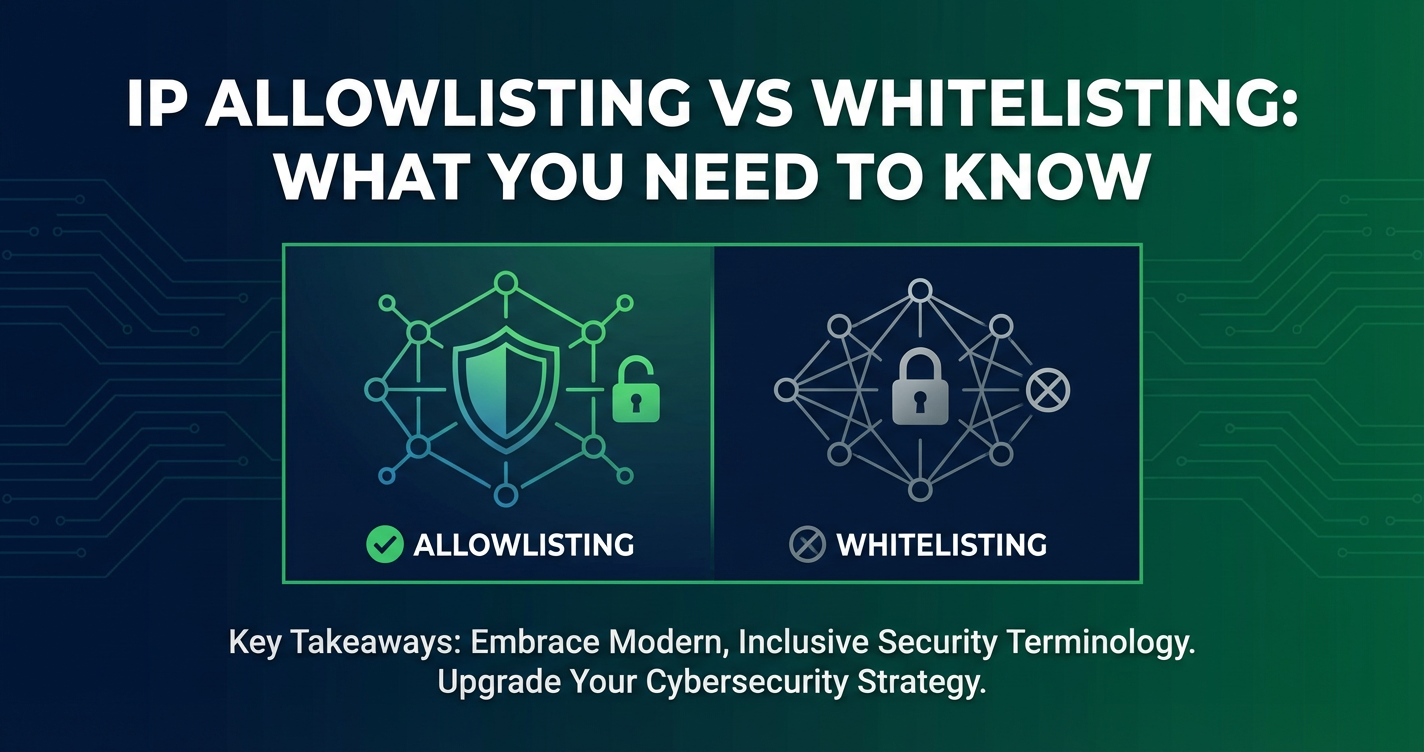
IP Allowlisting vs Whitelisting: What You Need to Know


In an increasingly interconnected digital world, where data breaches and cyber threats loom large, robust security mechanisms are no longer optional—they are absolutely indispensable. Organizations, from nascent startups to sprawling enterprises, grapple daily with the challenge of protecting their digital assets, ensuring business continuity, and maintaining customer trust. Among the foundational pillars of network and application security are concepts designed to explicitly control who or what is permitted access to critical systems and resources. Two terms frequently encountered in this domain are "IP whitelisting" and "IP allowlisting." While often used interchangeably, understanding their underlying mechanics, implications, and proper application is paramount for any security-conscious entity. This comprehensive guide aims to demystify these concepts, clarify their relationship, explore their practical applications—especially within the context of an API gateway and AI gateway—and provide best practices for their effective implementation.
The digital perimeter of a modern enterprise is no longer a simple, well-defined boundary. It has expanded to encompass cloud infrastructure, remote workforces, mobile devices, partner integrations, and a myriad of APIs that serve as the backbone of modern applications. In such a complex environment, simply putting up a firewall isn't enough; granular control over access becomes a strategic imperative. The principle of least privilege, a cornerstone of cybersecurity, dictates that entities should only be granted the minimum necessary access to perform their legitimate functions. IP allowlisting and whitelisting are direct embodiments of this principle, serving as powerful tools to achieve this critical objective by explicitly defining trusted sources and implicitly denying all others. This article will delve deep into these mechanisms, dissecting their benefits, challenges, and offering a roadmap for their successful integration into a holistic security posture, emphasizing their pivotal role in safeguarding everything from internal databases to public-facing APIs.
Understanding the Terminology: Allowlisting vs. Whitelisting
The evolution of language, especially in technical fields, often reflects broader societal shifts and a desire for greater clarity and inclusivity. The terms "whitelisting" and "allowlisting" are a prime example of this linguistic progression. Historically, "whitelisting" was the predominant term used to describe a security mechanism where a list of approved items—be it IP addresses, email addresses, software applications, or domains—was created, and only items on this "white list" were permitted access or execution. All other items, by default, were denied. This concept served as a powerful antidote to the more reactive "blacklisting," where a list of known malicious or undesirable items was compiled and blocked, while everything else was allowed. The inherent security advantage of whitelisting became clear: it operated on a "deny-by-default, allow-by-exception" principle, significantly reducing the attack surface by only permitting explicitly verified entities.
However, in recent years, the technology community and wider society have increasingly advocated for more neutral and inclusive language. Terms like "whitelisting" and "blacklisting" have been recognized as potentially carrying unintended racial connotations. As a result, there has been a significant movement towards adopting terms like "allowlisting" and "denylisting" (or "blocklisting"). From a purely technical and functional standpoint, "IP allowlisting" and "IP whitelisting refer to precisely the same security mechanism. They both describe the process of creating an explicit list of approved IP addresses or ranges that are permitted to interact with a specific network resource, system, or service, while all other IP addresses are automatically rejected. The shift in terminology is primarily semantic, reflecting a conscious effort to use more inclusive language, yet the underlying security principle and implementation remain identical. When discussing these concepts, it is important to remember that whether one uses "whitelisting" or "allowlisting," the core function is to establish a predefined set of trusted network origins.
The contrast with "denylisting" (formerly "blacklisting") is crucial for understanding the security posture implied by allowlisting. A denylist operates on the principle of "allow-by-default, deny-by-exception." This means that unless an IP address (or other entity) is explicitly on the denylist, it is granted access. While denylists are useful for blocking known threats, they are inherently less secure than allowlists. A denylist can only protect against threats that are already known and cataloged. New, unknown, or zero-day threats can easily bypass a denylist because they are not yet identified. An allowlist, conversely, provides a much stronger defensive posture. By only permitting access from explicitly approved sources, it effectively blocks all unknown and potentially malicious traffic by default. This "fail-safe" approach means that even if a new threat emerges, it cannot gain access unless its source IP address is already on the trusted list, which is highly unlikely for an attacker. This fundamental difference makes allowlisting a superior strategy for securing critical assets where the risk of unauthorized access must be minimized.
The choice between allowlisting and denylisting often depends on the specific use case and the criticality of the resource being protected. For highly sensitive systems, such as internal databases, administrative panels, or private API gateway endpoints, allowlisting is almost always the preferred approach due to its proactive and restrictive nature. For public-facing services with a vast, unknown user base, a pure allowlist might be impractical. In such scenarios, a combination of denylisting for known malicious IPs, along with other advanced security measures like Web Application Firewalls (WAFs) and sophisticated authentication mechanisms, becomes necessary. However, even in these public-facing contexts, specific administrative routes or high-value AI Gateway management interfaces often benefit immensely from the strict controls offered by IP allowlisting, ensuring that only trusted personnel or automated systems can access them. Understanding this distinction is the first step towards architecting a robust and resilient cybersecurity framework.
The Mechanics of IP Allowlisting
At its core, IP allowlisting is a straightforward concept: explicitly define which IP addresses are permitted to connect to a resource, and implicitly deny all others. However, the implementation of this concept can vary significantly depending on where in the network stack or application architecture it is applied. Fundamentally, IP allowlisting operates by inspecting the source IP address of an incoming network connection or request and comparing it against a predefined list of approved IP addresses or ranges. If a match is found, the connection is allowed to proceed; otherwise, it is blocked or dropped. This mechanism acts as a digital bouncer, only letting in those on the VIP list.
How IP Allowlisting Works
- Network Layer (Firewalls and ACLs): The most common and fundamental level at which IP allowlisting is enforced is at the network layer, typically through firewalls or Access Control Lists (ACLs) on routers and switches.
- Firewalls: Network firewalls, whether hardware or software-based, are designed to control incoming and outgoing network traffic based on a set of predefined rules. An IP allowlist rule in a firewall would specify "permit traffic from source IP X to destination Y on port Z, deny all other sources." Modern firewalls can be incredibly sophisticated, offering stateful inspection where they track the state of active connections, ensuring that only legitimate responses to outgoing requests are permitted back in. For example, an organization might configure its perimeter firewall to only allow SSH (port 22) connections to its administrative servers from a specific range of internal management IPs, effectively allowlisting administrative access.
- Access Control Lists (ACLs): Routers and switches also utilize ACLs to filter traffic. These lists are configured to permit or deny packets based on various criteria, including source IP address, destination IP address, port number, and protocol. An ACL configured for IP allowlisting would explicitly permit packets from specified source IPs to reach certain network segments or devices. This is particularly useful for segmenting internal networks, ensuring that only authorized internal machines can communicate with sensitive backend systems.
- Application Layer (Web Servers, Proxies, and API Gateways): Beyond the network layer, IP allowlisting can also be implemented at the application layer, providing a more granular control that is closer to the actual service.
- Web Servers: Web servers like Nginx or Apache can be configured with directives to allow or deny requests based on the client's IP address. This is often used to restrict access to specific directories, configuration files, or administrative interfaces of a web application. For instance, an
allow from 192.168.1.0/24directive would ensure only machines within that subnet can access a particular resource. - Proxies: Reverse proxies often sit in front of web servers and application servers, handling incoming requests and forwarding them to the appropriate backend. These proxies can also be configured with IP allowlists to filter traffic before it even reaches the application server, adding an additional layer of security.
- API Gateways: This is a crucial area for IP allowlisting in modern architectures. An API gateway acts as a single entry point for all API requests, providing a host of services including authentication, authorization, rate limiting, monitoring, and request routing. Integrating IP allowlisting directly into the API gateway allows organizations to enforce access policies specifically for their APIs. For example, a gateway might be configured to only allow requests to a
/paymentAPI endpoint from the IP addresses of trusted partners or internal microservices. This provides a critical layer of defense, ensuring that only recognized and authorized entities can even attempt to interact with sensitive API resources. For organizations leveraging AI models, an AI Gateway like APIPark is particularly adept at enforcing such granular access controls. APIPark, an open-source AI gateway and API management platform, excels in providing robust security features including IP allowlisting. It can unify the management of 100+ AI models and REST services, standardize API invocation formats, and encapsulate prompts into REST APIs, all while providing end-to-end API lifecycle management. Crucially, its powerful traffic management capabilities allow for the strict enforcement of security policies, including IP allowlisting, ensuring that your valuable AI and REST APIs are only accessed by trusted sources. You can learn more about APIPark's capabilities at apipark.com.
- Web Servers: Web servers like Nginx or Apache can be configured with directives to allow or deny requests based on the client's IP address. This is often used to restrict access to specific directories, configuration files, or administrative interfaces of a web application. For instance, an
Implementation Details
- Individual IP Addresses: The simplest form of allowlisting involves listing specific IP addresses (e.g.,
192.168.1.100). This is suitable for very small, static lists of trusted clients. - CIDR Notation: For allowing blocks of IP addresses, Classless Inter-Domain Routing (CIDR) notation is used (e.g.,
192.168.1.0/24for all IPs from192.168.1.1to192.168.1.254). This is efficient for entire subnets, data centers, or office networks. - Stateless vs. Stateful Firewalls: Stateless firewalls filter packets based solely on individual packet information without regard for the connection's state. Stateful firewalls, common today, track the state of network connections (e.g., TCP handshakes) and only allow packets that are part of an established, legitimate session. This significantly enhances security beyond simple IP matching.
Use Cases
IP allowlisting is a versatile tool applicable across numerous scenarios to bolster security:
- Restricting Access to Administrative Interfaces: One of the most common and critical uses is to limit access to sensitive administrative panels for servers, databases, network devices, or cloud consoles. By allowing access only from the IP addresses of IT staff or secure jump boxes, the risk of external attackers even attempting to log in is eliminated.
- Securing Sensitive Internal Services: Backend microservices, databases, caching layers, and message queues that should only be accessible by other internal services can be protected with IP allowlists. This ensures service-to-service communication remains within a trusted network perimeter.
- Controlling Access to SaaS Platforms: Many Software-as-a-Service (SaaS) providers offer IP allowlisting features to their enterprise clients. This allows businesses to configure their SaaS applications to only accept connections from their corporate network IPs, preventing unauthorized access from outside their controlled environment.
- Partner Integrations: When integrating with third-party partners via APIs, IP allowlisting can be used to ensure that only the partner's legitimate server IPs can call your API endpoints, and vice-versa. This adds an important layer of trust and security to B2B communications.
- Protecting Backend Services Behind an AI Gateway: In an architecture where an API gateway or AI Gateway acts as the front door, IP allowlisting can be configured at the gateway level to filter initial requests. However, it can also be used to protect the actual backend services that the gateway communicates with. This creates a "defense-in-depth" strategy, ensuring that even if the gateway is somehow bypassed or compromised (a rare but possible scenario), the backend services still have a layer of IP-based protection, only trusting connections from the gateway's own IP addresses.
By understanding these mechanics, organizations can strategically deploy IP allowlisting at various points in their infrastructure, building robust, layered defenses that significantly reduce the attack surface and enhance overall security posture.
Benefits of IP Allowlisting
The strategic implementation of IP allowlisting, whether as a standalone measure or as part of a multi-layered security architecture, brings a multitude of tangible benefits to organizations. These advantages span across enhancing security, streamlining compliance efforts, and even indirectly optimizing performance. Recognizing these benefits is key to justifying the effort required for proper deployment and ongoing management.
Enhanced Security and Reduced Attack Surface
The most significant and immediate benefit of IP allowlisting is the dramatic enhancement of security by drastically reducing the attack surface. In a world where every connected device is a potential target, limiting access to critical resources to only a handful of explicitly trusted IP addresses is a powerful defense mechanism. * Proactive Defense: Unlike reactive security measures that primarily focus on detecting and responding to attacks (e.g., Intrusion Detection Systems), IP allowlisting is a proactive measure. It prevents unauthorized access attempts from reaching sensitive systems in the first place. By explicitly defining who can access, it implicitly denies everyone else. This "deny-by-default" posture is fundamentally more secure than allowing all and then trying to block known bad actors. * Elimination of External Reconnaissance: Many cyberattacks begin with reconnaissance, where attackers scan networks for open ports, vulnerabilities, and information about target systems. With IP allowlisting in place, external, untrusted IP addresses cannot even initiate a connection to protected ports or services. This means that a significant portion of an attacker's initial reconnaissance efforts become futile, as their attempts to probe your systems will be met with immediate rejection at the network or API gateway perimeter. * Protection Against Brute-Force Attacks: Brute-force attacks, which involve repeatedly trying different passwords or credentials until the correct one is found, are a common threat. If an application's login page or an AI Gateway's administrative interface is protected by an IP allowlist, these attacks cannot originate from arbitrary IPs on the internet. Only IPs on the allowlist can even attempt a login, severely limiting the pool of potential attackers and making such attacks far more difficult to execute at scale.
Reduced Risk of Unauthorized Access
Beyond merely reducing the attack surface, IP allowlisting directly translates into a reduced risk of unauthorized access. * Precise Control: IP allowlisting provides precise control over who can connect. This is particularly valuable for protecting highly sensitive data or critical infrastructure where even a single unauthorized connection could have severe consequences. For instance, limiting direct database access to only specific application server IPs ensures that no other machine, even an internal one, can directly query the database without proper application layer controls. * Protection for Administrative Endpoints: Administrative dashboards, SSH access to servers, remote desktop services, and management consoles for various infrastructure components are frequently targeted due to the high privileges they grant. Implementing IP allowlisting for these endpoints ensures that only authorized personnel connecting from approved networks (e.g., corporate offices, VPNs, secure jump servers) can even see the login prompt, let alone attempt to authenticate. This significantly raises the bar for an attacker trying to gain control. * Securing API Endpoints: In modern microservice architectures, APIs are the primary means of communication. A misconfigured or unprotected API can expose vast amounts of data or critical functionalities. An API Gateway acting as the central entry point for all API traffic can leverage IP allowlisting to ensure that only trusted client applications, partner systems, or internal services are permitted to call specific APIs. This is especially crucial for financial transaction APIs, personal data APIs, or APIs controlling critical infrastructure, where the integrity and confidentiality of interactions are paramount.
Compliance and Regulatory Requirements
Many industry regulations and compliance frameworks mandate strict access control measures to protect sensitive data. IP allowlisting can be a powerful tool in meeting these requirements. * PCI DSS: The Payment Card Industry Data Security Standard (PCI DSS) requires organizations handling credit card data to implement robust network security controls, including firewalls. IP allowlisting helps organizations define and enforce network segmentation, restricting access to the Cardholder Data Environment (CDE) to only essential components and personnel. * HIPAA: The Health Insurance Portability and Accountability Act (HIPAA) mandates the protection of Protected Health Information (PHI). Restricting network access to systems containing PHI through IP allowlisting helps ensure that only authorized healthcare providers and systems can connect to these sensitive resources, bolstering confidentiality and integrity. * GDPR and Other Data Privacy Regulations: While IP allowlisting doesn't directly address all aspects of data privacy, it contributes significantly by forming a foundational layer of access control. By preventing unauthorized network access to systems containing personal data, it helps reduce the risk of data breaches that would violate regulations like GDPR. * Internal Audit Requirements: Beyond external regulations, many organizations have internal security policies that demand strict access controls. IP allowlisting provides clear, auditable rules that demonstrate adherence to these policies, simplifying security audits and proving due diligence.
Performance Optimization (Indirect)
While not a primary driver for its implementation, IP allowlisting can indirectly contribute to performance optimization. * Reduced Unnecessary Processing: By rejecting unauthorized connections at the very first layer (e.g., firewall or API gateway), resources are not wasted processing potentially malicious or irrelevant traffic. This means CPU cycles, memory, and network bandwidth are conserved for legitimate requests, allowing the actual application servers to focus on serving authorized users more efficiently. * Mitigation of DDoS Attacks (Partial): While not a full-fledged DDoS mitigation solution, an IP allowlist can help reduce the impact of certain types of denial-of-service attacks, especially those that rely on flooding specific ports from a broad range of IPs. By dropping all traffic from non-allowlisted IPs, it can prevent these attacks from consuming resources on the application layer. This pre-emptive filtering ensures that only valid traffic, from trusted sources, ever gets the chance to consume valuable backend resources.
In essence, IP allowlisting is a fundamental yet incredibly effective security measure. It embodies the principle of "default deny" and provides a powerful, clear-cut way to delineate who belongs in the trusted circle and who does not. When implemented thoughtfully, it forms a strong first line of defense, significantly bolstering an organization's overall security posture.
APIPark is a high-performance AI gateway that allows you to securely access the most comprehensive LLM APIs globally on the APIPark platform, including OpenAI, Anthropic, Mistral, Llama2, Google Gemini, and more.Try APIPark now! 👇👇👇
Challenges and Limitations of IP Allowlisting
While IP allowlisting offers significant security advantages, it is not a panacea and comes with its own set of challenges and limitations. A thorough understanding of these drawbacks is essential for its effective and sustainable implementation. Misapplication or over-reliance on IP allowlisting without considering its inherent constraints can lead to operational headaches, accessibility issues, and a false sense of security.
Dynamic IP Addresses
One of the most pervasive challenges in modern networking environments is the prevalence of dynamic IP addresses. * Mobile and Remote Workforce: Employees working remotely, especially those using home internet connections or public Wi-Fi, are typically assigned dynamic IP addresses by their Internet Service Providers (ISPs). These IPs can change frequently, often every few hours or days. Maintaining an IP allowlist for such a fluctuating user base is practically impossible and would require constant, manual updates, leading to significant administrative overhead and frustration for users who are frequently locked out. * Cloud-Based Services and SaaS: Similarly, many cloud services, including virtual machines, containers, and serverless functions, might operate with dynamic or ephemeral IP addresses. Integrating with these services using IP allowlisting requires careful planning. While some cloud providers offer static outbound IPs or IP ranges for their services, relying solely on dynamic IPs for access control can lead to unexpected service interruptions. SaaS applications and partner integrations often pose similar issues if their infrastructure's outbound IPs are not static or provided in a manageable range. * Solution Considerations: To address dynamic IPs for a remote workforce, organizations typically employ Virtual Private Networks (VPNs). Users connect to the corporate network via a VPN, which then assigns them an IP address from a static, internal range. This internal range can then be allowlisted, providing a secure and manageable solution. For cloud-based services, leveraging cloud-native network services that provide static egress IPs or using dedicated network links can help.
IP Spoofing
While less of a concern for stateful TCP connections, IP spoofing remains a theoretical challenge. * How it Works: IP spoofing involves an attacker crafting network packets with a false source IP address, making it appear as if the packets originate from a legitimate, allowlisted IP. * Limitations: For TCP connections, which involve a three-way handshake, successfully spoofing an IP and maintaining a session is highly difficult because the attacker would need to intercept the SYN-ACK response sent to the spoofed IP. However, for UDP-based services or certain types of stateless attacks, IP spoofing can be a concern. * Mitigation: IP allowlisting, when combined with stateful firewalls and other transport layer security (TLS/SSL), mitigates much of the risk of simple IP spoofing for applications. Physical network security and careful network architecture (e.g., using BCP38 for ingress filtering) are also crucial for preventing spoofed packets from entering or leaving a network.
Maintenance Overhead
Managing IP allowlists, especially in dynamic or large-scale environments, can introduce significant administrative overhead. * Manual Updates: If IPs change frequently or if new partners/employees need access, the allowlist must be manually updated. This is time-consuming, prone to human error, and can become a bottleneck, delaying legitimate access. * Scale Issues: As the number of allowed IPs or the number of systems requiring allowlists grows, the complexity of management increases exponentially. Coordinating updates across multiple firewalls, API gateways, and application configurations can be daunting. * Audit and Review: For security and compliance, allowlists must be regularly audited and reviewed to ensure they are current, justified, and do not contain stale or unnecessary entries. This adds another layer of ongoing maintenance. * Automation is Key: For larger organizations, automation tools and Infrastructure as Code (IaC) practices are essential to manage allowlists efficiently, integrating them into CI/CD pipelines where changes can be tested and deployed programmatically.
Lack of Granularity
IP allowlisting operates at the network layer and, as such, provides access control based solely on the source IP address. It lacks the granularity to differentiate users or applications within a trusted IP. * Insider Threats: If an allowlisted IP address (e.g., an office network IP) is compromised, an attacker operating from within that network can potentially bypass the IP allowlist. The allowlist offers no protection against malicious activity originating from an already trusted source. * Shared IPs: In environments with Network Address Translation (NAT) or shared proxy servers, multiple users or applications might share the same public IP address. An IP allowlist cannot distinguish between these different entities, meaning if one user on that shared IP is allowed, all users on that shared IP are implicitly allowed, regardless of their individual authorization. * Solution: This limitation underscores the need for layered security. IP allowlisting should always be complemented by stronger authentication mechanisms (e.g., multi-factor authentication, strong passwords, client certificates), and fine-grained authorization policies (e.g., role-based access control (RBAC), attribute-based access control (ABAC)) at the application layer or within an API gateway. For instance, an AI Gateway would allow the IP, but then enforce user-level authentication and authorization for specific API calls.
Not a Standalone Solution
Perhaps the most critical limitation is that IP allowlisting is never a complete security solution on its own. * Doesn't Prevent Application-Level Attacks: Once an attacker gains access from an allowlisted IP, the allowlist offers no protection against application-level vulnerabilities such as SQL injection, Cross-Site Scripting (XSS), or other web application exploits. * No Data Encryption: IP allowlisting does not inherently encrypt data in transit. Even if traffic originates from a trusted IP, if it's not encrypted (e.g., via TLS), it can be intercepted and read. * Needs Defense-in-Depth: IP allowlisting must be part of a comprehensive, multi-layered security strategy that includes firewalls, Intrusion Detection/Prevention Systems (IDS/IPS), Web Application Firewalls (WAFs), strong authentication and authorization, encryption, regular security audits, and continuous monitoring. An API gateway and especially an AI gateway like APIPark will integrate IP allowlisting with many of these other critical features like rate limiting, authentication, and comprehensive logging.
Operational Risks and False Positives/Negatives
- Accidental Lockouts: A misconfigured IP allowlist can accidentally block legitimate users or services, leading to downtime and operational disruption. For instance, if an API gateway's allowlist is updated incorrectly, it could prevent crucial microservices from communicating.
- False Sense of Security: Over-reliance on IP allowlisting without implementing other necessary controls can lead to a false sense of security, making organizations vulnerable to threats that bypass this single layer of defense.
In conclusion, while IP allowlisting is a powerful and essential security tool, its limitations must be acknowledged. It is a foundational layer, particularly effective at the network perimeter, but it requires careful management, a clear understanding of its scope, and integration with a broader security framework to truly be effective and avoid becoming an operational burden or a security blind spot.
Best Practices for Implementing IP Allowlisting
Effective implementation of IP allowlisting goes beyond simply configuring a list of IP addresses. It requires a thoughtful strategy, adherence to security principles, and integration into a comprehensive security architecture. By following best practices, organizations can maximize the benefits of IP allowlisting while mitigating its inherent challenges.
1. Principle of Least Privilege
This is the cornerstone of any robust security strategy and is particularly critical for IP allowlisting. * Granular Access: Only allow the absolute minimum necessary IP addresses or ranges. Instead of allowing a broad corporate subnet if only a few machines need access, identify those specific machines and allow only their IPs. For an API gateway, this means allowing only the specific client applications or partner systems that absolutely require access to a particular API endpoint, not just any system from a partner's entire network. * Avoid Overly Broad Ranges: Be extremely cautious with broad CIDR blocks like /16 or even /24 unless absolutely justified. Each additional IP in an allowlist is a potential entry point for an attacker if that IP is compromised. For example, if a developer needs access to a specific AI Gateway's management console, allow only their specific machine's IP (or the IP of their secure jump host), not the entire development team's subnet. * Service-to-Service Communication: When allowlisting for inter-service communication (e.g., microservices talking to a database), ensure that only the IP addresses of the specific calling services are allowed, not the entire subnet where they reside. This reduces lateral movement possibilities if one service is compromised.
2. Regular Review and Updates
IP environments are rarely static, making ongoing management crucial. * Scheduled Audits: Establish a regular schedule (e.g., quarterly, bi-annually) to review all active IP allowlists across your infrastructure, including firewalls, API gateways, and application configurations. * Remove Stale Entries: Actively identify and remove IP addresses or ranges that are no longer needed (e.g., IPs of former employees, decommissioned servers, expired partner integrations). Stale entries represent unnecessary exposure. * Justification and Documentation: For every entry on an allowlist, ensure there is a clear, documented justification. Who requested it? When? For what purpose? This helps during audits and when deciding whether to remove an entry. * Automate Where Possible: For dynamic environments, explore automation tools that can integrate with your IP management systems or cloud provider APIs to dynamically update allowlists based on approved changes. This minimizes manual effort and reduces the risk of human error.
3. Combine with Other Security Layers (Defense-in-Depth)
IP allowlisting is a powerful first line of defense, but it is never sufficient on its own. A multi-layered approach is essential. * Strong Authentication and Authorization: Even if an IP is allowlisted, require strong authentication (e.g., Multi-Factor Authentication (MFA), client certificates, OAuth) for users and services. Once authenticated, apply fine-grained authorization (e.g., Role-Based Access Control (RBAC), Attribute-Based Access Control (ABAC)) to determine what the authenticated entity can access or do. An AI Gateway can provide these sophisticated authentication and authorization capabilities, ensuring that even within an allowed IP, specific users or applications only access the resources they are permitted to. APIPark, as an AI Gateway, supports independent API and access permissions for each tenant and allows API resource access to require approval, adding multiple layers of security beyond just IP allowlisting. * Web Application Firewalls (WAFs): Deploy WAFs in front of web applications and APIs to protect against common application-layer attacks (SQL injection, XSS, etc.) that IP allowlisting cannot prevent. * Intrusion Detection/Prevention Systems (IDS/IPS): Utilize IDS/IPS to monitor network traffic for suspicious activity, known attack signatures, and anomalous behavior, providing another layer of real-time threat detection. * Encryption (TLS/SSL): Always ensure that communication with protected resources is encrypted using TLS/SSL, regardless of whether the source IP is allowlisted. This protects data in transit from eavesdropping and tampering. * Regular Vulnerability Scanning and Penetration Testing: Continuously scan for vulnerabilities and conduct penetration tests to identify weaknesses that could be exploited even from an allowlisted IP.
4. Monitoring and Alerting
Vigilance is key to detecting potential breaches or misuse. * Log All Access Attempts: Ensure that all attempts to access protected resources, both allowed and denied, are logged. These logs are invaluable for security investigations and auditing. * Monitor Denied Attempts: Pay particular attention to logs showing denied access attempts. A sudden surge in denied attempts from unusual IPs could indicate an attempted attack or reconnaissance effort. * Alert on Anomalies: Configure alerts for unusual patterns, such as an exceptionally high number of denied connections from a single IP, or access attempts from an allowed IP at unusual times or from unexpected geographic locations. APIPark offers powerful data analysis capabilities and detailed API call logging, allowing businesses to quickly trace and troubleshoot issues and display long-term trends and performance changes, which is crucial for identifying anomalies.
5. Use Specific CIDR Blocks and Network Segmentation
Precision in defining allowed IPs is crucial. * CIDR for Subnets: When allowing an entire network segment (e.g., an office LAN), use specific CIDR blocks (e.g., 192.168.1.0/24) rather than broad ranges or individual IPs. * Microsegmentation: For internal networks, consider microsegmentation, where applications and services are isolated into their own network segments, and traffic between them is strictly controlled with allowlists. This limits the "blast radius" of a compromise. * Dedicated Management Networks: For administrative access, establish dedicated management networks or VPNs with tightly controlled IP ranges. This isolates management traffic from regular user or application traffic.
6. Consider Dynamic IP Solutions for Remote Access
Since dynamic IPs are a common challenge, strategic solutions are necessary for remote workers and mobile users. * VPNs: The most common solution is to require remote users to connect via a corporate VPN. This assigns them an IP from the corporate network's static, internal range, which can then be safely allowlisted. * Secure Proxies/Jump Boxes: For highly sensitive access, implement secure proxy servers or "jump boxes." Users first connect to these hardened, monitored intermediaries, and only the IPs of the jump boxes are allowlisted for access to critical resources. * Client Certificates: For machine-to-machine communication, client certificates can provide a more robust identity-based authentication than IP allowlisting, especially when dealing with services that might have dynamic IPs but can present a trusted certificate.
7. Leverage API Gateway Capabilities
Modern API Gateways, and especially AI Gateways, are designed to handle complex access control and security policies. * Integrated Security: Utilize the gateway's built-in capabilities for IP allowlisting, rate limiting, authentication, and authorization. This centralizes security policy enforcement and simplifies management compared to configuring these policies on individual backend services. * Policy Orchestration: An API gateway can orchestrate multiple security policies, applying IP allowlisting first, then authenticating the user/application, then checking authorization, and finally enforcing rate limits. This layered policy enforcement is highly effective. * AI-Specific Controls: For an AI Gateway like APIPark, the ability to control access to specific AI models, prompt encapsulations, or custom AI APIs via IP allowlisting, combined with other robust security features, is invaluable for protecting intellectual property and sensitive AI workloads. It ensures that only authorized callers from trusted networks can invoke your valuable AI models.
By diligently applying these best practices, organizations can transform IP allowlisting from a simple configuration setting into a potent and reliable component of their overall cybersecurity strategy, ensuring that critical assets remain secure and accessible only to trusted entities.
Advanced Considerations and The Future
As the digital landscape continues to evolve, so too must our security strategies. While IP allowlisting remains a fundamental building block, its role is increasingly being integrated into more sophisticated frameworks and complemented by advanced technologies. Understanding these advanced considerations and future trends is vital for maintaining a resilient security posture.
Zero Trust Architecture
The concept of "Zero Trust" has gained significant traction, fundamentally altering the traditional security perimeter model. Instead of trusting anything inside a corporate network, Zero Trust operates on the principle of "never trust, always verify." * Shifting Paradigms: Traditional IP allowlisting often implies a level of trust for anything originating from an "inside" or "allowed" IP address. In a pure Zero Trust model, there is no inherent trust based on network location or source IP. Every request, regardless of its origin (internal or external), must be authenticated, authorized, and continuously validated. * IP Allowlisting's Role: In a Zero Trust framework, IP allowlisting still has a place, but its role shifts. It becomes one of many context-aware signals that contribute to an access decision, rather than being the sole determinant. For example, an IP allowlist might serve as an initial coarse filter at the network edge, but subsequent requests from an allowlisted IP would still require strong user/device authentication, authorization checks, and potentially device posture assessments before being granted access to specific resources. It's a foundational segmentation tool rather than a comprehensive access control tool in Zero Trust. * Contextual Access Decisions: Zero Trust emphasizes contextual access. Factors like user identity, device health, geographic location, time of day, and the sensitivity of the resource being accessed all feed into a real-time authorization engine. An API gateway can be a central enforcement point for such policies, evaluating multiple factors before allowing an API call to proceed.
Software-Defined Networking (SDN) and Network Microsegmentation
These technologies offer unprecedented granularity and automation in network control, moving beyond static IP allowlists. * SDN for Dynamic Policies: SDN decouples the control plane from the data plane, allowing network behavior to be programmatically managed. This enables the creation and enforcement of highly dynamic and agile network policies. Instead of manually updating firewall rules, SDN controllers can automatically adjust network access based on application needs, user roles, or detected threats. * Network Microsegmentation: This is an advanced security technique that divides data centers and cloud environments into tiny, isolated segments, down to individual workloads or applications. Each segment has its own tightly defined security policies, often based on allowlisting. Instead of simply allowing an entire subnet, microsegmentation allows only specific applications to communicate with specific other applications on predefined ports, regardless of their physical network location. This significantly limits lateral movement for attackers, making IP allowlisting far more granular and effective within these micro-segments. An API gateway often benefits from this, as its backend services can be protected by microsegmentation, allowing only the gateway's specific IP/service to communicate with them.
Behavioral Analysis and Anomaly Detection
The future of security is increasingly intelligent, leveraging AI and machine learning to detect threats that traditional rule-based systems might miss. * Beyond Static Rules: IP allowlisting is a static rule. Behavioral analysis, on the other hand, establishes a baseline of "normal" behavior for users, applications, and networks. Any deviation from this baseline—such as unusual access patterns from an allowlisted IP, requests for rarely used APIs, or data exfiltration attempts—can trigger alerts or automated responses. * Identifying Inside Threats: This is particularly crucial for mitigating threats originating from allowlisted IPs (e.g., a compromised internal machine or a malicious insider). If an IP is on the allowlist, an attacker might still try to exploit application vulnerabilities or exfiltrate data. Behavioral analysis can detect such anomalies, even if the source IP is technically "trusted." * AI Gateway's Role: An AI Gateway is uniquely positioned to perform this. By managing and observing all API traffic, especially to and from AI models, it can learn normal invocation patterns, data volumes, and user behaviors. Any deviation—a sudden spike in requests to a specific AI model from a usual IP, an unusual prompt being used, or an abnormal amount of data being returned—could be flagged as suspicious. APIPark, as an AI gateway, provides powerful data analysis features that can analyze historical call data to display long-term trends and performance changes, which is a foundational step towards identifying such anomalies and enabling predictive security.
Context-Aware Access and Continuous Verification
The trend is moving towards making access decisions based on a rich set of contextual factors rather than just a static IP. * Multi-Factor Decisions: Access is granted not just because an IP is on a list, but because the user is authenticated, their device is healthy, they are in an expected geographic location, and the request aligns with their job function and the sensitivity of the data. * Adaptive Security: Policies become adaptive, changing dynamically based on the observed risk. For example, if a user from an allowlisted IP attempts to access a highly sensitive resource from an unusual device or location, additional authentication challenges might be triggered automatically. * Orchestration by API Gateways: An advanced API gateway serves as an ideal orchestration point for these complex, context-aware access policies. It can integrate with identity providers, device management systems, threat intelligence feeds, and behavioral analytics engines to make real-time, nuanced decisions about every API request. This positions the gateway as a critical component in a truly intelligent and adaptive security architecture.
The future of IP allowlisting is not its obsolescence, but rather its integration into more intelligent, dynamic, and comprehensive security frameworks. It will continue to serve as an initial filter and segmentation tool, but its effectiveness will be amplified when combined with Zero Trust principles, microsegmentation, AI-driven behavioral analytics, and sophisticated API gateways that can orchestrate multi-layered, context-aware access decisions. Organizations that embrace these advanced considerations will be better equipped to defend against the sophisticated threats of tomorrow.
Security Policy Comparison: IP Allowlisting vs. Other Measures
To further illustrate the role of IP allowlisting within a broader security strategy, let's compare its characteristics with other common security measures. This table highlights that different tools operate at different layers and protect against different types of threats, reinforcing the need for a defense-in-depth approach.
| Feature | IP Allowlisting (Network/Transport Layer) | Web Application Firewall (WAF) (Application Layer) | Multi-Factor Authentication (MFA) (Authentication Layer) | Role-Based Access Control (RBAC) (Authorization Layer) | Encryption (TLS/SSL) (Presentation Layer) |
|---|---|---|---|---|---|
| Scope | Controls network connections based on source IP address/range. | Protects web applications from common attacks by inspecting HTTP/S traffic. | Verifies user identity through multiple proofs of identity. | Defines what an authenticated user/role is permitted to do. | Secures data in transit between two endpoints. |
| Granularity | IP Address or CIDR block. | HTTP request parameters, headers, body content. | Individual user or device. | User roles, groups, and specific resource permissions. | Data stream. |
| Protection Against | External unauthorized network access, reconnaissance, some DDoS. | SQL injection, XSS, CSRF, malicious bots, OWASP Top 10 threats. | Account takeover, phishing, weak/stolen passwords. | Unauthorized actions by authenticated users, over-privileging. | Eavesdropping, tampering with data in transit. |
| Method | Explicitly allows traffic from trusted IPs, implicitly denies others. | Analyzes traffic against security rules and anomaly detection signatures. | Requires a combination of "something you know," "something you have," or "something you are." | Assigns permissions based on pre-defined roles (e.g., Admin, User, Viewer). | Encrypts data before transmission and decrypts upon receipt. |
| Primary Goal | Reduce attack surface, prevent network-level unauthorized access. | Protect web applications from common exploits. | Verify true identity of the user. | Ensure users only access what they are authorized for. | Ensure confidentiality and integrity of data exchange. |
| Maintenance | Moderate to High (due to dynamic IPs, regular reviews needed). | Moderate (rule tuning, false positive management). | Moderate (user onboarding, credential management). | Moderate (role definition, permission updates). | Low (certificate renewal, protocol updates). |
| Best Use Case | Restricting access to administrative interfaces, internal services, backend APIs. | Protecting public-facing web applications and API gateways. | Securing user logins for critical applications, VPNs, cloud consoles, AI Gateways. | Managing permissions within applications, cloud resources, and API gateway access policies. | Securing all sensitive data transmitted over public or untrusted networks (HTTPS, VPNs). |
This table clearly demonstrates that each security measure plays a unique and complementary role. IP allowlisting excels at filtering traffic at the network edge, but it doesn't protect against threats that originate from an allowed IP or against application-layer vulnerabilities. Therefore, a holistic security strategy necessitates the combination of these and other measures to create a robust defense-in-depth architecture.
Conclusion
The terms "IP whitelisting" and "IP allowlisting," while semantically distinct in their modern usage, describe the exact same fundamental security mechanism: the explicit enumeration of trusted IP addresses or ranges permitted to access a specific digital resource, with all other access implicitly denied. This "deny-by-default" approach stands as a cornerstone of robust cybersecurity, providing a powerful first line of defense against a vast array of threats, from simple reconnaissance to sophisticated brute-force attacks. By drastically reducing the attack surface, IP allowlisting enhances security, helps meet stringent compliance requirements, and provides an essential layer of control over who can even attempt to connect to sensitive systems.
However, as we've explored, the effectiveness of IP allowlisting is not without its caveats. The dynamic nature of modern IP addresses, the potential for IP spoofing (albeit limited for stateful connections), and the administrative overhead associated with managing evolving lists present significant challenges. Crucially, IP allowlisting is a network-layer control and thus lacks the granularity to address user-level authorization or protect against application-layer vulnerabilities once an initial connection is established from a trusted source. It cannot, and should not, be considered a standalone security solution.
Instead, the true power of IP allowlisting is unleashed when it is integrated into a comprehensive, multi-layered security strategy—often referred to as defense-in-depth. It serves as an invaluable foundational filter, complementing more advanced controls such as strong multi-factor authentication, granular role-based access control, sophisticated Web Application Firewalls, encryption, and continuous monitoring. Modern API gateways and particularly AI gateways play a pivotal role in orchestrating these diverse security policies. By acting as the central enforcement point, an API gateway can first validate the source IP, then authenticate the user or service, apply fine-grained authorization rules, and even integrate with behavioral analytics engines to detect anomalies, creating a highly resilient and adaptive security posture. APIPark, as an open-source AI gateway and API management platform, is designed precisely for this purpose, offering end-to-end API lifecycle management alongside robust security features like IP allowlisting, authentication, and comprehensive logging and analysis capabilities.
As the digital landscape continues to embrace cloud computing, microservices, and AI-driven applications, the emphasis on granular, context-aware access control will only intensify. IP allowlisting will continue to evolve, finding its place within advanced frameworks like Zero Trust architecture and leveraging technologies such as software-defined networking and behavioral analytics for even greater precision and intelligence. For any organization committed to safeguarding its digital assets, understanding the nuances of IP allowlisting, recognizing its benefits and limitations, and strategically embedding it within a comprehensive security framework—with modern tools like API gateways at the helm—is not merely good practice; it is an absolute necessity for navigating the complexities of today's cyber threat landscape. Vigilance, continuous adaptation, and a layered approach remain the ultimate keys to enduring security.
5 Frequently Asked Questions (FAQs)
1. What is the fundamental difference between IP Whitelisting and IP Allowlisting? Fundamentally, there is no technical difference between IP whitelisting and IP allowlisting. Both terms refer to the same security mechanism: creating an explicit list of approved IP addresses or ranges that are permitted to access a specific resource or system, while all other IP addresses are implicitly denied. The shift from "whitelisting" to "allowlisting" is primarily semantic, driven by a desire for more inclusive and neutral language in the technology community. Therefore, in practice, you can consider them interchangeable concepts referring to the same "deny-by-default, allow-by-exception" access control strategy.
2. Is IP Allowlisting a sufficient security measure on its own? No, IP allowlisting is not a sufficient security measure on its own. While it is a powerful first line of defense that significantly reduces the attack surface by blocking unauthorized network access, it has limitations. It doesn't protect against application-level attacks (e.g., SQL injection, XSS) from an allowlisted IP, nor does it provide user-specific authentication or authorization. It's crucial to implement IP allowlisting as part of a comprehensive, multi-layered security strategy (defense-in-depth) that includes strong authentication (e.g., MFA), granular authorization (e.g., RBAC), encryption (TLS/SSL), Web Application Firewalls (WAFs), and continuous monitoring.
3. What are the main challenges when implementing IP Allowlisting, especially for remote users? The main challenge, particularly for remote users and cloud services, is the prevalence of dynamic IP addresses. Most home internet connections and many cloud instances are assigned IPs that can change frequently. Manually updating an allowlist for a constantly changing set of IPs is impractical and leads to operational overhead and user frustration. For remote users, the common solution is to require them to connect via a corporate Virtual Private Network (VPN), which assigns them an IP from a static, internal range that can then be allowlisted. For cloud services, using static egress IPs or dedicated network links can help manage this.
4. How does an API Gateway or AI Gateway utilize IP Allowlisting? An API Gateway or AI Gateway acts as a central entry point for all API requests, making it an ideal place to enforce IP allowlisting. The gateway can be configured to inspect the source IP of every incoming request and compare it against a predefined allowlist. If the IP is on the list, the request is allowed to proceed to the backend services; otherwise, it is immediately rejected. This protects valuable APIs and backend services by ensuring that only trusted client applications, partner systems, or internal components can even initiate a connection. Furthermore, modern gateways like APIPark integrate IP allowlisting with other security features such as authentication, authorization, rate limiting, and detailed logging, providing a robust, multi-layered defense for API access.
5. What is the relationship between IP Allowlisting and Zero Trust Architecture? In a Zero Trust Architecture, the principle is "never trust, always verify," meaning no entity is inherently trusted, regardless of its network location. While traditional IP allowlisting might imply trust for IPs on the list, its role in Zero Trust shifts. It becomes one of many contextual signals used to make a dynamic access decision, rather than the sole determinant. IP allowlisting can still serve as an initial, coarse-grained filter at the network edge to segment traffic and reduce noise. However, even requests from an allowlisted IP would still undergo continuous authentication, authorization based on user identity, device posture, and other contextual factors before being granted access to specific resources. It's a foundational segmentation tool, but the ultimate access decision in Zero Trust is far more granular and dynamic.
🚀You can securely and efficiently call the OpenAI API on APIPark in just two steps:
Step 1: Deploy the APIPark AI gateway in 5 minutes.
APIPark is developed based on Golang, offering strong product performance and low development and maintenance costs. You can deploy APIPark with a single command line.
curl -sSO https://download.apipark.com/install/quick-start.sh; bash quick-start.sh

In my experience, you can see the successful deployment interface within 5 to 10 minutes. Then, you can log in to APIPark using your account.

Step 2: Call the OpenAI API.